






Connect with us

Crypto World

Most Americans View Crypto in Retirement Plans as Risky

Published

on

Most Americans View Crypto in Retirement Plans as Risky

More than three-quarters of Americans view cryptocurrency in workplace retirement plans as risky, as concerns over retirement security mount across the United States, according to a new survey from The National Institute on Retirement Security.

The survey found that 77% of Americans consider crypto in workplace retirement plans risky, including 46% who view it as very risky, while 53% oppose employers offering crypto as an investment option.

The skepticism comes as 80% of respondents said the US faces a retirement crisis, up from 67% in 2020, while 61% expressed concern about achieving financial security in retirement.

Affordability pressures are also weighing on retirement savings, with 68% saying it is becoming harder to prepare for retirement and 77% saying debt prevents them from saving adequately.

Advertisement

The survey was conducted by Greenwald Research between Oct. 24 and Nov. 14, 2025, and included 1,203 Americans aged 25 and older, with results weighted by age, gender and income.

Americans view of crypto in retirement plans. Source: National Institute of Retirement Security

Related: Bernstein forecasts Bitcoin to reclaim $125K by late 2026 ahead of cycle peak

US policymakers move to broaden alternative assets in 401(k)s

While the report indicates Americans broadly view crypto as risky for retirement, the Trump administration and federal regulators have moved to broaden access to alternative assets in retirement accounts, bringing crypto and other nontraditional investments further into the retirement savings debate.

The US Department of Labor rescinded guidance in May 2025 that had urged 401(k) plan fiduciaries to exercise “extreme care” when considering cryptocurrency investments, returning instead to a neutral approach that neither endorses nor discourages crypto in retirement plan investment menus.

Advertisement

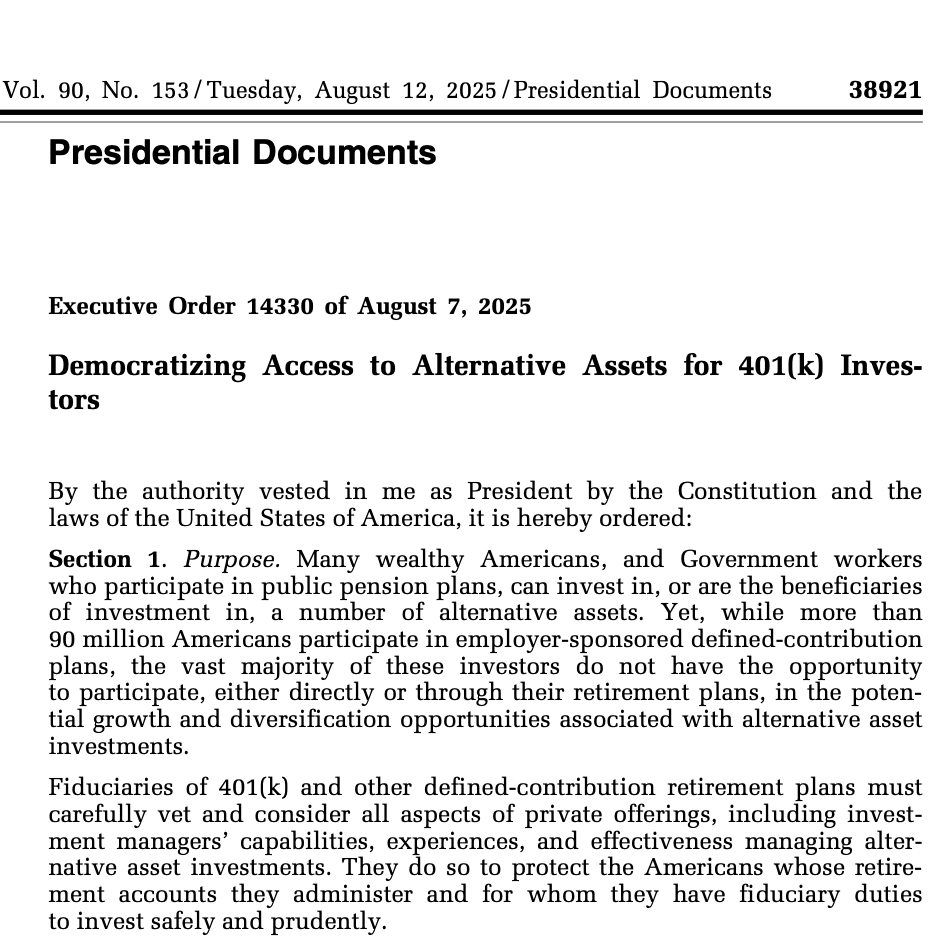
On Aug. 7, 2025, President Donald Trump signed an executive order aimed at expanding access to alternative assets in defined-contribution retirement plans, including investment vehicles that hold digital assets, while directing the Labor Department and US Securities and Exchange Commission to consider regulatory changes to facilitate access.

Trump’s executive order expanding alternative asset access in 401(k) plans. Source: Federal Register

A few days later, the Labor Department rescinded 2021 guidance that had discouraged 401(k) fiduciaries from considering alternative assets, saying investment decisions should instead be evaluated under a neutral, principles-based approach.

More recently, in March 2026, the Labor Department proposed rules outlining how 401(k) fiduciaries could include alternative assets in investment lineups, including safe harbors intended to reduce litigation risks while requiring consideration of factors such as fees, liquidity, valuation and performance.

The proposal has faced pushback from lawmakers, with Sens. Bernie Sanders and Elizabeth Warren and Rep. Bobby Scott urging the Labor Department in June to withdraw it, citing crypto’s volatility and what they described as insufficient investor safeguards.

Advertisement

Magazine: SEC’s proposed crypto rules probably won’t spark new ICO boom

Source link

Continue Reading
Click to comment

You must be logged in to post a comment Login

Leave a Reply

Crypto World

Bitcoin Slides Under $78K as US PCE Inflation Lifts Risk-Off Trade

Published

on

Crypto Breaking News

Bitcoin slipped below $78,000 shortly after the Wall Street open as US inflation data landed higher than expected, pushing risk assets lower and weighing on crypto sentiment. The move followed a stronger-than-forecast July Personal Consumption Expenditures (PCE) print—an inflation measure the Federal Reserve closely tracks—setting up a busy stretch for traders with additional catalysts later in the week.

With markets now parsing what the latest inflation signal could mean for the policy outlook, attention is also turning to Nvidia’s upcoming earnings release, widely viewed as a near-term driver of broader market volatility. Meanwhile, technical analysts are warning that recent strength may still fall short of a durable trend change.

Key takeaways

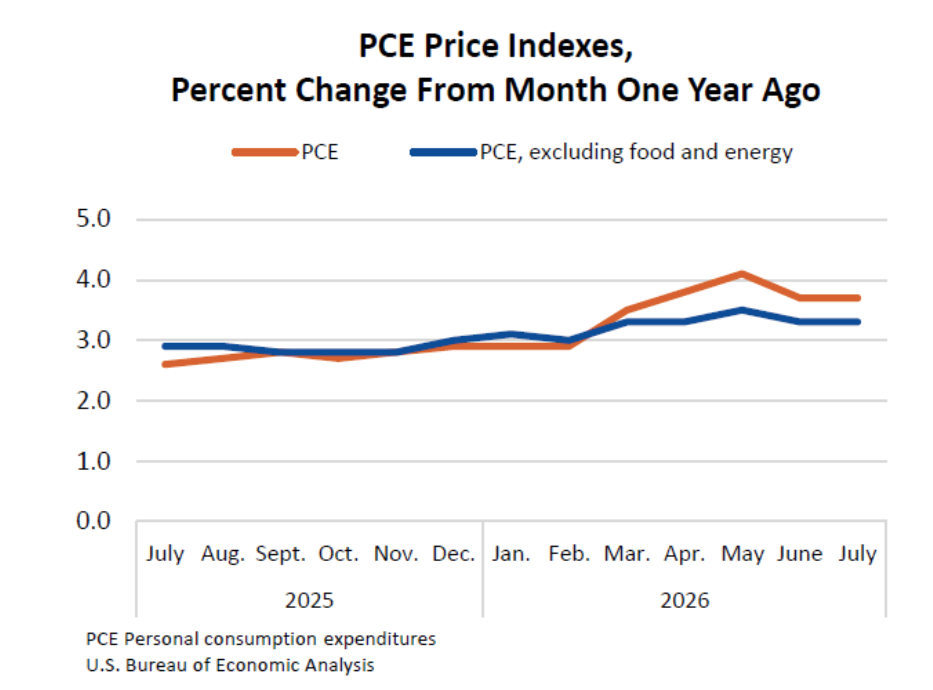
  • July US PCE inflation came in above expectations, with the year-on-year rate at 3.7% versus 3.6% expected.
  • BTC’s decline accelerated after the Wall Street open, aligning with weaker moves in US equities and gold breaking below $4,600 per ounce.
  • Analysts are watching the August monthly close for confirmation or rejection of ongoing technical resistance themes.
  • Traders are also looking ahead to Nvidia’s Q2 earnings as a potential volatility catalyst for risk assets.

July PCE surprises higher and pressures risk appetite

According to the Bureau of Economic Analysis’ official release, the July PCE price index increased 0.2% from the previous month, and the same 0.2% gain was reported for the core measure excluding food and energy. On the year, the headline PCE rate rose to 3.7%, edging above the 3.6% forecast.

TradingView data tracked intraday weakness of up to roughly 1% for BTC on the day as US markets opened lower. The same risk-off dynamic also showed up beyond crypto: the article notes US stocks were down at the open and gold dipped through $4,600 per ounce.

For investors, the key point is not only whether inflation is moving, but whether it is moderating quickly enough to influence expectations around monetary policy. The report highlights that markets had been reacting to June’s PCE slowdown—described as the first month-on-month decline in six years—so the July print reduced confidence that progress was continuing at the desired pace.

Advertisement

Commenting on the broader implication, trading resource The Kobeissi Letter said on X that US inflation remains “nearly double” the Federal Reserve’s 2.0% target, reinforcing the idea that the latest data did not offer immediate reassurance for rate-cut hopes.

Fed week ahead: inflation data before major policy messaging

The PCE release landed with the Federal Reserve’s annual Jackson Hole economic symposium approaching. The article notes that Fed chair Kevin Warsh is expected to deliver the keynote speech on Friday, which places a premium on how markets interpret the inflation trajectory into that event.

In practical terms, this means traders are likely to treat today’s data as an input into the policy narrative rather than a one-off market mover. If inflation readings stay stubborn, markets may scale back expectations for easing; if they ease further, pressure on risk assets could fade. Either way, the upcoming Fed communications increase the probability that volatility could rise again even if crypto’s move already reflects the immediate reaction.

Tech earnings on deck as Nvidia could set the tone

Beyond macro data, the article points to corporate earnings as the next plausible short-term driver for market behavior. It highlights Nvidia’s upcoming Q2 earnings release as a potential catalyst for risk-asset volatility.

Advertisement

While the piece does not claim new results, it cites expectations including quarterly revenue of $92.3 billion and notes that analysts at Raymond James forecast CPU revenue at Nvidia could grow from 3% to 5% of total by 2028, broadening its addressable market.

For crypto investors, Nvidia matters less for fundamentals inside the blockchain sector and more for how large-cap tech performance influences overall liquidity and risk appetite. If earnings are perceived as supportive, BTC could find follow-through buyers; if they disappoint, the broader de-risking impulse may continue to spill into digital assets.

BTC technical outlook: focus shifts to the August monthly close

After the pullback, market participants are increasingly turning to higher-timeframe technical levels rather than reacting to day-to-day candles. The article emphasizes an upcoming August monthly candle close as a key point for determining whether BTC can extend a rebound or whether it remains trapped within a broader downtrend structure.

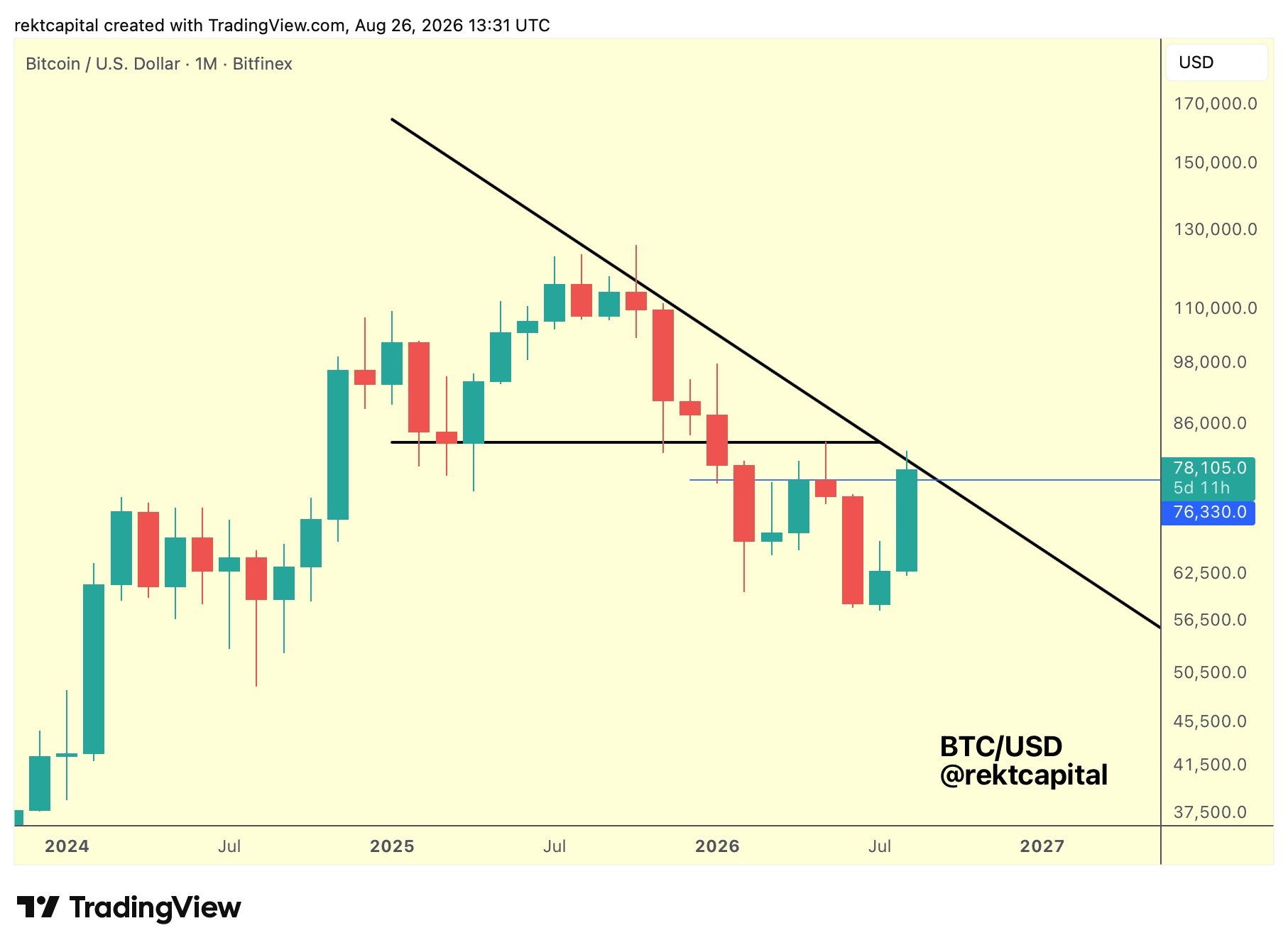
Trader and analyst Rekt Capital warned that BTC/USD could continue forming “lower highs,” referencing a sequence that has been in place since October 2025. In an X post, he said that “a Monthly Close below the blue resistance” would not only confirm another “Macro Lower High,” but also build “confluent resistance” tied to a broader macro downtrend.

Advertisement

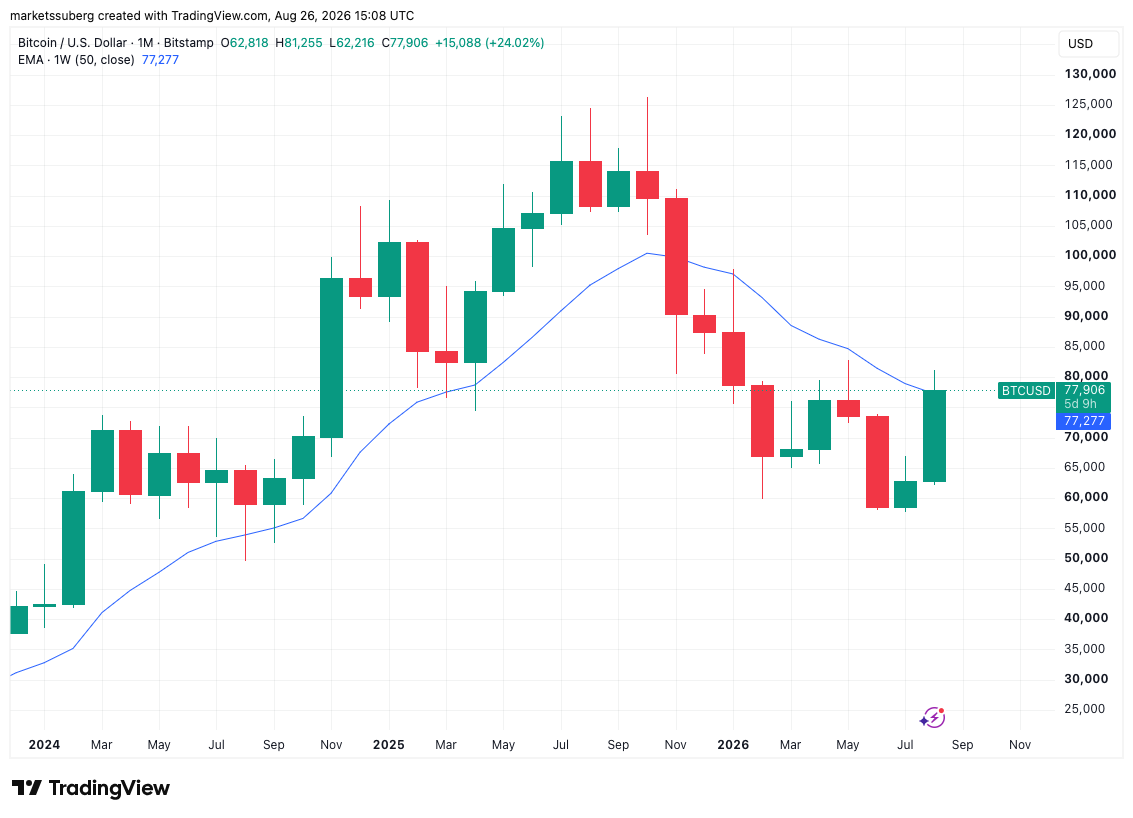
Rekt Capital also directed attention to the 50-week exponential moving average (EMA) near $77,251. The article notes that Bitcoin’s last monthly close above this level occurred in October 2025. In his view, maintaining a reclaim and hold around that trend metric would be necessary for the rebound to stop being categorized as merely a temporary “relief rally” within a larger bear market.

Notably, this framing sets up a clear debate for traders: whether recent upside is transitioning into a durable reversal, or whether the market is still only bouncing within a corrective regime. Because monthly closes carry more weight than intraday price action, this creates a well-defined checkpoint for bulls and bears alike.

The near-term downside pressure from macro data may not automatically invalidate technical bullish cases, but it increases the odds that resistance levels will be tested more aggressively before the month ends. In other words, the market is now balancing two competing forces—macro-driven risk sentiment and chart-driven trend confirmation.

Heading into the next sessions, traders should watch how BTC responds once the immediate PCE-driven reaction cools, whether Nvidia’s earnings shift broader risk appetite, and—most importantly—where Bitcoin’s price settles relative to the resistance and the 50-week EMA ahead of the August monthly close.

Advertisement

Risk & affiliate notice: Crypto assets are volatile and capital is at risk. This article may contain affiliate links. Read full disclosure

Source link

Advertisement
Continue Reading

Crypto World

Here Are Tim Curry’s Unforgettable Movies and TV Shows

Published

on

Here Are Tim Curry's Unforgettable Movies and TV Shows

Acting alongside legends like Carol Burnett and Bernadette Peters, Curry cemented himself as a scheming villain, the type of role he would continue to play in movies like Home Alone 2, Muppet Treasure Island, and The Three Musketeers.

In a 2020 interview with Forbes, Curry reminisced on the experience: “Rooster was a hustler, and people love that kind of character,” he said. “He was a lot of fun.”

Clue

In the 1985 board game adaptation Clue, Curry played the energetic butler Wadsworth, where he showcased his physical comedy. One of the most memorable moments comes at the film’s end, when Wadsworth runs about the mansion, trying to summarize the night’s events and explain the identity of the killer.

Advertisement

Since his death, tributes from his Clue co-stars have poured in.

“What an unbelievable joy to have shared a sound stage with him and to engage with such a master talent,” Lesley Ann Warren, who played Miss Scarlet in the murder mystery movie, wrote. “I adored him.”

Source link

Advertisement
Continue Reading

Crypto World

GTA 6 Leakers Demand a Physical Disc Release. Will Rockstar Accept?

Published

on

GTA 6 Leakers Demand a Physical Disc Release. Will Rockstar Accept?

The group behind the Grand Theft Auto VI (GTA 6) leaks hit back at Rockstar Games within hours on Wednesday. It repeated its demand for physical discs and accused the studio of playing the victim.

CyberLeek, the account driving the leak campaign, posted its answer on X. The reply reignited a dispute that has run since June.

Rockstar Writes to Fans, But Skips the GTA 6 Physical Discs Question

Rockstar broke a week of silence on Wednesday with an open letter to its community. The studio called the leaks heartbreaking for its team. It apologized to fans for the long wait.

“It would be an understatement to say that having videos of Grand Theft Auto VI gameplay leak this way has been heartbreaking for our team, and this is obviously not how we intended for you to see the game after all this time.”

Rockstar Games, statement

Advertisement

The full Rockstar statement thanks supporters, confirms the Nov. 19 launch, and warns that spoilers may hurt the intended experience.

However, it never mentions discs and never names CyberLeek. That silence triggered the reply, which cast the studio as the aggressor rather than the injured party.

The group has released footage in daily batches since Aug. 18. Its demands include pressed discs for pre-orders and an offline fallback for single-player content.

Advertisement

It also wants an end to what it calls fake single-player expansions. That means content already sitting in the game files, locked until players pay again. CyberLeek says it will not stop until publishers apologize and commit to change.

Why the Ownership Fight Keeps Growing

Rockstar confirmed in June that boxed copies will hold a download code instead of a disc. Buyers therefore get a license, not a physical product. Take-Two chief executive Strauss Zelnick told analysts on Aug. 7 that discs no longer make sense for consumers.

Meanwhile, the wider industry is moving the same way. Sony will stop pressing game discs in January 2028. A PlayStation disc backlash petition has since gathered hundreds of thousands of signatures.

Still, the preservation movement itself has pushed back. Stop Killing Games, a campaign for continued access to purchased titles, rejected the leak tactics outright.

Advertisement

“Using illegal means to make a point is unacceptable to us and does nothing to protect our right to keep using what we paid for.”

Stop Killing Games, statement

Money clouds the protest further. CyberLeek also sells ad space inside its leak videos. Brands must send 400 Monero (XMR), worth roughly $172,000, just to open the conversation.

That fee buys no placement, only a reply. The privacy coin is trading near $431. A separate CyberLeek meme coin rally added 1,400% last week.

Take-Two has shed market value since the leak campaign started.

Advertisement

Netflix airs an extended GTA 6 look on Thursday, and Rockstar hopes official footage retakes the story. Whether that works or simply gives leakers a bigger audience becomes clear within days.

The post GTA 6 Leakers Demand a Physical Disc Release. Will Rockstar Accept? appeared first on BeInCrypto.

Source link

Advertisement
Continue Reading

Crypto World

What to Do When Someone Gives You the Silent Treatment

Published

on

What to Do When Someone Gives You the Silent Treatment

When things are calm, make a plan for next time

When communication resumes, you might be so relieved that you simply pretend nothing happened. But unless the pattern itself is addressed, the next disagreement might end the same way.

Needle suggests leading with curiosity: “Can you help me understand what was happening for you when you needed to step away?” Once you’ve listened, describe the impact without claiming to know the person’s intent: “When I didn’t hear from you and didn’t know whether we would talk again, I felt anxious and disconnected. I’m OK with taking space during conflict, but I need to know we’ll come back to it.”

Then decide together what a future timeout will look like. Avigail Lev, a clinical psychologist in San Francisco, encourages couples to agree in advance on how either person will signal that they need a break, roughly how long it will last, what they’ll do to calm down, and who will restart the conversation. If the person needs longer, they should still check in at the agreed-upon time and provide a new endpoint. Some couples and families even choose a code word that means the conversation is pausing, Wilson says—not that the relationship is disappearing.

Advertisement

Source link

Continue Reading

Crypto World

Bitcoin Fails To Return To $80,000 As High PCE Inflation Data Bites

Published

on

Bitcoin Fails To Return To $80,000 As High PCE Inflation Data Bites

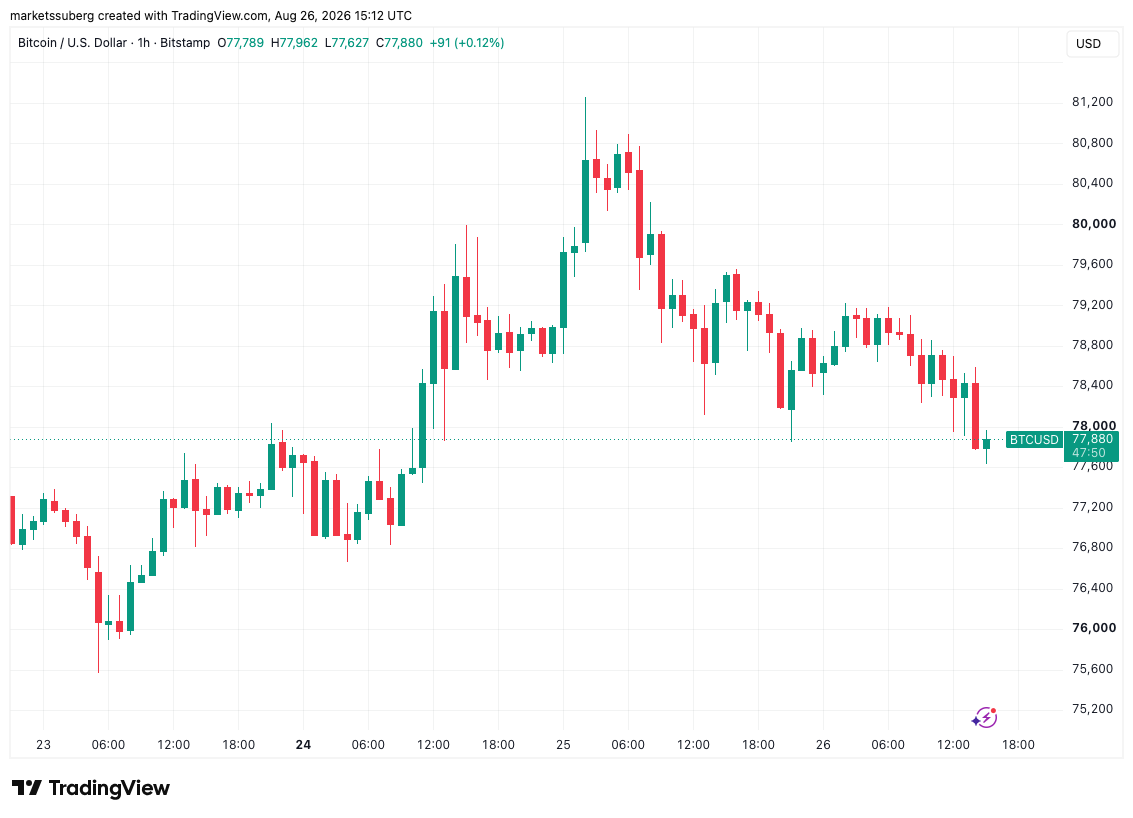
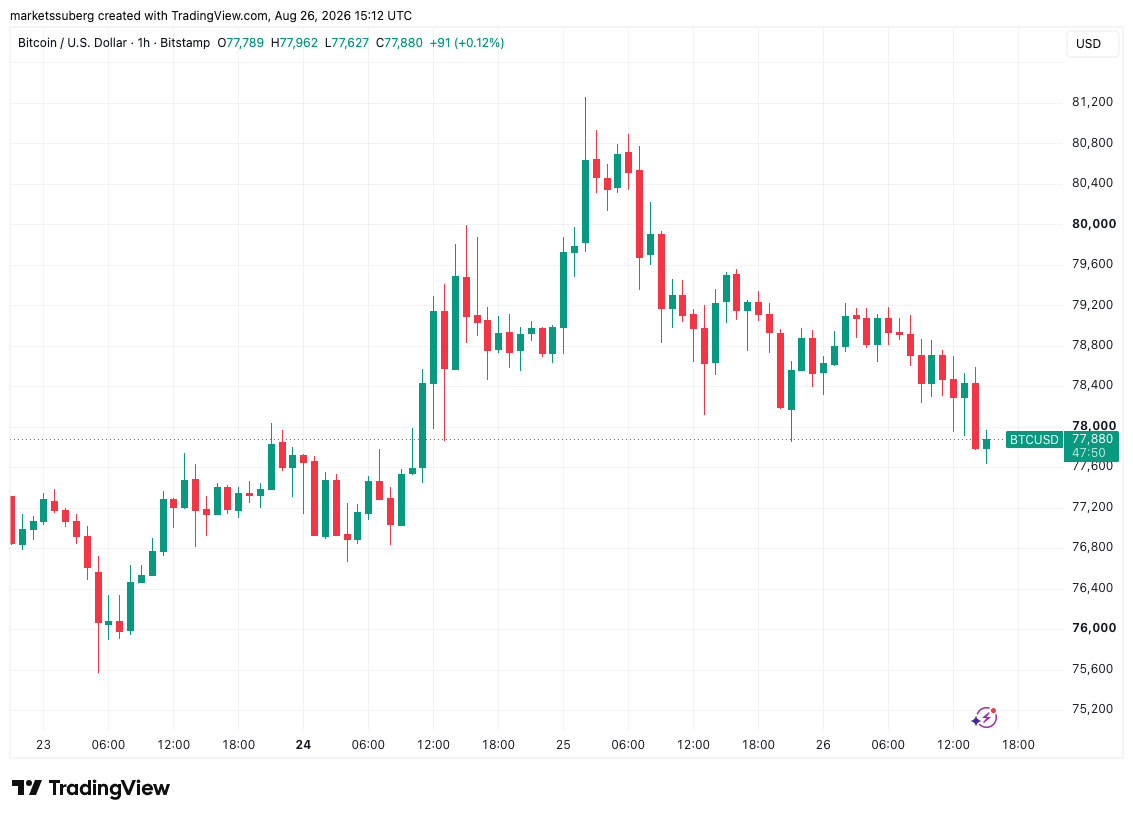
Bitcoin (BTC) slipped under $78,000 following Wednesday’s Wall Street open after US inflation data came in above expectations.

Key points:

  • Bitcoin sees further downside after US PCE inflation data came in 0.1% higher than expected in July.
  • Markets await Nvidia Q2 earnings release as Wednesday’s next potential volatility catalyst.
  • BTC price analysis warns over 25% weekly gains forming a bear market relief rally.

Higher-than-expected PCE data pressures Bitcoin

Data from TradingView tracked up to 1% daily BTC price losses, with US stocks also opening lower and gold breaking below $4,600 per ounce.

BTC/USD one-hour chart. Source: Cointelegraph/TradingView

The downside came after the July print of the US Personal Consumption Expenditures (PCE), known as the Federal Resrve’s “preferred” inflation gauge, hit 3.7% year-on-year, above the anticipated 3.6%.

Advertisement

“From the preceding month, the PCE price index for July increased 0.2%. Excluding food and energy, the PCE price index also increased 0.2 %,” the Bureau of Economic Analysis’ (BEA) official release confirmed.

US PCE index data (screenshot). Source: BEA

Markets appeared disappointed by the results following June’s unexpected drop in PCE gains, which included their first month-on-month decrease in six years.

“US inflation continues to run at nearly double the Fed’s 2.0% target,” trading resource The Kobeissi Letter responded in a post on X.

Advertisement

The PCE numbers come a day before the Fed’s annual Jackson Hole economic symposium, with chair Kevin Warsh due to make the keynote speech on Friday.

Investors are watching for today’s Q2 earnings report from technology giant Nvidia report, anticipated to bring short-term risk-asset volatility. The company is expected to record $92.3 billion quarterly revenue, including CPU revenue that analysts at Raymond James forecast could grow from 3% to 5% of NVDA’s total by 2028, expanding its addressable market.

Related: Supply absorption ‘key question’ as Bitcoin fails to reclaim $80K: Analysis

Analyst sets key targets for BTC price monthly close

Examining recent price action, Bitcoin market participants turned to the upcoming August monthly candle close.

Advertisement

Urging a cautious approach, trader and analyst Rekt Capital warned that BTC/USD was in danger of continuing its series of lower highs in place since October 2025. 

“A Monthly Close below the blue resistance would not just solidify another Macro Lower High but would also build a confluent resistance in association with the Macro Downtrend,” he commented on X alongside a chart showing a downward-sloping resistance trend line.

BTC/USD one-month chart. Source: Rekt Capital on X.com

Rekt Capital added that unless the cycle of lower highs was broken, Bitcoin’s rebound over the past week could still be classed as a “relief rally” within the broader bear market. He focused on the 50-week exponential moving average (EMA) at $77,251 as a further trend line to reclaim and hold going forward, with Bitcoin’s last monthly close above it coming in October 2025.

Advertisement

BTC/USD one-month chart with 50-week EMA. Source: Cointelegraph/TradingView

Source link

Continue Reading

Crypto World

CARF May Miss Most Onchain Crypto Tax Activity: Chainalysis

Published

on

CARF May Miss Most Onchain Crypto Tax Activity: Chainalysis

Potentially taxable onchain crypto activity reached at least $457 billion globally in 2025, while international reporting rules may capture only a fraction of it, according to a new Chainalysis report.

The US accounted for an estimated $112.6 billion of the total, while North America led all regions with $134.6 billion, followed by the European Union at $125.1 billion.

The estimates include realized gains, income from activities such as mining, staking and lending, and crypto-denominated payments across six major blockchains, but exclude trading and other activity conducted within centralized exchanges.

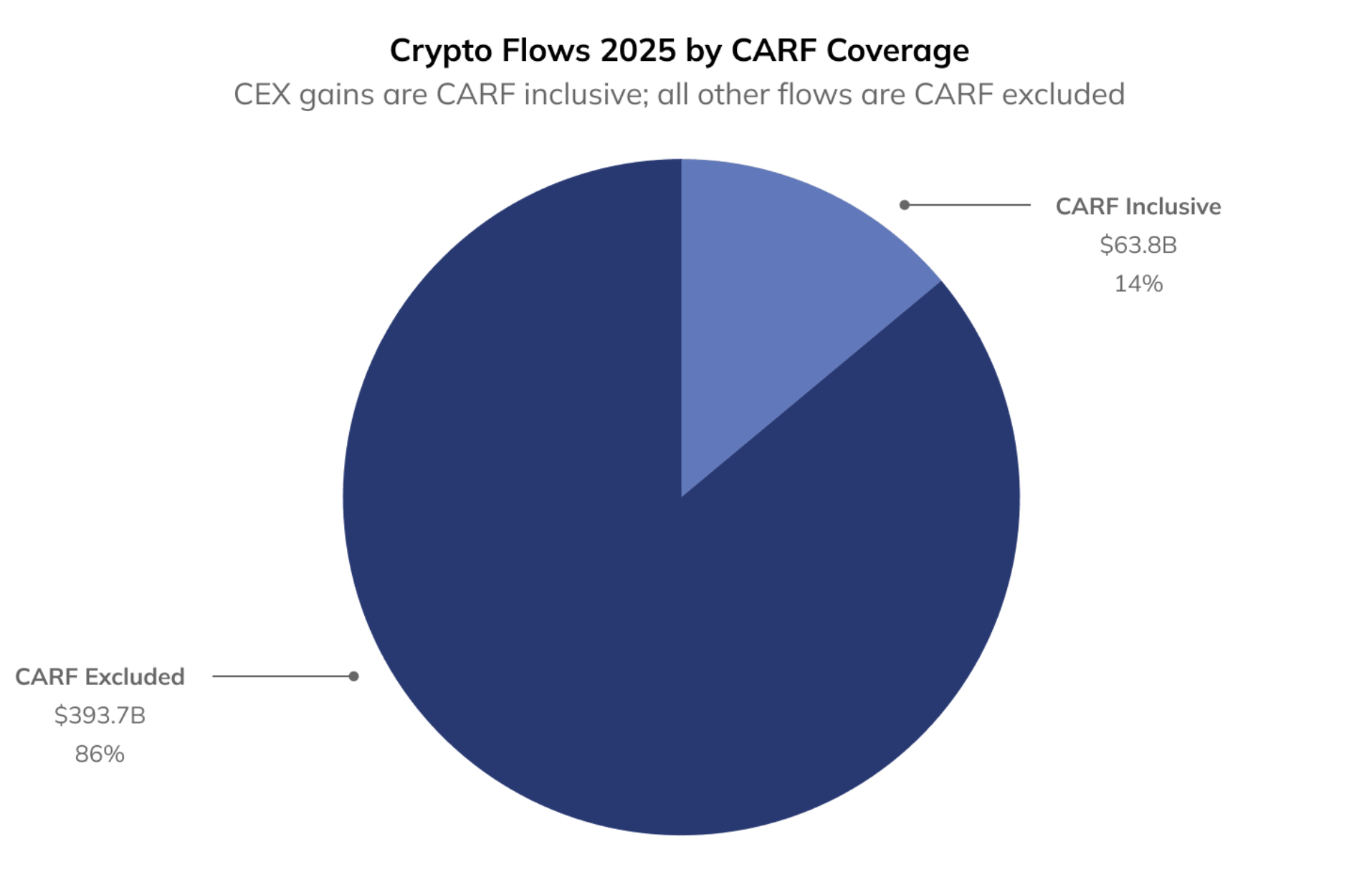
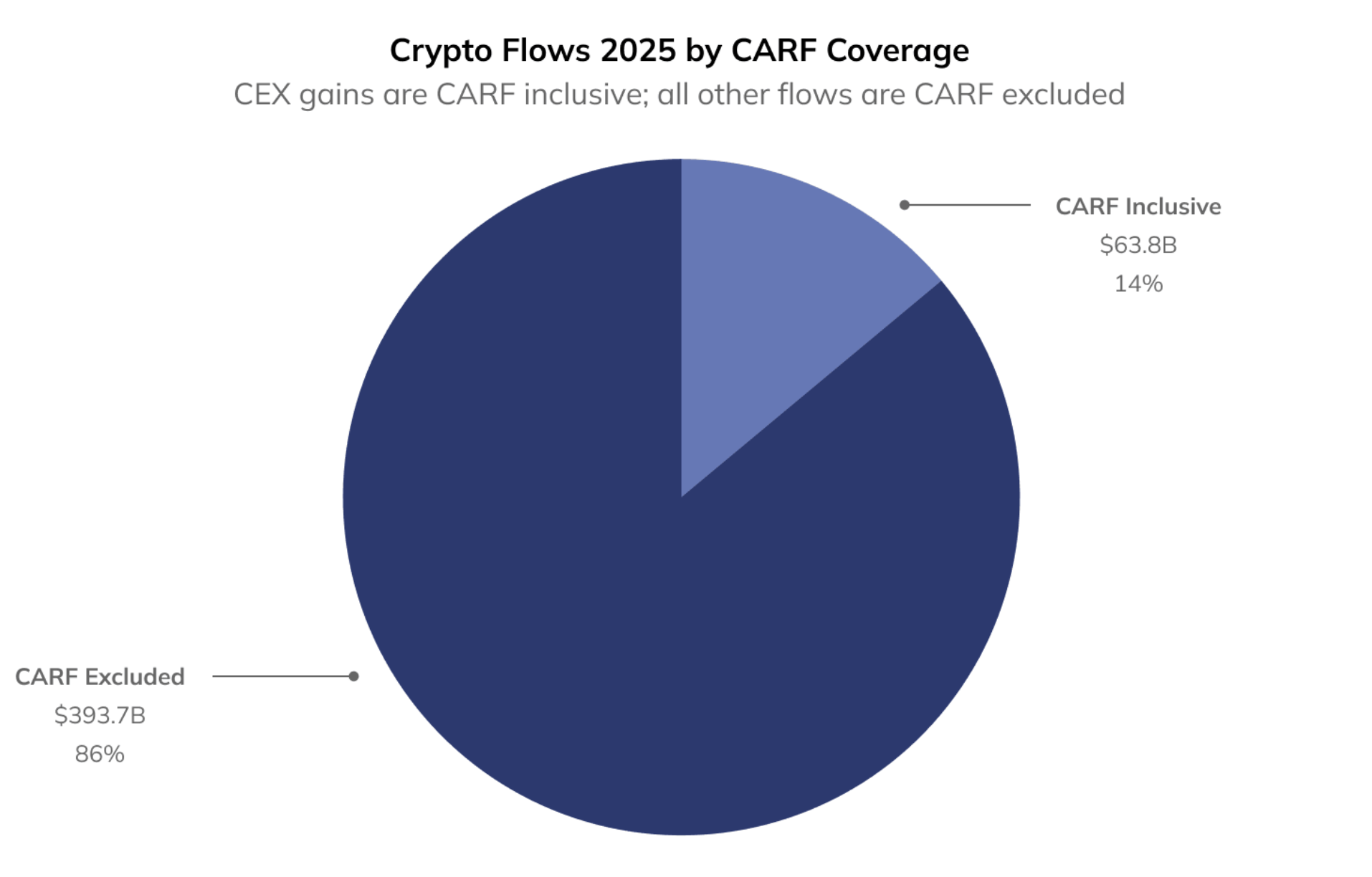
Chainalysis said transactions covered by the Organisation for Economic Co-operation and Development’s (OECD) Crypto-Asset Reporting Framework (CARF) account for just 14% of the onchain taxable activity it identified. The remaining 86% includes activity on decentralized exchanges, peer-to-peer transfers, onchain income streams and payments.

Advertisement

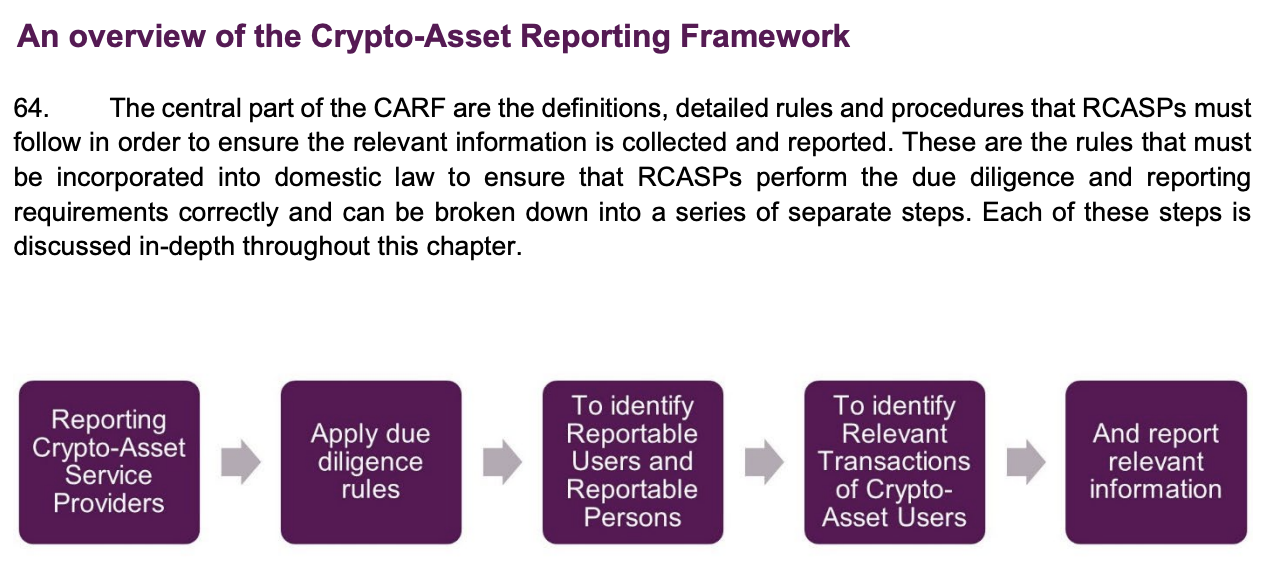
CARF, developed by the OECD in 2022, requires covered crypto service providers to report customer transaction data to tax authorities.

CARF covers only 14% of potentially taxable onchain crypto activity.
Source: Chainalysis

Related: Chainalysis sues US over $95M ICE contract with TRM Labs

CARF’s limits on onchain tax reporting

CARF data collection began on Jan. 1, 2026, in 48 jurisdictions, including the United Kingdom and European Union, requiring covered crypto platforms to collect additional customer and tax residency information.

Under CARF, in-scope crypto providers collect customer and tax residency information and report transaction data to domestic tax authorities, which can then share that information across borders.

Advertisement

CARF framework. Source: OECD

CARF’s focus on crypto intermediaries also helps explain the gaps highlighted by Chainalysis. Colby Mangels, a former OECD adviser who worked on CARF, told Cointelegraph in January that the framework was designed around intermediaries that facilitate crypto transactions as a business.

Much of decentralized finance therefore remains outside the reporting perimeter, as there may be no centralized operator or custodial relationship on which to impose reporting requirements.

That could change as regulators develop rules for decentralized platforms. Mangels said tax authorities are watching developments in anti-money laundering regulation, including efforts to determine when DeFi platforms or their operators should be treated as regulated crypto service providers.

Magazine: SEC’s proposed crypto rules probably won’t spark new ICO boom

Advertisement

Source link

Continue Reading

Crypto World

XRP Leads Crypto Market Pullback With Nearly 7% Drop: Is the Rally Over?

Published

on

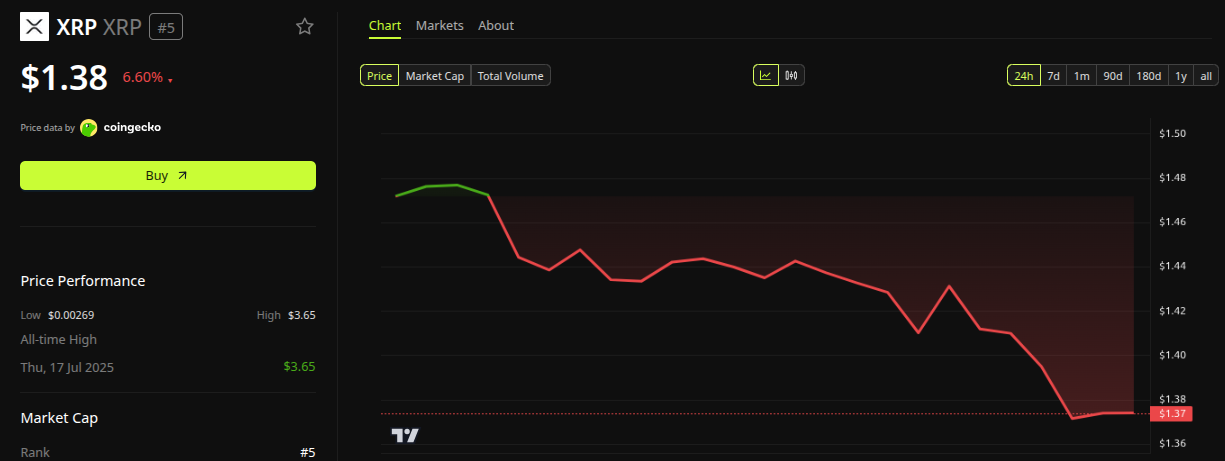
XRP Price Performance. Source: BeInCrypto

XRP is leading a broader pullback in the crypto market on August 26, sliding roughly 6.6% over 24 hours to trade near $1.37, the worst performance among the top 10 cryptocurrencies.

The decline follows one of the token’s strongest weekly rallies in recent memory, and traders are now watching whether the pain has only just begun.

XRP Price Performance. Source: BeInCrypto

What Triggered the Sudden Reversal

XRP rocketed from a cycle low of $0.9877 on August 17 to a three-month high of $1.69 by August 22, a nearly 70% gain that outpaced Bitcoin’s 23.6% and Ethereum’s 28.1% over the same stretch.

That speed left momentum indicators deeply overbought, with the daily RSI reaching 88, a level last seen during July 2025’s all-time high near $3.65.

Crypto analyst ChartNerdTA described the surge as a genuine breakout rather than noise, driven by a liquidity trap for short sellers and positive funding rates. The subsequent unwind has since produced an 18% decline from the $1.70 peak, pulling the price into the $1.40-$1.38 range.

Advertisement

Broader market conditions compounded the move. Bitcoin cleared $80,000 for the first time in months on Tuesday before cooling back toward $78,000 on Wednesday, dragging altcoins lower as traders braced for tonight’s core PCE inflation data and NVIDIA’s earnings report ahead of Jackson Hole.

Why the $1.40 Level Matters So Much Right Now

ChartNerdTA characterizes the pullback as a healthy correction, resetting overbought conditions rather than a trend reversal. The critical battleground sits at $1.40.

A daily close below that level would expose structural supports between $1.30 and $1.20, with a deeper breakdown risking a return toward $1.00.

Advertisement

Reclaiming the weekly 50 EMA near $1.54 would restore short-term bullish control and open a path back toward $1.70, with longer-term targets extending toward $1.80-$2.00 if momentum returns.

Analyst EGRAG CRYPTO offered a more cautious counterpoint, referencing a fractal pattern first shared in March. While acknowledging the risk of confirmation bias in relying on fractals, the trader warned that failing to retest recent lows could leave momentum traders sidelined, chasing local tops only to panic-sell subsequent bottoms.

XRP Price Analysis. Source: X/@egragcrypto

Not every signal point is bearish, however. XRP-linked ETFs have logged six consecutive days of net inflows, according to SoSoValue data, suggesting the current weakness reflects a leverage unwind rather than institutions exiting positions.

CryptoQuant analyst Pelinay separately flagged long liquidations reaching $4.66 million, up 31.82% in a single day, warning that selling pressure could persist before any stabilization.

Subscribe to our YouTube channel to watch leaders and journalists provide expert insights.

Advertisement
XRP Analysis. Source: X/@PelinayPA

Whether this marks a constructive reset or the start of a deeper corrective phase will likely hinge on the bulls’ ability to defend $1.40 in the coming sessions.

The post XRP Leads Crypto Market Pullback With Nearly 7% Drop: Is the Rally Over? appeared first on BeInCrypto.

Source link

Continue Reading

Crypto World

Taylor Swift Revealed Her Coping Mantra. Here’s How to Find Yours

Published

on

Taylor Swift Revealed Her Coping Mantra. Here’s How to Find Yours

Taylor Swift already told us she can do it with a broken heart. That might be due to grit, stamina—or a little psychological trick called a coping mantra.

When she feels stressed by her circumstances, “I go through several processes and coping mechanisms,” Swift revealed in August during the Icon Sessions, a conversation presented by the Recording Academy’s Songwriters & Composers Wing. “And one of them is saying, ‘You chose this. You chose this every day. You could have opted out of this any day before it got unmanageably big.’ And I decided not to because I love it that much.”

Even if you don’t have plans to perform in stadiums worldwide, you might recognize the peculiar frustration of being trapped by something you chose—whether that’s the job you once desperately wanted, the committee you volunteered to lead, or the dinner party you insisted on hosting. “Where people tend to get really distressed is when they feel powerless, or like something’s being put upon you—you’re just sort of stuck in an achy feeling,” says Jill Stoddard, a clinical psychologist in Newburyport, Mass. “But if you remind yourself, ‘Wait a minute, this is actually a choice I made, and choices do come with difficult consequences, but I’m in charge here’—that empowers you to move forward.”

Enter the coping mantra: a short, deliberate phrase you can reach for when your brain starts sprinting toward the worst-case scenario. Stress leaves little room for nuance, says Dr. Jasmine Sawhne, a psychiatrist in Los Angeles. When your body is in fight-or-flight mode, you’re not going to reason your way out of it. A mantra gives your overloaded brain something simple to grab onto—and buys you a beat to choose what to do next. Here’s how to find one that actually helps.

Advertisement

Make your brain an offer it can believe

“Everything will be OK” is a lovely thought. It’s also a promise about a future you can’t see—which means your anxious brain might reject it before you finish the sentence.

From a cognitive behavioral therapy perspective, predicting that everything will work out is a form of fortune-telling, says Alison McKleroy, a San Francisco therapist and author of The Self-Compassion Journal. The same goes for affirmations like “I am confident.” If you feel unsure, your brain isn’t going to buy it. You can say it 1,000 times, McKleroy says, and still not believe a word of it.

Instead of predicting a rosy outcome or forcing a new personality, a useful mantra can state a choice that’s within your control. Swift’s is essentially: I’m choosing to keep doing this, difficult parts and all. “It’s a decision you’re making out loud,” McKleroy says.

Advertisement

Stoddard takes a slightly different—but equally reality-based—approach. When she’s crushed by too much to do and too little time, she tells herself, “I’ll get it done. I always do.” It works because in her case, it’s true. “I wouldn’t have a PhD in psychology if I didn’t always get it done,” she says.

If you’re someone who does not, in fact, always get it done, that phrase may not be for you. This isn’t an exercise in “blowing sunshine” at yourself, Stoddard says. The best mantra is simple, specific, memorable—and true.

Figure out what your brain forgets under pressure

In other words, don’t choose a generic mantra for “stress.” Identify your brain’s favorite way of making stress worse, then find a phrase that interrupts it. If you tend to predict disaster, McKleroy suggests: “I can’t know that yet” or “I don’t have a crystal ball.”

Advertisement

Sawhne’s stress takes a different form: She tries to solve everything at once. She runs a bicoastal psychiatry practice and has two children under 5, and she often catches herself mentally juggling five problems at the same time. Her mantra—“I don’t have to solve everything right now”—reminds her that urgency and importance aren’t the same thing. She doesn’t need the entire day, week, or situation figured out; she needs to identify what requires her attention first.

McKleroy, meanwhile, likes to over-research, add more information, and complicate projects past the point of usefulness. So she tells herself: “Let it be simple.”

“Things are usually naturally simple,” she says. “I just add stuff to it.”

Keep it short enough to say in one breath

Advertisement

Cap a coping mantra at about four words. When stress hits, “we just don’t have a lot of cognitive bandwidth,” Sawhne says, so you need a few words you can pull “out of your back pocket” as soon as your nervous system fires.

Shorter also means fewer words to obsess over. “Perfectionists are going to overthink it,” Hardis says. “You just want something that’s short enough that you can remember that’s going to orient you.” Her own mantra—“Discomfort, not danger”—passes the one-breath test with room to spare.

Use it to keep going while the feeling is still there

Nearly two decades ago, Hardis underwent exposure therapy for an intense fear of flying. When the plane hit turbulence, she would tell herself: “This may suck, but I can handle it.”

Advertisement

She still uses that mantra. During rough turbulence on a recent flight home from visiting her daughter, “I found myself saying it,” she recalls. In the past, she would have stared out the window, listened for every ominous noise, and asked a flight attendant if the plane was OK. This time, she calmly repeated her mantra and kept reading. “It helped me get through the flight and do what I knew I needed to do,” she says.

The fear was still there; it simply didn’t dictate her next move. “The goal in anxiety treatment isn’t to make the feeling go away,” Hardis says. It’s to help you decide what to do while the feeling is still there.

Borrow one—and make it sound like you

There are no bonus points for originality here. Anna Elton, a licensed marriage and family therapist in Palm Beach, Fla., and author of The Formula of Desire, uses “just keep swimming.” She borrowed it from Finding Nemo, which she watched with her kids. “That’s why it’s easy to remember,” she says. She also turns to “If it were easy, everyone would do it” when a project proves harder than expected. Her most exuberant mantra is a call-and-response: “Who is awesome? I’m awesome.” “I do it all the time,” she says. 

Advertisement

Once you settle on a potential mantra, say it out loud. Does it sound like something you’d actually tell yourself—or something embroidered on a throw pillow you’d try to hide? McKleroy recommends trying slightly different versions until one lands. “Brave” and “courageous” might look interchangeable on paper, for example, but one could feel much more natural coming out of your mouth.

You’ll know you’re getting close when the words produce even a small shift. The right phrase might bring “a little hit of relief,” McKleroy says, or make a spiral lose some of its momentum. If your brain instantly rejects it, change a word or scale it down. “Let it be simple,” for example, might become “Let it be simpler.”

Once you find one that works, practice it before you need it. Stoddard encourages clients to try new coping tools during low-stakes moments, when their emotions are relatively mellow. Call your mantra to mind when you’re running five minutes late, opening a mildly stressful email, or sitting down to a task you’ve been avoiding. Otherwise, summoning an unfamiliar phrase in the middle of a crisis will be “an uphill battle,” she says.

Put it where the problem lives

Advertisement

Years ago, when McKleroy was trying to stop procrastinating, she hung “Do it now” in big letters above her kitchen sink. “That was my command,” she says. “Just do the dishes.” After enough repetition, “do it now” stopped being a mantra and became a habit, and now she rarely procrastinates.

These days, “Let it be simple” hangs above her desk—prime territory for over-researching and adding just one more thing. McKleroy calls this “keeping it in existence,” or displaying the reminder exactly where you’ll need it.

That might mean taping your mantra to your computer monitor, writing it on the bathroom mirror, turning it into your phone lock screen, or putting it on the front of your journal. “If you’re really anxious, your mind’s not going to remember—it’s going to go blank,” Hardis says. A visual cue ensures the words are waiting for you when you need them.

Your reminder doesn’t even have to be made of words: McKleroy suggests drawing a circle on a stone and carrying it in your pocket or leaving it on the bathroom counter. To her, the circle represents simplicity. “A circle on a rock would be enough,” she says, to remind her to “let it be simple.” You could similarly choose a meaningful color, shape, or object. And—since this entire exercise began with Swift—you could even spell yours out on a friendship bracelet. 

Advertisement

Source link

Continue Reading

Crypto World

Upgrade Separates Consensus and Execution to Address Scaling Limits

Published

on

Crypto Breaking News

High-performance blockchain designs have long wrestled with a structural trade-off: when execution is tied directly to consensus, the network’s throughput becomes limited by how fast validators can process transactions. As research and engineering teams push improvements in finality and block propagation, execution itself is increasingly viewed as the next bottleneck to redesign.

MultiversX, a Cointelegraph Decentralization Guardians (CTDG) ecosystem participant, is now testing an approach that aims to remove that bottleneck. Its Supernova upgrade decouples consensus from transaction execution, enabling validators to vote without waiting for execution to complete—shifting computation into an asynchronous pipeline. Supernova is live on testnet, and deployment planning targets a mainnet activation date later this year.

Key takeaways

  • Supernova reorders the block workflow so proposers submit transaction blocks without executing first, while validators can vote immediately based on protocol validity.
  • Execution output is confirmed in subsequent block headers, with execution lagging consensus by roughly one block (about 600 milliseconds).
  • A “virtual mempool state” helps preserve validity by tracking pending nonces, expected balance consumption, and transactions already proposed but not yet executed.
  • EIE (Execution-Result Inclusion Estimator) limits how many execution results a block can reference, based on what minimum-spec nodes can safely handle.
  • Automatic backpressure reduces block capacity when execution falls too far behind, giving the system time to catch up.

Why execution-on-consensus became a scaling problem

In conventional synchronous blockchains, validators don’t just agree that a block is well-formed—they also must execute the transactions to verify state transitions before voting. That keeps the system deterministic and consensus-critical, but it also creates a shared bottleneck: the most computationally heavy transactions effectively slow the entire network.

Many networks have spent years optimizing around agreement speed and block dissemination. MultiversX’s framing is that these gains are not enough if execution remains on the critical path. The core question Supernova addresses is architectural: does execution have to stay inside the consensus loop, or can it be processed asynchronously while preserving safety and correctness?

Supernova’s asynchronous pipeline: voting first, executing after

Supernova, now live on testnet, introduces a changed block production sequence.

Advertisement

Previously, block production followed a more sequential pattern: a proposer selected transactions, executed them locally, and proposed a block containing those results. Validators then had to re-execute the same transactions to verify state transitions before voting, meaning execution sat directly inside the consensus-critical path.

With Supernova, that ordering changes. According to MultiversX’s description of Supernova’s decoupling, the proposer selects transactions and proposes the block without executing them first. Validators then verify that the proposal follows protocol rules and can vote right away. Execution continues asynchronously in the background, producing an output that is normally referenced and notarized in the next block header—so execution trails consensus by about one block, or roughly 600 milliseconds.


The practical consequence is that network responsiveness becomes less dependent on how quickly validators can execute every transaction before they can participate in consensus. Instead, consensus advances on protocol validity, while execution catches up in parallel.

Preserving validity when execution lags consensus

Decoupling execution from consensus creates an obvious safety and validity challenge: if execution is delayed, how does the network determine whether transactions included in a proposed block are likely to remain valid by the time their execution results are produced?

Advertisement

Supernova addresses this with a virtual mempool state. As described by MultiversX, the virtual mempool looks beyond the latest executed chain state and tracks forward-looking execution inputs such as pending nonces, expected balance consumption, and transactions already proposed but whose execution results have not yet passed consensus. That gives proposers a more accurate view of account activity so they can select transactions expected to execute successfully when their turn arrives.

To keep the system robust under varying validator performance, MultiversX also introduces two safeguards designed for operational stability:

  • Execution-Result Inclusion Estimator (EIE): EIE limits how many execution results can be referenced in a block. The cap is tied to what minimum-spec nodes can process safely, reducing the risk that weaker nodes are overwhelmed by referencing too many pending results.
  • Automatic backpressure: If execution falls too far behind, block capacity is reduced to allow the network to catch up—rather than letting lag accumulate indefinitely.

What Supernova changes for developers and users

For builders, the key message is that “in-shard finality” can arrive as soon as the proof is available. MultiversX states this typically happens within the same round at around 100–250 milliseconds, alongside more predictable execution conditions. This matters most for applications that rely on fast feedback loops—examples mentioned include high-frequency DeFi primitives and onchain order book systems, which can degrade when latency becomes a user-experience problem.

Supernova has also been producing 600-millisecond blocks on live testnet and devnet since Aug. 20. The network’s broader objective is to make onchain interactions feel more immediate, shifting the experience closer to responsive application infrastructure rather than delayed settlement.

On timeline, MultiversX indicates mainnet activation is expected for Sept. 10, 2026. While testnet performance does not always translate directly to mainnet behavior under full load, the architecture itself is designed to handle execution lag without forcing every validator to execute first during consensus.

Advertisement

Supernova within the CTDG and Cointelegraph ecosystem

The upgrade also lands within a broader infrastructure collaboration involving Cointelegraph Decentralization Guardians. Earlier coverage noted that Cointelegraph joined MultiversX as a validator through the CTDG program in March 2026, deepening the organization’s operational role beyond content and community work.

Cointelegraph’s CTDG Dev Hub is also described as a MultiversX official partner, connecting the protocol to a wider developer community. The input also references practical involvement such as the MultiversX Foundation delegating to a CTDG validator and the Dev Hub team building a dedicated validator dashboard on MultiversX.

From an industry perspective, this matters because protocol upgrades of this kind often require ecosystem alignment: performance improvements are only meaningful if infrastructure, tooling, and participating validators can adopt new execution and consensus mechanics reliably. Supernova’s focus on backpressure and minimum-spec safeguards suggests the design is attempting to make that transition smoother.

As Supernova moves from testnet toward the projected mainnet date, the most important things for users to watch are whether execution lag remains within expected bounds under real load, and how consistently EIE and backpressure prevent validators from falling behind without overly constraining throughput. The success criteria won’t only be faster finality—it will be whether execution remains dependable when consensus and execution operate on different clocks.

Advertisement

Risk & affiliate notice: Crypto assets are volatile and capital is at risk. This article may contain affiliate links. Read full disclosure

Source link

Advertisement
Continue Reading

Crypto World

Dolly Parton Was the Real-Life Buffy the Vampire Slayer

Published

on

Dolly Parton Was the Real-Life Buffy the Vampire Slayer

Well, of course Buffy resonated with Dolly. In many ways, she was the real-life equivalent of Buffy Summers. Creator Joss Whedon (a man whose relationship to feminism is notoriously complicated at best) conceived the character as an empowered antidote to the hot, scantily clad victim types of 1980s slasher flicks. He has said that he intended the original Buffy to be “one of these crappy, low-budget movies,” but one that “had a feminist agenda, had females in it who were people.” Instead of being saved by some heroic boyfriend, the busty, blonde cheerleader lead (played by Kristy Swanson in the film) “would have to get her own back.” Maybe Buffy looked like the stereotypical high school bimbo. But, especially in a TV series that paired the character’s battles against supernatural baddies with mundane teenage rites of passage, she also had intelligence, resourcefulness, depth, and, of course, a once-in-a-generation gift for slaying vampires. Being underestimated based on her beauty often put her at an advantage.

Source link

Continue Reading

Trending

Copyright © 2025