
Business
Apple Says It’s ‘Concerned’ as Massive Tata Electronics Data Breach Exposes Secret iPhone 18 Pro Details


NEW DELHI — Sensitive lists of components and suppliers, along with photographs of Apple’s unreleased iPhone 18 Pro models, have surfaced on the dark web as part of a sprawling data breach at Tata Electronics, one of Apple’s most important manufacturing partners in India, according to documents reviewed by Reuters and a person familiar with the matter.
The exposure threatens the carefully negotiated business relationships underpinning iPhone production, which Apple assembles from a vast network of suppliers around the world. The breach could also strain Apple’s relationship with Tata, given that most of the company’s supplier arrangements are fiercely protected trade secrets, and the leak could hand rivals, counterfeiters and even Apple’s own vendors an unprecedented look at exactly who manufactures what for the world’s most valuable consumer electronics company.
Reuters reviewed newly disclosed documents showing at least six files that map numerous iPhone 18 Pro components to the specific companies that supply them, including detailed information about chips on the device’s main circuit board, along with battery and camera components. According to a person familiar with the matter, Apple considers this kind of supplier-mapping information especially sensitive and is particularly troubled that the documents being shared on the dark web relate to models that have not yet been released. The data links specific suppliers to specific iPhone parts, information Apple deliberately does not disclose in its public supplier database, the person added.
Several of the leaked files carried Apple “confidential” watermarks and internal Apple code names consistent with the iPhone 18 Pro generation, according to the source. Among the leaked materials were photographs, dated early 2026, showing iPhones undergoing drop tests at a Tata manufacturing plant. The images depict what Reuters described as a conventional, slab-shaped, grey handset featuring a three-camera rear setup and the Apple logo. While Reuters said it could not independently confirm the exact model number shown in the photos, the source identified the devices in the images as iPhone 18 Pro units. Rumors circulating ahead of the device’s expected September unveiling suggest the iPhone 18 Pro will closely resemble last year’s iPhone 17 Pro, with design changes largely limited to a smaller Dynamic Island cutout.
The breach originated with a ransomware group calling itself World Leaks, which claimed responsibility for stealing more than 200,000 files from Tata Electronics and posting them on a dark web leak site beginning around June 10, alongside a downloadable link to a collection reported to total more than 630 gigabytes of data. Beyond the iPhone 18 Pro materials, the stolen trove reportedly included component design documents for older iPhone models, files related to Tesla components, given that Tesla is also a Tata client, and documents tied to Taiwan Semiconductor Manufacturing Co. and Qualcomm, both of which manufacture parts used in iPhones. News outlet AppleInsider first reported last week that iPhone 18 Pro-related documents were part of the broader Tata leak.
Tata Electronics publicly confirmed the cybersecurity incident last week, acknowledging it had detected the breach once it became apparent that World Leaks had published the stolen files. In response, the company has restricted internal access to sensitive systems and hired a global cybersecurity consultant to conduct a forensic audit of the incident. Spokespeople for both Apple and Tata did not respond to requests for comment from Reuters. World Leaks has also previously claimed responsibility for a separate breach involving Nike, and Reuters said it has not independently verified the authenticity of all the leaked data and was unable to immediately reach the World Leaks group for comment.
The timing and scale of the breach carry particular significance given Tata’s growing centrality to Apple’s manufacturing strategy. The company, which both supplies individual iPhone components and assembles complete devices as a contract manufacturer, has emerged as one of Apple’s most important manufacturing partners outside China, a shift that aligns closely with Indian Prime Minister Narendra Modi’s broader push to position the country as a global electronics manufacturing hub. That strategic bet appears to be paying off in measurable terms: according to research firm Counterpoint, India is on track to produce roughly 26% of the world’s iPhones in 2026, a dramatic increase from just 6% four years ago.
For both Apple and Tata, the breach strikes at the trust that underlies their expanding partnership at a particularly sensitive moment, as Apple continues to diversify its manufacturing footprint away from China and lean more heavily on Indian assembly and supply capacity. Reuters reported that Apple is actively investigating the incident and working with Tata on longer-term security measures intended to prevent similar breaches going forward, though the news agency noted the episode could nonetheless unsettle Apple’s confidence in the relationship.
The exposed documents also reportedly reveal more granular details about Apple’s broader sourcing strategy, including specific instances in which the company relies on multiple suppliers for a single component versus cases where it depends on just one or two vendors for a particular part. That kind of information is considered highly valuable competitively, since it effectively reveals where Apple’s negotiating leverage with suppliers is strongest and where the company may be more vulnerable to supply disruptions or price pressure from a limited pool of vendors.
With the iPhone 18 Pro and iPhone 18 Pro Max still on track for their expected unveiling in September, the leak adds an unusual layer of public scrutiny to a product cycle Apple typically manages with extraordinary secrecy. Apple has not commented publicly on the specific contents of the leaked files or on whether the exposure will affect the company’s design, supplier negotiations or launch timeline for the upcoming devices, leaving open questions about how significantly this breach might shape the company’s relationship with one of its fastest-growing manufacturing partners heading into one of its most closely watched product launches of the year.


Why Roblox Had Its Worst Day Ever After Earnings
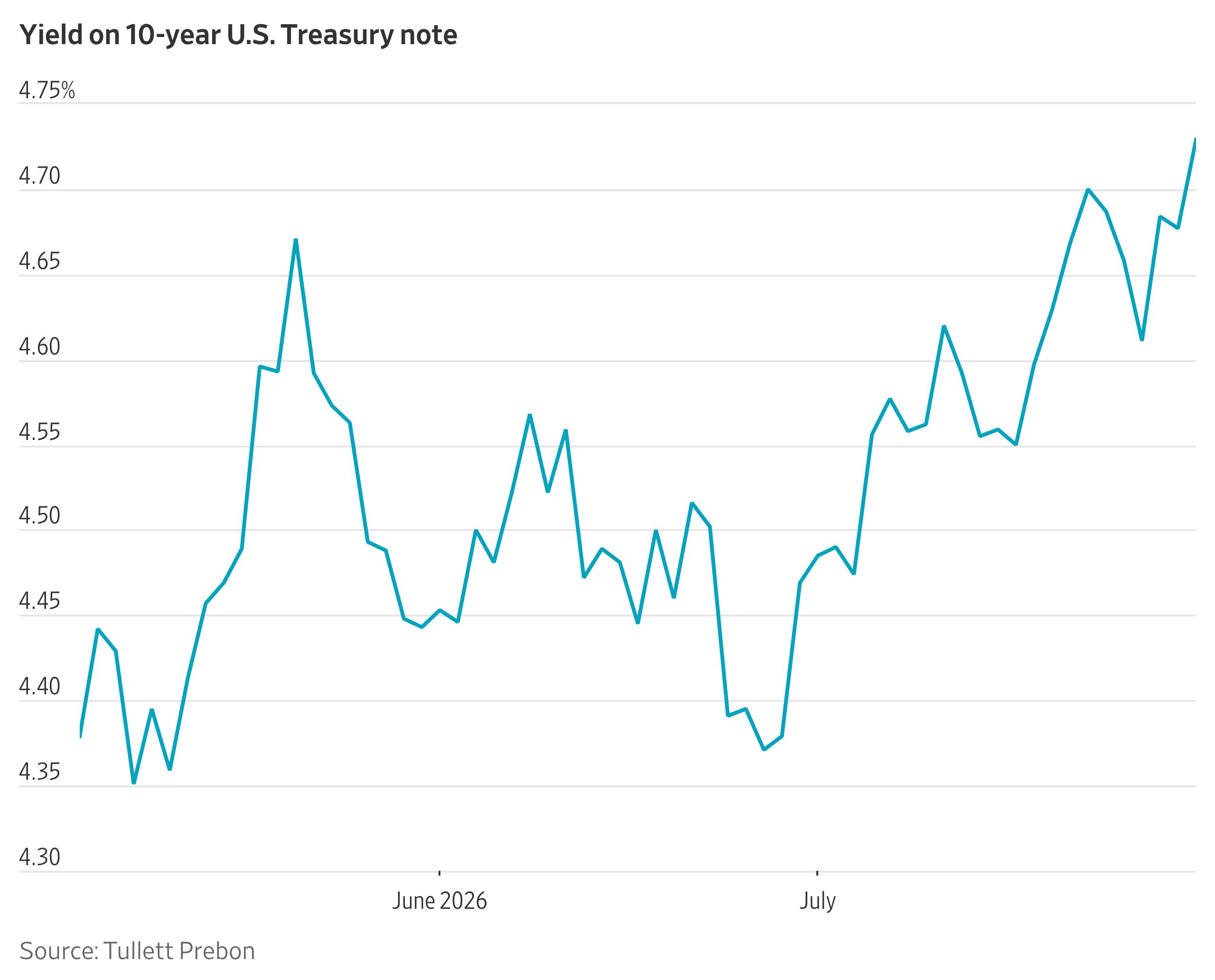
Treasury yields extended their recent gains Friday after three Federal Reserve officials explained why they cast dissenting votes in favor of raising interest rate this week.
Yields, which rise when bond prices fall, were also driven higher by economic data, including a stronger-than-expected reading on Chicago-area economic activity.
The yield on the 10-year U.S. Treasury note settled at 4.743%, according to Tradeweb, its highest closing level since January 2025. The 30-year yield closed at 5.274%, its highest since July 2007.

South Korean stocks surged on Friday, with the KOSPI index rising nearly 18%.
Despite the dramatic gains, the index was still down for the week and the month, a testament to how volatile Korean equities have been as of late.
Not counting today, the KOSPI has gained more than 10% in a single day in only six instances, according to Dow Jones Market Data. History shows that in the week following those six times, the S&P 500 traded lower two-thirds of the time, with an average decline of 1.6%.

1539 ET – Oil futures end July with hefty gains as the month saw renewed Iranian attacks on shipping in a dispute with the U.S. over control of the Strait of Hormuz. Concerns that a return to negotiations could quickly reduce risk premium and lead to oversupply have kept prices from reaching the lofty levels seen in March and April. “Traders are essentially betting on two very different geopolitical outcomes, and neither one is a safe assumption right now,” says Baron Lamarre, co-founder of Index Litro and former head of trading at Petronas. “My base view is we won’t end up with either a massive glut or a full-blown supply crisis by the end of the year,” he adds. “Instead, we’re in for a period of stubbornly tight, volatile conditions that will stick around longer than the optimists are hoping.” WTI settles up 1.3% at $84.67 a barrel for a 22% monthly gain. Brent for September delivery goes off the board at $90.12 a barrel, up 1.2% on the day and up 24% from the end of June.(anthony.harrup@wsj.com)
Oil Futures on Track for Big Monthly Gains
0951 ET – Oil futures turn higher in early U.S. trading and are on track for hefty gains for July, which saw the U.S.-Iran Memorandum of Understanding fall apart and Iran resume attacks on shipping in the Strait of Hormuz. “All things held equal, the market should go a lot higher and led by diesel and gasoline as refinery run rates arejust too low on a lack of crude,” Scott Shelton of TP ICAP says in a note. “The reality is that we are back to a very small amount of crude versus what is needed.” WTI is up 2.2% at $85.42 a barrel. September Brent is 1.5% higher at $90.36 ahead of today’s expiry, while the October contract gains 1.8% to $88.47.(anthony.harrup@wsj.com)
Copyright ©2026 Dow Jones & Company, Inc. All Rights Reserved. 87990cbe856818d5eddac44c7b1cdeb8
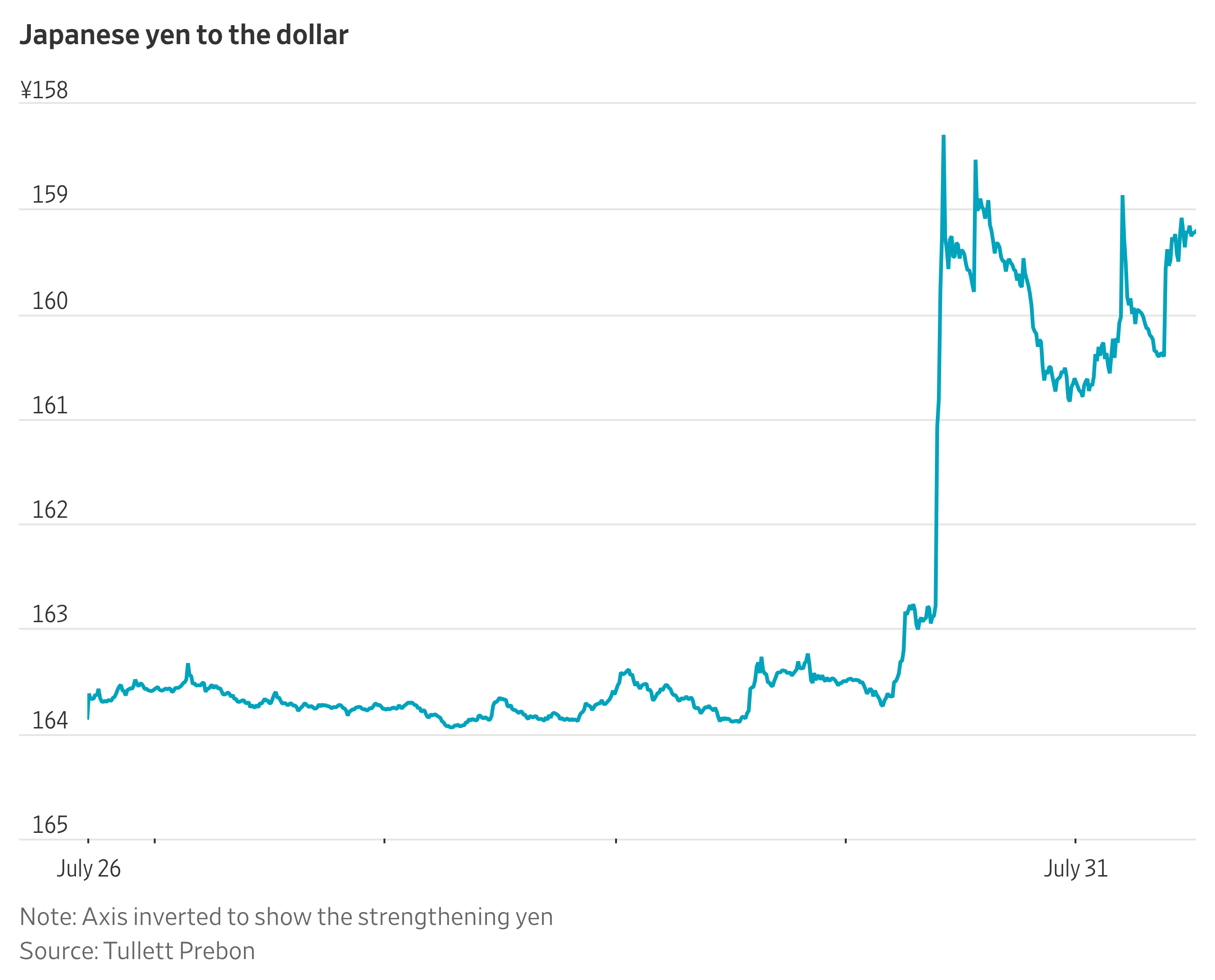
Currency traders broadly believe that the yen’s recent strengthening reflected yen purchases by Japanese authorities, as well as speculation of a possible U.S. intervention. The U.S. Treasury Department meanwhile has informed banks that it might make currency trades on Friday to support the Japanese yen and strengthen its exchange rate against the dollar, the Wall Street Journal reported today.

Global reforms emphasize control and decision-making authority over legal forms, shifting regional headquarters evaluation to governance, risk management, and value creation, impacted by tax rates and regulatory expectations.
Evolving Evaluation of Regional Headquarters
Global minimum tax, stricter substance enforcement, and geopolitical fragmentation have reshaped how regional headquarters are assessed. Singapore, Hong Kong, and Dubai now serve distinct roles, each aligned with different strategies for controlling operations and managing risks. They are no longer interchangeable hubs competing on similar benefits, but rather centers tailored to specific business models and regulatory environments.
Authority and Control Define a Headquarters
The focus has shifted from a legal entity’s structure to the authority it exercises within an organization. Regulators and counterparties increasingly scrutinize where key decisions—related to capital allocation, pricing, treasury, and risk management—are made. An entity exercising discretion in these areas is viewed as a true control center, influencing regulatory treatment and compliance risk instead of mere administrative support.
Governance and Control in Practice
Beyond reporting functions, the extent of authority impacts governance, documentation, and accountability standards. These factors determine a company’s regulatory exposure and defenses. While corporate tax rates like Singapore’s 17% and Hong Kong’s 16.5% are still relevant, emphasis now also rests on where value creation and control are evidenced within the organization.
Read the original article : Singapore vs Hong Kong vs Dubai: Regional HQ Trade-Offs for Investors
Other People are Reading

Are you tired? I’m tired. In addition to four Big Tech companies reporting earnings this past week, the calendar included results for second-quarter gross domestic product and the June personal consumption expenditures price index, along with the Federal Reserve’s interest-rate decision. Unscheduled, there was a meltdown of the artificial-intelligence trade, as highly leveraged bull positions were liquidated. The iShares Semiconductor exchange-traded fund was down 12% across three days, and one of the most successful AI investors—hedge fund Situational Awareness—saw margin calls and forced sales.

Private-equity firm KKR KKR is near a deal to take medical-device outsourcing company Integer Holdings ITGR private, according to people familiar with the matter.
The details
The deal, which could come as soon as next week, would value the Plano, Texas-based company at roughly $127 a share, the people said. There are no guarantees a deal will come together.
Copyright ©2026 Dow Jones & Company, Inc. All Rights Reserved. 87990cbe856818d5eddac44c7b1cdeb8
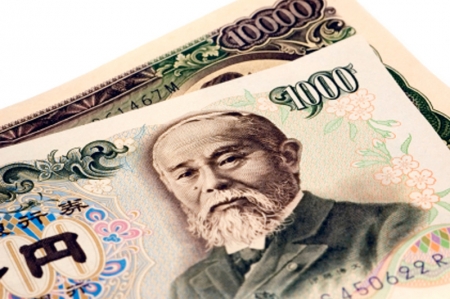
Exclusive-Japan to announce Tokyo, Washington took joint action on yen, sources say
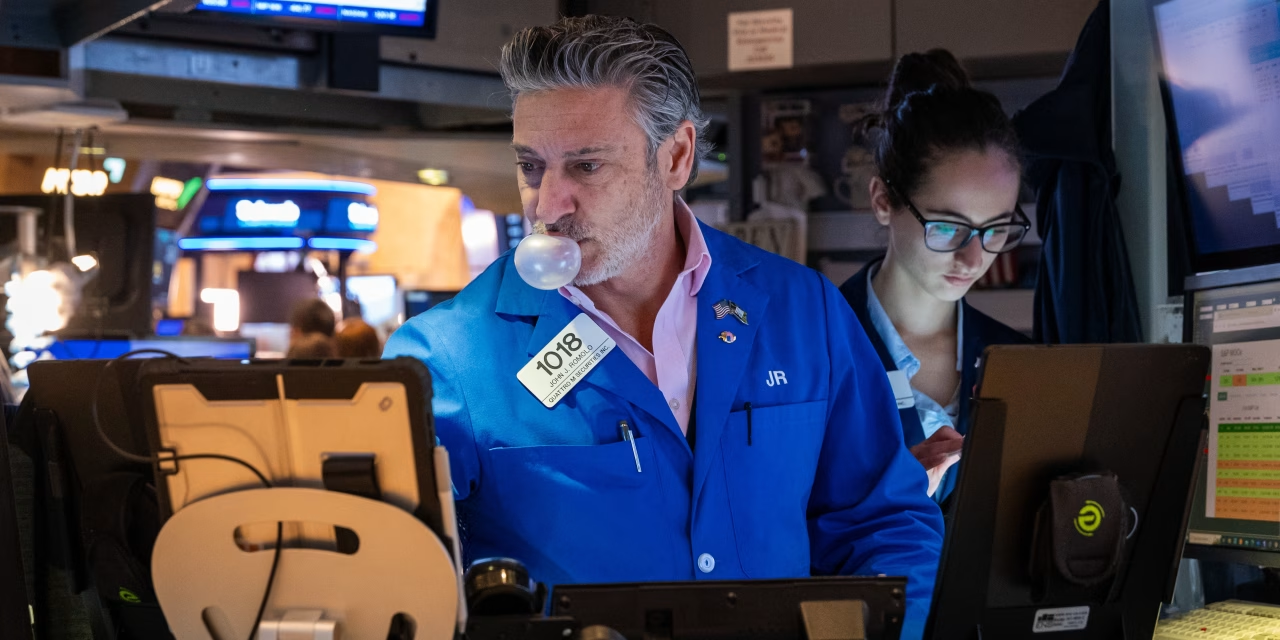
A 9% selloff in Apple stock hasn’t done much to slow down the Nasdaq today.
Apple was recently down about $470 billion in market capitalization, on pace for its largest one-day market cap decline on record and the second-largest of any U.S. company. If it holds, the decline will be Apple’s biggest since 2020.
Copyright ©2026 Dow Jones & Company, Inc. All Rights Reserved. 87990cbe856818d5eddac44c7b1cdeb8

Taylor Sheridan’s War Thriller Officially Reveals Season 4 Status
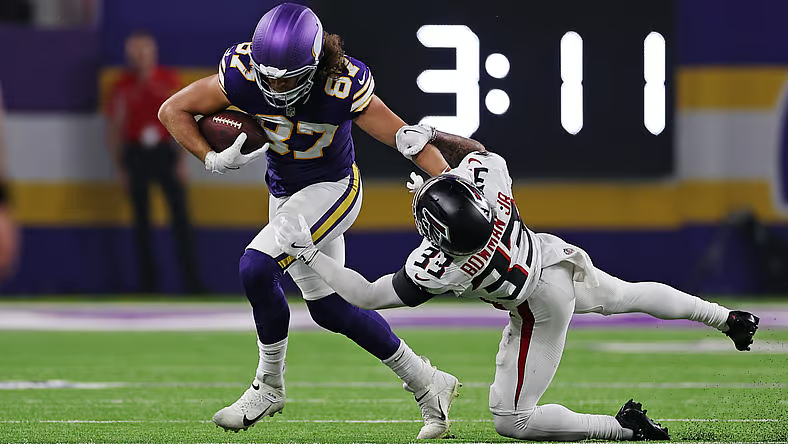
The Vikings’ Trade Candidates: The Top 5 Roster Options

27-Year-Old With More Debt Than Anyone Should Ever Have | Financial Audit


-
 Sports6 days ago
Commonwealth Games boxing: Jadumani Singh seals dominant 5-0 win over Pakistan’s Sumama Rehman to enter quarter-finals | Commonwealth Games News
-

 Business3 days ago
Why Trees Belong on the Risk Register
-

 Fashion1 day ago
Weekend Open Thread: Wit & Wisdom
-

 Tech6 days ago
Intel is reversing course and bringing hyper-threading back to its server chips
-

 Politics1 day ago
Meta enters AI-training agreement with far-right ‘propaganda rag’ Newsmax
-

 Politics6 days ago
Luke Littler dismantles Gerwyn Price to retain title in Blackpool
-

 Crypto World12 hours ago
MicroStrategy Post-Earnings CLARITY Act Push Could Add New Catalyst for Its Stock
-

 Politics5 days ago
The Part of the Electric Transition Nobody Wants to Discuss
-

 News Videos6 days ago
BITCOIN JUST ENTERED THIS CRITICAL ZONE…
-
 Entertainment4 days ago
‘Stargate’ Creator’s New Sci-Fi Series Returns for Season 3 Tomorrow
-

 Business4 days ago
Major shareholder moves on Canyon
-

 Crypto World7 days ago
XRP Ledger adds $2.6B as RWA inflows rank second
-

 Politics7 days ago
Spain sweeps the board at 2026 World Cup with individual awards
-

 News Videos3 days ago
Bitcoin Enters the 3rd Stage of the Bear Market
-
Crypto World20 hours ago
XRP Ledger v3.3.0 brings five institutional features
-

 Crypto World4 days ago
Kraken Enables Retail Access to Jersey Mike’s IPO via Tokenized Shares
-

 Tech5 days ago
New macOS Sequoia & Sonoma security updates for older Macs
-

 News Videos4 days ago
Claude: Build Financial Dashboards in Minutes (2026)
-

 Sports2 days ago
Seema Kaliramna Wins Discus Throw Bronze, Takes India’s CWG Medals Tally To 17
-

 Politics2 days ago
Luke Littler’s dominance sparks GOAT debate
You must be logged in to post a comment Login