Connect with us

Business

Apple Shares Rise as iPhone Maker Maintains Strong Consumer Demand and Services Growth

Published

on

Ismael Saibari

Apple Inc. shares advanced more than 1 percent on Friday, closing at $278.44 after gaining $3.30, as investors responded positively to the company’s continued strength in consumer electronics and expanding services business.

The gain reflected ongoing confidence in Apple’s ability to innovate and maintain premium positioning in personal technology. The company’s ecosystem of devices and services continues attracting loyal customers while generating recurring revenue streams.

Apple’s iPhone remains the cornerstone of its business, with regular updates and new features driving replacement cycles and customer retention. The company’s services segment, including App Store, Apple Music and iCloud, has shown consistent growth and high margins.

Recent product launches and software updates have reinforced Apple’s reputation for quality and user experience. Its focus on privacy, security and integration across devices differentiates it from competitors.

Advertisement

Financial Performance and Strategy

Apple has reported solid revenue and earnings growth, supported by services expansion and device sales. The company’s ability to command premium prices while managing supply chain efficiencies has sustained strong profitability.

Services revenue has become an increasingly important contributor to overall results. Recurring subscriptions and in-app purchases provide predictable income less affected by hardware cycles.

The company continues investing in research and development across hardware, software and emerging technologies. Its focus on artificial intelligence integration and health features reflects adaptation to evolving consumer needs.

Advertisement

Share repurchases and dividend increases demonstrate commitment to returning capital to shareholders. Apple’s strong cash position supports both investment and shareholder returns.

Product Ecosystem and Innovation

The iPhone’s regular generational improvements maintain its status as the leading smartphone globally. Features like advanced cameras, processing power and ecosystem integration continue driving customer loyalty.

Apple Watch, Mac computers and other devices complement the iPhone while expanding the company’s addressable market. Wearables and personal computing contribute meaningful revenue and strengthen customer relationships.

Advertisement

Software platforms including iOS and macOS receive regular updates with new features and security enhancements. The company’s control over both hardware and software enables seamless user experiences.

Emerging areas including augmented reality, health technology and artificial intelligence represent significant growth opportunities. Apple’s methodical approach to these technologies emphasizes user privacy and practical applications.

Market Position and Competition

Apple maintains premium positioning in consumer electronics with strong brand loyalty and ecosystem lock-in. Its customers often demonstrate high satisfaction and willingness to upgrade within the Apple universe.

Advertisement

Competition from Android manufacturers, particularly in lower price segments, challenges market share in certain regions. Apple’s focus on premium devices and services differentiates it from volume-driven competitors.

The company faces regulatory scrutiny in various jurisdictions regarding App Store policies and market practices. Successful navigation of these challenges while maintaining business model integrity remains important.

Global supply chain management and manufacturing partnerships support Apple’s ability to deliver high-quality products efficiently. Its scale provides advantages in component sourcing and production.

Investment Considerations

Advertisement

Apple’s shares appeal to investors seeking growth combined with dividend income and share repurchases. The company’s consistent financial performance and strong brand support premium valuation.

Risks include slowing iPhone replacement cycles, competitive pressures in key markets and regulatory challenges. Apple’s diversification into services and other products helps mitigate some of these risks.

Longer-term investors value Apple’s innovation track record and ecosystem strength. Its ability to create new product categories and enhance existing ones has driven historical success.

Analysts generally maintain positive outlooks, citing the company’s execution capabilities and market position. However, high expectations require consistent delivery on growth targets.

Advertisement

Industry Trends

The consumer electronics industry continues evolving with emphasis on artificial intelligence, health monitoring and seamless connectivity. Apple’s integration of these technologies across its products aligns with market directions.

Privacy and security concerns have grown as devices collect increasing amounts of personal data. Apple’s emphasis on user control and data protection differentiates it from some competitors.

Sustainability considerations influence product design and manufacturing. The company’s efforts in recycled materials and energy efficiency reflect broader industry trends.

Advertisement

Digital services and subscription models have become increasingly important revenue sources. Apple’s services growth demonstrates successful execution in this evolving landscape.

Future Outlook

Apple’s strategic direction focuses on enhancing its ecosystem while exploring new frontiers in technology. Its investments in artificial intelligence, augmented reality and health represent significant potential growth areas.

The company continues refining its product lineup and services offerings based on customer feedback and technological advances. Its ability to anticipate and shape consumer preferences has been a historical strength.

Advertisement

Investors will monitor upcoming product launches and financial results for signs of continued execution. Management guidance will provide insight into growth priorities and market conditions.

The consumer technology sector’s fundamental demand drivers remain strong. Apple’s brand strength, ecosystem advantages and innovation capabilities position it for sustained leadership.

As the company navigates competitive challenges and regulatory environments, its focus on quality and user experience continues differentiating it in the market. Apple’s progress will be watched closely by consumers, competitors and investors.

Advertisement
Continue Reading
Click to comment

You must be logged in to post a comment Login

Leave a Reply

Business

O’Reilly Automotive, Inc. (ORLY) Q2 2026 Earnings Call Transcript

Published

on

OneWater Marine Inc. (ONEW) Q1 2026 Earnings Call Transcript

Operator

Welcome to the O’Reilly Automotive, Inc. Second Quarter 2026 Earnings Call. My name is Matthew, and I’ll be your operator for today’s call. [Operator Instructions]

I’ll now turn the call over to Jeremy Fletcher. Mr. Fletcher, you may begin.

Advertisement

Jeremy Fletcher
Executive VP & CFO

Thank you, Matthew. Good morning, everyone, and thank you for joining us. During today’s conference call, we will discuss our second quarter results and our updated outlook for the remainder of 2026. After our prepared comments, we will host a question-and-answer period.

Before we begin this morning, I would like to remind everyone that our comments today contain forward-looking statements, and we intend to be covered by, and we claim the protection under the safe harbor provisions for forward-looking statements contained in the Private Securities Litigation Reform Act of 1995. You can identify these statements by forward-looking words such as estimate, may, could, will, believe, expect, would, consider, should, anticipate, project, plan, intend or similar words. The company’s actual results could differ materially from any forward-looking statements due to several important factors described in the company’s latest annual report on Form 10-K for the year ended December 31, 2025, and other recent SEC filings. The company assumes no obligation to update any forward-looking statements made during this call.

At this time, I would like to introduce Brad Beckham.

Advertisement
Continue Reading

Business

South East charities unable to pay staff after online fraud alert

Published

on

A hand with index finger outstretched pressing a key in the middle of a laptop keyboard.

“It’s just not good enough,” she said.

“Many of the grassroots organisations I represent – churches, YMCAs, vets – have CAF as their bank, but they are slowly losing trust in it.”

Rodgers added that she had received “no reassurance” about the current situation from the bank, while any information had been “very inconsistent”.

“It’s especially sad that this has happened in the summer when lots of extra projects are up and running,” she said.

Advertisement

“People are unable to access their own money and have been left feeling powerless – it makes me really angry.”

In a statement, chief executive Alison Taylor said: “I am very sorry for the disruption this has caused for our customers.

“On Monday we informed them that the online banking service will be unavailable until further notice.

“We are working with external experts to fix an issue we identified with third-party software related to our online banking portal. Importantly, the core bank is not affected.”

Advertisement

Taylor added: “We appreciate how difficult this is for our customers and want this to be resolved as quickly as possible, but we cannot restore access until we are assured the issue is safely resolved.

“We are still able to support as extra teams are available on the phone, and we are prioritising time-sensitive payments such as payroll.”

Follow BBC Kent on Facebook, external, X, external, and on Instagram, external and listen to BBC Radio Kent on Sounds. Send your story ideas to southeasttoday@bbc.co.uk, external or WhatsApp us on 08081 002250.

Advertisement
Continue Reading

Business

British Airways flight called mayday on approach to Heathrow

Published

on

A British Airways Airbus A320 flies up through a blue sky.

A British Airways flight issued a “mayday” distress call on its approach to Heathrow Airport earlier this month, according to a statement from France’s accident investigation authority.

The call was made on an Airbus A320 flying from Dusseldorf airport in Germany on 6 July following two stall warnings on the aircraft, before it landed without further incident.

The UK’s Air Accidents Investigation Branch (AAIB) said it was “investigating a serious incident”.

A British Airways spokesperson said the airline was assisting the AAIB with its investigation and was not legally able to comment further at this stage.

Advertisement

The French Air Safety Investigation Authority, the BEA, said that as the plane approached Heathrow, there was a data system failure which triggered a stall warning.

The crew then flew the aircraft in a different mode called “alternate law”, which removes some automated flight protection systems. Another stall warning then occurred at 3,000 feet – which experts say was likely to have been just miles away from the airport.

The urgency call the crew had already made was upgraded to mayday, indicating imminent danger.

The BEA website attributed the statement to the AAIB, but the AAIB would not confirm it was from them.

Advertisement

They issued the following statement: “The AAIB is investigating a serious incident involving a commercial aircraft which occurred on 6 July on approach to Heathrow airport.”

It said the investigation would be a correspondence investigation, meaning that no team would be sent to carry out field investigations.

Aviation safety investigator David Gleave said there are different forms of mayday calls, and to send an urgency message was “not unusual”.

“You could have sick passengers on board who need urgent medical attention… so it’s up to the captains’ discretion as to what they call, but its very unusual for it to be a significant failure on board the aeroplane.”

Advertisement
Continue Reading

Business

Why Solid Rock Community School Believes Emotional Intelligence Belongs in Every Classroom

Published

on

Why Solid Rock Community School Believes Emotional Intelligence Belongs in Every Classroom

Michele Fasnacht on Building Character, Confidence, and Compassion Through Education

Walk through almost any school, and you’ll see students learning math, science, history, and language arts. What you won’t always see is how they’re learning to handle disappointment, work through conflict, show empathy, or build meaningful relationships. Yet those skills often shape a person’s future just as much as academic knowledge.

Emotional intelligence has become one of the most talked-about topics in education, and for good reason. As students prepare for an increasingly connected and complex world, qualities like resilience, compassion, communication, and adaptability are becoming just as valuable as traditional academic skills.

For Michele Fasnacht, that’s never been a trend. It’s been the foundation of Solid Rock Community School since she founded the school more than 22 years ago. Her vision was to create an environment where students could excel academically while also developing the character, confidence, and compassion needed to succeed long after graduation. Through hands-on learning, personalised education, and opportunities to serve others, Solid Rock Community School has built an educational model where emotional intelligence is woven into everyday learning.

Many schools are under pressure to improve test scores and academic performance. Why do you think emotional intelligence deserves equal attention?

Academic achievement will always matter, but it isn’t the only measure of success. Every day, students are learning how to communicate, solve problems, work through challenges, and build relationships. Those skills influence every part of their lives long after they leave school. If we focus only on grades, we’re missing an opportunity to help students become resilient, compassionate, and confident adults.

Advertisement

Was that belief what inspired you to start Solid Rock Community School?

Yes. I wanted to create a school where students could receive a strong academic education while also growing as individuals. My goal was never simply to help students perform well in the classroom. I wanted them to develop integrity, responsibility, compassion, and a genuine desire to make a positive difference in the world around them. That vision has guided our school from the very beginning.

How does Solid Rock Community School put those ideas into practice?

We believe students learn best when they’re actively involved in meaningful experiences. That’s why we’ve created opportunities that extend beyond traditional classroom learning. Students care for rescued animals at Sanctuary at Solid Rock, spend time in our Seed-to-Table Garden, participate in service projects, and develop practical skills through our SAVE vocational program. Those experiences teach responsibility, empathy, teamwork, and leadership in ways that feel natural because students are living those lessons every day.

Some people might see those programmes as extras rather than essential parts of education. Why do you see them differently?

Those experiences are part of the education. When students care for an animal, work together to solve a problem, or take responsibility for a project, they’re learning lessons that will stay with them for life. Character isn’t developed through a lecture. It’s built through consistent experiences that encourage students to care about others, take responsibility, and understand that their actions matter.

Education has changed a great deal over the past two decades. Has your philosophy changed as well?

The mission itself has stayed remarkably consistent. The world has changed, but students still need encouragement, guidance, and meaningful relationships. We’ve continued to grow and introduce new programs because we want students to have opportunities to learn in different ways, but our purpose remains the same. We want every child to be known, supported, challenged, and encouraged to become the best version of themselves.

Advertisement

Building a school around a different educational philosophy must have come with challenges. What has leadership taught you over the years?

Leadership has taught me that setbacks are part of every meaningful journey. You won’t always have immediate answers, and not every decision will be perfect. What’s important is staying focused on your mission, learning from those experiences, and continuing to move forward with integrity. Those challenges have strengthened my commitment to the work rather than discouraging it.

What has been the most rewarding part of leading Solid Rock Community School?

Without question, it’s watching students grow. Every child has unique strengths, and it’s incredibly rewarding to see them discover confidence in themselves while developing compassion for others. Some students arrive unsure of their abilities, and over time you watch them become leaders, problem-solvers, and young people who genuinely want to contribute to their communities. Those moments remind us why this work matters.

What advice would you give to parents looking for the right educational environment for their children?

Look beyond academics alone. Strong grades are important, but ask how a school develops character, encourages curiosity, and helps students build healthy relationships. Education should prepare children for life, not just for the next exam. When students feel supported, challenged, and valued, they’re much more likely to grow into confident adults who make positive contributions wherever they go.

Looking ahead, what continues to inspire you about the future of education?

I’m encouraged by the growing recognition that education should develop the whole person. Schools have an opportunity to shape not only what students know, but also how they think, how they treat others, and how they contribute to their communities. If we continue placing value on compassion, resilience, and emotional intelligence alongside academic excellence, we’ll prepare students for success in every area of life.

Advertisement

Continue Reading

Business

Q2 GDP And June PCE: Growth Remains Resilient Beneath A Weak Headline Print

Published

on

Q2 GDP And June PCE: Growth Remains Resilient Beneath A Weak Headline Print

Q2 GDP And June PCE: Growth Remains Resilient Beneath A Weak Headline Print

Continue Reading

Business

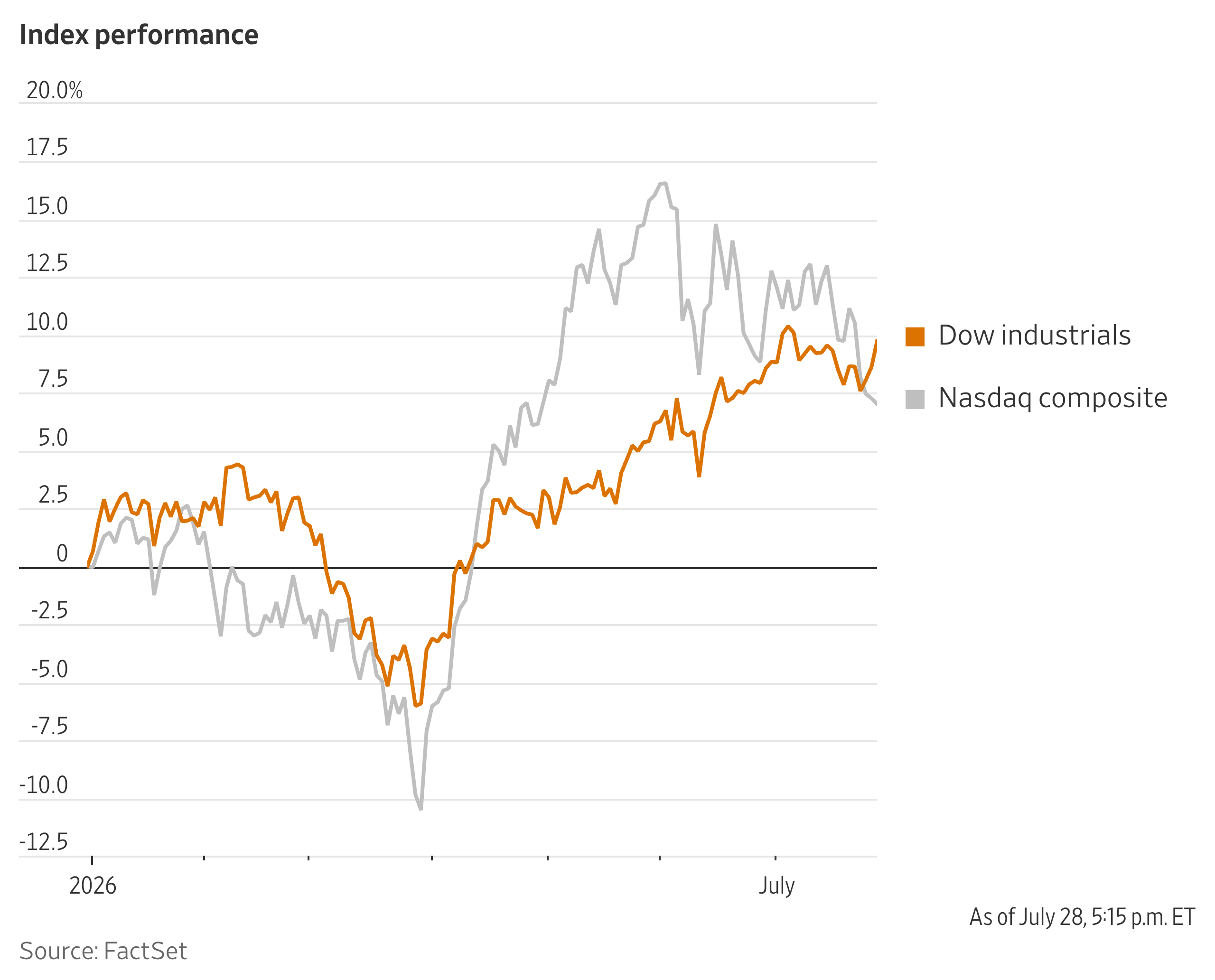
Dow Industrials Pull in Front of Nasdaq, S&P

Published

on

Dow Industrials Pull in Front of Nasdaq, S&P

Dow Industrials Pull in Front of Nasdaq, S&P

Continue Reading

Business

SK Hynix ADR Jumps Nearly 15% as Memory Chip Stocks Rally on Samsung’s Supply Tightness Warning Today

Published

on

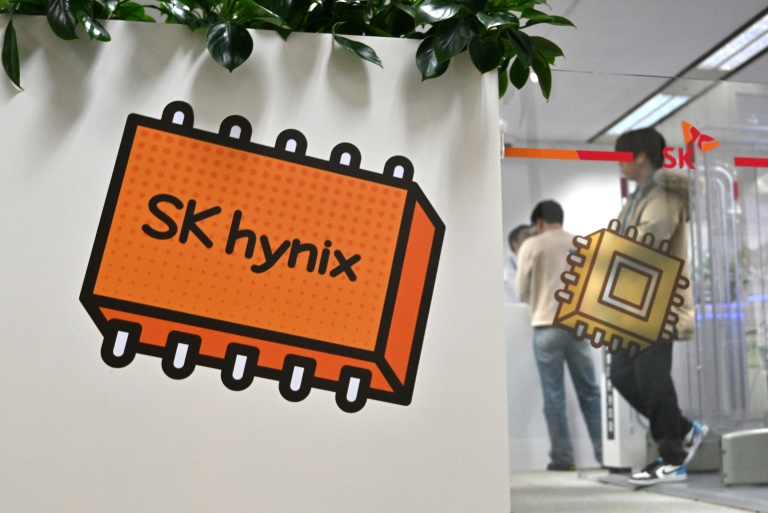
South Korea is home to the world's largest memory chip maker Samsung, and largest memory chip supplier SK Hynix

SK Hynix’s U.S.-listed shares surged 14.59% in Thursday morning trading, climbing $18.50 to $145.29, as memory chip stocks across the board staged a sharp rally driven by warnings of tightening supply from rival Samsung Electronics and improving broader sentiment toward artificial intelligence infrastructure spending.

The rally in SK Hynix’s American depositary receipts, traded on Nasdaq under the ticker SKHY, came alongside broad gains across the memory and storage chip sector Thursday. Micron Technology led the group higher, climbing 15% to $851.56, while SanDisk surged 22%, Western Digital jumped 18%, and Seagate Technology gained 16%, according to trading data. The Roundhill Memory ETF, which tracks the broader DRAM and memory storage sector, rose 13% during the same session, confirming that the rally extended across the entire memory and storage ecosystem rather than being confined to any single company.

The catalyst behind Thursday’s rally traced back to comments from Samsung Electronics, which warned of tightening memory chip supplies, a signal analysts said could bolster pricing power for memory manufacturers broadly, including both Samsung and its rivals. Samsung’s own quarterly earnings had already reflected the strength of current market conditions for memory chips, with the company reporting operating income of 89.2 trillion won, or roughly $62 billion, in its semiconductor division, more than 250 times higher than the prior year.

SK Hynix has established itself as one of the leading global suppliers of high-bandwidth memory chips used in advanced artificial intelligence systems, positioning the company as a direct beneficiary of continued strong AI-related chip demand. Thursday’s rally also coincided with broader improvement in sentiment toward technology stocks following Microsoft’s strong quarterly earnings report, released Wednesday afternoon, which showed the company’s Azure cloud business growing at its fastest pace in years and helped ease broader investor concerns about the durability of artificial intelligence infrastructure spending.

Advertisement

The scale of Thursday’s move in SK Hynix’s U.S.-listed shares stood in notable contrast to trading in the company’s home market. Shares of SK Hynix listed on the Korea Exchange in Seoul fell sharply during the same overall period, part of a broader selloff that has gripped South Korea’s KOSPI index in recent sessions. The divergence between SK Hynix’s Seoul-listed shares and its U.S.-listed ADRs reflects a structural dynamic that has persisted since the company’s American depositary receipts made their Nasdaq debut earlier this month. SK Hynix’s U.S.-listed shares have consistently traded at a substantial premium to the company’s Seoul-listed shares since that debut, with the premium ranging from 16% to 51% at various points, a gap that analysts have attributed in part to limited arbitrage opportunities between the two listings, which can amplify price swings in U.S. trading relative to movements in the underlying Seoul-listed stock.

SK Hynix’s Nasdaq listing itself marked a significant milestone when it launched earlier in July, breaking the record for the largest first-time share sale by a foreign company on a U.S. exchange. The company’s American depositary receipts finished their first trading session in New York at $168.01 per share, delivering a 13% gain on their debut day even though that closing price came in below the $170 opening level, following an initial pricing of $149 per share.

Since that debut, SK Hynix’s U.S.-listed shares have exhibited significant volatility, at times amplified by the introduction of leveraged single-stock exchange-traded funds tied specifically to the company. GraniteShares and ProShares both launched 2x leveraged products tracking SK Hynix’s ADR performance earlier in July, products that carry daily-reset mechanics and full principal-loss risk within a single trading session, according to the funds’ own disclosures, and are generally regarded by market analysts as speculative short-term trading tools rather than long-term investment vehicles.

SK Hynix’s most recent quarterly results, reported in late July, showed record revenue of 79.3 trillion won for the second quarter, up 51% from the prior quarter and 257% from the same period a year earlier, alongside operating income of 60.5 trillion won. The company reported that DRAM prices rose approximately 30% during the quarter while NAND flash memory prices surged into the mid-50% range, pushing the company’s operating margin to a record 76%. SK Hynix also said it had begun mass production of its next-generation HBM4 high-bandwidth memory chips, with a broader production ramp planned for the second half of 2026, and that it had secured long-term supply agreements with approximately 10 customers as it works toward volume production of its subsequent HBM4E chips in 2027.

Advertisement

Despite those strong underlying results, SK Hynix’s ADR had fallen sharply in the days immediately following the earnings release, dropping to a 52-week low near $124.80 as investors weighed questions about the durability of current memory chip pricing and elevated valuations across the sector, even as the company’s reported profitability reached record levels. SK Group Chairman Chey Tae-won made his first personal purchase of SK Hynix shares during that period of stock weakness, a move some analysts characterized as an attempt to signal confidence in the company amid the recent volatility.

Analysts covering SK Hynix have maintained a broadly positive outlook on the stock despite the recent turbulence, with the average 12-month price target for the company’s shares standing at $281.67, according to recent compiled analyst estimates, implying substantial potential upside from current trading levels even after Thursday’s sharp rally.

Continue Reading

Business

USD/JPY: Strong Suspicion Of Intervention

Published

on

USD/JPY: Back To The 1980s

USD/JPY: Strong Suspicion Of Intervention

Continue Reading

Business

Drax boosts dividends despite drop in earnings

Published

on

Business Live

The energy firm pointed to the potential transformative acquisition of Bluefield Solar Income Fund and investments in new technologies

Drax Power Station

Drax Power Station(Image: Getty Images)

First half profits have slumped at energy producer Drax which has boosted its interim dividend.

The operator of the Selby power plant saw adjusted ebitda fall from £460m in the first half of 2025 to £279m in the same period this year, as operating profit fell from £301m to £265m. Drax told investors on the London Stock Exchange the numbers reflected a good performance across its portfolio which is due to grow with the proposed acquisition of the Bluefield Solar Income Fund (BSIF).

Bosses said that move – together with investment in battery energy storage and open cycle gas turbine technology – could be transformative for the group, increasing its generation capacity by about 85% compared to 2025. The Bluefield deal will also bring new solar and wind generation to the business.

Drax said that it had delivered about 6% OF UK power over the six months and 10% of UK renewables in that time. And it pointed to progress upgrading its equipment at Cruachan Power Station.

Advertisement

Despite the fall in earnings, Drax increased its interim dividend to 12.9p per share, up from 11.6p in the first half of 2025. It also expects to boost its full year interim dividend by 11% to 32.2p.

Will Gardiner. Drax Group CEO, said: “Drax has delivered a good performance in the first half. Our colleagues and supply chain partners have been working hard to help keep the lights on for millions of UK households and businesses through a period of acute geopolitical uncertainty and challenging weather.

“We are at a key moment in Drax’s transition, investing to create a larger and broader portfolio with more MWs under management that can provide more power to the country when needed. Over the years we have grown the business from a single-site biomass generator to a multi-site portfolio operating a broader range of generation technologies. Critically, through our growth plans for batteries, OCGTs and our Selby site, we are driving economic growth across the country, in alignment with the policy priorities of the UK Government.

“We are also actively developing options for more renewables, including the proposed acquisition of Bluefield Solar Income Fund, and our trading and optimisation platform. Taken together we believe that these actions can support energy security and will increase the Group’s generation capacity by around 85% compared to 2025.

Advertisement

“As a result, we expect to increase our earnings, deliver value for our stakeholders, support growth and attractive returns for shareholders.”

Continue Reading

Business

Bank of England holds interest rates but warns of rises to come

Published

on

Business Live

Policymakers have warned that ‘strategy could change’ ahead of a difficult second half of the year

A view of the Bank of England

A view of the Bank of England (Image: PA Archive/PA Images)

The Bank of England has chosen to keep interest rates at 3.75 per cent following better-than-expected UK inflation figures – though policymakers cautioned that “policy strategy could change” amid concerns over a challenging second half of the year for price stability.

Advertisement

The Monetary Policy Committee (MPC) maintained interest rates in a split 6-3 vote on Thursday, with economist Catherine Mann joining fellow external member Megan Greene and the Bank’s chief economist Huw Pill in backing a 25 basis point increase.

Officials stated that recent figures showing inflation had dropped to 2.6 per cent provided the Bank with some breathing space and enabled the MPC to maintain its current monetary policy stance.

Minutes from the MPC’s most recent meeting on setting interest rates indicated that those voting to hold rates steady believed “policy strategy could change” should inflation rise beyond projections due to renewed escalation of conflict across the Middle East.

The Bank projects inflation to hover around 3.2 per cent in early 2027 before returning to the target rate by year’s end, as reported by City AM.

Advertisement

Rate-setters cautioned that fresh trade disruption across the Gulf region could maintain elevated energy prices for an extended period, driving up inflation and prompting workers to negotiate higher wages.

Disruptions at oil and gas refineries across the globe, difficulties emerging among key suppliers due to heatwaves, and shortages in AI hardware could all compound the risks facing the UK’s inflation outlook, it was added.

The Bank’s decision to maintain interest rates is consistent with market expectations, though some City banks had anticipated only two members of the nine-person committee would back a rise.

Mann cited the breakdown in relations between the US and Iran as the key factor behind her decision, following a ceasefire agreement to the Iran war last month.

Advertisement

Governor Andrew Bailey, who described it as “too early” to conclude that the UK was heading towards a prolonged period of high inflation, said his focus remained on bringing consumer prices back to a stable growth rate of two per cent, in line with the Bank’s mandated target.

“Inflation has fallen faster than we’d expected, but the conflict in the Middle East continues to mean high and volatile energy prices,” Bailey said. “That will cause inflation to rise again later this year.

“However the conflict unfolds, our job is to make sure any increase in inflation is temporary.”

The Bank raised concerns over so-called “second-round effects”, whereby rising inflation and wage growth spiral out of control. Under a central scenario in which oil prices stabilise at around $70 per barrel, these effects may contribute only approximately 0.2 percentage points to consumer price index (CPI) inflation.

Advertisement

Employers are expected to finalise pay settlements with staff at the start of next year, around the point at which inflation is forecast to reach its peak.

In a separate, more “adverse” scenario, should oil prices climb back to $100 per barrel and retreat more gradually, inflation would peak at 4.5 per cent.

Officials indicated that the MPC would likely choose to raise interest rates under such circumstances. Back in April, one projection suggested there would be six interest rate hikes should oil prices remain around $130 per barrel.

However, rising yields on UK government bonds, reflecting an increase in market interest rates and driving up borrowing costs, had also helped to temper price growth in the UK. Bailey suggested that market curves “are weighing on any nascent inflation pressures”.

Advertisement

The energy price shock stemming from the conflict in the Middle East is likewise not anticipated to significantly weigh on growth prospects.

Economic growth this year is forecast at 1.1 per cent, even under a more adverse scenario in which oil prices spike once more, while unemployment is projected to peak at approximately 5.3 per cent under the central judgement.

Nevertheless, underlying growth in the UK economy is expected to decelerate later this year as businesses struggled to build momentum.

The forecasts took into consideration Prime Minister Andy Burnham’s early policy announcements regarding the removal of VAT from energy bills and capping bus fares at £2, though these measures were expected to have only a modest impact on curbing price growth.

Advertisement
Continue Reading

Trending

Copyright © 2025