
Business
Applied Materials: Little Opportunity Left After A Monstrous Run




Form 13D/A ON24 INC. For: 2 April

Federal Reserve Bank of New York President John Williams discusses market impacts of the Iran War, inflation outlook and more on ‘The Claman Countdown.’
Federal Reserve Bank of New York president John Williams warned that the effects of the Iran war on energy prices could spread across multiple sectors of the economy.
FOX Business host Liz Claman noted during her interview with Williams Thursday on “The Claman Countdown” that gasoline is used in far more than transportation, including clothing manufacturing, asphalt and packaging.
“There’s a pass-through of energy prices into a lot of things that we buy, including airfares… With higher fuel costs, airfares are going to go up,” William said.
“It will spread around. It typically takes us into other goods and services. That typically takes months or maybe a year to have that full effect.”
OIL, GAS PRICES JUMP AS TRUMP FLIRTS WITH STRIKING IRANIAN OIL INFRASTRUCTURE

Gas prices at home have surged since President Donald Trump launched war on Iran Feb. 28, 2026. (Al Drago/Bloomberg via Getty Images / Getty Images)
Williams’ comments come as oil markets continue to roil amid conflict in Iran and the closure of the Strait of Hormuz, a critical global oil chokepoint where about 20% of the world’s oil supply passes through annually.
The national average for a regular gallon of gas is over $4, up more than $1 since the war began, according to AAA.
The Fed president addressed the gas price spike, saying it puts a strain on household budgets already pressured by inflation.
ONE LITTLE-KNOWN MEETING HELPS DECIDE WHAT AMERICANS CAN AFFORD — AND WHAT THEY CAN’T
“Higher energy prices affect inflation, it affects also the disposable income that families have, too,” he said. “So, it hits both inflation, but also it hits demand in the economy.”
Williams added that the NY Federal Reserve is well-positioned for potential risks.
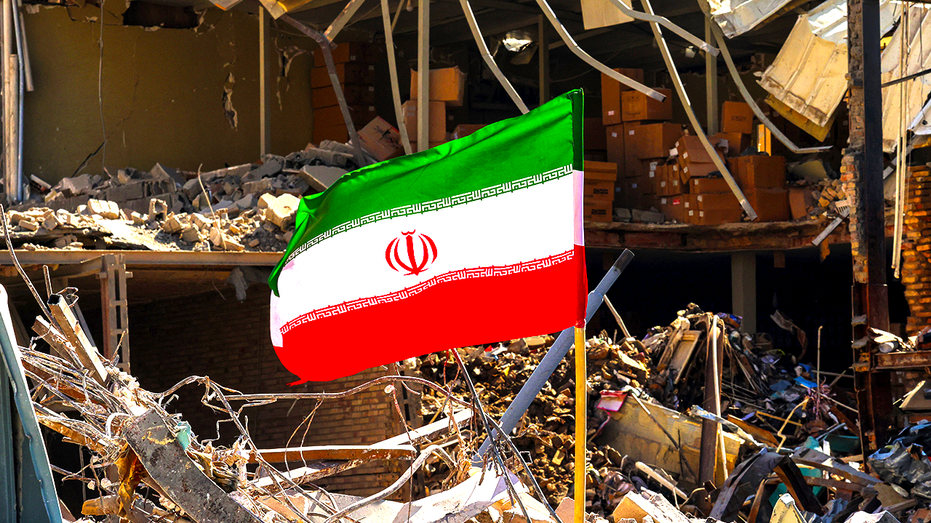
The Iranian flag in rubble and debris in Tehran, Iran. (Atta Kenare/AFP / Getty Images)
KEVIN O’LEARY SAYS REMOVING IRAN FROM STRAIT OF HORMUZ WOULD BE A GLOBAL ‘GAME CHANGER’
“I think monetary policy, with the actions we took last year and where we are today, is actually well-positioned to keep those risks in balance, and that’s what we need to do,” he told FOX Business.
However, President Donald Trump’s war on Iran was not a risk the bank could have anticipated, highlighting the limits of monetary policy in responding to sudden geopolitical shocks.
“We can’t control everything in terms of gas prices are changing, but what we can do is try to get monetary policy positioned so that those risks we achieve in our two goals are in balance,” Williams said.
Federal Reserve Bank of New York President John Williams discusses the Fed’s view of private credit on ‘The Claman Countdown.’
CLICK HERE TO DOWNLOAD THE FOX NEWS APP
Williams went on to discuss his decision-making process for cutting or hiking interest rates, emphasizing the importance of an anticipatory approach.
“We have to be forward-looking,” he stressed. “We have to be looking where the economy is likely to be in the next year or two, because monetary policy actions, they don’t take the full effect on the economy for at least a year.”

Most small businesses don’t have the luxury of wasting budget.
Every flyer, every print run, every campaign needs to work. And when something changes, which it usually does, the cost of updating materials can add up quickly.
That’s where small, practical changes can make a difference.
QR codes are one of those things that seem simple on the surface, but when used properly, they can remove a surprising amount of cost from everyday marketing.
The hidden cost of “fixed” campaigns
A common situation: you print a batch of flyers or brochures.
They include a link. Maybe to a product page, maybe to a campaign landing page. At the time, it makes sense.
A few weeks later, things change.
The offer is different. The page is updated. Or you realise the original link wasn’t performing as expected.
At that point, you have two options:
- leave it as it is and accept the inefficiency
- or reprint everything
For small businesses, neither option is ideal.
Why dynamic QR codes change the equation
This is where dynamic QR codes come in.
Instead of linking directly to a fixed destination, the code acts as a layer in between. That means the final URL can be changed without touching the printed material itself.
In practical terms, that gives you flexibility you don’t usually have with print.
With a dynamic QR code generator, small businesses can update where a QR code points at any time, without reprinting flyers, posters or packaging.
That might not sound like much, but over time it prevents a lot of wasted spend.
Reusing the same materials across campaigns
One of the simplest ways businesses use this is by reusing the same printed materials.
Instead of creating new flyers for every promotion, you can keep the design consistent and update the destination behind the QR code.
For example:
- a seasonal offer becomes a new promotion
- a general page becomes a specific product
- a campaign landing page evolves based on performance
The physical material stays the same, but the campaign doesn’t have to.
Testing without extra cost
Most small businesses don’t run formal A/B tests for offline campaigns. It’s usually too expensive or too complicated.
Dynamic QR codes make this easier.
You can test different destinations over time without changing anything physically. If one page performs better, you simply keep it. If not, you adjust.
It’s not perfect attribution, but it’s a lot more insight than traditional print gives you.
Reducing dependency on “perfect timing”
Another issue with print is timing.
Everything has to be right at the moment you go to print. If something changes shortly after, you’re stuck with outdated materials.
Dynamic QR codes reduce that pressure.
You can launch something quickly, even if the final details aren’t fully locked in, knowing you can adjust the destination later.
For small teams, that flexibility is often more valuable than getting everything perfect upfront.
Where this works best
Not every use case needs this level of flexibility, but some benefit more than others.
It tends to work well for:
- promotions and offers that change regularly
- events and time-sensitive campaigns
- product launches that evolve after release
- printed materials used over a longer period
In these cases, the ability to adapt without reprinting can save both time and money.
What to watch out for
Of course, it’s not a magic fix.
If the experience after scanning is poor, it doesn’t matter how flexible the code is. Slow pages, unclear messaging or too many steps will still reduce results.
The QR code is just the entry point. What happens after still matters most.
Final thought
Small businesses don’t need more tools. They need fewer inefficiencies.
Dynamic QR codes aren’t a big strategic shift. They’re just a practical way to avoid reprinting, adjust campaigns on the go, and make better use of existing materials.
Sometimes, cutting costs isn’t about doing less.
It’s about doing the same things in a slightly smarter way.
Dearborn, Wex COO, sells $532k in WEX stock

Gone are the days when, to enjoy a creamy cappuccino, you had to pick out an outfit, smooth out your morning hair, convince a friend to join you, then head to your neighbourhood café and wait for the barista to whip it up for you.
You can still do that if you want to, of course—but it seems like less and less of us do.
Cafés are what sparked our love for coffee, yet we eventually grew to adore our daily cup of joe so much that we’ve now gone ahead and moved it straight into our homes. How, and why, did this happen? How did coffee shift from something enjoyed strictly while out and about to a ritual so personal no barista can quite replicate it? Let’s try and trace the reasons behind this tranformation—and possibly grow to appreciate our familiar home brewing routines even more along the way.
Control and Comfort over Café Convenience
The growing preference that coffee drinkers show towards a home-brewed cuppa isn’t anecdotal; it’s statistical. In the U.S., for example, home coffee consumption is reported to have grown from 79% to 85% between 2017 and 2021. A similar trend is observed in Europe, and it doesn’t seem like it’s going to slow down anytime soon.
What’s the story behind the statistics? It’s, predictably, the pandemic. With access to our favourite coffee shops having suddenly been limited, the brewing ritual had nowhere else to go but home. We’ve built new routines around our daily cuppa; we’ve bought coffee makers, milk frothers, and grinders; we’ve had plenty of time to experiment and eventually find out that, with some practice, homemade cappuccinos can be just as good as those served at trendy cafés! There’s no rush, no queueing, no upcharge for almond milk… No wonder that, when the coffee shops reopened, some of us have lost the taste for the café experience already.
Growing demand for home brewing equipment has meant a growing supply of reliable, affordable, user-friendly gadgets. Armed with smart coffee machines, handy barista tools, electric milk frothers, and high-precision grinders, we’re now able to tailor homemade brews to our exact taste with ease. The quiet domestic ritual of making ourselves a cuppa is that much more customisable, putting nobody else but us behind the steering wheel—or rather the portafilter. To put it simply, with home brewing being much easier to master, there’s quite simply no reason not to!
From Social Spaces to Social Media
In addition to steering us back towards our homes, the pandemic guided us onto social media platforms. Clubs, pubs, restaurants and cafés were replaced by Instagram, TikTok, and YouTube. With our ability to connect physically being restricted, social media turned into a veritable social hub, a means to share our lives with others and see what they are up to—so, instead of chatting over a cup of coffee, we were now sending pictures of our home-brewed creations back and forth.
Coffee has retained its social aspect, but the ways in which we socialise have changed. Nowadays, the visual appeal of coffee is as important as its flavour. Sure, you can snap a photo of the latest concoction that Starbucks has come up with… But how much cooler is it to grace your Instagram wall with a picture of your very own, carefully curated home coffee corner, or a caramel latte you can proudly say you’ve whipped up yourself? Whether it’s dalgona coffee, matcha latte, or espresso tonic, home brewing is the latest trend, turning our kitchens into personalised coffee spaces that are meant to be shared, seen, and admired online.
Brew-It-Yourself: Coffee as a Craft
Not only has there been a shift in how we share our coffee experiences—the manner in which we craft them is now different too. While previous generations saw coffee primarily as a ready-made product sold at cafés, the young people of today tend to view it as a DIY project. This is part of a broader “do-it-yourself” trend: tired of mass-produced, standardised items, Gen Z and millennials alike have grown to value the custom-made and the authentic, as well as to appreciate the opportunity to gain a new skill offered by DIY undertakings.
More than just a caffeinated beverage, our daily cup of coffee is nowadays a chance to express ourselves. How we brew and consume it is part of our identity—and this identity is far more unique and original when it isn’t in the hands of a barista. Choosing to prepare coffee at home has turned into a statement, a mark of somebody who refuses to settle for the bare minimum, and instead is on the lookout for one-of-a-kind experiences that can only be forged in the comfort of a familiar kitchen. From graceful Chemex rituals to countertop milk frothers for that silky-smooth milk foam, the way in which we craft our coffee is now more than ever part of who we are.
Hooray for Home Brews!
Whether it’s a chatty cuppa at a corner café or an elaborate home brewing ritual, it’s clear that coffee isn’t going anywhere. In fact, by moving into our kitchens, it further cemented its role in our daily lives. All that’s left for us to do is go ahead and enjoy it: housemates this good are rare to come by, after all!

The US EB-5 visa program remains a premier choice for high-net-worth individuals seeking a permanent move to America. This path allows families to obtain green cards by investing in the local economy and creating jobs.
Recent legislative changes have made the process more predictable for those with significant capital. Understanding the current requirements is the first step toward a successful application in 2026. The program offers a unique chance to secure a future in the US for you and your children.
Understanding the Financial Commitment
The base costs for this residency path involve both the investment capital and government administrative charges. Most applicants focus on the primary investment, but the filing process itself requires specific payments to the authorities.
One legal update indicates that the EB-5 visa fees include $3,675 for the I-526E petition and a mandatory $1,000 Integrity Fee. These costs are separate from the capital you put into a commercial project. Planning for these expenses early helps you manage your total budget effectively.
The investment amount depends on the location of the project you choose. For projects in targeted employment areas, the required capital is $800,000. If the project is in a standard area, the amount increases to $1,050,000.
Meeting the EB-5 Visa Requirements
Securing a green card through this program involves a significant transfer of funds into a new commercial enterprise. There are specific EB-5 visa investment requirements that every applicant must meet to qualify for residency. These rules ensure that the capital is used to stimulate economic growth in areas that need it most. Following these guidelines is the only way to move from a temporary status to a permanent one.
The capital must remain at risk throughout the entire residency process. This means there can be no guarantee of a return on your investment or a repayment of the principal. You are essentially becoming an equity holder or a lender to a US business.
Deadlines for Investors in 2026
Timing is everything when it comes to immigration law and policy shifts. The government sets specific windows for when certain rules apply to new applicants. A legal publication points out that the EB-5 Regional Center Program has current authorization through September 30, 2027, but the grandfathering filing cutoff ends one year earlier, on September 30, 2026.
This means acting before that date can protect your application from future legislative changes. Securing your spot before this deadline is a priority for many families this year.
Missing this window might subject your application to new regulations or higher investment thresholds. The grandfathering clause is a safety net for those who file their petitions early.
Capital Source Documentation
Proving where your money came from
is a major part of the vetting process. The government wants to see a clear path from the initial earning of the funds to the final investment. This includes bank statements, tax returns, and business records spanning several years. You must show that the capital was obtained through legal means, such as business profits or inheritance. Clear records make the approval process much faster and reduce the risk of rejection.
If the funds were a gift from a family member, that person must also provide their financial history. This tracing process can be quite detailed and often requires the help of a forensic accountant.
Job Creation Targets
The core goal of this program is to help the US labor market. Every investor must prove their capital resulted in the creation of at least 10 full-time jobs for American workers. If you use a regional center, you can count both direct and indirect jobs toward this total. This flexibility is a big reason why many people choose the regional center route. Failing to meet this job count can prevent you from removing the conditions on your green card later.
- Direct jobs are employees who work directly for the commercial enterprise.
- Indirect jobs are created in the community as a result of the project’s spending.
- Induced jobs come from the spending of the new employees in the local economy.
- Regional centers use economic models to prove these numbers to the government.
Managing the Job Count Risk
Investors should look for projects that aim to create more than the required 10 jobs per person. This “job buffer” provides extra security in case the project faces delays or economic shifts. If a project only plans for exactly 10 jobs, any small change could put your green card at risk.
Choosing the Right Project
Picking a project requires more than just looking at the potential for financial return. You must also evaluate the likelihood of the project finishing on time and creating the necessary jobs.
Many investors look for projects in rural or high-unemployment areas to qualify for lower investment amounts. These projects often get priority processing from the government as well. A well-vetted project is the backbone of a successful immigration journey.
Real estate developments are a common choice for EB-5 investments. These might include luxury hotels, apartment complexes, or mixed-use commercial spaces.
Rural vs. Urban Projects
The 2022 Reform and Integrity Act created new categories for reserved visas. Rural projects now get 20% of the total annual visa quota. This is a massive benefit for people from countries with long waiting lists. High-unemployment areas get 10% of the visas, and infrastructure projects get 2%. Choosing a project in one of these categories can lead to much faster green card approval.
The Role of the Regional Center
Most high-net-worth individuals prefer the regional center path over managing their own business. A regional center is a third-party organization that manages the EB-5 investment process. They handle the job creation reports and the daily operations of the project. This allows the investor to live anywhere in the US without being tied to the project site. It is a passive investment style that fits the lifestyle of many international families.
The regional center also acts as a bridge between the investor and the government. They ensure that the project remains compliant with all immigration laws. In 2026, the oversight of these centers is stricter than ever before.
Tax Implications for New Residents
Becoming a US permanent resident means you will be subject to US global taxation. This is a major shift for many international investors who are used to different tax systems. You will need to report all of your worldwide income to the IRS every year. It is vital to speak with a tax professional before you move to the US. They can help you structure your offshore assets to minimize your tax liability.
- File an annual income tax return on your global earnings.
- Report foreign bank accounts through the FBAR system.
- Disclose ownership in foreign corporations or trusts.
- Consider pre-immigration tax planning to step up the basis of your assets.
Estate and Gift Tax Planning
The US also has an estate tax that applies to your global assets after you become a resident. There are certain exemptions, but these levels change based on current tax law.
Navigating the US immigration system is a major undertaking that requires careful planning and expert advice. By meeting the financial and job creation rules, you can build a stable life for your family in America. The 2026 landscape offers clear deadlines and structured paths for those ready to commit. Taking action now ensures you stay ahead of potential fee hikes or policy changes. Your investment today serves as the foundation for a new chapter in the United States.

BlackRock Global Head of Retirement Solutions Nick Nefouse joins ‘Varney & Co.’ to discuss a proposed rule expanding 401(k)s to crypto and real estate.
The “magic number” that Americans believe they need to have saved for retirement jumped from a year ago as some express anxiety about their retirement savings.
Northwestern Mutual released a study on Wednesday which found that the amount of retirement savings Americans think they need to retire comfortably rose to $1.46 million.
That figure is an increase of $200,000 from last year’s edition of the report and is in line with the estimated magic number from 2024, the firm noted.
“The new ‘magic number’ reflects a convergence of factors — from persistent inflation and longer life expectancies to uncertainty about the future of Social Security,” said John Roberts, chief field officer at Northwestern Mutual.
TRUMP ADMIN PROPOSES OPENING 401(K)S TO PRIVATE EQUITY, CRYPTO
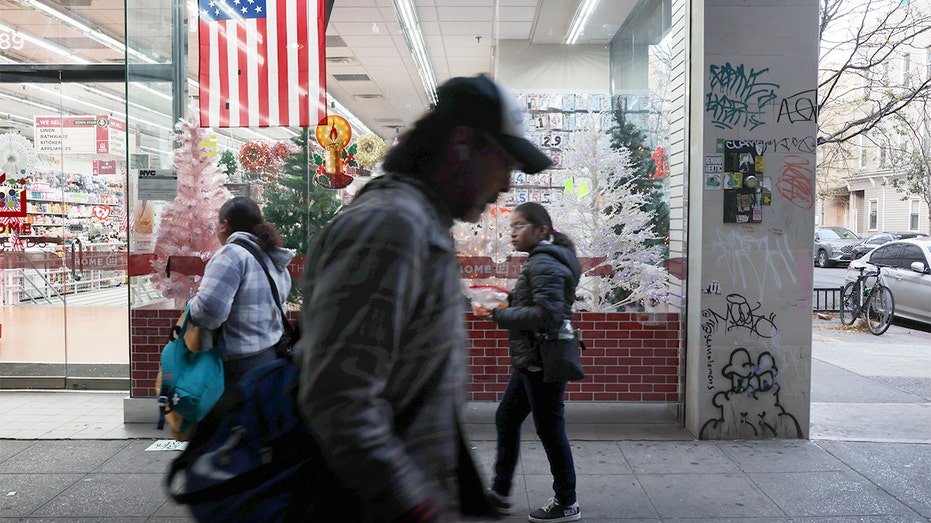
The amount Americans think they need to save for retirement has risen over the last year. (Spencer Platt/Getty Images)
For Americans with a relatively high net worth, defined as having $1 million or more in investable assets, the magic number is even higher at $2.67 million, on average.
“Retirement is increasingly complex, and Americans are responding by setting higher expectations for what they’ll need. What matters now is pairing those expectations with a thoughtful, comprehensive financial plan that will enable them to reach their unique goals,” Roberts said.
The report found that 46% of Americans say they don’t expect they will be financially prepared for retirement, and 48% said it’s somewhat or very likely they will outlive their savings. It also found that just 23% of Americans with retirement savings said they have only one year or less of their current income set aside.

Americans’ “magic number” for retirement rose to $1.46 million. (Angela Weiss/AFP for Getty Images)
The report notes that while there isn’t a universal retirement number for all Americans, Northwestern Mutual recommends that people plan to replace about 80% of their pre-retirement income.
It also detailed several other retirement rules of thumb for Americans to consider as they think about how much they should save for retirement.
The so-called “25x rule” suggests that a person should save about 25 times their expected annual savings. Using the $1.46 million “magic number” from the study, that would be sufficient to generate about $58,000 in annual retirement income, the report said.
NEW PROPOSAL WOULD CAP SOCIAL SECURITY BENEFITS AT $100K FOR WEALTHY COUPLES

The report detailed several rules of thumb for retirement savings. (iStock)
Another rule of thumb is the $1,000-a-month rule, which states that for every $1,000 of desired monthly retirement spending, there should be $300,000 in savings. For example, with $1.46 million in retirement savings, it would yield about $4,800 in retirement income per month.
“These rules of thumb can certainly give Americans a ballpark estimate for their own wealth management goals. But they don’t factor in the big risks to retirement – like increasing healthcare costs or a long-term care event,” Roberts said.
GET FOX BUSINESS ON THE GO BY CLICKING HERE
“They also don’t consider any unique estate planning goals that Americans hope to provide to the next generation,” he added, noting that developing a financial plan with an advisor can be beneficial.

NEW DELHI — Users in India reported widespread problems with ChatGPT’s speech-to-text feature Thursday, with voice input failing to process audio prompts and triggering error messages, prompting speculation about whether the disruption was limited to the country or part of a broader OpenAI service issue.

The complaints surfaced prominently on social media, including a detailed post from tech user Tushar Dahiya on X that quickly drew attention. Dahiya shared a screenshot showing the feature not responding and wrote, “I think chatgpt for speech to text cdn is down in india, tried using their speech to text for giving inputs to chat, but it’s not working.” He followed up asking if the outage was India-specific or global.
As of mid-afternoon local time, monitoring sites like Downdetector showed no massive global spike in overall ChatGPT reports, but scattered user comments from India highlighted voice mode and audio transcription problems. Many described being unable to dictate messages in the mobile app or web interface, forcing them to type prompts manually. The issue appeared concentrated on real-time speech-to-text conversion rather than core chat functionality.
OpenAI had not issued an official statement on its status page or social channels by early evening, unlike in previous outages when the company quickly acknowledged problems. The lack of immediate confirmation left users guessing whether the disruption stemmed from a content delivery network (CDN) issue in India, a regional server problem or something more widespread affecting the voice features rolled out in recent updates.
ChatGPT’s speech-to-text and voice conversation capabilities, powered by OpenAI’s Whisper model and integrated with advanced audio processing, have become popular for hands-free use, accessibility and quick idea capture. The feature allows users to speak naturally and receive transcribed text or engage in spoken dialogues. India, with its large English-speaking tech and student population, ranks among the fastest-growing markets for the AI chatbot, making any hiccup in voice input particularly noticeable.
This is not the first time ChatGPT has faced regional or feature-specific glitches. Earlier in 2026, OpenAI dealt with brief outages in February that affected conversation loading and login across the U.S. and parts of Asia, though those were quickly resolved within hours. In late 2025, a Cloudflare-related disruption knocked out access globally, including in India. Thursday’s reports, however, seemed narrower — focused on speech-to-text rather than the entire platform.
Tech observers noted that CDN problems are common culprits for geographically isolated issues. OpenAI relies on multiple global partners for low-latency delivery of AI models, including audio processing. A temporary overload, maintenance or routing error in Indian data centers could explain why users elsewhere reported normal service. Some Indian users said switching to a VPN temporarily bypassed the problem, suggesting a localized routing or edge-server issue.
The timing added frustration for many. April marks the start of the academic year in parts of India, with students and professionals relying on ChatGPT for study aids, research and productivity tools. Voice input is especially valued during commutes or multitasking. “It’s annoying when you’re driving or cooking and suddenly can’t speak to it,” one Mumbai-based software engineer posted on X alongside similar complaints.
OpenAI has expanded voice features significantly since launching them in 2024, integrating more natural-sounding responses and multilingual support. The company touts the technology as one of its most advanced, but it also introduces dependencies on real-time audio pipelines that can be sensitive to network conditions. In India, where mobile data and Wi-Fi quality vary widely, such features are both highly useful and vulnerable to hiccups.
No widespread reports emerged from the United States, Europe or other major markets, reinforcing the possibility of a regional CDN or India-specific configuration problem. OpenAI’s global status page, which tracks incidents for ChatGPT, the API and related services, showed no active alerts for April 2 as of the latest checks. The company’s history shows it typically posts updates within minutes of detecting elevated errors.
For affected users, workarounds included typing prompts directly, using the desktop version (which some said worked better) or waiting a few hours for potential resolution. OpenAI has not offered credits or apologies for minor glitches in the past, but prolonged issues sometimes prompt compensation for Plus and Team subscribers.
The episode highlights growing dependence on AI tools for everyday tasks. Millions in India use ChatGPT for everything from coding assistance to language practice and content creation. Any disruption, even brief, ripples through classrooms, offices and freelance workflows. Analysts estimate OpenAI’s user base in India has grown exponentially, driven by free-tier access and integration with WhatsApp and other local apps.
Broader context includes OpenAI’s ongoing efforts to scale infrastructure amid exploding demand. The company has invested heavily in data centers and partnerships with cloud providers to handle voice, image and video features. Still, occasional outages underscore the challenges of running real-time AI at planetary scale.
Thursday’s reports come amid a relatively stable period for ChatGPT after several high-profile incidents earlier in the year. In February, thousands complained of “conversation not loading” errors, prompting OpenAI to confirm and fix the problem within hours. Those outages affected core text chats more than voice features. India-specific complaints have surfaced before, often tied to high traffic during peak evening hours.
Experts advise users experiencing voice issues to check their internet connection, update the app, clear cache or try incognito mode. Restarting the device sometimes resolves temporary glitches. For persistent problems, reporting through the in-app feedback or OpenAI’s help center helps the company identify patterns.
As the day progressed, some users noted the feature starting to work intermittently, suggesting the issue might be resolving on its own or through backend adjustments. Others continued posting screenshots of error messages, keeping the topic alive on Indian tech forums and X.
OpenAI, valued at over $150 billion and backed by Microsoft, has transformed how people interact with AI. Its voice mode, once a premium feature, is now central to the product. Disruptions like Thursday’s remind users — and investors — of the fragility of even the most advanced cloud services.
For now, the speech-to-text outage appears confined to India and limited to audio input, with no impact on text-based chats or other OpenAI tools like DALL-E or Sora. The company’s silence suggests engineers are investigating without classifying it as a major incident.
Users in India are urged to monitor OpenAI’s official status page or Downdetector for updates. In the meantime, alternative AI apps with voice features, such as Google’s Gemini or Microsoft’s Copilot, offered temporary substitutes for some.
The incident, though minor, underscores India’s rising importance in the global AI landscape. With one of the world’s largest digital populations, any service glitch here draws quick attention and tests OpenAI’s ability to deliver consistent performance across diverse networks.
As evening approached in India, many hoped for a swift fix so they could resume hands-free interactions with ChatGPT. Whether the problem proves regional or part of a stealthier global tweak remains unclear pending an official explanation.
OpenAI has built a reputation for rapid recovery from outages, often restoring service before widespread panic sets in. Thursday’s event followed that pattern so far, with no confirmation of a full-blown disruption but enough user frustration to spark online discussion.
For a tool that millions turn to daily, even short-lived speech-to-text hiccups serve as a reminder of how intertwined modern work and learning have become with AI infrastructure — and how quickly a single feature can affect routines when it falters.

Central Asia has long been described through a familiar set of themes: commodity markets, construction, trade, and state-led modernization projects.
That perspective still appears in outside publications, although the real picture has long been more complex. The region is changing, and this is especially evident in entrepreneurs whose interests no longer fit within the boundaries of a single industry. Ulugbek Mirzamukhamedov is one such example. His professional path shows how a new approach to business is taking shape in Uzbekistan, one in which what matters is no longer individual sectors in themselves, but the way they relate to one another.
The beginning of this trajectory was fairly typical for the post-Soviet space. Manufacturing, construction, real estate, and industrial projects were precisely the sectors on which growth in many economies of the region long depended. That experience is familiar and recognizable. What matters far more is how the next stage developed. Today, Ulugbek Mirzamukhamedov is a co-founder of the Semurg ecosystem, which brings together insurance, venture investment, and ESG projects. What matters here is not the list of sectors itself, but the principle by which they are connected.
In cases like this, the word “ecosystem” often sounds like a convenient label. Yet in the story of Semurg, it reflects a very specific business model. This is not a random portfolio of assets, but an attempt to build an integrated structure. In materials published by Modern Diplomacy, Semurg is described as a space where insurance, venture capital, and a broader view of development exist within a single business framework. This already represents a different level of business organization, where attention shifts from individual assets to the architecture of the whole structure.
The sequence here is also revealing. First came the insurance business. Then the venture direction was launched. Later, ESG projects appeared within this combination. Each of these decisions looks understandable on its own. Together, they create a more layered picture. Insurance is connected with risk management and trust. Venture investment works with future growth and new technologies. ESG sets a long-term horizon and raises the question of sustainability. In such a system, business does not simply expand outward. It becomes more complex and more substantial, because new directions are built into a shared architecture.
For this reason, it makes more sense to speak here not of diversification in the usual sense, but of an attempt to build an integrated business environment. Fragmented assets can coexist for years without creating a new quality. A coherent structure requires a different scale of thinking. It assumes that different segments reinforce one another, contribute to overall resilience, and shape a more complex business model. This is precisely the approach that can be seen in Ulugbek Mirzamukhamedov’s trajectory.
The venture direction deserves particular attention. Among the projects mentioned in Semurg VC’s portfolio are Multicard, Jett.uz, and Rahmat. This list says little on its own unless one looks at its internal logic. One project is linked to payment infrastructure. Another is connected to access to investment instruments. The third is a digital service for the restaurant sector. Taken together, they point to an interest in solutions that become part of the everyday economy and change it at a practical level. There is no visible attempt here to collect fashionable names for external effect. Rather, what emerges is an interest in services that are becoming part of a new urban and financial environment.
That is why the story of Ulugbek Mirzamukhamedov matters not simply as an example of an entrepreneur working across several sectors at once. It is far more accurate to view it as a reflection of a broader shift in Uzbek business. What is taking place is a move away from a sector-based principle toward a more complex system, one in which value arises from the ability to connect capital, technology, trust, and new formats of growth.
Through his own example, Ulugbek Mirzamukhamedov shows how important this kind of approach is: not movement from one industry to another, but an attempt to build a more integrated business environment in which insurance, investment, technology, and a long-term agenda exist within a common framework. It is precisely such trajectories that make it possible today to see more clearly how business is changing in Uzbekistan and Central Asia.

Moody’s assignment of a Ba3 rating with a stable outlook to Freedom Bank Kazakhstan serves not only as an assessment of its current condition but also as a reflection of its role within a broader framework.
The bank’s baseline credit assessment is set at b1 and reflects its current stage of development and growth dynamics. The bank is actively expanding its retail lending business by developing mortgage and auto loan products, gradually reducing its reliance on investment and trading operations.
Credit quality is assessed as stable: the share of non-performing loans is less than 3%, while the provision coverage ratio exceeds 100%. Capitalization and liquidity are at comfortable levels, although as the business grows, pressure on capital ratios and the cost of funding may increase.
Separately, Moody’s highlights a factor that goes beyond traditional banking analysis: the bank’s integration into the Freedom ecosystem. Freedom Bank is part of Freedom Holding Corp., which consolidates assets in Kazakhstan, Europe, the U.S., and the Middle East. This model provides access to international capital markets, technological solutions, and management expertise, strengthening the bank’s resilience and supporting its further development.
Global Focus: Where Freedom Holding Is Growing
The development of the Freedom Holding ecosystem is directly linked to the expansion of its business footprint. Today, the company operates in 21 countries, and its total assets exceed $10 billion.
Central Asia remains a key region, where Freedom Holding Corp. is systematically integrating its banking and investment services. A unified product model is being developed in Uzbekistan and Tajikistan, and a fully digital bank focused on remote customer service is already operating in Tajikistan.
In the Caucasus, the company is represented in Armenia and is simultaneously working on launching banking projects in Georgia. This direction is viewed as a logical continuation of regional expansion.
Beyond the post-Soviet space, Freedom Holding is also strengthening its international presence. In 2025, the company obtained a license as a professional participant in the securities market in Abu Dhabi, which opened access to the Middle Eastern market and marked an important step in business diversification.
One of the most promising areas for further growth is Turkey. The holding company is considering the acquisition of TurkishBank: the current shareholders have already agreed to sell a controlling stake, and the deal is currently awaiting regulatory approval. The potential buyer is Freedom’s Turkish subsidiary.
At the same time, Freedom Holding Corp. is evaluating opportunities to enter the Pakistani market while continuing to strengthen its position in the U.S. and Europe. Thus, geographic expansion has become an integral part of the strategy aimed at scaling the ecosystem and entering new markets.
The Ecosystem and SuperApp as a Unified Model
Freedom Holding Corp. is consistently developing an ecosystem-based approach, in which the key product is not a standalone service but a comprehensive digital environment. This includes banking, investment, insurance, and technology services, all integrated into a single platform.
This model allows for the formation of a sustainable customer base and deeper engagement with users. Customers gain access to a wide range of services within a single ecosystem, while the company benefits from a more balanced and diversified revenue structure.
The bank plays a central role in this system, providing the financial infrastructure—from payments and transfers to lending—and serves as the foundation of the entire digital platform.
A key element of the ecosystem is the Freedom SuperApp—a single application that combines financial and everyday services. Users can manage accounts, make transfers, invest, receive cashback, and take advantage of additional features—from travel to interacting with government services.
Integration with government databases allows customers to apply for financial products—including mortgages and auto loans—remotely and entirely online, often within a single day. Multi-currency cards and fast international transfers are also available.
The use of biometric identification significantly simplifies access to services and speeds up transactions, minimizing the need to visit branches. At the same time, the platform’s functionality is regularly expanding through the implementation of new digital solutions.
The app’s user base is growing rapidly: the number of Freedom SuperApp users has reached 5 million, increasing by one million in just a few months. This growth confirms the high demand for a unified digital platform that combines financial and everyday services within a single user experience.

4 Greatest Movies Based on Bible Stories

Farage brands failed Reform candidates ‘liars’

Canada’s Dunstone in hunt for semifinal berth after win over Germany at men’s worlds


-

 NewsBeat6 days ago
The Story hosts event on Durham’s historic registers
-

 Sports6 days ago
Sweet Sixteen Game Thread: Tide vs Michigan
-
Entertainment3 days ago
Fans slam 'heartbreaking' Barbie Dream Fest convention debacle with 'cardboard cutout' experience
-

 NewsBeat4 hours ago
Steven Gerrard disagrees with Gary Neville over ‘shock’ Chelsea and Arsenal claim | Football
-
 Entertainment5 days ago
Lana Del Rey Celebrates Her Husband’s 51st Birthday In New Post
-
Crypto World2 days ago
Dems press CFTC, ethics board on prediction-market insider trades
-

 Crypto World1 day ago
Gold Price Prediction: Worst Month in 17 Years fo Save Haven Rock
-

 Tech4 days ago
The Pixel 10a doesn’t have a camera bump, and it’s great
-

 Sports2 days ago
Tallest college basketball player ever, standing at 7-foot-9, entering transfer portal
-

 Tech3 days ago
EE TV is using AI to help you find something to watch
-

 Fashion5 days ago
Amazon Sundays: Soft Spring Layers
-

 Tech3 days ago
Apple will hide your email address from apps and websites, but not cops
-

 Politics3 days ago
Should Trump Be Scared Strait?
-

 Tech3 days ago
How to back up your iPhone & iPad to your Mac before something goes wrong
-

 Crypto World3 days ago
U.S. rule change may open trillions in 401(k) funds to crypto
-

 Tech3 days ago
Flipsnack and the shift toward motion-first business content with living visuals
-

 Tech4 days ago
Elon Musk’s last co-founder reportedly leaves xAI
-

 Tech4 days ago
Avatar Legends: The Fighting Game comes out in July and it looks pretty slick
-

 Business7 days ago
Chinese universities with military links bought Super Micro servers with restricted AI chips
-

 Fashion6 days ago
Weekly News Update, 3.27.26 – Corporette.com
You must be logged in to post a comment Login