
Business
Arkema S.A. (ARKAY) Q4 2025 Earnings Call Transcript


Operator
Welcome to Arkema’s Full Year 2025 results and outlook conference call. For your information, this call is being recorded. [Operator Instructions] I will now hand you over to Thierry Le Henaff, Chairman and Chief Executive Officer. Sir, please go ahead.
Thierry Le Hénaff
Chairman & CEO
Thank you very much. Good morning, everybody. Welcome to Arkema’s Full Year 2025 Results Conference Call. With me today are Marie-Jose, our CFO; and the Investor Relations team.
As always, the slides used during this webcast are available on our website. And together with Marie-Jose, we will be available to answer your questions at the end of the presentation.
In 2025, the macroeconomic environment was, as you know, particularly challenging, probably one of the most difficult our industry has faced in the last 20 years. The second part of the year, in particular, was marked by subdued demand across many end markets. The slowdown in the U.S., while Europe remained at low levels. This reflected ongoing cautiousness of economic factors as well as tight year-end inventory management at many of our customers.
On the other hand, Asia continued to be the most dynamic region for the group, in particular, China, where we could see an acceleration in certain sectors like electric mobility, advanced electronics and sustainable consumer goods as well. As you could expect in this context, the group focused on its fundamentals


Iran is demanding the right to collect tolls in the Strait of Hormuz as a precondition for reopening the vital waterway after its war with the United States and Israel.
The strait is a key route for global oil supplies, but analysts warn that charging ships would violate the long-standing principle of freedom of navigation under international law.
The United Nations’ Convention on the Law of the Sea, in effect since 1994, guarantees the “innocent passage” of ships through straits that do not threaten coastal states.
Experts say allowing Iran to collect tolls could set a dangerous precedent.
“Freedom of navigation has always been recognized, including specifically in straits,” said Philippe Delebecque, a maritime law professor at Paris’ Sorbonne University.
He added that if Iran were allowed to charge tolls, other strategic waterways like the Strait of Gibraltar or the Strait of Malacca could face similar restrictions, potentially undermining international maritime order.
According to AP News, after the war began on February 28, Iran blocked the strait with attacks and threats, causing immediate shortages in Asia and higher gasoline prices in the US and Europe.
It then implemented a “tollbooth” scheme, requiring ships to detour around Larak Island and submit detailed information about their crew and cargo to intermediaries of Iran’s Islamic Revolutionary Guards Corps.
At least two vessels reportedly paid $2 million in Chinese yuan for passage.
US Opposes Iran’s Hormuz Toll Plan
Iran’s 10-point proposal to end the war includes allowing itself and Oman to charge ships passing through the strait, with the funds earmarked for reconstruction, according to a regional official involved in the negotiations.
While the financial impact of tolls on global oil prices might be small—around $1 per barrel on a fully loaded tanker—experts warn about the geopolitical consequences.
An Iranian toll could enrich the Revolutionary Guards and encourage other countries to restrict navigation in their waters, including China in the Taiwan Strait.
US President Donald Trump has prioritized reopening the strait, but the White House opposes tolls, Inquirer reported.
Gulf producers, including Saudi Arabia, share the concern, fearing that Iranian control could limit oil exports.
The region has already had to shut down roughly 12 million barrels per day in crude production due to the blockade, and pipelines bypassing the strait are insufficient to replace lost shipments.
Julien Raynaut, head of the French Association of Maritime Law, said, “Not having ratified the convention doesn’t give Iran total freedom of action in the Strait of Hormuz. It remains subject to international law and notably this customary right of passage.”
Analysts argue that reopening the strait freely would stabilize energy prices, reduce the geopolitical windfall for Russia, and restore a measure of predictability to global trade.
Originally published on vcpost.com


I am Gen Alpha. I have more than 14 years of investment experience, and an MBA in Finance. I focus on stocks that are more defensive in nature, with a medium- to long-term horizon. I provide high-yield, dividend growth investment ideas in the investing group iREIT®+HOYA Capital. The group helps investors achieve dependable monthly income, portfolio diversification, and inflation hedging. It provides investment research on REITs, ETFs, closed-end funds, preferreds, and dividend champions across asset classes. It offers income-focused portfolios targeting dividend yields up to 10%. Learn more.
Analyst’s Disclosure: I/we have a beneficial long position in the shares of REXR, PFE either through stock ownership, options, or other derivatives. I wrote this article myself, and it expresses my own opinions. I am not receiving compensation for it (other than from Seeking Alpha). I have no business relationship with any company whose stock is mentioned in this article.
I am not an investment advisor. This article is for informational purposes and does not constitute as financial advice. Readers are encouraged and expected to perform due diligence and draw their own conclusions prior to making any investment decisions.
Seeking Alpha’s Disclosure: Past performance is no guarantee of future results. No recommendation or advice is being given as to whether any investment is suitable for a particular investor. Any views or opinions expressed above may not reflect those of Seeking Alpha as a whole. Seeking Alpha is not a licensed securities dealer, broker or US investment adviser or investment bank. Our analysts are third party authors that include both professional investors and individual investors who may not be licensed or certified by any institute or regulatory body.

WASHINGTON — President Donald Trump warned Wednesday that U.S. military forces will remain positioned around Iran and stand ready to resume combat operations if Tehran fails to fully comply with what he called the “real agreement” reached in a fragile two-week ceasefire, as tensions over the Strait of Hormuz and ongoing regional strikes threaten to unravel the delicate truce.

In a Truth Social post early Wednesday, Trump stated that all U.S. ships, aircraft and military personnel, along with additional ammunition and weaponry, would stay in place “until such time as the REAL AGREEMENT reached is fully complied with.” He added a stark warning: “If for any reason it is not, which is highly unlikely, then the ‘Shootin’ Starts,’ bigger, and better, and stronger than anyone has ever seen before.”
The comments came less than 24 hours after Trump announced the two-week ceasefire with Iran on Tuesday evening, just hours before his self-imposed deadline for Tehran to reopen the Strait of Hormuz or face devastating strikes on Iranian infrastructure, including bridges and power plants. The agreement, which also involves Israel, was intended to pause more than a month of direct conflict that began in February 2026 and had escalated dramatically in recent weeks.
Trump had earlier escalated his rhetoric dramatically on Tuesday, warning that a “whole civilization will die tonight, never to be brought back again” if Iran did not meet his demands. He later pulled back from immediate action after what he described as a “workable” 10-point proposal from Iran, though he later dismissed some media reports of the plan’s details as a “made up HOAX.”
The ceasefire is contingent on the safe and complete reopening of the Strait of Hormuz, the narrow waterway through which roughly one-fifth of global oil supplies normally pass. Vessel traffic through the strait remained negligible as of Thursday morning, with shipping data showing hundreds of tankers still anchored or rerouted. Iranian media reported suspensions in tanker traffic, citing risks from possible sea mines and Israeli strikes on Lebanon, while the White House described such reports as “false.”
Iranian officials offered mixed signals. Parliament Speaker Mohammad Bagher Qalibaf called negotiations with the U.S. “unreasonable” and accused Washington of violating several of Tehran’s conditions for ending the fighting. Iranian state media suggested Tehran might formalize new tolls on ships passing through the strait, a move the White House has opposed.
Despite the public friction, both sides claimed elements of victory. Trump described the pause as allowing time to finalize a longer-term peace agreement in the Middle East, while Iranian statements framed the ceasefire as a successful stand against U.S. and Israeli pressure. Vice President JD Vance echoed the president’s hard line, warning that failure to honor the deal would bring “serious consequences.”
The fragile truce faces multiple challenges. Israel has continued operations against Hezbollah in Lebanon, which Iran views as a violation of the broader de-escalation spirit. Reports of new drone and missile activity in the Gulf region emerged shortly after the ceasefire announcement, though it remained unclear whether they breached the terms.
Background to the Escalation
The conflict intensified after U.S. and Israeli strikes targeted Iranian facilities earlier in 2026. Trump repeatedly framed the military campaign as highly successful, claiming U.S. forces had “met and exceeded all military objectives” and left Iran’s capabilities “substantially degraded.”
The Strait of Hormuz became the central flashpoint. When Iran restricted traffic in response to the strikes, global oil prices spiked before easing on ceasefire news. Major shipping companies have diverted vessels around the Cape of Good Hope or explored limited alternative pipelines, but full resumption of normal flows depends on verifiable safe passage.
Trump has emphasized that U.S. forces will not withdraw until compliance is assured. “We are helping with the traffic buildup in the Strait of Hormuz,” he posted, adding that “there will be lots of positive action! Big money will be made.”
International reactions have been cautious. Allies including the United Kingdom have offered to assist with reopening the strait, while analysts warn that any misstep could rapidly reignite direct hostilities. Some legal experts previously raised concerns that threats to destroy civilian infrastructure could violate international law, though the White House has denied plans involving nuclear weapons or indiscriminate attacks.
Market and Global Impact
Oil prices showed modest volatility Wednesday, with Brent crude rising more than 2% after earlier sharp declines on ceasefire hopes. Energy traders remain wary, monitoring both Hormuz traffic and any signs of renewed Iranian restrictions.
The ceasefire has also affected broader regional dynamics. Lebanon continues to see Israeli strikes, straining the agreement’s scope. Gulf Arab states have expressed relief at the pause but remain concerned about long-term stability and potential Iranian retaliation through proxies.
What Comes Next
The two-week window is intended to allow negotiations, possibly beginning in Islamabad, to solidify a more permanent arrangement. Trump has signaled optimism about a “definitive Agreement concerning Longterm PEACE with Iran, and PEACE in the Middle East,” while maintaining maximum military pressure as leverage.
Critics, including some Democrats in Congress and international observers, have condemned the apocalyptic tone of Trump’s earlier statements. Supporters argue the tough approach forced Iran to the table after weeks of escalation.
For now, the situation remains fluid. Shipping companies await clear guidance on safe transit, naval forces stay on high alert, and diplomats work behind the scenes to prevent the ceasefire from collapsing within its first days.
Trump’s latest warning serves as a reminder that while the immediate threat of wider war has receded, the path to lasting de-escalation is narrow and heavily conditioned on verifiable compliance — particularly the full reopening of the Strait of Hormuz. Any perceived violation, whether real or perceived, could trigger the renewed “shootin’” the president has promised would be unprecedented in scale.
As the ceasefire enters its second day, global markets, energy security and millions of lives in the region hang in the balance. The coming weeks will test whether the fragile agreement can hold or whether the region slides back into open conflict.
Business
Who Will Win 2026 Masters? Scottie Scheffler Heavy Favorite to Win as Rory McIlroy Pursues Rare Repeat Glory
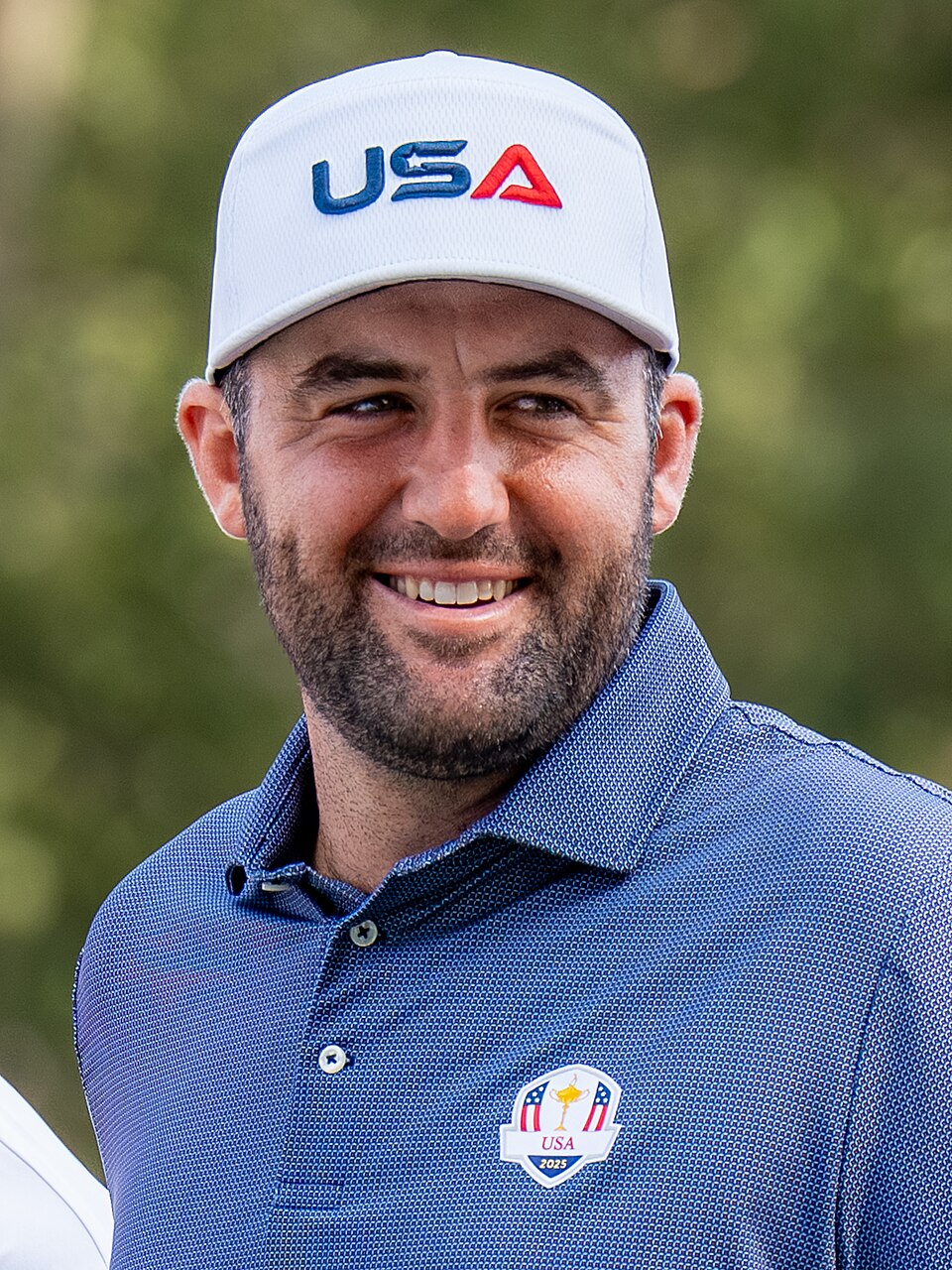
AUGUSTA, Ga.— Scottie Scheffler arrives at Augusta National as the clear betting favorite to claim his third green jacket Thursday when the 90th Masters Tournament begins, but defending champion Rory McIlroy’s bid for back-to-back titles adds drama to a star-studded field packed with major winners and in-form challengers.
Scheffler, the world No. 1, opened as the +510 to +550 favorite across major sportsbooks, according to FanDuel, DraftKings and BetMGM lines released in the final hours before Thursday’s 7:40 a.m. ET tee times. The 29-year-old Texan has won the Masters in each of the last two even-numbered years — 2022 and 2024 — and enters this week as the game’s most consistent performer despite a recent lull that saw him finish no better than 12th in three straight starts.
Yet oddsmakers and models still give him the edge. SportsLine’s simulation, which has correctly picked 16 major winners including the past four Masters, projects Scheffler among the top contenders after running 10,000 tournament scenarios. His ball-striking remains elite, and Augusta National’s firm-and-fast conditions expected this week play to his strengths off the tee and with the irons.
McIlroy, 36, returns as the first player since Tiger Woods in 2001-02 with a realistic shot at consecutive green jackets. The Northern Irishman completed the career Grand Slam with a dramatic playoff victory over Justin Rose in 2025. For the first time in 18 Masters appearances, he arrives without the weight of chasing that elusive final major. His recent form has been mixed — a T-46 at the Players Championship and a withdrawal at the Arnold Palmer Invitational — but his Augusta history (14 cuts made) and motivation could prove decisive.
“Rory has the carrot of history dangling in front of him now,” one analyst noted in pre-tournament previews. Only three players — Jack Nicklaus, Nick Faldo and Woods — have won back-to-back Masters in the modern era. McIlroy sits at +1,200 to +1,300, making him a live underdog in what many are calling the deepest field in years.
Right behind Scheffler in the odds are two LIV Golf standouts who have dominated headlines. Bryson DeChambeau, fresh off back-to-back LIV victories, has climbed to +1,000 to +1,050 and is the public’s favorite bet at several books, becoming BetMGM’s largest liability. The 2020 U.S. Open champion has posted top-six finishes in each of the past two Masters and appears to have finally solved Augusta’s puzzle after years of public frustration with the layout.
Jon Rahm, the 2023 champion, checks in at +900 to +1,000. The Spaniard has answered early doubts about his post-LIV form with four top-15 major finishes in his last five starts and multiple LIV top-fives this season. He remains a proven major closer at Augusta.
Xander Schauffele (+1,500), Ludvig Åberg (+1,600 to +1,700), Cameron Young (+2,200) and Tommy Fleetwood (+2,200) round out the top tier of contenders. Schauffele’s major pedigree and consistent top-10s at Augusta make him a safe top-five play, while Åberg’s runner-up finish in 2024 and T-7 last year keep him in the conversation despite a recent dip that included four missed cuts in eight major starts.
Fleetwood, ranked No. 4 in the latest Official World Golf Ranking, offers value according to the SportsLine model. The Englishman has five top-25 Masters finishes in eight tries, including a T-3 in 2024, and enters the week with strong form: four top-10s in five 2026 starts. His driving accuracy and approach play could shine if the greens remain lightning-quick.
Other notable names include 2021 champion Hideki Matsuyama (+2,700), three-time major winner Brooks Koepka (+4,500) and 2018 champion Patrick Reed (+3,500). First-time major hopefuls such as Robert MacIntyre (+2,700) and Min Woo Lee (+3,000) add intrigue, though history favors experience at Augusta.
Current Official World Golf Rankings released this week reinforce the depth: Scheffler leads, followed by McIlroy, Young, Fleetwood and Matt Fitzpatrick. The top 10 includes several players who have won or contended at majors recently.
Augusta National’s setup this year features the traditional fast fairways and lightning-quick greens that reward precision. Practice rounds revealed firm conditions that could punish wayward drives and demand pinpoint iron play into the par-5s. Chairman Fred Ridley addressed the field Wednesday, emphasizing the course’s timeless challenge amid evolving player power.
Weather forecasts call for mostly clear skies and temperatures in the 70s, ideal for scoring but potentially treacherous if winds pick up on the weekend.
Betting trends show heavy action on Scheffler (nearly 10 percent of tickets and 17 percent of dollars at BetMGM) despite his longest pre-tournament odds since 2023. DeChambeau and Koepka have drawn public money, while longer shots like Akshay Bhatia have seen odds shorten dramatically.
Experts remain split. Some see Scheffler’s pedigree and course knowledge as unbeatable; others point to McIlroy’s emotional lift from the 2025 win or DeChambeau’s red-hot putter. The Athletic’s Big Board ranks Scheffler first, McIlroy second, DeChambeau third, Schauffele fourth and Rahm fifth, citing each player’s recent strokes-gained metrics and Augusta-specific success.
ESPN’s panel and Golf Channel analysts highlighted the “wide-open” nature of the event, with multiple players capable of posting the week’s low score. Yet the consensus leans Scheffler unless his recent inconsistency resurfaces under Sunday pressure.
A Scheffler victory would mark his third Masters title and cement his status as the game’s dominant force. A McIlroy repeat would etch his name alongside golf’s immortals. Either outcome — or a surprise from the likes of Fleetwood or Fitzpatrick — would cap a compelling week at the year’s first major.
As the opening round begins under the towering pines of Augusta National, one thing is certain: the 2026 Masters promises fireworks, with Scheffler the man to beat and McIlroy the story everyone will be watching. (Word count: 1,012)
Business
Grim New Ransom Notes Claim Nancy Guthrie Is Dead as FBI Probes Latest Demands in High-Profile Case

TUCSON, Ariz. — More than two months after 84-year-old Nancy Guthrie vanished from her Catalina Foothills home, new ransom-style notes sent to TMZ claim the mother of “Today” show co-anchor Savannah Guthrie is dead and offer information on her body and kidnappers in exchange for Bitcoin, prompting the FBI to investigate the latest communications in a case that has gripped the nation.

The notes arrived Monday, the same day Savannah Guthrie returned to the “Today” show anchor desk for the first time since her mother’s disappearance, according to TMZ founder Harvey Levin. One message allegedly stated the sender knows “where her body is and who the kidnapper is” and demanded half a Bitcoin — roughly $34,000 at current values — upfront, with the remainder to be paid after a public arrest. A second note claimed the writer last saw Nancy Guthrie alive in Sonora, Mexico, near the Arizona border.
TMZ said it immediately alerted the FBI. Authorities have not confirmed the authenticity of the latest notes, but the development adds to a string of purported ransom demands that have emerged since early February.
Nancy Guthrie was last seen around 9:45 p.m. on Jan. 31 at her adobe home nestled among mesquite trees and saguaros in an upscale neighborhood outside Tucson. She failed to appear the next morning for an online church service with friends, prompting her daughter Annie to check on her. Blood was found near the doorstep, and evidence indicated she had been taken against her will, Pima County Sheriff Chris Nanos said. She was reported missing Feb. 1.
Investigators believe she was abducted in the middle of the night, possibly while in her pajamas and without shoes. “She couldn’t walk 50 yards by herself,” Nanos has repeatedly stated, ruling out the possibility that the medically fragile woman with a pacemaker wandered off voluntarily. The FBI quickly joined the probe, citing its suspicious nature.
Doorbell camera footage released by authorities showed a masked, armed individual at Guthrie’s doorstep on the night of the disappearance. Additional images from Jan. 11 — three weeks earlier — captured a similar masked figure, raising questions about whether the abduction was targeted and planned.
Savannah Guthrie, 54, has described the family’s anguish in emotional interviews. In her first television appearance since the abduction, she told co-host Hoda Kotb she believes the initial ransom notes the family received and responded to were likely authentic. She has blamed herself at times, noting the home was her childhood residence and expressing regret over not being there more often. The family offered a $1 million reward for information leading to her mother’s return or the arrest of those responsible.
Sheriff Nanos has said authorities believe they know the motive and that the kidnapping was likely targeted, though he stopped short of providing details to protect the investigation. He cleared all Guthrie family members, including Savannah and her siblings and their spouses, as suspects early on, calling them “victims in this case” who have been fully cooperative.
Despite an intense search involving federal agents, local deputies, volunteers and thousands of tips, no arrests have been made and Nancy Guthrie has not been found. DNA evidence recovered at the scene, including from a glove, has not yielded a breakthrough; one sample matched an unrelated restaurant worker. Other leads, including surveillance footage reviewed from the area, produced no significant suspects.
Earlier ransom notes and communications have added to the mystery. Some demanded large sums, while others offered information for cryptocurrency. The FBI has treated certain initial notes as potentially credible, though many tips have led to dead ends. A person previously detained with his mother in a SWAT raid near the home was released without charges and has publicly denied any involvement.
As the case enters its third month — now more than 67 days since she was last seen — experts say the passage of time complicates the investigation. Retired FBI agents and private investigators have noted that elderly victims with medical needs face heightened risks, and some have speculated that a medical emergency could have altered the kidnappers’ plans if the abduction was intended for ransom.
Pima County Sheriff’s officials and the FBI continue to describe the case as active, with forensic analysis ongoing. Tips have slowed, but authorities urge anyone with information to come forward. Neighbors were previously asked to share security footage from the weeks surrounding the disappearance.
Savannah Guthrie returned to “Today” on April 6, appearing stoic during the morning broadcast alongside Craig Melvin before becoming emotional greeting supporters on the plaza who wore yellow ribbons in honor of her mother. “It’s good to be home,” she said simply at the top of the show. She has split time between New York and Tucson in recent weeks while remaining involved in the search.
The case has drawn intense media attention, in part because of Savannah Guthrie’s prominence as a beloved television journalist. It has also highlighted the vulnerabilities of elderly residents living alone, even in seemingly safe neighborhoods. Some analysts have pointed to possible early investigative missteps, including an initial assumption by some responders that Nancy Guthrie might have simply wandered away, though officials have pushed back on claims of major errors.
Speculation has ranged widely online and in cable news panels, from theories of a botched ransom plot to questions about whether the perpetrator knew the home’s layout or was interrupted by a neighbor’s dog. No theory has been confirmed.
Nanos warned in March that the unknown suspect could strike again, urging vigilance in the community. He has expressed frustration with armchair detectives and false tips that have revictimized the family.
As of Thursday, no new official updates had been released by the Pima County Sheriff’s Department or FBI beyond the TMZ-reported notes. The latest communications have reignited public interest, with many questioning whether they represent a genuine lead or another cruel hoax targeting a grieving family.
Nancy Guthrie, a mother of three and grandmother, was described by family as vibrant and faithful despite her health challenges. Friends and relatives have continued holding vigils and sharing memories, clinging to hope even as grim possibilities mount.
The FBI and local authorities have asked the public to report any information, no matter how small, to a dedicated tip line. The $1 million family reward remains active for credible information leading to resolution of the case.
For now, the search for Nancy Guthrie continues in the Arizona desert and beyond, with investigators chasing every lead while her daughter balances public duty with private heartbreak. The new notes claiming her death have only deepened the anguish for a family and a nation still waiting for answers in one of the most puzzling abduction cases in recent memory.

Financial influencer Taylor Price joins ‘Varney & Co.’ to break down how shifting your mindset can help Americans grow wealth and achieve the American Dream.
Tax season is closing in on the April 15 deadline to file your return or request an extension and a new report details some common mistakes that Americans are making throughout the year that are costing them money.
A report by GOBankingRates broke down five tax mistakes that could cost American taxpayers thousands of dollars every year.
Those common mistakes range from not claiming deductions that were available to the taxpayer or failing to track deductible expenses to misreporting income.
Here’s a look at the five tax mistakes outlined in the report.
RETIRED? HERE’S WHEN THE IRS MIGHT TAKE A CLOSER LOOK AT YOUR FINANCES
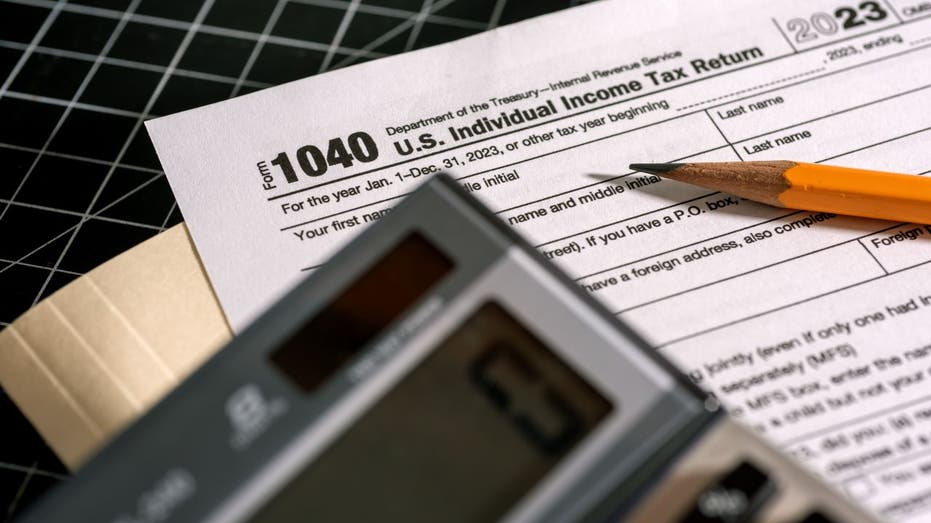
Taxpayers may cost themselves money through smaller refunds or penalties by making mistakes in filing their taxes. (Michael Bocchieri/Getty Images)
Approaching taxes as a once a year event
Christina Taylor, vice president of tax development and delivery at tax technology platform April, told GOBankingRates that taxpayers who only think about their returns during the filing season “miss credits and optimizations they’re actually eligible for, which is how you end up giving part of your refund back to the IRS.”
She added that last year “Americans overpaid their federal taxes by about $3,200 on average, and spent billions of dollars and 6.5 billion hours on tax prep.”
AVERAGE TAX REFUND UP NEARLY 11% FROM A YEAR AGO, IRS DATA SHOWS
The deadline for taxpayers to file their 2025 return or request a refund is April 15. (Kayla Bartkowski/Getty Images)
Not tracking deductions throughout the year
Taxpayers also tend to fail to keep track of their deductible expenses over the course of the year, which happens more frequently when filers are operating under the assumption that they will claim the standard deduction rather than itemizing their return.
Those situations can be avoided if taxpayers keep track of their charitable contributions, whether made with cash or through non-cash donations, along with medical expenses and any interest expenses that they may be able to deduct from their state tax bill.
IRS REFUND TRACKER EXPLAINED: WHAT YOU NEED TO KNOW BEFORE THIS YEAR’S TAX FILING DEADLINE
Incorrectly reporting investment income or stock compensation
Taxpayers may overpay taxes on income from their investments or from stock compensation in the form of restricted stock options or nonqualified stock options that are sold.
Jennifer Kohlbacher, a CPA and director of wealth strategy at Mariner Wealth Advisors, told GOBankingRates that taxpayers often fail to calculate or report their tax basis correctly, which can increase the amount of capital gains taxes they owe.

The IRS may delay refunds for returns with errors or flag them for audits. (Jordan Vonderhaar/Bloomberg via Getty Images)
Missing estimated tax payments or not updating withholding
Taxpayers who operate a small business or are self-employed are required to make estimated tax payments to the IRS each quarter throughout the year, and failing to pay the appropriate amount can cause the taxpayer to face penalties for the amount underpaid as well as any related interest.
Life changes that affect a tax filer’s status, like getting married or having a child, are situations in which taxpayers should update their withholding information to account for the change, which can reduce the size of their refund by raising their take-home pay.
GET FOX BUSINESS ON THE GO BY CLICKING HERE
Filing errors and poor recordkeeping
Taxpayers may make mathematical errors when filing or make typos in their tax return that could cause the IRS to flag a tax return for review or even an audit.
Reviews by the IRS can also cause taxpayers’ tax refunds to be delayed.

OMAHA, Neb. (AP) — Even after stepping down as CEO of Berkshire Hathaway at the end of 2025, Warren Buffett remains one of the most quoted voices in finance. His simple, folksy sayings on investing, patience and life continue to resonate as markets navigate high valuations, economic uncertainty and rapid technological change heading into 2026.

Buffett, 95, handed day-to-day leadership to Greg Abel but stays active as chairman, making occasional investment calls and sharing insights in rare interviews. In a March 31, 2026, CNBC appearance, he reiterated core principles while expressing a wish for the Federal Reserve to target zero inflation and cautioning about market levels that have left Berkshire sitting on record cash.
Here are 10 of Buffett’s most enduring quotes, drawn from decades of annual letters, shareholder meetings and interviews. Each remains strikingly relevant today, offering lessons for both novice investors and seasoned professionals amid 2026’s volatile environment.
“Rule No. 1: Never lose money. Rule No. 2: Never forget rule No. 1.”
This golden rule, repeated across Buffett’s writings, forms the bedrock of his philosophy. In an era of speculative bubbles and high valuations, preserving capital has never been more critical. Berkshire’s massive cash pile — exceeding $300 billion at times — reflects this caution, acting as dry powder for opportunities rather than chasing overpriced assets.
Buffett has long emphasized that avoiding big losses allows compounding to work its magic over time. As he noted in past letters, investors who focus first on not losing money position themselves to benefit when others panic.
“Be fearful when others are greedy, and greedy when others are fearful.”
One of Buffett’s most famous contrarian maxims, this line from his 1986 letter captures the emotional discipline required for success. In 2026, with stock indices near records and AI hype driving valuations, the quote serves as a reminder to resist herd mentality.
Buffett himself has signaled caution by building cash rather than deploying it aggressively, a move some analysts interpret as preparation for a potential correction. His approach: stay patient until fear creates bargains.
“Price is what you pay. Value is what you get.”
This distinction between market price and intrinsic value lies at the heart of value investing, a strategy Buffett learned from mentor Benjamin Graham. Whether buying socks on sale or stocks, he focuses on what the asset will deliver over time.
In today’s market, where growth stocks often trade at lofty multiples, the quote encourages investors to look beyond hype to earnings power and cash flows. Buffett has repeatedly said he prefers buying wonderful companies at fair prices over fair companies at wonderful prices.
“Someone’s sitting in the shade today because someone planted a tree a long time ago.”
Patience and long-term thinking define Buffett’s worldview. This quote underscores the power of compounding and early action. Young investors in 2026 who start early and stay disciplined can reap rewards decades later, much like Berkshire’s decades-long holdings in companies such as Coca-Cola and Apple (which he later trimmed but still praises).
Buffett often jokes that his favorite holding period is “forever,” advising against frequent trading that incurs taxes and transaction costs.
“It’s far better to buy a wonderful company at a fair price than a fair company at a wonderful price.”
Buffett evolved from strict Graham-style bargain hunting to recognizing the importance of quality businesses with durable competitive advantages — or “moats.” This shift helped Berkshire thrive.
In 2026, with many traditional value plays scarce, the principle pushes investors toward strong brands, efficient operators and companies with pricing power, even if they aren’t dirt cheap.
“Risk comes from not knowing what you’re doing.”
Buffett distinguishes between calculated risk and speculation. He avoids businesses he doesn’t understand, famously steering clear of most tech in earlier decades before selectively investing in Apple.
As artificial intelligence and emerging technologies dominate headlines, the quote warns against jumping into complex sectors without deep knowledge. Understanding the underlying economics remains key.
“The stock market is a device for transferring money from the impatient to the patient.”
This observation highlights how short-term traders often lose to long-term owners. In volatile 2026 markets influenced by interest rates, geopolitics and election cycles, patience has rewarded those who tune out daily noise.
Buffett’s own track record — turning Berkshire from a struggling textile firm into a conglomerate worth hundreds of billions — proves the point.
“The best investment you can make is in yourself.”
Beyond stocks, Buffett stresses continuous learning and self-improvement. He credits reading hundreds of pages daily and surrounding himself with high-integrity people.
In a fast-changing world, investing in skills, knowledge and reputation pays lifelong dividends. He has also spoken of the importance of unconditional love and an inner scorecard over external validation.
“Only when the tide goes out do you discover who’s been swimming naked.”
This colorful warning about leverage and hidden risks resurfaced during past crises. With elevated debt levels and stretched valuations in some sectors entering 2026, the quote reminds investors that true strength shows in downturns.
Buffett has long avoided excessive debt at Berkshire, preferring a fortress balance sheet.
“Our favorite holding period is forever.”
Paired with his tree-planting metaphor, this encapsulates Buffett’s buy-and-hold ethos. He rarely sells quality businesses, allowing them to compound internally.
Even after retirement from the CEO role, Buffett’s influence endures through Berkshire’s portfolio and the lessons he leaves behind. In his March 2026 interview, he continued emphasizing economic decisions over short-term moves.
Analysts say these quotes are more than catchy phrases — they form a coherent philosophy that has delivered market-beating returns for decades. As Buffett prepares for a quieter chapter, his words offer a roadmap for navigating uncertainty.
Investors in 2026 face inflation concerns, potential rate shifts and geopolitical tensions. Buffett’s advice remains straightforward: focus on value, maintain discipline, avoid debt-fueled speculation and think in decades, not days.
Berkshire’s 2025 annual letter and shareholder meeting quotes reinforced these themes, with Buffett praising Abel’s readiness while noting the conglomerate’s size limits some opportunities.
Financial educators and advisors continue sharing these lines in classrooms, books and social media, introducing new generations to Buffett’s wisdom. Whether markets rise or fall, his principles emphasize character, patience and rationality over intelligence alone.
As one longtime follower put it, Buffett doesn’t just teach how to invest — he teaches how to live thoughtfully. In an era of instant gratification and digital distractions, that message may be his greatest legacy.
For those seeking financial success or simply a steadier approach to life’s uncertainties, these 10 quotes from the Oracle of Omaha provide timeless guidance that transcends any single market cycle.

Nuburu advances defense manufacturing JV into production phase

Neuberger Berman was founded in 1939 to do one thing: deliver compelling investment results for our clients over the long term. This remains our singular purpose today, driven by a culture rooted in deep fundamental research, the pursuit of investment insight and continuous innovation on behalf of clients, and facilitated by the free exchange of ideas across the organization. From offices in 39 cities across 26 countries, Neuberger Berman manages a range of equity, fixed income, private equity and hedge fund strategies on behalf of institutions, advisors and individual investors worldwide. With 763 investment professionals and 2,850 employees in total, Neuberger Berman has built a diverse team of individuals united in their commitment to client outcomes and investment excellence. Our culture has afforded us enviable retention rates among our senior investment staff, and has earned us citations as first or second (among those with 1,000 or more employees) in the Pensions & Investments “Best Places to Work in Money Management” survey each year since 2014. As a private, independent, employee-owned investment manager, Neuberger Berman is structurally aligned with the long-term interests of our clients. We have no external parent or public shareholders to serve, nor other lines of business to distract us from our core mission. And with our employees and their families invested alongside our clients—plus 100% of employee deferred cash compensation directly linked to team and firm strategies—we are truly in this together. The firm has $538 billion in assets under management as of June 30, 2025. For more information, please visit our website at www.nb.com.For important disclosures: https://www.nb.com/disclosure-global-communications


Michelle Suter has worn mostly big and baggy clothing for years. The 63-year-old retiree who lives in a suburb of St. Louis, Missouri gave away her favorite sundresses and other form-fitting outfits, thinking she’d never be those smaller sizes again.
Now, after losing about 28 pounds while taking GLP-1 drug Wegovy, she said she has started to dream of her new wardrobe.
“That’s part of the excitement — to wear things that are new and fit rather than old clothes that you can tie the drawstring tighter,” she said.
Michelle Suter, a retiree who lives near St. Louis, has been taking a GLP-1 drug and is halfway towards her weight loss goal. Yet already she said she has bought some smaller T-shirts and a pair of Hoka sneakers as her size dropped and she went on longer walks with her two dogs.
As more U.S. consumers take weight loss and diabetes drugs and shed significant pounds, fashion brands and retailers could have a fresh opportunity — selling to shoppers like Suter who plan to refresh their closets.
Sales of bigger bra sizes have fallen, market research firm Circana said, referring to that as a leading indicator that will likely carry over to other clothing categories. Some retailers, including personal styling service Stitch Fix, have already noticed a jump in the number of customers mentioning weight loss as a reason why they’re shopping for new outfits.
Some of the key barriers to the medications have begun to fade: the drugs are available in pill form, and prices have fallen for people without insurance coverage for them. This week, Eli Lilly‘s GLP-1 pill, Foundayo, started shipping from the company’s direct-to-consumer platform, and it will soon be available at pharmacies and on some telehealth services. Novo Nordisk launched its Wegovy pill in January, and more than 600,000 prescriptions were written for it by February.
As the drugs become more accessible, some analysts and market researchers anticipate demand for clothing will grow — though there are still questions about how many of those on GLP-1s will take them long-term.
“We can debate the magnitude of it, but what is clear is that there is going to be a tailwind to apparel spending in the U.S as a result of the uptake of these drugs,” said Aneesha Sherman, lead analyst covering U.S. apparel and specialty retail for equity research firm Bernstein. “Up until now, it was really small, and now is where we start to see an inflection.”
About one in every eight U.S. adults, or nearly 13%, is currently taking a GLP-1 drug like Ozempic or Zepbound, according to the KFF Health Tracking Poll conducted from Oct. 27 to Nov. 2. About 18% of respondents said they have taken a GLP-1 medication at some point.
Some estimates are even higher. GLP-1 adoption in the U.S. grew from 11% in November 2024 to 16% in November 2025, according to Bernstein’s annual survey of shoppers. Those surveys were both taken before pills hit the market.
By 2030, more than 30 million Americans could be on a GLP-1 treatment, up from 10 million in 2026, based on JPMorgan estimates.
A pharmacist displays a box of Wegovy pills at a pharmacy in Provo, Utah, Jan. 15, 2026.
George Frey | Bloomberg | Getty Images
More people losing weight could fuel a shopping spree. About 80% of GLP-1 users said they anticipate needing new clothing due to size changes, according to a survey in January by Circana. It found that 55% of active GLP-1 users have purchased new clothing or footwear, driven primarily by changing sizes, while about 25% updated their wardrobes to refresh their appearance.
If GLP-1 users each drop roughly three sizes and each person buys five to eight items per size they drop this year, that would translate to between 150 million and 700 million apparel items purchased, or a roughly 1% to 4% boost to the total unit volume of clothing sold in the U.S. per year, Bernstein estimated in a report in late March.
That could mean as much as $13 billion in additional apparel spending per year, the equity research firm found. It based its math on the average selling price of apparel items in the U.S., which is about $18, according to market researcher Euromonitor.
Yet that could be a conservative estimate, Bernstein said, since GLP-1 users have tended to skew higher income than the rest of the population and may opt for more expensive items or brands.
Bras for sale at a Victoria’s Secret store on Fifth Avenue in New York, US, on Thursday, Sept. 4, 2025.
Gabby Jones | Bloomberg | Getty Images
Early signs of clothing refreshes
GLP-1 drugs slow digestion and suppress appetite, which can help people lose weight along with addressing health conditions including obesity, diabetes and heart attack risk. Already, food and beverage brands and restaurants have taken note of the growing number of people taking the treatments and tried to get ahead of diet changes by emphasizing or adding ingredients like protein and fiber. For example, Starbucks debuted a protein cold foam.
Some beauty retailers have also added or promoted products that can help address potential side effects of the drugs, such as sagging skin. For example, L’Oreal-owned La Roche-Posay introduced a cream and serum, which it tested with GLP-1 users, to help skin look firmer.
But for apparel retailers, the GLP-1 impact on shopping is in the early innings.
So far, the intimate apparel category has seen sizing shifts, according to Circana. In bras, those band sizes of 42+ and cup sizes of D are losing market share, while mid‑range and smaller sizes including band size 40 and B and C cups are gaining share, the company found.
“Up until this point, we haven’t seen so big of a shift because there are a lot of categories where you can get away with going down a few sizes and not having to shift,” said Kristen Classi-Zummo, an apparel industry advisor for Circana. “Bras have to fit.”
Victoria’s Secret has seen similar trends, according to CEO Hillary Super. She said the intimates and pajama retailer has seen about a 3% swing downward in the bra band sizes and underwear sizes that are selling, which she attributed to GLP-1s in an interview with Fortune in February.
Over the last three months, there’s fresh evidence that sizing changes are spilling into other categories, Classi-Zummo said. Plus-sized clothing for women is losing market share to women’s apparel that’s around size 12 and under, a change from the prior months when plus-sized was growing faster, based on Circana data.
Classi-Zummo said she expects apparel demand from GLP-1 users to accelerate over the next six months.
Destination XL, a specialty retailer of big and tall men’s apparel, has seen “a lot of volatility” because of GLP-1s, too. On the company’s earnings call in mid-March, CEO Harvey Kanter estimated that as much as 25% of its customers are using the medications. He said GLP-1s are impacting the business more than expected.
Customers are shopping, but are “more needs-driven,” he said. For example, he said, some are buying shirts from its private label brand, Harbor Bay, that cost about $20 instead of shirts from Ralph Lauren that cost about $120 as they continue to lose weight. Others are sizing out of the items it sells. And still others have lost weight on the drugs, but have gone back up in size because they stopped treatment.
“Typically, weight loss of any kind — up or down — is a friend of ours,” he said on the earnings call. “But I think right now, we’re in a pattern where they’re losing weight and they’re on a journey and they’re trying to not to buy clothes until they’re done with that journey.”
Stitch Fix was early to recognize the opportunity of GLP-1 drugs. The company has a dedicated landing page for people who are on the weight loss medications.
Courtesy: Stitch Fix
A turn to Stitch Fix
Stitch Fix has seen perhaps the most noticeable impact of any apparel retailer so far. CEO Matt Baer said the company recognized the opportunity of weight loss drugs early. Since September 2024, it has run specific marketing campaigns, working with influencers who take the medications and creating a dedicated landing page on its website.
Baer said the company’s business model, which hand-picks items and styles for customers, can help shoppers going through a major life change. Customers pay $20 for a personal stylist to select clothing and accessories based on their sizes, tastes and price ranges, which is called a “Fix.” Then, consumers keep and pay for the items that they like and send back the rest.
“As people are experiencing a rapid physical transformation, they need support,” he said. “They’re looking for support when it comes to looking and feeling their best as their bodies change, and we’re uniquely positioned to meet them at this moment.”
Client mentions of weight loss in their Fix request notes has tripled over the last two years and shot up by 75% year over year in the most recent fiscal quarter, he said.
Plus, the company has noticed a pronounced shift in both customers adjusting the sizes listed in their online profiles and requesting smaller sizes, Baer added.
Still, he said, “there’s no one-size-fits-all approach to how people navigate their weight loss journey.” Some clients have paused their orders and waited to overhaul their closets until reaching a goal weight, while others have asked for core items to wear at each stage of sizing down.
Online resale company ThredUp has also noticed indicators that customers are looking to sell and buy clothing because of weight changes. Denim has been the top category for GLP-1 users, according to the company’s data, with the rate of users buying smaller waist sizes of jeans accelerating since early 2025.
On the other hand, the use of GLP-1s has increased ThredUp’s inventory and sales of plus-sized clothing as more people on the drugs put their old wardrobes up for sale. Purchase volume for large, extra large and plus-sized apparel combined grew by 6% in March 2026 compared to the year-ago period, even as the purchase volume of small-and medium-sized items dropped by 6% over the same time period.
CEO James Reinhart told CNBC that the resale platform tends to draw people at moments of transition, and GLP-1 users are “squarely in that camp.”
“It’s an opportunity for us to be successful both on the buy side and on the sell side, as people are rotating out of wardrobes that they no longer fit in,” he said. “We have opportunities to capture some share there.”
A wide swath of retailers could benefit from GLP-1 users shopping for clothing, including off-price retailers like T.J. Maxx and athletic apparel brands like Lululemon, said Aneesha Sherman, an apparel and specialty retail analyst at Bernstein.
Lechatnoir | E+ | Getty Images
The retailers that could benefit most
For retailers, the nudge for some customers to buy new outfits comes at a helpful time.
Sales in the apparel industry in the U.S. are projected to grow only modestly this year, with an expected increase of 0.4% year over year, driven by a 1% increase in average selling price, according to Circana. That’s better than the prior year, when apparel sales were roughly flat.
That slowdown has come from U.S. consumers watching their budgets, as they buy lower-priced items from discounters and prioritize categories with innovation, such as beauty, Circana’s Classi-Zummo said.
A wide swath of retailers could benefit from GLP-1 users shopping for clothing, Bernstein’s Sherman said. She said she expects the biggest winners to fall into several major categories. Off-price retailers like TJX-owned T.J. Maxx and Marshalls and big-box retailers including Walmart and Target could benefit as people losing weight look for value while dropping multiple sizes.
Athletic apparel brands, such as Nike, Adidas and Lululemon, may sell more clothing because their stretchier leggings and tops tend to be more adaptable to changing bodies and because weight loss may spark GLP-1 users to become more active than before. And bespoke clothing services, including Stitch Fix and rental services like Rent the Runway and Urban Outfitters-owned Nuuly, could gain customers seeking styling advice or outfits they can wear during a period of change.
Big-box retailers and warehouse clubs that include pharmacies, such as Costco, Target and Walmart, could benefit for another reason, too. Customers may toss an item of clothing in their basket while picking up their medication, Sherman said.
As more people take GLP-1 drugs, retailers could see a boost in the number of customers who are shopping for smaller sizes.
Yurii Klymko | Istock | Getty Images
To attract shoppers, brands and retailers “need to think about both the physical change and the emotional transformation that consumers are going through” and speak to them directly about how they can help, Circana’s Classi-Zummo said. For example, a secondhand retailer could emphasize the value of buying well-known brands for less while changing sizes or a store could offer help finding the right fit as people’s measurements change.
Suter said she’s about halfway toward her goal of losing nearly 60 pounds. Yet she said she already feels happier and dresses differently. She dusted off old pairs of jeans from her closet and bought a few smaller T-shirts on Amazon to tide her over as her weight continues to drop.
She bought a pair of Hoka sneakers to wear as she had the energy and stamina for longer neighborhood walks with her two dogs, Odie and Bentley.
When she hits her goal weight, she said she’ll splurge on fresh outfits to wear to her upcoming high school reunion. She said she will spring for some swimsuits, too.
“It’s going to be hard not to strut,” she said, with a laugh.

Bitcoin Depot Reports $3.7M Loss after Breach of Corporate Wallets
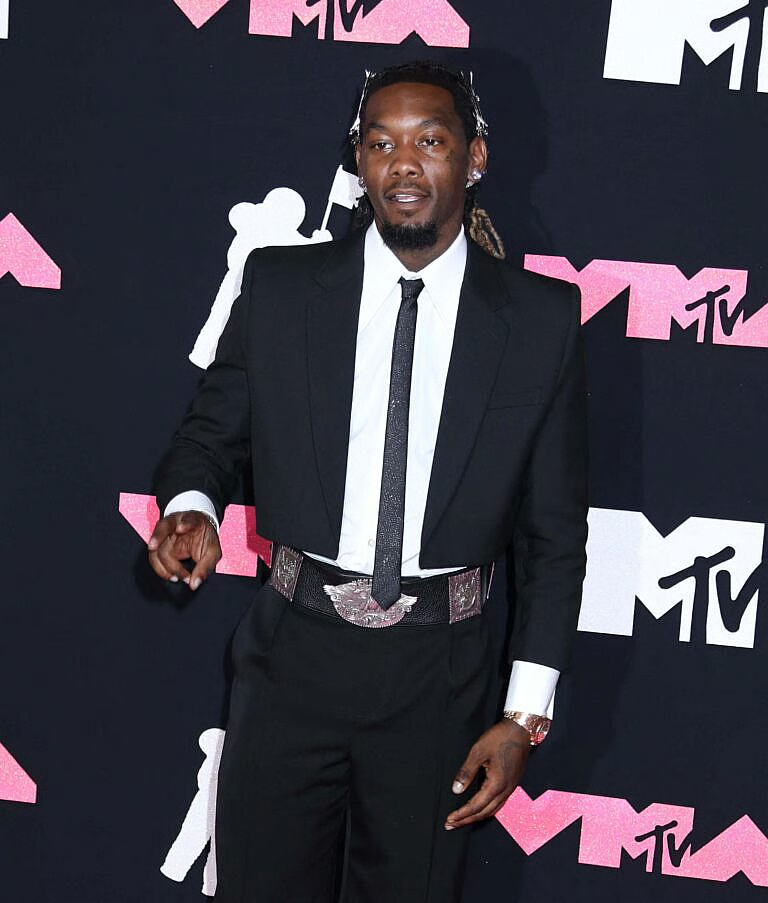
Offset Faces Lawsuit Over $100K Casino Debt Drama

Northern Irish passport holder shows reality of new EES system at popular Spanish spot

Why Israel is blocking foreign journalists from entering

Bitcoin: We’re Entering The Most Dangerous Phase

Alan Cumming Brands Baftas Ceremony A ‘Triggering S**tshow’

Which 2 would you pick? #finance #investmenttips #investmentadvice #investmentforbeginners #trader

google pay pocket money kya hai | how to use google pay pocket money | gpay pocket money new update

WARNING: Bitcoin is 11 Days Away from a MASSIVE Move! (ETH, XRP, SOL, AVAX)
-

 NewsBeat7 days ago
Steven Gerrard disagrees with Gary Neville over ‘shock’ Chelsea and Arsenal claim | Football
-

 Business7 days ago
No Jackpot Winner and $194 Million Prize Rolls Over
-

 Fashion6 days ago
Weekend Open Thread: Spanx – Corporette.com
-

 Business5 days ago
Expert Picks for Every Need
-

 Business4 days ago
Three Gulf funds agree to back Paramount’s $81 billion takeover of Warner, WSJ reports
-

 Sports5 days ago
India men’s 4x400m and mixed 4x100m relay teams register big progress | Other Sports News
-

 Tech2 days ago
How Long Can You Drive With Expired Registration? What Florida Law Says
-
Business4 days ago
No Jackpot Winner, Prize to Climb to $231 Million
-

 Fashion3 days ago
Massimo Dutti Offers Inspiration for Your Summer Mood Board
-

 Fashion2 days ago
Let’s Discuss: DEI in 2026
-

 Tech7 days ago
Commonwealth Fusion Systems leans on magnets for near-term revenue
-
Politics6 days ago
Wings Over Scotland | The quality of mercy
-

 Business5 days ago
Akebia Therapeutics, Inc. (AKBA) Discusses Pipeline Progress and Strategic Focus on Kidney Disease Treatments at R&D Day – Slideshow
-

 Fashion7 days ago
Statement Sunglasses: The Accessory Shaping Modern Fashion
-

 Crypto World23 hours ago
Bitcoin recovers as US and Iran Agree a Ceasefire Deal
-

 Politics6 days ago
East Jerusalem Palestinian families eviction orders
-

 Sports7 days ago
Which German players will make final cut?
-

 Fashion7 days ago
For Love & Lemons’ Spring 2026 Line is for the Romantics
-

 Politics6 days ago
Why so many children are now classified as ‘disabled’
-

 Fashion7 days ago
Coffee Break: Santa Croce Tote
You must be logged in to post a comment Login