Business
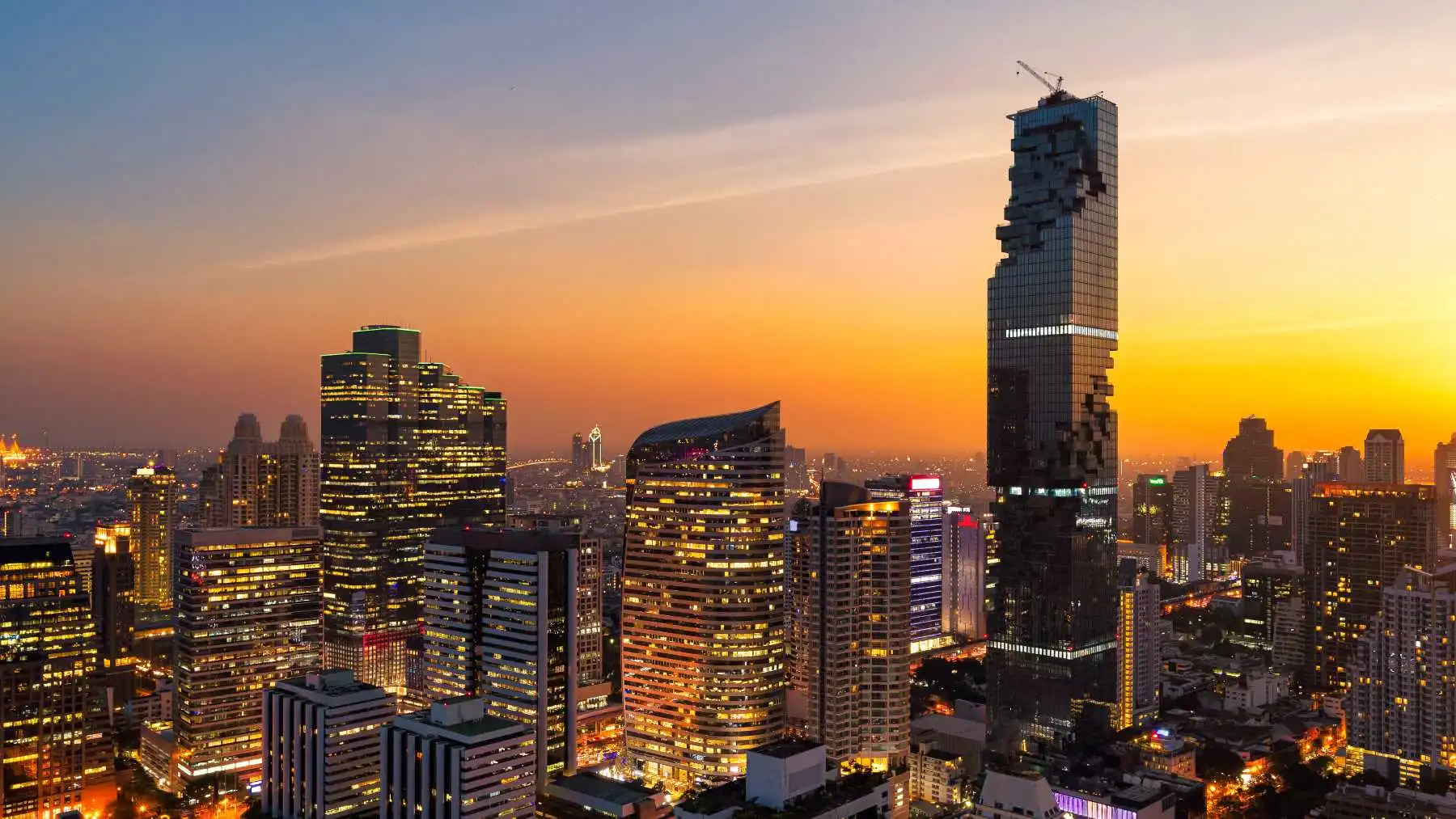
Asia’s Industrial Supercycle awakens
The word “supercycle” is rarely used with precision. Economists employ it to describe periods when commodity prices, investment flows, and capital-formation rates all move together, in the same direction, for a decade or more — driven not by a single trigger but by an irreversible structural shift in how the world organises production. The last one, centred on China’s entry into the global economy, ran roughly from 1999 to 2014. A new one is now beginning, and once again Asia is its engine room.
This time the forces at work are different in character — and arguably more durable. The previous supercycle was propelled by urbanisation and export-led manufacturing. The one now emerging is propelled by four concurrent waves of capital expenditure: artificial intelligence infrastructure, energy transition and security, defence rearmament, and the re-shoring and diversification of industrial supply chains. Each wave would be significant on its own. Together, they are mutually reinforcing in ways that make the cycle self-sustaining.
$4.1T
Asia capex forecast 2026–30
47%
Global semiconductor output by 2030
19
Asian nations lifting defence budgets
3×
Data centre build rate vs. US by 2028
What Makes a Supercycle?
Most economic expansions are cyclical: a period of growth, followed by contraction, driven by the ebb and flow of credit, sentiment, and inventory. A supercycle is structurally different. It is anchored by a step-change in the underlying organisation of the economy — a change that takes fifteen to twenty years to fully express itself, during which demand for capital goods, raw materials, skilled labour, and infrastructure remains structurally elevated.
Historical precedent
The last commodity supercycle (1999–2014) saw iron ore prices rise 800% and copper prices quadruple, driven almost entirely by Chinese industrialisation. The current cycle is likely to see similar price behaviour in copper, rare earths, and uranium.
The Industrial Revolution was a supercycle. So was America’s post-war economic build-out. The Japanese miracle of the 1960s and 1970s. China’s accession to the WTO. Each of these was characterised not by boom-and-bust but by a sustained, decade-long reallocation of capital toward production — physical assets that generate returns over long periods and create demand for more of the same.
The conditions for a new supercycle have been accumulating for several years. The COVID-19 pandemic exposed the fragility of hyper-concentrated supply chains. The war in Ukraine made energy security a first-order strategic priority. The emergence of large language models created a demand for computing infrastructure on a scale that has no historical parallel. And across Asia, a set of governments decided — almost simultaneously — that the era of passive participation in the global economic order was over.
Asia’s Structural Advantage
The manufacturing base
Asia already produces roughly 60 percent of global manufactured output. It is home to the world’s most sophisticated electronics ecosystems (Taiwan, South Korea, Japan), the world’s largest and most rapidly automating factory floor (China), and a rapidly expanding second tier of lower-cost industrial bases (Vietnam, India, Indonesia, Malaysia). This is not merely a cost advantage — it is a capabilities advantage, one that takes decades to build and cannot be replicated quickly elsewhere.
“The west spent thirty years offshoring its industrial commons. It will take thirty years to rebuild it — during which time Asia will have moved two technological generations ahead.”
— Kenji Watanabe, former METI Director-General
Capital formation rates
Asian economies invest a far higher share of GDP in fixed capital than their Western counterparts. China’s gross fixed capital formation runs at approximately 43 percent of GDP. India’s is around 31 percent. South Korea’s is 30 percent. By comparison, the United States invests roughly 21 percent and the United Kingdom a mere 17 percent. These are not short-term fluctuations — they reflect deep cultural and institutional dispositions toward investment over consumption, toward building infrastructure rather than buying services.
Government coordination capacity
Perhaps the least-appreciated advantage is the capacity of Asian governments to coordinate large-scale industrial policy. Japan’s Ministry of Economy, Trade and Industry has orchestrated the country’s semiconductor resurgence through the RAPIDUS programme and its partnership with TSMC at Kumamoto. South Korea’s government has pledged over 550 trillion won in support for its semiconductor and battery industries through 2030. India’s Production Linked Incentive scheme has attracted over $40 billion in manufacturing commitments. China’s state-directed investment machine, for all its inefficiencies, continues to move capital at a speed and scale that democratic market economies struggle to match.
The Four Pillars of the Cycle
The supercycle that is now underway rests on four distinct but interconnected pillars of capital expenditure. It is important to understand each on its own terms — because each has its own investment logic, its own timeline, and its own geography — but equally important to understand them as a system, because their interactions are what give the cycle its extraordinary duration and scale.
Pillar one: AI infrastructure
The artificial intelligence revolution is, at its core, an infrastructure story. Training and running large AI models requires vast quantities of specialised chips, enormous amounts of electricity, sophisticated cooling systems, and reliable high-speed network connectivity. Every one of these requirements drives capital expenditure in sectors that are disproportionately concentrated in Asia.
TSMC alone manufactures roughly 92 percent of the world’s most advanced logic chips. Samsung and SK Hynix together produce the majority of the world’s high-bandwidth memory — the component most constrained in AI server builds. Japan’s Shin-Etsu Chemical and SUMCO supply the silicon wafers on which the world’s most sophisticated chips are built. The AI boom is a geographically concentrated demand signal, and the geography it points to is overwhelmingly Asian.
Pillar two: Energy transition and security
Asia accounts for two-thirds of global electricity consumption growth and is simultaneously the world’s largest producer of solar panels, wind turbines, batteries, and electric vehicles. The energy transition is not happening to Asia — Asia is building the energy transition for the rest of the world, while simultaneously undergoing its own. Japan is reviving its nuclear sector. South Korea is building the world’s largest offshore wind farms. India is installing solar capacity at a pace that defies conventional forecasting. Every megawatt of new renewable capacity requires copper wiring, steel towers, rare-earth magnets, and semiconductor-controlled inverters — all of which feed demand back through the same Asian industrial base.
Pillar three: Defence rearmament
The geopolitical tensions of the 2020s have triggered a rearmament cycle that is, by some measures, the most broad-based since the Cold War. Japan has doubled its defence budget to two percent of GDP and is rebuilding its shipbuilding, aerospace, and missile industries after decades of deliberate demilitarisation. South Korea is now one of the world’s largest arms exporters. Australia is investing in nuclear-powered submarines. India is pursuing strategic autonomy in defence technology with an urgency it has never previously demonstrated. Even countries as historically pacific as the Philippines and Vietnam are significantly expanding their military procurement. The domestic defence industrial base required to sustain these ambitions — shipyards, electronics manufacturers, propulsion systems — is entirely capital-intensive.
Pillar four: Supply chain re-architecture
The post-pandemic realignment of global supply chains is creating massive greenfield investment opportunities across South and Southeast Asia. Apple now assembles a meaningful portion of its products in India and Vietnam. Samsung has shifted significant production to Vietnam and is expanding in India. Intel, TSMC, and Texas Instruments are all building new fabs in markets they would have dismissed as too risky a decade ago. This is not a marginal reshuffling — it is a fundamental redesign of the geography of global production, and it requires the construction of entirely new industrial ecosystems: factories, ports, power grids, roads, logistics hubs, worker housing.
Why Now? The Convergence Moment
Supercycles do not begin because analysts predict them. They begin because a set of structural forces reaches a threshold at which capital allocation becomes, in effect, compulsory. Companies and governments that fail to invest in the new paradigm find themselves competitively disadvantaged within a single product cycle. This is the moment Asia has now reached.
The AI compute shortage is so acute that hyperscalers — Microsoft, Google, Amazon, and Meta — are signing long-term supply contracts with Asian chip manufacturers that extend years into the future, regardless of near-term demand fluctuations. The energy security imperative is so pressing, following Russia’s weaponisation of gas supplies, that no government with access to renewables manufacturing capacity is choosing not to deploy it. The defence rearmament cycle is locked in by geopolitical forces that show no sign of reversing. And the supply chain diversification imperative has been institutionalised by legislation in the United States, the European Union, Japan, and a dozen other jurisdictions.
Each of these forces is self-reinforcing. AI infrastructure requires energy, which drives energy capex. Defence systems require advanced electronics, which drives semiconductor capex. Re-shored factories require logistics infrastructure, which drives construction capex. The cycle feeds itself.
“We are not in a normal capex cycle. We are in a structural reconfiguration of the global economy. The companies and countries that build now will own the next twenty years.”
— Rashida Nakamura, Chief Economist, Asian Development Bank
The Investment Implication
For investors, the supercycle thesis has a clear implication: the period of elevated capital expenditure is only beginning, and the beneficiaries are disproportionately concentrated in Asia. The companies that supply the inputs to this capex — semiconductor manufacturers, energy equipment producers, industrial machinery makers, defence contractors, construction firms — are in the early stages of a decade-long demand supercycle.
This does not mean the path will be smooth. Every supercycle contains within it episodes of over-investment, inventory correction, and political disruption. The AI capex boom, in particular, is vulnerable to periodic corrections as hyperscalers digest the infrastructure they have built. Geopolitical escalation remains the great wildcard: a conflict over Taiwan, however unlikely, would not merely disrupt the supercycle — it would rewrite it entirely.
But the structural forces are too large, too deeply embedded, and too mutually reinforcing to be undone by normal cyclical fluctuations. Asia has decided to build. The only question for investors is where, specifically, that building will create the most durable value — a question we turn to in the articles that follow.
The figures cited in this article represent analyst consensus estimates as of Q1 2026 and are subject to revision. This article is the first in a three-part series examining Asia’s industrial supercycle.

Business
Form 144 ENTERGY CORP /DE/ For: 25 June

Form 144 ENTERGY CORP /DE/ For: 25 June
Business
Bio-Techne Shares Surge 19 Percent as Life Sciences Tools Provider Gains Momentum
Bio-Techne Corporation shares jumped more than 19 percent on Thursday, reaching $70.31 as investors responded to positive developments around the company’s life sciences tools and diagnostics businesses.
The significant gain reflected renewed confidence in Bio-Techne’s position within the biotechnology research and clinical diagnostics markets. The company provides essential reagents, instruments and assays used by researchers and clinicians worldwide.
Bio-Techne has reported steady performance despite challenges in the broader life sciences sector, including funding pressures for academic research and cautious spending by pharmaceutical companies. Its diversified portfolio spanning protein sciences, diagnostics and genomics has provided stability.
The company’s focus on innovation, quality and customer relationships has sustained demand for its products. Recent product launches and strategic initiatives have generated interest among analysts and investors.
Business Overview and Performance
Bio-Techne operates through Protein Sciences and Diagnostics and Genomics segments. The Protein Sciences division offers antibodies, proteins, immunoassays and other research tools.
The Diagnostics and Genomics segment provides clinical laboratory products, spatial biology solutions and genomic testing services. This diversification helps mitigate risks associated with any single market or customer type.
The company has maintained consistent revenue growth through organic expansion and strategic acquisitions. Its global distribution network and reputation for quality support market leadership in multiple product categories.
Bio-Techne’s financial results have demonstrated resilience amid industry headwinds. Management has emphasized operational efficiency and portfolio optimization while investing in growth areas.
Market Environment
The life sciences tools and diagnostics industry faces cyclical pressures from research funding, pharmaceutical R&D spending and healthcare budgets. Bio-Techne’s essential products provide some insulation from these fluctuations.
Academic and government research funding remains crucial for many customers. Private sector investment in biotechnology and pharmaceutical development drives additional demand.
The COVID-19 pandemic accelerated certain segments while creating supply chain challenges. Post-pandemic normalization has required adaptation to changing demand patterns.
Technological advances in genomics, proteomics and spatial biology create opportunities for innovative product providers. Bio-Techne’s investments in these areas position it for growth.
Strategic Initiatives
Bio-Techne continues expanding its product portfolio through internal development and acquisitions. Recent moves have strengthened capabilities in high-growth areas like spatial transcriptomics and advanced immunoassays.
The company’s focus on automation and workflow solutions addresses customer needs for increased efficiency and reproducibility. These offerings appeal to both research and clinical laboratories.
Sustainability initiatives and responsible sourcing practices align with growing stakeholder expectations. Bio-Techne’s commitment to quality and ethical practices supports long-term customer relationships.
Digital transformation efforts enhance customer experience and operational efficiency. Online platforms and data analytics capabilities improve accessibility and support for users.
Investment Considerations
Bio-Techne’s recent share price surge reflects positive market sentiment around its fundamentals and growth prospects. The company’s valuation has adjusted to account for its market position and pipeline.
The stock appeals to investors seeking exposure to life sciences innovation and research tools. Its diversified business model and consistent performance provide defensive characteristics.
Risks include funding pressures in academic research, competition from larger players and potential slowdowns in pharmaceutical R&D spending. Bio-Techne’s ability to innovate and maintain quality will influence long-term success.
Analysts generally maintain constructive outlooks, citing the company’s technology leadership and market opportunities. However, patience may be required as the sector navigates cyclical challenges.
Industry Trends
The life sciences tools market continues evolving with advances in single-cell analysis, spatial biology and multi-omics approaches. Companies providing enabling technologies benefit from these scientific developments.
Clinical diagnostics demand grows with aging populations and personalized medicine trends. Bio-Techne’s products support both research and clinical applications.
Automation and artificial intelligence integration transform laboratory workflows. Providers offering compatible solutions gain competitive advantages.
Sustainability considerations influence purchasing decisions across the industry. Companies demonstrating environmental responsibility may attract preference from research institutions and corporate customers.
Future Outlook
Bio-Techne’s strategic direction focuses on leveraging its technology platform while expanding into adjacent markets. Successful execution could drive sustained growth and margin improvement.
The company continues investing in research and development to maintain innovation leadership. Its ability to translate scientific advances into commercial products will influence future performance.
Investors will monitor upcoming financial results for progress on key metrics including organic growth and margin trends. Management guidance will provide insight into execution priorities.
The recent share price movement suggests renewed market interest in Bio-Techne’s story. The company’s fundamental strengths and market opportunities support potential for continued positive sentiment.
As life sciences research advances, Bio-Techne’s essential tools and technologies will likely remain in demand. Its ability to adapt to evolving customer needs while delivering consistent results positions it favorably in the industry.
Business
Potential JPMorgan CEO successors named as top executive retires
Check out what’s clicking on FoxBusiness.com.
The race to succeed America’s top banker is on.
Sources inside JPMorgan Chase, the nation’s top bank, say the elevation of two senior executives Doug Petno and Troy Rohrbaugh as co-presidents of the company, sets up a long-awaited horse race to succeed the voluble Jamie Dimon, its CEO for the past two-plus decades and widely regarded as the nation’s top banker.
As if to leave no doubt about his intentions, Dimon Thursday also announced that Marianne Lake, one of the highest-ranking women on Wall Street who had been seen as a frontrunner to succeed Dimon, “has decided to retire” from the bank.
Lake, a longtime executive who was head of the firm’s powerful consumer and community banking division, is said to be “not too happy” about being passed over for the top job. One indication was the absence of a statement from Lake in the press release, said people close to the bank. A JPM spokesperson had no immediate comment.

JPMorgan Chase’s new global headquarters at 270 Park Ave. in New York City. (JPMorgan Chase / Fox News)
Jenn Piepszak, JPM’s chief operating officer, is also no longer considered a possible replacement for Dimon, people inside the bank say. Also out of the running is Mary Erdoes, the head of JPM’s asset management and wealth management business, On The Money has learned.
“The changes announced today mark an important step in our board’s thoughtful process around succession planning and development of our top leaders,” Dimon said in a press release. “We are fortunate to have in place an exceptional group of senior leaders, not only at our operating committee level but across our organization.”
DOJ PROBES JPMORGAN, CITIGROUP TRANSACTIONS TIED TO IRAN SUPREME LEADER’S BUSINESS NETWORK

Jamie Dimon, chief executive officer of JPMorgan Chase & Co., during the 2026 Reagan National Economic Forum on Friday, May 29, 2026. (Caroline Brehman/Bloomberg via Getty Images / Getty Images)
Petno and Rohrbaugh had jointly run the firm’s powerful consumer and investment bank, and were considered top contenders to replace Dimon when he is expected to begin transitioning out of his role as CEO as early as this year, though he has always been obtuse about the timing of his decision and has left open the possibility to remain as chairman indefinitely.
Stocks In This Article:
That said, inside JPM headquarters in Midtown Manhattan, there was nothing obtuse about the elevation of Petno and Rohrbaugh. Dimon created the co-president position precisely to set up a horse race between the two to take over as CEO sometime soon, these people say.

Marquee at the main entrance to the JPMorgan Chase Headquarters Building in Manhattan. (Erik McGregor/LightRocket via Getty Images / Getty Images)
GET FOX BUSINESS ON THE GO BY CLICKING HERE
Both will have big shoes to fill. Since taking over as CEO of JPM in 2006, Dimon has emerged as the most important banker in the country and maybe its most important CEO. JPM is a sprawling “systemically important” institution that does everything from consumer lending to mergers and acquisitions to trading complex derivatives that are the plumbing of the global financial system.
He has successfully led the big bank through financial crises, small and large, such as the 2008 implosion and jostled with presidents from Barack Obama to Donald Trump over economic and banking policy. He is known for his shoot-from-the-hip public presence, and for his management acumen. JPM has been highly profitable and largely free of scandal during his reign.
Business
Japan and Sweden Battle for Group F Survival in Decisive World Cup Clash in Arlington
ARLINGTON, Texas — Japan and Sweden meet at Dallas Stadium fighting for a place in the World Cup knockout rounds, with both nations facing dramatically different paths into Thursday’s decisive Group F showdown.
Where the Group Stands
Japan and the Netherlands are currently tied in Group F with four points each, with the Dutch holding the tiebreaker on goals. But Sweden is right on their heels with three points. The winner of Thursday’s Japan vs. Sweden match will likely advance, while the loser is going home.
What’s at Stake for Each Team
A historic victory for Graham Potter’s side would catapult the Swedes to six points, instantly securing automatic qualification for the round of 32. Depending on the concurrent outcome of the Netherlands vs. Tunisia fixture, a win could potentially vault Sweden into a top-two finish, completely eliminating any reliance on wild-card scenarios. Conversely, this outcome would freeze Japan on four points, forcing the Samurai Blue to sweat on the parallel result or hope to advance as one of the best third-placed wild cards. Should Hajime Moriyasu’s men secure all three points, it would complete an undefeated group stage campaign for the Asian heavyweights and leave Sweden in a highly precarious position.
Japan’s Path to This Moment
Japan made history against Tunisia in Monterrey, winning 4-0 to become the first country representing the Asian Football Confederation to score four goals in a single World Cup game. Daichi Kamada needed only four minutes to convert essentially Japan’s first attack when he turned in Keito Nakamura’s endline cross at close range.
That result followed a dramatic comeback in their opener. In a thrilling Group F opener in Arlington on June 14, Japan denied the Netherlands a win with a last-minute equalizer — Koki Ogawa’s corner deflected off Daichi Kamada and past Bart Verbruggen in the 89th minute to secure a 2-2 draw. Netherlands captain Virgil van Dijk broke the deadlock in the 51st minute; Keito Nakamura pulled Japan level six minutes later, and Crysencio Summerville restored the Dutch advantage, but Japan refused to slow down.
Sweden’s Rollercoaster Group Stage
Sweden’s campaign has swung dramatically between two extremes. Sweden became the first team to win their first game by four goals and then lose their second by four goals since Sweden in 1938. Fresh off a 5-1 win of their own over Tunisia, Sweden were on the receiving end of the same scoreline at the hands of the Netherlands. Brian Brobbey scored a first-half brace inside the first 20 minutes, dispatching two close-range efforts in the fifth and seventeenth minute — the fourth-fastest brace in World Cup history. The fixture was Sweden’s worst defeat at the World Cup since being thrashed 7-1 by Brazil in 1950.
Team News for Japan
Takefusa Kubo remains a major doubt for this crucial encounter due to a lingering knee injury. The Real Sociedad attacker sustained the issue during their draw against the Netherlands. Shuto Machino has also struggled with illness and is yet to feature on the pitch. In his absence, Hajime Moriyasu will likely retain the rest of his high-flying starting eleven tonight.
Team News for Sweden
Graham Potter faces tough personnel decisions following their defensive collapse against the clinical Dutch side. Anthony Elanga could earn a starting role at right wing-back after scoring a fine consolation goal. Youngster Lucas Bergvall pushes hard to replace Celtic midfielder Benjamin Nygren to provide extra defensive steel. Star attackers Viktor Gyökeres and Alexander Isak will continue their blooming partnership up front.
A Key Tactical Battle in Midfield
The absolute heartbeat and dynamic engine of the Japanese midfield on Matchday 2, Daichi Kamada is tasked with dictating the possession rhythm and unlocking opposition lines for the Samurai Blue. Kamada operated masterfully in the heart of the midfield against Tunisia, breaking forward to provide a vital creative spark and getting himself on the scoresheet. Looking to disrupt that fluid creative rhythm is Sweden’s standout midfielder Jesper Karlström, who anchored the engine room on Matchday 2, attempting to provide tactical protection during a difficult outing against the Netherlands.
Predicted Lineups
Japan’s predicted starting eleven: Z. Suzuki; Tomiyasu, Itakura, H. Itō; Dōan, Sano, Tanaka, Nakamura; Itō, Kamada; Ueda.
Sweden’s predicted starting eleven: Nordfeldt; Lagerbielke, Hien, Lindelöf; Elanga, Bergvall, Karlström, Ayari, Gudmundsson; Gyökeres, Isak.
A Notable Tournament Milestone
Beyond the immediate group stakes, Thursday’s fixture also carries a piece of World Cup history. The teams have previously met six times, including Japan’s 2-0 group stage victory at the 2002 FIFA World Cup, which they co-hosted with South Korea. Their latest meeting took place in the 2023 Kirin Challenge Cup, which Japan also won by 2-0. This fixture was the 1,000th World Cup match, with the previous milestone of 900 having been reached at the 2018 FIFA World Cup final.
Match Details and How to Watch
The match kicks off at 6 p.m. local time at Dallas Stadium in Arlington, Texas, with referee Iván Barton of El Salvador in charge. In the United Kingdom, the match will be broadcast live on BBC Two, BBC iPlayer, and the BBC Sport website, with kickoff at midnight BST heading into Friday.
What’s Ahead for the Group Winner
The winner of Group F will advance to play the runner-up of Group C, Morocco, while the runner-up of Group F will advance to play the winner of Group C, Brazil. With Tunisia having already lost their match and been eliminated, becoming the third team eliminated from the tournament following Haiti and Türkiye, Thursday’s result will determine the final shape of one of the tournament’s most competitive groups.
With Japan needing only a draw to guarantee their place in the knockout stage and Sweden requiring a win to keep their own qualification hopes fully in their own hands, Thursday’s match at Dallas Stadium carries genuinely high stakes for both nations. A Japan victory or draw would complete one of the more memorable group-stage campaigns of the tournament for the Samurai Blue, while a Sweden win would erase the memory of their lopsided defeat to the Netherlands and set up a potential top-two finish in the group, depending on how the simultaneous Netherlands-Tunisia fixture unfolds.
Business
Horizon Kinetics buys $374 in Texas Pacific land stock

Horizon Kinetics buys $374 in Texas Pacific land stock
Business
Forget Everything You Knew About Micron Before (NASDAQ:MU)
I write about stocks I’m personally interested in adding to my portfolio. I’m not a professional advisor, but I study business and economics and analyze markets full-time. My writing is meant for both complete beginners — I avoid unnecessary complexity — and advanced readers, as I always aim to offer a distinct and well-reasoned perspective.I also run a YouTube Channel called “The Market Monkeys” and break some of the stocks there as well.
Analyst’s Disclosure: I/we have a beneficial long position in the shares of MU either through stock ownership, options, or other derivatives. I wrote this article myself, and it expresses my own opinions. I am not receiving compensation for it (other than from Seeking Alpha). I have no business relationship with any company whose stock is mentioned in this article.
Seeking Alpha’s Disclosure: Past performance is no guarantee of future results. No recommendation or advice is being given as to whether any investment is suitable for a particular investor. Any views or opinions expressed above may not reflect those of Seeking Alpha as a whole. Seeking Alpha is not a licensed securities dealer, broker or US investment adviser or investment bank. Our analysts are third party authors that include both professional investors and individual investors who may not be licensed or certified by any institute or regulatory body.

Business
Barnes & Noble Education, Inc. (BNED) Analyst/Investor Day – Slideshow
Business
Teradata's Value Appeal Over Snowflake Since AI Is Not Cheap
Business
Materion Corp stock hits all-time high at 282.78 USD

Materion Corp stock hits all-time high at 282.78 USD
Business
Tencent Music: Recent Strategic Moves Are Reshaping The Investment Case (NYSE:TME)
Long only, focused on high quality businesses with economic moats and solid business fundamentals. Sector and geography agnostic. Long term investment horizon. None of the articles constitute investment advice.
Analyst’s Disclosure: I/we have no stock, option or similar derivative position in any of the companies mentioned, but may initiate a beneficial Long position through a purchase of the stock, or the purchase of call options or similar derivatives in TME over the next 72 hours. I wrote this article myself, and it expresses my own opinions. I am not receiving compensation for it (other than from Seeking Alpha). I have no business relationship with any company whose stock is mentioned in this article.

Not investment advice.
Seeking Alpha’s Disclosure: Past performance is no guarantee of future results. No recommendation or advice is being given as to whether any investment is suitable for a particular investor. Any views or opinions expressed above may not reflect those of Seeking Alpha as a whole. Seeking Alpha is not a licensed securities dealer, broker or US investment adviser or investment bank. Our analysts are third party authors that include both professional investors and individual investors who may not be licensed or certified by any institute or regulatory body.
-
Fashion6 days agoWeekend Open Thread: Miami – Corporette.com
-
Entertainment5 days agoRenter of Home in Anne Heche Crash Denies Settlement With Son
-
Sports2 days agoTwo goals and an assist by sheer aura: Cristiano Ronaldo just entered the World Cup chat
-
Tech3 days agoMicrosoft accidentally kills epic Outlook email threads
-
Business5 days agoSoccer-U.S. defends Iran World Cup travel restrictions, says discussions ongoing
-
Politics5 days agoAndy Burnham and the meaning of Makerfield
-
Crypto World1 day ago
Bitcoin (BTC) Dips Below $62K, Ethereum (ETH) Plunges 6% Daily: Market Watch
-
NewsBeat6 days agoKeir Starmer Allies Question His Chances For No 10
-
Politics7 days agoBBC Reporter Discusses Cross Party Criticism Of Trumps Iran Deal
-
Crypto World1 day agoSecuritize Wraps Roubini's SEC-Registered ETF as Dubai VARA Digital Security
-
Business2 days ago
Entergy settles forward sale agreements, raises $672 million in cash proceeds
-
Business5 days agoWall Street Week Ahead: Investors see Micron earnings as pulse check of AI rally momentum
-
Crypto World5 days ago
Can Charles Hoskinson Really Rescue Cardano?
-
Crypto World6 days agoHIVE shares jump as $220M AI deal speeds Bitcoin mining pivot
-
Crypto World5 days agoJake Chervinsky accuses CME of protecting derivatives monopoly
-
Entertainment6 days agoJose Alvarado Wants Taylor Swift at More Knicks Games
-
Tech4 days agoSignal’s Meredith Whittaker says AI chatbots ‘are not your friends’ and calls Copilot agents a backdoor
-
Tech3 days agoNearly 7,000 fake Amazon domains registered ahead of Prime Day 2026, researchers warn
-
Sports2 hours agoIndia vs Bangladesh LIVE Score, Women’s T20 World Cup: Bangladesh Opt To Bat; India Enter ‘Do-Or-Die’ Stage As Semi-Final Race Heats Up
-
Sports7 days agoFIFA World Cup 2026: Canada beat 9-men Qatar 6-0 to register first ever win | FIFA World Cup 2026

You must be logged in to post a comment Login