
Connect with us

Business

Astral shares rally 10% following Q1 results; Citi sees target price at Rs 1,900, Nuvama upgrades stock to ‘Buy’

Published

on

Astral shares rally 10% following Q1 results; Citi sees target price at Rs 1,900, Nuvama upgrades stock to 'Buy'
Shares of building materials and piping major Astral surged as much as 9.5% to an intraday high of Rs 1,599 apiece on the BSE on Thursday after the company reported strong Q1 FY27 results.

Astral posted a consolidated net profit of Rs 120.2 crore for the first quarter of FY27, up 51.8% from Rs 79.2 crore in the year-ago period.

Astral attributed the growth in profitability to higher utilisation at its new manufacturing plants, a shift towards higher-margin products and strong operational execution despite broader industry headwinds.

EBITDA for the quarter rose 25.8% year-on-year to Rs 244 crore, with EBITDA margins expanding by 120 basis points to 15.5%. While raw material price fluctuations caused the broader piping industry to contract by around 10%, Astral managed flat volume growth, continuing to capture market share.

Advertisement

What are brokerages saying?

Citi has maintained a Buy rating on Astral with a target price of Rs 1,900. The brokerage noted that Q1 performance demonstrated clear resilience, with plumbing margins expanding despite input cost fluctuations. Citi highlighted that channel restocking and strong demand recovery in July resulted in double-digit volume growth heading into Q2, while the CPVC resin integration project remains on track for Q4 FY27 completion.


UBS has an Accumulate recommendation with a target price of Rs 1,950. UBS emphasized that Astral continues to outperform peers and gain market share despite broader industry softness. The brokerage believes Astral’s decentralized manufacturing model and favorable raw material dynamics will support volume recovery and margin gains going forward.
Nuvama upgraded Astral to a Buy rating (from Hold) with a revised target price of Rs 1,675. The brokerage noted that pipe volumes were the best in the industry for Q1, while EBITDA per tonne beat market estimates. Nuvama expects double-digit piping volume growth with 16–18% operating margins for FY27E as demand momentum picks up in Q2.Motilal Oswal maintained a Buy rating with a target price of Rs 1,697. Despite operational numbers slightly lagging elevated expectations in adhesives, the brokerage believes Astral’s core business remains best-in-class. Motilal Oswal expects Astral to benefit from a volume surge following price stabilization, backed by management’s projection of double-digit volume growth and 20%+ value growth in FY27.

CLSA retained a Hold rating with a target price of Rs 1,490. While acknowledging that Astral continues to gain share in a challenging environment, CLSA believes the current valuation adequately reflects the near-term volume recovery, preferring to wait for sustained margin expansion in the Paints and Adhesives segment before re-rating the stock.

(Disclaimer: Recommendations, suggestions, views and opinions given by the experts are their own. These do not represent the views of The Economic Times)

Advertisement
Continue Reading
Click to comment

You must be logged in to post a comment Login

Leave a Reply

Business

Aviva boss in warning to Chancellor ahead of October’s budget

Published

on

Business Live

Dame Amanda Blanc said kite flying ahead of John Healey’s maiden budget would not be helpful

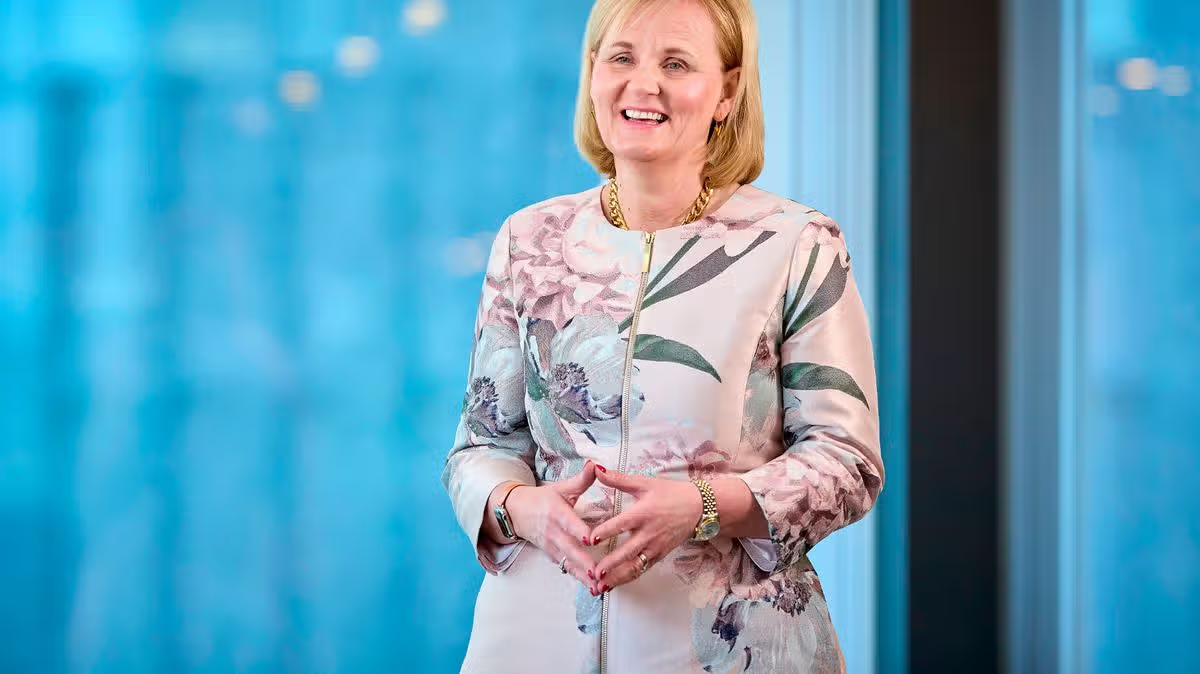
Dame Amanda Blanc(Image: CREDIT: Aviva)

The boss of insurer Aviva has urged the new Chancellor not to “fly kites” with prospective policies ahead of the October budget after last year’s speculation around pension changes

Chief executive Dame Amanda Blanc, who was born and brought up in Treherbert, said widespread rumours that the UK Government might cut or restrict the 25% tax-free pension lump sum ahead of the autumn budget in 2025 led to a surge in early withdrawals.

Advertisement

She revealed she made the plea to clamp down on pre-budget policy speculation directly with Chancellor John Healey at a recent event to avoid policyholders making rash decisions with long-term consequences.

Dame Amanda said she wants the government “to not fly kites” ahead of the Budget on October 28.

She said: “We do not want to see new things every week in the press around what might happen in the run-up to the budget.

“That is not very helpful, because what we do not want is for customers to make decisions that they will regret in the long run when policies are not changed.”

Advertisement

She said the group saw a “significant” amount of money withdrawn from pensions due to the worries over impending tax-free lump sum changes, with former chancellor Rachel Reeves ultimately not altering the rules at least autumn’s fiscal event.

“Customers would have been better to wait and see what the Government was going to do,” said Dame Amanda.

“Once you’ve made the decision to take your tax-free lump sum, you cannot reverse the decision.”

She said Mr Healey had made the commitment in person to her at the recent event not to pre-brief on possible policy changes ahead of the Budget.

Advertisement

She also backed wider industry calls for the Government not to alter the tax-free lump sum allowances.

“We would definitely concur that it’s something that shouldn’t be touched,” she said.

She added the government should be “encouraging people to save into their pension” and not “double-taxing people”.

A Treasury spokesperson said: “The Chancellor is fully focused on his priorities, to boost business, help with the cost of living and support people in every postcode.

Advertisement

“As has always been the case, the Chancellor will set out decisions at fiscal events, rather than routinely commenting on rumour, speculation or proposals.”

Aviva’s budget plea came as the firm reported better than expected half-year earnings and cheered action to “quickly” improve profitability at Direct Line since buying the firm in a £3.7 billion deal.

The group posted a 24% surge in operating profits to £1.33 billion for the six months to June 30.

It said the firm had already started to turn around the performance at Direct Line following the acquisition in July last year, boosting price comparison website sales.

Advertisement

Dame Amanda said: “We are making very good progress with the integration of Direct Line. We have quickly improved Direct Line’s profitability, grown price comparison website sales and maintained excellent levels of customer service.

“We are well on track to deliver all the financial benefits of the acquisition.”

Aviva revealed in November last year it was doubling aims for cost savings following the Direct Line deal, having met the £100m original cost-saving target ahead of plan.

The FTSE 100 firm now expects to strip out £225m in costs by 2028 following the deal, though it said at the time this was not set to involve further job cuts, with Aviva having already signalled last December that up to 2,300 jobs could go under the cost-cutting plans.

Advertisement

The results showed on a bottom line basis, interim profits nearly halved to £418m from £819m a year earlier due to a hit from hedging for interest rate and equity exposures, as well as Direct Line integration and restructuring costs.

Aviva also lowered the outlook for its health division, saying it now expects the division to deliver full-year operating profit of £90 million compared with its previous guidance for around £100m.

This is due to “slowing market growth” in consumer and small business markets, according to Aviva.


Advertisement
Continue Reading

Business

Taking the Stairs Cuts Heart Death Risk by 39% and Boosts Longevity in Study of 480,000 People

Published

on

Taking the Stairs Cuts Heart Death Risk by 39% and

Regularly choosing the stairs over elevators or escalators is linked to a substantially lower risk of dying from heart disease and from any cause, according to a large analysis of more than 480,000 adults published this week.

People who frequently climbed stairs were 39% less likely to die from cardiovascular causes and 24% less likely to die from any cause compared with those who climbed stairs less often, researchers reported. The habit was also associated with reduced risks of developing major cardiovascular conditions, including heart attack, stroke and heart failure.

The findings come from a systematic review and meta-analysis led by researchers at the University of East Anglia and the Norfolk and Norwich University Hospital in the United Kingdom. The team examined data from nine high-quality studies involving 480,479 participants who were followed for a median of 14 years. Participants ranged in age from 35 to 84, and 53% were women. The group included both healthy individuals and people with a prior history of heart problems.

“Cardiovascular disease is the leading cause of death worldwide — with cases nearly doubling between 1990 and 2019,” said Prof. Vassilios Vassiliou of UEA’s Norwich Medical School. “But it is largely preventable through a healthy lifestyle — including regular physical activity, a heart-healthy diet, not smoking, maintaining a healthy weight, and managing blood pressure, cholesterol, and diabetes.

Advertisement

“Taking the stairs is a practical and often overlooked way to build physical activity into daily life. We wanted to better understand how this everyday activity could have life-saving potential.”

The researchers reviewed nearly 1,900 studies before focusing on the nine that met their quality criteria. Five of those studies, covering 455,619 people, provided the mortality data that produced the 39% and 24% reductions. Stair climbing was measured in various ways across the studies, including self-reported frequency, ability to climb stairs, or specific numbers of flights.

Dr. Sophie Paddock, a cardiology specialist registrar at the Norfolk and Norwich University Hospital and researcher at UEA’s Norwich Medical School, said the results were consistent across the pooled data. “After pooling results from over 450,000 participants, we found a consistent association between stair climbing and lower risk of both cardiovascular death and overall mortality.

“Unlike going to the gym or doing a workout, climbing the stairs is something you can easily fit into your day at home, at work or when you’re out. It’s a good option for people who don’t have much time or easy access to exercise.

Advertisement

“So if you have the choice of taking the stairs or the lift, go for the stairs as it will help your heart. Even brief bursts of physical activity have beneficial health impacts, and short bouts of stair climbing should be an achievable target to integrate into daily routines.”

Earlier research cited in the analysis indicated that even a few minutes of stair climbing several times a week can improve cardiorespiratory fitness and lower cholesterol levels. One large cohort study included in the review suggested that climbing about six flights of stairs a day — roughly 60 steps — might offer the greatest benefit. Researchers cautioned, however, that more work is needed to establish an ideal “dose.”

“Some of the studies we looked at showed that the more stairs climbed, the greater the health benefits,” Paddock said. “But even small changes had a measurable impact.”

The results add to a growing body of evidence that short, frequent bouts of activity can produce meaningful health gains. More than a quarter of adults worldwide fail to meet recommended physical activity levels, according to the researchers. Stair climbing requires no special equipment, gym membership or dedicated time slot, making it a realistic option for many people.

Advertisement

Vassiliou noted the potential for broader public-health impact. “With more than a quarter of adults worldwide failing to meet recommended activity levels, choosing to take the stairs offers a realistic, scalable intervention. Encouraging people to take the stairs in workplaces, public buildings and homes could form part of a wider strategy to reduce cardiovascular disease at population level.”

The study, titled “Evaluating the Impact of Stair Climbing on Cardiovascular Risk Reduction: A Systematic Review and Meta-analysis,” was published in the American Journal of Cardiovascular Drugs. It is observational, meaning it shows an association rather than proving that stair climbing itself caused the lower death rates. People who take the stairs more often may also tend to be more active overall or follow other healthy habits. Still, the large sample size and consistent findings across studies strengthen the case for incorporating the activity into daily life.

Researchers emphasized that stair climbing is not suitable for everyone. People with mobility limitations, joint problems or certain medical conditions should consult a doctor before increasing stair use. Future studies using wearable devices could track activity more precisely and help refine recommendations on how much stair climbing is most effective.

The analysis arrives amid ongoing public-health efforts to combat cardiovascular disease, which remains the world’s leading cause of death. Simple lifestyle changes — physical activity among them — continue to rank among the most accessible tools for reducing risk. For those who can safely do so, the choice between stairs and elevator may carry greater weight than previously assumed.

Advertisement

The researchers said their work supports promoting everyday movement in homes, offices and public spaces as part of strategies to improve heart health and longevity on a population scale. While more research will clarify optimal amounts and long-term effects, the current evidence points to a clear message: when the option exists, taking the stairs appears to be a low-barrier step toward better cardiovascular outcomes.

Continue Reading

Business

Electric vehicle sales targets could be cut after pressure from car makers

Published

on

A woman plugs a charging cable into a grey electric car.

The UK’s electric vehicle (EV) sales target could be cut after the government launched a review following pressure from car makers.

Currently 80% of all new cars sold must be EVs by 2030 – but motor industry figures had urged ministers to reduce that goal, warning it would cost too much and put jobs at risk.

The government has now said it is considering cutting that figure to as far as 50% of all sales by the end of the decade, which it will consult on until late October.

Environmental groups have argued that watering down the target undermines the UK’s long-term climate goals.

Advertisement

Under the current policy, known as the ZEV mandate, the percentage of new car sales that need to be EVs increases each year, from 33% for 2026 until it reaches 80% by 2030.

An outright ban on selling purely petrol or diesel cars past 2030 will stay in place, something that Labour promised in its election manifesto.

However the changes now being consulted on could allow car makers to sell more hybrid vehicles as a proportion of the UK’s overall sales.

That means if the government drops pure electric sales targets to 50%, the other 50% would need to be hybrid.

Advertisement

Another option would be keeping the target at 80% but with flexibility for car makers extending as far as 2034.

A longer term deadline for phasing out new hybrid sales would also remain in place for 2035.

The policy on EV sales has already changed a lot over the years.

A ban on selling new petrol and diesel vehicles by 2030 was first announced by Boris Johnson when he was prime minister, then pushed back to 2035 by his successor Rishi Sunak.

Advertisement

Sunak also introduced more gradual targets for EV sales under the ZEV mandate.

Labour has previously accused previous Conservative governments of “moving goalposts on phase out dates”.

Transport Secretary, Heidi Alexander said on Friday: “It’s right we keep targets under review to ensure they’re practical and back British industry.

“The end goal hasn’t changed – but we need to take business with us on the journey, and that’s exactly what we’re doing today, by making sure industry has the chance to shape how we get there.”

Advertisement

Mike Hawes, boss of the Society of Motor Manufacturers and Traders, the primary car industry lobby group, said the ZEV mandate was “conceived under vastly different conditions”.

He called the review “a timely opportunity to adjust the transition so it works for all”.

But electric car advocates and climate groups criticised the move.

Tanya Sinclair, the boss of industry group Electric Vehicles UK, criticised the government for “asking whether we should extend the availability of polluting vehicles amid our hottest summer on record.”

Advertisement

Gurjeet Grewal, chief of Octopus Electric Vehicles, added that weakening the mandate “would send exactly the wrong signal, just as EVs are becoming some of the best-value cars on the road”.

The Green Alliance said watering down targets would “lock in avoidable emissions while undermining the certainty manufacturers need to invest”.

Continue Reading

Business

Disney CEO Josh D’Amaro tous parks ‘surprise’ in last quarter, ‘clarity’ and ‘stability’

Published

on

Who is Disney's next CEO?

Josh D’Amaro, chairman of Disney Experiences, speaks during the grand opening ceremony of Shanghai Disney Resort’s Zootopia-themed land on December 19, 2023 in Shanghai, China.

Vcg | Visual China Group | Getty Images

Disney CEO Josh D’Amaro told CNBC’s Julia Boorstin on Friday that the company’s parks division marked a “big surprise” last quarter and that he feels confident about the company’s trajectory in the first few months of his tenure at the top of the media giant.

Advertisement

“We’re delivering on everything that we said we’re going to deliver on,” D’Amaro said. “I think there’s clarity inside of the organization in terms of where we need to to go next. A lot of stability with the the team. So you know, almost six months in, I’m feeling pretty good about where we are.”

D’Amaro stepped into the role of Disney CEO in March, succeeding Bob Iger after a closely watched succession race and following a turnaround period at the media giant.

Tune in as Disney CEO Josh D’Amaro joins CNBC TV in one of his first interviews since taking the helm. Watch in real time on CNBC+ or the CNBC Pro stream.

The longtime Disney executive had most recently served as chairman of Disney Experiences, the unit that includes the theme parks, cruise lines and consumer products, and which drives profitability for the company.

Advertisement

His immediate tasks since assuming the top job have been sustaining momentum in Disney’s core growth areas, namely its theme parks and streaming divisions. These areas have been a focus for investors, and in recent quarters, Disney has received a mixed reception from Wall Street.

Last week Disney reported quarterly results that once again showcased the strengths of these units. Wall Street appeared pleased with growth in Disney’s theme park segment despite mounting macroeconomic uncertainty for consumers.

D’Amaro also said the company is weighing a free, ad-supported streaming product as a way to beckon more viewers to its flagship service, Disney+.

The CEO has previously said that his focus is on investing in intellectual property. He often highlights Disney’s storytelling and creative unit, as well as the need to embrace technology to advance the company as a whole.

Advertisement

But D’Amaro’s first few months haven’t been drama-free.

Disney’s latest round of cost-cutting began weeks after D’Amaro took the helm, with an initial round of layoffs affecting nearly 1,000 employees. Most recently the company reportedly cut several hundred employees from its ESPN, Pixar and National Geographic divisions.

The CEO has also been faced with increasing political pressure and scrutiny, particularly around Disney’s ABC. The broadcast network has faced backlash from the Trump administration and Federal Communications Commission Chairman Brendan Carr for its “Jimmy Kimmel Live!” and “The View” programs.

The FCC has also opened an early review of Disney’s broadcast station licenses following concerns around the company’s diversity, equity and inclusion efforts. Disney has shot back at the FCC throughout the early renewal process, calling it an “unlawful, arbitrary, and unconstitutional order.”

Advertisement
Choose CNBC as your preferred source on Google and never miss a moment from the most trusted name in business news.
Continue Reading

Business

Sugar buyers allege price fixing

Published

on

Sugar buyers allege price fixing

Domestic sugar industry accused of coordinated pricing scheme.

Continue Reading

Business

Aviva and Aberdeen bosses warn John Healey

Published

on

Aviva and Aberdeen bosses warn John Healey

The chief executives of Aviva and Aberdeen have urged the chancellor, John Healey, to prevent leaks about possible tax changes ahead of his first budget on 28 October, warning that speculation before the last two budgets prompted savers to pull money out of their pensions.

Dame Amanda Blanc, chief executive of Aviva, the FTSE 100 insurance and savings group, said she had asked Healey directly not to “fly kites”, the practice of leaking potential policies to gauge the reaction of the public and markets, and to crack down on rumours about the measures he might announce.

Blanc said she raised the issue at a breakfast meeting last month between the chancellor and the bosses of some of the UK’s leading companies.

“I made the point to say please don’t do that, and he made the commitment that they weren’t going to do that, so I hope that that is the case,” she said. “What we don’t want is for customers to make decisions that in the long run they regret when policies are not changed.”

Jason Windsor, chief executive of Aberdeen Group, the FTSE 250 investments and savings company, said: “This new government needs to engage the industry properly to avoid unnecessary and damaging speculation to people’s pensions that has dogged the last two budgets.”

Advertisement

Both budgets under Rachel Reeves, Healey’s predecessor, were preceded by intense speculation, in particular rumours that the government would cut tax-free pension lump sum withdrawals. Under the current rules, savers can from the age of 55 draw down 25 per cent of their pensions tax free, up to a limit of £268,275.

On both occasions the Treasury left the allowance unchanged. Wealth management companies have said the atmosphere was nonetheless damaging because it led some clients to rush to take advantage of the lump sum rules before any change could take effect.

Blanc, who was speaking as Aviva posted bigger than expected first-half profits, said “it was a significant amount of money that was taken out” of retirement pots by customers concerned that Reeves would lower the cap on withdrawals. Aviva oversees £261 billion of assets in its wealth division.

Aberdeen manages about £579.4 billion across its fund management and wealth businesses.

Advertisement

Steven Levin, chief executive of Quilter, the wealth manager that oversees £154.5 billion, said: “Persistent speculation about changes to pension tax rules can create uncertainty and drive behaviour that is not always in savers’ best interests.”

Michael Summersgill, chief executive of AJ Bell, which runs a DIY wealth management platform, wrote to Healey last month asking him to make “an early, public commitment” to leave pension tax-free cash entitlements untouched. He said the chancellor should “act quickly” to avoid a repeat of the “damaging instability” that preceded the last two budgets. AJ Bell has previously reported that customers withdrew about £600 million from their pensions during speculation ahead of the most recent budget.

Blanc has also criticised pension tax measures floated before earlier budgets, including a proposed cap on salary sacrifice schemes.

A Treasury spokesman said: “As has always been the case, the chancellor will set out decisions at fiscal events, rather than routinely commenting on rumour, speculation or proposals.”

Advertisement

Jamie Young

Jamie Young

Jamie Young is Senior Reporter at Business Matters, covering SME finance, employment law and Westminster policy since 2016. He has reported on every Budget and Autumn Statement since 2018, helped make sense of the ‘covid era’ and the bounce-back loan scheme from launch through the fraud investigations, and broke the magazine’s coverage of the 2024 late-payment reforms. He joined Business Matters straight from completing his BA in Administration from Exeter University and is NCTJ-qualified. Reach him at jyoung@cbmeg.co.uk

Advertisement
Continue Reading

Business

Royal Watchers Speculate Carole Middleton Wants Credit For ‘The Middleton Model’ Parenting

Published

on

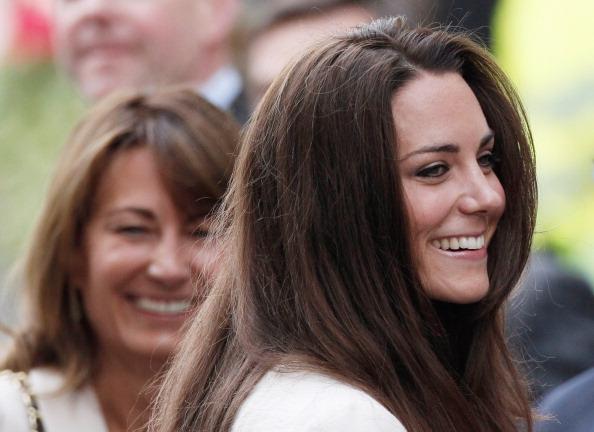
Kate Middleton and Carole Middleton

A new royal biography detailing the influence Kate Middleton‘s parents have had on how Prince William and the Princess of Wales raise their three children has reignited online speculation about whether Carole Middleton is seeking public credit for what has become known as “the Middleton Model” of parenting.

The claims stem from “William and Catherine: The Monarchy’s New Era: The Inside Story,” a book by royal editor Russell Myers published earlier this year. In it, Myers writes that Carole and Michael Middleton’s “constant presence” in William and Kate’s lives has played a significant role in shaping how the couple has raised Prince George, 12, Princess Charlotte, 10, and Prince Louis, 7. “William appreciated their involvement beyond measure, enjoying their company and the normalcy of the environment, whatever the circumstance,” Myers writes.

Myers describes the Middletons as having provided crucial hands-on support during the early years of the couple’s children, particularly while the family was based in Norfolk. “Michael and Carole enjoyed visiting the couple in Norfolk and would often stay for weekends, providing much-needed extra support for the young family,” Myers adds. According to the book, William once told an aide that having his in-laws nearby gave the family “more room to breathe,” underscoring how central the Middletons’ involvement has reportedly been to the couple’s approach to raising their children away from the more formal, staff-heavy upbringing William himself experienced.

The concept of a distinct “Middleton Model” of parenting is not new to royal commentary. Royal expert Duncan Larcombe first raised the idea in a 2023 interview with OK! magazine, describing the approach as centered on a relatively modest, close-knit family structure. “William has based his children’s upbringing on the Middleton model — three children, affluent, but hardworking parents and lots of love in the house,” Larcombe said at the time, according to Woman & Home. He added that Kate had counted her own parents among her closest friends by her early twenties, a dynamic he suggested William and Kate hope to eventually replicate with George, Charlotte and Louis.

Advertisement

With Myers’ newer book bringing renewed attention to the Middletons’ role in the family’s parenting approach, some royal watchers online have speculated that Carole Middleton may be actively encouraging this narrative’s circulation in the press. On the online forum Reddit, in a discussion thread devoted to royal coverage, one commenter expressed skepticism about the framing, writing that they found it difficult to reconcile media coverage of “the Middleton Model” as an aspirational parenting standard with broader criticism often directed at the family. Another commenter speculated more directly about Carole’s possible role in shaping the coverage, writing that they had “been wondering honestly if something is going on behind the scenes,” and suggesting the frequency of similar stories had increased in recent weeks.

It is important to note that these characterizations remain speculation from anonymous online commenters rather than claims made by Myers, palace officials, or any named source with direct knowledge of the Middleton family’s media strategy, if any such strategy exists at all. Neither Kensington Palace nor representatives for the Middleton family have commented publicly on the suggestion that Carole Middleton is seeking specific credit for popularizing the parenting approach associated with her family.

The Middletons’ broader closeness to William and Kate’s family has been documented in multiple accounts beyond Myers’ recent book. Kate has spoken publicly about her own upbringing in Bucklebury, Berkshire, describing it in warm terms during a 2020 appearance on Giovanna Fletcher’s “Happy Mum, Happy Baby” podcast, where she praised her parents’ dedication to her and her siblings, Pippa and James Middleton. Kate has also previously credited her parents with instilling values around family time, outdoor activity and a strong work ethic, themes that have repeatedly surfaced in royal commentary describing the family’s approach to raising George, Charlotte and Louis.

Since relocating to Berkshire in late 2022, William and Kate have lived within a shorter distance of Carole and Michael Middleton’s home in Bucklebury, a proximity that has been described in prior royal reporting as further deepening the grandparents’ day-to-day involvement in the children’s lives. That closeness has extended into public appearances as well, with Carole Middleton having been photographed accompanying George to public events on multiple occasions in recent years.

Advertisement

The renewed attention to Carole Middleton’s role has also unfolded against a broader backdrop of ongoing royal-focused media coverage comparing the Wales family’s approach to parenting and public life with that of Prince Harry and Meghan Markle, though Myers’ book itself focuses specifically on William and Kate’s family dynamics rather than drawing that comparison directly.

For now, the extent to which Carole Middleton herself has played any active role in shaping recent media coverage of “the Middleton Model” remains unconfirmed and rooted primarily in online speculation rather than documented reporting. What is established, according to Myers’ book and Kate’s own public comments over the years, is that her parents have remained closely and consistently involved in their grandchildren’s upbringing, a dynamic that has continued to draw public interest as George, Charlotte and Louis grow older within the public eye.

Continue Reading

Business

Solina acquires Epicurean Butter

Published

on

Solina acquires Epicurean Butter

Epicurean Butter has been partnered with HC Private Investments since 2019.

Continue Reading

Business

DA Davidson cuts Cellebrite stock price target on weak Q2 results

Published

on


DA Davidson cuts Cellebrite stock price target on weak Q2 results

Continue Reading

Business

Atai stock hits 52-week high of $7.26

Published

on


Atai stock hits 52-week high of $7.26

Continue Reading

Trending

Copyright © 2025