

Business
At Close of Business podcast April 17 2026


Somewhere between the third price hike and the fourth “we’ve updated our terms” email, the average subscriber starts running the numbers, not the kind any churn dashboard wants to surface, but the slower, more deliberate sort that ends with a thumb hovering over a cancel button at 11pm on a Sunday.
Subscription companies across SaaS, fitness apps, meal kits and the legacy media now leaning on paywalls still treat that moment as a marketing problem, when streaming figured out years ago it was a product problem in a marketing costume.
The numbers from the entertainment world are brutal and instructive in roughly equal measure: new research from Parks Associates found that almost a third of consumers now cancel a video service primarily to cut household costs, and that the cheaper ad-supported tiers nobody initially wanted to launch have become a sharper retention tool than any prestige drama. Affordability, it turns out, is not a discount tactic but an architecture.
Downgrade paths beat off-ramps
Streaming platforms learned, expensively and in public, that bolting on premium features while raising prices was building them a beautifully engineered cancellation funnel, and their response was strange for an industry trained almost exclusively on growth: they began constructing downgrade paths instead of off-ramps. A Spotify Premium user who suddenly finds the household ledger tighter doesn’t vanish; she slides into the free tier and keeps the habit warm until things ease.
The same logic spread well beyond music and video, with gaming hubs, fantasy sports apps and the new wave of iGaming operators rebuilding their loyalty mechanics around session frequency rather than single big purchases, treating every visit as a renewal of sorts. What separates the best online casino brands from the rest at this point is rarely the catalogue; it is how the platform behaves between sessions, and anyone who has watched how piratepots casino structures progression, daily missions, tiered rewards and social leaderboards will recognise the same instinct streaming taught the industry, which is to give the user a reason to think of herself as part of the platform rather than a temporary visitor passing through. Most subscription businesses, by contrast, are still firing off generic “we miss you” emails twelve hours after a cancellation and filing that under retention.
Why do so many operators keep mistaking acquisition for loyalty? It is the cheapest question on the table and the most expensive one to leave unanswered.
The bundle as cancellation friction
Bundling, the other lesson, has been sitting in plain sight, and the data around it is almost embarrassing: a survey of 1,600 US consumers published this year found that more than four in ten users are far more likely to keep bundled services than they are to keep the same titles bought separately. Disney, Hulu and Max, three brands that ought to be locked in trench warfare, now share a single billing line because the combined cancel button is psychologically heavier than three separate ones queued up on a Tuesday morning.
Personalisation, the third lesson, has been mishandled almost everywhere outside the platforms that perfected it: Netflix and YouTube turned recommendation engines into invisible furniture, the kind of system the user never notices working and only notices in its absence. A meal kit service that emails the same six recipes to every customer is not personalising anything, and a fitness app suggesting the same beginner workout in the eighteenth month of a subscription is not personalising anything either; these businesses already have the data, what they don’t have is the willingness to act on it before the subscriber decides the relationship has become one-sided.
A lot of operators also learned to make signing up effortless and cancelling deliberately tedious, betting that friction would do the work loyalty wouldn’t, an approach streaming flirted with before getting slapped down by regulators and by its own retention figures, because forcing someone to stay produces a particular kind of customer, a resentful one, primed to leave the second she remembers the password. Loyalty built on friction is not loyalty; it is a deferred cancellation with interest.
The other detail executives quietly underestimate is the value of the comeback, since lapsed subscribers are not lost subscribers, not most of them. Streaming has known this for a while, and built its retention models around the assumption that a meaningful share of cancellations are pauses rather than exits, which changes how a service designs offboarding, win-back campaigns, even the tone of the final email someone reads before disappearing for six months. The same logic shows up in any decent breakdown of what makes a retention strategy actually work, and most of those principles travel intact into industries that have nothing to do with screens.
The deeper, slightly uncomfortable point is this: streaming services learned humility before most subscription businesses did, forced into it by the post-pandemic crash and the discovery that customers had options, attention spans were finite, and brand affinity offered no real defence against a household budget meeting on a Sunday night. The companies still pretending their product is special enough to escape that conversation are the ones currently writing increasingly worried board memos, while the ones that started copying the entertainment playbook with any seriousness are quietly outlasting the rest.
None of this is glamorous work; it is mostly the slow business of treating subscribers as if they might still be around next year.

Australian shares have fallen for a fourth straight session, as CommBank led the big banks lower, eclipsing a broadly positive session elsewhere.

Fortescue has offered to pay $150 million compensation to the Yindjibarndi people immediately, should the native title group not wish to appeal.

The rupee declined 0.1% to 95.7450 per dollar, edging past its previous all-time low of 95.7375 hit on Tuesday. A sustained spike in energy prices due to the U.S.-Iran war has clouded India’s macroeconomic outlook by stressing India’s external sector. Economists have marked down growth forecasts for the economy, lifted inflation projections and are forecasting persistent pressure on the rupee.
More to come…
Business
Oracle Stock Drops 3.6% to $186.83 as AI Spending Concerns Weigh on Cloud Giant Amid Market Volatility
NEW YORK — Oracle Corp. shares closed down 3.62 percent at $186.83 on Wednesday, May 13, 2026, extending recent weakness as investors continued to scrutinize the software giant’s aggressive capital spending on artificial intelligence infrastructure and cloud expansion. The decline of $7.01 per share came despite a modest pre-market rebound, reflecting ongoing unease about profitability, execution risks and broader tech sector rotation.
The move erased additional market value from the company, which has faced significant pressure throughout 2026 amid questions over the returns on its massive AI-related investments. Oracle, long a leader in enterprise databases and now a major player in cloud infrastructure, has poured billions into data centers and GPU capacity to capitalize on surging demand for AI services, but high costs and uncertain near-term margins have unsettled Wall Street.
Volume remained elevated as traders reacted to broader market signals, including mixed performance in big tech and persistent concerns about capital intensity in the AI boom. Pre-market trading Thursday showed a slight recovery to around $188, up about 0.63 percent, as some bargain hunters stepped in.
Key Factors Behind the Decline
Analysts point to several interconnected issues pressuring Oracle stock. First, ongoing skepticism about the company’s heavy capital expenditures persists. Oracle has committed tens of billions to expand its Oracle Cloud Infrastructure (OCI) to support large AI workloads, including high-profile partnerships. While cloud revenues have grown strongly, the scale of spending has raised fears of margin compression and elevated debt levels.
Second, earlier reports of Oracle canceling a major server order from Super Micro Computer — valued between $1 billion and $1.4 billion — continued to reverberate. The decision, linked to supply chain adjustments and risk management, fueled perceptions that AI infrastructure buildouts may face delays or cost overruns. This news, combined with analyst notes questioning the profitability of GPU-as-a-service offerings, has weighed on sentiment.
Third, broader market dynamics played a role. Tech stocks faced headwinds amid rotation toward other sectors and caution over valuation multiples in the AI space. Oracle’s premium positioning left it vulnerable to any signs of slowing momentum, even as the company reports robust remaining performance obligations in the hundreds of billions.
Oracle’s AI and Cloud Momentum
Despite the share price pressure, Oracle’s fundamentals show strength in key growth areas. Cloud revenues have accelerated significantly in recent quarters, with strong demand for multicloud and AI services. The company’s database business remains a cash cow, while new offerings in generative AI and enterprise applications gain traction.
Oracle has highlighted wins with major clients and raised long-term guidance in prior reports, pointing to a massive backlog. However, investors appear focused on the “show me” phase, demanding clearer evidence that heavy upfront investments will translate into sustainable profit growth and free cash flow.
Analyst Perspectives and Valuation
Wall Street reactions have been mixed. Some firms have trimmed price targets citing execution risks and financing needs, while others see the pullback as a buying opportunity in a company with durable competitive advantages. Oracle’s forward earnings multiples, while elevated historically, appear more reasonable after the year-to-date decline.
Longer-term bulls argue that Oracle’s integrated stack — combining databases, cloud infrastructure and applications — positions it uniquely for enterprise AI adoption. CEO Safra Catz and founder Larry Ellison have emphasized disciplined growth and shareholder returns, including dividends and buybacks.
Broader Implications for Tech Investors
Oracle’s performance reflects wider tensions in the AI trade. While enthusiasm for artificial intelligence remains high, questions about capital efficiency, power demands and actual monetization timelines have created volatility. Companies heavily exposed to infrastructure buildouts face particular scrutiny compared to software pure-plays with lighter balance sheets.
For Oracle specifically, the coming quarters will be critical. Investors will watch for updates on data center timelines, cloud revenue acceleration and margin trends. Any positive surprises on cost control or major new customer wins could catalyze a rebound, while further delays or spending overruns might extend the pressure.
Retail and institutional holders have felt the impact, with the stock well off its 2025 highs. Yet many long-term observers view current levels as potentially attractive for a company with strong secular tailwinds in cloud and AI. Diversification, careful position sizing and attention to upcoming earnings remain key themes for those navigating the name.
As markets digest Wednesday’s close, attention turns to any fresh corporate updates or sector catalysts. Oracle’s next earnings report will likely provide more color on progress and outlook, potentially shifting the narrative. For now, the 3.62 percent drop underscores persistent caution even as the company executes on its ambitious AI strategy.
The tech heavyweight’s path forward will hinge on balancing growth investments with shareholder returns in an environment where AI hype meets financial reality. Investors remain watchful as Oracle navigates this pivotal chapter in its evolution from database leader to AI infrastructure powerhouse.

WA’s resources sector has more than doubled in value in a decade, and its hold on the state’s economy has only tightened.

The Board has also recommended a final dividend of Rs 13 per share for the financial year ended March 2026. The record date for the purpose of payment of final dividend is June 5.
Revenue from operations in the reporting period decreased 3% YoY to Rs 6,541 crore.
EBITDA fell 35% to Rs 997 crore from Rs 1,538 crore in the year-ago period, while EBITDA margin contracted sharply to 15.2% from 22.8%.
For the full financial year FY26, Cipla reported revenue of Rs 28,163 crore, up 2% YoY, while annual PAT declined 26% to Rs 3,879 crore from Rs 5,273 crore in FY25. EBITDA for the year fell 17% to Rs 5,925 crore, with margin narrowing to 21% from 25.9% last year.

Cipla said its India business remained a key growth driver during the quarter. The One India business, which includes prescription, trade generics and consumer health operations, grew 15% year-on-year to Rs 3,007 crore in Q4 FY26 from Rs 2,622 crore a year ago.
The company said branded prescription therapies including respiratory, urology, anti-diabetes and cardiac segments continued to post strong growth, while consumer health brands such as Nicotex, Omnigel and Cipladine maintained leadership positions. However, the North America business remained under pressure. Quarterly revenue from the region dropped 26% year-on-year to Rs 1,414 crore from Rs 1,919 crore. Despite the decline, the company highlighted regulatory approval for the first AB-rated generic version of gVentolin manufactured from its US facility.
The One Africa business continued to deliver strong growth momentum, with quarterly revenue rising 21% year-on-year to Rs 1,236 crore. South Africa revenue jumped 33% to Rs 984 crore.
Emerging Markets and Europe revenue declined 9% YoY to Rs 819 crore during the quarter amid geopolitical uncertainties, while API and other business revenue fell sharply by 77% to Rs 64 crore.
MD and Global CEO Achin Gupta said Cipla recorded its highest-ever annual revenue during FY26 despite near-term challenges in certain markets. He added that the company would continue focusing on flagship brands, pipeline investments and regulatory resolutions going forward.
On Wednesday, following the results announcement, Cipla shares were last trading 4% higher at Rs 1,344.9 on NSE.
Elisha Newell and Nadia Budihardjo discuss the growth of mining’s value over the past decade.


Ukraine’s Zelenskiy warns of incoming Russian drone attacks during daylight
Business
(VIDEO) Julia Louis-Dreyfus Delivers Brutal Veep-Style Roast of Stephen Colbert in Emotional Late Show
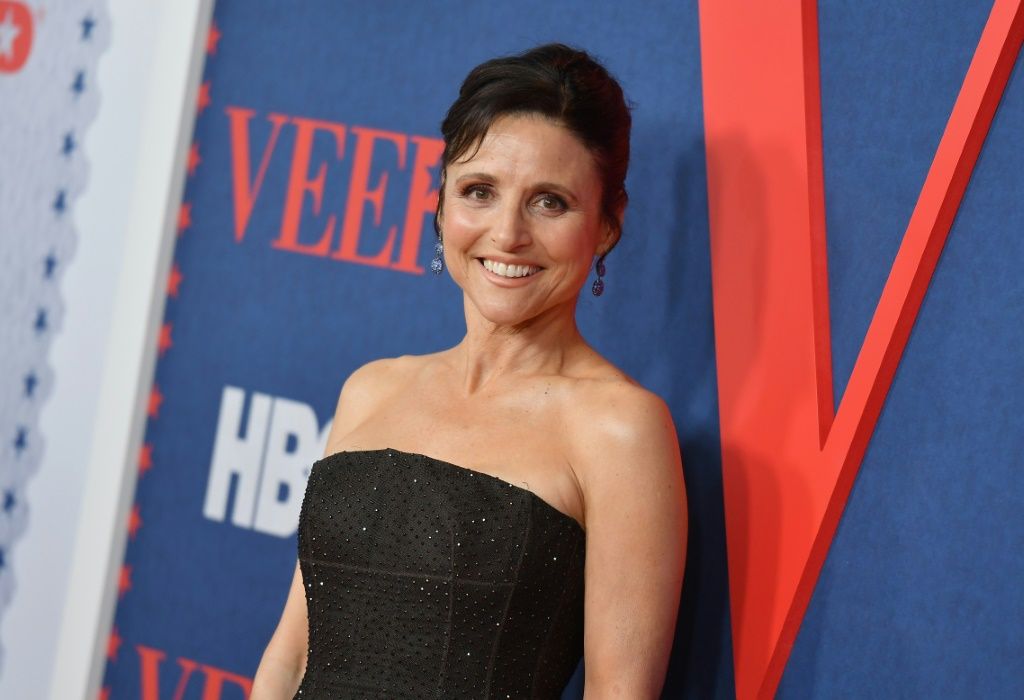
NEW YORK — Julia Louis-Dreyfus turned a farewell appearance on “The Late Show with Stephen Colbert” into a masterclass in comedic savagery Tuesday night, channeling her “Veep” character Selina Meyer for a blistering, backhanded tribute that left host Stephen Colbert in stitches just nine days before the show’s final episode. The 11-time Emmy winner’s surprise roast, written by former “Veep” scribes, perfectly captured the show’s bittersweet final stretch as Colbert prepares to sign off on May 21.
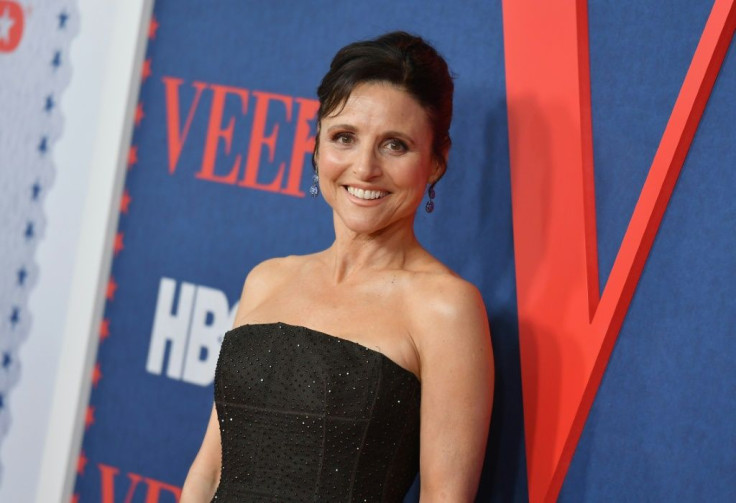
Louis-Dreyfus, appearing alongside Pedro Pascal, surprised even Colbert — a longtime “Veep” superfan — by announcing she had recruited writers from the HBO political satire to craft Selina Meyer-style dedications. “He does not know what I’m about to do,” she told the audience before slipping into character. What followed was a torrent of oblivious insults, backhanded compliments and signature “Veep”-esque awkwardness that had Colbert snorting with laughter.
“I’ve been on this show multiple times, and I always thought you were Rachel Maddow. Are you not?” Louis-Dreyfus began as Selina. She continued with zingers including: “You’re as relevant as the Bill of Rights,” and “Your cancellation gave Donald Trump so much pleasure, I always think of you as the Stormy Daniels of late night.”
The actress saved some of her sharpest lines for Colbert’s impending end. “When my people said I should come and say farewell to you, I was hoping it would be more of a hospice situation,” she deadpanned, drawing one of the biggest laughs of the night. She also took a jab at network executives, calling them “corporate ji**-guzzler[s]” in a line that required a broadcast bleep.
Playful Kissing Segment Adds to the Fun
The evening wasn’t all roasts. Building on Monday’s memorable moment when Colbert kissed Jimmy Fallon during a late-night hosts reunion, Louis-Dreyfus playfully referenced the clip and hinted she wanted in on the action. “No one’s watching. It’s just between us,” she said. After a quick on-air smooch that drew cheers from the audience, Colbert joked, “Well, the interview’s going great so far. Why don’t we do another take?”
Pedro Pascal later joined the lip-locking trend, telling Colbert he felt “jealous” and planting a kiss of his own. “No need! Anytime. These lips will soon be free,” Colbert quipped, nodding to the show’s approaching end.
Bittersweet Context of Colbert’s Final Weeks
The appearance comes as “The Late Show” winds down its 11-season run amid CBS’s decision to end the program due to financial pressures despite solid ratings. Colbert has used the final stretch to reunite with friends and collaborators, including a star-studded late-night hosts gathering Monday featuring Fallon, Jimmy Kimmel, Seth Meyers and John Oliver.
Louis-Dreyfus, who has appeared on the show multiple times, used the platform to pay genuine tribute beneath the barbs. Her “Veep” connection runs deep — Colbert has long cited the series as one of his favorites, and the pair share a history of sharp political satire. The segment highlighted the warm friendship between the two comedy veterans while leaning into the absurdity of the show’s looming cancellation.
Additional zingers targeted Colbert’s aging on camera (“your jowls look like the scrotum of… well, a canceled old late-night host”) and warned him against viewing unemployment as material for “Death of a Salesman.” She reassured him that the outpouring of support for Jimmy Kimmel was only because “he’s more popular.”
Louis-Dreyfus’ Enduring Legacy and Current Projects
The moment underscored Louis-Dreyfus’ status as one of television’s sharpest comedic voices. Fresh off her “Veep” run and continued work in projects like her podcast “Wiser Than Me,” she remains a go-to guest for major late-night appearances. Her ability to blend affection with ruthless humor made the tribute both hilarious and touching.
Colbert, for his part, appeared genuinely moved and entertained throughout. The segment fit perfectly into the reflective, celebratory tone of the show’s final episodes, which have featured high-profile guests including Barack Obama and Tom Hanks in coming days.
Fan and Industry Reactions
Social media lit up immediately after the episode aired, with clips of the Selina Meyer roast circulating widely. Fans praised Louis-Dreyfus for capturing the spirit of “Veep” while giving Colbert a memorable send-off. Many noted the timing, coming amid broader conversations about the future of late-night television in a shifting media landscape.
Industry insiders view the final weeks as a victory lap for Colbert, who transformed “The Late Show” into a platform known for sharp political commentary, celebrity interviews and viral moments. Louis-Dreyfus’ appearance added another highlight to a memorable farewell tour.
As “The Late Show” counts down to its May 21 finale, moments like Tuesday’s roast remind viewers why the program resonated for over a decade. Julia Louis-Dreyfus delivered not just laughs but a fitting, affectionate farewell to a fellow comedy icon — wrapped in the perfect “Veep”-style packaging of awkward sincerity and brutal honesty.
The episode, which also featured Pascal, balanced humor, nostalgia and genuine warmth as Colbert prepares to step away from the desk. For fans of both stars, it was a night that showcased why their chemistry has always been appointment television.

Title Fighter chases 2026 Straight Six repeat under Clayton Douglas at Flemington
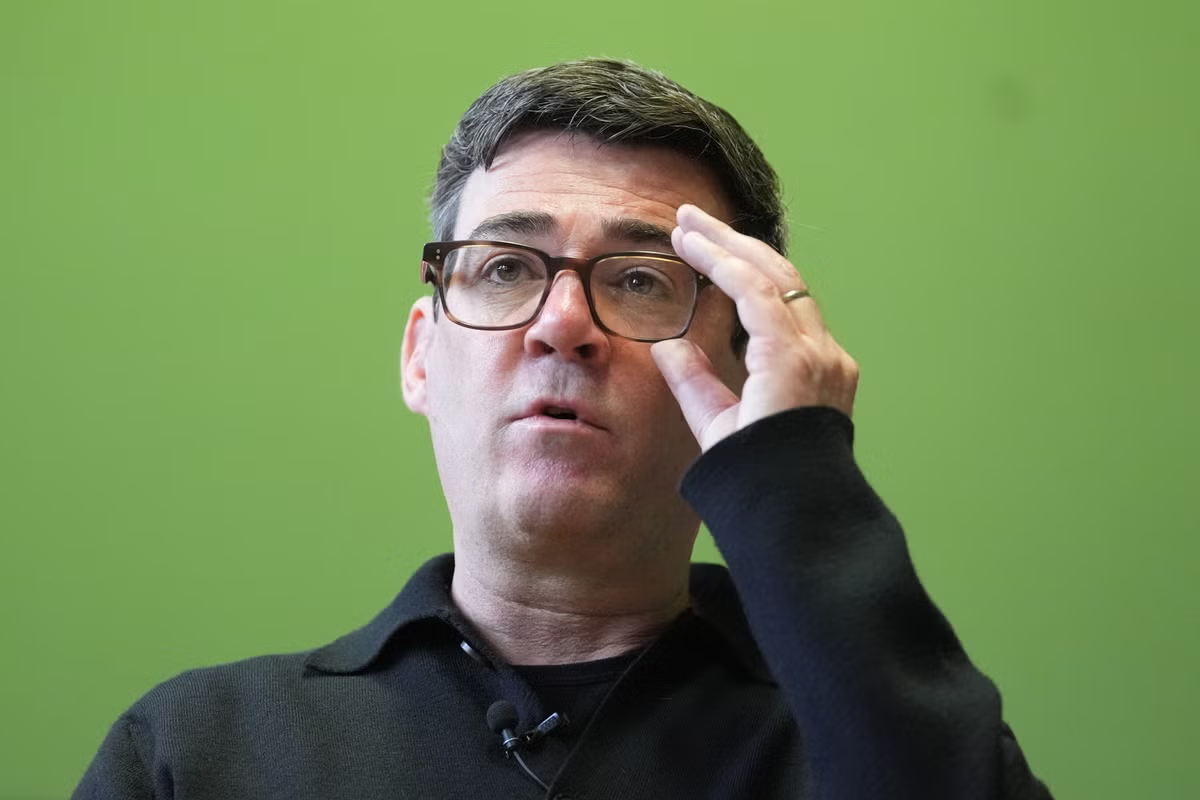
Andy Burnham: The ‘King of the North’ with No 10 in his sights

How streaming learned to keep customers

Manchester United reach agreement with Casemiro over contract clause amid transfer speculation

US brings back mandatory military draft registration

Steven Gerrard disagrees with Gary Neville over ‘shock’ Chelsea and Arsenal claim | Football


-
 Crypto World5 days ago
HarrisX Poll Found 52% of Registered Voters Support the CLARITY Act
-

 Fashion5 days ago
Weekend Open Thread: Marianne Dress
-

 Crypto World6 days ago
Upbit adds B3 Korean won pair as Base token gains Korea access
-
 NewsBeat6 days ago
NCP car park operator enters administration putting 340 UK sites at risk of closure
-

 Fashion2 days ago
Coffee Break: Travel Steam Iron
-

 Fashion2 days ago
What to Know Before Buying a Curling Wand or Curling Iron
-

 Tech3 days ago
Auto Enthusiast Carves Functional Two-Stroke Engine from Solid Metal
-

 Politics1 day ago
What to expect when you’re expecting a budget
-
 Business4 days ago
Ignore market noise, India’s long-term story intact, say D-Street bulls Ramesh Damani and Sunil Singhania
-

 Politics4 days ago
Politics Home Article | Starmer Enters The Danger Zone
-

 Crypto World7 days ago
BlackRock CEO Larry Fink Discusses a New Asset Class
-

 Tech2 days ago
GM Agrees To Pay $12.75 Million To Settle California Lawsuit Over Misuse Of Customers’ Driving Data
-
 Sports7 days ago
NBA playoff winners and losers: Austin Reaves is not loving Lakers vs. Thunder matchup, but Chet Holmgren is
-

 Entertainment6 days ago
Sarah Paulson Called Out For Met Gala ‘Hypocrisy’
-

 Entertainment6 days ago
General Hospital: Ric & Ava Bombshell – Ric’s Massive Secret Exposed!
-

 Politics6 days ago
Simon Cowell Says He Was ‘Horrible’ To Susan Boyle During BGT Audition
-

 Crypto World6 days ago
Robinhood says Wall Street is building onchain
-

 Sports6 days ago
UEFA Champions League final schedule, teams, venue, live time and streaming | Football News
-

 Entertainment7 days ago
Bold and Beautiful Early Spoilers May 11-15: Steffy Revolted & Liam Overjoyed!
-

 Entertainment6 days ago
Why David Letterman Called CBS ‘Lying Weasels’
You must be logged in to post a comment Login