SYDNEY — Australia’s fuel crisis intensified this week as diesel prices remained near record highs and national reserves hovered at precarious levels, forcing the government to scramble for alternative supplies amid ongoing disruptions from the Middle East conflict that has choked global oil shipments through the Strait of Hormuz.
Australia Fuel Crisis Deepens as Diesel Prices Soar and Reserves Dwindle in 2026 engin akyurt / Unsplash
As of late April 2026, Australia holds approximately 46 days of petrol reserves — an improvement of about 10 days since the crisis began in late February — but diesel stocks remain more strained due to heavy reliance on the fuel for trucking, mining, farming and freight. Energy Minister Chris Bowen confirmed contracted shipments are secure through mid-May, yet experts warn of a potential “long tail” of shortages and price pressure extending into June and beyond if tensions persist.
The crisis traces directly to the escalation in the Iran conflict, which severely restricted tanker traffic through the Strait of Hormuz — a chokepoint carrying roughly 20% of global oil. Australia, which imports about 90% of its refined fuel, primarily from Asian refineries dependent on Middle Eastern crude, felt the ripple effects rapidly. Diesel prices have more than doubled in some regions, averaging around 275-312 cents per litre nationally, while unleaded petrol has climbed above 190 cents despite partial relief from halved fuel excise taxes.
Prime Minister Anthony Albanese’s government activated elements of its four-phase National Fuel Security Plan, currently sitting at Level 2 — “Keep Australia Moving.” Measures include releasing portions of emergency stockpiles (up to 20% in earlier phases), underwriting refinery purchases of costlier shipments from the United States, Mexico, Argentina, Algeria and Asian neighbors, and securing additional cargoes such as 200 million litres of diesel from South Korea, Brunei and Malaysia expected in late May or early June.
Rural and regional areas have borne the brunt. Hundreds of service stations have reported running dry on diesel or unleaded at times, prompting panic buying and informal rationing at pumps. Farmers in Victoria and New South Wales have guarded fuel tanks overnight against theft, while trucking operators report costs doubling, threatening freight viability and pushing up prices for everyday goods. Some analysts warn up to 70% of truck drivers could face viability issues within months if diesel remains elevated.
Advertisement
The government has explored longer-term fixes. Discussions are underway for a potential new $10 billion refinery to rebuild domestic refining capacity, which has shrunk dramatically over the past decade with most facilities closed or converted. Opposition figures have criticized past policy decisions that left Australia vulnerable, while unions point to “just-in-time” supply chains and offshoring as root causes.
Economists forecast significant impacts. EY-Parthenon modelling suggests a prolonged disruption could shave up to $42 billion from Australia’s 2026 GDP, with investment falling $54 billion and up to 160,000 workers temporarily idled in a worst-case scenario. Inflation has spiked, outpacing many developed nations, as higher transport costs flow through to food, construction and consumer goods.
Motorists have altered behavior. Easter travel plans were scaled back or canceled in some cases, and carpooling has increased in cities. Aviation fuel concerns briefly affected operations, including Anzac Day commemorations. The government reduced heavy vehicle road user charges to ease pressure on the freight sector.
International Energy Agency-aligned reserves have provided a buffer, but Australia’s holdings remain lower than many comparable countries. Pre-crisis warnings about thin stockpiles — sometimes as low as 20-30 days — proved prescient. The government has eased fuel quality standards temporarily to divert export-bound stocks to the domestic market.
Advertisement
Diesel’s outsized role in the economy amplifies the pain. Australia consumes more than twice as much diesel as petrol, powering essential services from mining exports to supermarket deliveries. A hidden diesel crunch could still emerge even as petrol prices ease slightly toward pre-crisis levels.
Public and political debate has sharpened. Treasurer Jim Chalmers described “extreme uncertainty,” while calls grow for greater sovereign fuel capacity. The opposition has accused the government of mismanagement, including forcing refineries to export during shortages.
Globally, the crisis highlights vulnerabilities in just-in-time energy systems. Australia is diversifying aggressively, but rebuilding reserves and infrastructure will take years. A fragile Middle East ceasefire offers hope, yet renewed disruptions could trigger Level 3 or even Level 4 measures — including formal rationing.
For ordinary Australians, the crisis means higher living costs and lifestyle adjustments. Businesses are hedging where possible, and households are urged to conserve fuel. As April ends, the government insists supplies remain secure in the short term, but the episode serves as a stark reminder of energy dependence in an unstable world.
Advertisement
Analysts expect volatility to continue. While new shipments provide breathing room, diesel prices and freight impacts could linger, feeding into broader cost-of-living pressures ahead of key economic data releases. Long-term, the crisis may accelerate investment in renewables, domestic refining and strategic stockpiles to safeguard against future shocks.
Australia’s fuel emergency, born from distant geopolitical conflict, has become a defining domestic challenge of 2026 — testing resilience, policy responses and the nation’s ability to keep moving when global supply chains falter.
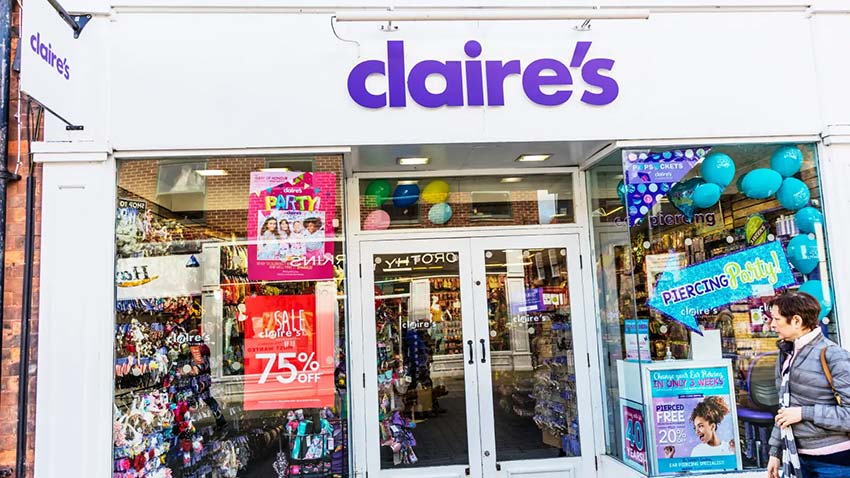
The lurid purple shopfronts that ushered a generation of British teenagers into their first ear piercing have, quite literally, gone dark.
Claire’s Accessories has confirmed the closure of all 154 of its standalone stores in the UK and Ireland, with more than 1,300 staff handed redundancy notices in one of the most emphatic high-street collapses of the year so far.
Administrators at Kroll said trading ceased across the estate on 27 April after the chain tumbled into administration for the second time in barely twelve months. The 350 concession counters that Claire’s operates inside other retailers will continue to trade for now, but the standalone model, for decades a fixture of British shopping centres from Bluewater to Buchanan Galleries, is finished.
For the SME-heavy ecosystem of suppliers, landlords and shopping-centre operators that depend on anchor tenants of this kind, the implications are sobering. Claire’s was not a marginal player: it was, until recently, one of the most reliably trafficked footfall generators on any mid-tier high street, hoovering up pocket money from a demographic that few competitors knew how to reach.
That demographic, it turns out, has moved on. The chain has been outflanked on price by the Chinese-owned ultra-fast-fashion platforms Shein and Temu, whose algorithmically curated trinkets land on teenagers’ doorsteps for a fraction of Claire’s shelf prices. It has been squeezed on the high street itself by Primark and Superdrug, both of which have aggressively expanded their value accessories ranges. And, perhaps most damaging of all, it has been culturally outmanoeuvred.
Advertisement
“We’ve moved away from novelty, colourful jewellery for the most part, which is what Claire’s are best known for,” Priya Raj, a fashion analyst, told the BBC. Today’s teenagers, she noted, take their cues from TikTok and Instagram rather than from a Saturday-afternoon trawl of the local Arndale, and their tastes have shifted to “minimal jewellery, sometimes chunky, sometimes with a more curated look, basically not the cutesy, juvenile look that Claire’s is known for.”
The retail analyst Catherine Shuttleworth was blunter still. Gen Alpha, she argued, has more competing claims on its disposable income than any cohort before it — matcha lattes, bubble tea, gourmet desserts, in-app purchases, and a shop “just selling ‘stuff’ simply doesn’t cut it” any longer.
The collapse will reignite the increasingly fractious debate over the Government’s tax treatment of bricks-and-mortar retail. When Claire’s owner, the private-equity backed Modella Capital, first put the chain into administration in January, it pointed to “alarming” Christmas trading and singled out the rise in employers’ National Insurance Contributions as a material drag on viability. Trade bodies including the British Retail Consortium and the Federation of Small Businesses have warned for months that the cumulative weight of higher NICs, business rates and the National Living Wage uplift is pushing marginal store-by-store economics into the red — a warning that Claire’s now embodies in unusually stark form.
The structural picture is no kinder. Town centre footfall has yet to return convincingly to pre-pandemic levels, the Treasury’s long-promised business rates overhaul has under-delivered, and landlords are still struggling to re-let space vacated by the likes of Wilko, The Body Shop and Ted Baker. A 154-unit hole in the property market is not one that will be filled overnight.
Advertisement
Across the Atlantic, the picture is little better. The American arm of the business filed for Chapter 11 in 2025, its second bankruptcy in seven years, after an earlier failure in 2018 — underlining that Claire’s troubles are global rather than peculiarly British.
What was once a rite of passage has become a case study in how quickly retail brands can be rendered obsolete when consumer culture, cost inflation and online disruption converge on the same balance sheet. The bright purple frontages will be gone within weeks. The questions they leave behind for Britain’s high streets will not.
Seeking Alpha’s transcripts team is responsible for the development of all of our transcript-related projects. We currently publish thousands of quarterly earnings calls per quarter on our site and are continuing to grow and expand our coverage. The purpose of this profile is to allow us to share with our readers new transcript-related developments. Thanks, SA Transcripts Team
Golf WA chief executive Arron Minchin says the state governing body intends to continue working closely with on-course and off-course golf facility owners to maximise participation.
Venture capital firm Peak XV Partners, formerly Sequoia Capital India & South East Asia, exited Indian fintech company One MobiKwik Systems through a block deal worth more than Rs 130 crore ($13.76 million) on Tuesday, Reuters reported, citing a source with direct knowledge of the matter.
Peak XV sold around 60.8 lakh shares, representing nearly 7.7% equity in the company, at an average price of Rs 214 per share, the source said. The price is at a 4.88% discount to the previous closing price of Rs 225 on the BSE.
Investment firms Florintree Advisors, Viridian Asset Management, Dymon Asia and Karma Capital were among the buyers in the deal, the news report stated. Peak XV had been an early institutional investor in One MobiKwik, and the latest transaction marks its complete exit from the fintech company, the source added.
Shares of One MobiKwik Systems rallied as much as 8% to their day’s high of Rs 243 on the BSE on Tuesday, extending gains for a second consecutive session and rallying 20% over the same period.
Advertisement
The sharp surge in One MobiKwik share price comes after the company announced that the Reserve Bank of India (RBI) has approved its application for a Non-Banking Financial Company (NBFC) licence, marking a key milestone in its efforts to strengthen its financial services business.
Live Events
The licence will allow the launch of a new lending arm, MobiKwik Financial Services Private Limited (MFSPL), a wholly owned subsidiary of the group. Through this entity, the company plans to expand its regulated lending capabilities, introduce innovative credit products, and serve a wider base of consumers and merchants with greater efficiency and control. The development is in line with the group’s long-term strategy of building a full-stack fintech platform focused on accessible, responsible and technology-driven financial products.The NBFC will build on the group’s existing strengths, including a customer base of more than 186 million users, a trusted brand, and strong technology infrastructure along with risk underwriting and collections capabilities.
MFSPL, the group’s in-house NBFC, is expected to help launch new credit products with faster go-to-market execution, offering both secured and unsecured lending solutions to consumers and MSMEs in underserved geographies. Operations will begin after receipt of the Certificate of Registration (CoR) from the RBI upon fulfilment of certain conditions.
(Disclaimer: Recommendations, suggestions, views and opinions given by the experts are their own. These do not represent the views of The Economic Times)
Swiss airline Edelweiss is planning to add an extra rotation to Zurich Airport over the summer season
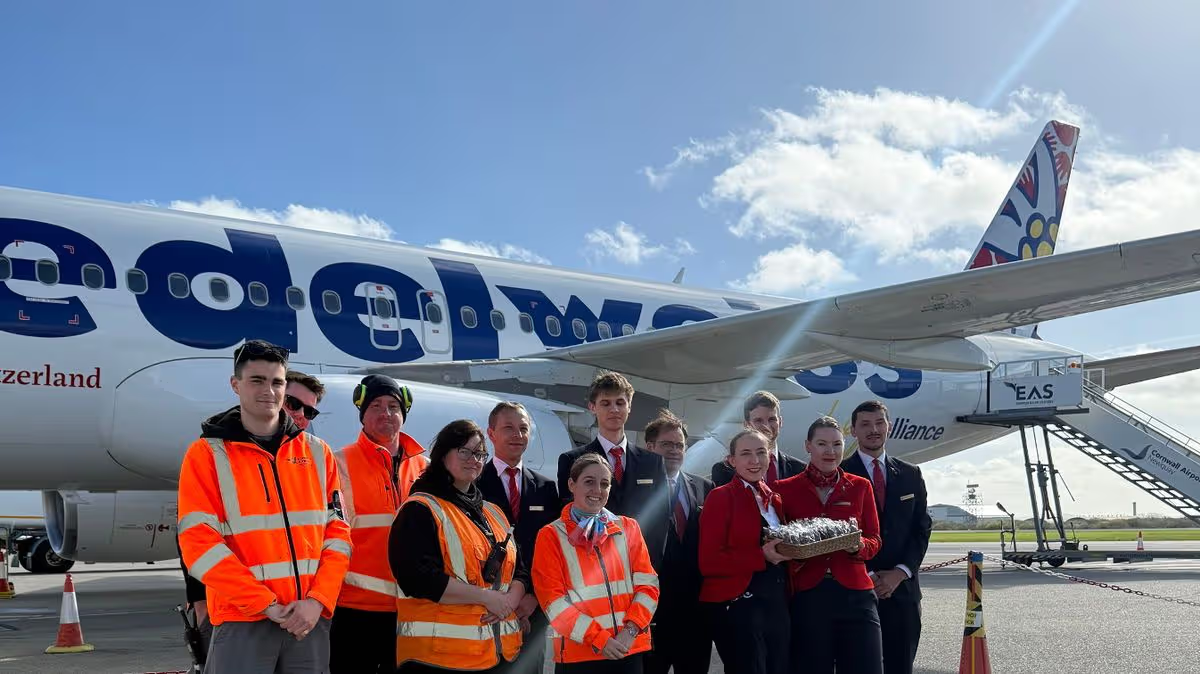
Edelweiss adds third weekly Zürich-Newquay rotation for summer 2026(Image: Edelweiss)
Flights from Cornwall to Switzerland are set to increase this summer after Swiss airline Edelweiss announced changes to its Newquay to Zurich schedule.
The carrier has confirmed it will run an extra Friday rotation between Cornwall Airport Newquay and Zurich Airport across the peak summer period.
The route, which currently runs Wednesdays and Sundays each week, will operate three times a week between July 3 and August 21. The extra flight rotation brings the Zürich-Newquay route to its highest frequency since launch.
Cornwall Airport said having flights on Fridays would allow business travellers an end-of-week return option, allowing for shorter outbound trips without the need to extend stays due to limited flight windows.
Advertisement
Nigel Scott, commercial director of Cornwall Airport Newquay, said: “This is a very positive development for Cornwall Airport Newquay and a clear endorsement of the Zurich route’s performance within the Edelweiss network.
“The increased frequency during peak summer reflects strong demand for Cornwall and the success of our partnership in developing the route.
“Additional capacity will support inbound tourism, enhance connectivity via Zurich and provide greater flexibility for passengers. We look forward to building on this momentum with Edelweiss in the seasons ahead.”
The news comes just weeks after Cornish carrier Skybus cancelled all future flights between Newquay and London. The airline had been operating the daily route from the county to the capital under a public service obligation after previous operator Eastern Airways collapsed.
Advertisement
The agreement, which was funded by Cornwall Council and the Department for Transport, was scheduled to run until the end of May, but the last flight took place on Thursday, April 2.
“Due to circumstances beyond our control, services will now cease earlier than planned,” Skybus wrote in a statement on its website.
“Customers with bookings for travel throughout April and May are being contacted directly. All affected customers are entitled to a full refund, which will be processed back to the original method of payment.
“We sincerely apologise for the disappointment and inconvenience this will cause and appreciate your understanding.”
Advertisement
Skybus boss Jonathan Hinkles blamed the “huge rise” in fuel costs following the conflict in the Middle East as well as sharp fall in passenger numbers for the cancellation of the route.
Perth Racing has signed a two-year media partnership deal with Craig Hutchison-led Sports Entertainment Group, effective from May 1, for an undisclosed amount.
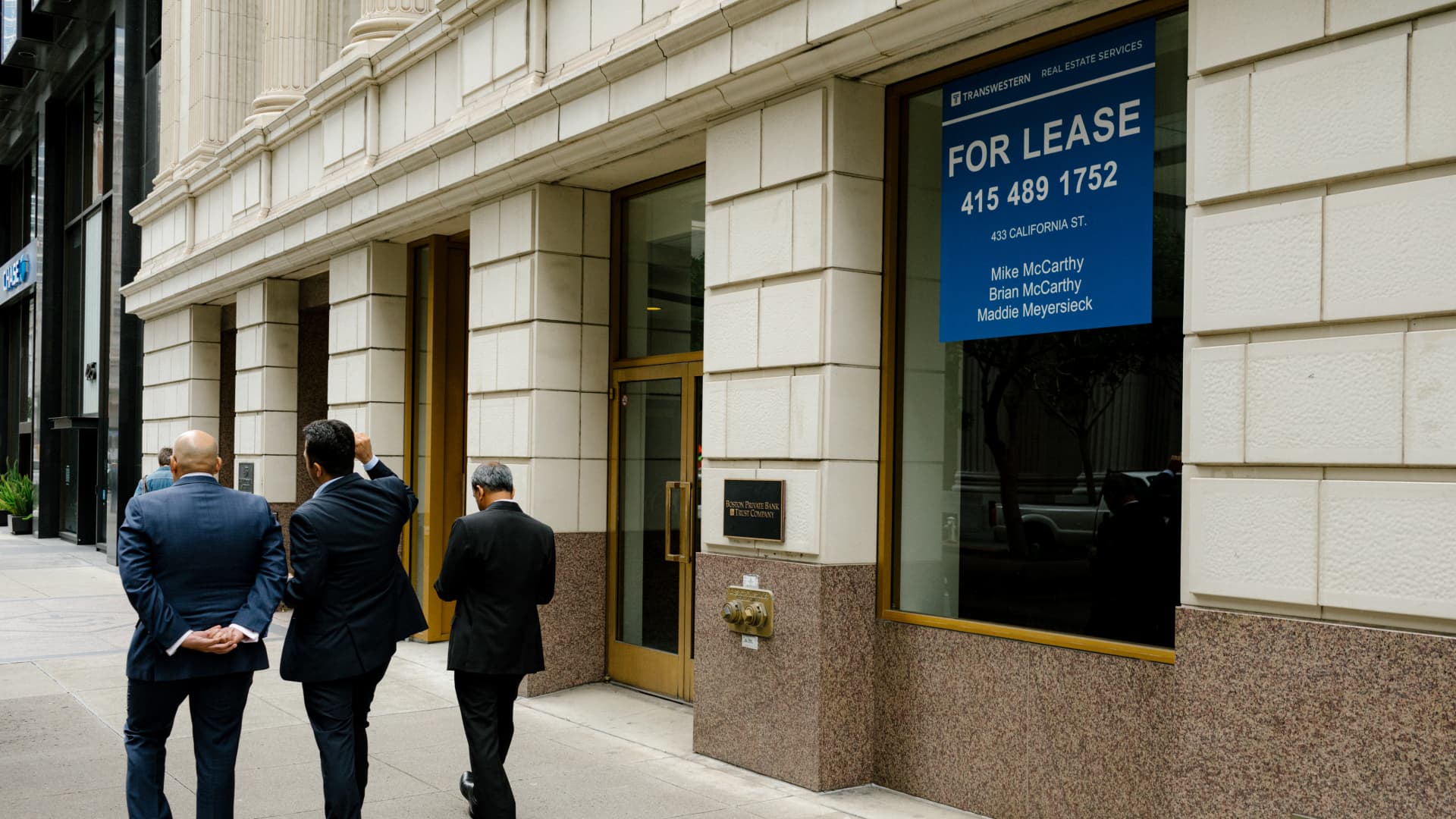
A “For Lease” sign in the Financial District of San Francisco, California, US, on Wednesday, May 3, 2023.
Jason Henry | Bloomberg | Getty Images
A version of this article first appeared in the CNBC Property Play newsletter with Diana Olick. Property Play covers new and evolving opportunities for the real estate investor, from individuals to venture capitalists, private equity funds, family offices, institutional investors and large public companies. Sign up to receive future editions, straight to your inbox.
Advertisement
Despite the war with Iran and continued economic uncertainty in the U.S., demand for office space is recovering at a strong clip.
In the first quarter of this year, new in-person and virtual office tours reached their highest level since the pandemic began, as measured by the VTS Office Demand Index. The index is a future indicator of lease signings about a year or more out.
The index rose 18% from the fourth quarter 2025 and 13% from the same quarter one year ago.
“Although tested against a turbulent backdrop, demand for office space has seen an exceptional start to the year,” Nick Romito, CEO of commercial real estate software company VTS, said in a release. “What perhaps is most notable about this quarter’s positive performance is that it was led not just by tech’s sustained AI boom – but also by finance and legal companies entering the market as well.”
Advertisement
The surge in demand is curious, given that office-using employment is still down 2% from 2022, according to the Bureau of Labor Statistics. Usually, that would result in less office demand, but the drop in employment could also be giving employers more leverage to get workers back into the office.
Nationally, for all buildings, the office vacancy rate fell 14 basis points to 22.2% in the first quarter of this year from the previous quarter and is down 30 basis points from the last peak in Q2 2025, according to a report from JLL, a commercial real estate services and investment management company. Vacancy remains hyper-concentrated predominantly in larger-scale, aging buildings with financially constrained owners, with 10% of office buildings comprising more than 60% of total national vacancy.
As with everything in real estate, the office recovery is local. San Francisco and New York City are leading office demand, as AI tech employment rises quickly in the former and diversity of employment fuels the latter. Los Angeles also saw double-digit increases in demand on a quarterly basis, fueled by significant growth in the creative industry, according to VTS.
Cities seeing weaker demand include Boston, which was the worst-performing market in the report. Life science offices have taken a hit in that city, due to significant government funding cuts.
Advertisement
In addition, demand is contracting in Seattle, Washington, D.C., and Chicago, as they are not seeing strong employment growth.
“The AI boom continues to be a dominant headline for office, and markets that lack a major tech presence, or are without a primary growth lever in another industry, are seeing declines in demand,” Ryan Masiello, chief strategy officer of VTS, said in a release. “LA’s positive performance this time around was a new bright spot – and it remains to be seen if Los Angeles can sustain growth in the near term.”
Get Property Play directly to your inbox
CNBC’s Property Play with Diana Olick covers new and evolving opportunities for the real estate investor, delivered weekly to your inbox.
White House senior counselor for trade and manufacturing Peter Navarro discusses Iran oil tensions, inflation data confusion and rising meat prices on ‘Mornings with Maria.’
The United Arab Emirates said Tuesday it is pulling out of OPEC and OPEC+, a move that could reshape production strategy as global oil markets face supply constraints and rising demand expectations.
The departure frees the UAE from group production quotas, giving it greater flexibility to increase output and expand its role across crude, petrochemicals and natural gas markets. Officials signaled the shift is aimed at positioning the country for long-term global energy demand growth.
Advertisement
UAE Energy Minister Suhail al-Mazrouei told Reuters the decision followed a “careful look” at national energy strategy and was a “sovereign national decision” grounded in long-term economic priorities. He said operating outside the group will allow the UAE to better meet future global demand.
“Being a country with no obligation under the group will give us flexibility,” al-Mazrouei said, adding the move comes at a time when global consumers require stable supply and strategic reserves are being drawn down.
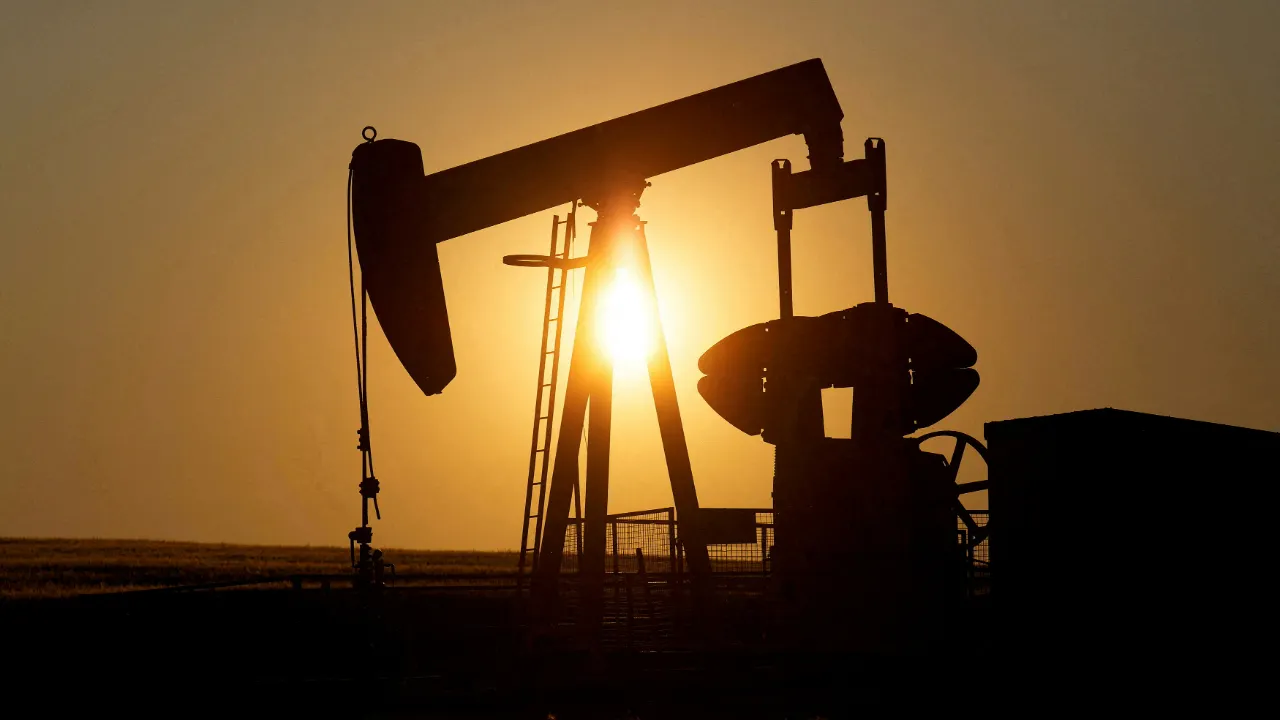
An oil pump jack pumps oil in a field near Calgary, Alberta, Canada on July 21, 2014. (Reuters/Todd Korol / Reuters)
The timing also reflects ongoing constraints on global oil flows, particularly through the Strait of Hormuz — a key chokepoint between Iran and Oman that typically carries about one-fifth of the world’s oil and liquefied natural gas shipments. Disruptions and security threats in the region have tightened supply routes and added volatility to energy markets.
Advertisement
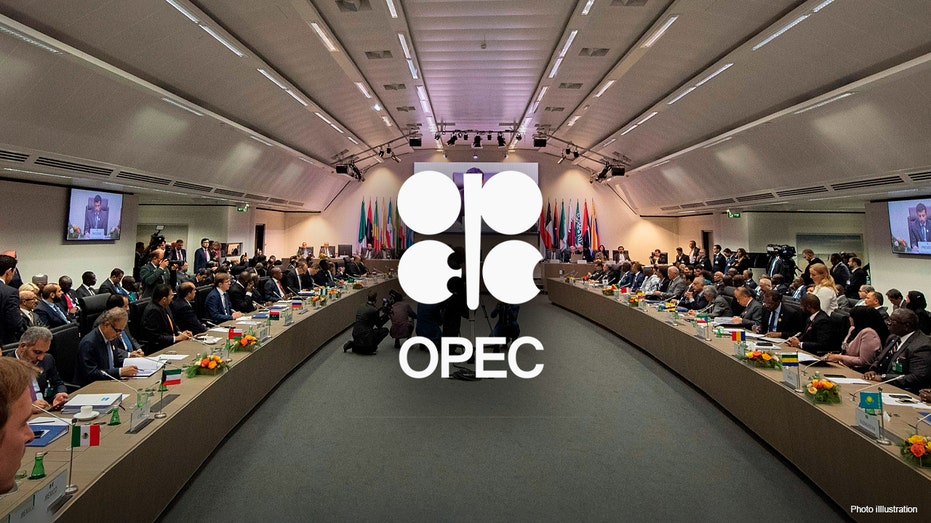
A meeting at the headquarters of the Organization of the Petroleum Exporting Countries (OPEC) with OPEC members and non-OPEC members in Vienna, Austria on December 7, 2018. (JOE KLAMAR / AFP / Getty Images)
Al-Mazrouei said the UAE did not directly consult with other producers, including Saudi Arabia, before making the decision. He added the country believes the move can be made without significantly disrupting markets given existing supply constraints.
The exit raises questions about coordination among OPEC+ producers, which have historically relied on production limits to manage global supply and influence prices. The UAE has been a longtime member of the group.
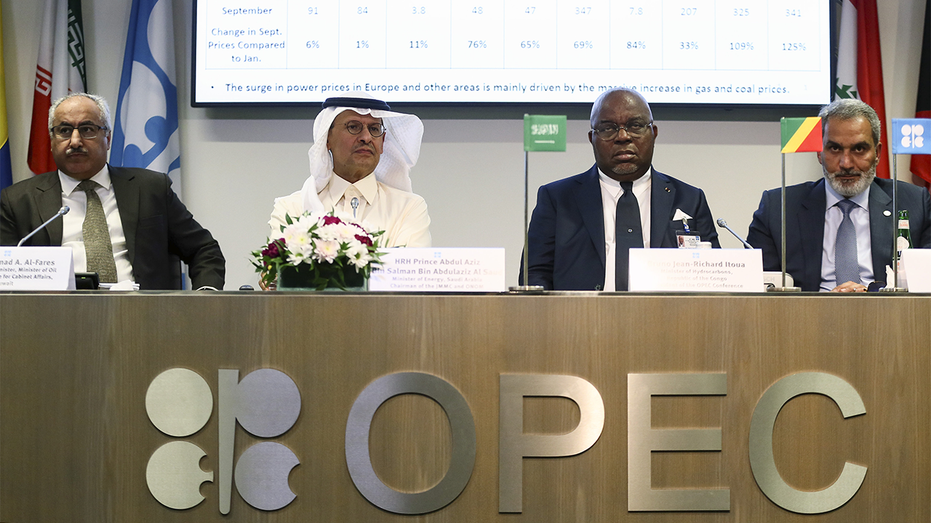
Secretary-General of OPEC Haitham al-Ghais (R) and Saudi Arabia’s Minister of Energy Prince Abdulaziz bin Salman Al-Saud (2nd L) hold a press conference after the 33rd OPEC (Organisation of the Petroleum Exporting Countries) and non-OPEC ministerial (Askin Kiyagan/Anadolu Agency via Getty Images / Getty Images)
UAE officials have expressed frustration with regional allies over their response to recent security threats. Anwar Gargash, diplomatic adviser to the UAE president, said Gulf Cooperation Council countries provided logistical support but fell short politically and militarily.
“The Gulf Cooperation Council countries supported each other logistically, but politically and militarily, I think their position has been the weakest historically,” Gargash said at a forum on Monday. “I expect this weak stance from the Arab League and I am not surprised by it, but I haven’t expected it from the (Gulf) Cooperation Council and I am surprised by it.”





















































You must be logged in to post a comment Login