SYDNEY — Australia has secured a strong fifth-place position in the latest 2026 global average IQ rankings, posting a national score of 104.45 according to data compiled from more than 1.2 million participants in standardized online intelligence tests conducted throughout 2025.
Australia Ranks Fifth Globally in 2026 Average IQ Rankings with Score of 104.45, Trailing East Asian Leaders
The ranking, released at the start of 2026 by the International IQ Test platform and mirrored across sites including World Population Review, places the country behind only South Korea, China, Japan and Iran. It marks a notable improvement from Australia’s previous showing of 102.57 in 2025 updates, reflecting a gain of nearly two points and underscoring the nation’s consistent high performance in cognitive assessments.
South Korea topped the list with 106.97, followed closely by China at 106.48 and Japan at 106.30. Iran rounded out the top five with 104.80. Russia placed sixth at 103.78, with Singapore, Mongolia, New Zealand and Vietnam completing the top 10. The global mean across tested populations remained standardized at 100, with a standard deviation of 15.
Experts caution that such rankings, while drawing widespread online attention, stem from self-selected online test-takers rather than nationally representative samples. The International IQ Test site requires a minimum of 100 participants per country for inclusion, with Australia contributing 4,245 test results in the latest dataset — a substantial sample that showed an upward shift from prior years’ 9,626 or more in some comparative figures.
Critics of national IQ compilations, including those tracing back to earlier datasets by researchers like Richard Lynn and David Becker, argue that methodological issues persist. These include cultural biases in test questions, varying access to education and technology, and the challenge of ensuring truly random sampling across diverse populations. Some academics have called for greater scrutiny of aggregated “national IQ” figures, noting they often blend online tests, student assessments like PISA and older proxy data.
Advertisement
Despite the debates, Australia’s high placement aligns with its strong results in international student assessments. The country routinely performs well in the OECD’s Programme for International Student Assessment, or PISA, which measures 15-year-olds’ abilities in reading, mathematics and science — skills closely correlated with broader cognitive measures. Recent PISA cycles have highlighted Australia’s emphasis on critical thinking, problem-solving and equitable education access as key drivers.
Education Minister Jason Clare welcomed the ranking as validation of ongoing investments in schooling and skills development. “These results reflect the hard work of Australian teachers, students and families,” Clare said in a statement. “Our focus on high-quality education from early childhood through university continues to pay dividends in building a smart, innovative workforce.”
Australia’s education system features a mix of public and private institutions, with significant federal and state funding. Compulsory schooling runs through age 15 or 16 depending on the jurisdiction, followed by strong vocational and higher education pathways. Universities such as the University of Melbourne, Australian National University and University of Sydney consistently rank among the world’s best, attracting international students and fostering research in fields from artificial intelligence to climate science.
Demographic factors also play a role. Australia is a highly urbanized, multicultural society with a large immigrant population from high-achieving regions, including East and South Asia. Skilled migration policies prioritize educated workers, potentially contributing to elevated average cognitive scores. The nation’s high standard of living, nutrition, healthcare and low rates of extreme poverty are frequently cited by researchers as environmental boosters for cognitive development — elements that align with the “Flynn effect,” where IQ scores rise over generations as living conditions improve.
Advertisement
Yet challenges remain. Socioeconomic disparities affect outcomes, with Indigenous Australian communities often recording lower average scores on standardized tests due to historical disadvantages, remote location barriers and health factors. Government initiatives aim to close these gaps through targeted programs in literacy, numeracy and early intervention. Urban-rural divides also influence access to advanced educational resources.
The 2026 ranking has sparked discussion in Australian media and policy circles. Outlets like Time Out Australia previously highlighted the country’s top-10 finish in 2025 data, noting a nearly one-point gain year-over-year and a position well above many Western peers, including the United States, which scored around 101 in recent compilations.
Psychologists emphasize that individual IQ variation far exceeds national averages. Within any country, scores form a bell curve, and a difference of a few points between nations carries limited practical meaning for policy or personal potential. “IQ is one measure of cognitive ability, but it doesn’t capture creativity, emotional intelligence, resilience or cultural knowledge,” said Dr. Emma Thompson, a cognitive psychologist at the University of Sydney. “Australia’s strength lies in its adaptable, collaborative workforce.”
Innovation metrics bolster the narrative of Australian cognitive capital. The country ranks highly in global innovation indexes, with strengths in mining technology, renewable energy, biotechnology and digital services. Companies like Atlassian and Canva exemplify homegrown tech success, while research institutions contribute to breakthroughs recognized worldwide.
Advertisement
Economists link higher average cognitive skills to productivity and GDP growth. Studies have explored correlations between national IQ estimates and economic outcomes, though causation remains hotly debated. Factors like governance quality, rule of law and investment in human capital often explain more variance than raw test scores. Australia’s stable democratic institutions, resource wealth and trade ties with Asia position it favorably regardless of precise IQ figures.
Comparisons with close neighbors are instructive. New Zealand, with a 2026 score of 102.35, also performs strongly, reflecting similar Anglo-Celtic and multicultural foundations plus robust education systems. The United Kingdom and Canada, fellow Commonwealth nations, typically land in the 99-101 range in various datasets, while the U.S. hovers near 101.
East Asian dominance in the rankings — South Korea, China and Japan — is often attributed to rigorous education cultures, cultural emphasis on discipline and high-stakes testing, alongside genetic and nutritional factors still under study. Iran’s strong showing has surprised some observers and prompted analysis of its educational priorities despite geopolitical challenges.
Online IQ tests, while accessible, introduce self-selection bias: motivated, tech-savvy individuals are more likely to participate. Language proficiency, familiarity with digital interfaces and test-taking experience can influence results. The International IQ Test platform standardizes its instrument to a mean of 100, allowing cross-country comparisons, but experts stress the need for caution when extrapolating to entire populations.
Advertisement
Broader critiques target the very concept of ranking nations by IQ. Some researchers argue that historical datasets suffered from small, unrepresentative samples and potential ideological biases. Recent calls have emerged to re-evaluate or retract studies relying on contested national IQ compilations. Proponents counter that large-scale aggregated data from millions of test-takers provide useful directional insights when viewed alongside PISA, TIMSS and other metrics.
In Australia, the ranking has fueled calls for continued education reform. Stakeholders urge more focus on STEM subjects, digital literacy and equitable access amid concerns over declining PISA scores in some areas over the past decade. Others highlight the importance of holistic development, including arts, sports and social-emotional learning.
Public reaction has been largely positive but tempered. Social media commentary praised the result as evidence of national capability, while others dismissed it as pseudoscience or irrelevant in an era of artificial intelligence that augments human cognition.
As the world grapples with rapid technological change, cognitive skills remain vital. Australia’s high ranking, whether from online tests or traditional measures, signals a population well-equipped for future challenges in automation, climate adaptation and global competition.
Advertisement
For now, the 104.45 score cements Australia’s reputation as one of the world’s sharper nations intellectually. Policymakers, educators and citizens alike see it as encouragement to sustain investments that nurture talent across all backgrounds.
The full 2026 dataset, based primarily on 2025 test results, continues to circulate widely online, prompting fresh debates about what intelligence truly means in the 21st century and how best to measure and cultivate it on a national scale.
Bob Rudd has joined forces with South East-based counterpart SX Leisure for the contract
Charlotte and Nick Rudd, of pubs supplier Bob Rudd.(Image: Bob Rudd)
Gambling machine and pool tables specialist Bob Rudd has created jobs on the back of a major contract to supply pubs across the country.
The Tyneside firm has partnered with Witham firm SX Leisure to feed Inspired Entertainment with equipment and servicing to venues, from Northumberland and Cumbria to the West Midlands. The move has created 40 jobs, and will see the two firms supply 1,000 pubs.
Nick Rudd, managing director the Brunswick Village firm, said: “It’s been a busy few months but we couldn’t be happier with how things have gone. Being selected to support a significant portfolio of pub venues previously supplied by Inspired has given us the opportunity to bring our service-first model to even more venues and the feedback from customers has been fantastic.
“It’s a real testament to the dedication of our entire team — both existing staff and new arrivals.”
Advertisement
He added: “The move has also strengthened staffing — with new colleagues joining the business — and enhanced our ability to provide responsive, high-quality support nationwide. We’re seeing the benefits of scale without compromising the independent, service-led approach for which the business is known.”
Together the two companies have taken on more than 1,800 machines across 1,000 venues with SX Leisure reporting a 30% uptick in business. Greg Wood, director at SX Leisure, said: “It’s been an exciting challenge for both our existing team and those who’ve joined us during this process.
“The response from both our longstanding clients and new venues has been overwhelmingly positive. Our new colleagues have hit the ground running and I can’t thank the entire team enough for delivering the full SX Leisure experience at scale.”
As well headquarters in Witham, SX also has depots in Yeovil and Washington. Mr Wood added: “Our growth has never been taken for granted and this is just the beginning of the next chapter in SX Leisure’s journey.”
Advertisement
Inspired continues to supply both companies as well as supplying retail gaming and betting businesses — including licensed betting shops, bingo and slots rooms, motorway services and pubs. Ian Shreeve, vice president and general manager gaming sales UK at Inspired said “This partnership has been everything we hoped for.
“Both the Bob Rudd and SX Leisure teams have delivered on every level — providing efficient operations, dependable service and a customer-first mindset. Inspired remains fully committed to the UK pub market and this collaboration ensures that pubs and customers continue to receive the highest-quality games, terminals, service and support.”
I spent 30 years in the institutional trenches as a trader, analyst, and portfolio manager, eventually running the equity trading desk at Northern Trust in Chicago. Those decades shaped my approach: stay disciplined, trust the data, and keep emotion out of the way. Since 2009, when I began publishing my stock selections, my portfolio has delivered solid long term results—compounding in the mid teens annually through 2025. Today I’m a private investor and investing coach, with a rules based framework that helps people build better portfolios. My work focuses on systematic thinking, behavioral awareness, and evidence over opinion. For my market outlook and model portfolio updates, visit zeninvestor.org. .
Analyst’s Disclosure: I/we have a beneficial long position in the shares of NVDA, AVGO, GOOGL either through stock ownership, options, or other derivatives. I wrote this article myself, and it expresses my own opinions. I am not receiving compensation for it (other than from Seeking Alpha). I have no business relationship with any company whose stock is mentioned in this article.
Seeking Alpha’s Disclosure: Past performance is no guarantee of future results. No recommendation or advice is being given as to whether any investment is suitable for a particular investor. Any views or opinions expressed above may not reflect those of Seeking Alpha as a whole. Seeking Alpha is not a licensed securities dealer, broker or US investment adviser or investment bank. Our analysts are third party authors that include both professional investors and individual investors who may not be licensed or certified by any institute or regulatory body.
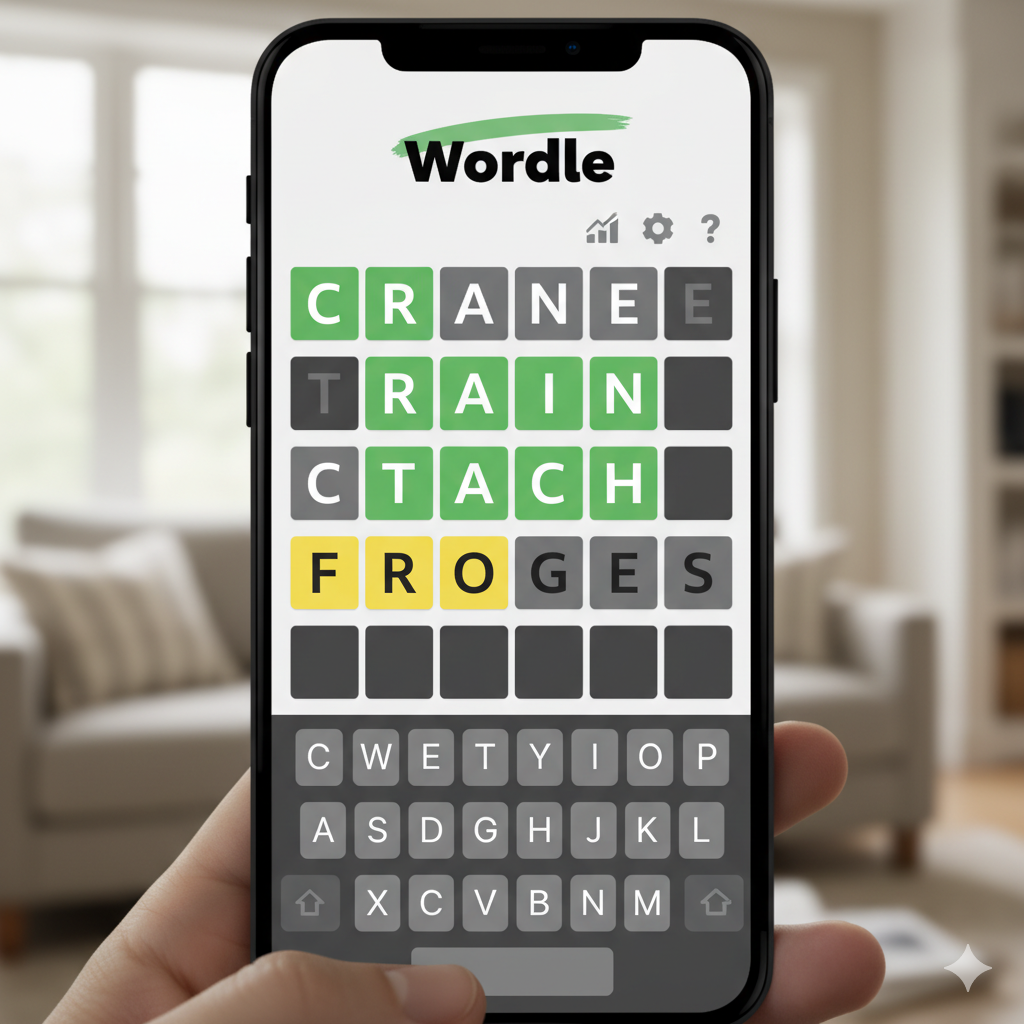
NEW YORK — Wordle enthusiasts logging in Sunday, April 26, 2026, discovered the solution to puzzle No. 1772 is “GLOSS,” a five-letter word that stumped many players despite its relatively common usage and straightforward letter pattern. The New York Times’ daily word game continues its streak of challenging yet accessible puzzles, drawing millions of global participants eager for the mental workout and satisfying green-tile victory.
“GLOSS” refers to a shiny luster or sheen, often associated with lip gloss, a polished surface or an explanatory note added to text. The word features a double “S” at the end, a pattern that tripped up solvers who avoided repeating letters or focused too heavily on vowels early in their guesses. Many starting words like “SLATE,” “CRANE” or “TRACE” left players with yellow and gray feedback that narrowed options but required careful elimination in later attempts.
For those who solved it efficiently, common paths included identifying the starting “G” or landing on the double “S” through process of elimination. The puzzle earned an average score around 3.8 guesses according to early community data on platforms like Reddit and X, placing it slightly easier than recent entries but still demanding strategic thinking.
Wordle’s enduring popularity stems from its simple premise: guess a five-letter word in six attempts, with color-coded feedback guiding progress. Green tiles indicate correct letters in the right position, yellow shows correct letters in the wrong spot, and gray means the letter is absent entirely. Created by Josh Wardle and acquired by The New York Times in 2022, the game has become a cultural staple, fostering daily rituals for families, friends and online communities.
Advertisement
On this spring Sunday, players worldwide shared their results with the signature colored emoji grids. Some celebrated one- or two-guess solves, while others vented about burning all six attempts. The double “S” ending proved particularly deceptive, as many overlooked words like “GLASS,” “GRASS” or “CROSS” before zeroing in on the correct solution.
Hints That Could Have Helped Subtle clues circulating before spoilers included: a word associated with shine or polish, no rare letters like J, Q, X or Z, and a double consonant at the end. It contains one vowel and relates to both cosmetics and literary annotations. These nudges helped thousands avoid frustration while preserving the game’s challenge.
The April 25 puzzle, No. 1771, had the solution “WOMEN,” continuing a run of everyday yet sometimes elusive words. This back-to-back stretch of accessible vocabulary has kept casual players engaged while harder puzzles earlier in the month tested veterans. Wordle’s algorithm ensures variety without relying on obscure terms, striking a balance praised by linguists and educators.
Beyond daily fun, Wordle has spawned variants like Wordle Unlimited, custom puzzle creators and competitive leaderboards. Schools incorporate it into vocabulary lessons, while retirement communities use it for cognitive stimulation. Its influence extends to merchandise, podcasts and social media challenges that track longest streaks or hardest solves.
Advertisement
For April 26 specifically, the timing aligned with a relaxed weekend vibe for many in the U.S. and Europe, leading to higher-than-average solve rates by midday. Players in Asia and Australia, tackling it earlier due to time zones, shared early tips that helped global solvers. Community forums lit up with discussions on optimal starting words — “AUDIO,” “SLATE” and “ADIEU” remain favorites for vowel coverage.
The New York Times continues refining the game with occasional updates, removing problematic words and ensuring inclusivity. No major changes affected today’s puzzle, which followed standard rules. Future puzzles promise continued variety as the game approaches its fifth anniversary.
Why “GLOSS” Fits Perfectly Linguistically, “GLOSS” demonstrates Wordle’s clever design — common enough for broad appeal yet nuanced enough to require deduction. Its multiple meanings (shine, commentary, superficial appeal) add depth for word enthusiasts. In a world of constant digital distraction, the game’s focused five minutes offers a refreshing mental reset.
Streaks remain a major motivator. Many players proudly maintain runs exceeding 100 days, sharing strategies like tracking eliminated letters or using the previous day’s feedback. For newcomers on April 26, “GLOSS” served as an encouraging entry point, proving that persistence and pattern recognition pay off.
Advertisement
As the sun sets on another Wordle Sunday, millions await tomorrow’s challenge. Whether solved in two guesses or requiring the full six, today’s “GLOSS” delivered that signature mix of frustration and triumph that keeps players returning daily. The game’s simple genius lies in turning ordinary words into shared global experiences, one green square at a time.
For those still hunting today’s answer — spoiler-free advice remains: prioritize common consonants early and watch for repeated letters. And remember, tomorrow brings a fresh puzzle with no carryover penalty for today’s struggles. Happy Wordling!
NEW YORK — The New York Times Connections puzzle for Sunday, April 26, 2026 (No. 1050) challenged players with clever word groupings that tested vocabulary, cultural knowledge and lateral thinking. The solution featured four distinct categories: Stipulations, Vocal Characteristics, Characters from the classic “Dick and Jane” readers, and Things with Faces.
The New York Times Connections
Yellow Category (Easiest): StipulationCATCH, CAVEAT, FINE PRINT, STRINGS This group highlights conditions or qualifications often attached to agreements. “Catch” as in “catch-22,” “caveat” meaning a warning or proviso, “fine print” for hidden details in contracts, and “strings” as in conditions attached to an offer. Many solvers quickly spotted the theme once they connected legal or deal-making language.
Green Category: Vocal CharacteristicsPITCH, RANGE, REGISTER, TONE These terms describe qualities of the human voice in singing or speaking. Pitch refers to high or low frequency, range to the span of notes, register to vocal folds usage (chest voice, head voice), and tone to timbre or quality. Music lovers and singers often nailed this category early.
Blue Category: Characters in “Dick and Jane”DICK, JANE, MOTHER, SPOT A nostalgic nod to the iconic mid-20th-century elementary school reading series. Dick and Jane were the main child characters, Mother appeared frequently, and Spot was their beloved dog. This category delighted older players with childhood memories while puzzling younger solvers unfamiliar with the books.
Purple Category (Hardest): Things with FacesBUILDING, CLIFF, CLOCK, POLYHEDRON The trickiest group played on the word “face” in multiple senses. A building has a façade, a cliff has a rock face, a clock has a face, and a polyhedron (geometric solid) has multiple faces. This meta category rewarded creative thinking and often left players with their final four words after eliminating other options.
Advertisement
The 16 words presented were: CATCH, CAVEAT, PITCH, BUILDING, MOTHER, CLOCK, FINE PRINT, STRINGS, REGISTER, JANE, TONE, POLYHEDRON, RANGE, DICK, SPOT, CLIFF. Players praised the puzzle’s balance — accessible enough for casual solvers yet satisfying for veterans seeking a perfect game.
Connections, created by Josh Wardle and now part of The New York Times Games portfolio alongside Wordle, continues growing in popularity. The daily challenge requires grouping 16 words into four sets of four based on shared themes, with difficulty levels color-coded yellow (easiest), green, blue and purple (hardest). A perfect solve earns special recognition and bragging rights on social media.
On April 26, many players reported solving it in four to five attempts. Community forums lit up with discussions about the “Dick and Jane” nostalgia and the clever “faces” pun. Some noted the vocal characteristics category as a strong mid-level challenge, while the purple group delivered the signature “aha!” moment for thousands.
Strategies That Worked Experienced players recommend scanning for obvious pairs first — such as musical or vocal terms — then eliminating them to reveal subtler connections. Starting with proper nouns or capitalized words often helps identify categories like the children’s book characters. Tracking used words carefully prevents confusion in later guesses.
Advertisement
The game’s appeal lies in its blend of wordplay, general knowledge and pattern recognition. Unlike crosswords, it requires no prior grid-filling skills, making it accessible across ages and backgrounds. Families often compete to see who spots categories fastest, while online communities share streaks and near-misses.
For April 26 specifically, the Sunday timing encouraged longer solving sessions with morning coffee. Global players from different time zones shared results throughout the day, creating a shared cultural moment. The puzzle’s companion article on the NYT site offered hints and discussion without spoiling the full answers immediately.
Connections has evolved since its debut, with the Times refining word selection to maintain freshness. Puzzle No. 1050 maintained the game’s reputation for clever but fair groupings. No obscure proper nouns or overly regional slang appeared, keeping it welcoming for international audiences.
Looking ahead, Monday’s puzzle promises a new set of brain-teasing connections. Players hoping to extend streaks can return daily at midnight Eastern Time for a fresh challenge. The mobile app and nytimes.com/games section provide seamless access, with statistics tracking win rates and solve times.
Advertisement
For those still working on today’s puzzle, the key was recognizing multiple meanings of common words and drawing from both everyday language and cultural references. Whether solved in three minutes or after several thoughtful attempts, the satisfaction of cracking all four categories remains the game’s core reward.
As Connections approaches new milestones in player engagement, its blend of challenge and accessibility ensures continued relevance. On a quiet spring Sunday, puzzle #1050 delivered exactly what fans crave — intellectual stimulation wrapped in deceptively simple word groups.
Tomorrow brings another opportunity to test your connections. Until then, celebrate today’s solve — or use these answers to keep your streak alive and prepare for the next round of daily word fun.
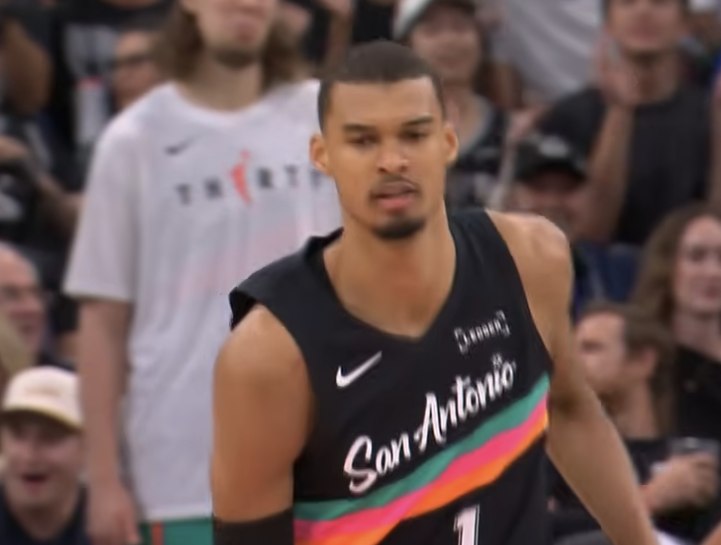
SAN ANTONIO — Victor Wembanyama remained in the NBA’s concussion protocol Sunday as the San Antonio Spurs prepared for Game 4 of their first-round playoff series against the Portland Trail Blazers, with the 23-year-old superstar’s availability still uncertain after a scary face-first fall in Game 2 that has disrupted San Antonio’s postseason plans.
Wembanyama suffered the concussion roughly three minutes into the second quarter of Tuesday night’s 106-103 loss that evened the series at 1-1. Fouled by Jrue Holiday on a defensive possession, the 7-foot-4 phenom lost his balance and slammed face-first into the court, staying down momentarily before walking to the locker room. He played just 12 minutes and was ruled out for the remainder of the contest, with the Spurs confirming the diagnosis before the final buzzer.
Under NBA concussion protocol, players cannot return to full participation for at least 48 hours after the injury and must complete a graduated return-to-play process. Wembanyama began light cardio work as early as Wednesday without worsening symptoms, a positive early sign reported by ESPN’s Shams Charania. He traveled with the team to Portland for Game 3 on Friday but was officially listed as questionable before ultimately sitting out as the Spurs dropped the contest.
Spurs coach Mitch Johnson provided the latest update Saturday, saying the team continues working through the protocol in consultation with NBA doctors. “The update is that we’re still working through the process and continuing to work with the NBA,” Johnson told reporters. “I know that’s not much of an update, but that is the update, for now.” He emphasized patience and long-term health over rushing the franchise cornerstone back.
Advertisement
Medical experts note the median time missed for NBA concussions hovers around seven to nine days, with an average of 9.3 days this season. That timeline would point toward a potential return for Game 5 or 6 at the earliest, though individual recoveries vary based on symptom resolution and benchmark testing. No jaw fracture or additional facial injuries were diagnosed, providing some relief.
The injury could not have come at a worse time for the Spurs, who finished the regular season with one of the Western Conference’s top seeds behind a breakout campaign from Wembanyama. The unanimous Defensive Player of the Year and MVP finalist posted a franchise-record 35 points in his playoff debut during Game 1, showcasing the two-way dominance that has defined his young career. Without him, San Antonio has leaned on De’Aaron Fox, Stephon Castle and a deep supporting cast, but the drop-off in rim protection and scoring punch has been evident.
Analysts and former players have expressed concern that an extended absence could derail San Antonio’s title aspirations in what many viewed as a breakthrough postseason. Yahoo Sports analysts Kevin O’Connor and Tom Haberstroh noted that clearing protocol is only the first step; full basketball readiness often takes longer to avoid secondary risks like balance issues or second-impact syndrome.
Wembanyama has been symptom-free enough to progress through early stages, including stationary bike work and light jogging, but must hit multiple cognitive and physical benchmarks before clearance. Team doctors and the league’s protocol director will make the final call. Johnson has stressed that the organization will not gamble with the 23-year-old’s long-term health, a stance echoed across the league amid growing awareness of head injuries.
Advertisement
The Trail Blazers have capitalized on the absence so far, stealing home-court advantage and forcing the Spurs into a must-win situation in Portland. Portland coach Chauncey Billups praised his team’s resilience but acknowledged Wembanyama’s presence changes the series dynamics dramatically. “He’s a game-changer on both ends,” Billups said. “We’re focused on winning the next game regardless, but obviously everyone knows what he brings.”
Fan reaction has been a mix of worry and optimism. Social media buzzed with support for Wembanyama’s cautious approach, with many recalling past high-profile concussion cases where premature returns led to setbacks. Spurs faithful have flooded timelines with well-wishes and calls for patience, while some analysts speculate a Game 5 return could still be realistic if progress continues.
Wembanyama’s absence highlights the physical toll of the playoffs, even for a generational talent built like few others. At 7-foot-4 with a 8-foot wingspan, he has transformed the Spurs into contenders faster than expected, but the fall served as a reminder of the sport’s inherent risks. The organization has ramped up medical monitoring, with daily updates expected as the series shifts back to San Antonio for Game 5.
Broader implications stretch beyond this series. Wembanyama’s development has been remarkably injury-free until now, a credit to the Spurs’ careful load management throughout the season. Missing significant playoff time could affect momentum heading into future postseasons, though the young core around him has shown flashes of competitiveness without their leader.
Advertisement
For now, the focus remains squarely on recovery. Wembanyama has not spoken publicly since the injury, but teammates described him as engaged and upbeat in the locker room, participating in team meetings and film study while sidelined. Johnson reiterated that the door remains open for a return this series, provided all medical boxes are checked.
As the Spurs navigate life without their transcendent star, the basketball world watches closely. Wembanyama’s playoff debut already delivered unforgettable moments; his return — whenever it comes — could redefine the series and his legacy. In the meantime, San Antonio must prove its depth can bridge the gap against a pesky Portland team eager to exploit the void.
This developing story will be updated with any new developments from the Spurs medical staff or Game 4 status.
LOS ANGELES — Luka Doncic remains sidelined with a Grade 2 left hamstring strain as the Los Angeles Lakers push through their first-round playoff series against the Houston Rockets, but encouraging signs of progress have Lakers fans hopeful the superstar could return in the second round if the team advances.
The Slovenian sensation suffered the non-contact injury on April 2 during a blowout loss to the Oklahoma City Thunder. An MRI confirmed a Grade 2 strain involving partial tearing of muscle fibers, sidelining him for the remainder of the regular season and the early postseason. Coach JJ Redick has consistently described Doncic as “out indefinitely,” with no firm timeline released.
As of late April 2026, Doncic has begun light on-court work, including rebounding, passing and shooting drills, according to multiple reports. He is not yet participating in full team practices or five-on-five activity, but his return to the practice court marks a positive step in the recovery process. Redick noted that the 27-year-old is preparing to ramp up his return-to-play progression soon, though the team continues to exercise caution with one of the league’s most dynamic offensive players.
Grade 2 hamstring strains typically require four to six weeks for full recovery, with medical experts warning against aggressive timelines due to high re-injury risk. Doncic sought specialized regenerative treatment in Europe earlier this month, including multiple injections, in hopes of accelerating healing. He returned to Los Angeles mid-April and has been working closely with the Lakers’ medical and performance staff.
Advertisement
The Lakers have defied expectations without their newly acquired star. Bolstered by LeBron James, Austin Reaves (also working back from an oblique strain) and strong supporting contributions, Los Angeles has built a commanding lead in the first-round series. Redick and front-office executives have emphasized that the team will not rush Doncic back, prioritizing long-term availability over a premature return that could jeopardize deeper playoff runs.
Insiders, including ESPN’s Shams Charania and Lakers reporter Dave McMenamin, report the most realistic target for Doncic’s return is early in a potential second-round series, possibly around early May. That would put his absence at roughly four to five weeks from the original injury date — aligning with the lower end of typical recovery windows for similar injuries.
Doncic’s absence has reshaped the Western Conference landscape. The high-usage creator who led the NBA in scoring for stretches this season has been sorely missed in half-court sets, but the Lakers’ depth and veteran leadership have kept them competitive and even dominant in key moments. His playmaking gravity and step-back shooting remain irreplaceable, however, making his potential return a major X-factor for any extended postseason push.
Hamstring injuries have historically proven tricky for star guards. Re-injury rates remain elevated if athletes return before full strength and neuromuscular control are restored. The Lakers have leaned on data-driven protocols, daily monitoring and progressive loading to ensure Doncic’s comeback is sustainable. No setbacks have been reported in his light activity phase.
Advertisement
Fan and analyst reaction has been mixed. Some express frustration at the timing of the injury shortly after the blockbuster trade that brought Doncic to Los Angeles, while others praise the organization’s measured approach. Social media buzzes with speculation about his return date, with many pointing to Game 1 or 2 of the second round as the sweet spot if the Lakers advance.
Broader context adds pressure. The expanded playoff format and grueling schedule test depth across the league. For the Lakers, navigating the first round without two key rotation pieces has been a testament to coaching and roster construction. Should they advance, Doncic’s integration will require careful ramp-up minutes to avoid rust or compensation injuries.
Doncic has remained engaged with the team throughout his recovery, attending games, film sessions and providing leadership from the sidelines. Teammates describe him as motivated and optimistic about contributing before the playoffs conclude. His history of playing through pain and elevating in big moments fuels belief that, once cleared, he will quickly regain form.
Medical analysts note that Grade 2 strains vary widely by individual. Factors such as age, prior hamstring issues (Doncic had a minor one earlier in the season), overall conditioning and treatment efficacy all influence outcomes. His trip to Europe for cutting-edge care reflects a proactive strategy increasingly common among elite athletes.
Advertisement
As the series against Houston continues, the Lakers will monitor Doncic’s daily progress closely. Redick has avoided specific timelines in public comments, focusing instead on process and health. “We’re not going to put a date on it,” he said recently, underscoring the organization’s philosophy.
For Lakers fans dreaming of a championship run, the update offers cautious optimism. A healthy Doncic alongside James could create one of the most potent duos in recent playoff history. Until then, the supporting cast must continue carrying the load while the superstar inches closer to full participation.
This developing situation will be closely watched in the coming days. Any acceleration in his on-court workload or clearance for contact drills could shift expectations for a faster return. For now, the message from the Lakers remains steady: patience, progress and preparation for when Luka is ready to take the court again.
WASHINGTON — The Strait of Hormuz, the world’s most critical energy chokepoint, stayed effectively closed to normal commercial traffic Sunday as U.S. naval forces hunted Iranian mines and Iran continued seizing vessels, even as a fragile ceasefire entered its third week and indirect talks resumed in Pakistan.
U.S. officials confirmed Saturday that Navy teams are actively clearing explosive mines laid by Iranian forces, describing the operation as part of a broader push to reopen the waterway through which roughly one-fifth of global oil and significant liquefied natural gas volumes normally pass. Defense Secretary Pete Hegseth said the U.S. blockade of Iranian ports is “growing and going global,” with a second aircraft carrier expected to join operations soon.
President Donald Trump has ordered U.S. forces to “shoot to kill” any Iranian small boats attempting to lay additional mines, while maintaining that the naval blockade will remain in place until Tehran submits a comprehensive proposal acceptable to Washington. Trump extended the ceasefire indefinitely at Pakistan’s request but insisted no full reopening of the strait would occur without verifiable Iranian compliance.
Iran has pushed back aggressively. Foreign Minister Abbas Araghchi and other officials declared the strait “open” for limited traffic earlier in the ceasefire but reversed course after accusing the U.S. of violating terms with its port blockade. Iranian forces seized at least two container ships this past week — the MSC Francesca and EPAMINONDAS — claiming they violated maritime rules, and fired on another vessel. Video released by Iranian state media showed commandos boarding one ship in dramatic fashion.
Advertisement
Shipping data reflects the paralysis. Traffic through the strait has ground to a halt or remained far below pre-conflict levels, with only isolated shadow fleet movements reported. War-risk insurance premiums have skyrocketed, reviewed every 48 hours, and many tanker owners have rerouted vessels at massive extra cost. Asian buyers, particularly China, Japan and South Korea, have turned heavily to U.S. energy exports as a result.
Oil prices have reacted sharply to the uncertainty. Brent crude held above $100 per barrel for much of the past week, briefly topping $105, while West Texas Intermediate traded near $95. The sustained disruption has added billions to global energy costs and raised fears of broader economic fallout if the standoff drags into summer.
High-level diplomacy continues in Islamabad. U.S. envoys Steve Witkoff and Jared Kushner arrived for mediated talks with Iranian representatives, though both sides precondition talks on ending the other’s restrictions. Iran demands the U.S. lift its blockade first; Washington insists the strait must open fully and safely before further concessions.
Hegseth has publicly urged European and Asian allies to contribute naval assets, declaring the era of “free-riding” over. Many allies have declined direct involvement while the conflict remains active, citing risks and domestic politics. Retired U.S. Navy officers expressed confidence that Iranian small boats and mines cannot permanently shut the strait but acknowledged the current hybrid tactics create dangerous uncertainty.
Advertisement
The humanitarian and environmental toll mounts. Limited shipping has caused fuel shortages in parts of the region, while earlier oil spills from attacks linger. Global supply chains face rerouting delays, higher costs and inflation risks, particularly for energy-dependent economies in Europe and Asia.
Analysts warn that prolonged closure could push Brent averages well above $100 for the year, slowing global growth. Some forecasts suggest a full reopening might take weeks even if a diplomatic breakthrough occurs, given the need for mine clearance and confidence-building measures.
Inside Iran, hardliners tied to the Revolutionary Guard appear emboldened by the ability to harass shipping despite U.S. naval superiority. Mojtaba Khamenei, who assumed supreme leadership after his father’s death in the initial strikes, faces internal pressures to show strength while pragmatists push for sanctions relief.
The U.S. military presence in the region is the largest since the 2003 Iraq invasion, with multiple carrier groups, submarines and air assets on station. CENTCOM has reported intercepting vessels attempting to breach the blockade, though no major naval clashes have occurred since the ceasefire took hold in early April.
Advertisement
For global markets, the strait’s status remains the dominant risk factor. Energy traders watch every statement from Washington and Tehran, while shipping firms weigh the growing insurance and security costs. Some limited shadow fleet activity persists, but legitimate commercial traffic has largely avoided the area.
As talks continue this weekend in Pakistan, both sides appear dug in. Trump has signaled no rush, saying the U.S. holds leverage through its blockade and energy exports. Iranian officials insist they will not negotiate under duress. A breakthrough could dramatically ease energy prices; failure risks renewed escalation and even higher oil costs heading into summer driving season.
The Strait of Hormuz, long a geopolitical flashpoint, now sits at the center of a high-stakes test of wills. With mines being cleared, ships seized and diplomacy grinding forward, the world’s energy arteries remain constricted — a daily reminder of how quickly conflict in the Gulf can ripple across the global economy.
This story is developing rapidly. Updates are expected from Islamabad talks, naval operations and energy markets in the coming days.


















































You must be logged in to post a comment Login