
Business
Australia Unemployment Rate Rises to 4.3% in Feb 2026 Amid Record Jobs and Surging Participation


SYDNEY — Australia’s unemployment rate rose modestly to 4.3 per cent in February 2026, the latest official data show, marking a slight uptick from 4.1 per cent in January but remaining near historic lows as the labour market continued to absorb a growing workforce amid steady economic conditions.

Pixabay
The Australian Bureau of Statistics released the February Labour Force figures on March 19, revealing seasonally adjusted unemployment climbed 0.2 percentage points while employment hit a fresh record high of 14.75 million. Economists had expected the rate to hold steady near 4.1 per cent, making the increase a mild surprise that fuelled debate about the pace of cooling in the jobs market.
In trend terms — a smoother measure less affected by monthly volatility — the unemployment rate actually edged down to 4.2 per cent in February from a revised 4.3 per cent the prior month. The ABS noted that unemployed people totalled 659,100 on a seasonally adjusted basis, up 35,000 from January, while the number of people in work rose by a stronger-than-expected 48,900.
Participation rate climbed to a four-month high of 66.9 per cent, reflecting more Australians entering or re-entering the labour force. That surge in job seekers, many of whom had not yet secured positions, contributed to the higher headline unemployment figure despite robust job creation.
Full-time employment dipped by 30,500 in February, but part-time jobs jumped sharply by 79,400, driving overall gains. Total monthly hours worked eased slightly to 2,007 million, down 0.2 per cent. Underemployment held steady at 5.9 per cent.
The data paint a picture of a resilient but gradually moderating labour market as Australia navigates higher interest rates, cost-of-living pressures and uneven global conditions. Unemployment has hovered in a narrow band between 4.1 per cent and 4.3 per cent so far in 2026 after ending 2025 around similar levels.
January’s rate remained unchanged at 4.1 per cent, with employment rising by about 18,000 to 26,000 depending on revisions, and trend unemployment falling to 4.1 per cent. December 2025 closed the prior year at 4.1 per cent seasonally adjusted after a modest decline.
So far in 2026, the official seasonally adjusted unemployment rate has averaged roughly 4.17 per cent across the two reported months, with trend measures even lower around 4.15 per cent. That remains well below the long-term average of about 6.5 per cent since 1978 and far from the 11.2 per cent peak seen in the early 1990s recession. The record low of 3.4 per cent was recorded in late 2022.
Economists offered mixed interpretations. Some viewed the February uptick as evidence of a tightening supply of workers meeting steady demand, with the participation surge signalling confidence. Others warned it could foreshadow further softening if full-time job losses persist and hours worked continue to trend lower.
“We now expect near-term unemployment to rise slightly faster through 2026 and peak at just shy of 4.6 per cent in early 2027,” one major bank economist noted after the release, citing the impact of prior Reserve Bank of Australia rate hikes filtering through the economy.
Alternative measures provide additional nuance. Roy Morgan Research, which uses a different methodology tracking “real” unemployment and under-employment, estimated February’s real unemployment at 10.6 per cent of the workforce after a 0.6 percentage point drop, though under-employment surged to a record 11.6 per cent. The private pollster reported overall employment climbing 148,000 to 14.54 million in its February survey.
The official ABS figures continue to show strength in key indicators. Employment growth over the year to February stood at about 1.8 per cent, with more than 264,000 additional people in work compared with February 2025. The employment-to-population ratio edged higher, underscoring that a larger share of working-age Australians hold jobs.
Youth unemployment remained elevated but stable, hovering around 14 per cent in recent months. Regional variations persist, with stronger conditions in some mining and service-oriented states contrasting softer outcomes in parts of the eastern seaboard affected by higher living costs.
The labour market data come as the Reserve Bank of Australia weighs the trajectory for interest rates. With inflation still above target in some components and wages growth moderating but still firm, the central bank has kept the cash rate elevated. February’s mixed jobs print — strong headline employment but rising unemployment and falling full-time roles — sparked fresh discussion about whether further tightening or a pause might be warranted.
Treasury and government officials highlighted the record employment levels as evidence of underlying resilience. “The data paints a picture of a labour market continuing to grow, creating opportunities for all Australians,” one ministerial statement noted in earlier 2026 releases.
Broader economic context includes solid population growth from migration, which has expanded the labour force and helped businesses fill vacancies. However, it has also placed pressure on housing, infrastructure and public services, indirectly influencing participation and job-seeking behaviour.
Analysts at KPMG projected unemployment trending toward 4.4 per cent by the end of 2026, with employment growth slowing to around 0.8 per cent annually as non-market sector hiring cools and market-sector demand moderates. The consultancy described current conditions as operating near the neutral zone of labour market pressure, with limited spare capacity but no excessive inflationary push from wages.
March 2026 data, scheduled for release in mid-April, will provide the next snapshot. Consensus forecasts ahead of that print hover around 4.3 per cent, with some expecting little change or a modest further drift higher if participation remains elevated.
Longer-term projections suggest the rate may stabilise in the low-to-mid 4 per cent range through 2027–2028, assuming no major external shocks. That would represent a remarkably tight labour market by historical standards, supporting consumer spending but constraining businesses facing skills shortages in sectors such as health care, construction and technology.
Challenges remain. Full-time job declines in February raised questions about the quality of employment growth, with more Australians taking part-time roles to make ends meet amid cost-of-living pressures. Hours worked have shown softness, potentially signalling under-utilisation even as headline unemployment stays low.
The data also highlight ongoing gender and age disparities. Female participation has risen strongly in recent years, while youth and some regional cohorts continue to face higher barriers to full-time work.
As Australia moves further into 2026, the unemployment rate will serve as a key barometer for the economy’s health. Policymakers, businesses and households alike will watch whether the current low-rate environment persists or if gradual softening — driven by tighter monetary policy and global uncertainties — begins to materialise more clearly.
For now, with unemployment between 4.1 per cent and 4.3 per cent in the opening months of the year and record numbers of Australians employed, the labour market retains its reputation for resilience even as subtle signs of moderation appear beneath the surface.
The next official update on March conditions, due April 16, will clarify whether February’s uptick was a temporary blip or the start of a more sustained drift higher. Until then, Australia’s jobs market remains one of the tighter among advanced economies, a point of relative strength amid global economic crosscurrents.


The number of homes sold in the US hit a nine-month low, with economists warning of the slowdown could worsen.


Explore the shift toward indulgence, authenticity and function driving dairy product development.

NEW YORK — Shares of MARA Holdings Inc. jumped Monday to $10.02, up 48 cents or 4.98%, as the Bitcoin mining company continued to draw trader interest following its aggressive balance sheet cleanup, strategic shift toward artificial intelligence infrastructure and ongoing volatility tied to cryptocurrency prices.

The Miami-based firm, formerly known as Marathon Digital Holdings, has been transforming from a pure-play Bitcoin miner into a broader digital energy and infrastructure player. Its latest moves include selling a significant portion of its Bitcoin treasury to retire convertible debt at a discount and forging partnerships aimed at repurposing mining sites for high-performance computing and AI data centers.
MARA’s stock has been highly volatile in 2026, trading in a 52-week range from about $6.66 to $23.45. Monday’s gain came on elevated volume as investors weighed the company’s reduced leverage against persistent challenges in its core mining operations and broader sector pressures.
On March 26, MARA announced it had sold 15,133 Bitcoin between March 4 and March 25 for approximately $1.1 billion. The company used the proceeds to fund the repurchase of roughly $1 billion in face value of its 0.00% convertible senior notes due in 2030 and 2031. The notes were bought back at a discount, allowing MARA to capture about $88 million in value while reducing potential future dilution from conversions.
CEO Fred Thiel described the transaction as a “strategic capital allocation move” designed to strengthen the balance sheet and position the company for long-term growth. After the sales, MARA held approximately 38,689 Bitcoin, down from 53,822 at the end of 2025. The company has signaled it may continue opportunistically monetizing Bitcoin holdings in 2026 to enhance liquidity and fund initiatives.
The debt reduction lowers outstanding convertible principal significantly, easing pressure on the equity base. Analysts noted the move as credit-positive, though some expressed concern that selling treasury Bitcoin signals a departure from the aggressive accumulation strategy that once defined the company.
MARA has also been pivoting toward AI and high-performance computing. In late February, the company announced a strategic partnership with Starwood Capital to develop, lease and market select U.S. Bitcoin mining data centers for hyperscale, enterprise and AI-capable infrastructure. The arrangement includes triggers for proceeding with development, such as securing leases with qualifying tenants, with a decision required within 24 months.
The pivot comes after MARA reported a massive $1.71 billion net loss for the fourth quarter of 2025, driven largely by impairment charges and unrealized losses on digital assets amid fluctuating Bitcoin prices. For the full year 2025, revenue rose to about $907 million from $656 million the prior year, but the company swung to a $1.31 billion net loss from prior profitability.
Bitcoin production in Q4 fell 19% year-over-year to 2,011 BTC, reflecting operational challenges including power constraints and efficiency efforts. Adjusted EBITDA turned negative, highlighting the impact of lower hash rates and higher costs in a competitive mining environment.
Despite the headline losses, shares rose sharply after the earnings release as investors focused on the AI infrastructure narrative and the Starwood deal. Management has emphasized that its energy assets and sites provide a foundation for diversification beyond mining, potentially generating stable leasing revenue from AI hyperscalers seeking power-hungry data centers.
Analyst reactions have been mixed. Cantor Fitzgerald maintained an Overweight rating but lowered its price target to $10 from $11 in early April. The consensus 12-month price target sits around $16.48, suggesting potential upside from current levels, though forecasts vary widely given the company’s sensitivity to Bitcoin prices and execution risks on the AI pivot.
MARA is scheduled to report first-quarter 2026 results around May 7. Wall Street expects continued focus on hash rate recovery, Bitcoin holdings updates, progress on the Starwood partnership and any further treasury transactions.
The company’s digital asset management strategy has included lending and pledging portions of its Bitcoin stack, generating interest income. At year-end 2025, about 28% of holdings were activated in such programs. While this provides yield, it also introduces counterparty and custody risks.
Broader market context has influenced MARA’s performance. Bitcoin prices have fluctuated in 2026 amid macroeconomic uncertainty, regulatory developments and institutional adoption trends. MARA’s valuation remains closely tied to crypto sentiment, even as it attempts to decouple through infrastructure diversification.
Insider activity has added to the narrative. In mid-March, CEO Fred Thiel sold 27,505 shares under a pre-arranged 10b5-1 trading plan at an average price of $9.18. Such sales are routine for executives but can sometimes weigh on sentiment in a volatile name.
MARA operates large-scale mining facilities across the United States, leveraging low-cost power agreements where possible. The company has highlighted improvements in energy efficiency and fleet upgrades, though production declines in recent quarters reflect industry-wide headwinds including the Bitcoin halving effects and rising competition.
The AI pivot introduces both opportunity and risk. Repurposing mining sites could generate higher-margin revenue from leasing, but it may divert power and resources from Bitcoin mining, potentially reducing output further. Operational disruptions during transitions could also pressure near-term results.
Critics argue MARA remains primarily a leveraged Bitcoin play, with its treasury and mining operations still dominating the story. Supporters point to the company’s substantial power capacity and site portfolio as undervalued assets in an era of surging AI demand for data center infrastructure.
As of mid-April 2026, MARA’s market capitalization hovers around $3.6 billion, with an enterprise value higher due to remaining debt. The stock carries a high beta, making it prone to sharp swings on crypto news, earnings or sector developments.
Looking ahead, key catalysts include Q1 production figures, updates on AI leasing progress, any additional Bitcoin sales or purchases, and macroeconomic factors affecting Bitcoin. Success in securing hyperscaler tenants for its data centers could mark a meaningful step in the strategic transformation.
Challenges persist, including regulatory scrutiny on crypto mining energy use, competition from larger players like Riot Platforms, and the inherent volatility of digital assets. Workforce reductions of about 15% announced earlier signal cost discipline amid the pivot.
MARA’s story reflects broader trends in the Bitcoin mining sector, where many operators are exploring diversification into AI, HPC or other energy-intensive applications to stabilize revenue. Whether the company can successfully execute this shift while managing its remaining Bitcoin exposure will determine if it can command a premium valuation beyond its crypto roots.
For now, with shares rebounding toward the $10 level on Monday and first-quarter earnings approaching, MARA remains one of the most actively traded names at the intersection of cryptocurrency, energy infrastructure and emerging AI data center demand. Investors continue to debate whether the balance sheet cleanup and AI ambitions provide a sustainable path forward or if the company will stay tethered to Bitcoin’s fortunes.

Trump says 34 ships passed through Hormuz strait after blockade comes into effect


LVMH Q1 2026 slides: organic growth holds amid currency headwinds

.webp?t=1776089349)
The offerings include Reese’s and Almond Joy-inspired products.
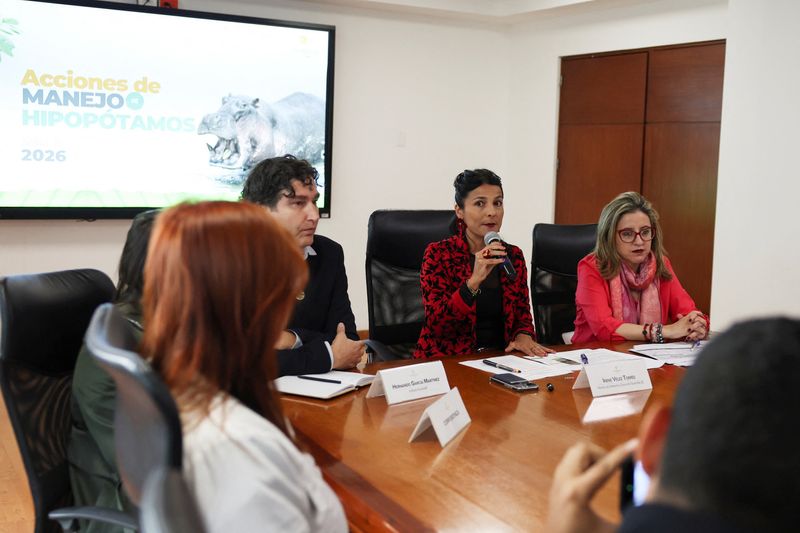

Colombia to control hippo population through euthanasia

AUGUSTA, Ga. — World No. 1 Scottie Scheffler came agonizingly close to winning a third Masters green jacket Sunday but finished one shot short of Rory McIlroy, then pointedly suggested that decisions by Augusta National officials on course setup played a role in denying him the title.

Scheffler, who entered the final round trailing by five shots after a career-best 7-under 65 on Saturday, carded a 4-under 68 on Sunday to finish at 11-under par for the tournament. McIlroy, seeking to become the first repeat champion since Tiger Woods in 2002, held on for a one-stroke victory at 12-under.Usatoday
In post-round comments, the two-time Masters winner did not hide his frustration with how the course was prepared, particularly on Friday. Scheffler teed off early that day and posted a 2-over 74 — his first over-par round at Augusta National since 2023 — while later groups benefited from softer conditions that produced a “barrage of birdies.”
“I’m not in charge of course setup,” Scheffler told reporters. “I would’ve liked it to have been a little bit more equal in terms of the firmness on Thursday and Friday. I was a bit surprised at how soft things were on Friday afternoon, especially as it got late in the day. … Going out on Friday, whatever they did to the greens to soften them up, they did some stuff, and I just wasn’t able to take advantage of that going out early on Friday.”Nypost
The comments, first reported by the New York Post and echoed across golf media, quickly sparked debate about whether Augusta National’s legendary attention to detail sometimes creates uneven playing conditions based on tee times and weather shifts. Scheffler opened with a 2-under 70 on Thursday afternoon in what he described as some of the week’s toughest conditions, with wind and firmer surfaces limiting scoring.
“Thursday afternoon were some of the most challenging conditions we had all week. I didn’t see many birdies out there Thursday afternoon,” he added. “Overall, on Friday, going out early and not being able to shoot an under-par round definitely hurt my chances. I’d say Friday probably hurt the most in terms of my chances of winning.”Themirror
Scheffler’s second-round stumble included bogeys on the par-5 13th and 15th holes after finding water with approach shots. He had been on an remarkable streak of 11 consecutive rounds at par or better at the Masters before that 74. Despite the setback, he mounted a furious charge on moving day, firing a bogey-free 65 that included an eagle and moved him back into serious contention.
The 28-year-old Texan has now finished no worse than tied for 10th in his last several Masters appearances, with victories in 2022 and 2024. He has never finished outside the top 20 in seven starts at Augusta National, underscoring his remarkable consistency on one of golf’s most demanding stages.Masters
McIlroy, who won his first Masters in 2025 to complete the career Grand Slam, praised Scheffler’s performance while acknowledging the razor-thin margin.
“Scottie is the best player in the world for a reason,” McIlroy said after his victory. “He played fantastic golf this week, especially coming back the way he did on Saturday and Sunday. One shot is golf — it’s what makes this game so brutal and so beautiful.”
Augusta National officials have long maintained tight control over course conditioning, famously adjusting pin placements, rough height and green speeds hour by hour based on weather forecasts. The club rarely comments publicly on setup decisions, and tradition discourages players from criticizing the course openly. Scheffler’s pointed remarks — delivered calmly but directly — stood out because of his typically measured demeanor.
Golf analysts were split on the fairness of the conditions. Some pointed out that variable weather is an inherent part of major championship golf, and that later tee times often benefit from knowledge of how the course is playing. Others noted that softening the greens significantly between Thursday and Friday could indeed create an advantage for afternoon waves, especially if wind died down or irrigation was increased.
Scheffler himself acknowledged the unpredictability of the elements.
“So who knows, it’s just that’s part of the game,” he said. “But it definitely hurt my chances.”Sports.yahoo
The world No. 1 also drew attention earlier in the week for a testy exchange with a reporter after his third-round 65. When asked if the round could have been even better, Scheffler responded sharply: “That was a terrible question. Next question.” He later clarified that he felt he left a few shots on the course but was pleased with the execution needed to climb back into contention.Sports.yahoo
Scheffler’s near-miss caps a strong start to 2026, during which he has already secured a victory and multiple top-four finishes. His ball-striking remains elite, and his short game recovery on the weekend demonstrated why many consider him the most complete player in the game.
For McIlroy, the repeat victory cements his place among the greats and provides redemption after years of near-misses at Augusta before his 2025 breakthrough. The Northern Irishman closed with steady play Sunday while Scheffler made birdies early before settling into a string of pars, then birdying the 15th and 16th too late to catch up.
The final-round drama played out under ideal spring conditions at Augusta National, with azaleas in bloom and massive galleries lining the fairways. Scheffler’s supporters cheered loudly on the back nine as he tried to mount a charge, but McIlroy’s experience and clutch putting held firm.
In the broader context of the 2026 Masters, the tournament once again delivered compelling storylines. McIlroy’s win marked the first successful defense since Woods two decades earlier. Scheffler’s comments, meanwhile, have ignited fresh discussion about equity in course setup — a topic that surfaces periodically when tee-time luck and weather interact with meticulous preparations.
Masters chairman Fred Ridley and the competition committees are known for their philosophy that the course should “defend itself” while rewarding precise shot-making. Whether Friday’s softening crossed into unfair territory remains subjective, but Scheffler’s status as the game’s dominant player gives his perspective significant weight.
Scheffler has historically avoided controversy, focusing instead on process and preparation. His willingness to speak candidly Sunday suggests the sting of finishing runner-up by the slimmest of margins after a week of uneven scoring opportunities.
Looking ahead, Scheffler is expected to remain the favorite in upcoming PGA Tour events as he pursues a third major title of his young career. His record at Augusta — two wins and consistent contention — ensures he will be among the top betting choices when the 2027 Masters rolls around.
For now, the golf world digests a thrilling 2026 edition that ended with McIlroy hoisting the green jacket once more while the game’s best player expressed genuine disappointment over decisions beyond his control.
“They did some stuff,” Scheffler said simply, capturing the essence of what he believes tipped the scales just enough to cost him another trip to Butler Cabin.
Whether those remarks spark any official response from Augusta National remains to be seen. In a tournament steeped in tradition and decorum, Scheffler’s blunt assessment has already become one of the most talked-about moments off the course.
As the players disperse and attention turns to the next major, one thing is clear: at the highest level of golf, even the smallest differences in conditions can separate champions from runners-up — and even the world No. 1 is not immune to feeling the impact.


The fruit pops are available in four flavors.
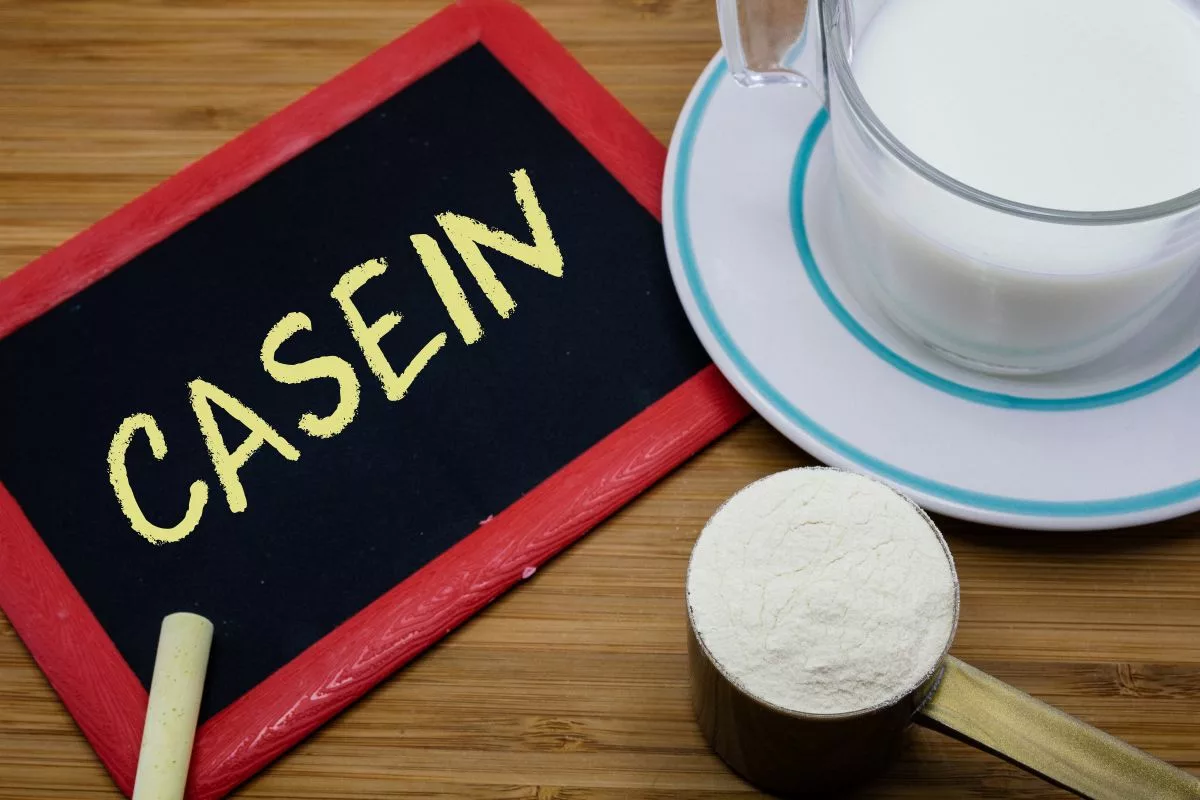

Precision fermentation, casein and pea protein ingredients boost the category.

What’s Business? How to Success in Business? #cryptocurrency #rajatvlogs #cryptopr #propine

US home buyers 'frozen' as sales slump over Iran war fears

StarkWare fires staff after Starknet revenue collapses 98%


-

 Politics3 days ago
US brings back mandatory military draft registration
-

 Fashion3 days ago
Weekend Open Thread: Veronica Beard
-
 Sports3 days ago
Man United discover Nico Schlotterbeck transfer fee as defender reaches Dortmund agreement
-

 Tech6 days ago
How Long Can You Drive With Expired Registration? What Florida Law Says
-

 Politics1 day ago
World Cup exit makes Italy enter crisis mode
-

 Crypto World4 days ago
Canary Capital Files SEC Registration for PEPE ETF
-

 Business3 days ago
Tesla Model Y Tops China Auto Sales in March 2026 With 39,827 Registrations, Beating Cheaper EVs and Gas Cars
-

 Crypto World5 days ago
Bitcoin recovers as US and Iran Agree a Ceasefire Deal
-

 Politics4 days ago
Malcolm In The Middle OG Turned Down ‘Buckets Of Money’ To Appear In Reboot
-

 Fashion6 days ago
Let’s Discuss: DEI in 2026
-
 NewsBeat20 hours ago
Pep Guardiola and Gary Neville agree over Arsenal title problem that benefits Man City
-

 Business3 days ago
OpenAI Halts Stargate UK Data Centre Project Over Energy Costs and Copyright Row
-

 Business2 days ago
Ireland Fuel Protests Enter Day 5 as Blockades Spark Shortages and Government Prepares Support Package
-

 Politics4 days ago
LBC Presenter Mocks Trump Over Iran War Failures
-

 Crypto World3 days ago
Federal judge blocks Arizona from bringing criminal charges against Kalshi
-

 Tech4 days ago
A version of Windows 10 released a decade ago is now eligible for additional security patches
-
 NewsBeat1 day ago
JD Vance announces ‘no agreement’ with Iran over nuclear weapons fear
-

 Business3 days ago
IMF retains floor for precautionary balances at SDR 20 billion
-
 Entertainment5 days ago
Alfred Hitchcock’s 10 Most Suspenseful Masterpieces, Ranked
-
 Entertainment3 days ago
A ‘Bridgerton’ Star’s New Survival Thriller Is a Must-Watch on Netflix This Weekend
You must be logged in to post a comment Login