Connect with us

Business

Automakers report mixed U.S. sales results as hybrids drive growth

Published

on

Automakers report mixed U.S. sales results as hybrids drive growth

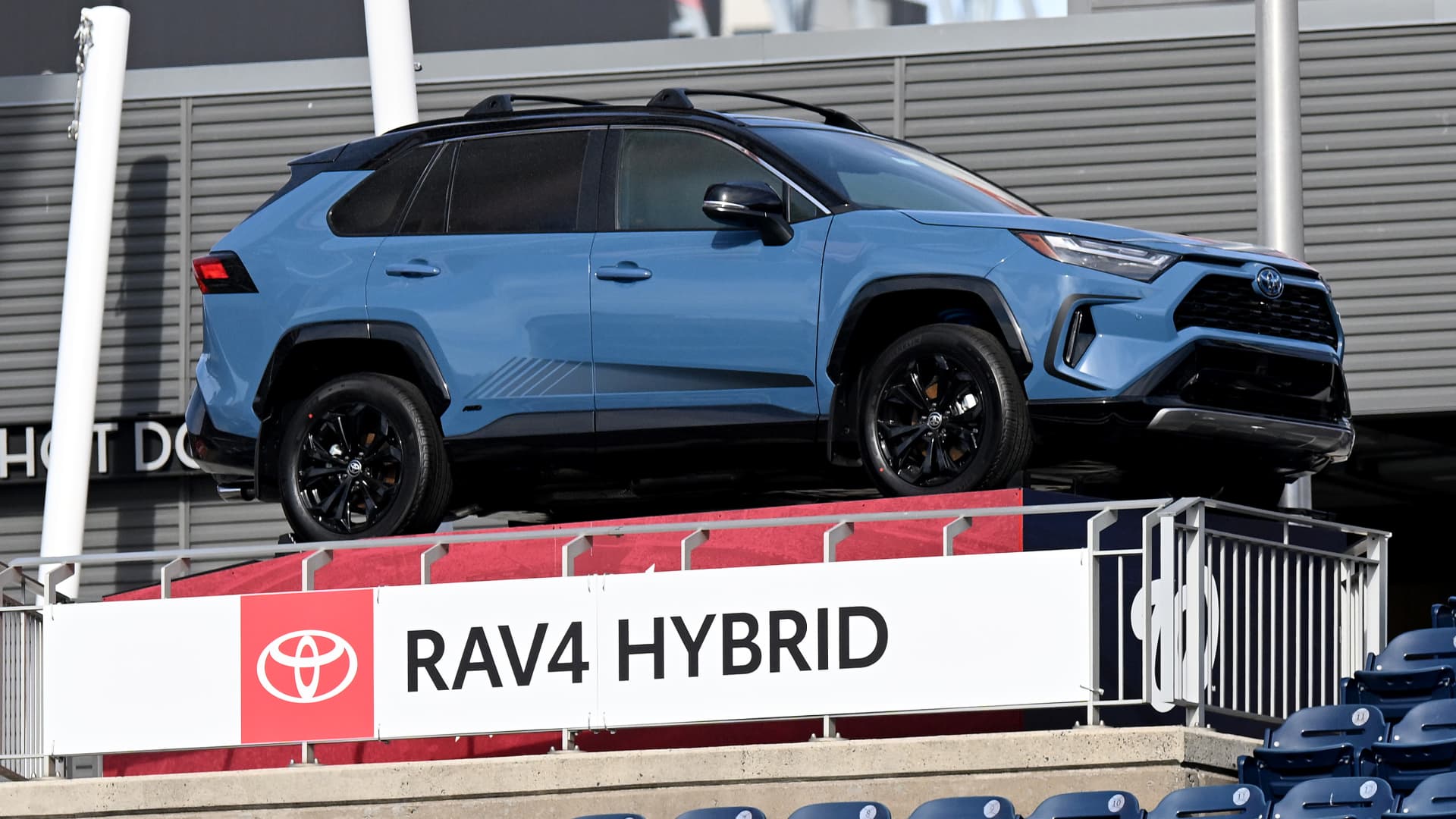
A view of a Toyota RAV4 Hybrid on display before the game between the Washington Nationals and the Tampa Bay Rays against the at Nationals Park on April 03, 2023 in Washington, DC. (

G Fiume | Getty Images

DETROIT — Second-quarter U.S. vehicle sales are turning into a tale of haves and have nots, as automakers that have hybrid models are outperforming those that don’t amid high gas prices and a decline in demand for all-electric vehicles.

Advertisement

Global hybrid leader Toyota Motor on Wednesday reported a 1.1% increase in its second-quarter sales, led by a roughly 20% increase in sales of electrified vehicles.

Hyundai Motor, up 4% during the last quarter, reported a 67% increase in hybrids during the first half of the year, while Honda Motor reported that record electrified sales helped it notch an 8.4% increase in overall sales during the second quarter. Kia, up about 3%, also reported a 152% increase in hybrid sales during the second quarter.

“Hybrids are definitely our growth engine right now,” Hyundai and Genesis North America CEO Randy Parker said Wednesday during a call. “Hybrids are really, really taking off right now as consumers, I think, are prioritizing fuel efficiency and lower operating costs due to high gas prices.”

Gas prices are up more than 20% from the same period last year, according to AAA.

Advertisement

Meanwhile, General Motors, which offers a broad EV lineup but only one hybrid, a low-volume Corvette, reported a 4.2% decline in second quarter sales.

The juxtaposition of hybrids between GM, the top-selling automaker in the U.S., and No. 2 Toyota caused Cox Automotive last week to note that the Japanese automaker is closing its gap in sales with the Detroit carmaker.

“At these rates, and what we’re seeing right now in the selling rates, GM may be looking over their shoulder here when we get to the year’s end, that Toyota could potentially overtake them as the top selling manufacturer here in the U.S. market,” Charlie Chesbrough, senior economist and senior director of industry insights at Cox Automotive, said during a media event.

Cox Automotive and J.D. Power expect second-quarter sales to be roughly level compared with a year earlier. Cox forecast industry sales to be off 0.5%, while JDP expected a 0.7% increase in vehicles sold.

Advertisement
The auto industry is facing a demographic cliff

Non-hybrids

Outliers in the second quarter include Chrysler parent Stellantis, which was up 5.9%, and Nissan Motor, up 9.6%. Both offer limited electrified models, including hybrids and/or EVs, but are in the midst of sales-focused turnaround plans.

“At a time when customers are focused on maximizing the value of every dollar they spend, our lineup is delivering with strong quality, capability and the right mix of products,” Tiago Castro, Nissan Americas senior vice president of sales and marketing, said Wednesday in a release.

Having the right mix of products is key for automakers. Right now, aside from hybrids the right mix increasingly means having affordable vehicles, as many Americans grapple with inflation, high gas prices and other issues have been pushed out of the new vehicle market.

Expectations for U.S. new vehicle sales this year are relatively flat to down, according to several forecasts from analysts and companies.

Ford Motor, which reports sales results Thursday, also is expected to be an outlier. Cox Automotive expects the company, which has been grappling with lost pickup truck production, to be down 11.5% during the second quarter.

Advertisement

Cox also expects Tesla, which does not report regional sales, to be off more than 20% during the second quarter, as EV demand last year began to spike ahead of expectations of the Trump administration ending up to $7,500 in incentives for consumers to purchase an EV.

GM

GM said its EV sales during the second quarter were off 33% compared to last year.

Each of GM’s brands saw year-over-year sales declines during the second quarter, led by a 19.2% decline in Cadillac. Buick was down 7.5%, Chevrolet fell 3.9% and GMC reported a 0.3% decline.

Despite the declines, including its crucial Chevrolet Silverado pickup truck, a GM executive described the company’s business as “performing well,” included remaining disciplined regarding sales incentives and highly profitable full-size pickup trucks.

Advertisement

“Our business is performing well, and customer demand is resilient, especially for our trucks and SUVs. The depth, breadth and appeal of our vehicle portfolio allows us to lead the market in sales, while maintaining discipline on inventory, pricing and incentives to deliver strong margins,” GM North America President Duncan Aldred said in a release.

GM said that despite a 7.7% decline in its Silverado pickups for the quarter, including a 25.9% drop for its electric truck, the company still expects to have gained market share in the full-size truck segment during the period.

Its GMC Sierra pickup trucks did better, with a 5% increase in sales, including double-digit increases for its electric and light-duty 1500 models amid tough comparisons. GM recorded its best combined sales of Silverado and Sierra full-size pickup trucks in 20 years in 2025, leading to a sixth straight year of leading that highly profitable U.S. segment.

Choose CNBC as your preferred source on Google and never miss a moment from the most trusted name in business news.
Advertisement
Continue Reading
Click to comment

You must be logged in to post a comment Login

Leave a Reply

Business

Apple reports fiscal third-quarter earnings

Published

on

Apple reports fiscal third-quarter earnings

CUPERTINO, Calif. – Apple delivered its strongest June quarter on record, reporting $109.4 billion in revenue and beating analysts’ estimates of $108.65 billion in the company’s final earnings report before CEO Tim Cook steps down.

A 22% jump in iPhone sales, combined with record spring-quarter Mac revenue, helped drive the results. Tariff refunds also boosted Apple’s bottom line, adding roughly 5% to profit during the period.

Advertisement

But the earnings numbers were only part of the story. In an interview following the report, Cook addressed Apple’s approach to open-source artificial intelligence, the state of U.S.-China relations, rapidly rising memory chip costs and the legacy he leaves after 15 years at the helm.

APPLE CHIEF TIM COOK SAYS IT WAS THE ‘RIGHT TIME’ TO STEP DOWN AS CEO

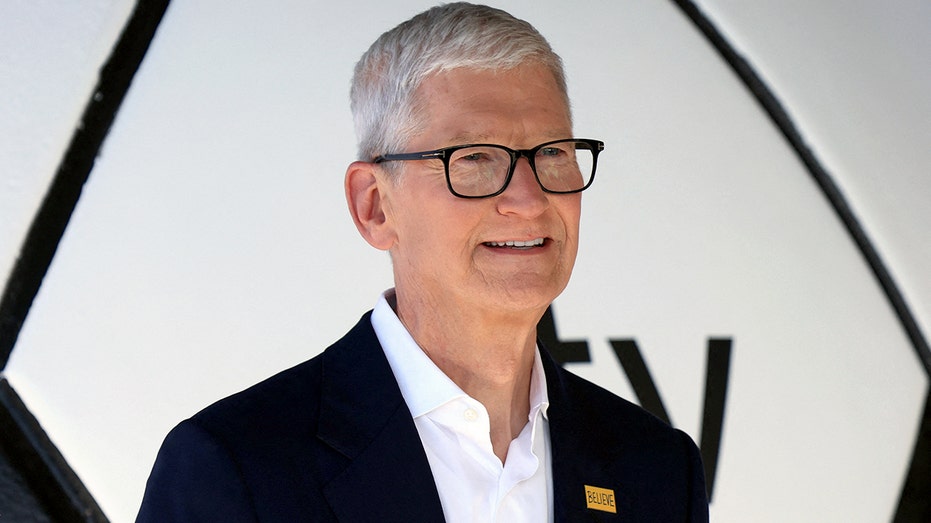
Apple CEO Tim Cook.

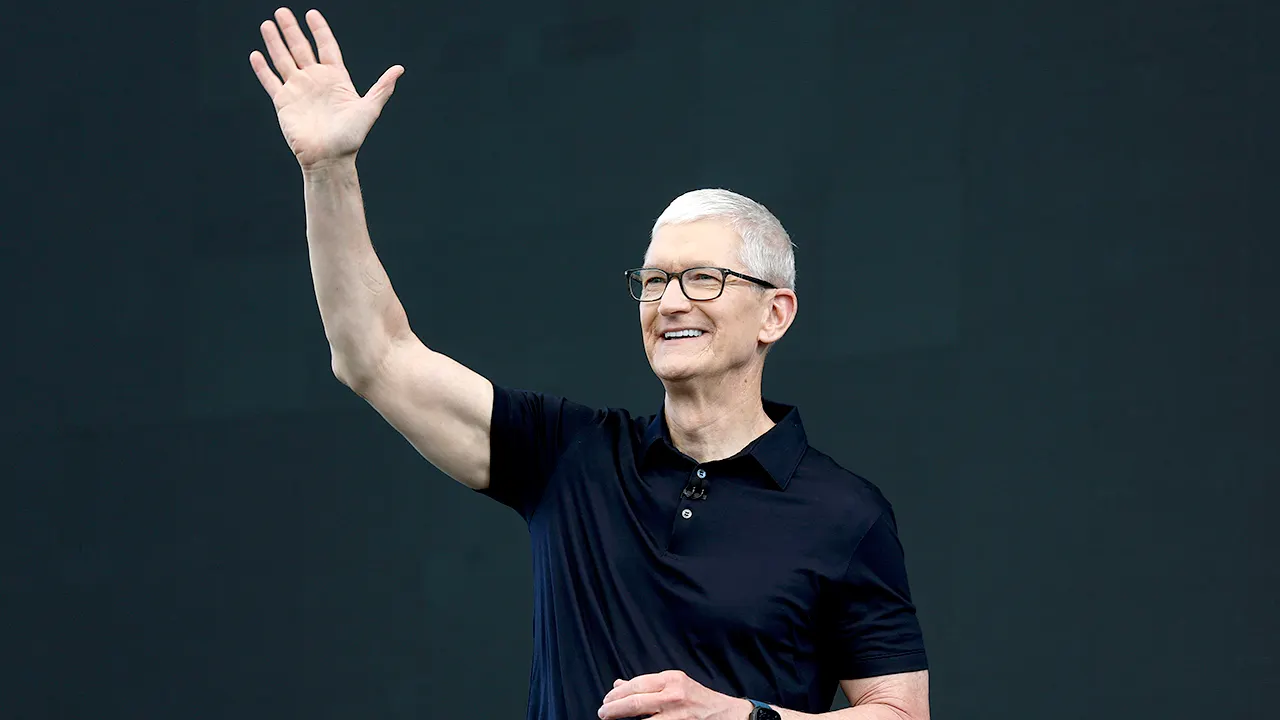
Apple CEO Tim Cook delivers the keynote address during the Apple WWDC at Apple Park on June 8, 2026, in Cupertino, California. (Justin Sullivan/Getty Images)

Cook said he has “nothing negative” to say about open-source AI models, adding that “they are useful.” His comments come as the technology industry debates whether the most powerful AI systems should remain proprietary or be made more broadly available to developers.

That debate has intensified after Chinese AI company Moonshot launched Kimi K3, a new model that has drawn attention for performance that rivals some of the most powerful systems from Anthropic and OpenAI. Apple, meanwhile, is preparing to launch its long-awaited AI-powered Siri this fall using Google’s Gemini.

Advertisement

Cook’s comments suggest Apple intends to remain pragmatic rather than ideological in choosing the models that power its products. The company has traditionally exercised tight control over its hardware and software ecosystem, but the fast-moving AI market may require it to draw on a wider range of outside technologies.

WHO IS JOHN TERNUS, SET TO SUCCEED TIM TOOK AS APPLE’S CEO?

China remains another critical part of Apple’s AI strategy and its broader business.

People shop for Apple iPhones in a store.

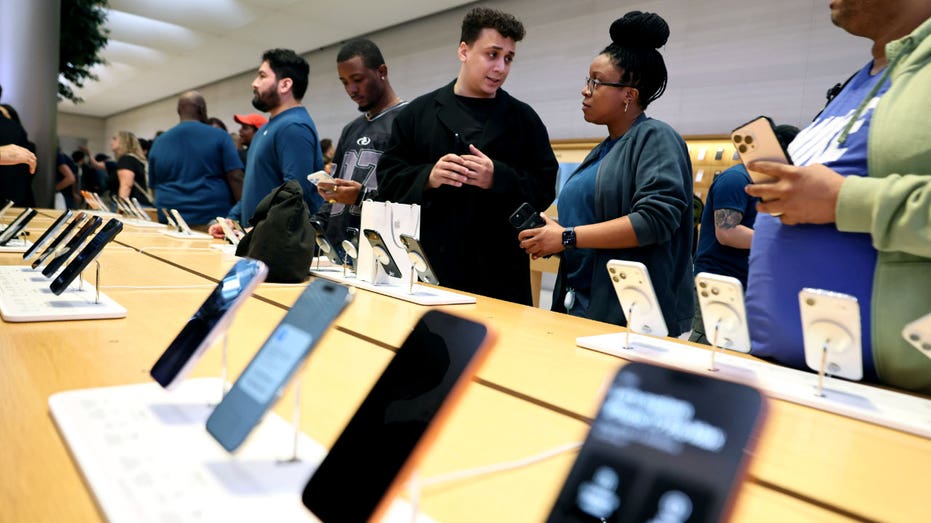
Apple employees help customers at the Fifth Avenue Apple Store on new product launch day on Sept. 19, 2025 in New York City. (Michael M. Santiago/Getty Images)

“In terms of the U.S.-China relationship, I was over in April for the state dinner, and I think the engagement between the countries are really good, and I’ve got a favorable view, and I’m very optimistic at this point about where the relationship is,” Cook said.

Advertisement

Apple Intelligence has finally been approved in China after a delay of nearly two years compared with its U.S. launch. The approval could help Apple compete more effectively in one of its largest markets, where domestic smartphone makers have moved quickly to add generative AI features.

Apple’s China sales rose 22% during the spring quarter to $18.81 billion. Even with that sharp increase, revenue still fell short of analysts’ estimates of more than $19.5 billion in Apple’s third-largest market.

Tariff refunds provided another lift to the quarter. Cook said Apple is directing that money back into domestic production.

APPLE TO LEASE IPHONES, OTHER PRODUCTS TO USERS THROUGH KLARNA PARTNERSHIP

Advertisement

“We’re taking our tariff refunds and reinvesting those in the United States’ advanced manufacturing,” he said.

Apple has already committed to spending $600 billion over four years on the U.S. economy. The reinvestment gives the company a way to frame the refunds not simply as a temporary earnings benefit, but as additional support for its long-term manufacturing strategy.

At the same time, Apple is contending with a sharp increase in the cost of memory chips. The company recently raised prices on some Mac computers and iPads by as much as $300 as memory chip prices soared by as much as 600% over the past two years.

“As I’d mentioned on the call last time around, the memory costs were higher in March than December quarter, and then in June they were significantly higher than in the March quarter,” Cook said.

Advertisement
Ticker Security Last Change Change %
AAPL APPLE INC. 333.43 -4.76 -1.41%

Those higher costs are arriving just as artificial intelligence is driving demand for more computing power and memory. Despite the price increases on some devices, Cook said Apple’s new, lower-priced MacBook Neo, which starts at $699, was the company’s best-selling computer in the United States during its first full quarter on the market.

Demand for Apple’s higher-powered Mac Studio computers has also surged, creating supply shortages and helping push Mac revenue above $10 billion for a new spring-quarter record.

Cook will step down as chief executive on Sept. 1 after leading Apple for 15 years. He will remain chairman, while Apple’s hardware engineering chief, John Ternus, takes over as CEO.

Cook became chief executive in 2011, succeeding Apple co-founder Steve Jobs. Since then, Apple’s market value has increased by more than 1,000%. This week, the company became only the second corporation to surpass $5 trillion in market value, briefly overtaking Nvidia to reclaim the title of the world’s most valuable company.

Advertisement
Apple CEO Tim Cook.

Apple’s CEO Tim Cook attends the premiere of season four of the Apple TV series “Ted Lasso” at the Academy Museum in Los Angeles, California, on July 27, 2026. (David Swanson/Reuters / Reuters)

GET FOX BUSINESS ON THE GO BY CLICKING HERE

Reflecting on his tenure, Cook said, “I’ve had an incredible opportunity to work with people that I love to work with… and it’s just been the privilege of a lifetime.”

Asked how he wants to be remembered, Cook demurred.

“How people will write about that will be theirs to decide,” he said. “But for me, it’s been a privilege.”

Advertisement

Cook arrived in the top job facing doubts that a supply-chain expert could preserve the product vision and culture associated with Jobs. Fifteen years later, he leaves behind a company operating at a scale few could have imagined in 2011 – and one now entering a new era defined by artificial intelligence, geopolitical competition and the challenge of sustaining growth from the world’s most valuable consumer technology franchise.

Continue Reading

Business

BJP accuses Kejriwal of sending voters hoax calls to mislead

Published

on

BJP accuses Kejriwal of sending voters hoax calls to mislead
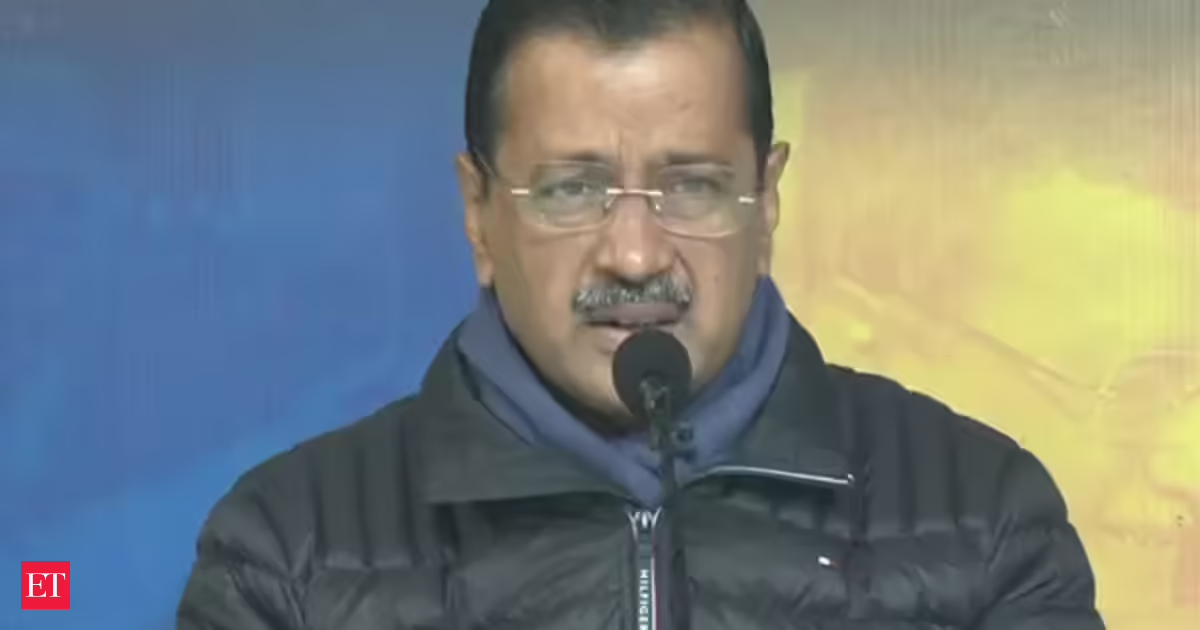
New Delhi: The BJP on Sunday accused AAP supremo Arvind Kejriwal of orchestrating hoax calls to mislead voters across constituencies, including the New Delhi constituency, claiming that their were “cancelled” by the BJP. Addressing a press conference, BJP MP Parvesh Verma played an audio recording of one such call, in which a person was heard saying, “Your vote has been cut by the BJP. AAP will ensure you get your vote back,” and urged the receiver to support the Aam Aadmi Party.

“Hoax calls are being made to the public, saying that BJP will end all AAP schemes. This is a blatant lie,” he said.

He also wondered how “confidential voter data” was accessed by the party.

“Other than the Election Commission of India, this data is not provided to anyone. How did Kejriwal get the voters’ contact list? This must be inspected,” Verma said.

The BJP’s New Delhi candidate for the Assembly election also alleged the AAP of distributing Rs 500 wrapped in a calendar in the slum areas. He claimed three people were arrested in this regard.

Advertisement


There was no immediate reaction from the AAP on the allegations, nor from Delhi Police.
He said he has filed a complaint with the Election Commission and his party demands an investigation into the matter. BJP leader and party spokesperson Sudhanshu Trivedi, who was also present at the press conference, welcomed the US Supreme Court’s decision to extradite to India Tahawwur Rana, an accused in the 2008 Mumbai terror attacks.

“Under Modi’s leadership, the government remains committed to fighting terrorism. The decision to hand over Tahawwur Rana to India is a welcome one for all of us,” Trivedi said.

Trivedi accused the AAP and Congress of supporting activities that indirectly shield terrorism.

“Atishi’s parents were among those seeking a ‘shama yajna’ (forgiveness ritual) for Afzal Guru,” he alleged, referring to the mastermind of the 2001 Parliament attack.

Advertisement
Continue Reading

Business

UEFA threatens World Cup boycott over FIFA investment plan

Published

on

UEFA threatens World Cup boycott over FIFA investment plan

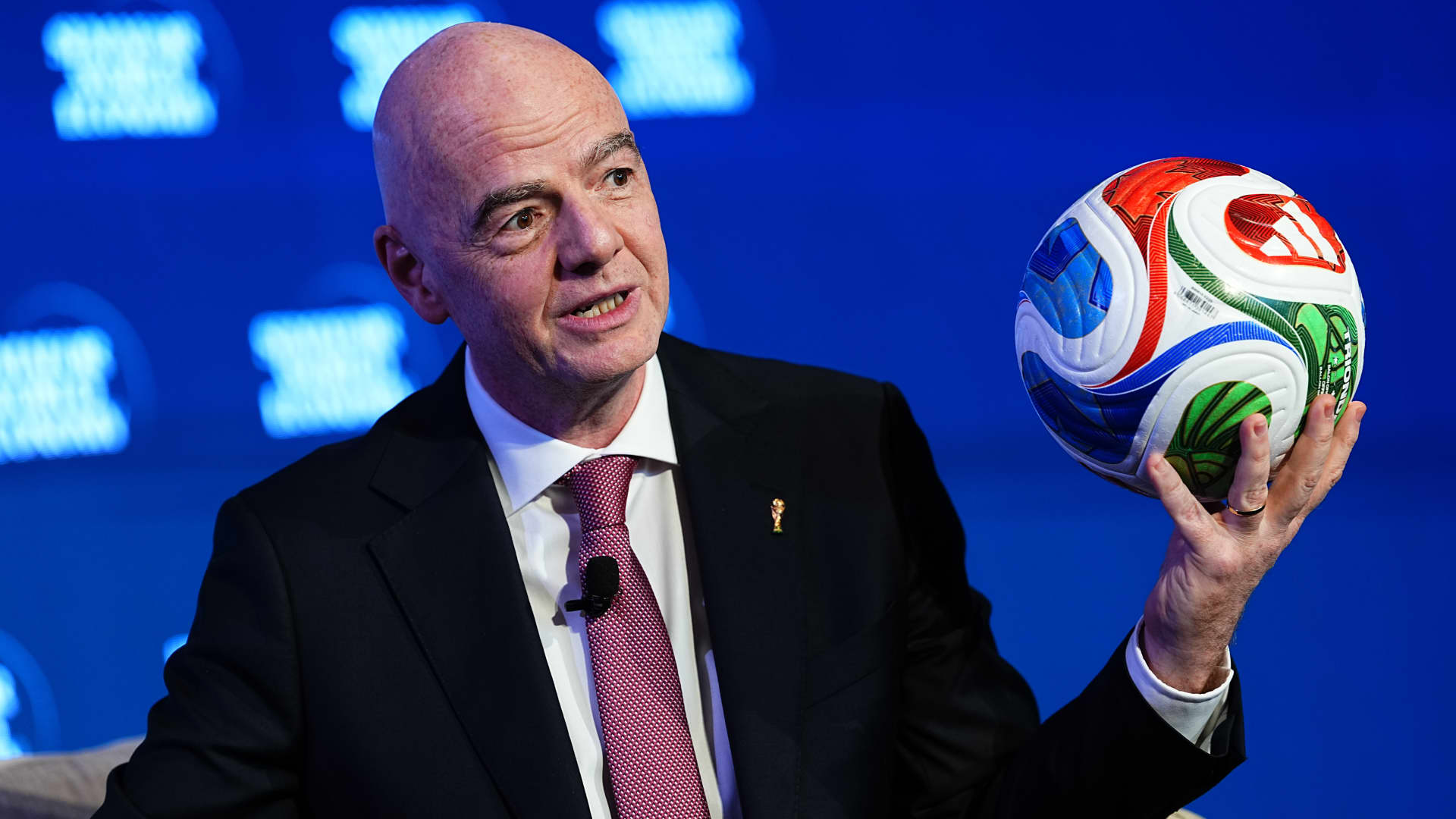
Gianni Infantino, president of the Federation International Football Association (FIFA), at the Semafor World Economy Summit during the International Monetary Fund (IMF) and World Bank Spring meetings in Washington, DC, US, on Wednesday, April 15, 2026.

Aaron Schwartz | Bloomberg | Getty Images

European soccer governing body UEFA said Thursday it will boycott FIFA competitions including the World Cup if the global organization goes through with its proposal to sell a stake to private investors.

Advertisement

Following an emergency meeting, UEFA, which represents 55 of FIFA’s 211 member associations, called it “irresponsible and indefensible” for FIFA leadership to bring forth such a proposal without seeking feedback from the countries that make up the organization.

On Tuesday, FIFA announced a plan to sell a 20% stake in a new entity it calls FIFA Forward Enterprise that would take over all commercial and event operations. FIFA said FFE would raise up to $4.2 billion from third party investors. The move championed by FIFA President Gianni Infantino has drawn backlash across the sport.

The proposed deal has also sparked fresh scrutiny of Infantino’s relationship with President Donald Trump. Thrive Eternal, a private equity firm founded by Joshua Kushner, the brother of Trump’s son-in-law Jared Kushner, is “expected to lead the proposed investor group for FFE,” FIFA said when it announced the deal.

In a statement, UEFA said its member nations would boycott FIFA competitions unless the organization canceled the plan for good. UEFA said “football’s future cannot be dictated” by stakeholders seeking financial gain.

Advertisement

“As a result of today’s discussion, no UEFA national teams will participate in any FIFA competition for so long as these proposals remain alive, unless this proposal has been abandoned in its entirety and binding assurances have been given that FIFA will never again open its governance or competitions to private ownership,” the statement read.

Get the CNBC Sport newsletter directly to your inbox

The CNBC Sport newsletter with Alex Sherman brings you the biggest news and exclusive interviews from the worlds of sports business and media, delivered weekly to your inbox.

Subscribe here to get access today.

UEFA isn’t the only one opposing FIFA’s proposal.

Advertisement

Concacaf, which runs soccer in North and Central America and the Caribbean, said on Thursday that it also held an emergency meeting with its 41 member associations and rejected FIFA’s proposal.

“The discussion reinforced the need for greater transparency and proper governance,” the organization said in a statement.

In response to the fallout, Infantino appeared in a video on Wednesday reassuring fans that the “beautiful game, and sport they watch and love will not change.” He added that the proposal is “a golden opportunity to turbocharge the development of the game globally.”

Infantino also said that the proposal is “simply a choice for our members” and not an obligation.

Advertisement
Choose CNBC as your preferred source on Google and never miss a moment from the most trusted name in business news.
Continue Reading

Business

Central bank turns piper to draw in foreign capital; leaves repo rate at 5.25, keeps stance neutral

Published

on

Central bank turns piper to draw in foreign capital; leaves repo rate at 5.25, keeps stance neutral
Mumbai: The Reserve Bank of India (RBI) Friday announced a host of measures to attract foreign currency inflows, aimed at strengthening external buffers, even as the six-member rate-setting committee voted to keep the policy rate unchanged at 5.25% and maintained a neutral stance.

RBI took steps to attract overseas investors into government bonds and equities, provided public sector units time-bound incentives to raise external commercial borrowings (ECB), and agreed to bear the hedging cost on fresh three- to five-year FCNR(B) deposits, among other measures.

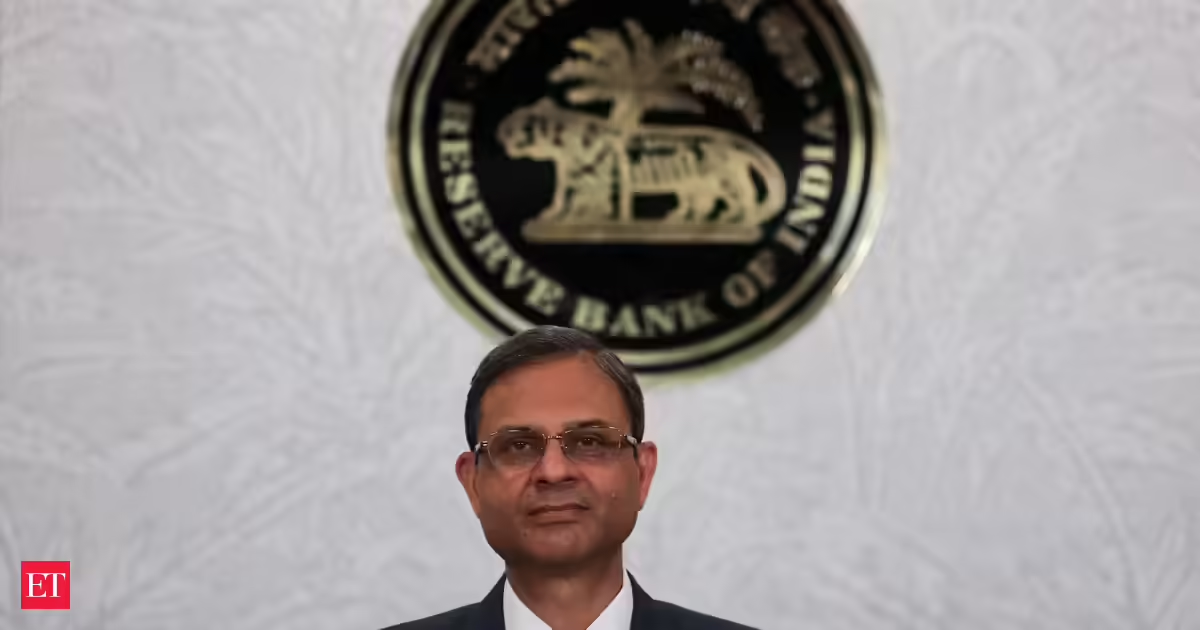
“As a result of these measures on FCNR(B) and ECBs, and initiatives taken by the government on bonds and trade agreements, we are quite confident of a very healthy balance of payments, compared to what it would have been otherwise,” said RBI governor Sanjay Malhotra at the post-policy press meet.

The central bank revised inflation forecast upward to 5.1%, from 4.6%, and lowered its growth forecast for FY27 to 6.6%, from 6.9% projected in the previous policy.

“Adverse implications of extended disruptions in supply chains and elevated energy prices are reflected in moderation of growth and increase in inflation projections from the April policy,” the governor said, while revising forecasts in his second policy following the West Asia crisis. He stated that “although risks of higher inflation have amplified, the MPC felt it would be prudent to wait for greater clarity to emerge.”

Advertisement

RBI policy

The measures to attract inflows come amid outflows of $13.7 billion by foreign institutional investors from the equity market and are likely to support the rupee, which has fallen 4.1%, or about four rupees, since the start of the US-Iran conflict.Malhotra said he expects strong inflows but declined to put a number to them while adding that he expects banks to pass on the benefits of lower hedging costs to customers. Chairman State Bank of India CS Setty said, “These steps should help enhance capital inflows, deepen bond markets, improve liquidity and provide support to the rupee.”

Soumya Kanti Ghosh, group chief economic adviser, State Bank of India, said the measures would result in a potential capital flow of at least $40 billion, a pullback in the rupee toward 92-93 levels, and a pause in the August policy.

Madhavi Arora, chief economist, Emkay Global Financial Services, expects inflows of $30-50 billion over the year, while Aastha Gudwani, chief economist at Barclays, said the measures could add about $5 billion a month.

Economists said the policy is supportive of growth but has overlooked rising inflation risks. These would stem from higher oil prices following the West Asia crisis.

However, the governor defended the stance, stating that the 4% inflation target is “not in abeyance” and remains “sacrosanct.”

Advertisement

“This target is to be met over a period. It is a medium-term target, and it is not advisable to take action for every small deviation, as that could have disproportionate consequences for growth,” Malhotra said. The governor highlighted that the economy is facing uncertainty over the nature and duration of the conflict, as well as the time needed for the restoration of supplies. He also noted uncertainty around the monsoon and the impact of El Niño, both of which have implications for inflation and growth.

The NSE Nifty 50 index declined 0.21% to 23,366.7. The 10-year government bond yield fell four basis points to close at 6.97%, while the rupee gained 84 paise to close at 94.95 on Friday.

Upasna Bhardwaj, a senior economist at Kotak Mahindra Bank, expects a 50-basis point rate hike in October, while Arora said RBI will raise rates only if inflation becomes entrenched. The governor reiterated that RBI would “look through” shocks unless inflation becomes broad-based and persistent or starts getting embedded in expectations.

On the upward revision in inflation forecasts, RBI said in its statement that the pass-through of higher oil prices could exert upward pressure in the coming months as firms pass on input costs.

Advertisement
Continue Reading

Business

XFLT Advisor Adjournment Shifts Likely Outcome Toward Toward Liquidation At NAV (XFLT)

Published

on

XFLT Advisor Adjournment Shifts Likely Outcome Toward Toward Liquidation At NAV (XFLT)

This article was written by

Dan Plettner focuses his qualitative investigative research methods on Closed-End Funds and other underfollowed securities. Dan Plettner was born in 1975 and has been investing since his teen years. After completing his undergraduate degree Magna Cum Laude from Miami University (Oxford, Ohio), he won the “NSD award” as a retail Financial Advisor at Morgan Stanley Dean Witter. Dan relocated to Morgan Stanley’s International Headquarters in Manhattan where he served as a Closed-End Fund Product Specialist until 2000 and then attained his MBA from New York University.

Analyst’s Disclosure: I/we have a beneficial long position in the shares of XFLT either through stock ownership, options, or other derivatives. I wrote this article myself, and it expresses my own opinions. I am not receiving compensation for it (other than from Seeking Alpha). I have no business relationship with any company whose stock is mentioned in this article.

Seeking Alpha’s Disclosure: Past performance is no guarantee of future results. No recommendation or advice is being given as to whether any investment is suitable for a particular investor. Any views or opinions expressed above may not reflect those of Seeking Alpha as a whole. Seeking Alpha is not a licensed securities dealer, broker or US investment adviser or investment bank. Our analysts are third party authors that include both professional investors and individual investors who may not be licensed or certified by any institute or regulatory body.

Advertisement
Continue Reading

Business

FCC bans certain foreign-made robot vacuums under new security rules

Published

on

FCC bans certain foreign-made robot vacuums under new security rules

Certain robotic vacuum cleaners, including some Roomba-style devices, will be banned under the new U.S. policy restricting foreign-made advanced robotics, federal regulators told FOX Business Thursday.

The Federal Communications Commission (FCC) said robotic vacuums fall under its updated “Covered List” rules adopted Tuesday, making certain new foreign-produced models ineligible for FCC equipment authorization due to national security and cybersecurity risks to U.S. critical infrastructure.

Advertisement

While the agency did not identify specific brands, an FCC spokesperson confirmed to FOX Business that robotic vacuums are among the devices covered by the restrictions. 

Major manufacturers including iRobot, SharkNinja, Dyson, Samsung and LG sell robotic vacuums in the U.S., with most production taking place in China, alongside manufacturing operations in Vietnam, Malaysia and Indonesia.

FCC BLOCKS NEW FOREIGN-MADE POWER INVERTERS AND ADVANCED ROBOTS OVER NATIONAL SECURITY RISKS

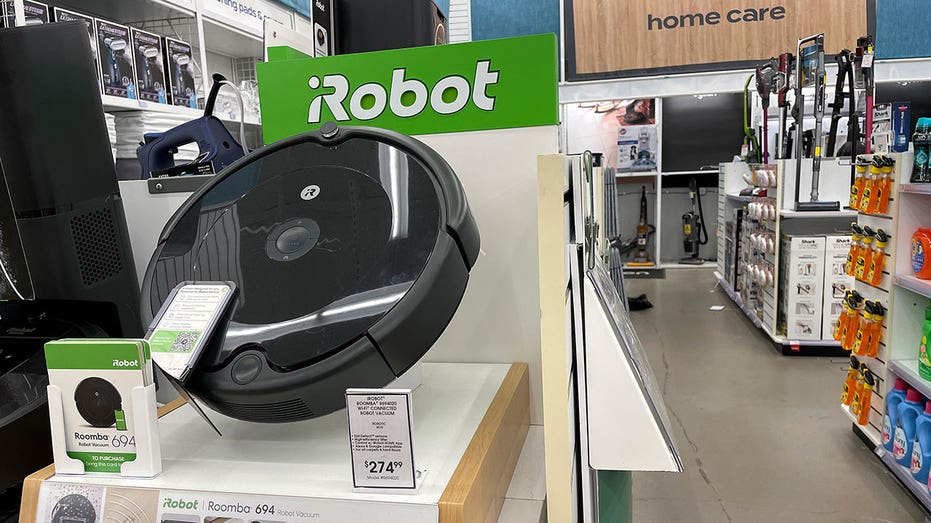
A black Roomba vacuum on display in a store.

A Roomba robot vacuum is displayed on a shelf at a Bed Bath and Beyond store Aug. 5, 2022, in Larkspur, Calif. Certain newly authorized foreign-made robotic vacuums are now subject to expanded FCC national security restrictions. (Justin Sullivan / Getty Images)

However, the restrictions apply only to newly authorized devices and will not affect the many robotic vacuums already in consumers’ homes.

Advertisement

“This action does not impact a consumer’s continued use of devices they previously acquired,” the FCC spokesperson said.  

The agency added that previously authorized models may continue to be sold, imported and marketed in the U.S., and it does not “prevent retailers from continuing to sell, import or market relevant models approved previously through the FCC’s equipment authorization process.”

FCC CHAIRMAN CLIMBS 2,000-FOOT CELL TOWER TO SPOTLIGHT ONE OF AMERICA’S TOUGHEST TRADES

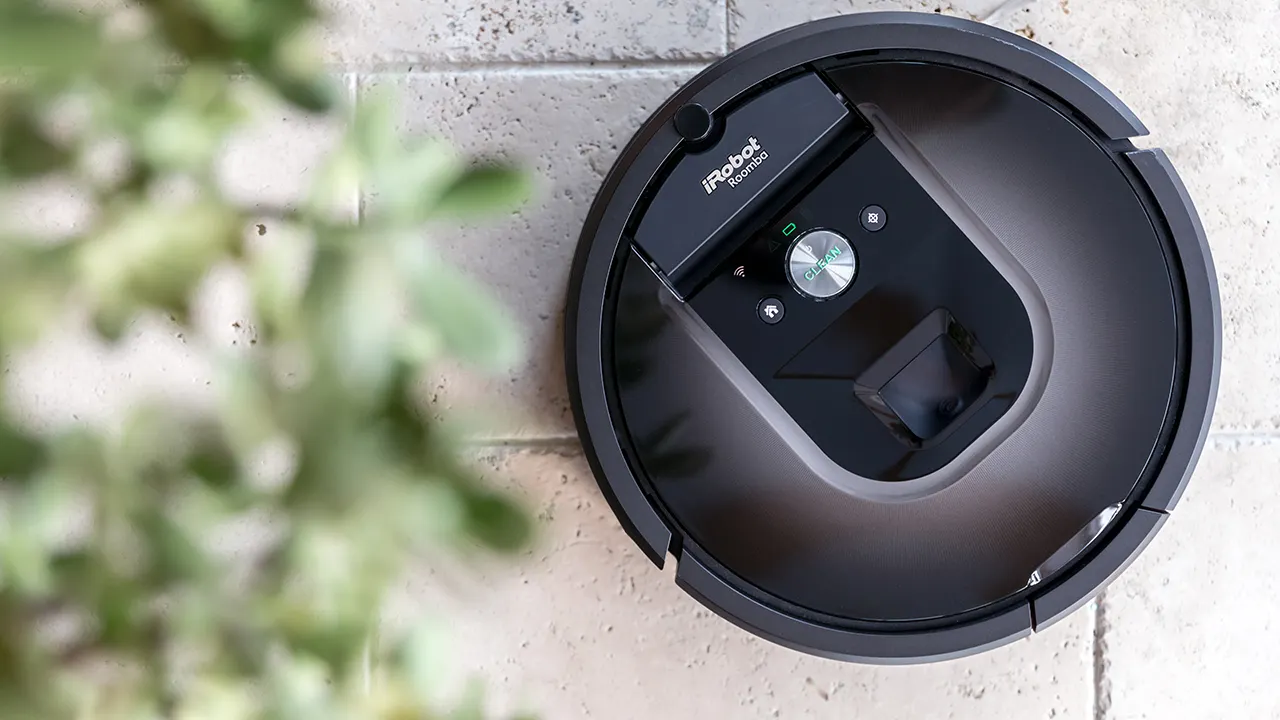
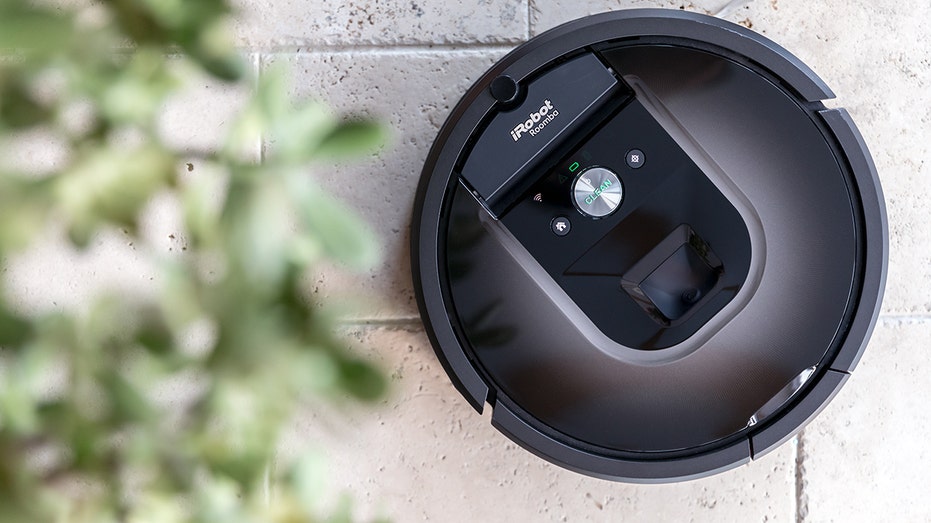
roomba near plant outside

An iRobot Roomba 980 robotic vacuum cleaner sits on a ceramic floor Dec. 10, 2016. It is unclear which models will be affected. (iStock / iStock)

“We are aware of the FCC’s recent action and are working with them to better understand its implementation and potential impact,” iRobot said. “We remain committed to serving our customers and will share updates as more information becomes available.”

Advertisement

Under the FCC’s new rules, many household robotic cleaners qualify as “advanced robotic devices” because they are mechanical mobile devices capable of locomotion, navigation and obstacle avoidance. 

Covered devices generally weigh more than 4.4 pounds and operate near human operators. Their autonomous navigation is either powered by firmware, AI models or sensors via Bluetooth, Wi-Fi or cellular technology. 

That definition could encompass products such as iRobot’s Roomba lineup, SharkNinja’s Shark robotic vacuums, Dyson’s 360 series, Samsung’s Jet Bot line and LG’s CordZero robotic cleaners. 

US BANS NEW FOREIGN-MADE CONSUMER INTERNET ROUTERS OVER SECURITY CONCERNS

Advertisement
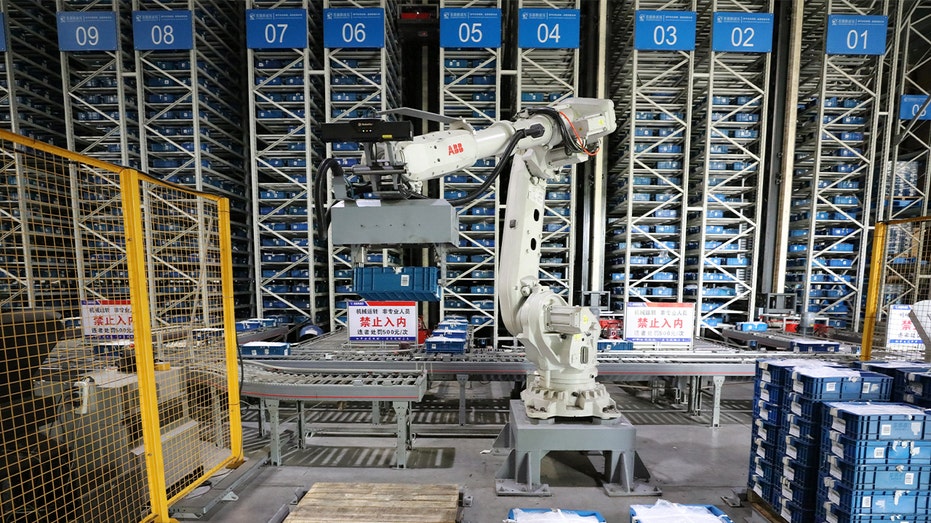
robot arm in manufacturing hub

A robotic arm grabs materials for storage in the workshop of Jiangxi Suqiangge Hydraulic Co., Ltd. July 29, 2026, in Yichun, Jiangxi Province of China. (Zou Zhong/VCG / Getty Images)

Roomba, one of the first robotic vacuum brands to gain widespread popularity in the U.S., was introduced by American company iRobot in 2002 but is now owned by Shenzhen Picea Robotics and Santrum Hong Kong.

Picea Robotics, which operates development and manufacturing facilities in China and Vietnam, sells Roomba models starting at $200.

CLICK HERE TO GET FOX BUSINESS ON THE GO

By comparison, American robotics startup Matic, one of the few U.S.-based competitors that designs and assembles its products domestically in California, sells its robotic vacuums for about $1,245. 

Advertisement

FOX Business reached out to SharkNinja, Dyson, Samsung and LG for comment.

Continue Reading

Business

Andritz AG (ADRZY) Q2 2026 Earnings Call Transcript

Published

on

OneWater Marine Inc. (ONEW) Q1 2026 Earnings Call Transcript