







US technology group Avalara has acquired Manchester-based integration startup Versori in a deal that underscores the growing international appeal of the UK’s regional tech sector.
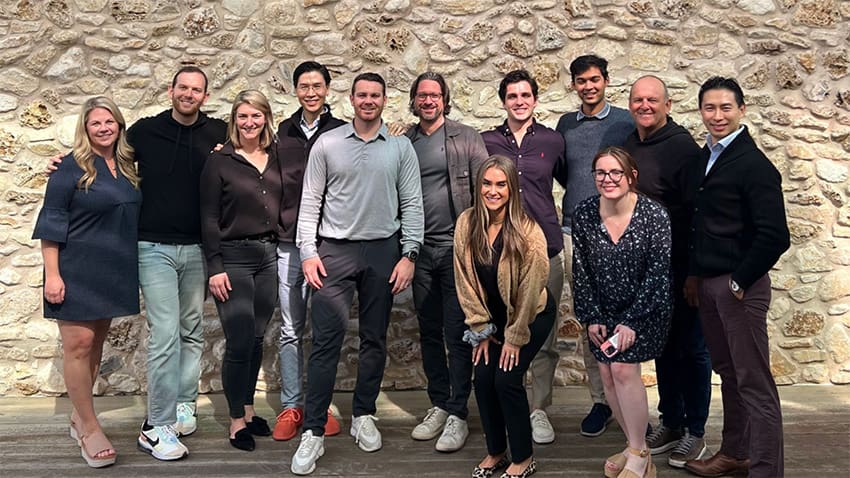
The value of the transaction has not been disclosed, but it includes Versori’s proprietary technology platform and its 23-strong team. Co-founders Sean Brown and Daniel Jones will remain with the business, which will operate under the name “Versori, by Avalara”.
Founded in 2022, Versori specialises in next-generation integration technology, enabling companies to connect complex systems such as ERPs, ecommerce platforms, marketplaces and financial applications with greater speed and automation. The company raised $10.5 million in prior funding and graduated from the prestigious Y Combinator accelerator programme in March 2023.
Sean Brown said the acquisition aligns closely with Versori’s founding vision.
“We want Versori to connect the world’s systems. That was the mission statement from day one,” he said. “As we were going through a period of growth we were facing doing another investment round, but Avalara were already a customer and the strategic fit was very strong.”
Advertisement
Avalara describes itself as an “agentic” tax and compliance leader, providing automated tax calculation, reporting and compliance solutions to more than 200,000 customers across 75 countries. Its long-term ambition is to embed real-time, always-on compliance into global commerce systems.
Scott McFarlane, chief executive and co-founder of Avalara, said the acquisition would significantly accelerate that ambition.
“Compliance at global scale depends on seamless, reliable integration,” he said. “Versori’s technology and team significantly accelerate our ability to connect into the world’s commerce systems quickly, at scale, using intelligent, AI-driven automation that meets the reliability and accuracy standards global compliance demands.”
The move strengthens Avalara’s unified platform strategy, particularly as regulatory complexity increases worldwide and multinational businesses seek automated, audit-ready compliance solutions embedded directly into transactional workflows.
Advertisement
Versori’s platform uses automation-first architecture to reduce the time and engineering resources required to build and maintain integrations. By leveraging artificial intelligence, the system can simplify deployment and ongoing maintenance, making it attractive to enterprises operating across multiple jurisdictions and platforms.
Since its launch, Versori has worked with high-profile organisations including Frasers Group, Macy’s and the UK Ministry of Defence. Its growth trajectory has made it one of Manchester’s fastest-rising enterprise software startups.
Brown said the acquisition demonstrates that Manchester can produce globally competitive technology businesses.
“It’s proof that Manchester can grow companies like Versori,” he said. “Hopefully it will bring more investment into Manchester and more talent. I’ve never done it for the rewards. I love building things and I’m looking forward to keeping building things with Versori. I’ve got a lot of unfinished business.”
Advertisement
The deal also reflects continued US interest in UK AI and enterprise software firms, particularly those outside London. Manchester’s tech ecosystem has grown rapidly in recent years, supported by university spinouts, venture capital inflows and accelerator programmes.
For Avalara, the acquisition adds advanced AI-enabled integration capabilities at a time when global tax and compliance requirements are becoming increasingly digitised and complex. The company has spent more than two decades building one of the most extensive libraries of tax content and system integrations in the industry. Integrating Versori’s automation technology is expected to enhance speed, scalability and reliability across that network.
Both companies indicated that integration work is already under way, with Versori’s technology forming a key part of Avalara’s push towards AI-native compliance systems that operate continuously and autonomously within global commerce infrastructure.
Amy Ingham
Amy is a newly qualified journalist specialising in business journalism at Business Matters with responsibility for news content for what is now the UK’s largest print and online source of current business news.
Well, that’s one way to get software stocks outperforming the market again.
The iShares Expanded Tech-Software Sector ETF, or IGV, was down 1% on Tuesday. Amid the broader market turmoil unfolding on Wall Street, that’s actually not too bad.
The S&P 500 was down 2.3%, while the S&P 500 tech sector was down 2.4%. The Nasdaq Composite was down 2.6%.
Aeries Technology, Inc (AERT) Shareholder/Analyst Call March 3, 2026 8:30 AM EST
Company Participants
Bhisham Khare – CEO & Director Daniel Webb – CFO & Chief Investment Officer
Presentation
Advertisement
Bhisham Khare CEO & Director
Good morning. I’m Ajay Khare, Chief Executive Officer and a member of Board of Directors of Aeries Technology, Inc. and will be serving as the Chairman of this Annual General Meeting. It is my pleasure to welcome you all to the Annual General Meeting of the Shareholders of the company. This Annual General Meeting of Shareholders is held for the purposes described in the proxy statements prepared by the company for this meeting and provided to our shareholders.
The following officers and members of the management team of the company are in attendance today: me, Ajay Khare, Chief Executive Officer; and Daniel S. Webb, Chief Financial Officer. The formal business of the meeting will begin with the proof that proper notice of the meeting has been given and that a quorum is present. Daniel S. Webb, Chief Financial Officer and the Secretary of this Annual General Meeting will now report to you regarding this notice.
Advertisement
Daniel Webb CFO & Chief Investment Officer
Mr. Chairman, the proxy materials for this meeting were made available via Internet and notice of Internet availability of proxy materials was mailed on or about February 6, 2026, to each shareholder of record as of close of business on January 28, 2026, the record date for this meeting, the notice complied with requirements of the amended and restated memorandum and Articles of Association of the company and the laws of the Cayman Islands. Affidavit attesting to the mailing of the notice of the meeting will be filed with the records of the meeting.
LONDON — British actor Leo Woodall has quickly become one of the most talked-about talents in Hollywood, transitioning from breakout roles in prestige television to leading parts in major streaming projects and feature films. As of March 2026, the 29-year-old is generating buzz with the upcoming Netflix limited series Vladimir, premiering March 5, and a high-profile casting opposite Sydney Sweeney in the Edith Wharton adaptation Custom of the Country.
Leo Woodall
Here are 10 essential facts about Leo Woodall in 2026:
Born into a Theatrical Family — Leo Vincent Woodall was born on September 14, 1996, in Hammersmith, West London, and raised in Shepherd’s Bush. He is the youngest of three siblings, with an older sister Constance and brother Gabriel. His father, Andrew Woodall, is an established actor known for roles in Solo: A Star Wars Story and television series like The Reckoning. His mother, Jane Mary Ashton, studied drama but did not pursue acting professionally. Woodall’s stepfather, Alexander Morton, is also an actor, and the family traces ancestry to silent film star Maxine Elliott, giving him deep roots in performance arts.
Drama School Graduate — Woodall initially considered sports but shifted to acting after watching Peaky Blinders. He enrolled at Arts Educational School (ArtsEd) in London at age 19 and graduated in 2019 with a Bachelor of Arts in Acting. The training provided a foundation for his early professional gigs.
Early Career Beginnings — Post-graduation, Woodall debuted on television with a 2019 episode of the BBC medical drama Holby City as Jake Reader. He followed with small roles, including a short film Man Down and features like Nomad and the Russo Brothers’ Cherry (2021) alongside Tom Holland, where he played a soldier in a low-pressure, fun environment that introduced him to big-budget filmmaking.
Breakout in The White Lotus — Woodall gained international recognition in 2022 as Jack in the second season of HBO’s The White Lotus. His portrayal of a charming yet questionable Essex lad vacationing in Sicily earned praise for its mix of humor, vulnerability and edge, thrusting him into the spotlight amid the show’s critical and commercial success.
Romantic Lead in One Day — In 2024, Woodall starred as Dexter Mayhew in Netflix’s adaptation of David Nicholls’ novel One Day, opposite Ambika Mod. The romantic drama miniseries, following two friends over two decades, showcased his emotional range and chemistry, solidifying his status as a leading man in prestige streaming content.
Diverse Roles Across Genres — Woodall has tackled varied parts, including Adrian Ivashkov in Peacock’s Vampire Academy (2022), a recurring role in Amazon’s Citadel (2023), and appearances in other projects. His versatility spans satire, romance, action and drama, appealing to major platforms.
Upcoming Netflix Thriller Vladimir — Woodall stars opposite Rachel Weisz in Vladimir, a limited series premiering March 5, 2026, on Netflix. Based on Julia May Jonas’ 2022 novel, it follows a middle-aged professor (Weisz) whose obsession with her younger colleague Vladimir (Woodall) consumes her life. Recent interviews, including on TODAY, highlight Woodall discussing the themes of desire, aging and obsession, while sharing his fandom for shows like The Traitors.
High-Profile Casting with Sydney Sweeney — In February 2026, Deadline reported Woodall joining Sydney Sweeney in Custom of the Country, a Studiocanal and Rabbit’s Foot Films adaptation of Edith Wharton’s novel directed by Josie Rourke. The period drama positions him in a major feature opposite one of Hollywood’s biggest rising stars.
Other 2026 Projects — Woodall leads the thriller Tuner, co-starring Dustin Hoffman, set for theatrical release in May 2026. He also appears in Prime Target and has been linked to Harry Potter and the Goblet of Fire in some casting rumors. His schedule reflects rapid ascent, with multiple high-visibility roles.
Personal Style and Public Persona — Known for his tattoos — often acquired for roles — Woodall maintains a low-key social media presence (@leowoodall on Instagram) while attending events like Burberry’s Winter 2026 show. He has spoken candidly about bullying in school, survival instincts and family support. Woodall keeps his personal life private but has been linked romantically to Meghann Fahy from The White Lotus.
NEW YORK — The Dow Jones Industrial Average tumbled more than 1,100 points in early trading on March 3, 2026, as the deepening U.S.-Israel conflict with Iran triggered a sharp global risk-off move, sending oil prices soaring and reigniting inflation fears across Wall Street.
Dow Jones
The blue-chip index (^DJI) fell as much as 1,238 points or 2.5% intraday, trading near 47,784 before partial recoveries, with losses led by energy-sensitive names like Caterpillar, which dropped over 4%. The benchmark closed the prior session on March 2 around 48,904.78, down modestly amid initial conflict jitters, but Tuesday’s sell-off erased those gains and pushed the index toward its steepest single-day decline since April 2025.
Broader markets joined the retreat. The S&P 500 (^GSPC) slid about 2.2% to near 6,742, while the tech-heavy Nasdaq Composite (^IXIC) dropped roughly 2.3% toward 22,268. Trading volume spiked as investors fled equities for safe havens like gold and the U.S. dollar, with the VIX fear gauge climbing sharply.
The catalyst remained the fourth day of intense military exchanges. Fresh U.S. and Israeli airstrikes targeted Iranian facilities overnight, prompting Tehran to vow closure of the Strait of Hormuz — the chokepoint for about 20% of global oil flows — and retaliatory attacks on U.S. interests and allies in Saudi Arabia, Qatar and elsewhere. Brent crude surged another 8-9% toward $84 per barrel, while West Texas Intermediate climbed to around $77, marking levels not seen since 2024 highs and amplifying concerns about sustained supply disruptions.
“This escalation is forcing a rapid repricing,” one market strategist said in a client note. “Oil’s spike revives sticky inflation risks just as markets were digesting Fed policy uncertainty. A prolonged conflict could delay rate cuts and crimp global growth.”
Advertisement
Treasury yields rose, with the 10-year note climbing above 4.10%, reflecting bets on higher-for-longer borrowing costs. The dollar strengthened against major currencies, while energy and defense stocks provided pockets of relative strength amid broader weakness in consumer discretionary, airlines and tech.
Airlines bore heavy losses from surging fuel costs and flight disruptions: United, American and Delta each fell 3-4%. Broader consumer sectors faced headwinds as higher energy bills threaten household spending.
The Dow’s retreat follows a mixed start to 2026, with the index showing resilience earlier through rotation into value and cyclical names. Yet the latest shock has accelerated a defensive stance, testing support levels near 47,500-48,000. Analysts warn that persistent oil elevation above $80 could complicate the economic soft-landing narrative that buoyed equities through much of the prior cycle.
Global markets echoed the turmoil. South Korea’s Kospi plunged 7.2% — its worst day in years — as a major energy importer. Japan’s Nikkei fell 3.1%, while European benchmarks like the FTSE 100 dropped 2.6% and Germany’s DAX slid 3.4%. Shipping rates surged to record highs on rerouting and insurance concerns.
Advertisement
Investors monitored diplomatic channels for de-escalation signals, alongside any further military developments. President Donald Trump indicated operations could continue for weeks, with no firm timeline, heightening uncertainty. U.S. officials emphasized strikes aimed at neutralizing threats, but Iran’s threats to global energy chokepoints kept caution dominant.
Energy producers and defense contractors offered counterpoints, with gains in select names on bets of elevated demand and spending. Yet the broader equity sell-off reflected fears of secondary effects: renewed inflation, supply chain strains and potential consumer pullback.
Looking ahead, traders await key economic data and corporate earnings that could either reinforce or ease concerns. The conflict’s trajectory will likely dictate near-term sentiment, with oil stability as a critical barometer.
The Dow’s performance underscores markets’ vulnerability to geopolitical shocks in 2026, balancing long-term growth optimism against immediate inflationary and supply threats from the Middle East.
Advertisement
As trading unfolds, participants brace for volatility, with the index’s defensive characteristics — lower beta components — providing some cushion amid the storm.
A version of this article first appeared in the CNBC Property Play newsletter with Diana Olick. Property Play covers new and evolving opportunities for the real estate investor, from individuals to venture capitalists, private equity funds, family offices, institutional investors and large public companies. Sign up to receive future editions, straight to your inbox. Japanese companies bought two U.S. homebuilders last month alone, extending a string of purchases that has given the group an increasing market share over the last decade. Sumitomo Forestry acquired Tri Pointe Homes, which was a publicly traded builder, for $4.5 billion . Tri Pointe operates in 12 western, southwestern and southeastern U.S. states as well as Washington, D.C. Sumitomo now counts five, formerly U.S. homebuilders in its group and aims to supply 23,000 homes annually in the U.S. by 2030, according to a news release. “Initially [Japanese firms] were buying smaller private companies, maybe in one or two cities, and now this is a third public home builder acquisition that they’ve made, so they’re writing much bigger checks,” said Margaret Whelan, founder of Whelan Advisory and one of the biggest investment bankers in the builder space. Stanley Martin Homes, which was itself acquired by Japan-based Daiwa House in 2017, announced an agreement in February to purchase United Homes Group, which operates mostly in the Carolinas, for $221 million. Japanese builder Sekisui House, which operates in the U.S. as SH Residential Holdings, made a huge purchase in 2024, acquiring M.D.C Holdings for $4.9 billion. With the four other U.S. builders it acquired, Sekisui is now the sixth largest builder in the U.S. by volume. “Despite short-term headwinds for U.S. housing, Japanese buyers are reallocating capital out of a shrinking, aging domestic housing market and into the long-term growth story for U.S. housing,” said Danielle Nguyen, vice president of research at John Burns Research and Consulting. “These firms are well-capitalized, bring patient, low-cost capital and are building U.S. platforms. They’re not short-term financial sponsors, they’re investing across land, development, and housing with a long runway.” All told, Japanese companies now own 33 homebuilders that operate in the U.S. Once the most recent deals are closed, they will have close to 6% of U.S. market share. As they build more homes, it could actually benefit consumers, because firms out of Japan are much more efficient in their production. “They tend to build every house twice — the first time in 3D online — [then] reverse engineer it, reduce the waste and the cost to build and the time to build,” said Whelan. “And so bringing those best practices to the U.S. is going to make a big difference to affordability, basically, to their bottom line and what they can pass along to the consumer. So it’s a win-win for U.S. consumers.” Whelan also pointed out that, compared with the 10-year average, the publicly traded builders are trading at around 1-times book value right now, a favorable valuation for a buyer to come in at. Daiwa House and Sekisui, which are both traded on the Nikkei, have been most prolific in the U.S. and are seeing their stocks outperform because their earnings are growing faster versus their peers that are not in the U.S. In addition, the cost of capital for Japanese groups is so much lower. According to Whelan, they typically look to generate about a 5% return on equity. That compares to the publicly traded U.S. builder stocks that need a 10% return on equity. “And that’s why you’re seeing so many new Japanese entrants into the U.S. housing market,” she added.
McDonald’s Corp. CEO Chris Kempczinski found himself the unwitting star of a viral social media moment after a promotional video of him taste-testing the chain’s new Big Arch burger drew widespread ridicule, with commenters mocking his hesitant bite, stiff delivery and apparent discomfort while praising his own “product.”
McDonald’s CEO Chris Kempczinski
The clip, originally posted to Kempczinski’s Instagram (@chrisk_mcd) in late February 2026, exploded in popularity over the weekend of March 1-2, amassing tens of thousands of views, shares and comments across platforms including Instagram, X, Reddit and TikTok. In the roughly 30-second reel, Kempczinski introduces the oversized burger — featuring two quarter-pound beef patties, extra cheese, crispy onions and a special sauce — as a limited-time U.S. launch item debuting March 3.
“I love this product. It is so good,” he says, tapping the wrapped burger gently before unwrapping it. “I’m going to do a tasting right now, but I’m going to eat this for my lunch, just so you know.” He then takes what many viewers described as a tiny, cautious nibble — barely denting the massive sandwich — before holding it toward the camera to “prove” the bite. “There’s so much going on with this,” he adds, followed by effusive praise: “It’s distinctively McDonald’s … delicious.”
Social media users pounced on the awkwardness. One widely shared comment read, “Man’s aura screams kale salad,” implying the polished executive seemed more at home with health food than fast-food indulgence. Others called the performance “robotic,” “disingenuous” and “the most unnatural thing I’ve ever seen.” Comments included: “He looks like he’s never eaten a burger before,” “That was the smallest first bite I’ve ever seen,” and “We need to see less CEOs doing normal stuff. I don’t like it.”
The phrase “product” — repeated multiple times instead of “burger” — fueled further mockery, with parodies likening it to a corporate infomercial for shampoo or industrial cleaner. “What a delicious product my fellow humans,” one sarcastic reply quipped. Some suggested Kempczinski appeared “visibly disgusted” or “panicked” when confronting the burger’s size, comparing his nibble to “Squidward trying a Krabby Patty.”
Advertisement
The Big Arch, tested previously in Portugal, Germany and Canada, features double the beef of a standard Quarter Pounder with Cheese, plus American and cheddar cheeses, pickles, onions, lettuce and a signature sauce on a sesame seed bun. Priced around $8-$9 depending on location, it aims to compete in the premium burger segment amid competition from chains like Shake Shack and Smashburger.
McDonald’s has not commented directly on the viral backlash, though the company promoted the launch heavily on its channels, emphasizing the burger’s hearty appeal for “big appetites.” Kempczinski, who became CEO in 2019 and chairman in 2024, has focused on value menus, digital sales and menu innovation during his tenure, including the return of fan favorites and healthier options.
The incident echoes past executive gaffes that backfired on social media. Critics argue such forced “relatable” content often highlights disconnects between corporate leadership and everyday consumers. “He’s trying too hard to sell something he clearly doesn’t eat,” one Reddit user wrote in a thread with thousands of upvotes. Others defended Kempczinski, noting the pressure of on-camera performances and suggesting the small bite was pragmatic given the burger’s size.
The video’s timing coincides with the Big Arch’s nationwide U.S. rollout on March 3, 2026, with McDonald’s hoping to drive traffic amid economic pressures on fast-food spending. The chain has faced scrutiny over prices and portion sizes in recent years, prompting value-focused promotions like the $5 Meal Deal.
Advertisement
Online reaction remained polarized as of March 4. Supporters praised Kempczinski’s transparency in sharing behind-the-scenes content, while detractors used the clip to question brand authenticity. Memes proliferated, superimposing kale salads or salads over Kempczinski’s face or dubbing his voice with lines like “This product is so healthy.”
The episode highlights the double-edged sword of executive social media presence in 2026. While intended to humanize leaders and build excitement, unpolished moments can amplify criticism in an era of instant, viral judgment.
McDonald’s stock (NYSE: MCD) showed minimal movement amid broader market volatility from geopolitical events, closing slightly lower on March 3. Analysts view the Big Arch as a potential traffic driver, though execution and consumer reception remain key.
For now, the CEO’s taste test has become an unintended masterclass in online roasting — proving even the head of the world’s largest fast-food chain can’t escape the internet’s sharp eye when a burger bite goes awry.