
Business
Average 401(k) balance hits record $155,800 in second quarter: Fidelity


“The Ramsey Show” co-host Jade Warshaw discusses why Americans’ 401(k) balances have reached record highs and shares her advice for building long-term wealth.
Americans’ 401(k) balances reached a record high in the second quarter of 2026, new data shows.
The average 401(k) balance climbed to a record $155,800 in the second quarter of 2026, up 10.5% from the previous quarter and 13.1% from a year earlier, according to Fidelity Investments’ Q2 2026 Building Financial Futures report.
“After a slight drop in the first quarter of 2026, the average 401(k) and 403(b) account balances rebounded to record levels in Q2 2026,” the report noted.
Jade Warshaw, co-host of “The Ramsey Show,” told FOX Business that the gains reflect years of strong market performance, increased participation from younger workers and a growing desire among Americans to build financial security amid ongoing economic uncertainty.
AMERICANS’ 401(K) BALANCES HIT RECORD LEVELS IN 2025

The average 401(k) balance climbed to $155,800 in the second quarter of 2026, up 10.5% from the previous quarter and 13.1% from a year earlier. (iStock)
“I think it’s a combination,” she said. “… I’ve seen a trend with Gen Z, who is really investing more.”
Heightened economic uncertainty has played a role, prompting some Americans to focus on the aspects of their finances that they can control, according to Warshaw.
“Depending on the generation that we’re talking about and whose account we’re talking about, different things are driving it,” Warshaw said. “I think right now, there’s just a want and a need for security.”
She added, “You can look at the worldview, and it can just feel a little bit anxiety-ridden, and a lot of us find peace in controlling a controllable.”
MOST 401(K) SAVERS MAY BE SHORT-CHANGING THEMSELVES, DATA SHOWS

Warshaw also credited years of strong market returns with encouraging more workers to continue investing. (iStock)
Warshaw also credited years of strong market gains with encouraging more workers to continue investing.
“I think a lot of people are wanting to capitalize on that,” she said.
However, Warshaw cautioned against prioritizing retirement investing before building a financial foundation.
She encouraged Americans to follow Ramsey Solutions’ “7 Baby Steps,” beginning with a $1,000 emergency fund, paying off consumer debt and building three to six months of living expenses before investing 15% of gross income for retirement.
For workers whose retirement accounts have reached record balances, Warshaw said the biggest mistake is trying to outsmart the market.
BEWARE THE TICKING TIME BOMB HIDING IN YOUR 401(K)

Jade Warshaw, co-host of “The Ramsey Show,” cautioned against prioritizing retirement investing before building a financial foundation. (FOX Business)
“What I suggest for people to do is invest in the most boring way possible,” she said.
GET FOX BUSINESS ON THE GO BY CLICKING HERE
Rather than reacting to market swings, Warshaw recommends consistently investing through payroll deductions using dollar-cost averaging.
“You set it and forget it and let it run,” she said, comparing the approach to “the tortoise and the hare” and arguing that steady investing gives savers the best chance to build long-term wealth.


The Tourism Authority of Thailand predicts 250,000 Chinese tourists during Golden Week, generating 11.5 billion baht in revenue, reflecting significant year-on-year growth and promoting diverse travel experiences within Thailand.
Key Points
- The Tourism Authority of Thailand (TAT) anticipates around 250,000 Chinese tourists will visit during the Golden Week from September 25 to October 7, generating approximately 11.5 billion baht in revenue, representing year-on-year increases of 24% in arrivals and 37% in revenue.
- TAT Governor Thapanee Kiatphaibool noted positive trends, with October bookings from China up 16% and flight searches rising by 24%. Major demand is from cities like Shanghai, Guangzhou, and Chengdu, with direct flights available to popular Thai destinations.
- The extended holiday is expected to facilitate longer stays and higher spending, allowing for broader exploration of Thailand. TAT’s “Amazing Thailand, Mid-Autumn (Nihao Month) 2026” campaign will promote cultural experiences and collaborations with tourism partners.
The Tourism Authority of Thailand (TAT) expects about 250,000 Chinese tourists to visit Thailand during the extended Golden Week travel period from September 25 to October 7, with tourism revenue projected at around 11.5 billion baht. The projections represent year-on-year increases of 24% in arrivals and 37% in revenue during the 13-day period spanning the Mid-Autumn Festival and China’s National Day holiday.
TAT Governor Thapanee Kiatphaibool reported positive travel indicators, with October bookings to Thailand up 16% and flight searches from China rising 24%. Demand is coming from major cities including Shanghai, Guangzhou, Chengdu, Hangzhou, and Chongqing, while direct flights connect Chinese travelers with Bangkok, Chiang Mai, Phuket, and Udon Thani.
The extended holiday is expected to support longer stays, higher spending, and travel to a wider range of Thai destinations. With projected revenue growing faster than arrivals, TAT sees an opportunity to attract higher-value travelers while encouraging visitors to explore beyond established tourism centers.
TAT will promote its Amazing Thailand, Mid-Autumn (Nihao Month) 2026 campaign during the period, featuring familiarization trips for key opinion leaders, Thai cultural experiences, visitor privileges, and joint promotions with tourism partners.
Source : Tourism Authority of Thailand Forecasts Strong Chinese Tourism During Golden Week

Tennis-Zverev beats Shelton to win US Open title

President Donald Trump has dismissed warnings about the risks of artificial intelligence and rejected calls from senior industry figures to slow the pace of development, saying the United States was ahead of China and intended to stay there.
“We’re leading China in AI. We’re the most sophisticated country in the world, and frankly, I want to keep it that way because whoever wins AI wins,” Trump told reporters on the sidelines of the Irish Open today. “And we can put guardrails. We can do this and that. But I think you have a lot of negative forces that are bringing it up that shouldn’t be bringing it up.”
His comments followed a blog post published yesterday by Dario Amodei, chief executive of Anthropic PBC, calling on the industry to slow down and arguing that the effort required industry and global coordination. Sam Altman of OpenAI and Elon Musk, who runs xAI Corp, endorsed the message shortly afterwards.
Amodei said Anthropic would introduce new safety steps including the use of third-party evaluators, an idea Altman also said he would follow.
Kevin Hassett, director of the National Economic Council, said today that Amodei’s proposal could serve as a model for the private sector, including by giving independent observers access to the models.
Speaking on Fox News Sunday, Hassett called AI safety a “solvable problem”. He said AI was advancing rapidly enough to potentially overcome existing cybersecurity defences, but that companies were also developing new safeguards.
He added that Trump administration officials Sean Cairncross and Michael Kratsios were also studying the issue.
Congress weighs its response
Some Democrats have seized on the risks around AI ahead of the November midterm elections and the 2028 presidential contest. Former president Barack Obama told a private fundraiser last week that Democrats should make AI oversight a central campaign issue, according to the New York Times.
Senator Chris Coons, a Democrat from Delaware who helped introduce a bill to protect AI whistleblowers, said a lack of expertise in Congress risked hampering regulation while the Trump administration maintained a hands-off approach.
“We need agreement from Republicans and Democrats in Congress to put aside our partisan pre-election bickering and put in place some real guardrails before AI goes off the rails,” Coons said on Bloomberg This Weekend.
Hakeem Jeffries, the House minority leader, said on ABC’s This Week that House Democrats would meet as a caucus on Tuesday morning to discuss possible action on AI.
Mike Johnson, the House speaker, called for a partnership between the technology industry and government. His message to the companies, the Louisiana Republican said on CNN’s State of the Union, was that they “have a corporate responsibility to make sure your products are safe”.
“We have got to summon everybody together,” Johnson said. “I have talked to the president about this as well. They probably should be summoned together at the White House.”
Industry split on the role of government
Amodei said there was a role for government regulation. “Regulation allows the public and its elected representatives to have a say, and limits what the private companies can do,” he said in an interview aired today on CBS’s Sunday Morning.
David Sacks, Trump’s former AI czar and now co-chair of his technology advisory council, said AI companies did not need government permission to slow down or be more responsible. “You face massive product-liability exposure if your products enable a truly damaging cyberattack,” he wrote in a post on X. “The market already punishes models that behave in unpredictable or unauthorized ways.”
Amodei told CBS a longer-term agreement with China would make sense to put a “speed limit on the rate of AI progress”, though he accepted it might be unrealistic. Verification would need to be “ironclad”, he said, because of the military advantages of pulling ahead. “Honestly, I don’t know if it’s possible. But we should try.”
Safety concerns have risen alongside a growing US backlash, fuelled in part by objections to the strain new data centres place on local power supplies. Concerns that AI is driving up electricity bills and taking away jobs have made it a central issue in the midterms.
“They’re bringing up things that won’t happen, but whoever wins, with AI, wins,” Trump said.

Amy Ingham
Amy Ingham is a reporter at Business Matters, covering UK business news with a focus on breaking news, business policy, late payments and insolvency. She joined the magazine in 2026 after completing the NCTJ Diploma in Journalism at Harlow College’s journalism school. Her recent reporting includes British Steel’s nationalisation and its impact on SME suppliers, the decline in late payments by large firms, and Insolvency Service director disqualifications. Reach her at aingham@cbmeg.co.uk.
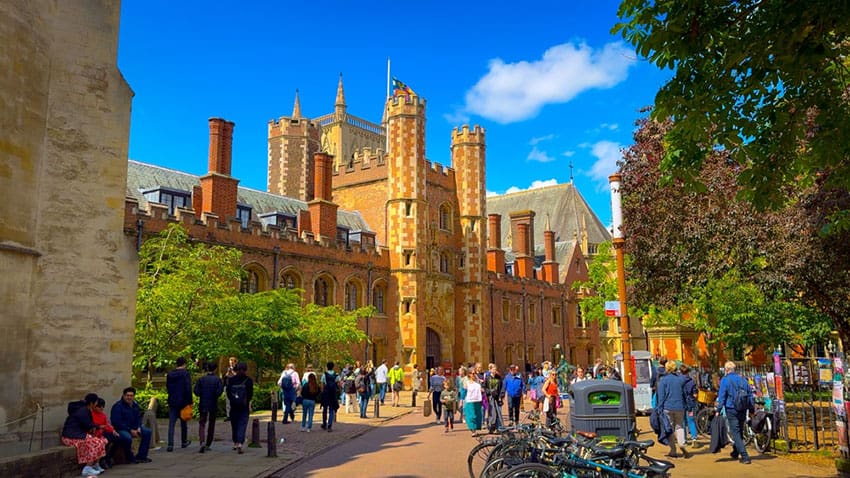
Almost half of the UK university spinouts founded between 2013 and 2024 came out of Oxford, Cambridge and London, and those three cities attracted two-thirds of the venture capital that went into the sector, according to a report published in February by Tony Hickson, whose career was based in university technology transfer, investment and startups.
Data compiled by Indeed for Bloomberg also show the so-called Golden Triangle accounted for more than half of the sector’s hiring.
More than 2,000 university spinouts have formed in the UK since 2010, with a combined value of about £49bn, most of them in deep tech, according to the Royal Academy of Engineering. Oxford Nanopore went public at a £3.4bn valuation, and Oxford Ionics and OrganOx were each acquired for more than $1bn last year.
Research outside the three cities
One company formed outside them is METzero, which spun out of Newcastle University in 2024 and has raised about £750,000 in grants. Its technology uses microbes and electrodes to break down sewage, using less energy than the century-old method of pumping oxygen through tanks and giving off ammonia that can be recovered and sold as fertiliser. Thames Water, the UK’s largest water company, is trialling it.
Pavlina Theodosiou, METzero’s chief executive, said support from Northern Accelerator, a government-funded programme founded in 2016 to help researchers commercialise their work, was vital. It paid for someone to develop the business plan, and a Royal Academy of Engineering fellowship bought her out of her university contract for a year.
Across the universities in Northern Accelerator’s umbrella, the number of spinouts rose from two in 2018 to 10 in 2025, against the 70-odd coming out of the Golden Triangle each year.
“The north east does not lack innovation or founders’ ambitions,” Theodosiou said. “It just lacks that same density of specialist capital.”
Listings moving abroad
Just 36 per cent of spinouts founded between 2013 and 2024 that went public did so in the UK, down from 79 per cent of those founded before 2013.
PsiQuantum, a quantum-computing spinout from the University of Bristol, moved to the US and was valued at $7bn in a fundraising round last year. Exscientia, an AI drug-discovery company from the University of Dundee, listed on the Nasdaq in 2021 before merging with the US biotech Recursion Pharmaceuticals three years later.
The main reason is the lack of scale-up capital. There is almost four times more private funding for startups in the US than the UK, and the gap widens to nine times for investments above £100m, according to the government’s Council for Science and Technology.
There is also a “persistent technical literacy gap” among British financiers, said Hickson, whose review was published by UK Research and Innovation. It is “most acute among later-stage investors, many of whom lack the scientific expertise needed to assess complex scale-up ventures.”
The government was reportedly considering an exit tax for university spinouts moving abroad, but quickly ruled out the idea, according to the Financial Times. Critics argued it would penalise successful businesses without fixing the underlying factors that push them abroad. The government said it wants the country “to be one of the best places in the world to start and scale a business,” but declined to comment on policy speculation.
Duncan Ivison, vice chancellor of the University of Manchester, said it is not always a bad thing when spinouts move abroad. “If we spin out a billion-pound company from Manchester and they set up in Silicon Valley or in San Francisco, I’m like hallelujah,” he said.
The number of UK spinouts has fallen from its pandemic peak, according to the Higher Education Statistics Agency. The average university stake fell to 16 per cent in 2024 from 28 per cent in 2017 following a government review, the Royal Academy of Engineering said.
Specialist university finance firms have also proliferated, among them Oxford Science Enterprises, which has raised over £800m, and Northern Gritstone, a cluster of universities in Manchester, Sheffield, Liverpool and Leeds.
After a pilot in Northumbria, Theodosiou is hoping to raise £1.5m by the end of the year to move METzero into its own premises. To get the funding, she is planning three trips to London this month. “That’s where the money is,” she said.
Amy Ingham
Amy Ingham is a reporter at Business Matters, covering UK business news with a focus on breaking news, business policy, late payments and insolvency. She joined the magazine in 2026 after completing the NCTJ Diploma in Journalism at Harlow College’s journalism school. Her recent reporting includes British Steel’s nationalisation and its impact on SME suppliers, the decline in late payments by large firms, and Insolvency Service director disqualifications. Reach her at aingham@cbmeg.co.uk.
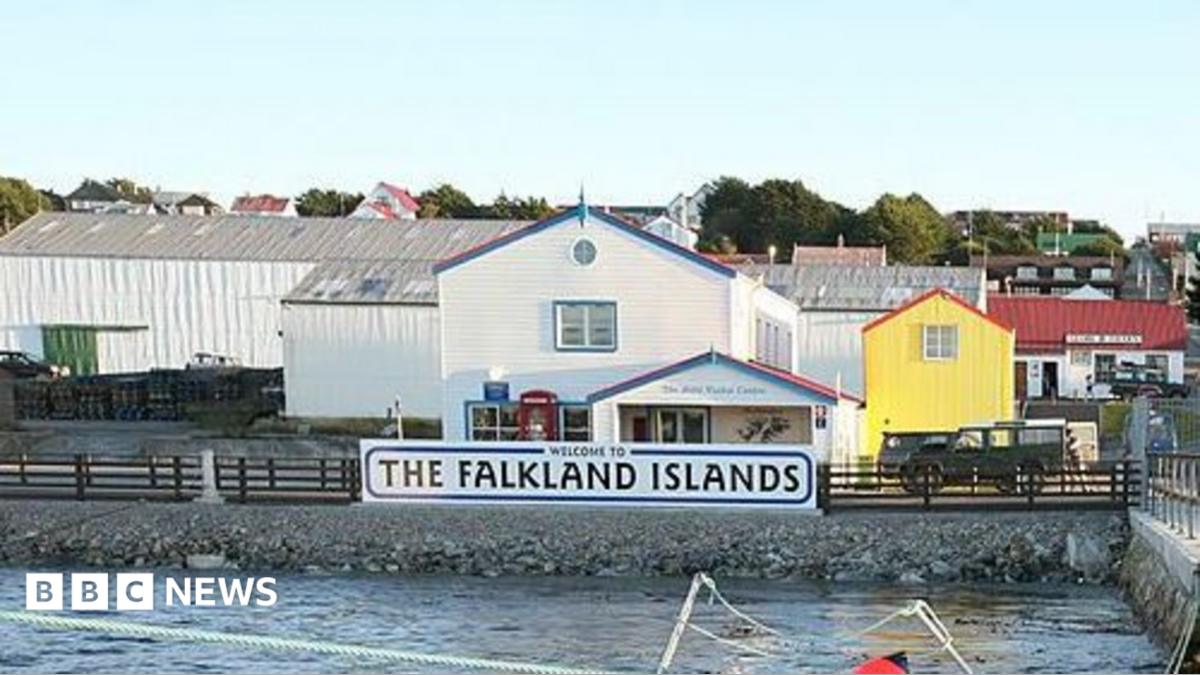
Supermarket Iceland is opening its first branch in the Falkland Islands, according to boss Lord Richard Walker.
He said the store would be opening in December, adding on LinkedIn it would be the the first UK high street brand to open there.
The shop will be in the capital Stanley where it will serve a population of about 3,500.
Lord Walker said the Welsh business, based in Deeside, in Flintshire, was growing internationally and he wanted to expand it further.
“We actually wholesale or franchise to over 75 different countries,” he said.
“And we’ve had our eye on the Falkland Islands for quite a long time. We think it’s a very underserved market, with a lack of competition, and, of course, being that our product is predominantly frozen, it transports and exports very well.”
The said the timing was coincidental “given the geopolitics”, Lord Walker told BBC Radio Wales Breakfast.
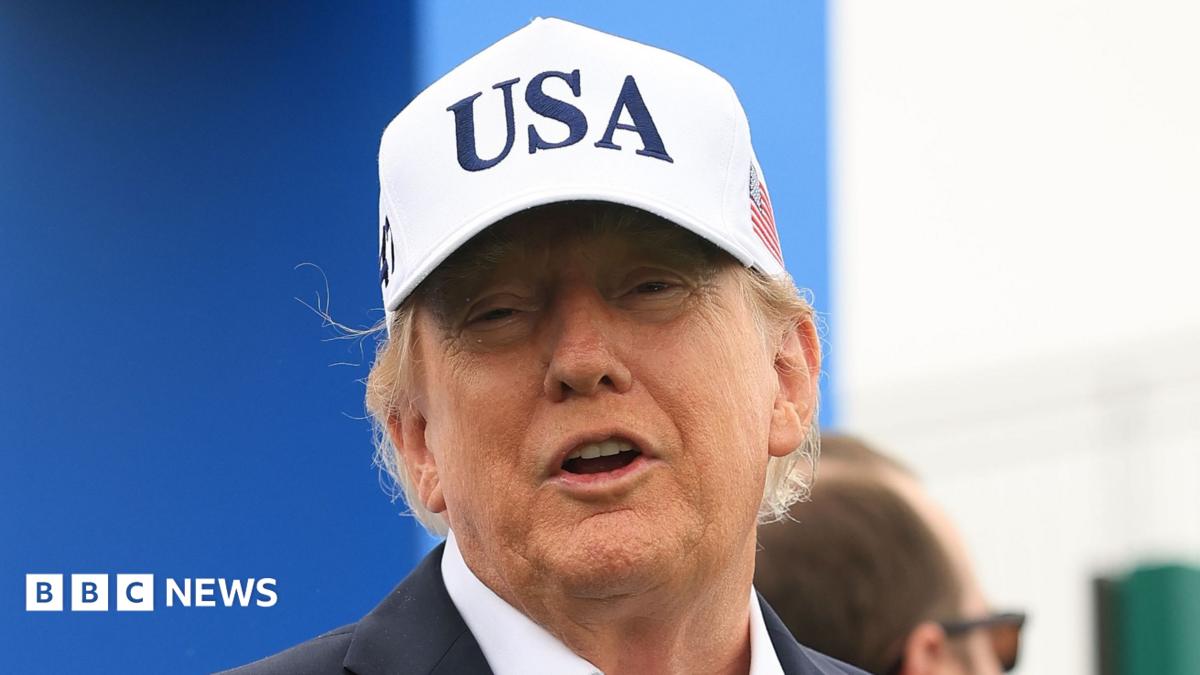
US President Donald Trump announced he will lift all tariffs on Irish whiskey at the end of his two-day visit to Ireland.
He made the announcement before handing over the winner’s trophy at the Trump International golf resort in Doonbeg, Co Clare, to Irish Open winner Shane Lowry.
Whiskey distilled in the Republic of Ireland faces the standard 15% tariff which applies to EU goods entering the US, while whiskey made in Northern Ireland or elsewhere in the UK has no tariff.
It comes after Trump doubled down on his support for a united Ireland and said joining Northern Ireland and the Republic of Ireland was “one of the naturals of all time”.
He spent day two of his visit to Ireland watching the final day of the Irish Open.
On Saturday, Trump was in Dublin where he met with Taoiseach (Irish PM) Micheál Martin and Irish President Catherine Connolly.
Addressing the crowd before the trophy presentation, Trump said he had discussed whiskey tariffs with Martin and with golfer Lowry.
“Everybody’s been bugging me,” he said.
“They are saying would you do me a favour? It’s so unfair what’s going on.
“Could you possibly take the tariffs off of Irish whiskey and I said, on behalf of the United States of America, I am going to take the tariffs off Irish whiskey.”
The presentation ceremony marked the end of Trump’s two-day trip to Ireland before boarding Air Force One at Shannon Airport and departing for Washington.
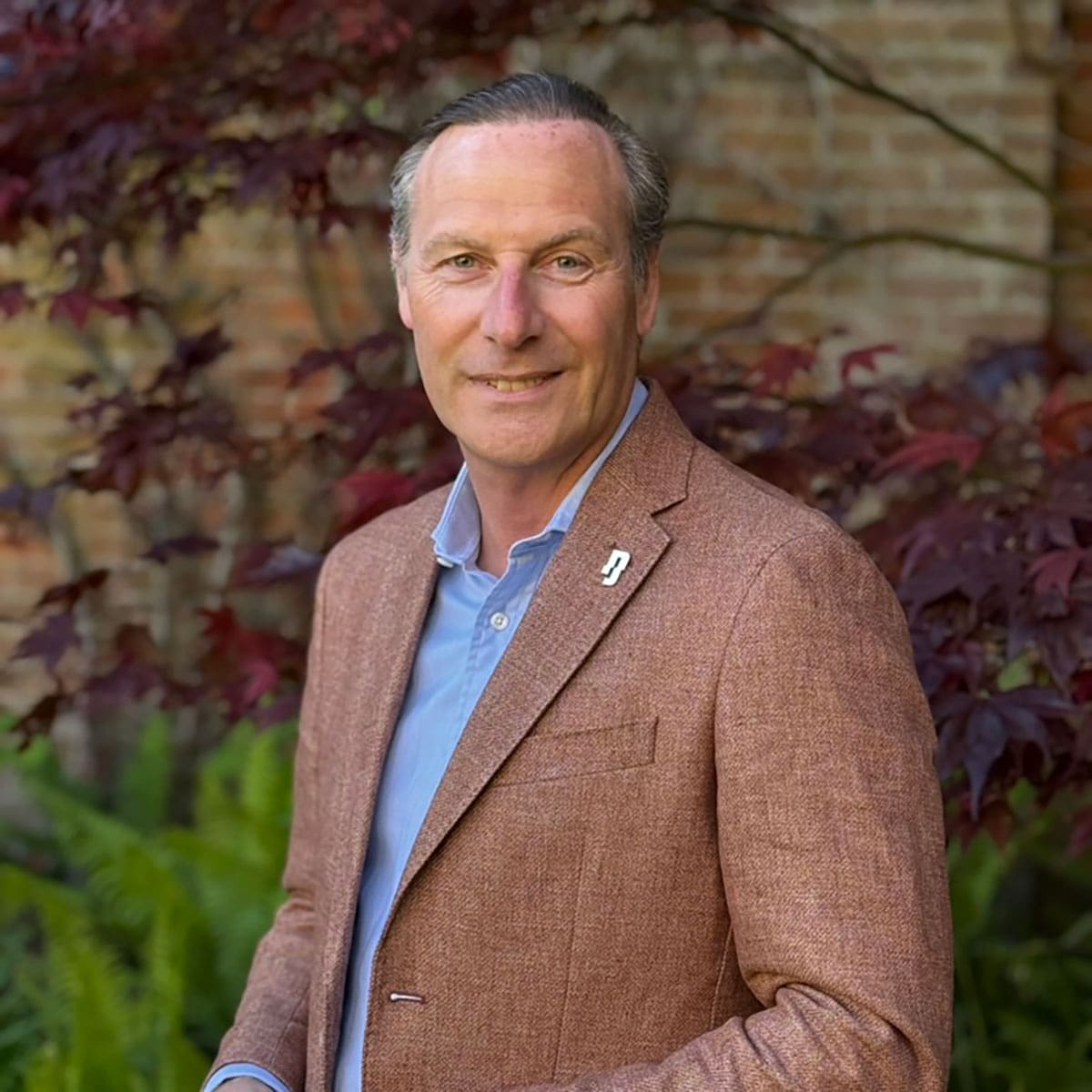
Richard Alvin is the founder and group managing director of Capital Business Media, the company behind Business Matters. The group publishes across business, travel, automotive, property, renewable energy and institutional finance, runs three awards programmes and has just launched Nourish, a recipe-led food magazine. He tells Jamie Young what the group is building.
What do you currently do?
I am the founder and group managing director of Capital Business Media (CBM), the company that owns the Business Matters brand of magazine, website and digital output.
The group also publishes Not Ltd for the self-employed, Travelling For Business, the executive lifestyle title Optimum, the property title Property Portfolio Investor, EV Powered, which covers everything electric from e-scooters to electric plant machinery, and Electric Home, our renewable energy title. Our New York office is responsible for Fund Manager Today, which serves the global fund management community, and we have a third office in Florida.
The newest addition is Nourish, our recipe-led food magazine, which will publish quarterly in print from 2027 and runs a website that is updated constantly.
CBM also has a contract publishing division and a live events and awards division that runs the Travelling For Business Awards, the Business Champion Awards and the Rural Business Awards.
I am also chairman of the specialist business research company Trends Research, which started life as a partnership between the Telegraph Media Group and Capital Business Media. We acquired the whole company in 2006 and now specialise in research of the UK SME community for a whole host of clients, from government departments to telecommunications companies and some of the largest PR firms.
I have also been an advisor to entrepreneur Peter Jones on the US business support programme Save Our Business, and subsequently replaced Jones as the on-screen host of the show, broadcast on HBO and TNT.
Like other business owners, I love the actual doing side of the business, so I often find myself involved in all areas of the company. I am also a people person, so you can guarantee I will grab any opportunity to arrange a call with someone, whether a client or an associate. Casual conversations often provide great insight.
What was the inspiration behind your business?
I was lucky enough to sell the two media companies I had founded and grown to large national media groups for large multiples. It was always the intention to stay involved in media, and I saw that the global media group EMAP was selling two of its then underperforming business to business magazines, Business Matters and European Fund Manager. Offers were made, and once accepted a company was needed to purchase the brands. CBM was born.
Through hard work and a dedicated team we took Business Matters, first published in 1986, to be the UK’s leading business title within 10 years, and it was appointed the official business magazine of the London 2012 Olympics, which was a huge honour. The multi-platform approach has kept working. Business Matters, which has just unveiled it’s largest web refresh, now reaches more than 1.5m readers a month, and across the group we reach more than 2.5m digital readers a month with 230,000 newsletter subscribers.
Tell us about Nourish
Nourish is a recipe-led food magazine, quarterly in print with a website that never stands still. There are more than 10,000 tested recipes on it, organised by ingredient, by cuisine and by diet or occasion, alongside skills guides, features and honest product reviews.
There is no paywall and no login. A free weekly email carries the recipes our food team is actually cooking, the seasonal picks and the skills worth learning. At the moment that means autumn.
What is happening with the travel awards?
The Travelling For Business Awards take place on 22 October 2026 at 88 Wood Street in London, as a black-tie gala dinner for around 300 senior guests. There are 24 categories, from Best Long-Haul Airline and Best Business Class Experience to Best MICE Venue UK, the Accessibility Award, the Sustainability Award and Lifetime Achievement, with 231 finalists across 23 of them. Uber for Business is our headline partner.
What matters to me is that the selection is editorially led and independent. This is not another awards night.
Why Race Against Dementia?
Race Against Dementia is our chosen charity for 2026 and 2027, through the CBM Foundation. Sir Jackie Stewart OBE founded it after his wife, Lady Helen, was diagnosed with frontotemporal dementia, and it funds early-career dementia researchers around the world, applying the discipline of Formula 1 to the science. Having had family members and colleagues in the wider company family suffer from this disease, supporting Sir Jackie was an obvious choice.
The foundation works to a 1-1-1 model: 1 per cent of the group’s time, 1 per cent of its product and 1 per cent of its profit committed to charity every year. I first came across that model at Dreamforce in 2011 and it stuck. The partnership covers all our bends internally as well as the Travelling For Business Awards, and widens to the full live events programme from 2027.
What defines your way of doing business?
I firmly believe that business should be, and is, about relationships. Whether it is a relationship with your clients, suppliers, team members or anyone else, people buy from people. If you employ a team with shared values, that is what makes you stand out, especially in a deadline driven organisation like ours. With the right people, the best technology available and strong processes in place, you cannot go far wrong.
The same applies to the commitments you make. We have held carbon neutral certification for more than a decade because sustainability is a policy we live and breathe, not a statement.
What do you admire?
Determination and hard work. And I am lucky to be surrounded by people who possess those qualities.
Looking back, is there anything you would have done differently?
In the past I have invested in a number of start-up and growing businesses. Sometimes those investments were on a business angel basis, others saw me taking a seat on their board. I made an investment in the loss prevention company CrimeDeter through a direct approach, did not do the same level of due diligence that you would normally do, and ended up writing off my whole six figure investment. The moral of that story is that regardless of whatever business you are going to buy, take a role in, or make an investment into, you must do your homework.
What advice would you give to someone starting out?
Collaborate. Do not try to do everything yourself. Be prepared to make mistakes, they are going to happen, just make sure you learn from them, and learn fast.
Reward and recognise your employees, as they are the key to a successful future. Define your values early on so that you can remain true to yourself throughout your entrepreneurial journey, and embrace technology so that your team have the very best weapons at their disposal to carry out their roles.
Richard Alvin writes regularly for Business Matters.

A limited number of Revolut customers had sensitive information disclosed in a scam involving an unauthorised third party that used a legitimate government email domain, the financial technology firm said yesterday.
The London-based firm said it blocked the address after detecting the scheme and alerted the “relevant government agency”, law enforcement, data-protection officials and financial regulators.
“Revolut systems and customer funds are unaffected,” a Revolut spokesperson said yesterday by email. “We have contacted the limited number of impacted individuals directly to inform them and provide support.”
TechCrunch earlier reported the breach yesterday.
Revolut did not identify the government email domain involved, the number of customers affected or the type of information disclosed. It did not say when it detected the scheme or over what period the disclosure took place.
Reporting rules
Guidance from the Information Commissioner’s Office states that organisations must report a personal data breach to the regulator as soon as possible, and where feasible within 72 hours, if there is a likely risk to people’s rights and freedoms. Where the risk to people is high, the ICO says those affected must also be told without undue delay.
The disclosure comes as Revolut expands its banking operations beyond Europe.
The company says it has more than 80 million customers globally and is targeting 100 million. It was valued at $115bn in a share sale in July.
Revolut has identified the United States as a key growth market. It received conditional approval in early September to operate as a national bank there, having applied for a US charter in March.
It has committed $500m to the US over three to five years and has stepped up its marketing in the country, including offering free subway rides to New Yorkers. In February, Revolut began its first major banking operations outside Europe, in Mexico.
UK banking operations
In the UK, Revolut launched its bank after approval from the Prudential Regulation Authority in March, allowing it to offer current accounts to its 13 million UK customers with deposits protected by the Financial Services Compensation Scheme up to £85,000 per person. The company said at the time that it would invest £3bn in the UK economy and create about 1,000 jobs.
Co-founder Nik Storonsky said then that launching the UK bank “has been a long-term strategic priority for Revolut and marks a significant moment” for the company.
The incident is the latest in which customer details held by a financial services provider have been exposed through activity outside a bank’s own systems.
In September 2025, HSBC warned UK business banking customers that passport details, identity documents, images and contact information submitted during account applications had been compromised through unauthorised access to a third-party platform. The bank said its own systems “are separate and have not been impacted” and offered affected customers a free 12-month identity monitoring subscription.
The same month, Harrods told customers that names and contact information had been taken after hackers accessed data held by a third-party provider, and said payment details and passwords were not exposed.
Revolut did not name the regulators it has informed or set out what support it is providing to the customers affected.
Amy Ingham
Amy Ingham is a reporter at Business Matters, covering UK business news with a focus on breaking news, business policy, late payments and insolvency. She joined the magazine in 2026 after completing the NCTJ Diploma in Journalism at Harlow College’s journalism school. Her recent reporting includes British Steel’s nationalisation and its impact on SME suppliers, the decline in late payments by large firms, and Insolvency Service director disqualifications. Reach her at aingham@cbmeg.co.uk.

North Korea held live-fire drills involving artillery and missiles, KCNA says
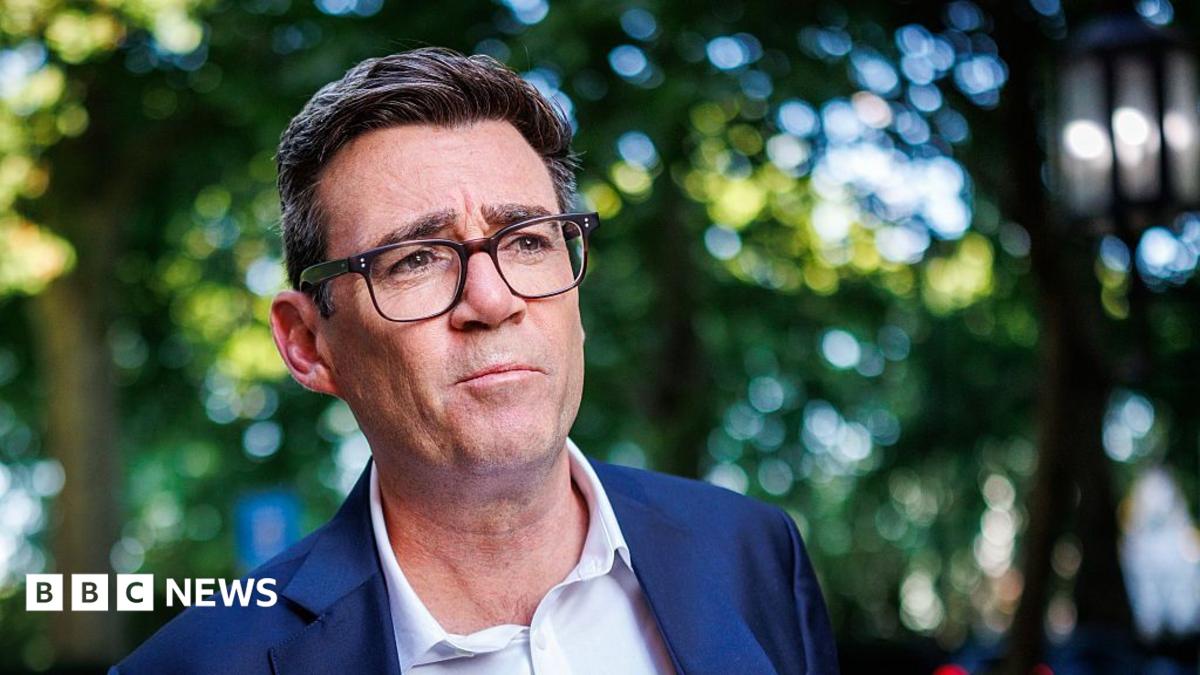
The UK needs a “culture shift” in how it does business, Andy Burnham has said ahead of a meeting with some of the UK’s biggest bosses.
The prime minister said those who take risks in business should be backed by government and local leaders should have the power to work with businesses.
The current Labour government has been criticised for increasing costs for businesses, such as with the employer national insurance and minimum wage changes under Burnham’s predecessor Sir Keir Starmer.
Downing Street said Burnham will meet with the chief executives of BP, Shell, HSBC, Morrisons, Sainsbury’s, BT, Vodafone, Rolls-Royce, and several others at Number 10.
Ahead of the meeting, Burnham said he would give people “the confidence that if they have a great idea, they’ll get all the support they need to bring it to life”.
“When local leaders have the tools to get things done and government works in partnership with business, you can pull in investment, create jobs and transform communities,” he said.
He added the government would be “a partner for growth to make every part of Britain better off”.
Burnham will host a reception for the business community where local leaders are invited before a private engagement with senior chief executives at Downing Street on Monday evening.
The meeting comes as higher borrowing costs in the UK and other countries present problems for governments looking to spend money on business support or investment.
Official data revealed a surprise boost in the economy in July partly driven by artificial intelligence (AI) investment, though experts expect growth to slow in the months ahead due to high energy prices.
The US-Israel war with Iran has led to a sharp jump in oil prices, which has fed through to higher energy and fuel prices, affecting households and businesses.
This rise in energy costs has led to fears that inflation will remain high, and increase the chance that central banks will hike interest rates to keep price rises under control.
The expectation of higher interest rates, as well as competition for debt from AI firms looking to spend money on development, has driven up the cost of government borrowing in many countries.
However, many argue the UK has a particular problem with high government debt. The UK yield for 10-year bonds, a key measure of government debt costs, is higher than countries such as the US, France, and Japan.
Experts say this is due to several factors affecting investor confidence in the UK, such as multiple prime ministers, chancellors and policy U-turns over a short period.
In an interview with the BBC last week, Chancellor John Healey called for a restoration of “confidence about Britain” despite acknowledging the challenge of “historic high” borrowing costs.
Others have argued that the Labour government has created its own problems by increasing costs for businesses.
Conservative shadow business secretary Julia Lopez said: “The way for the prime minister to get businesses thriving, delivering jobs and driving growth is to cut their taxes.
“Labour’s jobs tax and employer red tape have been devastating for businesses. The consequence has been a drying-up of the jobs market, weaker investment and businesses facing ever greater costs.”

Sunday MLB Best Bets: Phillies and Astros Highlight Two Top Picks

Overwatch Season 5 Will Add a New Kind of Support, Try to Solve 2 Roster Headaches

‘Accepting donations from hedge funds is fine, but crypto billionaires isn’t?’

Memory prices are slowing because buyers ran out of money

Micron Stock Climbs Above $1,031 as AI Memory Crunch and a $50 Billion Outlook Fuel the Rally

AMD Stock Climbs After Management Lifts 2027 Data Center Outlook Toward $70 Billion in AI Sales


-
Tech5 days ago
Memory prices are slowing because buyers ran out of money
-
 Business4 days ago
Micron Stock Climbs Above $1,031 as AI Memory Crunch and a $50 Billion Outlook Fuel the Rally
-
 Business4 days ago
AMD Stock Climbs After Management Lifts 2027 Data Center Outlook Toward $70 Billion in AI Sales
-
 Crypto World5 days ago
Bitcoin price risks $76K drop as $78K support weakens
-

 Crypto World5 days ago
Robinhood Stock: How To Take Advantage With Reduced Risk
-

 Fashion2 days ago
Weekend Open Thread – Corporette.com
-

 Tech10 hours ago
The Latest Weird Thing to Play Doom Is the Mapped-Out Brain of a Fruit Fly
-

 Crypto World3 days ago
XAG/USD: Silver’s Short-Term Rally Meets Its Moment of Truth
-

 Crypto World5 days ago
Ethereum price stalls below $2,500 as ADX drops to 11
-

 Crypto World3 days ago
2 Chip Stocks Broke Out This Week. Neither Was Nvidia
-

 NewsBeat5 days ago
England up in reading, maths and science rankings as Scotland and Wales dip
-

 Crypto World3 days ago
OKX launches 10x OpenAI, Anthropic X-Perps in Europe
-

 Business3 days ago
10 Most-Streamed Songs On Spotify In 2026 So Far, Led By Ella Langley’s Dominant Run On The Charts This Year
-

 Crypto World3 days ago
Diesel Tops $6 a Gallon for the First Time as 28 States Set Records
-

 Tech3 days ago
Battery life is the only iPhone 18 Pro and iPhone Duo upgrade I care about. Apple didn’t disappoint
-
 Crypto World5 days ago
Intel Stock Jumps 9% on Chip Price Hike Report, US Stake Gains $36 Billion
-

 Crypto World4 days ago
Bitcoin price risks $70K if $78K neckline breaks
-

 NewsBeat5 days ago
What went right this week: an ‘historic’ fall in violent crime, plus more
-

 Tech4 days ago
Apple Watch Ultra 4 vs Watch Ultra 3: Should you really spend another $799?
-
Crypto World3 days ago
Ethereum Price Analysis: Consolidation at $2.5K Tests Momentum as On-Chain Activity Surges
You must be logged in to post a comment Login