
Business
Avocado oil claims coming under fire

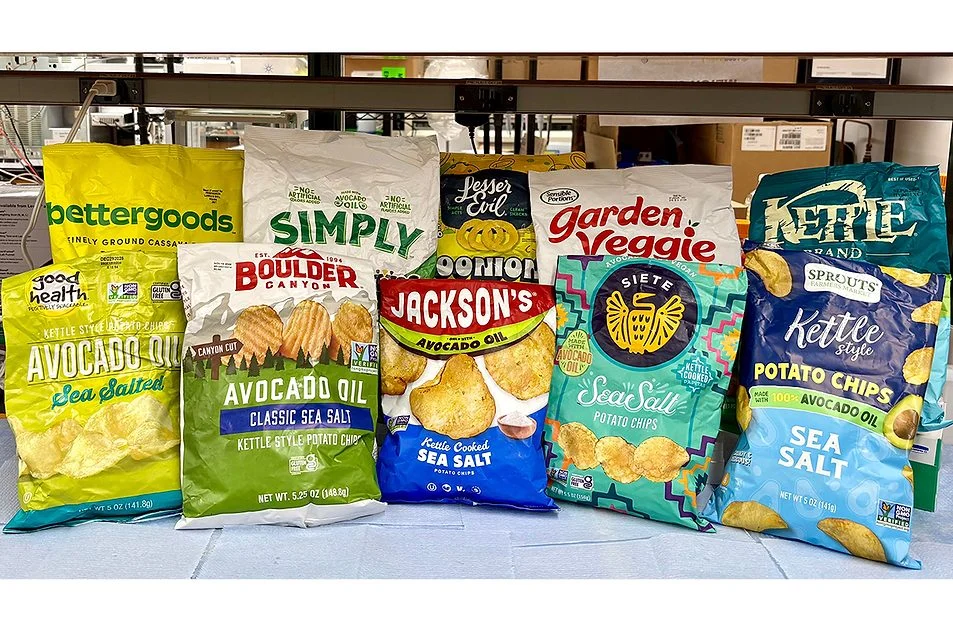
AUSTIN, TEXAS — Ken Paxton, attorney general for Texas, has launched an investigation into companies that market and sell products labeled as “made with avocado oil” after a study from the University of California, Davis found that such products may contain seed oils or other ingredients not identified on ingredient lists.
“Consumers should not have to worry if they are being deceived by labels when trying to choose healthier options at the grocery store,” Paxton said Aug. 20. “I will not allow companies to fraudulently mislabel products. My office will hold accountable any company that violates the law and misleads Texans about what is actually in their food.”
The study was published online July 11 in Applied Food Research. It evaluated 74 products, including chips, mayonnaise and salad dressings, that were labeled as containing avocado oil or olive oil. Among the avocado oil-labeled products, 89% exhibited compositional patterns that were inconsistent with authentic avocado oil. Ninety-three percent of the chips, 71% of the mayonnaises and 100% of the salad dressings were inconsistent.
“These findings suggest that ingredient-level oil claims may represent an underexamined source of economic adulteration in processed foods,” the researchers said.
Among 20 olive oil products, one failed the authenticity test. While the authenticity of olive oil has been studied, tested and scrutinized for decades, avocado oil has not been monitored at the same level, according to the researchers.
Products cost more
Products promoted for containing avocado oil or olive oil tend to cost more than other products in their respective categories.
In the study, chips labeled with avocado oil ranged from 30¢ to $2 per oz, which compared with 43¢ to $1.70 for olive oil chips and 44¢ to 62¢ for vegetable oil chips. Avocado oil mayonnaises ranged from 30¢ to $1.63 per oz, which compared with 53¢ to $1.07 for olive oil mayonnaise and 24¢ to 75¢ for vegetable oil mayonnaise. Salad dressings labeled with avocado oil ranged from 60¢ to $1.12 per oz, while olive oil dressings ranged from 42¢ to $1.12 per oz.
“Consumers are increasingly paying a premium for products made with avocado oil or olive oil,” said lead author Selina Wang, PhD, a professor of cooperative extension in the UC, Davis Department of Food Science and Technology. “They deserve to get what they pay for, and food manufacturers deserve confidence that the ingredients they purchase from suppliers are authentic.”

While the authenticity of olive oil has been studied, tested and scrutinized for decades, avocado oil has not been monitored at the same level, according to researchers at the University of California at Davis.
| Photo: ©CHANDLERVID85 – STOCK.ADOBE.COMProducts exhibited compositional patterns inconsistent with authentic avocado oil, characterized by reduced palmitic acid, palmitoleic acid, cis-vaccenic acid, beta-sitosterol and clerosterol as well as elevated stearic acid, campesterol, stigmasterol, delta-7-stigmastenol and delta-7-avenasterol. Laboratory frying and emulsification experiments showed minor shifts in authenticity markers, indicating that typical processing conditions did not explain the magnitude of deviations observed in the products, according to the researchers.
“In our experience we’ve noticed natural variables, such as geographic origin and avocado variety, can change these fingerprints,” Wang said. “So, we gave the samples some wiggle room, giving them a 10% margin of deviation to account for that, but 89% of the avocado products still failed.”
Supplier complexity
She said food manufacturers may not know their products contain adulterated oil since they source oils from third-party brokers or from several different suppliers.
Texas has issued civil investigative demands (CIDs) to Primal Kitchen, Siete Foods and Chosen Foods. The office of the attorney general will investigate to determine if the three companies and potentially other companies violated the Texas Deceptive Trade Practices Act (DTPA).
“A recent UC Davis study suggests that two of our mayos and two of our dressings contain seed oils, which is simply not true,” Chosen Foods said. “We never add seed oils of any kind. We believe the testing procedures used in this recent study do not fully account for the unique characteristics of finished products such as condiments and dressings.”
Primal Kitchen and Siete Foods did not respond to request for comment.


SSE to buy back shares after dividend scrip take-up exceeds cap
Business
(VIDEO) Prince Harry and Meghan Markle Land in UK With No Police Presence Days After Announcing Return
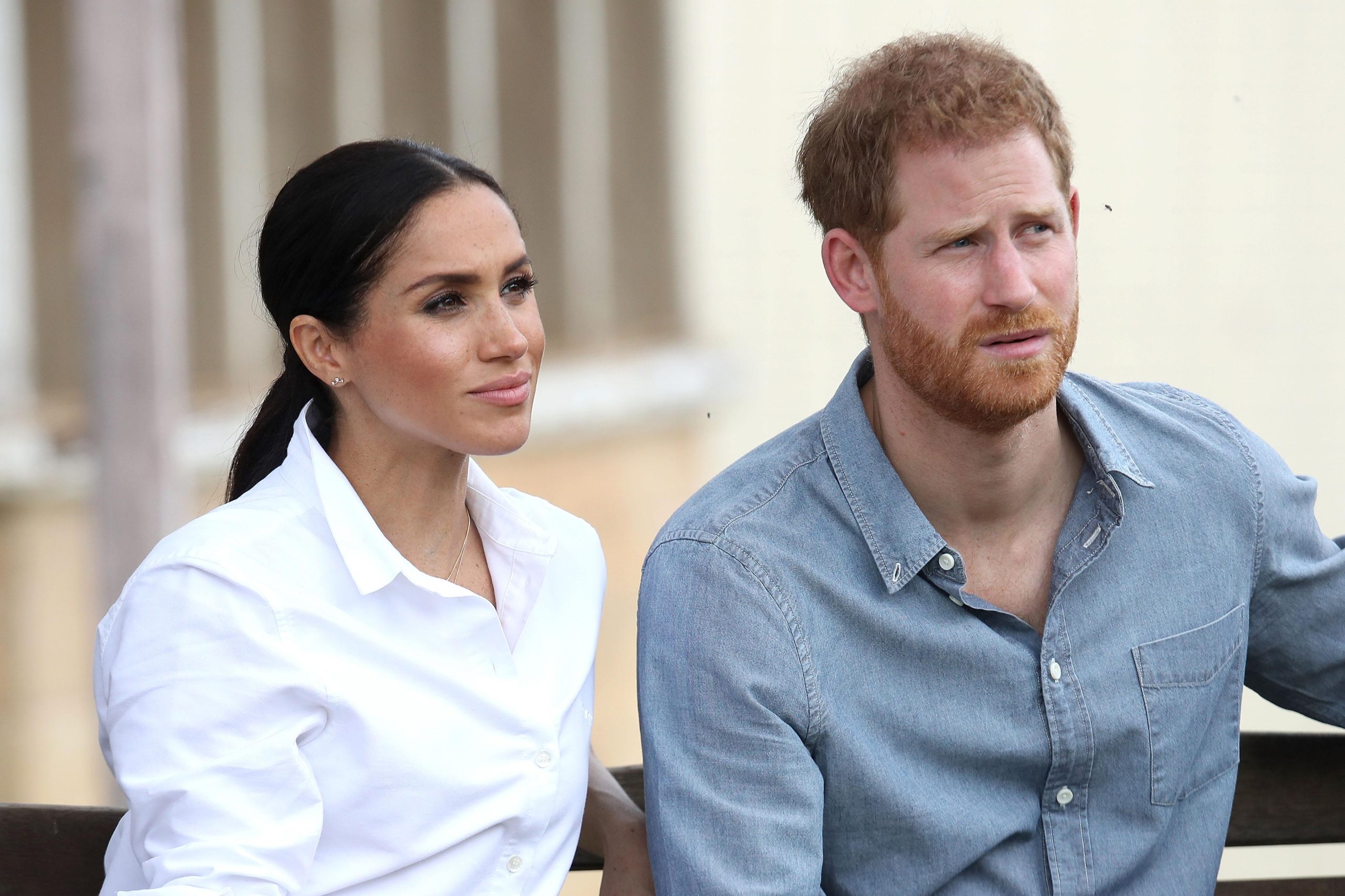
Prince Harry and Meghan Markle have arrived back in the United Kingdom, landing in Birmingham shortly before midday Wednesday just days after their office confirmed plans for the couple’s extended return, BBC News reported.
The Duke and Duchess of Sussex, along with their children, Archie and Lilibet, are believed to have flown into the country privately from California. A spokesman for the couple declined to comment on the arrival, telling the BBC only that “this is not something we would comment on.” According to a source who spoke with the BBC, there did not appear to be a police presence as Harry and his family left the airport.
The family is expected to base themselves at a private property outside London in the Cotswolds, according to the BBC. Archie and Lilibet have been enrolled in school, with the new academic term due to begin next week. Harry and Meghan will not resume official royal duties during their time in Britain, continuing instead as private, non-working members of the royal family, consistent with the arrangement they entered when they stepped back from senior royal roles in early 2020 before relocating to California that March.
King Charles III was informed of the couple’s return plans earlier this month. The family had visited the king at his Highgrove residence in July, though it is understood the planned move was not discussed during that visit. Prior to that July reunion, Harry and Meghan had not been in the UK together since attending Queen Elizabeth II’s funeral in 2022. The Prince and Princess of Wales have also been informed of the couple’s plans, according to the BBC.
The question of security arrangements for the Sussexes while in Britain has remained a significant point of debate since news of their return first broke. Harry lost a legal challenge last year over the level of security afforded to him and his family in the UK, after seeking to overturn a decision that had downgraded his security detail once he stopped serving as a working royal and relocated to the United States. It remains unclear what specific security provisions will be made for the family during their UK stay, or who will bear the cost of arranging them.
Following the announcement of the Sussexes’ intended return, a Home Office spokesperson addressed the broader security process without confirming specific arrangements for Harry’s family. The spokesperson said decisions regarding the security of royals are made by the Executive Committee for the Protection of Royalty and Public Figures, commonly known as Ravec, and characterized the UK government’s overall protective security system as “rigorous and proportionate.” Harry has previously said that concerns about safety have been a central factor preventing him from bringing his wife and children to Britain in the past.
The couple’s return also comes amid significant ongoing legal costs stemming from a separate case. Last month, Harry and six other public figures lost a High Court privacy case against the publisher of the Daily Mail and MailOnline. According to the BBC, the group faces paying up to £34.5 million in legal costs to Associated Newspapers, with the seven claimants required to pay an initial £9.54 million within seven days of the ruling.
Beyond the security and legal questions surrounding the family’s return, speculation has continued to build regarding what Harry and Meghan’s day-to-day life in Britain might actually look like. The BBC has separately reported that Meghan is in talks for a role in Netflix’s series “The Gentlemen,” which would mark her first significant acting role since her marriage to Harry. Sources close to the couple have not denied those reports.
The return also raises renewed questions about whether Harry’s relationship with his brother, Prince William, might improve now that the family is based in the same country for the first time in years. According to the BBC’s own reporting on the matter, however, William remains in no mood to forgive and forget, with the underlying hurt he feels toward Harry described as still lingering, suggesting any reconciliation between the two brothers is unlikely to happen quickly or easily despite their newfound geographic proximity.
Harry’s broader relationship with Britain has continued evolving in other respects as well. The duke recently stepped down from the board of an African wildlife charity, according to related BBC coverage, part of a broader recalibration of his public commitments as the family transitions into this new chapter based in the UK.
With Harry, Meghan and their children now physically back on British soil, attention is likely to shift toward how the family settles into their new life in the Cotswolds in the coming days, including how the unresolved security question is ultimately addressed, whether King Charles and the couple have any further private engagements planned, and whether Meghan’s reported talks over the Netflix acting role move any closer to a formal announcement now that the family has completed their relocation to Britain.
Burger King U.S. and Canada President Tom Curtis and Head Chef Amy Alarcon discuss the fast-food giant’s turnaround strategy highlighting an 8.5% sales jump, restaurant upgrades and a new chicken nugget launch on ‘Mornings with Maria.’
One of the country’s largest fast-food chains has reclaimed its “throne” as the nation’s No. 2 burger chain, with Burger King betting that better food without higher prices can keep cost-strained customers coming through the door.
“You can outrun costs with traffic if you’re building your business and that’s what we’ve been doing and that’s what we’ll continue to do in each chapter of elevation as we move through the menu… to elevate everything on there,” Burger King U.S. and Canada President Tom Curtis told FOX Business.
“We’ll ask our owners to hold tight because consumers need it right now,” he added.
AMERICA’S FAVORITE FAST-FOOD CHAIN NAMED: MCDONALD’S WINS HEARTS BUT NOT BEST BURGER, SURVEY SAYS
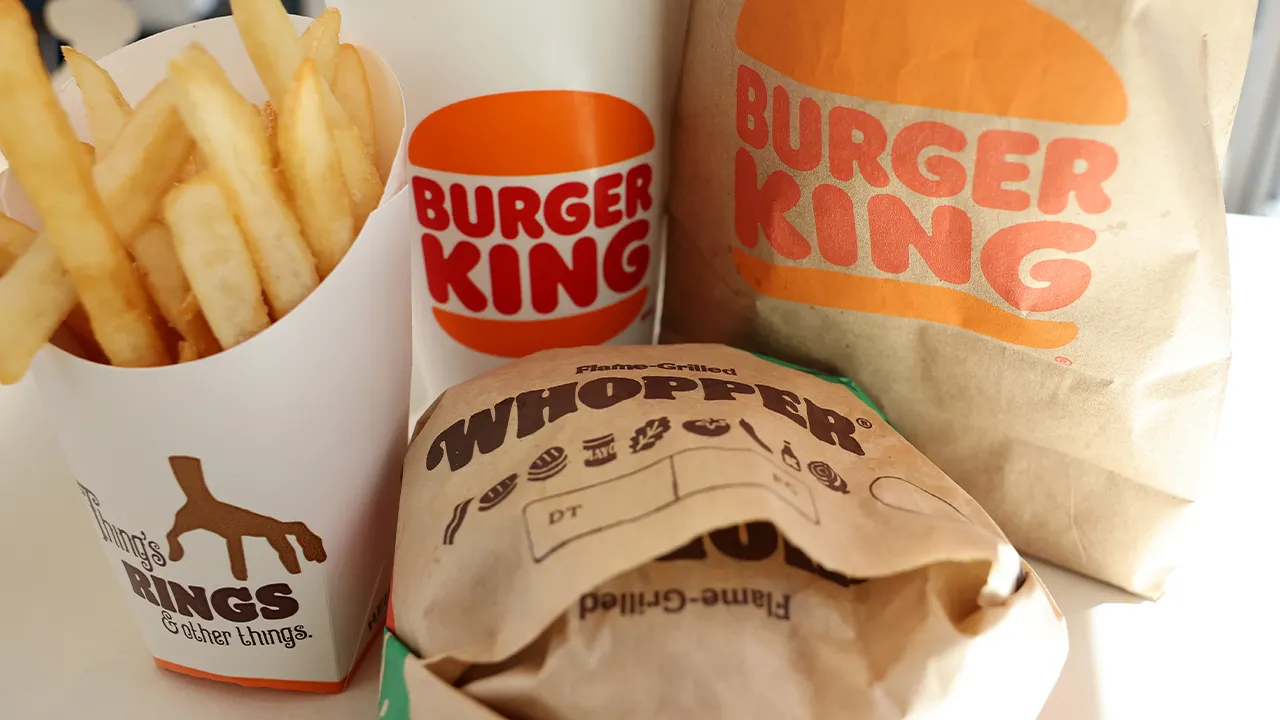
In this photo illustration, a Whopper meal is seen at a Burger King restaurant on Oct. 25, 2024 in New York City. (Michael M. Santiago/Getty Images / Getty Images)
Curtis joined “Mornings with Maria” alongside Burger King U.S. and Canada Head Chef Amy Alarcon as the chain celebrates reclaiming the No. 2 spot from Wendy’s in U.S. systemwide sales, behind industry leader McDonald’s, while posting 8.5% U.S. same-store sales growth in the second quarter.
The comeback has been years in the making. Burger King launched its “Reclaim the Flame” plan in 2022, investing hundreds of millions of dollars in the brand to improve restaurant operations, food quality and company culture, Curtis said.
BURGER KING FANS SWEAR A SIMPLE TRICK GETS YOU A FRESHER WHOPPER, BUT NOT EVERYONE IS CONVINCED
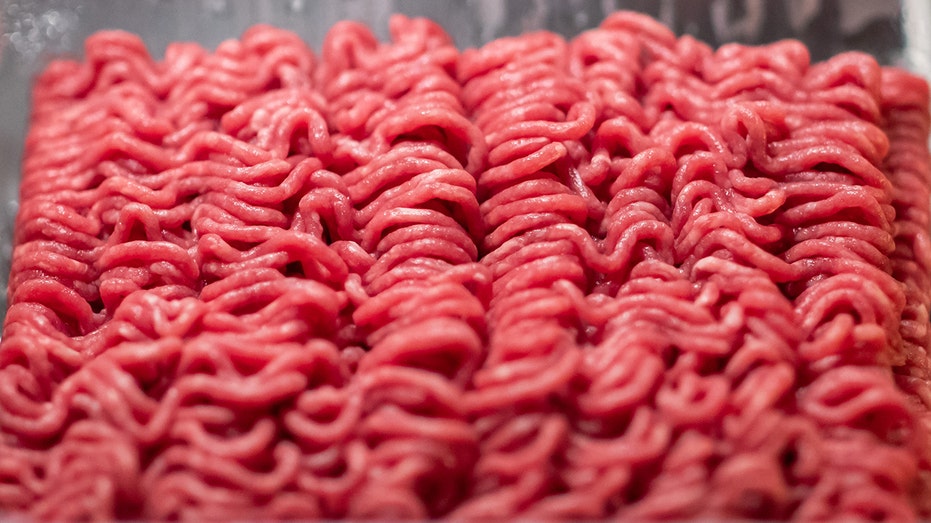
Organic ground beef from the supermarket is shown in a bowl. Ground beef prices have soared recently, with President Trump announcing a plan to import beef from outside nations. (Daniel Karmann/picture alliance via Getty Images / Getty Images)
“Really the last nine months have been about us telling that story, and it’s really resonated with consumers,” he added.
A key part of that strategy has been listening to customers, even when their feedback is tough to swallow.
After customers offered what Curtis described as “sometimes scathing feedback” about the chain’s chicken nuggets, Alarcon and her team went back to the kitchen. The result is a revamped nugget recipe designed to be crispier on the outside and juicier on the inside.
The “elevated” nugget is rolling out nationwide Sept. 1, along with revamped dipping sauces.
“It hurt me to the core,” Alarcon said of the criticism. “You don’t ever want someone saying that about your food. So we fixed it.”
GET FOX BUSINESS ON THE GO BY CLICKING HERE
American ranchers are facing the smallest cattle herd in 75 years. On Friday, President Trump said he would waiver beef tariffs on imported ground beef for 90 days in an attempt to bring beef prices down and rebuild the U.S. cattle herd.
The nuggets follow Burger King’s effort to upgrade its signature Whopper, a change Curtis said required franchisees to absorb additional costs rather than immediately pass them along to customers.
“We asked our franchisees once again when we relaunched the Whopper, when we elevated the Whopper, ‘Hey, we need you to hold price here. Consumers are hurting, and we’ve got to be there for them in these tough times,’” he said.
That strategy is being tested as soaring beef prices squeeze restaurants and consumers alike. Curtis acknowledged that the pressure has been difficult for Burger King franchisees but said the company is trying to offset higher costs by attracting more customers rather than simply raising menu prices.
“I think it’s just holding the line and giving people more for the same amount,” he added.

Nvidia (NVDA) stock was quiet in early trading Wednesday as investors weighed a litany of concerns about the chipmaker and artificial intelligence market maker. The world’s most valuable company is due to report fiscal second-quarter results after the market close. With a market capitalization of $5.16 trillion, Nvidia is heavily owned and closely watched. Its quarterly reports are used as…
Copyright ©2026 Investor’s Business Daily, LLC. All rights reserved. 87990cbe856818d5eddac44c7b1cdeb8


KANSAS CITY — The sports nutrition segment continues to expand, with sales of energy and sports drinks rising over $35 billion in 2025, according to data from SPINS. The category is growing with innovations targeting a broader range of active consumers and applications, ranging from beverages and powders to bars and even pastas.
“Sports nutrition is evolving,” said Floor van der Horst, global marketing director, performance and active nutrition for FrieslandCampina Ingredients. “It’s no longer just about performance in the gym or on the track, but about supporting the body and mind as a whole to fuel performance. Athletes and active consumers increasingly want to feel their best to help perform at their best, and they’re starting to understand that the two are intrinsically connected.”
The Coca-Cola Co. is aiming to bring its BodyArmor brand to more consumers and consumer occasions with a ready-to-drink canned product. BodyArmor Fit is formulated with 290 mg of electrolytes, 60 mg of caffeine, choline and green tea extract, with zero sugar per serving.
“BodyArmor Fit represents a natural evolution of our portfolio as we continue to meet consumers where they are,” said Sara Weaver, vice president of brand marketing, BodyArmor. “People are staying active in different ways throughout the day, and BodyArmor Fit was designed to fit seamlessly into those routines with a new sparkling format that still delivers the functional hydration expected from us.”
For consumers seeking alternatives to protein shakes, PepsiCo, Inc. developed Propel Clear Protein. The beverage powder combines protein, fiber and electrolyte benefits into one product, with 20 grams of whey protein and 3 grams of fiber per serving.
“Our priority was solving a real human need through a science-backed, multifunctional product,” said Damian Browne, senior vice president of research and development, US Beverages at PepsiCo. “What we’ve created with Propel Clear Protein is a real breakthrough for consumers, who can now get their protein, fiber and hydration in one great-tasting beverage, without the heaviness of a traditional protein shake.”
Creatine also is becoming more prevalent as an ingredient beyond the supplement category. SPINS identified creatine as one of the fastest growing functional ingredients, with 44% year-over-year growth.
“It’s an interesting ingredient because it was so heavily in just the powdered version, or capsules full of powder,” said Scott Dicker, senior director and head of research and insights for SPINS. “The new forms, such as bars, gummies and ready-to-drink beverages, have taken it more mainstream.”
KA-EX, a manufacturer of functional beverages and supplements, is experimenting with creatine in the beverage aisle with its Creatine EAA + Booster. The product is intended to combat creatine degradation in beverage formats with its push-cap technology, which preserves a dose of powdered creatine separately in the cap until users dispense the powder before consumption. The drink features 3 grams of creatine, 105 mg of caffeine, 500 mg of sodium, 57 mg of magnesium, 370 mg of potassium, 115 mg of calcium, 1 gram of L-citrulline and essential amino acids.
“Creatine is having a mainstream moment,” said Pedro Schmidt, chief executive officer and founder of KA-EX. “Awareness has expanded well beyond the gym, driven by a growing body of evidence around cognitive performance, healthy aging, and everyday energy, amplified by consumer education. The category is no longer niche. Now, we’re providing consumers with an option they haven’t had before — creatine in a convenient ready-to-drink format that actually delivers what it says on the label.”
Business
Decoding gold rally: Why yellow metal surged 15% in one month and should bullion be in your portfolio?

Gold has endured one of its most volatile starts to a year in recent years. The precious metal surged to record highs in January, climbing past $5,500 per ounce, before tumbling to $4,600 per ounce by August. The sharp correction came as renewed tensions over the Iran war sent oil prices soaring, fuelling expectations that the US Federal Reserve could raise interest rates later this year.
What’s instilling strength?
Robust ETF flows – Gold exchange-traded funds are seeing renewed demand. According to World Gold Council data, about 23 tonnes of gold was added to global ETF holdings. Flows have accelerated in August, with 45 tonnes added to global ETFs month-to-date.
Central bank buying – Per World Gold Council, central banks purchased 288.9 tonnes of gold in the second quarter, a 62% increase from a year earlier. South Korea has now joined that list, with its central bank returning to the gold market after 13 years, reinforcing the trend of sustained official-sector demand.
Central banks remain on course for another strong year of net purchases. The structural case for gold, built around diversification, crisis performance and protection against geopolitical and financial risk, remains well established.

The council’s Central Bank Gold Reserves Survey found that 89% of respondents expect global reserves to rise over the next year, while a record 45% expect to increase their own holdings over the same period. Central bank demand is expected to remain above its long-term average.
The survey also shows that the strategic case for gold remains firmly in place. Reserve diversification, protection against geopolitical and financial-market uncertainty, and gold’s role as a long-term store of value continue to feature prominently in central bank thinking. Reserve managers continue to view gold as an important component of official reserves, even though high prices and country-specific liquidity needs influence the timing and scale of individual transactions.Hopes of the US Fed holding rates – Expectations around US interest rates are also supporting gold rally. Traders are now pricing in a 61% chance that the Fed will keep rates unchanged next month, while the probability of a hike stands at 42%, according to the CME FedWatch Tool.
Gold is typically seen as a hedge against inflation, but higher interest rates tend to reduce its appeal because the metal is a non-yielding asset.
US Treasury’s bond buyback move – The US Treasury has announced that it will double the size of buybacks of longer-dated Treasury securities over the next quarter to at least $4 billion per operation. Treasury Secretary Scott Bessent has also said the government could increase the repurchases further.
The move is aimed at helping keep longer-term Treasury yields under control. That is supportive for gold because lower bond yields reduce the opportunity cost of holding the non-yielding asset. Gold can also benefit if the move puts pressure on the US dollar, as a weaker dollar makes the metal cheaper for buyers holding other currencies.
Weaker dollar – A softer US dollar and efforts by the US Treasury Department to keep longer-term yields under control have also supported gold’s rally. The dollar was headed for a weekly decline, making dollar-priced commodities more affordable for holders of other currencies.
Should gold be in your portfolio?
The recent pullback may have created an opportunity for investors to gradually start accumulating gold, according to Jefferies’ Global Head of Equity Strategy Christopher Wood and billionaire hedge fund manager John Paulson. Both suggest that the precious metal could be at the beginning of a long-term bull run.
“As people lose faith in paper currencies, gold as an alternative will continue to grow,” Paulson said. The billionaire, whose bet against subprime mortgages became one of the most profitable trades in Wall Street history, turned his attention to gold in 2009.
He argued that fiscal and monetary stimulus following the financial crisis would eventually weaken the US dollar. Since then, gold prices have roughly quadrupled, crossing the $5,000 threshold before pulling back.
Paulson said demand for bullion is continuing to broaden, led by central banks adding to their reserves alongside rising interest from the private sector.
“Gold is becoming the most apt reserve currency in the world, replacing fiat currencies,” Paulson said. “The demand from central banks, for instance, has continued to grow, as has the private sector.”
Paulson, however, believes investors could benefit more from owning gold mining companies than bullion itself, particularly companies with large undeveloped reserves. “I think the greatest way to invest is to invest in early-stage gold stocks,” he said.
Christopher Wood, in his Greed and Fear report, said investors should once again begin accumulating gold and gold mining stocks after an extended pause.
Wood draws a parallel with the dot-com bust. He argues that when the Nasdaq-led technology sector drove the market lower, the bear market had by late 2000 spread beyond technology to other sectors as it became clear that the unwinding of the dot-com boom would affect the broader economy.
He believes a similar scenario could unfold if the AI capex boom implodes, which he says would happen if credit issues come to the fore.
This comes despite the broadening of the US equity market since the AI capex boom and the related increase in wealth effect in the US stock market, which have been among the main drivers of US economic growth over the past three years, along with easy fiscal policy.
Gold is the second-best hedge for investors amid rising fiscal and geopolitical risks, Wood added. He said oil and energy stocks remain the preferred hedge as the economic and geopolitical pressure surrounding Iran continues to disrupt energy markets.
Wood said the latest strategy appears to be based on hopes that economic pressure will force Tehran back to the negotiating table, but said he would not bet on such an outcome. Tehran, he said, has every incentive to maintain the pressure until the US mid-term elections, which are now 11 weeks away.
Investment is expected to remain the principal source of demand growth through the rest of 2026, with increasing support from over-the-counter (OTC) activity and Asian buying. Central banks are also expected to remain significant buyers.
High gold prices are likely to continue weighing on jewellery demand, while eliciting only a measured response from mine production and recycling. Western gold ETF flows may remain sensitive to real yields, monetary policy expectations and the US dollar.
(Disclaimer: Recommendations, suggestions, views and opinions given by the experts are their own. These do not represent the views of The Economic Times.)
Business
Mamdani, USTA Offer 1,000 Discounted $100 US Open Tickets to New Yorkers Amid Resale Price Surge
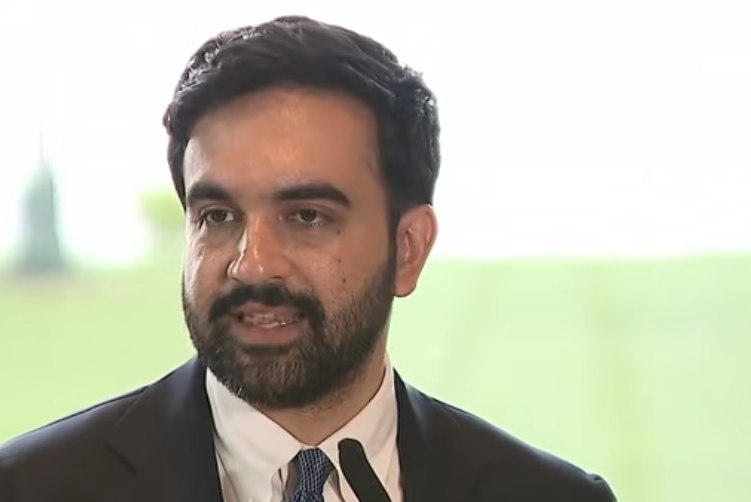
NEW YORK — New York City Mayor Zohran Mamdani and the United States Tennis Association announced 1,000 discounted tickets to the US Open priced at $100 each, giving city residents a chance to attend the tournament at its home base in Queens without paying resale prices that have climbed above $300 this year.
The tickets went on sale Wednesday at 10 a.m. ET through USOpen.org/NYCTickets, available exclusively to New York City residents with a certified ZIP code, on a first-come, first-served basis. Each resident can purchase up to two tickets, covering seats at Arthur Ashe Stadium and Louis Armstrong Stadium as well as grounds passes, for main draw matches taking place from Sunday, Aug. 30, through Tuesday, Sept. 8. The tickets are not eligible for resale on the tournament’s secondary market platform, Ticketmaster, according to QNS.
Mamdani framed the initiative as part of a broader push to make major sporting events more accessible to everyday New Yorkers. “If the world’s best tennis players are coming to our city, New Yorkers should be able to see them play,” Mamdani said in a statement, according to the New York City mayor’s office. In a separate statement issued the same day, Mamdani connected the ticket deal to a pattern of similar efforts throughout the year. “This summer, we have shown again and again that sports belong to the people. From the World Cup to track and field championships, we have opened stadium doors to some of the biggest sporting events in the world so more New Yorkers can enjoy them. Today, we are doubling down on that work by making the U.S. Open more affordable for New Yorkers,” Mamdani said, according to NBC New York.
Speaking to reporters earlier in the week, Mamdani specifically addressed the sharp rise in resale prices for grounds passes that prompted the initiative. “I think we never want to accept the premise that something has to be unaffordable when it comes to a sporting event that is part of what so many love about our city,” Mamdani told reporters Monday, according to QNS. “We are always going to look to ways to make these kinds of events more accessible to everyday New Yorkers.”
The New York City mayor’s office said the deal builds on a broader pattern of similar initiatives Mamdani’s administration has pursued throughout the year, including securing 1,000 affordable tickets to 2026 FIFA World Cup matches, making all World Cup FanFests across the city’s five boroughs free to New Yorkers, offering a $26 meal deal at nearly 900 restaurants, and distributing tickets to Gotham FC games and USA Track & Field national championship events.
According to the mayor’s office, the US Open ranks among the most-attended annual sporting events in the world, generating more than $1.2 billion in economic impact and supporting more than 7,000 jobs each year. The tournament drew nearly 1.2 million attendees in 2025 and is watched by more than 200 million people across 200 countries and territories worldwide. Sources close to the negotiations told QNS that the USTA will absorb the financial difference between the discounted $100 price and the tickets’ original higher value, meaning the city itself is not directly subsidizing the cost of the tickets from taxpayer funds.
The announcement has generated mixed public reaction, reflecting broader tension in New York over how city officials should prioritize their time and political capital amid an ongoing affordability crisis centered largely on housing costs. Some supporters have welcomed the initiative as a genuine, no-cost-to-taxpayers win that opens up access to a marquee cultural event that has increasingly priced out working-class residents through soaring secondary-market ticket prices. Critics, meanwhile, have argued that city leadership’s attention would be better directed toward more fundamental economic challenges facing residents, including the difficulty many New Yorkers face simply affording monthly rent, viewing the tennis ticket program as a comparatively minor gesture relative to the scale of the city’s broader affordability struggles.
Reaction to the initiative has also touched on Mamdani’s broader public standing in his first year as mayor. According to Yardbarker, Mamdani has drawn a polarizing national profile but has earned approval from many city residents during his short tenure so far, a period that has also included the New York Knicks winning a championship and Mamdani playing a visible public role during this year’s FIFA World Cup, both developments the outlet suggested have contributed positively to his public image among sports fans specifically.
Not every public reaction to the deal was critical. According to Pro Football Network’s coverage of the announcement, some online commenters pushed for the city to expand the program even further, with one widely shared response simply asking, “How about 10,000?” reflecting a segment of public sentiment supportive of the initiative but eager to see its scope broadened to reach even more residents beyond the initial 1,000-ticket allotment.
The US Open ticket program adds to a growing list of Mamdani administration initiatives specifically targeting affordability barriers around major sporting and cultural events in New York City since he took office, a strategy his administration has consistently framed around the principle that access to marquee sporting events should not be reserved exclusively for wealthier residents able to absorb steep resale market prices. Whether the current debate over the initiative’s broader value, weighed against the city’s more pressing housing affordability challenges, shapes how Mamdani’s administration approaches similar programs going forward remains to be seen, though city officials have indicated they intend to continue pursuing comparable ticket-access deals for future major sporting events held in New York.
Business
ETMarkets Smart Talk | Large caps look better for next 24 months, but hidden gems remain in smallcaps: Divam Sharma
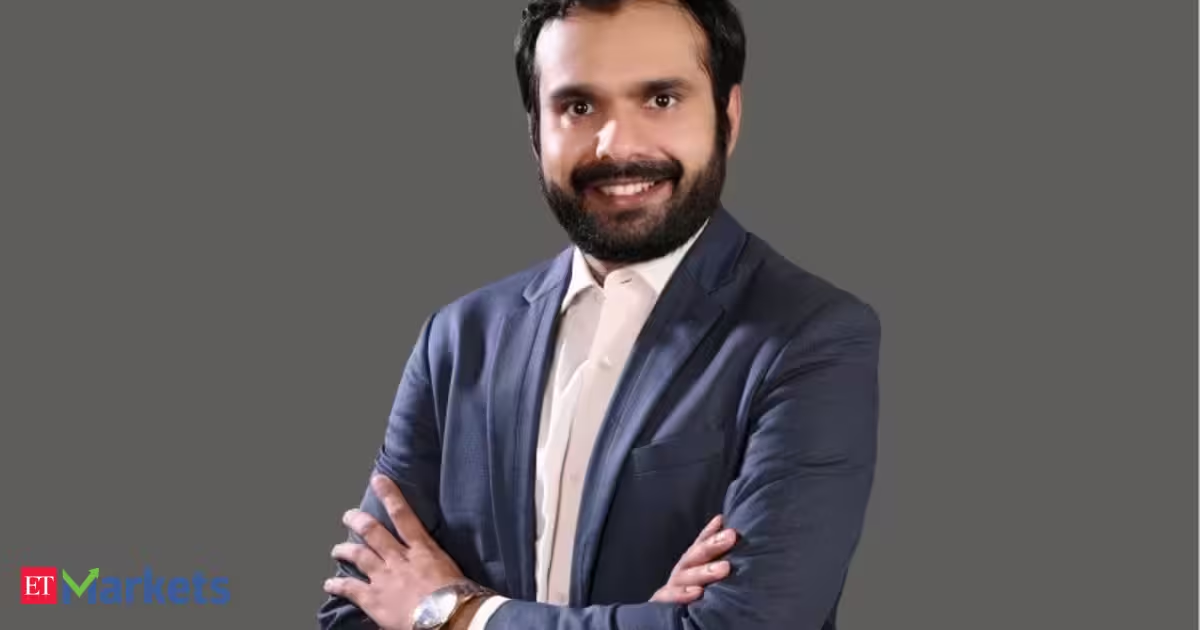
Divam Sharma, Co-Founder and Fund Manager at Green Portfolio, believes the market is entering a phase where earnings, rather than valuation re-rating, will be the key driver of returns. With the Nifty trading around its long-term valuation average, he expects low-to-mid teens returns over the next 2-3 years if earnings deliver.
Sharma sees a stronger case for large caps over the next 24 months, particularly given the steep valuation premium commanded by small caps.
However, he believes investors should not dismiss the smaller end of the market altogether, as pockets of genuine mispricing remain among companies with real cash flows, strong promoters and limited analyst coverage.
For him, the opportunity is less about choosing between large and small caps and more about identifying businesses where growth expectations are not already fully priced in. Edited Excerpts –
Q) Market showing signs of stability. How do you read it?
A) The market has stopped falling. It has not started running. Recovery in small caps has been good so far so was their fall in FY26.Nifty peaked at 26,373 in January, fell to 22,182 — nearly 16% — because a war shut the Strait of Hormuz and crude went through the roof. Today we are back at 24,395.
Three things steadied us: crude has cooled from $110 to $87, June-quarter results were better than feared, and the RBI on 5 August held rates, raised its growth forecast and cut its inflation forecast.
But the real story is who owns this market. Foreigners sold roughly ₹3.4 lakh crore in six months. Indians bought ₹4.5 lakh crore.
With geopolitics seeing stability, US India relation easing, EU FTA coming into effect soon – FII money inflow can pick up (it has already improved since June 2026).
Q) Household debt at ~48% of GDP. Is consumption now credit-dependent?
A) The number is right, and I’d argue it’s if anything on the low side.
RBI’s official figure is 45.5%. But that’s already stale. Gold loans jumped from ₹3.16 lakh crore in September 2025 to ₹4.89 lakh crore by April 2026 — 55% in seven months. So, 48% today is fair.
Is 45–48% dangerous by itself? No. Thailand and China are higher. The problem is not the size of the debt. It is the purpose of it.
Look at what people are actually borrowing. Fintechs now dominate small loans below ₹50,000, and the average ticket is ₹16,238. That is not a wealth-creating loan. That is white goods, phone and daily use items.
And the line that worries me most: RBI says the gold-loan surge is mostly existing borrowers using higher gold prices to borrow more — often to repay old loans. When a family refinances with gold instead of income, that is not consumption. That is stress.
Meanwhile rural wages are growing about 4% — the weakest in four years.
Thirty years has taught us one thing: every credit accident in India — 2007, 2018 — happened while the overall number still looked fine. The average tells you nothing. The marginal borrower tells you everything.
Q) Should returns now come from earnings rather than re-rating?
A) Yes. And let’s go further — assume zero re-rating. If it comes, treat it as a bonus, never as the reason you bought.
Nifty is at about 20.6x earnings against a long-term average of 20–21x. Fairly valued. Not cheap, not expensive.
When you start at fair value, your return is earnings growth plus dividend. There is no third source of money.
Here’s history worth remembering. Between 2003 and 2007 the Sensex went up five times, and everyone calls it a great re-rating. It wasn’t. Company profits went up nearly four times. The multiple did barely a quarter of the work.
That is the healthy kind of bull market.
The other kind — where the P/E does the heavy lifting — always asks for the money back, usually at the worst moment.
My honest expectation: low-to-mid-teens returns over 2–3 years if earnings deliver. Every rupee has to be earned. That is a far better market for stock-pickers than for index buyers.
Q) Earnings outlook after Q1? Can upgrades become a catalyst?
A) Q1FY27 was the first genuinely good surprise after a long time.
The street expected profits to fall but it rose. Strip out the oil marketing companies and earnings grew 17%. Banks grew 20%, metals 53%. Small caps grew earnings 32%. And notice — the weak spots were cost problems, not demand problems. The OMCs absorbed the crude shock on the country’s behalf.
But the most important line in the whole results season was quieter: downgrades have slowed.
The sequence never changes. Downgrades stop → estimates settle → upgrades begin → market rises. We are between step two and three. Not step four.
So we should hold back on celebration. The street is already building in massive EPS growth for FY27. Upgrades matter when they are delivered, not when they are forecast.
Everything hangs on one thing — crude. Simply:
• Brent at $75–80 → real upgrades by Q3, this becomes a proper earnings market
• Brent at $85–95 → growth trims, market grinds sideways
• Brent above $100 → we retest the lows
Until September and December results settle it: own earnings you can already see, not earnings that need a peace treaty.
Q) What brings FIIs back decisively?
A) The rupee first. Then oil. Then earnings. Valuations last — and I say that deliberately, because most people put it first.
Think from a foreigner’s chair. The rupee fell 11% in a year, to about ₹96 making it lucrative to bring fresh dollars.
Then oil, because to a global investor India is basically a bet against crude.
Valuations come last because India has always been expensive. Nobody ever bought this market because it was cheap. They buy it when growth and currency work together.
And the turn has started — ₹20,200 crore in July, another ₹12,900 crore in the first week of August – FII inflow.
Let’s hope this sustains.
Q) How much of India’s premium over other emerging markets is justified?
A) India trades around 20–22x against 12–14x for emerging markets — a premium of roughly 60–70%. Sounds high, but our own long-run average is 55–60%, and in mid-2024 it hit 104%. So the premium has already compressed sharply.
What justifies it: nominal GDP growing 10–11%, better returns on capital, and a domestic investor and consumer base no other emerging market has. ₹31,961 crore of SIPs a month, and Indian equity funds have seen 63 straight months of inflows — right through the war. That deserves a premium, because it permanently lowers the cost of capital for Indian companies.
But there are pockets where there’s too much optimism. Anything sold on a “ten-year story.” Parts of new-age tech, some EMS, quick commerce. The order books are real. The margins are not proven. When you pay 60–80x FY28 earnings, you are demanding five years of flawless execution with no competition and no fundraise. That has rarely happened in Indian corporate history.
Also, small caps as a class, and FMCG, which has been priced for a volume recovery that has been “many quarters away”.
Where the market is too pessimistic: the oil-sensitive lot — OMCs, aviation, paints, tyres, chemicals — priced as if $100 crude is permanent. And IT, where AI fear is fully in the price but the benefit of a ₹95 rupee is barely counted.
I have heard “India is expensive” every single year since 1996. Anyone who sat out on that basis missed a thirty-year compounding story. Expensive alone doesn’t kill you. Expensive plus no earnings growth kills you. Watch the second one.
Q) Which sectors can beat the market on earnings over 2–3 years?
A) There are many such sectors, and I’ll be honest about which are structural and which are just cyclical.
Power, transmission and grid equipment — government capex, rising electricity demand, data centres on top. The cleanest 20%+ growth available, and it doesn’t depend on the consumer’s mood.
Defence and defence electronics — private order books have gone from ₹40,000 cr to an estimated ₹55,000 cr. But the bigger point is that the war moved procurement from committee timelines to emergency timelines. That’s a decade, not a quarter.
Capital goods and EPC tied to government spending. Telecom — three players, real pricing power for the first time in a decade. Pharma and CDMO — China de-risking, and at ₹95 every export rupee is worth more.
Metals — up 53% last quarter. But be clear: that’s supply disruption. Trade it, don’t marry it.
Underweight: staples, where growth is only price increases; two-wheelers and rural discretionary if wages stay at 4%; and any sector which survives only if crude remain low.
Read more: ETMarkets Smart Talk | India enters earnings-led phase; Anil Rego favours financials, autos, industrials
Q) Is rotation into reasonably valued large caps the dominant theme?
A) On merit, yes. In terms of where money is actually going, no — the opposite. And that gap is the most interesting thing in this market.
Look at July’s flows. Small-cap funds got ₹7,768 crore. Mid-caps ₹6,192 crore. Large-cap funds saw an outflow. Retail money is still travelling down the size curve, not up.
Foreigners, who have just started buying, always begin at the top with liquid large names. So the two big buyers are pulling in opposite directions.
On valuation, large caps should win the next 24 months. Nifty is at 20.8x, Smallcap 250 at 35.5x — small caps are demanding a 71% premium for earnings that are more volatile, less researched and much harder to sell.
But let me reframe the question. It isn’t large versus small. It’s priced-in versus not-priced-in. There are large caps expensive for their growth and small caps genuinely cheap for theirs. At Green Portfolio we still find more mispricing in the ₹2,000–15,000 crore range — real cash flows, promoters we can sit across the table from, no analyst coverage — than in the Nifty 50.
One memory for your readers. In early 2018 everyone “knew” large caps were safe and small caps were frothy. The rotation did happen — Nifty made new highs while the small-cap index fell nearly 40%. But it took two full years and exhausted almost everyone’s patience. Rotations in India are slow, then violent. Never smooth.
Q) How worried are you about valuation and liquidity risk in mid and small caps?
A) Worried in pockets, not everywhere — and the difference between mid and small now matters a lot.
Mid-caps have normalised: Nifty Midcap 150 at 30.2x is roughly in line with its five-year median. Small caps have not: Smallcap 250 at 34.4x is about 22% above its median.
But let me separate two things’ people constantly confuse.
Valuation risk costs you time. Liquidity risk costs you money. Overpay for a good business and you wait three years for earnings to catch up. Own an illiquid business into a redemption wave and the price detaches from value for months — because the exit door is the same size for everybody.
Now add supply. FY26 saw 108 IPOs raise ₹1.76 lakh crore, with PE-backed listings rising to 35% of issuance. Read that plainly — promoters and PE funds are selling, retail is buying. That transfer always tells you where you are in the cycle.
Three rules we follow, and any investor can copy them:
1. Size your position to liquidity, not to conviction. However, much you love the business.
2. Demand cash flow, not just profit. In a squeeze, what breaks is the company funding growth on debt and stretched receivables. Profit is an opinion. Cash flow is a fact.
3. Accept that quality won’t save you in the first three months of a fall. It saves you in the recovery.
January 2018 is the lesson I keep going back to. The small-cap index peaked and didn’t recover until late 2020.
Most people who lost money there did not own bad companies. They owned good companies bought at the wrong price with borrowed patience. The businesses survived. The investors didn’t stay.
(Disclaimer: Recommendations, suggestions, views, and opinions given by experts are their own. These do not represent the views of the Economic Times)


I am focused on growth and dividend income. My personal strategy revolves around setting myself up for an easy retirement by creating a portfolio which focuses on compounding dividend income and growth. Dividends are an intricate part of my strategy as I have structured my portfolio to have monthly dividend income which grows through dividend reinvestment and yearly increases. Feel free to reach out to me on Seeking Alpha
Analyst’s Disclosure: I/we have a beneficial long position in the shares of KMI either through stock ownership, options, or other derivatives. I wrote this article myself, and it expresses my own opinions. I am not receiving compensation for it (other than from Seeking Alpha). I have no business relationship with any company whose stock is mentioned in this article.
Disclaimer: I am not an investment advisor or professional. This article is my own personal opinion and is not meant to be a recommendation of the purchase or sale of stock. The investments and strategies discussed within this article are solely my personal opinions and commentary on the subject. This article has been written for research and educational purposes only. Anything written in this article does not take into account the reader’s particular investment objectives, financial situation, needs, or personal circumstances and is not intended to be specific to you. Investors should conduct their own research before investing to see if the companies discussed in this article fit into their portfolio parameters. Just because something may be an enticing investment for myself or someone else, it may not be the correct investment for you.
Seeking Alpha’s Disclosure: Past performance is no guarantee of future results. No recommendation or advice is being given as to whether any investment is suitable for a particular investor. Any views or opinions expressed above may not reflect those of Seeking Alpha as a whole. Seeking Alpha is not a licensed securities dealer, broker or US investment adviser or investment bank. Our analysts are third party authors that include both professional investors and individual investors who may not be licensed or certified by any institute or regulatory body.
Check out what’s clicking on FoxBusiness.com.
Meta has agreed to pay as much as $17.1 billion and implement restrictions on teen accounts to settle claims that the tech giant designed Facebook and Instagram to addict children and misled the public about the platforms’ safety.
The deal, disclosed in court papers on Wednesday, resolves claims brought by 29 states and averts one of the highest-profile tests yet of allegations that social media companies have harmed young users. Meta CEO Mark Zuckerberg could have been called to testify before the settlement happened.
The states accused Meta of violating consumer-protection laws and improperly collecting children’s personal data without parental consent. Meta has denied the allegations and said it has worked to protect children on its platforms.
STATE SUES SNAPCHAT OVER ALLEGED ADDICTIVE FEATURES AND ADULT CONTENT FOR KIDS
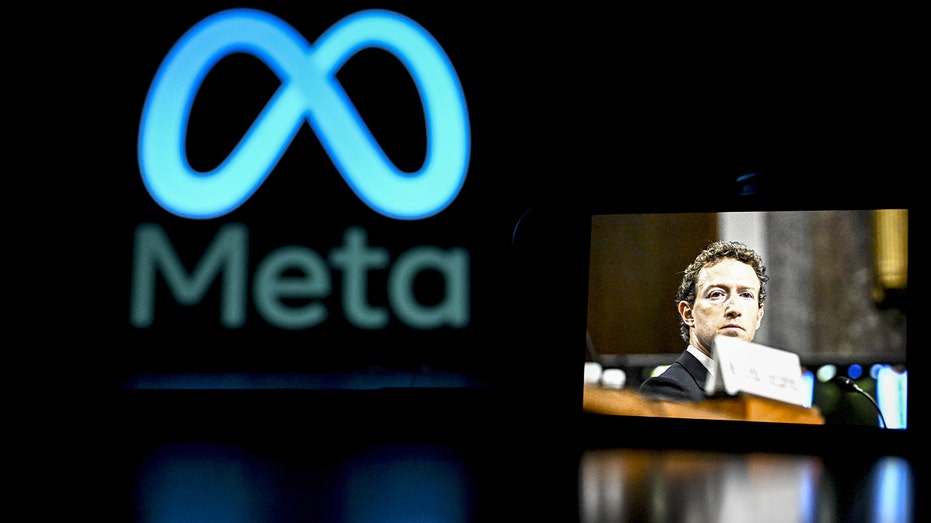
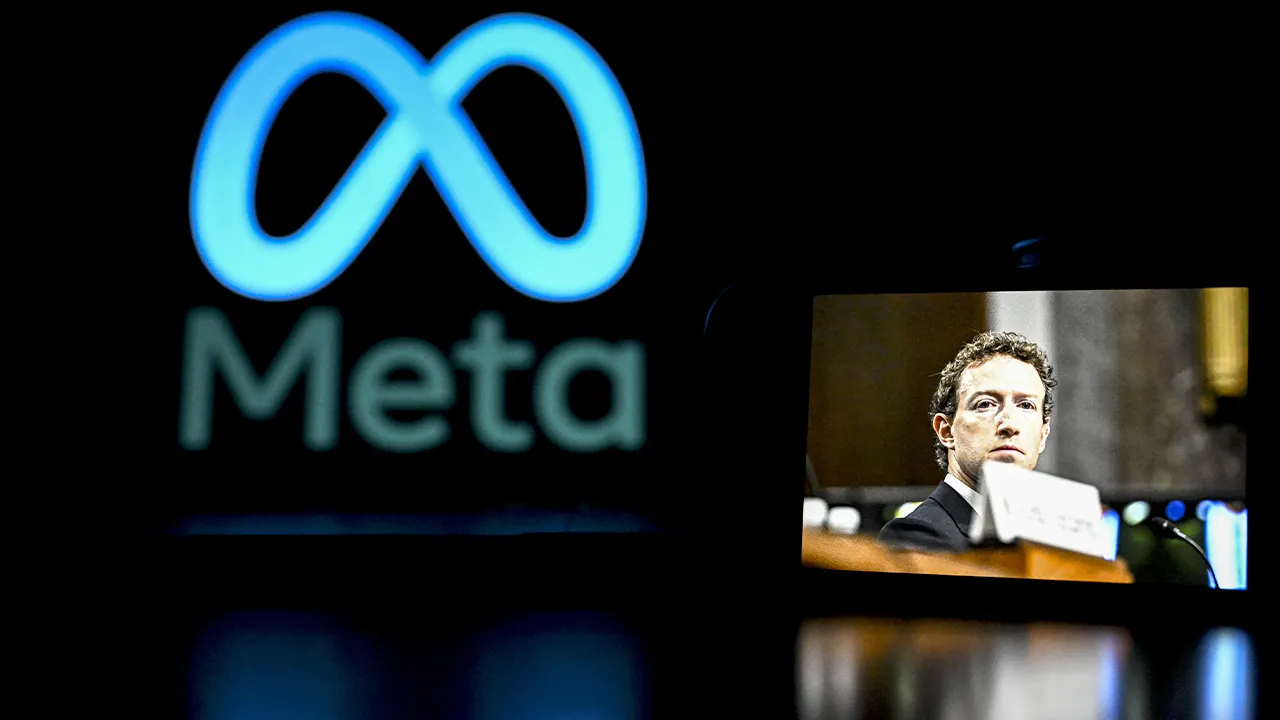
A computer screen displays the Meta logo while a mobile phone in the foreground shows Meta founder Mark Zuckerberg. Meta will lay off around 8,000 workers, the company said in a memo to employees. (Arda Kucukkaya/Anadolu via Getty Images / Getty Images)
Meta will pay at least $12.1 billion over 10 years under the agreement, according to the D.C. attorney general’s office. The company could be required to pay another $5 billion, bringing the settlement to $17.1 billion, if other major social media companies agree to adopt comparable child-safety measures.
Meta said Wednesday that the agreement builds on its existing efforts to protect teens and give parents more control over their children’s use of its platforms.
“Ensuring teens have a safe and productive experience on our platforms is an absolute imperative for Meta,” the company said. “We want to get this right for parents and teens, and that’s why we partnered with state attorneys general to set a new industry standard.”
Under the settlement, Meta agreed to impose strict daily time limits for young users, block access to its apps during certain nighttime hours, mute notifications during school hours and introduce additional parental controls.
In this photo illustration, Facebook and Instagram logos are seen on a smartphone and Meta logo on a PC screen. (Photo Illustration by Pavlo Gonchar/SOPA Images/LightRocket via Getty Images / Getty Images)
Meta also called on TikTok and YouTube to adopt similar restrictions, arguing that protections on individual platforms will have limited impact because teens frequently move between apps.
GET FOX BUSINESS ON THE GO BY CLICKING HERE
“For meaningful progress to happen, we urge TikTok and YouTube to join us and state attorneys general in adopting this new standard, to ensure teens use social media in a healthy and responsible way,” Meta said.
This is a developing news story; check back for updates.
SSE to buy back shares after dividend scrip take-up exceeds cap

Dolly Parton’s Death Prompts Rare Bipartisan Outpouring From U.S. Political Leaders

Dolly Parton’s Last Song to Release in 2046: What to Know





-

 Fashion5 days ago
Weekend Open Thread: Madewell – Corporette.com
-

 Business4 days ago
Musk’s Tesla, SpaceX Confirm $16.8 Billion ‘Terafab’ Chip Plant as World’s Largest Building in Texas
-

 Crypto World4 days ago
anatomy of crypto’s biggest liquidation event since 2021
-

 Crypto World2 days ago
A $30 Billion AI Fund Implodes, Now the SEC Is Investigating Wall Street’s Role
-

 Crypto World16 hours ago
SpaceX stock could rise 75% to $240, JPMorgan says
-

 Politics4 days ago
6 months on, Irish renters crushed by effects of government housing bill
-
 NewsBeat4 days ago
The ‘Lucky Dip Gang’ causing carnage for clicks: After five thugs were killed speeding in the wrong direction on a motorway, GUY ADAMS investigates a sick new trend… and why police aren’t even allowed to pursue them
-

 Business3 days ago
Mystery AI Model ‘Ox Alpha’ Draws Developers With Free Access as Chinese Lab Origins Remain Debated
-

 News Videos6 days ago
Don’t Leave Your Financial Future To Chance | August 19, 2026
-

 Business7 days ago
Marvell Shares Jump 7% as Google Chip Deal Confirms Custom AI Silicon Partnership, Analysts
-
 Business6 days ago
Five Below: Kids Discount Retailer Reaps Rich Rewards
-

 Business2 days ago
Moderna CEO warns China is pouring state money into mRNA technology
-

 Business5 days ago
UK firms in critical financial distress rise 9% to 53,756
-

 Business2 days ago
NVIDIA Stock Drops Nearly 2 Percent to $210 on Seventh Losing Day Ahead of Critical AI Earnings
-

 Sports3 days ago
Deshaun Watson fires back at Browns fans after being booed: ‘It’s a disrespectful thing’
-

 Crypto World6 days ago
Optimism-funded team's deciding vote shifts $49 million in OP tokens away from users
-
 Entertainment7 days ago
10 Most Perfect Fantasy Shows of the Last 25 Years
-

 Tech6 days ago
OpenAI confirms ChatGPT is down as logins and signups fail
-
 Crypto World3 days ago
Google Gemini AI Predicts Ethereum Could Become the Trade Retail Misses in 2026
-
 Business6 days ago
PayPal and Venmo now accepted for tuition at several universities
You must be logged in to post a comment Login