











Connect with us
DAPA Banner

Business

Bad Bunny, Ricky Martin and Lady Gaga, Where to Watch?

Published

on

The Kansas City Chiefs take on the Philadelphia Eagles in Sunday's Super Bowl in New Orleans bidding to make history by clinching a third straight title

Bad Bunny’s historic Apple Music Super Bowl LX Halftime Show — featuring surprise appearances by Lady Gaga and Ricky Martin — captivated millions during the Feb. 8, 2026, championship between the New England Patriots and Seattle Seahawks at Levi’s Stadium. Fans who missed the live broadcast or want to relive the Puerto Rican superstar’s vibrant, mostly Spanish-language performance packed with cultural nods, a live wedding ceremony and high-energy collaborations can now access replays and highlights through multiple platforms.

The NFL logo appears on a goal post before the 2015 NFC Championship game between the Seattle Seahawks and the Green Bay Packers at CenturyLink Field in Seattle Jan. 18, 2015.

The 13-minute set, which blended reggaeton hits with themes of joy, heritage and unity, made history as the first solo headlining halftime show by a Latino artist performing primarily in Spanish. Bad Bunny opened with “Tití Me Preguntó,” transformed the field into a lively Puerto Rican marketplace scene and delivered staples like “Yo Perreo Sola,” “Safaera,” “Monaco” and “El Apagón.” He passed his recent Grammy Award for Album of the Year to a young fan onstage, symbolizing inspiration for the next generation.

Lady Gaga joined for a Latin-infused rendition of her hit “Die with a Smile,” appearing in a striking blue gown during a wedding segment where a couple exchanged vows. The pop icon danced alongside Bad Bunny, adding star power and blending her vocals with the reggaeton rhythms. Ricky Martin, another Puerto Rican legend, made a heartfelt cameo performing “Lo Que Le Pasó a Hawaii,” honoring generational ties in Latin music and rallying the crowd with messages of pride and autonomy.

Additional cameos included actors Pedro Pascal and Jessica Alba dancing in the market set, along with Karol G, Cardi B and influencer Alix Earle adding to the festive atmosphere. The performance closed with Bad Bunny naming countries across the Americas before declaring “God Bless America,” bridging cultures in a unifying finale.

For replays, the primary official source is Peacock, NBC’s streaming platform, which simulcast the live broadcast and now offers on-demand access to the full halftime show. Peacock Premium subscribers ($7.99/month ad-supported or $13.99/month ad-free Premium Plus) can watch the complete performance in high quality, including 4K HDR where supported. The halftime segment is available shortly after the game ends, often within hours, alongside other Super Bowl LX content like pregame shows and highlights.

Advertisement

NBC’s official channels and partners provide additional viewing options. The NFL’s YouTube channel and NFL.com typically upload the full halftime show within days, though as of early Feb. 9, 2026, the complete performance had not yet appeared on the main NFL YouTube page. Clips and highlights, including key moments with Gaga and Martin, circulate widely on YouTube, with fan uploads and official snippets offering quick access. Search for “Bad Bunny Super Bowl halftime full” or specific segments like “Bad Bunny Lady Gaga Super Bowl” yields numerous results.

Live TV streaming services that carried NBC during the game — including YouTube TV, Hulu + Live TV, DirecTV Stream and Sling TV (Blue package) — often provide on-demand replays for subscribers. YouTube TV, for example, offers cloud DVR storage of the broadcast, allowing users to rewind to the halftime portion. Hulu + Live TV includes similar DVR features bundled with Disney+ and ESPN content.

For international viewers or those seeking free alternatives, over-the-air NBC broadcasts (via antenna) captured the show live, but replays depend on local affiliates or streaming. In some markets, free trials from services like DirecTV Stream or YouTube TV enable access without immediate cost, though users should cancel before trials end to avoid charges.
Social media platforms host abundant user-shared clips. On X (formerly Twitter), TikTok and Instagram, short videos of standout moments — such as the wedding, Gaga’s entrance and Martin’s collaboration — trend heavily. Official Roc Nation and NFL accounts posted highlights, including the national anthem performance and pregame events, with links directing to full content.

The show’s impact extends beyond views. Critics lauded its inclusivity, queer-positive elements and celebration of Latino heritage, calling it “legendary” and “unforgettable.” It sparked widespread discussion about representation in mainstream American events, with many praising Bad Bunny’s bold choice to perform mostly in Spanish.

Advertisement

As replays become more widely available, Peacock remains the go-to for the highest-quality, official full version. Fans eager to experience or rewatch the cultural milestone — complete with Gaga’s powerful vocals, Martin’s nostalgic energy and Bad Bunny’s infectious rhythms — have convenient options across streaming and social platforms in the days following Super Bowl Sunday.

Advertisement
Continue Reading
Click to comment

You must be logged in to post a comment Login

Leave a Reply

Business

Markets Now See Zero Chance of Fed Interest-Rate Cuts This Year

Published

on

Chelsey Dulaney hedcut

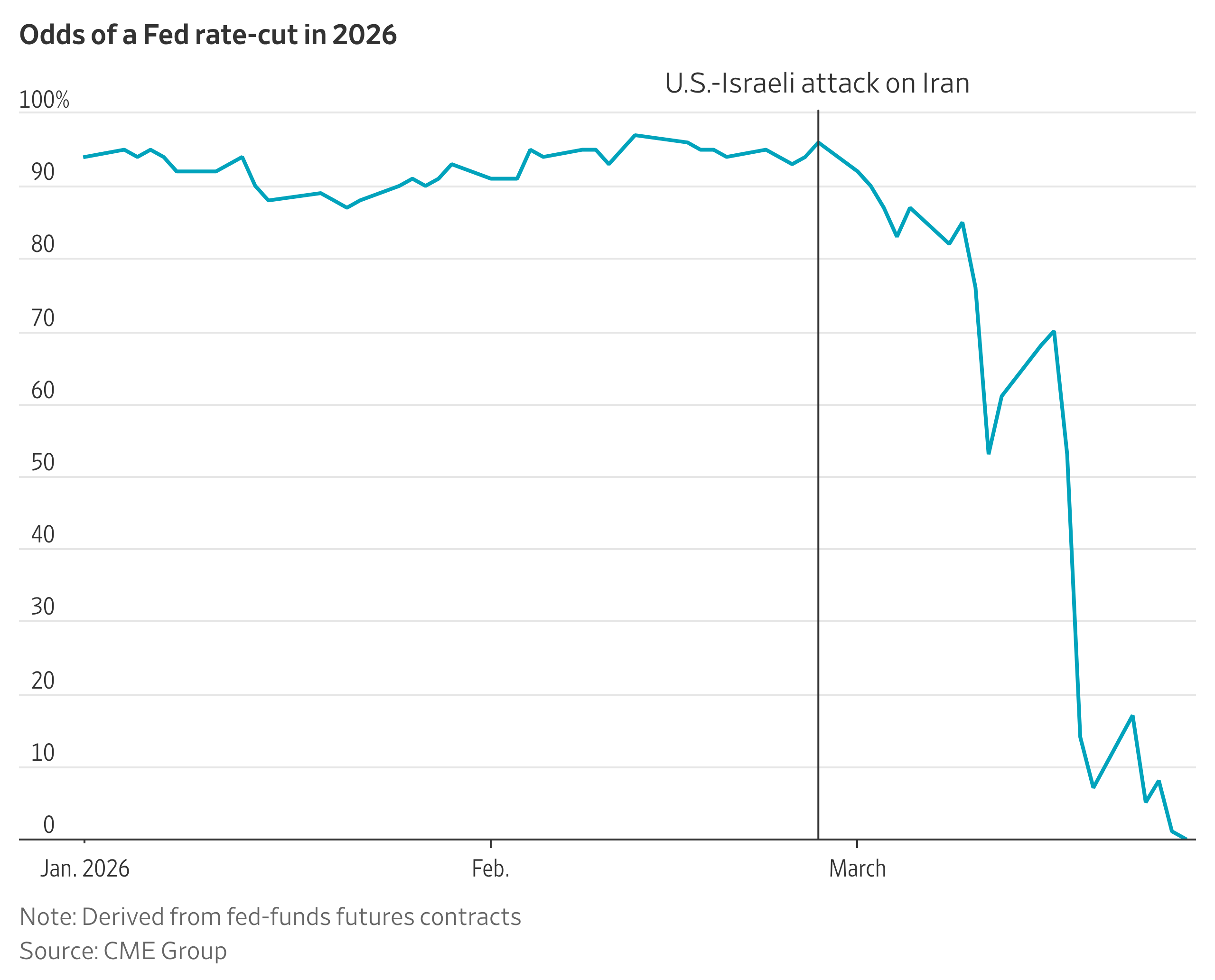
Financial markets have fully abandoned bets on rate cuts from the Federal Reserve this year, with the war in the Middle East set to drive up inflation.

Derivatives markets show zero odds of a rate cut this year, down from 1.3% on Thursday, according to CME Group data. Markets are pricing a 54% chance of at least one hike.

The energy price shock unleashed by the conflict has dramatically altered the outlook for central banks around the world, which now face both higher inflation and slower growth. As disruptions to energy markets grow, so do the risks that inflation pressure spill over into broader price pressures.

Continue Reading

Business

Parag Parikh Liquid Fund among top 5 low cost and high return funds in 1 year

Published

on

The Economic Times

Parag Parikh Liquid Fund ranks among the top low-cost funds delivering strong one-year returns with high liquidity and stability.

Continue Reading

Business

FIIs sell Indian equities worth Rs 1.14 lakh crore in March; 2026 outflow balloons to Rs 1.27 lakh crore

Published

on

FIIs sell Indian equities worth Rs 1.14 lakh crore in March; 2026 outflow balloons to Rs 1.27 lakh crore
Foreign institutional investors (FIIs) offloaded domestic equities worth Rs 1,27,157 crore in March. The foreign portfolio investors (FPIs) have offloaded Indian equities worth Rs 1,27,157 crore on the year-to-date basis.

This has turned out to be the worst month so far, as foreign investors continue pulling out from their Indian investments amid the Iran-Israel war.

Commenting on the current trends, Dr. VK Vijayakumar, Chief Investment Strategist, Geojit Investments said the weakness in global equity markets following the war in West Asia, the steady depreciation of the rupee, fears of decline in remittances from the Gulf region and concerns surrounding the impact of high crude price on India’s growth and corporate earnings contributed to the sustained selling by FPIs.

“It is important to understand that FPIs were sellers in other emerging markets, too, like Taiwan and South Korea. There is a risk-off trend in equity markets, globally after the war broke out in West Asia. The poor returns from India vis-a-vis other markets – both developed and emerging- during the last eighteen months is the principal reason for FPI’s indifference towards India. If their sustained selling strategy is to change, there should be an end to the hostilities in West Asia and decline in crude prices,” Vijayakumar said.

Advertisement

On Friday, FIIs sold domestic shares at Rs 4,367.30 crore while DIIs were net buyers at Rs 3,566.15 crore.


Indian frontline indices ended their two-session rally amid sharp cuts as a failure in the Iran-US negotiations dented the market mood. Elevated energy prices and a plunging rupee aggravated troubles for domestic investors. Amid high volatility, markets were mainly dragged by financials, auto and consumer stocks. Nifty settled at 22,819.60, falling by 486.85 points or 2.09% while the BSE Sensex closed at 73,583.22, declining 1,690.23 points or 2.25%.

FIIs in 2026

Foreign investors turned net buyers in February, buying shares worth Rs 22,615 crore in the domestic markets so far. In January, they sold Rs 35,962 crore worth of shares.
In 2025, the FIIs buying trends remained patchy, but the overall trend was bearish. They took Rs 1,66,286 crore from Indian markets as trade deal delay and premium valuations weighed on the sentiments.

(Disclaimer: Recommendations, suggestions, views and opinions given by the experts are their own. These do not represent the views of Economic Times)

Advertisement
Continue Reading

Business

Comex Report: Ignore The Paper Price And Watch The Physical Metal

Published

on

Comex Report: Ignore The Paper Price And Watch The Physical Metal

Gold and Silver Bullion Bars on Financial Stock Market Background

asbe/iStock via Getty Images

The CME Comex is the exchange where futures are traded for gold, silver, and other commodities. The CME also allows futures buyers to turn their contracts into physical metal through delivery. You can find more detail on the CME

Continue Reading

Business

Current Lines Short with Average Waits Under 15 Minutes

Published

on

Austin-Bergstrom International Airport

AUSTIN, Texas — Travelers asking about TSA wait times at Austin-Bergstrom International Airport (AUS) on Saturday, March 28, 2026, can expect relatively smooth security screening for most of the day, with average waits under 15 minutes at many times, though early morning peaks and occasional spikes up to 30-35 minutes remain possible amid ongoing spring break and high passenger volumes.

Austin-Bergstrom International Airport

As of late morning into the afternoon, multiple real-time trackers reported standard security lines averaging around 0-12 minutes, with TSA PreCheck lanes often clearing in 5 minutes or less. However, airport officials continue to urge passengers to arrive 2.5 to 3 hours before domestic flights — and even earlier for international departures — due to the busy travel season that has strained operations in recent weeks.

Austin-Bergstrom, the primary gateway to the Texas capital known for its live music vibe and “Keep Austin Weird” spirit, has seen significant passenger surges this March. The airport warned of “high passenger volume days” stretching from mid-March through early April, coinciding with spring break for many school districts and lingering effects from major events like South by Southwest.

On peak days earlier in the month, such as March 13-16, security lines spilled outside the terminal doors, with some travelers reporting waits of 45 to 90 minutes during the busiest pre-dawn hours between 4 a.m. and 8 a.m. Videos and social media posts showed long queues snaking through the check-in areas and onto sidewalks, prompting airport alerts and media coverage of the chaos.

Officials emphasized that the extended lines were driven primarily by record-breaking passenger numbers rather than TSA staffing shortages alone, though a partial government shutdown affecting federal agencies added pressure with higher callouts reported nationwide. U.S. Sen. John Cornyn and airport representatives noted that TSA screening itself was not the core bottleneck; instead, the sheer volume of travelers checking bags, returning rental cars and navigating parking contributed to the backups.

Advertisement

Checkpoint operations at AUS typically begin around 3 a.m., with multiple lanes opening progressively. Checkpoint 2 often serves as the main hub, while others provide overflow capacity. On Saturday, data from trackers like OnAirParking and iFly showed fluctuating hourly averages: as low as 0 minutes in some slots, climbing to 27-33 minutes during traditional rush periods like 5-7 a.m. and 10-11 a.m. Afternoon hours have generally trended lighter.

TSA PreCheck and CLEAR members continue to enjoy significantly shorter experiences, often bypassing standard lines entirely. Enrollment in these programs has proven especially valuable during busy periods, with PreCheck waits frequently under 10 minutes even when general lines lengthen.

The MyTSA app remains a recommended tool for real-time crowd-sourced updates, though some users note that official estimates can lag during disruptions. Third-party sites such as Takeoff Timer and FlightQueue provide supplementary live data, showing standard security around 11-35 minutes depending on the exact moment of check. Travelers are advised to cross-reference multiple sources and monitor the official @AustinAirport social channels for alerts.

Airport management has increased staffing where possible and adjusted lane configurations to handle demand. Despite the challenges, flight operations have largely remained on schedule, with only minor delays reported on most days. FAA data indicated low airborne and gate delays as of late March.

Advertisement

For those departing today, the busiest window remains early morning departures. Travelers with flights before 9 a.m. should plan conservatively, factoring in parking, bag drop and potential rental car returns. Midday and evening flights have seen more predictable flows in recent reports.

AUS offers several amenities to ease the journey, including diverse dining options featuring local Austin flavors — from barbecue to breakfast tacos — and shopping that highlights Texas artists and musicians. Free Wi-Fi, charging stations and family-friendly areas help passengers pass the time if they arrive with extra buffer.

The surge reflects broader trends in Texas aviation. Austin’s rapid growth as a technology and music hub has driven consistent increases in enplanements, making AUS one of the faster-growing medium-sized airports in the country. Officials expect the high-volume period to ease after early April as spring break concludes for most districts.

Passengers can further speed their experience by preparing in advance: removing liquids and electronics from carry-ons, wearing slip-on shoes, and ensuring ID and boarding passes are readily accessible. The TSA’s 3-1-1 liquids rule remains strictly enforced, and prohibited items can cause secondary screening delays.

Advertisement

International travelers face additional considerations, with longer recommended arrival windows to account for customs and immigration on return, though outbound international security follows similar domestic protocols at AUS.

Looking ahead, the airport continues infrastructure improvements to handle future growth. While Checkpoint 3 remains closed through parts of 2026 for upgrades, the remaining facilities have proven resilient during the current busy stretch.

Travelers with disabilities or needing assistance can request expedited or accessible screening through TSA Cares. Families with young children benefit from dedicated lanes when available.

As Saturday evening approaches, lines are expected to remain manageable unless a late surge occurs. Real-time conditions can shift quickly with flight banks or unexpected events, so checking 30-60 minutes before heading to the airport is wise.

Advertisement

Austin-Bergstrom’s convenient location just minutes from downtown continues to make it a favorite for both business and leisure travelers. Its compact layout generally allows efficient movement once past security, with gates easily accessible.

In summary, while TSA wait times at AUS are currently short for much of Saturday, March 28, the lesson from recent weeks is clear: build in extra time during this high-volume spring travel season. Arriving early ensures a smoother experience and reduces stress, allowing passengers to enjoy the airport’s unique Austin character rather than worrying about missing their flight.

For the absolute latest updates, consult the MyTSA app, third-party wait time trackers, or the airport’s official website and social media. Safe travels to all departing from Austin-Bergstrom today and throughout the busy period.

Advertisement
Continue Reading

Business

US carrier Ford arrives in Croatia for repairs

Published

on

US carrier Ford arrives in Croatia for repairs


US carrier Ford arrives in Croatia for repairs

Continue Reading

Business

Paramount-Warner Bros. movie slate needs animation to rival Disney, Universal

Published

on

Paramount-Warner Bros. movie slate needs animation to rival Disney, Universal

Source: Warner Bros. | Paramount

When Paramount Skydance combines with the Warner Bros. film studio, it’ll have a deep bench of marquee franchises and established prestige. What the powerhouse duo will be missing is an animated film slate that could rival Hollywood giants like Disney and Universal.

The combined entity, which is still awaiting regulatory approval, has a stacked slate of tentpoles including DC superhero fare, a Minecraft sequel, another Sonic the Hedgehog film and new entrants from The Lord of the Rings universe. Not to mention, Warner Bros. just tied the record for the most Academy Award wins for a single studio earlier this month.

Advertisement

But it’s been kid-friendly animated content that is increasingly driving families to the theater — and neither studio has excelled in this area in the last decade.

Since 2016, Paramount and Warner Bros. have each released eight animated features on the big screen, with Paramount generating $1.1 billion in total global ticket sales from the category and Warner Bros. tallying $1.3 billion, according to data from Comscore.

During that time, only one Paramount animated film has generated more than $200 million globally — 2023’s “Paw Patrol: The Mighty Movie” — and only one Warner Bros. animated title has scored more than $300 million globally — 2017’s “Lego Batman.”

For comparison, in the last decade Disney released 21 theatrical animated features, collecting $14.1 billion from the films; Universal released 23 animated movies to the tune of $10.7 billion; and Sony released 16, bringing in $4.6 billion in ticket sales.

Advertisement

Disney has seen seven animated features generate more than $1 billion globally during that time, and Universal has seen two.

These figures do not include live-action films with animated elements like Paramount’s Sonic franchise, Universal’s “Gabby’s Dollhouse,” or Disney’s “Mufasa: The Lion King,” which the studio considers a live-action film. They also don’t include animated films released to streaming during the pandemic that were later brought to theaters like Disney’s “Soul,” “Luca” and “Turning Red.”

“When the moviegoing world is operating at or near peak efficiency, it’s virtually always because of a diverse release slate that includes one or more movies catering heavily to kids and families,” said Shawn Robbins, director of analytics at Fandango and founder of Box Office Theory. “Animation, in most cases, directly serves that audience while providing an anchor for studios and cinema owners to rely on.”

Together, Paramount and Warner Bros. accounted for 27% of the domestic box office in 2025, just shy of the 28% market share held by Disney.

Advertisement

“As Paramount and Warner Bros. merge, it becomes even more essential for their combined resources to be strategically directed toward developing a robust animated film portfolio,” said Paul Dergarabedian, head of marketplace trends at Comscore.

“Animated film releases are crucial for any movie studio, requiring a well-thought-out strategy whether the projects are original works, extensions of existing intellectual property, or reboots of beloved legacy franchises,” he added.

In the last two years, family-friendly fare with a PG rating has won at the box office, outperforming PG-13 and R rated films, Comscore data shows.

“This rating is significant because it allows these films to attract a broader audience, making them true four-quadrant releases with the highest box office potential of almost any genre in today’s movie marketplace,” Dergarabedian said.

Advertisement

Additionally, animated features are not usually front-loaded at the box office, Robbins noted, meaning they steadily generate ticket sales over the course of their run in theaters, gaining word of mouth.

A typical Hollywood film will see a 50% to 70% drop in sales from opening weekend to the second weekend after the rush to the theater fades. Animated features don’t always experience the same cliff.

For Disney’s “Hoppers,” for example, the opening week dropoff was less than 37%, and the second week drop was less than 38%.

“Not all animated releases are as successful as others, but they can be incredibly valuable with their potential for long-tail grosses alongside ancillary revenues via merchandising, down-window rentals and purchases, and other non-theatrical financial opportunities,” Robbins added.

Advertisement

Working in Paramount’s and Warner Bros.’s favor: They already have lucrative animated IP. The combined library features SpongeBob SquarePants, Smurfs, Paw Patrol, Teenage Mutant Ninja Turtles and DC superheroes.

Disney and Universal have been successful in the last decade balancing new titles with sequels. For Disney, it has introduced stories like “Coco,” “Zootopia” and “Encanto” alongside “Frozen II,” “Toy Story 4” and “Inside Out 2.” At Universal, it’s had newcomers like “Sing,” “The Secret Life of Pets” and “Migration” arrive at the box office and returning favorites like “Kung Fu Panda 4,” “Despicable Me 4” and “The Bad Guys 2.”

“It will be important for a freshly minted Paramount/WBD combo to not only expand on these brands but also to develop new animated properties to have the best shot at capturing their share of the massive potential box office for this extremely popular and competitive category of film,” Dergarabedian said.

Disclosure: Versant is the parent company of CNBC and Fandango.

Advertisement
Choose CNBC as your preferred source on Google and never miss a moment from the most trusted name in business news.
Continue Reading

Business

Gambling.com: More Risks Are Surfacing (Rating Downgrade) (NASDAQ:GAMB)

Published

on

Gambling.com: More Risks Are Surfacing (Rating Downgrade) (NASDAQ:GAMB)

This article was written by

Full-time Equity Analyst and part-time retail investor with a bias for high quality stocks trading at discounted prices. over the past 5 years I’ve been retail investing and learning more about how the stock market works, following the work of Ben Graham and Joel Greenblatt. Equity Markets are fascinating as they give us an analytical overview of how global markets are performing. Seeking Alpha is an incredible platform for me to share my research and analysis with fellow investors and analysts.

Analyst’s Disclosure: I/we have no stock, option or similar derivative position in any of the companies mentioned, and no plans to initiate any such positions within the next 72 hours. I wrote this article myself, and it expresses my own opinions. I am not receiving compensation for it (other than from Seeking Alpha). I have no business relationship with any company whose stock is mentioned in this article.

Seeking Alpha’s Disclosure: Past performance is no guarantee of future results. No recommendation or advice is being given as to whether any investment is suitable for a particular investor. Any views or opinions expressed above may not reflect those of Seeking Alpha as a whole. Seeking Alpha is not a licensed securities dealer, broker or US investment adviser or investment bank. Our analysts are third party authors that include both professional investors and individual investors who may not be licensed or certified by any institute or regulatory body.

Advertisement
Continue Reading

Business

Wales’ poor record on securing research and innovation funding

Published

on

Business Live

In 2023-24, Wales received just £168m or 2% of the UK total, from UKRI – the body responsible for funding R&D and innovation

John Atack and Simon Ward of Draig Therapeutics.

While attention has rightly focused on the financial crisis facing our universities, the growing instability across the sector poses another, less-discussed but potentially more damaging long-term threat: the risk to Welsh research capacity, innovation and the country’s wider economic future.

This matters because in a modern economy, research and innovation are among the key drivers of productivity, business creation and long-term prosperity. The countries and regions that generate ideas, develop intellectual property and turn discoveries into commercial activity are the ones that create the high-value jobs of the future. Those that do not are left behind, and that is precisely the danger Wales now faces.

READ MORE: We need a plan to revive and renew struggling universities in WalesREAD MORE: Welsh rugby makes a huge economic contribution shows new report

Across the UK, public investment in research and development remains substantial, but the way funding is allocated is increasingly favouring institutions with scale, critical mass, strong commercialisation records and the capacity to compete successfully at the highest level. In other words, the system increasingly rewards those universities and regions that are already ahead, and unfortunately, Wales is not included.

Advertisement

For over 20 years, I have maintained that research and innovation funding should be devolved, yet during that time, politicians have largely failed to make a compelling case, while too many vice-chancellors seem more comfortable defending the status quo than challenging it. The outcome is that Wales remains reliant on a UK-wide system that has consistently failed to reflect either our population share or our economic needs.

The numbers are stark. In 2023-24, Wales received just £168m or 2% of the UK total, from UKRI – the body responsible for funding R&D and innovation – despite accounting for around 5% of the UK population.

That shortfall is not a marginal issue but is a structural disadvantage with real economic consequences, and on a per-person basis, Wales received £53 compared with a UK average of £134, making Wales one of the weakest-funded parts of the UK both per head and as a share of GVA.

However, if research and development funding had been devolved and allocated through the Welsh fiscal framework, including a needs-based uplift, Wales could have received as much as £322m, almost double what it receives now.

Advertisement

Pause for a moment and consider that, over the past decade alone, Wales has missed out on more than £1bn of funding that could have boosted research capacity, innovation, business collaboration and the wider Welsh economy. This estimate is conservative because it does not account for the broader economic effects of greater control over R&D priorities, co-investment, commercialisation and regional innovation policy; the actual long-term loss to Wales could be higher.

Indeed, if this money had been available, it would have been transformational, providing more support for collaboration between universities and businesses and a greater scope to back commercially relevant innovation in sectors where Wales has genuine strengths. More importantly, it would have meant a far greater chance of turning Welsh ideas into Welsh wealth.

Too often, we talk about economic development in Wales as though it is mainly about grants, property schemes, infrastructure announcements or another reorganisation of the business support landscape. But if we are serious about creating a stronger economy, we need to pay much more attention to the sources of future value creation – research, innovation and commercialisation.

When research is strong, businesses benefit, new technologies emerge and intellectual property is developed and retained, while investors begin to look at a place differently, skills deepen and supply chains strengthen.

Advertisement

We already know what success can look like and Cardiff University’s Draig Therapeutics, which recently secured $140m in venture capital investment, is exactly the kind of example Wales should be producing more often. It shows what can happen when high-quality research, commercial focus and investor confidence come together.

However welcome one example may be, it is not enough. Wales should be building a pipeline of such businesses rather than celebrating them as rare exceptions. This is why the debate over research funding cannot be separated from the financial crisis currently affecting Welsh higher education. When universities fall into survival mode, research becomes vulnerable, particularly in institutions lacking large reserves, substantial endowments or a high level of research activity.

This damage is not easily reversed, and once research capacity begins to decline, rebuilding it is much more difficult than cutting it, as skilled teams disperse, international networks weaken and younger academics seek opportunities elsewhere. Consequently, commercial relationships drift apart, opportunities fade and, over time, the country’s ability to compete for talent, funding and investment diminishes.

This is why the stakes are so high. The issue is not simply whether Welsh universities can balance their books over the next two or three years, but whether Wales wants to remain a serious participant in the creation of new knowledge, new technologies and new industries.

Advertisement

At least there are signs that this argument is finally beginning to gain some political support. The First Minister recently stated that Wales should receive a fairer share of UK research funding, although there are no details on how she intends to achieve this. However, that recognition is welcome, even if it has taken more than a quarter of a century for the point to be taken seriously.

But fairer funding within the current system should not be the end of the debate, and Wales should be making the case for the full devolution of research and innovation funding. Properly designed and strategically deployed, it could do more to strengthen the long-term Welsh economy than almost anything the Welsh Government has undertaken in the field of economic development since devolution began.

That is why this matters so much, and the future of Welsh higher education is not only about keeping institutions afloat but about deciding whether Wales will be a country that creates knowledge, owns ideas and builds businesses from them, or one that watches others do so and wonders, once again, why the rewards end up elsewhere.


Advertisement
Continue Reading

Business

Sixth Street Specialty Is A Buy-The-Dip BDC

Published

on

Sixth Street Specialty Is A Buy-The-Dip BDC

Sixth Street Specialty Is A Buy-The-Dip BDC

Continue Reading

Trending

Copyright © 2025