Connect with us

Business

Bank Of America Stock: How A Covered Strangle Trade Works

Published

on

Bank Of America Stock: How A Covered Strangle Trade Works

Bank of America (BAC) stock is a candidate for a covered strangle, a strategy that suits investors who already own shares and are happy to add more at a lower price while generating extra income along the way. A covered strangle combines three positions — long 100 shares of stock, a short out-of-the-money call, and a short out-of-the-money put. The…

Copyright ©2026 Investor’s Business Daily, LLC. All rights reserved. 87990cbe856818d5eddac44c7b1cdeb8

Continue Reading
Click to comment

You must be logged in to post a comment Login

Leave a Reply

Business

FDA approves Gilead HIV pill Bixlenvo designed to simplify treatment

Published

on

FDA approves Gilead HIV pill Bixlenvo designed to simplify treatment

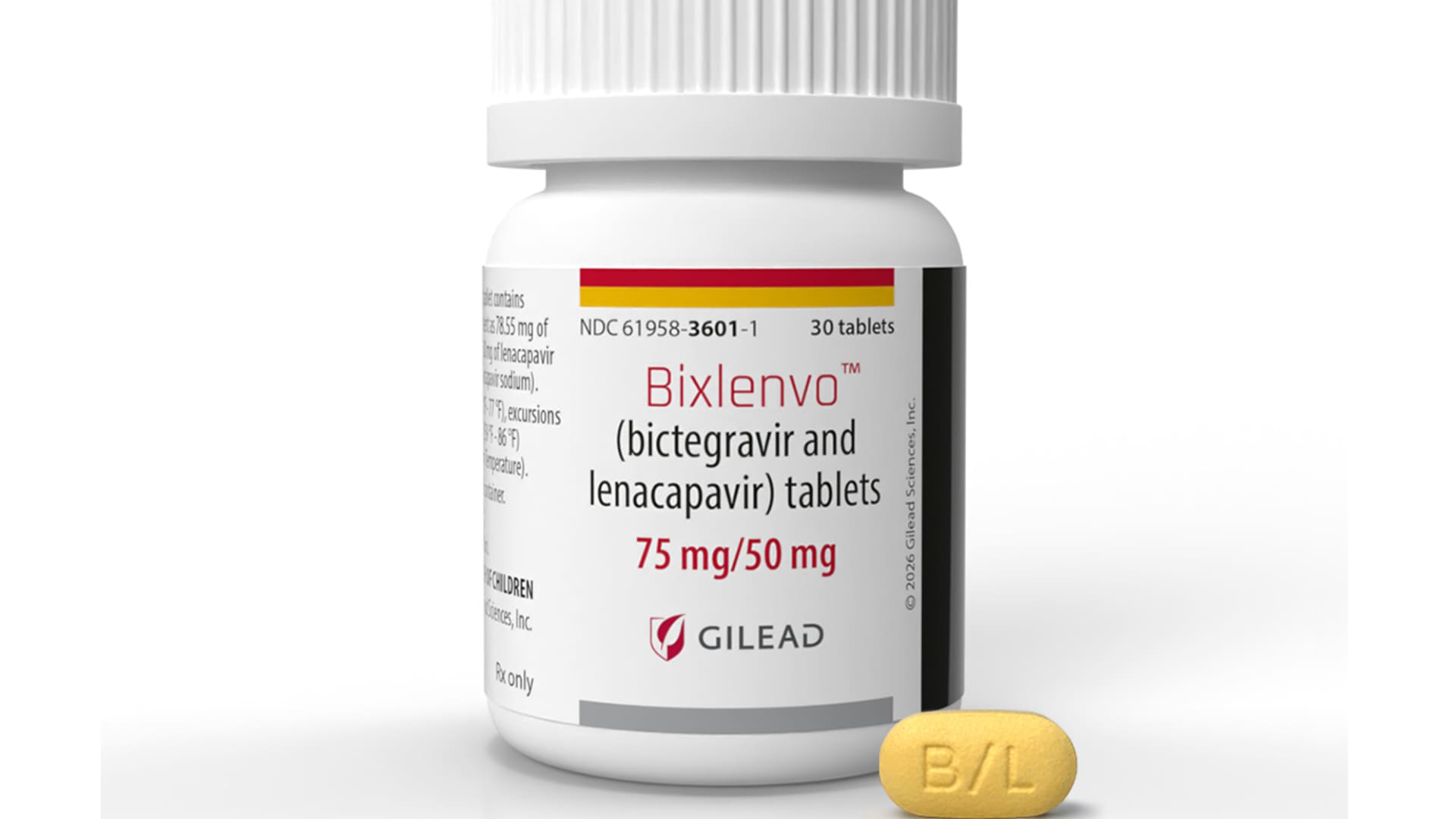
Gilead Bixlenvo drug

Courtesy: Gilead

The Food and Drug Administration approved a once-daily HIV pill from Gilead that could help simplify care for some patients, the company announced Thursday. 

Advertisement

The drug, marketed as Bixlenvo, is aimed at patients whose virus is already under control but who remain on complicated treatment regimens. It could also appeal to those who simply want to switch to a new treatment alternative.

The tablet combines bictegravir, the backbone of Gilead’s blockbuster HIV pill Biktarvy, with lenacapavir, a first-in-class capsid inhibitor that has become a centerpiece of the company’s long-term strategy for HIV treatment and prevention. 

The approval makes the new pill the first single-tablet regimen available for adults with HIV whose virus is suppressed but are unable to use currently available one-pill treatment options, according to Gilead. That population accounts for an estimated 5% or more of individuals in the U.S. living with HIV, the company told CNBC. 

The list price of the pill before discounts or rebates is $4,595 for a 30-day supply, which is in line with other daily single-tablet HIV treatments, Gilead told CNBC. People without health insurance may be eligible to get Bixlenvo for free through Gilead’s patient assistance program, while those with commercial or private insurance may be able to receive co-pay support through another savings program, the company said.

Advertisement

“It fulfills an unmet need, particularly for individuals who are on complex regimens who just would not otherwise consolidate down to something really meaningful for them and prescribers,” Dr. Jared Baeten, Gilead’s clinical development and virology therapeutic area head, said in an interview ahead of the approval. 

“But it’s also meaningful for individuals who are seeking options for something new,” he continued. “We want to build options that give people the opportunity to choose something that’s going to work for them and work for them for the long haul.”

There is no cure for HIV or AIDS. But many people living with HIV can manage the disease by taking a single pill daily, a treatment plan that Gilead helped pioneer two decades ago. 

But some patients can’t use any existing one-tablet options like Biktarvy and require more complex combinations of medicines because of drug resistance from older therapies, side effects or interactions with other drugs, among other treatment challenges. Those patients may have to take multiple pills a day and adhere to complicated dosing schedules.

Advertisement

Baeten said that group tends to be older and have long treatment histories, saying “some had to take handfuls of pills around 25 years ago.” HIV also accelerates complications of aging, such as heart disease, diabetes and high cholesterol, in that age group, he added. 

“It’s incredibly meaningful to develop a medicine, in my perspective, for people aging with HIV,” Baeten said. 

The new pill is also aimed at people who are doing well on a single-tablet regimen, including Biktarvy, and want to switch to a new one. Baeten stressed that Bixlenvo does not aim to replace Biktarvy. 

For patients already doing well on Biktarvy, the rationale for switching is more about expanding treatment choices, he said. He emphasized that HIV care is highly individualized and that long-term success often depends on finding a regimen that best fits a patient’s preferences and lifestyle.

Advertisement

Baeten also said Bixlenvo is part of Gilead’s broader effort to build a range of HIV treatment options around lenacapavir, including daily pills, weekly oral regimens and long-acting injectable therapies. The goal is to give patients flexibility to choose how they want to manage the disease, he said.

“We’re going to build enough options that people can make the choice that’s going to work for them,” Baeten said. “Some people like the surety of once a day, and some people would want ‘set it and forget it’ once every six months.”

What Bixlenvo is like for patients

Gilead Bixlenvo drug

Courtesy: Gilead

Advertisement

Baeten called it “essential” to have more than one medicine to treat HIV because the virus can become resistant to an initial treatment.

Combining bictegravir and lenacapavir in one pill allows it to “hit the virus in two different ways” with “high efficacy [and] strong protection” against the virus becoming resistant to treatment, Baeten added.

The approval is based on two Phase 3 trials, which evaluated Bixlenvo in adults with HIV whose virus was already suppressed on treatment. That includes people who switched from Biktarvy or complex treatment regimens with multiple tablets. 

The first trial – ARTISTRY-1 – specifically enrolled patients with long treatment histories and drug resistance, many of whom were taking multiple HIV medications each day. Participants had a median age of 60 and were taking between two and 11 pills daily before switching to Bixlenvo. 

Advertisement

In both studies, the pill maintained viral suppression at rates comparable to patients’ previous regimens at 48 weeks and was generally well tolerated with no new safety concerns. The most common side effects reported in at least 2% of participants across the two trials was headache, nausea and diarrhea. 

Timothy Cameron, a 64-year-old retired Seattle resident who has been living with HIV for more than 40 years, was among the participants in the first Phase 3 trial.

When he was first diagnosed in the 1980s, doctors had few treatment options and little ability to measure how active the virus was. He spent decades cycling through HIV medications, experimental drugs and multi-pill regimens that often came with difficult side effects and eventually stopped working against his “hard-to-treat” virus.

“It was just like throwing darts at a dartboard,” Cameron said. “Because I had done so many drug trials and monotherapy, my virus had become super resistant.”

Advertisement

A few years before enrolling in the Gilead study, Cameron finally found a regimen that controlled his virus, though it required taking one HIV pill twice daily along with another medication. His doctor encouraged him to join the trial and switch to Bixlenvo, a once-daily pill Cameron described as “smaller than my pinky nail.”

The transition was seamless, he said. The drug maintained control of his virus without causing side effects and simplified his treatment routine by reducing the number of pills he takes and consolidating all of his medications into a single daily schedule.

For Cameron, who spent decades exhausting HIV treatment options as his virus developed resistance, among the biggest benefits may be that the two-drug regimen effectively controls his virus while exposing him to fewer medications. He said that gives him confidence that additional treatment options could remain available in the future if he ever needs them.

“It’s one less thing I’m putting in my body, and it preserves options if I need them,” Cameron said.

Advertisement
Choose CNBC as your preferred source on Google and never miss a moment from the most trusted name in business news.
Continue Reading

Business

Pizza restaurants: Why pizza-making robots are not cutting it

Published

on

A robot arm hovers over a pizza

The robot pizza-making business has, it’s true, been littered with sorry tales of overcooked promises and melting fortunes. Besides Picnic, other companies that have come and gone include Zume, external and Pazzi, which used, external robot arms to assemble pizzas, as well as Basil Street, external, a purveyor of pizza vending machines.

Although so-called fast food might seem an easy target for automation, it’s proved harder than many expected. Plus, bringing robots into pizza restaurants could take away entry-level jobs in the hospitality sector. Is the future really filled with robotic pizza?

“We haven’t yet seen any of the success stories materialise the way some people thought they would,” admits Sara Senatore, senior restaurants analyst at Bank of America. Her employer has financial interests in multiple high street pizza chains including Papa Johns and Domino’s.

Food preparation bots are sometimes clumsy – dropping ingredients in the wrong places at times, she explains. Conversely, “Humans are very efficient at making pizza.”

Advertisement

But Kindell, despite his frustrations with Picnic, is surprisingly undeterred. He is a fan of full automation. “I want to be able to walk up to, let’s say, a type of kiosk, put in your order, and it makes a fresh pizza,” he tells the BBC.

Kindell, who once made all his dough by hand – until an elbow tendon injury forced him to investigate using machines instead, is now working on his own version of a pizza-making robot.

He declines to share details but the contraption will make square pan-style pies and that the machine is inspired by the way 3D printers work. If things go well, he says he could have a fully operational version of the device by the summer of 2027.

Given that he admits he has “no experience” in robotics, I question why he would want to invest in such a dicey business. Kindell says that failed pizza robot companies have nonetheless generated useful data and made strides in developing their technology. It’s just a matter of time before someone gets these things to work, he insists.

Advertisement

On jobs, he claims that even “fully autonomous” pizza robots won’t threaten workers. Kindell previously used Picnic’s robots at T-Mobile Park, home of the Seattle Mariners, a baseball team.

Usually, he’d need about 10 people to make pizza in such a setup. With the robots that number fell to just two. But the other eight people were still employed, he says, in roles where they interacted with customers, and advertised the pizza around the stadium.

“We had so many more people able to hand out the pizza,” says Kindell. “It was so much faster.”

Advertisement
Continue Reading

Business

The Big Four Recession Indicators: Real Personal Income

Published

on

The Big Four Recession Indicators: Real Personal Income

The Big Four Recession Indicators: Real Personal Income

Continue Reading

Business

An Oil Catastrophe Was Averted in 2026. What If It Comes in 2027?

Published

on

An Oil Catastrophe Was Averted in 2026. What If It Comes in 2027?

An Oil Catastrophe Was Averted in 2026. What If It Comes in 2027?

Continue Reading

Business

Wedding stationers not standing still

Published

on

Wedding stationers not standing still

Stationery vendors are adapting to a changing market driven by tech and cost-of-living pressures.

Continue Reading

Business

Apple Confirms September 9 Keynote and Reveals Its Full Pre-Order Schedule

Published

on

Samsung Galaxy S27 Ultra Rumors Point to Unified Camera Design,

CUPERTINO, Calif. — Apple has officially confirmed its highly anticipated September event will take place Wednesday, Sept. 9, setting in motion a launch sequence expected to introduce the iPhone 18 Pro, iPhone 18 Pro Max and the company’s first foldable device.

Apple sent invitations to members of the press and select guests Wednesday, Aug. 26, confirming the keynote date alongside the tagline “Surprise and shine” and an accompanying image. The keynote is scheduled to begin at 10 a.m. Pacific time, 1 p.m. Eastern and 6 p.m. British time, and will be held at the Steve Jobs Theater on Apple’s Cupertino campus.

A date chosen around the calendar

This year’s scheduling carried unusual complexity due to how the calendar fell in 2026. Labor Day landed on Monday, Sept. 7, and Apple has historically avoided holding its iPhone event on the day immediately following the holiday, ruling out a Tuesday, Sept. 8 date. That left Wednesday, Sept. 9 as the most likely option, a prediction that multiple outlets, including Forbes and MacRumors, had made in the weeks leading up to Apple’s official confirmation.

Advertisement

The Sept. 9 date also matches the exact day Apple held its iPhone event in each of the past two years, extending a pattern of holding its flagship product reveal during the second week of September. Bloomberg’s Mark Gurman had also flagged the date in his Power On newsletter earlier this month, describing Apple’s preparations as being in full swing ahead of what he called a big event.

What’s expected on stage

The centerpiece of Wednesday’s keynote is expected to be the debut of the iPhone 18 Pro and iPhone 18 Pro Max, alongside Apple’s first foldable iPhone, a device widely viewed as the company’s most significant new hardware category in years. Reports have suggested the foldable device could start at around $2,000, with pricing potentially climbing past $2,500 for higher storage configurations.

Apple is expected to stick with familiar display sizes for the standard Pro lineup, with the iPhone 18 Pro featuring a 6.3-inch display and the iPhone 18 Pro Max featuring a 6.9-inch display, consistent with the current generation. Notably, Apple is not expected to release a standard iPhone 18 model alongside the Pro lineup this year; that device is anticipated to arrive separately in early 2027.

Advertisement

Beyond the phones, the event is expected to include the introduction of two new Apple Watch models. Apple has already addressed part of its fall hardware lineup separately, having unveiled new Mac computers on Tuesday, Aug. 25, ahead of the September keynote.

The pre-order timeline, with a notable shift

Perhaps the most closely watched detail surrounding this year’s launch has been the timing of pre-orders, given an unusual calendar conflict. Apple traditionally opens pre-orders on the Friday immediately following its September keynote. This year, however, that Friday falls on Sept. 11 — the 25th anniversary of the Sept. 11, 2001, terrorist attacks in the United States, a date Apple has respectfully avoided using for major announcements or sales activity in the past.

As a result, pre-orders for the iPhone 18 Pro lineup are widely expected to shift to Saturday, Sept. 12 instead. If Apple follows its typical pre-order timing pattern from past launches, orders would likely open at 5 a.m. Pacific, 8 a.m. Eastern and 1 p.m. British time that day.

Advertisement

Following the pre-order window, the new devices are expected to become available in stores and begin shipping to customers on Friday, Sept. 18 — one week after pre-orders open, consistent with Apple’s typical rollout cadence in recent years.

A launch two weeks in the making

Apple’s decision to send invitations on Aug. 26 also followed a pattern industry watchers had anticipated. The company has announced its annual iPhone event exactly two weeks in advance for four consecutive years, according to 9to5Mac’s Zac Hall, making late August the strongest predicted window for this year’s invitations even before they went out. That timing held true, with Apple issuing its formal invite precisely 14 days ahead of the Sept. 9 keynote.

Why this year’s event carries extra weight

Advertisement

This year’s launch arrives with added significance beyond the usual annual iPhone refresh. The event is expected to double as one of the final major keynotes overseen under Apple’s current leadership transition, with incoming Chief Executive John Ternus set to formally take over the role on Sept. 1, just over a week before the keynote takes the stage. Outgoing CEO Tim Cook is transitioning to the role of executive chairman after 15 years leading the company.

The introduction of Apple’s first foldable device alongside that leadership shift has raised the stakes considerably for what is typically a predictable annual product cycle, with analysts and industry watchers framing the September event as a pivotal moment both for Apple’s product lineup and for its next generation of corporate leadership.

With the keynote date now officially locked in, attention turns to the specifics Apple will reveal on stage Sept. 9, including final pricing, technical specifications for the foldable device, and confirmation of the broader software updates expected to accompany the new hardware. Apple has not released an official agenda beyond confirming the date, time and location of the event, meaning many of the details currently circulating remain based on analyst predictions and industry reporting rather than direct company confirmation.

For consumers planning to purchase the new devices, the coming weeks are expected to follow a now-familiar rhythm: an announcement on Sept. 9, pre-orders opening Sept. 12, and devices reaching customers’ hands by Sept. 18 — assuming Apple’s typical launch cadence holds for a third consecutive year.

Advertisement
Continue Reading

Business

ServiceNow, Inc. (NOW) Presents at Deutsche Bank 2026 Technology Conference Transcript

Published

on

OneWater Marine Inc. (ONEW) Q1 2026 Earnings Call Transcript