The Bank of England has warned that escalating tensions in the Middle East could push the UK towards a financial crisis scenario, as rising energy costs, higher borrowing rates and market volatility expose underlying vulnerabilities in the economy.
In its latest assessment, the Bank’s Financial Policy Committee (FPC) said the Iran conflict has already triggered a “substantial” shock to global markets, tightening financial conditions and increasing inflationary pressures at a time when risks were already elevated.
One of the most immediate impacts is being felt by homeowners. The Bank estimates that around 5.2 million borrowers, more than half of all mortgaged households, are now expected to face higher repayments by 2028, up from 3.9 million before the conflict began.
The increase reflects a sharp shift in market expectations for interest rates, with investors scaling back hopes of cuts and, in some cases, pricing in further rises.
More than 1,500 mortgage products have already been withdrawn from the market as lenders react to increased volatility, further limiting options for borrowers.
Advertisement
Andrew Bailey cautioned that markets may be overreacting to the outlook for rates, but acknowledged that the environment has become significantly more uncertain.
The conflict has disrupted global energy supplies, particularly through the Strait of Hormuz, a key route for oil and gas exports. The resulting surge in energy prices is feeding directly into inflation, raising the prospect of sustained cost pressures across the economy.
The FPC warned that higher inflation would weigh on growth while increasing borrowing costs, creating a challenging environment for both households and businesses.
Fuel prices have already risen sharply, and further increases in household energy bills are expected later in the year, adding to the cost-of-living squeeze.
Advertisement
The Bank also highlighted growing instability in financial markets. Hedge funds have unwound around £19 billion of positions linked to expectations of falling interest rates, contributing to volatility in short-term borrowing costs.
At the same time, the increasing interconnectedness of equity and bond markets, partly driven by hedge fund activity, raises the risk that stress in one area could quickly spread to others.
“A sharp correction in equity markets could transmit stress to gilt markets,” the committee warned, pointing to the potential for broader financial disruption.
Particular concern has been raised about the $18 trillion private credit sector, which has expanded rapidly since the financial crisis and now plays a significant role in corporate lending.
Advertisement
The recent collapse of Market Financial Solutions was cited as an example of vulnerabilities in the sector, including high leverage, limited transparency and optimistic valuations.
Bailey drew parallels with the early stages of the 2008 crisis, noting that initial warnings about isolated problems can sometimes underestimate systemic risks.
The report also flagged rising risks in sovereign debt markets, with governments, including the UK, issuing large volumes of bonds to finance spending.
The UK is expected to spend more than £100 billion this year on debt interest alone, limiting fiscal flexibility and reducing the ability to respond to future shocks.
Advertisement
The FPC warned that the combination of higher borrowing costs and weaker growth could create a “debt trap” for some economies, further amplifying global financial risks.
Despite the warnings, the Bank stressed that the UK’s core financial system remains resilient, with banks well capitalised and capable of absorbing shocks.
However, it cautioned that the combination of multiple pressures, including high household debt, market volatility and geopolitical uncertainty, increases the risk of a more severe downturn if conditions deteriorate further.
The Bank’s assessment underscores the fragility of the current economic environment, where global events are quickly feeding into domestic financial conditions.
Advertisement
For households, the prospect of higher mortgage payments and rising living costs presents a significant challenge. For businesses, tighter financial conditions and weaker demand could constrain investment and growth.
For policymakers, the task is to navigate a narrow path between controlling inflation and supporting economic stability, while preparing for the possibility that the current shock could evolve into a broader financial crisis if multiple risks materialise at once.
TUCSON, Ariz. — More than two months after 84-year-old Nancy Guthrie vanished from her home in the Catalina Foothills area north of Tucson, authorities say the investigation into her apparent abduction remains active but has yielded no arrests, no confirmed motive and no trace of the mother of NBC “Today” show co-host Savannah Guthrie.
Savannah Guthrie & Nancy Guthrie
Guthrie was last seen late on the night of Jan. 31, 2026, after returning home from dinner with family. She failed to appear the next morning, Feb. 1, at a friend’s house to watch a livestreamed church service — a routine she followed regularly. When she did not answer calls or show up, family members grew concerned and contacted authorities. Pima County Sheriff’s deputies responded and quickly determined the circumstances suggested she had been taken against her will from her residence.
Investigators described signs of a possible forced entry or disturbance at the home, though details have been limited to protect the ongoing probe. No signs of a struggle or assault were immediately apparent inside, but the case was treated as an abduction from the outset. Surveillance footage from the property and nearby areas has been reviewed extensively, with some video released publicly showing limited activity but nothing conclusively identifying a suspect.
As of early April 2026, Guthrie has been missing for more than 60 days. Pima County Sheriff Chris Nanos has stated publicly that he believes the 84-year-old widow was specifically targeted, raising concerns that the perpetrator or perpetrators could strike again. No ransom demand has been confirmed as legitimate by authorities, though multiple ransom notes referencing Bitcoin payments reportedly surfaced in the weeks following the disappearance, adding layers of complexity and speculation to the case.
The FBI joined the investigation early, offering a $100,000 reward that the family later supplemented with a private $1 million offer for information leading to Guthrie’s safe return or the arrest and conviction of those responsible. Savannah Guthrie and her siblings have made emotional public pleas, including video statements urging anyone with information to come forward. “No detail is too small,” the family said in a recent statement, emphasizing that even seemingly insignificant observations could prove vital.
Advertisement
Forensic efforts have included analysis of black gloves discovered roughly two miles from the home, which contained DNA from an unknown male. That profile was entered into national databases but has not produced a match so far. Cadaver dogs were deployed in searches of surrounding desert areas but have been placed on hold as leads have not directed teams to specific sites. Neighbors have been questioned about unusual activity, internet disruptions or unfamiliar vehicles in the days leading up to and following Jan. 31.
The high-profile nature of the case, tied to Savannah Guthrie’s prominent role on the “Today” show, has drawn national and international media attention. Experts have described the disappearance as unusual for several reasons: the victim’s age, the apparent lack of immediate motive such as robbery or random violence, and the targeted nature suggested by investigators. Some retired law enforcement officials have theorized the involvement of multiple people, citing the logistics of removing an elderly woman from her home without immediate detection.
Guthrie, a widow since 1988, lived independently in the Tucson area. She was known in her community for her faith, family connections and regular church involvement. Her children, including Savannah, have described her as vibrant and active despite her age. The family has been cleared of any involvement by the sheriff’s office, which publicly stated that all relatives and spouses cooperated fully and were eliminated as suspects.
The investigation has expanded to examine surveillance footage and tips from dates earlier than the disappearance, including around Jan. 24, as detectives look for patterns or preparatory activity. Tips continue to pour in — more than 1,500 in the first month after the expanded reward — but authorities stress the need for verified, actionable information amid a flood of speculation on social media and true-crime forums.
Advertisement
As the case enters its third month, experts warn that the passage of time complicates efforts. Cold-case specialists note that after the initial 48 to 72 hours, the chances of a quick resolution diminish, and investigations shift toward long-term evidence analysis, digital forensics and behavioral profiling. The desert environment around Tucson adds challenges for physical searches, with vast areas of rugged terrain where evidence could be difficult to locate.
The disappearance has also spotlighted broader issues surrounding missing persons cases, particularly among older adults. Advocates say high-profile cases like Guthrie’s can bring renewed attention and resources to thousands of other unresolved disappearances that receive far less publicity. Some families of long-missing loved ones have reported that the Guthrie coverage has reopened personal wounds while also encouraging more people to report tips in their own cases.
Pima County authorities continue to urge the public to report any information, no matter how minor. A dedicated tip line and online portal have been established. The sheriff’s office has emphasized that the case remains a priority, with multiple agencies collaborating, including the FBI’s Phoenix field office.
Savannah Guthrie has returned intermittently to her “Today” show duties, often off-camera for emotional support from colleagues, while balancing family responsibilities and the search for her mother. In public statements, she has expressed both hope for a miracle and acknowledgment of the painful uncertainty.
Advertisement
No persons of interest have been publicly named, and no arrests have been made. Speculation about motives — ranging from targeted retaliation to opportunistic crime — remains unconfirmed. Theories involving accomplices or prior surveillance of the home have circulated among analysts, but officials have declined to comment on specifics.
The case continues to captivate the public, with daily updates on local Arizona news outlets and national coverage on networks where Savannah Guthrie is a familiar face. True-crime podcasts and YouTube channels have dissected timelines, released footage and expert opinions, though authorities caution against unverified claims that could hinder the probe.
As April 2026 progresses, the family and investigators persist in their efforts. Search operations, forensic testing and tip evaluation continue without a clear resolution in sight. For the Guthrie family and the Tucson community, the agonizing wait for answers stretches on, with hopes pinned on a breakthrough that has so far remained elusive.
Anyone with information about Nancy Guthrie’s disappearance is urged to contact the Pima County Sheriff’s Department or the FBI tip line. Rewards remain available for credible leads that advance the case.
Boston Celtics Hall of Famer Robert Parish has named his all-time NBA starting five, selecting Michael Jordan, Magic Johnson, Larry Bird, Tim Duncan and Kareem Abdul-Jabbar in a lineup that blends supreme athleticism, elite playmaking, championship pedigree and timeless greatness.
The “Chief,” a four-time NBA champion and nine-time All-Star who anchored the Celtics’ frontcourt alongside Larry Bird and Kevin McHale during the 1980s dynasty, shared his picks in a recent interview that quickly sparked debate among fans and analysts. Parish’s selection places the game’s most iconic figures in positions that highlight their versatility and impact across eras.
At point guard, Parish chose Magic Johnson, the Lakers legend whose 6-foot-9 frame revolutionized the position with unmatched vision and size. Johnson’s five NBA titles, three Finals MVPs and career 11.2 assists per game made him an easy choice for the floor general role, according to Parish. The two faced off in intense Celtics-Lakers rivalries that defined the 1980s, giving Parish firsthand appreciation for Magic’s ability to elevate teammates.
Shooting guard goes to Michael Jordan, whose six championships with the Chicago Bulls, five MVP awards and unmatched scoring prowess need little introduction. Parish, who briefly played with Jordan on the 1996-97 Bulls at age 43, has long spoken respectfully of Jordan’s competitiveness while maintaining his own perspective on the era. Jordan’s defensive intensity and clutch performances sealed his spot in Parish’s lineup.
For small forward, Parish selected his longtime Celtics teammate Larry Bird, the three-time MVP and three-time champion whose shooting, passing and trash-talking leadership helped Boston win titles in 1981, 1984 and 1986. Bird’s placement reflects not only personal loyalty but also Parish’s belief in Bird’s status among the greatest forwards ever, citing his basketball IQ and ability to make everyone around him better.
Advertisement
Power forward belongs to Tim Duncan, the San Antonio Spurs cornerstone whose quiet excellence produced five titles, two MVPs and a reputation as one of the most fundamentally sound players in league history. Parish praised Duncan’s consistency, defense and leadership over two decades, noting how the “Big Fundamental” embodied the professional standard every big man should aspire to.
At center, Parish tabbed Kareem Abdul-Jabbar, the NBA’s all-time leading scorer until LeBron James passed him and a six-time MVP with six championships. Abdul-Jabbar’s skyhook, longevity and defensive presence made him the clear choice at the five spot for Parish, who competed against the Lakers legend during his prime.
The lineup — Johnson, Jordan, Bird, Duncan, Abdul-Jabbar — features three MVPs, multiple champions and players who dominated their respective positions for years. It notably omits modern stars such as LeBron James, Stephen Curry and Nikola Jokic, as well as other historical giants like Wilt Chamberlain, Bill Russell and Shaquille O’Neal, prompting lively discussion online.
Parish’s perspective carries weight as one of the NBA’s iron men. He played 1,611 regular-season games, a record that stood until LeBron James surpassed it in March 2026. Drafted eighth overall by the Golden State Warriors in 1976, Parish was traded to Boston in 1980 in one of the most lopsided deals in league history, pairing him with Bird and McHale to form one of the greatest frontcourts ever. The trio helped the Celtics capture three titles and reach the Finals five times in the 1980s.
Advertisement
Now in his 70s, Parish remains active in basketball conversations through interviews, podcasts and his recent memoir. He has consistently praised the 1980s era for its physicality and team-oriented play while acknowledging the skill level of today’s game. His all-time five reflects a blend of eras: the showtime flair of Magic, the killer instinct of Jordan, the Celtic pride of Bird, the fundamental mastery of Duncan and the enduring excellence of Abdul-Jabbar.
Fans and analysts quickly weighed in after the picks surfaced. Some praised the balance of offense, defense and leadership. Others questioned the absence of LeBron James, who many consider the most complete player ever with four titles across three franchises and all-time scoring leadership. Supporters of Wilt Chamberlain pointed to his statistical dominance, while Russell advocates highlighted his unmatched 11 championships.
Parish has never shied away from strong opinions. In past discussions, he has questioned aspects of Jordan’s path to greatness, noting that the Bulls faced weakened competition in some playoff runs compared to the stacked Eastern Conference of the 1980s. He has also ranked centers, placing Abdul-Jabbar at or near the top while acknowledging greats like Bill Walton, whom he played with in Boston.
The timing of Parish’s comments adds fuel to the perennial all-time greats debate as the 2025-26 NBA season winds down and the 2026 playoffs approach. With stars like Jokic, Giannis Antetokounmpo and Luka Doncic continuing to build their resumes, conversations about where they rank among legends remain lively.
Advertisement
Parish’s selection underscores how personal experience shapes these lists. As a four-time champion who battled Magic and Abdul-Jabbar in the Finals and later shared a locker room with Jordan, his viewpoint blends direct competition with deep respect for the game’s history.
The Chief’s career statistics — 23,334 points, 14,715 rebounds and 2,361 blocks — place him among the elite centers. He earned induction into the Naismith Memorial Basketball Hall of Fame in 2003 alongside James Worthy. His longevity, playing until age 43, remains remarkable in an era before modern load management.
In Boston, Parish is revered as the steady anchor of the Bird-era Celtics. His No. 00 hangs in the TD Garden rafters, and fans still chant “Chief” during celebrations. The franchise’s success in the 1980s, with Parish as the defensive and rebounding presence, laid the foundation for its identity as one of the NBA’s most storied teams.
While all-time starting fives are inherently subjective, Parish’s choices highlight players who combined individual brilliance with team success. The inclusion of three players from the 1980s — Magic, Bird and Kareem — reflects the era Parish knows best, while Duncan represents the next generation of fundamental big men.
Advertisement
Debate is expected to continue across sports media, social platforms and fan forums. Some lists favor LeBron at small forward or power forward, others insert Curry for his revolutionary shooting, and many include Russell or Chamberlain at center for their defensive or statistical dominance.
For Parish, the exercise appears less about settling arguments and more about honoring those who defined greatness in their time. His lineup would feature unmatched passing from Magic and Bird, scoring from Jordan, defense and fundamentals from Duncan, and scoring and rim protection from Kareem — a hypothetical team that could compete in any era.
As the NBA celebrates its rich history ahead of future anniversary teams, voices like Parish’s remind fans that greatness comes in many forms. Whether his five would defeat other legendary lineups remains a fun thought experiment, but the respect he shows for these icons underscores their lasting impact.
Parish continues to engage with the game he loves, offering perspective that bridges generations. From the parquet floors of Boston Garden to today’s arenas, his insights carry the weight of a champion who lived the rivalries and built the legacies now under discussion.
Advertisement
The all-time starting five conversation will never end, but Robert Parish has added his chapter — one rooted in championships, competition and a deep love for basketball’s greatest players.
US President Donald Trump (C), alongside Secretary of Health and Human Services Robert F. Kennedy Jr. (R) and National Institute of Health (NIH) Director Jayanta Bhattacharya (L), speaks during a news conference about prescription drug prices, in the Roosevelt Room of the White House on May 12, 2025, in Washington, DC.
Jim Watson | Afp | Getty Images
The Trump administration is preparing to impose new tariffs on branded drugs from pharmaceutical companies that have not struck landmark deals with the president to lower their U.S. drug prices, CNBC has learned.
Advertisement
Patented medications and their active ingredients would be hit with a 100% tariff, according to a draft of the document obtained by CNBC. But there are pathways for drugmakers to reduce or avoid the levies if they move their manufacturing to the U.S. or are negotiating deals with the administration.
The proposal is not final, and it is unclear when the Trump administration may announce it, though some reports indicated it could be as soon as Thursday.
Since November, more than a dozen major drugmakers, including Eli Lilly, Pfizer and Novo Nordisk, have inked deals with Trump to lower the prices of new and existing medicines. Those agreements are part of the president’s “most favored nation” policy, which ties U.S. drug prices to cheaper ones abroad, and exempted the companies from tariffs for three years.
As part of the draft plan, the administration will impose a 20% tariff on companies that plan to onshore production, which increases to 100% four years from now.
Advertisement
There are separate rates for the EU, Japan, South Korea, Switzerland and the U.K. based on bilateral deals. Meanwhile, companies that have fully executed deals or are currently negotiating with the Health and Human Services department are exempt from the tariffs.
There will also be zero additional tariffs on generic drugs, according to the draft document.
The White House did not immediately respond to a request for comment on the draft pharmaceutical tariff plan.
Bloomberg first reported on the new pharmaceutical tariffs late Wednesday.
FOX Business’ Ashley Webster reports on Atlanta’s first government-funded grocery store, where millions in taxpayer-backed loans are fueling a bold experiment to address food deserts.
Albertsons is closing additional stores and cutting jobs nationwide as it works to stabilize operations following the collapse of its $24.6 billion merger with Kroger, intensifying pressure on the grocery chain.
The Boise, Idaho-based company — which operates banners including Safeway, Vons and Pavilions — has announced a new round of closures in recent weeks as it pivots to cost-cutting and operational changes.
Advertisement
The company has closed roughly 20 stores in 2025, underscoring mounting pressure as it competes with larger rivals such as Walmart and other low-cost operators.
In Southern California, Vons stores in Escondido and Redlands will close in April, eliminating 135 jobs. An Albertsons store near Riverside, California, shut down in March, cutting 75 workers, while a Safeway in Northern California closed earlier this year, affecting 76 employees.
An employee stocks food inside an Albertsons grocery store in San Diego, California. (Bing Guan/Bloomberg via Getty Images)
The cuts extend beyond the West Coast. Two Albertsons-owned stores in North Texas are set to close by late April, impacting 138 workers, and a Safeway in Washington, D.C., is slated to shut down in May, eliminating 87 positions.
Advertisement
Industry analysts say the closures reflect ongoing fallout from the blocked Kroger merger, which Albertsons had framed as key to achieving scale and competing more effectively on pricing.
In response, the company is leaning on cost reductions and technology investments, including automation and artificial intelligence, as digital sales grow — often requiring fewer in-store workers.
A worker pushes shopping carts outside an Albertsons supermarket in Las Vegas, Nevada. (Bridget Bennett/Bloomberg via Getty Images)
Albertsons is also facing investor skepticism, with its stock down over the past year.
Meanwhile, the legal fight that killed the merger is still playing out. California and a coalition of states are seeking more than $10 million to cover the cost of blocking the deal.
Advertisement
Shoppers walk outside an Albertsons grocery store on February 26, 2024, in Las Vegas, Nevada. (Ethan Miller/Getty Images)
Regulators argued the merger would reduce competition and raise grocery prices. A federal judge agreed in 2024, halting what would have been the largest supermarket merger in U.S. history.
Kroger and Albertsons spent roughly $1.5 billion pursuing the deal, underscoring the scale of the failed tie-up.
Now operating independently, Albertsons is navigating a more competitive grocery landscape while restructuring its footprint and workforce to adjust to shifting consumer demand and margin pressure.
Jim Ratcliffe has thrown his support behind Conservative proposals to scrap carbon taxes, intensifying the debate over the cost of net zero policies and their impact on UK industry.
The billionaire founder of Ineos said he welcomed plans from Kemi Badenoch to remove levies on carbon emissions, arguing that current policies are undermining competitiveness and driving up energy costs for businesses and households.
Ratcliffe said he supported a pragmatic approach to energy policy that ensures affordability while maintaining environmental goals, warning that excessive taxation risks damaging domestic industry.
The Conservative proposal would scrap carbon pricing mechanisms such as the UK Emissions Trading Scheme (ETS), which requires industrial firms to purchase allowances to cover their emissions.
Supporters of the move argue that these costs place UK manufacturers at a disadvantage compared with international competitors, particularly in countries where carbon pricing is less stringent or absent.
Advertisement
Major industrial players, including ExxonMobil and Huntsman Corporation, have echoed these concerns, warning that high carbon costs are eroding margins, threatening jobs and contributing to the relocation of production overseas.
Paul Greenwood of ExxonMobil’s UK operations said his company pays “hundreds of millions of pounds” annually in carbon-related costs, while Peter Huntsman described the current system as a driver of “deindustrialisation”.
Carbon levies also feed directly into electricity costs. Under the UK’s Carbon Price Support mechanism, introduced in 2013, power generators must pay for emissions associated with fossil fuel use.
Because gas-fired power stations often set the wholesale electricity price, these costs are passed through to consumers, increasing bills across the economy.
Advertisement
Analysis from energy think tank Ember suggests that carbon taxes account for a significant proportion of generation costs, with implications for both businesses and households.
The proposal has exposed a sharp political divide over the future of the UK’s energy and climate policy.
Badenoch said scrapping carbon taxes would help reverse decades of industrial decline and strengthen national resilience, arguing that current policies are making it harder for businesses to operate competitively.
However, critics warn that removing carbon pricing could undermine efforts to reduce emissions and transition to cleaner energy sources.
Advertisement
Greenpeace UK has argued that carbon taxes remain a critical tool for driving investment in low-carbon technologies, while also questioning how the government would replace the lost revenue.
Scrapping carbon levies could also put the UK at odds with international frameworks, particularly the European Union’s planned carbon border adjustment mechanism, which is designed to level the playing field for industries facing carbon costs.
A divergence in policy could create new trade complexities, particularly for exporters operating across European markets.
Trade bodies representing energy-intensive sectors, including the Chemical Industries Association and Ceramics UK, have warned that many green technologies required to decarbonise industry are not yet commercially viable.
Advertisement
As a result, companies argue they are being forced to bear high costs without access to practical alternatives, creating a risk of plant closures and reduced investment.
The debate over carbon taxes reflects a broader challenge facing policymakers: balancing the need to reduce emissions with the imperative to maintain economic competitiveness and energy security.
For businesses, the outcome will have significant implications for costs, investment decisions and long-term strategy.
For the government, the question is whether adjustments to the current framework can address industry concerns without undermining progress towards net zero.
Advertisement
As pressure mounts from both industry and environmental groups, the future of carbon pricing is set to remain a central issue in the UK’s economic and energy policy agenda.
Amy Ingham
Amy is a newly qualified journalist specialising in business journalism at Business Matters with responsibility for news content for what is now the UK’s largest print and online source of current business news.
First group of 186 homes in South Heywood Masterplan area
George Lythgoe and Local Democracy Reporter
16:00, 02 Apr 2026
How the 186-home Northstone development in south Heywood could look(Image: Northstone)
The early stage of a 1,000-home scheme in south Heywood has been approved – bringing with it 186 houses. The overall South Heywood Masterplan would see the 1,000 homes, employment space, primary school and new link road brought to land off Hareshill Road North.
Advertisement
The site of the 186 homes is an oddly shopped bit of land where Hares Hill Farm used to be. Once complete, the residential development would be accessed off the new link road built to feed the wider scheme – Queen Elizabeth II Way.
The giant scheme, which would effectively bring a new town to the southern echelons of Heywood, forms part of the Places for Everyone (PfE) plan, which has been adopted by nine out of 10 Greater Manchester councils. PfE is expected to bring thousands of jobs, new homes, and sustainable growth across the city-region by 2039.
Northstone, the developer, will build a mix of detached, semi-detached and terraced homes, alongside a single bungalow and a number of apartments. These will mainly be three and four-bedroom properties, but there is a range from one to six bedroom homes.
Northstone bought the plot of land on Hareshill Road North, between junctions 18 and 19 of the M66 motorway, and intend to drive forward this phase of the scheme. The sale was facilitated by Russell LDP, who successfully fronted the overall South Heywood masterplan.
Advertisement
This parcel of land would see the 186 homes built just off the new link road route, with public open space, a wild flower meadow and tree-lined streets all in the proposals.
Planning papers read: “At the heart of this proposal are the principles of good design, desirability and creating housing choice with the intent of creating a sustainable community where people want to live.
“The high quality architectural design will provide visually attractive and energy efficient homes, which are of an appropriate mix, layout and scale surrounded by effective landscaping.
“The proposed development will establish and maintain a strong sense of place, creating an attractive, welcoming and distinctive housing development which aims to reduce its impact on the environment and local ecosystems.
Advertisement
“The scheme is designed to be safe, inclusive and accessible while promoting health and well-being via the provision of generous sized private gardens and public open space and as such would be an asset to the local area.”
Northstone, part of the Peel Group, was launched by its parent company in 2018 to drive forward the delivery of its residential pipeline in the North West. Sustainability and energy efficiency are highlighted as their ‘key drivers’.
To find all the planning applications, traffic diversions, road layout changes, alcohol licence applications and more in your community, visit the Public Notices Portal.
Yoshinobu Yamamoto #18 of the Los Angeles Dodgers and Donald Glover greet Yoshi after throwing out the first pitch before a baseball game against the Cleveland Guardians at Dodger Stadium on March 31, 2026 in Los Angeles, California.
Ryan Sirius Sun | Getty Images Sport | Getty Images
A group of regional sports networks is set to wind down, marking the demise of a once lucrative business and leaving the fate of local baseball, basketball and hockey broadcasts in the balance — even as live sports command the highest TV ratings.
Advertisement
RSNs have felt arguably the greatest pressure from the losses that plague the pay TV bundle as consumers switch to streaming. Now, the model is in rapid decline.
Last week, as the 2026 MLB season got underway, the league announced it was taking over media distribution for 14 teams. In large part, this was the result of the inevitable wind down of Main Street Sports – formerly Fox Sports networks, which have been through different owners since 2019 and several name changes since 2021.
Main Street emerged from bankruptcy protection in late 2024, and despite touting subscriber growth as recently as last spring, the operator faced another liquidity crunch earlier this year when MLB rights payments were due, according to people familiar with the matter.
Main Street owned roughly 15 channels, but at one point aired 30 MLB, NHL and NBA teams after exiting bankruptcy.
Advertisement
Though the company was in sale talks earlier this year with the likes of DAZN and Fubo, the discussions never amounted to a deal, according to the people.
Rumors of liquidation circulated — in the middle of the NBA and NHL seasons — but Main Street has so far been able to stave that off. Instead, MLB teams went their separate ways at the beginning of the season – some shifting to MLB distribution, and some like the Anaheim Angels and Atlanta Braves are taking over the production and distribution of their own regional channels.
The NBA and NHL regular seasons are expected to be completed through their current Main Street-owned networks – now branded as FanDuel Sports networks. But after the NBA regular season and the first round of the NHL playoffs, Main Street plans to begin an earnest end-of-business process, one of the people said.
The future for the remaining NBA and NHL teams are yet to be determined, although some are likely to find homes with broadcast station owners that have been acquiring local rights, such as Scripps, according to a person close to the negotiations.
Advertisement
And the end of the RSN model doesn’t stop there.
Get the CNBC Sport newsletter directly to your inbox
The CNBC Sport newsletter with Alex Sherman brings you the biggest news and exclusive interviews from the worlds of sports business and media, delivered weekly to your inbox.
The fees long paid by the networks to host games have propped up professional sports leagues for a long time – especially MLB, known to have some of the most expensive rights fees and the most tonnage of local games. The upending of the RSN model is sure to send ripple effects throughout these teams.
Advertisement
Those that have already exited the RSN model have sought refuge in direct-to-consumer streaming apps, which are pretty expensive monthly or annual costs for fans, and through agreements with broadcast station owners, which argue they offer the widest reach of any platform for sports games.
There’s also been an increased emphasis on advertising, but that revenue stream is helpful when it comes to the NBA and NHL, it doesn’t go as far to support MLB, according to industry insiders.
There’s also been little, if any, crossover for MLB teams to the affiliate networks, once again because of the expense and number of games, according to people familiar with the matter.
Going it alone
While not every channel is made equal, even those airing games for big market teams are facing the same pressures as the Main Street-owned channels — just not as severely.
Advertisement
Last year MSG Networks, which airs games for the NBA’s New York Knicks as well as the NHL’s New York Rangers, Buffalo Sabres and New Jersey Devils, was facing financial turmoil as it needed to refinance a whopping debt load and dealt with a carriage dispute that resulted in a blackout for nearly two months. Bankruptcy was reportedly on the table until the James Dolan-owned company refinanced its debt.
Also in the New York-area, SNY, the regional home of the New York Mets, had been exploring its options in the last year, according to people familiar with the matter. The network had earlier put itself up for sale, some of the people said. While no deal was ever reached, sources say Mets owner Steve Cohen was part of the discussions at one point as a potential acquirer.
The network, which is majority backed by former Mets owners, the Wilpon family, has also counted Comcast and Charter Communications as investors for some time. But in recent months, Comcast sold its stake to Charter for an undisclosed amount, according to people familiar with the matter.
Comcast owns a handful of networks but has been slowly inching away from the RSN world.
Advertisement
Comcast has also been one of the toughest distributors for RSNs to deal with recently, pushing to move the networks into the tiered model. That would mean subscribers would opt in for the local channels rather than automatically receiving them – and automatically paying for them.
This had been a sticking point in Comcast’s carriage negotiations last year with the YES Network – a top-tier RSN with some of the highest fees and biggest audiences, as it airs New York Yankees and Brooklyn Nets games.
Comcast wanted to shift YES to a tiered model; YES refused and argued that the Mets’ SNY is spared from such a contract change.
Comcast has a long-term carriage deal with SNY that protects it from being tiered through at least 2030, according to people familiar with the deal. Industry insiders surmised that Comcast’s exodus from SNY’s ownership structure freed it from this deal, although sources say nothing has changed on that front. Comcast won’t be returning to the table with YES anytime soon, some of the people said.
Advertisement
It’s not all bad news: Independent RSNs with big market teams are usually on firmer footing. There’s the Los Angeles Dodgers with their notoriously high priced media rights deal that Charter inherited from its Time Warner Cable deal.
And then there’s NESN, the network that has the benefit of airing some local games to New England’s rabid fan base, as well as Pittsburgh.
The network has been quick to shake things up. NESN was the first RSN to offer a streaming service, which has offered deals that include Red Sox tickets. Plus, its recently installed CEO, David Wisnia, credits himself as an “outsider” who is “taking a fresh perspective on everything.”
NESN has changed its cost structure and has sought new revenue opportunities, Wisnia said in an interview.
Advertisement
“It’s reallocating resources and getting out of business that we don’t want to be in,” he said.
NESN has also revamped its look and expanded programming on its channels, which are usually filled with throwback matchups and essentially dead air outside of games.
In recent weeks, NESN has been running victory laps that it has broken records for growth on streaming subscription and engagement. The Bruins’ late-season playoff push was a boost, as well as the beginning of the Red Sox 2026 season.
Some Americans are already locking in their summer travel plans, and this year’s top destination may come as a surprise.
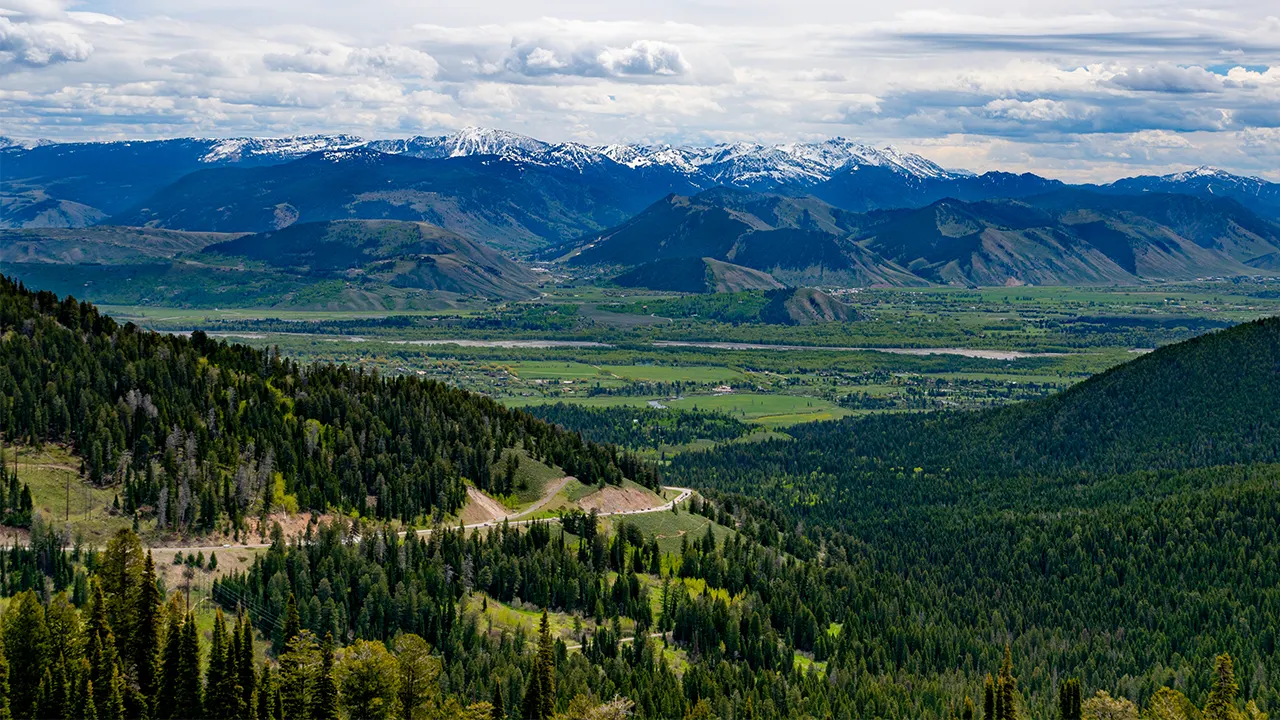
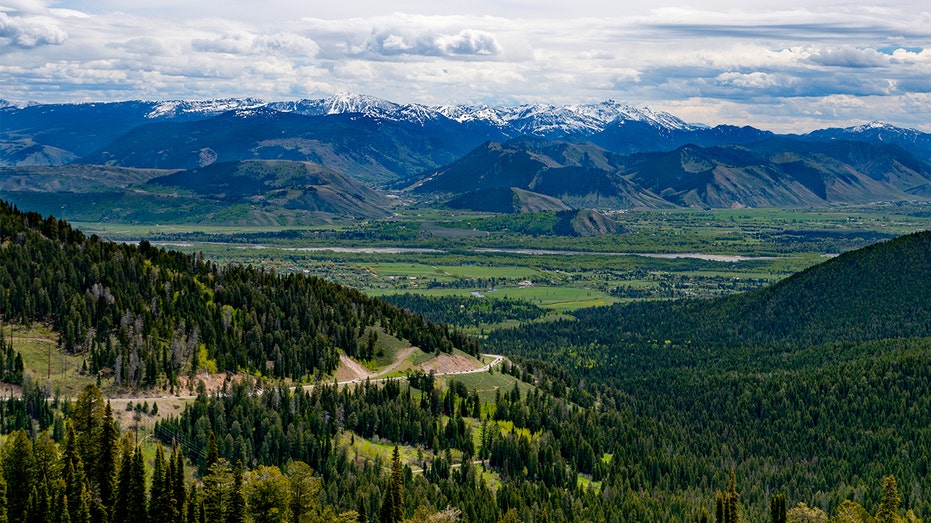
New data from AirDNA, which tracks Airbnb and Vrbo listings, shows Jackson Hole, Wyoming, leading the nation in short-term rental bookings for summer 2026, with 45.5% of properties already reserved between June and August, Realtor.com reported.
Advertisement
Experts say this points to a broader shift in travel preferences.
“We’re seeing a fascinating shift in the short-term rental market for Summer 2026,” Charlie Lankston, executive editor at Realtor.com, told FOX Business in an email. “While a beach house has always been the gold standard, data from AirDNA shows that some travelers are now choosing to trade the ocean for the mountains.”
Jackson Hole’s appeal lies in its mix of outdoor experiences, from whitewater rafting and canoeing to wildlife viewing in Grand Teton National Park, according to Realtor.com.
At the same time, demand is rising sharply in cities set to host matches during the 2026 FIFA World Cup.
“We’re also seeing a World Cup windfall with demand in host cities like Fort Worth and Kansas City increasing drastically,” Lankston told FOX Business.
With hotels in those markets expected to fill quickly, short-term rentals are poised to benefit.
“Between the $750 host incentives from Airbnb and the surging occupancy rates, the 2026 rental season is shaping up to be a lucrative side hustle for many American homeowners in these metros,” Lankston added.


























































You must be logged in to post a comment Login