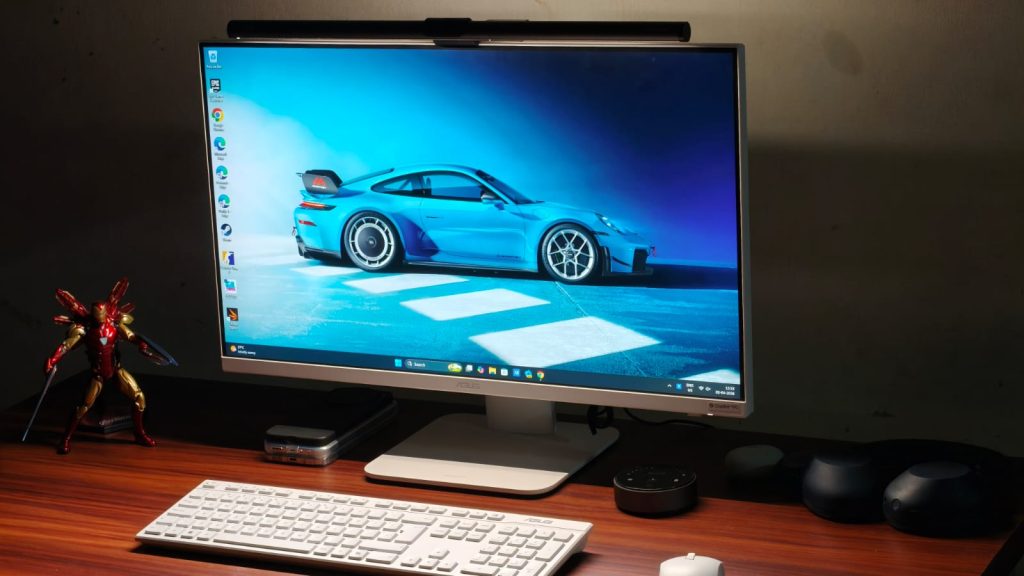
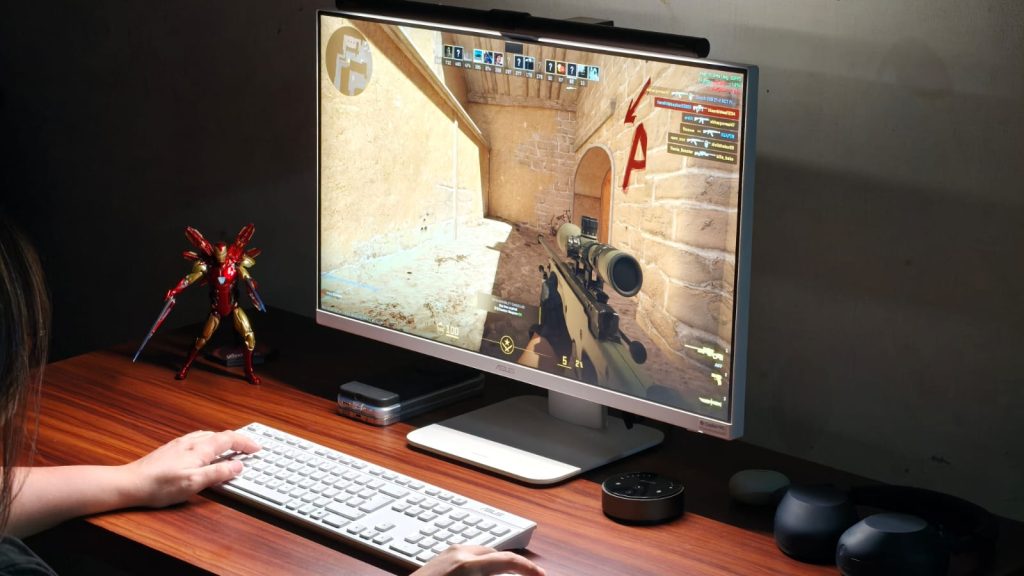
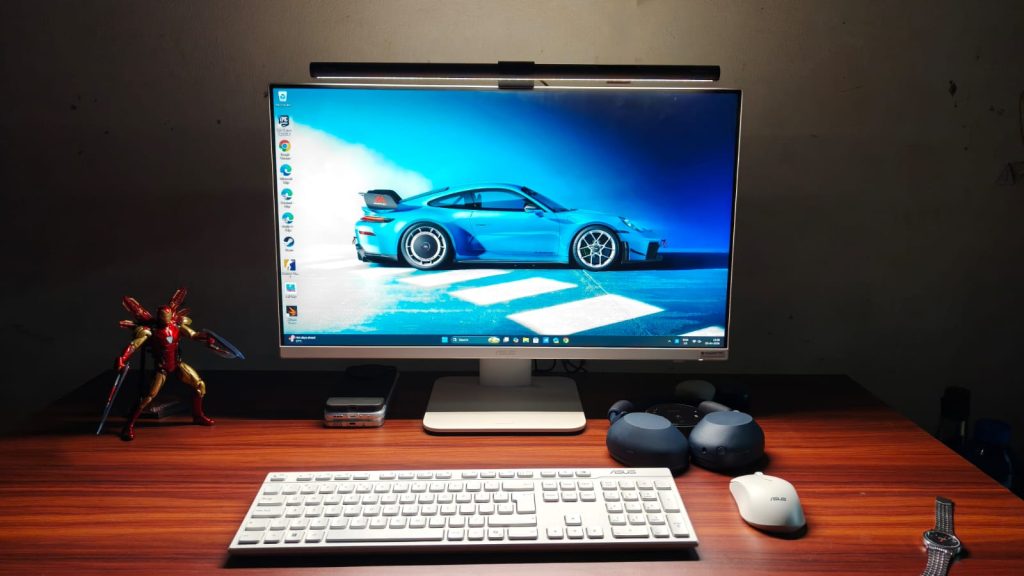
AiOs, or all-in-one computers, have been around for quite some time. And their promise is simple. They give you the big-screen experience of using a desktop, without the hassle of finding the right components and building a PC yourself. Despite me being a tech reviewer, AiOs have had me intrigued for a long time, since, spoiler alert, I cannot build a PC myself. It’s just intimidating, and the risk of ending up with something that doesn’t really work well for my workflow isn’t one I want to take. Asus is one of the few brands active in the AiO market, and their recently introduced VM670KA is the best of the bunch. That’s because it packs Ryzen AI 7 350, 16GB of RAM, and a 27-inch Full HD touchscreen display.
All this at a price of ₹1,12,990 sounds like a pretty sweet deal, especially considering the current world situation, which is plagued by sky-high RAM prices (blame your AI companions, please). But is it though? I called Asus and arranged to have the VM670KA AiO in for review. To do it justice, I swapped my MacBook and used the AiO as my primary WFH machine for over two weeks. Here’s how it stacked up.
Asus VM670KA Review
Hisan Kidwai
Advertisement
Summary
With the Asus VM670KA, you get a big-screen desktop to work or study on without fiddling with a separate PC. The display is plenty decent, albeit a little less pixel-dense than I’d like. The speakers are super, and the performance can handle everyone’s workdays and even some light gaming/video editing. Not to mention the beautiful white design that makes the AiO look sweet.
Advertisement
Design & Hardware
My job as a tech reviewer is to work from home, meaning all I do every day is stare at my MacBook’s screen. It never really occurred to me that a 13-inch screen might be too small. However, the minute I configured the VM670, it struck me how much I was missing out. Everything was spaced out to perfection, which put less strain on my eyes. Coming back to the design, I think Asus has done an excellent job. It’s a sober yet sophisticated AiO that looks premium without being too loud. I do love the white color. Asus has shaved off 25% of the thickness compared to the VM670’s predecessor, and the bottom bezel is now narrower. All this translates to a sleeker setup that can rival any modern monitor.
The AiO comes with a stand that attaches easily with a single screw. The stand is made from metal, and it’s pretty sturdy since I’ve accidentally bumped into the table a few times. While there are no height-adjusting settings, you can tilt the screen up or down, which came in handy when I wanted to work standing up. The only gripe I have with the design is the retractable camera. Sure, it’s a great tool to protect one’s privacy by hiding away the webcam, but it also takes away the ability to mount any monitor lightbar. I’m a fan of those, so it was an annoyance. That said, the webcam quality was solid in artificial lighting.
Unlike modern laptops, the VM670 is full of useful ports. The backside houses three USB 3.2 Gen 1 Type A ports, a USB 3.2 Gen 1 Type-C port, a LAN, a DC-in (for power), an HDMI-in for making the AiO a secondary display for your laptop, and an HDMI-out to connect to external monitors. There’s more, as underneath the belly, there’s one more USB 2.0 port for connecting the keyboard and mouse, an HDMI mode switcher, a Kensington Lock, and a headphone/microphone jack.
Keyboard & Mouse
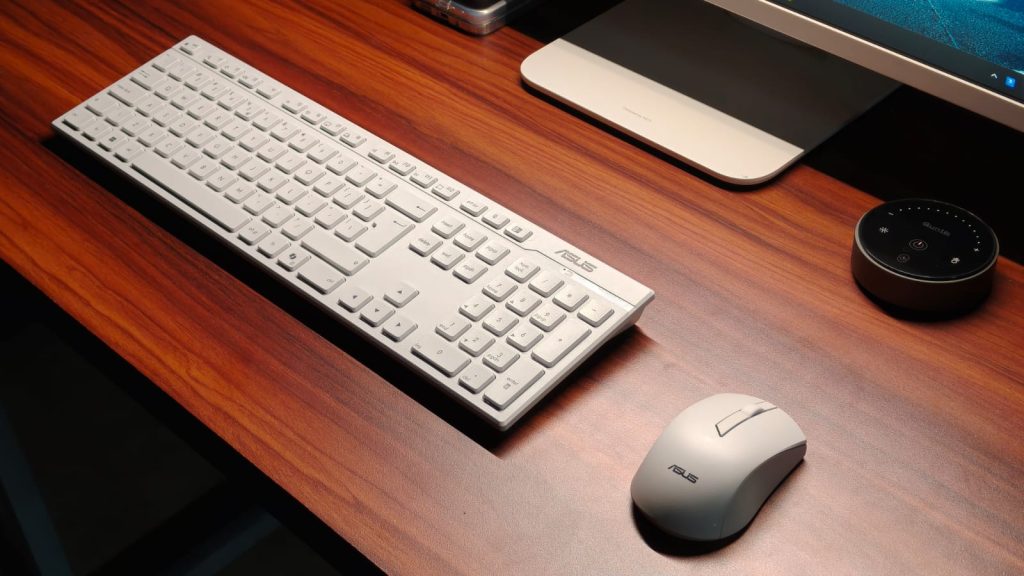
To help you get running quickly, Asus bundles a mouse and keyboard with the VM670, and both connect via a 2.5GHz dongle stored inside the mouse. While I wouldn’t describe the keyboard as groundbreaking, it’s not bad either. There’s ample travel, and there’s some feedback when they are pressed. It’s just that the keys aren’t as sharp as the ones on my MacBook. You can sometimes feel that mushiness, but it’s not a big con, and I did get used to the keyboard quickly, without losing much of my typing speed.
The mouse, on the other hand, is plenty good. I had no problem with its tracking, even when playing some games, for that matter. The grips felt comfortable in my hand, and my wrists, which are super prone to fatigue, did not ache after long periods of use. Beyond that, the clicks were accurate, and the latency wasn’t noticeable to my eyes.
Display & Speakers
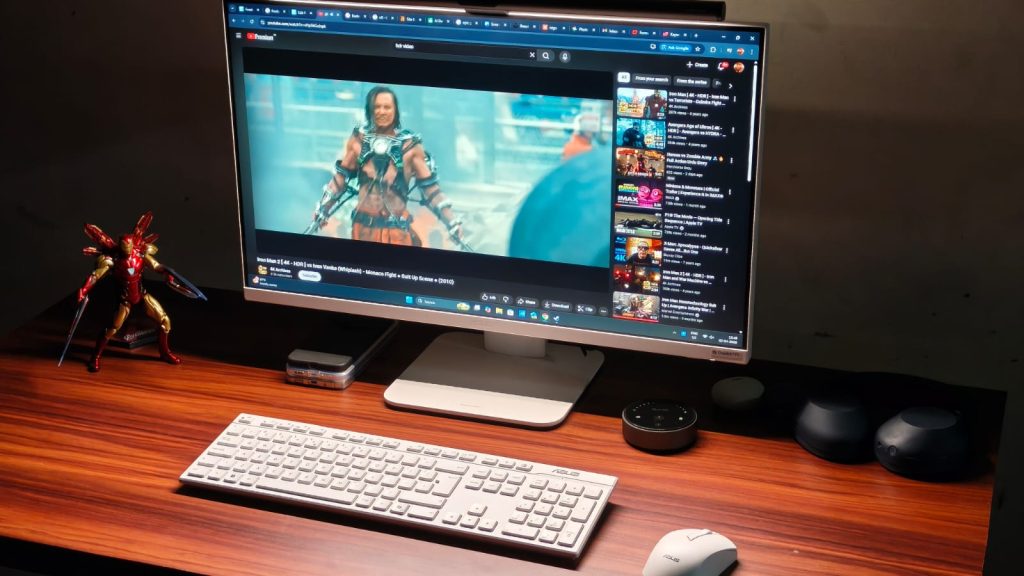
The Asus VM670KA features a 27-inch FHD IPS display with a 93% screen-to-body ratio and a 75Hz refresh rate. When I first got the AiO, I was worried that the 1080p resolution might not be enough for such a large display. Fortunately, I was proven wrong pretty quickly. From a normal viewing distance, I didn’t notice much pixelation when typing this review on the device. Still, I’d have loved to see a 1440p panel at this price. On the flip side, Asus has taken care of the color accuracy, with 100% coverage of the sRGB color space.
I recently caught up to the Breaking Bad hypetrain and decided to watch the season 3 finale on the VM670, and it was a very enjoyable experience. Colors looked super nice, the motion was smooth, and there wasn’t any glare from the light behind me since the display is matte-coated. The Dolby Atmos stereo speakers deserve the same praise as they can easily fill an entire room with powerful sound, without sounding harsh at higher volumes. The bass is decent, and the dialogue remains legible.
Advertisement
As mentioned earlier, the VM670KA has one more trick up its sleeve, and that’s a touchscreen. You might be wondering — what’s the point of a touchscreen on a desktop? The answer to that is children. An AiO makes perfect sense for parents to get for their children who might have online classes or need to work on a project. A touchscreen is a handy tool for that, and makes navigation much simpler.
Performance
Performance is what makes or breaks the experience with AiOs or any desktop, for that matter. If it can’t handle everyday work, then it’s of no use. At the beating heart of the Asus VM670KA sits the AMD Ryzen AI 7 350 processor, with 8 cores and 16 threads, rated for a maximum frequency of 5 GHz. Graphics is handled by the integrated Radeon 860M, and there’s 16GB of LPDDR5x RAM and 1TB M.2 NVMe PCIe 4.0 SSD.
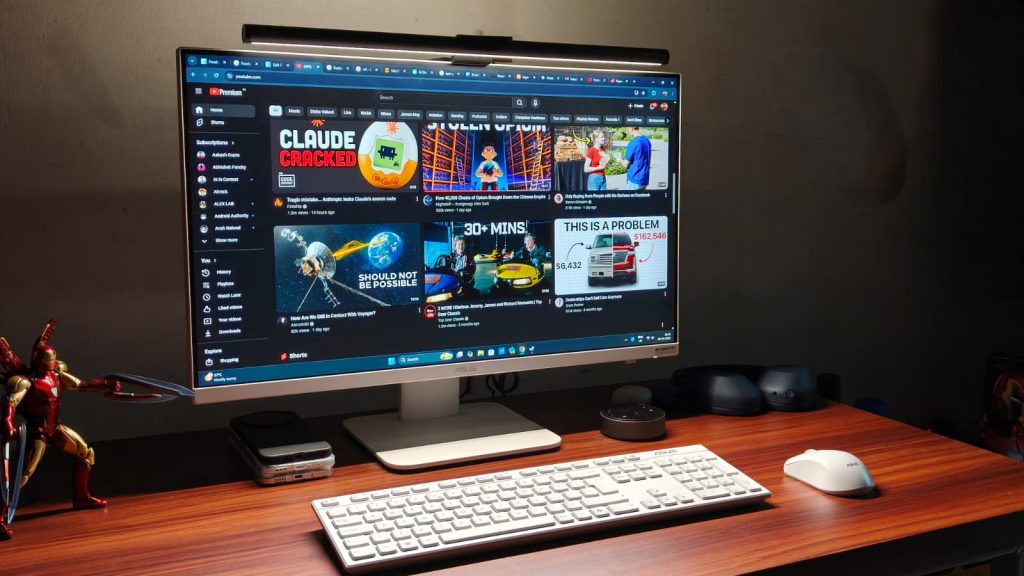
All of this results in strong everyday performance. The VM670 doesn’t struggle with typical workloads at all. Run 30 Chrome tabs at once? Watch HDR videos on YouTube or quickly switch from a game to an eBook before your parents notice. Not a problem. Never once did I notice a stutter in these tasks, and if your work mainly involves the browser, as mine does, then the performance is more than good enough.
I’m no video editor, but as this is a review, I decided to try my hand at it. The experience? Not bad at all. For those who mainly edit reels in 1080p or even 4K, the VM670 packs a punch. The timeline played smoothly, and render times weren’t too high.
While benchmarks don’t tell the full story of performance, they do paint a picture of a device’s performance ceiling. The VM670 scored 2,833 in Geekbench’s single-core and 10,254 in the multi-core test. Then I moved away from stressing the CPU to stressing the GPU, where the Radeon 860M scored 22,042 in the Geekbench test. For context, this performance is similar to that of the Intel Core i7-13620H processor found in the Asus ExpertBook P1.
Advertisement
Can you game?
Given the decent performance and appeal towards children, gaming may be on your radar as well. And I will set the expectations straight. You won’t be able to play AAA titles like Cyberpunk 2077 without dropping the quality to PS3 levels on the Asus VM670KA. If that’s a priority for you, the Strix or ROG line would serve you better.
That said, if you play light titles like Counter-Strike 2, Valorant, Fall Guys, or even F1 2025, then the AiO could be handy. I played all four and got over 60 fps in both Counter-Strike 2 and Valorant at medium settings. Fall Guys hit 60 FPS pretty easily, too, and F1 clocked about 45 FPS in medium settings. GTA V also runs, but the frame rates are limited to about 35-40.
Verdict
At ₹1,12,990, the Asus VM670KA isn’t cheap. But what it promises isn’t something anyone else can do. For the money, you get a big-screen desktop to work or study on without fiddling with a separate PC. The display is plenty decent, albeit a little less pixel-dense than I’d like. The speakers are super, and the performance can handle everyone’s workdays and even some light gaming/video editing. Not to mention the beautiful white design that makes the VM670KA look sweet.
If you’ve upgraded to a new Mac, don’t throw away your old one. Here are some ideas of things you can do to get more out of your older Apple desktop.
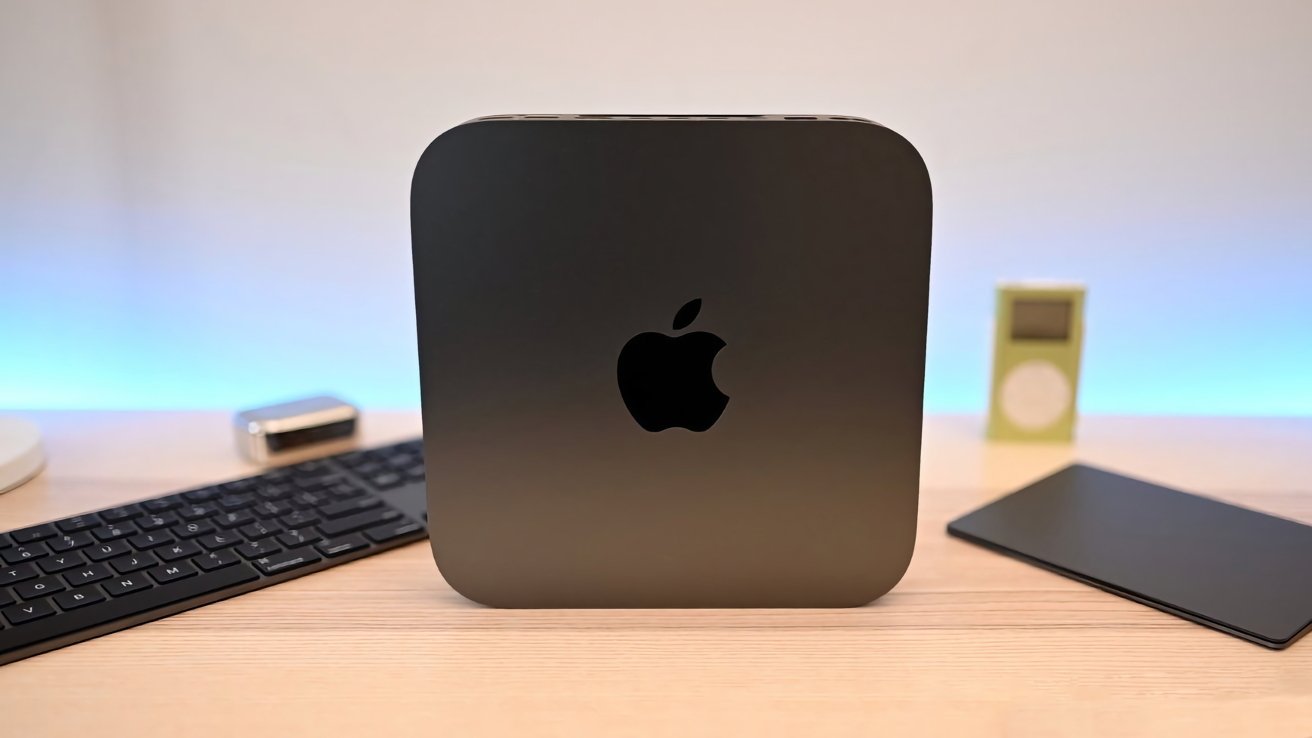
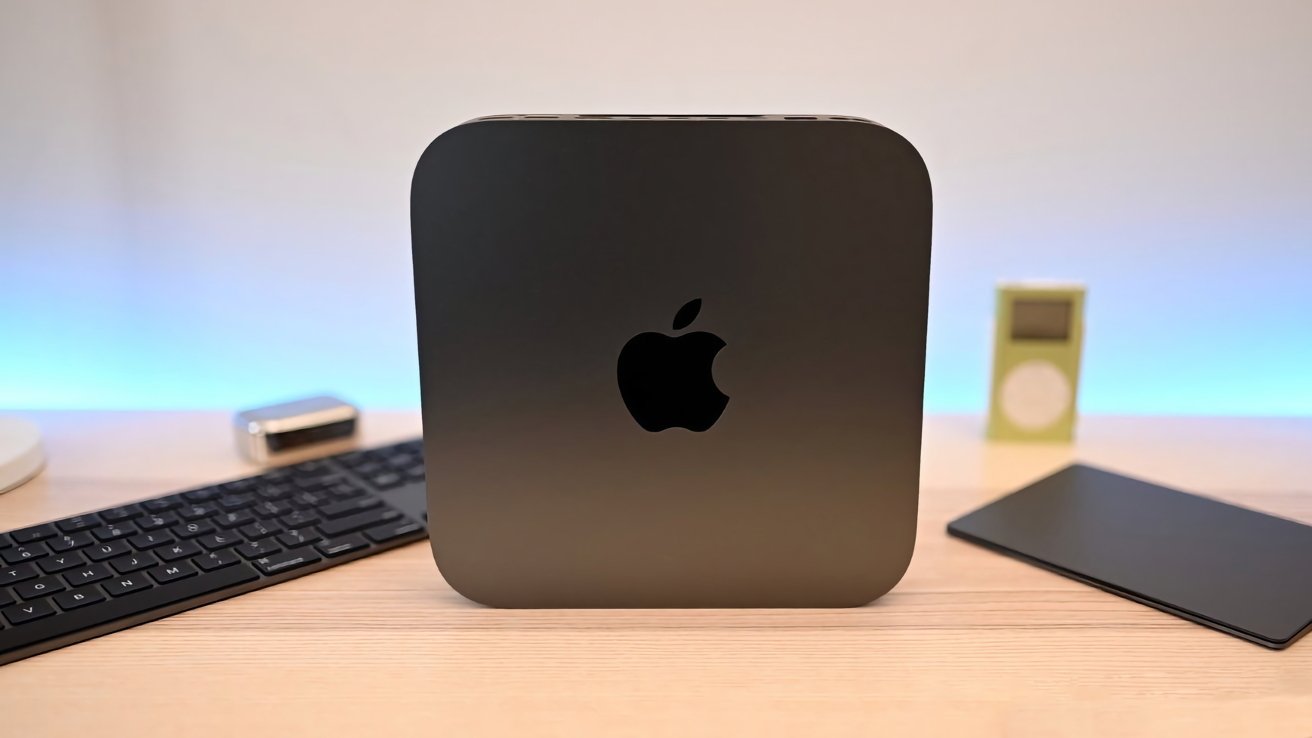
The 2018 Mac mini may be ‘Obsolete’ but it still has its uses.
Buying a new Mac or MacBook can be a thrill. The bump of speed, the extra memory and storage that’s free of clutter, and the unscratched, clean casing can make most Mac users instantly happy. However, after drinking in all the potential of your new digital workspace, you’ll soon be reminded that you still have your old one. After you’ve migrated your software and files over to your new daily driver, it may seem that there’s little point in keeping your old one around. Continue Reading on AppleInsider | Discuss on our Forums
Microsoft is rolling out Windows Update improvements that give users more control over how updates are installed while reducing disruption from frequent or poorly timed restarts.
The company says the improvements are now rolling out to Windows Insiders, following user feedback that highlighted two key issues: updates are disrupting workflows, and there is a lack of control over when they are installed.
“We are continually reading the feedback submitted about the Windows update experience. Personally, I’ve had the opportunity to read over 7,621 direct verbatims over the last few months,” explains Microsoft’s Aria Hanson.
“Across this feedback there are two key themes that persistently pop out: disruption caused by untimely updates and not enough control over when updates happen. The changes we’re rolling out today are focused on giving Windows users more control over their PC experience, while keeping devices secure by design and by default.”
Microsoft has already introduced a new feature that lets Windows users skip updates during the out-of-box experience (OOBE), allowing them to access the desktop faster and install updates when it’s most convenient. This option is not available on managed commercial devices or systems that require updates to function.
Advertisement
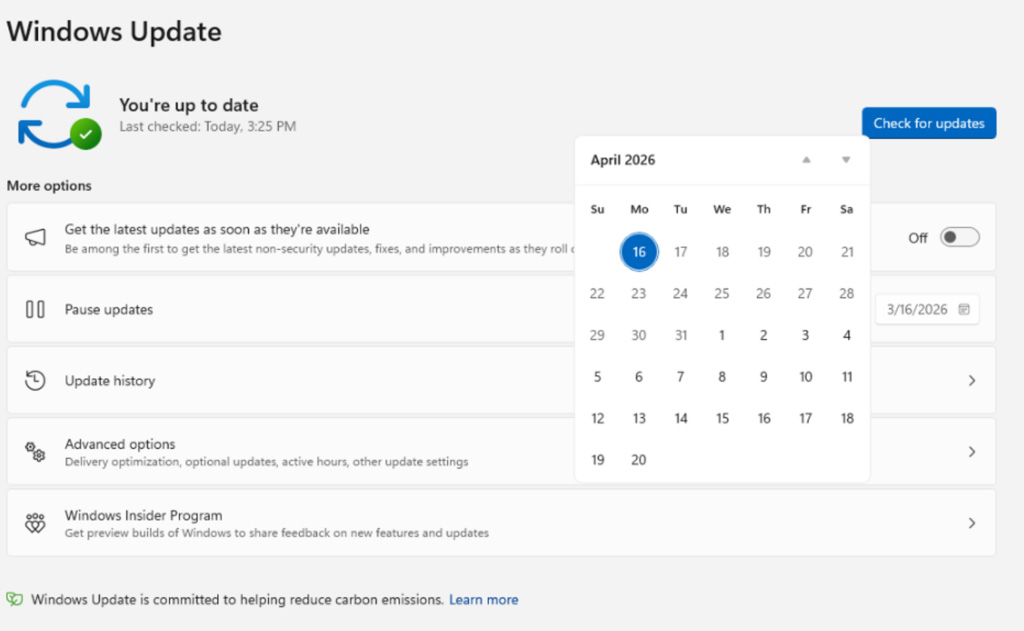
The company is now introducing changes to how update pauses work, allowing Windows users to select a specific date to pause updates for up to 35 days using a flyout calendar interface. This pause can then be extended repeatedly without a fixed limit.
Windows Update calendar flyout for pausing updates Source: Microsoft
Another change targets a common complaint, which is unexpected updates during shutdown or restart.
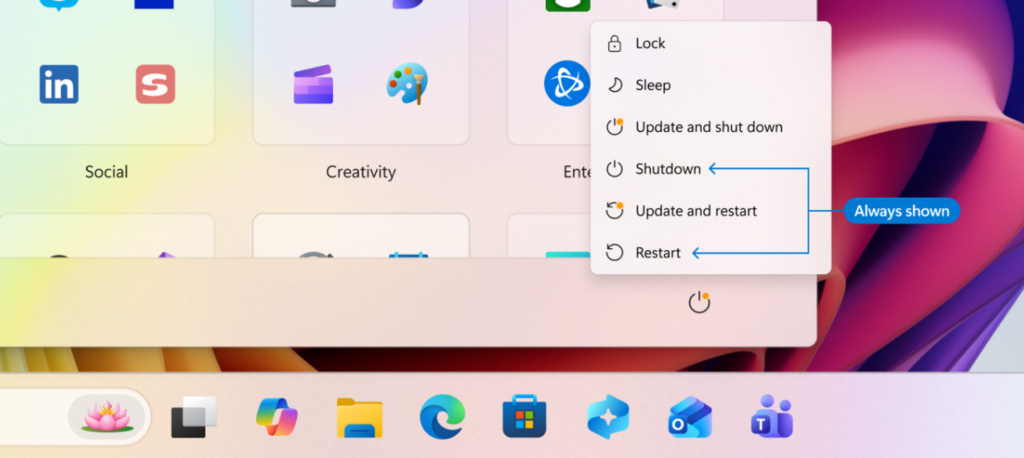
The Power menu will now separate standard power options from update-related actions, offering “Restart” and “Shut down” options without triggering updates, while the normal “Update and restart” and “Update and shut down” options are used when updates are ready to be installed.
New Update and Shutdown options when updates are available Source: Microsoft
Microsoft says they are also going to be clearer about how they offer updates, especially drivers, which are commonly offered under the same company name but without any indication of which device they are for.
Windows Update will now display the device type, such as display, audio, or battery, directly in the update title to help users determine what is being installed.
Finally, Microsoft is reducing disruptions by consolidating different update types into a single monthly restart. For example, Driver, .NET, and firmware updates will now be installed along with the monthly cumulative updates, reducing the number of required reboots.
Advertisement
“Updates will download in the background, then will wait for a coordinated installation and restart. This installation and restart will align with the next Windows quality update or other update that you manually approve,” explains Hanson.
“Users can always acquire all or specific updates earlier if desired by initiating download, install, restart (if applicable) for available updates.”
The features are currently rolling out to Windows Insiders in the Dev and Experimental channels, with them later being rolled out to all users.
AI chained four zero-days into one exploit that bypassed both renderer and OS sandboxes. A wave of new exploits is coming.
At the Autonomous Validation Summit (May 12 & 14), see how autonomous, context-rich validation finds what’s exploitable, proves controls hold, and closes the remediation loop.
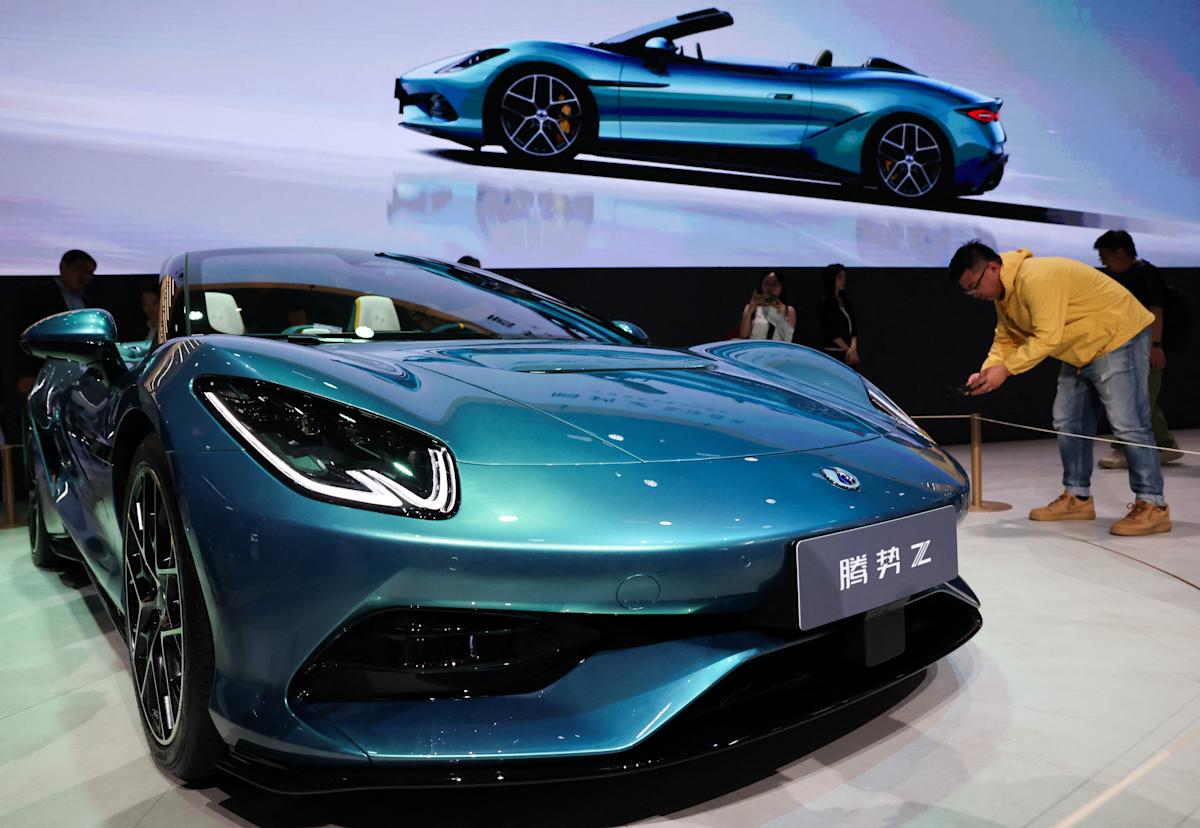
BYD may be known for its affordable all-electric cars, but that doesn’t mean it won’t dabble in the occasional hypercar under one of its subsidiary brands. Through its Denza subbrand, BYD unveiled the Denza Z, a hypercar that can push out more than 1,000 horsepower with an all-electric motor, at the Beijing Auto Show. According to CarNewsChina, the Denza A can hit 0 to 60 mph in less than two seconds, rivaling the likes of the Rimac Nivera.
BYD first showed off the Denza Z as a concept during the Shanghai Auto Show in 2025. A year later, the Chinese EV maker confirmed its latest hypercar as a four-seater that will come in hard-top, convertible and “track” configurations. BYD hasn’t revealed the Denza Z’s full specs yet, so we’re not sure what differentiates the track edition. So far, the company has shared that it would use the company’s intelligent suspension system called DiSus-M, which is similar to Chevrolet Corvette’s Magnetic Ride Control, and its Flash Charging system. BYD also told AutoExpress that the Denza Z will have some of the features seen with the BYD’s YangWang U9, like autonomous driving and “tank turning.”
Surprisingly, BYD is planning to release the Denza Z to Europe first, with an inaugural ride at the Goodwood Festival of Speed in the UK in July. The automaker hasn’t revealed pricing yet, but it should be more available than BYD’s other hypercar under its YangWang subsidiary that’s limited to 30 units.
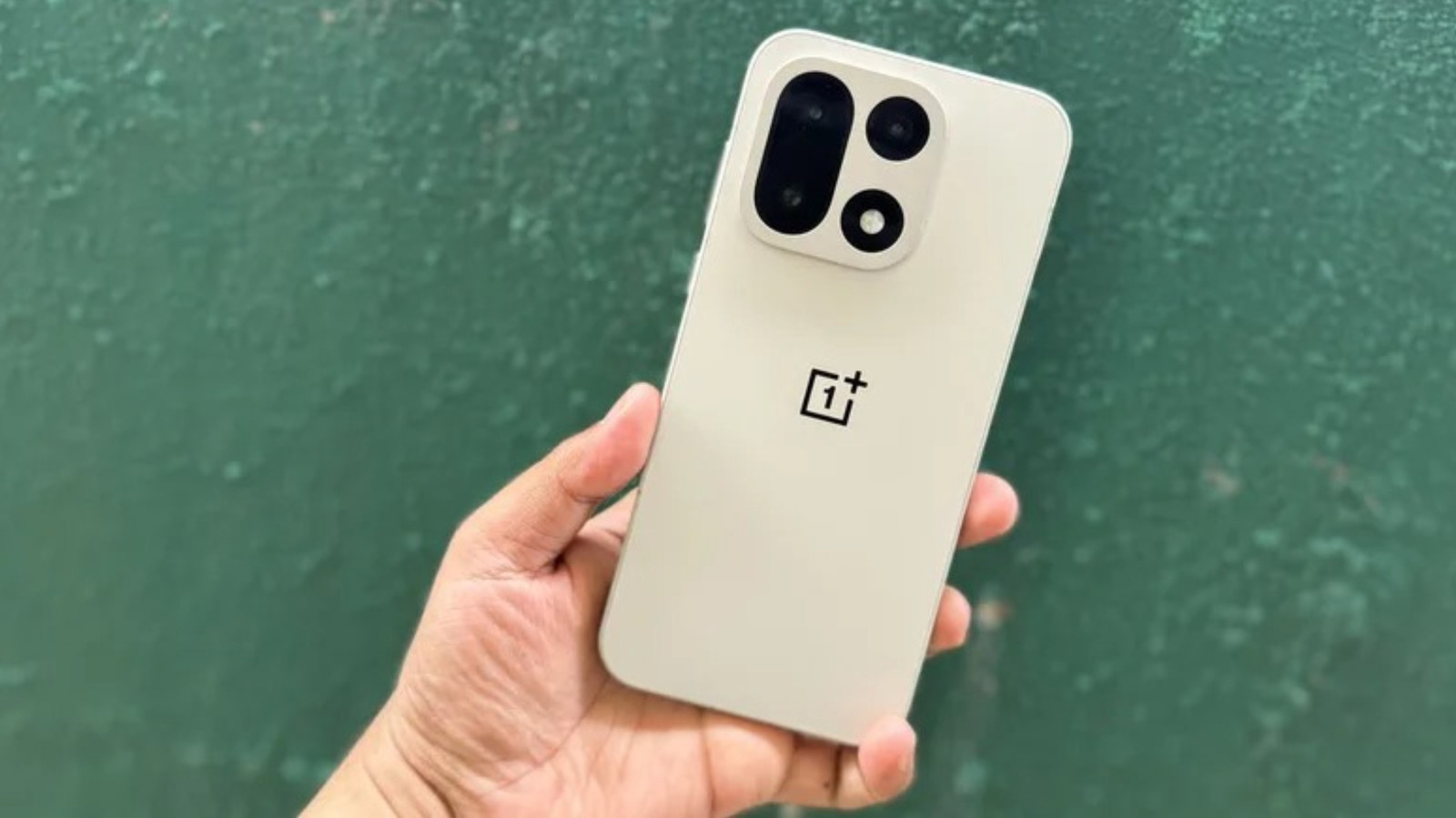
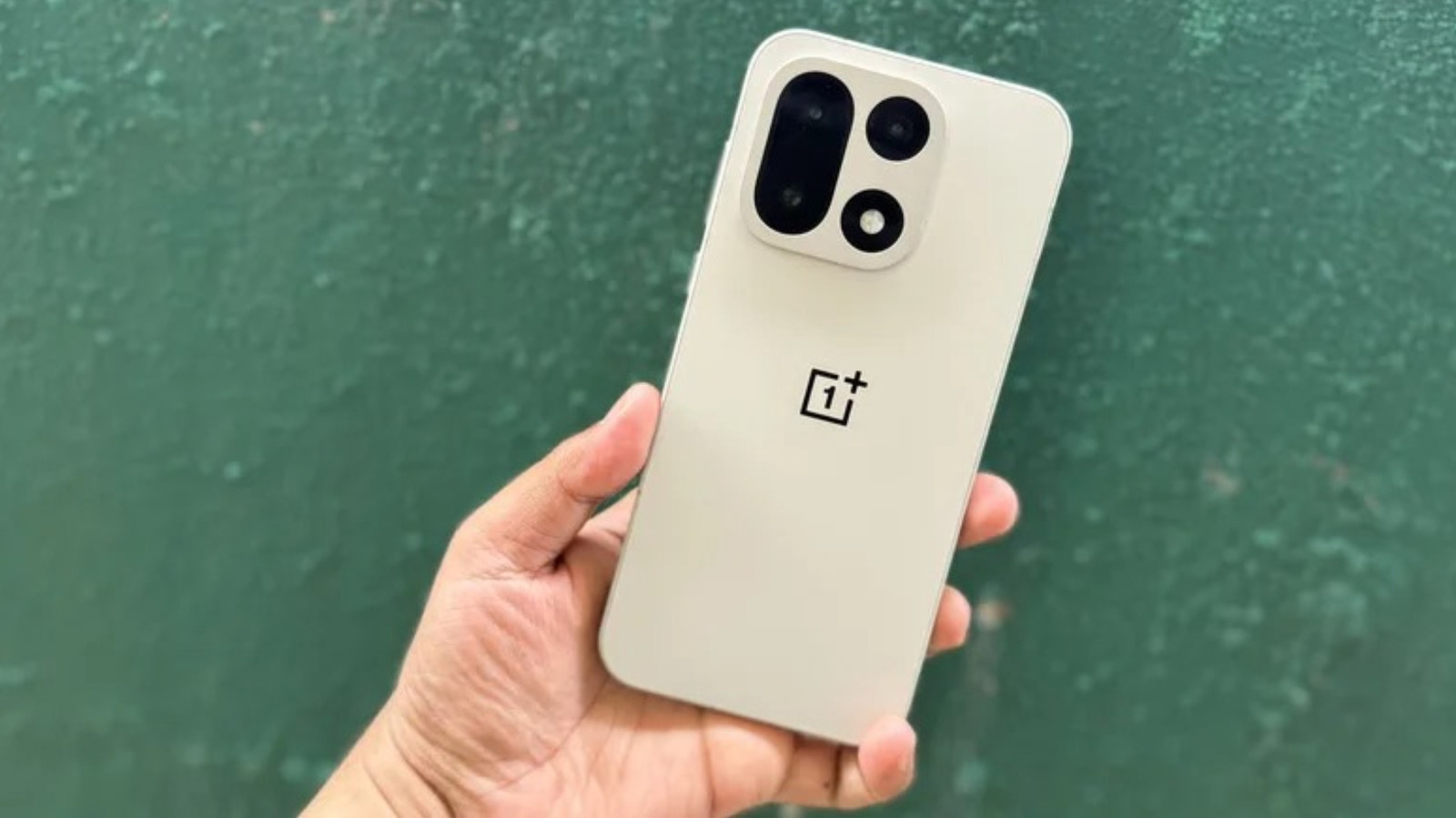
Starting last year, smartphone batteries began doing something previously thought impossible. Battery technology had long been somewhat stagnant, and 5,000 milliamp-hours (mAh) was considered to be on the large side. Batteries of that size can power a flagship phone for one to three days, depending on use patterns and software optimization, but they’re also easy to kill in a few hours if you shoot a lot of video or play demanding video games. But then a new battery technology called silicon-carbon hit the market. We quickly saw phones like the OnePlus 15, which carries a 7,300 mAh cell, and the Honor Power 2, which carries a whopping 10,080 mAh capacity. And these aren’t chunky devices. They’re as sleek as you’d expect a brand-new smartphone in the mid-2020s to be.
Given all of this, smartphone enthusiasts have started to wonder why Apple, Samsung, and Google are late to the party. Battery improvements are one of the most tangible ways to make consumers upgrade their phones. A slightly improved camera might move some photography-forward folks, but a battery that’s impossible to kill before you make it home from work? That’s an upgrade everyone can see the value in. So why did the iPhone 17, the Galaxy S26, and the Pixel 10 all launch with old-fashioned lithium-ion batteries?
Advertisement
YouTuber Marques Brownlee, better known as MKBHD, decided to investigate. His findings were inconclusive, but pointed toward a very simple explanation. Namely, major brands like the big three can’t afford to take risks on an unproven battery technology. So, is that the real reason for the lack of silicon-carbon batteries in Western markets, and if so, does it hold up under scrutiny? Here’s what we know.
Advertisement
Silicon carbon may be too big a risk for major smartphone makers
In his video exploring the rationale driving companies like Apple and Google to hold off on adopting silicon-carbon batteries, Marques Brownlee found a simple explanation. Those companies have brand reputations to maintain, and if there’s a risk that their latest flagship phones could become the next Galaxy Note 7 (which had the worst smartphone recall in history due to thermal runaway issues in its batteries, and was even banned on flights by the Department of Transportation, they’d rather appear behind the cutting edge than face that kind of public crisis. Granted, the Note 7 was powered by lithium-ion batteries.
Brownlee, who has griped about the lack of silicon-carbon batteries in his recent smartphone reviews, claimed that a number of employees at various companies have reached out to him and clarified some of the concerns about the technology. Though he declined to name sources in order to protect their anonymity, Brownlee said the emails were corroborated by other sources he spoke with, who each mentioned concerns around the potential for battery swelling and poor longevity in silicon-carbon batteries.
As Brownlee explained, batteries naturally swell and contract as they heat and cool. It’s a basic principle of physics that affects not only the way batteries are designed, but also buildings, public infrastructure, and more. And, of course, this cycle of expansion and contraction degrades batteries over time. Silicon-carbon batteries expand more than lithium-ion batteries — in fact, as Brownlee notes, the carbon is largely there to absorb the excess stress caused by a power cycle. Given the uncertainty around their safety and longevity, silicon-carbon batteries likely won’t show up in iPhones, Pixels, or Galaxy devices for a bit longer.
Advertisement
The counterpoint: all smoke, no fire
The reason Apple, Google, and Samsung aren’t using silicon-carbon batteries may indeed be that they’re scared to adopt new battery technology before it’s been proven safe, as Marques Brownlee was allegedly told by industry insiders. But the only thing his video actually confirmed, some argue, is that companies are afraid to use the tech, not that their fears are well-founded.
Silicon-carbon battery technology has now been on the market for a while, and adoption truly exploded (pun intended) in 2025 as many Chinese brands rushed silicon-carbon-powered phones to market with enormous cell capacities plastered on their marketing materials. If fears around the stability and longevity of these batteries were warranted, wouldn’t we have seen an epidemic of combusting Honor, Oppo, and Xiaomi phones by now?
Advertisement
It is, of course, possible that issues will show up later. Maybe a bunch of OnePlus 15 devices will start exploding next year, or the year after. Meanwhile, lithium-ion batteries aren’t exactly bulletproof (again, the Note 7 bears mentioning). Many people have experienced the terror of finding their smartphone split open from a swollen battery. It’s just one reason why that old smartphone sitting in your drawer could be a disaster waiting to happen.
Risk-averse tech companies are likely to wait a bit longer before dipping their toes into the silicon-carbon waters, while smaller firms, which have more to gain from impressive spec sheets than they have to lose if a product goes sideways, will keep swimming laps around them. In some ways, that’s a healthy ecosystem. The average consumer who isn’t a tech enthusiast will continue to buy smartphones from safe, mainstream brands, while those who would willingly read an article like this to its conclusion can indulge in the bleeding edge.
China’s Ministry of Commerce warned that US chip export legislation would “severely disrupt” global semiconductor supply chains, responding to the House Foreign Affairs Committee’s April 22 markup of 20+ export control bills, the largest in congressional history. The centrepiece is the MATCH Act, which would require the Netherlands and Japan to align DUV lithography export restrictions with US rules within 150 days or face unilateral enforcement, cutting off ASML’s remaining China sales and banning servicing of existing machines. China has already enacted comprehensive supply chain security regulations and rare earth restrictions, while the US simultaneously builds domestic capacity through CHIPS Act investments and the $25B Terafab project.
China’s Ministry of Commerce warned on Friday that US legislation advancing through Congress would “severely disrupt the international economic and trade order and seriously undermine the stability of the global semiconductor industry chain and supply chain.” The legislation in question is the MATCH Act, the Multilateral Alignment of Technology Controls on Hardware, which passed the House Foreign Affairs Committee on April 22 as part of what lawmakers described as the largest markup on semiconductor export controls in congressional history. The bill would require the Netherlands and Japan to align their chip equipment export restrictions with American rules within 150 days or face unilateral US enforcement, including an expanded Foreign Direct Product Rule that would give Washington jurisdiction over equipment containing any American technology, regardless of where it was manufactured. If enacted, the MATCH Act would cut off China’s access to the DUV immersion lithography machines that ASML still sells there and ban the servicing of machines already installed, a step that would affect every advanced and near-advanced fab in the country.
Advertisement
The markup
The House Foreign Affairs Committee advanced more than 20 export control bills on April 22, chaired by Representative Brian Mast. The MATCH Act, introduced by Representative Michael Baumgartner on April 2, has bipartisan support in both chambers. Senators Jim Risch, Pete Ricketts, Andy Kim, and Chuck Schumer introduced the Senate companion on April 8. The bill names SMIC, Huawei, Hua Hong, CXMT, and YMTC as “covered facilities,” including all subsidiaries and affiliates, and would prohibit the export of DUV immersion lithography equipment to any of them. It would also ban allied firms from providing engineering services to maintain or upgrade machines already operating in Chinese fabs, a servicing restriction that would degrade existing capacity over time as machines require regular maintenance to sustain yield.
The committee also advanced the Chip Security Act, which would require advanced chips to include location verification mechanisms before export so that exporters can flag the government if a chip reaches an unauthorised destination. The Semiconductor Industry Association opposes this provision, warning of “untested and potentially infeasible on-chip mechanisms” that could undermine global trust in American semiconductors. The ECRA Penalty Increase Act would quadruple civil penalties for export violations, raising the per-violation ceiling from $300,000 to $1.2 million. The ECRA Statute of Limitations Extension Act would double the window for prosecution from five to ten years. The Deterring American AI Model Theft Act would authorise sanctions on Chinese AI firms accused of misusing US-developed models.Smuggling $2.5 billion of Nvidia servers to China, as Super Micro Computer’s co-founder is alleged to have done through a diversion scheme routed via Southeast Asia, demonstrates both the scale of demand for restricted chips and the limits of an enforcement regime that relies on declared end-use and corporate compliance teams.
The escalation
The MATCH Act would be the most significant escalation in US semiconductor export controls since the initial restrictions imposed in October 2022. Those rules prohibited the export of advanced computing chips and chipmaking equipment to China. They were updated in October 2023 to close loopholes, expanded in December 2024 to cover high-bandwidth memory and additional equipment, and supplemented in January 2026 when the Trump administration imposed a 25% Section 232 tariff on advanced semiconductor imports and shifted the export review policy for Nvidia’s H200 and AMD’s MI325X from presumption of denial to case-by-case evaluation. Blackwell-class chips remain under presumption of denial. The January 2026 changes were partly a response to pressure from Nvidia, whose CEO Jensen Huang had dinner with Trump at Mar-a-Lago and argued that overly restrictive controls would push Chinese AI labs toward domestic alternatives.DeepSeek optimising AI models for Huawei chips instead of Nvidia hardwareis, in Huang’s words, “a horrible outcome” for the United States, because it would break the software dependency on Nvidia’s CUDA ecosystem that currently gives American chips their lock-in advantage.
The MATCH Act moves in the opposite direction from the January relaxation. Where the executive branch loosened restrictions on finished chips, Congress is tightening restrictions on the equipment used to make them. The logic is that controlling equipment is more effective than controlling chips because a lithography machine is a $200 million tool that requires years of servicing by the manufacturer, while a chip is a commodity that can be rerouted through intermediaries. ASML, the sole manufacturer of both EUV and the most advanced DUV immersion lithography systems, has seen its shares fall since the bill’s introduction. China accounted for 33% of ASML’s 2025 revenue. The company expects that share to drop to approximately 20% in 2026 even without the MATCH Act. If the bill passes, the decline would be far steeper. Applied Materials projects $600 million to $710 million in lost China revenue for fiscal 2026. Lam Research reported that China still accounted for 43% of its Q1 fiscal 2026 revenue, $2.28 billion, but expects that share to fall below 30% this year.
Advertisement
The response
China’s countermeasures are already extensive. Beijing imposed export bans on gallium, germanium, and antimony in December 2024, suspended them in November 2025 for one year but retained licensing requirements. It restricted exports of seven medium and heavy rare earths, including terbium, dysprosium, and yttrium, in April 2025, then partially suspended those restrictions in November 2025. It announced silver export controls on December 31, 2025. On April 7, 2026, the State Council published Order No. 834, the “Regulations on Industrial and Supply Chain Security,” which creates a unified legal framework monitored by more than 15 agencies, including MOFCOM and the Ministry of Industry and Information Technology, authorising legal action against companies deemed to be harming China’s supply chains. China has mandated that domestic chipmakers procure 50% of their equipment from Chinese suppliers, a requirement that threatens an estimated $18 billion in annual US equipment sales. The MOFCOM statement on Friday said China would “resolutely take necessary measures to firmly safeguard the legitimate and lawful rights and interests of Chinese enterprises.” No specific new retaliatory measures were announced, but the regulatory architecture for them is now in place.
The supply chain consequences extend well beyond the two principal combatants. Japan, whose Tokyo Electron, Nikon, Canon, Screen Holdings, and Advantest all sell equipment to Chinese fabs, already implemented controls on 23 types of equipment in July 2023. The MATCH Act would require Japan to expand those restrictions within 150 days or lose access to American technology in its own supply chain. The Netherlands faces the same deadline. South Korea’s memory giants, SK Hynix and Samsung, operate fabs in China that depend on equipment servicing from the companies the MATCH Act would restrict.The EU’s 700 million euro investment in its NanoIC semiconductor pilot lineat imec in Leuven, backed by ASML and national governments, reflects Europe’s assessment that the chip supply chain is fragmenting and that building domestic capacity is no longer optional.
The race
China’s semiconductor industry has made genuine progress under pressure. SMIC is producing 7-nanometre chips for Huawei’s Kirin processors and is working to double 7nm capacity in 2026. It has entered pilot runs at 5nm, targeting mass production for Huawei and Alibaba, though yield improvement remains the critical challenge. CXMT is mass-producing DDR5 and LPDDR5 memory and is targeting HBM3 production, though the timeline has slipped and mass production within 2026 now appears unlikely. YMTC is expanding NAND flash output and developing HBM packaging technologies. Huawei is reportedly preparing to send a 3nm chip design using carbon nanotubes and 2D materials to SMIC, an unconventional approach that has not been independently confirmed with technical detail. China’s semiconductor self-sufficiency rate was approximately 33% in 2024 and is estimated at roughly 50% in 2025. The new target, embedded in the 15th Five-Year Plan, is 80% by 2030, with priorities including a fully domestic 7nm equipment line and stable 14nm production. Tom’s Hardware assessed that China remains “still a decade behind, despite hundreds of billions spent and significant progress.”
The United States is pursuing the inverse strategy: restricting China’s access to equipment while building domestic manufacturing capacity at unprecedented scale.The US government’s $36 billion stake in Intel under the CHIPS Act, converted from grants to equity, funds fab construction in Ohio and Arizona.Intel’s foundry partnership with Musk’s $25 billion Terafab chip megaprojectadds another advanced manufacturing facility. TSMC is building fabs in Arizona. Samsung is expanding in Texas. The theory is that export controls buy time for domestic capacity to come online, at which point the United States can supply its own advanced chips and those of its allies without depending on a supply chain that runs through a geopolitical adversary. The problem is that the timeline for building fabs is measured in years, the timeline for Congressional legislation is measured in months, and the timeline for retaliatory export restrictions on rare earths and critical minerals is measured in days. China’s warning on Friday was not that the MATCH Act would fail to restrict its chip industry. It was that the disruption would not be confined to China. When both sides of a supply chain use restriction as a weapon, the chain does not hold. It fragments, and everyone pays the cost of rebuilding separate ones.
In the last few years, drone cameras have become ever more accessible to the point where they are no longer a specialist’s device. While there are still plenty of options for professionals who need top-of-the-line specs for film and TV productions, budding content creators can get their hands on drones with a simplified UI that’s easy to get to grips with. Whatever your background, we’re here to help with our round-up of the best drones to buy.
For anyone who’s thinking about buying their very first drone, know that the big allure of these devices is their ability to capture stunning cinematic shots of wide open vistas, and to follow subjects/objects from above as they move through an environment. Once upon a time, such a shot was only really possible via a crane or helicopter, but now drones have taken charge as they’re much easier to manoeuvre and set up.
As drone cameras have only grown in popularity, there’s now more choice than ever but that does mean that in order to get paired up with the one that’s right for you, it helps to make a list beforehand of your must-have features. For instance, if you plan on jumping between multiple locations in a day then portability is key, whilst those who are shooting at a professional level and are likely to stay in one location for a while will know that a high-end resolution is essential.
Bear in mind that there are also several legalities to consider when it comes to drone ownership. In the UK, any drone weighing over 250g can only be flown by a registered operator. Anything less than that will require you to get an official Flyer ID, so it’s best to check the official government advice before deciding on which drone to buy.
Advertisement
Once you’re all caught up on the advice and have a solid idea of the features you want the most, our guide can help you with your purchase to make your money go even further. Of course, there’s always a chance that you might be better served by a different type of camera or equipment. For smooth, stable footage, the best smartphone gimbals can get the job done brilliantly, whilst the best action cameras are ideal for fast-paced scenes.
Best drones at a glance
Advertisement
SQUIRREL_ANCHOR_LIST
Learn more about how we test drones
We thoroughly test camera drones with hours of flight time, as well as capturing sample photos and videos. We’ll always tell you what we find and we never, ever accept money to review a product.
Advertisement
Pros
Three superb cameras
Flexible camera gimbal
Long battery life
Omnidirectional obstacle sensors plus LiDAR
Quiet operation
Cons
Expensive – and no US price yet
Weight makes it subject to flight restrictions
Pros
Excellent image quality
Superb flight and safety features
Pocket-sized design
Cons
Battery life falls short of expectations
Some confusion over weight
Pros
249g weight circumvents most drone restrictions
Omnidirectional vision sensors
Excellent image quality
Cons
Not cheap by small drone standards
Average low light image quality
Pros
Weighs under 250g
Front-facing sensor
Good flight performance
Solid photo and video performance
Cons
No omnidirectional obstacle avoidance
Pros
Great value as an entry-level drone
Stunning overall video and image quality
Lightweight and portable design
Cons
Can’t quite match the DJI Mini 3 Pro for preformance
Photos lose quality when cropping
No Active Track
Pros
Makes FPV flying easier than ever
Lightweight Goggles 3 with pass-through video
Good battery life
Impressive camera performance
Cons
Weight restricts legal UK flight locations
Quite expensive
Three superb cameras
Flexible camera gimbal
Long battery life
Omnidirectional obstacle sensors plus LiDAR
Quiet operation
Expensive – and no US price yet
Weight makes it subject to flight restrictions
Even if you’ve only had a cursory glance at this list, you’ve probably already noticed that DJI rules the roost where drones are concerned. Part of DJI’s success is down to the features it implements with each device, but also the range of drones available to suit a variety of budgets. The Mavic series has long been the go-to choice for creators at the higher end of the scale, but with the DJI Mavic 4 Pro, the company has just taken things to a whole new level.
Advertisement
Starting with the highlight feature, the Mavic 4 Pro has not one, not two but three separate cameras built in, providing three distinct fields of view which give you more flexibility to find the exact shot you want from the scene that you’ve settled on. If you want to get a sprawling shot of the landscape, or a tracking shot of one person walking through a luscious forest, you have the tools to do so with this drone.
What will probably be the biggest boon however for those who own the Mavic 3 Pro, and any of DJI’s earlier drones, is that the battery life has now been extended so that it can run for up to 51 minutes on a single charge. As any filmmaker or content creator knows, sometimes having that bit of extra charge in the tank can make all the difference in getting that one shot that makes it into the final edit. For this alone, the Mavic 4 Pro is worth the investment.
Even though you might not be too fussed about obstacle detection if you’re a skilled drone handler, DJI’s technology in this area has finally seen a massive leap forward in efficiency. With LiDAR in tow, the low-light vision sensors can now easily pick up whether or not the drone is in danger of crashing into an object after dark, which is just so much more helpful for peace of mind when engaging in night-time shoots.
You can also capture plenty of detail when shooting with the Mavic 4 Pro. Not only can you shoot 4K 120fps for fast paced action scenes, but there’s also capacity for 6K 60fps for rich, cinematic style footage that’ll help your project to stand out from the crowd. No matter which mode you’re shooting in, the drone still manages to be impressively quiet in operation, so you’re far less likely to disrupt local habitats when out on location.
Advertisement
Excellent image quality
Superb flight and safety features
Pocket-sized design
Battery life falls short of expectations
Some confusion over weight
Advertisement
DJI’s Mini-series of drones has long been our go-to recommendation for entry-level buyers given how easy they are to use, not to mention how compact they are compared to the larger drones on the market. Well, the DJI Mini 5 Pro isn’t just a great addition to that esteemed lineup; it arguably shows the world exactly why DJI is at the top of its game right now in the world of drones.
The typical trade-off with getting one of DJI’s Mini drones is that while you get the type of portability that makes carrying these devices a breeze, you don’t get quite the same level of capture quality that more heavy-duty drones are capable of. Well, with a massive one-inch sensor onboard the Mini 5 Pro, that compromise now feels like a thing of the past.
It’s one heck of an achievement, and the result of having this upgraded sensor is that the DJI Mini 5 Pro can capture a lot more detail, especially in lower light where previous compact drones would have fallen short. HDR performance is now equally excellent, giving all areas of a shot the attention they deserve, so your eyes can drift and spot new points of interest in a single photo.
When it comes to video capture, it’s not a massive leap over the DJI Mini 4 Pro, but that’s no bad thing. You can shoot crisp 4K footage at up to 60fps, or bump it to 120fps for slow-motion video for a bit of cinematic flair. There’s also D-Log M and HLG colour profiles available, giving more freedom to intermediate users who might want to add their own distinct look to footage after the fact.
Advertisement
The one thing holding back the DJI Mini 5 Pro is the issues that arise over its seemingly fluctuating weight. Our test unit came in at 253g but that doesn’t seem to be a consistent number, which is why DJI has labelled the device as a “near-250g drone”. Because it can exceed the 250g limit that would require a licensed operator to fly the drone in the UK, anyone living there should be careful to follow official drone law to make sure that they’re not at fault.
249g weight circumvents most drone restrictions
Omnidirectional vision sensors
Excellent image quality
Advertisement
Not cheap by small drone standards
Average low light image quality
The DJI Mini 4 Pro is the best of DJI’s sub-250g Mini series, making it our recommended choice for hobbyists and professionals looking to fly their drone in the UK with the fewest restrictions possible.
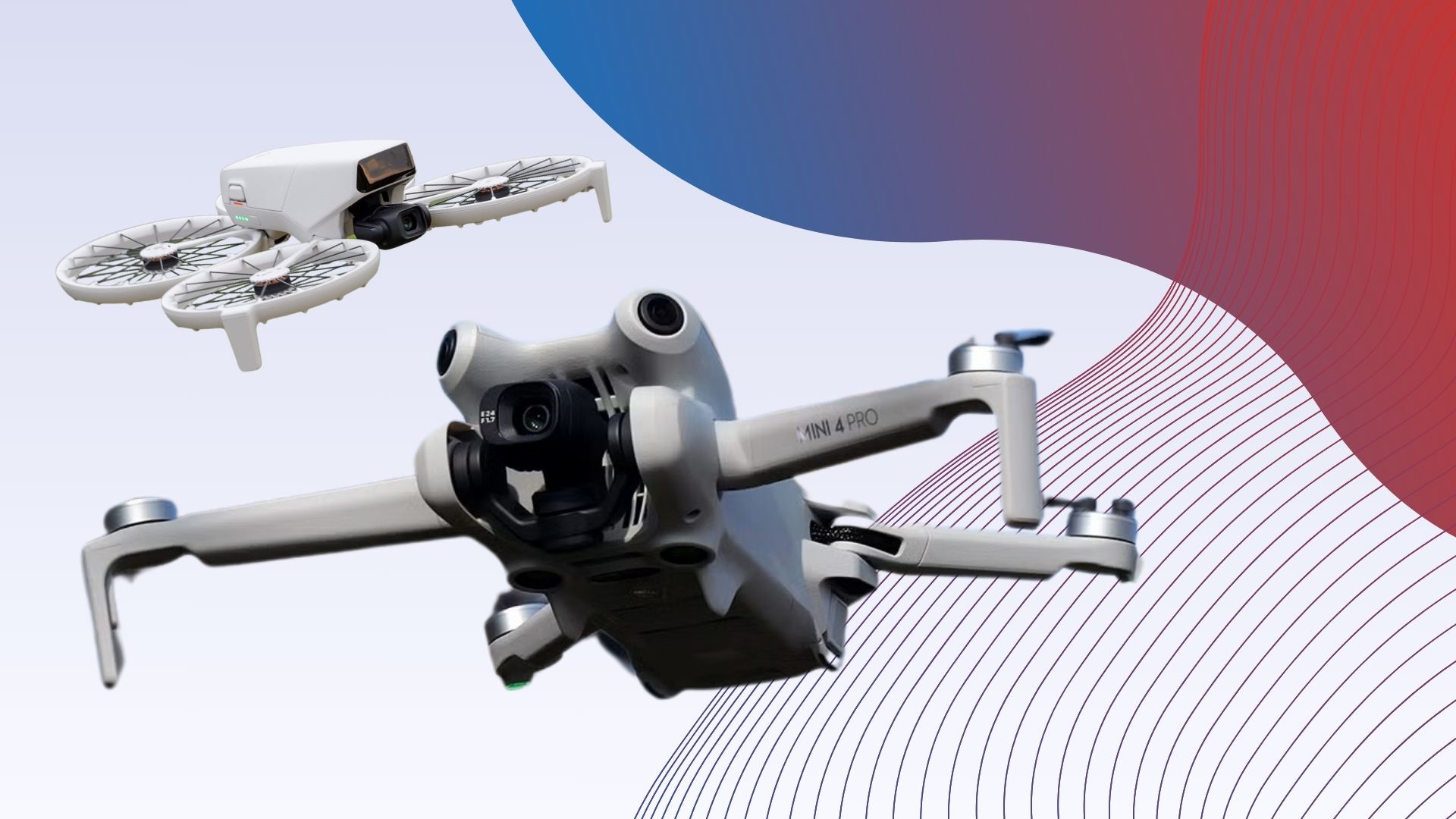
The DJI Mini 4 Pro costs slightly more than its predecessor, the DJI Mini 3 Pro, but with this new price comes some small but significant upgrades. The drone is also a fraction of the price of the flagship Mavic 3 Pro.
The DJI Mini 4 Pro is a small, lightweight drone that collapses down tiny enough to fit in a large coat pocket.
Advertisement
The simple twin-stick control setup is responsive and allows for precise movements. The Mini 4 Pro can travel as fast as 16m/s in S mode and the four motors are strong enough to ensure the drone remains steady in winds of up to 10.7m/s.
Key features include obstacle avoidance via vision sensors, with the Mini 4 Pro covering more angles and directions than the Mini 3 Pro. We found that the sensors work well but it’s worth noting they aren’t as effective in low-light conditions. The Mini 4 Pro also includes an improved version of DJI’s ActiveTrack subject tracking, along with ActiveTrack 360 to circle your subject while moving up and back or forward without crashing.
Inside the drone is a gimbal-stabilised 12-megapixel, 1/1.3-inch CMOS sensor with support for 4K video at up to 60fps, or slow-motion 4K at up to 100fps. There’s also 1080p/200fps for those looking to increase the frame rate even further. The new imaging processor supports 10-bit colour up from 8-bit through the D-Log M profile for a wider colour gamut and greater dynamic range.
Stills can be captured at 12-megapixels or 48-megapixels thanks to the Quad Bayer sensor, but low light performance can be hit and miss – especially when compared to results from the larger sensors in DJI’s Mavic drones.
Advertisement
When it comes to battery life, the Mini 4 Pro delivers the same 34 minutes of flight time as the Mini 3 Pro.
Weighs under 250g
Front-facing sensor
Good flight performance
Solid photo and video performance
Advertisement
No omnidirectional obstacle avoidance
The DJI Flip is an entry-level folding quadcopter, ideal for first-time flyers looking for a lightweight and affordable drone for casual use or dipping their toe into the world of aerial photography.
Weighing below 250g, the Flip is subject to fewer regulatory restrictions in the UK than larger, heavier drones. This allows it to be flown in public places and within 50m of uninvolved people as long as you pass a basic online exam and pay £11 for an operator ID.
Beyond its weight, the Flip features an innovative folding design that stacks the four prop motors on top of each other when not in use. Prop guards are also incorporated into the design, preventing the propellers from colliding with objects or people and making the Flip suitable for indoor flight.
Advertisement
We found the Flip to be easy and safe to fly, offering an impressive 31-minute battery life despite its weight, though it can fall closer to 20 minutes when you factor in manoeuvres and camera use.
The Flip offers multiple flight control options, including the RC 2 controller, the DJI Fly app and even hand gestures – a feature also found on the DJI Neo. The drone can take off and land on your palm and includes AI-assisted subject tracking.
This drone only includes a forward-facing sensor for detecting objects in its way. If you want an ultra-light drone with full, omnidirectional object sensing, you’ll need to pay out for the DJI Mini 4 Pro. Wind resistance is also limited, though any lightweight drone would also struggle in the conditions we put the Flip through.
Moving on to the camera, this drone features a 1/1.3-inch CMOS sensor with a 24mm equivalent lens. The camera is capable of capturing 48-megapixel stills and 4K HDR video at up to 60fps, or 100fps when recording slow-motion content.
Advertisement
Photos can be captured in JPEG or DNG RAW, while the D-Log M colour profile allows video to be colour-graded in post. While you’ll get superior results from a premium drone such as the DJI Air 3S, our reviewer was more than happy with the Flip’s photo and video performance with the drone producing excellent results in good lighting.
Great value as an entry-level drone
Stunning overall video and image quality
Lightweight and portable design
Advertisement
Can’t quite match the DJI Mini 3 Pro for preformance
Photos lose quality when cropping
No Active Track
The DJI Mini 3 is another small drone, sitting just below the Mini 3 Pro in DJI’s Mini 3 line-up. While not as well-equipped as our favourite drone, the Mini 3 remains an excellent entry-level option that delivers a lot for its low price.
The Mini 3 looks very similar to the Mini 3 Pro and weighs the same 249g thanks to its thin plastic construction. At 148 x 90 x 62mm, the drone is small enough to slip into a coat pocket and the low weight means it falls under a less restricted category of UK drone law than larger drones like the DJI Mavic 3.
There’s a USB-C port for charging and file transfers as well as a microSD slot for storage, and the drone is compatible with the same choice of two controllers supported by the Mini 3 Pro.
Advertisement
Unlike the Mini 3 Pro, the Mini 3 doesn’t benefit from front and back sensors to help detect and avoid obstacles around it and avoid collisions. Instead, the Mini 3 sticks to downward-facing sensors which only aid stability and landing so you’ll need to be a little more careful when flying this drone.
The drone itself is very responsive and easy to fly with no discernable delay between the twin joystick controllers and the drone’s reactions and 720p live feeds are clear and stable. The device has a maximum control range of 6km.
The Mini 3 is capable of hitting speeds of up to 16m/s in windless conditions and we found the drone did a decent job of withstanding coastal wind despite its tiny size. Furthermore, the battery life is even longer than that on the Mini 3 Pro at 38 minutes to the Pro’s 34 minutes.
There are also features like automatic take-off, landing and return-to-home available here, along with some automated shot modes. However, unlike the Mini 3 Pro and the DJI Mavic 3, there’s no Active Track tracking so you will need an actual person to control the drone if you want the camera to follow you around.
Advertisement
The 12-megapixel 1/1.3-inch CMOS sensor is a downgrade compared to the Mini 3 Pro’s camera, but the ability to snap 12-megapixel stills and shoot 4K/30fps video is still impressive for an entry-level drone.
Makes FPV flying easier than ever
Lightweight Goggles 3 with pass-through video
Good battery life
Impressive camera performance
Advertisement
Weight restricts legal UK flight locations
Quite expensive
The DJI Avata 2 is the best drone we’ve tested for FPV flight and the ideal gateway for those interested in it.
If you’re looking for a drone that handles more like a plane than the steady DJI Mini, Air, and Mavic, zipping through the sky and allowing you to bank, roll, and loop through the air, then the Avata 2 is the one for you.
The Avata 2 is sleeker and around 40g lighter than its predecessor, the DJI Avata, with a reworked design for improved aerial agility and responsiveness. The drone also includes 46GB of built-in storage and a microSD slot for expansion.
Advertisement
Despite its reduced weight, the 380g drone remains too heavy to fit into the sub-250g class, meaning the drone cannot be flown over or closer than 50m to ‘uninvolved people’ or within 150m of residential, recreation, commercial, or industrial sites under UK law.
The drone comes with DJI’s Goggles 3 headset and RC Motion 3 controller, allowing you to see what the drone sees on two 100Hz 1080p micro OLED displays. There’s also a camera built into the Goggles 3, allowing you to check your surroundings without pausing to remove the headset.
The Avata offers similar speeds to its predecessor, including 8m/s in Normal mode, 14m/s in Sport mode and 27m/s in Manual, with the latter requiring the twin-stick Remote Controller 3 rather than the RC Motion 3. Manual mode removes the stabilisers, allowing for exhilarating dives and turns, albeit with a higher risk of crashing. If you’re keen to avoid damage to your drone, you’ll likely want to stick with the Normal and Sport modes.
The drone features improved camera specs compared to the original DJI Avata, though video resolutions and frame rates remain mostly unchanged. The ultra0wide camera can capture 4K video at up to 60fps, or 2.7K at up to 120fps, but low-light performance and the dynamic range have been bolstered, allowing the drone to draw more detail out of interiors and night-time shots than its predecessor.
Advertisement
The Avata 2 can now shoot video with a 10-bit D Log M colour profile for easier colour grading in post-production, and the HorizonSteady and RockSteady image stabilisation modes found on other DJI drones are available. We found these modes to be effective at providing smooth, horizon-locked footage.
Finally, the DJI Avata 2 includes a 23-minute battery life. If you’re searching for a user-friendly introduction to FPV flying, the Avata 2 is a great (though expensive) choice.
Advertisement
FAQs
Do I need a license to fly a drone in the UK?
According to the CAA, “you do not need to register if you’ll only use a drone or model aircraft that weighs below 250g and is a toy or does not have a camera”.
However, all other drones will need to be registered and the owner must register for either a flyer or operator ID, depending on if they plan to fly it or are just responsible for managing and maintaining the drone.
Advertisement
What are the rules for flying a drone in the UK?
You can find all of the rules you’re required to follow as someone with a drone in the UK on the CAA’s website.
The Pixel 10a by Google is without a doubt the best budget phone in 2026 (as far as we know), and there are many reasons for this. It will set you back a mere $449 (was $499) and provides a flagship Android phone experience that will fit comfortably into your hand.
Dimensions are pretty standard as well: 153.9 mm x 73 mm x 9 mm (if one likes to be precise, then 6.06 inches x 2.87 inches x 0.35 inches). This way it is simply perfect as it is not that big or small. The design looks quite attractive as well, since thanks to its flat surface and silky texture it is easy to grip, even while carrying a purse, keychain, and some additional items. And finally, since it is waterproof, one does not need to worry about damaging it in case of rain.
Google Pixel 10a is a durable, everyday phone with more[1]; snap brilliant photography on a simple, powerful camera, get 30+ hours out of a full…
Unlocked Android phone gives you the flexibility to change carriers and choose your own data plan; it works with Google Fi, Verizon, T-Mobile, AT&T…
Pixel 10a is sleek and durable, with a super smooth finish, scratch-resistant Corning Gorilla Glass 7i display, and IP68 water and dust protection[4]
Next comes the 6.3 inches Actua display that truly blows one away with its brightness peaking at 3,000 nits allowing for perfect viewing even in full sunlight. You will not have any problems reading your map or watching movies during train rides due to this great feature. It supports a refresh rate of 120Hz, providing flawless scrolling without annoying screen lag.
Advertisement
The camera system of the Pixel 10a has the most potential in its class, thanks to the presence of a wide-angle camera with a resolution of 48 megapixels and an ultrawide camera with a resolution of 13 megapixels. No matter whether the weather is sunny or close to evening, the image quality will be amazing. On top of that, with a Tensor G4 processor and 8 gigabytes of RAM, you won’t notice any delays while using the phone.
Battery life isn’t really an issue either, since 30 hours is more than enough for anyone, even with video streaming, GPS mapping, and messaging on various networks at the same time. In case you want to play it safe, you always have the choice to enable the Extreme Battery Saver mode, which will provide you with an additional five days of battery time, although you’ll never really use it.
It’s the first time in these game jams that we’ve had a double winner: Geouug also won the prize for Best Visuals with As I Lay Flying. But where that was a physics-based game rich in graphical details, I Could Do That! is simple and streamlined, using a single mechanic to deliver a bit of commentary about attitudes towards abstract art. The game is based around Piet Mondrian’s 1930 painting Composition with Red, Blue and Yellow, and you’ve probably heard more than one person deliver the game’s title as a reaction to that painting or another piece of superficially simple abstract art: it’s just some lines and colors! I could do that!
Although there are many robust and serious rebuttals to that reaction, the game delivers a playful and somewhat cheeky one. It says: so do it.
After being given a moment to look at the painting, the player is delivered to a blank canvas with some simple drawing tools, where they must try to reproduce it as faithfully as possible. Keeping the correct composition in your memory is harder than it might sound!
Once you’re done, the game performs a rigorous pixel-by-pixel comparison, giving you both a numerical score and a visualization of what you got right.
Of course, in essence, it’s a memory game. But the subject matter makes it feel like something more than that: it centers your mind on composition and balance, which are precisely the things that the painting invites the viewer to contemplate, and becomes a deceptively impactful exercise in thinking about abstract art. It’s novel, funny, and well-executed, and for that it’s this year’s Best Digital Game.
Congratulations to Geouugfor the win! You can play I Could Do That! in your browser on Itch. We’ll be back next week with the final winner spotlight, and don’t forget to check out the many great entries that didn’t quite make the cut. And stay tuned for next year, when we’ll be back for Gaming Like It’s 1931!
The iPhone camera has come a long, long way since its humble 2 MP origins. Now many people consistently rank it as the best smartphone camera option, period, though that is of course always up for debate. Beyond image fidelity, what arguably appeals most about the iPhone camera is how easy and straightforward it is to use. It is point-and-shoot in the truest sense. Most casual photographers never need to open the settings because the defaults will take beautiful pictures for them at any time of day, in any situation. However, a handful of settings changes can eke just a bit more out of the iPhone camera.
To change camera settings on the iPhone, simply open the Settings app and scroll down to Camera. All of the settings we will look at today can be found there — we won’t be looking at any in-app settings or third-party camera apps. We’ve chosen some tweaks that will make your photos look better, make them easier to shoot, and round off some of the rough edges of the iPhone camera app.
Advertisement
Preserve Settings
Jordan Wirth/SlashGear
Whenever you use the iPhone camera, most changes you make to the in-app settings generally reset by the time you open the app again. If, say, your camera was in portrait mode when you last used it, it will open again in the default photo mode. This can get really annoying.
Perhaps you never, ever use Live Photos, either because you have no use for them or they take up too much space. Even if you turn it off, you’ll find your iPhone keeps taking them and occasionally ruining what should be normal, static shots. Luckily, the “Preserve Settings” feature means that the next time you snap a shot, your iPhone will remember the previous camera selection for a specific setting — Live Photos will be off until you reenable it, per our example.
Scroll down a bit to the Preserve Settings section. You’ll find it just below the settings for video resolution. Now, feast your eyes. Almost every major camera setting has its own toggle. If you take a lot of video, for example, you can make sure the camera reopens in video mode rather than photo mode; if you prefer night photography with the flash setting on, you can preserve that instead of the iPhone defaulting back to auto; you can make sure that Action Mode (the super-stable camera mode for shots with lots of movement) remains on. You get the idea.
Advertisement
Level
Jordan Wirth/SlashGear
Tell me if this has happened to you before: you take a picture of a gorgeous landscape, only to find later that your camera was askew by a couple of degrees. Fixing this is easy. Using the crop tool, you can straighten the photo, but that will trim a bit off the photo’s edges, potentially putting a damper on an otherwise majestic, sweeping shot. The easiest way to prevent tilted photos forever — in both portrait and landscape orientation — is with the iPhone’s built-in Level. Similar to the Measure app’s level that can turn your iPhone into a bubble level, the camera level encourages straightened shots before you take them.
Scroll down to the Composition section below where you previously found “Preserve Settings.” Here you’ll find a number of settings helpful for perfecting social media shots, like an overlay grid. Just below it is “Level.” Toggle this on, and now anytime you use the camera app and you’re taking a slightly off-kilter shot, a guide will pop up. It gently indicates you to turn your phone until you have one unbroken, yellow line, signifying that the camera is level. It only turns on if your camera is pointed straight forward, and positioned straight up and down; it won’t appear in other shooting situations where it could be annoying. Without this thing, I probably would have a ton of landscape pictures annoyingly tilted like a pinball machine.
Advertisement
Prioritize Faster Shooting
Jordan Wirth/SlashGear
Back in school, there used to be this prank where you’d open someone’s iPhone camera (the only thing you could usually access when locked) and then take dozens and dozens of selfies as quickly as possible so the next time they opened their camera roll, they’d have to delete perhaps hundreds of silly pictures. One reason you could do that is probably iPhone’s Prioritize Faster Shooting setting.
Apple says this setting is “intelligently adapt[ing] image quality when rapidly pressing the shutter.” In layman’s terms, your iPhone is processing photos less (making them look worse) to avoid interrupting a fast sequence of shots. Great if you take a fair amount of blink-and-you’ll-miss-it type shots; a model sashaying down the runway, for example. Not so great if you tend toward more static imagery and want every shot to bring the full weight of the iPhone’s image processing to bear.
Advertisement
Scroll down past the photo capture section to find a lone Prioritize Faster Shooting toggle. For a lot of people, it’s probably the best if you just turn this one off. Anecdotally speaking, the delay when disabled is very, very minimal. But if it ever does get in your way, it will take you all of three seconds to turn it on for the situations where you need the camera to churn out pictures as fast as it can. Here are some more iPhone camera settings you can change for better photos.
Advertisement
Lock Screen Swipe to Open Camera
Jordan Wirth/SlashGear
There are a lot of ways to open the iPhone’s camera from the lock screen. You can press and hold the camera icon, press the Action button (iPhone 15 Pro and above), press the Camera Control button (iPhone 16 and above), or swipe left on the lock screen. One to three options too many, depending on whom you ask. Luckily, any iPhone updated to iOS 26 can disable the latter. Some people found it to be incredibly annoying; you might accidentally open the camera instead of, say, clearing away a notification. Whatever the reason, if you don’t use it you might as well turn it off and prevent accidental misfires.
Scroll all the way to the bottom and the second to last toggle will say “Lock Screen Swipe to Open Camera.” Make sure it’s set to off unless you need it. Since there are so, so many ways to open the camera on the iPhone — especially if you have a newer model with the Action button and or Camera Control button — you very likely won’t miss it.
Advertisement
Camera Control
Jordan Wirth/SlashGear
The new Camera Control feature introduced in the iPhone 16 lineup was meant to bring your smartphone one step closer to a DSLR — an all-in-one shutter controlling zoom, exposure, depth, tone, and more. However, users are mixed on the feature, with many — myself included — only using it to open the camera and nothing else. Anyone who’s used it knows it’s quite finicky and not at all intuitive. Often, just using the options already available to you right there on the screen do a much better job. If that describes how you feel about Camera Control, you’ll be happy to know you can change or completely disable the button.
Camera Control has a separate section within camera settings, with a surprising amount of customization. Options to change how many clicks it takes to open the camera, to enable Visual Intelligence with a press and hold, and customization options when swiping back and forth; the latter is great because you can un-check the many settings tied to camera control and focus on just one, like zoom.
Even better, you can have the Camera Control button open a different app entirely. It can be set to use a third-party camera, social media camera, the Magnifier, the Code Scanner, or nothing at all. Unfortunately, Apple does not allow you to use the Camera Control button as a second “Action button” for changing focus modes or running shortcuts. But if you find you never really use the Camera Control, you might as well put it to some use or just shut it off to avoid accidental presses.
Sam Altman apologised to the community of Tumbler Ridge, British Columbia, for OpenAI’s failure to alert police after its own systems flagged a ChatGPT user who went on to kill eight people and injure 27 in Canada’s deadliest school shooting since 1989. Approximately a dozen OpenAI employees had reviewed the flagged account in June 2025 and some recommended reporting to law enforcement, but leadership overruled them, applying a “higher threshold” that the conversations did not meet. OpenAI has since lowered its reporting threshold and established contact with the RCMP, but all changes are voluntary, and Canada has no law requiring AI companies to report identified threats.
Sam Altman published an open letter to the community of Tumbler Ridge, British Columbia, on Thursday, apologising for OpenAI’s failure to alert law enforcement after its own systems flagged a user who went on to carry out the deadliest school shooting in Canada in nearly four decades. “I am deeply sorry that we did not alert law enforcement to the account that was banned in June,” Altman wrote. “While I know words can never be enough, I believe an apology is necessary to recognize the harm and irreversible loss your community has suffered.” The letter, dated April 23 and released publicly a day later, arrived 72 days after Jesse Van Rootselaar, 18, killed eight people and injured 27 others in a shooting that began at a family home and ended at Tumbler Ridge Secondary School on February 10. OpenAI’s automated abuse detection had flagged Van Rootselaar’s ChatGPT account eight months earlier, in June 2025. Approximately a dozen employees reviewed the flagged conversations, which described scenarios involving gun violence, and some recommended contacting Canadian police. Company leadership decided against it. The account was banned. No one was told. Van Rootselaar created a second account and was not detected until after the RCMP released a name.
Advertisement
The decision
The Wall Street Journal first reported the internal debate at OpenAI. The employees who reviewed Van Rootselaar’s flagged account saw what they described as signs of “an imminent risk of serious harm to others.” They escalated their recommendation to report the conversations to law enforcement. Leadership applied what an OpenAI spokesperson later called a “higher threshold” for credible and imminent threat reporting and concluded the activity did not meet it. The account was terminated. The conversations were preserved internally. The police were not contacted. Eight months later, Van Rootselaar killed her mother, Jennifer Strang, 39, and her 11-year-old half-brother, Emmett Jacobs, at the family home, then drove to the secondary school and opened fire with a modified rifle, killing education assistant Shannda Aviugana-Durand, 39, and five students aged 12 and 13: Zoey Benoit, Ticaria Lampert, Kylie Smith, Abel Mwansa, and Ezekiel Schofield. Twenty-seven people were injured. Maya Gebala, 12, was shot three times in the head and neck while shielding classmates and sustained what doctors described as a “catastrophic, traumatic brain injury” with permanent cognitive and physical disability. Van Rootselaar died by suicide at the school.
The civil lawsuit filed in BC Supreme Court in March by Cia Edmonds on behalf of her daughter Maya alleges that ChatGPT provided “information, guidance, and assistance to plan a mass casualty event, including the types of weapons to be used, and describing precedents from other mass casualty events or historical acts of violence.” The specific content of the conversations has not been made public. BC Premier David Eby said he deliberately did not ask what was in the chat logs to avoid compromising the RCMP investigation. What is known is that OpenAI’s own system identified the conversations as potentially dangerous, that OpenAI’s own employees recommended action, and that OpenAI’s leadership chose not to act. The apology is not for a failure of detection. The detection worked. The apology is for what happened after detection worked.
The letter
The 💜 of EU tech
The latest rumblings from the EU tech scene, a story from our wise ol’ founder Boris, and some questionable AI art. It’s free, every week, in your inbox. Sign up now!
Advertisement
Altman’s letter was addressed to the Tumbler Ridge community and released after BC Premier Eby disclosed that Altman had agreed to apologise during earlier discussions about OpenAI’s handling of the case. “I have been thinking of you often over the past few months,” Altman wrote. “I cannot imagine anything worse in the world than losing a child.” He added: “I reaffirm the commitment I made to the mayor and premier to find ways to prevent tragedies like this in the future. Going forward, our focus will continue to be working with all levels of government to help ensure something like this never happens again.” The letter contained no specific policy commitments, no description of what OpenAI would change, and no acknowledgement that employees had recommended reporting the account and been overruled. Eby called the apology “necessary” but “grossly insufficient for the devastation done to the families of Tumbler Ridge.” Tumbler Ridge Mayor Darryl Krakowka acknowledged receipt and asked for “care and consideration” while the community navigates the grieving process.
The policy commitments came separately, in a letter from OpenAI vice-president of global policy Ann O’Leary to Canadian federal ministers. O’Leary wrote that OpenAI had lowered its reporting threshold so that a user no longer needs to discuss “the target, means, and timing” of planned violence for a conversation to be flagged for law enforcement referral. The company has enlisted mental health and behavioural experts to help assess flagged cases and established a direct point of contact with the RCMP. O’Leary stated that under the updated policies, Van Rootselaar’s interactions “would have been referred to police” if discovered today. The changes are voluntary. They are not legally binding. They can be reversed at any time. Canada has no law requiring AI companies to report threats identified through their platforms, and the federal government has not yet introduced one.
The pattern
Tumbler Ridge is not an isolated case.Florida has opened the first criminal investigation into an AI companyafter ChatGPT allegedly advised the gunman in a mass shooting at Florida State University, including guidance on how to make a firearm operational moments before the attack that killed two people and injured five. NPR reported on April 23 that “OpenAI is under scrutiny after two mass shooters used ChatGPT to plan attacks.” Seven families have separately sued OpenAI over ChatGPT acting as what their attorneys describe as a “suicide coach,” with documented deaths in Texas, Georgia, Florida, and Oregon. In another case, OpenAI is being sued for allegedly ignoring three warnings about a dangerous user, including its own internal mass-casualty flag. The number of reported AI safety incidents rose from 149 in 2023 to 233 in 2024, a 56% increase, and the 2025 and 2026 figures will be significantly higher.
The pattern that connects these cases is not that AI systems are spontaneously generating violence. It is that AI companies are identifying dangerous behaviour on their platforms and making internal decisions about whether to act on it, decisions that carry life-and-death consequences but are governed by no external standard, no legal obligation, and no regulatory oversight.The deeper risks of emotional dependency on AI chatbots, including the phenomenon researchers have termed “AI psychosis,” raise questions about what happens when systems optimised to sustain engagement become confidantes for users in crisis. OpenAI’s “higher threshold” for reporting was a business judgement, not a legal standard. The employees who recommended contacting police applied their own moral reasoning. The executives who overruled them applied a different calculus, one that presumably weighed the reputational and legal risks of reporting against the reputational and legal risks of not reporting, and got it catastrophically wrong.
Advertisement
The safety question
OpenAI announced an external safety fellowship hours after a New Yorker investigation reported it had dissolved its internal safety team, a sequence that captures the company’s approach to safety governance with uncomfortable precision. The superalignment team, led by Ilya Sutskever before his departure, was disbanded. The AGI-readiness team was dissolved. Safety was dropped from OpenAI’s IRS filings when the company converted from a nonprofit to a for-profit structure.OpenAI’s own robotics chief resigned over safety governance concerns, specifically objecting that “surveillance of Americans without judicial oversight and lethal autonomy without human authorization are lines that deserved more deliberation than they got.” The external fellowship, the voluntary policy changes, and Altman’s letter all share a common characteristic: they are gestures that OpenAI controls. They can be announced, modified, or withdrawn without external approval. They create the appearance of accountability without the mechanism of it.
OpenAI’s recent release of open-source safety policies for teen userscovers graphic violence, dangerous activities, and other harm categories. OpenAI itself described these as a “meaningful safety floor,” not a comprehensive solution. The gap between floor and ceiling is where Tumbler Ridge happened. The system flagged a teenager describing gun violence scenarios. The policy said that was not enough to report. The teenager went on to kill eight people. A lower threshold would have triggered a report to the RCMP. Whether the RCMP would have acted on it, whether Canadian law would have permitted intervention based on ChatGPT conversations, whether any of that would have prevented the shooting are questions that cannot be answered because the report was never made. OpenAI’s updated policy now says it would make the report. But the updated policy is still voluntary, still internal, and still subject to the same leadership override that prevented the original report from being filed.
The gap
Canada’s AI minister, Evan Solomon, said OpenAI’s commitments “do not go far enough.” Federal ministers from the innovation, justice, public safety, and culture portfolios met with OpenAI representatives after the government summoned the company’s executives in late February. A joint task force between Innovation, Science and Economic Development Canada and Public Safety Canada is reviewing AI safety reporting protocols, with preliminary recommendations expected by summer 2026. Bill C-27, which contains the Artificial Intelligence and Data Act, was Canada’s proposed AI regulation framework but is now widely regarded as inadequate. Bill C-63, the Online Harms Act, was designed for social media platforms, not generative AI systems that conduct one-on-one conversations with users. The federal government has tabled new “lawful access” legislation to give police powers to pursue online data from foreign companies, but it does not specifically require AI companies to report threatening behaviour. Canada currently has no legal framework for assigning responsibility when an AI company possesses information that could prevent violence and chooses not to share it.
This is the gap that Altman’s letter cannot close. An apology addresses a past failure. A voluntary policy change addresses a future risk. Neither addresses the structural problem, which is that a company valued at $852 billion, racing to build artificial general intelligence, serving hundreds of millions of users, employing systems that can identify dangerous behaviour in real time, operates under no legal obligation to tell anyone what it finds. OpenAI’s employees saw a threat. OpenAI’s leadership decided the threat did not meet the company’s internal standard. Eight people are dead. The standard has been lowered. The next decision will be made by the same company, under the same voluntary framework, with the same absence of legal consequence for getting it wrong. Altman wrote that he shares the letter “with the understanding that everyone grieves in their own way and in their own time.” Tumbler Ridge is grieving. The question is not whether Sam Altman is sorry. The question is whether being sorry is a policy.






















![LISA - 'LALISA + MONEY' | 2023 WORLD TOUR [BORN PINK]](https://wordupnews.com/wp-content/uploads/2026/02/1770487179_maxresdefault-80x80.jpg)































You must be logged in to post a comment Login