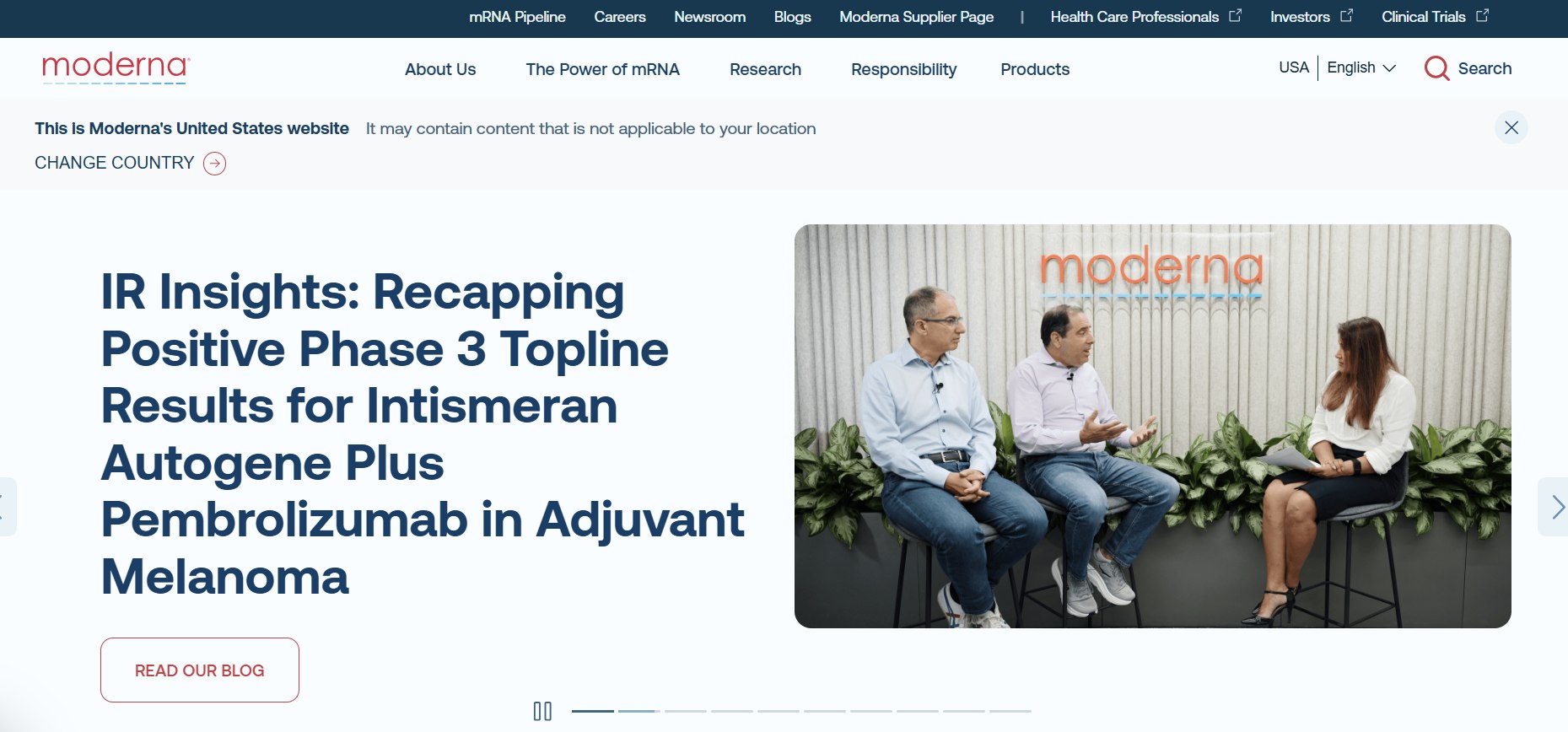
Shares of Moderna soared as much as 90% in premarket trading Wednesday, pacing what would become the biotech company’s best trading session on record, after the company and partner Merck announced that their experimental personalized mRNA cancer vaccine succeeded in a large, late-stage clinical trial for melanoma.
The Phase 3 trial, known as INTerpath-001, evaluated the treatment, called intismeran autogene, in combination with Merck’s blockbuster immunotherapy Keytruda, compared with Keytruda alone, in patients with completely surgically removed stage IIB-IV melanoma. The study enrolled 1,137 high-risk patients who received up to nine doses of the combination therapy over roughly one year. The trial met its primary goal of significantly extending the time patients lived without their melanoma returning, compared with Keytruda alone, and also achieved a key secondary goal of reducing the risk of the cancer spreading to distant parts of the body.
According to CNBC, the trial marked the first Phase 3 study to demonstrate clinically significant benefits over Keytruda monotherapy in the adjuvant treatment setting for surgically resected melanoma patients who had not previously received systemic cancer treatment. The companies said the study was stopped early at its first interim analysis after the positive results became apparent, and that no new safety signals had emerged during the trial. Side effects associated with the vaccine were described as similar to those typically experienced with other common vaccines.
Merck’s Dr. Jane Healy, the company’s head of oncology early development, described the significance of the results in comments to CNBC. Melanoma patients are “stuck having to deal with the new gravity of that diagnosis and then undergo uncomfortable treatments like surgery, and after that, they’re worried about their cancer coming back,” Healy said. She called the trial’s outcome “very exciting,” noting the therapy delivered a “clinically meaningful improvement” over Keytruda, which currently represents the standard of care for melanoma treatment. Healy added that the results also validate a personalized cancer treatment approach that Merck and Moderna have been developing for decades.
The intismeran vaccine represents a significant departure from Moderna’s earlier, pandemic-driven business, built instead on individualized cancer therapeutics tailored to each patient’s specific tumor. The treatment is manufactured for each patient based on mutations identified in that individual’s own tumor tissue, encoding as many as 34 distinct neoantigens designed to train the patient’s immune system to recognize and attack cancer cells bearing those same mutations. Moderna has said it has successfully automated the personalized manufacturing process required to produce each patient-specific dose.
Wednesday’s data builds on earlier, smaller-scale results the companies presented in January from a mid-stage trial of the same treatment combination. That earlier Phase 2b study found that at 60.3 months of follow-up, the combination therapy reduced the risk of cancer recurrence or death by 49%, while reducing the risk of distant metastasis or death by 59%, compared with Keytruda alone. Moderna’s chief development officer, David Berman, said those earlier durability findings supported the treatment’s “potential long-term benefit,” a framing that added weight to investor expectations heading into Wednesday’s larger, confirmatory Phase 3 readout.
Despite the strength of Wednesday’s results, some key data points remain outstanding. According to reporting on the trial, the companies have not yet disclosed specific hazard ratios or mature overall survival data, and the trial itself remains ongoing, with overall survival tracked as a key secondary endpoint still to be determined as follow-up continues. The companies said they plan to present the full results at an upcoming medical conference and share the data with regulators as part of the broader review and potential approval process.
Market reaction to the news was dramatic and immediate. Moderna shares surged as much as 90%, according to CNBC, touching levels not seen in months, while Merck shares climbed more than 8% in premarket trading. The disparity in the two companies’ stock reactions reflects their significant difference in size: Merck entered Wednesday with a market capitalization of roughly $333 billion, while Moderna’s stood at approximately $25 billion, meaning the same positive trial news carried far greater proportional significance for Moderna’s smaller balance sheet and narrower product pipeline.
According to Bloomberg, Moderna’s stock had already climbed 113% from the start of the year through Tuesday’s close, driven substantially by anticipation surrounding the cancer vaccine program even before Wednesday’s formal trial results were announced. Wall Street analyst reaction to the news was swift, with the stock’s move clearing every existing price target among the roughly 15 analysts tracking the company, according to one market analysis, even as several firms had maintained more cautious ratings on the stock ahead of the announcement.
Analysts have pointed to the substantial commercial potential the therapy could represent if it ultimately receives regulatory approval. Barclays analysts said last month they expect the treatment could generate roughly $3 billion in melanoma-related revenue by 2035, underscoring the scale of the opportunity Wednesday’s trial results could unlock for Moderna specifically, given the company’s smaller existing revenue base compared with Merck’s broader portfolio.
Wednesday’s announcement arrives as Moderna has worked to diversify its business well beyond the COVID-19 vaccine that first made the company a household name. The company recently gained Food and Drug Administration approval for its flu vaccine, branded mFLUSIVA, targeted at adults 50 and older, marking its fifth approved global product. Moderna has also continued developing experimental vaccines for other conditions, including norovirus and Lyme disease, though the company disclosed that a key Phase 3 norovirus trial recently missed its early success criteria, a setback that stood in contrast to Wednesday’s positive melanoma vaccine news.
Melanoma remains the deadliest form of skin cancer, with more than 1.5 million cases diagnosed globally in 2023 alone, according to figures cited in coverage of the trial. The scale of that patient population, combined with the trial’s success in both its primary and key secondary endpoints, has fueled substantial investor optimism regarding the treatment’s eventual commercial prospects, even as the companies caution that a full data readout, including mature survival figures, and eventual regulatory review still lie ahead before the therapy could reach patients more broadly. As Wednesday’s trading session continued, market watchers were closely monitoring whether Moderna’s dramatic premarket gains would hold through the full trading day, given the stock’s history of significant volatility tied to individual clinical trial announcements throughout its post-pandemic transition toward a broader, more diversified product pipeline.



























































You must be logged in to post a comment Login