


Connect with us

Business

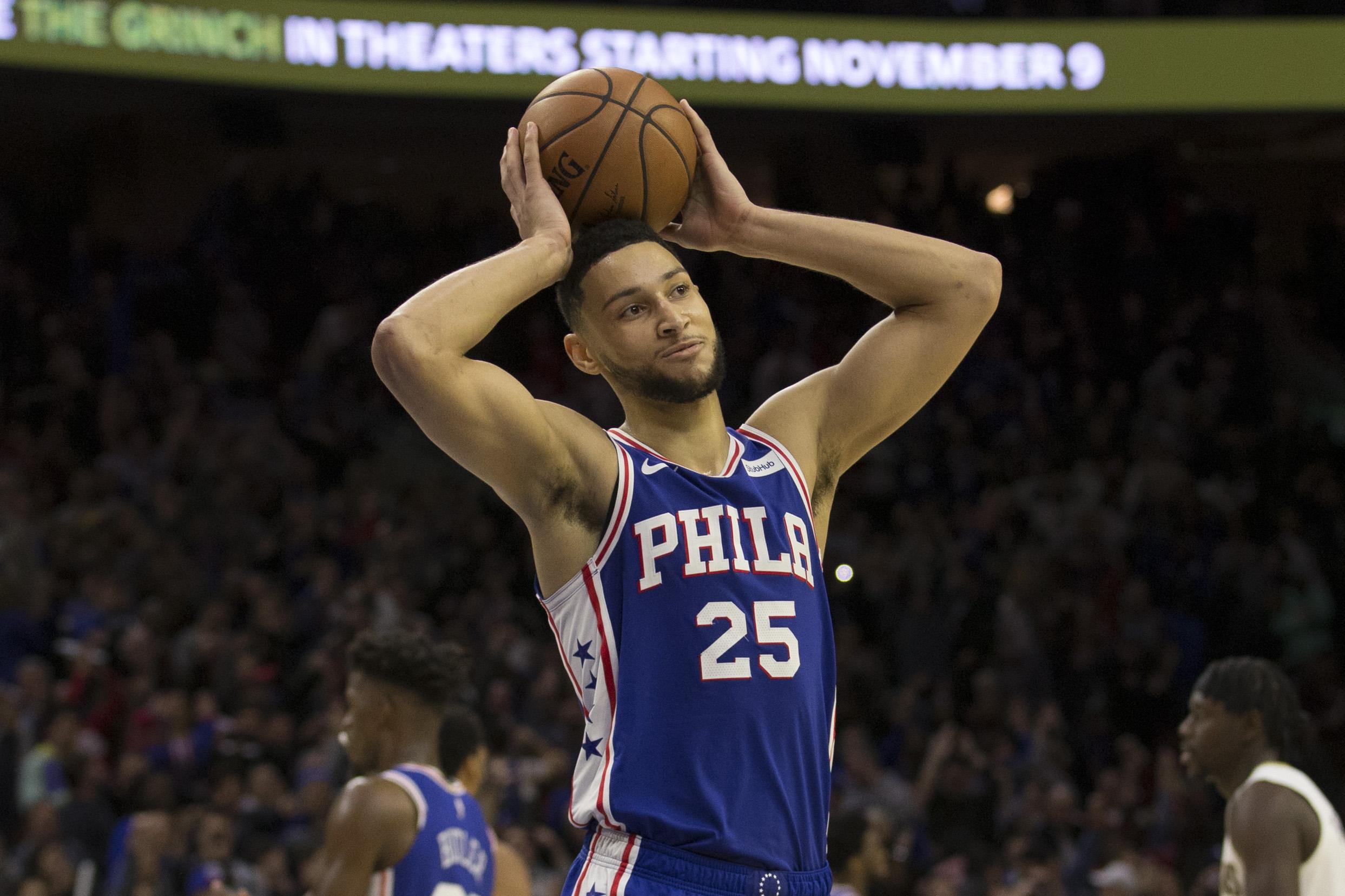
Ben Simmons Signs One-Year, $3.5M Deal With Kings, Returns After Season Off With Injuries Seeking Fresh Start

Published

on

Joshua Kushner

SACRAMENTO, Calif. — Three-time NBA All-Star Ben Simmons is returning to professional basketball after agreeing to a one-year, $3.5 million contract with the Sacramento Kings, marking his return to the league following a full season away from the court while recovering from chronic back and leg injuries.

Simmons’ agents confirmed the agreement to ESPN’s Shams Charania and Marc J. Spears on Friday. The 30-year-old missed the entire 2025-26 season after his contract with the Los Angeles Clippers expired following the 2024-25 campaign, during which he did not sign with any team in free agency as he continued working to fully recover from the back issues that had plagued much of his recent career.

According to ESPN, Simmons impressed Kings general manager Scott Perry during a workout in Miami, followed by an hourlong meeting between the two in late August that helped seal the deal. Both the Minnesota Timberwolves and Golden State Warriors had also expressed interest in Simmons, a level of interest that could have led to a potential training camp invite with either team. Ultimately, the Kings were the only NBA franchise to formally offer Simmons a contract.

A source told ESPN that Simmons is excited about the opportunity to play for Sacramento, believing the organization will provide the support and playing opportunity he had hoped for as he works to relaunch his NBA career.

Advertisement

The Kings enter the coming season looking to rebuild after a difficult 2025-26 campaign, in which the team finished 22-60, tying for the worst record in the Western Conference. Sacramento further reshaped its roster this offseason by waiving veteran guard DeMar DeRozan in July and declining to bring back free agent Russell Westbrook, decisions that left the team with a notable gap at the guard position that Simmons’ playmaking ability could help address.

Simmons, the No. 1 overall pick in the 2016 NBA Draft out of LSU, has built a career defined by both significant early success and persistent injury setbacks. After an injury delayed his professional debut by a full year, Simmons won Rookie of the Year honors for the 2017-18 season and went on to earn three All-Star selections and two All-Defensive First Team selections during his time with the Philadelphia 76ers. He was also named to the All-NBA Third Team in 2020, cementing his status as one of the league’s most versatile young talents before injuries began significantly disrupting his career trajectory.

Simmons’ tenure in Philadelphia ultimately ended amid a highly publicized and contentious breakup with the organization, which sent him to the Brooklyn Nets as part of the trade that brought James Harden to the 76ers. Simmons was later waived by the Nets following a contract buyout on Feb. 8, 2025, before signing with the Clippers, where he appeared in 18 games last season while battling continued back issues and playing limited minutes, averaging just 2.9 points, 3.8 rebounds and 3.1 assists during that stretch.

Simmons’ most recent NBA appearance came in Game 5 of the 2025 Western Conference First Round on April 29, 2025, playing for the Clippers against the Denver Nuggets. Over his full 383-game career across the 76ers, Nets and Clippers, Simmons has averaged 13.1 points, 7.4 rebounds, 7.2 assists and 1.5 steals per game, numbers that reflect his elite all-around playmaking ability even amid the physical setbacks that have limited his availability throughout much of his career.

Advertisement

Speaking with Andscape in July, Simmons expressed confidence in his physical condition and readiness to return to the league following his year away from competition, describing himself as feeling as healthy as he had in years. Reports from that same period indicated Simmons had been training and practicing without restrictions ahead of his eventual return, further supporting his belief that he was prepared to rejoin the NBA.

Beyond his NBA ambitions, Simmons has also expressed interest in representing Team Australia at the 2028 Summer Olympics in Los Angeles, a goal that would require him to sustain his health and on-court performance over the coming seasons to remain part of the Australian national team’s plans heading into that tournament.

Notably, Simmons has not played more than 58 games in a single NBA season since the 2018-19 campaign, underscoring the significant durability concerns that have followed him throughout his career even as his underlying talent and production, when healthy, have remained evident. His new one-year deal with Sacramento offers both sides a relatively low-risk arrangement, giving Simmons a fresh opportunity to demonstrate his health and continued NBA relevance while giving the Kings a low-cost, potentially high-reward addition to a roster in need of guard depth and playmaking.

Sacramento is scheduled to open the NBA preseason on Oct. 5 against a visiting Los Angeles Lakers squad, followed by a regular-season opener on the road against the Los Angeles Clippers, the same franchise Simmons most recently played for before his year away from the league. Those early matchups will offer an initial glimpse into how Simmons’ game has evolved, and whether his body can hold up, as he begins his latest attempt to reestablish himself in the NBA.

Advertisement

For the Kings, adding Simmons represents a relatively low-cost bet on a player whose ceiling, when healthy, has historically included elite defensive versatility and playmaking that few players at his size can match. Whether Simmons can recapture even a portion of that earlier form after a full year away from competitive basketball remains to be seen, but his agreement with Sacramento gives him a clear opportunity to prove his recovery has been successful as he looks to rebuild his career and NBA standing heading into the 2026-27 season.

Continue Reading
Click to comment

You must be logged in to post a comment Login

Leave a Reply

Business

How the American dream has helped keep socialism at bay

Published

on

How the American dream has helped keep socialism at bay

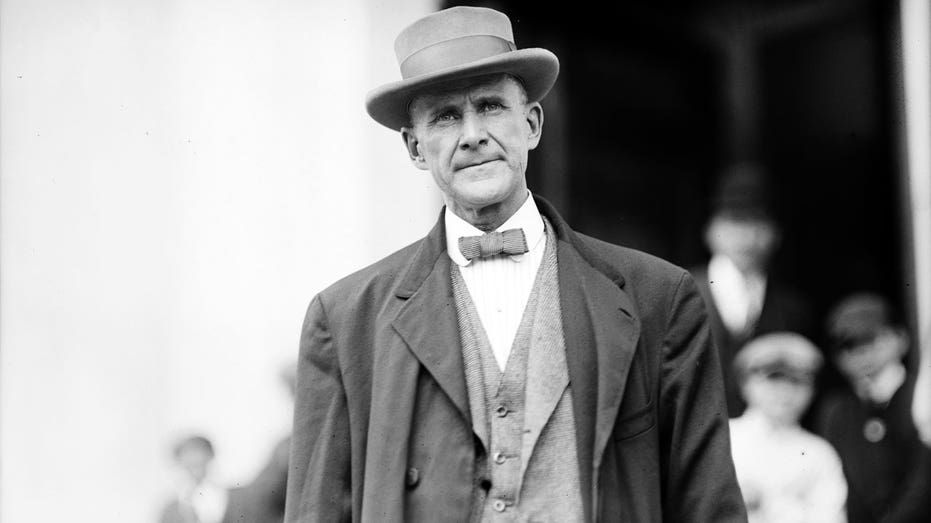
Before the 1917 Russian Revolution, socialists in the U.S. were winning hundreds of local and national contests.

In Manhattan, a socialist immigrant from Lithuania was sent to Congress in 1915. Milwaukee had three socialist mayors. And in the 1912 presidential election, socialist presidential candidate Eugene Debs received 6% of the popular vote.

Advertisement

But socialists couldn’t capitalize on these victories. First, an internal split between the revolutionaries and the moderates prevented a united front. Then the increasingly violent nature of the Bolsheviks scared many off.

HOW AMERICA REACHED A POLITICAL TIPPING POINT FOR SOCIALISM

Socialist and political activist Eugene Debs.

American socialist, political activist and trade unionist Eugene Debs. (Heritage Art/Heritage Images via Getty Images)

More than all that was America’s growing middle class, whose investments in private housing and small businesses were anathema to socialist ideals.

The Great Depression of the 1930s revived interest in socialism and spurred some of former President Franklin D. Roosevelt’s public projects.

Advertisement

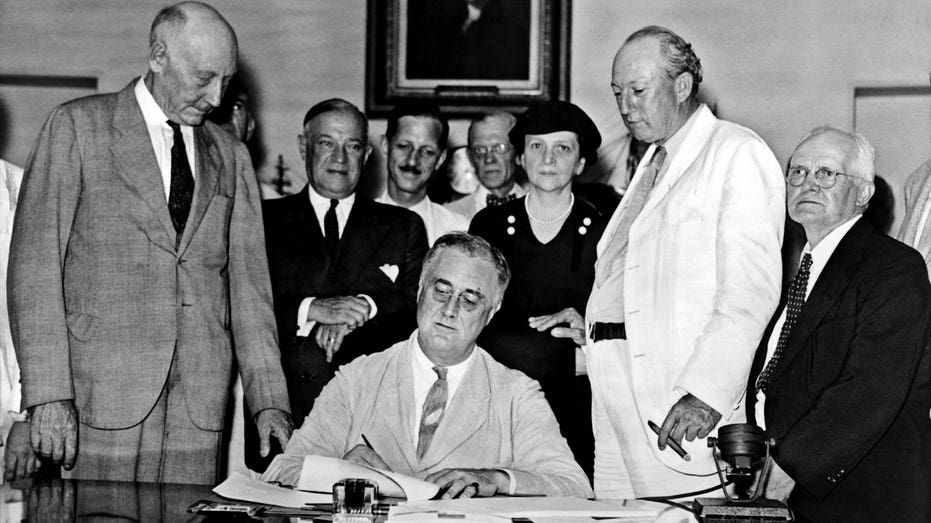
“This Social Security measure gives at least some protection to 30 millions of our citizens,” Roosevelt said when he signed the Social Security Act into law on Aug.14, 1935.

Franklin D. Roosevelt signs the Social Security Act into law in 1935.

President Franklin D. Roosevelt signs the Social Security Act into law in Washington D.C., Aug. 14, 1935. (Underwood Archives/Getty Images)

DAVID ASMAN ON COVID-19 TIPPING OFF RISE IN SOCIALISM: ‘PERFECT STORM’

Still, these measures fell far short of full-blown socialism.

Then came the Cold War, in which any hint of socialism was called out as a direct threat from the Soviets and Communist China.

Advertisement

The 1960s saw a revival of radical socialism within the anti-war movement. But as the Vietnam War died down, and later as the Soviet Union collapsed, the socialist left again seemed to be on the wrong side of history.

CUOMO SOUNDS ALARM ON NEW YORK EXODUS: ‘DON’T CHASE PEOPLE OUT’ TO SOUTHERN STATES

Now comes another wave of American socialism. But as in the past, radicals within the movement are proving to be far more extreme than America’s middle class is willing to accept.

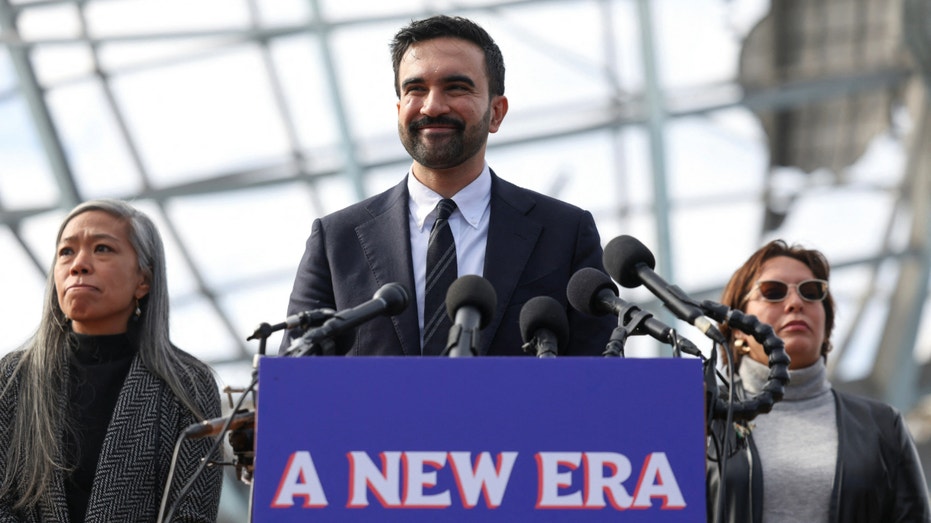
New York City Mayor-elect Zohran Mamdani speaks at a podium.

New York City Mayor Zohran Mamdani is a self-described democratic socialist. (Kylie Cooper/Reuters)

Again, Middle America’s vested interests are tough barriers against socialists’ attempts to undo the foundations of the American dream.

Advertisement

GET FOX BUSINESS ON THE GO BY CLICKING HERE

Now, when you consider that 65% of Americans own their homes, 62% own stock, and 36 million small businesses employ nearly half our workforce, socialist promises to nationalize private property are a tough sell.

Continue Reading

Business

Cheshire East Council seeks strategic partner for proposed ‘Greater Crewe’ master plan

Published

on

Business Live

Project aims to deliver growth and regeneration for the town

The new £1.4bn Leighton Hospital will be built on land to the north of the existing site

The new £1.4bn Leighton Hospital will be built to the north of the existing site(Image: Mid Cheshire Hospitals NHS Trust)

Cheshire East is seeking a strategic partner to develop a master plan for its ‘Greater Crewe’ vision, which aims to drive growth and elevate the town to city status.

Advertisement

The ‘Greater Crewe’ initiative seeks to consolidate major investments across transport, health, infrastructure, housing and economic development.

The ambitious scheme could also see the town gain a second railway station at Leighton, an area that has already witnessed considerable housing development and where the £1.4 billion new hospital is set to be constructed.

The council recently carried out a small assessment study which concluded that a new railway station is a viable proposition and ought to be considered amongst a range of transport solutions for the Leighton area.

Deputy leader Michael Gorman (Wilmslow, Ind) told yesterday’s (Thursday’s) cabinet meeting: “Crewe is recognised as the borough’s principal economic centre.

Advertisement

“It benefits from significant rail connectivity and investment opportunities and has the greatest potential to support housing and employment growth at scale and is capable of delivering substantial economic growth for residents and businesses..

“The master plan will provide the evidence needed to understand how these opportunities can be realised, while addressing infrastructure requirements, environmental considerations and, crucially, placemaking objectives.”

However, he cautioned that the council needed to manage local expectations ‘because the residents and businesses of Crewe have been led up the hill on several occasions and have found that there was nothing there to look at when they got to the top’.

He noted that the message, particularly from younger residents in the borough, was: “We want change, we want a better transport system, we want housing, we want jobs, we want skills.”

Advertisement

Cllr Gorman highlighted that there are fantastic opportunities available in Crewe.

He pointed to the A500 dualling, Bentley Motors, the town’s railway history and Crewe Station as key assets.

He added that the council is seeking clarification from the Government regarding a new rail connection between Birmingham and Manchester.

“And the real game changer is Leighton Super Hospital, which will bring £1.4 billion worth of investment into Crewe.”

Advertisement

Cllr Gorman told the cabinet it is ‘absolutely important we do this properly’.

“We’re going to bring together a three-year Cheshire East growth plan and secure this as a major pipeline project with the Cheshire and Warrington Combined Authority,” he said.

Conservative group leader Stewart Gardiner (Knutsford) raised the question of public consultation.

Cllr Gorman responded: “Engagements with local communities, ward members, businesses, and other stakeholders will form an important part of this process, with opportunities for feedback and input at key stages as the work progresses.”

Advertisement

Cllr Mark Goldsmith (Wilmslow, Ind) stressed that transport was fundamental to any regeneration efforts. “Crewe Station itself is the second-best connected train station in the whole country,” he said, noting that improvements were long overdue.

“Added to that, we also have the Leighton proposal for a new station there as well, so transport will be a real integral part of the redevelopment and the regeneration as well, and it really needs to be heart of what we are doing.”

Crewe councillor Jill Rhodes (Lab) said: “I hope residents will welcome a professional investment and delivery framework, which has economic development at its heart..

“But that does not mean that Crewe and its surrounding areas should have the majority of the housing development, as has happened in the past.”

Advertisement

Cllr Rhodes expressed her support for the proposed residential mixed-use scheme earmarked for the town centre.

“We have all witnessed changes for the better in Manchester and Liverpool, when people started to live in the city centre,” she said.

“Hopefully this initiative will bring similar changes to Crewe.”

Advertisement
Continue Reading

Business

Opponents seek to block US from breaking ground on Trump arch in Washington

Published

on


Opponents seek to block US from breaking ground on Trump arch in Washington

Continue Reading

Business

York Space Systems Shares Rise 3.8% Even As Securities Fraud Lawsuits Loom Over Satellite Maker In Colorado

Published

on

York Space Systems

GREENWOOD VILLAGE, Colo. — Shares of York Space Systems Inc. climbed $0.32, or 3.82%, to $8.84 as of 1:17 p.m. ET Friday, edging up slightly even as the small satellite manufacturer continues facing mounting securities fraud litigation tied to a sharp stock decline earlier this year.

Friday’s modest gain leaves York Space Systems shares still trading down roughly 81% from their 52-week high of $44.54, and just barely above their 52-week low of $8.38, reached in recent weeks. The company’s market capitalization stands at approximately $1.17 billion, based on roughly 137.36 million shares outstanding.

The stock’s dramatic decline traces back to May 11, when short-selling research firm Wolfpack Research published a report alleging serious problems with York Space Systems’ satellite software development practices. According to the report, former employees of the company claimed that York Space Systems launched satellites into orbit without confirming the software controlling them was ready to perform its intended mission, choosing instead to debug the systems only after the satellites were already in space. The report also raised concerns that the Pentagon had decided to halt funding tied to a program known as Tranche 3, part of the Space Development Agency’s satellite architecture.

Following the report’s publication, York Space Systems’ stock price fell $3.91 per share, or 10.9%, dropping from a closing price of $35.88 on May 11 to $31.97 the following day, according to legal filings tied to subsequent shareholder litigation. Separate reporting indicated the stock fell by as much as $7 during intraday trading that same day.

Advertisement

The sharp decline has since triggered a wave of securities class action lawsuits filed by multiple law firms on behalf of investors who purchased York Space Systems stock either through the company’s January 2026 initial public offering or during a broader class period spanning Jan. 29 through May 11, 2026. Law firms including Robbins Geller Rudman & Dowd, Glancy Prongay & Murray, Bleichmar Fonti & Auld, Kaplan Fox & Kilsheimer, and Kahn Swick & Foti have all issued public notices this week reminding affected investors of an Oct. 30, 2026, deadline to seek appointment as lead plaintiff in the consolidated litigation.

One of the underlying lawsuits, captioned Ianelli v. York Space Systems Inc., is currently pending in federal court and centers on allegations that the company and certain senior executives made materially false or misleading statements to investors regarding the readiness and reliability of its satellite software prior to the May stock decline. The specific claims echo the core allegations first raised in Wolfpack Research’s May report.

Despite the ongoing litigation, York Space Systems has continued reporting operational and business developments throughout the summer. According to company disclosures, York Space Systems confirmed the health of 21 satellites following a recent launch and completed its second production lot for tactical communication satellites, developments the company has pointed to as evidence of its continued operational execution even amid the software-related controversy.

York Space Systems also introduced a new spacecraft platform, designated the LX/V-CLASS, in late August, expanding its existing lineup of satellite platforms that includes its S-CLASS, LX-CLASS and M-CLASS offerings. The company, founded in 2012 and based in Greenwood Village, Colorado, provides space and defense mission solutions spanning small satellites, spacecraft platforms, ground operations, downlink services and software-enabled mission capabilities for both U.S. government and commercial customers. The company changed its name from Yellowstone Midco Holdings II, LLC to York Space Systems, Inc. in January 2026, coinciding with its initial public offering.

Advertisement

Wall Street analyst sentiment toward the stock has grown notably more cautious in the months following the Wolfpack Research report. Needham analyst Ryan Koontz maintained a buy rating on the stock while lowering his price target from $33 to $18 on Aug. 14. Wells Fargo similarly cut its price target from $35 to $17 in late August, while Goldman Sachs reduced its target from $28 to $14. Raymond James downgraded the stock to a hold rating in late July, and newly initiating coverage firm Craig-Hallum began its analysis of the stock with a hold rating as well, citing a desire to await further stabilization before offering a more constructive view.

Not all analyst sentiment has turned negative. Citigroup’s John Godyn raised his price target on York Space Systems from $31 to $33 back in July, ahead of the stock’s steep decline, maintaining a strong buy rating at the time and citing expectations that aerospace and defense names broadly would deliver strong earnings beats alongside modest guidance increases during that period.

Insider trading activity at the company has been mixed in recent months. According to disclosed Form 4 filings, insiders at York Space Systems have collectively purchased more shares than they have sold over the trailing year, even as some large shareholders have continued periodic selling. BlackRock Portfolio Management LLC, identified as a 10% owner of York Space Systems, sold approximately $2.2 million worth of shares on Aug. 7, according to regulatory filings.

York Space Systems’ broader business continues to center on serving U.S. federal government agencies and commercial customers with proprietary hardware and software spanning the full space mission lifecycle, from individual satellite components and subsystems to complete spacecraft platforms, ground operations and global downlink services. The company’s exposure to Pentagon-funded programs, including the Space Development Agency’s satellite architecture referenced in the original Wolfpack Research allegations, remains a key factor investors are watching closely given the ongoing litigation’s focus on the reliability of software supporting those government satellite missions.

Advertisement

With the Oct. 30 deadline for investors to seek lead plaintiff status in the consolidated securities litigation still weeks away, and the underlying lawsuits still in relatively early stages, York Space Systems faces a prolonged period of legal uncertainty even as the company continues pointing to operational milestones, including its newly introduced LX/V-CLASS platform and recent satellite health confirmations, as evidence that its core business remains on track despite the software-related allegations that triggered the stock’s steep decline earlier this year.

Continue Reading

Business

WNBA Commissioner Cathy Engelbert to retire at the end of 2026

Published

on

WNBA Commissioner Cathy Engelbert to retire at the end of 2026

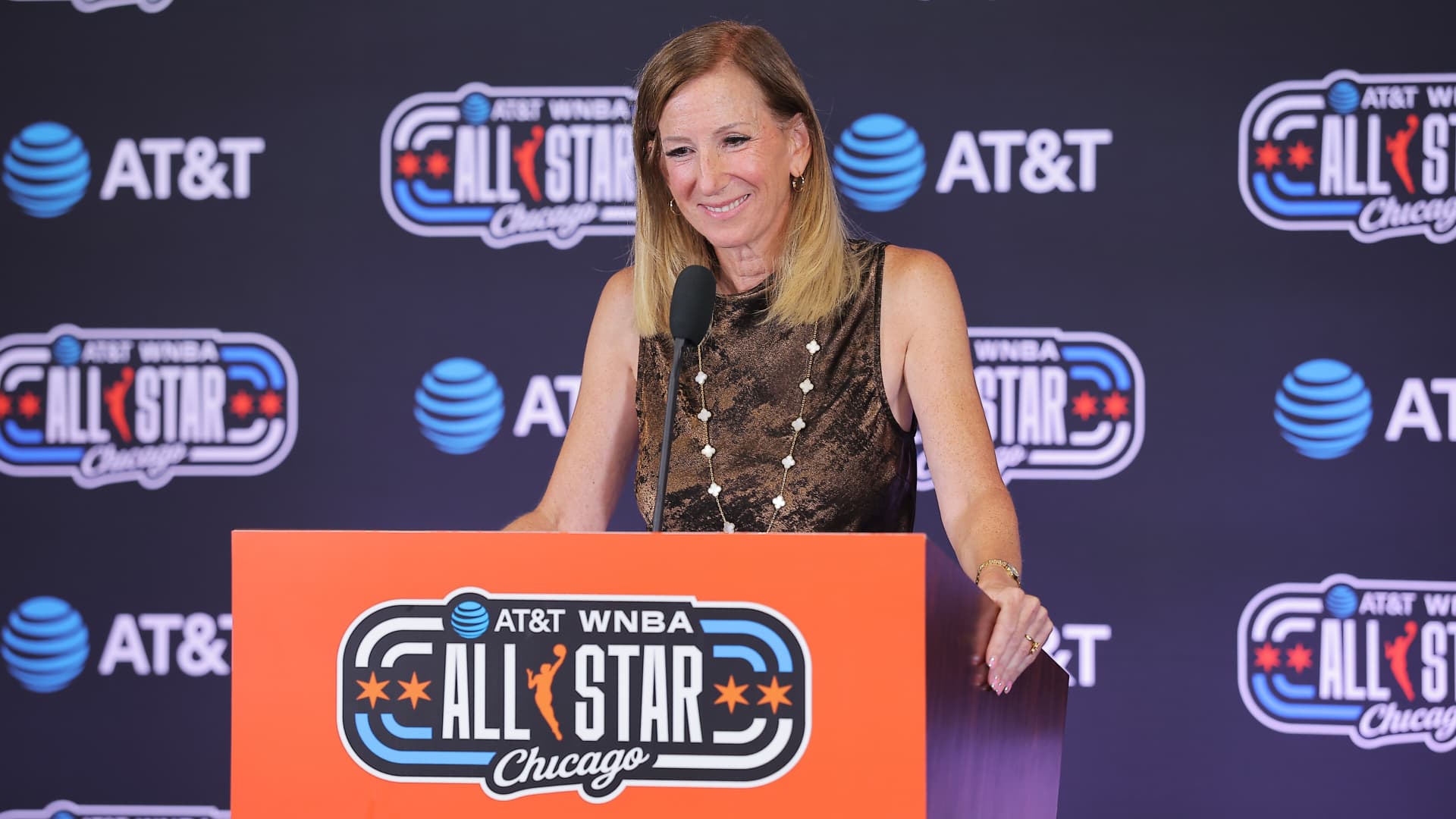
WNBA Commissioner Cathy Engelbert talks to media during a press conference before the AT&T WNBA All-Star Game 2026 on July 25, 2026 at United Center in Chicago, IL.

Melissa Tamez | National Basketball Association | Getty Images

WNBA Commissioner Cathy Engelbert will retire at the end of 2026, the league announced on Friday.

Advertisement

The decision comes as the league has experienced unprecedented growth, but Engelbert has faced criticism from some players over her leadership.

A successor has not yet been named.

“In 2019, I had the privilege of being appointed the league’s first commissioner and to lead a league with enormous potential yet untapped awareness and significant undervaluation. Over the years, it has been amazing to watch WNBA players thrive and lead the massive cultural surge around women’s sports,” Engelbert said in a statement.

During her tenure, the league has seen huge spikes in television viewership, game attendance, corporate sponsorship and franchise valuations. Viewership has jumped roughly 454% and attendance has climbed about 70% since 2019, according to the WNBA.

Advertisement

“Cathy has presided over the WNBA through the most significant period of growth in the league’s 30-year history,” said NBA Commissioner Adam Silver.  “We are grateful for Cathy’s leadership and unwavering commitment to the advancement of women’s basketball.”

The average WNBA team is now worth $460 million, according to CNBC’s Official WNBA Team valuations for 2026. The Golden State Valkyries, which joined the league in 2025, were the first women’s team in any sport to be valued at $1 billion.

Engelbert oversaw the league’s expansion from 12 to 18 teams by 2030. She also helped negotiate a landmark collective bargaining agreement earlier this year, leading to the biggest pay increases in the WNBA’s history.

“Being able to have your worth tied mostly in your salary is all that we’ve been fighting for, and it’s what we were able to achieve,” WNBPA President Nneka Ogwumike told CNBC Sport in an interview.

Advertisement

Yet Engelbert’s time as commissioner was often overshadowed by her rocky relationship with some players over compensation, officiating issues, and her response to racism and online harassment. Many WNBA players have argued the benefits the league offers and its protections for its players have failed to keep pace with the boom in attention on the WNBA.

“We have the best players in the world. We have the best fans in the world. But, right now, we have the worst leadership in the world,” Minnesota Lynx player Napheesa Collier famously said about Engelbert last year.

Most recently, concerns have grown that Engelbert failed to respond appropriately to political protests over transgender women playing sports, which began to overshadow the league’s season in recent weeks. There are no known trans players in the WNBA.

In her statement, Engelbert said she is grateful to WNBA and NBA team owners, staff, players, investors and fans who believed in what the league could become.

Advertisement

“I retire knowing we have built something bigger, stronger and more enduring than we could have imagined, she said. “I retire with immense gratitude and tremendous optimism for the future of the WNBA, with the best yet to come,” she added.

Get the CNBC Sport newsletter directly to your inbox

The CNBC Sport newsletter with Alex Sherman brings you the biggest news and exclusive interviews from the worlds of sports business and media, delivered weekly to your inbox.

Subscribe here to get access today.

Choose CNBC as your preferred source on Google and never miss a moment from the most trusted name in business news.
Advertisement
Continue Reading

Business

HPE Earnings Soar but Supply Constraints Aren’t Going Away

Published

on

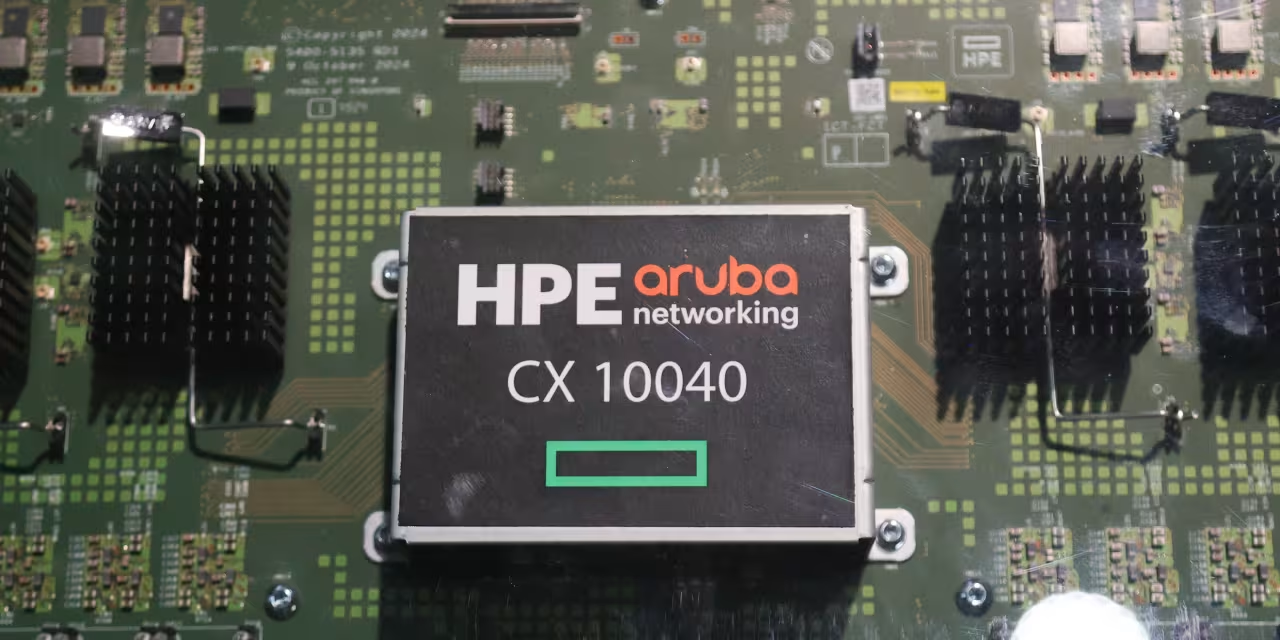
HPE Earnings Soar but Supply Constraints Aren’t Going Away

HPE Earnings Soar but Supply Constraints Aren’t Going Away

Continue Reading

Business

ChatGPT’s Outage Drew Over 340,000 Reports As ChatGPT, Claude, Grok, Gemini Crashed Together Yesterday

Published

on

MacBook Neo

Several of the world’s most widely used artificial intelligence services experienced simultaneous outages Thursday, with ChatGPT, Claude, Grok, Gemini and the AI coding tool Cursor all logging spikes in user-reported problems within roughly the same half-hour window, according to outage-tracking site Downdetector.

Downdetector said Thursday’s disruption to OpenAI’s ChatGPT drew more than 340,000 reports globally, marking the platform’s largest outage by Downdetector report volume in more than a year. The scale of the disruption, and the unusual coincidence of multiple competing AI platforms going down at once, drew significant attention from users and industry observers, given how unusual it is for services built on distinct backend infrastructure and operated by rival companies to fail within the same narrow time window.

According to OpenAI’s status page, the ChatGPT outage began around 10:58 a.m. ET Thursday, ultimately affecting 15 separate ChatGPT components, including login, search, image generation, voice mode and its Deep Research feature, along with four components of OpenAI’s Codex coding tool.

Anthropic’s Claude experienced a parallel disruption around the same time. According to the company’s status dashboard, elevated errors affected a specific set of Claude models, including Opus 5, Opus 4.8 and Opus 4.6, spanning the Claude.ai web interface, Anthropic’s developer API, and its Claude Code and Claude Cowork products. Anthropic later reported that most Claude models had recovered to baseline error rates even as some of the more advanced models continued experiencing issues for a longer stretch.

Advertisement

Grok, the chatbot developed by Elon Musk’s xAI, was also affected, with the company’s own status page confirming an active outage impacting both its web application and API across two separate regions. According to Bloomberg, xAI acknowledged the issue and said it was working to address the problem. SpaceX later attributed the underlying cause of the Grok disruption to an outage at the company’s computing center in Memphis, Tennessee.

Cursor, a popular AI-powered coding tool that relies on underlying models from multiple providers, was also swept into the disruption, with the company citing the concurrent Grok and Claude issues as the source of its own service problems.

Google’s Gemini experienced a comparatively narrower disruption than the other affected platforms. While Downdetector recorded a spike in user reports related to Gemini, and some users reported connection timeouts and internal server errors, Google never issued an official confirmation of a full platform outage. Google AI Studio’s status page did note problems specifically affecting the serving of newly created API keys, which the company described as a partial degradation rather than a complete service failure.

Recovery timelines varied somewhat across the affected platforms. According to tracking from 9to5Google, services began recovering around 8:49 a.m. Pacific time, with full restoration confirmed across ChatGPT, Claude and Grok by 12:38 p.m. Pacific time on Sept. 3. Separately, tracking site EWN reported that most affected systems had returned to normal performance by roughly 7 p.m. South African time, with OpenAI describing the underlying issue behind the ChatGPT and Codex disruption as a routing error that the company said it fixed within about an hour.

Advertisement

Despite the scale and unusual synchronicity of Thursday’s outages, none of the companies involved, including OpenAI, Anthropic or xAI, published a detailed public root-cause explanation identifying precisely why so many separate AI platforms experienced disruptions within such a tight window. No infrastructure vendor, distributed denial-of-service attack, or specific shared configuration bug was publicly identified as a common underlying cause connecting the various outages.

The disruption prompted widespread commentary on social media, with some users noting the rare experience of being temporarily unable to rely on AI tools for everyday tasks. One social media user, writing on Bluesky, offered a wry observation about the moment.

“For its part, OpenAI’s status page listed 15 affected ChatGPT components,” one report noted, capturing the scale of the disruption across the platform’s various features, while a widely shared social media post remarked that “for a brief moment, millions of people had to use their brains again.”

Industry commentators have pointed to Thursday’s outages as a notable moment for a technology sector increasingly dependent on cloud-hosted AI services for both consumer and enterprise workflows. One analysis noted that the disruptions affected multiple distinct backend architectures, regional data centers and specialized programming interfaces simultaneously, a scale of impact that exceeded what would typically be expected from a routine single-vendor cloud hiccup.

Advertisement

Some technology commentators used the incident to argue for greater resilience planning among businesses that have built critical workflows around cloud-based AI tools. Suggestions circulating in the aftermath of the outage included accelerating the deployment of smaller, locally hosted open-source AI models as fallback options during cloud outages, and implementing more aggressive timeout thresholds and automated fallback mechanisms within software systems that depend on external AI application programming interfaces, to prevent operations from stalling entirely when a given provider experiences a disruption.

Thursday’s incident adds to a growing list of significant AI service disruptions recorded throughout 2026, a year that has already seen several major single-vendor outages affecting individual AI platforms, including a Claude-specific incident in June that lasted approximately seven hours. The unusual coincidence of multiple major providers experiencing outages within the same narrow window, however, distinguishes Thursday’s disruption from those earlier, more isolated incidents.

For users and businesses that experienced disruptions Thursday, the affected companies’ official status pages, including status.openai.com for ChatGPT and Codex, along with Anthropic’s and xAI’s respective status dashboards, remain the most authoritative sources for confirming whether any new related incidents emerge going forward. As of the latest available updates, all major affected platforms had returned to normal operating status, though none of the companies involved had provided users with a comprehensive explanation of what caused so many independent AI systems to falter within the same brief window on Thursday morning.

Advertisement
Continue Reading

Business

AMD: Paying Up For A Ramp That's Already Been Outlined

Published

on

ASE Technology: AI Is Driving A Great LEAP Forward

AMD: Paying Up For A Ramp That's Already Been Outlined

Continue Reading

Business

UK petrol prices hit highest level since Iran war began

Published

on

Stock photo shows a woman filling up her car with petrol at a station with yellow pumps

While petrol has hit its highest price since the Iran war began, according to the RAC, diesel remains below the peak of 191.54p a litre it reached on 15 April.

In early July, the RAC said the average price of petrol sank to a low of 150.59p per litre and 164.52p per litre for diesel.

Since then the prices have risen, with petrol now at 163.6p a litre while diesel costs 184.99p a litre.

RAC’s head of policy Simon Williams said that, with oil prices remaining elevated, drivers will “almost certainly start paying noticeably more at the pumps in the coming weeks”.

Advertisement

Despite the conflict, petrol and diesel prices remain below the levels reached in the summer of 2022 following Russia’s invasion of Ukraine, when petrol reached 191.5p a litre and diesel hit 199p.

Because transporting oil is a slow process, price movements in the wholesale markets take about a fortnight to show at the pump.

Fuel retailers have denied accusations of price gouging during the conflict. The official markets regulator said it had “not seen evidence of retailers actively changing their pricing strategies to take advantage of the crisis”.

A government scheme called Fuel Finder, external lets drivers compare the cost of fuel offered by petrol stations across the UK.

Advertisement

Luke Bosdet, the head of policy at the AA, said the group had been surprised at the speed that prices had fallen and put it down to the scheme.

In May, the then Prime Minister Sir Keir Starmer said a planned 5p increase in fuel duty due in September would be postponed until the end of December because of the conflict.

Continue Reading

Business

Israel says it has cleared Hezbollah fighters from tunnels under key Lebanon ridge

Published

on


Israel says it has cleared Hezbollah fighters from tunnels under key Lebanon ridge

Continue Reading

Trending

Copyright © 2025