

Business
Best Animated Explainer Video Production Companies: Five Picks for 2026

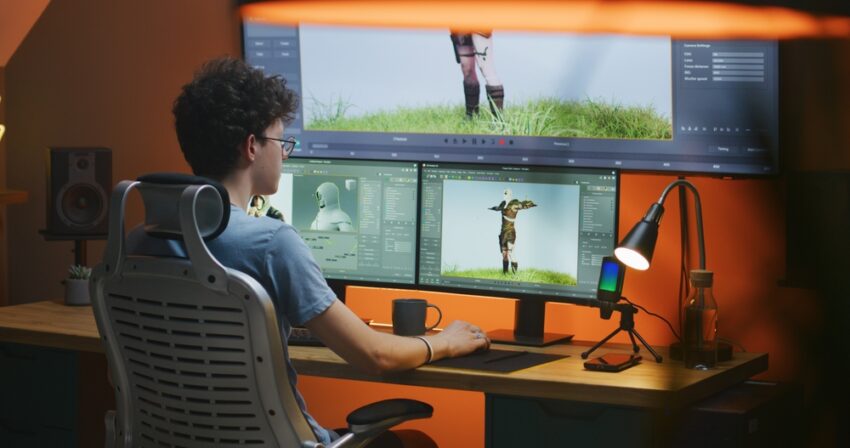
63% of explainer videos don’t generate the conversion outcomes they were commissioned to produce. They get made, look polished, and end up sitting on landing pages with little measurable impact.
The reasons are usually that the video leads with the brand or product rather than the buyer’s problem; the animation style is chosen as a creative default; the explainer isn’t treated as a specific stage of the buying journey.
The studio you choose has a direct impact on which side of that statistic you end up on.
The 5 best animated explainer video production companies below were selected for their verified work, transparent processes, and ability to connect animation to business outcomes. Each one fits a different need, from full-pipeline 2D and 3D production to premium brand-led work and high-volume B2B output. After the profiles, you will also find practical sections on how to measure whether your explainer video is working and what to expect once the final file is delivered.
Best Animated Explainer Video Production Companies: Strengths and Use Cases
Here is how the five companies compare at a glance. Use the table to shortlist by specialty, budget, and rating, then read the full profiles below for the details behind each pick.
| Studio | Founded | HQ | Clutch | Hourly rate | Specialties | Best for |
| Wow-How Studio | 2009 | San Francisco and London | 4.9/5 (166) | $25–$49 | Full-pipeline 2D and 3D explainers, motion graphics, product demos | Products needing 3D, or one vendor across many formats |
| Webdew | 2016 | Surrey, Canada | 4.9/5 (197) | $50–$99 | Whiteboard, 2D, character animation, kinetic typography, product demos; plus HubSpot and inbound marketing | A dependable, scalable partner, especially alongside wider marketing |
| MyPromoVideos | 2009 | Coimbatore, India | Not listed | Undisclosed | 2D and 3D animated explainers; process and product explanation; sales, corporate, case-study videos | B2B and technical companies explaining complex processes |
| Cartoon Media | 2012 | Canterbury, England | 4.9/5 (8) | $50–$99 | Custom whiteboard, doodle, and explainer or training videos | Premium, fully custom whiteboard work with blue-chip polish |
| Ydraw | 2011 | Saint George, Utah, USA | 5.0/5 (10) | $150–$199 | Whiteboard and video scribing; also 2D/3D, motion graphics, demo videos | Whiteboard projects where hand-drawn craft and flexibility matter |
1. Wow-How Studio
Wow-How Studio is one of the best animated explainer video production companies, as it keeps every stage in-house, from concept development, scripting, and storyboarding through 2D animation, 3D modeling, motion graphics, voice-over, and post-production. It delivers more than 500 projects a year for clients ranging from early-stage startups to Fortune 500 companies.
Explainers has been Wow-How’s core service since 2011, with the full pipeline run in-house from discovery call to final delivery, including black-and-white storyboard sketches, full-color style frames, character and background illustration, animation, voice-over, sound design, and delivery of final files with source assets.
On the 2D side, the team offers character animation, whiteboard, kinetic typography, infographic, cut-out, shape, and frame-by-frame styles, while the 3D team models, textures, lights, renders, and composites from scratch or from client CAD files for hardware, industrial equipment, and medical devices. A 90-second 2D video takes 6 to 8 weeks; a 3D video adds 1 to 2 weeks, and 2 free revision rounds are included at every stage.
Quick facts
- Founded: 2009
- Based in: San Francisco and London
- Clutch: 4.9/5 (166 reviews)
- Specialties: full-pipeline 2D and 3D explainers, motion graphics, product demos
- Notable clients: Google, Sony, Hallmark, Grammarly
- Hourly rate: $25 – $49
Standout work: A UK-based industrial automation company supplied a CAD model and received a complete robotics explainer covering the full process from storyboard through post-production, delivered on time and within budget. In a separate engagement, a sustainable building materials manufacturer commissioned seven installation explainers, each running 1 to 2 minutes.
Best for: products needing 3D, or one vendor across many formats.
Keep in mind: the breadth suits multi-format programs more than a single quick video.
2. Webdew
Webdew has grown from a single person into a global team of more than 50, with its base in Seattle and offices in India, the UK, and Canada. Animation sits inside a broader B2B SaaS growth offering that also spans HubSpot, web development, and inbound marketing, but video is a deep competency in its own right: nearly 200 Clutch reviews praise its animation quality, clear script-to-storyboard-to-animation process, and on-time delivery, especially across tech, education, and healthcare. It produces whiteboard, 2D, character animation, kinetic typography, line art, and product demo videos. Some clients note that the update frequency during delays could be tighter.
Quick facts
- Founded: 2016
- Based in: Surrey, Canada
- Clutch: 4.9/5 (197 reviews)
- Specialties: whiteboard, 2D, character animation, kinetic typography, product demos; plus HubSpot and inbound marketing
- Notable sectors: tech, education, healthcare
- Hourly rate: $50 – $99
Standout work: Webdew produced an animated explainer for a hospitality and leisure company, writing the script and refining it in response to the client’s suggestions. The client featured the video at two trade shows and has since reused it across other marketing activities, noting that the team stayed easy to reach and consistently available to answer questions and hit deadlines despite an anticipated language barrier.
Best for: companies seeking a dependable, scalable partner, especially alongside broader marketing efforts.
Keep in mind: it is a broad agency, so confirm the video team fits your scope.
3. MyPromoVideos
MyPromoVideos is a boutique Indian studio that has focused on animated explainers since 2009, producing more than 2,000 videos that clearly explain business processes. It works in both 2D and 3D, running the full pipeline from script and storyboard to animation, graphics, voice-over, music, and revisions, and also handles sales, corporate, and case-study videos.
Its 21 Clutch reviews lean toward technical and B2B clients, from software firms to logistics-automation companies, and reviewers consistently note competitive pricing, on-time delivery, and clear communication.
Quick facts
- Founded: 2009
- Based in: Coimbatore, India (serves clients worldwide)
- Specialties: 2D and 3D animated explainers; process and product explanation; sales, corporate, and case-study videos
- Notable focus: technical and B2B sectors, including software and logistics automation
- Hourly rate: Undisclosed
Standout work: A 90-second explainer for a software development firm building a test-automation tool for the automotive domain. MyPromoVideos handled the script, storyboard, animation, graphics, voice-over, and music, delivering a video that measurably improved users’ understanding of the product.
Best for: B2B and technical companies that need complex processes explained clearly in 2D or 3D.
Keep in mind: it is a boutique team, so plan timelines around larger volumes.
4. Cartoon Media
Cartoon Media is a UK studio that produces fully custom animated marketing and training videos, including explainer, doodle, and whiteboard styles, and is trusted by blue-chip names well beyond its size, including Siemens, Hilton, Allianz, and the NHS.
The team never uses clip art or templates, assigns a dedicated professional to every stage from script and storyboard through custom illustration, native-accent voice-over, and music, and works on an unlimited-corrections basis. Reviewers, including international clients, repeatedly highlight strong value for the cost and responsiveness.
Quick facts
- Founded: 2012
- Based in: Canterbury, England (delivers internationally)
- Clutch: 4.9 / 5 (8 reviews)
- Specialties: custom whiteboard, doodle, and explainer or training videos; full custom illustration, native-accent voice
- Notable clients: Siemens, Hilton, Allianz, NHS
- Hourly rate: $50 – $99
Standout work: Multiple whiteboard explainers for the affordable-housing company Eden Housing, one breaking down an employee reward program and another explaining the tax-credit system, helping onboard current and new employees.
Best for: brands wanting premium, fully custom whiteboard work with blue-chip polish.
Keep in mind: a small team and light review count, so confirm capacity for larger programs.
5. Ydraw
Ydraw is one of the most established whiteboard studios in the US, founded in 2011 in Saint George, Utah, with a team spread across three continents. It was an early experimenter with style variations, including watercolor, colored, and hybrid versions, and its hand-drawn sketching detail is widely regarded as among the best in the category.
Beyond whiteboards, it handles motion graphics, 2D and 3D animation, demo videos, and video ads, with custom artwork, scripts, voice-over, and music, and turnaround times of 1 to 5 weeks. Reviewers single out its clear, well-structured process and the value of the finished work.
Quick facts
- Founded: 2011
- Based in: Saint George, Utah, USA (team across three continents)
- Clutch: 5 / 5 (10 reviews)
- Specialties: whiteboard and video scribing (watercolor, colored, hybrid styles); also 2D/3D, motion graphics, demo videos
- Notable clients: UniFirst, Cisco ONE, Diabetes Hope Foundation, DesignDocs
- Hourly rate: $150 – $199
Standout work: Ydraw produced five hand-drawn whiteboard videos, each running 1 to 2 minutes, to illustrate a set of business concepts, managing all sound effects and editing. Reviewers called the production high quality and clear, with the value of the deliverables far exceeding the project’s cost.
Best for: whiteboard projects where hand-drawn craft and flexibility matter.
Keep in mind: whiteboard is the core, so it is less suited to high-end 3D or cinematic work.
What Happens After Your Explainer Video Goes Live
The final file is a milestone, not the finish line. Knowing what comes next keeps expectations realistic and protects the value of the work.
- Revisions wrap up first. Most studios include a set number of revision rounds at each stage, and those should be resolved before final delivery. Confirm what counts as a revision versus a new request, since changes after sign-off are usually billed separately.
- Format variants for different channels. A single explainer rarely fits every placement as-is. Plan versions tailored to where it will run, such as a web cut, a shorter social edit, and a silent, captioned version for feeds where most videos play without sound.
- Vertical cuts for social. Square and vertical 9:16 versions are now essential for mobile and social platforms. Ask whether these are included or quoted separately, since reframing animation for vertical can require real rework rather than a simple crop.
- Source files and ownership. Confirm receipt of the final files and decide whether you also need the editable source assets. Having the source makes future edits far easier and is worth settling in the contract.
- Future updates. Products, pricing, and branding change, so most explainers need a tweak within a year or two. Ask how the studio handles later edits, including cost and turnaround for swapping a logo, updating a figure, or producing a localized version.
- Performance check-ins. Build in a point a few weeks after launch to review the metrics from the chapter above. If the video underperforms, a small recut or a stronger thumbnail and intro often lifts results without a full reshoot.
How to Measure the ROI of an Explainer Video
Before launch, set a baseline. Without it, you can’t tell whether post-launch movement is a lift or a normal fluctuation. Record the current number for the metric you want the video to affect (e.g., conversion rate, support ticket volume, or time to activation). That is the number you measure against.
- Conversion rate on the page. Landing pages with an embedded explainer video can convert at up to 86% higher rates than text-only pages, and controlled tests on B2B SaaS pages have shown lifts of 100%+. Run an A/B test for 2 to 4 weeks, keeping the video as the only variable. If sign-ups or demo requests rise on that page, you have a direct signal of impact.
- Watch time and drop-off point. Videos under 1 minute achieve a 65% completion rate among B2B viewers. For videos over 20 minutes, that number falls to 20%. If viewers drop off before the call to action, the issue is often pacing or a script that takes too long to get to the point. The drop-off timestamp shows exactly where the cut needs work.
- Support and onboarding load. Track the support ticket categories that the explainer was designed to reduce. If repeat questions on a specific topic declines, that is a measurable outcome. If the goal was onboarding, pair that data with time-to-first-value to see whether new users are reaching value faster.
- Sales influence. B2B companies report that video influences 40%+ of the sales pipeline on average. Ask sales to log when the explainer was shared with a prospect, then compare these deals with agreements where it wasn’t used. Look for faster progression, higher close rates, or fewer repeated objections.
- Timeline for ROI. ROI for explainer videos is usually measurable within 3 to 6 months, not in the first few weeks. That matters when reporting internally, especially if the video supports top-of-funnel education or a longer B2B buying cycle.
- Reuse value. One 90-second explainer can be repurposed into a 30-second paid ad, a 60-second LinkedIn version, and an email teaser from the same production. Track how often those assets are reused across channels over 12 months. As usage increases, cost per use drops, which can materially improve ROI by year-end.
Final Thoughts
Treat your explainer like the investment it is. Pick the studio whose specialty and budget match your project, define the one outcome you want it to move, and set a baseline before launch so you can prove the return later. The five studios here all do strong, verifiable work; the right one for you is simply the one built for your format and goal.


Conexeu Sciences: Hanging On The FDA 510(k) Pathway Submission

South East Water (SEW) has announced a new chief executive designate after its previous boss resigned.
The heavily criticised water company said that John Halsall will take over from David Hinton, pending regulatory approval.
Halsall has previously worked for Thames Water, South West Water and Network Rail.
The announcement comes as SEW remains under fire for repeated water supply failures in Kent and Sussex and grapples with major infrastructure issues.
Halsall said that his priorities were “responding to customers’ immediate concerns” and delivering on short term improvements.
In the longer term, Halsall said that he would deliver the company’s largest ever investment programme of £2.1bn to “improve reliability and resilience”.
He added: “I look forward to working with our customers, community partners, regulators and colleagues to rebuild trust in South East Water, drive the improvements the business needs to deliver and make the changes people want to see.”

Australia’s share market has snapped a four-session losing streak, but investor sentiment remains subdued with the Reserve Bank’s battle with inflation far from over.

Police have used their fixed wing fleet of aircraft to transport accused criminals 71 times in just three weeks because more than 20 regional courts have closed.
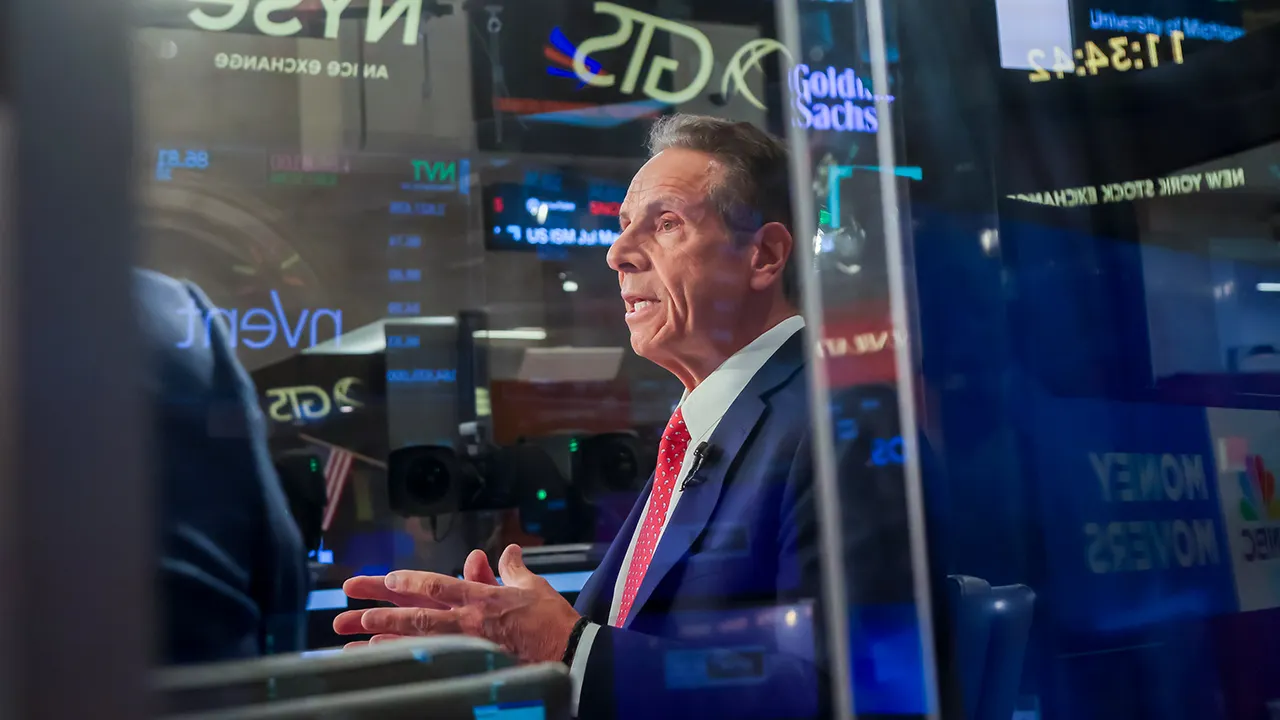
New York City mayoral candidate Andrew Cuomo joins ‘Fox & Friends’ to discuss his final campaign push, President Donald Trump’s endorsement and his warning about Mamdani’s socialist agenda.
EXCLUSIVE — Former New York Gov. Andrew Cuomo is taking aim at both legacy financial institutions and Washington gridlock, warning that the U.S. is wasting time on a technology that could significantly lower costs for working-class families.
Speaking exclusively with Fox News Digital about his new role as co-chair of a joint venture between fintech company OKX and Intercontinental Exchange (ICE), the parent company of the New York Stock Exchange (NYSE), Cuomo detailed how a shift toward blockchain technology could help reduce costs for consumers by limiting reliance on traditional banking intermediaries.
“This provides basic financial services, you have an account, you can pay bills, you can transfer money. And you don’t have to deal with the traditional banking establishment, minimum requirements,” Cuomo told Fox News Digital on Tuesday. “There are benefits across the board.”
“This is something that has been percolating for a long time, gestating, working through the tension that was first present between these companies and the traditional finance companies. We’ve now come to a general recognition that it has to be collaboration rather than competition,” he continued.
COINBASE C.E.O. SAYS CRYPTO BILL COULD TRANSFORM U.S. FINANCIAL SYSTEM AS SENATE VOTE APPROACHES
Cuomo argues that crypto is the latest chapter in America’s financial evolution. Much like the 1929 stock market crash helped lead to the creation of the Securities and Exchange Commission and the Enron scandal prompted corporate reforms, crypto’s early days are forcing a shift toward greater oversight. As co-chair of OKX and Intercontinental Exchange’s (ICE) efforts to build regulated digital markets, Cuomo said his goal is to merge Wall Street’s compliance framework with crypto’s 24/7 technology capabilities to tokenize mainstream equities and futures.
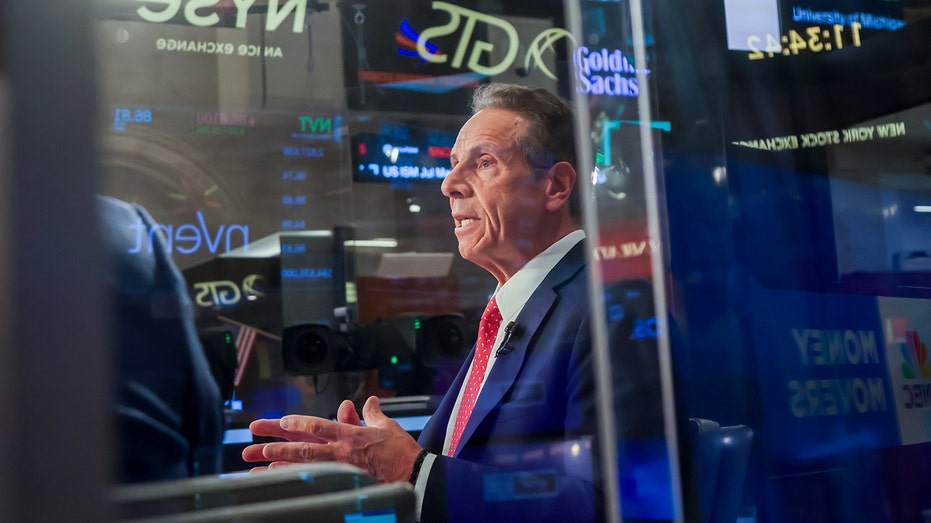
Andrew Cuomo, former New York governor, speaks during an interview on the floor of the New York Stock Exchange (NYSE) on Friday, Aug. 1, 2025. (Getty Images)
“When it first started, it was, ‘crypto was controversial,’” Cuomo pointed out, “but it was never about crypto. It was about the blockchain technology. And I think that’s what people missed for a lot of years. They got caught up in crypto and didn’t understand the potential of the blockchain.“
“The SEC, obviously, is going to have to change with the times, but the blockchain will be so much more time efficient and cost-efficient. You don’t need the intermediaries. Literally, you could trade directly, and it can be a 24/7 market, and it can be a global market,” he added.
He also addressed the frustration of the average middle-class family that feels pocketbook pain from legacy banking institutions, ATM fees and slow transaction times. By expanding blockchain access through smartphones, he believes the technology can provide financial access to the unbanked and underserved.
Solana Policy Institute president & Blockchain Association Board Chair Kristin Smith joins ‘Mornings with Maria’ to discuss the Senate’s push to pass the Clarity Act, crypto regulation and what’s at stake for America’s digital asset leadership.
“Besides the tokenized securities, in general on this platform, you have a wallet, you can deposit your currency in your wallet, you can make payments from your wallet. And… for the average consumer, that makes a tremendous amount of difference. There are virtually no transaction fees. Payment is direct, payment is fast for the average consumer,” Cuomo explained. “And then there are literally billions of people globally who have no access to any financial service.”
To unlock blockchain’s full potential, Cuomo is urging Congress to pass the CLARITY Act, which he says would set firm rules of the road.
“You can’t claim an industry is the Wild West when there’s no sheriff. That’s why it’s the Wild West, because there’s no sheriff and there are no laws,” he said. “You don’t have more time. The situation is already manifested. Businesses are operating. People are transacting business. This should have been done a decade ago. You don’t have the luxury of time. You have to respond, the government has to respond on a timely basis to the situation that is presented. It is happening.”
Coinbase chief legal officer Paul Grewal joins ‘Mornings with Maria’ to discuss the race in Washington to finalize the Clarity Act, mounting pushback from big banks and how looming crypto regulations could reshape investing for Americans.
Cuomo further responded to criticism made by traditional financial elites – including JPMorgan Chase Chairman and CEO Jamie Dimon – who claimed the Act fails to meet federal banking standards.
“Now, I think a lot of the traditional finance guys were saying, ‘Well, hold on, this can dramatically change the industry. We need to understand all the consequences for the existing industry, so let’s take time because this may upend my business,’” Cuomo said, “but… you’re not putting the blockchain back in the box. It’s out there. It is happening. So, yes, the evolution will create disruption in the marketplace, but that is also how you evolve. And what these companies have to get is either you evolve and thrive, or you remain stagnant and die. That’s the way of the market.”
GET FOX BUSINESS ON THE GO BY CLICKING HERE
Ripple CEO Brad Garlinghouse discusses the CLARITY Act, crypto markets, Ripple’s new AI developer toolkit and what’s next for XRP as investors watch key support levels on ‘Mornings with Maria.’
The former New York governor and attorney general emphasized how the new venture marries the stability of the NYSE with cutting-edge technology to keep America competitive on the global stage.
“What excites me most is this brings the two giants together… The New York Stock Exchange is the iconic symbol of the American finance system… it just epitomizes the evolution and now the [blockchain] collaboration and the synergy and the partnership.”

Primary Health Properties in talks for hospital assets joint venture
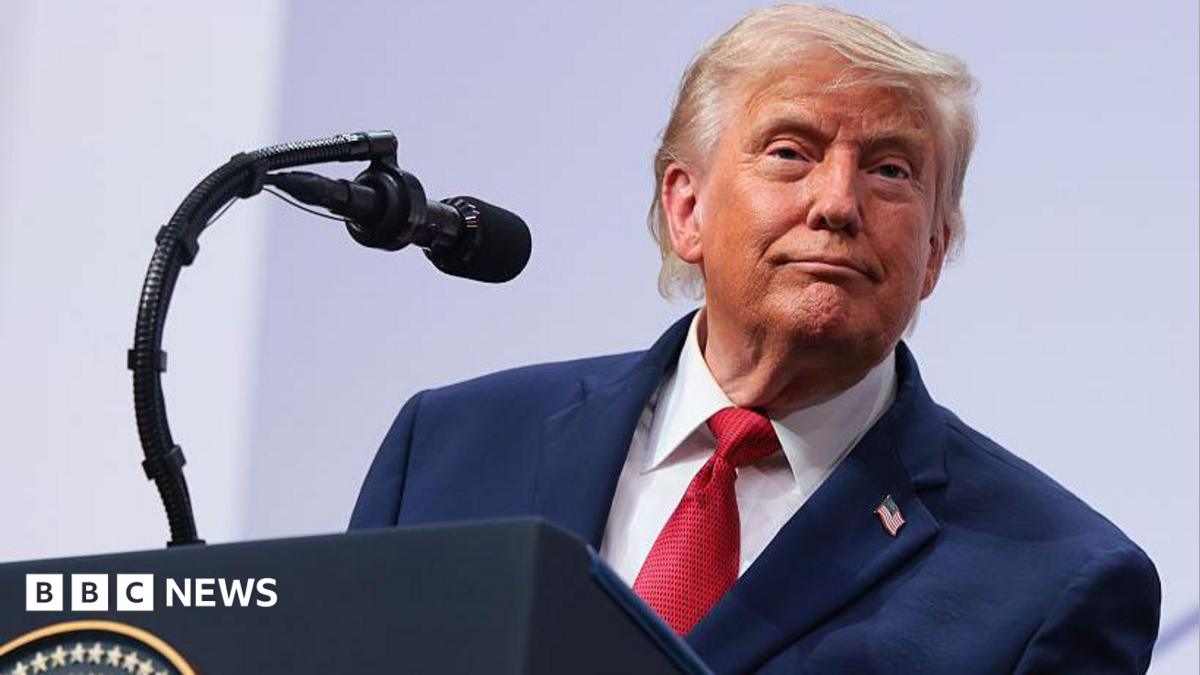
US President Donald Trump has said he has ordered an investigation into major energy companies, accusing them of “gouging” customers by not cutting petrol prices after the cost of crude oil fell on global markets.
Trump wrote on social media that he has ordered the Department of Justice (DOJ) to “immediately start looking into this”, adding he had expected to see petrol prices fall “a lot faster than what I’m seeing.” He did not name any oil firms in the post.
His remarks come after the price of oil retreated from peaks seen during the Iran war but remain higher than before the conflict started.
The BBC has contacted the DOJ and the White House for comment.
“The big Oil Companies are not dropping their price at the pump commensurate with the sharply lower prices they are paying for Oil,” Trump said in the post.
“Those prices are dropping like a rock! In other words, customers are being ‘gouged.’”
Oil prices have seen dramatic swings since the US and Israel attacked Iran on 28 February.
Tehran responded to the US-Israeli strikes by effectively shutting the critical Strait of Hormuz waterway, severely disrupting shipments of oil and gas and sending energy prices sharply higher.
Brent crude, the global oil benchmark, reached almost $120 (£91) a barrel in May.
The price of Brent has dropped to around $76 barrel as peace talks progress but is still above the roughly $70 a barrel mark it was at before the conflict.
Meanwhile, the average price of regular gasoline in the US has fallen to about $3.90 a gallon after topping $4 a gallon in April but remains well above pre-war levels.

Thousands of shoppers and football fans were forced back to notes and coins on Tuesday night after a power outage at Worldpay, one of the world’s largest payment processors, knocked out card transactions at pubs, supermarkets and restaurants across the country.
The disruption could hardly have come at a worse moment for the hospitality trade. Tills and contactless terminals began failing just as fans settled in to watch England’s World Cup group game against Ghana, the kind of fixture that turns an ordinary Tuesday into one of the busiest trading nights of the year for licensed venues.
Customers reported being unable to pay by card at a number of retailers, including branches of Tesco, while videos circulating on social media showed queues snaking out of cash machines as drinkers and diners hunted for the funds to settle up. Several pubs and entertainment venues posted notices that they were accepting cash only until the system came back.
Worldpay attributed the fault to a third-party power problem rather than any failure of its own platforms. “The UK experienced a power grid disruption, which is causing intermittent transaction authorisation issues for some Worldpay clients,” a spokesperson said. “Our technical teams are engaged and working to address the matter as soon as possible.”
In a statement on its website, the company added: “A third-party power disruption is causing intermittent transaction authorisation issues and tokenisation request errors on some Worldpay platforms. Our technical teams have restored service to some platforms and continue to troubleshoot to restore full service as soon as possible.”
The monitoring site Downdetector logged more than 1,000 reports of payment problems at Tesco from around 8pm. Responding to a customer on X, the supermarket said: “There is an issue with Worldpay at the moment affecting us and other businesses taking card payments.” A Tesco spokesperson later confirmed the problem had been fixed, saying: “An issue that affected payments in store and online is now resolved. We’re sorry for the inconvenience.”
Frustration among consumers focused as much on the timing as the fault itself. “Global outage on Worldpay, leaving busy pubs in the UK unable to sell beer to customers who don’t have cash, not great,” one customer wrote. Another posted: “Unbelievable, busy England game and Worldpay goes down on card terminals. Multiple sectors reporting issues of terminals down.”
For all the inconvenience, the episode is a useful reminder of how thoroughly Britain has moved away from physical money, and how exposed that leaves small firms when the plumbing fails. Contactless now accounts for roughly three-quarters of all debit card transactions in the UK, according to UK Finance data, with supermarkets among the most common places people tap to pay. As Business Matters has reported before, contactless is at record levels and there is little appetite to return to cash.
That convenience comes with concentration risk. When a single processor handling a large share of the market goes dark, the effect ripples instantly across thousands of unrelated businesses, from the corner shop to the national grocer. A pub that has quietly gone card-only over the past few years suddenly cannot take a penny, and few customers now carry the cash to bail it out.
The incident lands against a tougher regulatory backdrop for the firms that run the country’s payment rails. Since March 2025, payment and e-money firms have had to comply with the Financial Conduct Authority’s operational resilience rules, which require them to identify their most important services, set tolerances for how long disruption can last, and prove they can stay within those limits. An outage that stops shops trading on one of the busiest nights of the football calendar is exactly the sort of scenario those rules are designed to stress-test.
For SME owners, the practical lesson is the value of a backup. Venues with a second terminal on a different acquirer, a working cash float or a simple offline payment option were able to keep serving while rivals turned customers away. Many smaller operators have already been rethinking their relationship with the banks’ card machines in search of lower fees and better terms, and resilience deserves a place on that checklist alongside price.
There is a security dimension too. Nights when systems are patchy and queues are long are exactly when staff cut corners and opportunists try their luck, so it pays to understand how to keep cashless customer payments secure even when the technology is under strain.
Worldpay said service had been restored to some platforms within hours and that engineers were working to bring the rest back online. For the publicans who watched a sell-out crowd struggle to buy a round during the second half, the bigger question is not whether the system came back, but how quickly they can make sure the next outage does not cost them the takings.

Amy Ingham
Amy is a newly qualified journalist specialising in business journalism at Business Matters with responsibility for news content for what is now the UK’s largest print and online source of current business news.

BOJ must scrutinise impact on financial system from AI, non-bank activities, Ueda says

He believes the recent weakness in AI-related stocks is more of a valuation correction than the end of the structural AI investment cycle.
“Look, it is just the beginning of maybe a bit of a correction in the AI trade because the AI investments and all of that happening globally are not going to reverse themselves immediately. They have known for a while that the path to profitability is still some time away. So, these are just certain news flows that come in and correct valuations that have probably gone more than they should have,” he said.
Dalal said it would be premature to conclude that investors will immediately shift away from AI-focused businesses toward traditional sectors or that India will instantly regain foreign inflows.
“Does that mean that the AI trade is over and that people are going to look at more traditional businesses? Is India going to get its flows back right away? I do not think those are the kind of situations that are there,” he said.

Instead, he believes India’s own economic story is strong enough to attract capital.
“Independently, India should get its flows given the fact that crude prices have come off, which is a big benefit for the Indian consumer eventually and for India’s financials. The monsoons, albeit late, have started to some extent. We will need to keep monitoring the progress. If the progress continues to remain good, India will do quite well,” he said.He added that investors could increasingly focus on India’s earnings recovery over the coming financial year.
“Irrespective of whether the AI trade and South Korea struggle, or whether the US markets are going through a bit of turmoil, India should hopefully get some flows if people believe that FY28 will be a year that sees strong growth after a couple of years of pain. So, for me, it is not the AI trade reversal; it is purely the fact that India should start doing well that flows should resume,” he said.
Bullish on pharma, cautious on nutraceuticals
Commenting on the recent buzz around nutraceutical companies following Honasa’s acquisition announcement, Dalal said he does not have a specific view on the segment.
“I do not have a view on that particular space, but if you ask me about the pharma space, we remain very constructive and bullish. We think the opportunity that still exists for Indian pharma to capture market share in the US is very strong,” he said.
He added that he was not familiar enough with the Honasa transaction to comment on it.
Tata Motors‘ targets look achievable
Dalal believes Tata Motors is well placed to meet its guidance despite concerns around margins.
He pointed out that last year was impacted by Jaguar Land Rover‘s cybersecurity issue and weaker Middle East demand, both of which hurt volumes.
“I believe it would be possible for them to achieve that guidance. It may not be easy to get the margins, but you have got to realise that this is an operating leverage business as well,” he added.
According to him, the worst of those disruptions appears to be over.
“The current year they are saying for JLR they are going to be able to breakeven on cash flows, and they will be EBITDA positive. Once these issues resolve and they are able to get back that growth momentum, achieving a 10% to 15% margin with the India unit plus Jaguar Land Rover together will not be a very difficult task,” he said.
Dalal also highlighted India’s growing automobile demand and Tata Motors’ leadership in electric vehicles.
“Demand for automobiles continues to remain strong. India is going to be one of the bigger drivers for automobiles. The electric vehicle segment in India will get a push, and Tata has the largest range at this point in time, with continuously improving products,” he said.
He also believes the recent correction has made valuations attractive.
“The stock took a massive knock after the JLR meet because people wanted more. But at this point in time, valuations are quite attractive, and one should definitely go ahead and make an investment in Tata Motors. I think there is upside,” he added.
IT worst may be over, but patience is needed
Dalal has become less negative on the IT sector but believes investors should wait before making aggressive bets.
“I am not as positive on the IT space, but I am not negative anymore. The worst for the IT sector is pretty much done,” he said.
He argued that AI will complement rather than completely replace traditional IT services.
“As much as people say AI is going to disrupt the way traditional business is done, I do not think that can totally happen. You are still going to need people servicing it because if AI goes wrong somewhere, you need someone to fix it,” he added.
However, he prefers waiting until industry leaders emerge.
“I would not go out and buy IT stocks right away because it is going to be another six months to a year before we know who the winners are, who has got what tie-ups, and then we can probably take a more calculated and better bet,” he said.
Power, banking, consumption and cement remain top sector picks
Dalal continues to favour sectors closely linked to India’s domestic growth story.
“We have always been positive on the power sector in India. We think the opportunity is very large. Then we think banking and financial services. If India has to grow, the BFSI space is something that is going to be driving growth,” he said.
He also remains optimistic on discretionary consumption.
“Consumer discretionary is something we have been positive on. We think that is something that will do well,” he said.
Among his newer investment ideas, Dalal highlighted cement as an emerging opportunity.
He believes years of capacity additions kept utilisation levels low, preventing companies from benefiting from operating leverage. As infrastructure spending and real estate activity improve, utilisation rates could rise and profitability could strengthen.
“We feel that, given the fact that we are are expecting real estate to bounce back, and infrastructure and the power sector will see huge capex, there will be demand for cement. Once utilisation rates start going up, operating leverage will play out,” he said.
Dalal’s preferred picks in the sector are Ambuja Cement and Shree Cement.
“We like Ambuja Cement at this point in time, where we think the merger with ACC will allow it to get more benefits and cost reductions, which will allow profits to go up,” he said.
“The other one that has corrected quite a bit is Shree Cement. Given the capacity additions and the utilisation that will happen, we think that throws up an opportunity. UltraTech has also corrected but is still a little on the expensive side. I would wait for another 5-7% correction before looking at it from a buying perspective,” he added.
All guns blazing as Messi, Mbappé and Haaland lead World Cup Golden Boot race

does refusing to believe in it make you a ‘bad’ person? Research is challenging this old idea

Conexeu Sciences: Hanging On The FDA 510(k) Pathway Submission


-

 Fashion5 days ago
Weekend Open Thread: Miami – Corporette.com
-

 Entertainment3 days ago
Renter of Home in Anne Heche Crash Denies Settlement With Son
-

 Tech2 days ago
Microsoft accidentally kills epic Outlook email threads
-

 Business3 days ago
Soccer-U.S. defends Iran World Cup travel restrictions, says discussions ongoing
-
 Sports13 hours ago
Two goals and an assist by sheer aura: Cristiano Ronaldo just entered the World Cup chat
-
Crypto World4 hours ago
Bitcoin (BTC) Dips Below $62K, Ethereum (ETH) Plunges 6% Daily: Market Watch
-
 Politics6 days ago
BBC Reporter Discusses Cross Party Criticism Of Trumps Iran Deal
-
Business7 hours ago
Entergy settles forward sale agreements, raises $672 million in cash proceeds
-
 Business4 days ago
Wall Street Week Ahead: Investors see Micron earnings as pulse check of AI rally momentum
-

 Politics4 days ago
Andy Burnham and the meaning of Makerfield
-

 Tech6 days ago
AWS enters the context layer race with a graph that learns from agents, not manual curation
-
 Crypto World4 days ago
Can Charles Hoskinson Really Rescue Cardano?
-

 Crypto World4 days ago
HIVE shares jump as $220M AI deal speeds Bitcoin mining pivot
-

 Crypto World4 days ago
Jake Chervinsky accuses CME of protecting derivatives monopoly
-

 NewsBeat5 days ago
Keir Starmer Allies Question His Chances For No 10
-

 Tech2 days ago
Nearly 7,000 fake Amazon domains registered ahead of Prime Day 2026, researchers warn
-

 Business5 days ago
Brexit cost 6% of UK economy, Bank of England company data suggests
-
 Sports5 days ago
FIFA World Cup 2026: Canada beat 9-men Qatar 6-0 to register first ever win | FIFA World Cup 2026
-
 Tech3 days ago
Signal’s Meredith Whittaker says AI chatbots ‘are not your friends’ and calls Copilot agents a backdoor
-

 Entertainment4 days ago
Jose Alvarado Wants Taylor Swift at More Knicks Games
You must be logged in to post a comment Login