Many of the top global prop firms accept Australian residents. These firms target retail traders who are onboarded via trader challenges, and those who succeed proceed to funded accounts. Some estimates show that 32 prop firms accept traders from Australia, although the real count is likely higher. That volume of options is, on its face, a good thing. But for a trader entering the funded space for the first time, it also creates a problem: how do you know which firm is actually worth your money and your time?
This guide works through that question. We investigated the firms that accept Australian traders and settled on the eight best companies, which we present here.
OneFunded operates under Brynex Tech Limited, registered in the United Kingdom, although it delivers trading services through OneFunded Capital Ltd. based in Saint Lucia. The firm operates on a simulated-trading model, which means that traders pay a one-time evaluation fee, complete a challenge, and upon passing, receive a funded account. This account supports payouts of real profits.
OneFunded
Those who choose OneFunded can trade on cTrader and TradeLocker for now and later on MetaTrader 5 too. They can access these platforms on all devices. But if you are an Australian that wants to trade while abroad, say the United States, cTrader won’t be available to you. This makes TradeLocker the most ideal; it is also the primary platform for most OneFunded traders.
Challenge Structures
OneFunded currently offers four challenge tracks: Flash (1-step), Core (2-step), Value (2-step), and Flex (2-step). You should note from the onset that there are no time constraints across all the tracks. This is an important point to note because it removes the psychological pressure common in evaluations that impose deadlines. This feature allows traders to learn how to set up winning traders without feeling the pressure of deadlines.
Advertisement
Flash (1-Step)
This is the only single-phase evaluation in OneFunded’s line up. So, all you need to do is hit the profit target, meet the minimum trading days, and stay within drawdown limits, and you move directly to a funded account. This makes it the fastest route to funding, though it carries the tightest overall drawdown limit of the four tracks.
Core (2-Step)
The Core challenge uses a two-phase structure with a lower profit target in each phase. The drawdown limits are also wider, making it a more forgiving path for traders who prefer building profit incrementally rather than in a single concentrated push.
Value (2-Step)
The Value challenge is the most affordable entry point among the two-phase tracks. It has identical profit targets across both phases and the lowest fee structure. Our research concluded that this track is suited for traders who want to keep the cost of attempting a funded challenge as low as possible. However, the trade-off is a 35% consistency cap and a non-refundable entry fee.
Flex (2-Step)
Flex is the only challenge that completely disables the consistency rule. This makes it particularly relevant for traders whose strategies are naturally lumpy. That includes swing traders holding for a few large moves, or event-driven traders who generate outsized gains on specific days. It is also the most expensive of the four tracks, and the entry fee is non-refundable.
Advertisement
The table below summarizes the key details across the challenge types:
Flash
Core (2-Step)
Value (2-Step)
Flex (2-Step)
Account sizes
$5K – $200K
$5K – $200K
$5K – $100K
$5K – $200K
Entry fee range
$56 – $899
$35 – $799
$29 – $349
$59 – $959
Phases
1
2
2
2
Profit target
10%
8%/5%
6%/6%
7%/4%
Minimum trading days
5
3 per phase
4 per phase
3 per phase
Maximum daily loss
4%
5%
4%
4%
Maximum overall loss
6%
10%
8%
10%
Consistency cap
50%
50%
40%
Off
Trading period
Unlimited
Unlimited
Unlimited
Unlimited
Inactivity limit
60 days
60 days
60 days
60 days
Profit split
80% (90% add-on)
80% (90% add-on)
80% (90% add-on)
80% (90% add-on)
Fee refundable?
Yes, 100%
Yes, 100%
No
No
Trading Rules
OneFunded permits news trading across both evaluation and funded phases. Although this may be restricted during what the firm describes as a “News Volatility Period.” This is a five-minute window on either side of a scheduled high-impact release. During this window, traders may still open, modify, and close positions, but activity that appears designed to exploit price spikes may be flagged for compliance review.
You can also engage in overnight and weekend holding, and there are no mandatory stop-loss requirements. Expert Advisors (EAs) are allowed, though automated strategies that rely on latency arbitrage, data freezing, gap billing, or external delayed data feeds are prohibited.
Payouts
Payouts at OneFunded operate on a 14-day cycle. The first request becomes available on the 15th day following the initial trade on the funded account, covering only the profit earned during those first 14 days. Subsequent payout windows follow the same bi-weekly cadence.
Advertisement
Traders who want access to profits on a shorter cycle can purchase the Weekly Payout Add-on, which reduces the window to every 7 days. The minimum payout amount is $100. And the payment method are Crypto and Bank Transfer
Incentives
OneFunded encourages traders to invest in their career in two ways. First, there is a rewards center. Here, traders accumulate points through platform engagement, which includes completing evaluations, achieving payout milestones, and maintaining consistent trading patterns. These points operate on a progressive redemption scale: 15 points unlock a 15% discount on future challenges, scaling to 100 points which confer a complimentary $5,000 evaluation account.
The second approach is the Leaderboard functionality. This displays verified payout distributions across geographic regions through a self-updating carousel on the platform’s landing page. And it serves dual purposes. First, it provides social proof of the firm’s payout reliability and, second, creates performance benchmarking opportunities.
2. RebelsFunding
Advertisement
RebelsFunding is a European prop firm formally registered as RIFM, S.R.O., and headquartered in Bratislava, Slovakia. The firm was founded by Marek Soska, whose background is in retail trading and trader education; the firm grew out of a trading education business that had been operating since 2015.
RebelsFunding
Unlike many competitors in this list, RebelsFunding use their own trading platform called RF-Trader. This platform has TradingView charts as a key feature but keeps execution and risk monitoring within their own system. It is available on web, desktop, and mobile.
Program Structure
The company offers five different evaluation programs ranging from a four-step gradual assessment to instant funding. These programs are named after metals and gemstones in ascending order of complexity: Copper (4-phase), Bronze (3-phase), Silver (2-phase), Gold (1-phase), and Diamond (1-phase, 10-level). Each program targets a different trader profile and carries its own rules, drawdown parameters, leverage caps, and scaling potential.
The table below summarizes the key features for each program:
Copper
Bronze
Silver
Gold
Diamond
Evaluation Type
4-Step
3-Step
2-Step
1-Step
Instant Funding
Account Sizes
$1K-$320K
$5K-$160K
$2.5K-$80K
$2.5K-$40K
$1K-$20K
Phase 1 Target
5%
5%
8%
10%
10% (for first payout)
Phase 2 Target
5%
5%
5%
N/A
N/A
Phase 3 Target
5%
5%
N/A
N/A
N/A
Phase 4 Target
5%
N/A
N/A
N/A
N/A
Daily Drawdown
5%
5%
5%
4%
None
Max Drawdown
10%
10%
10%
6%
6%
Min Trading Days
Unlimited time
Unlimited time
Unlimited time
Unlimited time
Unlimited time
Min Trades
4 per phase
5 per phase
6 per phase
8 total
5 total
Leverage (Eval)
1:200
1:200
1:100
1:50
1:50
Leverage (Funded)
1:100
1:100
1:50
1:50
1:50
Profit Split
80-90%
80-90%
75-90%
75-90%
75%
Fee Range
€9-€812
€37-€597
€29-€344
€41-€230
€41-€585
Refund Policy
200% with payout
150% with payout
100% with payout
100% with payout
100% after passing
According to our investigation, RebelsFunding’s Copper and Bronze tracks are built for traders who are either newer to the industry or who want to access large capital allocations at the lowest possible entry cost. But the trade-off is more phases, which means more profit targets to hit before reaching the RCF account. The 200% fee refund on Copper is the highest of any program on the list.
Advertisement
The Silver program is the standard two-phase structure, comparable in format to what most prop firms offer. And the Gold track condenses everything into a single phase. This comes with a 10% profit target, tighter drawdown limits, and the lowest leverage ceiling among the multi-account programs at 1:50. It is the most compressed evaluation.
Lastly, Diamond is the most distinctive in terms of structure. It is a 10-level scaling program where the trader completes a short training round (Level 0), earns back 100% of the entry fee upon hitting a 10% profit target, and then progresses through ten increasingly capitalized RCF account levels. The account grows by approximately 60% at each new level. There is no daily drawdown limit on Diamond; only the 6% overall drawdown applies, and the maximum capital a Diamond trader can reach is $530,000. The profit split on Diamond is fixed at 75% across all levels, whereas the other programs start at 75-80% and can progress to 90%.
Trading Rules
RebelsFunding technically allows news trading across all programs. You should note, however, that the firm’s rules strongly advises against holding positions open during high-impact releases such as NFP, GDP, and FOMC events. The language used is advisory rather than prohibitive, but traders should be aware that accounts can be reviewed for compliance after the fact.
Martingale, grid trading, aggressive scalping, and full-margin strategies are all prohibited. Also, a 1.5% maximum risk per trade is specified, with a recommendation to keep individual position risk closer to 0.5%.
Advertisement
Payouts
You can request the first payout on any RCF account no earlier than 14 days from the date of the first trade. And, the minimum withdrawal amount is $50. The firm processes payouts through the client zone, and all positions must be closed before a withdrawal request is submitted.
Scaling Plan
Each program carries a defined growth plan that applies once a trader is on the RCF account. On Copper and Bronze, accounts increase by 25% of the original value for every three consecutive months, where aggregate profit exceeds 15%, with at least two of those months being profitable. After a year of qualified performance, the account can double in size.
Silver and Gold follow a similar structure but require four consecutive qualified months instead of three. This means that progression is slower via these tracks. Diamond’s scaling is automatic and built directly into the program structure. That is, each time a trader hits 10% profit on their current level, the account size increases to the next level, without requiring a separate request or review process.
What RebelsFunding Gets Right, and Where to Look Closely
The breadth of program options is genuinely useful. A trader who is new to the space and wants to minimize entry cost while building a track record can start with Copper at €9 for a $1K account. On the other hand, a trader with a consistent but slow approach who wants maximum scaling potential has Diamond. The range is wider than most firms on this list.
Advertisement
The areas that deserve attention are the expert advisor (EA) restriction and the news trading advisory. Traders who rely on automated systems will need to look elsewhere. And traders whose edge involves holding positions through major macro events should read the rules documentation carefully before committing, since “advisory” language can translate into practical consequences at payout time.
3. FTMO
FTMO is the benchmark against which most other prop firms are measured, especially because it is one of the established companies in the industry. The firm was founded in 2014 under the Czech name Získej účet, or Get an Account in English, operating only in the Czech Republic and Slovakia, before rebranding to FTMO in 2017 when it expanded internationally.
FTMO
The company has built a massive infrastructure around trader education and analytics. It operates the FTMO Academy and the Account MetriX dashboard for performance tracking. This educational overlay is a notable investment in trader development beyond the basic challenge-passing model.
The firm supports four trading platforms: MetaTrader 4, MetaTrader 5, cTrader, and DXtrade. FTMO also distinguishes between account types through “Normal” and “Aggressive” risk profiles. The latter doubles both profit targets and drawdown allowances for traders seeking accelerated evaluation.
Advertisement
Challenge Structure
FTMO recently introduced a 1-Step challenge alongside its legacy 2-Step process. This move, the company said, gives traders more paths to join the most established prop firm in the prop trading sector.
Both paths operate with unlimited time to complete, though they differ significantly in fee refundability and profit-split structures. The table below summarizes the key features:
FTMO 2-Step Evaluation (Standard Model):
Account Size
Phase 1 Target
Phase 2 Target
Max Daily Loss
Max Overall Loss
Min Trading Days
Fee
$10,000
10%
5%
5%
10%
4 days
€89
$25,000
10%
5%
5%
10%
4 days
€250
$50,000
10%
5%
5%
10%
4 days
€345
$100,000
10%
5%
5%
10%
4 days
€540
$200,000
10%
5%
5%
10%
4 days
€1,080
For all 2-Step accounts, the trading period is unlimited and fees are 100% refundable on first reward withdrawal.
FTMO 1-Step Evaluation:
Trading Objective
FTMO Challenge
FTMO Account
Profit Target
10%
Unlimited
Max Daily Loss
3%
3%
Max Overall Loss
10%
10%
Profit Split
–
90%
Max Account Size
$200,000
$200,000
The 1-Step Challenge condenses the profit target into a single 10% target but retains the entry fee regardless of outcome. And as it was before, you begin to earn payouts at the FTMO account level.
Advertisement
Trading Rules
FTMO has detailed, published trading rules that apply throughout both the evaluation and the funded phase. The following is the list of permitted tools and strategies:
Swing trading and overnight holding (on Swing account type)
EAs/automated strategies, but must remain within server load limits, that is max 2,000 server requests/day.
Scalping
The prohibited list includes:
Gap trading, that is, opening positions within two hours of a scheduled major news event or within two hours before a relevant market closes for two or more hours.
Opposite-position hedging across connected accounts (hedging on a single account is permitted)
Deliberately managing positions to exploit the firm’s evaluation structure
Using slow or erroneous price feeds
High-frequency/ultra-speed tools that give unfair advantages
Payouts
The base profit split is 80% to the trader, which can climb to 90% after meeting scaling plan criteria.
Payout frequency is bi-weekly and the average processing time is 8 hours
100% of the challenge fee is refunded with the first payout
Payment methods include Mastercard, Visa, Discover, Diners Club, Apple Pay, Google Pay, Skrill, and cryptocurrency
Pros and Cons
Pros:
Established track record since 2014 with consistent payout history and substantial processing volumes.
Entry fee fully refunded on the 2-Step Challenge upon first successful payout
Comprehensive educational resources
Choice of four trading platforms including MetaTrader 4, MetaTrader 5, cTrader, and DXtrade.
No time limits on evaluations, allowing traders to wait for optimal market setups.
Cons:
1-Step Challenge offers no fee refund, increasing the cost of unsuccessful attempts.
News trading restricted within 2-minute windows around high-impact releases, limiting strategy flexibility.
Fees are charged in euros regardless of account currency
4. The5ers
The5ers is operated by Five Percent Online Ltd., a company registered in Israel, and has been active since 2016. The firm describes its core philosophy as prioritizing fair play, transparency, and genuine trader development over short-term profit extraction. As of 2025, the firm has onboarded over 262,000 funded traders, employs 148 staff across 23 countries, and processes roughly 3,740 payouts monthly.
The5ers
Program Structure
The5ers offers three CFD evaluation programs, Hyper Growth (1-step), High Stakes (2-step), and Bootcamp (3-step). There is also a Futures track that includes Basecamp and Rebate programs.
All CFD trading is conducted on MetaTrader 5, or MT5 Hedge, and accounts are denominated in USD, EUR, GBP, and INR. The firm’s standout feature is the ability to scale up to $4 million on the Hyper Growth path and $500,000 on the High Stakes path.
The table below summarizes the challenges and their key details:
Advertisement
Hyper Growth
High Stakes
Bootcamp
Evaluation Steps
1-Step
2-Step
3-Step
Account Sizes
$5K-$20K
$2.5K-$100K
$20K-$250K
Phase 1 Target
10%
8%
6%
Phase 2 Target
N/A
5%
6%
Phase 3 Target
N/A
N/A
6%
Max Drawdown
6%
10%
5%
Daily Limit
3%
5%
None (evaluation);3% (funded)
Minimum Trading Days
None
3 profitable days (0.5% min)
None
Time Limit
Unlimited
Unlimited
Unlimited
Profit Share
Up to 100% in eval and funded
$2 in Step 1;80-100% in funded
Up to 100% in funded account
The Hyper Growth program offers the fastest path to funding. Traders pay a one-time fee, starting at $260 for a $5K account, and must hit a single 10% profit target with no time cap. The account doubles at each milestone up to a maximum of $4,000,000.
High Stakes is the firm’s most popular program and features the highest leverage of the three plans at 1:100. Phase 1 requires an 8% profit target; Phase 2 requires 5%. Once funded, traders scale every 10% toward a maximum of $500,000. A unique feature is that Phase 1 pays a small cash reward ($2 per step) before the trader is funded.
The5ers positions the Bootcamp program as the most capital-efficient entry. Phases 1 through 3 each require a 6% profit target on progressively larger demo balances before a trader is funded with a live account starting at $20K, $100K, or $250K depending on the track chosen. The Bootcamp path scales on a 5% milestone cadence and can grow to $4 million.
Trading Rules
These differ by program, particularly around news trading and leverage, but several policies apply across all tracks. For example:
Advertisement
Overnight and weekend holding is permitted across all programs. For indices, weekend holding is allowed but carries high swap costs.
News trading: For Hyper Growth and Bootcamp, news trading is permitted except for bracket strategies placed around high-impact events. For High Stakes, orders may not be executed within 2 minutes before or after high-impact news releases.
Accounts with no trading activity for 30 or more consecutive days are automatically expired across all three programs.
EAs are permitted provided the trader owns the source code
Payout access opens after a trader reaches the first funded level. From that point, withdrawals can be requested on a biweekly basis.
Available withdrawal methods include crypto (2% commission), Rise (2% commission), bank transfer (3% commission), and hub credits (no commission, usable only toward buying new accounts).
Pros and Cons
Pros:
Scaling potential up to $4 million
100% profit split with fixed monthly bonuses at elite High Stakes tiers
Unlimited trading days on evaluations
Wide range of educational resources, including blog, academy, and tools
Cons:
Minimum profitable days requirement
High Stakes prohibits news trading
All withdrawal methods carry a processing fee, 2%-3%, with the exception of hub credits, which are non-withdrawable.
5. ThinkCapital
ThinkCapital is legally registered as Think Capital Services UK Ltd., and is headquartered in London, United Kingdom. The firm launched in 2024 as a subsidiary of ThinkMarkets, a multi-regulated global brokerage with over 15 years in the industry. As of 2026, ThinkCapital has attracted over 40,000 traders to its community and has paid out over $5 million to funded traders worldwide.
ThinkCapital
The broker-backed model is the firm’s most standout structural feature. All trading infrastructure, execution, and liquidity are powered by ThinkMarkets. The broker holds licenses from multiple tier-1 regulators including the FCA (UK) and ASIC (Australia). This distinguishes ThinkCapital from the majority of prop firms that operate on white-labeled retail platforms with no underlying regulatory oversight. Traders also benefit from a proprietary platform, ThinkTrader, as well as direct TradingView integration and Platform 5.
Challenge Structure
ThinkCapital offers three evaluation paths: Lightning (1-step), Dual Step (2-step, with Intraday and Swing sub-variants), and Nexus (3-step). And account sizes range from $5,000 to $100,000 at the challenge level, and the maximum funded allocation reaches $1,000,000.
The table below provides a summary of the accounts and key features:
Advertisement
Lightning (1-Step)
Dual Step Intraday (2-Step)
Dual Step Swing (2-Step)
Nexus (3-Step)
Account Sizes
$5K-$100K
$5K-$100K
$5K-$100K
$5K-$100K
Phase 1 Profit Target
10%
9%
9%
7%
Phase 2 Profit Target
—
5%
5%
6%
Phase 3 Profit Target
—
—
—
5%
Max Loss Limit
6%
7%
7%
8%
Daily Loss Limit
3% (Balance-based)
4% (Equity-based)
4% (Balance-based)
4% (Balance-based)
Min. Trading Days
3
3
3 days
3 days
Leverage
1:30
Dynamic up to 1:100
Dynamic up to 1:100
1:100
News Trading
Not allowed (4-min window)
Not allowed (4-min window)
Allowed
Not allowed (add-on available)
Weekend Holding
Allowed
Not allowed
Allowed
Allowed
Entry Fee range
$59 ($5K);$499 ($100K)
$59-$499
$82-$698
$59-$499
The Lightning program is ThinkCapital’s fastest evaluation path. However, the Dual Step program is the most structurally flexible program due to its two sub-variants tailored for different styles. The Intraday variant uses an equity-based daily loss and prohibits news trading and weekend holding. This makes it ideal for traders who enter and exit within a session. The Swing variant uses a balance-based daily loss, and it permits news trading without restriction, and allows weekend holding. This is a great option for traders who hold positions across multiple sessions.
Trading Rules
All three programs require at least three profitable trading days before a challenge phase can be completed.
There is no maximum trading period on any of the three programs
An account is subject to closure if no trades are placed for 30 or more consecutive days across all programs.
EAs are permitted across all programs without restriction on whether the trader owns the source code.
No consistency rule is enforced on any of the three programs
Payouts and Profit Split
The base profit split across all programs starts at 80%. You can escalate the share to 90% through scaling or using an addon. And there is no consistency rule requirement before requesting a payout.
The standard payout cycle is biweekly, although traders can access weekly payouts by purchasing an addon. Before the first withdrawal, funded traders must achieve three separate profitable trading days where the account balance is above the starting balance, with each of those days generating at least 0.5% profit. This consistency metric is specifically tied to payout qualification, not to challenge phase completion.
Withdrawal methods include cryptocurrency, USDT (TRC20/ERC20) and USDC, which is generally the fastest option, Rise; with a $50 monthly flat fee for processing, and ThinkMarkets Live Account.
Pros and Cons
Pros
Being broker-backed provides a level of execution quality, financial stability, and counterparty credibility rarely found in standalone prop firms.
The ability to transfer profits directly into a personal ThinkMarkets brokerage account.
No consistency rule on any program
Dual Step Swing variant gives news traders and swing traders a purpose-built path without requiring any add-on purchase.
Cons
News trading restricted by default on Lightning and Nexus
Payout 0.5% consistency requirement before first withdrawal
Rise payout method carries a recurring $50 flat fee per month
6. BrightFunded
BrightFunded, like OneFunded, is a new company, launched in late 2023, that is coming up quickly, especially in Australia. The company is headquartered in Dubai and has satellite offices in Amsterdam, Netherlands and Warsaw, Poland. Despite its age, the firm claims to have already paid out more than $11.5 million to funded traders and counts over 27,500 active participants globally.
Advertisement
BrightFunded
The prop firm describes its model as a “modern prop trading firm,” that emphases fast payouts, transparent rules, and a proprietary loyalty rewards program it calls Trade2Earn. Australians can access all of BrightFunded programs and services without any restrictions.
Challenge Structures
BrightFunded offers a single evaluation program, which it has structured into two phases. The challenge is available across six account sizes, with entry fees scaling proportionally from smaller to larger allocations.
The structure is straightforward. Traders must hit an 8% profit target in Phase 1 and 5% in Phase 2. While at it, they must keep daily drawdown below 5% and total drawdown below 10% at all times. Both phases have unlimited trading periods and a minimum of 5 trading days per phase.
See the table below for details:
Account Sizes
$5K/$10K/$25K/$50K/$100K/$200K
Phase 1 Target
8%
Phase 2 Target
5%
Daily Drawdown
5%
Maximum Drawdown
10% (static from initial balance)
Minimum Trading Days
5 per phase
Time Limit
Unlimited
Leverage
Up to 1:100
Entry Fee Range
€55-€975
Fee Refund
Yes (with first payout)
Profit Split Start
80%
Maximum Profit Split
100% (via scaling)
Trading Rules
One of the key rules is the drawdown style, where the firm enforces a static EOD high-watermark drawdown. It measures the limit against the highest balance or equity recorded at the close of the previous trading day. This means drawdown limits do not trail intraday price peaks, which is notably trader-friendly compared to firms using trailing drawdowns.
Advertisement
On news trading, the rules vary by account phase. In phase one and two of the challenge stage, news trading is unrestricted. Traders may open, close, or adjust positions around any economic event without limitation.
But when it gets to the Funded Star Account, a 10-minute window applies to targeted instruments. Opening or closing trades, or triggering stop loss or take profit orders within this window, constitutes a “soft breach.” That is, profits from the affected trade are deducted, but the account is not terminated. Trades held for more than 48 hours prior to the event and closed during the window are exempt.
The firm also prohibits certain strategies across all phases, including:
Hedging across multiple accounts
Exploiting platform delays, data feed lags, or technical errors
Coordinated multi-account manipulation
Grid trading, arbitrage, tick scalping, and high-frequency trading
Use of AI or automated tools designed for superhuman execution speed
Overleveraging, overexposure, or account rolling
Payouts
Once a trader passes the second phase and signs their Funded Star Account contract, they may request their first payout after 30 days from placing the first trade on the funded account. Subsequent payouts can be requested every bi-weekly by default.
The company supports payouts via bank transfer, processed in Euros, and USDC via ERC-20 network. It processes payouts within 24 hours of request.
Advertisement
Pros and Cons
Pros
No consistency rules or profit caps
Fixed drawdown, not trailing
Unlimited trading period for the evaluation phase
24-hour payouts with a minimum threshold of $0.01
Trade2Earn loyalty program rewards trading volume with redeemable tokens for free evaluations, discounts, and higher profit splits.
Cons
Headquartered in Dubai with no regional presence in Australia or the Asia-Pacific
Payouts are denominated in Euros or USDC
Scaling is not automatic; traders must proactively request it through support
7. City Traders Imperium
City Traders Imperium, or CTI, launched in 2018 in London, the UK, but operates from Dubai. The firm describes itself as a unique organization because it has two distinct offerings under one roof: a trading academy and a funding division. These programs run concurrently. The academy side, CTI Academy, is included free with every funding program purchase, meaning Australian traders are not just getting capital access but an accompanying educational environment built by practicing traders.
But the company’s most defining feature must be the VIP Program. This is a loyalty tier system that rewards consistent funded traders with progressively better conditions. It culminates at the Gold level where a potential one-year monthly salary is available.
Challenge Structures
If you choose CTI, you can join via two evaluation paths or two instant funding tracks. The second instant funding path is a VIP program that operates differently from the other three.
The table below summarizes the key details of the paths:
Advertisement
1-Step Challenge
2-Step Challenge
Instant Funding
Instant Funding Pro
Account Sizes
$2.5K-$100K
$2.5K-$100K
$2.5K-$80K
$5K-$80K
Phase 1 Profit Target
8%
10%
10% per level to scale
10% per level to scale
Phase 2 Profit Target
N/A
5%
N/A
N/A
Max Daily Drawdown
None
5% of initial balance
None
None
Max Overall Drawdown
5% trailing
10% static
6% static
6% static
Min Profitable Days
3
3 per phase
Based on Consistency Score (20%)
Based on Consistency Score (20%)
Profit Share
80%-100% for CTI Trader (Funded)
80%-100% for CTI Trader (Funded)
Up to 100%
Up to 100%
Entry fee range
$27-$412
$34-$482
$62-$1,315
$263-$4,223
The firm also operates a VIP Program that rewards consistent performance with escalating benefits. Some of its key features include:
Scaling occurs when traders achieve 10% profit targets in the funded account. This doubles account sizes up to a maximum of $4 million in total buying power. The firm permits up to three accounts simultaneously, with specific combination rules, for example, one $250,000 account plus two $100,000 accounts.
Trading Rules
CTI’s rules are quite permissive by industry standards. They include:
The 1-Step Challenge uses a maximum trailing drawdown of 5%
The 2-Step Challenge uses a balance-based daily drawdown, 5%, and a static overall drawdown, 10%. Both are calculated from the initial balance rather than floating equity.
The Instant Funding programs use a static drawdown of 6% of the initial balance with no daily cap and no trailing component.
Permitted strategies include: News trading, Weekend and overnight trade holding, Third-party EAs are permitted on the 1-Step Challenge, provided they are not used for copy trading.
Payouts
CTI, like most prop firms, supports payouts at the funded stage. The first payout is on demand once the trader has at least seven profitable trading days and a minimum of 2% net profit, or $100, whichever is greater. Subsequent payouts are monthly, during the last five business days of each month. And after the trader’s first 10% cumulative profit is achieved, payouts become bi-weekly.
If you achieve funded status via the instant funding track, you get 50% profit share at level 1, but after you hit the 10% profit target. From Level 2 onwards, and all Instant Pro levels, the first payout is on demand, but only once you reach five profitable trading days and 2% net profit. The firm supports withdrawals via bank cards, bank transfers, Wise, PayPal, Revolut, and crypto.
Pros and Cons
Pros:
Monthly salary program provides steady income for funded traders regardless of monthly performance.
All challenge types allow unlimited time to complete
News trading, weekend holding, and automated strategies permitted without restrictions.
Fast payout processing within 24 hours via cryptocurrency or bank transfer
Profit splits scale up to 100% through the VIP Program
Cons:
CTI is not regulated by ASIC
First payout requires seven profitable trading days plus 2% profit
Instant Funding option starts with only 50% profit split, lower than industry standard entry levels.
8. FXIFY
FXIFY launched in 2023 and is operated by FXIFY Solutions Limited, a UK-registered company based in London. It has a separate licensed entity, FXIFY Markets Ltd., that holds a money broker license in Labuan, Malaysia. According to its founders, David Bhidey and Peter Brown, FXIFY was built on the foundation of a group of fintech and FX companies. They describe themselves as carrying over 20 years of brokerage industry experience. The firm uses FXPIG, a licensed broker, as its partner for execution.
Advertisement
FXIFY
Challenges Structure
FXIFY’s range of programs is the widest available across the firms in this list. There are five distinct products within the FX/CFD division alone, and one crypto-focused path. The following table summarizes the key details of the non-crypto tracks:
One Phase
Two Phase
Three Phase
Instant Funding
Lightning Challenge
Evaluation Phases
1
2
3
None
1
Account Sizes
$5K-$400K
$5K-$100K
$5K-$400K
$1K-$100K
$10K-$100K
Phase 1 Profit Target
10%
5%
5%
No target
5%
Phase 2 Profit Target
N/A
10%
5%
N/A
N/A
Phase 3 Profit Target
N/A
N/A
5%
N/A
N/A
Max Daily Drawdown
3%
4%
5%
8%
3%
Max Overall Drawdown
6% trailing
10% static
5% static
8% trailing
8%
Min Trading Days
5
5 per phase
5 per phase
N/A
3
Time Limit
Unlimited
Unlimited
Unlimited
N/A
5 days
Consistency Rule
None
None
None
None
30%
Profit Split
Up to 90%
Up to 100%
Up to 90%
Up to 90%
Up to 90%
News Trading
Allowed
Allowed
Allowed
Not allowed
Not allowed
Weekend/Overnight Holds
Allowed
Allowed
Allowed
Not allowed
Allowed
EAs
Allowed
Allowed
Allowed
Not allowed
Not allowed
Entry fee range*
$42.48-$2124
$42.48-$395.28
$49.68-$1151.28
$28.08-$3059.28
$42.48-$287.28
*The entry fees are discounted.
Permitted and Prohibited Strategies
News trading is fully permitted on One Phase, Two Phase, and Three Phase programs, and proscribed on Instant Funding or Lightning Challenge accounts.
EAs and algorithmic trading are permitted on evaluation accounts only
Martingale and grid strategies are listed as permitted addons in FXIFY’s checkout, though the prohibited strategies policy cautions against “doubling down” in a pure loss-recovery context without underlying risk management.
Reverse hedging, group hedging, account management, and high-frequency trading are all expressly prohibited.
Payouts
Like most firms, payouts are available for funded traders. And FXIFY supports on demand on several account types, although this is only possible after a minimum of five trading days and a $50 minimum account balance. Also, no minimum profit percentage is required for the first payout. Subsequent payouts are allowed monthly, or bi-weekly if you purchase the Bi-Weekly Payouts addon at checkout.
FXIFY processes payouts via Rise, and where this method is unavailable, the firm supports crypto.
Pros and Cons
Pros:
Fee is 125% refundable upon first payout
Unlimited time on most challenges
Broker-backed infrastructure through FXPIG
First payout is truly on demand after 5 trading days with no minimum profit percentage target.
Cons:
Lightning and Instant Funding programs prohibit EAs
News trading is restricted on Instant Funding and Lightning Challenge accounts
Trailing drawdown on One-Phase and Two-Phase programs tightens risk limits as profits accumulate.
How These 8 Firms Compare at a Glance
Firm
Max Allocation
Profit Split
Evaluation Steps
Best Feature
Trustpilot Rating
OneFunded
$200,000
80% (up to 90%)
1-Step or 2-Step
Rewards Center; Leaderboard; unlimited evaluation time; 100% fee refund on Flash and Core, Clear and Transparent Rules
4.5/5
RebelsFunding
$320,000 (up to $530,000 via scaling)
75-90%
1-Step, 2-Step, 3-Step, 4-Step, or Instant
Five tiered programs (Copper to Diamond); up to 200% fee refund on Copper; proprietary RF-Trader platform
4.4/5
FTMO
$200,000
80% (up to 90%)
1-Step or 2-Step
Established track record since 2014; FTMO Academy educational resources; Account MetriX analytics; fee refund on 2-Step
4.8/5
The5ers
$4,000,000
Up to 100%
1-Step, 2-Step, or 3-Step
Scaling potential up to $4 million; monthly salary at elite High Stakes tiers ($4,000-$10,000); unlimited time on all programs
4.8/5
ThinkCapital
$1,000,000
80% (up to 90%)
1-Step, 2-Step, or 3-Step
Broker-backed by regulated ThinkMarkets; direct TradingView integration; Dual Step Swing variant permits news trading
Monthly salary program for funded traders; VIP Program tiers (Bronze/Silver/Gold) with escalating benefits; unlimited time on all challenges
4.4/5
FXIFY
$400,000
Up to 90% (up to 100% on Two Phase)
1-Step, 2-Step, 3-Step, or Instant
125% fee refund upon first payout; five distinct program paths (One Phase to Lightning); broker-backed via FXPIG
4.4/5
What to Look for When Choosing a Prop Firm in Australia
It doesn’t really matter where you are, in Australia or elsewhere, the rules of choosing a prop firm are the same. In that case, here are a few tips to guide you:
Regulatory Standing and Company Transparency
No prop firm operating in Australia is currently regulated by ASIC; that applies to every firm on this list. But what separates the more trustworthy ones from the rest is transparency about who runs the company, where it is registered, and who holds the trading capital.
So, look for firms that publish their company registration details, have verifiable leadership, or operate through a licensed broker partnership. Beyond registration, check whether the firm has an Australian Privacy Policy, accepts Australian traders explicitly, and has a track record of consistent payouts.
Advertisement
Challenge Rules That Match Your Trading Style
The fine print in a prop firm’s rulebook can end your funded account faster than a losing trade. Before signing up, identify what your trading style actually requires and match it against the firm’s rules. Watch out for:
Drawdown type: Static drawdowns are more predictable; trailing drawdowns move with your equity, which can catch swing traders off guard
Consistency rules: Some firms require that no single day account for more than a set percentage of total profits, which restricts aggressive trading days
News trading: If you trade around RBA rate decisions or US NFP, confirm the firm allows it.
Weekend holds: Relevant for traders who carry positions over the Sydney open on Monday mornings
Pricing, Fees, and the Fee Refund Policy
Challenge fees vary significantly across firms, and the cheapest option is not always the best value. For instance, a $59 Two Phase challenge sounds attractive, but if it comes with no fee refund, a tighter drawdown, and a lower performance split, then a slightly more expensive program with a 100% refund on the first payout may cost less in practice.
Performance Split and Scaling Potential
The profit split percentage is what most traders focus on, but the scaling plan matters just as much for anyone thinking beyond their first funded account. A firm offering 80% on a $10K account with no scaling path is worth less over time than one offering 75% on a $100K account that can grow to $4M.
Payout Reliability and Methods Available to Australian Traders
A funded account is only as valuable as the firm’s ability to pay you. For Australian traders, the most practical payout routes are bank transfer and cryptocurrency; both are widely supported. The primary platform used by most firms on this list is Rise (RiseWorks), which supports bank withdrawals in AUD once KYC is completed.
Also, check reviews specifically for payout complaints, not just general satisfaction scores. Look at how long payouts typically take, whether there is a minimum withdrawal threshold that suits your trading size, and whether the firm has ever paused or delayed payments without clear communication. Firms with a published payout leaderboard or live proof-of-payment feeds offer an additional layer of confidence.
Advertisement
Customer Support and Community
When something goes wrong, the quality of support determines whether you recover from it or simply lose your account. So, look for firms that offer live chat during hours that overlap with the Australian trading day, maintain an active Discord or community, and respond to support tickets within a reasonable timeframe.
SlateStone Wealth chief market strategist Kenny Polcari discusses whether investors are too dependent on AI, Space X’s IPO and his outlook for the markets on ‘Varney & Co.’
Americans’ contributions to their 401(k) savings accounts hit record highs in 2025, according to a new report from Vanguard.
Among employees with active 401(k) accounts in both December 2024 and December 2025, median account balances increased by 27%, according to the report, titled How America Saves 2026.
Advertisement
Of those same participants, 94% saw an increase in their account balances, reflecting both a rise in contributions and strong returns from markets, according to the report.
People review tax forms on a laptop computer. (iStock)
The average account balance for a Vanguard 401(k) was $167,970 in 2025, a near $20,000 increase from the 2024 average of $148,153. The median account balance, meanwhile, also increased year over year, rising from $38,176 in 2024 to $44,115 in 2025.
One factor the report cites as a potential impact on the higher contributions is a shift in automatic employee enrollment.
Some employers have shifted to automatically enrolling employees in 401k plans, with the share of Vanguard-defined contribution plans using automatic enrollment sitting at 61% in 2025 compared with just 10% in 2006.
By reframing an employee’s decision into opting out, rather than voluntarily opting in, employers encourage significantly stronger participation in retirement plans, according to the report.
“With an autopilot design, individuals are automatically enrolled into the plan, their deferral rates are automatically increased each year, and their contributions are automatically invested in a balanced investment strategy. In such a plan, the decision to save is framed negatively: ‘Quit the plan if you’d like.’ And ’doing nothing; leads to participation in the plan and investment of assets in a long-term retirement portfolio,” the report states.
Advertisement
American flags on the floor at the New York Stock Exchange in New York, on Aug. 18, 2025. (Michael Nagle/Bloomberg via Getty Images)
Employees deferred a similar percentage of their total incomes into plans in 2025 when compared with 2024, though deferral rates have broadly trended up in the last decade.
The average deferral was 7.6% of an employee’s income in 2025, the same as it was in 2024, per the report. The median rate was 6.6% in 2025 compared with 6.7% in 2024.
A quarter of all participants had a deferral rate of over 10% of their incomes. That compared with just 20% of participants deferring more than a tenth of their income in 2016, the report noted.
Advertisement
A younger person reviews bills on their desk and inputs them into a computer. (Getty Images)
The report wasn’t all positive. Hardship withdrawals increased for the fourth straight year, rising to 6% in 2025 from 5% the previous year. While the report cited potential pressures from inflation and other economic challenges, it also noted that a recent streamlining in the process to apply for hardship withdrawals has “made retirement assets more accessible in times of need.”
Northern Trust Asset Management is a global investment manager that helps investors navigate changing market environments in efforts to realize their long-term objectives.
Entrusted with $1.2 trillion in assets under management as of March 31, 2024, we understand that investing ultimately serves a greater purpose and believe investors should be compensated for the risks they take — in all market environments and any investment strategy. That’s why we combine robust capital markets research, expert portfolio construction and comprehensive risk management in an effort to craft innovative and efficient solutions that seek to deliver targeted investment outcomes.
As engaged contributors to our communities, we consider it a great privilege to serve our investors and our communities with integrity, respect and transparency.
Northern Trust Asset Management is composed of Northern Trust Investments, Inc., Northern Trust Global Investments Limited, Northern Trust Fund Managers (Ireland) Limited, Northern Trust Global Investments Japan, K.K., NT Global Advisors, Inc., 50 South Capital Advisors, LLC, Northern Trust Asset Management Australia Pty Ltd, and investment personnel of The Northern Trust Company of Hong Kong Limited and The Northern Trust Company. Note: This account is not managed or monitored by Northern Trust Asset Management, and any messages sent via Seeking Alpha will not receive a response. For inquiries or communication, please use Northern Trust Asset Management’s official channels.
FOXBOROUGH, Mass. — Scotland will bid to make World Cup history Friday night when they face Morocco at Gillette Stadium. Never before has Scotland reached the knockout stages of a major tournament, but Steve Clarke’s side will progress to the last 32 with a victory over a Moroccan team many consider among the tournament’s most dangerous dark horses.
The Stakes for Scotland
Scotland’s first game was certainly their easiest on paper, against the 83rd-ranked Haiti. John McGinn scored the only goal of the game, taking Scotland to the top of the group. That result has set up arguably the most significant 90 minutes in the modern history of Scottish football, with a win Friday capable of securing a knockout-stage berth the nation has never previously achieved at a major tournament.
A Dangerous Opponent
Advertisement
Morocco enters this match as one of the most respected sides in the tournament, having reached the semifinals of the previous World Cup. Morocco, now eighth in the world, are dark horses for the tournament after reaching the semifinals four years ago. Even a point from this game would be a bonus for Clarke and his squad.
That assessment reflects the scale of the challenge facing Scotland, even with the considerable confidence the team carries after its opening win. Steve Clarke has been candid about embracing Scotland’s position as the underdog against a side widely regarded as one of the tournament’s most complete teams.
A Test Against a Familiar Foe From the Past
While Friday’s meeting represents new territory in terms of the stakes involved, it is not the first time these nations have crossed paths on the world stage, with both having figured in the same group during Scotland’s previous World Cup appearance. Scotland’s run through this group stage continues a pattern of facing storied opposition; their final group match will pit them against Brazil, another side they faced in their last World Cup group stage, back in 1998. Back then, Brazil won 2-1 to kick off their tournament.
Advertisement
Broadcast Details
Scotland’s World Cup opener against Haiti and blockbuster final group-stage clash against Brazil will be broadcast on the BBC, while their game against Morocco in Boston will be shown on ITV. The match kicks off at Gillette Stadium at 11 p.m. GMT on Friday.
Should Scotland progress from the group stage, the BBC will have three of the top four picks in the round of 16 and three of the top five picks in the round of 32, reflecting the broadcaster’s significant rights investment in following the team’s potential knockout-stage journey.
Betting Markets Lean Toward Morocco
Advertisement
Oddsmakers have installed Morocco as the favorite heading into the match, reflecting both the side’s pedigree and its run to the semifinals in the previous tournament. A bet of $100 would win $522 total if Scotland wins, while a bet of $138 would win $238 total if Morocco wins, underlining the gap in perceived favoritism between the two sides despite Scotland’s perfect start to the tournament.
Group C Standings Entering the Match
Scotland entered the match with a record of one win, no draws, no losses, and three points, while Morocco sat with no wins, one draw, no losses, and one point. The betting line for the match had Morocco as a 1.5-goal favorite, with the over/under set at 2.5 total goals.
A Squad Built Around Continuity
Advertisement
Scotland heads into the match with a roster constructed around continuity from their World Cup qualifying campaign and a clear identity established under Clarke’s management. The squad includes Scott McTominay, Ross Stewart, and Craig Gordon among the 26 players selected, giving the team a blend of Premier League and continental experience to call upon against a technically gifted Moroccan side.
Concerns Beyond the Pitch
Off the field, Scottish supporters have faced their own set of challenges navigating the logistics of following the team across the United States during this expanded, 48-team tournament. Reports have highlighted growing concerns among traveling fans over the cost of domestic transport between World Cup host cities, prompting Clarke himself to publicly caution supporters against taking on excessive debt simply to attend matches in person.
In a lighter footnote tied to the team’s presence in New England, Massachusetts officials moved to formally “legalize” haggis ahead of the tournament, a symbolic nod to the thousands of Scottish supporters expected to descend on the region for the match.
Advertisement
The Broader Context for Group C
Friday’s meeting in Boston represents the clash between the top two sides currently positioned in Group C, following each team’s opening result earlier in the tournament. With Brazil having played to a draw against Morocco in their own opener, and Haiti having pushed Scotland closer than many expected before ultimately falling 1-0, the group has already demonstrated a level of competitiveness that makes Friday’s result difficult to project with full confidence.
A victory for Scotland would not only deliver the country’s first-ever appearance in a major tournament knockout stage, but would also place significant pressure on both Morocco and Brazil heading into the final round of group matches. For Morocco, even a draw would keep the team’s own knockout-stage path firmly intact, given the side’s status as one of the pre-tournament dark horses to watch.
Regardless of Friday’s outcome, Scotland’s campaign will be decided in its final group match against Brazil in Miami on June 24 — a fixture that, depending on how Friday’s result unfolds, could end up determining not just Scotland’s fate, but the final composition of the entire group heading into the round of 32.
The United States and Australia meet Friday in a pivotal Group D matchup at the 2026 FIFA World Cup, with both teams entering off convincing opening-round victories and a place atop the group on the line at Seattle’s Lumen Field.
Folarin Balogun
Kickoff Time and Venue
USA and Australia meet in the 2026 FIFA World Cup on Friday, June 19, 2026, at 12:00 p.m. Pacific Time, or 3 p.m. Eastern Time, from Seattle Stadium. The match is set for Friday, June 19, 2026, at 3 p.m. ET.
In the U.S., Fox Sports lists FOX and FS1, which are available on fubo for English-language coverage, while Telemundo will stream every match live on Peacock and the Telemundo App for Spanish-language coverage.
Streaming Options
For viewers without traditional cable access, several streaming platforms carry FOX’s World Cup coverage. Streaming options include watching three days free on FOX One, or watching for free on Tubi and FOX Sports.
FOX One gives fans access to live games, pregame coverage, highlights, expert analysis, and unforgettable moments directly to their screen. Fans who are late to the game can set their DVR to catch up with highlights they missed, then jump into the action live, with options to bypass spoilers and hide the live score until fully caught up.
Advertisement
YouTube TV gets viewers all the channels needed to watch the 2026 World Cup, including FOX, FS1, Universo, and Telemundo. Subscribers can currently get a deal on YouTube TV for $67.99 per month for the first five months, then $82.99 per month thereafter, with a 10-day free trial. One thing to note is that YouTube TV livestreams tend to run a slight delay, which isn’t ideal for viewers trying to keep up with the live game down to the exact second.
FOX One is a relatively new streaming service from FOX that launched last summer. With a subscription, viewers can tune in to FOX News, FOX Sports, FOX Weather, FS1, FS2, FOX Business, FOX Deportes, the Big Ten Network, and local FOX stations all in one place, with both live programming and on-demand shows and movies. At launch, the base price for FOX One costs $19.99 a month, or subscribers can save with an annual subscription for $199.99.
The best place to catch the match is on the streaming service fubo, with new customers able to sign up for a free trial. Fubo offers a free trial for new subscribers, allowing them to stream ESPN, ABC, CBS, FOX, and more than 100 top channels of live TV and sports without cable.
How Both Teams Got Here
Advertisement
Both nations enter Friday’s match with significant momentum following dominant performances in their tournament openers. The USMNT arrives red-hot after Folarin Balogun’s two-goal performance in a 4-1 opening win over Paraguay, while Australia also rolled in its opener, knocking off Türkiye 2-0.
The United States men’s national team made a statement to open its 2026 FIFA World Cup campaign, routing Paraguay 4-1 last week behind two goals from Folarin Balogun. The U.S. struck less than seven minutes in, taking a 1-0 lead when Paraguay’s Damian Bobadilla redirected the ball into his own net. Fans inside the packed stadium in Inglewood, California, roared as the USMNT seized an early advantage.
An Injury Concern to Watch
One lingering question heading into kickoff involves the availability of one of the USMNT’s most important attacking players. Team USA’s star midfielder Christian Pulisic’s availability remains a question after he was substituted out of last week’s win. Former USMNT head coach Bob Bradley discussed Pulisic’s calf injury and whether he’ll be ready to face Australia, alongside the broader discussion of the USMNT’s 4-1 win over Paraguay.
Advertisement
Where the Match Fits Into the Day’s Slate
Friday’s USA-Australia match is part of a packed slate of World Cup action across the United States. Day 9 of the 2026 FIFA World Cup delivers four compelling group stage matches, led by the heavyweight Group D showdown between the United States and Australia in Seattle. Later, five-time world champion Brazil looks to right the ship against Haiti in Philadelphia after a disappointing 1-1 draw with Morocco to open the tournament. Scotland and Morocco also face off in Group C in Boston, and Türkiye and Paraguay close the night on the West Coast in a Group D must-win for both teams. All four matches air on FOX or FS1 and stream live on FOX One.
All times Eastern: USA vs. Australia at 3 p.m., Scotland vs. Morocco at 6 p.m., Brazil vs. Haiti at 9 p.m., and Türkiye vs. Paraguay at midnight.
Looking Ahead in Group D
Advertisement
Beyond Friday’s match, both nations have their final group-stage fixtures already mapped out. The United States will face Türkiye on June 25 at Los Angeles Stadium at 10 p.m. ET, while Australia will face Paraguay on June 25 at the San Francisco Bay Area Stadium, also at 10 p.m. ET.
The Bigger Picture for U.S. World Cup Coverage
Friday’s match is part of a much larger broadcast commitment FOX has made to covering the entire tournament across its network properties. All 104 tournament matches will air live across FOX and FS1, with every match streaming live and on-demand within FOX One’s new, innovative World Cup viewing experience and the FOX Sports App. Every match is available in 4K on FOX One and most major pay-TV providers.
What’s at Stake on the Field
Advertisement
Beyond the broadcast logistics, Friday’s match carries genuine tactical and strategic significance for both nations as they look to build on their strong starts to the tournament. The U.S. team is at its best attacking from wide positions, with manager Mauricio Pochettino placing Dest, normally a fullback, further up the field to take advantage of his dribbling and shooting abilities.
With both the United States and Australia sitting level on points after their respective opening wins, Friday’s result in Seattle is likely to go a long way toward determining which nation finishes atop Group D heading into the final round of group matches later this month.
Jeff Bezos has thrown his weight behind one of Cambridge’s most closely watched artificial intelligence ventures, joining a $400 million fundraising that values materials-discovery specialist CuspAI at $2.6 billion.
The Amazon founder is backing the company through Bezos Expeditions, the private investment vehicle he created in 2005 to manage his fortune and which has previously taken stakes in Twitter, Uber and Airbnb. According to the Financial Times, which first reported the deal, Bezos is investing alongside Kleiner Perkins, the Silicon Valley venture capital firm. The round more than quadruples the valuation CuspAI carried last September, when it was worth $520 million.
CuspAI was founded in 2024 by Chad Edwards, who had previously built a quantum computing unicorn, and Max Welling, a professor of machine learning at the University of Amsterdam. Its advisory bench is formidable: it counts among its counsel Yann LeCun and Geoffrey Hinton, the 2024 Nobel laureate often described as a godfather of modern AI, two of the most influential researchers in the field.
The company’s pitch is, in essence, a search engine for matter. Rather than relying on the slow, costly trial and error that has long defined materials science, CuspAI lets customers specify the properties they need, then uses its models to assemble candidate molecular and atomic structures and test them inside a digital simulation. The promise is a development cycle measured in months rather than decades.
That ambition is already drawing serious customers. ASML and Meta are among the businesses using the platform to hunt for new materials, and last month CuspAI said it had worked with Kemira, a Finnish chemicals group, on materials capable of stripping so-called “forever chemicals” from water. Kemira is now pressing ahead with 20 candidates, having sifted through 300 trillion possible structures over six months, a scale of exploration that would be unthinkable by conventional laboratory methods.
Advertisement
The raise lands amid a striking run of form for British AI. It follows substantial rounds for PhysicsX and for Ineffable Intelligence, the London venture that recently secured Europe’s largest-ever seed round. In the first quarter of this year, UK AI start-ups raised $5.8 billion between them, more than France, Germany and the Netherlands combined, a figure that lends fresh credibility to ministers’ claims that Britain can compete at the frontier.
Bezos himself has been making the case for the technology in unusually bullish terms. Speaking at a conference in Paris, he dismissed fears that AI would render workers obsolete. “I know there’s a lot of concern that many people have, including many smart people, that AI is going to make humans redundant and so on,” he said. “I totally disagree with this point of view. I think, in fact, AI is going to create a labour shortage.” It is a theme that runs through his wider portfolio of bets on applied AI, from scientific research to the engineering-focused venture Project Prometheus he has been quietly assembling.
For Cambridge, the deal is further evidence that the cluster’s reputation for deep science is translating into the kind of capital that keeps fast-growing companies on British soil, a concern that has shadowed the sector even as investment in homegrown AI infrastructure accelerates. For the broader economy, it is a reminder that the next generation of AI value may lie not in chatbots but in the unglamorous, high-stakes business of inventing the materials on which physical industries depend.
CuspAI declined to comment. Kleiner Perkins and Bezos Expeditions did not respond to a request for comment.
There are few sharper symbols of how brutally the British grocery market has reshaped itself over the past decade than this: Morrisons, once one of the proud “big four”, has been overtaken by Lidl in the league table of the nation’s largest supermarkets.
The Bradford-based grocer reported that group like-for-like sales rose 2.2 per cent in the three months to the end of April, a slowdown from the 2.8 per cent growth it posted in the opening quarter of the year. Total sales edged up 1.7 per cent to £4 billion over the period, lifted, the company said, by fresh food promotions tied to Valentine’s Day, Mother’s Day and Easter. Underlying earnings (Ebitda) for the first half climbed 5.7 per cent to £323 million.
Steady enough numbers in isolation. The problem for Morrisons is what was happening elsewhere on the shelf.
According to Worldpanel by Numerator, Lidl held 8.6 per cent of the UK grocery market in the 12 weeks to 17 May, nudging ahead of Morrisons on 8.3 per cent and claiming the title of Britain’s fifth-largest grocer. For a chain that controlled barely more than 1 per cent of the market at the turn of the millennium, it is a remarkable ascent, and one we have tracked closely as Lidl crossed the threshold.
Morrisons, predictably, is not minded to concede the point. The grocer argued that the Worldpanel figures “underestimate” its true position because they exclude convenience stores. A spokesman added that the chain had “maintained our share while not opening new supermarkets, unlike the discounters who continue to add significant new space”. There is data to support the pushback: separate figures from NIQ put Morrisons on 8.5 per cent for the same window, just ahead of Lidl’s 8.3 per cent. The trade bible The Grocer noted that the two are now running neck and neck, the precise ranking depending on whose tape measure you trust.
Advertisement
Either way, the direction of travel is unmistakable, and it lands at an awkward moment.
Rami Baitiéh, who has led the recovery effort since the end of 2023, struck a measured note. The grocer was operating in a “highly competitive market”, he said, and remained focused on delivering “the best value for customers”.
The competitive backdrop is only half the story. Morrisons has been labouring under a heavy debt load since the American private equity group Clayton Dubilier & Rice acquired it in 2021, a deal that piled £6.6 billion of borrowings onto its balance sheet. The strain still shows in the statutory accounts: the group booked a pre-tax loss of £381 million in its latest financial year, a modest improvement on the £414 million loss the year before.
There has been genuine progress on the debt itself. Net debt has fallen 46 per cent to £3.17 billion since 2022, helped along by redundancies and the sale of stores and petrol forecourts. The company now operates around 500 supermarkets alongside a clutch of convenience outlets. Baitiéh, who has described the recovery as a “marathon”, says he is seeing “green shoots every single day”.
Advertisement
One asset Morrisons appears determined to hold onto is its food production arm. It remains the only major UK supermarket group to own its entire food manufacturing supply chain, processing roughly a quarter of the fresh food sold in its aisles. The division, Myton Food Group, runs about 10 sites across the country turning out eggs, meat, chilled food, flowers, seafood, produce and baked goods.
Speculation over its future has rumbled on. The Telegraph reported earlier this year that Morrisons was weighing a sale of the unit as the conflict in Iran stoked inflation fears among British businesses. The Grocer countered that the company was “not in serious negotiations” to sell Myton. Baitiéh himself was unequivocal in January, calling the manufacturing operation the “DNA of Morrisons”, adding that “it’s going to stay”. Rather than offload it, the grocer has been courting rival supermarkets to take supply from Myton, turning a cost centre into a potential revenue stream.
Like much of the sector, Morrisons has been vocal about the burden of government-imposed costs, singling out a £75 million annual hit from the rise in employer national insurance contributions. It is a complaint echoed across the high street, with Tesco among those urging ministers to ease the pressure as input inflation and geopolitical uncertainty cloud the outlook.
Baitiéh said the supermarket continued to “monitor the impact of input inflation very closely and we remain committed to doing whatever we can to help keep prices down for customers”. He has previously argued that rising prices “particularly affect pensioners and other less affluent groups, which comprise a significant proportion of our Morrisons customer base”.
Advertisement
For all the pressure, the tone from the top was upbeat on prospects. The grocer had made an “encouraging start” to the third quarter, Baitiéh said, with “strong plans in place to make the most of the World Cup and Father’s Day”. Whether that is enough to halt the discounters’ march, or simply to slow it, will define the next chapter of a turnaround that is far from finished.
Amy Ingham
Amy is a newly qualified journalist specialising in business journalism at Business Matters with responsibility for news content for what is now the UK’s largest print and online source of current business news.
Rise follows a 1 per cent fall in April as fears over the Iran war caused Brits to curb their spending
13:05, 19 Jun 2026Updated 13:06, 19 Jun 2026
Shoppers on Buchanan Street in Glasgow(Image: PA)
UK retail sales rose in May, as shoppers returned to the high street during the heatwave and demonstrated a continued appetite for new electronic goods.
Retail sales volumes are estimated to have risen by 1.2 per cent in May, following a 1 per cent decline in April as concerns over the Iran war prompted Britons to rein in their spending, according to the latest figures from the Office for National Statistics.
Advertisement
The rebound in May was supported by the third-warmest May on record, with non-food stores driving the upturn as shoppers sought products to cope with the heat.
Non-store retailers recorded a 6.1 per cent increase, the largest monthly gain since February 2025, as shoppers sought products to cope with the heat.
Retailers, in particular, attributed warm-weather promotions and sales of items such as outdoor furniture, paddling pools and fans to the upturn, as reported by City AM.
Department store volumes also grew 2.7 per cent in the three months to May, the largest three-monthly increase since September 2024, with analysts anticipating summer events, including Wimbledon and the World Cup, to keep shoppers coming back to the high street.
Advertisement
Erin Brookes, European retail and consumer lead at Alvarez & Marsal: “May’s retail sales figures offer hope that consumers are willing to spend again, with the warm weather and bank holiday weekends helping to drive demand across department stores, online retail and consumer electronics.
“Retailers will be willing this positive momentum to carry through the summer.”
Sales volumes amongst computer and telecoms retailers also climbed, as customers demonstrated continued demand for products launched in March, with some choosing to delay new purchases amid the uncertainty surrounding the Iran war.
Online sales volumes also leapt 3.3 per cent in the three months to May, while sales values rose 12.2 per cent compared to the previous year.
Advertisement
However, food stores experienced a 0.4 per cent drop in sales as grocery volumes “remain under pressure” from stretched households having to juggle soaring bills, housing costs and unpredictable fuel prices, with Ms Brookes observing many “are still prioritising saving”.
She said: “Beneath the headline growth, this remains a market shaped by selective demand rather than renewed confidence.
“Grocery volumes remain under pressure, and in non-food the strongest gains came where weather, timing and clear purpose aligned. Consumers are still value-conscious, deliberate and willing to shift, channel or delay spend in search of the right proposition and promotion.”
Despite the increase in non-food purchases, analysts highlighted that the market remains “shaped by selective demand rather than renewed confidence”, with the heatwave chiefly responsible for the uptick. Found said: “Consumers are still value-conscious, deliberate and willing to shift channel or delay spend in search of the right proposition and promotion.
Advertisement
“That leaves retailers trapped between political pressure and commercial reality. The government is pushing the sector to do more to support stretched households, but retailers are facing rising wages, energy, and operating costs of their own.
“Retailers know these moments tend to create pockets of demand rather than a broad uplift. The challenge remains in supporting affordability for customers, while protecting profitability.”
Nevertheless, some analysts pointed out that a potential resolution to the Middle East conflict, coupled with high-profile summer sporting events, could sustain elevated sales into June.
Oliver Vernon-Harcourt, head of retail at Deloitte, said: “Brighter times may lie ahead. With some resilience in households’ personal finances, the end of geopolitical tensions and World Cup fever kicking in, we could see spending continuing to improve. Consumers may start enjoying more seasonal splurges, including in the more discretionary categories.”
Diversification remains one of the most discussed concepts in financial markets, but its meaning has changed considerably.
A generation ago, portfolio diversification was often explained through a narrow mix of shares, sectors, and traditional asset allocation. Today, traders think about diversification in a more active way because markets can react to economic data, policy decisions, liquidity shifts, and global events at the same time.
That changes the work behind a portfolio. Diversification now asks for more than spreading exposure across different instruments. Traders also need to understand how markets behave under pressure, which assets move together, and where risk can quietly collect when conditions change.
Multi-asset platforms have become part of that change. They give traders one place to monitor opportunities, manage positions, and compare market behavior. Smart-ISA operates within this trend through a platform offering more than 150 assets across major financial markets, reflecting the growing demand for broader portfolio participation.
Diversification Has Expanded Beyond Traditional Asset Categories
The range of markets available to traders has shifted how portfolios are put together. Diversification was once largely associated with spreading capital across different sectors of the stock market. Sector allocation remains relevant, but portfolio construction now extends well beyond that approach.
Advertisement
Exposure is no longer examined only through company selection or sector choice. Market participants increasingly consider how different asset classes react under various economic conditions and how those reactions affect overall portfolio behavior, whether assets tend to move together or in opposite directions, and how that relationship can shift when broader conditions change.
Smart-ISA supports this broader approach through market coverage that includes forex, stocks, commodities, CFDs, and futures. The availability of several asset classes within one trading environment allows traders to explore opportunities across different parts of the financial system and build portfolios that reflect a wider range of market views.
The result is a more flexible approach to diversification, one that extends beyond traditional boundaries and incorporates a larger universe of financial instruments than earlier models of portfolio construction allowed for.
One Trading Environment Has Replaced Multiple Separate Systems
Managing positions across different markets once involved separate providers, different interfaces, and independent account structures. Monitoring activity across several asset classes could become time consuming, particularly when markets were moving quickly.
Advertisement
Multi-asset platforms have simplified that process by bringing portfolio activity into a single environment. Positions can be reviewed together, market developments can be monitored through one platform, and portfolio exposure can be assessed without switching between several systems.
Smart-ISA reflects this development through a trading platform that combines broad market coverage with charting tools, analytical resources, market insights, and risk management functionality. These resources support traders who follow several asset classes simultaneously and want a clearer view of portfolio activity.
The company’s account structure also reflects the increasing demand for integrated trading experiences. Educational sessions with senior analysts, market guidance, and platform resources help traders examine different markets without separating research from execution.
Cross Market Relationships Are Playing a Larger Role in Portfolio Decisions
Financial markets do not operate in isolation. Movements in one area frequently influence activity elsewhere, and understanding these relationships has become an important part of portfolio construction.
Advertisement
Interest rate expectations provide a clear example. A shift in monetary policy can affect currency markets, stock indices, commodities, and other instruments simultaneously. Inflation data may influence precious metals, energy markets, consumer-related equities, and exchange rates during the same trading cycle.
As portfolios become more diverse, the ability to monitor these relationships becomes increasingly valuable. Traders are paying greater attention to the links between asset classes because those relationships can influence both opportunity and risk, including cases where correlations that appeared stable begin to shift under market stress.
Smart-ISA supports traders through analytical tools and market resources that help place individual opportunities within a wider market context. This perspective becomes increasingly important when portfolio decisions depend on developments unfolding across several asset classes at once.
Diversification Is Becoming More Dynamic
Portfolio construction was often viewed as a relatively static exercise, with asset allocation decisions made periodically and adjusted infrequently. That model has given way to something more active.
Advertisement
Many traders now adjust exposure as economic conditions change, market leadership rotates, or new opportunities emerge across different asset classes. Diversification has become a process that evolves alongside market conditions rather than remaining fixed for extended periods. That shift has practical implications for how platforms need to be designed and what traders expect from them.
Smart-ISA fits into this environment by giving traders one place to follow several major asset classes, manage portfolio exposure, and access a broader view of market behavior. The platform’s multi-asset coverage and integrated tools support a more active approach to portfolio management, giving traders the resources to respond to market changes without switching between separate systems or providers. For traders who want to align portfolio exposure with how they read current market conditions, having the full picture of activity within one environment can make that process more efficient and less reliant on fragmented data.
Multi-asset platforms have helped drive this evolution by simplifying participation across several asset classes and providing traders with a more comprehensive view of the financial landscape.



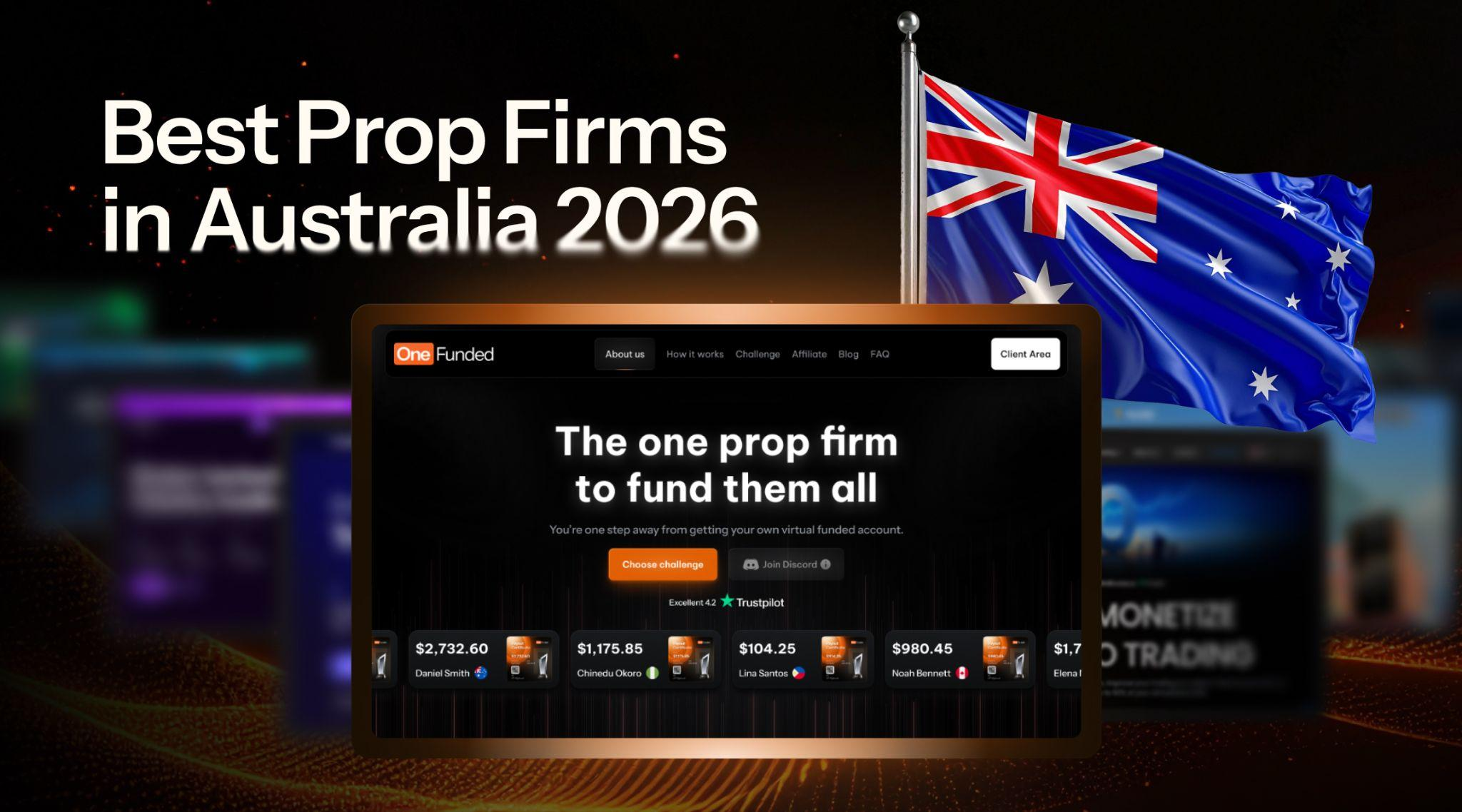














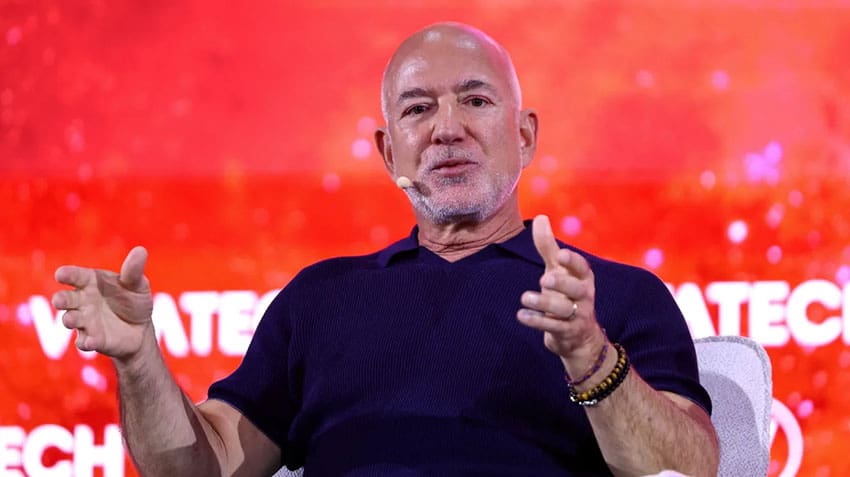


































You must be logged in to post a comment Login