

Business
Bridging Thailand and China Through E-Commerce, Fintech, and AI


In 2024, a Thai street food vendor in Chiang Mai started posting cooking videos on TikTok. Within eighteen months, she had 400,000 followers, a branded product line, and a logistics partner shipping her sauces to customers across Thailand — orders placed directly through the app, paid for instantly, fulfilled within 48 hours. She had not built a website. She had not negotiated with a distributor. She had not pitched a retailer. She had simply plugged into a platform built by a Chinese company, powered by Chinese algorithms, and backed by billions of dollars of Chinese infrastructure investment in Thailand.
That story — scaled to tens of thousands of Thai sellers and hundreds of millions of dollars in gross merchandise value — is what the Digital Silk Road between Thailand and China actually looks like in practice. It is less about government strategy documents and more about the invisible infrastructure that is quietly rewiring how Thai businesses find customers, move money, and compete.
Key takeaways
- China’s digital giants are not just entering Thailand — they are building its digital backbone. TikTok’s parent ByteDance has committed over 270 billion baht in long-term investment to Thailand, spanning data infrastructure, AI processing, and SME support. Alibaba Cloud, Huawei, and Ant Group are embedded across e-commerce, cloud computing, and fintech at a scale that no Western tech company currently matches on the ground.
- China and Thailand are building a shared digital economic corridor that most Western businesses have yet to take seriously. The joint digital platform agreed under the 2025–2031 cooperation plan covers cross-border trade settlement, AI research collaboration, and digital skills development. The companies and countries that understand this corridor early will have a structural advantage over those who discover it late.
- The opportunity is immediate and practical, not theoretical. Thailand’s e-commerce market hit 1.1 trillion baht in 2024 — growing 14% year-on-year — and is projected to reach 1.6 trillion baht by 2027. Thai businesses that learn to operate inside China’s digital platforms — and international companies that treat those platforms as market-entry infrastructure — are already winning. The question is whether you are among them.
The infrastructure nobody talks about
When people discuss China’s influence in Thailand, they tend to focus on what is visible: factories, car showrooms, construction projects. What they underestimate — consistently — is the digital infrastructure layer that Chinese companies have been quietly building for the past several years.
Huawei built much of the 5G network backbone across Thailand’s Eastern Economic Corridor. Alibaba Cloud operates extensive data centre infrastructure across the Bangkok metropolitan area. ByteDance (TikTok’s parent company) received BOI approval for a $25 billion data infrastructure investment in 2026 — one of the largest single digital investments in Thai history — spanning server installation and data processing across Bangkok, Samut Prakan, and Chachoengsao. That follows a 127-billion-baht data-hosting project approved in 2025.
Combined, these investments represent a Chinese-built digital operating environment that underlies Thailand’s fastest-growing economic sectors: e-commerce, cloud technology, digital payments, and AI-driven logistics. For executives making decisions about digital infrastructure, cloud providers, or data strategy in Thailand, this is not background noise — it is the ground you are building on.
The E-Commerce Revolution: Statistics That Command Attention
Thailand’s e-commerce market surged 51.8 percent in 2025, making it the fastest-growing major digital retail market in Southeast Asia, ahead of Indonesia, Malaysia, and Vietnam. The total market value crossed 1.15 trillion baht — a figure that would have seemed implausible five years ago.
Three platforms control 98.8 percent of total regional e-commerce GMV: Shopee (over 50 percent market share), TikTok Shop (growing rapidly via its content-driven “shoppertainment” model), and Lazada (repositioning toward premium brands and higher-value transactions). Two of these three — TikTok Shop and Lazada — are Chinese-owned. The third, Shopee, operates under Sea Limited, a Singapore company with deep roots in the Chinese technology ecosystem.
TikTok Shop deserves particular attention from any executive thinking about Thailand’s digital market. It has captured 51 percent of Thai consumer attention — a remarkable achievement for a platform that only entered e-commerce seriously in 2023. Its integration of short-form video content with direct purchasing removes the friction that kills conversion on traditional e-commerce platforms. 80 percent of Thai TikTok users made purchases on the platform during mega-sale seasons, according to TikTok’s own research. TikTok’s Thai subsidiary already reported revenues exceeding 12 billion baht, and industry analysts expect it to overtake Lazada within one to two years.
For brand managers, the implication is structural: the content-commerce boundary in Thailand has effectively collapsed. A product that is not performing on TikTok Shop is increasingly invisible to a significant segment of Thai consumers, particularly those under 35. Distribution strategy in Thailand now requires a TikTok strategy. That is a Chinese platform decision with an unavoidable business consequence.
Fintech: the quiet decoupling from the dollar
The most consequential and least-covered development in the Thailand-China digital relationship is happening not on e-commerce platforms, but in the plumbing of the financial system.
The Bank of Thailand has been quietly reducing Thailand’s dependence on US dollar settlement in cross-border trade with China. Under a local currency settlement framework, Thai exporters and importers can now denominate and settle transactions with Chinese counterparties directly in baht and yuan — bypassing the dollar conversion that has historically added cost, complexity, and FX risk to bilateral trade.
The practical impact is already visible in the fintech layer. Ant Group — the financial arm of Alibaba — backed Ascend Money, which operates TrueMoney Wallet, Thailand’s most popular digital payments app with a 53 percent market share. The integration between TrueMoney and Alipay enables seamless cross-border payment flows between Thai and Chinese users. Chinese tourists pay with Alipay; Thai merchants receive baht. Thai exporters invoice in yuan; Chinese buyers pay in their home currency. The settlement infrastructure makes it work invisibly.
This matters for economics beyond the transaction level. A bilateral trade relationship increasingly settled in local currencies — and backed by payment infrastructure controlled by Chinese-linked firms — represents a meaningful shift in financial architecture. Executives with treasury exposure to Thai-China trade flows need to understand this shift and assess whether their own FX and payment strategies remain fit for purpose.
AI: the next frontier of the digital corridor
The 2025–2031 Thailand-China cooperation plan includes a specific commitment to joint AI research and development — a line item that has received far less attention than the infrastructure investments but may prove more consequential over a longer horizon.
China is closing the gap with the US in AI at a rate that most Western executives still underestimate. BYD’s in-vehicle AI, ByteDance’s recommendation algorithms, and Alibaba’s logistics optimisation systems are already operating in Thailand — not as imported products but as embedded infrastructure within Thai industrial and commercial systems. The EEC’s smart port management, smart grid operations, and predictive logistics systems run substantially on Chinese AI platforms.
The joint R&D commitment goes further, proposing shared research institutes, academic exchange programmes, and a skills pipeline designed to produce Thai technology workers fluent in both Chinese AI tools and Thai industrial applications. This is a long game — the first graduates of these programmes will not enter the workforce for several years — but the direction is clear: Thailand is positioning itself as a node in the Chinese AI ecosystem, not just a consumer of its outputs.
For international companies operating in Thailand, this creates both an opportunity and a strategic question. The opportunity is access to AI capabilities and infrastructure at a cost and scale that would be difficult to replicate with Western alternatives. The strategic question is whether deep integration with Chinese AI systems creates dependencies that may be difficult to unwind if the geopolitical environment shifts.
The SME opportunity: practical steps for businesses
The digital corridor between Thailand and China is not only a story about billion-dollar infrastructure and government frameworks. It is also, increasingly, a practical opportunity for small and medium-sized businesses on both sides — and for international companies seeking entry into either market.
For Thai SMEs, the most immediate opportunity is cross-border e-commerce. Chinese consumers spend heavily on Thai agricultural products, cosmetics, health supplements, and premium food items. Platforms like Alibaba’s Tmall Global, JD Worldwide, and TikTok’s cross-border shop feature provide structured entry points into the Chinese consumer market that previously required expensive local partnerships and distribution agreements. ByteDance has explicitly committed to improving market access and income generation for Thai SMEs on its platform as part of its investment agreement with the Thai government — a commitment that comes with practical tools, training, and preferential fee structures.
For international companies, Thailand’s digital ecosystem offers an underappreciated advantage: a test market for Chinese platform dynamics without operating inside China itself. A company that learns to sell effectively on TikTok Shop Thailand — mastering the shoppertainment content model, the livestreaming commerce format, and the algorithm-driven discovery mechanics — is building capabilities directly transferable to the vastly larger Chinese market. Thailand is, in this sense, a low-risk laboratory for China-relevant digital commerce skills.
What executives should watch
TikTok’s $25 billion infrastructure buildout. As ByteDance scales its Thai data and AI infrastructure, the platform’s capability to serve Thai and regional businesses will deepen significantly. Watch for new tools, preferential programmes, and logistics integrations that emerge from this investment in 2026 and 2027.
Yuan-baht settlement expansion. If the local currency framework extends from bilateral trade settlement into broader consumer finance and retail payment, the dollar’s role in Thai-China economics could diminish faster than most treasury teams have modelled. Monitor Bank of Thailand policy communications closely.
AI regulation. As Chinese AI platforms become embedded in Thai commercial infrastructure, regulatory frameworks governing data sovereignty, algorithmic transparency, and cross-border data flows will determine how freely that infrastructure can operate. Executives in data-sensitive industries should track this actively.
The bottom line
The Digital Silk Road between Thailand and China is not a future project. It is being built, right now, with real capital, real platforms, and real commercial consequences. The businesses that treat it as an abstraction — a geopolitical talking point rather than an operational reality — will find themselves structurally disadvantaged against competitors who have already plugged into the infrastructure and started learning how to use it.
The Chiang Mai sauce vendor figured it out without a strategy consultant. The question for your organisation is whether you can say the same.
Next in the series — Article 5: The Balancing Act: Thailand’s Strategic Tightrope Between China, the US, and ASEAN
Other People are Reading


RH: The Recovery Bridge Still Needs Proof
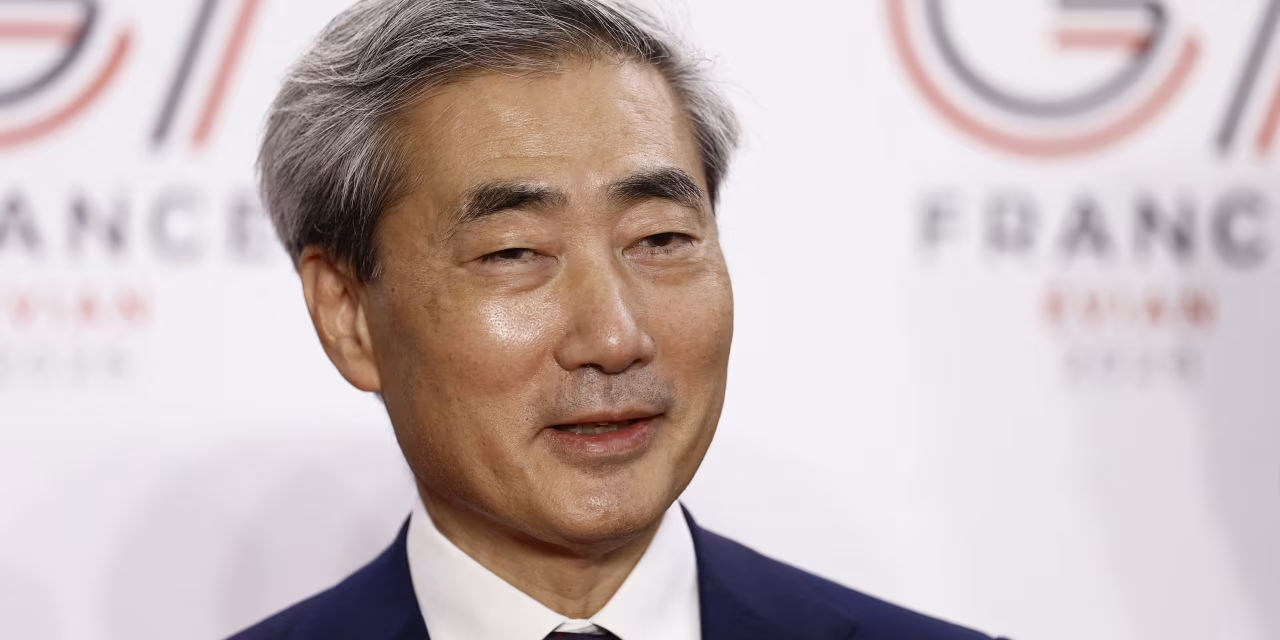
Bank of Korea Gov. Shin Hyun-song warned against falling behind the curve on taming inflation, signaling growing urgency for policymakers to act before it is too late.
With the Middle East conflict dragging on, concerns over inflationary pressures have increased, Shin said in a speech Friday marking the central bank’s 76th anniversary.
Copyright ©2026 Dow Jones & Company, Inc. All Rights Reserved. 87990cbe856818d5eddac44c7b1cdeb8


Al Qaeda-linked militants curb their brutality in seized Malian territory

Progressive Corporation: Exceptional Growth But Normalizing Margins
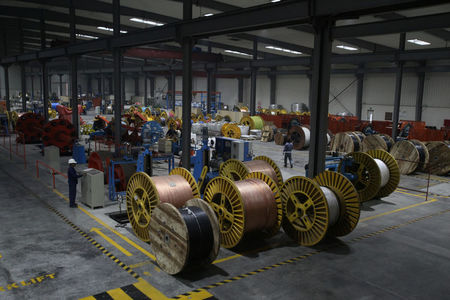
Bernstein breaks down 3 misconceptions around data centers and copper


Wolf Report is a senior analyst and private portfolio manager with over 10 years of generating value ideas in European and North American markets, and the owner of Wolf of Value, a service focusing on international dividend-paying value investments.He further covers the markets of Scandinavia, Germany, France, UK, Italy, Spain, Portugal and Eastern Europe in search of reasonably valued stock ideas.
Analyst’s Disclosure: I/we have a beneficial long position in the shares of CRARY either through stock ownership, options, or other derivatives. I wrote this article myself, and it expresses my own opinions. I am not receiving compensation for it (other than from Seeking Alpha). I have no business relationship with any company whose stock is mentioned in this article.
While this article may sound like financial advice, please observe that the author is not a CFA or in any way licensed to give financial advice. It may be structured as such, but it is not financial advice. Investors are required and expected to do their own due diligence and research prior to any investment.
Short-term trading, options trading/investment and futures trading are potentially extremely risky investment styles. They generally are not appropriate for someone with limited capital, limited investment experience, or a lack of understanding for the necessary risk tolerance involved.
I own the European/Scandinavian tickers (not the ADRs) of all European/Scandinavian companies listed in my articles. I own the Canadian tickers of all Canadian stocks I write about.
Please note that investing in European/Non-US stocks comes with withholding tax risks specific to the company’s domicile as well as your personal situation. Investors should always consult a tax professional as to the overall impact of dividend withholding taxes and ways to mitigate these.
Seeking Alpha’s Disclosure: Past performance is no guarantee of future results. No recommendation or advice is being given as to whether any investment is suitable for a particular investor. Any views or opinions expressed above may not reflect those of Seeking Alpha as a whole. Seeking Alpha is not a licensed securities dealer, broker or US investment adviser or investment bank. Our analysts are third party authors that include both professional investors and individual investors who may not be licensed or certified by any institute or regulatory body.

INGLEWOOD, Calif. — The United States men’s national team delivered a commanding performance in its 2026 FIFA World Cup opener Friday night, defeating Paraguay 4-1 at SoFi Stadium in a display that sent a strong message as co-hosts of the tournament.
Folarin Balogun scored twice in his World Cup debut, Christian Pulisic provided creative spark with key assists before halftime, and Giovanni Reyna added a stunning late goal to cap the victory. The result marked the most goals scored by the U.S. in a single World Cup match since 1930 and gave the Americans an ideal start in Group D.
The match, played before a raucous home crowd in the Los Angeles area, showcased the attacking fluency that coach Mauricio Pochettino has been building. The U.S. controlled possession and created numerous chances, outplaying a Paraguay side that had been solid in qualifying but struggled to contain the hosts’ pace and movement.
The Americans took the lead in just the seventh minute. Pulisic split two defenders with a precise pass to Weston McKennie in the box. McKennie’s cutback was turned into his own net by Paraguayan midfielder Damián Bobadilla under pressure from Balogun, giving the U.S. an early 1-0 advantage.
Pulisic, playing with the confidence of a veteran leader, continued to orchestrate the attack. Around the 31st minute, he delivered another dangerous ball into the area that Balogun finished clinically for his first international goal of the tournament, making it 2-0. Balogun had a goal called back for offside moments earlier but stayed sharp.
In first-half stoppage time, Balogun added his second. Receiving the ball near the edge of the box, he evaded two defenders with composure before curling a left-footed shot into the top corner, beyond the reach of goalkeeper Orlando Gill. It was a moment of individual brilliance that sent the crowd into a frenzy and gave the U.S. a 3-0 halftime lead — a commanding cushion in their first home World Cup match in decades.
Pochettino made changes at the break, including substituting Pulisic as a precaution after he took a kick to his left calf. The captain later said he hoped it was nothing serious. Paraguay pushed for a response in the second half, and their persistence paid off in the 73rd minute when Maurício pulled one back to make it 3-1.
The U.S. maintained control despite the setback. Defenders like Chris Richards were nearly flawless in distribution, and the midfield trio of Tyler Adams, McKennie and others dictated the tempo. Malik Tillman was influential in linking play throughout.
Deep into stoppage time, with the outcome already decided, Reyna provided the perfect finishing touch. He received the ball on the right side and unleashed a trivela — an outside-of-the-foot strike — that sailed into the far corner for his first World Cup goal. The 4-1 final scoreline reflected the U.S. dominance, though the visitors showed resilience in the latter stages.
This victory comes as the U.S. seeks to surpass its best modern World Cup performances. Hosting the tournament alongside Canada and Mexico brings added pressure and opportunity. A strong opening result boosts confidence heading into subsequent group matches and potentially deeper into the knockout stages.
Pochettino’s tactical setup emphasized quick transitions, high pressing and fluid attacking movements. Players like Balogun, who has been prolific at the club level with Monaco, provided the clinical edge that has sometimes eluded the U.S. in past tournaments. Pulisic’s vision and McKennie’s energy were central to the early breakthroughs.
For Paraguay, it was a difficult night despite their reputation as a tough, organized side. They had conceded few goals in qualifying against strong South American opponents but found themselves overwhelmed by the hosts’ intensity on the night. The own goal and defensive lapses proved costly.
The atmosphere at SoFi Stadium was electric, with fans waving flags and chanting throughout. As co-hosts, the U.S. benefited from passionate home support that amplified their performance. The win not only secures three points but also energizes the domestic soccer community during this landmark event.
Post-match, players and coaches expressed satisfaction with the result while maintaining focus on the challenges ahead. The group stage remains competitive, and the U.S. will look to build on this foundation. Balogun’s brace in particular drew comparisons to historical U.S. performances, highlighting the potential of this squad.
This match represented more than just a scoreline. It signaled the U.S. team’s evolution under Pochettino and its readiness to compete at the highest level on home soil. With talent across the pitch and growing belief, the Americans have positioned themselves well for what promises to be a memorable tournament.
The 2026 World Cup continues with high expectations for the host nations. For the U.S., Friday’s result provides momentum and validation of their preparations. Fans and analysts alike will watch closely as the team aims to make a deep run and create lasting memories in front of passionate domestic crowds.


Two phones and an app: How Russians skirt Putin’s digital iron curtain


I hold a Master’s degree in Cell Biology and began my career working for several years as a lab technician in a drug discovery clinic, where I gained extensive hands-on experience in cell culture, assay development, and therapeutic research. That scientific foundation gave me an appreciation for the rigor and challenges behind drug development, which I now bring into my work as an investor and analyst. For the past five years, I have been active in the investing space, with the last four years dedicated to working as a biotech equity analyst alongside my lab work. My focus is on identifying promising biotechnology companies that are innovating in unique and differentiated ways, whether through novel mechanisms of action, first-in-class therapies, or platform technologies with the potential to reshape treatment paradigms. By combining my lab-based scientific expertise with financial and market analysis, I aim to deliver research that is both technically sound and investment-driven. On Seeking Alpha, I plan to write primarily about the biotech sector, covering companies at different stages of development, from early clinical pipelines to commercial-stage biotechs. My approach emphasizes evaluating the science behind drug candidates, the competitive landscape, clinical trial design, and the potential market opportunity, all while balancing financial fundamentals and valuation. My goal in publishing here is to share some insights that help investors better understand both the opportunities and of course the many risks in biotech. This is a sector where breakthrough science can translate into outsized returns, but also where careful scrutiny is essential. I look forward to contributing thoughtful analysis and engaging with readers who share an interest in this dynamic and rapidly evolving space.
Analyst’s Disclosure: I/we have no stock, option or similar derivative position in any of the companies mentioned, and no plans to initiate any such positions within the next 72 hours. I wrote this article myself, and it expresses my own opinions. I am not receiving compensation for it (other than from Seeking Alpha). I have no business relationship with any company whose stock is mentioned in this article.
Seeking Alpha’s Disclosure: Past performance is no guarantee of future results. No recommendation or advice is being given as to whether any investment is suitable for a particular investor. Any views or opinions expressed above may not reflect those of Seeking Alpha as a whole. Seeking Alpha is not a licensed securities dealer, broker or US investment adviser or investment bank. Our analysts are third party authors that include both professional investors and individual investors who may not be licensed or certified by any institute or regulatory body.
Business
Exclusive-Tata’s iPhone parts factory contaminated farmland water, India pollution body alleges


Exclusive-Tata’s iPhone parts factory contaminated farmland water, India pollution body alleges

Hyperliquid (HYPE) Surges 7% as Kalshi Futures Launch and SpaceX IPO Speculation Heat Up

FIFA says fans in concourses caused empty-seat appearance during matches | FIFA World Cup 2026

Woman critically injured in shark attack off popular Sydney beach


-

 NewsBeat5 days ago
Alexander Zverev wins the French Open to finally earn a 1st Grand Slam title
-
 Entertainment6 days ago
The Best Mystery Series of All Time Is Surging on Streaming 30 Years After It Ended
-

 Crypto World5 days ago
Anatomy of the June crypto crash: Fed, Iran, Saylor
-

 Crypto World2 days ago
Oppenheimer backs SpaceX as $70 billion retail frenzy builds
-

 Crypto World2 days ago
Markets Rally as SpaceX IPO Looms Amid Iran Tensions and Inflation Surge
-
 Crypto World7 days ago
Senator Cynthia Lummis Calls CLARITY Act the Most Consequential Financial Legislation of This Generation
-
 NewsBeat6 days ago
Alexander Zverev conquers demons and outlasts Flavio Cobolli to win French Open for first major title
-

 Tech6 days ago
Microsoft unveils seven homegrown AI models in new bid for ‘long term self-sufficiency’
-

 Business5 days ago
High Stakes for Wembanyama as New York Pushes for 3-0 Lead
-

 Tech5 days ago
Notion restores access to Anthropic after service disruption
-
 Business6 days ago
The Pain Points Taking a Fragile Tech Rally Down a Notch
-
 Crypto World5 days ago
Eli Lilly (LLY) Stock Surges 4% Following Breakthrough Sleep Apnea Trial Results
-
 Business6 days ago
The investment to transform historic St Helen’s ground in Swansea
-

 Crypto World6 days ago
Trump’s AI Ownership Plan Could Benefit Anthropic at OpenAI’s Expense
-
 Sports4 days ago
Bangladesh beat Australia after 20 years in ODIs, register only their second win over six-time world champions | Cricket News
-

 Tech9 hours ago
NanoClaw integrates JFrog registries to secure AI agent downloads
-

 Crypto World4 hours ago
Bitget enters Argentina’s regulated crypto market through PSAV registration
-

 Tech19 hours ago
This Week In Security: Microsoft On Microsoft, Register Your Domains, Linux On ARM, And FreeBSD Joins The File Cache Club
-

 Politics2 days ago
Politics Home | Healey Resignation Is “Colossal Failure Of Government”, Says Former Labour Defence Secretary
-

 Sports2 days ago
First Time Since 1971: Australia Register Historic Low In ODI Cricket
You must be logged in to post a comment Login