Connect with us

Business

British Airways Flight Declares Mid-Air Emergency Over England Before Landing Safely At Heathrow Airport

Published

on

British Airways

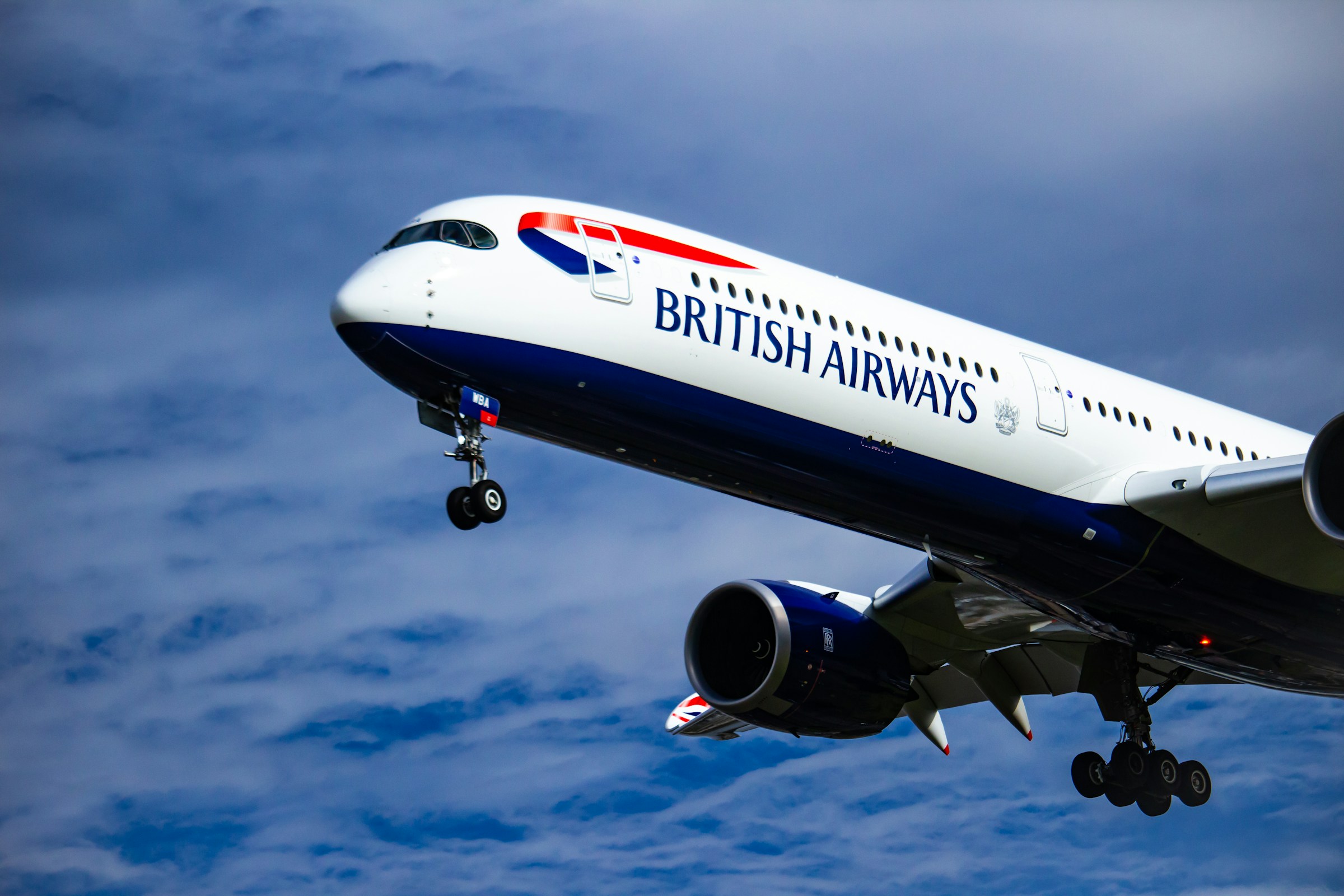
LONDON — A British Airways flight from Dublin to London Heathrow declared an in-flight emergency on Tuesday morning after developing a technical issue while cruising over northwest England, forcing the crew to make a rapid descent before continuing safely to its destination.

Flight BA825, operated by an Airbus A321neo bearing the registration G-TNEI, departed Dublin Airport on schedule at around 8:45 a.m. Shortly after reaching cruising altitude, the flight crew transmitted a squawk 7700 code while the aircraft was positioned near Liverpool. The code is the international aviation signal used to alert air traffic controllers to a general emergency requiring immediate attention.

Flight tracking data showed the twin-engine jet executing a controlled descent down to 8,000 feet as the crew worked to stabilize the aircraft. The pilots then entered a holding pattern while assessing the situation in coordination with air traffic control, according to aviation news outlet AirLive, which first reported the incident.

Despite the alert, the aircraft maintained its heading toward Heathrow and continued along its flight path at the lower altitude to ensure safety before proceeding to landing. FlightAware data showed the aircraft ultimately touched down in London at 9:49 a.m., completing the journey in roughly one hour and 19 minutes.

Advertisement

Emergency ground crews at Heathrow were placed on standby ahead of the aircraft’s arrival as a precautionary measure, a standard procedure whenever a flight declares an emergency code, regardless of the ultimate severity of the underlying issue.

A spokesperson for British Airways confirmed the incident was resolved without harm to those on board.

“The aircraft landed safely at Heathrow following a minor technical issue,” the spokesperson said.

The airline did not provide further detail on the precise nature of the technical fault that prompted the emergency squawk, and no injuries were reported among passengers or crew.

Advertisement

Squawk codes are a routine part of aviation safety protocol, allowing pilots to alert controllers instantly to a range of situations, from serious mechanical failures to precautionary measures taken out of an abundance of caution. The declaration of an emergency code does not necessarily indicate a life-threatening situation, but it does trigger heightened coordination between the flight crew, air traffic control and ground emergency services to ensure the aircraft receives priority handling and, if needed, immediate assistance upon landing.

Tuesday’s incident was the second such episode involving a UK carrier in as many days. On Sunday, a Jet2 flight traveling from London Stansted to Ibiza was forced to divert to Paris after its crew declared a mid-flight emergency using the same squawk 7700 code.

That flight, LS1473, operated by a Boeing 737-800, diverted roughly an hour and a half into what was scheduled to be a journey of just over two hours. The aircraft landed safely at Paris Charles de Gaulle Airport at 10:49 a.m. local time, where emergency services had been positioned on standby ahead of its arrival. Flight tracking data showed the Boeing turning toward Paris while flying over French airspace before touching down on runway 27L without further incident.

Passengers aboard the diverted Jet2 flight were able to continue their journey later the same day. The aircraft departed Paris for Ibiza at 12:51 p.m. local time and arrived on the Spanish island at 2:33 p.m., completing the trip with a delay of several hours but no reported injuries.

Advertisement

Both incidents unfolded during a busy late-summer period for European air travel, when airlines across the continent are managing high passenger volumes on routes connecting the UK with popular holiday destinations. While mid-air emergency declarations tend to draw significant public attention, aviation safety experts note that the vast majority resolve without serious consequence, reflecting the extensive redundancy built into modern commercial aircraft systems and the rigorous training pilots receive to handle technical anomalies calmly and methodically.

Modern aircraft, including the Airbus A321neo involved in Tuesday’s Dublin-to-London flight, are equipped with multiple layers of backup systems designed to allow crews to manage a wide range of technical faults without compromising passenger safety. Regulatory authorities in the UK and across Europe require airlines to report and investigate any incident involving an emergency squawk code, regardless of how routine the eventual resolution proves to be.

British Airways, the UK’s flagship carrier, operates a large network of short-haul routes between Ireland and Britain, including multiple daily flights between Dublin and Heathrow. The airline has faced periodic technical incidents on various routes over the years, most of which have concluded with aircraft landing safely after precautionary diversions or altitude changes, consistent with standard industry practice when any anomaly is detected mid-flight.

Aviation analysts note that instances of squawk 7700 declarations have become more visible to the public in recent years, largely due to the proliferation of real-time flight-tracking platforms and aviation-focused social media accounts that closely monitor transponder codes broadcast by aircraft in flight. This increased visibility means that incidents which might once have gone largely unnoticed by the public, particularly those resolved quickly and without incident, now often generate significant news coverage and public interest almost as soon as they occur.

Advertisement

For passengers aboard BA825, Tuesday’s journey ultimately concluded without disruption to their onward plans, arriving at Heathrow within a reasonable window of the flight’s scheduled arrival time despite the mid-flight emergency declaration. British Airways has not indicated that the aircraft, registration G-TNEI, faced any extended grounding following the incident, though further technical inspections would typically follow any such precautionary emergency landing as a matter of routine airline safety protocol.

The airline continues to operate its regular schedule of flights between Dublin and London, with no indication that Tuesday’s incident has led to broader disruption across its Irish Sea route network.

Continue Reading
Click to comment

You must be logged in to post a comment Login

Leave a Reply

Business

Ryanair warns soaring jet fuel prices could topple some European airlines

Published

on

Business Live

The airline says the price of jet fuel could soar next summer amid the ongoing conflict in the Middle East

Ryanair adds 500 extra flights for October half-term getaway with 100,000 seats

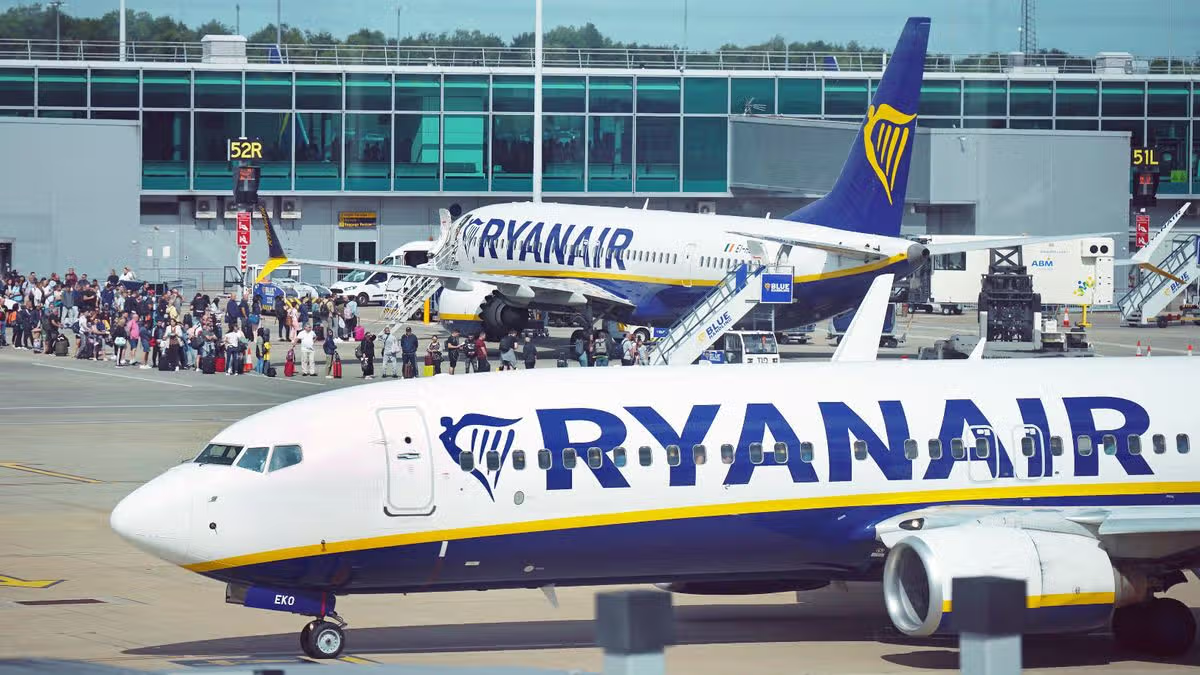
Passengers queuing up to get on Ryanair planes at Stansted Airport(Image: Niall Carson/PA Wire)

Ryanair is warning that jet fuel prices could rocket next summer, putting some of its European rivals at risk of going under.

Advertisement

The budget carrier announced it had taken emergency measures to shield itself from the elevated jet fuel costs triggered by the Iran war, scaling back its passenger targets from 216m to 214m for this year.

The Dublin-based airline revealed it had locked in fixed-price contracts for 80 per cent of its fuel requirements for the year ahead, but chose to axe certain flights to reduce the volume of fuel it must purchase at market rates.

The reduced flight schedule is expected to ease Ryanair’s winter losses by €70m to €100m. The carrier remains on course to grow its summer passenger numbers by more than five per cent to 145m this year.

Ryanair cautioned that several of its European competitors face greater exposure to the surging jet fuel costs brought about by the closure of the Strait of Hormuz, as reported by City AM.

Advertisement

“If high oil prices continue through to [next summer], Ryanair believes short haul airfares in Europe will increase materially to reflect higher oil prices,” the Dublin-based firm said.

“Some less well-hedged competitors will struggle to maintain capacity or even survive this coming winter season.”

In July, Ryanair disclosed that the cost of the 20 per cent of its fuel requirements that were not fixed-price had more than doubled at the start of this year, to $150 per barrel.

Consequently, the carrier’s operating costs surged 11 per cent to €3.8bn in the three months to June, while its pre-tax profit plummeted 36 per cent to €593m.

Advertisement

The airline, which is listed in both Dublin and New York, announced in May that it would slash some of its fares to drive up passenger volumes and counter the softening demand triggered by the Middle East conflict.

Ryanair is far from alone in feeling the pinch from the Iran war. Tourism giant Tui swung to a €17m loss in the six months to June, attributing the shortfall to rising fuel costs and subdued travel demand.

Easyjet absorbed a £200m blow to its profits in the three months to June, as fuel costs per passenger rocketed by £100m, or 13 per cent.

Advertisement
Continue Reading

Business

Perth to experience ‘short, shallow’ house price dip: Reardon

Published

on

Perth to experience ‘short, shallow’ house price dip: Reardon

The HIA chief economist says home values in the WA capital could increase again as early as next year.

Continue Reading

Business

Exclusive | Donald Trump Jr.’s Fund Boosts Polymarket Investment by Around $300 Million

Published

on

Exclusive | Donald Trump Jr.’s Fund Boosts Polymarket Investment by Around $300 Million

The investment fund 1789 Capital, in which Donald Trump Jr. is a partner, is investing around $300 million into Polymarket, according to a person familiar with the matter. 

The investment is part of a $1 billion round led by 1789 that would value Polymarket at $21 billion, according to people familiar with the matter. 

Copyright ©2026 Dow Jones & Company, Inc. All Rights Reserved. 87990cbe856818d5eddac44c7b1cdeb8

Continue Reading

Business

70%+ since picked by our AI, this AI-tech remains a high-conviction September play

Published

on


70%+ since picked by our AI, this AI-tech remains a high-conviction September play

Continue Reading

Business

Care company to sell ‘unaffordable’ historic fire station after ‘unnecessarily difficult and costly’ planning process

Published

on

Business Live

Council says it has worked with building’s owners over a number of years

The former Aintree Fire Station, on Longmoor Lane

The former Aintree Fire Station, on Longmoor Lane(Image: Eddisons / Rightmove)

A care company who wanted to turn Merseyside’s oldest fire station into new housing has admitted it is now looking to sell the building. In January 2025, proposals were unveiled for the future of Aintree Fire Station on Longmoor Lane.

Advertisement

As Merseyside Fire and Rescue Service (MFRS) unveiled its new £40m super station on Long Lane, the 100-year-old site in Fazakerley was shut down in May 2024. MFRS sold the site to Best Care Liverpool Ltd who had sought to convert it into offices and housing.

After a housing plan was knocked back, the scheme was resubmitted to focus solely on new offices, which was accepted in October last year by Liverpool Council. Director Nora Darwin told the LDRS the company is now looking to sell the building as “we now have a property that we cannot afford to develop.”

Documents released by the MFRS authority policy and resources committee confirmed an offer of £650,000 was made by Best Care. Eddisons estate agents were appointed to market and sell the fire station, with the listing published in September 2023. Around 170 parties expressed an interest in taking on the station when its closure was first announced.

A total of 44 parties took part, leading to 11 bids. The highest offer was unconditional and made by Best Care Liverpool Ltd.

Advertisement

According to its website, the firm is a “family owned company, originally established in September 2018 by qualified nurses.” With experience in domiciliary and home care, it provides services in Knowsley, Liverpool and St Helens.

Mrs Darwin, 71, said: “We purchased the property with the intention of developing it into a worthwhile community and business project. Our plans included providing accommodation, offices and employment, as well as providing care services and creating jobs for local people.

“Unfortunately, our experience with the planning department has been so difficult, time-consuming and costly that we have now reached the point where we can no longer afford to continue with the project and are looking to sell the property.”

The director added how the company was disappointed to not receive planning permission for its housing proposals given the shortage in the city.

Advertisement

She added: “Our experience, however, has left us feeling that the process became unnecessarily difficult and costly. The consequence is that we now have a property that we cannot afford to develop.

“We are trying to sell it, but we have been told that having planning permission only for offices, together with the attached conditions, could make the property considerably harder to sell. This has potentially cost our company a great deal of money.

“We also believe that the wider community has lost out. We wanted to create jobs, provide care services for local people and make productive use of a former fire station that is currently not delivering the benefits we originally intended.”

Cllr Nick Small, Liverpool Council cabinet member for growth and economy, said: “The council has worked with the owners of the former Aintree Fire Station site over a number of years to support proposals for its future use. In 2023, a pre-application enquiry for residential use of the building was submitted and planning officers provided advice on how the proposal could be developed.

Advertisement

“As part of this process, the council seeks to ensure new accommodation is accessible to all members of the community, including people with mobility difficulties. A formal application to change the use of the building to offices was subsequently submitted in 2024.

“That proposal was refused in June 2025, however an amended application was submitted in August 2025 and approved in October 2025. The council works constructively with applicants and their professional advisers to help bring forward proposals that meet local and national planning policy and guidance.

“It is not unusual for amendments to be requested or planning conditions to be applied as part of the planning process. While applicants may not always agree with the advice provided or decisions reached, planning officers have a responsibility to assess proposals consistently and in the wider public interest.”

Advertisement
Continue Reading

Business

Russia lifts 2026 GDP growth forecast to 0.6% from 0.4%

Published

on


Russia lifts 2026 GDP growth forecast to 0.6% from 0.4%

Continue Reading

Business

Woking school opens uniform shop to sell items ‘at cost’

Published

on

Close-up of orangutan's eyes

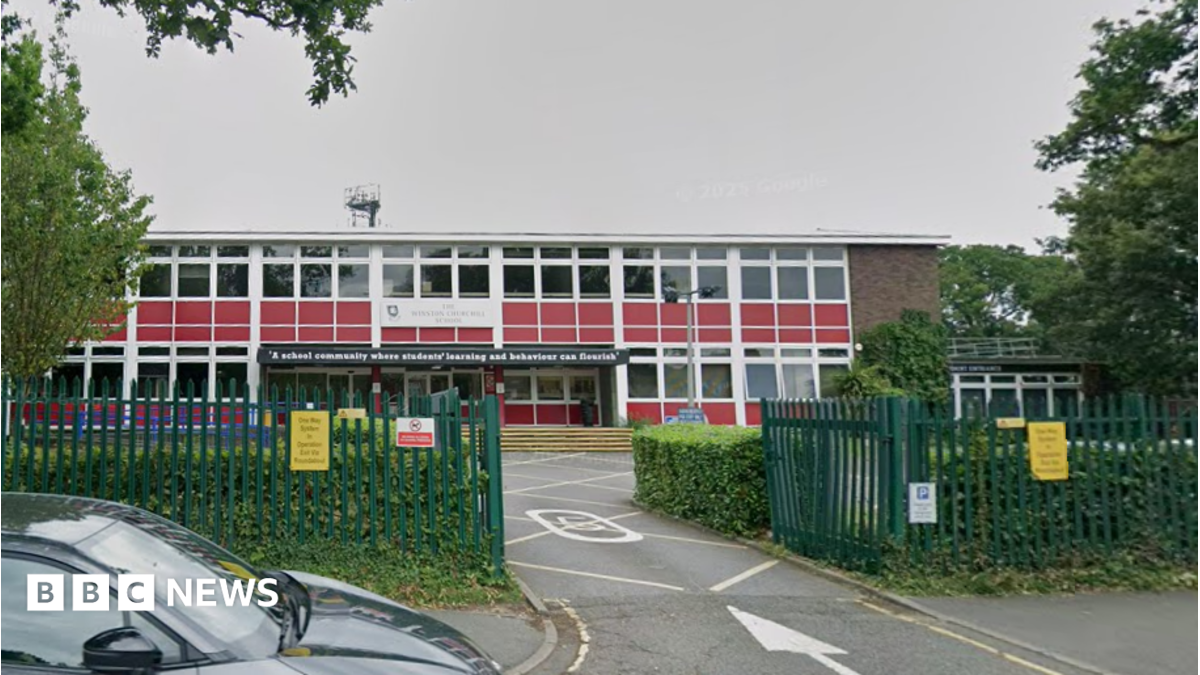
A secondary school in Surrey has secured its own uniform supplier so it can sell items at cost to pupils.

The Winston Churchill School in Woking opened its own uniform shop to cut back to costs for families, where parents can order items on site or online, with clothing including skirts, ties and PE kit available at no markup from what it cost the school.

Head teacher Zoe Johnson-Walker said that the approach had cut £20 off the cost of school blazers compared to the previous school year.

“We’ve been trying to reduce the cost of our uniform over a couple of years,” she told the BBC.

Advertisement

The school redesigned its uniform for 2026-27, coinciding with new government rules limiting secondary schools to three branded items, plus a branded tie.

According to the Department for Education, the new rules would save parents up to £50.

“Parents have told us they want fewer costly branded items – and that’s exactly what we’re delivering,” a spokesperson said.

“School uniform matters, but it shouldn’t break the bank.”

Advertisement

Johnson-Walker said That the school had proposed removing its branded blazers from its uniform as it was “one of our most expensive items” but had found “quite a large demand from parents to sell it with the badge on”.

“We’ve managed to do a negotiation with our supplier which means that there’s no additional cost to parents to have a badged item,” she said.

She added that the school had scrapped branded PE tops but was selling plain, black PE shirts in its uniform shop after requests from parents.

“We’re also trying to maintain standards because uniform, as far as we’re concerned, is quite levelling,” Johnson-Walker added.

Advertisement
Continue Reading

Business

Urban planner fined $4k for stalking offence

Published

on

Urban planner fined $4k for stalking offence

The Perth urban planner will have a criminal record after being found guilty of pursuing another to intimidate.

Continue Reading

Business

Bath’s oldest charity appoints new CEO as it prepares for ‘next chapter’

Published

on

Business Live

St John’s Foundation is more than 850 years old and supports older adults in financial need

Laura Alexander is St John's Foundation's new chief executive

Laura Alexander is St John’s Foundation’s new chief executive(Image: Handout)

Bath’s oldest charity has appointed a new chief executive as it prepares to expand its work across the city. Laura Alexander has taken the helm of St John’s Foundation just 19 months after her predecessor, Catharine Brown, took up the job.

St John’s is more than 850 years old and works with housing and outreach services to help older adults in financial need to live independently for longer. It also runs a grants programme aimed at supporting individuals and families who have reached financial crisis across Bath and North East Somerset.

Advertisement

Ms Alexander joined the charity in 2023 to lead its commercial arm – St John’s Hospital Trading Company. She was later appointed director of operations, spearheading a more strategic approach to the charity’s extensive property portfolio.

Her appointment comes as St Joh’n’s prepares to create new almshouses in the centre of Bath and invest in existing homes in a bid to provide more safe, secure and affordable accommodation to older people.

“Over [the last] three years, I have had the opportunity to work with some truly brilliant teams and to see first-hand the very real, human impact their work has on our residents and the wider community,” said Ms Alexander.

“We’re at an important point for St John’s. With an ageing population and increasing pressure on affordable housing, the need for what we do is growing.”

Advertisement

She added: “For me, the opportunity now is to build on that incredible heritage while being forward-thinking and ambitious about the role St John’s can play in the future. It’s a responsibility I don’t take lightly, and I’m incredibly excited about what we can achieve together.”

The board of trustees said Ms Alexander’s promotion to chief executive comes at “an important point in the charity’s development”.

“Over the last three years, we have seen first-hand the enormous contribution Laura has made to both St John’s Foundation and our trading company,” the board said in a statement.

“Laura brings a clear vision for where St John’s needs to go next while understanding and respecting what makes the organisation so special. We are delighted to appoint her to lead St John’s into its next chapter.”

Advertisement
Continue Reading

Business

Want The Fastest Read On The Economy? Watch These Interim Reports

Published

on

Rates Spark: Resumed Steepening Impulse

Want The Fastest Read On The Economy? Watch These Interim Reports

Continue Reading

Trending

Copyright © 2025