

Connect with us
DAPA Banner
DAPA Coin
DAPA
COIN PAYMENT ASSET
PRIVACY · BLOCKDAG · HOMOMORPHIC ENCRYPTION · RUST
ElGamal Encrypted MINE DAPA
🚫 GENESIS SOLD OUT
DAPAPAY COMING

Business

Brown-Forman Corporation (BF.B) Shareholder/Analyst Call – Slideshow

Published

on

OneWater Marine Inc. (ONEW) Q1 2026 Earnings Call Transcript
Continue Reading
Click to comment

You must be logged in to post a comment Login

Leave a Reply

Business

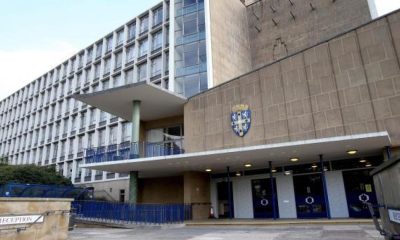
Reynolds returns as science department scrapped

Published

on

Reynolds returns as science department scrapped

The abolition of an entire Whitehall department rarely counts as good news for the firms that depend on it. Yet the business world’s response to Andy Burnham’s decision to scrap the Department for Science, Innovation and Technology has been strikingly split: dismay at the loss of a respected science minister, relief at the return of a familiar face to the business brief.

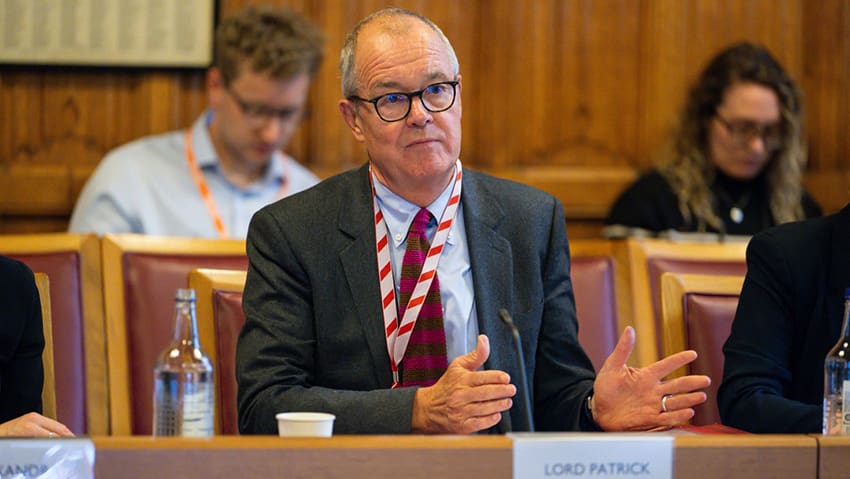
Lord Vallance of Balham has stepped down as science minister, and the department’s responsibilities have been folded into an enlarged Department for Business and Trade. In his place, Jonathan Reynolds returns as business secretary, ten months after being reshuffled out of the role.

For the thousands of smaller firms clustered in Britain’s growth sectors, from life sciences start-ups to advanced manufacturers, the reshuffle raises one immediate question: who in government now champions science?

Vallance, a former president of research and development at GSK and the government’s chief scientific adviser between 2018 and 2023, was prized for exactly that. “After nearly a decade in government I am stepping down as a minister, for personal reasons,” he said.

His exit lands at a delicate moment. The life sciences sector, heavy with the kind of high-growth SMEs the industrial strategy is meant to nurture, has spent two years fretting about Britain’s slide down the global life sciences investment rankings.

Advertisement

One senior investor put the concern bluntly: “It’s a shame that we have lost a highly competent and effective minister … If we claim to be a scientific superpower, and if we’re going to compete scientifically against the United States and China … then we need someone within government who’s going to be a champion for that.”

Richard Torbett, chief executive of the Association of the British Pharmaceutical Industry, said Vallance had been “instrumental in beginning to turn around international sentiment towards the UK as a life sciences destination”, adding that he “leaves big shoes to fill”. Vallance is also credited with helping launch the Health Data Research Service, the long-promised effort to open up NHS data to medical researchers.

Industry’s chief anxiety now is continuity. Firms are pressing the new government to honour an agreement to double spending on innovative medicines over the next decade in exchange for a three-year tariff exemption on pharmaceutical exports to the US, a deal seen as central to luring international investment. “Any rowing back on that would send an absolutely terrible signal internationally, just when sentiment is really turning around, and people are talking positively again about the UK,” one source warned.

Chris Hollowood, chief executive of the life sciences investor Syncona, captured the unease about being absorbed into a bigger department. Its backing “could be helpful”, he said, “but if we are just diluted among other priorities then that would be concerning”. Notably, the move to close the science department has already drawn a backlash from the tech sector.

Advertisement

If life sciences is nervous, the wider business lobby is more upbeat, largely because of who is now in charge. Reynolds oversaw the creation of the industrial strategy that manufacturers have broadly backed, and his return is read as a signal of intent.

Louise Hellem, chief economist at the CBI, said he “brings a clear understanding of the challenges facing business and will be able to hit the ground running, particularly when it comes to delivering the industrial strategy launched during his previous tenure”.

Stephen Phipson, chief executive of Make UK, set the bar for smaller manufacturers: “Success will be measured by whether manufacturers see lower costs, fewer barriers to trade and a more competitive environment in which to invest, make and export with confidence.”

Ben Fletcher of Logistics UK called the intervening year “a real wasted opportunity” and Reynolds’s recall “a hugely positive move”.

Advertisement

For SMEs, the message is mixed but clear enough. A pro-business signal from the top is welcome. What smaller firms in science and technology will watch for is whether their sector still has a voice once the departmental nameplate has come down.


Jamie Young

Jamie Young

Jamie Young is Senior Reporter at Business Matters, covering SME finance, employment law and Westminster policy since 2016. He has reported on every Budget and Autumn Statement since 2018, helped make sense of the ‘covid era’ and the bounce-back loan scheme from launch through the fraud investigations, and broke the magazine’s coverage of the 2024 late-payment reforms. He joined Business Matters straight from completing his BA in Administration from Exeter University and is NCTJ-qualified. Reach him at jyoung@cbmeg.co.uk

Advertisement
Continue Reading

Business

Earnings call transcript: NOS posts Q2 2026 EPS beat, shares slip

Published

on


Earnings call transcript: NOS posts Q2 2026 EPS beat, shares slip

Continue Reading

Business

Greek mythology, hubris and entrepreneurship

Published

on

Business Live

Entrepreneurship is often described as a journey, and Homer reminds us that reaching the destination matters, but so does the way we travel to get there.

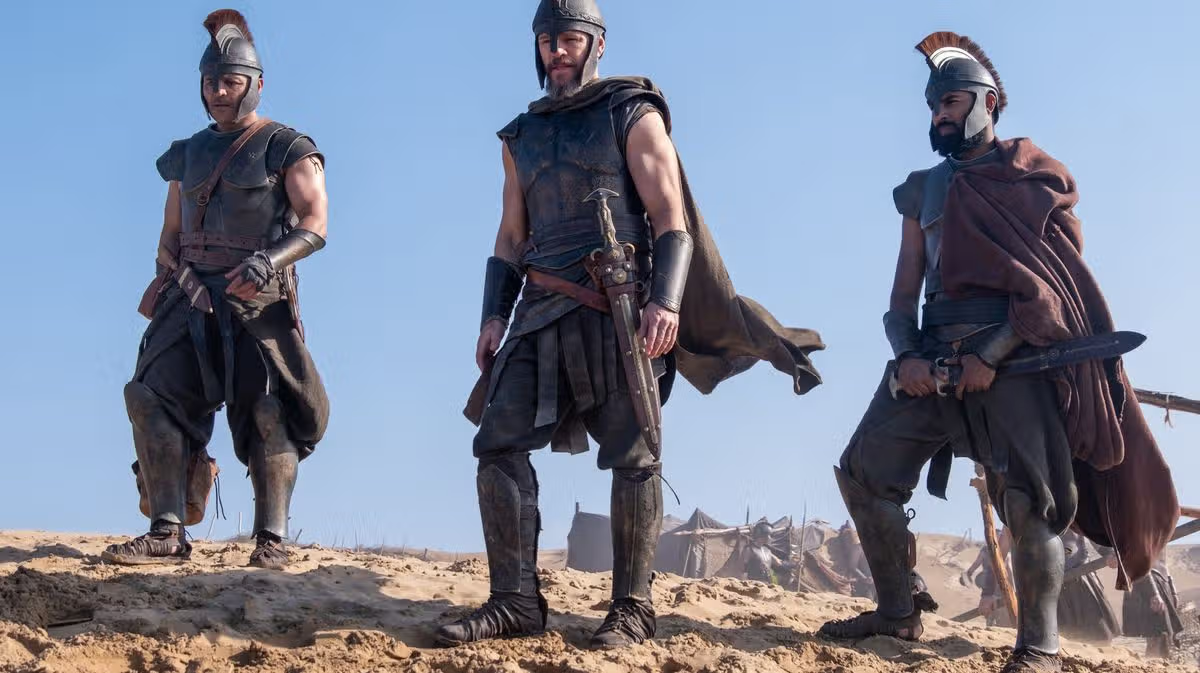
Film The Odyssey.(Image: © Universal Studios. All Rights Reserved)

As a child, I was obsessed with Greek mythology, and the stories of gods, monsters, and flawed heroes captured my imagination.

For many years, a battered second-hand copy of Homer’s Odyssey sat on my bookshelf, but like many others who have read it over the centuries, I probably understood only part of what it was trying to say.

Sir Christopher Nolan’s film has brought this ancient epic back into the public eye and introduced Odysseus’s long journey home to another generation. It has also reminded me, as I watched this incredible interpretation at the Odeon IMAX in Cardiff last week, that, beneath the cyclopes, sirens and angry gods, The Odyssey contains lessons relevant to anyone attempting to build a business.

The poem tells the story of Odysseus, king of Ithaca, and the ten years he spends trying to return home after the Trojan War. His route is disrupted by storms, monsters, temptation, his own mistakes and the failures of those around him.

Advertisement

He has a destination but no reliable map, limited resources and a team that does not always follow instructions. In that respect, his experience may feel more familiar to founders than many modern business textbooks.

The first lesson is the importance of knowing what your own Ithaca looks like. Odysseus is repeatedly blown off course, yet never loses sight of home. For founders, that destination should be more than a turnover target, an investment round, or the eventual sale of the company. It should be a clear understanding of what the business exists to do, whom it serves, and what success will ultimately mean.

Without that clarity, every new opportunity can appear attractive and whilst a partnership, a new market, or an investor may all seem worth pursuing, it is not necessarily progress. Some of the greatest threats to a growing business are apparently exciting opportunities that take it further from its primary purpose.

The Odyssey is full of such distractions – the Lotus-Eaters offer forgetfulness, Circe and Calypso offer comfort and escape, and the Sirens offer knowledge so seductive that sailors abandon reason and head towards destruction. Their commercial equivalents are vanity projects, premature expansion, unsuitable partnerships, flattering publicity, and investments that bring in money but undermine purpose.

Advertisement

One of the most important abilities any founder can develop is the capacity to say no, particularly when an opportunity appeals to the ego, which is one of Odysseus’s greatest weaknesses. Of course, entrepreneurs are encouraged to be confident, ambitious and visible, and those qualities matter when persuading others to believe in something that does not yet fully exist.

But confidence can quickly become hubris, and early success can persuade founders that they possess exceptional judgement in every area, or that anyone challenging them simply lacks vision. In fact, business history is full of leaders undone not by their first failure, but by their inability to learn from their first success.

Odysseus’s real advantage is not physical strength but intelligence, and he defeats the Cyclops because he outthinks him and survives because he adapts. Start-ups rarely possess the money, scale or market power of established competitors, and their advantage lies in speed, creativity, customer insight and the willingness to question assumptions that larger organisations have stopped noticing.

Yet adaptability should not be confused with constant reinvention, and Odysseus changes his methods while keeping the same destination. A product may have to evolve, and a route to market may have to be abandoned, but constant shifts in direction without a clear purpose are drift, not agility.

Advertisement

There is also a lesson in his crew’s behaviour when they open the bag of winds when Ithaca is almost within reach and later ignore warnings by slaughtering the cattle of Helios. Again and again, the mission is undermined by poor discipline, mistrust and a failure to accept responsibility. Businesses are often weakened by unclear responsibilities, poor communication and a reluctance to confront repeated underperformance, and whilst loyalty to your team matters, it cannot mean tolerating behaviour that ultimately damages the business.

Perhaps the most modern lesson comes from the Sirens. Odysseus knows he will be unable to resist their song, so he asks his crew to bind him to the mast and ignore his demands to be released. He does not rely on willpower but creates a system that prevents him from acting on temptation, which is governance in its simplest form.

Spending limits, delegated authority, shareholder agreements and independent oversight may feel bureaucratic to leaders who value freedom and speed, but in reality they protect the company not only from dishonest or incompetent people but also from the founder’s own impulses.

The final lesson concerns the cost of the journey and Odysseus eventually reaches Ithaca, but only after twenty years away, having lost his ships and every member of his crew. He achieves his objective, but at an extraordinary price. Whilst founders are frequently told that persistence is the defining entrepreneurial virtue, it should never become an excuse to ignore the consequences.

Advertisement

A founder can build a valuable company while damaging their health, family, friendships, or reputation, only to reach the destination and discover that too much has been sacrificed along the way. Success cannot be judged only by whether Ithaca was reached, but by who arrived with us and what sort of person we became on the voyage.

That is why The Odyssey has endured and why one of the world’s best directors has brought it back into contemporary culture. It is not merely an adventure about monsters and gods but a story about leadership under pressure, the dangers of pride, and the need to stay focused when easier destinations beckon.

Indeed, entrepreneurship is often described as a journey, and Homer reminds us that reaching the destination matters, but so does the way we travel to get there.
Advertisement
Continue Reading

Business

(VIDEO) 10-Person Brawl Forces EasyJet Flight from Tenerife to Liverpool to Turn Back Mid-Air, Police Called

Published

on

No-frills airlines, such as Ryanair and EasyJet, are notably affected, with their business model based heavily on flying customers across the European Union

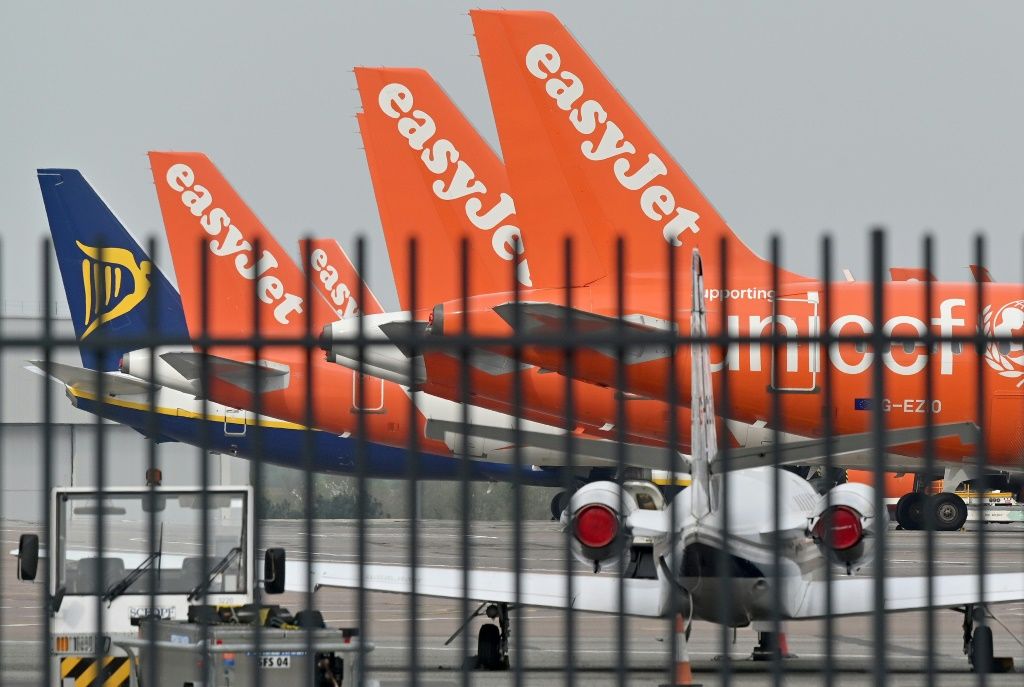
A Liverpool-bound easyJet flight was forced to turn back to Tenerife on Tuesday evening after a brawl involving roughly 10 passengers broke out onboard, prompting the pilot to abort the journey and request police meet the aircraft on landing.

Flight EZY3352, carrying 186 passengers, had been in the air for approximately 30 minutes when the altercation broke out, according to Spanish air traffic control. The captain made the decision to return to Tenerife South Airport rather than continue on to Liverpool, citing the danger the fight posed to the overall safety of the flight.

How the incident unfolded

Advertisement

Air traffic control, in a statement originally issued in Spanish, described the sequence of events leading up to the aircraft’s return. “The crew of the flight from Tenerife South to Liverpool, after about 30 minutes of flight, informed us that they needed to return to the airport and requested police presence upon arrival,” the statement said. “A group of about 10 passengers had started a fight on board, and the captain decided to return due to the danger it posed to the safety of the flight. We expedited their return as much as possible while coordinating with the airport for police presence. They landed and cleared runway 07 without incident.”

Police officers were waiting on the tarmac when the aircraft touched down at Tenerife South Airport on Tuesday evening, in line with the crew’s request ahead of landing. Following the incident, the plane resumed its journey and continued on to Liverpool.

EasyJet’s response

In a statement, easyJet confirmed the aircraft had returned to the airport due to disruptive behavior among a group of passengers. “The plane returned to the airport and was met by police due to a group of passengers behaving disruptively. The flight then continued to Liverpool,” the airline said.

Advertisement

The airline emphasized its standard protocols for handling in-flight disturbances, saying its staff are trained to respond quickly to protect the safety of everyone on board. “Our cabin and ground crew are trained to assess all situations and to act quickly and appropriately to ensure that the safety of the flight and other customers is not compromised at any time,” easyJet said. “We take these incidents very seriously and do not tolerate disruptive behaviour towards our staff. The safety and wellbeing of customers and crew is always our highest priority.”

A message of solidarity from air traffic control

Beyond the operational details of the incident, Spain’s air traffic control authority used its statement to express broader concern about the frequency of similar disruptions affecting aviation crews and passengers. “Our full support goes out to the crews and passengers who are increasingly having to endure these situations,” the controller said.

Part of a wider push to crack down on disruptive passengers

Advertisement

Tuesday’s incident comes amid a broader effort by U.K. authorities to address unruly and disruptive behavior on flights. Last month, officials announced a proposed government scheme that could see passengers who disrupt flights banned from flying with any airline, rather than facing consequences limited only to the specific carrier involved in the incident that led to their removal or restriction.

According to reporting on the proposal, officials at the Department for Transport and the Home Office are developing a system that would allow airlines to share information about disruptive passengers across the industry. Currently in its conceptual phase, the plan would require airlines to notify the government when a passenger engages in disruptive behavior. If that same individual later attempted to check in for a subsequent flight, participating airlines would be alerted to the prior incident, potentially allowing them to deny boarding.

Not an isolated incident for the airline

In-flight altercations, while relatively rare given the volume of daily commercial flights, have periodically disrupted easyJet services in the past. A similar incident occurred in 2019, when an easyJet flight bound for Tenerife from Manchester was diverted to Portugal after several men began fighting in the back of the cabin, with the disturbance escalating even after crew attempted to separate those involved.

Advertisement

Aviation safety experts generally note that in-flight altercations, regardless of scale, pose a heightened risk specifically because of the confined cabin environment, the difficulty of safely separating those involved at altitude, and the potential for a serious disturbance to distract crew members from other safety duties during a flight. Diverting or returning a flight, while operationally costly and disruptive to other passengers, remains one of the primary tools available to flight crews when a situation is deemed to pose a genuine risk to overall flight safety.

No injuries reported

Neither easyJet nor Spanish air traffic control indicated that any passengers or crew members were injured during Tuesday’s altercation. It also remains unclear from statements provided whether any of the passengers involved in the fight were removed from the aircraft in Tenerife before it continued on to Liverpool, or whether any arrests were made following the police response on the tarmac.

As of this week, neither easyJet nor Spanish authorities have indicated whether any of the passengers involved will face further legal consequences beyond the police response that met the aircraft upon its return to Tenerife. The incident adds to the broader public conversation around disruptive passenger behavior on commercial flights, a issue that has taken on renewed significance in the U.K. as officials continue developing the cross-airline passenger-sharing scheme aimed at preventing repeat offenders from continuing to fly following similar incidents in the future.

Advertisement
Continue Reading

Business

Central Pacific Financial earnings beat by $0.02, revenue topped estimates

Published

on


Central Pacific Financial earnings beat by $0.02, revenue topped estimates

Continue Reading

Business

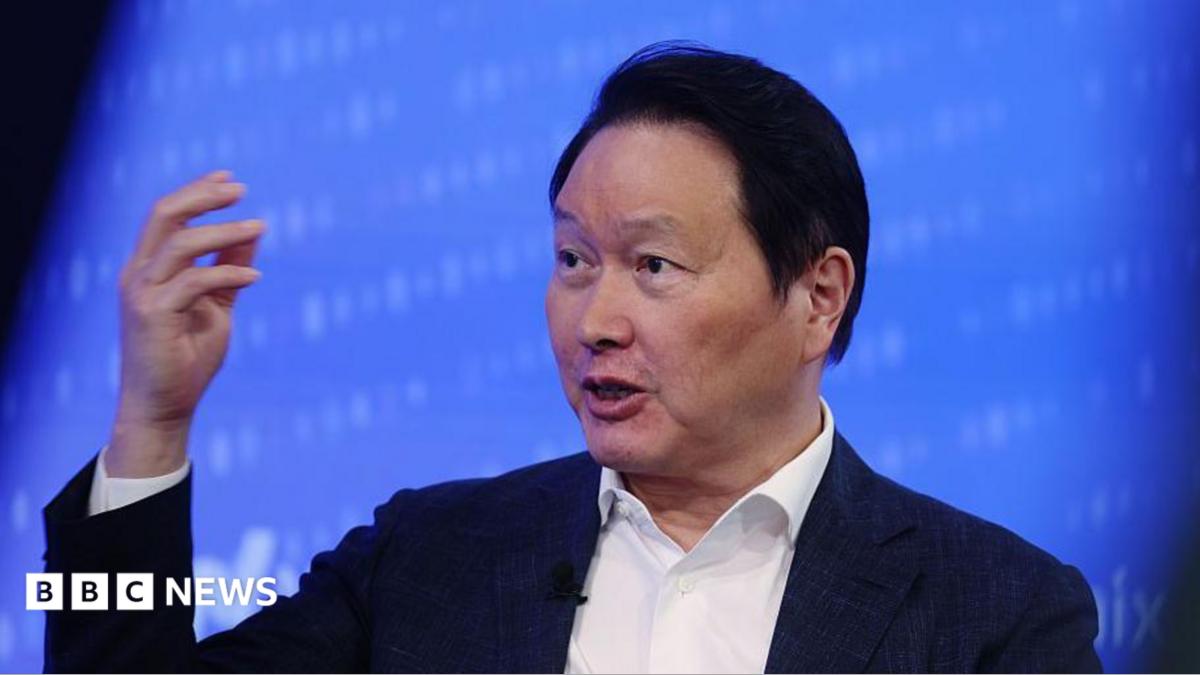
SK Group: Tech titan Chey Tae-won ordered to pay ex-wife $644m in divorce settlement

Published

on

Chey Tae-won, chairman of SK Group, speaking during the company's initial public offering at the Nasdaq MarketSite in New York in July

The chairman of corporate giant SK Group has been ordered by a South Korean court to pay his ex-wife 944bn won (£483m; $644m) in a case that local media has called the “divorce of the century“.

The award, which still needs to be finalised, is below the initial 1.38tn won that chairman Chey Tae-won was told to pay Roh Soh-yeong in 2024.

It comes more than a decade after his marriage to Roh – the daughter of a former president – fell apart following the revelation he had fathered a child with another woman.

SK Group runs SK Hynix, the semiconductor giant that supplies chips to Nvidia and recently made a record-setting debut on the US stock market.

Advertisement

Chey’s lawyers said “Chairman Chey Tae-won is deeply sorry in that [the divorce] proceedings so far have caused concern to many people. We will share specific response to the verdict after we closely review the ruling.”

SK Group is one of South Korea’s chaebols – family-owned conglomerates that dominate the country’s economy.

The verdict comes after deliberation over the division of assets between Roh and Chey, who had been married for 35 years.

During the earlier trial in 2024, Roh’s legal team had successfully argued that Chey had received significant help from his ex-wife’s father, Roh Tae-woo, who had served as the country’s president between 1988 to 1993.

Advertisement

The court had determined that the strongman had given Chey 30bn Korean won from his slush fund in 1991, and told Chey to pay 1.38tn to his ex-wife.

But the Supreme Court overturned the verdict last year, ruling that the slush funds were illegally obtained and could not be considered as part of the couple’s assets.

The case has gripped South Korea.

SK Group began as a textile company in 1953 but quickly grew across a wide swath of industries to become one of South Korea’s biggest conglomerates.

Advertisement

Today, it is the second largest chaebol after the Samsung group. South Korean people buy phone plans from SK Telecom and fill their vehicles at SK petrol stations.

The group gained global prominence after its subsidiary SK Hynix found itself at the centre of the artificial intelligence (AI) boom. In May, the chipmaker surpassed $1tn (£750bn) on the South Korean stock market.

As SK Hynix’s value soared, the SK Group and its chairman Chey’s status also rose.

Last month, President Lee Jae Myung commended Chey during the unveiling of a landmark AI investment plan, calling him and Samsung chairman JY Lee “Heroes of Korean People.”

Advertisement

The company also raised $26.5bn in its New York share offering, marking the largest ever listing by a foreign firm in the US.

The BBC has contacted SK Group for comment.

Continue Reading

Business

Telsey downgrades Albertsons stock rating on soft results

Published

on


Telsey downgrades Albertsons stock rating on soft results

Continue Reading

Business

Quest Diagnostics Upgrades EPS Outlook For 2026 After Outperforming Q2 Results (NYSE:DGX)

Published

on

Quest Diagnostics Upgrades EPS Outlook For 2026 After Outperforming Q2 Results (NYSE:DGX)

This article was written by

Albert Anthony is the pen name of a business author on Amazon and his newest book is “How To Pick Stocks: 8 Steps For Long-Term Investing with Fundamental & Technical Analysis,” now available as a 2026 edition paperback and Kindle ebook in several regions including the US, UK, Canada, and Europe. The author is an analyst & contributor for investing platform Seeking Alpha since 2023, where he has nearly 2,000 followers and has covered hundreds of stocks in multiple sectors including banks/financials, REITs, insurance, pharma, and more. He has also written for platforms like Investing dot com, and has taken part in many business conferences includes Bloomberg Adria’s Investment Outlook 2026 as well as Money Motion 2026. Albert Anthony has Croatian-American roots, having grown up in the US and living in the NYC/New Jersey area as well as the Austin Texas area while working in enterprise IT roles at several prominent companies, including a top 10 financial firm. The author earned a B.A. from Drew University, and also completed certifications from Microsoft, CompTIA, and Corporate Finance Institute where he earned the specialization in risk management. He is founder of a boutique equities research firm, Albert Anthony & Company, which is a trade name both in the US and Croatia. Besides his writing and analyst work, the author has been active on camera as well, as a film/TV extra for casting agencies in Croatia/Europe, and also took part in roundtable panel discussions and appeared in several media stories in that region. You can also check out the author’s video content on the Albert Anthony channel on YouTube where he discusses investing topics, @author.albertanthony Please note: The author does not write about non-publicly traded companies, small cap stocks, crypto, or startup CEOs, so any such mail received and pitches from PR agencies will be deleted. Any official mail to the author should be sent to albertanthony.info@gmail.com. *Author Disclaimer: Albert Anthony and Albert Anthony & Co, is a US-based sole proprietorship registered as a trade name in Austin, Texas, and a sole proprietor registered in Croatia. The author nor his company are registered financial advisors and do not provide personalized financial advisory services to clients and do not manage client assets but provide general markets commentary and research as well as actionable insights based on publicly-available data and their own analysis. The author does not sell or market financial products and services, nor is compensated by any company for rating them. The author does not hold any material position in any stock he rates at the time of writing, unless otherwise disclosed. All investment is assumed to be at risk and readers are expected to do their due diligence beyond the scope of this author’s commentary, agreeing to indemnify the author of any liability for potential investment losses.

Analyst’s Disclosure: I/we have no stock, option or similar derivative position in any of the companies mentioned, and no plans to initiate any such positions within the next 72 hours. I wrote this article myself, and it expresses my own opinions. I am not receiving compensation for it (other than from Seeking Alpha). I have no business relationship with any company whose stock is mentioned in this article.

Seeking Alpha’s Disclosure: Past performance is no guarantee of future results. No recommendation or advice is being given as to whether any investment is suitable for a particular investor. Any views or opinions expressed above may not reflect those of Seeking Alpha as a whole. Seeking Alpha is not a licensed securities dealer, broker or US investment adviser or investment bank. Our analysts are third party authors that include both professional investors and individual investors who may not be licensed or certified by any institute or regulatory body.

Advertisement
Continue Reading

Business

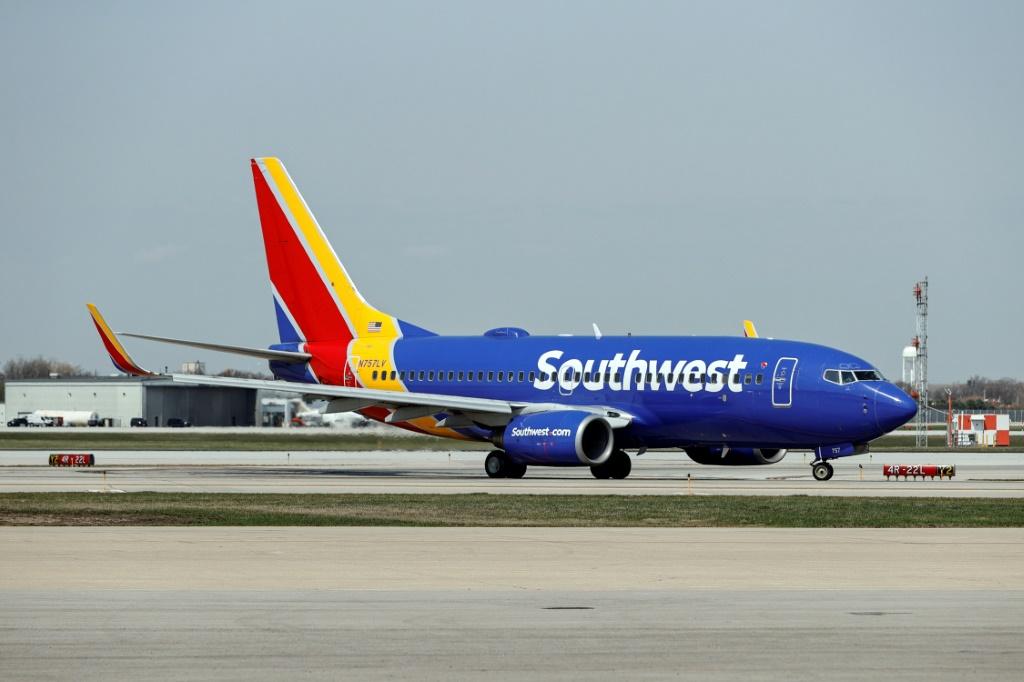
ICE Detains Southwest Airlines Flight Attendant at Nashville Airport Over Visa Overstay, Officials Say

Published

on

Nancy Guthrie

A Southwest Airlines flight attendant is in the custody of U.S. Immigration and Customs Enforcement after being detained while at work earlier this month, according to the airline’s flight attendant union and federal officials, in a case that has drawn both criticism from labor and immigrant advocacy groups and support from immigration enforcement supporters online.

ICE confirmed in a statement to CBS News Texas that agents detained Lorenzo Thompson at Nashville International Airport on July 14. According to the agency, Thompson, a citizen of Jamaica, entered the United States on a visa in April 2021 that authorized a temporary stay and expired later that year, but he did not depart when that authorization ended.

What federal officials say

According to ICE, Thompson’s visa allowed him to remain in the country for approximately six months before its expiration on Oct. 16, 2021. The agency said he overstayed that authorization and did not leave the country as required. “Thompson was cooperative with ICE officers and taken into custody without incident. Cooperation of this nature helps ensure the process is conducted safely and efficiently for all involved. He will remain in ICE custody pending immigration proceedings,” an ICE spokesperson said in a statement.

Advertisement

In a separate comment provided to Fox News, an ICE spokesperson framed the case within the agency’s broader enforcement approach, saying, “Against our nation’s laws, he overstayed his visa and failed to depart. He will remain in ICE custody pending his immigration proceedings.” The agency noted that it offers people in the country illegally $2,600 and a free flight to voluntarily leave the U.S., adding that those who do not take that option and are later found to be in the country unlawfully face arrest and removal without the option to return.

What Thompson’s supporters say

Accounts from Thompson’s family, friends and advocacy organizations offer a different picture of his immigration status and circumstances. A friend of Thompson’s, Kristin Foster, organized a GoFundMe campaign to help cover his legal expenses, writing that Thompson holds a valid work visa and has a pending asylum case. “Since arriving, he has worked tirelessly to build a stable life, following every legal step toward citizenship. He has no criminal record. No parking tickets,” Foster wrote on the fundraising page. The campaign description also states that Thompson left Jamaica seeking safety from what it describes as life-threatening abuse.

The Labor Council for Latin American Advancement, an advocacy organization, also weighed in on Thompson’s case, stating that he held a valid work visa and was working toward U.S. citizenship. “He had a valid work visa and was a dedicated flight attendant, touching countless lives with his kindness,” the group wrote in a social media statement.

Advertisement

The union’s response

TWU Local 556, which represents more than 21,000 Southwest Airlines flight attendants and is based in Dallas, confirmed that one of its members had been detained while at work. The union said in a statement posted to social media that it has been in contact with Thompson’s family and is coordinating with legal counsel to better understand the circumstances surrounding his detention.

“Every Member deserves to be treated with dignity and respect, and we are committed to ensuring this Member and their family know they are not alone during this difficult time,” the union said. In a separate statement posted to Facebook, the union added, “TWU Local 556 will continue to monitor the situation closely and remain engaged as we learn more. We appreciate our Members’ concern and support, as we all hope for a swift resolution to this situation.” The union has also made its Critical Incident Stress Management Team available to members affected by the situation.

When CBS News Texas sought additional details from the union, TWU Local 556 declined to provide further comment beyond its public statements. Southwest Airlines has not issued a public statement addressing the detention as of this week.

Advertisement

A case that drew wide public reaction

News of Thompson’s detention circulated widely on social media following ICE’s confirmation of the arrest, drawing sharply divided reactions. Supporters of stricter immigration enforcement pointed to the case as an example of the kind of workplace enforcement action they have called for, while immigrant rights advocates and union representatives emphasized Thompson’s reported lack of a criminal record and his pursuit of legal immigration status, including a pending asylum claim, as reasons for concern about the manner and timing of his arrest.

Context around the arrest

Thompson’s case comes amid a broader wave of immigration enforcement actions that have drawn national attention in various workplaces and public settings over the past year, including at other airports and public transit locations. Federal immigration authorities have described such workplace enforcement actions as consistent with the administration’s broader approach to identifying and removing individuals found to be unlawfully present in the country, while advocacy groups and some labor organizations have continued to raise concerns about detentions that occur at a person’s place of employment, arguing that such arrests can be particularly disruptive to families, coworkers and ongoing legal immigration proceedings.

Advertisement

Thompson remains in ICE custody pending the outcome of his immigration proceedings, according to federal officials. It remains unclear how his reported pending asylum application and work authorization status will factor into those proceedings, and neither ICE nor Thompson’s representatives have provided a timeline for when a resolution might be reached. Southwest Airlines, TWU Local 556 and advocacy groups following the case have not indicated whether any additional legal action or public statements are expected in the near term, and CBS News Texas said it continues to seek further comment from the airline.

Continue Reading

Business

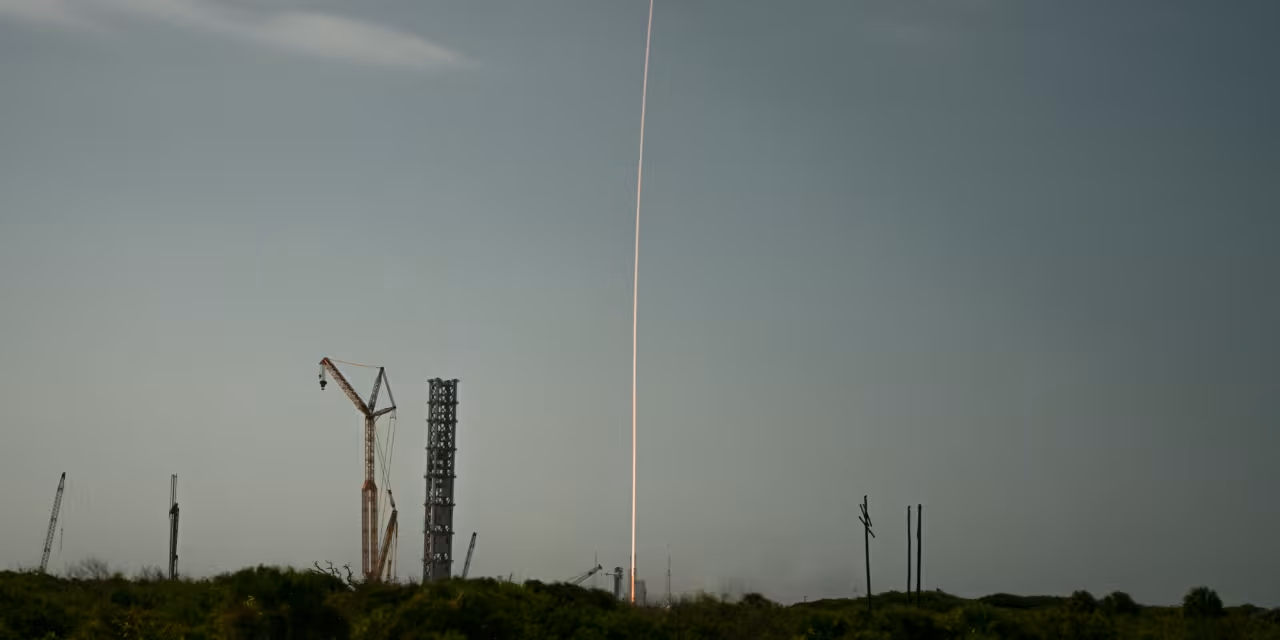
SpaceX’s Latest Growth Opportunity Isn’t About Starship. And It Isn’t Helping the Stock.

Published

on

SpaceX’s Latest Growth Opportunity Isn’t About Starship. And It Isn’t Helping the Stock.

SpaceX’s Latest Growth Opportunity Isn’t About Starship. And It Isn’t Helping the Stock.

Continue Reading

Trending

Copyright © 2025