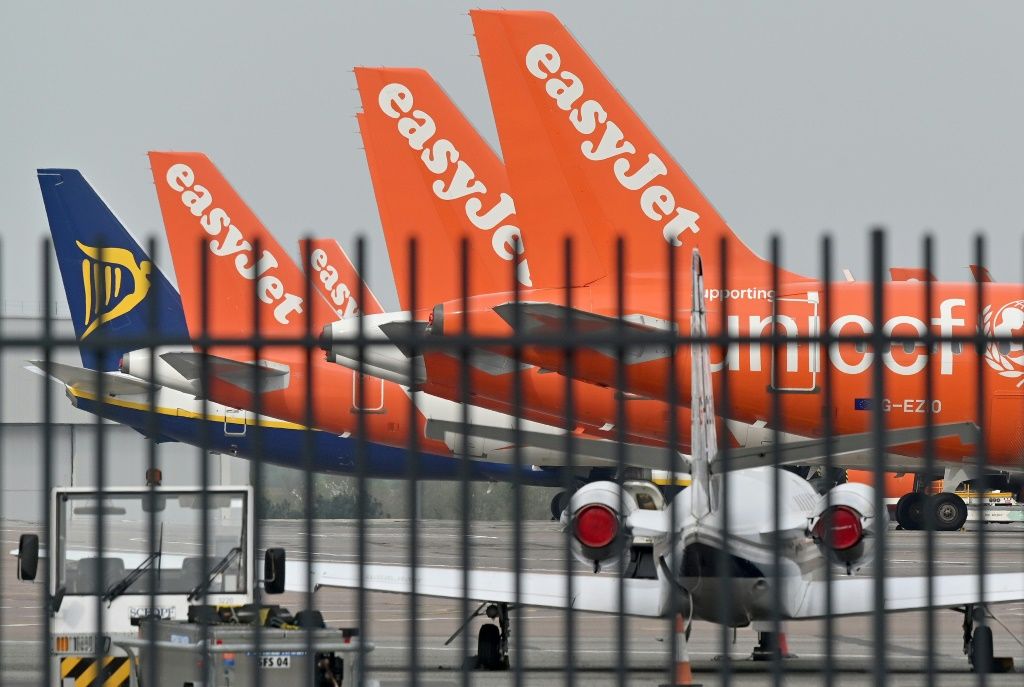
A Liverpool-bound easyJet flight was forced to turn back to Tenerife on Tuesday evening after a brawl involving roughly 10 passengers broke out onboard, prompting the pilot to abort the journey and request police meet the aircraft on landing.
Flight EZY3352, carrying 186 passengers, had been in the air for approximately 30 minutes when the altercation broke out, according to Spanish air traffic control. The captain made the decision to return to Tenerife South Airport rather than continue on to Liverpool, citing the danger the fight posed to the overall safety of the flight.
How the incident unfolded
Advertisement
Air traffic control, in a statement originally issued in Spanish, described the sequence of events leading up to the aircraft’s return. “The crew of the flight from Tenerife South to Liverpool, after about 30 minutes of flight, informed us that they needed to return to the airport and requested police presence upon arrival,” the statement said. “A group of about 10 passengers had started a fight on board, and the captain decided to return due to the danger it posed to the safety of the flight. We expedited their return as much as possible while coordinating with the airport for police presence. They landed and cleared runway 07 without incident.”
Police officers were waiting on the tarmac when the aircraft touched down at Tenerife South Airport on Tuesday evening, in line with the crew’s request ahead of landing. Following the incident, the plane resumed its journey and continued on to Liverpool.
EasyJet’s response
In a statement, easyJet confirmed the aircraft had returned to the airport due to disruptive behavior among a group of passengers. “The plane returned to the airport and was met by police due to a group of passengers behaving disruptively. The flight then continued to Liverpool,” the airline said.
Advertisement
The airline emphasized its standard protocols for handling in-flight disturbances, saying its staff are trained to respond quickly to protect the safety of everyone on board. “Our cabin and ground crew are trained to assess all situations and to act quickly and appropriately to ensure that the safety of the flight and other customers is not compromised at any time,” easyJet said. “We take these incidents very seriously and do not tolerate disruptive behaviour towards our staff. The safety and wellbeing of customers and crew is always our highest priority.”
A message of solidarity from air traffic control
Beyond the operational details of the incident, Spain’s air traffic control authority used its statement to express broader concern about the frequency of similar disruptions affecting aviation crews and passengers. “Our full support goes out to the crews and passengers who are increasingly having to endure these situations,” the controller said.
Part of a wider push to crack down on disruptive passengers
Advertisement
Tuesday’s incident comes amid a broader effort by U.K. authorities to address unruly and disruptive behavior on flights. Last month, officials announced a proposed government scheme that could see passengers who disrupt flights banned from flying with any airline, rather than facing consequences limited only to the specific carrier involved in the incident that led to their removal or restriction.
According to reporting on the proposal, officials at the Department for Transport and the Home Office are developing a system that would allow airlines to share information about disruptive passengers across the industry. Currently in its conceptual phase, the plan would require airlines to notify the government when a passenger engages in disruptive behavior. If that same individual later attempted to check in for a subsequent flight, participating airlines would be alerted to the prior incident, potentially allowing them to deny boarding.
Not an isolated incident for the airline
In-flight altercations, while relatively rare given the volume of daily commercial flights, have periodically disrupted easyJet services in the past. A similar incident occurred in 2019, when an easyJet flight bound for Tenerife from Manchester was diverted to Portugal after several men began fighting in the back of the cabin, with the disturbance escalating even after crew attempted to separate those involved.
Advertisement
Aviation safety experts generally note that in-flight altercations, regardless of scale, pose a heightened risk specifically because of the confined cabin environment, the difficulty of safely separating those involved at altitude, and the potential for a serious disturbance to distract crew members from other safety duties during a flight. Diverting or returning a flight, while operationally costly and disruptive to other passengers, remains one of the primary tools available to flight crews when a situation is deemed to pose a genuine risk to overall flight safety.
No injuries reported
Neither easyJet nor Spanish air traffic control indicated that any passengers or crew members were injured during Tuesday’s altercation. It also remains unclear from statements provided whether any of the passengers involved in the fight were removed from the aircraft in Tenerife before it continued on to Liverpool, or whether any arrests were made following the police response on the tarmac.
As of this week, neither easyJet nor Spanish authorities have indicated whether any of the passengers involved will face further legal consequences beyond the police response that met the aircraft upon its return to Tenerife. The incident adds to the broader public conversation around disruptive passenger behavior on commercial flights, a issue that has taken on renewed significance in the U.K. as officials continue developing the cross-airline passenger-sharing scheme aimed at preventing repeat offenders from continuing to fly following similar incidents in the future.
From a nine-generation family farm to a challenger radio station, the 2026 Lloyds British Business Excellence Awards shortlist tells a different story about British SMEs, and one of them will win £500,000 of ITV airtime
At a time when small business confidence is under well-documented pressure, the Lloyds British Business Excellence Awards has announced its 2026 finalists: almost 200 businesses and business leaders shortlisted from a record field of entries overwhelming majority of them small and medium-sized firms, spanning all 20 categories and every corner of the UK economy.
The shortlist reads like a map of SME Britain. A ninth-generation family farm, Tulleys Farm, that now welcomes nearly two million visitors a year. Boom Radio, the challenger station built for the over-50s. A Leeds bearings exporter, a Kent swimming school, a Bristol sandwich institution, a stairlift installer, artisan food brands, family funeral directors, and fast-scaling names like Pip&Nut and Octopus Electric Vehicles, alongside household names such as Fortnum & Mason and Kendamil.
Amanda Murphy, CEO, Lloyds Business and Commercial Banking, said: “Behind every successful business is a story of ambition, determination and innovation. Inspiring entrepreneurs backing themselves to succeed. That’s exactly what the Lloyds British Business Excellence Awards celebrates. Our finalists are creating jobs, bringing new ideas to market, investing in their communities and helping drive growth across the UK’s nations and regions. They represent the very best of British enterprise and we’re incredibly proud to back them.”
For one SME on the shortlist, the night will be transformative in the most literal sense. The new ITV Growth Accelerator Award, created with media partner ITV, carries the largest and most commercially valuable prize ever offered by a UK business awards programme: £500,000 of ITV advertising across ITV’s broadcast channels and ITVX, putting a small business in front of millions of viewers. All eleven shortlisted brands also receive an ITV Growth Package of subsidised airtime, bespoke coaching from ITV’s SME incubator team and TV creative at cost, taking national television, long the preserve of big-budget advertisers, within reach of small firms.
Advertisement
Sarah Austin, Founder of Empowered Events, which owns and produces the Awards, knows the SME journey first-hand: she started the programme from her kitchen table after being made redundant from a FTSE events business while on maternity leave. She said: “Reading this finalist list is like reading the story of modern Britain. A zero-carbon housebuilder tackling the housing crisis. A ninth-generation family farm welcoming two million visitors. A challenger radio station, and founders turning kitchen-table ideas into international brands. Every one of them backed themselves before anyone else did, and that’s the quality we celebrate above all others. Confidence surveys tell one story about British small business. This shortlist tells another, and I know which one I believe.”
Winners will be announced at the gala ceremony at Grosvenor House, London, on Tuesday 10 November 2026, in front of 1,200 business leaders, with Lloyds Bank as headline partner, ITV as media partner and the support of the UK government. In keeping with Awards tradition, winners will ring the opening bell at the London Stock Exchange and be celebrated at the programme’s annual reception at the House of Commons.
Since launch, the Awards have raised over £100,000 for charity.
Jamie Young is Senior Reporter at Business Matters, covering SME finance, employment law and Westminster policy since 2016. He has reported on every Budget and Autumn Statement since 2018, helped make sense of the ‘covid era’ and the bounce-back loan scheme from launch through the fraud investigations, and broke the magazine’s coverage of the 2024 late-payment reforms. He joined Business Matters straight from completing his BA in Administration from Exeter University and is NCTJ-qualified. Reach him at jyoung@cbmeg.co.uk
Nestle is selling a stake in UK water business which includes Princes Gate to create a new joint venture with private equity firm Platinum
13:20, 24 Jul 2026Updated 13:21, 24 Jul 2026
Princes Gate Water(Image: Princes Gate)
Nestle has confirmed plans to spin out its water business to create a joint venture business worth around £4.2bn.
The Swiss maker of Kit Kat has agreed a deal with private equity firm Platinum Equity to form a new company called Peranel, in which they will each own a 50% stake.
Advertisement
It will include more than 30 brands, including Nestle’s waters such as S.Pellegrino, Perrier, Buxton and Acqua Panna, and Pembrokeshire-based Princes Gate as well as its hydration drinks and the global Nestle Pure Life brand.
Nestle said the deal value “implies” cash proceeds of £2.6bn for the firm.
Peranel will be headquartered in Paris and led by the division’s current chief executive Muriel Lienau.
Philipp Navratil, chief executive of Nestle, said: “By partnering with Platinum Equity, Peranel will be better positioned to execute its strategy with enhanced agility.
Advertisement
“Through additional focus, it will be well equipped to drive its long-term growth ambitions by strengthening this unique portfolio of international and local brands, with continued investments in innovation, premiumisation, operational excellence and sustainability.”
Trade union Unite cautioned Nestle and Platinum against an “attack on jobs” at its UK-based Buxton water business following the joint venture move.
Unite general secretary Sharon Graham said: “The new owners are on notice.
“If there are any attempts to attack the jobs, pay and conditions of Unite members on the back of this sale in order to line the pockets of investors, we will fight back.”
Advertisement
Moreover, GMB said it would be on alert to any proposed changes to workers’ rights for Nestle’s Princes Gate water business, which employs around 100. Nestle initially acquired a majority stake in the Princes Gate from the Jones family in 2018, before becoming sole owners of the Narbeth-based business.
Charlotte Brumpton-Childs, GMB national secretary, said: “We’ve seen all too often selling a business to private equity results in a bonfire of terms and conditions as fund managers desperately try to squeeze out every last drop of profit.
“That cannot be allowed to happen at Princes Gate water, or Nestle, where workers have already suffered months of fear and uncertainty. GMB Looks forward to working constructively with the new owners to keep Princes Gate Water a profitable company where workers current terms, benefits and conditions are protected.”
In half-year results Nestle reported organic sales growth of 3.6% for the six months to the end of June.
Advertisement
But sales growth by volume underwhelmed investors, with shares tumbling 7%, as Nestle also cuts its profitability outlook, saying operating profit margins would be “broadly similar” in the second half after previously guiding for stronger margins.
Bosses at Stallingborough-based home eco-tech firm Myenergi have announced plans to ramp up production, with a raft of new jobs set to be created as a result. A number of vacancies are already being advertised at the manufacturer of electric vehicle chargers, home battery storage and solar heating systems.
The 250-strong company is on the lookout for factory floor staff, alongside customer and technical support roles. Further expansion is also expected to drive demand for additional installers of the firm’s product range, which includes its zappi EV chargers, eddi solar diverters, libbi home batteries and harvi energy monitors.
Now entering its 10th year since being founded by Grimbarian entrepreneurs Jordan Brompton, who has since departed the company, and Lee Sutton, the firm has its sights set on £60m in revenue, with further growth anticipated. This comes after a turbulent period for the business, which had previously reported revenues in excess of £67m and a workforce of more than 400, before being forced to cut jobs amid losses tied to pressure on household spending and shifts in incentive structures.
CEO Andrew Clint, who came on board in early 2025, said the company was once again on a growth trajectory, buoyed by a resurgence in demand for home energy products and the new Andy Burnham-led Government’s emphasis on cost-of-living measures. Speaking to GrimsbyLive, Mr Clint said there was definite “momentum” among customers keen to reduce household bills through the “electrification of the home” via Myenergi’s product range.
Advertisement
He said: “The change to the Andy Burnham-led Government, and the way he is driving cost of living, is interesting. If you look at our total ecosystem that you could install into your home, you can probably save £1,500 a year as a household from connecting all the devices, accessing a smart tariff and taking part in the flexibility.”, reports Grimsby Live.
This optimism comes amid a heightened focus on cost-of-living messaging from the new Government, which just days ago confirmed the removal of VAT from domestic electricity bills from October. Mr Clint also welcomed the cost-focussed language from newly appointed Secretary of State for Energy Security and Net Zero Miatta Fahnbulleh.
Mr Clint added: “We’re getting very much back to our original mission and what we see in the UK market in particular is the entry point to the electrification market being an electric vehicle (EV). So, we’re seeing a significant uptick in the number of people buying our EV charge – the zappi – and once they get an EV charger, we’re seeing families move on to look at what else they can do to electrify their homes and save money.”
He noted that battery systems are becoming increasingly important, with a considerable rise in the number of units the company is connecting. Mr Clint added: “And I see that growing significant because you can save £200-£400 a year using the battery to store cheap energy overnight and then using that energy during the day when it’s more expensive.”
Advertisement
In addition to its core operations in the UK market, Myenergi runs a number of overseas subsidiaries, including outposts in Australia, Ireland, Germany and the Netherlands, through which it distributes products across around 10 other European countries.
Sales are reportedly on the rise in Czechia, Poland and Slovakia, with a new battery system due to be rolled out in those markets in early 2027. Prior to that, the company is set to unveil a new vehicle-to-grid charger in autumn this year.
‘We’ve also welcomed Neil Stephenson as Chairman of the business, he is a highly experienced and respected businessman’
13:22, 24 Jul 2026Updated 13:30, 24 Jul 2026
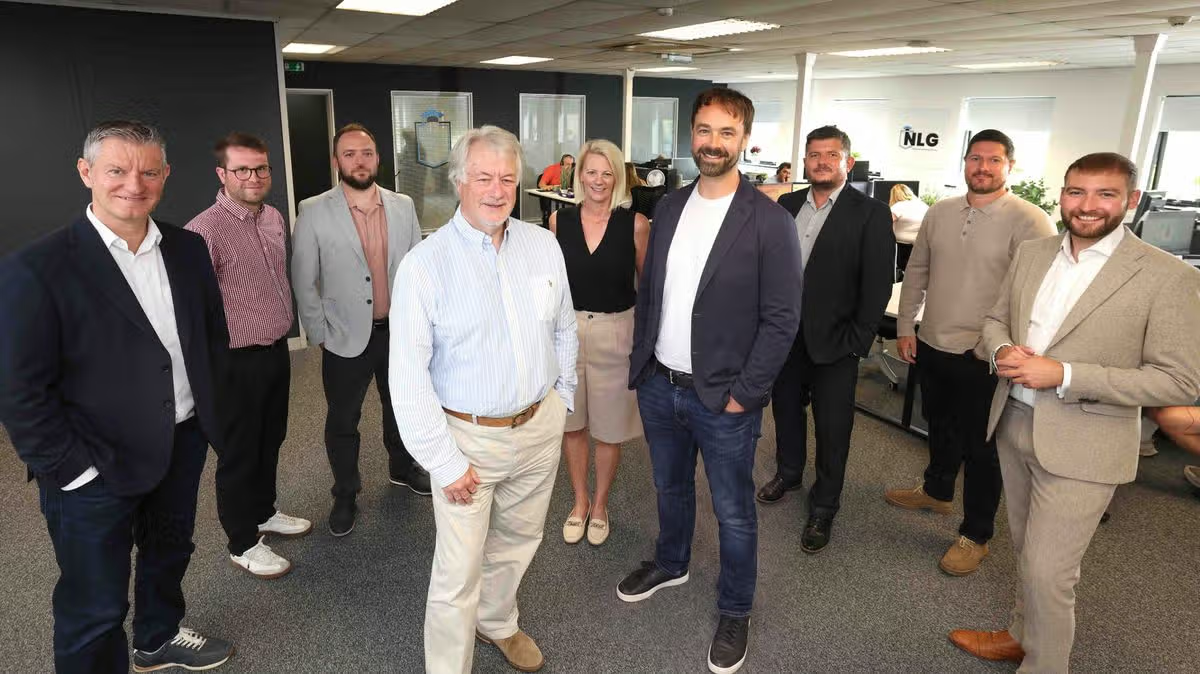
National Learning Group has received a seven-figure investment(Image: National Learning Group)
New jobs are set to be created at a Tyneside online learning specialist fuelled by a seven-figure investment. Gateshead based National Learning Group provides one-to-one tutoring to helping students to excel in their studies, covering all age ranges from reception to adult learners , helping with exam preparation for GCSEs and A-Levels as well as adult skills training.
Now the business is set to ramp up operations and create new jobs after receiving a seven-figure investment from the North East Elevate Fund which is managed by FW Capital. The firm, which has recently located to a new office in Gateshead and has a registered office in Hexham, has tutoring which covers national and international educational boards, and enrols 4,000 students a year with a network of over 350 tutors.
Advertisement
The new funding will enable bosses to invest in infrastructure, including the development of their own proprietary software. It is also strengthening its senior management team with key appointments including Neil Stephenson as chairman.
It is also backing the development of a high-quality Alternative Provision Centre which will provide facilities for children who are unable to attend mainstream schools, and aid expansion into more commercial education opportunities.
The investment comes via the North East Elevate Fund, which is part of the North East Mayor Kim McGuinness’ £100m regional investment framework administered by The North East Fund. Along with both the North East Accelerate and North East Spinout Inspire funds, it aims to strengthen access to early-stage finance for start up, scale up and growing companies in North East England, and tackle long-standing market failures that have hampered innovation-led growth in the region.
FW Capital was introduced to The National Learning Group by Armstrong Watson.
Advertisement
Oliver Batten, managing director at National Learning Group said: “We’re experiencing significant growth and this funding is helping us to expand our presence. The addition of a new alternative provision educational centre means we can meet the increased demand for accessible high-quality tuition.
“We’ve been very pleased with the backing from FW Capital who have recognised our potential and are excited to have an investor on board who is aligned to our vision. Keith Charlton and the team at FW Capital couldn’t have been more supportive, they were patient and ensured we got the funding quickly. That speed and understanding allowed us to move from the planning phase to being fully operational without losing any momentum.
“We’ve also welcomed Neil Stephenson as chairman of the business, he is a highly experienced and respected businessman who will make a great impact at The National Learning Group. I’m looking forward to working together to take the business to the next level of growth.”
Keith Charlton, fund manager at FW Capital, said: “There is a clear and growing demand for high-quality online tutoring, and the National Learning Group team has shown they have the vision to meet it. We’re proud to fund this next chapter, strengthening senior management and launching the new educational centre, to help drive both economic opportunity and educational excellence.”
Advertisement
David Wilson, corporate finance partner at Armstrong Watson, said: “Oliver and the team at National Learning Group are a valued client of Armstrong Watson and they have managed to build a strong, highly credible business which is growing at an exceptional rate. It was clear during the investment process that FW Capital were very much aligned with the business and their aspirations and goals, and I look forward to following Oliver and the teams progress on the back of this significant investment.”
Neil Stephenson, chairman, said: “I’m an active tech investor with vast experience of scaling businesses rapidly and working alongside institutional funders. My commercial and marketing expertise alongside the vast executive experience I have makes me a good fit. I was attracted to the opportunity to work in a business which makes a positive impact to young people’s lives and to support a fabulous chief exec as he personally and professionally grows.”
Andy Burnham chose Manchester for the defining image of his new premiership this week, opening a temporary “No10 North” and telling staff it might be “the best day of my life”.
For the small and medium-sized firms that make up the bulk of the northern economy, the sharper question is what a prime minister based part of the week outside London actually changes, and when.
On timing, the honest answer is: not soon. Construction has not started on the five-acre former retail park earmarked as the permanent base, and the Treasury only approved the outline case for the Manchester civil service campus in March. The 900,000 square foot site, intended to house around 8,800 civil servants, is not targeted to open until 2032, three years after the latest possible date for the next general election.
In the meantime, Mr Burnham is working from Heron House, an existing government building in the city centre that is also used by GCHQ and, as it happens, hosts a pub. Security has been stepped up sharply and workers have been sprucing up nearby Albert Square.
He was unrepentant about the cost, having flown in by government jet from the Commonwealth Games opening in Scotland. “What does it cost for everybody to troop down to London every time there’s a meeting when you need to make an argument about something?” he said.
Advertisement
Downing Street insists there is no extra bill for taxpayers. “The running of No10 North will be covered by existing Cabinet Office budgets. There is no additional cost to taxpayers,” a spokesman said, adding that staff are “already working in the new No10 North”. Experts are less sure, warning that fortifying an office for the PM and providing round-the-clock armed police will not come cheap.
Why it matters for business owners
Strip away the symbolism and there is a real prize for regional firms. A civil service campus of that scale, part of the government’s Places for Growth programme, means construction contracts, supply-chain work and a concentration of Whitehall decision-makers on northern doorsteps rather than 200 miles away. For firms that have spent years travelling south to be heard, proximity has a value.
The bigger shift is political. Mr Burnham is using No10 North as a symbol of his drive to move power out of Westminster, an agenda that runs alongside the fiscal devolution the Treasury has called its “unfinished business”. If decisions on skills, transport and local taxation move closer to businesses, the firms that engage early with their mayoral authorities stand to gain most.
Mr Burnham framed the project in personal terms, recalling leaving the city as a graduate who “couldn’t find a job”. His contention that “opportunity has not been evenly spread around the country” is borne out by ONS data on regional productivity, which shows London still far ahead of every other part of the UK. No10 North, he said, was about “putting power in every postcode so that people can turn things around for themselves and make changes just as this great city has done”.
The government points out it already has around 80,000 civil servants in the North West, “with around 700 roles moved from London to Manchester last year”. For SME owners, the test is not the ribbon-cutting but whether devolved power and public spending reach their postcode before 2032.
Amy Ingham
Amy Ingham is a reporter at Business Matters, covering UK business news with a focus on breaking news, business policy, late payments and insolvency. She joined the magazine in 2026 after completing the NCTJ Diploma in Journalism at Harlow College’s journalism school. Her recent reporting includes British Steel’s nationalisation and its impact on SME suppliers, the decline in late payments by large firms, and Insolvency Service director disqualifications. Reach her at aingham@cbmeg.co.uk.
Statistics Jersey said pensioners were particularly affected by heating fuel costs, which played a larger role in the pensioners’ inflation measure.
Meanwhile, overall inflation edged up from 2.7% in March to 2.8% in June. Jersey’s headline rate was the same as the UK’s CPIH measure of inflation over the same period.
The report found household services made the largest contribution to inflation overall.
Prices in the category increased by 5.6% and contributed 0.6 percentage points to the island’s annual inflation rate.
Advertisement
Food prices also continued to increase, rising by 3.5% over the year and contributing 0.4 percentage points to the overall inflation figure.
Within the category, lamb prices increased by 12.7%, milk products rose by 11.8% and eggs were up 8.7%.
I’m a fundamental, valuation-driven investor with a strong focus on identifying businesses that have the potential to scale over time and unlock massive terminal value. My investment approach centers around understanding the core economics of a business—its competitive moat, unit economics, reinvestment runway, and management quality—and how those factors translate into long-term free cash flow generation and shareholder value creation. I focus on fundamental research, and I tend to focus on sectors with strong secular tailwinds. Professionally, I am a self-educated investor that started this journey 10 years ago. Currently, I am managing my own funds, seeded from friends and family. My motivation for writing on Seeking Alpha is to share investment insights, and also at the same garner feedback from fellow investors in this site. My aim is to help readers focus on what truly drives long-term equity value. I believe good analysis should be both analytical and accessible, and I hope my work adds value to readers looking for high-quality, long-term investment opportunities.
Analyst’s Disclosure: I/we have no stock, option or similar derivative position in any of the companies mentioned, and no plans to initiate any such positions within the next 72 hours. I wrote this article myself, and it expresses my own opinions. I am not receiving compensation for it (other than from Seeking Alpha). I have no business relationship with any company whose stock is mentioned in this article.
Seeking Alpha’s Disclosure: Past performance is no guarantee of future results. No recommendation or advice is being given as to whether any investment is suitable for a particular investor. Any views or opinions expressed above may not reflect those of Seeking Alpha as a whole. Seeking Alpha is not a licensed securities dealer, broker or US investment adviser or investment bank. Our analysts are third party authors that include both professional investors and individual investors who may not be licensed or certified by any institute or regulatory body.
Shares of Motilal Oswal Financial Services crashed more than 7% on Friday after the domestic brokerage reported a consolidated net profit of Rs 1,273 crore for the April-June quarter of FY27, marking a nearly 10% year-on-rise from the Rs 1,162 crore reported in the same period last year.
The shares of the company dropped to Rs 872 apiece on Friday, after the release of Q1 results post market hours on Thursday. Its revenue from operations, meanwhile, jumped more than 25% YoY to Rs 3,426 crore during the quarter under review, compared to Rs 2,738 crore reported in the year-ago period. Total expenses surged around 42% YoY to Rs 1,898 crore in the first quarter of FY27.
Motilal Oswal said it recorded its highest ever operating profit after tax (PAT) of Rs 1,513 crore in Q1, marking a 14% YoY rise, driven by a strong 73% surge in its asset management business’ profit to Rs 245 crore. The segment is now the largest contributor to the firm’s overall PAT at 40%. Total assets under management (AUM) increased 31% YoY to Rs 2.12 lakh crore.
Private wealth management segment saw a 42% YoY rise in Annual Recurring Revenue (ARR) to Rs 157 crore, while AUM grew 37%. “MOFSL’s 10-year track record of 33% Operating PAT CAGR, Earnings Per Share (EPS) CAGR of 28% and average Return on Equity (ROE) of 23% has been delivered entirely through internal accruals with no dilution. During the same period, Net Worth CAGR is 25% after 3 buybacks and consistent dividend payouts, entirely through internal accruals,” the company said.
Motilal Oswal highlighted that it has delivered 28% net worth CAGR over the past six years. The company’s wealth management segment saw a strong ascent on growing annuity streams – ARR revenue grew by 26% on YoY basis to Rs 304 crore, while loan book grew by 33% YoY to Rs 7,388 crore. “Crisil upgraded our long-term credit rating to AA+ Stable. This reflects the strength of our franchise and the resilience of our business model which are designed to deliver sustainable growth across market cycles. Focus on annuity revenues have led to a contribution of 66%, improving quality and predictability of business,” the company further said.
Motilal Oswal share price
The company’s shares have fallen over 2% in one week but gained over 1% in one month to close at Rs 940 apiece on Thursday. The stock is overall up more than 12% in 2026 so far.In the longer term, Motilal Oswal shares delivered 4% returns over one year, 409% over three years and 258% over five years. The company has a market capitalisation of more than Rs 56,878 crore.
(Disclaimer: Recommendations, suggestions, views and opinions given by the experts are their own. These do not represent the views of The Economic Times)



























































You must be logged in to post a comment Login