
Business
Brownes strong despite 'limbo' from stalled sale: Sarich-Dayton



Don't Put All Your REIT Eggs In One Basket

Quantum computers: Can Europe make the leap first?
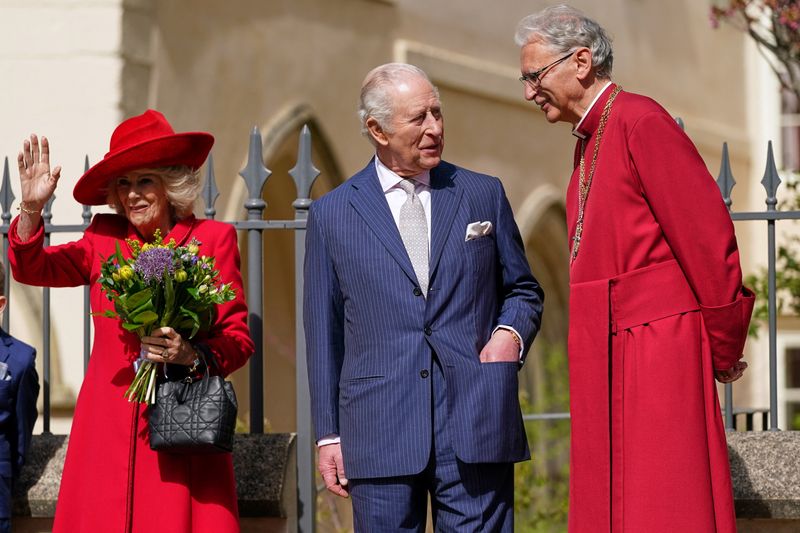

British royals gather for Easter service, with Andrew and his family absent
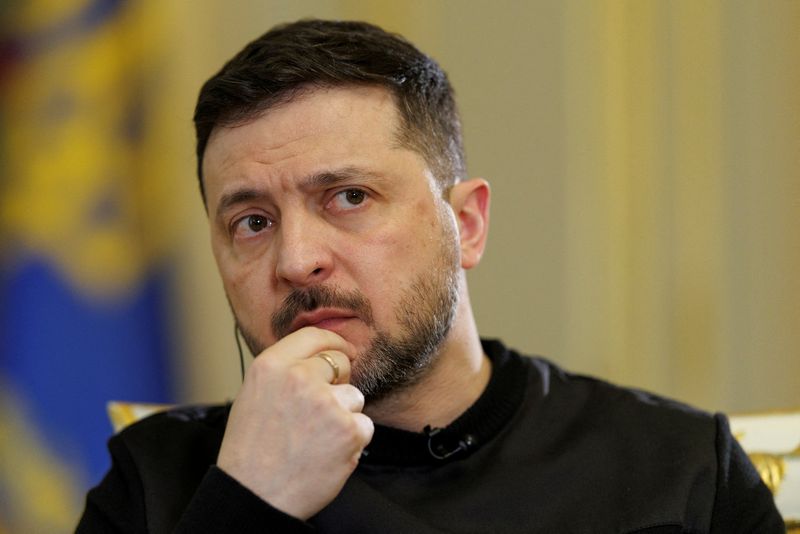

Zelenskiy in Syria to discuss security cooperation with Sharaa
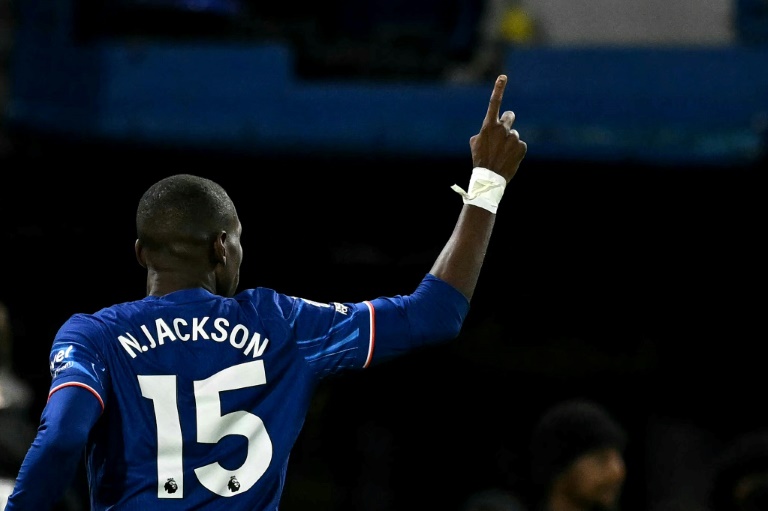
LONDON — Chelsea cruised into the Emirates FA Cup semi-finals with a ruthless 7-0 demolition of League One side Port Vale at Stamford Bridge on Saturday, easing the pressure on manager Liam Rosenior after a difficult week for the Club World Cup champions.
Seven different Chelsea players found the net as the Blues produced their most emphatic performance of the 2025-26 season, ending Port Vale’s memorable cup run in clinical fashion. The result sends Chelsea to a record 27th FA Cup semi-final appearance, where they will discover their opponent in Sunday’s draw at the London Stadium.
Jorrel Hato opened the scoring inside two minutes with a composed finish, setting the tone for an afternoon of total dominance. João Pedro added a second in the 25th minute, before an own goal from Port Vale defender Jordan Lawrence-Gabriel made it 3-0 just before halftime.

The second half became a goal procession. Tosin Adarabioyo headed home in the 57th minute, Andrey Santos nodded in a sixth from close range in the 69th, teenage sensation Estêvão Willian struck in the 82nd, and Alejandro Garnacho converted a stoppage-time penalty he had earned himself to complete the rout.
Rosenior, whose position had come under scrutiny following a turbulent period, opted for a strong starting lineup that included several key first-team players. The no-risk approach paid dividends as Chelsea controlled possession and created chance after chance against a spirited but outclassed Port Vale side.
“It was important we responded in the right way today,” Rosenior said afterward. “The players showed the right attitude and quality. We wanted to send a message, and I think we did that. Now we focus on the semi-final and pushing for more success this season.”
Port Vale, who had enjoyed a fairy-tale run to the quarter-finals — their best since 1954 — arrived at Stamford Bridge as heavy underdogs. Manager Darren Moore’s side defended bravely in the opening stages but were undone by Chelsea’s pace, movement and clinical finishing. The League One outfit created few clear opportunities and were forced to chase the game after falling behind early.
Highlights packages already circulating online captured the barrage: Hato’s quick opener, Pedro’s smart finish, the own goal that deflated the visitors, and the second-half flurry that turned the contest into a training exercise. Estêvão, in particular, impressed with his dribbling and vision, earning praise from Rosenior who declared there is “no ceiling” for the Brazilian teenager.
The victory comes at a welcome time for Chelsea, who have navigated inconsistency in the Premier League and faced questions over squad harmony and results. Reaching the semi-finals provides a timely boost and keeps alive hopes of silverware in a season that has delivered the Club World Cup but mixed domestic fortunes.
Chelsea’s path to the last four has been relatively kind in terms of opposition, but the manner of Saturday’s win will encourage supporters. The Blues fielded a blend of experience and youth, with academy graduates and recent signings all contributing to the scoreline. The seven-goal haul marked their biggest win of the campaign and their largest margin in the FA Cup for several years.
Port Vale’s players left the pitch to warm applause from the traveling fans, who appreciated the club’s giant-killing efforts earlier in the competition. Moore acknowledged the gulf in class but took pride in his team’s journey.
“We knew it would be tough, but the lads gave everything,” Moore said. “Chelsea were ruthless. We’ve had a great cup run and created some special memories. Now we return to League One with our heads held high.”
The semi-final draw on Sunday will determine Chelsea’s next opponent, with Manchester City, Southampton and the winner of West Ham United versus Leeds United also in the hat. Chelsea hold ball number 2. The semi-finals are scheduled for the weekend of April 25-26 at Wembley Stadium.
Rosenior’s side will hope the confidence gained from the 7-0 thrashing translates into improved Premier League form. With several key players returning from injury or international duty, the manager believes the squad is building momentum at the right time.
For Estêvão and Garnacho, the afternoon offered further evidence of their growing influence. Garnacho’s late penalty capped an impressive display, while Estêvão’s goal and assist underlined why many view him as one of Chelsea’s brightest prospects.
The match also highlighted Chelsea’s squad depth. Players who have rotated in recent weeks seized the opportunity to impress, with clean finishing and high pressing disrupting Port Vale from the outset. The home crowd, which filled Stamford Bridge, responded with sustained applause as the goals flowed.
Analysts noted the tactical discipline shown by Chelsea, who pressed high and transitioned quickly. Port Vale, while organized, lacked the quality to match the Premier League side’s intensity over 90 minutes.
As the FA Cup progresses toward its climax, Chelsea join Manchester City as strong favorites for the trophy. The Blues last lifted the FA Cup in 2018 and will be determined to end their wait for domestic silverware.
Port Vale’s elimination ends a memorable chapter for the Staffordshire club. Their run included several impressive victories against higher-ranked teams, providing moments of joy for supporters and boosting the club’s profile.
With the semi-final draw looming, excitement is building around English football’s oldest competition. Chelsea’s emphatic quarter-final victory ensures they remain firmly in contention for a place at Wembley in May.
For Rosenior and his players, the focus now shifts to maintaining standards across all competitions. Saturday’s result offers a platform for a strong finish to the season and a potential trophy lift that could define the campaign.
As highlights continue to circulate and fans debate standout performers, one thing is clear: Chelsea delivered a statement performance when it mattered most, sweeping aside Port Vale to march confidently into the FA Cup semi-finals.
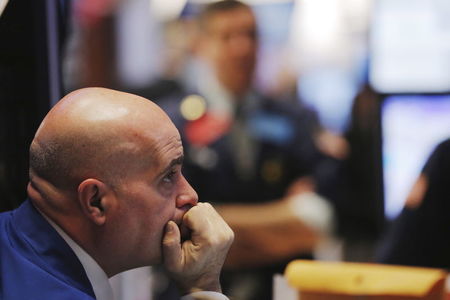
Russia says US should abandon ’language of ultimatums’ on Iran


I’m a full-time investor with a strong focus on the tech sector. I graduated with a Bachelor of Commerce Degree with Distinction, major in Finance. I’m also a proud lifetime member of the Beta Gamma Sigma International Business Honor Society. My core values are: Excellence, Integrity, Transparency, & Respect. I always, to the best of my ability, hold true to these values which I believe are key for long-term success. I would like to invite all of my readers to leave their constructive criticism and feedback in the comments section so that I can further enhance the quality of my work moving forward. Thank you and God Bless America!
Analyst’s Disclosure: I/we have no stock, option or similar derivative position in any of the companies mentioned, and no plans to initiate any such positions within the next 72 hours. I wrote this article myself, and it expresses my own opinions. I am not receiving compensation for it (other than from Seeking Alpha). I have no business relationship with any company whose stock is mentioned in this article.
Seeking Alpha’s Disclosure: Past performance is no guarantee of future results. No recommendation or advice is being given as to whether any investment is suitable for a particular investor. Any views or opinions expressed above may not reflect those of Seeking Alpha as a whole. Seeking Alpha is not a licensed securities dealer, broker or US investment adviser or investment bank. Our analysts are third party authors that include both professional investors and individual investors who may not be licensed or certified by any institute or regulatory body.

Genesis Energy: Cash Flow Growth Likely To Slow Down Going Forward (Rating Downgrade)
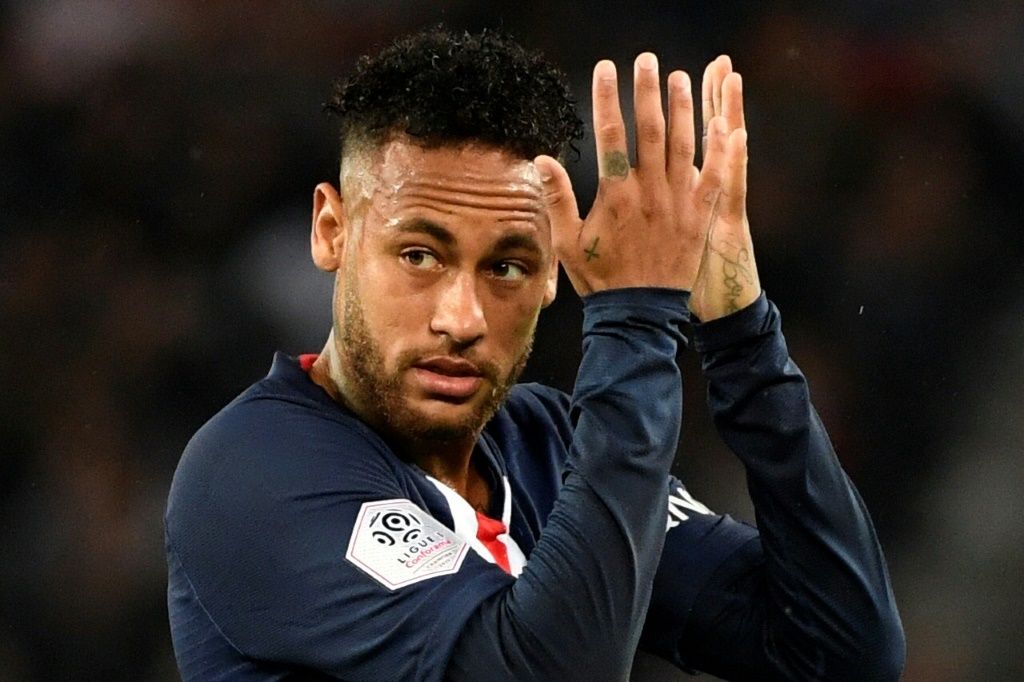
RIO DE JANEIRO — Brazilian soccer star Neymar Jr. faces a potential lengthy suspension and widespread backlash after making a sexist remark about referee Sávio Pereira Sampaio following Santos’ 2-0 victory over Remo in the Brazilian league on Saturday, April 3, 2026.

In post-match comments, the 34-year-old forward, who returned to boyhood club Santos after stints in Europe and Saudi Arabia, criticized the official’s decisions and reportedly said the referee “woke up on his period” or used a colloquial Brazilian slang phrase equivalent to suggesting the referee was menstruating and therefore officiated poorly. The comment, widely interpreted as misogynistic for linking emotional instability or bad judgment to women’s menstrual cycles, quickly sparked outrage on social media and among women’s rights advocates, players and officials.
Neymar expressed frustration during the interview, complaining that he was fouled unnecessarily from behind late in the match and that communication with the referee was lacking. “It’s the same every time. It’s unfair,” he said before adding the controversial remark about the referee’s supposed “period.” The phrase in Brazilian Portuguese slang carries strong sexist undertones and has been condemned as discriminatory.
The Brazilian Football Confederation’s disciplinary body, under the Código Brasileiro de Justiça Desportiva, is investigating the incident. Precedents suggest Neymar could face a ban of up to 12 matches, which would sideline him for a significant portion of the domestic season and potentially derail any remaining hopes of selection for the 2026 FIFA World Cup in the United States, Mexico and Canada.
Brazil coach Carlo Ancelotti has already expressed reservations about Neymar’s fitness and consistency. The former Real Madrid and Everton manager has emphasized that only fully fit players will be considered for the Seleção squad, and Neymar has not featured in recent call-ups for friendlies. Reports indicate Ancelotti views the squad as largely defined, with younger, more reliable attackers prioritized amid Neymar’s recurring injury issues that have limited him to just five appearances for Santos in 2026 so far.
The controversy adds another layer to Neymar’s turbulent recent years. Once hailed as the heir to Pelé in Brazilian soccer, the five-time Ballon d’Or nominee has battled serious knee and ankle injuries since 2023, spending more than 600 days on the sidelines at times. His return to Santos was seen as a chance for redemption and a final push toward the 2026 World Cup, but fitness doubts and off-field incidents continue to cloud his prospects.
Women’s groups and female referees in Brazil reacted swiftly. The Brazilian Association of Women’s Soccer and several prominent players denounced the remark as reinforcing harmful stereotypes. Social media platforms filled with calls for accountability, with hashtags highlighting misogyny in Brazilian football trending within hours. Some commentators noted that similar sexist comments by other players, such as a defender from Red Bull Bragantino who received a 12-match ban last month, set a clear precedent for punishment.
Neymar’s representatives have not issued a formal apology as of Sunday, though sources close to the player suggested he may address the matter in coming days. In past controversies, Neymar has sometimes downplayed remarks as “heat of the moment” or attempted to clarify intent, but the explicit nature of this comment has left little room for deflection.
The incident occurred after Santos secured the win, with Neymar involved in the buildup play despite receiving a yellow card late in the match for dissent or a foul. The referee’s decisions became a flashpoint for Neymar, who has a history of clashing with officials throughout his career, including tunnel incidents and on-field disputes.
Brazilian media outlets like Chosun Biz, GOAL and Marca reported extensively on the backlash, with some labeling it a “disgraceful” moment that could define the twilight of Neymar’s international career. Former players and pundits weighed in, with many urging the Brazilian Football Confederation to act decisively to protect the sport’s image.
The timing is particularly damaging. With the 2026 World Cup less than three months away, Brazil sits among the favorites but has shown vulnerability in recent friendlies. Ancelotti has favored a squad built around fit, in-form players rather than relying on past glory. Neymar’s limited playing time and this latest off-field issue make a recall increasingly unlikely, even if he avoids the maximum suspension.
If handed a lengthy ban, Neymar would miss key matches for Santos, further hampering his match sharpness and physical condition. Brazilian league rules and potential appeals could stretch the process, but a suspension starting in the coming weeks would effectively end his domestic season early.
Neymar has 79 goals in 128 appearances for Brazil, making him one of the nation’s all-time leading scorers behind only Pelé. He played a key role in the 2014 and 2018 World Cups but has yet to lift the trophy, with Brazil exiting in the quarterfinals in 2018 and suffering early disappointment in 2022 under different circumstances.
The forward has spoken in the past about his desire to compete in 2026 and potentially retire afterward, but persistent fitness struggles and now this disciplinary cloud have dimmed those prospects. Supporters point to flashes of brilliance in recent Santos appearances, including assists and creative play, as evidence he could still contribute if selected.
Critics, however, argue that Neymar’s off-field behavior and injury history make him a liability for a high-stakes tournament. Ancelotti has been frank in assessments, noting the need for reliability in a squad preparing for the expanded 48-team World Cup.
FIFA and CONMEBOL have not commented directly, but the case falls under national disciplinary procedures unless it escalates to international level. The Brazilian Football Confederation faces pressure to demonstrate zero tolerance for discriminatory language, aligning with global campaigns against sexism and discrimination in soccer.
Women’s soccer advocates in Brazil have used the moment to call for broader education and cultural change within the men’s game. Referees’ unions echoed concerns that such remarks undermine officials’ authority and create a hostile environment, particularly when directed at male referees using misogynistic tropes.
As the investigation proceeds, Neymar remains with Santos, where he serves as captain and a symbolic figure for the club. Club officials have stayed largely silent, focusing on on-field matters while the disciplinary process unfolds.
The episode highlights ongoing challenges in Brazilian football regarding player conduct, respect for officials and gender sensitivity. Previous high-profile cases have resulted in bans and fines, setting expectations for a firm response.
For Neymar, the stakes extend beyond one match or season. At 34, with a history of dazzling talent tempered by injuries and controversies, this latest incident risks cementing a narrative of unfulfilled potential on the international stage. Brazil’s 2026 campaign, hosted in part on familiar American soil for many Brazilian fans, represents what could be his final realistic shot at World Cup glory.
Whether Neymar issues a meaningful apology, receives a reduced sanction or faces the full weight of disciplinary action remains to be seen. In the meantime, the football world watches as one of the game’s most gifted players navigates yet another self-inflicted obstacle on the road to what was once considered his destiny.
Analysts suggest that even a shorter ban could disrupt momentum at Santos and further erode trust from national team selectors. With Ancelotti prioritizing squad harmony and fitness, the path back to the Seleção appears narrower than ever.
As April 2026 progresses, Brazilian soccer fans and global observers await the outcome of the disciplinary hearing. The remark has already damaged Neymar’s public image, reigniting debates about accountability for star athletes and the need for cultural shifts in how players express frustration.
Neymar’s talent remains undeniable when fit, but consistency and conduct have become defining questions as the World Cup draws near. For a player who once carried the hopes of a nation, this controversy adds a painful chapter to a career marked by brilliance, injury and now, potentially, self-sabotage.


Fredrik Arnold is a former quality service analyst. He is now reporting investment ideas with a primary focus on dividend yields by utilizing free cash flow and one-year total returns as trading indicators. He is the leader of the investing group The Dividend Dog Catcher, where he shares a minimum of one new dividend stock idea per week with focus on yield or extraordinary financial circumstances. All ideas are archived and available after weekly announcement. Learn more.
Analyst’s Disclosure: I/we have a beneficial long position in the shares of T either through stock ownership, options, or other derivatives. I wrote this article myself, and it expresses my own opinions. I am not receiving compensation for it (other than from Seeking Alpha). I have no business relationship with any company whose stock is mentioned in this article.
Seeking Alpha’s Disclosure: Past performance is no guarantee of future results. No recommendation or advice is being given as to whether any investment is suitable for a particular investor. Any views or opinions expressed above may not reflect those of Seeking Alpha as a whole. Seeking Alpha is not a licensed securities dealer, broker or US investment adviser or investment bank. Our analysts are third party authors that include both professional investors and individual investors who may not be licensed or certified by any institute or regulatory body.

Nicholas Brendon’s death is the sixth of The WB stars since 2024

When your financial level is abt to change #finace #wealthbuilding #wealthmindset ##thethinkinmind

Best Streaming Shows Of 2026 To Binge-Watch Over Easter Weekend

Smart energy pays enters the US market, targeting scalable financial infrastructure

Why Israel is blocking foreign journalists from entering

Bitcoin: We’re Entering The Most Dangerous Phase
When your financial level is abt to change #finace #wealthbuilding #wealthmindset ##thethinkinmind

DTCC JUST CONFIRMED WHAT’S COMING FOR XRP HBAR CC & MORE!

How to Make Money with Credit Card Rewards & Cashback | 5 Practical Tips | Abhishek
-

 NewsBeat3 days ago
Steven Gerrard disagrees with Gary Neville over ‘shock’ Chelsea and Arsenal claim | Football
-

 Business3 days ago
No Jackpot Winner and $194 Million Prize Rolls Over
-

 Fashion2 days ago
Weekend Open Thread: Spanx – Corporette.com
-
Entertainment6 days ago
Fans slam 'heartbreaking' Barbie Dream Fest convention debacle with 'cardboard cutout' experience
-

 Crypto World4 days ago
Gold Price Prediction: Worst Month in 17 Years fo Save Haven Rock
-

 Tech7 days ago
The Pixel 10a doesn’t have a camera bump, and it’s great
-
Crypto World5 days ago
Dems press CFTC, ethics board on prediction-market insider trades
-

 Tech7 days ago
Avatar Legends: The Fighting Game comes out in July and it looks pretty slick
-

 Sports20 hours ago
India men’s 4x400m and mixed 4x100m relay teams register big progress | Other Sports News
-

 Business4 days ago
Login and Checkout Issues Spark Merchant Frustration
-

 Tech6 days ago
Apple will hide your email address from apps and websites, but not cops
-

 Tech5 days ago
EE TV is using AI to help you find something to watch
-

 Sports5 days ago
Tallest college basketball player ever, standing at 7-foot-9, entering transfer portal
-

 Politics6 days ago
Should Trump Be Scared Strait?
-

 Tech6 days ago
Flipsnack and the shift toward motion-first business content with living visuals
-

 Fashion6 days ago
The Best Spring Trends of 2026
-

 Sports6 days ago
Women’s hockey camp eyes fitness boost, tactics ahead of WC 2026 campaign | Other Sports News
-

 Tech5 days ago
How to back up your iPhone & iPad to your Mac before something goes wrong
-
 Crypto World7 days ago
Bitcoin’s Six-Month Losing Streak: What On-Chain Data Says About the Market’s Next Move
-

 Politics6 days ago
BBC slammed for ignoring author of The Fraud
You must be logged in to post a comment Login