Connect with us
DAPA Banner
DAPA Coin
DAPA
COIN PAYMENT ASSET
PRIVACY · BLOCKDAG · HOMOMORPHIC ENCRYPTION · RUST
ElGamal Encrypted MINE DAPA
🚫 GENESIS SOLD OUT
DAPAPAY COMING

Business

BTC Surges Past $75,000 in 2026 Amid Geopolitical Tensions and ETF Inflows

Published

on

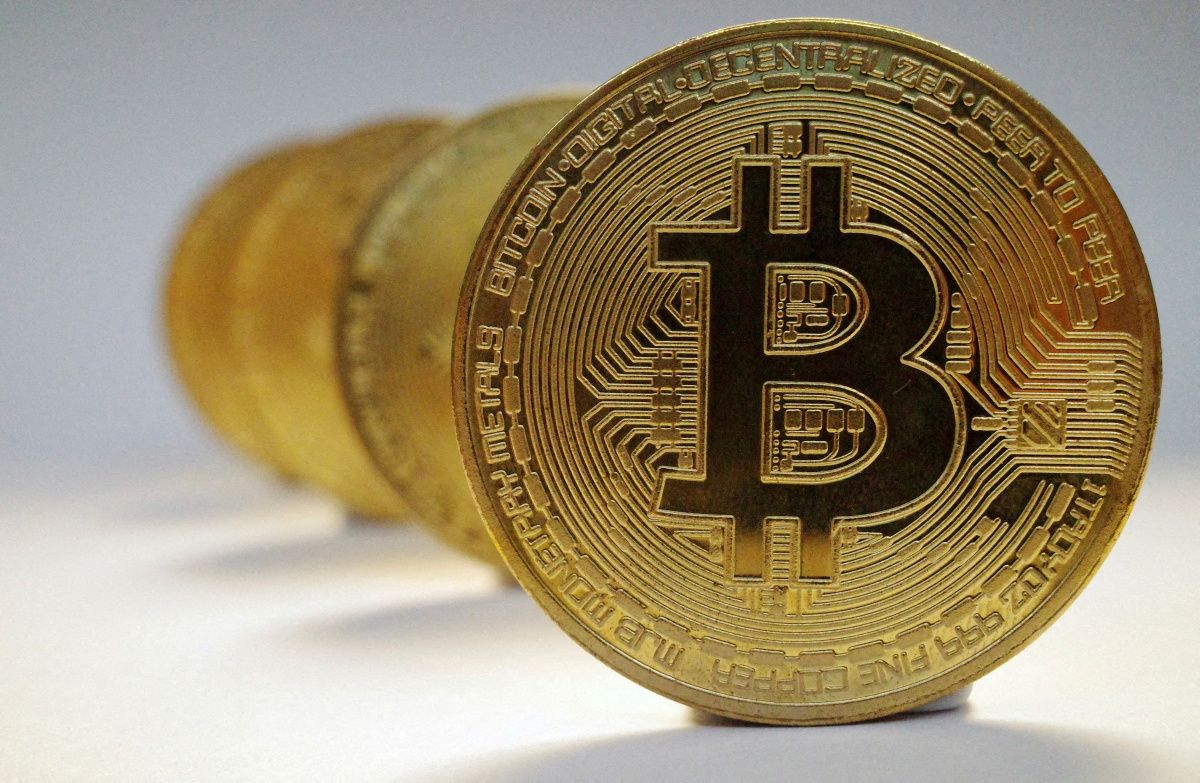
A representation of the virtual cryptocurrency Bitcoin is seen in this picture illustration taken October 19, 2021.

NEW YORK — Bitcoin climbed above $75,000 on Friday, April 17, 2026, trading around $75,200 to $75,800 in early sessions as investors sought a hedge against ongoing Middle East instability and renewed institutional interest in cryptocurrency. The world’s largest digital asset rose roughly 1.4 percent in the past 24 hours, extending a rebound from recent lows near $70,000 and marking a one-month high that has reignited optimism among traders.

As of mid-morning Eastern Time, one Bitcoin changed hands at approximately $75,773, according to major tracking platforms. That level reflects a modest recovery from earlier volatility this week, when prices dipped below $71,000 before bouncing on news of supply disruptions in global oil markets tied to the Iran conflict. Bitcoin’s correlation with traditional safe-haven assets like gold has strengthened in recent months, helping it outperform equities during periods of geopolitical stress.

The latest uptick comes after Bitcoin hit an all-time high above $126,000 in October 2025 before entering a sharp correction that shaved nearly 50 percent off its value at one point in early 2026. Analysts attribute the post-peak decline to profit-taking, macroeconomic headwinds and shifting Federal Reserve expectations. Yet the cryptocurrency has clawed back ground, rising about 25 percent from its 2026 low near $60,000, fueled by steady inflows into U.S. spot Bitcoin exchange-traded funds and growing corporate adoption.

Spot Bitcoin ETFs, approved in early 2024, continued drawing capital this week despite broader market caution. Daily inflows have averaged hundreds of millions of dollars, providing structural buying pressure that many view as a floor under prices. BlackRock’s iShares Bitcoin Trust and Fidelity’s offerings led the pack, with cumulative holdings now representing a significant portion of circulating supply. This institutional channel has helped mature Bitcoin’s market, reducing reliance on retail speculation that defined earlier cycles.

Advertisement

Geopolitical factors played a prominent role in Friday’s movement. Disruptions in the Strait of Hormuz — a critical chokepoint for global oil shipments — sent crude prices higher and boosted demand for alternative stores of value. Bitcoin, often called “digital gold,” benefited as some investors rotated out of traditional assets amid uncertainty. Earlier in the week, prices surged past $72,000 on similar headlines, underscoring the asset’s sensitivity to macro shocks in 2026.

Technical indicators show mixed but improving signals. Bitcoin broke above the key $74,000 resistance level on April 14, reaching toward $76,000 before consolidating. The 50-day moving average sits near $73,500, acting as dynamic support. Analysts watch the $80,000 level as the next major psychological barrier, with some forecasting a test before summer if ETF flows remain robust. On-chain metrics reveal whale accumulation and declining exchange reserves, suggesting long-term holders are not rushing to sell.

Market sentiment has shifted cautiously bullish. Prediction markets and analyst surveys give high probability to Bitcoin testing $90,000 or higher sometime in April, though more conservative forecasts see consolidation around current levels through May. Year-to-date performance remains positive despite the earlier drawdown, with Bitcoin still trading well above where it stood at the start of 2025.

Broader cryptocurrency market followed Bitcoin’s lead. Ethereum traded near $2,340, up modestly, while Solana and other altcoins posted smaller gains. Total crypto market capitalization hovered above $2.8 trillion, with Bitcoin dominance steady around 55 percent. Volatility remained elevated, typical for the asset class during news-driven periods.

Advertisement

Regulatory developments continue shaping the landscape. A more crypto-friendly posture in Washington under the current administration has reduced some enforcement risks, though global oversight varies. In Europe and Asia, authorities balance innovation with consumer protection, creating a patchwork that influences capital flows. U.S. lawmakers have floated stablecoin legislation and clearer frameworks for digital assets, potentially providing tailwinds later in 2026.

Corporate treasury adoption adds another layer of support. Several public companies added Bitcoin to balance sheets in recent quarters, following MicroStrategy’s long-standing strategy. Smaller firms and even some municipalities have explored allocations, viewing the asset as an inflation hedge and growth play. This institutionalization has dampened extreme swings compared with prior bull runs.

Challenges persist. Macroeconomic uncertainty, including sticky inflation and potential recession signals, could cap upside if risk appetite fades. Higher interest rates for longer would pressure speculative assets, though Bitcoin has shown resilience. Energy consumption debates and environmental concerns around mining also linger, even as more operations shift toward renewable sources.

Looking ahead, the April 2026 halving aftermath — the event occurred in 2024 — traditionally ushers in bullish periods, with historical patterns showing peak gains 12 to 18 months later. Some analysts project Bitcoin could reach $100,000 by year-end in a base case, with optimistic scenarios eyeing $120,000 or more if adoption accelerates. Bearish views warn of retests toward $60,000 if broader markets weaken.

Advertisement

Retail investor interest has rebounded with the price recovery. Social media platforms buzz with discussions of “buy the dip” narratives, though seasoned observers caution against over-leveraged positions given Bitcoin’s history of sharp corrections. Educational resources and easier on-ramps through apps have lowered barriers, bringing new participants into the ecosystem.

Bitcoin’s role in the global financial system continues evolving. From a niche digital experiment to a multi-trillion-dollar asset class, it now sits alongside traditional commodities in many portfolios. Central banks and sovereign wealth funds have begun small allocations in some jurisdictions, signaling mainstream acceptance that seemed distant just a few years ago.

For everyday observers, Friday’s price action serves as a reminder of Bitcoin’s dual nature: volatile in the short term yet increasingly viewed as a long-term store of value. Those holding through the 2025 peak and 2026 correction have seen significant swings, but many remain committed to the thesis of scarcity — only 21 million coins will ever exist — and growing utility in payments and DeFi applications.

As trading volume surged on major exchanges, market participants awaited weekend developments that could influence direction. Low liquidity periods often amplify moves, so caution remains advised. Meanwhile, developers push forward with layer-two solutions and scalability improvements aimed at making Bitcoin more practical for everyday use.

Advertisement

The coming weeks will test whether the current rally has legs or represents another consolidation phase. Key levels to watch include support near $73,000 and resistance at $78,000-$80,000. Broader economic data, including inflation reports and Fed commentary, will likely sway sentiment alongside crypto-specific news.

Bitcoin’s journey in 2026 reflects its maturation. No longer purely speculative, it responds to real-world events while retaining the explosive potential that captivated early adopters. Whether it breaks to new highs or faces renewed pressure, the asset remains a focal point for investors navigating an uncertain world.

For those tracking prices daily, tools like CoinMarketCap, Yahoo Finance and exchange apps provide real-time updates. As always, cryptocurrency investments carry risk, and individuals should conduct thorough research or consult advisors before making decisions.

Friday’s move above $75,000 injects fresh energy into the crypto conversation at a pivotal moment. With geopolitical risks elevated and institutional infrastructure in place, Bitcoin appears positioned for continued relevance — and potential volatility — throughout the remainder of 2026.

Advertisement
Continue Reading
Click to comment

You must be logged in to post a comment Login

Leave a Reply

Business

Gilt Yields Hit 28-Year High as Starmer Defies Resignation Calls

Published

on

Gilt Yields Hit 28-Year High as Starmer Defies Resignation Calls

Britain’s bond market delivered its sharpest rebuke yet to Sir Keir Starmer’s premiership on Tuesday, with 30-year gilt yields climbing to their highest level this century as the prime minister stared down a growing chorus of Labour MPs demanding he step aside.

The sell-off, which dragged sterling and equities lower in lockstep, wiped out the relief rally that followed Starmer’s defiant intervention last week. Tuesday’s cabinet meeting, at which the prime minister once again refused to countenance resignation, did little to settle nerves. Investors are now openly pricing in the prospect of a leftward lurch in Labour policy, with the attendant risks of looser fiscal rules, higher gilt issuance and a further squeeze on the cost of capital for British business.

For the country’s 5.5 million small and medium-sized enterprises, the implications are far from academic. Higher long-dated gilt yields feed directly into the swap rates that underpin commercial lending, business mortgages and asset finance, raising the prospect of yet another leg up in the borrowing costs faced by Britain’s corporate backbone at a time when many are still nursing the legacy of post-pandemic debt.

The 30-year gilt yield rose 13 basis points to 5.81 per cent, the highest since May 1998. The benchmark 10-year yield gained 10 basis points to 5.1 per cent, within a whisker of breaching the post-2008 peak it set earlier this month. Bond prices move inversely to yields.

“A new Labour leader may face pressure to ease the fiscal rules and raise gilt issuance,” warned Jim Reid, analyst at Deutsche Bank, capturing the City’s central concern that any successor would lean towards higher spending and heavier taxation of the very businesses the Treasury is counting on to drive growth.

Advertisement

Sterling’s slide alongside government bonds will draw uncomfortable parallels with the dark days of Liz Truss’s mini-budget. When a currency weakens in concert with rising borrowing costs, it is the trading pattern of an emerging market that has lost the confidence of foreign capital, not that of a G7 economy. The pound fell 0.64 per cent against the dollar to a two-week low of $1.352, and shed 0.21 per cent against the euro to €1.152, its weakest since mid-April.

Some of the pressure is undeniably imported. Bunds, OATs and BTPs all sold off as President Trump declared the Iran ceasefire was “on life support”, sending Brent crude up 2.8 per cent to $107.17 a barrel and reigniting inflation fears across advanced economies. The Strait of Hormuz, through which a fifth of global oil and gas once flowed, remains largely shut. Germany’s Dax bore the brunt of the European sell-off, falling more than 1 per cent. But gilts underperformed by a substantial margin, marking out Westminster’s political turmoil as a uniquely British risk premium.

Mohit Kumar, chief European economist at Jefferies, urged clients to short sterling, arguing any change in the composition of government “would likely be left-leaning”. Anthony Willis, senior economist at Columbia Threadneedle Investments, cautioned that the bond market was unlikely to settle “until greater clarity emerges”.

Equities followed suit. The FTSE 100 surrendered 0.3 per cent having opened the week with a 0.4 per cent gain, while the more domestically focused FTSE 250 dropped 211 points, or 0.9 per cent, extending its losing streak to a second day. Mid-cap stocks, dominated by UK-facing businesses, are the clearest read on how the City judges Britain’s economic prospects.

Advertisement

The grim verdict from Andrew Goodwin, chief UK economist at Oxford Economics, is that there is little prospect of meaningful relief. He expects 10-year borrowing costs to remain stuck above 5 per cent for the remainder of the year, regardless of who occupies Number 10. “Markets clearly perceive the UK has a bigger inflation problem and that tighter monetary policy will be needed to limit second-round effects from the energy shock, while political uncertainty has added to pressures at the long end,” he said.

Even were Starmer to dig in, Goodwin argued, the bond market would have little to celebrate, with the prime minister’s “attempts to regain popularity, or, more likely, from a successor implementing more costly left-wing economic policies” weighing on sentiment. “If Starmer sets out a timetable to stand down, the uncertainty premium will persist.”

For owner-managers already navigating a punishing cost base, a softening consumer and the fallout from this spring’s National Insurance changes, the message from the bond vigilantes is unambiguous: brace for borrowing to stay dear, and for political risk to remain firmly on the balance sheet.


Jamie Young

Jamie Young

Jamie is Senior Reporter at Business Matters, bringing over a decade of experience in UK SME business reporting.
Jamie holds a degree in Business Administration and regularly participates in industry conferences and workshops.

When not reporting on the latest business developments, Jamie is passionate about mentoring up-and-coming journalists and entrepreneurs to inspire the next generation of business leaders.

Advertisement

Continue Reading

Business

CPGs need a new playbook

Published

on

CPGs need a new playbook

Sector underperformance calls for retooled growth model.

Continue Reading

Business

Litis to buy $4m Yallingup shack

Published

on

Litis to buy $4m Yallingup shack

The property identity is set to purchase the unique coastal home following more than two decades in the same hands.

Continue Reading

Business

Prudential to admit 5.7 million new shares to London Stock Exchange

Published

on


Prudential to admit 5.7 million new shares to London Stock Exchange

Continue Reading

Business

Amazon launches 30-minute delivery service in dozens of US cities

Published

on

Amazon adds seller surcharge as oil spike from Iran tensions drives logistics costs higher

Amazon is rolling out 30-minute delivery across dozens of U.S. cities, marking its fastest shipping option yet as the retail giant continues to accelerate its push into ultra-fast fulfillment.

The new service, called Amazon Now, will deliver thousands of items — including groceries, household essentials and electronics — to customers’ doors in about 30 minutes.

Advertisement

The offering is now available in Seattle, Philadelphia, Dallas-Fort Worth and Atlanta, and is expanding to additional markets such as Austin, Denver, Houston, Minneapolis, Orlando, Oklahoma City and Phoenix.

“Amazon Now is for when you need or want the convenience of getting your Amazon order delivered in 30 minutes or less,” Udit Madan, senior vice president of Amazon Worldwide Operations, said in a statement. “With thousands of items available for ultra-fast delivery, you can get everything from groceries for dinner, to AirPods before a flight, to household essentials like laundry detergent or toothpaste delivered right to your door.

CALIFORNIA ACCUSES AMAZON OF PUSHING RIVALS TO RAISE PRICES

Amazon driver making deliveries.

A worker near packages in an Amazon delivery vehicle in San Francisco on Monday, Feb. 2, 2026. (David Paul Morris/Bloomberg via Getty Images / Getty Images)

“Amazon Now complements Amazon’s existing fast-delivery offerings, including 1-hour and 3-hour delivery on more than 90,000 products and Same-Day Delivery on millions of items,” Madan added.

Advertisement

Amazon said the new service relies on a network of smaller fulfillment sites located closer to customers, allowing for faster delivery times and shorter travel distances for drivers.

Prime members will pay $3.99 per order for the service, while non-members will pay $13.99. Additional fees will apply for smaller orders, including $1.99 for Prime members and $3.99 for non-Prime members for orders under $15.

AMAZON DISRUPTING ITSELF, REBUILDING CUSTOMER SHOPPING EXPERIENCE AROUND AI FROM GROUND UP

TOPSHOT-US-TECHNOLOGY-INNOVATION-AMAZON

Amazon’s new MK30 Prime Air drone is displayed during Amazon’s “Delivering the Future” event at the company’s BFI1 Fulfillment Center, Robotics Research and Development Hub in Sumner, Washington on October 18, 2023. (Jason Redmond/AFP via Getty Images / Getty Images)

“Amazon Now uses a network of smaller locations designed for efficient order fulfillment, strategically placed close to where customers live and work,” Amazon said. “This approach prioritizes the safety of employees picking and packing orders, reduces the distance delivery partners need to travel, and enables faster delivery times for customers.”

Advertisement

Amazon plans to expand the service to tens of millions of customers by the end of 2026.

AMAZON ADDS SELLER SURCHARGE AS OIL SPIKE FROM IRAN TENSIONS DRIVES LOGISTICS COSTS HIGHER

Amazon is investing $4 billion to expand Prime delivery services to rural America.

Amazon is investing $4 billion to expand Prime delivery services to rural America. (Amazon / Fox News)

The rollout comes as Amazon continues to invest heavily in speeding up deliveries, reporting that U.S. Prime members received more than 8 billion items the same or next day in 2025 — a more than 30% increase from the previous year.

The new offering adds to Amazon’s broader delivery network, which includes Prime Air drone delivery, offering sub-60-minute service in select U.S. locations, as well as one-hour, three-hour and same-day delivery options across thousands of cities and towns.

Advertisement

Amazon said 2025 marked its third consecutive year of record-fast delivery speeds, with more than 13 billion items arriving the same or next day globally. In the U.S., Prime members received over 8 billion of those shipments — up more than 30% year over year — with groceries and everyday essentials making up about half.

CLICK HERE TO GET THE FOX BUSINESS APP

The company said Prime members have access to free shipping on more than 300 million items, and saved an average of $550 on fast delivery last year — nearly four times the cost of a membership.

Advertisement
Continue Reading

Business

Lala unveils RTD yogurt smoothies

Published

on

Lala unveils RTD yogurt smoothies

The nutritional smoothies are available in four flavors.

Continue Reading

Business

Jon Moulton backs biotech firm Infex Therapeutics tackling ‘critical global threat’ of antibiotic resistance

Published

on

Business Live

Mr Moulton and GM&C Life Sciences Fund join £4.3m funding round

Infex Therapeutics has secured £4.3m in funding

Infex Therapeutics has secured £4.3m in funding(Image: Infex Therapeutics)

Venture capitalist Jon Moulton has backed a biotech firm that’s looking to tackle the “critical global threat” of infections that are resistant to antibiotics.

Infex Therapeutics, of Alderley Edge, has secured £4.3m in a funding round led by Mr Moulton alongside the GM&C Life Sciences Fund, managed by Catapult Ventures, and existing high net worth investors.

The company will use the funding to develop its pipeline of new anti-infectives targeting antimicrobial resistance (AMR) and other “critical-priority infectious diseases”.

Dr Peter Jackson, CEO of Infex Therapeutics, said: “We are delighted to secure this investment led by Jon Moulton, with support from the Greater Manchester and Cheshire Lifescience Investment Fund and our existing investors.

Advertisement

“This funding represents strong validation of our progress in developing novel anti-infectives to address the critical global threat of antimicrobial resistance.”

Jon Moulton, founder of Better Capital and now chair of Infex Therapeutics, said: “We have supported Infex from the beginning and continue to be impressed by the company’s scientific progress and strategic execution.”

He highlighted Infex’s lead programme RESP-X, which is being trialled as a therapy for non-cystic fibrosis bronchiectasis (NCFB) patients.

And he said: ”This additional investment reflects our strong conviction in both the team and its innovative approach to tackling antimicrobial resistance.

Advertisement

Nick Wright, CEO of Catapult Ventures which manages the GM&C Life Sciences Fund, said: “Infex Therapeutics has made excellent scientific progress since we first invested several years ago. The company has clearly established itself as a world leader in the AMR and related space and the data it is generating is very compelling.”

Continue Reading

Business

ICL Israel Chemicals earnings ahead: Can fertilizer giant rebound?

Published

on


ICL Israel Chemicals earnings ahead: Can fertilizer giant rebound?

Continue Reading

Business

Elon Musk, Tim Cook and others to travel to China with US delegation: White House

Published

on

Elon Musk, Tim Cook and others to travel to China with US delegation: White House

President Donald Trump is slated to visit China this week, and according to a White House official, business figures including Elon Musk, Apple CEO Tim Cook and more than a dozen others will travel to China with the U.S. delegation.

Blackrock CEO Larry Fink, Boeing CEO Kelly Ortberg, and Goldman Sachs CEO David Solomon are some of the other figures listed.

Advertisement

TESLA RECALLS MORE THAN 218K VEHICLES OVER REARVIEW IMAGE ISSUE THAT POSES CRASH RISK

Elon Musk and Larry Fink

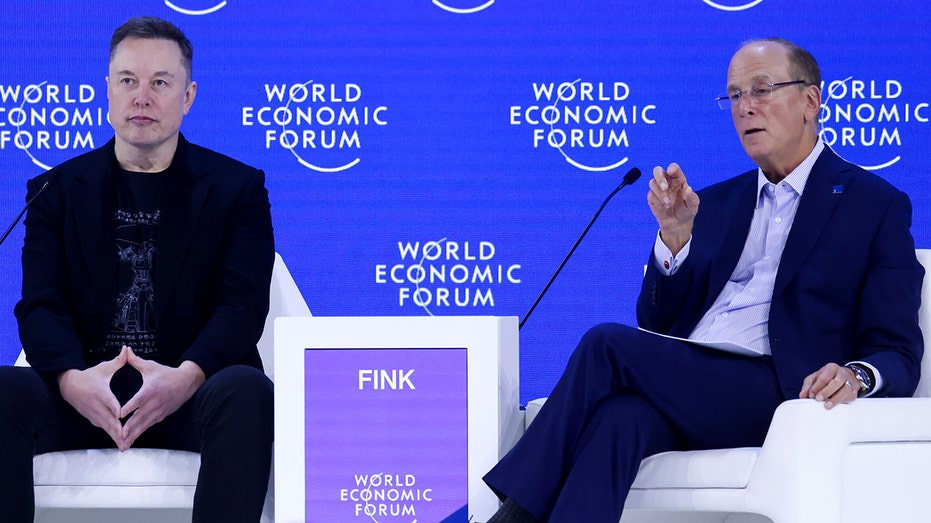
Elon Musk, chief executive officer of Tesla Inc., left, and Larry Fink, chief executive officer of BlackRock Inc., during the World Economic Forum (WEF) in Davos, Switzerland, on Thursday, Jan. 22, 2026. (Krisztian Bocsi/Bloomberg via Getty Images / Getty Images)

Others on the list provided by the White House official include Blackstone Chairman, CEO and co-founder Stephen Schwarzman, Cargill Board Chair and CEO Brian Sikes, Citi Board Chair and CEO Jane Fraser, Coherent CEO Jim Anderson, GE Aerospace chairman and CEO H. Lawrence Culp, Jr., Illumina CEO Jacob Thaysen, Mastercard CEO Michael Miebach, Meta President and Vice Chairman Dina Powell McCormick, Micron Chairman, President and CEO Sanjay Mehrotra, Qualcomm President and CEO Cristiano Amon and Visa CEO Ryan McInerney.

“I am very much looking forward to my trip to China, an amazing Country, with a Leader, President Xi, respected by all,” Trump declared in a Monday Truth Social post. 

GORDON CHANG WARNS CHINESE EVS ENTERING US VIA CANADA COULD BECOME ‘ROLLING SPY MACHINES’

Advertisement
President Trump shakes hands with Apple CEO Tim Cook

Apple CEO Tim Cook (R) shakes hands with U.S. President Donald Trump during an event in the Oval Office of the White House on Aug. 6, 2025 in Washington, D.C. (Win McNamee/Getty Images / Getty Images)

“Great things will happen for both Countries!” he added.

President Donald Trump met with Chinese President Xi Jinping in October in South Korea, according to Reuters.

EX-WHITE HOUSE ‘AI CZAR’ SAYS US, CHINA COULD FIND AI COMMON GROUND DESPITE FIERCE RIVALRY

U.S. President Donald Trump shakes hands with Chinese President Xi Jinping

U.S. President Donald Trump greets Chinese President Xi Jinping ahead of a bilateral meeting at Gimhae Air Base on Oct. 30, 2025 in Busan, South Korea. (Andrew Harnik/Getty Images / Getty Images)

CLICK HERE TO READ MORE ON FOX BUSINESS

Advertisement

During his first term, Trump visited China in 2017.

Continue Reading

Business

Rich Products Corp. is bulking up breakfast options

Published

on

Rich Products Corp. is bulking up breakfast options

Company is launching protein-forward breakfast innovations. 

Continue Reading

Trending

Copyright © 2025