
Business
Budget 2026 | Holding the line to sustain growth as India dreams big: Nilesh Shah

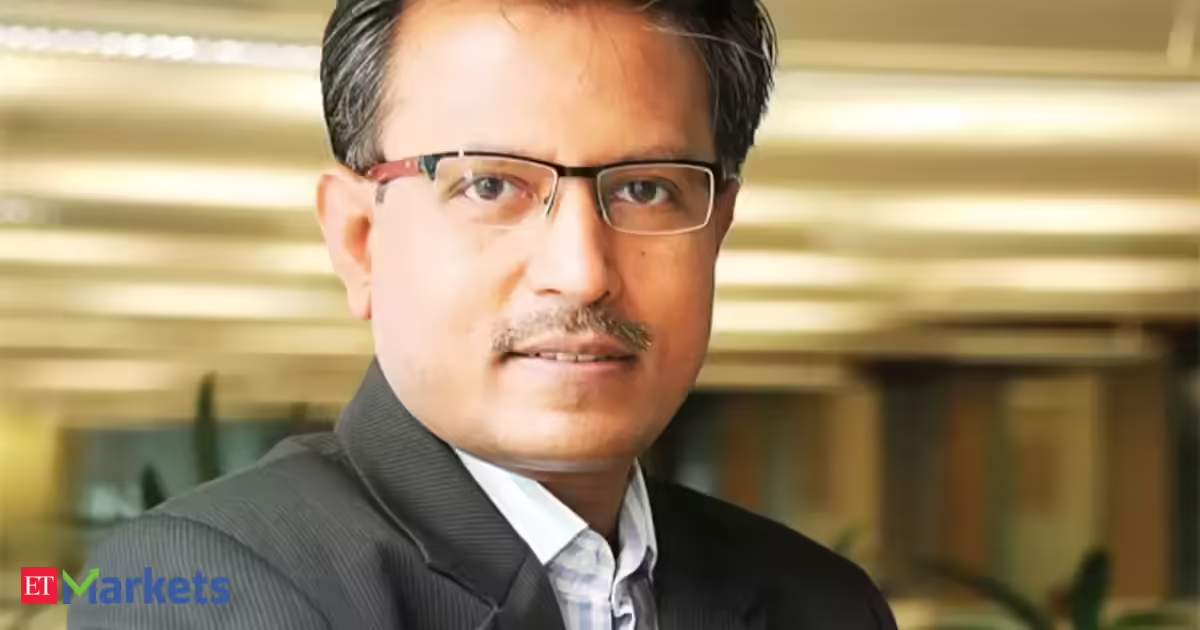
Like the previous few budgets, this budget too has balanced the twin objectives of fiscal discipline and much-needed growth support for the economy through targeted measures. The budget focuses on making India an investment grade economy over the long term rather than just providing fiscal stimulus or undertaking populist measures. It aims to create an environment for accelerated and sustained economic growth by enhancing productivity and improving competitiveness.
The budget aligned closely with previous budget themes, presenting no major surprises in fiscal calculations. The themes of conservatism and consolidation remain prominent. The fiscal stance highlighted a balanced approach – prioritising growth while maintaining a credible consolidation path, especially in a year marked by global economic instability and elevated tariff pressures.
As anticipated, the government is targeting a fiscal deficit of 4.3% of GDP in 2026-27, thus maintaining a medium-term fiscal consolidation path. This move is seen as essential for consolidating fiscal health while avoiding excessive borrowing that could lead to inflationary pressures. It reflects the government’s intent to reduce its reliance on debt, which will have a positive effect on long-term economic stability. For the first time in our history, planned capital expenditure figures are higher than net market borrowing numbers. Despite the lower fiscal deficit target, there is double-digit growth in planned capital expenditure, which is a positive development.
It delivers on the push towards manufacturing, attracting data centre investments and maintaining the pace of public capex. However, the unexpected hike in securities transaction tax on equity derivatives is a negative surprise for equity markets. There are no changes on the direct taxation side.

Overall, we have seen a well-coordinated fiscal and monetary response to supporting growth, while ensuring macro stability. This should go a long way in getting the economic growth momentum firmly back. Finally, continuing focus on fiscal prudence will keep India’s risk premium low and provide greater leeway for monetary policy adjustments going forward.
Road ahead for investors
The correction in equities over the past few months has resulted in large-cap valuations falling to almost long-term average levels. Relative valuation comfort is more for the large-cap segment than the mid-cap and small-cap segments. However, the external environment continues to be hazy and may remain volatile. Hence, investors are advised to adopt the time-tested route of systematic and regular investing with a long-term focus. Top beneficiary sectors: Healthcare, logistics, capital goods and engineering and electronics manufacturing.


InvestingPro Fair Value analysis nails 62% gain on First Horizon
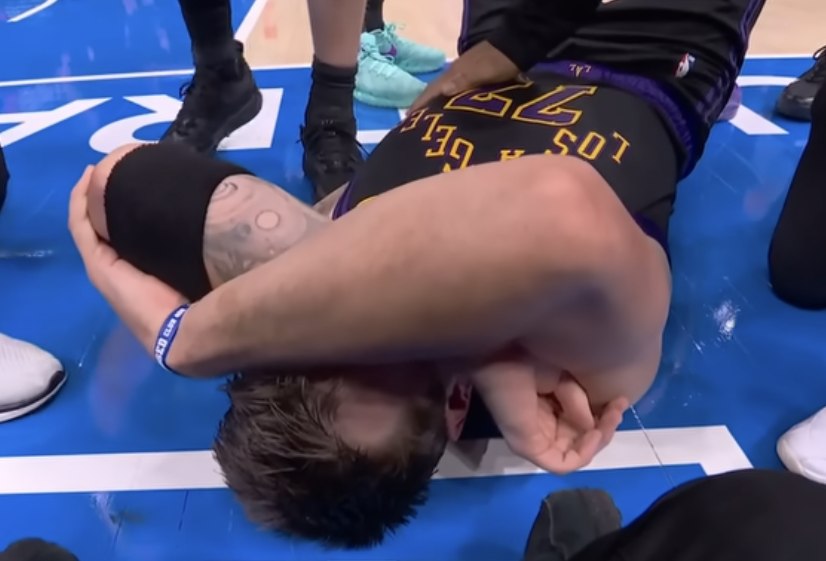
LOS ANGELES — Luka Doncic’s availability for the 2026 NBA playoffs hangs in the balance after the Los Angeles Lakers star suffered a Grade 2 left hamstring strain, an injury that has sidelined him for the remainder of the regular season and cast uncertainty over his postseason participation.

The 27-year-old Slovenian superstar went down non-contact in the third quarter of a 139-96 loss to the Oklahoma City Thunder on April 2. An MRI confirmed the partial tear, prompting the Lakers to rule him out indefinitely while emphasizing caution with their cornerstone player.
With the regular season winding down and the playoffs scheduled to begin April 18, the clock is ticking. Typical recovery for a Grade 2 hamstring strain ranges from three to six weeks, with an average around 35 days according to injury analysts. That timeline suggests Doncic could miss the entire first round and potentially return in the second round at the earliest — if all goes optimally.
Doncic has not played since the Thunder game, missing the Lakers’ final stretch as the team jockeys for Western Conference positioning. Los Angeles has already secured a playoff berth, but the absence of their leading scorer and playmaker has exposed vulnerabilities, particularly with co-star Austin Reaves also sidelined for weeks with an oblique injury.
Seeking Accelerated Recovery in Europe
In a bid to expedite healing, Doncic traveled to Spain for specialized medical treatment, including an injection procedure aimed at promoting faster recovery. His agent, Bill Duffy, confirmed the move after consultations with Lakers doctors and Doncic’s personal medical team.
“Luka is doing everything he can to make it back out on the court,” sources close to the situation told reporters. The decision to seek treatment abroad reflects Doncic’s deep ties to Spain, where he played professionally as a teenager with Real Madrid, and his determination to contribute this postseason despite the setback.
Sports medicine experts offer mixed projections. Some physicians suggest that advanced interventions could potentially shorten the timeline to as little as two to three weeks in a best-case scenario, opening a narrow window for a first-round return. Others caution that Grade 2 strains often require four to six weeks minimum for safe return to high-level competition, citing risks of re-injury if rushed.
Dr. Jesse Morse and similar specialists have noted that while unconventional treatments may accelerate healing, hamstring injuries remain notoriously tricky due to the muscle’s role in explosive movements central to Doncic’s game — driving, step-backs and quick changes of direction.
Lakers coach JJ Redick has remained measured in public comments, stressing the organization’s priority on long-term health over short-term heroics. “We’re going to be very careful with Luka’s recovery,” Redick said. “He’s a cornerstone of this franchise.” General manager Rob Pelinka echoed that sentiment, highlighting the need for Doncic to be close to 100 percent before stepping back on the floor.
Impact on Lakers’ Playoff Hopes
The injury could not have come at a worse moment. Doncic had been enjoying one of his finest seasons, leading the NBA in scoring for much of the campaign and forming a potent partnership with LeBron James. His absence has forced James, now in his 23rd season, to shoulder even more responsibility alongside supporting cast members like Rui Hachimura, D’Angelo Russell and others.
Without Doncic, the Lakers have struggled in stretches, though their playoff qualification was never seriously in doubt. Still, seeding matters in a loaded Western Conference featuring the Thunder, Nuggets and other contenders. A lower seed could mean tougher early matchups, making a healthy Doncic even more critical.
Historical precedent offers little encouragement. Recent data on Grade 2 hamstring strains in the NBA shows players often miss significant time, and returns before full healing frequently lead to setbacks. One analysis indicated that returning too soon from such injuries can extend overall recovery by weeks.
LeBron James addressed the situation indirectly, noting the team’s resilience but acknowledging the obvious hole left by Doncic’s absence. James canceled a planned golf outing amid the injury concerns, underscoring the seriousness within the locker room.
What a Return Would Require
For Doncic to suit up in the playoffs, several factors must align: successful response to the European treatment, progressive rehabilitation milestones, cleared medical testing and no setbacks during ramp-up. Even then, he would likely need minutes restrictions initially and could require several games to regain rhythm.
The Lakers’ medical staff will monitor inflammation, strength testing and functional movement before clearing him. Any return would come with managed expectations — Doncic might not resemble his dominant self immediately, especially in a high-stakes playoff environment.
Playoff scheduling adds pressure. The play-in tournament runs April 14-17, with first-round games tipping off April 18. If the Lakers advance past the opening round, a potential second-round start in early May could fall within a more realistic recovery window under average timelines.
Doncic himself has expressed optimism privately, according to sources. The competitive fire that defined his rise from Ljubljana to NBA stardom — and his headline-making move to the Lakers — fuels his desire to contribute. Yet he and the team understand the risks of pushing through incomplete healing.
Broader Context in Lakers Season
This season marked a new chapter for the Lakers with Doncic’s arrival, blending his generational talent with James’ veteran leadership. The duo delivered highlight-reel moments and elevated expectations in Los Angeles. Injuries to key pieces, including this latest blow, have tested the roster’s depth.
Mavericks fans have watched with mixed emotions as their former franchise face battles injury in purple and gold. Dallas, meanwhile, missed the playoffs for a second straight year following the trade.
NBA analysts remain divided on the Lakers’ ceiling without Doncic. Some believe James and role players can navigate a first-round series against certain opponents. Others argue that facing elite defenses without the Slovenian star’s scoring and facilitation dramatically lowers their chances of a deep run.
As of April 11, no firm update has emerged from Spain beyond confirmation of ongoing treatment. The Lakers continue to provide minimal details, citing privacy and the fluid nature of recovery.
For a player who has carried heavy minutes and offensive load throughout his career, this hamstring issue serves as a reminder of physical limits. At 27, Doncic remains in his prime, but repeated stress on the lower body demands respect.
Looking Ahead
The coming days will bring more clarity as Doncic completes treatment and begins the next phase of rehab. Lakers fans, already enduring a roller-coaster season, cling to hope that their star can return in time to influence the postseason.
Whether Doncic appears in the first round, second round or later — or misses the playoffs entirely — remains unknown. What is clear is the organization’s commitment to a measured approach rather than risking long-term damage for immediate gratification.
As the NBA world turns its attention to the playoffs, all eyes remain on one question: Can Luka Doncic defy the typical hamstring recovery timeline and deliver “Luka Magic” when it matters most? The answer could define the Lakers’ 2026 postseason fate.


Jussi Askola is the President of Leonberg Capital, a value-oriented investment boutique that consults hedge funds, family offices, and private equity firms on REIT investing. He has authored award-winning academic papers on REIT investing, has passed all three CFA exams, and has built relationships with many top REIT executives.
He is the leader of the investing group High Yield Landlord, where he shares his real-money REIT portfolio and transactions in real-time. Features of the group include: three portfolios (core, retirement, international), buy/sell alerts, and a chat room with direct access to Jussi and his team of analysts to ask questions. Learn more.
Analyst’s Disclosure: I/we have a beneficial long position in the shares of CUBE; SILA; NNN either through stock ownership, options, or other derivatives. I wrote this article myself, and it expresses my own opinions. I am not receiving compensation for it (other than from Seeking Alpha). I have no business relationship with any company whose stock is mentioned in this article.
Seeking Alpha’s Disclosure: Past performance is no guarantee of future results. No recommendation or advice is being given as to whether any investment is suitable for a particular investor. Any views or opinions expressed above may not reflect those of Seeking Alpha as a whole. Seeking Alpha is not a licensed securities dealer, broker or US investment adviser or investment bank. Our analysts are third party authors that include both professional investors and individual investors who may not be licensed or certified by any institute or regulatory body.


I am an investor with over 7 years of experience in the financial markets. Currently pursuing an MBA from the University of Illinois at Urbana-Champaign, where I specialize in Finance and Marketing, my academic background has equipped me with a strong foundation in business strategy, financial analysis, and market dynamics. My investing journey began in early 2015 when I purchased Starbucks (SBUX) for its undervalued valuation. This initial investment marked the start of a transformative experience; the stock’s growth trajectory captivated me, leading to a deeper exploration of trading strategies. Over the years, I have developed a systematic approach that combines technical analysis with fundamental insights derived from my academic studies. My strategy focuses on identifying sustainable growth stocks across various sectors, emphasizing valuation, management quality, and macroeconomic trends. I avoid day trading in favor of longer-term investments, as I prioritize consistency over short-term volatility. My primary focus is on companies that demonstrate strong fundamentals, such as revenue growth, profitability margins, and a balanced risk profile. By integrating my MBA expertise with practical market insights, I have been able to consistently generate annualized returns while maintaining a diversified portfolio. My motivation for writing on Seeking Alpha stems from three key pillars: sharing valuable insights with the investing community, educating others about sound investment principles, and contributing to fostering better decision-making in the financial space. I believe that detailed, well-researched analyses and clear communication are essential tools for investors seeking to navigate the complexities of global markets.
Analyst’s Disclosure: I/we have no stock, option or similar derivative position in any of the companies mentioned, and no plans to initiate any such positions within the next 72 hours. I wrote this article myself, and it expresses my own opinions. I am not receiving compensation for it (other than from Seeking Alpha). I have no business relationship with any company whose stock is mentioned in this article.
Seeking Alpha’s Disclosure: Past performance is no guarantee of future results. No recommendation or advice is being given as to whether any investment is suitable for a particular investor. Any views or opinions expressed above may not reflect those of Seeking Alpha as a whole. Seeking Alpha is not a licensed securities dealer, broker or US investment adviser or investment bank. Our analysts are third party authors that include both professional investors and individual investors who may not be licensed or certified by any institute or regulatory body.

Douglas Elliman Exclusive Group co-founder Devin Kay takes Fox News Digital inside a multi-million dollar Allison Island home in the same tight-knit neighborhood where Google’s Sergey Brin moved to.
Behind the towering mahogany gates of Miami Beach’s Allison Island, the Wall Street South movement is showing its most permanent face yet. It’s not just about the zero-percent state income tax or the deep-water docks; it’s about the “Caution: Children at Play” signs lining the streets.
While legacy metros struggle with urban decay and rising crime, this private sanctuary is being transformed into a high-security nursery for the next generation of American industry. Here, crisp modern architecture is juxtaposed with baby floats and pool safety nets, proving that for the nation’s elite, the Florida move is no longer a seasonal trend — it’s a multi-generational commitment to safety and sanity.
“Florida, for better or for worse, has kind of been the beneficiary of issues that have happened in other parts of the country, and we just continue to flourish down here,” Douglas Elliman Exclusive Group co-founder Devin Kay told Fox News Digital. “I think the market is incredibly strong… The demand and the pace that we’re seeing down here, I don’t think is something that’s going to go away anytime soon.”
“So for anybody that has been looking to relocate here or is thinking about relocating here,” he added, “I think that when you ultimately weigh the pros and the cons, they will quickly realize that South Florida is just the place that everyone seems to want to be.”
Allison Island’s newest neighbor is Google co-founder and billionaire Sergey Brin, who paid $51 million for LVMH CEO Michael Burke and his wife, Brigitte Burke’s modernist, palatial abode in a reported off-market deal. Just a few weeks later, rapper Lil Wayne sold his mansion on the island for $33 million.

Miami real estate brokers are seeing an influx of wealthy Californians looking for high-end homes due to the proposed “billionaire tax” in California. (Getty Images)
With fewer than 50 single-family homes, the conversation among relocating elites has shifted from, “Can we move?” to, “How fast can we get there?” For the CEOs arriving from New York, California and Washington, architecture is the hook, but the financial and political climate is the closer.
“It always starts out with the real estate first, so the client is drawn towards the architecture of the property, the style, the location, if it’s on the water,” Kay noted, “but then I think it quickly shifts more towards the financial part of the decision. And with the people that we’ve been dealing with that are relocating here from New York and now California, I think it’s become both an emotional and strategic decision for them because they’re ultimately realizing that they’re not only able to upgrade their lifestyle, but they’re also making a very smart financial decision.”
The Corcoran Group’s Mick Duchon gives Fox News Digital a tour of a $21.95 million unit at the Four Seasons residences in Surfside, where ex-Starbucks CEO Howard Schultz just bought the penthouse.
Kay brought Fox News Digital inside an Allison Island home with an estimated value of around $20 million. It was a modern monolith with an emphasis on expansive, open-concept living space — highbrow art stood out against the warm, light oak floors, and floor-to-ceiling windows in the primary room met sunshine, swaying palms and panoramic views of the Miami skyline.
While the property checked every luxury amenity box, what felt more impactful were the signs of everyday family life. In addition to the flamingo floats and pool safety net, baby items could be found on the kitchen counter and a high chair was ready for use. It was a clear indication that parents and their young children are not just passing through on vacation, but are permanently planting their flags in a sanctuary of safety and freedom that they intend to call home for decades to come.
“Most of the people who we are now dealing with that are part of this ultra-high-net-worth class. I think the first thing that they’re looking for is really safety and security, especially in today’s climate,” Kay said. “I don’t think that safety and security is really optional anymore, it’s really become a priority for these people.”

Google co-founder Sergey Brin’s Allison Island home is seen center-right with the gray roof. (Getty Images)
“With what’s going on in New York and California and Chicago and other major metropolitan cities, I think that the ultra-high-net-worth class that is very worried about privacy and security and ultimately want their families to feel safe, they feel that, here in Miami Beach, they’re able to achieve that,” he continued. “We’ve really had an inventory problem here in South Florida since the days of COVID. So when buyers see the opportunity to acquire something like this, they don’t even hesitate. They’re not thinking in terms of months or even years, they’re thinking in terms of decades at this point.”
“The amount of people that are moving and relocating here on a more full-time basis far exceeds the number of properties that we actually have to sell to these people. So, the level of transactions and the volume and the price growth that we have seen over the last few years is something that I don’t think any of us could have predicted.”
Fox News Digital gets a tour of Indian Creek Village from the Corcoran Group’s Julian Johnston, who shows why the world’s wealthiest are choosing to move into the ultra-exclusive neighborhood.
Though Indian Creek offers isolation, Allison Island offers something rarer in the ultra-luxury world: a neighborhood. Kay notes that the influx of names like Brin isn’t just a real estate play, but a cultural one.
“It’s become more of a full-time shift, so the families that have now relocated here… the reason that they’re doing so, again, is because of the location, the privacy aspect, the security of being behind a guard gate, the scarcity of having waterfront land here in Miami Beach, which they’re not making any more of,” Kay explained. “But I think what really makes Allison Island unique is the fact that it has a real sense of community.”
That community provides a level of freedom that has vanished from other major American cities.
GET FOX BUSINESS ON THE GO BY CLICKING HERE
“They don’t have to worry about the unknown or the unexpected. Their kids can go walk or bike ride or do things, and they don’t need to sit there and worry about them,” Kay said. “But at the same time, they know that they are upgrading their lifestyle while still making a very smart financial decision at the end of the day.”
This is Part 3 of a Fox News Digital series on the “Billionaire Bunker” circuit. Stay tuned for our next stop in Coconut Grove, where the wealth migration is hitting a new gear.
Business
Mutual fund NFOs: 24 funds mobilise Rs 3,985 crore in March, Index fund by HDFC MF contribute maximum

Mutual fund NFOs saw strong traction in March, with 24 launches collectively raising ₹3,985 crore, led by HDFC MF’s index fund contributing the largest share.

On April 1, 2026, Oliver Stirbock raised questions in the Hesse State Parliament about the use of surveillance systems from Hikvision and Dahua by local authorities. He called for clarity on guidelines addressing human rights risks linked to these technologies, which have already faced restrictions in countries like the United States. WUC welcomed the move, reiterating longstanding concerns that such tools are tied to the mass surveillance of Uyghurs in China.
Meanwhile, April 5 marked 36 years since the Baren Uprising, a pivotal moment of Uyghur resistance against Chinese rule. In 1990, around 200 Uyghurs protested in Akto County against coercive population control policies, including forced abortions.
The protest was met with a brutal military response, reportedly involving thousands of troops and resulting in widespread killings. No independent probe into the incident has ever been conducted. Commemorative demonstrations were held in Munich and Berlin, with activists demanding justice and remembrance for those killed.
At the international level, WUC Executive Committee Chair Rushan Abbas participated in the Global Counterterrorism Forum cybersecurity conference in Guatemala on April 7.
She highlighted how surveillance practices associated with the Chinese Communist Party extend beyond China’s borders, warning of a growing digital authoritarian model. Alongside Abdulhakim Idris, she also engaged students at Galileo University on what they described as technology-enabled repression.
Adding to global unease, China recently implemented a sweeping 18-point framework to secure its industrial and supply chains. Effective March 31, the policy enhances state authority over key sectors, allowing countermeasures against foreign entities deemed threatening to China’s economic stability. Measures may include restrictions, penalties, and export controls.


I am a full-time equity analyst and the co-founder of Mina Vista Capital Management, a hedge fund that my business partner, William Hazen, and I started. I look for long-term investment opportunities with a focus on fundamentals. I’ve done extensive research on industries such as energy, technology, and homebuilding, and I’m continuing to expand my knowledge. I find discussions with other analysts, especially when we hold opposing views, very constructive to both of our theses. If you have a different view on any of the companies I cover, send me a message on X and I’ll be happy to discuss.
Analyst’s Disclosure: I/we have no stock, option or similar derivative position in any of the companies mentioned, and no plans to initiate any such positions within the next 72 hours. I wrote this article myself, and it expresses my own opinions. I am not receiving compensation for it (other than from Seeking Alpha). I have no business relationship with any company whose stock is mentioned in this article.
Seeking Alpha’s Disclosure: Past performance is no guarantee of future results. No recommendation or advice is being given as to whether any investment is suitable for a particular investor. Any views or opinions expressed above may not reflect those of Seeking Alpha as a whole. Seeking Alpha is not a licensed securities dealer, broker or US investment adviser or investment bank. Our analysts are third party authors that include both professional investors and individual investors who may not be licensed or certified by any institute or regulatory body.

Twin Disc's Pop Means It's Time For A Downgrade


Americans weigh in on the Iran war, gas prices and their fears
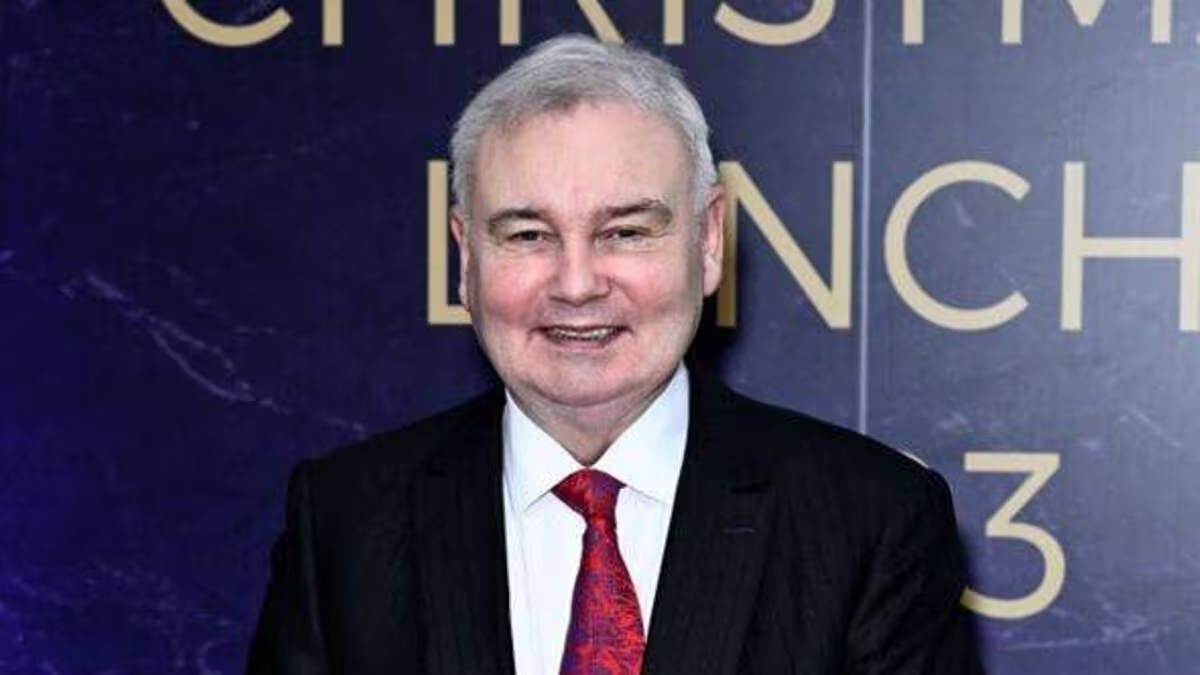
Eamonn Holmes in hospital after suffering a stroke
InvestingPro Fair Value analysis nails 62% gain on First Horizon

10 Action Movies That Are Flawless From Start to Finish

Why Israel is blocking foreign journalists from entering

Bitcoin: We’re Entering The Most Dangerous Phase

Alan Cumming Brands Baftas Ceremony A ‘Triggering S**tshow’

Emas batangan vs Perhiasan #tipskeuangan #samasamabelajar #finance

Btc prediction | Bitcoin price prediction in Hindi #india #btc #crypto #bitcoin

Dale makes money by selling bee stings.#foryou #comedy #shortvideo #shorts #shortvideos
-

 Business6 days ago
Three Gulf funds agree to back Paramount’s $81 billion takeover of Warner, WSJ reports
-

 Sports7 days ago
India men’s 4x400m and mixed 4x100m relay teams register big progress | Other Sports News
-

 Politics17 hours ago
US brings back mandatory military draft registration
-

 Fashion18 hours ago
Weekend Open Thread: Veronica Beard
-

 Tech4 days ago
How Long Can You Drive With Expired Registration? What Florida Law Says
-

 Business6 days ago
No Jackpot Winner, Prize to Climb to $231 Million
-

 Fashion5 days ago
Massimo Dutti Offers Inspiration for Your Summer Mood Board
-
 Sports18 hours ago
Man United discover Nico Schlotterbeck transfer fee as defender reaches Dortmund agreement
-

 Fashion4 days ago
Let’s Discuss: DEI in 2026
-

 Crypto World3 days ago
Bitcoin recovers as US and Iran Agree a Ceasefire Deal
-

 Crypto World2 days ago
Canary Capital Files SEC Registration for PEPE ETF
-

 Business15 hours ago
Tesla Model Y Tops China Auto Sales in March 2026 With 39,827 Registrations, Beating Cheaper EVs and Gas Cars
-

 Business7 days ago
Akebia Therapeutics, Inc. (AKBA) Discusses Pipeline Progress and Strategic Focus on Kidney Disease Treatments at R&D Day – Slideshow
-

 Business24 hours ago
OpenAI Halts Stargate UK Data Centre Project Over Energy Costs and Copyright Row
-

 Tech5 days ago
Gamer Restores the Original PlayStation Portal From Two Decades Ago
-

 Tech5 days ago
Haier is betting big that your next TV purchase will be one of these
-

 Tech5 days ago
The Xiaomi 17 Ultra has some impressive add-ons that make snapping photos really fun
-

 Tech5 days ago
Samsung just gave up on its own Messages app
-

 Politics1 day ago
Malcolm In The Middle OG Turned Down ‘Buckets Of Money’ To Appear In Reboot
-

 Tech5 days ago
Save $130 on the Samsung Galaxy Watch 8 Classic: rotating bezel, sleep coaching, and running coach for $369
You must be logged in to post a comment Login