

Business
Burnham urged to go faster on devolution


Andy Burnham has been warned he must complete England’s devolution map at speed or preside over a “two-tier England” in which a firm’s prospects depend on whether it happens to sit inside a mayor’s boundary.
The warning comes from IPPR North, the leading think tank for the North of England, in a paper published as the incoming prime minister prepares a programme built around handing power to regional mayors.
More than a quarter of England’s population still lives outside a Mayoral Strategic Authority, the bodies that increasingly shape transport, housing and regeneration decisions. For business owners in those areas, that means no local champion with the powers and budgets their competitors in Greater Manchester or the West Midlands can call on.
The researchers argue that leaving gaps in the devolved map risks rising resentment in communities that feel left behind, with public confidence in political institutions already at historic lows.
Money is already moving on the strength of the mayoral model. NatWest’s recent £20 billion commitment to the North of England was pitched explicitly as a bet on devolution. Firms outside mayoral areas risk watching that capital flow past them.
The current government has already legislated, with the English Devolution and Community Empowerment Act receiving Royal Assent in April, and has signalled a willingness to go further on devolving tax powers to mayors. But the think tank warns that slow, incremental change has left Whitehall dominating decision-making, so the full benefits have yet to be felt.
Its recommendations are blunt. Complete the devolution map in England by the end of this parliament, and explore extending regional devolution to city regions in Scotland and Wales. Set out ambitious plans for fiscal devolution at this autumn’s Budget, allowing places to retain a share of taxes and borrow to invest in transport, housing and regeneration. And expand “hyperlocal” government so communities, not just mayors, shape decisions.
The fiscal point is where SME owners should pay closest attention. Rachel Reeves has already described fiscal devolution as her “unfinished business”, with consultations under way on visitor levies and devolving revenues from income, business and land taxes. Who sets and spends those taxes, and where, will matter enormously to firms’ costs and their local trading environment.
Dr Ryan Swift, research fellow and author of the publication, said: “We know the incoming PM has signalled his ambition for devolution in England, but we must move beyond incrementalism, or his efforts could be in vain.
“If the new government is serious about delivering economic growth, tackling regional inequalities, and rebuilding trust in politics we can’t continue as we are. Gradual change won’t cut it any more, this is the time to move quickly and with purpose.
“That means giving regions not just more responsibilities, but powers, resources, and democratic legitimacy to make a real difference in places all across the country. It means empowering communities as well as mayors. And it means embedding these changes constitutionally, so that we can benefit from it for the decades to come, no matter who is in Number 10.
“Now is the time, now is the opportunity. It cannot be squandered.”
Mirte Boot, interim head of IPPR North, said: “With the UK in a political trust crisis, the incoming prime minister does not have time to waste.
“We have set out a radical proposal to see devolution truly make a difference to peoples lives, with ambitious fiscal devolution and a reformed regional second chamber. Local leaders should be in charge of local decisions. We saw the impact that has had in Manchester, now we have to see it replicated across the country.
“But with this radical work must come urgency: Whitehall will resist change and populists will exploit every failure. The test now is if Burnham can act quickly enough to deliver the meaningful change this country has been waiting for.”
For a business community in which eight in ten SME owners have admitted to fears about a Burnham premiership, the test cuts both ways. If Burnham delivers what he calls “the biggest rebalancing of power the country has ever seen”, decisions on transport, skills and regeneration will be taken closer to the firms they affect. If he fails, England’s businesses will be trading in two very different countries.

Amy Ingham
Amy is a newly qualified journalist specialising in business journalism at Business Matters with responsibility for news content for what is now the UK’s largest print and online source of current business news.

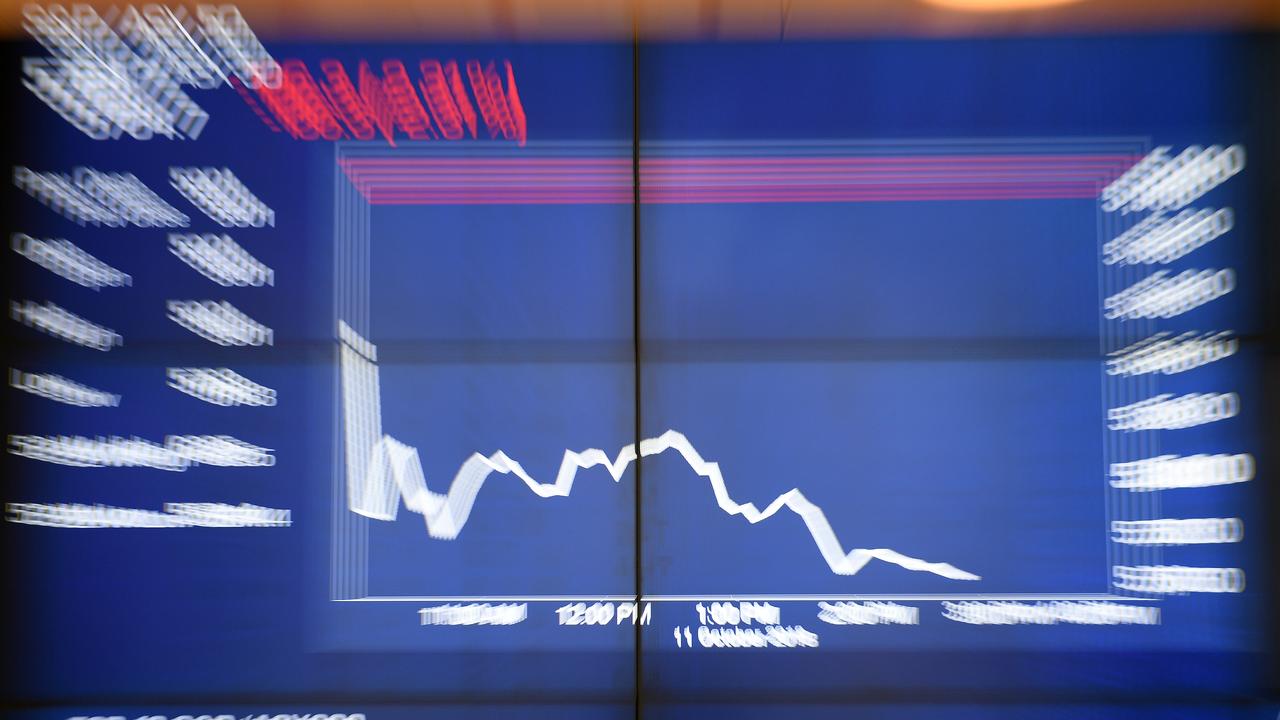
Australia’s share market has clawed back some early losses for a flat finish in what is shaping up to be a quiet week for the exchange.

Striking Pilbara unions said they would not “rule out” more stoppages after downing tools on Thursday, in what is the mining region’s first industrial shutdown for almost three decades.
Striking Pilbara unions said they would not “rule out” more stoppages after downing tools on Thursday, in what is the mining region’s first industrial shutdown for almost three decades.

The honeymoon is over for the biggest flotation in stock market history. SpaceX shares fell below their $135 IPO price for the first time on Wednesday, leaving thousands of UK retail investors who put £271 million into Elon Musk’s space venture staring at paper losses barely a month after its debut.
Shares in the satellite, rockets and artificial intelligence company slid 2.5 per cent to $132.64 in lunchtime trading, dipping under the price set when it made its stock market debut on June 12. The stock pared its losses to close at $135.27, down $0.81, or 0.6 per cent, on the day.
It is a sobering moment for a listing that only last month saw shares touch $150 on day one. The oversubscribed float attracted huge global interest from institutional and ordinary investors alike, promoted by 23 banks including Goldman Sachs, Morgan Stanley, Bank of America, Citigroup and JPMorgan Chase, which are reported to have collectively earned hundreds of millions in fees.
For the ordinary savers who piled in, the picture is less rosy. SpaceX courted retail investors on an unprecedented scale in the run-up to the float, allocating 20 per cent of IPO shares to non-professional investors drawn to Musk and his pledge to build “the systems and technologies necessary to make life multiplanetary”. UK retail investors alone spent £271 million to be part of it.
Many of those backers will be business owners and entrepreneurs who saw the float as a once-in-a-generation opportunity. The outlook for anyone who bought at the IPO price and held on is now uncertain.
The fundamentals have not changed since the company lifted the veil on its finances ahead of the listing. SpaceX, founded in 2002, made its name building rockets and launching satellites, but most of its $18.7 billion in revenue last year came from its Starlink satellite internet business. The company reported $4.9 billion in net losses in 2025.
What has changed is the mood.
“There hasn’t been anything lately to remind people of some of the catalysts for why they bought SpaceX,” said Steve Sosnick, chief market analyst at Interactive Brokers.
“The fact that a stock has fallen a couple of dollars below its IPO price in itself is not a tragedy but SpaceX is heavily watched and has an important role in investor psyche.”
The numbers involved remain staggering. SpaceX raised about $86 billion in its IPO and ended its first trading day valued at roughly $2.1 trillion, making Musk the world’s first trillionaire. By Wednesday afternoon in New York the valuation had drifted to $1.8 trillion.
Musk’s own net worth has fallen to an estimated $861 billion, according to the Bloomberg Billionaires Index, though he remains comfortably the world’s richest man, ahead of Google co-founder Larry Page on $306 billion.
For UK business owners, the episode is a timely reminder that even the most feverishly hyped listings obey gravity. First-day pops reward those who sell, not those who hold, and the Financial Conduct Authority’s guidance on understanding high-risk investments makes the point plainly: the higher the potential return, the higher the risk of losing your money.
A $2.64 dip below the float price is hardly a catastrophe. But for the small investors who helped bankroll the largest IPO in history, the rocket ride has, for now at least, gone into reverse.

Jamie Young
Jamie Young is Senior Reporter at Business Matters, covering SME finance, employment law and Westminster policy since 2016. He has reported on every Budget and Autumn Statement since 2018, helped make sense of the ‘covid era’ and the bounce-back loan scheme from launch through the fraud investigations, and broke the magazine’s coverage of the 2024 late-payment reforms. He joined Business Matters straight from completing his BA in Administration from Exeter University and is NCTJ-qualified. Reach him at jyoung@cbmeg.co.uk
Jack McGinn and Isabel Vieira discuss the mining companies leading the renewables push in the Goldfields.Plus: Woodside claim more people involved in gas stunt; Hesperia’s Kewdale logistics hub approved; and BHP workers strike at Port Hedland.

Wall Street Horizon provides institutional traders and investors with the most accurate and comprehensive forward-looking event data including earnings calendars, dividend dates, option expiration dates, splits, investor conferences and more. Covering 9,500 companies worldwide, we offer more than 40 corporate event types via a range of delivery options. By keeping clients apprised of critical market-moving events and event revisions, our data empowers financial professionals to take advantage of or avoid the ensuing volatility.

Sensex rose over 200 points 77,388 while Nifty 50 gained around 64 points to 24,142 during Thursday’s trading session. This came as India VIX, which measures volatility in the stock market, dropped 3.5% to 13.27.
IT stocks, including HCL Tech, Infosys, Tech Mahindra and TCS, were the top gainers on Sensex, rising 1-3%. Trent, Maruti Suzuki, M&M and Titan shares meanwhile gained nearly 1% each. Bucking the trend, Axis Bank, Bajaj Finserv, SBI and HDFC Bank shares lead losses on the benchmark index, trading marginally lower.
Broader markets also traded in the green, with Nifty Midcap 100 and Nifty Smallcap 100 indices gaining up to 0.5%. Sectorally, Nifty IT lead gains after rising nearly 2% in the morning trading hours. Nifty Financial Services and Nifty PSU Bank meanwhile slipped into the red. The overall market breadth was positive, with NSE seeing 1,662 advances and 749 declines, while 112 stocks remained unchanged.
Iran-US conflict escalations

Geopolitical worries continue to hang like a dagger over Dalal Street, although the bulls seem to ignore them now after the prolonged selloff earlier this year. Fewer vessels travelled through the Strait of Hormuz on Wednesday, the first day after the US reimposed its naval blockade on Iranian ports with both countries escalating strikes across the Gulf, Reuters quoted shipping data as showing.
Around seven vessels crossed the Strait on Wednesday, down from 13 recorded in the previous day. Meanwhile, hostilities intensified since Iran said during the weekend that it had closed the Strait of Hormuz, a critical waterway that accounted for 20% of daily global oil and gas supply shipments before the war.
Oil prices remained muted, with Brent crude futures falling below $85 per barrel and WTI Crude futures trading below $80 per barrel. While they have inched down slightly, oil prices have recorded sharp gains from last week’s lows.
Rupee nearly unchanged
Rupee opened at 96.2475 against the US dollar, nearly unchanged from the previous closing level of 96.2550. “While the softer dollar offered temporary support, higher energy prices remain a key concern for India’s import bill and the rupee’s outlook. Market participants will continue to track foreign fund flows, crude oil movement, and upcoming US economic data for further direction. Technically, the rupee is expected to trade in the 95.75–96.45 range in the near term,” said Jateen Trivedi, VP Research Analyst of Commodity and Currency at LKP Securities.
Meanwhile, foreign investors remained net sellers of Indian equities on Wednesday, net selling shares worth around Rs 736 crore, according to provisional data on NSE. However, FIIs have remained net buyers on Dalal Street for nine out of 11 trading sessions in July so far.
What lies ahead?
With no major changes in crude prices and global markets holding steady, Indian stock market is likely to trade in a narrow band with a positive bias, said VK Vijayakumar, Chief Investment Strategist at Geojit Investments. With many companies reporting their Q1 results in the coming days, the market is likely to respond to the results, he noted.
“Financials-both banks and NBFCs- are likely to report good set of numbers aided by robust credit growth now running at 18%. Automobiles is a sector to watch closely since the growth numbers for Q1 would be impressive and the sector continues to exhibit momentum, aided by GST cuts and easy availability of finance. Most segments of the sector -cars, SUVs, two-wheelers, commercial vehicles, exports- are doing well. Digital platform companies, too, will be reporting good growth numbers. Announcement of bonus issue by Paytm in the July 20th board meeting is an important news,” according to the analyst.
Technical view on Nifty
Bajaj Broking expected Nifty 50 to extend the recent consolidation and trade in the range of 23,800-24,350. “Within the consolidation last Friday’s gap area and Monday’s low of 24,000-23,950 will act as immediate support, holding above the same will lead to pullback towards 24,250-24,350 levels being the upper band of the recent consolidation range,” it said..
“Short term support is placed at 23,800-23,900 levels being the confluence of the almost identical low of the last 4 weeks and 50 days EMA. While only a breakout above 24,350 will signal strength and open upside towards 24,600 levels being the high of April 2026,” the domestic brokerage further said.
(With inputs from agencies)
(Disclaimer: Recommendations, suggestions, views and opinions given by the experts are their own. These do not represent the views of The Economic Times)
Business
Dixon Tech shares surge 7% on Rs 1.9 lakh crore phone manufacturing push. Buy, sell or hold the stock?
The government will release the administrative notification for both schemes within the next fortnight, electronics and information technology minister Ashwini Vaishnaw said.
“The government’s conditionalities for incentives are aligned with the industry’s perspective which focuses on building scale, making India globally competitive, and owning intellectual property,” said Atul Lall, managing director at Dixon Technologies, a key beneficiary of the earlier PLI scheme.
The scheme for mobile phones—billed as different from the production-linked programme that lapsed on March 31—will have a tenure of five years and disburse incentives based on domestic sourcing as well as design and R&D by Indian brands. The scheme will also offer incentives for export of smartphones.
Decoding MPMS
The scheme outlines incentives for eligible sales in the range of 2.25% to 5%. There is an additional incentive of 1.5% for domestic sourcing of key components and another 3% for building an Indian brand with its own design and R&D.
The government expects MPMS to help increase domestic value addition in smartphones to 40-45% by the end of the scheme from 24% now.
Also read: Vivo-Dixon deal approval reveals India’s new China playbook
It projects cumulative mobile-phone production of Rs 39 lakh crore and exports of Rs15 lakh crore during the scheme period, creating an estimated 600,000 new direct jobs.
The previous PLI scheme helped production reach Rs 22 lakh crore and exports over Rs 7.5 lakh crore, creating 1.2 million jobs.
The development comes just a week after the Centre expanded customs duty concessions on a range of machinery and components used in electronics manufacturing. Dixon Technologies, India’s largest domestic contract manufacturer of smartphones, IT hardware and television sets, is expected to benefit from lower input costs. The customs duty relief is likely to improve unit economics, support margins and aid the company’s continued expansion in its mobile and electronics manufacturing businesses.
Dixon-Vivo JV
Last week, Chinese smartphone brand Vivo Mobile India received the long-pending government approval to form a joint-venture partnership with Dixon for manufacturing of smartphones.
Both companies had signed a binding term sheet in December 2024 under which the electronics manufacturer will hold 51% of the share capital, while Vivo India will have 49% share.
The joint-venture entity will act as the original equipment manufacturer (OEM) of electronic devices including smartphones for Vivo Mobiles in India. The entity can also engage in manufacturing for other brands, Dixon said.
What are experts saying?
Emkay raised its target price to Rs 15,200 (11% upside) from Rs 13,477 while maintaining a Buy rating on the counter. The brokerage said regulatory approval for the 51:49 joint venture with Vivo removes a key overhang and paves the way for large-scale manufacturing of Vivo smartphones. It has raised its Vivo production estimates to 6.5 million units in FY27 and 18 million units in FY28, resulting in 14% and 17% upgrades to its FY27 and FY28 EPS estimates, respectively.
Read more: Data center pipeline faces construction delays, cancellations to mount through 2027: Bernstein
Emkay noted that Dixon already accounts for 45-50% of India’s smartphone manufacturing capacity, with the Vivo JV expected to further strengthen its leadership. It also sees continued policy support for domestic electronics manufacturing, including the proposed Mobile PLI 2.0 scheme, as a key growth driver. The brokerage believes Dixon’s strong return ratios, negative working capital cycle and robust cash generation justify its premium valuation and remains positive on the stock.
Nomura has maintained its Buy rating on Dixon Technologies with a target price of Rs 13,813. It believes the regulatory approval for the joint venture improves volume visibility for Dixon, which currently accounts for around 18% of India’s mobile manufacturing with approximately 33 million units in FY26. Assuming Dixon secures around 70% of Vivo’s production, Nomura estimates its annual output could rise to nearly 60 million units over the next few years, translating into a 35-38% market share.
(Disclaimer: Recommendations, suggestions, views and opinions given by the experts are their own. These do not represent the views of The Economic Times)
Business
South Korea’s KOSPI Plunges 6.49% as Chip Selloff Triggers Trading Halt and Wipes Out Prior Day’s Rally

SEOUL — South Korea’s benchmark KOSPI index tumbled 6.49% on Thursday, falling 472.44 points to 6,811.97 by mid-afternoon, as a steep overnight selloff in U.S. semiconductor stocks erased the prior session’s sharp rally and triggered another automatic trading halt in one of the most volatile years on record for Korean equities.
The index opened at 6,960.50, down 4.45% from Wednesday’s close, and losses deepened through the morning. At 9:10:26 a.m. local time, the Korea Exchange activated a sell-side sidecar — a five-minute suspension of program sell orders — after KOSPI 200 futures fell more than 5% to 1,104.40. It was the 37th such trading curb triggered on the KOSPI so far this year, a pace that has already pushed the combined number of buy- and sell-side halts past the annual record of 26 set during the 2008 global financial crisis. By the time the halt lifted, the index had fallen as low as roughly 6,753 before paring some losses into the afternoon session.
The rout came just one day after the KOSPI staged a sharp rebound, surging more than 6% to close at 7,284.41 and reclaiming the 7,000-point level for the first time in three trading sessions. Foreign investors had poured a net 2.33 trillion won into the market Wednesday, the fourth-largest single-day foreign buying spree of the year. Thursday’s reversal wiped out those gains almost entirely.
The selloff was led by South Korea’s two largest companies. Samsung Electronics fell as much as 9% during the session before settling to a decline in the high single digits, while SK Hynix, the world’s largest producer of high-bandwidth memory chips used in artificial intelligence systems, dropped more than 10%, reversing most of an 8% rally from the previous day. SK Square, SK Hynix’s largest shareholder, tumbled more than 12%, and Samsung Electro-Mechanics fell nearly 10%. SK Hynix’s American depositary receipts, which began trading on the Nasdaq earlier this month, fell 9% overnight to close at $176.46.
The declines tracked a broader pullback in U.S. chip stocks Wednesday, even as major American indexes rose overall. The Philadelphia Semiconductor Index fell 2.08% to 12,398.89 despite gains elsewhere on Wall Street, as investors rotated out of high-flying AI and memory names. Micron Technology sank roughly 8%, Marvell Technology dropped 7.27%, Intel fell 4.43% and Advanced Micro Devices lost 3.46%. The VanEck Semiconductor ETF declined 1.6%.
Kim Yu-mi, an analyst at Kiwoom Securities, said the domestic pullback reflected investors giving back part of the prior day’s semiconductor-driven gains in response to the drop in U.S. chip shares. She said recent highfliers in artificial intelligence and semiconductors were seeing profit-taking, with buying interest instead moving toward major U.S. platform companies such as Apple, Alphabet and Amazon.
The sector breakdown on the KOSPI reflected the concentration of the selloff in technology and manufacturing. The electrical and electronics sector fell 7.95%, manufacturing dropped 6.3%, medical and precision instruments declined 4.44%, and securities and financial shares each fell roughly 3%. Telecommunications, textiles and food and beverage stocks were among the few sectors to post gains, rising between 1.5% and 3.6%. The tech-heavy KOSDAQ index also declined, falling nearly 3% to trade around 804.
By investor type, foreign investors and institutions were net sellers on the main board, while individual retail investors were the only net buyers, purchasing a net 212.2 billion won worth of shares even as the broader market slid.
The volatility was not confined to South Korea. Japan’s Nikkei 225 fell more than 2%, with chip-equipment makers Advantest and Tokyo Electron both down sharply and SoftBank Group sliding nearly 7%. Kioxia, Japan’s largest memory chipmaker, dropped more than 7%. The regional selloff underscored how closely Asian markets have become tied to swings in U.S. semiconductor sentiment amid the continuing global buildout of artificial intelligence infrastructure.
Thursday’s decline is the latest swing in what has become an extraordinary year for the KOSPI. The index hit an all-time high of 9,385.59 on June 19 before falling into a technical bear market, dropping more than 25% from that peak within weeks amid repeated single-session swings of 5% to 10%. Despite the turbulence, the index remains up sharply for the year overall, driven by a surge in valuations tied to South Korea’s expanding role in global memory-chip production for AI data centers. Samsung Electronics and SK Hynix together now account for roughly half of the KOSPI’s total market weight, up from about a quarter at the end of last year, reflecting how heavily the index’s fortunes now hinge on the two chipmakers’ performance.
South Korean regulators have taken notice of the swings. Financial authorities have in recent sessions weighed measures targeting single-stock leveraged exchange-traded funds tied to Samsung Electronics and SK Hynix, which have amplified price movements in both directions. Officials have also flagged the risk that further interest rate increases could add to market volatility, ordering a broader review of risks facing companies and vulnerable borrowers.
The turbulence comes even as Korea’s chipmakers continue to announce large-scale expansion plans tied to AI demand. SK Hynix has outlined tens of trillions of won in planned investment in domestic manufacturing capacity, including new fabrication facilities aimed at meeting demand for high-bandwidth memory and enterprise storage chips, while Samsung Electronics has moved to expand its own next-generation memory production.
For now, traders in Seoul said the market remains caught between two competing narratives: a structural rerating of Korean chipmakers’ importance to the global AI buildout, and a level of daily volatility that has left even seasoned investors bracing for the next swing. With 37 sidecar activations already logged this year and the summer trading season still underway, market participants said further sharp moves in either direction should not be ruled out.
Business
Myles Garrett Thanks Girlfriend Chloe Kim After She Presents Him Record-Breaking ESPY Award in New York

NEW YORK — Myles Garrett had a message for his girlfriend, Olympic snowboarding champion Chloe Kim, after she walked onto the stage Wednesday night to hand him one of the biggest honors of his career.
Garrett, 30, won the ESPY for Best Record-Breaking Performance at the 2026 ESPYS, held at the David H. Koch Theater at Lincoln Center. The award recognized his historic 2025 season with the Cleveland Browns, during which he set the all-time NFL single-season sacks record with 23. Kim, 26, presented the award alongside comedian Tiffany Haddish, and Garrett wasted no time acknowledging her role in keeping the moment a surprise.
“Thank you, baby, for keeping a secret like that, because you definitely knew,” Garrett said as he stepped up to accept the trophy.
The defensive lineman used much of his acceptance speech to thank the people who supported him through a demanding season. He turned first to his parents, reflecting on how difficult it can be for family members to take a back seat to an athlete’s singular focus during a long campaign.
“I want to thank my parents, I know it’s not easy, I can get kind of locked in and focused on my sport, and I know we all try to enter our zone as athletes, and sometimes, the people who mean the most to us take a bit of a backseat for our journeys that we go on throughout the season, so I want to thank them for always loving me and supporting me in their own ways,” Garrett told the audience.
He also recognized his siblings, both athletes in their own right — his brother, former NBA player Sean Williams, and his sister, Brea Garrett, who holds the weight throw record at Texas A&M.
“I want to thank my brother, my sister — they’re athletes in their own right, dominating their field and they know what it’s like and they know how to support someone who’s going through a lot,” he said.
Garrett closed his remarks by turning his attention back to Kim, whose own trophy case includes five career ESPY awards.
“I’m blessed to be on this stage,” he said, before adding, “Most of all, this is an honor, I got a lot of catching up to do with this beautiful woman behind me.”
The record-breaking honor was one of two Garrett took home Wednesday night. He was also named Best NFL Player, becoming the first defensive player in ESPYS history to win the award. His dominant 2025 campaign came shortly before he was traded from the Browns to the Los Angeles Rams.
The evening carried extra significance for the couple beyond the trophies. On the red carpet ahead of the ceremony, Garrett and Kim shared an affectionate moment in front of photographers, with the NFL star kissing his girlfriend on the cheek as she posed in a red gown for the event. Speaking with ESPN afterward, Garrett was quick with a compliment when hosts told the couple they looked “beautiful.”
“Thank you, she is,” Garrett replied.
Kim, for her part, said ahead of the show that she was looking forward to being on the other side of the ESPYS spotlight for once, handing out hardware rather than collecting it.
“I think handing people awards is just as fun as receiving them, so I’m looking forward to it,” Kim told reporters on the red carpet, before revealing she would be the one presenting her boyfriend’s award.
Kim has built her own decorated career on the slopes, most recently adding to her Olympic medal collection with a run at the Winter Games that has kept her among the most recognizable athletes in her sport. Her five ESPYS to date reflect a résumé built over multiple Olympic cycles, and Wednesday’s ceremony offered a rare split-screen moment for the couple: one partner accepting hardware for a historic NFL season, the other stepping into a presenter’s role after years of being the one called to the stage.
Garrett’s ESPYS night capped a whirlwind stretch that began with his record-setting performance for Cleveland and ended with his high-profile trade to Los Angeles. Setting the single-season sacks mark put him in rare company among NFL pass rushers, and Wednesday’s dual recognition — for both the individual record and his overall standing as the league’s top player — underscored how thoroughly he dominated the position during the 2025 campaign.
The 2026 ESPYS drew a broad mix of athletes and celebrities to Lincoln Center, with the ceremony doubling as both an awards show and a showcase for some of the year’s biggest sports storylines. Garrett and Kim’s shared moment on stage was one of several highlights from a night that also featured appearances from other prominent athletes across multiple sports being honored for their achievements over the past year.
For Garrett, the recognition adds to what has already been a landmark year, one that included a record-breaking season, a major trade and now hardware to match. And for a couple whose careers are built on very different playing surfaces — an NFL field and a snowboarding halfpipe — Wednesday’s ceremony offered a public reminder of how closely their orbits have come to intersect, both in celebrating each other’s success and, for one night, in each other’s spotlight.

Filey named one of the best seaside towns in the UK

Australian shares flat after another ‘dull’ session

Ostium Halts Trading After Oracle Exploit Impacts OLP Vault


-

 Fashion7 days ago
Loro Piana Fall 2026 Enters Houston’s Art Scene
-

 Fashion5 days ago
Weekend Open Thread: Nutriplenish Leave-In Conditioner
-
 Sports7 days ago
2026 Genesis Scottish Open Thursday TV coverage: Round 1
-

 Sports6 days ago
Super Eagles star Moses Simon opens up on Liverpool transfer regret
-

 Tech7 days ago
Character.AI enters the microdrama arena with its own productions, but there’s a twist
-

 Politics20 hours ago
Young campaigners urge incoming PM to act on outdoor junk food ads
-

 News Videos2 days ago
XRP BOMBSHELL… XRP OMBOARDED FOR TRANSACTIONS!!!
-

 Tech2 days ago
Get Your ESP32 Sunny Side Up With This Solar Dev Board
-

 Tech1 day ago
Dark Secrets Emerge When Jailbreaking LLMs
-
 Sports11 hours ago
New Cornerback Enters Vikings Trade Rumor Mill
-
 Entertainment15 hours ago
Disney’s Most Ambitious Failed Star Wars Attraction Is Coming to SDCC
-

 Tech7 days ago
Level Infinite Launches Gangstar Mirage City in India with Pre-Registrations
-
 NewsBeat7 days ago
Major update after Huntingdon train attack as man enters plea
-

 News Videos3 days ago
how to make coin bank box with cardboard #scienceproject #money #diy #shorts
-
 Tech3 days ago
Cloudflare Precursor Watches Your Mouse and Keyboard To Decide If You Are Human
-
 Entertainment14 hours ago
Vicki Gunvalson Defends Discussing Heather Dubrow’s Money
-

 NewsBeat11 hours ago
Watch: Is Donald Trump facing a popular backlash on immigration?
-
Crypto World2 days ago
Ripple, Coinbase, Circle Join Linux x402 Foundation to Help Shape AI Payments
-

 Sports8 hours ago
Michigan officials not expected to discuss AD Warde Manuel at Thursday meeting
-
 NewsBeat10 hours ago
Firefighters issue update on Dovestone moorland blaze as fire enters fourth day
You must be logged in to post a comment Login