

Connect with us

Business

Business News Live, Share Market News – Read Latest Finance News, IPO, Mutual Funds News

Published

on

LK Advani's 'gift' makes its way to State Department exhibition hall

Air India opens first flagship Maharaja Lounge at Delhi airport’s Terminal 3

Air India has unveiled its inaugural flagship lounge, The Maharaja Lounge, at Delhi’s Terminal 3, marking a significant enhancement to its premium travel offerings. This new space, designed with Indian heritage and modern aesthetics, will cater to Business and First Class passengers, elite club members, and eligible Star Alliance travelers.

Continue Reading
Click to comment

Leave a Reply

Your email address will not be published. Required fields are marked *

Business

Q Mixers debuts sparkling mixers

Published

on

Q Mixers debuts sparkling mixers

The mixers are intended as additions to cocktails, mocktails or enjoyed as a standalone beverage. 

Continue Reading

Business

10 Essential Facts About Jennifer Runyon: Remembering the 'Ghostbusters' Star Who Passed at 65

Published

on

Jennifer Runyon

Jennifer Runyon, the beloved actress whose sunny presence brightened 1980s screens in Ghostbusters, Charles in Charge and A Very Brady Christmas, died March 6, 2026, at age 65 after a six-month battle with cancer.

Continue Reading

Business

Poland stocks lower at close of trade; WIG30 down 0.25%

Published

on


Poland stocks lower at close of trade; WIG30 down 0.25%

Continue Reading

Business

Oil Prices Surge Past $100 Amid Escalating Middle East Conflict, Iran War Disruptions

Published

on

Israel and Iran launched multiple rockets at each other for a fourth day, putting more upward pressure on oil prices

Crude oil prices rocketed above $100 per barrel in volatile trading on March 9, 2026, as the intensifying conflict involving Iran, Israel and the United States disrupted key Middle East supply routes and prompted production cuts by major exporters. The sharp rally, one of the most dramatic in recent years, sent shockwaves through global markets, fueling inflation fears and pressuring equities.

Israel and Iran launched multiple rockets at each other for a fourth day, putting more upward pressure on oil prices
AFP

West Texas Intermediate (WTI) crude futures, the U.S. benchmark, climbed as high as $119.48 per barrel in early trading before paring gains to settle around $96 to $101 per barrel, up roughly 6% to 11% on the day depending on the contract. Brent crude, the international standard, followed a similar path, peaking near $119.50 before closing in the $99 to $102 range, reflecting gains of 7% to 10%.

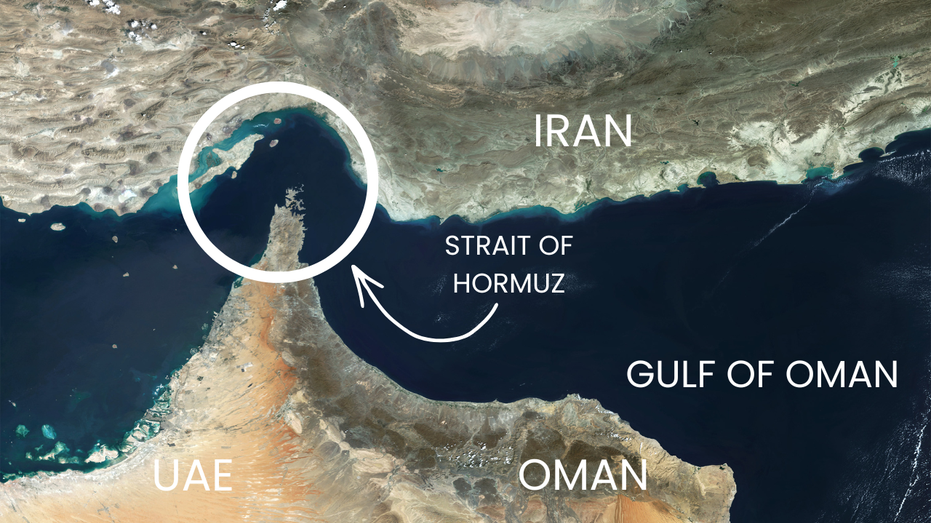
The surge marked a stunning reversal from earlier 2026 levels, when prices hovered below $60 per barrel at the year’s start. Since late February, when U.S. and Israeli strikes escalated against Iran, Brent has jumped as much as 65% and WTI by 78% in some sessions. Analysts attribute the spike primarily to fears of prolonged supply interruptions through the Strait of Hormuz, a chokepoint for about 20% of global oil trade.

Major Middle Eastern producers, including Saudi Arabia and other OPEC members, began curtailing output in response to the disruptions. Qatar’s energy minister warned that the war could “bring down the economies of the world,” predicting potential shutdowns across Gulf exporters and prices climbing toward $150 per barrel if tensions persist. Reports indicated halted shipments and involuntary reductions, exacerbating the tight supply outlook.

The conflict’s expansion has raised concerns over broader energy security. Disruptions in the Strait of Hormuz and related shipping lanes have forced rerouting, increasing costs and transit times. Some tanker tracking data showed declines in certain export flows, though others, like Russian crude to China, hit records as alternative suppliers stepped in.

Advertisement

Global financial markets reacted sharply. Stocks pared losses but remained under pressure, with the Dow dropping hundreds of points amid stagflation worries—rising energy costs coupled with potential economic slowdowns. Gasoline prices in the U.S. climbed, with the national average reaching around $3.47 per gallon by March 9, up significantly in recent weeks. Internationally, countries like the Philippines braced for substantial pump price hikes, with diesel potentially rising 17 to 24 pesos per liter starting March 10.

OPEC+ dynamics added complexity. The group—led by Saudi Arabia and Russia—had maintained production pauses through March 2026, extending voluntary cuts amid earlier oversupply fears. Recent IEA and OPEC reports projected balanced or slight surplus conditions for the year, with global supply growth of about 2.4 million barrels per day (mb/d) in 2026, split between OPEC+ and non-OPEC producers. Demand forecasts called for modest increases of 1.3 to 1.4 mb/d annually.

However, the geopolitical shock overrode those fundamentals temporarily. Pre-conflict outlooks from J.P. Morgan and others anticipated Brent averaging around $60 per barrel in 2026 due to expected surpluses and softening demand. Now, short-term models point to higher averages, with Trading Economics forecasting Brent at $107 by quarter’s end and $118 in 12 months.

The G7 postponed decisions on releasing strategic reserves, wary of depleting buffers amid uncertainty. Some analysts suggested targeted interventions could cap rallies, but prolonged conflict might sustain elevated prices.

Advertisement

Broader implications loom for consumers and economies. Higher oil feeds into transportation, manufacturing and heating costs, potentially stoking inflation at a time when central banks monitor recovery signals. Airlines, shipping firms and refiners face margin squeezes, while oil-dependent exporters like those in the Gulf see revenue boosts offset by production risks.

Market participants watch for de-escalation signals or further military developments. Brief, geopolitically driven spikes have historically subsided once supply stabilizes, but the current war’s scope—targeting energy infrastructure indirectly—introduces unknowns.

As of March 10, 2026, prices remained elevated but volatile in after-hours and early Asian trading. Traders braced for continued swings, with supply news and diplomatic updates likely dictating direction.

The oil market’s dramatic turn underscores energy’s vulnerability to geopolitics. What began as contained tensions has morphed into a major driver of global prices, reminding stakeholders of the thin line between stability and disruption in world energy flows.

Advertisement
Continue Reading

Business

Strait of Hormuz crisis sends oil price close to $120 as Middle East conflict rattles global markets

Published

on

Shell’s chief executive Wael Sawan has warned that a worsening of the conflict between Israel and Iran could deliver a major shock to the global economy, as geopolitical tensions threaten to choke off one of the world’s most important energy supply routes.

Oil prices surged to their highest levels in nearly three years as escalating conflict in the Middle East disrupted energy supplies and triggered fears of a major global shock to oil markets.

The global benchmark Brent crude oil briefly climbed to $119.50 a barrel in overnight trading, the first time prices have approached $120 since 2022, before easing back to around $107 after reports that the Group of Seven could release strategic oil reserves to stabilise markets.

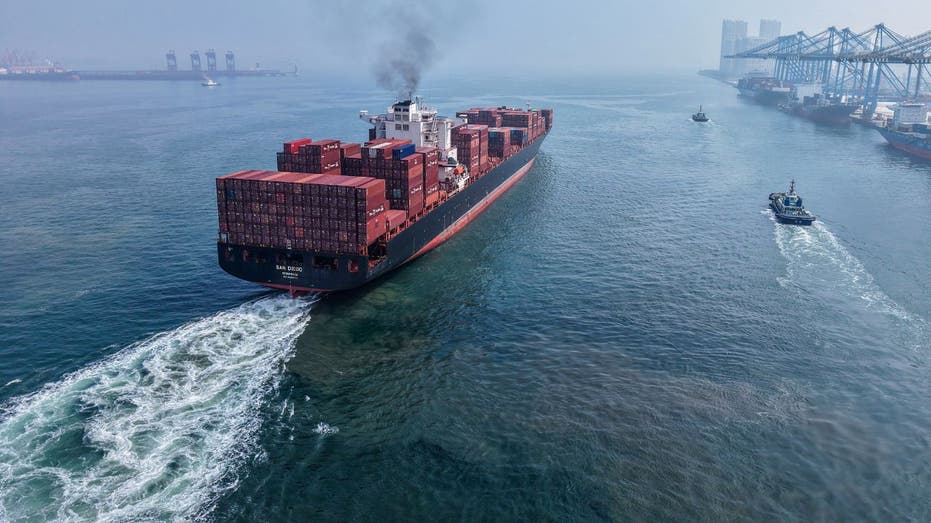
The sharp spike came as shipping through the Strait of Hormuz, one of the world’s most important energy corridors, ground to a near halt following escalating military tensions involving Iran, the United States and Israel.

The Strait of Hormuz, a narrow waterway linking the Persian Gulf with the Gulf of Oman, normally carries around 20% of the world’s oil exports. The latest conflict has seen tanker traffic collapse as insurers, shipping companies and crews refuse to risk the route.

According to data from shipping tracker MarineTraffic, only nine commercial vessels passed through the strait last week, compared with a typical daily average of about 50 before hostilities intensified.

Advertisement

Iran’s Islamic Revolutionary Guard Corps has warned that any vessels attempting to pass through the waterway could be targeted, threatening to “set ablaze” ships using the route.

The disruption has forced energy traders and governments to confront the possibility of one of the largest supply shocks since the 1970s oil crises.

Brent crude has already risen more than 50% since the start of 2026, when prices were hovering around $61 a barrel.

The surge accelerated dramatically after several Gulf producers, including Qatar, United Arab Emirates, Kuwait and Iraq, cut production amid the growing conflict.

Advertisement

Analysts at Goldman Sachs warned that prices could climb even higher if tanker flows do not recover quickly.

The bank said Brent crude could surpass the $146 peak reached during the 2008 oil crisis if the strait remains closed for an extended period.

“Our analysis suggests that developments in the Persian Gulf represent one of the most severe disruptions to global energy supply in decades,” Goldman said in a note to investors.

The crisis has already severely impacted production in Iraq, one of the largest oil exporters in the region.

Advertisement

Output from Iraq’s main southern oilfields has reportedly dropped by 70% to about 1.3 million barrels per day, compared with roughly 4.3 million barrels per day before the conflict escalated.

Officials from the state-run Basra Oil Company said exports had effectively stalled because tankers were unable to reach the country’s main terminals.

Storage facilities in southern Iraq have reportedly reached full capacity as crude continues to be pumped but cannot be shipped.

“This is the most serious operational threat Iraq has faced in more than 20 years,” a senior official from the Iraqi oil ministry told Reuters.

Advertisement

Economists warn the energy shock could ripple across the global economy if prices remain elevated.

Analysts at JPMorgan Chase estimate that oil prices stabilising around $120 per barrel could add more than one percentage point to global inflation and reduce economic growth by up to 1.2 percentage points.

The surge has already pushed investors toward safe-haven assets, strengthening the US dollar and triggering volatility in equity markets.

Asian stock markets suffered steep declines earlier in the week as investors reacted to the possibility of prolonged disruption to energy flows.

Advertisement

Industry data suggests hundreds of oil tankers are effectively stranded around the Persian Gulf region as shipowners adopt a “wait-and-see” approach.

Goldman Sachs analysts said many shipping companies were unwilling to risk sending vessels through the Strait of Hormuz while the security situation remains uncertain.

“Most shippers are currently in a wait-and-see mode while physical risks in the strait remain elevated,” the bank said.

The disruption is already significantly larger than the shock caused by Russia’s invasion of Ukraine in 2022, according to early trade flow analysis.

Advertisement

G7 considers emergency oil release

To prevent the crisis spiralling further, finance ministers from the G7 are expected to meet to discuss releasing crude oil from emergency strategic reserves.

Such coordinated releases have previously been used to stabilise markets during supply shocks, including during the early months of the Ukraine war.

However, analysts warn that emergency stockpiles may only provide temporary relief if the shipping disruption continues.

Advertisement

The surge in energy prices has also complicated the outlook for global monetary policy.

Traders have sharply scaled back expectations of interest rate cuts from major central banks, fearing the energy shock could trigger a fresh wave of inflation.

Economists at Deutsche Bank warned that if oil prices remain elevated the Bank of England may cut interest rates only once in 2026.

Chief UK economist Sanjay Raja said inflation in Britain could rise as high as 3.8% if energy costs remain elevated.

Advertisement

In that scenario, he suggested the UK government could be forced to consider fuel duty reductions to offset rising household energy and transport costs.

Some economists believe the crisis could rival some of the most significant oil disruptions in modern history.

Nobel Prize-winning economist Paul Krugman said the situation could potentially exceed previous shocks linked to the 1973 Yom Kippur War and the 1979 Iranian revolution.

“The disruption of world oil supplies caused by the war in Iran looks extremely serious,” Krugman wrote.

Advertisement

“If the Strait of Hormuz remains closed for an extended period, this will be a worse disruption than either of those historic energy crises.”

For now, global markets remain focused on whether tanker traffic can resume through the strait, a development that could quickly bring oil prices down, or whether the conflict will deepen into a prolonged geopolitical and economic shock.


Jamie Young

Jamie Young

Jamie is Senior Reporter at Business Matters, bringing over a decade of experience in UK SME business reporting.
Jamie holds a degree in Business Administration and regularly participates in industry conferences and workshops.

When not reporting on the latest business developments, Jamie is passionate about mentoring up-and-coming journalists and entrepreneurs to inspire the next generation of business leaders.

Advertisement

Continue Reading

Business

Hi-Chew parent to acquire My/Mochi

Published

on

Hi-Chew parent to acquire My/Mochi

The deal will propel Morinaga & Co., Ltd. into the $8.6 billion US frozen novelty market at full scale. 

Continue Reading

Business

UBS upgrades PG&E on expected wildfire policy changes

Published

on


UBS upgrades PG&E on expected wildfire policy changes

Continue Reading

Business

Skyscrapers and park planned for ‘last forgotten corner of Manchester city centre’

Published

on

Skyscrapers and park planned for ‘last forgotten corner of Manchester city centre’

Water Street vision aims to revitalise ‘fragmented and disconnected’ area

A new riverside walkway, along the Medlock, is part of the plan

A new riverside walkway, along the Medlock, is part of the plan(Image: Manchester council)

Manchester could see a ‘landmark’ new park and four skyscrapers open in the ‘one of the city centre’s final forgotten corners’.

Advertisement

The council has unveiled its vision for Water Street, sandwiched between Castlefield and Trinity Way. It’s one of the last parts of town still dominated by light industry, featuring warehouses and derelict compounds.

It’s also next to Aviva Studios and new St John’s neighbourhood, meaning there’s plenty of things for potential residents to do, prompting a move to redevelop the land.

The plan is not dissimilar to the regeneration of Mayfield, with four tower blocks containing apartments surrounding a new park roughly equal to the city’s newest green space, at 6.5 acres.

“Right now, the area feels fragmented and disconnected,” said council leader Bev Craig. “But we have a real opportunity to create a thriving new neighbourhood connecting into the historic Castlefield and linking into the vibrant new St Johns area, with another big new city centre park and other green spaces – an inclusive place with affordable homes.”

Advertisement

‘Thousands’ of apartments should be built in the scheme, with the authority committing to adding ‘more genuinely affordable’ homes with the redevelopment.

The vision for the new towers and park near Water Street, in Castlefield

The vision for the new towers and park near Water Street, in Castlefield(Image: Manchester council)

Coun Craig added: “Another brand new public park and more genuinely affordable homes are part of our ambition to make the city centre more attractive and more affordable. We’ve seen the impact Mayfield has already had in the city centre, and in the last year work has started on the first social housing in the city centre for 40 years – with some schemes delivering a majority of affordable homes.”

The plan will also redevelop existing railway arches for retail and hospitality units and create new walking routes across the area. It will likely be years before construction begins, as the council has only released a blueprint for development at this stage for a public consultation ahead of developers proposing final designs for planning permission.

The project, launched on Thursday, has the backing of local Deansgate councillors. Joan Davies said: “I am ecstatic about the prospect of yet another new city centre park – this time in Castlefield.

Advertisement

“Talking to city centre residents, we have heard loud and clear that residents want more green space, and as city centre Labour Councillors, we listen, act and deliver.”

To find all the planning applications, traffic diversions, road layout changes, alcohol licence applications and more in your community, visit the Public Notices Portal.

Continue Reading

Business

Oil Analysts See Brent Rising to as Much as $150 a Barrel

Published

on

Alphabet Is Selling 100-Year Debt as Part of a Big Bond Sale

Barclays wrote in a research note Monday that benchmark Brent crude oil “could definitely test $120” per barrel if the fighting continues for a few more weeks.

Capital Economics said Brent could rise to $150 a barrel in mid-2026, before subsiding to $130, in a worst-case scenario where the conflict causes extensive damage to Middle East energy infrastructure as well as transit disruptions.

Rystad Energy said Brent could spike up to $135 a barrel if the conflict lasts four months.

Macquarie said in a note Friday that “a few weeks of Hormuz closure will create a domino effect of events that could push crude to $150 or higher.”

Advertisement

Goldman Sachs said Friday that it would revisit its oil-price forecast soon if flows through the Strait of Hormuz didn’t normalize. The bank had previously said Brent would average $76 a barrel during the second quarter of 2026.

Continue Reading

Business

Keir Starmer says UK economy is robust but could face damage from prolonged Iran conflict

Published

on

Keir Starmer says UK economy is robust but could face damage from prolonged Iran conflict

Prime Minister speaks as oil prices soar above $100 a barrel

An explosion erupts following strikes near Azadi Tower close to Mehrabad International Airport in Tehran on March 7, 2026

An explosion erupts following strikes near Azadi Tower close to Mehrabad International Airport in Tehran on March 7 (Image: AFP via Getty Images)

The longer the conflict in the Middle East persists, the greater the risk of economic damage to the UK, Sir Keir Starmer has warned.The Prime Minister maintained that the economy was robust and well-equipped to handle the “likely impact” on households and businesses, but recognised concerns over the potential for rising bills following the US-Israeli attack on Iran and Tehran’s retaliatory actions against nations throughout the region.

Advertisement

Oil prices have rocketed above 100 dollars a barrel for the first time since 2022 due to the crisis. London’s FTSE 100 Index experienced a nearly 2% drop shortly after trading commenced as the Middle East conflict triggered a severe supply shortage.

Speaking at a community centre in London, Sir Keir said: “People will sense, you will sense I think, that the longer this goes on, the more likely the potential for an impact on our economy, impact into the lives and households of everybody and every business.

“And our job is to get ahead of that, to look around the corner, assess the risk, monitor the risks, and work with others in relation to that.”

US President Donald Trump attempted to minimise the repercussions of the chaos, asserting that prices will “drop rapidly when the destruction of the Iran nuclear threat is over” and were a “very small price to pay”.

Advertisement

“ONLY FOOLS WOULD THINK DIFFERENTLY,” he declared in a post on his Truth Social platform.

Following the death of Iran’s supreme leader in an Israeli strike at the conflict’s outset, his son Mojtaba Khamenei was appointed as his successor on Sunday, a decision likely to provoke Mr Trump’s anger, having previously declared him an “unacceptable” choice.

Most British households will be shielded from the impact of rising energy prices in the near-term by the energy price cap.

However, increasing oil prices will translate into higher costs at forecourts.

Advertisement

And the threat of elevated energy costs driving up inflation means the Bank of England is now unlikely to reduce interest rates this month, as had previously been anticipated.

Finance ministers from the G7 group of leading democracies, including Chancellor Rachel Reeves, will convene virtually on Monday to address the crisis.

The Financial Times reported that ministers will consider a possible coordinated release of petroleum from reserves organised by the International Energy Agency in an effort to minimise the economic shock.

Sir Keir stated there was “more resilience” in the UK economy and the public finances than there had been during the energy price shock triggered by the Ukraine invasion in 2022.

Advertisement

Sir Keir said: “I do understand the anxiety now, at nine days into this conflict, where a number of people will be saying ‘well, now is the situation going to get worse, and how’s it going to impact me and my family?’”.

“At the moment, what we’re doing is monitoring the risk, working with others to mitigate the risk.

“The Chancellor is talking to the Bank of England every day to make sure that we’re ahead of that.”

He stated the energy cap would shield households from the impact of turbulence in the markets “but of course, businesses and others will be concerned to watch carefully what’s going on”.

Advertisement

Asked whether Mr Trump was risking a world war with his actions, Sir Keir said: “We do need to find a way to de-escalate the situation and that’s what a lot of our discussions are about – how do we find a way to de-escalate this situation and make sure it doesn’t escalate even further than it already has.”

Sir Keir spoke to Mr Trump over the weekend regarding the countries’ military co-operation in the region, in what appeared to be a positive signal a day after the US president lashed out at him in a social media post and suggested the UK’s assistance was too late.

Mr Trump has repeatedly criticised Sir Keir’s decision not to authorise permission for the initial wave of military action against Iran.

The Prime Minister subsequently granted permission for “defensive” US action against Iranian missile sites from RAF Fairford in Gloucestershire and Diego Garcia in the Indian Ocean.

Advertisement

Following reports the UK was preparing the HMS Prince of Wales aircraft carrier to deploy to the Middle East, Mr Trump said “we don’t need them any longer” and that “we don’t need people that join wars after we’ve already won!”.

No decisions have yet been taken to deploy the warship. Lib Dem leader Sir Ed Davey has called on the Prime Minister to cancel the King’s state visit to the US over Mr Trump’s “illegal war” and as the US leader “repeatedly insults and damages our country”.

Sir Keir stated the US and UK “are working together every single day, as they always have” despite the public criticism directed at him by Mr Trump.

“I had a telephone call with President Trump yesterday talking about the conflict in Iran and the region and what we were doing together, and that was important in terms of the ongoing discussion,” he said.

Advertisement

However, he emphasised that “decisions about what’s in Britain’s best interests are decisions for the Prime Minister of Britain, and that’s how I’ve approached all of the questions and all the decisions that I’ve had to make”.

Meanwhile, Tory leader Kemi Badenoch announced she would be tabling a parliamentary vote on Tuesday designed to maintain fuel duty “as low as possible” after the Chancellor revealed the longstanding 5p reduction would conclude in September.

“That’s the kind of measure that will actually help people with the cost of living,” she told the Press Association.

“The first thing that the Prime Minister should do is stop Rachel Reeves’s silly changes to fuel duty.

Advertisement

“Last week, she had an opportunity in the spring statement to announce measures to help all of those families out there who are struggling with the cost of living.

“Instead, she spent the statement telling us what a fabulous job she was doing.”

Continue Reading

Trending

Copyright © 2025