TORONTO — Xanadu Quantum Technologies Ltd. shares have skyrocketed nearly 195 percent year-to-date as of mid-April 2026, turning the newly public photonic quantum computing pioneer into one of the hottest — and most volatile — names in a sector still years from widespread commercial payoff.
Xanadu Quantum Stock Surges 194% YTD: Buy the Photonic Computing Hype or Sell Before Reality Bites in 2026?
The stock, trading under the ticker XNDU on both Nasdaq and the Toronto Stock Exchange, closed recently around $25 after a roller-coaster debut in late March. It opened its first trading day near $10, popped as high as $28 in early sessions, and has since delivered eye-popping gains fueled by quantum sector excitement, fresh capital from its SPAC merger and technical milestones in error-corrected qubits. Yet with a market capitalization hovering near $650 million to $8.5 billion depending on share class calculations, thin revenues and massive cash burn, analysts and investors are sharply divided on whether to buy more shares or lock in profits before the long road to fault-tolerant quantum computers tests market patience.
Xanadu went public on March 27, 2026, following shareholder approval of its business combination with blank-check company Crane Harbor Acquisition Corp. The deal brought in approximately $302 million in gross proceeds, including a $275 million PIPE financing that drew participation from semiconductor giant AMD and Canadian institutional investors. The transaction valued the combined entity at about $3.1 billion pro forma enterprise value, with roughly $455 million in net cash at closing assuming minimal redemptions.
The listing made Xanadu the first pure-play photonic quantum computing company on major exchanges, a distinction the company has leaned into heavily in investor presentations. Unlike superconducting or trapped-ion approaches pursued by competitors such as IBM or IonQ, Xanadu’s platform relies on photons — particles of light — processed through silicon chips and integrated photonics. Proponents argue this approach offers advantages in scalability, room-temperature operation and networking potential for distributed quantum systems.
Chief Executive Christian Weedbrook, who holds a reported 51.8 percent stake, has positioned the company around a multi-year roadmap targeting fault-tolerant quantum systems by 2029-2030. In its fourth-quarter and full-year 2025 results released April 9, Xanadu highlighted progress on its Aurora modular photonic quantum computer, a 60 percent reduction in optical loss, and demonstration of 12 logical Gottesman-Kitaev-Preskill (GKP) qubits with real-time error correction. The company also announced 10 new strategic partnerships across hardware, manufacturing, supply chain, research and commercial applications.
Advertisement
Additional tailwinds include government support. Xanadu is participating in Canada’s Quantum Champions Program and a potential C$390 million funding package for Project OPTIMISM, as well as DARPA initiatives. Earlier partnerships with Mitsubishi Chemical produced breakthrough quantum algorithms for extreme ultraviolet lithography used in next-generation semiconductor manufacturing, while collaboration with AMD aims to accelerate hybrid quantum-classical computing for aerospace and engineering.
Yet the financial picture remains that of a pre-revenue growth story. Full-year 2025 revenue stood at roughly C$3.45 million, while net losses reached C$58.49 million. The company entered 2026 with a strengthened balance sheet thanks to the SPAC proceeds, which management says will fund manufacturing scale-up, expansion of its open-source PennyLane software platform and continued R&D. PennyLane has become a standard tool for quantum machine learning, used by nearly half of global quantum developers.
The quantum computing sector as a whole has struggled in 2026 despite high-profile listings. Many stocks in the space have underperformed broader markets amid skepticism over near-term monetization. Xanadu’s own post-debut trading reflected that volatility: shares experienced wild swings on day one, briefly sinking before rebounding, and have continued to show sharp daily moves typical of speculative technology names.
Analysts remain cautious about assigning formal price targets, with limited Wall Street coverage so far. Some observers note that while Xanadu’s photonic approach and software ecosystem provide differentiation, the path to useful, fault-tolerant quantum advantage — where quantum machines solve problems intractable for classical supercomputers — could still take years. Commercial revenue may initially come from cloud access to its systems, hybrid quantum-classical applications in chemistry and materials science, and partnerships rather than outright hardware sales.
Advertisement
For investors considering a position, the bull case rests on several factors. The fresh capital runway reduces immediate dilution risk. Technical milestones in error correction and modular architectures suggest steady progress toward scalability. Growing interest from governments and large industrials in quantum for cybersecurity, drug discovery and optimization could accelerate adoption. AMD’s involvement and Nvidia ecosystem ties add credibility in the broader AI-hardware narrative, as quantum may one day complement classical computing for specific workloads.
The bear case is equally compelling. Quantum computing remains capital-intensive with long development timelines and high technical risk. Xanadu faces competition from better-funded players and established tech giants. Current revenues are negligible compared with the lofty valuation, implying investors are paying a steep premium for future potential. Any delays in milestones, regulatory hurdles around quantum encryption standards or broader market rotation away from speculative tech could trigger sharp pullbacks. Repair costs for specialized photonic hardware and talent retention in a competitive field add operational challenges.
Short interest stood at around 345,000 shares as of late March, relatively modest but indicative of some skepticism. Beta near 0.45 suggests the stock has not yet moved in perfect lockstep with broader markets, though that could change as trading volume increases and more institutions build positions.
Broader context matters. Quantum stocks often trade on narrative and milestone news rather than traditional fundamentals. Xanadu’s April 2026 analyst day at the Nasdaq MarketSite generated strong engagement, according to the company, helping sustain momentum. Yet with the sector still in the “hype versus reality” phase, disciplined position sizing is essential.
Advertisement
Retail investors drawn to the story should weigh personal risk tolerance carefully. Those bullish on quantum’s long-term disruption potential may view dips as buying opportunities, especially given the post-listing cash position. More conservative investors might wait for clearer revenue traction, additional government contracts or proof points on error-corrected qubit scaling before adding exposure.
For existing holders, the decision to sell some shares could depend on portfolio construction. Locking in partial gains after the massive YTD run reduces downside while keeping skin in the game for potential upside catalysts such as new partnerships, further technical breakthroughs or inclusion in quantum-focused exchange-traded funds.
As April 2026 progresses, Xanadu’s management will likely provide more color on capital allocation, manufacturing facility plans and commercial pipeline during upcoming earnings calls or investor events. The company has emphasized building quantum computers that are “useful and available to people everywhere,” a mission that resonates with both scientific and commercial audiences.
Ultimately, buying or selling Xanadu stock in 2026 comes down to time horizon and conviction in photonic quantum’s edge. Short-term traders may continue to ride volatility around news flow. Long-term believers in quantum computing’s transformative power could see the current valuation as reasonable entry given the de-risking provided by public listing and partnerships. Skeptics will point to historical precedents of early-stage tech valuations that soared before crashing when commercialization lagged expectations.
Advertisement
With roughly $455 million in net cash and a clear technology roadmap, Xanadu enters its public life with more resources than many quantum peers. Whether that capital translates into sustained shareholder value will depend on execution over the coming quarters and years — a high-stakes bet in one of the most exciting yet uncertain frontiers of computing.
Investors should monitor upcoming filings, technical updates and sector sentiment closely. In a year already marked by quantum listings and volatility, Xanadu stands out as both a pioneer and a reminder that revolutionary technology often requires revolutionary patience — and carries revolutionary risk.
DUBAI, United Arab Emirates — The Strait of Hormuz, the narrow waterway linking the Persian Gulf to the Arabian Sea and critical for global energy supplies, stays under severe restriction more than two months after the outbreak of the U.S.-Israel war with Iran. Shipping traffic has plummeted to roughly 5% of pre-war levels, with only a handful of vessels transiting daily amid competing blockades, sporadic attacks and stalled ceasefire negotiations.
As of May 12, 2026, the strait is not fully closed to all shipping but functions under tight Iranian control and a U.S. naval blockade. Iran has redefined the area as a vastly expanded operational zone, stretching from Jask in the east to Siri Island in the west — roughly 10 times wider than before the conflict. The Islamic Revolutionary Guard Corps (IRGC) enforces selective passage, charging tolls and requiring detailed vessel information for approved transits.
Pre-war, the strait carried about 20-25% of global seaborne oil trade and 20% of liquefied natural gas (LNG), with roughly 138 vessels passing daily. Current data shows just 17 ships in the last 24 hours, moving only about 515,000 deadweight tons — a fraction of the normal 10.3 million. Dozens of vessels loiter outside the area, waiting for safer conditions, while more than 1,500 ships remain stranded inside the Persian Gulf.
Origins of the Crisis
Tensions exploded on Feb. 28, 2026, following U.S. and Israeli airstrikes on Iran that killed Supreme Leader Ayatollah Ali Khamenei. Iran responded by restricting access to the strait, declaring vessels linked to the U.S., Israel and their allies as potential targets. On March 27, the IRGC formally announced a closure to adversarial shipping. The U.S. imposed its own blockade on April 13, targeting vessels entering or exiting Iranian ports.
Advertisement
Since then, at least 42 maritime incidents have been reported, including attacks on tankers, drone strikes and seizures. The U.S. has disabled multiple Iranian-flagged vessels, while Iran has conducted strikes on UAE targets and other shipping. A brief U.S. escort operation to guide ships through the strait was paused at Iran’s request to facilitate talks, but progress remains elusive.
Diplomatic Stalemate and Ceasefire Hopes
Ceasefire negotiations hang in the balance. President Donald Trump dismissed Iran’s latest proposal as “garbage,” citing demands that the U.S. recognize Iranian sovereignty over the strait and lift the blockade before broader nuclear talks. Iran insists on control of the waterway as leverage. UN Secretary-General António Guterres has urged urgent de-escalation, warning that prolonged disruption threatens global food security and energy supplies, particularly in Africa.
Qatar has mediated some limited passages, including LNG shipments to Pakistan, but commercial traffic remains minimal. European nations including France and the UK have faced Iranian warnings against deploying naval forces to protect shipping.
Economic Ripple Effects
Oil prices have surged above $130 per barrel at times, though alternative routes and strategic reserves have mitigated immediate shortages. Global supply chains face delays, with shipping lines imposing war-risk surcharges up to $4,000 per container. Fertilizer and LNG flows have nearly halted, raising concerns for agriculture and energy in Asia and Europe.
Advertisement
Gulf producers like the UAE have rerouted some exports via pipelines or by turning off AIS transponders, but risks remain high. Iraq has revived overland routes through Syria for some crude shipments. Analysts warn that a prolonged closure could trigger demand destruction and long-term shifts in energy markets.
Military Posture and Risks
The IRGC Navy has expanded patrols and claims enhanced military significance for the enlarged zone. U.S. forces continue enforcing the blockade, with recent Pentagon-released footage showing strikes on Iranian tankers. Both sides report occasional skirmishes, though a fragile pause in major fighting holds for now.
Commercial operators avoid the area due to canceled insurance coverage and attack risks. Some vessels comply with Iranian rules — paying fees and declaring details — to secure safe passage, effectively acknowledging Tehran’s de facto control during the conflict.
Outlook and Potential Resolutions
No clear timeline exists for full reopening. Experts suggest that even after a ceasefire, clearing mines, restoring confidence and renegotiating security arrangements could take months. The U.S. has signaled willingness to resume escort operations if talks collapse, while Iran maintains it will keep restrictions until its demands are met.
Advertisement
The crisis underscores the strait’s enduring vulnerability as a geopolitical chokepoint. For now, selective transits by “friendly” or compliant vessels provide minimal relief, but the vast majority of global energy trade through the region remains paralyzed. As day 73 of restrictions passes, pressure mounts on negotiators in Washington, Tehran and regional capitals to find a path toward de-escalation before economic damage becomes irreversible.
Maritime security firms and insurers continue monitoring the situation closely. Shippers are advised to reroute via the Cape of Good Hope where possible, despite added costs and delays. The world watches as diplomacy struggles to reopen one of the planet’s most vital arteries for energy and commerce.
The share of new-build homes snapped up “off plan” before a single brick is laid has tumbled to its lowest level in more than a decade, in a fresh blow to the government’s ambition of delivering 1.5 million homes by the end of this parliament.
Research published by estate agency Hamptons reveals that just 33 per cent of new properties across England and Wales were sold prior to completion in 2025, down sharply from a peak of 49 per cent in 2016. The slide reflects a perfect storm battering the housebuilding sector, with buy-to-let landlords beating a retreat from the market, stubbornly high interest rates dampening buyer appetite, and construction costs continuing to spiral.
Off-plan sales have long served as the lifeblood of housebuilders’ cash flow, allowing developers to bank deposits and secure financing well before a project reaches completion. Their decline now threatens to push up the cost of capital across the industry at precisely the moment ministers are pressing for an acceleration in delivery.
The contraction has been driven, in large part, by the steady withdrawal of buy-to-let investors who have historically been voracious purchasers of off-plan stock, particularly flats in regeneration areas. The introduction of the 3 per cent second-home stamp duty surcharge in 2016 began the rot. That surcharge was hiked to 5 per cent at the end of 2024, and the Renters’ Rights Act, which came into force this month, has prompted a further wave of landlords to head for the exits rather than wrestle with rising costs and ever-tightening regulation.
First-time buyers, the other traditional mainstay of the off-plan market, are similarly hamstrung. Chain-free and typically flexible on timing, they have historically been natural candidates for purchases months ahead of completion. But higher borrowing costs, coupled with the closure of the government’s Help to Buy equity loan scheme in 2023, have squeezed many of them out of the picture entirely.
Advertisement
The pain is most acute in the flats sector, where investor and first-time buyer demand traditionally overlap. Just 22 per cent of new flats were sold off plan last year, a startling drop from 54 per cent in 2007.
Investors who remain in the game are increasingly looking north, where rental yields comfortably outstrip those available in the southern counties. In Oldham, Greater Manchester, an extraordinary 94 per cent of new flats were sold off plan last year, the highest share of any local authority in the country. London, by contrast, managed 65 per cent.
David Fell, lead analyst at Hamptons, warned that the structural shift away from high-density flats was creating fresh obstacles for ministers. “This move towards lower-density, house-led development is likely to make it harder for the government to significantly ramp up housing delivery,” he said.
Housebuilders, increasingly wary of carrying large blocks of flats on their balance sheets while they wait for buyers, are instead pivoting towards suburban housing schemes that sell more rapidly and limit exposure to rising financing costs. A Ministry of Housing assessment published at the end of March predicted the government would fall short of its 1.5 million target by some 400,000 homes.
Advertisement
The financial mathematics is becoming increasingly punishing for developers. Interest rates on construction loans are typically far higher than those attached to standard residential mortgages, meaning that every week a property sits unsold during the build phase adds materially to the cost base. Hamptons calculates that additional finance costs added £3,125 to the build cost per home last year, up from £2,934 in 2024. Roughly half of that increase, it says, is directly attributable to higher interest rates.
Material costs have piled further pressure on the sector. “Many of the materials needed to build new homes are highly energy-intensive, meaning their costs have risen far faster than wider inflation,” Fell added.
Separate research from the Home Builders Federation underlines the scale of the squeeze. The trade body calculates that the cost of building a new home has risen by an average of £76,000 since 2020, equivalent to 20 per cent of the total cost of constructing the average UK home. Some 40 per cent of that increase, it says, is attributable to government regulations and taxes, with the balance accounted for by material inflation and labour costs.
The financial consultancy RSM UK is among those calling for ministers to act decisively to revive momentum, with a particular focus on planning reform, lighter regulation and lower taxes on new construction.
Advertisement
Stacy Eden, partner and national head of real estate at RSM UK, said the picture was set to deteriorate further without intervention. “With costs set to escalate further due to the economic impact of the Iran conflict, the real estate industry urgently needs further support from government to make housebuilding more viable,” she warned.
For SME housebuilders in particular, who lack the deep balance sheets of the volume players, the squeeze on off-plan sales risks tipping marginal sites from viable to uneconomic, threatening both jobs and the government’s headline housing ambitions.
Jamie Young
Jamie is Senior Reporter at Business Matters, bringing over a decade of experience in UK SME business reporting.
Jamie holds a degree in Business Administration and regularly participates in industry conferences and workshops.
When not reporting on the latest business developments, Jamie is passionate about mentoring up-and-coming journalists and entrepreneurs to inspire the next generation of business leaders.
Manchester business saw a more than 12 per cent fall in sales to £52.2m for the six months to the end of March
Simon Hunt www.cityam.com
12:15, 12 May 2026
On the Beach says customers are booking closer to their departure date(Image: PA)
On the Beach has seen one of its most severe single-day share price collapses as investors grow anxious over a slowdown in holiday bookings.
Advertisement
Shares in the Manchester-headquartered company tumbled 17 per cent to 140p in morning trading after the Manchester firm revealed sales had dropped by more than 12 per cent to £52.2m during the six months to the end of March.
The business recorded a pre-tax loss of £3.2m for the period, a reversal from the £4.5m profit achieved the year before.
On the Beach attributed the revenue decline to “an industry-wide later booking profile which is continuing to build as customers book higher value summer holidays closer to departure.”
Chief executive Shaun Morton explained to City AM: “This was a trend we started to see in the back end of last year – customers booking a bit closer to the departure date. That’s generally a reflection of confidence and what the customer thinks their household balance sheet will look like in the future.
Advertisement
“So this tells us that customers are less confident at the moment but so far it doesn’t tell us that customers are any less likely to travel.”
Mr Morton noted that booking prices for items such as flights and accommodation had remained broadly stable for the peak summer period this year versus last year, though “certainly for what people are booking now that’s departing in the next month or so, we are seeing the prices lower this year than last year,” as “there is a lot of capacity in the market at the moment.” He noted that website conversion rates had improved and customers were generally spending less time browsing before making a purchase, suggesting Brits are more inclined to research destinations beforehand rather than hunting for bargains.
On the Beach shares have tumbled by more than a third since the beginning of the year amid a broader sell-off of leisure stocks that have been battered by travel disruption and spiralling fuel costs following the outbreak of war in Iran in February.
Easyjet shares are down 30 per cent since January, while Ryanair has fallen 22 per cent and Premier Inn owner Whitbread has slipped 10 per cent.
One and Two Fusion Point has been acquired in a multi-million-pound deal
12:17, 12 May 2026Updated 12:25, 12 May 2026
One Fusion Point.
Two prime office buildings in Cardiff are under new ownership following a multi-million-pound deal. The Fusion Point One and Two buildings on Dumballs Road have been acquired by an undisclosed overseas investor after being put up for sale by Fidelity UK Real Fund.
Newmark UK acted for the acquirer, with the Cardiff office of Knight Frank acting for Fidelity.
Advertisement
The freehold in both properties were marketed separately, but with Fidelity’s preference being for them to be sold together to one investor. Fusion One had been marketed with a guide price in access of £10.8m and Fusion Two in access of £6.3m. The value of the deal has not been disclosed, but is understood to have been below the combined guide prices.
John Shaffer, capital markets, Newmark UK said: “Despite the global market uncertainty, we continue to see activity from overseas capital, attracted by the strong returns UK regional offices offer.”
Fusion Point One, whose tenants include the International Baccalaureate Organisation (IBO) and American streaming giant Roku UK, provides 63,500 sq ft of office space. It generates a current annual rental income of £1.16m. On letting its vacant space, around a fifth of the building, it is expected to achieve a rental income of £1.53m.
Advertisement
The IBO relocated to the refurbished building last year, taking 25,000 sq ft of space. It relocated from its longstanding office at Cardiff Gate Business Park on the outskirts of the capital.
Fusion Two, which provides 59,578 sq ft of office space, is currently occupied by professional advisory firm Deloitte. The building, whose first floor is vacant, currently generates a rental annual income of £881,128.
Knight Frank and Fletcher Morgan has been retained as marketing agents with strong interest in the vacant space in both buildings.
Last week the 135,000 sq ft office led Hodge House office scheme in the centre of Cardiff also came under new ownership. Financial services giant Legal & General put its investment in the listed building up for sale last November with a £34.1m asking price. The sales process, overseen by the Knight Frank, attracted strong interest before a deal was concluded with London-based real estate, development and asset management start-up SevenCitiesLdn.
Advertisement
The value of the deal has not been disclosed but is understood to have been close to the asking price. The Cardiff office of Savills acted for SevenCitiesLdn, which launched last year with backing from property development and investment group SevenCapital.
The acquisition is the first for SevenCitiesLdn which is looking to drive deal flow for added value commercial property assets.
Britain’s labour market is bracing for its sharpest contraction in years, with more than 160,000 roles forecast to vanish over the course of 2026 as anaemic growth and stubbornly high energy bills combine to squeeze employers across the country’s industrial heartlands.
The grim assessment comes from the Item Club, the independent forecaster that runs its projections through the very same economic model used by the Treasury to stress-test government policy. According to its latest analysis, a net 163,000 jobs will disappear this year, representing a 0.4 per cent decline in total employment and dealing a fresh blow to a workforce already feeling the strain of 18 months of cooling demand.
For Britain’s small and medium-sized employers, the report makes for sobering reading. The pain, the Item Club warns, will fall disproportionately on energy-intensive manufacturers, the construction trade and the high street, three sectors that between them prop up tens of thousands of SMEs and the supply chains that orbit them. As disposable incomes are eroded, consumer-facing businesses in retail, hospitality and food service are expected to feel a secondary shockwave.
“The hit will be felt in lower-income regions where consumers typically have less rainy-day savings, which will reduce spending in the retail and hospitality sectors,” said Tim Lyne, an adviser to the Item Club, in a candid assessment of how the downturn will play out beyond the M25.
The geographical pattern of the squeeze will be uneven and, in places, severe. Birmingham’s unemployment rate is forecast to climb from 6.7 per cent to 7.8 per cent over the year, while Glasgow is on course to break through the 5 per cent mark from a 4.3 per cent average in 2025. Cambridge stands as the lone exception among Britain’s major cities, with overall employment expected to edge modestly higher on the back of its knowledge-economy base.
Advertisement
Nationally, the jobless rate, which brushed 5 per cent at the close of last year, is heading for 5.1 per cent in the coming months, up from 4.9 per cent in the most recent official figures published by the Bank of England.
Official growth data due this week is expected to confirm that the economy expanded by around 0.3 per cent in the first quarter of 2026, a modest improvement on the 0.1 per cent recorded in the final three months of 2025, but hardly the kind of momentum that creates jobs at scale.
A separate survey from KPMG and the Recruitment and Employment Confederation lends weight to the gloomier outlook. Permanent placements across the economy fell in April at their fastest rate since the start of the year, while demand for temporary staff climbed to its highest level since 2023, as employers hedged their bets on hiring commitments.
Neil Carberry, chief executive of the REC, said the trend reflected a “preference for short-term staff at some firms who wanted to push ahead with business development and expansion plans” against an uncertain backdrop. “Businesses will be particularly concerned about the impact on inflation, their borrowing costs and any disruption to wider supply chains,” he added, alluding to the lingering aftershocks of the conflict in Iran.
Advertisement
For business owners, the message is one many will recognise from the past two years: keep options open, keep headcount flexible, and assume that the cost of capital will remain elevated for longer than is comfortable.
The Item Club expects the only meaningful employment growth this year to come from publicly funded corners of the economy, education, health and social care, but its analysts are blunt that this expansion is “unlikely to offset losses in larger, more demand-sensitive sectors”. In short: the state will hire, but it will not hire enough.
For SMEs, the most worrying signal in the report is the speed at which higher interest rates and elevated inflation feed through to recruitment freezes and redundancies. With wage settlements still running ahead of productivity gains, and with energy contracts due for renewal across thousands of mid-sized industrial businesses this summer, the path of least resistance for many owner-managers will be to thin payrolls rather than expand them.
One silver lining is the gradual improvement in economic inactivity rates, as more people who left the workforce during and after the pandemic are now returning to look for work. But with vacancies falling and the labour market loosening, that fresh supply of jobseekers may find conditions tougher than they were even a year ago.
Advertisement
The Item Club’s projections, drawn from the Treasury’s own model, are typically used by policymakers to scrutinise the government’s claims about its economic agenda. On this occasion, they offer ministers little political cover and Britain’s job creators even less.
Jamie Young
Jamie is Senior Reporter at Business Matters, bringing over a decade of experience in UK SME business reporting.
Jamie holds a degree in Business Administration and regularly participates in industry conferences and workshops.
When not reporting on the latest business developments, Jamie is passionate about mentoring up-and-coming journalists and entrepreneurs to inspire the next generation of business leaders.
Other writing on Substack: https://yieldstrategies.substack.com/I am currently focused on income investing through either common shares, preferred shares, or bonds. I will occasionally break away and write about the economy at large or a special situation involving a company I’ve been researching in. I target two articles per week for publication on Monday and Tuesday.About My Background: Bachelors in history/political science, Masters in Business Administration with a specialization in Finance and Economics. I enjoy numbers. I have been investing since 2000. Professionally, I am the CEO of an independent living retirement community in Illinois.
Analyst’s Disclosure: I/we have no stock, option or similar derivative position in any of the companies mentioned, and no plans to initiate any such positions within the next 72 hours. I wrote this article myself, and it expresses my own opinions. I am not receiving compensation for it (other than from Seeking Alpha). I have no business relationship with any company whose stock is mentioned in this article.
Seeking Alpha’s Disclosure: Past performance is no guarantee of future results. No recommendation or advice is being given as to whether any investment is suitable for a particular investor. Any views or opinions expressed above may not reflect those of Seeking Alpha as a whole. Seeking Alpha is not a licensed securities dealer, broker or US investment adviser or investment bank. Our analysts are third party authors that include both professional investors and individual investors who may not be licensed or certified by any institute or regulatory body.
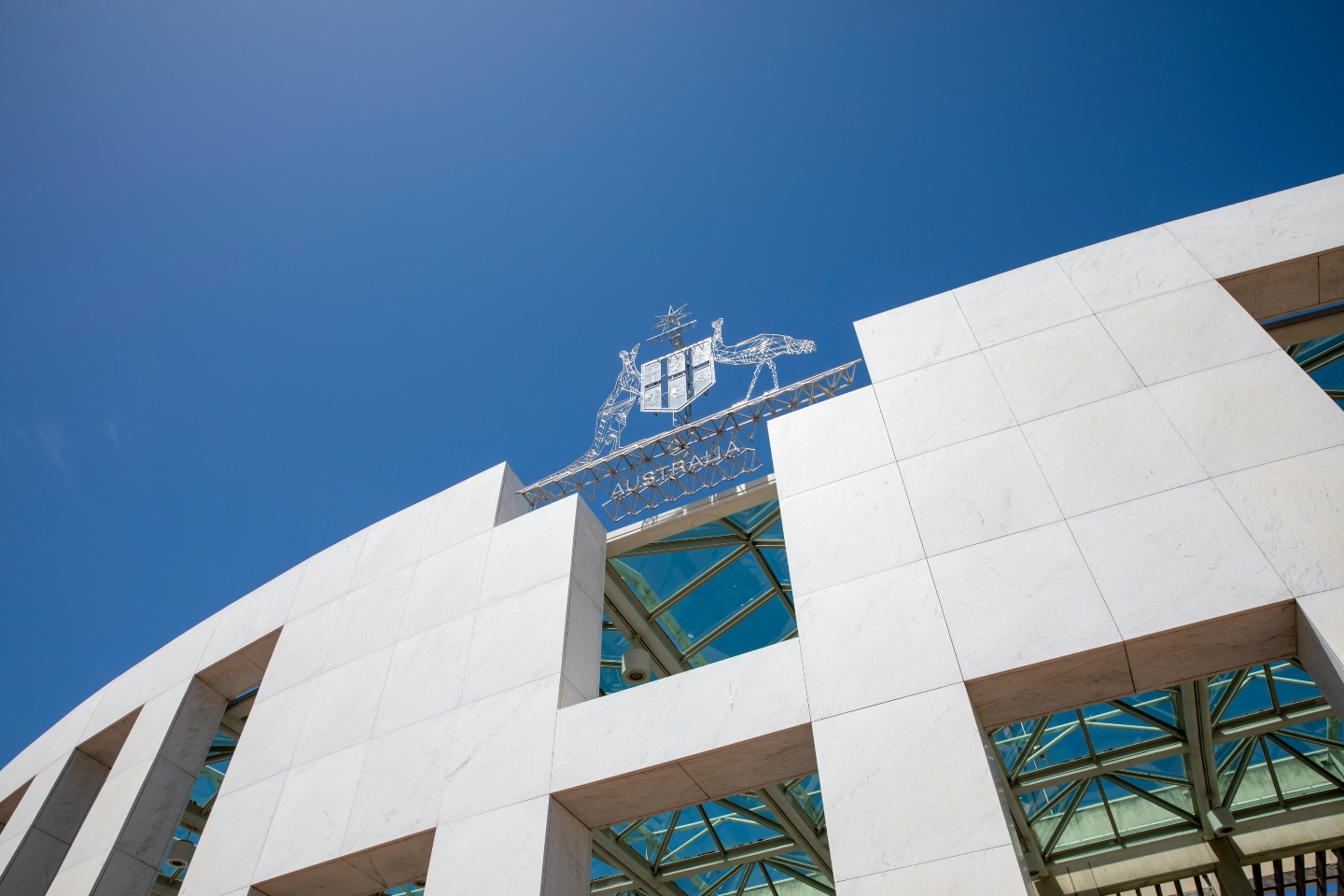
Lingering conflict in the Middle East could cause Australia’s economy to contract and unemployment to spike to pre-pandemic levels, Treasury warns in the nation’s fiscal blueprint.



























































You must be logged in to post a comment Login