
Business
Buy the Photonic Computing Hype or Sell Before Reality Bites in 2026?

TORONTO — Xanadu Quantum Technologies Ltd. shares have skyrocketed nearly 195 percent year-to-date as of mid-April 2026, turning the newly public photonic quantum computing pioneer into one of the hottest — and most volatile — names in a sector still years from widespread commercial payoff.

The stock, trading under the ticker XNDU on both Nasdaq and the Toronto Stock Exchange, closed recently around $25 after a roller-coaster debut in late March. It opened its first trading day near $10, popped as high as $28 in early sessions, and has since delivered eye-popping gains fueled by quantum sector excitement, fresh capital from its SPAC merger and technical milestones in error-corrected qubits. Yet with a market capitalization hovering near $650 million to $8.5 billion depending on share class calculations, thin revenues and massive cash burn, analysts and investors are sharply divided on whether to buy more shares or lock in profits before the long road to fault-tolerant quantum computers tests market patience.
Xanadu went public on March 27, 2026, following shareholder approval of its business combination with blank-check company Crane Harbor Acquisition Corp. The deal brought in approximately $302 million in gross proceeds, including a $275 million PIPE financing that drew participation from semiconductor giant AMD and Canadian institutional investors. The transaction valued the combined entity at about $3.1 billion pro forma enterprise value, with roughly $455 million in net cash at closing assuming minimal redemptions.
The listing made Xanadu the first pure-play photonic quantum computing company on major exchanges, a distinction the company has leaned into heavily in investor presentations. Unlike superconducting or trapped-ion approaches pursued by competitors such as IBM or IonQ, Xanadu’s platform relies on photons — particles of light — processed through silicon chips and integrated photonics. Proponents argue this approach offers advantages in scalability, room-temperature operation and networking potential for distributed quantum systems.
Chief Executive Christian Weedbrook, who holds a reported 51.8 percent stake, has positioned the company around a multi-year roadmap targeting fault-tolerant quantum systems by 2029-2030. In its fourth-quarter and full-year 2025 results released April 9, Xanadu highlighted progress on its Aurora modular photonic quantum computer, a 60 percent reduction in optical loss, and demonstration of 12 logical Gottesman-Kitaev-Preskill (GKP) qubits with real-time error correction. The company also announced 10 new strategic partnerships across hardware, manufacturing, supply chain, research and commercial applications.
Additional tailwinds include government support. Xanadu is participating in Canada’s Quantum Champions Program and a potential C$390 million funding package for Project OPTIMISM, as well as DARPA initiatives. Earlier partnerships with Mitsubishi Chemical produced breakthrough quantum algorithms for extreme ultraviolet lithography used in next-generation semiconductor manufacturing, while collaboration with AMD aims to accelerate hybrid quantum-classical computing for aerospace and engineering.
Yet the financial picture remains that of a pre-revenue growth story. Full-year 2025 revenue stood at roughly C$3.45 million, while net losses reached C$58.49 million. The company entered 2026 with a strengthened balance sheet thanks to the SPAC proceeds, which management says will fund manufacturing scale-up, expansion of its open-source PennyLane software platform and continued R&D. PennyLane has become a standard tool for quantum machine learning, used by nearly half of global quantum developers.
The quantum computing sector as a whole has struggled in 2026 despite high-profile listings. Many stocks in the space have underperformed broader markets amid skepticism over near-term monetization. Xanadu’s own post-debut trading reflected that volatility: shares experienced wild swings on day one, briefly sinking before rebounding, and have continued to show sharp daily moves typical of speculative technology names.
Analysts remain cautious about assigning formal price targets, with limited Wall Street coverage so far. Some observers note that while Xanadu’s photonic approach and software ecosystem provide differentiation, the path to useful, fault-tolerant quantum advantage — where quantum machines solve problems intractable for classical supercomputers — could still take years. Commercial revenue may initially come from cloud access to its systems, hybrid quantum-classical applications in chemistry and materials science, and partnerships rather than outright hardware sales.
For investors considering a position, the bull case rests on several factors. The fresh capital runway reduces immediate dilution risk. Technical milestones in error correction and modular architectures suggest steady progress toward scalability. Growing interest from governments and large industrials in quantum for cybersecurity, drug discovery and optimization could accelerate adoption. AMD’s involvement and Nvidia ecosystem ties add credibility in the broader AI-hardware narrative, as quantum may one day complement classical computing for specific workloads.
The bear case is equally compelling. Quantum computing remains capital-intensive with long development timelines and high technical risk. Xanadu faces competition from better-funded players and established tech giants. Current revenues are negligible compared with the lofty valuation, implying investors are paying a steep premium for future potential. Any delays in milestones, regulatory hurdles around quantum encryption standards or broader market rotation away from speculative tech could trigger sharp pullbacks. Repair costs for specialized photonic hardware and talent retention in a competitive field add operational challenges.
Short interest stood at around 345,000 shares as of late March, relatively modest but indicative of some skepticism. Beta near 0.45 suggests the stock has not yet moved in perfect lockstep with broader markets, though that could change as trading volume increases and more institutions build positions.
Broader context matters. Quantum stocks often trade on narrative and milestone news rather than traditional fundamentals. Xanadu’s April 2026 analyst day at the Nasdaq MarketSite generated strong engagement, according to the company, helping sustain momentum. Yet with the sector still in the “hype versus reality” phase, disciplined position sizing is essential.
Retail investors drawn to the story should weigh personal risk tolerance carefully. Those bullish on quantum’s long-term disruption potential may view dips as buying opportunities, especially given the post-listing cash position. More conservative investors might wait for clearer revenue traction, additional government contracts or proof points on error-corrected qubit scaling before adding exposure.
For existing holders, the decision to sell some shares could depend on portfolio construction. Locking in partial gains after the massive YTD run reduces downside while keeping skin in the game for potential upside catalysts such as new partnerships, further technical breakthroughs or inclusion in quantum-focused exchange-traded funds.
As April 2026 progresses, Xanadu’s management will likely provide more color on capital allocation, manufacturing facility plans and commercial pipeline during upcoming earnings calls or investor events. The company has emphasized building quantum computers that are “useful and available to people everywhere,” a mission that resonates with both scientific and commercial audiences.
Ultimately, buying or selling Xanadu stock in 2026 comes down to time horizon and conviction in photonic quantum’s edge. Short-term traders may continue to ride volatility around news flow. Long-term believers in quantum computing’s transformative power could see the current valuation as reasonable entry given the de-risking provided by public listing and partnerships. Skeptics will point to historical precedents of early-stage tech valuations that soared before crashing when commercialization lagged expectations.
With roughly $455 million in net cash and a clear technology roadmap, Xanadu enters its public life with more resources than many quantum peers. Whether that capital translates into sustained shareholder value will depend on execution over the coming quarters and years — a high-stakes bet in one of the most exciting yet uncertain frontiers of computing.
Investors should monitor upcoming filings, technical updates and sector sentiment closely. In a year already marked by quantum listings and volatility, Xanadu stands out as both a pioneer and a reminder that revolutionary technology often requires revolutionary patience — and carries revolutionary risk.


Form 13F Friday Financial For: 16 April

SLM Student Loan Trust 2005-7 issues preliminary remarketing memorandum

Up to 300 DHL logistics workers based at Jaguar Land Rover in Solihull vote to strike indefinitely.

Nearly 5 million people celebrated Songkran in Bangkok this year — a 93.4% increase from 2025 — with Siam Square, Iconsiam, and Silom Road being the top venues, while motorcycle accidents accounted for 85% of the 20 road fatalities.
Key Details
- Attendance surged to 4,958,965 across 94 venues, up from 2,564,663 in 2025.
- Siam Square led with 1.5 million visitors, followed by Iconsiam (1.47 million) and Silom Road (652,974).
- 20 people died in 18 road accidents; 17 fatalities involved motorcyclists, 9 of whom weren’t wearing helmets.
- Thung Khru and Prawet districts recorded the most deaths (3 and 2, respectively).
- Waste generation hit 336 tonnes, up from 250.5 tonnes last year, with Khao San Road producing the most (102.46 tonnes).
Despite the festive atmosphere, the data underscores persistent road safety risks and environmental strain during Thailand’s largest annual celebration.
The 93.4% surge in Bangkok Songkran attendance this year — reaching nearly 5 million people — reflects broader national trends of increased domestic and international tourism, improved event coordination, and the festival’s growing global appeal as a cultural and economic driver.
Enhanced planning, clearer zoning, and stronger inter-agency cooperation in Bangkok also contributed to the record turnout. Additionally, flagship events like the Maha Songkran World Water Festival at Benjakitti Park drew over 108,000 visitors, including more than 52,000 foreign tourists, signaling strong international interest.
The Tourism Authority of Thailand (TAT) expects the Songkran 2026 festival to generate more than 30.35 billion baht in tourism revenue, marking a 6% increase from the previous year.
Governor Thapanee Kiatphaibool stated that this growth is driven by approximately 500,000 foreign visitors contributing 8.1 billion baht and 5.96 million domestic trips adding 22.25 billion baht. While the TAT remains confident in these figures, the University of the Thai Chamber of Commerce (UTCC) lowered its overall festival spending forecast to 120–125 billion baht due to rising diesel prices and economic caution. Despite these varied projections, major hotspots like Siam Square, Iconsiam, and Silom Road saw millions of participants, reflecting a vibrant atmosphere across the country.
What was the total waste collected during Bangkok’s Songkran 2026?
Bangkok’s Songkran 2026 celebrations resulted in a total of 336 tonnes of waste collected at major celebration sites between April 11 and 15. This figure marks a significant increase from the 250.5 tonnes recorded during the same period in 2025.
According to the Bangkok Metropolitan Administration (BMA), Khao San Road was the primary contributor to this total, producing 102.46 tonnes of waste. Other high-volume areas included Silom Road, which generated 86.17 tonnes, and ICONSIAM, which produced 58.7 tonnes. On the first day of major water-splashing activities alone, the city collected 86.32 tonnes, of which approximately 82% was general waste, while the remainder consisted of recyclable and food waste.
To address environmental concerns, the city implemented a recycling initiative for plastic water guns, encouraging revellers to donate unwanted items at nine locations, including Siam Square and CentralWorld. These collected weapons are intended to be processed into naphtha for the production of plastic pellets, which can then be molded into new products like chairs and containers.
Other People are Reading
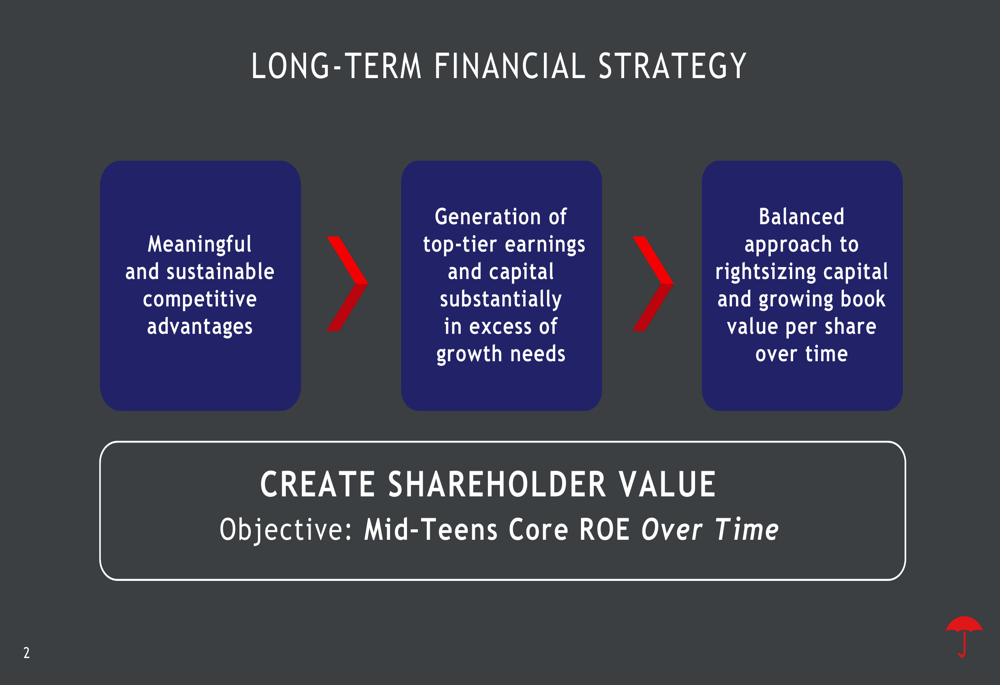
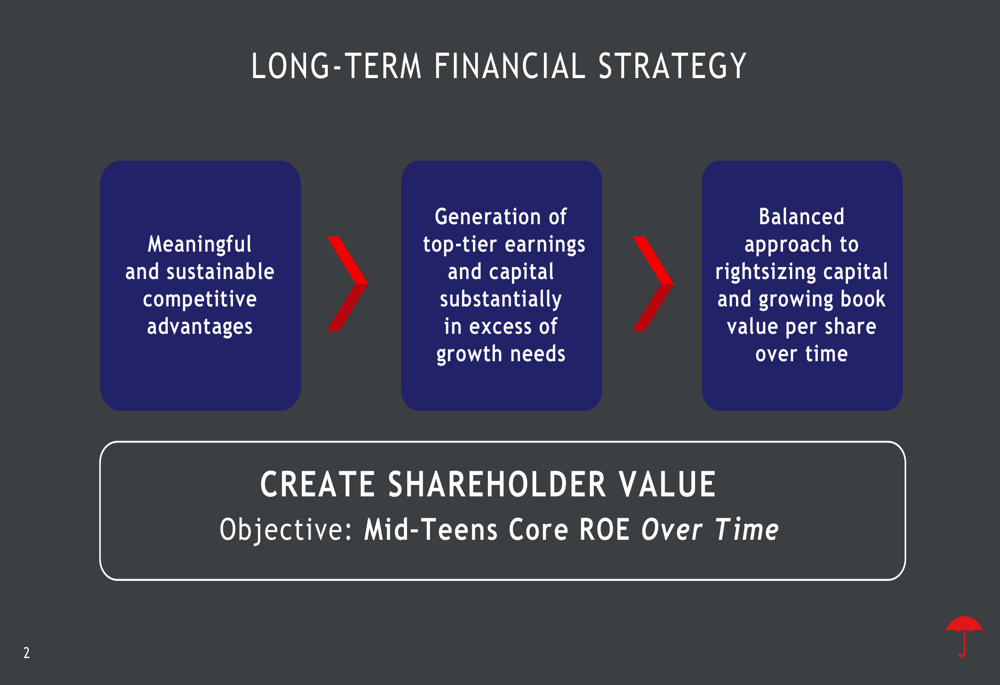
Travelers Q1 2026 slides: core ROE hits 19.7% on strong underwriting
Business
Suzlon Energy shares rally 20% in one month: Here’s why it is an ‘unintended beneficiary’ of Iran-US war

Shares of the company have surged more than 20% in one month, and 10% in the past five days as temperatures continue to rise across India, increasing hopes for peak power demand. JM Financial, in its latest report, noted that peak power demand during hot and humid evenings is similar to solar hour demand in an El Nino year, hence there is more stress on supply at night when 80 GW of solar generation is not available.
Why wind energy will become crucial this summer
“When peak demand rises during non-solar hours, variable generation from gas, hydro and partially flexible coal substitutes the loss of solar generation. But due to the Middle East crisis, gas-based generation has fallen from 8-12GW to just 2GW, it said. Also, there is a high probability of a shortfall in hydro energy this summer due to a deficit in winter rainfall and snow cover in the first four months of 2026, it further said, adding that all these factors put India at the risk of evening peak power deficit.In this background, wind energy has a strong diurnal (daily) complementarity with solar energy and is available in the evening hours as well, JM Financial noted. It explained that wind speed often increases in the late afternoon, evening, and early morning, when solar generation is low or zero. Also, wind energy is highly seasonal and complements solar power, particularly in India, where 80% of annual wind generation occurs during the South-West monsoon (May-September). “Currently, wind contributes approximately 10GW during evenings and up to 20-25GW during August-September. Hence, incremental wind addition during H1 FY27 can add to evening supply during El Niño-affected months,” it added.

Also read: Ola Electric vs Ather Energy: Which stock looks better after a stellar surge of up to 70% in April?
JM Financial expects India to achieve its highest-ever capacity addition in FY27, surpassing the peak of 6.1GW recorded in FY26. It noted that Suzlon has been struggling with an increasing gap between deliveries and installations. “As of 31st Mar’25, it had 371MW of sets erected and ready for commissioning (10% > installations), which increased to 776MW on 31st Dec’25 (76% > installations), creating apprehensions on execution and new order inflows,” it said, adding that it now expects Suzlon to sharply improve its commissioning in the first half of the ongoing financial year 2027, which may result in cash flow improvement and a new stream of orders.
Should you buy Suzlon Energy shares?
The domestic brokerage kept a ‘Buy’ call on the stock, with a target price of Rs 64 apiece. This implies an upside potential of more than 30% from the stock’s previous closing price of Rs 49.13 apiece. Notably, Suzlon has the highest upside potential among all the power stocks under JM Financial’s coverage.
Also read: HDB Financial Services zooms 12% on strong Q4 results and FY26 dividend
Suzlon Energy shares were trading with marginal gains at around Rs 49.41, as seen at 10.45 am on Thursday. Although the stock has declined nearly 6% in 2026 so far, in the longer term, the multibagger stock rallied more than 510% in five years and over 1,030% in five years.
(Disclaimer: Recommendations, suggestions, views and opinions given by the experts are their own. These do not represent the views of The Economic Times)

The snack giant cut some of its prices by up to 15% ahead of the Super Bowl in February.


Companies sign five-year agreement.

Institutional investors increased stakes across major NSE large-cap stocks in March 2026, signaling confidence in fundamentals and future growth. Companies like Adani Power, Axis Bank, NTPC, and Coal India saw modest rises, supporting improved governance, liquidity, and price stability trends.
UBS raises J.B. Hunt stock price target on strong volume growth

Street Fighter | Official Trailer 2026 Movie 1080p : Coastal House Media

Frank Lampard responds to rumours he wants Chelsea forward at Coventry | Football
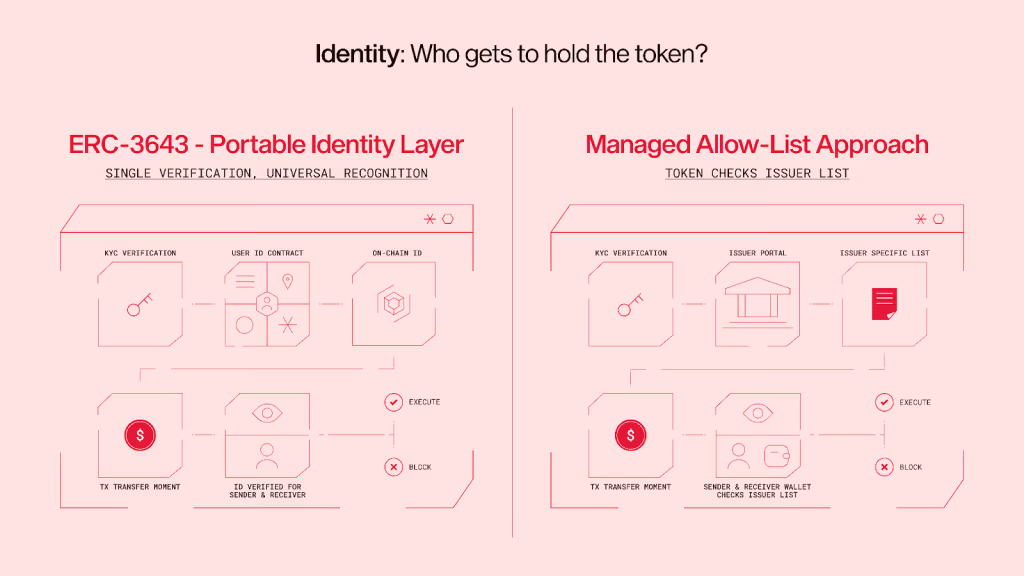
Where Tokenized Assets Are Today


-

 Politics6 days ago
US brings back mandatory military draft registration
-
 Sports6 days ago
Man United discover Nico Schlotterbeck transfer fee as defender reaches Dortmund agreement
-

 Fashion6 days ago
Weekend Open Thread: Veronica Beard
-

 Politics6 days ago
Malcolm In The Middle OG Turned Down ‘Buckets Of Money’ To Appear In Reboot
-

 Politics4 days ago
World Cup exit makes Italy enter crisis mode
-

 Business6 days ago
Tesla Model Y Tops China Auto Sales in March 2026 With 39,827 Registrations, Beating Cheaper EVs and Gas Cars
-

 Crypto World3 days ago
The SEC Conditionalises DeFi Platforms to Be Avoided for Broker Registration
-

 Crypto World3 days ago
SEC Signals Exemption for Crypto Interfaces From Broker Registration
-

 News Videos1 day ago
Secure crypto trading starts with an FIU-registered
-
 NewsBeat4 days ago
Pep Guardiola and Gary Neville agree over Arsenal title problem that benefits Man City
-

 Business5 days ago
Ireland Fuel Protests Enter Day 5 as Blockades Spark Shortages and Government Prepares Support Package
-

 Business6 days ago
OpenAI Halts Stargate UK Data Centre Project Over Energy Costs and Copyright Row
-

 Politics6 days ago
LBC Presenter Mocks Trump Over Iran War Failures
-

 Crypto World6 days ago
Federal judge blocks Arizona from bringing criminal charges against Kalshi
-

 NewsBeat2 days ago
Trump and Pope Leo: Behind their disagreement over Iran war
-

 Crypto World2 days ago
SEC Proposes Certain Crypto Interfaces Don’t Need to Register as Brokers
-
 NewsBeat4 days ago
JD Vance announces ‘no agreement’ with Iran over nuclear weapons fear
-

 Tech7 days ago
A version of Windows 10 released a decade ago is now eligible for additional security patches
-

 Business6 days ago
IMF retains floor for precautionary balances at SDR 20 billion
-

 Business6 days ago
Former Liverpool CEO eviscerates FIFA for World Cup ticket pricing
You must be logged in to post a comment Login