

Business
Can Jeremy Hunt Save Britain? The Former Chancellor’s Growth Plan Reviewed

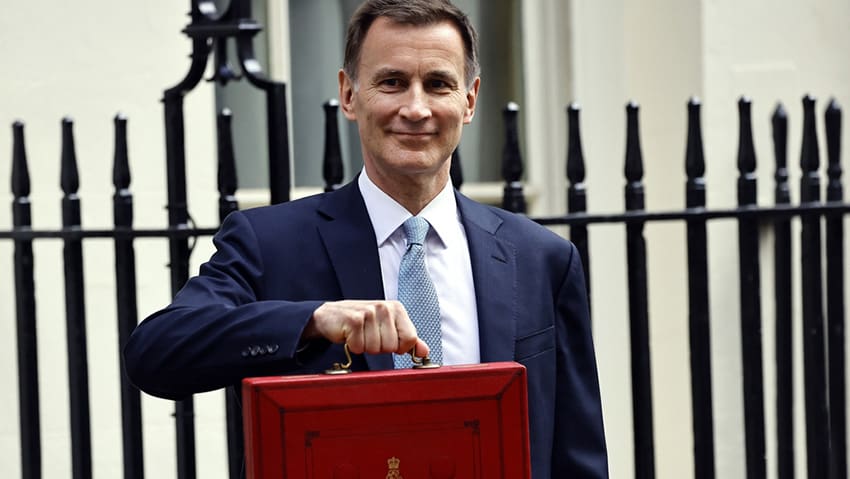
In Can We Be Rich Again? the former chancellor delivers a refreshingly self-aware diagnosis of what has gone wrong with the British economy, and a costed prescription that SMEs, in particular, ought to read with interest.
He could so easily have phoned it in. A bulky political memoir, a couple of nicely judged knives slipped between the shoulder blades of former Cabinet colleagues, an amusing yarn or two from Davos and the IMF spring meetings, and a discreet bit of humble-bragging about steadying the ship after the Truss-Kwarteng mini-Budget. Sir Jeremy Hunt, now liberated from the red box and with rather more time on his hands, could have produced precisely the sort of worthy but unreadable volume that gathers dust on the shelves of every Westminster bookshop.
To his very considerable credit, he has not. In Can We Be Rich Again?, the former chancellor has instead set himself the rather harder task of working out, with disarming honesty about his own role in the muddle, what has gone so badly wrong with the British economy, and how it might still be put right.
A question that should not feel provocative
That the title itself reads as slightly cheeky is, in truth, a damning indictment of where we have arrived. Rich? In an economy where output per person has barely shifted since the eve of the pandemic, the Office for Budget Responsibility’s March 2026 outlook puts real GDP per head growth at an average of just 1.1 per cent a year between now and 2030, against the 2 per cent enjoyed before the financial crisis, the average voter has long since lowered the bar to “not visibly poorer than last year.”
Sir Jeremy will have none of it. “We still have a lot going for us,” he writes, with the breezy confidence of a man who has just remembered he is no longer responsible. Britain, he reminds the reader, retains the integrity of its institutions, robust property rights and a serious legal system. It is the most open of the major economies and houses the third-largest technology ecosystem on the planet, behind only the United States and China. Harness those advantages, he argues, and the British economy can grow again. The diagnosis chimes neatly with the IMF’s own 2026 Article IV concluding statement, which praised the broad direction of the government’s investment-and-reform agenda while warning that “credibility will ultimately hinge on sustained implementation.”
The eight-point plan, costed
What lifts the book above the standard centrist-Tory lament is that Sir Jeremy has done his homework. Each of his prescriptions is tested against an estimated effect on GDP, lending the manifesto a refreshing absence of magical thinking.
The two opening shots are familiar enough: bring taxes down, and adopt a new fiscal rule that compels debt to grow more slowly than output. Then come the supply-side reforms, eight of them, that form the spine of the book. Fix a welfare system that has parked too many working-age adults on long-term sickness benefit. Relax planning rules so that Britain can build something, anything, again. Drive public-sector productivity higher. Hand local mayors the powers and budgets to rebuild their regions. Embrace artificial intelligence rather than regulating it into irrelevance. Restart oil and gas production in the North Sea. Repair an education system that has spent decades failing the 50 per cent of school-leavers who do not go to university. And, perhaps closest to the heart of this magazine’s readership, properly encourage entrepreneurship.
Put the whole package to work, Sir Jeremy reckons, and Britain could add three percentage points a year to its growth rate, a compounded gain of around 20 per cent over a decade. That is not loose change. It is the difference between managed decline and a recognisably advanced economy. For founders and owner-managers, it is the difference between scaling and surviving, a tension Business Matters has chronicled at length in its coverage of SME expansion plans.
Quibbles, mostly minor
It is not difficult to pick at the detail. AI may, in time, prove less revolutionary than its loudest evangelists promise, although the early productivity numbers, Business Matters recently reported research suggesting SMEs deploying AI can unlock productivity gains of between 27 and 133 per cent, argue otherwise. Politicians have been promising to fix vocational training for the best part of a century, generally without troubling the outcomes.
More seriously, Sir Jeremy remains, in temperament, a pragmatic centrist. He instinctively underplays the ferocity of the resistance any reforming chancellor will encounter from what Liz Truss memorably christened “the anti-growth coalition”, that diffuse weave of judges, quangos, NGOs and Whitehall lifers known to its critics as “the Blob”. After five years of a Labour administration that has fed and watered that ecosystem with some enthusiasm, it will be denser, better funded and considerably more confident than it was when he occupied 11 Downing Street.
The book Hunt wishes he had been handed
These, though, are quibbles. Sir Jeremy is unlikely to return to office, and the book never pretends to be a Treasury-ready blueprint. Its real virtue is in marshalling, in one place and with proper analytical rigour, every credible lever available to revive British growth, and in making the unfashionable case that none of this is especially difficult. Read in the context of the optimism filtering back through Britain’s small business community, the message lands harder still: the country wants to grow; it just needs a government that lets it.
By the close of this decade, he warns, Britain will look less like an advanced economy than a developing one. The flipside, he points out with a wry smile audible in the prose, is that emerging economies have spent decades demonstrating that catch-up growth is largely a matter of copying what works elsewhere. “My analysis shows that delivering it may not be easy, but it is not impossible either,” he writes. “All the solutions have been tried in other countries with similar democratic constraints to ourselves.”
The most uncomfortable passage in the book is also the most revealing. “If that’s the answer, why on earth didn’t you do it when you had the chance?” Sir Jeremy asks himself, with the directness of a man who knows the question is coming. “The truth is that no one starting a job can ever know all the answers. In some ways, I wish I had been given this book on the day I became chancellor.”
Whoever inherits the Treasury in 2028 or 2029, and the polling suggests it will not be a Conservative, would do well to take him at his word. Can We Be Rich Again? is, despite itself, the most useful piece of economic writing produced by a former British chancellor in a generation. It deserves to be read, argued with, and, on most counts, acted upon.
Can We Be Rich Again? by Sir Jeremy Hunt is published by Swift at £25.

Jamie Young
Jamie is Senior Reporter at Business Matters, bringing over a decade of experience in UK SME business reporting.
Jamie holds a degree in Business Administration and regularly participates in industry conferences and workshops.
When not reporting on the latest business developments, Jamie is passionate about mentoring up-and-coming journalists and entrepreneurs to inspire the next generation of business leaders.


As artificial intelligence spending continues to reshape the semiconductor landscape, investors are weighing the merits of NVIDIA Corp., Advanced Micro Devices Inc. and Intel Corp. in a high-stakes contest for dominance in data centers, AI accelerators and traditional computing. With NVIDIA maintaining its lead in AI GPUs, AMD gaining ground in both CPUs and GPUs, and Intel staging a notable recovery, the choice of which stock to buy in the second half of 2026 depends on growth outlook, valuation and risk tolerance.
NVIDIA shares closed recently around $205, with a market capitalization nearing $5 trillion. The company has delivered explosive growth, reporting record quarterly revenue of $81.6 billion in its most recent period, up 85% year-over-year, driven overwhelmingly by its data center segment. Analysts continue to view it as the clear leader in the AI infrastructure boom.
Oppenheimer analyst Rick Schafer has described NVIDIA as an “AI castle on a hill” that boasts the best performance-per-watt for both training and inference. He maintains an Outperform rating, highlighting the company’s Blackwell Ultra racks as leading the market by two generations.
AMD, trading near $500-$510 after a strong run, has seen significant outperformance in 2026 in some periods, fueled by accelerating data center growth and CPU share gains. Citi recently upgraded the stock to Buy with a $575 price target, citing underappreciated GPU opportunities, potential major wins with customers like Meta, and a CPU revival tied to agentic AI workloads. The firm sees AI potentially driving 54% of AMD’s sales by 2028.
Intel has staged one of the most dramatic recoveries, with shares more than doubling year-to-date at points amid optimism around its foundry ambitions, server CPU improvements and AI efforts under new leadership. Recent trading levels have hovered around $120-$125. While still facing execution challenges, the company benefits from broader CPU demand in the AI era.
The three companies operate in overlapping but distinct segments. NVIDIA dominates the high-margin AI accelerator market with an estimated 85-90% share, powered by its CUDA software ecosystem that creates strong customer lock-in. Its latest earnings underscored insatiable demand, with data center revenue continuing to surge.
AMD has successfully challenged NVIDIA in GPUs while maintaining leadership in certain server CPU segments, chipping away at Intel’s traditional stronghold. CEO Lisa Su has highlighted strong momentum in EPYC processors and Instinct GPUs, with the company raising expectations for server CPU market growth.
Intel, historically the CPU king, is fighting back with improved product roadmaps, foundry partnerships and AI chip initiatives. It has secured notable customer interest, though its turnaround remains a work in progress compared to the more established AI trajectories of its rivals.
Valuations reflect these dynamics. NVIDIA trades at forward multiples that some analysts consider attractive relative to its growth, especially compared to historical averages. AMD offers a balance of growth and somewhat more reasonable pricing in the eyes of bulls, while Intel’s valuation has expanded sharply with its rally but carries higher uncertainty.
Market watchers note that NVIDIA’s ecosystem advantage remains formidable. “They’ve got the whole stack,” one analyst observed in a recent discussion, pointing to CUDA, hardware and software integration. AMD is seen as the primary alternative for customers seeking options, while Intel’s path involves both CPU resilience and foundry scale.
Risks abound for all three. A potential slowdown in hyperscaler AI capital expenditure could pressure NVIDIA’s premium pricing. AMD faces the challenge of closing the performance gap in GPUs, and Intel must prove it can execute consistently on its ambitious restructuring. Broader economic factors, geopolitical tensions affecting supply chains, and competition from custom AI chips by big tech firms add layers of uncertainty.
For 2026 and beyond, analysts largely favor NVIDIA for its unmatched leadership and margins, with many maintaining Buy ratings and price targets implying further upside. AMD garners strong support as a high-conviction growth play with diversification benefits. Intel appeals to those betting on a multi-year turnaround and CPU/AI convergence.
Diversification across the sector remains a prudent approach for many portfolios, as the AI buildout is expected to benefit multiple players. NVIDIA’s near-term dominance appears secure, but AMD’s share gains and Intel’s recovery potential could shift the competitive balance over time.
Longer-term projections point to continued expansion in AI infrastructure, with data center spending driving semiconductor demand well into the decade. NVIDIA’s scale and innovation pipeline position it as the default leader, yet opportunities exist for AMD to carve out meaningful market share and for Intel to stabilize and grow in select areas.
Investors should consider their time horizon, risk appetite and overall portfolio allocation. Those seeking established AI leadership with strong cash flow generation may lean toward NVIDIA. Growth-oriented investors comfortable with volatility might favor AMD’s upside in both AI and traditional computing. Value-oriented or turnaround plays could look at Intel, though with higher execution risk.
The semiconductor sector’s cyclical nature means near-term pullbacks can create entry points, as seen in recent trading fluctuations. NVIDIA has pulled back from highs but remains a core holding for many AI-themed funds. AMD’s recent upgrades reflect growing confidence in its competitive positioning. Intel’s volatility underscores the binary nature of its recovery story.
Ultimately, no single stock is a guaranteed winner, but the trio represents the core of the AI and computing renaissance. NVIDIA sets the pace, AMD challenges aggressively, and Intel fights to reclaim relevance. Monitoring quarterly results, customer wins and technological benchmarks will be key to assessing which narrative prevails through the remainder of 2026 and into 2027.
As the AI investment wave matures, these chipmakers are poised to benefit, albeit at different rates and with varying levels of certainty. Prudent investors will weigh the structural advantages against valuations and competitive threats before committing capital in this dynamic market.


Kushner project being developed on disputed land, Albanian villagers say

SACRAMENTO, Calif. — Influenza vaccination provided moderate protection during the severe 2024-25 flu season, with people who received the shot 40% less likely to test positive for the virus compared to those who did not, according to a large new study of more than 1.1 million Californians.
The analysis, published in JAMA Network Open, offers fresh evidence of the vaccine’s benefits amid one of the most intense flu seasons in recent memory, marked by record pediatric deaths and elevated hospitalizations nationwide.
Researchers from the California Department of Public Health examined data from individuals aged 6 months and older who were tested for influenza between Oct. 1, 2024, and May 31, 2025. The case-control study found clear associations between vaccination and reduced odds of both infection and severe outcomes.
“These findings are consistent with protection against severe and fatal influenza among people vaccinated against influenza,” the study authors wrote.
For adults aged 65 and older who tested positive for flu, vaccination was linked to 29% lower odds of dying from an influenza-related cause within 30 days of testing. This protection against mortality underscores the vaccine’s role in safeguarding the most vulnerable populations during peak transmission periods.
The 2024-25 season was classified as high severity, with the highest rate of influenza-associated hospitalizations in 24 years. Nationwide estimates cited in the study pointed to between 610,000 and 1.3 million hospitalizations and 27,000 to 130,000 deaths. Tragically, the flu claimed the lives of 289 children, surpassing the previous record from the 2009-2010 H1N1 pandemic season.
Public health officials have long emphasized annual vaccination as the primary tool for mitigating flu’s impact. The Centers for Disease Control and Prevention recommends everyone 6 months and older get vaccinated each season, noting that even when effectiveness is moderate, shots substantially reduce the risk of serious complications.
This latest California data aligns with broader national interim estimates from the 2024-2025 season, which showed vaccine effectiveness ranging from 32% to 60% against outpatient visits in different networks and 41% to 78% against hospitalizations in certain groups.
The study’s scale provides robust real-world evidence. By leveraging comprehensive testing and vaccination records in California’s large population, researchers could account for key variables while focusing on laboratory-confirmed cases, strengthening the reliability of the findings.
Experts note that flu vaccines work by prompting the immune system to produce antibodies against specific strains predicted to circulate. Because influenza viruses evolve rapidly, effectiveness varies annually depending on how well the vaccine matches circulating strains. During the 2024-25 season, predominant strains included influenza A viruses, against which protection was observed.
Beyond individual protection, vaccination contributes to community-level benefits by reducing overall transmission. Lower infection rates among vaccinated people mean fewer opportunities for the virus to spread to unvaccinated or high-risk individuals.
The findings come as health authorities prepare for the 2025-2026 season. Vaccine formulations are updated each year based on global surveillance data from the World Health Organization and national centers. Manufacturers typically produce hundreds of millions of doses, distributed through clinics, pharmacies and public health programs.
Despite consistent recommendations, vaccination coverage varies. Rates are typically higher among older adults and young children but lag in working-age adults. Barriers include access, misinformation, and perceptions that the flu is mild for healthy people — a view contradicted by hospitalization and death statistics.
The California study adds to a body of evidence accumulated over decades. Previous seasons have shown similar moderate effectiveness, with vaccines preventing millions of illnesses and tens of thousands of hospitalizations annually even in years with imperfect strain matches.
For older adults, who face the highest risk of severe outcomes, the 29% reduction in flu-related mortality is particularly meaningful. This group often has weakened immune responses, making any additional protection valuable. Enhanced vaccines, such as high-dose or adjuvanted formulations, are available specifically for those 65 and older.
Children also benefited significantly in the data. The record 289 pediatric deaths highlight the virus’s danger to younger age groups, where vaccination can prevent not only infection but also complications like secondary bacterial pneumonia or exacerbation of chronic conditions.
Broader context from the CDC indicates the 2024-25 season strained healthcare systems. High hospitalization rates, especially among the elderly and those with underlying conditions, led to increased emergency department visits and intensive care admissions in many regions.
Antiviral medications like oseltamivir (Tamiflu) remain an important treatment tool when administered early, but prevention through vaccination is the cornerstone of public health strategy. Combined with hygiene practices, staying home when sick, and masking in high-risk settings, shots form part of a layered defense.
Looking forward, ongoing research explores improved vaccines, including universal candidates targeting conserved parts of the virus to provide broader, longer-lasting protection. Until those become available, current annual shots offer the best available shield.
The study authors emphasized the importance of continued surveillance and high vaccination uptake. With flu seasons varying in intensity, consistent public health messaging helps maintain awareness even as other respiratory viruses like COVID-19 and RSV compete for attention.
Health officials urge eligible individuals to get vaccinated as soon as doses become available in the fall, ideally before peak season. For the 2025-2026 campaign, updated recommendations are expected from the CDC’s Advisory Committee on Immunization Practices.
This California research reinforces that while no vaccine is 100% effective, flu shots deliver meaningful protection against infection, severe disease and death. In a high-burden season, that 40% reduction in positivity translated to thousands of prevented cases and associated complications across the state.
As summer approaches and planning for the next respiratory virus season intensifies, the data serve as a timely reminder of vaccination’s value. Public health campaigns will likely highlight these results to encourage uptake, particularly among groups with historically lower coverage rates.
The findings also highlight the power of large-scale, real-world data analysis in evaluating vaccine performance. California’s comprehensive immunization information system enabled this detailed assessment, providing insights applicable beyond state borders.
In summary, the new evidence strengthens the case for annual influenza vaccination as a safe, effective measure that saves lives and reduces healthcare burden, even during particularly challenging seasons.


Gold fever sends some vintage luxury watches to the melting furnace

WhiteFiber: AI Capacity Scarcity Supports Further Upside

Weekly Commentary: SpaceX And A Z.1 (Q1 2026)

NEW YORK — Wordle enthusiasts logging in Saturday encountered a moderately challenging puzzle as the popular New York Times game presented “QUELL” as the solution for puzzle No. 1820 on June 13, 2026, offering a fresh test of vocabulary and deduction skills for millions of daily players worldwide.
The word “quell,” a verb meaning to crush, subdue or put an end to something, such as a rebellion or an emotion, aligned with the game’s pattern of drawing from everyday yet sometimes elusive English terms. According to Webster’s New World College Dictionary, it refers to suppressing or overcoming forcefully.
Players who started with common opening words containing multiple vowels and frequent consonants likely narrowed possibilities quickly, as the answer featured a double “L” and began with “Q,” a less common starting letter that can trip up solvers relying on typical patterns.
Wordle, created originally by engineer Josh Wardle as a gift for his partner, has maintained its status as a global phenomenon since its acquisition by the New York Times. The simple yet addictive format — six attempts to guess a five-letter word with color-coded feedback — continues to draw dedicated followings, with many sharing streaks and strategies on social media.
For Saturday’s puzzle, subtle hints pointed toward suppression or pacification. The presence of repeated letters added a layer of complexity for those tracking frequencies. Solvers who identified the starting “Q” early gained a significant advantage, as options become limited in that category.
The average number of guesses required by NYT testers stood around 5.3, marking it as somewhat challenging but far from the game’s most difficult outings. Many players reported success in three to four attempts with strategic starts, while others needed the full grid to arrive at “QUELL.”
This latest installment fits into Wordle’s ongoing evolution, where the puzzle selection balances accessibility with occasional curveballs. Past puzzles have ranged from common terms to more obscure vocabulary, keeping the daily ritual engaging without alienating casual participants.
Community reactions poured in across platforms, with some celebrating quick solves and others lamenting near-misses that broke longer streaks. The game’s shareable results feature, showing colored grids without spoilers, encourages friendly competition among friends and families.
Wordle’s enduring appeal lies in its accessibility across devices and its role as a brief mental exercise amid busy schedules. Unlike more time-intensive games, it delivers a complete experience in minutes, making it ideal for morning routines or commute breaks.
Analysts and fans note that the game’s design encourages learning through repetition. Regular players build pattern recognition over time, improving at spotting vowel placements and consonant clusters. Resources like starting word recommendations — often favoring options with “A,” “E,” “R,” “S” and “T” — help newcomers optimize their approach.
For those who missed Saturday’s answer, “QUELL” joins a long list of solutions that have entertained and occasionally frustrated participants since the game’s viral rise. Previous days featured varied terms, maintaining freshness in the daily challenge.
The New York Times has preserved the core mechanics while integrating Wordle into its broader games portfolio, which includes Connections, Strands and the Mini Crossword. This ecosystem allows players to extend their puzzle-solving sessions seamlessly.
Educational aspects also emerge, as solvers occasionally encounter unfamiliar words and look up definitions, expanding vocabularies organically. “Quell” itself offers literary and historical resonance, appearing in contexts from political reporting to emotional self-help discussions.
As Wordle approaches its fifth year under NYT stewardship, questions persist about potential future updates or variations. The core daily puzzle remains unchanged, preserving the straightforward appeal that first captivated audiences.
Tips for improving performance include maintaining a mental or physical list of eliminated letters, considering word frequency in English, and avoiding guesses that reuse confirmed gray letters. Hard Mode, which forces use of known information, appeals to advanced players seeking greater rigor.
Global participation underscores the game’s universal draw, transcending age groups and cultures. Translations and variants exist in other languages, but the English original retains primacy for its precise word selection and cultural references.
Saturday’s solution rewarded those who balanced logic with intuition. Early guesses testing common vowels helped eliminate paths, while attention to the double “L” proved decisive for many. The puzzle avoided overly rare letters beyond the initial “Q,” keeping it solvable for dedicated fans.
Looking ahead, Wordle promises continued daily engagement, with each new puzzle offering a fresh opportunity to test skills. Whether players achieve lightning-fast solves or learn from misses, the game fosters persistence and enjoyment in equal measure.
For those seeking more challenges, companion games provide additional layers. NYT Connections tests thematic grouping, while other titles expand on wordplay in creative directions. Together, they form a comprehensive daily puzzle experience.
Wordle’s simplicity belies its sophisticated design, balancing randomness with fairness through careful curation. Puzzle No. 1820 exemplified this equilibrium, delivering satisfaction to solvers who pieced together the clues methodically.
As millions reset their streaks or celebrated unbroken runs on June 13, the community spirit remained strong. Discussions often turn to strategy debates, favorite starting words and humorous failures, reinforcing the game’s role as a shared cultural touchstone.
In an era of endless digital distractions, Wordle’s focused, bite-sized format continues to thrive. Its success demonstrates the lasting power of well-crafted simple games that respect players’ time while engaging their minds.
The June 13 solution “QUELL” will take its place in the game’s expanding archive, available to subscribers for reference and nostalgia. For now, attention turns to the next puzzle, as the daily cycle renews with fresh possibilities and challenges.

After raising $75 billion in the biggest initial public offering ever, SpaceX began trading under the ticker SPCX at $150, an 11% premium to its IPO price of $135. The stock surged as high as $176.52 during the session before ending the day at $160.95, a gain of nearly 19% from the offer price.
That rally was enough to catapult SpaceX into seventh place among the world’s most valuable listed companies, according to Companies Marketcap data. With a market value of about $2.1 trillion at Friday’s close, SpaceX now sits just behind Taiwan Semiconductor Manufacturing Co. (TSMC), which is valued at $2.9 trillion, and ahead of a vast majority of the world’s corporate giants.
Also read: Elon Musk net worth tops combined wealth of next 4 billionaires after historic SpaceX debut
Nvidia remains the world’s most valuable company with a market capitalization of $4.72 trillion, followed by Alphabet at $4.15 trillion, Apple at $4.06 trillion, Microsoft at $2.76 trillion, Amazon at $2.44, and TSMC at $2.9 trillion. SpaceX, at Rs 2.1 trillion, now occupies the seventh spot.
SpaceX IPO debut
Investor demand was evident throughout the session. More than 500 million shares changed hands on debut, a figure that approached Facebook’s first-day trading volume of about 580 million shares in 2012. The momentum did not stop when the closing bell rang.

SpaceX shares continued climbing in extended trading, rising close to 3.5% to $166.76 as of 6:30 p.m. ET. Roughly 16 million shares changed hands in post-market activity, adding to the more than 500 million traded during regular hours. The after-hours advance lifted the company’s market capitalization by another $80 billion, taking it to around $2.2 trillion.
Elon Musk becomes trillionaire
The blockbuster debut also marked a watershed moment for Musk personally. The surge in SpaceX shares pushed his net worth to $1.11 trillion, making him the world’s first trillionaire. According to the Bloomberg Billionaires Index, Musk’s fortune now exceeds the combined wealth of Larry Page, Sergey Brin, Jeff Bezos and Larry Ellison, whose combined net worth stands at $1.089 trillion.The frenzy around the stock was fueled not only by institutional investors but also by retail traders eager to gain exposure to one of Musk’s flagship companies. Despite receiving a smaller-than-expected IPO allocation, retail investors piled into the stock on debut.
Read more: SpaceX to list today: Should Indian investors buy shares of Elon Musk’s biggest bet after missing the IPO?
According to a CNBC report, Data from VandaTrack showed SpaceX was the most-bought stock by retail traders on a net basis during Friday’s session, while it was also among the most-discussed names on Reddit’s WallStreetBets forum ahead of the listing.
What makes the enthusiasm particularly striking is that SpaceX remains loss-making. The company reported 2025 revenue of $18.67 billion and a net loss of $4.94 billion. Investors, however, appear focused on future opportunities across satellite broadband, launch services, defence contracts and AI-related businesses rather than current profitability.
Musk is also expected to retain effective control of SpaceX following the IPO. Regulatory filings show he will hold about 82.4% of voting rights through Class B shares, which carry ten votes per share. Public investors, meanwhile, will own Class A shares that carry one vote per share.
(Disclaimer: Recommendations, suggestions, views and opinions given by the experts are their own. These do not represent the views of The Economic Times)

A New Act, The Same Obligations
The Income Tax Act, 2025 came into force on April 1, 2026, replacing the 1961 Act. For investors filing for FY 2025-26, the old Act’s provisions still govern your obligations. The core framework remains intact: a flat 30% tax on profits from Virtual Digital Assets, a 1% TDS on transfers exceeding Rs 10,000, no deductions except the cost of acquisition, and no ability to offset losses from one crypto asset against gains from another.
The new Act renumbers the governing sections and explicitly adds “crypto-asset” to the VDA definition, but the substance of the obligations has not changed. If you have been filing correctly under the old Act, the transition requires no dramatic adjustment. What has changed is the penalty framework, and that deserves your attention.
The Right Form, Filled Correctly
For FY 2025-26, investors file under ITR-2 if reporting crypto as capital gains or ITR-3 if crypto trading constitutes business income. Both forms contain a dedicated Schedule VDA section where all crypto transactions must be reported.
This is the step where most errors happen.Schedule VDA requires transaction-by-transaction entry, not just a summary of your net gains. Every trade, every swap, every disposal needs to be listed individually. Investors who have traded across multiple platforms, used DeFi protocols, or moved assets between wallets will find this the most demanding part of the process. The data needs to be accurate, complete, and consistent with what your exchange has already reported.
Failing to report even a single crypto-to-crypto swap can trigger penalties for non-disclosure. A swap between two tokens is a taxable event in India, and many investors still treat it as a portfolio reshuffling rather than a reportable transaction. It is not.
Why Accuracy Matters More Than Ever This Year
Budget 2026 introduced a significant structural change: crypto exchanges, custodians, and wallet providers are now required to furnish user-level transaction statements directly to the Income Tax Department. This data is then cross-referenced against your ITR automatically. If your declared income in Schedule VDA does not match what your exchange has reported, the system flags it.
The Income Tax Department has already issued over 44,000 notices and detected more than Rs 888 crore in undisclosed VDA income. The department is actively using Annual Information Statements, exchange TDS filings, and blockchain analytics. The gap between what investors report and what the system can see is closing fast.
For investors who have used foreign exchanges, the picture becomes more complex from next year. India’s CBDT has confirmed alignment with the OECD’s Crypto-Asset Reporting Framework, with domestic enforcement targeted for April 1, 2027. This means international crypto holdings will be automatically visible to Indian tax authorities through cross-border data sharing. If you hold assets on overseas platforms, this year is the time to get your records in order.
The Most Common Mistakes And How to Avoid Them
After years of working in compliance, the errors we come across are often not intentional. They are the result of disorganised record-keeping and a poor understanding of what counts as a taxable event.The first mistake is using the wrong ITR form. Filing under ITR-1 when you have crypto income results in a defective return that the department will reject.
The second is incomplete Schedule VDA reporting. Staking rewards, airdrops, and DeFi income must be reported separately under income from other sources, not lumped together with trading gains. Each category is taxed differently and must be disclosed on its own.
The third is TDS reconciliation. Every VDA transfer above the threshold leaves a 1% TDS footprint in your Form 26AS. Investors who do not verify this against their own transaction records risk either missing a refund they are entitled to or creating a mismatch that triggers scrutiny.
The fix for all three is the same: good records maintained throughout the year, not reconstructed in a hurry at filing time.
Compliance Is Not the Enemy of Participation
Compliance is often described as a burden that slows down innovation. However, a market where investors file accurately, platforms report transparently, and regulators have visibility is one that earns the trust it needs to grow.
India has one of the most active crypto investor bases in the world. Protecting that participation means filing correctly, staying current with regulatory changes, and treating tax obligations with the same seriousness as investment decisions.
The rules are clear. The tools to comply exist. The only variable is whether investors choose to use them before the deadline or explain themselves after it.
(The author Rakhesh Raghunath is Head of Compliance, Mudrex)
(Disclaimer: Recommendations, suggestions, views and opinions given by the experts are their own. These do not represent the views of The Economic Times)

Reacting to SpaceX’s IPO and listing, the Kotak Mahindra Bank founder said the listing is “a true test for capitalism”, arguing that the company’s valuation cannot be explained through conventional frameworks. “The valuation does not fit any traditional matrix and is a huge bet on the future course of planet earth,” he said. “Only time will tell whether we, the human race, have arrived into the fairy tale world we grew up in as children, or are in a mega bubble,” he wrote in a post on X, formerly Twitter, on Saturday.
While questioning how markets should value a company such as SpaceX, Kotak also praised both Musk and the United States for making such an outcome possible. “Either ways, kudos to the man who came as an immigrant, and to the country that has allowed such boundless creativity to flourish despite all the risks it embeds,” he wrote.
SpaceX debut
Kotak’s comments came after a stellar debut that instantly propelled Elon Musk’s rocket and satellite company into the ranks of the world’s most valuable firms.
After raising $75 billion in the biggest initial public offering ever, SpaceX began trading under the ticker SPCX at $150, an 11% premium to its IPO price of $135. The stock surged as high as $176.52 during the session before ending the day at $160.95, a gain of nearly 19% from the offer price.
That rally was enough to rocket SpaceX into seventh place among the world’s most valuable listed companies. With a market value of about $2.1 trillion at Friday’s close, SpaceX now sits just behind Taiwan Semiconductor Manufacturing Co. (TSMC), which is valued at $2.9 trillion.
Investor demand was evident throughout the session. More than 500 million shares changed hands on debut, a figure that approached Facebook’s first-day trading volume of about 580 million shares in 2012.
SpaceX share demand surges further
The momentum did not stop when the closing bell rang. SpaceX shares continued climbing in extended trading, rising close to 3.5% to $166.76 as of 6:30 p.m. ET.
Roughly 16 million shares changed hands in post-market activity, adding to the more than 500 million traded during regular hours. The after-hours advance lifted the company’s market capitalization by another $80 billion to around $2.2 trillion.
SpaceX lifts Elon Musk into trillionaire territory
The blockbuster debut also marked a watershed moment for Musk personally. The surge in SpaceX shares pushed his net worth to $1.11 trillion, making him the world’s first trillionaire.According to the Bloomberg Billionaires Index, Musk’s fortune now exceeds the combined wealth of Larry Page, Sergey Brin, Jeff Bezos and Larry Ellison. Together, the four billionaires are worth $1.089 trillion, less than Musk’s estimated net worth of $1.11 trillion.
According to a CNBC report, Data from VandaTrack showed SpaceX was the most-bought stock by retail traders on a net basis during Friday’s session, while it was also among the most-discussed names on Reddit’s WallStreetBets forum ahead of the listing.
(Disclaimer: Recommendations, suggestions, views and opinions given by the experts are their own. These do not represent the views of The Economic Times)

OpenAI Is Facing Investigation From A Group Of State Attorneys General

The now-demolished former military hospital where WWII casualties were treated

Which Chip Giant to Buy for 2026 Gains?

BloFin War of Whales 2026 Grand Prix opens registration for $5M trading championship

Blockchain.com files with SEC for U.S. IPO

Israel says it has killed new Hamas military leader in Gaza City airstrikes

Why aren’t you making money? Stop these 6 financial mistakes today!

The Laziest Way To Make Money With AI (Full Tutorial, 6x Return)

Why Rich People Buy Assets (And Stay Rich) #Finance #Investing #Money #FinanceWithRahulRetrix
-

 NewsBeat5 days ago
Alexander Zverev wins the French Open to finally earn a 1st Grand Slam title
-
 Entertainment6 days ago
The Best Mystery Series of All Time Is Surging on Streaming 30 Years After It Ended
-

 Crypto World5 days ago
Anatomy of the June crypto crash: Fed, Iran, Saylor
-

 Crypto World2 days ago
Oppenheimer backs SpaceX as $70 billion retail frenzy builds
-

 Crypto World2 days ago
Markets Rally as SpaceX IPO Looms Amid Iran Tensions and Inflation Surge
-
 Crypto World7 days ago
Senator Cynthia Lummis Calls CLARITY Act the Most Consequential Financial Legislation of This Generation
-
 NewsBeat6 days ago
Alexander Zverev conquers demons and outlasts Flavio Cobolli to win French Open for first major title
-

 Tech6 days ago
Microsoft unveils seven homegrown AI models in new bid for ‘long term self-sufficiency’
-

 Business5 days ago
High Stakes for Wembanyama as New York Pushes for 3-0 Lead
-

 Tech5 days ago
Notion restores access to Anthropic after service disruption
-
 Business6 days ago
The Pain Points Taking a Fragile Tech Rally Down a Notch
-
 Crypto World5 days ago
Eli Lilly (LLY) Stock Surges 4% Following Breakthrough Sleep Apnea Trial Results
-
 Business6 days ago
The investment to transform historic St Helen’s ground in Swansea
-

 Crypto World6 days ago
Trump’s AI Ownership Plan Could Benefit Anthropic at OpenAI’s Expense
-
 Sports4 days ago
Bangladesh beat Australia after 20 years in ODIs, register only their second win over six-time world champions | Cricket News
-

 Business7 days ago
Forensic Expert Floats Handyman Theory in Disappearance of Savannah Guthrie’s Mother
-

 Tech7 hours ago
NanoClaw integrates JFrog registries to secure AI agent downloads
-

 Tech18 hours ago
This Week In Security: Microsoft On Microsoft, Register Your Domains, Linux On ARM, And FreeBSD Joins The File Cache Club
-

 Crypto World2 hours ago
Bitget enters Argentina’s regulated crypto market through PSAV registration
-

 Politics2 days ago
Politics Home | Healey Resignation Is “Colossal Failure Of Government”, Says Former Labour Defence Secretary
You must be logged in to post a comment Login