LOS ANGELES — Luka Doncic continues progressing in his recovery from a Grade 2 left hamstring strain, rejoining the Los Angeles Lakers in Los Angeles after specialized treatment in Europe and participating in limited practice sessions as the team battles the Houston Rockets in the first round of the 2026 NBA playoffs.
Luka Doncic
The 27-year-old superstar suffered the non-contact injury on April 2 during a blowout loss to the Oklahoma City Thunder, exiting in visible discomfort. An MRI the following day confirmed the partial tear, sidelining him for the remainder of the regular season and initially casting doubt on his availability for the postseason.
Lakers coach JJ Redick described Doncic as “out indefinitely” in mid-April updates, offering no firm timeline while emphasizing caution with the high-risk muscle injury. Grade 2 hamstring strains typically require four to six weeks for recovery, involving partial tearing of muscle fibers and careful rehabilitation to avoid recurrence.
Doncic traveled to Spain shortly after the diagnosis for advanced medical interventions, including multiple injections aimed at accelerating healing. He was spotted courtside at a Real Madrid EuroLeague game alongside Novak Djokovic before reportedly spending time with family in Slovenia. The trip drew significant attention, reflecting the Slovenian star’s determination to return for a deep playoff run with his new team.
By April 17-18, Doncic had returned to Los Angeles and rejoined the Lakers. Redick noted in a pregame session that the player was “in good spirits” after landing, though the coach joked about not having seen him yet in person. Recent reports indicate Doncic has resumed light practice activities, marking a positive step in his rehabilitation protocol.
Advertisement
As of April 21, Doncic remains officially ruled out for Game 2 against the Rockets on Tuesday night. The Lakers opened the series without their top scorer, relying on LeBron James, supporting cast members and strong performances from role players such as Luke Kennard to compete in the Western Conference matchup.
Insiders have offered measured optimism about a potential return. Lakers reporter Jovan Buha suggested there is a chance Doncic could rejoin the lineup toward the middle of the first-round series if it extends, potentially in Games 5, 6 or 7. Austin Reaves, sidelined with a Grade 2 oblique strain suffered in the same April 2 game, faces a longer projected timeline.
Medical experts caution that rushing a hamstring return carries significant re-injury risk, particularly for a player whose game relies heavily on explosive movements, deceleration and lateral quickness. History shows mixed results with similar injuries in the playoffs; some stars have returned successfully with limited minutes, while others have aggravated the issue and missed extended time.
Doncic’s season statistics underscore his value. In 64 games, he averaged approximately 33.5 points, 7.7 rebounds and 8.3 assists, positioning him as a leading MVP candidate before the injury. His absence forced the Lakers to adjust their offensive scheme, with increased reliance on James’ playmaking and perimeter shooting from others.
Advertisement
The timing of the injury complicated award eligibility. Doncic fell short of the 65-game threshold for certain postseason honors, though his representatives filed for an “extraordinary circumstances” exception citing personal reasons earlier in the season, including travel for the birth of his second daughter.
For the Lakers, managing Doncic’s return involves balancing short-term playoff ambitions with long-term health. The franchise acquired the former Dallas Mavericks star in a major trade, betting on his pairing with James and Anthony Davis — though Davis has also dealt with availability questions in recent seasons. A healthy Doncic could transform Los Angeles into a legitimate title contender, blending elite scoring, vision and clutch performance.
Rehabilitation protocols for Grade 2 strains generally progress from rest and inflammation control to isometric strengthening, then dynamic loading and sport-specific drills. Doncic has not yet resumed full running, according to the latest updates, keeping him in the controlled rehab phase.
Team sources indicate no expectation of Doncic or Reaves returning during the opening round, but the door remains open if the series extends deep into early May. A potential Game 6 would fall around May 1 and Game 7 on May 3, overlapping with the outer edge of a conservative four-to-six-week recovery window from April 2.
Advertisement
Fan reaction has been a mix of concern and hope. Social media buzzes with highlight reels of Doncic’s pre-injury dominance alongside speculation about his return date. Some analysts argue the Lakers should prioritize caution to preserve Doncic for future rounds or even next season, while others point to his competitive drive and history of playing through discomfort.
The broader playoff picture adds pressure. The Western Conference remains stacked, with Oklahoma City, Denver and other contenders posing significant challenges. Without Doncic, the Lakers have shown resilience but lack the offensive firepower and creation that the Slovenian provides.
Doncic’s injury history includes previous hamstring and lower-leg issues, though none exactly mirroring this Grade 2 strain. His meticulous approach to conditioning and access to top medical resources — including the specialized European treatment — could prove pivotal in shortening the timeline safely.
As the series progresses, daily monitoring will continue. Redick and the medical staff have emphasized a day-to-day evaluation without committing to specific games. Any return would likely involve minutes restrictions and a gradual ramp-up to avoid setbacks.
Advertisement
Beyond the immediate playoffs, Doncic’s recovery carries implications for the Lakers’ long-term roster construction and salary cap management. His presence elevates the ceiling of a team built around veteran experience and star power.
In the coming days, expect further updates from practice sessions and injury reports. If Doncic shows continued progress in on-court work without setbacks, optimism will grow for a mid-to-late first-round appearance or readiness for a potential second-round series.
For now, the focus remains on smart rehabilitation. The Lakers have navigated the early series without their star, but his eventual return — whenever it occurs — could shift momentum dramatically.
Doncic’s journey from Dallas to Los Angeles already marked one of the offseason’s biggest storylines. This hamstring setback tests his resilience once more, adding another chapter to a career defined by remarkable production and occasional physical challenges.
Advertisement
As April 21 unfolds with Game 2 on the horizon, all eyes in Lakers Nation remain fixed on the latest signals from Doncic’s recovery. Cautious progress in practice offers hope, yet the medical realities of a Grade 2 strain demand patience.
Whether he returns in this series or later, Luka Doncic’s presence will be felt. The superstar’s drive to contribute, combined with advanced treatment and careful management, positions him for a potential impactful comeback when cleared.
The NBA postseason often hinges on health as much as talent. For the Lakers and their fans, the waiting game continues — with measured optimism that the wait may not be as long as initially feared.
Jeff Bezos is on the cusp of sealing one of the most eye-watering early-stage fundraisings the artificial intelligence sector has yet produced, with his nascent physical AI laboratory, Project Prometheus, reportedly closing in on a $10bn (£7.9bn) round that would value the venture at $38bn.
The Financial Times, citing people familiar with the matter, reported on Monday that BlackRock and JPMorgan are among the institutional heavyweights that have signed up to the round, though the transaction has yet to be finalised. BlackRock declined to comment. The fundraising, if completed at the mooted terms, would place Prometheus among the most richly valued early-stage AI businesses on the planet, less than six months after it emerged from stealth.
Launched quietly in November 2025 with $6.2bn of initial backing, Prometheus is chasing a very different thesis to the generative AI giants that have dominated the investment cycle since ChatGPT arrived in late 2022. Rather than training ever-larger language models on the internet’s text and imagery, it is building systems that can reason about the physical world itself, materials, tolerances, processes and the immutable laws of physics. The stated target markets are engineering, manufacturing, aerospace, robotics, drug discovery and logistics automation, sectors where large language models have, so far, made only glancing contact.
Running the show on a day-to-day basis is chief executive Vikram Bajaj, a former Google X scientist and co-founder of Foresite Labs. The lab has swelled to more than 120 staff, poached from the likes of OpenAI, xAI, Meta and DeepMind. Bezos, described as one of the initial backers, has been leading the fundraising alongside Bajaj, and, notably, has taken an operational role in the business. It is the first time the Amazon founder has rolled up his sleeves at a technology company since stepping down from the chief executive’s chair at the group he built in 2021.
The timing is striking. Prometheus’s raise is landing only days after Amazon itself committed up to $25bn of fresh investment in Anthropic, securing in return a $100bn cloud-spending pledge from the Claude-maker, a transaction that underlined quite how dramatically the scale of AI infrastructure deals has shifted. A $10bn round for a six-month-old laboratory would, for perspective, exceed the lifetime fundraising of most AI companies in existence.
Advertisement
Why are institutions the size of BlackRock and JPMorgan prepared to write cheques of that magnitude into an unproven venture? The answer lies in the peculiar economics of physical AI. Unlike the vast quantities of cheap, publicly available text and code that power today’s language models, the data needed to teach a machine how steel fatigues, how a drug molecule binds or how a robotic arm should pick a part is proprietary, scarce and devilishly expensive to gather at scale. That scarcity is itself a moat, and accumulating it early may confer a durable advantage on whichever laboratories manage it first.
For Britain’s small and mid-sized manufacturers, aerospace suppliers and life sciences specialists, many of whom already sit on decades of unique operational data, the emergence of a well-capitalised Bezos-backed laboratory is a development worth watching. If Prometheus delivers on its ambitions, the model for applying AI to the industrial economy will not be built on the back of scraped web pages but on partnerships with the firms that actually make, mend and move things.
That, of course, is a sizeable “if”. Prometheus has yet to publicly demonstrate a product, let alone a commercial deployment, and the lab remains firmly in its early phase. Plenty of sceptics will also point out that the broader AI market is wearing increasingly frothy valuations. Peter Fedoročko, chief technology officer at analytics firm GoodData, takes a measured view. “Yes, AI has a bubble, but the technology is real,” he argues. “When dot-com crashed, the internet didn’t disappear, it became infrastructure. The same thing happens here. The dot-com crash took a decade to recover financially, but the internet reshaped everything during that time. It didn’t wipe out jobs; it transformed them. AI follows the same pattern. Once the hype burns off, the real builders get back to work.”
For Bezos, the calculation is simpler. Having built the world’s largest logistics and cloud empire on the back of an earlier technological wave, he is now betting, in person and in size, that the next one will be written not in pixels and prose, but in physics.
Advertisement
Jamie Young
Jamie is Senior Reporter at Business Matters, bringing over a decade of experience in UK SME business reporting.
Jamie holds a degree in Business Administration and regularly participates in industry conferences and workshops.
When not reporting on the latest business developments, Jamie is passionate about mentoring up-and-coming journalists and entrepreneurs to inspire the next generation of business leaders.
Project will be formed from three metal steel storage containers
Chris Gee and Local Democracy Reporter
16:00, 21 Apr 2026
Temporary blocks have been installed at the site to house visiting monks
Plans have been submitted for blocks to house monks at a Thai Buddhist temple on the outskirts of Bolton. The Wat Sriratanaram temple and monastery, Moss Lane, Kearsley, was created in 2016 at the former clubhouse of Manor Golf Club.
Advertisement
Recently submitted, retrospective plans published by Bolton council, seek to formalise the erection of ‘temporary monk accommodation, including people visiting from Thailand’.
A design and access statement, published in support of the plans, said: “The proposal will provide temporary overnight accommodation for up to 12 monks at any one time.
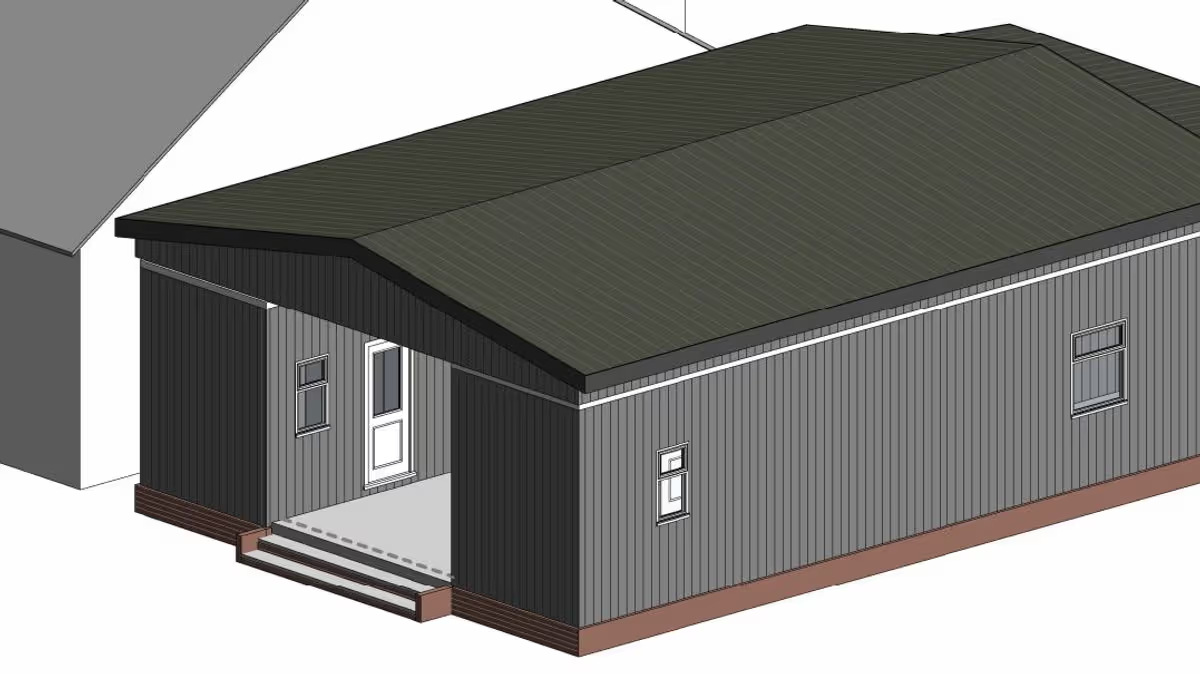
“The accommodation has been formed from the conversion of three metal steel storage containers which have been linked together in a u-shape to form basic overnight accommodation for visiting monks including showers and toilets.
“The buildings are situated on a raised plinth with doors and windows cut out of the steel to form openings.”
Advertisement
The supporting documents said the building is single storey formed from metal storage containers with a central communal area.
Five separate sleeping areas and six separate toilets and five shower units are provided in the building.
In 2016, permission was granted to use the golf club as a Buddhist temple with four monks residing at the property on a full time basis.
The plans also included an indoor meditation and ceremony area.
Advertisement
The application states that the development use is consistent with the land being in the green belt.
The Bolton monastery was created in 2016
The supporting statement, produced by Ashall Town Planning said: “The proposal which is to provide basic overnight monk accommodation including people visiting from Thailand, ancillary to the existing Wat Sriratanaram temple is considered to conform with relevant planning policies.
“While an unusual form of development, no material harm is caused to the general surrounding area.”
Bolton council will make a decision on the plans in the coming weeks.
Advertisement
To find all the planning applications, traffic diversions, road layout changes, alcohol licence applications and more in your community, visit the Public Notices Portal.
Rachel Reeves has tightened the squeeze on renewable energy generators, raising the windfall tax on wind and solar producers from 45 per cent to 55 per cent in a move the Chancellor insists will stop the sector “cashing in” on the latest Middle East oil and gas shock.
The increase to the electricity generators levy (EGL), announced on Tuesday, has been timed to land alongside a sweeping set of power market reforms from Ed Miliband, the Energy Secretary, designed to “break the link” between volatile gas prices and the cost of electricity paid by households and businesses.
For Britain’s small and medium-sized employers, still nursing the scars of the 2022 energy crisis, the stakes could scarcely be higher. Industry figures, however, have been quick to brand the package a “sham”, warning it risks locking consumers and businesses into higher bills for decades and chilling the investment climate for renewables just as ministers are trying to court record capital inflows.
Under the existing system, many wind and solar farms still sell power on the wholesale market while drawing a top-up subsidy through the legacy renewables obligation (RO) scheme. The Treasury’s new design offers a carrot alongside the stick: generators who voluntarily switch to fixed-price contracts for difference (CfDs) will be exempt from the higher levy.
Ministers argue this will decouple renewables revenues from wholesale electricity prices, which are still set by the most expensive marginal plant on the system — almost invariably gas. Under the current merit-order pricing, even when the vast majority of power is coming from wind or solar, all generators are paid the gas-set price whenever a gas plant is called on.
Advertisement
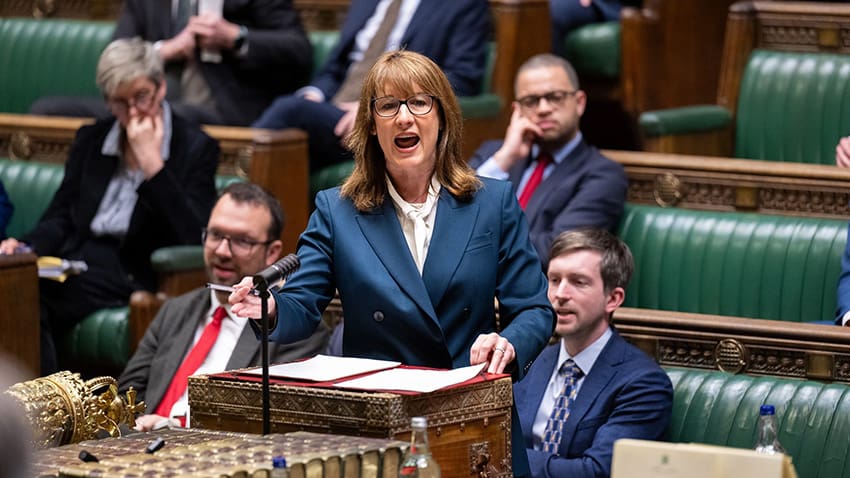
“Hardworking British families and businesses should not bear the brunt of global gas price shocks while electricity generators are making exceptional profits,” Ms Reeves said. She added that moving generators onto CfDs, combined with the 55 per cent levy, would “offer households and businesses stronger protection against future energy shocks”.
But the numbers lay bare why the voluntary switch may prove a hard sell. An RO certificate is currently worth £69.34. An onshore wind farm under the RO receives one certificate per megawatt hour (MWh) generated, on top of the wholesale price. At 5pm on Monday, with wholesale prices at £99 per MWh, that produced a total return of £168.43 per MWh. Offshore wind, which earns up to 1.9 certificates per MWh, could have banked as much as £230.75 per MWh at the same moment.
One senior energy industry source warned that handing such generators fresh 20-year CfDs on top of their existing RO entitlements amounted to a “double subsidy”, and could keep consumer bills elevated well beyond the RO’s planned 2027-to-2037 phase-out.
Dale Vince, the green energy entrepreneur and Labour donor, went further. “The Government are not breaking the link. I’m very disappointed with that,” he said. “Something real has to be done because we’re in the second energy crisis of this decade.”
Advertisement
Kathryn Porter, the independent energy analyst, cautioned that the levy could also hasten the retirement of Britain’s ageing nuclear fleet, which falls within the windfall tax’s scope. “The whole thing is a mess. This entire plan might end up smoothing costs at a higher level than they are now,” she said.
Tara Singh, chief executive of RenewableUK, struck a more diplomatic note, saying the industry supported weakening the gas-electricity link and would “work constructively” with officials. But she warned that investor confidence was on the line. “At a time when ministers are hoping to attract record levels of investment into renewables, uncertainty over changes to taxation needs to be clarified immediately so it does not drive up the cost of investment.”
Ministers also signalled they would tackle the rising sums paid to wind farms to switch off when grid capacity is constrained, a cost ultimately borne by bill-payers, including the nation’s 5.5 million SMEs.
For Mr Miliband, the wider message is a political one. “As we face the second fossil fuel shock in less than five years, the lesson for our country is clear,” he said. “The era of fossil fuel security is over, and the era of clean energy security must come of age.”
Advertisement
The Government will now consult on the detail of the market overhaul. For British business owners watching their energy bills with nervous eyes, the question is no longer whether reform is needed, but whether Ms Reeves and Mr Miliband have hit on the right formula, or merely swapped one distortion for another.
Jamie Young
Jamie is Senior Reporter at Business Matters, bringing over a decade of experience in UK SME business reporting.
Jamie holds a degree in Business Administration and regularly participates in industry conferences and workshops.
When not reporting on the latest business developments, Jamie is passionate about mentoring up-and-coming journalists and entrepreneurs to inspire the next generation of business leaders.
The retailer looks set to beat market expectations when it publishes preliminary results later this year
Gear4Music says it has made progress with a growth strategy.(Image: Birmingham Post and Mail)
Online instrument shop Gear4Music has hailed “excellent” trading as reports a 30% surge in sales.
The York-based retailer saw total sales rise 30% in the year to the end of March, with pre-tax profits up £9.7m from £1.6m the year before. The year-end trading update has beaten market expectations for the London Stock Exchange-listed firm.
Bosses there said the strong revenue growth has continued into the 2027 financial year with a new warehouse lease agreed that will expand capacity for the UK’s largest online seller of guitars, keyboards and other musical equipment.
Andrew Wass, Gear4Music executive chair, pointed to strong revenue growth in the final quarter of the 2026 financial year and credited a new growth strategy announced in June 2024 as the driver.
Advertisement
He added: “We also note that, despite £3.6m of deposits paid in Q4 FY26 in relation to the fit-out of our new UK warehouse, net bank debt has reduced for a fourth consecutive year to £5m. The lease for the new UK warehouse completed as scheduled on April 1, 2026, with fit-out works now underway and progressing on schedule and within budget.
“The new facility will provide the additional capacity and efficiency required to support future UK growth, and as previously reported the total fit-out costs for FY27 are expected to be £10.2m.
“During Q4 FY26, we successfully delivered several significant new technical development projects, including the launch of an AI-based inventory forecasting and purchasing platform, a digital promotions centre enabling more targeted customer incentives, and a website AI chatbot providing product information and advice.
“These developments are already supporting further growth. As previously announced, revenue growth accelerated from mid-March 2025 and notwithstanding more challenging year-on-year comparatives, strong revenue growth has continued into April 2026.
Advertisement
“Whilst it remains early in the financial year and the board has not yet made any changes to FY27 forecasts, it remains confident that the business will build on the substantial financial progress achieved in FY26. Trading in FY27 to date is in line with consensus market expectations.”
Splits in key political parties Shiv Sena and NCP have made the battle for the 48 Lok Sabha seats in Maharashtra more interesting, besides the focus on traditional issues like unemployment and farmer suicides. Lok Sabha polls in Maharashtra will be held in five phases on April 19, April 26, May 7, May 13 and May 20. Counting of votes will be held on June 4.
The BJP-Shiv Sena won 41 of the 48 seats in the 2019 polls, but the Sena has split since and a vast majority of the Bal Thackeray-founded party is now allied with the BJP. The Nationalist Congress Party also split as well with Ajit Pawar joining the ruling alliance in the state, led by Eknath Shinde. In the 2019 Lok Sabha polls, the BJP emerged the top party with 23 seats, followed by the undivided Sena with 18. The undivided NCP had emerged victorious on four seats, the Congress one, while the AIMIM and an Independent accounted for the remaining two.
A total of 9.2 crore persons, including more than 50,000 centenarians, are eligible to exercise their franchise in the ensuing Lok Sabha elections in Maharashtra, an increase of 34 lakh from 2019. Here is how the political landscape in various regions of Maharashtra looks like ahead of the ensuing Lok Sabha elections.
Konkan: The coastal region of the state includes Mumbai, the country’s commercial capital with six highly urbanised Lok Sabha seats, where issues include woes related to transportation, housing and jobs. The BJP-Sena had won 12 of the 13 seats in the region in 2019. While the Shiv Sena (UBT) could attract some sympathy post the split, other issues all parties will have to contend with are plans to construct a massive refinery and nuclear power plant in Ratnagiri area and a mega port in Vadhavan near Dahanu in Palghar.
Western Maharashtra: One of the most developed regions in the state, it is home to industrial cities with information technology hubs as well as sugar mills, ethanol plants and agri-rich rurban (land on the edge of a town or city, on which new housing and businesses are being built) pockets. The region receives ample rainfall but unequal distribution of water among various areas has been a traditional bone of contention. The split in the NCP, a strong contender in the region, and the Shiv Sena means the upcoming polls will ensure focus on candidates as much as party ideology due to fresh realignments. In the 209 polls, the BJP won five seats, while the Shiv Sena and the Sharad Pawar-founded Nationalist Congress Party won three each from this region.
Advertisement
Live Events
North Maharashtra: This region is among the country’s top sources of grapes and onions, making it a hotbed for discontent in connection to changes in export-import policies for farm produce. Inadequate or unseasonal rainfall is another bugbear that can change the discourse. The region has a significant population of tribals and backward segments. In the 2019 polls, the BJP-Shiv Sena won all six seats in the region. Marathwada: The region is infamous for lack of adequate rainfall, which has left it under-developed when compared to other parts of Maharashtra, leading to unemployment woes. Unseasonal rains and crop loss are annual phenomena, resulting in sharp surges of discontent among farmers. Apart from the industrial hub of Chhatrapati Sambhajinagar (formerly Aurangabad), the rest of the region is rural and lacks basic amenities. Speedy highway construction has boosted transportation. In 2019, the BJP won four Lok Sabha seats, followed by three for its ally Shiv Sena.
The Aurangabad seat was won by the Asaduddin Owaisi-led AIMIM. Maratha quota activist Manoj Jarange hails from Marathwada and has a following in the region as was seen during many of his protests in the last few months. Vidarbha: Blessed with abundant natural resources and forests, the region in the eastern part of the state, however, has been in limelight for farmer suicides.
Left Wing Extremism is also a problem in some parts, mainly in Gadchiroli. There are also problems of human-wildlife conflicts in districts like Chandrapur, home to a sizable number of tigers. Soybean and cotton produce not fetching good returns could lead to agricultural distress in the region.
Moreover, several MP’s from the area were those who retained their seats, which means they may face anti-incumbency in the 2024 Lok Sabha polls. Of the 11 Lok Sabha seats in Vidarbha, the BJP won five, Shiv Sena three, while Congress and an Independent emerged victorious on one seat each in the last elections.
The North East firm has acquired Par 59, set up four years ago in a joint venture with footballer Gareth Bale
15:02, 21 Apr 2026Updated 15:07, 21 Apr 2026
A Lane7 bar showing a number of bowling lanes. (Image: Lane7)
Boutique bowling alley firm Lane7 has expanded with the acquisition of sites in Cardiff and Bristol.
The North East-based group, which already has sites across the country, has acquired mini golf, darts and shuffleboard business Par 59 in an undisclosed deal. Lane7 will close the Cardiff venue for refurbishment, before reopening under its own brand, while the Bristol premises will continue to trade as Par 59.
Advertisement
It was formed as a partnership between Elevens Group, co-owned by football star Gareth Bale and Jamie Humphrys, and Depot, launching in March 2022. It added the mini golf, food and drink concept to Cardiff city centre where it helped repurpose the long-vacant St Mary Street site before growing further with the addition of the upstairs ‘Shuffles’ bar space in 2023.
It also expanded into Bristol, on Millennium Promenade. Announcing the move, Elevens Group said it will now focus on other opportunities and continue to run its Elevens Bar & Grill on Castle Street, while Depot will continue its investment in Cardiff’s live music and events scene through its 2,000-capacity venue, plus events staged through Depot Live at Cardiff Castle and Blackweir Fields.
Jamie Humphrys, co-owner of Elevens Group, said: “Par 59 has been a brilliant part of Cardiff’s hospitality scene over the last few years, and we’re incredibly proud of what was created there in partnership with Depot. From day one, the aim was to bring something fun, high-quality and genuinely exciting into the city centre, and it’s been fantastic to see so many people come through the doors and enjoy it with us.
Par59’S Cardiff venue.(Image: Par59)
“I’d like to thank everyone involved in the venue – including Gareth, the staff and customers – and everyone who supported Par 59 along the way. We’re proud of what the brand achieved, and this felt like the right time to hand it on.”
Advertisement
Nick Saunders, founder of Depot said: “Together with Elevens Group, we built a brand with real momentum in Cardiff and Bristol, but the opportunity to sell came at the right time for all parties. For Depot, it allows us to stay focused on the areas where we see the biggest opportunity for growth and impact, particularly live music, major events and large-scale experiences in Cardiff. We remain hugely ambitious about what we’re building, and proud of the role Par 59 has played in that wider story.”
Gavin Hughes, managing director of Lane7 Group, said: “Par 59 is a strong business with two well-established sites, and we’re pleased to be taking it forward in Bristol whilst expanding our Lane7 brand in Cardiff. We believe our differentiated positioning puts us in a strong position to continue making the most of opportunities like these, which we expect to continue over the next 24 months as the market matures and consolidates further.”
Last summer, Darlington-based Lane7 opened two sites in Newcastle, in the former Lofts and Hustle bar and nightclub at The Gate, as well as ML7, at Monument Mall. It launched its first bowling alley in Newcastle in 2013, on St James’ Boulevard and has since expanded across the UK with 13 other sites in cities including, Liverpool, Bristol, Edinburgh, Manchester and Sheffield.


























































You must be logged in to post a comment Login