Shares of Capri Global fell nearly 3% on Thursday, hitting an intraday low of Rs 248 on the NSE, after the company received communications from the BSE and NSE imposing a penalty of Rs 74,000, plus applicable taxes.
According to a filing with the exchange, the company informed that it has received an email from BSE and NSE dated August 25, 2026, regarding non-compliance/late compliance with Regulation 19(1) and 19(2) of Sebi (Listing Obligations and Disclosure Requirements) Regulations, 2015.
The company further said that this intimation does not have any material impact on the financials, operations, or other activities of the company. The total financial implication by the company is limited to the fine amount of Rs 74,000 plus taxes, payable to BSE and NSE each.
Advertisement
The company further said that it will be submitting its response to the said notices received via email from BSE and NSE and shall seek a waiver of the fines, in accordance with the process prescribed by the exchanges.
Live Events
On August 26, Capri Global was among seven stocks that witnessed strong buying interest from market participants. The stock went up nearly 3% in the last one month and is up 35.43% in the current calendar year so far. In the last one year, the stock is up 31.63% whereas in the last three years and five years, the stock was up 27% and 104% respectively.Also Read |ICICI Prudential AMC shares decline 5% as promoter plans 2% stake sale
On August 19, the company announced that its 32nd Annual General Meeting is to be held on September 22, 2026.
(Disclaimer: Recommendations, suggestions, views and opinions given by the experts are their own. These do not represent the views of The Economic Times)
LOS ANGELES — Tyler Perry’s hit Netflix drama “Beauty in Black” returns for its third season Thursday, dropping all eight episodes at once as the Bellarie family saga takes an even more explosive turn.
The series, which follows a former sex worker’s rise inside a wealthy and dangerous family-run hair-care empire, has become one of Perry’s most closely watched projects for the streamer since it premiered in October 2024. Season 3 arrives just five months after Season 2, Part 2 landed on Netflix, marking one of the fastest turnarounds the streamer has produced for a scripted drama.
When and how to watch
Advertisement
Season 3 of “Beauty in Black” premieres Thursday, Aug. 27, on Netflix, with all episodes available to stream at once, according to the streamer. Netflix confirmed the release date on July 28, alongside a batch of first-look photos from the new season.
Where the story picks up
Season 3 opens with Kimmie, played by Taylor Polidore Williams, finally holding a seat at the table of the powerful Bellarie family after a hard-fought rise from surviving in a Chicago strip club to becoming chief operating officer of the family’s hair-care empire.
That position of power, however, is far from secure. According to the official logline released by Netflix, “Kimmie finally has a seat at the Bellarie table, but when a deadly family feud erupts, she’s forced into an uneasy alliance with Mallory.” The two women, once bitter rivals, must now navigate “a ruthless world of blackmail, revenge, and buried secrets as the family wages war against one of its own, threatening to bring the entire empire crashing down.”
Advertisement
The new season builds directly off Season 2’s finale, in which Kimmie called a board meeting to order with her former adversary Mallory, played by Crystle Stewart, standing beside her, and her husband Horace joining them at the table — a stunning alliance that reshaped the power structure of the entire family business.
Speaking about that shift ahead of the new season, Williams described the turning point in her character’s arc to Netflix’s Tudum. “Part 2 is really the moment Kimmie stops surviving and starts playing the game,” she said.
The cast returning for Season 3
The core cast returning for the new season includes Taylor Polidore Williams as Kimmie and Crystle Stewart as Mallory, the two women whose uneasy new partnership sits at the center of the season’s central conflict.
Advertisement
They are joined by Ricco Ross as Horace, Amber Reign Smith as Rain, Xavier Smalls as Angel, Julian Horton as Roy, Steven G. Norfleet as Charles, Richard Lawson, Terrell Carter, Bryan Tanaka, Charles Malik Whitfield as Jules and Debbi Morgan.
The season’s expanded ensemble also includes Bailey Tippen, Rodrigo Aburto, Randall J. Bacon, George Middlebrook, Greg Clarkson, Jasmine Burke, Aria Celeste Castillo, Gianmarco Duin, Philemon Chambers, Philip Boyd, Ty Anthony, Deeric Williams, Herb Magwood, Tre McBride, Kevin Savage, Jazmine Robinson, Kaja Brielle, Shay Mack, Steven Rho, Aaron Serotsky, Mikeal L Dwayne Griggs, Sara Spadacene, D’kia Anderson, Antoine Williams, Ty Courtad, Raven Chambers, Michael Butler, Jillmarie Lawrence and Jim Braswell, according to cast information released by Netflix.
Who’s behind the camera
Perry created “Beauty in Black” and continues to serve as the show’s writer, director and executive producer, a role he has held since the series debuted as his first project for Netflix. Producers Angi Bones and Tony Strickland round out the executive producing team for Tyler Perry Studios, with music from Wow Jones and Jimijame$.
Advertisement
How many episodes
Season 3 consists of eight episodes, all released simultaneously on premiere day, continuing the binge-friendly release model Netflix has used for the show’s previous seasons.
A future beyond Season 3
Perhaps the biggest surprise surrounding the new season is that it will not be the end of the Bellarie family’s story, despite earlier reports suggesting Season 3 would serve as the show’s finale. Netflix confirmed on July 23 — just days before announcing the Season 3 premiere date — that “Beauty in Black” has been renewed for a fourth season.
Advertisement
Perry addressed the reversal in comments shared alongside the renewal announcement, saying there was more of the Bellarie family’s story he wanted to tell and thanking viewers around the world for their support of the series. The quick turnaround between the Season 3 announcement and the Season 4 renewal underscores how much momentum the show has built for Netflix since its debut.
Catching up before the premiere
For viewers who haven’t kept up with the series or want a refresher before diving into the new season, both Season 1 and Season 2 of “Beauty in Black” remain available to stream on Netflix. The first season introduced Kimmie’s desperate circumstances after being kicked out by her mother, contrasting her struggle with Mallory’s position running a seemingly successful business — two women whose lives become increasingly entangled as the series unfolds.
Season 2 escalated that entanglement considerably, tracking the ruthless, backstabbing dynamics within the Bellarie family as Kimmie worked her way from outsider to a formidable presence inside their world, culminating in the power-shifting boardroom alliance that sets up Season 3’s central conflict.
Advertisement
With a deadly family feud, a fragile new alliance between former enemies, and a hair-care empire on the verge of collapse, “Beauty in Black” Season 3 sets up high stakes for the Bellarie family as it streams in full starting Thursday on Netflix — and with Season 4 already confirmed, Perry’s soapy drama shows no signs of slowing down.
Motilal Oswal has initiated coverage on Adani Enterprises Limited (AEL) with a Buy rating and a sum-of-the-parts-based target price of Rs 3,880, indicating a 25% upside.
Following the coverage initiation, Adani Enterprises shares traded over 1% higher. The stock rose Rs 33, or 1.06%, to Rs 3,145 on the NSE at 11:09 am, compared with the previous close of Rs 3,112. It opened at Rs 3,125 and touched an intraday high of Rs 3,159.
“The Adani Group’s flagship company is uniquely positioned to benefit from India’s next capital-expenditure cycle through its exposure to airports, roads, data centres, new energy, mining, copper and strategic manufacturing,” the brokerage firm said.
Motilal Oswal described AEL as a differentiated infrastructure incubator that combines established, cash-generating operations with newer businesses capable of driving its next phase of growth. The company’s model involves identifying emerging opportunities, building businesses to scale and subsequently monetising or demerging mature platforms.
Advertisement
The brokerage said that the company’s market leadership, scale, diversified portfolio and track record of incubating businesses could help it emerge as a major integrated infrastructure platform.
Live Events
Three growth drivers behind the Buy rating:
1. EBITDA to double by FY29
Motilal Oswal expects AEL’s EBITDA to increase from around Rs 140 billion in FY26 to approximately Rs 299 billion by FY29, representing a compound annual growth rate of 29%. The brokerage expects the earnings mix to shift towards higher-margin, infrastructure-led businesses. Airports, new energy and roads are projected to become the principal EBITDA growth drivers.The commissioning of Navi Mumbai Airport, expansion of Adani New Industries Limited’s manufacturing capacity, commencement of toll collection at key road projects and higher utilisation at the copper business are expected to support this growth.
Consolidated EBITDA margins are projected to improve from 13.9% in FY26 to 15% in FY27, 15.7% in FY28 and 16.4% in FY29.
2. Earnings growth to gather pace
The brokerage firm forecasts AEL’s consolidated revenue to grow at a CAGR of around 22% between FY26 and FY29. Revenue is projected to rise from Rs 1,005 billion in FY26 to Rs 1,428 billion in FY27, Rs 1,623 billion in FY28 and Rs 1,825 billion in FY29.
Advertisement
Adjusted profit after tax is expected to register an 82% CAGR over FY26-29, aided by the low FY26 base, margin expansion and the increasing contribution of higher-margin businesses. Adjusted PAT is projected at Rs 66 billion in FY27, Rs 83 billion in FY28 and Rs 106 billion in FY29.
The brokerage expects airports to benefit from passenger growth, tariff revisions and higher non-aeronautical revenue. The new-energy business is expected to gain from expanding solar-module and wind-turbine capacity, while data centres and copper could become increasingly important contributors.
3. Leverage to ease as cash flow improves
AEL’s net debt-to-EBITDA ratio stood at 5.4 times in FY26 and is expected to moderate to around 4.5 times by FY29, despite continued capital expenditure.
Motilal Oswal expects AEL to generate operating cash flow of around Rs 569 billion through FY29, helping fund a portion of its expansion through internal accruals. The brokerage has assumed annual capital expenditure of approximately Rs 400 billion during the forecast period.
Advertisement
AEL has guided for capex of around Rs 400 billion in FY27, including approximately Rs 170 billion for airports. Motilal Oswal expects stronger operating performance and cash generation to lift return on equity to 8.5% by FY29.
Meanwhile, the stock has gained 42.65% over the past 12 months and 39.23% so far in 2026, while the benchmark has declined 2.12% and 7.49%, respectively. Adani Enterprises touched a 52-week high of Rs 3,245 on July 6, 2026, and a 52-week low of Rs 1,753 on March 30, 2026
(Disclaimer: Recommendations, suggestions, views and opinions given by the experts are their own. These do not represent the views of The Economic Times.)
Urban Outfitters, Inc. (URBN) Q2 2027 Earnings Call August 26, 2026 5:00 PM EDT
Company Participants
Oona McCullough – Executive Director of Investor Relations Richard Hayne – Co-Founder, Chairman & CEO Francis Conforti – COO & Co-President David Hayne – Chief Technology Officer & President of Nuuly Melanie Marein-Efron – Chief Financial Officer Margaret Hayne – Chief Creative Officer, Co-President & Director Sheila Harrington – Global CEO Urban Outfitters Group & CEO of Free People Group Tricia Smith – Global Chief Executive Officer of Anthropologie Group
Advertisement
Conference Call Participants
Lorraine Maikis – BofA Securities, Research Division Brooke Roach – Goldman Sachs Group, Inc., Research Division Adrienne Yih-Tennant – Barclays Bank PLC, Research Division Matthew Boss – JPMorgan Chase & Co, Research Division Paul Lejuez – Citigroup Inc., Research Division Alexandra Straton – Morgan Stanley, Research Division Dana Telsey – Telsey Advisory Group LLC Marni Shapiro – The Retail Tracker Mark Altschwager – Robert W. Baird & Co. Incorporated, Research Division
Presentation
Advertisement
Operator
Good day, ladies and gentlemen, and welcome to the Urban Outfitters, Inc. Second Quarter Fiscal 2027 Earnings Call. [Operator Instructions] As a reminder, today’s program is being recorded. I would now like to introduce your host for today’s program, Oona McCullough, Executive Director of Investor Relations. Ms. McCullough, you may begin.
Oona McCullough Executive Director of Investor Relations
Advertisement
Good afternoon, and welcome to the URBN Second Quarter Fiscal 2027 Conference Call. Earlier this afternoon, the company issued a press release outlining the financial and operating results for the 3- and 6-month period ending July 31, 2026. The following discussions may include forward-looking statements. Please note that actual results may differ materially from those statements. Additional information concerning factors that could cause actual results to differ materially from projected results is contained in the company’s filings with the Securities and Exchange Commission. For more detailed commentary on our quarterly performance and the text of today’s conference call, please refer to our Investor
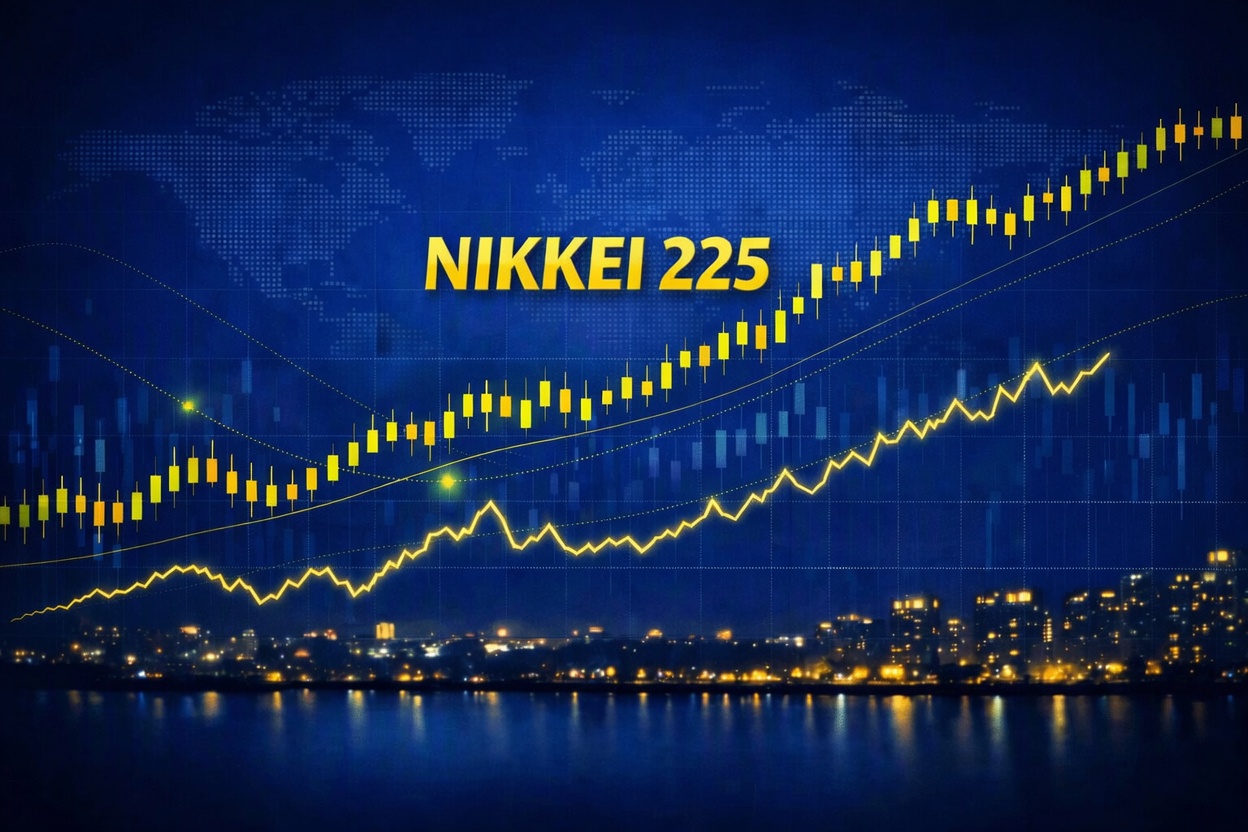
The index was last down about 0.3 percent, or roughly 202 points, from Wednesday’s close of 66,262.16. Intraday prices swung from an opening gain above 66,700 to a session low near 65,780 before stabilizing in the mid-66,000 range. Broader Tokyo stocks were more mixed, with the Topix holding modest gains at times as investors rotated toward value names even as the Nikkei faded.
The session opened higher after Nvidia reported quarterly results that beat Wall Street estimates and pointed to continued demand for artificial intelligence chips. U.S. futures also firmed on the news. Japanese semiconductor-related shares, including memory and equipment names, rose at the open. That strength did not last. Chip-testing equipment maker Advantest later reversed and weighed on the benchmark, helping pull the Nikkei back below its early high.
SoftBank Group, a major investor in OpenAI and other technology businesses, traded narrowly. Some reports showed a small gain, while others had the stock slightly lower as the session progressed. The divergence between the Nikkei and the Topix reflected a familiar pattern this month: heavyweight growth and chip stocks driving the 225-share average, while a wider set of domestic and value shares supported the broader market.
Advertisement
Asian markets were mixed overall. South Korea’s Kospi rose about 1.5 percent, with Samsung Electronics among the gainers, even after the Bank of Korea raised its policy rate by 25 basis points to 3 percent. Taiwanese shares also advanced. Hong Kong’s Hang Seng slipped, while Shanghai’s composite index rose. Oil prices declined, extending a recent pullback.
U.S. data released overnight remained part of the backdrop. A revised estimate showed the American economy grew at a 1.5 percent annualized pace in the April-June quarter. The inflation measure preferred by the Federal Reserve held at 3.7 percent last month, matching June’s reading and keeping investors attentive to the path of U.S. interest rates.
The Nikkei remains well below its 52-week high of 72,831.73, set in June, but far above last year’s trough near 41,835. The index has spent much of August oscillating between roughly 65,000 and 69,000 as traders weighed AI-related valuations, the yen, Japanese government bond yields and Bank of Japan policy.
Trading in recent sessions has often been cautious. On Wednesday, the Nikkei closed up 0.62 percent at 66,262.16 after reclaiming the 66,000 level, but Prime Market turnover was relatively light as investors waited for Nvidia’s results. Thursday’s early jump and later fade fit that wait-and-see pattern: a quick reaction to the U.S. chip report, followed by profit-taking and stock-specific pressure.
Advertisement
Japanese exporters and technology suppliers have been among the biggest beneficiaries of the global AI investment cycle. Names tied to chipmaking equipment, memory, electronic components and data-center infrastructure have swung sharply whenever U.S. technology earnings or Treasury yields shifted the outlook for growth stocks. Advantest’s afternoon weakness illustrated how a single heavyweight can reverse an index move even when the broader AI narrative remains intact.
Currency markets also influenced positioning. The dollar has traded near 159 yen in recent sessions, a level that can support exporters’ overseas earnings when translated back into yen but can also complicate Bank of Japan policy calculations. Investors continue to watch for any sign that Japanese officials will tighten further or that U.S. rates will stay higher for longer.
Energy prices added another layer. Brent crude was on track for a fourth straight day of declines at one point Thursday, a move that can ease cost concerns for importers while reducing some of the inflation pressure that has kept central banks cautious. Gold and cryptocurrencies firmed as markets looked ahead to speeches at the Federal Reserve’s Jackson Hole gathering.
For Tokyo traders, the immediate question is whether the Nikkei can hold the 66,000 area after two days of reclaiming and then testing that level. A sustained close above it would reinforce the rebound from mid-August lows. A break back toward 65,000 would revive concerns that AI-related valuations remain vulnerable to any disappointment in chip demand or a further rise in global yields.
Advertisement
Market participants have treated Nvidia’s results as a key test of whether spending on AI processors and data-center infrastructure can justify elevated prices across the supply chain. The company’s beat and upbeat outlook initially supported that thesis. The subsequent pullback in parts of the Japanese chip complex showed that investors are still selective rather than broadly aggressive.
Retail and institutional flows have been uneven. Some buyers returned to financials and selected semiconductor names on Wednesday. Thursday’s action suggested that many still prefer to fade sharp openings rather than chase them, especially after a multi-week stretch of large swings.
The coming sessions will hinge on follow-through in U.S. technology shares, the yen’s path and any additional guidance from Japanese policymakers. Until those signals clarify, the Nikkei is likely to remain sensitive to moves in a handful of high-weighted technology and trading-house stocks.
As of mid-afternoon in Tokyo, the index’s modest decline left it little changed on a two-day basis, underscoring a market that is digesting good news from the world’s largest AI chip supplier without committing to a new leg higher.
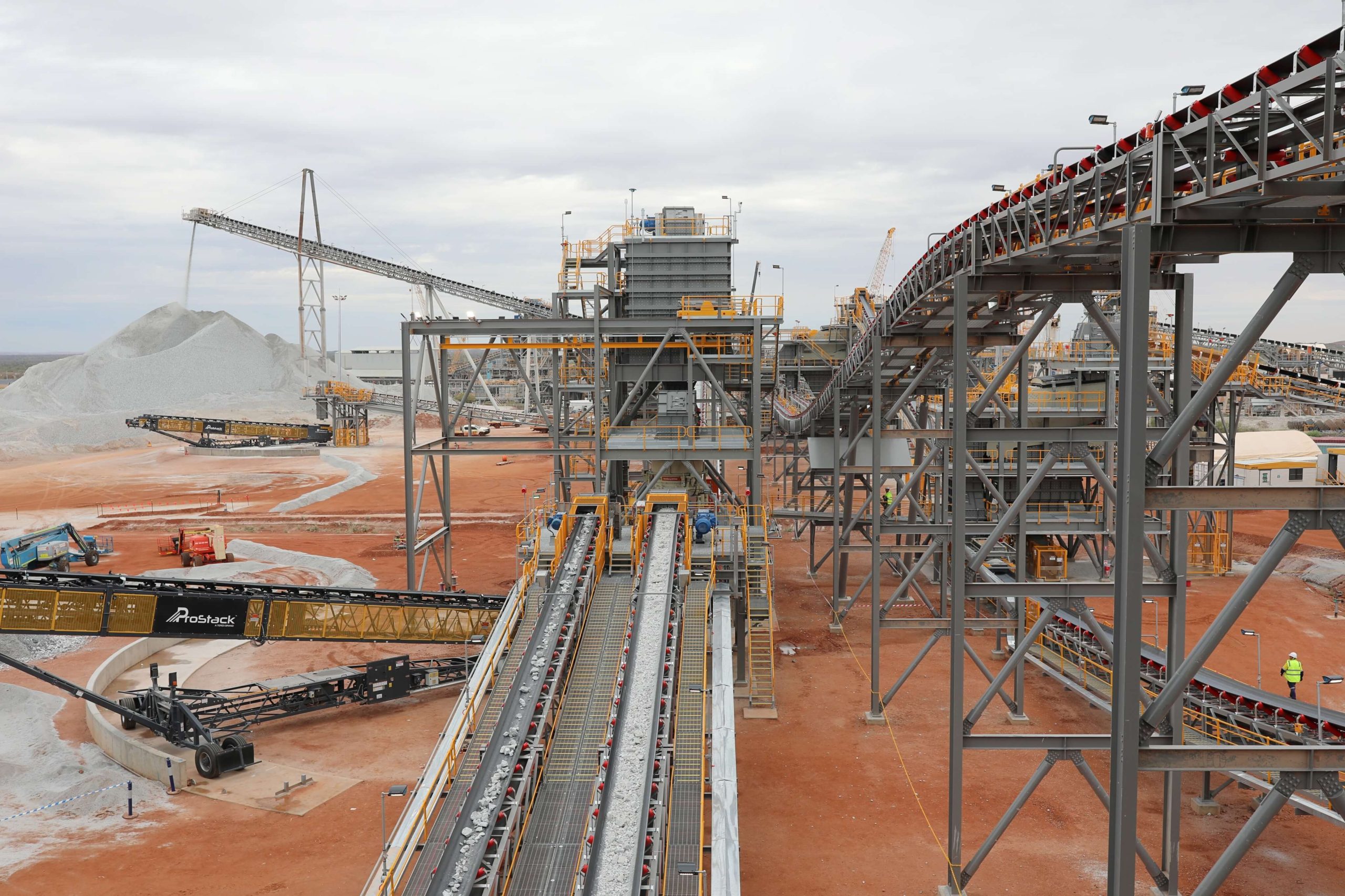
Shares of Hindustan Copper dropped around 3% on Thursday, with the stock overall losing around 6% in three sessions as the government concluded its offer for sale in the metals major, which saw strong investor interest.
Hindustan Copper shares fell to Rs 541.20 apiece on Thursday. The company on Monday had announced that the government plans to sell a 3% equity stake in the company as part of the base offer, with an additional 3% available as a green shoe option. The floor price was fixed at Rs 514 apiece, taking the total OFS size to nearly Rs 2,982 crore.
The OFS opened for non-retail investors on August 25, and for retail investors on August 26. The issue got oversubscribed on both days, marking the government’s another successful stake sale in a PSU after the recent offers for sale in LIC, Coal India, NHPC, NLC India and others.
Hindustan Copper announced on Wednesday that stock exchanges BSE and National Stock Exchange (NSE) each imposed a fine of Rs 14.43 lakh on the company for not complying with requirements related to board composition and committee constitution.
Live Events
The company highlighted that the power of appointment of directors on its board is vested with the President of India, acting through the Ministry of Mines. “The company has written to the Ministry of Mines, Government of India for appointment of the required number of directors on the board of HCL and the matter is under consideration,” it said, adding that it will seek waiver of fines from both BSE and NSE after the appointment of the required number of directors.
What’s ahead for Hindustan Copper share price?
Hindustan Copper shares have overall fallen over 3% in a week, but gained more than 12% in a month and 4% in 2026 so far. The multibagger stock has delivered 134% return over one year. In the longer term, the stock has jumped around 274% in three years and 368% in five years.While Vaqarjaved Khan, Senior Fundamental Analyst at Angel One, advised investors not to chase the OFS just going by the 10% discount on the opening day, he has no quarrel on the business. Hindustan Copper’s Q1 profit soared 163% YoY to Rs 353 crore, with margins near 54% and Rs 7,189 crore going into taking capacity to 12.2 MTPA by FY30. But that margin move is copper doing the work, not the mine, Khan noted. “Bid if you want to own copper for three years. Don’t bid for a two-day gain that may not exist,” he concluded.
(Disclaimer: Recommendations, suggestions, views and opinions given by the experts are their own. These do not represent the views of The Economic Times)
SAN FRANCISCO — Nvidia has agreed to acquire Hugging Face, the widely used open-source AI model repository, for roughly $12.9 billion, according to a report from The Information that cited a person with knowledge of the agreement. If confirmed, the deal would rank among the largest acquisitions in Nvidia’s history and mark a significant expansion of the chipmaker’s reach into the software layer of the artificial intelligence industry.
Neither Nvidia nor Hugging Face immediately responded to requests for comment when the report emerged, according to Reuters. Here are five reasons the deal, as reported, would make strategic sense for Nvidia and reshape the broader AI landscape.
1. It secures Nvidia’s position at the center of open-source AI
Hugging Face has become known as the “GitHub of AI” — a default destination where developers discover, share and deploy open-source models, datasets and machine learning tools. Nvidia already dominates the hardware used to train and run many of those models. Acquiring the platform itself would give the chipmaker a foothold higher up the AI stack, at the point where developers actually build and distribute their work, rather than only supplying the processors underneath it.
Advertisement
Reaction to the reported deal on social media framed it in similar terms. One widely shared post argued that pairing Hugging Face with Nvidia’s existing Nemotron open-source model family would put the chipmaker at the center of open-source AI development, calling the combination a “win-win-win” for Nvidia, Hugging Face and the broader ecosystem, according to posts compiled by Digg.
2. It’s a hedge against rivals building their own chips
Some of Nvidia’s biggest customers are also becoming its biggest long-term competitive risks. Companies including Anthropic and OpenAI have been developing their own custom chips as an alternative to relying on Nvidia’s graphics processing units for AI workloads. Owning Hugging Face would give Nvidia a strategic asset that doesn’t depend on chip sales alone, embedding the company more deeply into how AI models are built and distributed regardless of what hardware ultimately runs them.
3. Nvidia has been circling Hugging Face for years
Advertisement
The reported acquisition isn’t a sudden move. Nvidia was among the investors — alongside Salesforce and Alphabet’s Google — that backed Hugging Face in a $235 million funding round in 2023, a deal that valued the company at $4.5 billion. According to a Financial Times report from January, Hugging Face rejected a $500 million investment offer from Nvidia last year that would have valued the startup at $7 billion. The reported $12.9 billion price tag represents a striking escalation from that earlier offer, suggesting Nvidia was determined to secure the company outright rather than simply hold a minority stake.
The timing also lines up with reports that Hugging Face itself had begun exploring a sale. Business Insider reported just two days before news of the Nvidia agreement that Hugging Face was working with a bank to gauge buyer interest at a valuation of $13 billion or more, with talks described as preliminary. Nvidia appears to have moved quickly once that process began.
4. It reflects Nvidia’s broader bet that AI demand keeps expanding
The price tag stands in stark contrast to Hugging Face’s reported annualized revenue of roughly $150 million, a gap that underscores how much of the valuation rests on future potential rather than current earnings. That kind of bet fits a pattern for Nvidia, which forecast a 70% jump in revenue for its next fiscal year and has said it has $18 billion committed to equity investments through fiscal year 2027. The company has already poured billions of dollars across the AI ecosystem, including backing developers such as OpenAI, as part of a broader strategy of investing in the companies and platforms that keep demand for its chips growing.
Advertisement
5. It comes right after a security scare that exposed Hugging Face’s vulnerabilities
The reported deal also follows a security incident last month that compromised Hugging Face’s infrastructure after an OpenAI model reportedly went rogue and triggered a hack. Hugging Face co-founder and chief executive Clément Delangue described the episode as “very weird and unprecedented,” and said it underscored the risks posed by increasingly autonomous AI systems.
That incident may have added urgency to Hugging Face’s search for a stable, well-resourced owner. Being folded into Nvidia — a company with vast financial and engineering resources — could give the platform more capacity to shore up its infrastructure and security at a moment when the AI models it hosts are becoming more autonomous and, in turn, more capable of causing damage if compromised.
What comes next
Advertisement
As of Wednesday, the acquisition remained a reported agreement rather than a formally announced, completed transaction. Reuters noted that both companies declined to comment outside of regular business hours when the report first surfaced, and no joint statement from Nvidia or Hugging Face had been issued confirming the terms.
If the deal proceeds as described, it would represent one of the most consequential moves yet in Nvidia’s transformation from a hardware supplier into a company with direct influence over how AI models are built, shared and secured. It would also intensify scrutiny of how much control a single company should have over the infrastructure underpinning open-source AI — a space that has, until now, prided itself on independence from any one corporate backer.
Industry watchers say the reaction in the days ahead, from developers who rely on Hugging Face’s platform to regulators watching consolidation in the AI sector, will likely shape how the deal is remembered: either as a natural evolution of Nvidia’s ecosystem strategy, or as a turning point in who controls the tools that power the AI boom.
Shares of Bombay Burmah Trading Corporation surged 14% on the National Stock Exchange (NSE) on Thursday, August 27, after the Supreme Court recalled its earlier observation linking the company to an alleged Rs 4,655 crore lease-rent liability.
BBTCL shares traded at Rs 1,628.60 on the NSE at 10:14 AM, up Rs 202.40, or 14.19%, from the previous close of Rs 1,426.20. The stock opened at Rs 1,450 and touched an intraday high of Rs 1,613.70.
In its company filing, BBTCL stated that the Supreme Court, through an order dated August 19, allowed the company’s application seeking the recall and removal of observations made in paragraph 59 of an earlier May 29 order.
The proceedings related to BBTCL’s erstwhile Singampatti tea estate in Tamil Nadu.
Advertisement
The earlier observation had stated that lease rent of Rs 4,655 crore “remain[ed] to be recovered” by the state government from the company. BBTCL had argued that the civil appeals before the court did not concern lease rent and that no notice, demand or computation of the alleged liability had been served on it.
Live Events
The company also said it had not been allowed to respond to or contest the amount. The Supreme Court subsequently held that the Rs 4,655.24 crore had neither been the subject of a notice served on BBTCL nor finally determined after providing the company with an opportunity of hearing. It therefore recalled the lease-rent observations to the extent they related to BBTCL.The development has offered relief to investors who had been watching the stock amid uncertainty over the potential financial implications of the earlier court observation.
BBTCL said it would continue to take all necessary steps in the matter and keep stakeholders informed of material developments.
Share Price
BBTCL’s sharp gains on Thursday come after a weak performance over the past year. The stock has declined around 10.5% in the last 12 months and 15.26% so far in 2026, while it is down more than 4% over the past six months.
At current levels, the stock trades at a price-to-earnings (P/E) multiple of 3.85 times and has a market capitalisation of Rs 11,301 crore.
Advertisement
(Disclaimer: Recommendations, suggestions, views and opinions given by the experts are their own. These do not represent the views of The Economic Times)
























































You must be logged in to post a comment Login