


Connect with us

Business

Cashing in on SpaceX: ‘Every chance I get, I’ll sell a little more’

Published

on

Three vertical photos, from left a woman wearing a white mini dress, a woman wearing an orange strappy maxi dress and men wearing shorts and shirts all walking in the street in London

Andre Lavoie joined SpaceX in 2009 as an engineer, designing the pressure tanks that help power its rocket. He was paid partly in stock – a common trade-off at start-ups as a hiring incentive.

Some 17 years on, those 200,000 shares he was given are worth about $23m (£17m) – and the 63-year-old says he’s ready to start cashing them as soon as he can.

“Every chance I get going forward, I’ll sell a little bit more,” he tells the BBC.

“The shares have been going up so radically it keeps messing up my life plans – you really can’t know the future, so it’s better to sell early and in intervals.”

Advertisement

Lavoie is far from being the only one who has seen the value of his stake in SpaceX rocket over the years.

The company’s founder, Elon Musk, said on Fox News that SpaceX’s listing on the stock market in June had likely made “several thousand” employees millionaires – including staff “who were working on the production line”.

According to reports, there are estimated to be 4,400 new millionaires created by the listing.

Unlike most newly-listed firms, SpaceX shares are set to be released in stages: the first 20% on 6 August, with more due in batches through the rest of the year.

Advertisement

Whether or not shareholders decide to sell their stake at the first opportunity is a matter for individuals. Unlike Lavoie, some may choose to hold onto their shares altogether in the hope of bigger gains later.

SpaceX listed on the Nasdaq in June, in the biggest initial public offering (IPO) in history, valuing the rocket and satellite firm at more than $2 trillion.

It briefly made Elon Musk the world’s first trillionaire, before the stock cooled and his fortune slipped back below the milestone within weeks.

In its first results as a public company this week, the firm’s quarterly revenue was shown to have nearly doubled to $7.8bn (£5.8bn) from a year earlier, while its spending ballooned to $18.3bn – more than six times what it was a year ago.

Advertisement

Overall, SpaceX made a net loss of $143m in the three months to June, and a loss of $2bn during the first six months of the year.

Musk pushed back against sceptics on an earnings call: “I think people are really underestimating Starlink”. He predicted the satellite internet service – the one part of the company that is currently making a profit – could one day deliver a majority of the world’s internet.

But shares in the company tumbled on the back of the earnings report, with investors generally spooked by the huge amounts of money being spent on AI.

SpaceX shares fell 13.6% on Wednesday to $108.27 (£80.44) – well below the initial listing price of $135 a share.

Advertisement

Lavoie plans to use his money from selling some of his shares to fund a hotel he is renovating in Pontebba, Italy’s northeastern Friuli region, plus a small brewery.

He says is priority for the future is raising awareness of air pollution in the area, in partnership with a local environmental group.

Before he was hired, Lavoie was interviewed by Musk himself.

“He’s a very charming person when he wants something,” Lavoie says.

Advertisement

He wouldn’t be drawn on Musk’s politics – “that’s his business” – but is unreserved about the company: “I’ve always been happily supportive and impressed, and would work hard with those incredible people again.”

Some analysts value SpaceX at less than half its current stock market price, warning its ties to xAI carry real financial risk – part of a broader worry on Wall Street that sky-high valuations for AI-linked firms, including SpaceX, OpenAI and Anthropic, could prove overdone.

Sinead O’Sullivan, an economist who has previously worked for Nasa, told the BBC in June she thinks SpaceX is an “Elon Musk ego project”.

“You’re buying a share of the Elon Musk brand more than any kind of space industry,” she said.

Advertisement

But Ron Epstein, an aerospace analyst at Bank of America Securities, says the recent share price swings say more about the market than the company.

“A lot of it has to do with macro trends,” he says. “None of it really has anything to do with what’s going on fundamentally at the company.”

He says investors judging SpaceX purely as an AI bet are missing the point: “They’re not just a compute provider. They’re not just an AI company. It’s a far more complicated picture than that.”

SpaceX, he adds, has cut the cost of reaching orbit from around $10,000-$20,000 a kilogram to about $2,000 with its Falcon 9 rocket – “they have built a railroad to space.”

Advertisement

Lavoie, for his part, isn’t rattled. He says: “The solid business model of SpaceX will prove itself to be worth the investment,”even as he takes some of his own winnings off the table.

Continue Reading
Click to comment

You must be logged in to post a comment Login

Leave a Reply

Business

(VIDEO) North West, 13, Releases Horror-Themed ‘Aishite’ Video Filmed in Japan After Tour Cancellation

Published

on

Kim Kardashian and North West

North West, the 13-year-old daughter of Kim Kardashian and Kanye West, released the music video for her single “Aishite” on Aug. 7, a horror-inspired visual filmed entirely in Japan that arrives days after she abruptly canceled her first headlining concert tour.

The track is part of North’s debut EP, “N0rth4evr,” which she released in May under her stage name North. Directed by Ty Akimoto, the video opens inside an abandoned school building, where North is shown walking through dimly lit corridors with neon blue pigtails, later moving through what appears to be a deserted arcade as blood-effect imagery drips across the screen throughout the visual, evoking the aesthetic of Japanese horror anime.

A Song About Isolation and Betrayal

Advertisement

“Aishite,” which translates from Japanese as “love me,” samples the 2013 Vocaloid track “Aishite Aishite Aishite” by producer Kikuo, performed using the Hatsune Miku voice synthesizer software. The chorus repeats the phrase “just love me,” with lyrics that explore themes of isolation, feeling pursued, and struggling to trust the people around her. Lines from the song describe not being able to escape those chasing her and feeling unable to let others in, themes North has said throughout her debut project reflect her experience growing up as the child of two globally famous parents.

A Tour Canceled Without Explanation

The video’s release comes just over a week after North announced that her planned 14-date “Kimokawaii Tour,” a co-headlining run with 21-year-old rapper Molly Santana, would not move forward. The tour had been scheduled to kick off Aug. 5 in Dallas and wrap up Aug. 27 in Los Angeles, with stops planned in cities including Houston, Atlanta, Philadelphia, New York, Boston, Toronto, Chicago, Phoenix and San Francisco.

North announced the cancellation on her Instagram Story on July 30, writing, “I was really excited to go on tour w Molly Santana. Sadly it isn’t happening anymore.” She did not offer a specific explanation for the decision but added, “I have something special for u guys see ya soon,” a message widely interpreted by outlets covering the news as a tease for the “Aishite” video that followed. All 14 tour listings were subsequently removed from ticketing platforms Ticketmaster and AXS, and the tour’s official website has since returned a “not found” error.

Advertisement

Santana also addressed the cancellation on her own Instagram Story the same day, writing, “To everyone who bought tickets to the tour i sincerely apologize. i know a lot of you have taken time out of your busy schedules and spent your hard earned money planning to be there. nothing makes me more happy than the opportunity to share more amazing memories with you all and i hope to see you soon.”

Building a Music Career

North signed with independent label Gamma, run by former Apple Music executive Larry Jackson, earlier this year. Her self-produced debut EP, “N0rth4evr,” released in May, includes tracks such as “H0w Sh0uld ! f33l” alongside the title track, which she also accompanied with a separate music video at the time of the project’s release.

Prior to launching her own solo material, North had already appeared on other artists’ projects. She was featured on FKA twigs’ 2025 album “EUSEXUA,” rapping a verse in Japanese on the track “Childlike Things.” Speaking about that collaboration in a previous interview, FKA twigs said she wanted someone with a “childlike energy” and a strong point of view for the track, and recalled being struck by North’s confidence after watching an interview with her, saying it made her wish she had a friend like North growing up who could speak up for herself.

Advertisement

A Family Legacy on Stage

North is no stranger to live performance, having appeared on stage multiple times alongside her father, the rapper and producer known as Ye. The two performed a surprise duet together in Mexico City in January and North joined him during a string of comeback concerts in Los Angeles in April. The father-daughter pair also released a collaborative track titled “Piercing On My Hand,” a song that appeared to directly address public criticism North had received over her facial piercings, a recurring feature of her public style that she references again in “Aishite.”

A Rising Profile Amid Public Scrutiny

As the eldest of Kim Kardashian and Kanye West’s four children, alongside younger siblings Saint, 10, Chicago, 8, and Psalm, 7, North has grown up almost entirely in the public eye, drawing both a large following and ongoing scrutiny over her evolving public persona as she has moved from childhood social media appearances into an independent music career. Several members of the extended Kardashian-Jenner family have promoted North’s music on their own social media platforms since the release of “N0rth4evr” in May, contributing to the project’s visibility ahead of the now-canceled tour.

Advertisement

With the “Aishite” video now released and framed by outlets covering the story as the “something special” North had teased following her tour’s cancellation, attention turns to whether she will announce a rescheduled version of the Kimokawaii Tour or pursue additional new music and visuals in the coming months. Neither North nor representatives for Molly Santana have provided further public explanation for the tour’s cancellation, and no rescheduled dates had been announced as of the video’s release.

Continue Reading

Business

OpenAI Developing $300-$400 Donut-Shaped Smart Speaker With Jony Ive for 2027 Launch, Report Says

Published

on

OpenAI

OpenAI is developing its first piece of consumer hardware, a battery-powered, donut-shaped smart speaker priced above $300, according to a Bloomberg report citing people familiar with the matter, marking the ChatGPT maker’s first direct move into a device market long dominated by Amazon and Google.

The device, roughly the size of a hockey puck, is being developed in partnership with LoveFrom, the design studio founded by Jony Ive, the former longtime chief design officer at Apple credited with shaping the look of the iPhone, iPad and Apple Watch. OpenAI acquired Ive’s hardware startup, io Products, for $6.5 billion last year, a deal that marked the company’s formal entry into physical device development and that OpenAI is now working to justify commercially through this first standalone product.

A Premium Price for a Premium Design

According to Bloomberg reporter Mark Gurman, who first detailed the device, OpenAI is planning to price the speaker somewhere between $300 and $400, positioning it well above most of the existing smart speaker market. Amazon’s current lineup of Echo devices ranges from roughly $40 to $240, while Apple’s HomePod starts at $299 and the Bose Lifestyle Ultra retails around $299, meaning OpenAI’s device would sit at or above the very top of the category rather than competing on price with mainstream offerings from Amazon or Google.

Advertisement

The company is reportedly aiming for what has been described as a “premium look,” built from high-quality metal and other upscale materials consistent with Ive’s design reputation. Sources told Bloomberg the speaker will feature distinct moving parts intended to give the device a sense of personality, along with speaker grilles, microphones, and lights that indicate when it is actively listening to a user.

Designed to Move With You

Unlike traditional smart home hubs such as the Amazon Echo or Google Nest, which typically remain plugged into a wall in a fixed location, OpenAI’s device is designed to be portable enough to carry from room to room, according to the report. The device is intended to sit comfortably on a nightstand or kitchen counter, or be held during a conversation, reflecting an ambition for the product to function less like a stationary appliance and more like a constant companion moving through a user’s daily routine.

A camera system and additional sensors are also planned as part of the hardware, according to people familiar with the project, allowing the underlying AI to incorporate awareness of its physical surroundings into how it responds to users. One report indicated the device could observe users through video and proactively nudge them toward actions the AI believes would be beneficial, such as suggesting someone go to bed if it detects them staying up unusually late before an important commitment the next day.

Advertisement

An ‘AI-First Computer,’ Not Just a Speaker

OpenAI is reportedly positioning the device as something closer to an “AI-first computer” than a conventional voice assistant, according to Bloomberg, designed to support natural, ongoing conversation similar to the existing Voice Mode feature already available within ChatGPT. The underlying AI models powering the device are intended to learn about individual users over time, according to the report, allowing interactions to become increasingly personalized the longer someone uses it.

That framing echoes earlier public comments from Ive and OpenAI CEO Sam Altman, who first previewed elements of their hardware collaboration in late 2025, describing an early prototype device at the time as intended to feel “peaceful” and function as an “active participant” in a user’s life without being intrusive or annoying.

A Timeline Still Taking Shape

Advertisement

Reports on the device’s expected launch window have varied somewhat. Bloomberg’s more recent reporting points to a 2027 release, while earlier reporting from February suggested a possible launch as soon as February 2027, alongside a narrower price estimate at the time of $200 to $300, a range that appears to have crept upward in more recent reporting to the $300 to $400 range. Beyond the speaker, OpenAI is also said to be exploring additional hardware products, including a smart lamp and smart glasses, though those projects reportedly remain in considerably earlier stages of development and are not expected to be ready before 2028 at the earliest, with the possibility that either could ultimately be canceled before reaching consumers.

A Legal Cloud Over the Hardware Push

OpenAI’s broader move into consumer hardware has not proceeded without obstacles. The company is currently being sued by Apple, which has accused OpenAI of misappropriating trade secrets in connection with its hardware development efforts. OpenAI has denied any wrongdoing and has continued moving forward with development of the speaker despite the pending litigation, though the lawsuit and any associated injunction requests could potentially affect the device’s eventual launch timeline.

A Difficult Market to Break Into

Advertisement

Historically, the smart speaker category has proven a challenging business for hardware makers, with companies including Amazon acknowledging in the past that their voice-assistant devices were often sold at a loss or minimal profit in order to drive broader engagement with their platforms and services. OpenAI’s decision to pursue a premium price point well above the bulk of the existing market could make it more difficult to convince budget-conscious consumers to choose the device over cheaper, more established alternatives from Amazon or Google, even if OpenAI’s underlying AI capabilities prove more advanced.

Part of a Broader Long-Term Hardware Strategy

Industry analysts have characterized the speaker as an initial step in a broader hardware strategy that OpenAI is reportedly pursuing, with some reports suggesting the company’s longer-term ambitions include eventually developing devices capable of reducing consumers’ reliance on traditional smartphones altogether. Whether the speaker, as the company’s first tangible hardware product, can build sufficient momentum and consumer trust to support that more ambitious long-term vision remains to be seen.

With a 2027 launch window still roughly a year or more away, additional details about the device’s final pricing, specific features and official release date are expected to emerge as OpenAI and LoveFrom continue refining the product. In the meantime, the pending Apple lawsuit, along with broader questions about consumer appetite for a premium-priced AI speaker in an already crowded smart home market, are likely to remain key storylines as OpenAI works to translate its software dominance in conversational AI into a viable standalone hardware business.

Advertisement
Continue Reading

Business

Scottish subsea robotics firm opens North East base

Published

on

Business Live

Film-Ocean said the move will give it access to talent

Film-Ocean is a Scottish company.

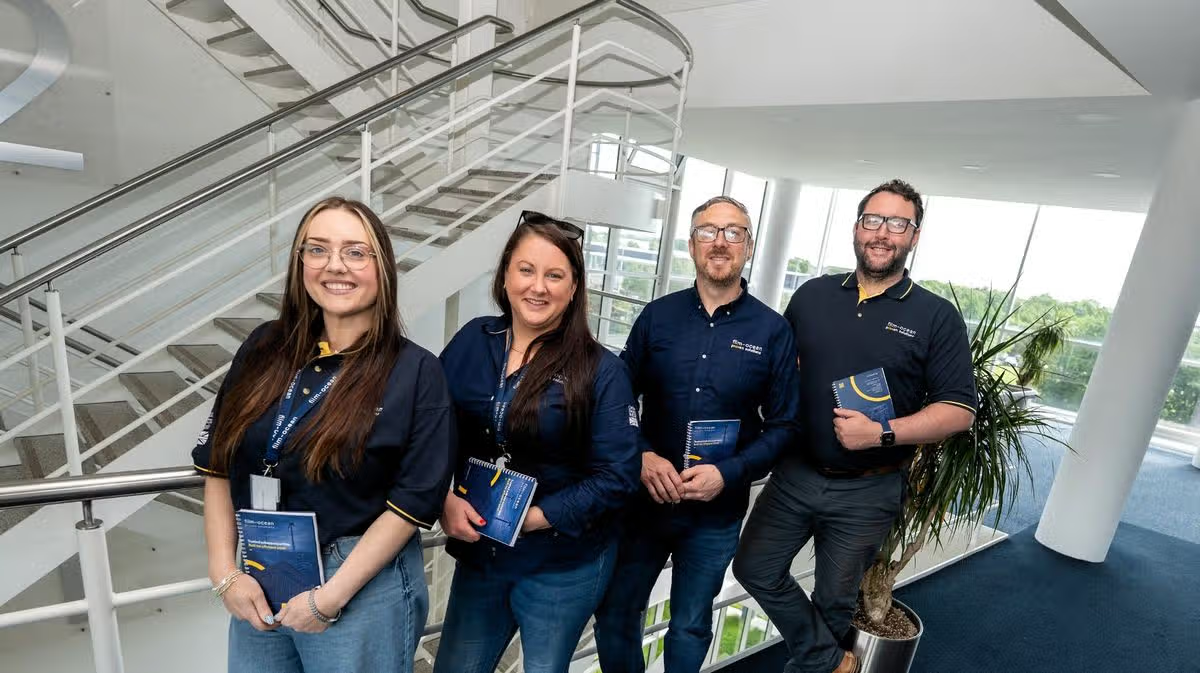
Members of the Film-Ocean team at the newly opened Newcastle office, from left: Abi Thompson, project manager; Sophie Bryce, commercial manager; Mike Mackie, operations director, and Gary Mills, project manager.(Image: Film-Ocean)

Scottish subsea technology firm Film-Ocean has launched a North East office, citing the importance of the region in its market.

The £28m turnover firm says it has plans to expand its Cobalt Business Exchange-based team having moved into the Tyneside location. Film-Ocean is based in Aberdeenshire and is an independent subsea contractor that provides remotely operated vehicle (ROV) inspection and intervention services to the global offshore energy industry.

It operates large fleet of work class, inspection class and micro-class ROVS supplied with crew to locations around the world. Bosses say the North East has emerged as a region of growing importance to the subsea and offshore energy industry, with a strong and expanding talent base in ROV project management and technical support.

They say establishing a presence in the area gives Film-Ocean access to expertise it uses for worldwide operations. The new office will serve as an operational and project delivery base, growing Film-Ocean’s technical support offering and giving it chance to build relationships with clients and partners across the region as it takes on more work.

Advertisement

It comes as the firm says it has grown rapidly since the start of the year. Latest available accounts for Film-Ocean – covering 2025 – show a significant jump in turnover and profits, with directors talking of continued improvement in market conditions and the renewal of several legacy contracts, along with strong utilisation of the company’s equipment.

Film-Ocean’s commercial manager, Sophie Bryce, said: “Expanding our UK footprint to Newcastle is about being closer to our clients and easier to work with — faster response times, closer day-to-day collaboration, and more capacity to take on new projects. Sustainability was also front of mind when choosing where to base our new office.

“Cobalt’s environmental credentials mean our growth in North East England is happening in a way that’s consistent with how we operate at Ocean House in Aberdeenshire, and with the values our clients increasingly expect from their supply chain partners.”

Film-Ocean says it opted for Cobalt Business Exchange, partly thanks to its sustainability credentials with a surrounding 39-acre biodiversity park with wildflower meadows, wildlife habitats and carbon-reduction and sustainable travel initiatives.

Advertisement
Continue Reading

Business

Climbing ropes recalled over defect that could cause deadly falls

Published

on

Climbing ropes recalled over defect that could cause deadly falls

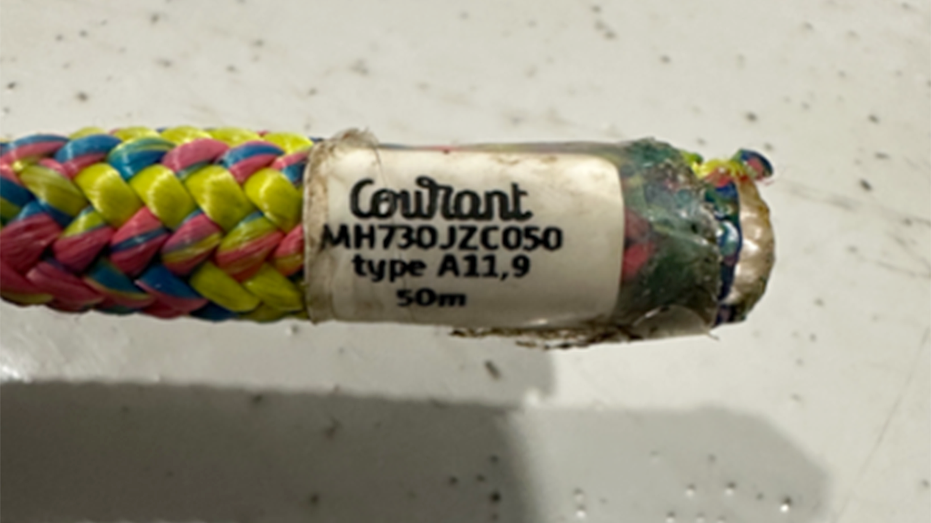
More than 1,000 climbing ropes are being recalled over a fall risk that could potentially lead to injury or death, according to federal regulators.

Wichard Groupe North America issued a recall of about 1,050 Courant Spliced Kalimba Climbing Ropes, the U.S. Consumer Product Safety Commission announced on Thursday.

Advertisement

“The spliced termination ends on the recalled ropes can fail unexpectedly, posing a risk of serious injury or death from fall hazard,” the commission said in its alert.

MORE THAN 1.7M LADDERS RECALLED NATIONWIDE OVER POTENTIALLY DEADLY FALL HAZARD

Courant Spliced Kalimba Climbing Ropes

Wichard Groupe North America issued a recall of about 1,050 Courant Spliced Kalimba Climbing Ropes. (U.S. Consumer Product Safety Commission)

The recalled climbing ropes include the 45m, 50m and 60m items in lollipop and bubblegum color, as well as any additional spliced Kalimba ropes spliced under Courant splicing protocols before June 15, according to the commission.

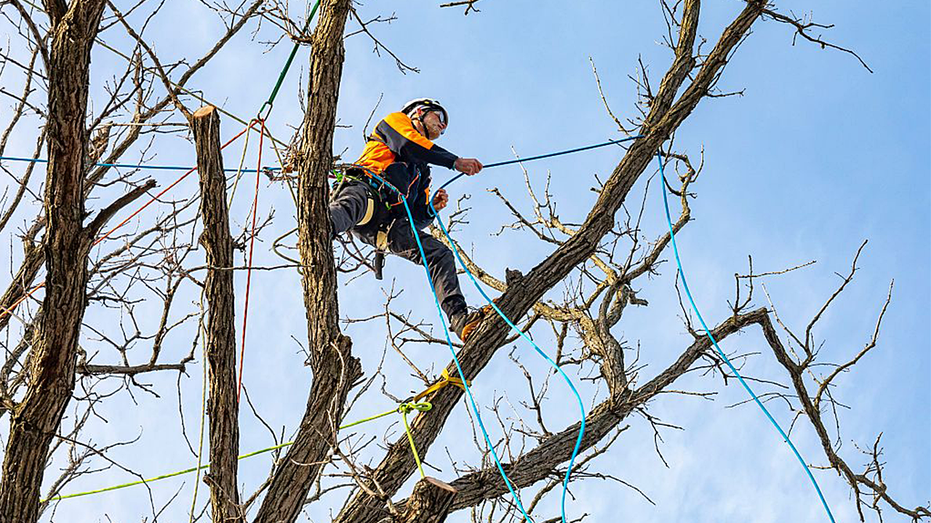
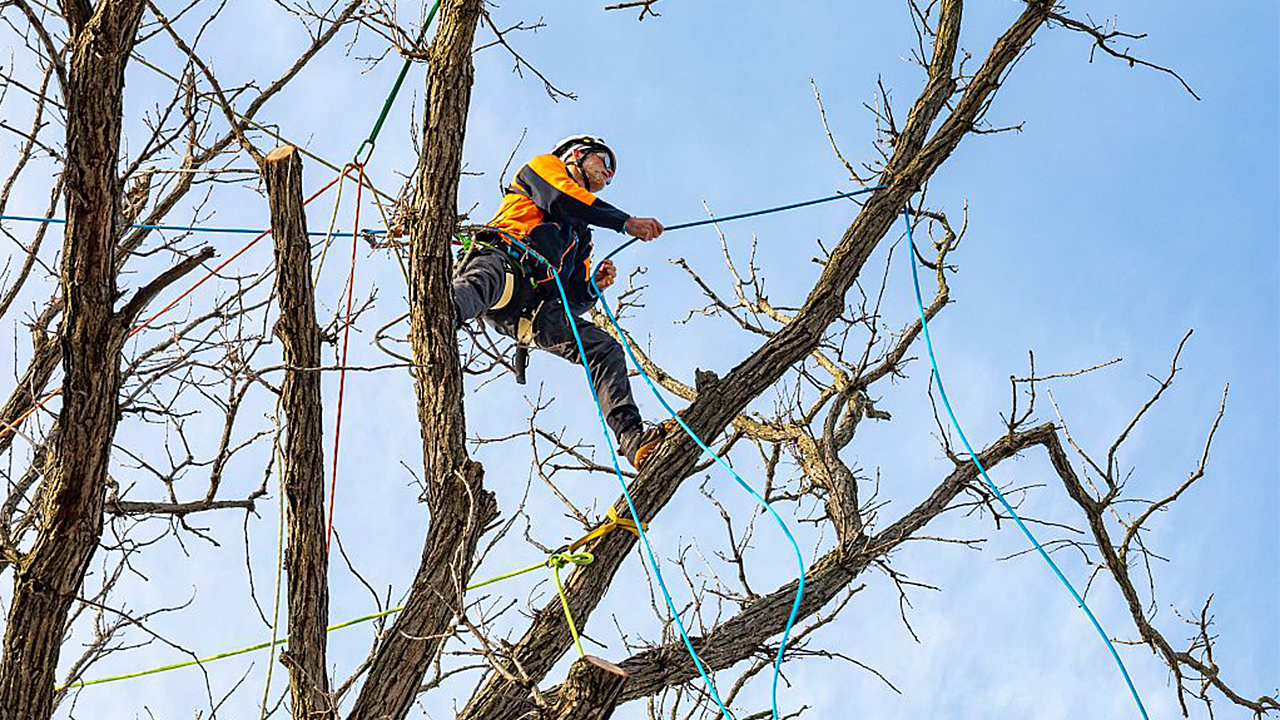
The ropes are designed for tree climbing and pruning, and they are commonly used by arborists.

Advertisement

The company has received three reports of splices failing, but no injuries have been reported thus far in connection with the recalled ropes.

Courant Spliced Kalimba Climbing Ropes recalled over fall hazard

The company has received three reports of splices failing, but no injuries have been reported. (U.S. Consumer Product Safety Commission)

The ropes were sold by Vertical Supply Group, Arbsession, RBI Corporation and nationwide retailers from January 2023 through June of this year for between $250 and $350.

Consumers are instructed to stop using the recalled ropes immediately.

RECALL ISSUED FOR DOG AND HORSE MEDICATION AFTER FIBERGLASS FOUND IN VIALS

Advertisement
Arborist

The ropes are designed for tree climbing and pruning, and they are commonly used by arborists. (Jim West/UCG/Universal Images Group via Getty Images / Getty Images)

CLICK HERE TO GET FOX BUSINESS ON THE GO

They can contact Wichard Groupe North America for a free replacement rope, including shipping.

Consumers will be offered one of two free replacement options: one with immediate availability and another with availability beginning in the middle of September.

Advertisement
Continue Reading

Business

Belgian Boys hires new chief commercial officer

Published

on

Belgian Boys hires new chief commercial officer

Louisa Lawless brings nearly two decades of commercial leadership experience.

Continue Reading

Business

(VIDEO) SpaceX and Tesla Confirm Texas Site for ‘Terafab’ AI Chip Complex With Intel, xAI as Demand Soars

Published

on

SpaceX and Tesla Confirm Texas Site for 'Terafab' AI Chip

SpaceX and Tesla have formally confirmed the site for Terafab, an enormous artificial intelligence chip manufacturing complex being developed in partnership with Intel and xAI, moving the ambitious project from paperwork toward ground-breaking as Elon Musk’s companies contend with a chip supply gap they say existing global manufacturers cannot fill.

According to a report from Benzinga, the confirmation followed a $10 million payment SpaceX sent to Grimes County, Texas, earlier this week, satisfying a deadline built into a tax abatement agreement the two sides signed in June. Foundation preparation is expected to begin almost immediately, with construction renderings expected within days and physical construction to follow within months, according to Teslarati.

Why This Particular Site

SpaceX selected the Gibbons Creek Reservoir, the former home of the Gibbons Creek Steam Electric Station, as the location for the full-scale facility, citing the site’s rainwater storage capacity and its proximity to Houston’s labor pool, with more than 15.9 million people living within a three-hour radius of the property. The company plans to power the complex using its own natural gas plants rather than drawing electricity from Texas’s ERCOT grid, and it has acquired the Navasota River pumping station it intends to use to divert stormwater into the reservoir for cooling and industrial use.

A Venture Bringing Together Four of Musk’s Key Partners

Advertisement

Terafab brings together three companies tied to Musk, SpaceX, Tesla and xAI, alongside chipmaker Intel, which joined the project in April following a meeting between Musk and Intel CEO Lip-Bu Tan at Intel’s campus. Musk first unveiled the venture in March at a launch event held at the defunct Seaholm Power Plant in Austin, describing it at the time as, in his words, the most epic chip-building exercise in history.

An initial prototype fabrication facility is already underway at Tesla’s Giga Texas campus in Austin, designed to feed into the larger, full-scale Grimes County complex. SpaceX has estimated that the first phase of the Grimes County site could cost approximately $55 billion, with total costs across all planned phases potentially reaching as high as $119 billion.

A Staggering Compute Target

At full scale, Terafab is targeting 1 terawatt of annual AI compute capacity, a figure the project’s backers say would roughly double current total U.S. semiconductor output. The plan calls for reaching 1 million wafer starts per month using Intel’s advanced 14A manufacturing process, a considerably more ambitious target than the current global AI chip output, which analysts have estimated at roughly 20 gigawatts annually, meaning Terafab’s stated goal would represent something on the order of 50 times current worldwide production.

Advertisement

Intel, in a statement posted to social media platform X when it joined the project, said its ability to design, fabricate and package ultra-high-performance chips at scale would help accelerate Terafab’s aim of producing 1 terawatt per year of compute to power future advances in AI and robotics. Intel CEO Lip-Bu Tan separately characterized the partnership as representing a step change in how silicon logic, memory and packaging will be built in the future.

The Supply Problem Driving the Project

The scale of the undertaking traces back to a supply constraint SpaceX has described explicitly in its own regulatory filings. In its Form S-1 filed ahead of its recent initial public offering, SpaceX warned that its orbital AI ambitions depend on chip access significantly beyond what is currently available, pointing specifically to capacity constraints at established foundries including TSMC and Samsung Foundry. Musk has repeatedly argued that existing global chip fab output covers only a small fraction of what Tesla and SpaceX will eventually require to power vehicles, Optimus humanoid robots and space-based data centers.

According to Musk’s stated division of labor for the project, Tesla is focused on the smaller prototype fab, while SpaceX is taking the lead on the initial phase of the full-scale Grimes County facility. The venture is designed around two primary facilities: one focused on terrestrial AI chip production, manufacturing processors that power Full Self-Driving software and the Optimus robot, and a second, more experimental facility intended to produce chips specifically engineered for use in orbital data centers.

Advertisement

Not Without Skeptics

Despite the scale of the announced investment, some industry analysts have offered a more measured read on what Terafab actually represents. Writing shortly after Intel’s involvement was confirmed, one technology publication argued that the venture functions less like an independent Tesla-built chip fab and more like an Intel Foundry expansion project for which Tesla, SpaceX and xAI are serving primarily as anchor customers, rather than a fully vertically integrated manufacturing operation built from scratch by Musk’s companies. That analysis noted that leading-edge chip fabrication typically takes established players like TSMC, Samsung and Intel roughly a decade and tens of billions of dollars to stand up, making the idea of an automaker, a rocket company and an AI startup independently building a competitive advanced process node a considerably more difficult proposition than the project’s public framing suggests.

SpaceX’s own regulatory disclosures have echoed a version of that caution. The company’s Form S-1 explicitly warns investors that Terafab “may not be successful” in closing the chip supply gap it was designed to address, an acknowledgment that stands in contrast to the more triumphant framing the project has received in promotional materials and social media commentary surrounding its launch.

Financial Scale Required

Advertisement

Some industry analysts have separately calculated that achieving the full 1-terawatt annual capacity target would require capital expenditures ranging from $5 trillion to $13 trillion over the project’s full lifespan, given the roughly 22.4 million advanced logic wafers that scale of output would require processing each year. To help generate additional liquidity for its broader ambitions, SpaceX previously acquired xAI in an all-stock merger, creating a combined entity valued at approximately $1.25 trillion at the time of that transaction.

With site confirmation now finalized and construction expected to begin within months, Terafab moves into a phase where its backers’ ambitious timelines will face their first real test. Traditional semiconductor fabs typically take five to seven years to progress from initial groundbreaking to full volume production, meaning even an aggressive construction schedule at Grimes County would likely place meaningful chip output for Tesla, SpaceX and xAI’s most demanding AI and robotics applications several years away, even as the underlying chip supply constraints the project is meant to address continue to intensify across the broader technology industry in the meantime.

Advertisement
Continue Reading

Business

CEO calls Krispy Kreme ‘compelling global growth story’

Published

on

CEO calls Krispy Kreme ‘compelling global growth story’

Profitable US expansion, capital-light international growth key to turnaround.

Continue Reading

Business

WK Kellogg: Artificial colors to be out this year

Published

on

WK Kellogg: Artificial colors to be out this year

Updated cereal recipes to contain naturally sourced colors. 

Continue Reading

Business

Technocraft Ventures IPO opens today; GMP signals 5% premium. Should you subscribe?

Published

on

Technocraft Ventures IPO opens today; GMP signals 5% premium. Should you subscribe?
The Rs 251.88 crore Technocraft Ventures IPO opens for subscription today, August 7, and will remain open until August 11. Ahead of its launch, the IPO is commanding an 5% premium in the grey market, reflecting positive investor sentiment.

The issue comprises a fresh issue of 95 lakh shares worth Rs 201.51 crore and an offer for sale (OFS) of 24 lakh shares valued at Rs 50.37 crore.

The company has fixed the price band at Rs 200-Rs 212 per share, with a lot size of 70 shares. At the upper end of the price band, retail investors will need a minimum investment of Rs 14,840 for one lot.

Following the close of the issue on August 11, the share allotment is expected to be finalised on August 12, while the stock is tentatively scheduled to make its NSE and BSE debut on August 14.

Advertisement

Khambatta Securities is the book-running lead manager for the issue, while Bigshare Services Pvt. Ltd. has been appointed as the registrar.


With a positive grey market premium indicating decent demand, investors will now watch whether the IPO attracts strong subscription across retail, institutional, and non-institutional categories.

Technocraft Ventures IPO GMP today

The grey market sentiment around the Technocraft Ventures IPO remains positive, with the latest GMP (Grey Market Premium) indicating an 5% premium or Rs 11 per share over the upper price band of Rs 212. Based on the current GMP, the estimated listing price of the IPO is around Rs 223 per share.

Technocraft Ventures IPO: Where will the funds be used?

The company plans to primarily utilise the IPO proceeds to strengthen its working capital position. Around Rs 150 crore has been earmarked for meeting working capital requirements, which will help support business expansion, improve operational efficiency, and provide additional financial flexibility. Any remaining funds from the issue will be deployed towards general corporate purposes.

About Technocraft Ventures

Established in October 1998, Technocraft Ventures Ltd. is an infrastructure development company engaged in turnkey Engineering, Procurement, and Construction (EPC) projects. The company executes infrastructure projects largely for state governments and government agencies across northern India, including Uttar Pradesh, Uttarakhand, Rajasthan, and the National Capital Territory of Delhi.

Advertisement

Its services cover a wide range of areas: water and wastewater infrastructure, roads and highways, urban infrastructure, and trenchless and micro-tunnelling works. The company has executed projects under schemes including AMRUT, JNNURM, UIDSST, Namami Gange, JJM, and PMGSY.

The company has experience implementing ADB-funded infrastructure projects with rigorous technical and environmental standards.

As of May 31, 2026, Technocraft Ventures employed 170 full-time staff, including 78 engineers, across functions such as engineering, procurement, finance, safety, business development, and administration.

Strong financial performance

Technocraft Ventures reported healthy growth in FY26, with total income rising 23% year-on-year to Rs 347 crore from Rs 281 crore in FY25. Profitability also improved significantly; profit after tax (PAT) jumped 54% to Rs 43.32 crore in FY26, compared with Rs 28.20 crore in the previous fiscal year, highlighting stronger operational performance.

Advertisement

Should you subscribe to Technocraft Ventures IPO?

According to a research report by Anand Rathi, Technocraft Ventures is valued at a P/E multiple of 19.4x at the upper price band, based on its FY26 annualised EPS of Rs 14.39. The post-issue market capitalisation is estimated at around Rs 8,397 million.

The brokerage highlighted the company’s diversified order book, expanding geographical presence, and integrated EPC capabilities as key positives that provide long-term growth visibility. However, compared with listed peers, the IPO valuation appears fairly priced rather than discounted.

Anand Rathi has assigned a “Subscribe – Long Term” rating to the IPO, citing growth potential and business fundamentals.

(Disclaimer: Recommendations, suggestions, views and opinions given by the experts are their own. These do not represent the views of Economic Times)

Advertisement
Continue Reading

Business

New Mexico court orders Meta to pay $567M over teen safety

Published

on

New Mexico jury orders Meta to pay $375M over alleged child safety failures

A New Mexico court on Thursday ordered Meta to pay $567 million and implement sweeping protections for teen users after finding Facebook and Instagram contributed to the state’s youth mental health crisis.

The judgment comes after a jury in March ordered Meta to pay $375 million for violating the state’s Unfair Practices Act, bringing the company’s total liability in the case to nearly $942 million.

Advertisement

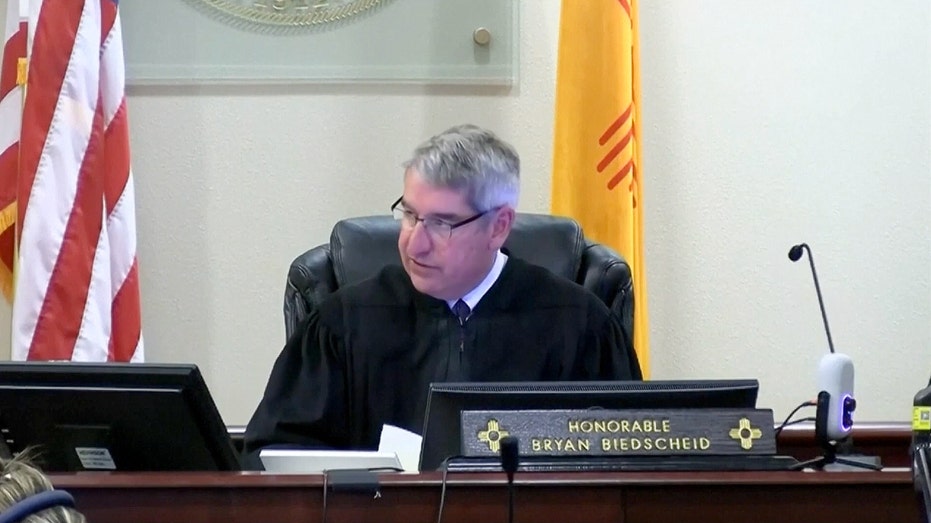
Judge Bryan Biedscheid found Meta had created a public nuisance in New Mexico and ordered the company to implement a series of youth-safety measures over the next five years.

The requirements include monthly limits on teens’ use of Facebook and Instagram, restrictions on notifications, tighter controls on adults contacting minors, safeguards for AI chatbots and enhanced reviews of child sexual abuse reports.

META ORDERED TO PAY $375M AFTER JURY FINDS PLATFORM ENABLED CHILD PREDATORS IN LANDMARK NEW MEXICO CASE

Judge Bryan Biescheid at the stand in New Mexico

A New Mexico jury found Meta misled users and failed to protect kids on the platform on Tuesday, March 24, 2026. (Pool / Unknown)

In a statement to FOX Business, Meta said it disagreed with the ruling and vowed to appeal.

Advertisement

“We work hard to keep people safe on our platforms and have been transparent about the challenges of identifying and removing bad actors and harmful content,” a Meta spokesperson said.

“We remain confident in our record of protecting teens online and will continue to defend ourselves against claims that misrepresent the facts,” the spokesperson added.

The court sided with New Mexico Attorney General Raúl Torrez, a Democrat, who accused Meta of designing products that addict young users and failing to adequately protect children from sexual exploitation on its platforms.

ZUCKERBERG SAYS AI SHOULD EMPOWER PEOPLE, NOT REPLACE THEM, IN NEW META VISION

Advertisement
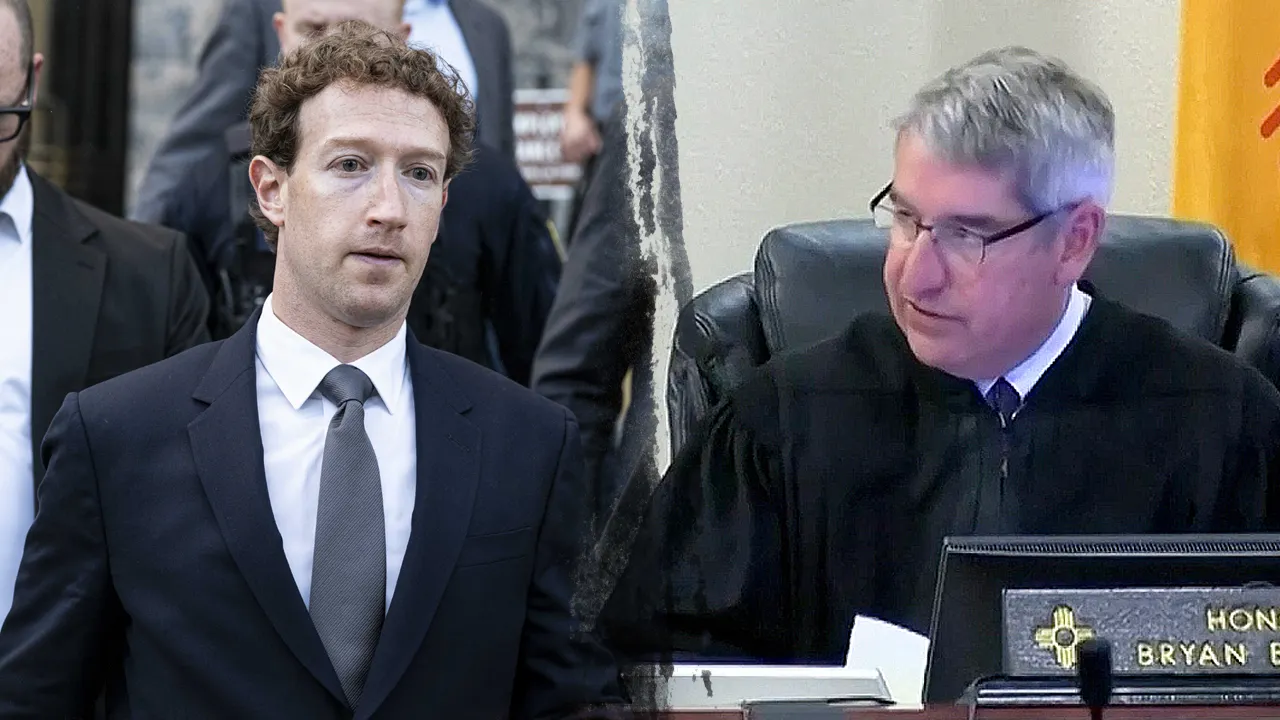
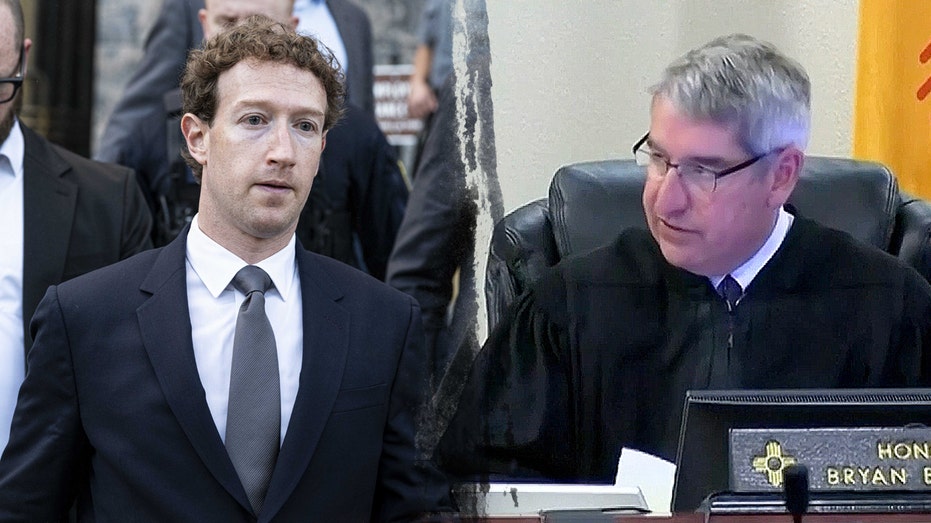
Split image of Mark Zuckerberg and Judge Bryan Biescheid

Mark Zuckerberg and Bryan Biescheid. (Jon Putman/Anadolu via Getty Images and Pool / Getty Images)

Torrez said the $567 million will fund New Mexico’s abatement plan and comes on top of the $375 million in civil penalties awarded in March.

“For years, Meta knew its platforms were harming New Mexico’s kids, from feeding a youth mental health crisis to connecting predators with children, and it chose engagement and profit over their safety,” Torrez said in a statement.

Ticker Security Last Change Change %
META META PLATFORMS INC. 589.90 +1.13 +0.19%

“Today, Meta is paying for that choice,” he continued. “This judgment holds the company accountable for the damage it caused to our children, our families, and our schools, and it forces real changes to how Meta operates in New Mexico.”

Torrez called the ruling a “blueprint” for other states seeking to pursue similar litigation against social media companies.

Advertisement

TIKTOK SAYS MODERATOR ERROR DELAYED REMOVAL OF PEREZ HILTON’S LIVESTREAM SHOWING ACTS OF SELF-HARM

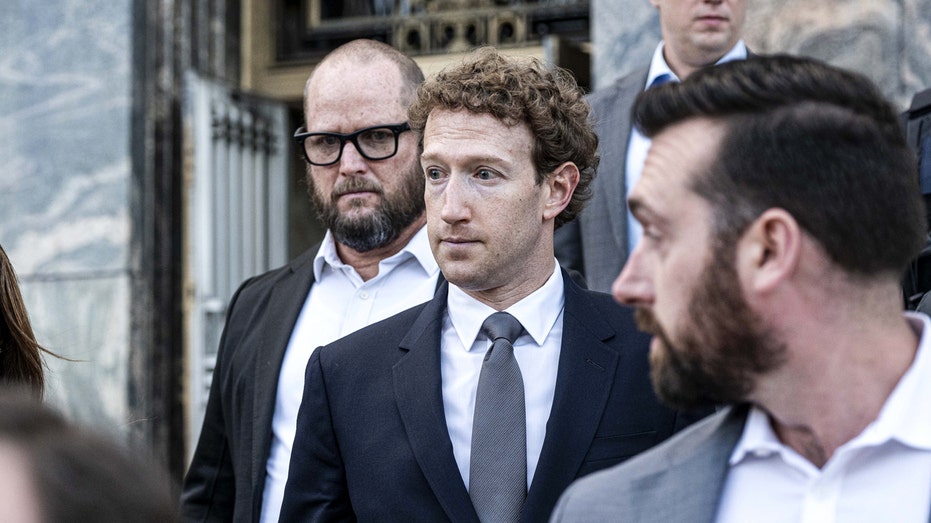
Mark Zuckerberg leaving LA courthouse

Meta CEO Mark Zuckerberg leaves the Federal Courthouse in downtown Los Angeles after defending the company in a landmark social media addiction trial in Los Angeles, United States, on Feb. 19, 2026.  (Jon Putman/Anadolu via Getty Images / Getty Images)

“For the first time, a court has ruled that a social media giant can be held liable for building products that endanger children and has ordered the structural changes needed to fix it,” he said. “New Mexico led the way in the courtroom. Now other states, and other countries confronting the same crisis, have a roadmap they can follow.”

More than 40 states and over 1,300 school districts have already filed public nuisance lawsuits against social media companies, seeking damages and court orders requiring changes to their products and practices.

The ruling followed three weeks of testimony in the second trial stemming from the lawsuit. Unlike the first trial, the proceeding did not involve a jury and focused on whether Meta’s platforms constituted a “public nuisance” under New Mexico law.

Advertisement

MOST AMERICANS STILL TRUST FINANCIAL ADVISORS OVER AI TOOLS FOR MAJOR MONEY DECISIONS, STUDY FINDS

Meta headquarters sign

Signage outside Meta headquarters in Menlo Park, California, US, on Thursday, Feb. 1, 2024. (David Paul Morris/Bloomberg via Getty Images / Getty Images)

Biedscheid compared the alleged harms caused by Meta’s platforms to pollution escaping from a factory.

“(J)ust as noxious pollution produced by the factory can harm the common public right to reasonably clean air, the harmful effects of Meta’s platforms on children do not stay contained by its platforms,” Biedscheid wrote in his ruling.

The judge said those effects extend into the real world and create broader burdens for children, families, schools, hospitals and law enforcement.

Advertisement

GET FOX BUSINESS ON THE GO BY CLICKING HERE

New Mexico filed the lawsuit in 2023, alleging Meta had created a “breeding ground” for child predators and misled users about safety protections on Facebook, Instagram and WhatsApp.

FOX Business’ Jasmine Baehr and Reuters contributed to this report.

Advertisement
Continue Reading

Trending

Copyright © 2025