

Business
CDC says there are no U.S. hantavirus cases currently, 41 people being monitored

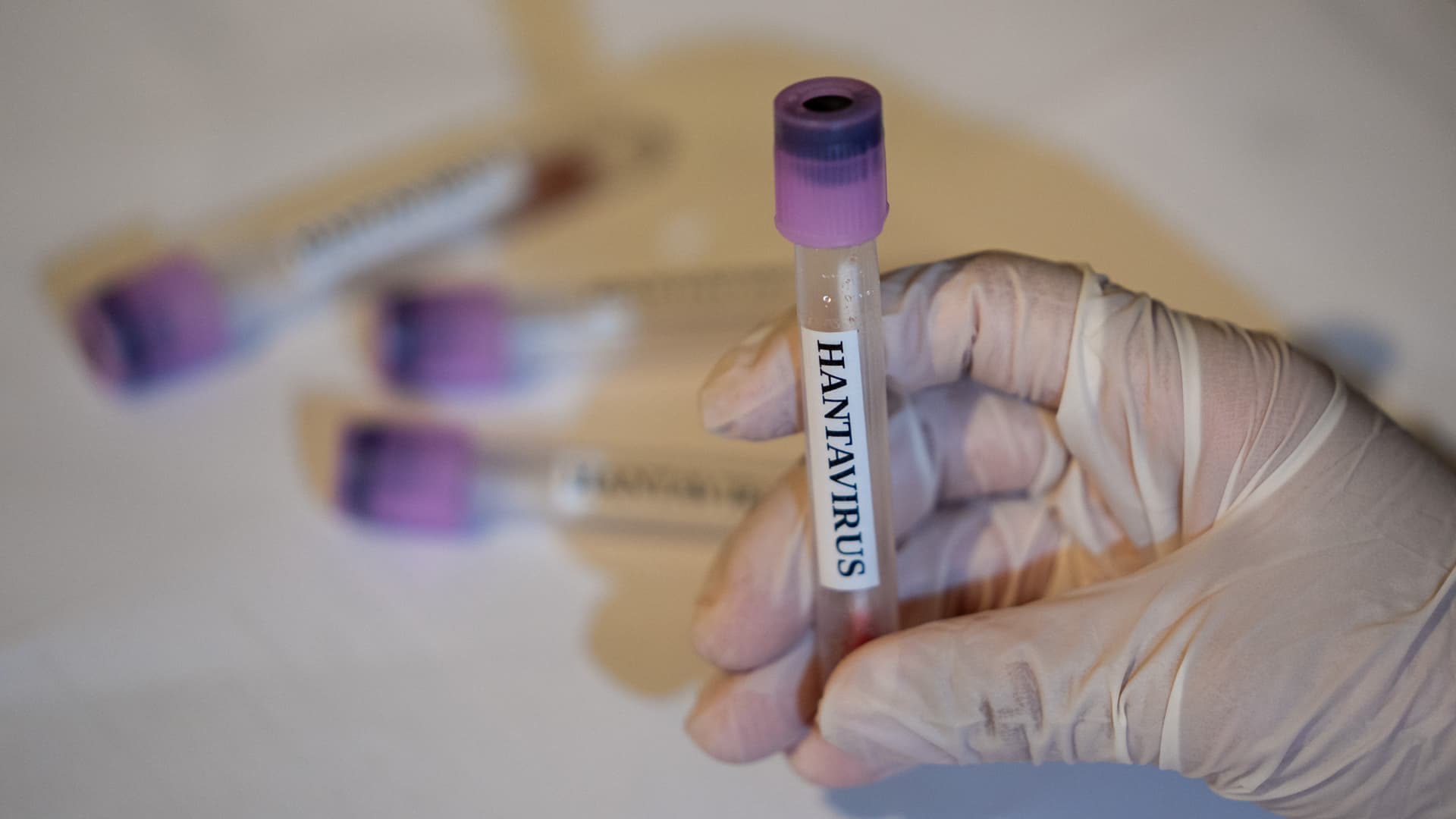
In this photo illustration Hantavirus samples are seen in Ankara, Turkiye on May 6, 2026.
Arman Onal | Anadolu | Getty Images
The U.S. Centers for Disease Control and Prevention said there are no hantavirus cases in the country as of Thursday, as it monitors 41 people for the virus.
The agency said the risk to the public remains low in the aftermath of an outbreak on a cruise ship.
The World Health Organization has reported 11 total cases of hantavirus linked to the outbreak, including three deaths.
This is breaking news. Please refresh for updates.


InvestingPro’s Fair Value spotted Rocket Companies 44% drop in advance
InvestingPro Fair Value nails 68% return on LiveRamp stock
Business
Silver beats gold, stocks and bonds in 10-year returns. Here’s the data – Performance in long run

G-sec 10-year and short-term debt funds delivered returns of 6% and 5.9%, respectively, in the mentioned time period. Short-term debt has ranked third among asset classes this year, as investors opt for capital preservation and liquidity in a volatile environment. Long-term debt has delivered marginal losses, saddled with rising bond yields and ongoing interest rate uncertainty.

Investors must hold shares of these companies in their demat accounts on the record date to be eligible for the respective corporate actions. The list remains tentative, as more companies may announce record dates for dividends, bonus issues and stock splits during the week.
Here is a day-wise list of corporate actions to watch out for this week:
June 15 (Monday)
SMC Global Securities has fixed June 15 as the record date for its final dividend of Rs 0.6 per share. The broking firm has a dividend yield of nearly 2%, according to data on Trendlyne.
June 16 (Tuesday)

Mini Diamonds (India) will turn ex-record date for a bonus issue of 1:1 on June 16. The company will issue one bonus share with a face value of Rs 2 each for every share held in the company as on the record date. The bonus shares are scheduled to be allotted by June 17.
RR Kabel has also fixed June 16 as the record date for its final dividend of Rs 5.5 per share.
June 17 (Wednesday)
Bengaluru-based real estate developer Brigade Enterprises has fixed June 17 (Wednesday) as the record date for its bonus issue in the ratio of 1:3. Earlier in May, Brigade Enterprises announced its first bonus issue in around seven years, coinciding with the release of its Q4 results. It had said that its board has approved the plan to issue one bonus share with a face value of Rs 10 each for every three shares held in the company as on the record date.
The company approved the plan to increase its share capital from Rs 250 crore, divided into 25 crore shares, to Rs 400 crore, divided into 40 crore shares.
Also read: Brigade Enterprises sets record date for 1:3 bonus share reward
Wednesday will also be the record date for dividend payments by Krishana Phoschem (Rs 0.5 per share), Madhya Bharat Agro Products (Rs 0.5 per share) and Steel City Securities (Rs 1 per share).
June 18 (Thursday)
The shares of Tata Technologies will turn ex-record date for a special dividend of Rs 3.35 per share and a final dividend of Rs 2 per share. HDB Financial Services has also fixed June 18 as the record date for a final dividend of Rs 2 per share.
Other stocks that have fixed Thursday as the record date for their respective dividends include Capital Small Finance Bank (Rs 5 per share), eMudhra (Rs 1.25 per share), GHCL (Rs 12 per share), Monika Alcobev (Rs 1 per share), Swastika Investmart (Rs 0.6 per share) and Vimta Labs (Rs 2 per share).
June 19 (Friday)
Friday will see some heavyweight companies turn ex-record date for their corporate actions. Private lender HDFC Bank has fixed June 19 as the record date for its final dividend of Rs 13 per share. Meanwhile, Tata Communications will see its shares trade ex-record date for a final dividend of Rs 17.50 per share.
Tata Motors Passenger Vehicles has also set June 19 as the record date for its Rs 3 per share final dividend, while HDFC Life Insurance Company will turn ex-record date for its dividend worth Rs 2.1 per share. Sanofi Consumer Healthcare India has fixed Friday as the record date for a final dividend of Rs 75 per share, while wires and cables manufacturer Polycab India will reward investors with a Rs 47 per share payout. IndiaMART InterMESH is setting a total dividend of Rs 60 per share, which includes a final dividend of Rs 30 and a special dividend of Rs 30.
In the power and automotive sectors, Torrent Power will pay its final dividend at Rs 5 per share. Additionally, healthcare firm Corona Remedies has earmarked a final dividend of Rs 10 per share. A host of other companies will also turn ex-record date for their respective dividends on June 19, including Solitaire Machine Tools (Rs 1.5 per share), AWL Agri Business (Rs 1 per share), Raghav Productivity Enhancers (Rs 1 per share), Amba Enterprises (Rs 0.75 per share), GHCL Textiles (Rs 0.6 per share) and Hindusthan Insulators & Industries (Rs 0.5 per share).
String Metaverse, meanwhile, will turn ex-record date for its 2:9 bonus issue on Friday.
Also read: Did City Union Bank shares really crash 23% in one day? Here’s how the bonus math works
(Disclaimer: Recommendations, suggestions, views and opinions given by the experts are their own. These do not represent the views of The Economic Times)

Street Calls of the Week
Business
Trump’s support in rural America slips as fuel and food prices climb, Reuters/Ipsos poll shows

Trump’s support in rural America slips as fuel and food prices climb, Reuters/Ipsos poll shows
Chubb Limited: The Stock's Consistent Compounding Makes It A Strategic Gem
Business
Nifty, Sensex to rally more on Monday? Iran peace deal among 5 factors to dictate Dalal Street this week
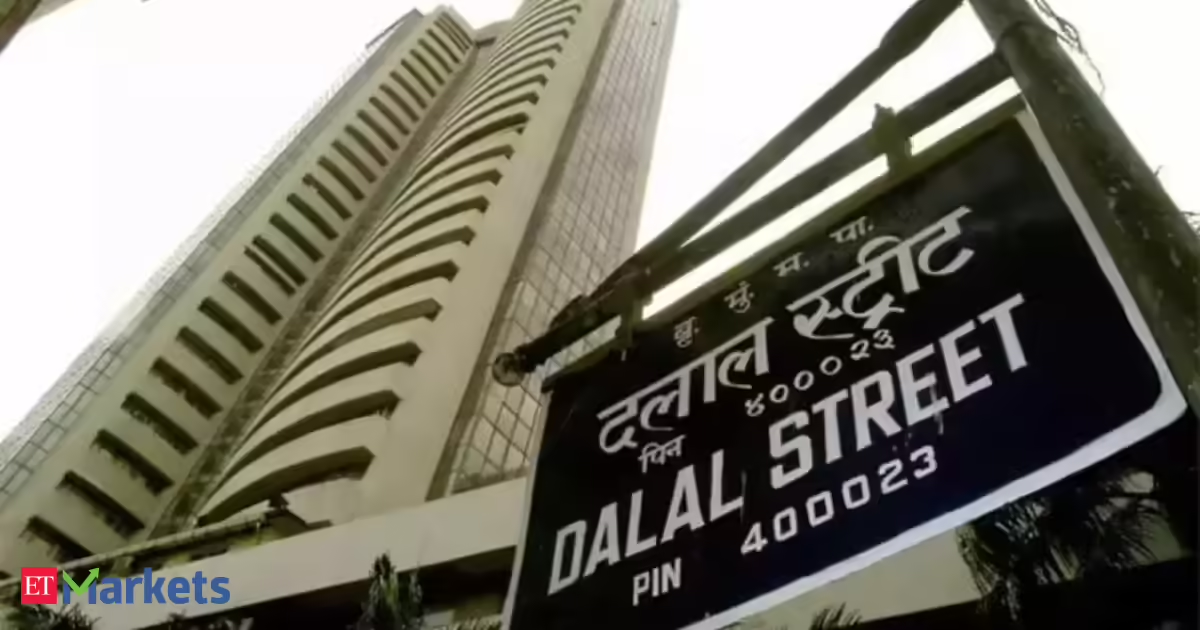
The rally added nearly Rs 10 lakh crore to the combined market capitalisation of BSE-listed companies, taking the total market value to around Rs 462 lakh crore. Here are 5 factors that will decide market mood.
Iran deal hopes
US President Donald Trump on Thursday said the United States and Iran could sign a peace deal as early as this weekend, a development that could reopen the Strait of Hormuz for shipping. Speaking to reporters at the White House, Trump said, “We just made a great settlement of the war with Iran.””The strait will officially open as soon as we sign, which could be soon, very soon, maybe over the weekend in Europe,” he added, noting that Vice President JD Vance could sign on behalf of the United States.
When asked whether Iran’s Supreme Leader Ayatollah Mojtaba Khamenei had approved the deal, Trump said, “I understand the answer is yes.”
Can oil prices extend slide
Oil prices fell to a three-month low on Friday after Iranian state media reported that a draft memorandum of understanding between Iran and the United States includes a commitment by Washington to ease oil sanctions and a pledge by Tehran to reopen the Strait of Hormuz within 30 days.According to Iran’s Mehr News Agency, the 14-point document states that final negotiations will begin only after half of Iran’s frozen assets are released, US oil sanctions are suspended and the naval blockade is lifted.
Will rupee strengthen more?
The Indian rupee strengthened by 60 paise to 95.25 against the US dollar in early trade. “Going ahead, crude oil movement will remain the key driver for the currency, along with capital flows and global risk sentiment.”
USD/INR witnessed a volatile week, trading within a broad Rs 94.90-Rs 95.75 range before settling near Rs 95.10. The pair closed near the lower end of its ascending trendline channel, indicating a modest strengthening of the rupee during the week. Immediate resistance stands at Rs 95.30-Rs 95.40. A sustained move above this level could ease near-term bearish pressure and push prices back towards Rs 95.60-Rs 95.80. On the downside, the previous reversal low near Rs 94.75-Rs 94.65 remains a key level to watch. A confirmed break below could drag the pair towards Rs 94.40, with a stronger base seen near Rs 94.20.
The near-term bias remains cautious, driven by a fragile geopolitical backdrop influencing dollar demand alongside the strength of domestic policy support.
Global support
US stocks advanced on Friday as SpaceX’s strong market debut lifted sentiment, while investors remained hopeful about a potential peace deal between the United States and Iran. The S&P 500 rose 0.5% to close at 7,431.46, while the Nasdaq Composite gained 0.31% to finish at 25,888.84. The Dow Jones Industrial Average climbed 353.51 points, or 0.7%, to settle at 51,202.26.
Elon Musk’s rocket maker debuted on the Nasdaq at $150 per share under the ticker SPCX, above its IPO price of $135. The stock surged more than 20% shortly after listing and ended the day up 19% at around $161.
Asian markets also joined the rally, led by a sharp rise in technology stocks. South Korea’s Kospi surged 5%, while Japan’s Nikkei 225 ended 3% higher. A continuation of the positive global momentum amid hopes of an Iran peace deal could help the Nifty and Sensex draw strength from favourable overseas cues.
Charts show promise
Sudeep Shah of SBI Securities said Friday’s rally carries added significance from a technical standpoint, as the Nifty closed above its 20-day EMA for the first time since May 2026, indicating an improvement in short-term momentum.
The daily RSI has rebounded sharply from lower levels and is now trading above the 50 mark while also moving above its 9-day average. Meanwhile, the Daily Stochastic has generated a bullish crossover, further reinforcing the positive undertone.
With multiple indicators turning favourable simultaneously, the obvious question is how much room the rally still has. According to Shah, the recent breakout above key short-term resistance levels, coupled with improving momentum indicators, suggests that the index could extend its upmove towards 23,800, followed by the psychological 24,000 mark.
On the downside, the 23,350-23,300 zone is expected to act as a crucial support area. As long as this support remains intact, the bulls appear to have regained control. The next few sessions, however, will determine whether the move is merely a rebound or the start of a stronger uptrend.
(Disclaimer: Recommendations, suggestions, views and opinions given by the experts are their own. These do not represent the views of The Economic Times)
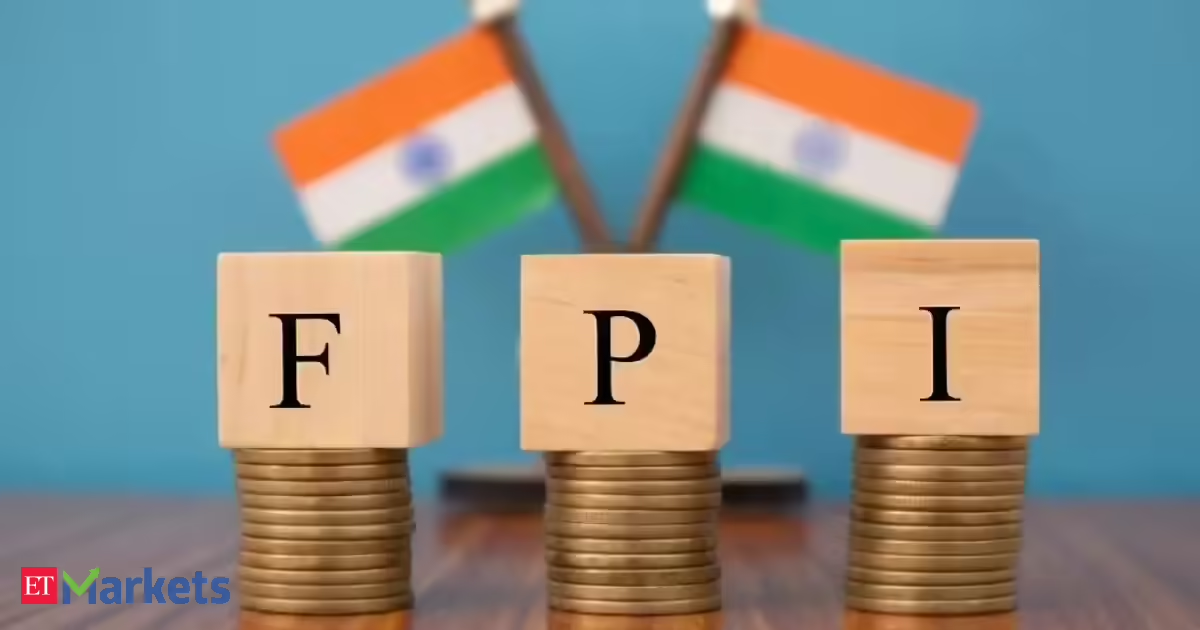
With the latest outflows, total withdrawals by Foreign Portfolio Investors (FPIs) from Indian equities have surged to Rs 2.87 lakh crore so far in 2026, surpassing the Rs 1.66 lakh crore pulled out during the entire calendar year 2025, according to data from the National Securities Depository Ltd (NSDL).
Pabitro Mukherjee, Deputy Vice President-Research at Bajaj Broking, said FPI flows in the coming week will depend on developments in the US-Iran peace talks, the US Federal Open Market Committee’s policy decision, the Bank of Japan’s rate decision and commentary from major central banks.
According to NSDL data, FPIs have remained net sellers in every month of 2026 except February. They withdrew Rs 35,962 crore in January before turning net buyers in February, investing Rs 22,615 crore, marking the highest monthly inflow in 17 months.
The trend, however, reversed sharply in March, when foreign investors pulled out a record Rs 1.17 lakh crore. The selling pressure continued in April with net outflows of Rs 60,847 crore and in May with withdrawals of Rs 32,963 crore. In June, FPIs have already withdrawn Rs 62,853 crore during the first two weeks of the month.
Himanshu Srivastava, Principal, Manager Research, Morningstar Investment Research India, said investors continue to navigate an environment marked by elevated uncertainty around the interest-rate trajectory of major central banks, geopolitical developments and concerns over global growth.
“In such phases, emerging markets often witness tactical de-risking as investors seek safety and rebalance portfolios towards developed markets and defensive assets,” he said.Srivastava added that India’s relatively rich valuations compared with several emerging-market peers may also have prompted foreign investors to adopt a more selective approach towards allocations.
Market participants said the persistent depreciation of the rupee has emerged as another key factor behind the sustained outflows.
The Indian currency has weakened nearly 6 per cent so far in 2026 and around 10 per cent over the past year, falling from the mid-80s level to about 95 against the US dollar despite efforts by the Reserve Bank of India (RBI) to stabilise the currency.
However, the pace of FPIs outflows moderated significantly in the latter half of last week, indicating that while risk aversion remained elevated, the intensity of foreign selling eased gradually.
On Friday, FPIs sold equities worth only Rs 1,082 crore in the cash market.
V K Vijayakumar, Chief Investment Strategist at Geojit Investments, said recent geopolitical developments and expectations of a peace agreement between the US and Iran have resulted in a sharp correction in Brent crude prices to below USD 87 per barrel.
“For a large oil importer like India, this is a significant positive. India is facing a balance of payments deficit of about USD 60 billion in FY27,” he said.
Given the importance of foreign portfolio flows in financing the current account deficit and supporting the balance of payments, policymakers have announced a series of measures aimed at attracting overseas capital.
These include the RBI absorbing hedging costs on FCNR deposits mobilised by commercial banks, expanding the forex swap window, increasing access to government bonds through the Fully Accessible Route (FAR), and raising investment limits for non-resident Indians and overseas citizens of India in domestic equities.
In contrast to the equity outflows, FPIs invested more than Rs 13,200 crore in debt securities through the FAR route during the first fortnight of June, taking total investments through this channel to nearly Rs 28,000 crore so far this year.


Trump hosts White House cage fights amid war and political scrutiny
InvestingPro’s Fair Value spotted Rocket Companies 44% drop in advance

Google Gemini AI Predicts Jaw-Dropping XRP Price For Next 90 Days

In Tijuana, Iran’s tiny diaspora agrees on little — except Team Melli


-

 NewsBeat6 days ago
Alexander Zverev wins the French Open to finally earn a 1st Grand Slam title
-

 Crypto World6 days ago
Anatomy of the June crypto crash: Fed, Iran, Saylor
-

 Crypto World3 days ago
Oppenheimer backs SpaceX as $70 billion retail frenzy builds
-
 NewsBeat7 days ago
Alexander Zverev conquers demons and outlasts Flavio Cobolli to win French Open for first major title
-

 Crypto World3 days ago
Markets Rally as SpaceX IPO Looms Amid Iran Tensions and Inflation Surge
-

 Tech7 days ago
Microsoft unveils seven homegrown AI models in new bid for ‘long term self-sufficiency’
-

 Business6 days ago
High Stakes for Wembanyama as New York Pushes for 3-0 Lead
-

 Tech6 days ago
Notion restores access to Anthropic after service disruption
-

 Sports6 days ago
FIFA WC 2026 Group C: Morocco, Scotland challenge Brazil’s hunt for glory | FIFA World Cup 2022
-
 Crypto World6 days ago
Eli Lilly (LLY) Stock Surges 4% Following Breakthrough Sleep Apnea Trial Results
-

 Crypto World7 days ago
Trump’s AI Ownership Plan Could Benefit Anthropic at OpenAI’s Expense
-
 Sports5 days ago
Bangladesh beat Australia after 20 years in ODIs, register only their second win over six-time world champions | Cricket News
-

 Fashion2 days ago
Weekend Open Thread: Tuckernuck – Corporette.com
-

 Tech1 day ago
NanoClaw integrates JFrog registries to secure AI agent downloads
-

 Crypto World1 day ago
Bitget enters Argentina’s regulated crypto market through PSAV registration
-

 Tech2 days ago
This Week In Security: Microsoft On Microsoft, Register Your Domains, Linux On ARM, And FreeBSD Joins The File Cache Club
-

 Politics3 days ago
Politics Home | Healey Resignation Is “Colossal Failure Of Government”, Says Former Labour Defence Secretary
-

 Sports3 days ago
First Time Since 1971: Australia Register Historic Low In ODI Cricket
-
 Entertainment3 days ago
Donnie Wahlberg & More Heat Up Las Vegas at Circa’s Barry’s Downtown Prime
-

 Entertainment5 days ago
The Ryan Gosling True Crime Thriller On Netflix That Gets Even Stranger, Stream It Now
You must be logged in to post a comment Login