















Connect with us
DAPA Banner
DAPA Coin
DAPA
COIN PAYMENT ASSET
PRIVACY · BLOCKDAG · HOMOMORPHIC ENCRYPTION · RUST
ElGamal Encrypted MINE DAPA
🚫 GENESIS SOLD OUT
DAPAPAY COMING

Business

Chinese national detained, indicted in $360K fake Microsoft tech support scam

Published

on

Chinese national detained, indicted in $360K fake Microsoft tech support scam

A Chinese national seeking asylum in New York City allegedly attempted to scam an elderly Buffalo-area woman out of $360,000 of her inheritance and life’s savings, using an internet fraud scheme while claiming to be a “Microsoft security” representative.

Didi Zou, 39, was arrested in June for conspiracy to commit money laundering and wire fraud and faced a July detention hearing where U.S. Magistrate Judge Jeremiah McCarthy ordered him to remain in custody while the federal case proceeds, The Buffalo News reported Wednesday.

Advertisement

Attorney Jeffrey T. Bagley, an assistant federal public defender representing Zou – a temporary work visa-holder seeking asylum in New York City – claimed in court that Zou is an alleged “white-collar” crime defendant and “not one that’s a violent one,” according to the News.

SCAMMERS DRAIN SENIORS’ SAVINGS AT STAGGERING RATES, FTC REPORT WARNS

Didi Zou mugshot next to gold bullion bars.

Didi Zou, 39, was arrested in June for conspiracy to commit money laundering and wire fraud. He is a Chinese national seeking asylum and is in New York City on a temporary work visa, according to The Buffalo News. (Niagara County Sheriff’s Office; Matt Jelonek/Bloomberg via Getty Images / Getty Images)

“So stealing hundreds of thousands of dollars from elderly people would not be a danger?” McCarthy asked. “It’s callous, it’s greed-driven, and it had devastating consequences to members of the community.”

Zou is alleged to have directed an elaborate scam that led to the unnamed elderly Tonawanda woman giving him, as he posed as an IRS agent, $20,000 and “gold coins/bullion to protect their funds in the ‘IRS Banking’ account,” according to the Justice Department.

Advertisement

“Mr. Zou is nothing more than a mule,” Bagley claimed in court, according to the report, adding, “The masterminds behind the stealing, they’re not going to be the ones showing up for face-to-face interactions.”

A NEW MEDICARE SCAM PROMPTS FCC WARNING

Didi Zou mugshot

Didi Zou, 39, was arrested in June during a traffic stop after having an FBI-IRS sting track him via fake gold. (Niagara County Sheriff’s Office; Matt Jelonek/Bloomberg via Getty Images / Getty Images)

Assistant U.S. attorney Colleen McCarthy says there is evidence of Zou having traveled from New York City to New Jersey and Indiana, for potential “other pickups” and internet fraud victims, according to the News.

Zou is alleged to have used internet hacking, passwords, fake names and posing as a federal agent to scam the elderly women in the elaborate scheme.

Advertisement

“He was not used,” McCarthy said, rejecting Zou attorney’s claim of being an unwitting “mule.” “He was involved.”

The scheme allegedly started on May 15, when the elderly woman was logging payments and bills into a Microsoft Excel workbook. She received a purported Microsoft alert on her computer screen with the phrase, “Microsoft Security,” and instructions to call a phone number, according to the criminal complaint.

LIFE INSURANCE AND ANNUITY SCAMS: DON’T BE THE NEXT VICTIM

an illustration of internet scam alert

An internet security scam led to an FBI and IRS investigation to bust a Chinese national from New York City for allegedly posing as an IRS agent.

She called that number, which kicked off a month-long scheme, allegedly directed by Zou, “to set up a bank account with the IRS on their personal banking website and move their funds to the IRS Bank because of the ‘hackers’ in their computer,” according to a DOJ release.

Advertisement

Fearing hackers, the woman downloaded software at the alleged scammer’s instruction that surrendered remote access to her computer, as well as banking details and passwords.

The reported $360,000 in assets included “profits from the sale of their parents’ house, inherited savings, and multiple CDs.”

The alleged scheme led the woman to give $20,000 to an IRS “agent” at a coffee shop near her home in Tonawanda, New York, and make five purchases of gold coins/bullion and hand those over at the local coffee shop through June 18.

6 WAYS TO BEAT FINANCIAL FRAUDSTERS

Advertisement

The gold was fake and tagged with tracking devices after the victim worked with FBI agents, the IRS and New York State Police in a sting.

Zou was taken into custody after a traffic stop, telling a New York state trooper he was dropping off a friend in the Buffalo area and heading back to his home in Brooklyn, according to the News.

Microsoft is not a party to this criminal scheme, but FOX Business did reach out to the company for comment Wednesday morning.

Advertisement

Tech-support imposter scams have surged nationwide, frequently weaponizing consumer trust in major brand names like Microsoft, Apple, or Amazon, the FBI warns.

CRYPTO FRAUD TOPS FBI’S ANNUAL CRIME REPORT AS AMERICANS LOSE BILLIONS TO SCAMS

According to federal cyber regulators, these schemes generally follow a familiar playbook:

Advertisement

The Pop-Up Trap: Malware or compromised web browsers trigger an unclosable banner or loud audio warning claiming the device is infected or hacked.

The Fake Hotline: Victims are instructed to call a toll-free number where operators act helpful while establishing control.

The Financial Drain: Scammers often persuade victims to grant remote access to their computers, log into online bank accounts, or transfer cash, wire funds, buy gold bars, or convert money into cryptocurrency under the guise of “safekeeping” or “fixing the breach.”

Ticker Security Last Change Change %
MSFT MICROSOFT CORP. 389.76 -7.99 -2.01%
NVDA NVIDIA CORP. 206.53 -0.76 -0.36%
GBTC GRAYSCALE BITCOIN TRUST ETF – USD ACC 50.88 -0.61 -1.19%
IBIT ISHARES BITCOIN TRUST – USD ACC 37.16 -0.51 -1.34%
PANW PALO ALTO NETWORKS INC. 336.44 -5.71 -1.67%
CRWD CROWDSTRIKE HOLDINGS INC. 189.45 -1.70 -0.89%

GET FOX BUSINESS ON THE GO BY CLICKING HERE

Advertisement

Major tech firms, including Microsoft, emphasize that legitimate corporations never display unsolicited pop-up messages containing phone numbers to call for technical support, nor do they ask for payments in cryptocurrency or wire transfers.

Law enforcement agencies warn consumers that if an unexpected warning freezes a computer screen, they should never call the phone number listed. Instead, reboot the device, disconnect from the internet, and verify any account issues directly through official corporate websites.

Continue Reading
Click to comment

You must be logged in to post a comment Login

Leave a Reply

Business

Virgin Atlantic signs Joby deal at Farnborough

Published

on

Virgin Atlantic signs Joby deal at Farnborough

An eight-minute hop from Heathrow to central London and a quarter of an hour from Manchester Airport to Leeds.

That is the pitch Virgin Atlantic and Joby Aviation put to the business travel market on Wednesday, as the two companies signed a binding, multi-year agreement at the Farnborough International Airshow to bring electric air taxis to the UK.

The deal converts a partnership first announced in 2025 into a commercial framework, making Virgin Atlantic the exclusive airline partner for Joby’s UK air taxi service. It builds on Joby’s existing tie-up with Delta Air Lines, which holds a 49 per cent stake in Virgin Atlantic.

Under the agreement, Virgin will sell the service through its own app and website, allowing travellers to book an air taxi connection alongside a long-haul ticket. London and Manchester are the launch hubs, with Manchester anchoring connections across the North of England.

“This agreement marks an exciting next chapter in our partnership with Joby and a significant step towards bringing electric air taxi services to the UK,” said Corneel Koster, chief executive of Virgin Atlantic. “Together, we’ll create more seamless journeys for our customers, making it easier than ever to travel between towns, cities and our airports.”

Advertisement

For business owners, three things are worth noting.

The first is competitive. The signing lands two days after Vertical Aerospace confirmed it will build its flying taxis in Britain following a further £10 million of government money. Britain’s domestic champion has the factory and the jobs. The American entrant has the airline, the booking channel and the customer list. Distribution, as any founder knows, is rarely the easy half.

The second is regulatory, and it sets the timetable. Joby retains sole responsibility for aircraft operations, route management and securing UK Civil Aviation Authority approvals. The CAA’s stated ambition is to have the regulatory frameworks for commercial passenger eVTOL flights in place by the end of 2028, with rules on airworthiness, pilot licensing and vertiport design still working through consultation. Joby’s certification is progressing under the bilateral safety agreement between the FAA and the CAA. Nothing carries a paying passenger before that paperwork clears.

The third is the supply chain. Vertiports need construction, power, ground handling, security and maintenance, none of which Joby or Virgin will build alone. The Government has already committed £46.5 million to fast-track drones and flying taxis, of which £26.5 million runs through the CAA, and values the wider sector at up to £103 billion to the economy by 2050. Smaller engineering and infrastructure firms with aviation credentials have a window to position themselves now, while procurement is being designed rather than awarded.

Advertisement

JoeBen Bevirt, Joby’s founder and chief executive, was careful with his language. “The UK is one of the most exciting markets for this technology, and this partnership could drive significant opportunities for Joby as we bring air taxi service to some of the country’s busiest cities,” he said.

The aircraft itself uses six tilting propellers, takes off vertically with a fraction of the noise of a helicopter and is designed for routes of up to 100 miles. Joby has flown thousands of test flights, including point-to-point demonstrations between JFK and Manhattan. A full-scale model drew crowds at Potters Fields Park in London earlier this month.

Coming in a week when Farnborough opened with $48.8 billion of orders, the announcement is a reminder that the advanced air mobility race is now being fought over customers as much as airframes. For the average SME, the eight-minute Heathrow transfer will not be a line item any time soon. For those building, servicing or financing the infrastructure beneath it, the clock started this week.


Amy Ingham

Amy Ingham

Amy Ingham is a reporter at Business Matters, covering UK business news with a focus on breaking news, business policy, late payments and insolvency. She joined the magazine in 2026 after completing the NCTJ Diploma in Journalism at Harlow College’s journalism school. Her recent reporting includes British Steel’s nationalisation and its impact on SME suppliers, the decline in late payments by large firms, and Insolvency Service director disqualifications. Reach her at aingham@cbmeg.co.uk.

Advertisement

Continue Reading

Business

Round-the-Clock Trading Is Coming to London

Published

on

London Stock Exchange office atrium in London

There will be no rest for the wicked. The London Stock Exchange said it will introduce all-day trading, five days a week, from 2027.

The exchange will create a new trading venue named LSE 24 that will give international investors “greater flexibility to respond to market events, access liquidity across time zones and manage risk.”

Rivals in the U.S. have already sought to extend trading hours to keep up with always-on crypto and betting markets. In January, the New York Stock Exchange said it was working on a platform for tokenized securities that would offer 24/7 trading.

Continue Reading

Business

Home Depot bull and bear case: rate sensitivity, pro-segment growth, and valuation

Published

on


Home Depot bull and bear case: rate sensitivity, pro-segment growth, and valuation

Continue Reading

Business

Private sector pay growth hits six-year low as SMEs freeze

Published

on

Private sector pay growth hits six-year low as SMEs freeze

Britain’s private employers have all but stopped bidding for staff. Pay growth outside the public sector slowed to 2.9 per cent, the first time it has dropped below 3 per cent since the pandemic in 2020, while payrolls shrank by 4,000 and vacancies fell for another month.

The Office for National Statistics said the small contraction in June defied City projections of a rise of 20,000 jobs. The unemployment rate was unchanged at 4.9 per cent in the three months to May, having been expected to rise to 5 per cent.

For business owners, the significant number is not the headline unemployment rate but the 712,000 vacancies still open across the economy, down another 7,000 on the quarter. The ONS attributed that decline to smaller firms choosing not to hire in order to manage their wage bills and costs.

That is a familiar calculation in any SME finance meeting. When employment costs are fixed and demand is uncertain, the vacancy is the first thing to go. The result is a labour market that looks stable in aggregate while the hiring freeze among smaller employers deepens beneath the surface.

Total average earnings growth, including bonuses, slowed to 4.3 per cent from 4.4 per cent in the previous three-month period, and was unchanged at 3.9 per cent excluding bonuses. The gap between sectors is now stark: public sector pay ran at 5.5 per cent, flattered by the timing of NHS pay awards, against 2.9 per cent in the private sector.

Advertisement

Peter Dixon, senior economist at the National Institute for Economic and Social Research, said slowing pay growth would “complicate Andy Burnham’s pledge to give people breathing space to help with the cost of living, particularly with inflation poised to rise further in the second half of the year”.

There is a paradox in the numbers for anyone recruiting. Employment in the three months to May actually jumped by 64,000 to just below 34.5 million, and the economic inactivity rate edged down to 20.9 per cent from 21 per cent. More people are looking for work at precisely the moment employers are cutting hiring plans. Firms that can afford to recruit will find the candidate market friendlier than it has been in years.

Pay across the economy still rose faster than inflation for the 36th month in a row. Data due on Wednesday is expected to show inflation edged to 2.7 per cent in the year to June, which would be the lowest level since March 2025. The economy also returned to growth in May, with GDP up 0.1 per cent in the month.

A caveat is warranted. The ONS, whose labour market data has been plagued by inaccuracy problems for the past two years, said it carried out fewer interviews in the latest period “because of an operational issue, but our analysis suggests the impact on our headline estimates is minimal”. Payroll and employment estimates draw on different data sets, and the former is frequently revised.

Advertisement

Liz McKeown, ONS director of economic statistics, said: “The latest data show a relatively steady labour market picture overall, though some measures continue to suggest softening.” She added: “The number of employees on payroll was broadly flat in the latest month, while survey estimates suggest employment, unemployment and inactivity rates were little changed in the latest quarter.”

The read-across to borrowing costs matters more than the jobs numbers themselves for most owner-managers. Economists believe the health of the labour market will partly determine whether the Bank of England raises interest rates this year to counteract price pressures caused by the Middle East war energy shock.

The monetary policy committee meets on 30 July and is expected to leave borrowing costs unchanged at 3.75 per cent. UK government bond yields have risen sharply over the past month in response to an escalation in fighting between the US and Iran, which is why rate cuts remain off the table for now.

Cooling wage growth is the one variable pushing the other way. Firms holding off on recruitment to protect margins are, collectively, doing the Bank’s work for it.

Advertisement

Jamie Young

Jamie Young

Jamie Young is Senior Reporter at Business Matters, covering SME finance, employment law and Westminster policy since 2016. He has reported on every Budget and Autumn Statement since 2018, helped make sense of the ‘covid era’ and the bounce-back loan scheme from launch through the fraud investigations, and broke the magazine’s coverage of the 2024 late-payment reforms. He joined Business Matters straight from completing his BA in Administration from Exeter University and is NCTJ-qualified. Reach him at jyoung@cbmeg.co.uk

Advertisement
Continue Reading

Business

Universal Music Group: Strong Rights Economics, With Multiple Ways To Monetize

Published

on

Universal Music Group: Strong Rights Economics, With Multiple Ways To Monetize

This article was written by

I’m a fundamental, valuation-driven investor with a strong focus on identifying businesses that have the potential to scale over time and unlock massive terminal value. My investment approach centers around understanding the core economics of a business—its competitive moat, unit economics, reinvestment runway, and management quality—and how those factors translate into long-term free cash flow generation and shareholder value creation. I focus on fundamental research, and I tend to focus on sectors with strong secular tailwinds. Professionally, I am a self-educated investor that started this journey 10 years ago. Currently, I am managing my own funds, seeded from friends and family. My motivation for writing on Seeking Alpha is to share investment insights, and also at the same garner feedback from fellow investors in this site. My aim is to help readers focus on what truly drives long-term equity value. I believe good analysis should be both analytical and accessible, and I hope my work adds value to readers looking for high-quality, long-term investment opportunities.

Analyst’s Disclosure: I/we have no stock, option or similar derivative position in any of the companies mentioned, and no plans to initiate any such positions within the next 72 hours. I wrote this article myself, and it expresses my own opinions. I am not receiving compensation for it (other than from Seeking Alpha). I have no business relationship with any company whose stock is mentioned in this article.

Seeking Alpha’s Disclosure: Past performance is no guarantee of future results. No recommendation or advice is being given as to whether any investment is suitable for a particular investor. Any views or opinions expressed above may not reflect those of Seeking Alpha as a whole. Seeking Alpha is not a licensed securities dealer, broker or US investment adviser or investment bank. Our analysts are third party authors that include both professional investors and individual investors who may not be licensed or certified by any institute or regulatory body.

Advertisement
Continue Reading

Business

Cracker Barrel unloads Maple Street chain as it works to cut debt

Published

on

Cracker Barrel clarifies employee dining policy for travel after viral reports

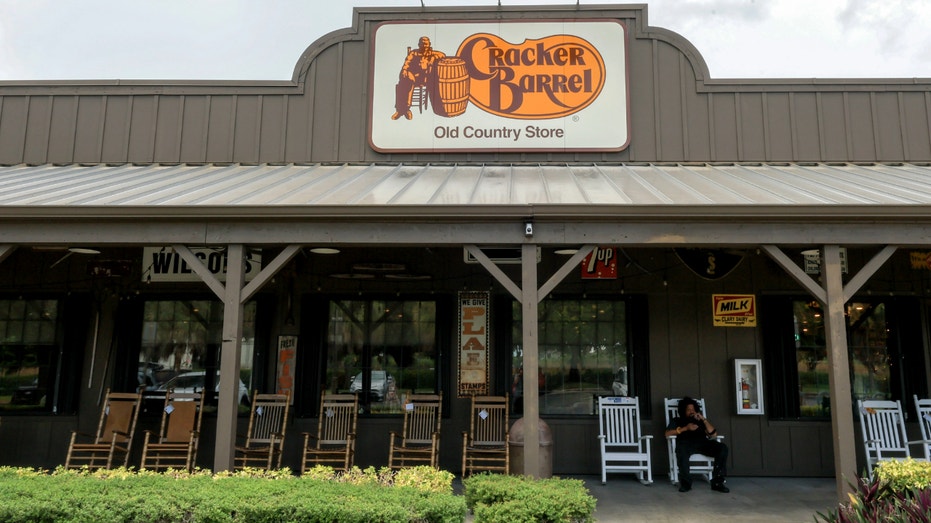
Cracker Barrel is selling restaurant properties and exiting its Maple Street Biscuit Company business as it works to cut debt and improve profits.

The Southern country-themed chain said Monday it sold the Maple Street brand and assets tied to 35 locations to Biscuit Belly LLC. Cracker Barrel will close the remaining 16 Maple Street restaurants.

Advertisement

In a separate move, Cracker Barrel also completed a sale-leaseback deal involving 26 company-owned locations, generating roughly $77 million in net proceeds.

The company plans to use the money to pay down debt while continuing to operate the restaurants by leasing the properties from the new owner.

CRACKER BARREL RESPONDS TO REPORTS ABOUT EMPLOYEE DINING REQUIREMENTS DURING WORK TRAVEL

A Cracker Barrel store with the old logo.

Cracker Barrel is selling restaurant properties and exiting its Maple Street Biscuit Company business as it works to cut debt and improve profits. (Joe Raedle/Getty Images)

“These efforts reflect the discipline we bring to managing our business and balance sheet as we position Cracker Barrel for long-term success and shareholder value creation,” Julie Masino, president and CEO of Cracker Barrel, said in a statement. 

Advertisement

“Our sale-leaseback transaction will allow us to opportunistically reduce debt while monetizing a portion of our owned real estate at an attractive valuation.”

Masino added, “Divesting Maple Street sharpens our focus on the core Cracker Barrel brand and is expected to improve profitability.”

Biscuit Belly, which currently has 15 locations, said the deal will allow it to expand more quickly. It plans to convert the acquired Maple Street restaurants into Biscuit Belly locations over the next 18 to 24 months. 

CRACKER BARREL SALES, TRAFFIC CONTINUE TO SLUMP MONTHS AFTER FAILED REBRAND

Advertisement
Waffles and glazed biscuits are served at Maple Street Biscuit Co.

Waffles and glazed biscuits served at Maple Street Biscuit Co.  (Jeffrey Greenberg/Universal Images Group via Getty Images)

The first conversions will begin in the greater Cincinnati area and Richmond, Virginia. The deal will more than triple Biscuit Belly’s footprint and is expected to help the chain grow to more than 60 locations by the end of 2028.

“When we looked at Maple Street’s geography, footprints, and established teams, a light bulb went off,” Chad Coulter, co-founder and CEO of Biscuit Belly, said in a statement.

Maple Street accounted for less than 2% of Cracker Barrel’s annual revenue. Cracker Barrel said the sale is expected to improve adjusted EBITDA beginning in fiscal 2027.

Cracker Barrel expects to record between $37 million and $39 million in non-cash charges tied to the Maple Street exit during its fiscal fourth quarter. It also anticipates between $6 million and $8 million in additional cash costs.

Advertisement

Stocks In This Article:

CRACKER BARREL’S TURNAROUND HITS EARLY SNAGS; CEO WARNS RECOVERY WILL ‘TAKE TIME’ AFTER REBRAND FIASCO

Cracker Barrel CEO Julie Felss Masino leaves the office

Cracker Barrel CEO Julie Felss Masino walks out of an office building in Brentwood, Tennessee, on Aug. 28, 2025.  (Zak Bennett for Fox News Digital)

The moves come as Cracker Barrel, which operates roughly 660 company-owned locations across 43 states, works to move past backlash over proposed changes to its logo and restaurant interiors last summer, including the removal of the “Old Timer” from its logo.

GET FOX BUSINESS ON THE GO BY CLICKING HERE

The company reversed course less than a week later following customer complaints.

Advertisement

Cracker Barrel told FOX Business it had no additional comment beyond its press release.

Continue Reading

Business

Senate passes China auto bill that could bar Mercedes-Benz from U.S.

Published

on

PayPal's new CEO makes Venmo a standalone business unit as potential buyers circle

A Mercedes-Benz logo is displayed on a used vehicle for sale at a dealership on November 11, 2025 in San Diego, CA.

Kevin Carter | Getty Images News | Getty Images

The Senate Commerce Committee advanced bipartisan legislation Wednesday aimed at toughing a ban on Chinese automakers from the U.S. market, even as Chairman Ted Cruz, R-Texas, warned that it could unintentionally bar Mercedes-Benz from selling vehicles in the country.

Advertisement

Cruz said during the committee’s markup of the Motor Vehicle Modernization Act of 2026 that the bill’s 15% Chinese ownership threshold would cover Mercedes-Benz because two Chinese investors collectively own nearly 20% of its shares.

“We would never consider” banning Mercedes-Benz, Cruz said, adding that the bill would need to be changed before becoming law.

Mercedes-Benz’s two largest individual shareholders are Chinese state-owned automaker BAIC, formerly the Beijing Automotive Industrial Corp., with a 9.98% stake, and Geely founder Li Shufu, with 9.69%.

The bill would codify federal restrictions intended to keep Chinese-linked vehicle technology out of the U.S. over national security concerns that connected cars could collect sensitive data.

Advertisement

“We’re preventing an absolute, total, and complete destruction of our industrial base,” said Sen. Bernie Moreno, R-Ohio, who introduced the bill with Sen. Elissa Slotkin, D-Mich.

Mercedes-Benz previously declined to comment on the legislation but said it employs more than 10,000 people in the U.S. and operates assembly plants in Alabama and South Carolina.

Moreno said during the markup that Mercedes-Benz would have until 2030 to comply with the ownership limit and could seek a waiver.

During the markup, Cruz also accused General Motors of supporting the provision in an effort to weaken Mercedes-Benz and make Cadillac more competitive.

Advertisement

“GM is pushing for this provision to get Mercedes-Benz out of the market,” Cruz said.

GM and Mercedes-Benz did not immediately respond to requests for comment. GM is the top-selling automaker in the U.S.

Choose CNBC as your preferred source on Google and never miss a moment from the most trusted name in business news.
Continue Reading

Business

Babcock and Rolls-Royce shares surge after John Healey becomes Chancellor

Published

on

Business Live

The appointment has fuelled investor optimism over increased defence spending

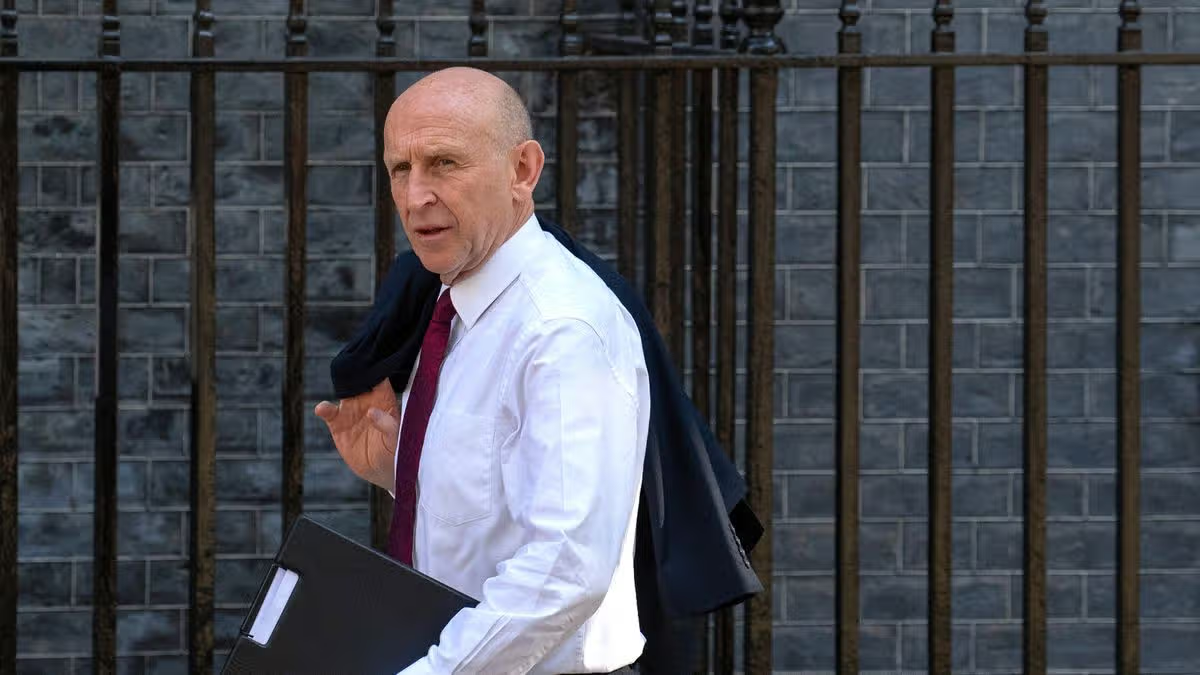
John Healey, Britain's Defence Secretary

John Healey is the UK’s new chancellor(Image: Carl Court/Getty Images)

Shares in defence firms including Rolls-Royce have surged to record highs as investors increased their wagers that incoming Chancellor John Healey would direct further funding towards London-listed arms manufacturers.

Advertisement

Defence supply heavyweights Babcock and BAE Systems were amongst the strongest performers yesterday after former defence secretary Healey was appointed to lead the Treasury under Andy Burnham.

Babcock shares jumped by more than 6.5 per cent within the first half hour of trading on Tuesday, while BAE Systems climbed by 2.8 per cent. Rolls-Royce stock, meanwhile, edged higher by 0.7 per cent to reach 1,369p.

Serco, which operates several facilities and delivers services to the Ministry of Defence, gained 1.7 per cent.

The surge in defence stocks reflects investor confidence in a swifter acceleration of defence expenditure under Chancellor Healey, with British firms also set to be given priority in procurement as part of a drive to “re-industrialise” the nation, as reported by City AM.

Advertisement

Last month, Healey resigned from Sir Keir Starmer’s government citing insufficient funding for defence spending. He accused the Treasury of being “unable” to provide enough cash for the military as it refused to set a date on when the government would raise defence spending to three per cent of GDP.

Under the existing Defence Investment Plan (Dip), expenditure is set to reach approximately 2.7 per cent of GDP by 2030. Healey has made the case for spending to climb to three per cent, and for the UK to establish a roadmap towards achieving 3.5 per cent by 2035 in line with a Nato agreement.

Healey and Burnham have also expressed a desire to favour British companies in government procurement, drawing on a pledge enshrined in Starmer’s Dip.

This could position domestically-listed firms for more prosperous times ahead, as contract pipelines appear poised to strengthen.

Advertisement

Following Healey’s appointment, one industry insider told City AM that senior executives were celebrating the prospect of an increase in defence spending.

They further noted that Burnham had made an “incredibly sensible” choice, and suggested Healey could look to explore procurement arrangements under Canada’s Defence, Security and Resilience Bank — a mechanism that had not been backed by Starmer and former Chancellor Rachel Reeves.

Rolls-Royce has established itself as a key supplier of engines for aircraft, submarines and other power systems, with its technology earmarked for the forthcoming Dreadnought submarine fleet as part of the government’s nuclear deterrence strategy. On Thursday it announced plans for a new £100 factory and defence research facility in Bristol.

Its Lift System engines are also deployed in F-35 jets, while the company additionally provides support for the Typhoon fleet. Rolls-Royce also holds contracts to develop autonomous drones, which are expected to be given priority by the government.

Advertisement

Chris Beauchamp, chief market analyst at the investment platform IG, cautioned that Healey’s appointment might not produce the benefits that defence companies anticipate.

“As Chancellor, he will have many competing demands, and won’t just be the MoD’s man in No 11.

“His experience made him an obvious candidate for the role, and he represents a middle way between [Ed] Miliband and [Shabana] Mahmood, but it will not be easy to find lots more cash for defence, especially when the new Prime Minister is so busy making broad spending commitments in other areas.”


Advertisement
Continue Reading

Business

Factbox-Boeing versus Airbus as aircraft orders top 300 at Farnborough airshow

Published

on


Factbox-Boeing versus Airbus as aircraft orders top 300 at Farnborough airshow

Continue Reading

Business

US judge sets June 2027 trial date for Venezuela’s Maduro

Published

on


US judge sets June 2027 trial date for Venezuela’s Maduro

Continue Reading

Trending

Copyright © 2025