

Business
Chipotle Stock in 2026 Presents Compelling Buy Opportunity Despite Premium Valuation Concerns

NEW YORK — Chipotle Mexican Grill Inc. shares offer a strong long-term buy case in 2026 for investors comfortable with premium valuations, as the fast-casual restaurant chain continues delivering robust comparable sales growth, digital innovation and disciplined expansion amid a challenging consumer environment.
As of late May 2026, Chipotle (NYSE: CMG) trades around $2,450–$2,650 per share, reflecting substantial gains year-to-date. The stock has benefited from consistent same-store sales increases and successful menu and technology initiatives that have strengthened customer loyalty and operational efficiency. Analysts maintain a generally positive stance, with a consensus Moderate Buy rating among 35 covering firms. Average 12-month price targets cluster near $2,800–$3,000, implying potential upside of 15–25 percent from current levels.
Chipotle reported solid first-quarter 2026 results, with revenue rising approximately 12 percent year-over-year to $2.9 billion. Comparable restaurant sales increased 8.5 percent, driven by higher transaction counts and average check growth. Digital sales, including online ordering and delivery, now represent over 40 percent of total revenue, highlighting the success of the company’s technology investments.
CEO Scott Boatwright emphasized the company’s focus on operational excellence. “Our teams continue to execute at a high level, delivering fresh, high-quality food with industry-leading speed and accuracy,” Boatwright said during the earnings call.
Strong Fundamentals Support Growth Narrative
Chipotle’s core strengths lie in its differentiated menu, focus on fresh ingredients and efficient restaurant model. The company has successfully navigated inflationary pressures through selective pricing, portion control and supply chain optimization. Menu innovation, including limited-time offerings and lifestyle bowls, has driven traffic and average ticket size.
Expansion remains a key growth driver. Chipotle opened approximately 80 new restaurants in the first quarter, maintaining its target of 8–10 percent annual unit growth. The company’s restaurant development pipeline is robust, with a focus on both traditional and smaller-format locations suited to urban and suburban markets.
Digital channels have become a significant competitive advantage. Investments in the Chipotle app, loyalty program and third-party delivery partnerships have enhanced customer convenience and frequency. The Chipotle Rewards program now exceeds 25 million members, providing valuable data for personalized marketing and operational improvements.
International expansion is also accelerating. Strong performance in Canada and Europe supports longer-term ambitions for broader global growth, though the U.S. market remains the primary focus.
Valuation Debate and Risks
Despite strong operational performance, some analysts express caution over valuation. Chipotle trades at a premium forward price-to-earnings multiple compared to traditional restaurant peers, reflecting its growth profile but leaving limited margin for error. Concerns include potential consumer pullback if economic conditions weaken further, rising labor and commodity costs, and increased competition from other fast-casual and quick-service concepts.
Labor market tightness continues affecting the restaurant industry. Chipotle has invested in wage increases, training and technology to improve retention and efficiency. While these efforts have helped stabilize operations, they have also pressured short-term margins.
Competition remains intense. Rivals like Sweetgreen, Cava and even traditional players expanding digital offerings challenge Chipotle’s market position. However, the company’s brand strength, consistent quality and focused menu provide meaningful differentiation.
Geographic concentration in the U.S. exposes Chipotle to domestic economic cycles. Any significant slowdown in consumer spending on dining out could impact results, though the chain’s value positioning offers some protection.
Analyst Perspectives
Wall Street’s view remains largely constructive. Firms such as JPMorgan, Goldman Sachs and Piper Sandler maintain Overweight or Buy ratings, citing Chipotle’s category leadership and execution track record. Recent price target increases reflect confidence in sustained mid-single-digit comparable sales growth and margin recovery.
Some more cautious voices recommend Hold ratings, arguing that current valuations bake in optimistic assumptions about traffic and pricing power. However, the majority see limited downside risk given Chipotle’s strong balance sheet and free cash flow generation.
For investors considering buying Chipotle stock, the case rests on the company’s proven ability to adapt, innovate and maintain customer loyalty. Long-term tailwinds from health-conscious dining trends and digital transformation support continued growth.
Potential buyers may look for pullbacks toward the $2,300–$2,400 range for improved entry points. Long-term holders benefit from Chipotle’s history of resilience and brand strength across economic cycles.
Those leaning toward selling cite valuation risk and potential margin compression if cost pressures intensify. However, the overall analyst consensus supports a positive outlook based on fundamental strength.
Diversification remains important. While Chipotle offers high-quality exposure to consumer discretionary spending, pairing it with more defensive holdings can help manage sector-specific risks.
Broader Restaurant Industry Context
The fast-casual sector in 2026 continues navigating post-pandemic normalization, inflation challenges and shifting consumer preferences. Chipotle’s performance stands out due to its focused menu, strong brand equity and successful digital pivot. Many peers have struggled with traffic declines, making Chipotle’s consistent growth particularly noteworthy.
Industry trends favor concepts that deliver perceived value, convenience and quality. Chipotle’s emphasis on fresh ingredients and customization aligns well with these preferences. The company’s investments in automation and kitchen technology position it to manage labor costs while maintaining service standards.
As economic conditions evolve, Chipotle’s ability to balance pricing, quality and speed will be critical. The company’s track record suggests strong execution capability, though external factors like commodity inflation and consumer confidence remain variables.
Outlook for Remainder of 2026
Management guidance points to continued comparable sales growth and margin stability through 2026. Key upcoming catalysts include new menu launches, digital enhancements and progress on restaurant expansion.
Risks to the outlook include potential weakening in consumer spending, increased competition and cost pressures. Positive surprises in traffic trends or margin performance could drive further upside.
Analysts project mid-single-digit revenue growth for Chipotle in 2026, with potential for earnings expansion as operational efficiencies continue. The company’s ability to sustain its growth trajectory while managing costs will be closely watched.
As of late May 2026, Chipotle Mexican Grill represents a high-quality growth opportunity in the restaurant sector. While valuation concerns exist, the company’s brand strength, digital capabilities and consistent execution support a generally constructive long-term view.
Investors should monitor quarterly results closely, particularly metrics around comparable sales, digital penetration and margin trends. Professional financial advice tailored to individual risk tolerance is recommended before making investment decisions in this sector.

Amazon: I'm Buying The Free Cash Flow Collapse

Microsoft: Market Is Missing The Big Picture

Ultragenyx: The Setrusumab Reset Creates A Cleaner Rare Disease Opportunity


The author is a director at a small Boston-based software company where he oversees India operations across HR, finance, and business development. His broader professional background spans entrepreneurship, operations, and management across multiple industries. Earlier in his career, he was involved in building out a bottled beverages plant, reflecting a longstanding interest in business building, execution, and commercial strategy. He also holds a PhD in history and teaches part-time at a local college, bringing a research-driven and analytical perspective to both his professional and investing workHe has been investing in U.S. equities for nearly two decades, having started well before international access to U.S. markets became commonplace for Indian investors. Over time, he has developed a style that sits between value and growth. He is most interested in businesses where long-term earnings potential, competitive positioning, or strategic optionality are not yet fully reflected in the stock price. His work is grounded in valuation, but he also looks closely at business quality, management execution, industry structure, and the durability of growth.His primary sector focus is software, IT, and AI, including the growing application of AI across industries such as healthcare. He is especially interested in companies with scalable models, improving economics, and the ability to compound earnings over time. At the same time, his interests are not limited to technology. He also follows real estate-related opportunities, including REITs, and remains open to writing on other sectors where the investment case is compelling.On Seeking Alpha, he aims to write thoughtful, research-based articles that combine business analysis with valuation discipline. His goal is not simply to identify attractive stories but to assess whether the market is mispricing risk, growth, or long-term earnings power. He writes to share well-reasoned ideas with serious investors, refine his own thinking through public analysis, and contribute to a more disciplined discussion around investing. The author is associated with another Seeking Alpha analyst – Dr. Manimala M.
Analyst’s Disclosure: I/we have no stock, option or similar derivative position in any of the companies mentioned, and no plans to initiate any such positions within the next 72 hours. I wrote this article myself, and it expresses my own opinions. I am not receiving compensation for it (other than from Seeking Alpha). I have no business relationship with any company whose stock is mentioned in this article.
Seeking Alpha’s Disclosure: Past performance is no guarantee of future results. No recommendation or advice is being given as to whether any investment is suitable for a particular investor. Any views or opinions expressed above may not reflect those of Seeking Alpha as a whole. Seeking Alpha is not a licensed securities dealer, broker or US investment adviser or investment bank. Our analysts are third party authors that include both professional investors and individual investors who may not be licensed or certified by any institute or regulatory body.


As an investor for almost 20 years, I like to focus on companies with low P/B and P/FCF ratios as I aim to collect dividends from the companies I invest in. I like to use DCF models in my analysis to find the best target prices for the stocks I want to open positions in. My motivation for writing on Seeking Alpha is to share my investment philosophy with a community of sophisticated investors and grow my knowledge base alongside them.
Analyst’s Disclosure: I/we have no stock, option or similar derivative position in any of the companies mentioned, and no plans to initiate any such positions within the next 72 hours. I wrote this article myself, and it expresses my own opinions. I am not receiving compensation for it (other than from Seeking Alpha). I have no business relationship with any company whose stock is mentioned in this article.
Seeking Alpha’s Disclosure: Past performance is no guarantee of future results. No recommendation or advice is being given as to whether any investment is suitable for a particular investor. Any views or opinions expressed above may not reflect those of Seeking Alpha as a whole. Seeking Alpha is not a licensed securities dealer, broker or US investment adviser or investment bank. Our analysts are third party authors that include both professional investors and individual investors who may not be licensed or certified by any institute or regulatory body.

Father’s Day 2026 falls on Sunday, June 21 — the latest possible date the holiday can occur, and one that happens to coincide with the June solstice this year. Here are 10 things worth knowing about the holiday’s history, traditions, and global variations as families across the country prepare to celebrate.
1. The date follows a simple but floating rule
In the United States, Father’s Day is celebrated on the third Sunday in June. The rule is short enough to memorize: the third Sunday in June. There is no equinox math, no lunar calculation, no church table. Count to the first Sunday in June, then add 14 days. That Sunday is Father’s Day. Because June begins on a different weekday each year, the third Sunday can fall anywhere from June 15 through June 21 — and this year lands right at the latest edge of that range.
2. A woman in Spokane is credited with founding the holiday
Sonora Smart Dodd of Spokane, Washington, is usually credited with creating Father’s Day. She is said to have come up with the idea in 1909 while listening to a sermon on Mother’s Day. Dodd’s father, William Jackson Smart, was a Civil War veteran who raised six children alone on his farm after his wife died in childbirth.
3. Dodd originally wanted the holiday on her father’s actual birthday
Mrs. Dodd proposed to the Spokane Ministerial Association and the YMCA that they celebrate a “father’s day.” She chose June 5 because it was her father’s birthday. The idea received strong support, but the good ministers of Spokane asked that the day be changed to give them extra time to prepare sermons on the unexplored subject of fathers.
4. The first official observance happened in 1910
The first Father’s Day in Spokane, Washington, was observed on June 19, 1910, the third Sunday in June, and became an annual event there. Soon, other towns had their own celebrations, though the tradition would take decades to become a permanent national holiday.
5. A mining disaster may represent an even earlier observance
Some historians point to the 1907 Monongah mine disaster in West Virginia as the first observance. The explosion killed 361 men, around 250 of them fathers, and left more than a thousand children without a dad. Grace Golden Clayton, whose own father died in the disaster, asked the pastor of her local Methodist chapel to hold a service of commemoration. The service happened, but it never became an annual tradition.
6. It took 62 years and multiple presidents to make it official
Despite widespread support, Father’s Day was not a permanent national holiday for many years. President Woodrow Wilson wanted to make the day official after a visit to Spokane, but Congress resisted the suggestion, fearing the observance would become too commercialized. President Calvin Coolidge stopped short of issuing a national proclamation in 1924. President Lyndon Johnson recognized the holiday in 1966, but it wasn’t until 1972 that President Richard Nixon signed a law declaring that Father’s Day be celebrated annually on the third Sunday in June.
7. A competing founding story also exists
Sonora Smart Dodd isn’t the only person credited with originating the holiday. Harry C. Meek, a member of Lions Clubs International, claimed that he first had the idea for Father’s Day in 1915. Meek argued that the third Sunday of June was chosen because it was his birthday. The Lions Club has named him “Originator of Father’s Day.”
8. Commercialization came later than the holiday’s founding
The popular story is that Father’s Day was cooked up by greeting-card makers. The actual story is closer to the opposite: it took one woman more than half a century of campaigning, plus three presidents, to get the day onto the calendar at all. Card sales came later, and the public mostly resisted them. In 1938, Dodd collaborated with the Father’s Day Council, a group of New York men’s wear retailers, for the commercial promotion of the observance.
9. Americans are projected to spend a record amount this year
Today, the holiday is one of the most celebrated days of the year in the U.S. In 2026, Americans are projected to spend a record $27.9 billion on Father’s Day, according to the National Retail Federation and Prosper Insights & Analytics. Popular purchases include greeting cards, clothing, special outings, gift cards, and personal care products.
10. The date — and even the season — varies dramatically around the world
Father’s Day looks different depending on where you are in the world. According to International Event Day, more than 111 countries worldwide now observe Father’s Day, though only about 27% celebrate it on the same date each year. Several countries with strong Catholic traditions observe Father’s Day on March 19, the feast of Saint Joseph, venerated as the patron saint of fathers — Spain, Portugal, Italy, and Latin American countries including Honduras and Bolivia follow this date. Germany observes Father’s Day on Ascension Day, a movable Christian feast that falls 39 days after Easter, landing on May 14 in 2026. Australia and New Zealand celebrate on the first Sunday in September, reflecting the Southern Hemisphere’s seasons, where September marks the arrival of spring; that lands on September 6 in 2026. Thailand observes Father’s Day on December 5, the birthday of the late King Bhumibol Adulyadej, who reigned for over seven decades and was widely regarded as a fatherly national figure.
A Quiet Tribute, Often Marked With Color
Beyond gifts and family gatherings, the holiday carries smaller, more personal traditions as well. Some observe the custom of wearing a red rose to indicate that one’s father is living, or a white rose to indicate that he is deceased. Other males — for example, grandfathers or uncles who have assumed parenting roles — are often also honored on the day, broadening the holiday’s reach beyond biological fathers alone.
A Founder’s Lasting Legacy
Sonora Smart Dodd campaigned for the holiday she helped create for more than 50 years before it finally achieved permanent national recognition. Dodd died in 1978 at age 96; her grave in Spokane reads “Founder of Father’s Day” — a fitting tribute to a woman whose decades-long advocacy ultimately reshaped how an entire country marks the contributions of fathers each June.
What This Means for 2026
With Father’s Day landing on its latest possible date this year and coinciding with the June solstice, families across the United States, Canada, and the United Kingdom will mark the occasion on June 21, while relatives connected to countries observing the holiday on different dates — whether in March, May, or September — will have their own separate opportunities throughout the year to honor the fathers and father figures in their lives.

With a record nine Asian nations competing at the 2026 World Cup — the most in the tournament’s history — questions are once again being raised about whether the continent can finally produce a team capable of advancing all the way to the semifinals, a feat only one Asian nation has ever achieved.
A Record Continental Turnout
Asia sends a record nine nations to the 2026 World Cup, from the 8.5 slots of the 48-team era. Nine AFC nations — Japan, Iran, South Korea, Australia, Uzbekistan, Qatar, Iraq, Saudi Arabia, and Jordan — represent the most in history. That allocation nearly doubled from the previous tournament cycle, with Asia’s automatic allocation rising from 4.5 to 8.5 slots compared to the 32-team era.
Among the nine, three nations arrive with landmark stories. Uzbekistan and Jordan both qualified for the first time ever, while Iraq returned after a 40-year absence, ending their wait since 1986 by winning the intercontinental playoff in March 2026.
The Historical Benchmark: South Korea’s 2002 Run
Any conversation about Asian teams reaching the semifinals inevitably traces back to a single, still-unmatched achievement nearly a quarter-century old. South Korea reached the semifinals as co-hosts in 2002, the deepest run by any Asian nation. On the way, they knocked out Italy and Spain before losing 1-0 to Germany.
That run remains the high-water mark for the continent, and no Asian nation has come close to replicating it since, even accounting for genuine progress in other editions of the tournament.
2022 Marked a Different Kind of Breakthrough
The most recent World Cup demonstrated Asian football’s growing competitiveness against elite European opposition, even without producing a deep knockout run. Japan beat both Germany and Spain 2-1 in the group stage in 2022; the win over Spain came with just 17.7% possession, the lowest by a winning team in recorded World Cup history. Three Asian nations reached the knockouts together that year, a record for the continent.
Saudi Arabia also contributed to that wave of upsets, producing one of the biggest shocks in World Cup history by beating eventual champions Argentina 2-1 in their opening game in 2022. Australia, too, reached the Round of 16 that year, beating Tunisia and Denmark in the group stage.
Japan Enters as the Continent’s Most Fancied Side
Heading into this year’s tournament, one nation has consistently been identified as Asia’s strongest overall contender. Japan, ranked 18th in the world, under Hajime Moriyasu, are the most fancied Asian side, and the first nation in the world to seal their ticket to this tournament, back in March 2025, after a near-flawless qualifying campaign.
That status was reinforced in the opening round of group play. Japan matched the Netherlands with a 2-2 draw in their tournament opener, proving they can challenge Europe’s top teams even at the World Cup itself, a continuation of the pattern they established against Germany and Spain four years earlier.
South Korea’s Quietly Strong Qualifying Record
Beyond Japan, South Korea has also generated considerable optimism heading into the tournament, built on an unusually clean run through Asian qualifying. South Korea were the only unbeaten team in the AFC qualifiers for the 2026 World Cup, and their strong qualifying record goes back a long way; they are making an 11th consecutive appearance at the World Cup, a run that stretches back to 1986. Only Brazil, Germany, Argentina, and Spain are on a longer run of consecutive World Cup participations.
Despite that consistency, South Korea’s historical ceiling outside of home soil remains modest. South Korea’s best performance to date came when they famously reached the semifinals as co-hosts in 2002, but when not playing on home soil, they have never gotten past the last 16. Indeed, they have the lowest win rate among teams that have played at least 30 matches at the World Cup, at 18.4%, winning just seven of their 38 games.
Iran’s Often-Overlooked Strength
While Japan, South Korea, and Australia typically receive the bulk of attention when discussing Asia’s strongest sides, one analysis points to a frequently underrated contender. Considering plenty of focus is usually on Japan, South Korea, and Australia when it comes to Asia’s strongest sides, it can often go under the radar that Iran are actually the continent’s second-highest-ranked nation in football. They have shown their World Cup pedigree in recent editions with a victory over Morocco and a draw with Portugal in 2018, as well as a triumph over Wales in 2022, although their preparations for this summer have obviously been far from ideal.
Qatar and Saudi Arabia Show Early Signs of Life
Beyond the traditional powers, two other Asian nations delivered notable results in the tournament’s opening round. Qatar earned a 1-1 draw against Switzerland after a late equalizer, marking a historic moment for the hosts of the previous edition, while Saudi Arabia took a 1-0 lead against Uruguay before being pegged back to a 1-1 draw in a tightly contested game.
The Steepest Challenges: Iraq and Jordan
Not every Asian nation enters the tournament with realistic knockout-stage hopes, with two debutant or returning sides facing particularly daunting group draws. Iraq suffered a 4-1 defeat to Norway in their opener, highlighting the challenges of their first World Cup in 40 years. Having been drawn into a group featuring two top-15 teams in France and Senegal, alongside a Norway side boasting genuine world-class talents in Erling Haaland and Martin Ødegaard, it is difficult to even imagine Iraq sneaking a third-place finish that would give them a glimmer of hope for the knockout rounds.
The Realistic Verdict
Based on the available evidence, no single Asian team currently stands out as a clear semifinal threat, but the depth of competitive performances across the continent — Japan drawing with the Netherlands, South Korea’s resilient comeback against Czechia, Qatar’s late equalizer against Switzerland, and Saudi Arabia matching Uruguay for long stretches — suggests Asian football’s overall competitiveness against traditional powers has genuinely improved since South Korea’s lone semifinal run in 2002.
Japan remains the continent’s best-positioned side to make a deep run, given their qualifying dominance and proven ability to beat elite European opponents in group play. South Korea’s path would likely require replicating, at minimum, the kind of resilience they showed in their opener, while avoiding the historical pattern that has limited them to the round of 16 in every tournament not played on home soil.
With group play still ongoing across all nine Asian nations’ fixtures, the coming days and weeks will determine how many — if any — advance deep enough into the knockout rounds to even begin entertaining realistic semifinal aspirations. Given the historical rarity of an Asian team advancing that far, and the continent’s track record of producing memorable individual upsets rather than sustained tournament-long runs, reaching the semifinals would represent a genuinely historic achievement for any of the nine nations competing — one that has been accomplished by an Asian side exactly once in World Cup history, and only while playing on home soil.

Cipher Digital: $11.4B Backlog Built For Hyperscale

Shares of Butterfly Network surged 55.87% to close at $8.90 on Thursday, June 18, with the stock continuing to gain in after-hours trading, as investors reacted to a partnership announcement with AI startup Midjourney that has thrust the small-cap medical imaging company into the spotlight. Here’s what’s driving the rally — and what analysts say about whether the stock is a buy or a sell heading into the rest of 2026.
What Sparked the Surge
Butterfly Network jumped over 50% at one point after Midjourney said it built a full-body ultrasound scanner from Butterfly modules. The deal brings back focus to a five-year licensing and co-development agreement that could mean as much as $74 million in expected payments for Butterfly.
Midjourney’s current scanner prototype incorporates 40 Butterfly Ultrasound-on-Chip imaging modules. The components were licensed to Midjourney as part of a co-development agreement signed by the two parties last year. Butterfly CEO Joseph DeVivo described the technology in striking terms: “Midjourney has unveiled an extraordinary whole-body scanner — no radiation, no magnetic risk, low cost, and accessible — with about half a million sensors scanning simultaneously and over two petaflops of processing power.”
Midjourney’s Ambitious Vision
The AI company’s plans for the technology extend well beyond a single prototype. Midjourney said in its blog that it will establish a health facility in San Francisco to house its body-scanning equipment, which will open at the end of 2027. “The center itself is a flagship health spa we are calling the ‘Midjourney Spa.’ It will have hot tubs, saunas, cold plunges, and 10 scanners with the capability to do more body scans a year than all MRI scanners on Earth combined,” the startup said in its blog. “Our ambitious goal is by 2031 to have a fleet of over 50,000 scanners worldwide — with a total scanning capacity of a billion scans a month.”
A Stock That Had Already Been Building Momentum
Thursday’s surge extended a longer-running rally for Butterfly Network stock. BFLY shares soared 55.9% in the last trading session to close at $8.90. The move was backed by solid volume with far more shares changing hands than in a normal session. This compares to the stock’s 30.1% gain over the past four weeks. BFLY stock has nearly doubled in value so far this year and has more than tripled over the last 12 months, outperforming the S&P 500.
The Bull Case
Beyond the headline-grabbing Midjourney news, several analysts point to Butterfly’s broader strategic positioning as a reason for optimism. BFLY is being positioned as a core point-of-care imaging platform, not just another device maker. Integration of DESKi’s HeartFocus AI into Butterfly Network probes supports a “clinician-friendly” echo workflow for less-trained users. BFLY is framed as an AI ecosystem partner in cardiac imaging, reinforcing a long runway for partnerships and licensing-driven revenue.
The company’s underlying financial performance has also shown encouraging momentum heading into the rally. Butterfly said first-quarter revenue came in at $26.5 million, up 25% on the year. Gross margin climbed to 68.9%. The company stuck with its 2026 revenue outlook of $117 million to $121 million.
Management has also been actively courting growth-focused investors in recent days. Management is presenting at the William Blair 46th Annual Growth Stock Conference and then joining TD Cowen’s Medical Devices Emerging Growth Call Series — exposure that, while not changing fundamentals overnight, can fuel sharp re-ratings and speculative runs, especially when the float is hunting for a new narrative.
The Bear Case
Despite the enthusiasm, several red flags warrant caution before treating Thursday’s rally as a sure thing. Over the past three months, insiders sold $4.2 million worth of shares, with no insider buying reported — a pattern that may raise concerns among investors regarding the company’s near-term outlook even as the stock price climbs.
The company’s underlying profitability also remains a significant concern. Butterfly Network’s GF Score of 61 indicates a moderate level of overall quality, with strong financial strength but weak profitability. The company’s profitability rank is concerning, sitting at 1 out of 10, indicating challenges in generating consistent profits. The financials still show heavy red ink, with negative margins and free cash flow around negative $14.84 million last quarter.
Valuation is also stretched relative to current sales. The company’s price-to-sales ratio stands at 18.54, suggesting that investors are paying a premium for each dollar of sales, reflecting high expectations for future growth that the company has not yet delivered on a profitability basis.
A Story Still in Its Early Stages
Several analysts have cautioned that the Midjourney partnership, while genuinely promising, remains in a very early phase with significant execution risk still ahead. This is still an early story — regulatory clearance, commercialization, scaling up production, and milestone payments are all unresolved. The scanner still has hurdles with regulatory sign-off, how much buyers want it, actual use in clinics, privacy of data, and whether Butterfly can deliver enough modules at scale.
Competition in the broader ultrasound market also remains formidable. Big names like GE HealthCare, Philips, and Siemens Healthineers dominate the wider ultrasound market. Butterfly is aiming to differentiate by focusing on handhelds, software, AI, and chip licensing, instead of just traditional ultrasound systems.
What Wall Street Currently Thinks
Despite the cautionary notes around valuation and profitability, at least one prominent rating service currently holds a favorable view of the stock. The stock currently carries a Zacks Rank #2, which corresponds to a Buy rating. However, that same analysis noted that the consensus EPS estimate for the company’s upcoming quarter has remained unchanged over the last 30 days, and a stock’s price usually doesn’t keep moving higher in the absence of any trend in earnings estimate revisions — suggesting investors should watch closely whether analyst earnings expectations begin shifting in response to the Midjourney news, or whether Thursday’s rally proves to be a more speculative, momentum-driven move.
The Bottom Line
There is no simple answer to whether Butterfly Network is a buy or a sell heading into the rest of 2026. The bull case rests on genuine technological differentiation, a expanding licensing relationship with a high-profile AI company, improving revenue growth, and strong gross margins. The bear case rests on persistent unprofitability, a rich valuation relative to current sales, notable insider selling, and a long list of unresolved execution risks tied to the Midjourney scanner specifically — regulatory approval, manufacturing scale, and real-world clinical adoption among them.
As with any investment decision, particularly one involving a stock that just posted a single-day gain of nearly 56% on a still-unproven partnership, it’s worth doing your own research, weighing your personal risk tolerance and time horizon, and consulting a qualified financial advisor before making a decision. This overview is intended to lay out the facts and competing perspectives currently circulating among analysts, not to tell you what to do with your money.
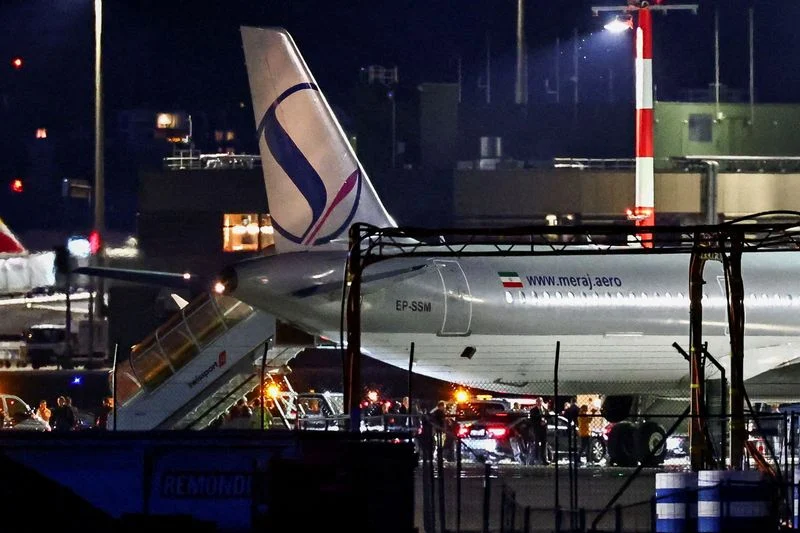

Iran negotiators, Vance head for Switzerland but Lebanon fighting continues

I stayed at grand house with heated pool and hidden rooms in ‘Wales’ strangest town’ and one feature was the best I’ve used

Amazon: I'm Buying The Free Cash Flow Collapse

Best Sunscreens 2026: 7 Best Face And Body SPFs To Shop 2026


-

 Fashion2 days ago
Weekend Open Thread: Miami – Corporette.com
-
 Crypto World7 days ago
Zimbabwe Requires Crypto Businesses to Register Annually Under New FIU Regulations
-
 Business2 days ago
Wall Street Week Ahead: Investors see Micron earnings as pulse check of AI rally momentum
-
 Entertainment7 days ago
Matt Damon’s Viral Sci-Fi Thriller Has Taken Over HBO Max
-

 Crypto World2 days ago
HIVE shares jump as $220M AI deal speeds Bitcoin mining pivot
-

 Tech7 days ago
As AI companies race to go public, who else is along for the ride?
-

 Business7 days ago
Anthropic staff to meet White House officials next week, Axios reports
-
 Crypto World7 days ago
Bitcoin could crash to $48,000, if this historical pattern is triggered
-
 NewsBeat7 days ago
what doctors are seeing in ebike crashes
-
 NewsBeat7 days ago
Tributes to former deputy head teacher at Cambridge school among death and funeral notices
-
 NewsBeat7 days ago
Warning of disruption as Cardiff Crossrail works to start
-
 Entertainment7 days ago
Kate Middleton Glare Goes Viral After Kids Booed At Royal Event
-

 Politics7 days ago
“Israel’s” ban on ICRC visits ruled illegal, but Knesset moves to stop them permanently
-

 Crypto World7 days ago
XRP ETFs Outperform As Bitcoin And Ethereum Funds Extend Outflow Trend
-

 Tech7 days ago
Over 400 Arch Linux packages compromised to push rootkit, infostealer
-

 News Videos7 days ago
Financial Accounting | Last Day Revision Strategy and Booster | CMA Inter – June 2026
-

 Sports7 days ago
Dick Advocaat’s Curacao scores first-ever World Cup goal against Germany
-

 Business7 days ago
Invesco Quality Income Fund Q1 2026 Commentary
-

 NewsBeat7 days ago
Singer Oliver Tree dies aged 32 in helicopter crash in Brazil
-

 Tech5 days ago
The Adder At The Heart Of Intel’s 8087 FPU
You must be logged in to post a comment Login