








Connect with us
DAPA Banner
DAPA Coin
DAPA
COIN PAYMENT ASSET
PRIVACY · BLOCKDAG · HOMOMORPHIC ENCRYPTION · RUST
ElGamal Encrypted MINE DAPA
🚫 GENESIS SOLD OUT
DAPAPAY COMING

Business

Cipla Q4 Results: Profit falls 55% YoY to Rs 555 crore; co declares Rs 13/sh dividend

Published

on

Cipla Q4 Results: Profit falls 55% YoY to Rs 555 crore; co declares Rs 13/sh dividend
Pharma major Cipla Ltd on Wednesday reported 55% year-on-year (YoY) decline in its consolidated net profit at Rs 555 crore in the fourth quarter, compared with Rs 1,222 crore in the last year quarter.

The Board has also recommended a final dividend of Rs 13 per share for the financial year ended March 2026. The record date for the purpose of payment of final dividend is June 5.

Revenue from operations in the reporting period decreased 3% YoY to Rs 6,541 crore.

EBITDA fell 35% to Rs 997 crore from Rs 1,538 crore in the year-ago period, while EBITDA margin contracted sharply to 15.2% from 22.8%.

Advertisement

For the full financial year FY26, Cipla reported revenue of Rs 28,163 crore, up 2% YoY, while annual PAT declined 26% to Rs 3,879 crore from Rs 5,273 crore in FY25. EBITDA for the year fell 17% to Rs 5,925 crore, with margin narrowing to 21% from 25.9% last year.


Cipla said its India business remained a key growth driver during the quarter. The One India business, which includes prescription, trade generics and consumer health operations, grew 15% year-on-year to Rs 3,007 crore in Q4 FY26 from Rs 2,622 crore a year ago.
The company said branded prescription therapies including respiratory, urology, anti-diabetes and cardiac segments continued to post strong growth, while consumer health brands such as Nicotex, Omnigel and Cipladine maintained leadership positions. However, the North America business remained under pressure. Quarterly revenue from the region dropped 26% year-on-year to Rs 1,414 crore from Rs 1,919 crore. Despite the decline, the company highlighted regulatory approval for the first AB-rated generic version of gVentolin manufactured from its US facility.

The One Africa business continued to deliver strong growth momentum, with quarterly revenue rising 21% year-on-year to Rs 1,236 crore. South Africa revenue jumped 33% to Rs 984 crore.

Emerging Markets and Europe revenue declined 9% YoY to Rs 819 crore during the quarter amid geopolitical uncertainties, while API and other business revenue fell sharply by 77% to Rs 64 crore.

MD and Global CEO Achin Gupta said Cipla recorded its highest-ever annual revenue during FY26 despite near-term challenges in certain markets. He added that the company would continue focusing on flagship brands, pipeline investments and regulatory resolutions going forward.

Advertisement

On Wednesday, following the results announcement, Cipla shares were last trading 4% higher at Rs 1,344.9 on NSE.

Continue Reading
Click to comment

You must be logged in to post a comment Login

Leave a Reply

Business

Form 8K Auburn National Bancorporation Inc For: 13 May

Published

on


Form 8K Auburn National Bancorporation Inc For: 13 May

Continue Reading

Business

ASA Bans British Beef and Milk Adverts Over Carbon Footprint Claims

Published

on

ASA Bans British Beef and Milk Adverts Over Carbon Footprint Claims

British food marketers have been handed a stark warning after the advertising watchdog banned two high-profile campaigns promoting domestic beef and milk, ruling that the carbon footprint claims at their heart could not be substantiated.

The Advertising Standards Authority (ASA) has upheld a complaint brought by Chris Packham, the broadcaster and environmental campaigner, against the Agriculture and Horticulture Development Board (AHDB) over its taxpayer-funded Let’s Eat Balanced campaign. The decision is likely to send a chill through the marketing departments of food producers, processors and trade bodies that have increasingly leaned on green credentials to drive sales.

At issue were two adverts trumpeting British beef as having a “carbon footprint that’s half the global average” and British milk as producing emissions “a third lower than the global average”. Both campaigns referenced the “full lifecycle” of the produce, a phrase that has now proved their undoing.

The AHDB, which is funded by a statutory levy on farmers and growers, argued that consumers would reasonably have understood the figures to relate only to the journey from farm to retail. The board pointed to independent consumer research, commissioned after the investigation began, suggesting the majority of respondents interpreted the adverts in precisely that way.

The ASA disagreed. The regulator concluded that the adverts implied a cradle-to-grave assessment encompassing farming, retail, consumption and disposal, and that the evidence supplied fell short of supporting claims on that basis. The watchdog acknowledged the practical difficulty of producing post-retail emissions data but said that, where environmental claims are made, the burden of proof rests squarely on the advertiser unless caveats are made plain.

Advertisement

“We acknowledged the potential difficulties in producing post-retail emissions data,” the ASA said in its ruling. “The claims in the ads suggested those emissions were included, and we therefore expected the evidence provided to also include them. We therefore concluded that the evidence presented was insufficient to support the full life cycle claims in the ads, which was how the average consumer was likely to interpret them.”

Mr Packham, the long-standing presenter of BBC’s Springwatch, had also alleged that the adverts misrepresented British beef as typically outdoor-grazed and made claims that could not be substantiated. The watchdog rejected five of his six points, ruling that images of cows in green pastures amounted to a “generic reflection” of British farming rather than a blanket assertion that all cattle live outdoors.

Will Jackson, the AHDB’s director of communications, struck a defiant note in response to the ruling. “Let’s Eat Balanced is doing what it was designed to do, providing clear, factual, evidence-led information about British food, nutrition and farming standards,” he said. He added that the board’s own consumer research “supports our belief that consumers were not misled by the information we shared in these two specific adverts”.

For the wider SME landscape, however, the ruling carries lessons that extend well beyond the farm gate. Small and mid-sized food businesses, from artisan cheesemakers to regional butchers, have increasingly built marketing around lower-carbon, locally produced credentials. The ASA’s intervention signals that broad-brush green claims, particularly comparative ones, will face robust scrutiny regardless of whether the advertiser is a multinational, a government-backed body or a family-run producer.

Advertisement

The decision also lands at a sensitive moment for British agriculture, which is grappling with the phasing out of EU-era subsidies, mounting input costs and growing consumer pressure on the environmental footprint of meat and dairy. Sector bodies will now need to weigh up whether the marketing benefits of headline carbon comparisons justify the regulatory risk, or whether more conservative, narrowly framed claims offer a safer path.

For marketers across the SME economy, the practical takeaway is straightforward enough. Lifecycle language must be backed by lifecycle evidence; comparative claims must be supported by robust, like-for-like data; and where caveats are required, they must be clear enough that the ordinary consumer cannot reasonably misread them. As the ASA has made plain, the test is not what the advertiser intended to say, but what the average reader took away.


Jamie Young

Jamie Young

Jamie is Senior Reporter at Business Matters, bringing over a decade of experience in UK SME business reporting.
Jamie holds a degree in Business Administration and regularly participates in industry conferences and workshops.

When not reporting on the latest business developments, Jamie is passionate about mentoring up-and-coming journalists and entrepreneurs to inspire the next generation of business leaders.

Advertisement

Continue Reading

Business

Wolfspeed Stock Surges 23% on AI Infrastructure Hype and Short Squeeze Momentum

Published

on

Wolfspeed Stock Surges 23% on AI Infrastructure Hype and Short

NEW YORK — Wolfspeed Inc. shares rocketed more than 23% in early trading Wednesday, climbing to $66.35 as a bullish research note spotlighting the silicon carbide specialist as a prime AI infrastructure play triggered heavy buying and accelerated a short squeeze in the heavily shorted name.

Wolfspeed Stock Surges 23% on AI Infrastructure Hype and Short
Wolfspeed Stock Surges 23% on AI Infrastructure Hype and Short Squeeze Momentum

The North Carolina-based company, a leader in silicon carbide semiconductors critical for electric vehicles, renewable energy and high-power AI data center applications, has been on a tear since emerging from Chapter 11 bankruptcy last fall with a dramatically cleaned-up balance sheet. Wednesday’s surge extended a seven-session winning streak and pushed the stock to fresh post-restructuring highs.

Analysts at Citrini Research published a note late Tuesday positioning Wolfspeed as one of the clearest “laggard catch-up” opportunities in the semiconductor sector. The report highlighted the company’s fully U.S.-based supply chain, restructured factories optimized for high-efficiency power semiconductors, and accelerating revenue from AI-related demand as key differentiators.

Silicon carbide chips excel at handling high voltages and temperatures with greater efficiency than traditional silicon, making them essential for power-hungry AI servers, data center infrastructure and next-generation EVs. Wolfspeed’s technology addresses exactly the bottlenecks facing hyperscalers racing to deploy massive GPU clusters.

Short interest has remained elevated, with recent data showing more than 57% of the float sold short in some measurements, creating fertile ground for a squeeze. As the stock climbed on the Citrini catalyst, forced covering amplified the move, with volume spiking dramatically in pre-market and early sessions.

Advertisement

The rally builds on positive momentum from Wolfspeed’s fiscal third-quarter results released May 5. Although the company reported a revenue miss and continued negative gross margins due to factory underutilization, investors focused on forward-looking signals: AI sales up 30%, debt reduction progress, cash reserves near $1.2 billion and strategic refinancing that slashed interest expenses.

Post-bankruptcy leadership changes have also boosted confidence. CEO Robert Feurle and a refreshed executive team have emphasized operational execution, capacity expansion and monetizing tax credits. The company recently received nearly $700 million in IRS refunds under advanced manufacturing investment credits, further strengthening liquidity.

Wolfspeed’s long-term thesis centers on the structural shift toward wide-bandgap semiconductors. Global demand for silicon carbide is projected to grow rapidly as AI energy consumption soars and electrification accelerates. The company’s Mohawk Valley and other U.S. fabs position it to capture domestic content advantages amid supply chain security concerns.

Challenges remain significant. Wolfspeed continues operating with negative margins amid ramp-up costs and underutilized capacity. Competition in the silicon carbide space is intensifying from larger players, and execution on production scaling will determine whether the current enthusiasm translates into sustainable profitability.

Advertisement

Analysts maintain a range of views. Some see substantial upside if AI tailwinds materialize and margins improve, while others caution about volatility and the stock’s history of dramatic swings. Price targets vary widely, reflecting the high-risk, high-reward nature of the restructured entity.

The broader semiconductor sector has shown selective strength amid AI optimism, but Wolfspeed’s move stands out for its magnitude. Year-to-date, the stock has rebounded dramatically from post-bankruptcy lows, though it remains well below pre-restructuring levels when factoring in massive dilution for legacy shareholders.

Technical traders noted the breakout above recent resistance with expanding volume. Support levels sit near $50-$53 from prior closes, while momentum indicators suggest potential for further upside if buying persists. However, profit-taking or short covering exhaustion could lead to sharp pullbacks given the stock’s volatility.

For investors, Wolfspeed represents a speculative bet on the intersection of AI power demands and domestic semiconductor manufacturing. The company’s ability to convert hype into consistent revenue growth and positive margins will be tested in coming quarters. Upcoming capacity milestones and potential new customer wins could sustain momentum.

Advertisement

Market watchers will closely monitor whether today’s surge holds through the session or fades as a classic short-squeeze event. With high short interest and fresh AI narrative fuel, Wolfspeed remains one of the more volatile names in the semiconductor space heading into the second half of 2026.

Continue Reading

Business

WhatsApp launches 'incognito' AI chat with private disappearing messages

Published

on

WhatsApp launches 'incognito' AI chat with private disappearing messages

A cyber security expert says deleting chat history could lead to a lack of accountability if things go wrong.

Continue Reading

Business

Waitrose Smart Cabinets to Lock Up Champagne and Spirits Amid UK Shoplifting Surge

Published

on

Waitrose Smart Cabinets to Lock Up Champagne and Spirits Amid UK Shoplifting Surge

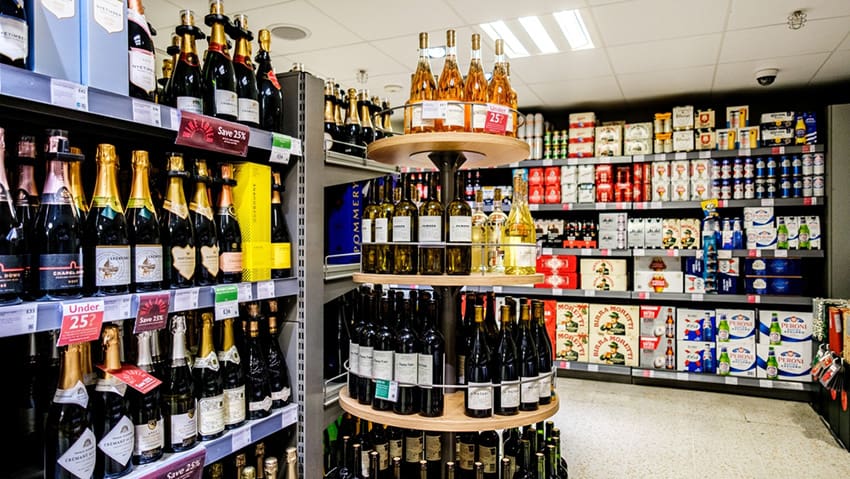
Waitrose is to put bottles of champagne behind locked glass before the end of the year, as the upmarket grocer escalates its fight against an unrelenting wave of shoplifting that has swept through Britain’s high streets.

The John Lewis Partnership-owned chain has told its 50,000-strong workforce of partners that it will pilot so-called “smart cabinets” to protect premium spirits and champagne, marking one of the most striking acknowledgements yet that organised retail crime has begun to reach into the aisles of Britain’s most genteel supermarkets.

The cabinets, already trialled at rivals including Sainsbury’s, typically require shoppers to navigate a multi-step process on a touchpad before the doors will release. Some retailers have gone further, demanding customers scan a loyalty card or enter a mobile telephone number to gain access, creating a digital paper trail that can later be cross-referenced if stock goes missing. The technology can also log how long a cabinet door has been open, flagging suspicious behaviour such as bulk emptying to staff in real time.

Waitrose has declined to disclose the precise mechanics of its own system, but the move comes alongside a broader package of measures: protective “meat nets” wrapped around premium joints, reinforced screens at tobacco counters to deter the increasingly common practice of vaulting kiosks to grab cigarettes, and an expanded rollout of body-worn cameras for staff on the shop floor.

In an internal communication to partners, Lucy Brown, the John Lewis Partnership’s director of central operations, framed the investment as proof that the business was not “standing still” in the face of what she conceded had been characterised as “a tide of retail crime and epidemic of shoplifting”. She acknowledged the frustration felt by staff who watch thieves walk out unchallenged, but warned that intervention was rarely the safer option.

Advertisement

“It may feel like standing back is us not acting, but this isn’t the case,” Ms Brown wrote, urging partners to resist their “first instinct” to detain suspects or wrestle back stock. Detaining “potentially volatile” individuals in front of other customers, she said, risked escalating an already fraught situation.

The guidance follows a bruising month for Waitrose’s public image. The retailer faced sharp criticism in April after dismissing Walker Smith, a 17-year veteran of the chain, who said he had been sacked for confronting a shoplifter attempting to make off with Easter eggs. The Partnership declined to comment on the specifics, citing employment confidentiality, but said it had followed “the correct process” and pointed to the “serious danger to life in tackling shoplifters”.

Jason Tarry, the John Lewis chairman who joined from Tesco last year, has since written in The Telegraph that the answer to the crime wave was emphatically not to “encourage” workers to take on thieves themselves. Trained security personnel would “intervene to challenge shoplifters”, he said, “but only if they’ve been trained and it’s safe to do so”.

The retreat into hardened technology reflects the scale of the problem confronting British retailers. Industry body the British Retail Consortium has repeatedly warned that shop theft has reached levels not seen in a generation, with the cost to retailers running into the billions and assaults on shop workers rising sharply. For a chain such as Waitrose, whose brand has long traded on a relaxed, customer-trusted shopping experience, the optics of placing Bollinger behind a touchscreen-controlled glass door represent a notable cultural shift.

Advertisement

A spokesman for John Lewis confirmed the direction of travel: “We are currently investing in a range of advanced technology, including smart technology to deter theft. As part of this we are planning to pilot lockable smart cabinets for areas such as spirits and champagne soon. We already use smart shelf technology in our health, beauty and spirits aisles, which are able to sense unusual customer behaviour, so this would provide an additional layer of security.”

For Britain’s SME retailers, who lack the capital to deploy comparable systems, the message from Waitrose is sobering. If a chain of its size and security spend has concluded that its most prized stock now needs locking up, the implication for the independent off-licence or village convenience store is uncomfortable indeed.


Jamie Young

Jamie Young

Jamie is Senior Reporter at Business Matters, bringing over a decade of experience in UK SME business reporting.
Jamie holds a degree in Business Administration and regularly participates in industry conferences and workshops.

When not reporting on the latest business developments, Jamie is passionate about mentoring up-and-coming journalists and entrepreneurs to inspire the next generation of business leaders.

Advertisement

Continue Reading

Business

‘Interest Is Starting to Fizzle Out’ at 100-Day Mark

Published

on

Wordle puzzle

TUCSON, Ariz. — A longtime friend of Nancy Guthrie spoke publicly for the first time in weeks Tuesday, voicing deep concern that public and community interest in the 84-year-old’s abduction case is beginning to fade more than 100 days after her disappearance from her Catalina Foothills home.

Lauren Serpa, who has known Nancy for years, told Page Six she fears people are “starting to move on” as the high-profile investigation loses momentum despite ongoing efforts by authorities and the Guthrie family. Her comments mark a notable break from reports that Nancy’s inner circle had been asked to remain silent while law enforcement pursues leads.

“People are starting to move on basically. That’s what happens when it doesn’t affect their lives,” Serpa said in the interview published May 12. “So that’s why I’m trying to keep it in the forefront as much as possible.” She added that even in Tucson, where the case has gripped the community, local attention is “starting to fizzle out.”

Nancy Guthrie was reported missing Feb. 1 after failing to show up for a planned church service viewing with friends. Security footage captured a masked individual tampering with her doorbell camera the night before. Blood was found on the porch, and authorities believe she was abducted. A Bitcoin ransom demand followed but led nowhere.

Advertisement

The family offered a $1 million reward, later joined by the FBI’s $100,000. Savannah Guthrie, co-anchor of NBC’s “Today” show and Nancy’s daughter, has maintained a low public profile on the investigation while continuing her work. On Mother’s Day, she shared an emotional tribute pleading for information: “We will never stop looking for you.”

Reports earlier in May suggested the Guthrie family had asked Nancy’s close friends, including church acquaintances who first raised the alarm, to refrain from public statements to avoid interfering with the probe. NewsNation’s Brian Entin reported multiple sources confirming the request, noting it differed from other missing persons cases where friends often speak out early.

Serpa’s decision to speak out comes as the case enters its fourth month with no arrests and limited public updates. Pima County Sheriff Chris Nanos provided a 100-day briefing recently, describing the investigation as active with DNA analysis continuing across labs and tips still being pursued. He expressed cautious optimism, saying authorities are “getting closer,” though no suspects have been named publicly.

Tensions between local authorities and the FBI surfaced earlier, with reports that Sheriff Nanos initially preferred a private lab for key evidence including a glove and DNA samples. The sheriff denied blocking federal involvement, emphasizing ongoing collaboration. A strand of hair not belonging to family or known associates was sent for advanced testing, but results have not been publicly detailed.

Advertisement

Serpa highlighted the emotional toll on Nancy’s loved ones and the Tucson community. She described Nancy as vibrant and independent, expressing frustration that the case risks slipping from public consciousness. “Even in Tucson where it happened, it’s starting to fizzle out, and I don’t want that to happen,” she said. “It’s been 100 days, and people are starting not to forget, but not to think about it as much.”

Volunteer groups, including the United Cajun Navy, have offered assistance but reported limited involvement. Neighborhood patrols increased early on, but sustained momentum has waned. Digital evidence, enhanced video from nearby homes showing masked figures, and property record checks have been part of the multi-agency effort.

Kidnapping survivor Elizabeth Smart weighed in recently, stating she believes Nancy could still be alive and urging continued focus. “She could absolutely still be alive,” Smart said, drawing from her own nine-month ordeal. Such comments provide a glimmer of hope amid the grim milestone.

The case has drawn national attention largely due to Savannah Guthrie’s prominence. Savannah has occasionally stepped away from “Today” duties, including a recent mid-show departure, fueling speculation about her involvement behind the scenes. She continues hosting and recently agreed to host a Wordle game show pilot.

Advertisement

Public tips continue flowing to the FBI and sheriff’s office, though officials have asked residents to avoid clogging lines with well-wishes. A new message regarding the case prompted a joint statement from authorities in recent days, though details remain limited.

Serpa’s interview underscores a common challenge in long-term missing persons cases: maintaining visibility as media cycles shift. She emphasized Nancy’s supportive Tucson network but worried broader awareness is declining. Her willingness to speak breaks the reported silence and could reinvigorate attention.

Investigators continue analyzing forensic evidence, including potential genealogy leads from the unidentified hair. No new surveillance footage or suspect descriptions have been released recently. The Bitcoin ransom aspect adds complexity, as cryptocurrency transactions are traceable but often lead to dead ends without additional context.

For the Guthrie family, each day without resolution deepens the anguish. Savannah’s Mother’s Day post reflected both love and determination: prayers and the $1 million reward remain active incentives for information. The family has not publicly commented on Serpa’s remarks or the reported request for silence.

Advertisement

Legal and true crime experts note that family requests for privacy can protect sensitive details but risk reducing tips. Serpa’s decision to speak may reflect growing frustration with the pace while respecting the investigation’s needs.

As summer approaches, the case risks further fading from headlines unless new developments emerge. DNA processing timelines can stretch months, and without a clear suspect, the probe relies heavily on public eyes and ears. Serpa’s plea serves as a reminder that Nancy remains a beloved community member deserving of sustained focus.

The abduction has heightened awareness of elder safety in suburban areas. Catalina Foothills residents report increased vigilance, though fear of an unidentified perpetrator lingers. Authorities urge anyone with information to contact the FBI anonymously.

Nancy Guthrie’s story continues to captivate and frustrate. Serpa’s rare public comments inject fresh urgency at a critical juncture, hoping to prevent the case from slipping into the background as days turn into months. For her friends and family, the fight to bring Nancy home remains unrelenting.

Advertisement
Continue Reading

Business

‘A significant moment for the North’: Leaders welcome King’s Speech boost for Northern Powerhouse rail plans

Published

on

Business Live

Scheme would improve links through Manchester Airport and across the North

Concept design for an underground HS2 station at Manchester Piccadilly

Concept design for an underground HS2 station at Manchester Piccadilly(Image: MCC)

Northern leaders have welcomed the latest step towards high speed rail in the North as the Northern Powerhouse Rail (NPR) Bill was announced in the King’s Speech.

The bill will provide powers to boost east-west rail connections across the north in a £45bn programme. Its first phase will involve improving connections on existing lines between Leeds and Sheffield, York and Bradford.

Advertisement

The second phase will see a new route created between Liverpool and Manchester via Manchester airport and Warrington, using a combination of new and existing lines. And the third and final phase would improve connections eastwards from Manchester to Leeds, Bradford, Sheffield and York.

The scheme would have benefits beyond the North West and Yorkshire, with regular services going to Newcastle via Darlington and Durham, and to Chester for North Wales connections.

The King said: “The United Kingdom’s economic security depends upon world class infrastructure. Legislation will be introduced to unlock the benefits of airport expansion; enable roads to be built at pace including the Lower Thames Crossing; and deliver a fair deal for the North of England through Northern Powerhouse Rail.”

Henri Murison, chief executive of the Northern Powerhouse Partnership, said: “The inclusion of the High Speed Rail hybrid bill to link Manchester Airport to Piccadilly station in today’s King’s Speech is a significant moment for the North.

Advertisement

“For too long, we have lacked the infrastructure needed to properly connect our major economic centres and support growth across our region. Re-starting legislation paused unnecessarily by the previous government is an important step forward towards changing that.

“A reliable, more frequent and high-capacity rail network across the North will increase areas people can travel to work from, improve access to opportunity and help businesses operate across the region more effectively.

“It also will link not only Liverpool but cities like Leeds, Bradford and Hull better to Manchester Airport, opening up global direct links.

“The key thing now is maintaining this momentum and getting the consenting right so we can move without any more delays into delivery.”

Advertisement

Chris Woodroofe, managing director of Manchester Airport, said: “Here at Manchester Airport we’re proud to connect the North to the world.

“We’re concluding our 10-year, £1.3bn investment which has given the region a world-class, award-winning airport.

“Not only does it connect the North to more than 200 destinations worldwide, it has immediately available capacity to grow from handling 32m passengers today to 40m by 2030 and beyond to 50m in the longer term.

“We already deliver more than £8bn of economic impact a year, providing thousands of jobs and enabling trade, investment and tourism. But placing Manchester Airport at the heart of a better-connected North will make a major contribution, helping it to operate as a highly productive and globally competitive single economic region.

Advertisement

“That’s why I’m pleased to see this key step towards realising Northern Powerhouse Rail prioritised in the King’s Speech. Keeping up the momentum on this project is vital if we are to unlock its potential – to be genuinely transformative for people living right across the region.

“We know the industries, the cities, and towns of the North have real strengths and that many rely on access to the world more than most to reach their full potential.

READ MORE: Why a small Northern piece of HS2 could unlock more transport improvementsREAD MORE: Why business must back Piccadilly underground plans: Manchester leaders push ‘transformational’ scheme as they prepare for MIPIM

“Whether that’s life sciences and pharmaceuticals in Liverpool, electrification and battery technology in Sunderland and the North East, fintech and healthcare in Leeds or advanced manufacturing in Sheffield and Rotherham, all these will benefit from being directly connected to the UK’s global gateway in the North.

Advertisement

“We are looking forward to working with Government and our partners across the region to see this become a reality as soon as possible.”

The King also announced legislation to create Great British Railways, a new public sector body to oversee the rail network.

Mayor of Greater Manchester Andy Burnham said in a written statement: “This is a once-in-a-generation opportunity to overhaul how the railways are run – creating a service that puts passengers first, with more reliable trains and simpler fares and tickets.”


Advertisement
Continue Reading

Business

Shrinking Milka chocolate bar tricked consumers, says German court

Published

on

Shrinking Milka chocolate bar tricked consumers, says German court

The district court in Bremen ruled that, taken in isolation, keeping the same wrapping was not at issue, but the deception lay in the discrepancy between the actual contents compared with the “visually conveyed expectation” of a product known to consumers for years.

Continue Reading

Business

Miller Lite launches FIFA World Cup MVP Matchball that holds 12 beers

Published

on

Miller Lite launches FIFA World Cup MVP Matchball that holds 12 beers

It’s already less than one month until the 2026 FIFA World Cup kicks off in the United States, Mexico and Canada, and one top beverage company is celebrating the biggest tournament in sports in a very unique way. 

Miller Lite is debuting a first-of-its-kind Matchball for the World Cup’s true MVPs — the fans. 

Advertisement

The limited-edition Miller Time MVP Matchball, a white and gold ball 1.5 times larger than a regulation-size ball that can hold 12 Miller Lites, and is fully reloadable throughout match days.

CLICK HERE FOR MORE SPORTS COVERAGE ON FOXBUSINESS.COM

Miller lite MVP Matchball

The Miller Time MVP Matchball has been launched by Miller Lite, celebrating the true MVPs of the FIFA World Cup — the fans. (Miller Lite / Fox News)

It’s a signature part of the beer brand’s “Miller Time is on U.S.” campaign, a play on words ahead of supporting the U.S. men’s national team in the World Cup.

“This summer is a massive moment for soccer and beer fans alike,” Courtney Benedict, vice president of marketing, Miller Lite Family of Brands, said in a statement. “As America’s Original Light Beer, Miller Lite was made for moments like this. The Matchball is our way of celebrating and rewarding the fans who bring the traditions and unmatched energy to every watch party … and a soccer ball that fits a 12 pack? That’s just fun!”

Advertisement

US SOCCER GREAT THINKS AMERICAN TEAM CAN SHOCK THE WORLD AT UPCOMING WORLD CUP

Miller Lite understands that the World Cup will generate gatherings all over the country, as friends, family and even strangers come together to support the USMNT as they try to make a run at the FIFA World Cup trophy on home soil. 

In turn, the Matchball is a toast to every fan, from the field who gets to the bar early to snag a spot for the squad, to those who explain the rules of the game to those more casual fans.

Miller Time MVP Matchball with friends

A general view of a Miller Lite promotion shot for their Miller Time MVP Matchball, which will be launched on May 20. (Miller Lite / Fox News)

The limited-edition Matchball will become available for fans to purchase starting on May 20, then again on June 3, while supplies last. 

Advertisement

It’s also reasonably priced at $19.75, which is an ode to the year Miller Lite was created. 

For those that can’t secure the Matchball through the limited-time drops, a Miller Time MVP Contest will be held for fans 21 years or older, as they can nominate the MVPs of their favorite crew on social media for a chance to win a Matchball.

 The U.S. men’s national team will kick off its 2026 FIFA World Cup schedule on June 12, when they take on Paraguay at SoFi Stadium in Inglewood, California. 

Miller Lite MVP Matchball

The Miller Time MVP Matchball can hold up to 12 beers in the soccer ball that’s 1.5x larger than a regulation-size one used for the FIFA World Cup.  (Miller Lite / Fox News)

GET FOX BUSINESS ON THE GO BY CLICKING HERE

Advertisement

From there, the USMNT will have Group D matches against Australia on June 19 at Lumen Field in Seattle, Washington, followed by their last group match against Türkiye on June 25 back at SoFi Stadium. 

Watch 3 Days of the FIFA World Cup for Free after 5/18 or before. Start your free trial or try it free.

Follow Fox News Digital’s sports coverage on X and subscribe to the Fox News Sports Huddle newsletter.

Advertisement
Continue Reading

Business

Dow Plunges Nearly 250 Points on Hot PPI Inflation Data as Rate Cut Hopes Fade in 2026

Published

on

FTSE 100 Surges 0.8% Today as Oil Eases and Markets

NEW YORK — The Dow Jones Industrial Average tumbled more than 240 points in morning trading Wednesday, May 13, 2026, as hotter-than-expected wholesale inflation data reignited fears of persistent price pressures and delayed Federal Reserve rate cuts, pressuring the blue-chip index below the 49,500 level.

By mid-morning, the Dow stood at approximately 49,518.21, down 242.35 points or 0.49%. The decline followed a modest gain the previous session and reflected broader market caution after the Producer Price Index (PPI) for April surged well above forecasts, echoing recent consumer price concerns.

The Labor Department reported wholesale prices jumped 1.4% in April, far exceeding the expected 0.5% rise. On a year-over-year basis, headline PPI climbed 6%, the largest increase since 2022 and well above estimates of 4.8%. Core PPI, which excludes volatile food and energy, also showed stubborn underlying pressures.

Energy costs once again drove much of the headline figure, with fuel prices remaining elevated amid ongoing Middle East tensions. Analysts noted the data reinforces signals from Tuesday’s hotter CPI report, where consumer inflation hit 3.8% annually — its highest reading since mid-2023.

Advertisement

Investors dialed back expectations for near-term monetary easing. Fed funds futures now price in a lower probability of a rate cut at the June meeting, with the first meaningful reduction potentially pushed to September or later. Treasury yields climbed, with the 10-year note hovering near multi-month highs.

The Dow’s decline was broad-based but led by interest-rate-sensitive sectors. Financials, industrials and consumer staples faced selling pressure as higher-for-longer rates weigh on borrowing costs and economic activity. Tech-heavy counterparts showed relative resilience, with the Nasdaq composite holding up better in early action.

President Donald Trump’s ongoing summit in Beijing added another layer of uncertainty. While the high-stakes meetings with Chinese President Xi Jinping aim to ease trade tensions, any breakthroughs or setbacks could sway market sentiment later in the week. Trump has pressed China on supply chain issues and geopolitical matters tied to the Iran conflict.

Oil prices remained a focal point, with Brent crude trading above $100 per barrel despite slight pullbacks. Elevated energy costs continue feeding into broader inflation readings, complicating the Fed’s dual mandate of price stability and maximum employment.

Advertisement

Market breadth was mixed. Decliners outnumbered advancers on the New York Stock Exchange, though volume remained moderate. The S&P 500 traded flat to slightly lower, while the Nasdaq showed modest gains on selective buying in technology and communication services.

Economists warned that persistent inflation could force the Fed to maintain restrictive policy longer than anticipated. “This is another warning sign that the disinflation process has stalled,” one strategist noted. Stronger-than-expected retail sales and wage growth data earlier in the week added to the narrative of a resilient but overheating economy.

Corporate earnings season continues to provide some offset. Several major Dow components reported solid results, but forward guidance tempered enthusiasm amid cost pressures. Companies with heavy exposure to commodities and transportation faced particular scrutiny.

The Dow’s year-to-date performance in 2026 has been solid but lagged the S&P 500 and Nasdaq, reflecting its value and cyclical tilt. The index has traded in a range between roughly 41,000 and 50,500, recently testing all-time highs before pulling back on inflation concerns.

Advertisement

Technical analysts pointed to key support levels near 49,000-49,200. A break below could open the door to further downside toward the 200-day moving average. Resistance sits around the recent 50,000 psychological barrier and all-time highs.

Portfolio managers advised caution in the near term. “We’re in a data-dependent environment where each inflation print moves the needle,” one fund manager said. Defensive positioning, selective exposure to quality growth names and hedges against volatility remain common themes.

Broader global markets showed mixed signals. European indices traded modestly higher despite similar inflation worries, while Asian markets closed with gains on hopes for stimulus in China. U.S. futures reflected the domestic PPI reaction earlier in the session.

For individual investors, the session underscores the importance of diversification. Blue-chip Dow stocks offer relative stability and dividends in uncertain times, but they are not immune to macroeconomic swings. Those with longer horizons may view dips as buying opportunities in fundamentally strong companies.

Advertisement

Looking ahead, traders eye upcoming retail sales revisions, housing data and any updates from the Trump-Xi summit. The Fed’s next policy decision remains months away, but commentary from officials could influence expectations. Earnings from major retailers and banks later in the week will provide further clues on consumer health.

The Dow’s drop today highlights the market’s sensitivity to inflation data in 2026. While the economy shows resilience, sticky prices and geopolitical risks create a challenging backdrop for sustained rallies. Investors will continue parsing every data point for signals on the Fed’s path forward.

As trading progresses, focus remains on whether the early losses hold or if bargain hunters step in. The blue-chip index’s performance this session serves as a reminder that even in a maturing bull market, external pressures can quickly shift momentum.

Advertisement
Continue Reading

Trending

Copyright © 2025