Connect with us
DAPA Banner
DAPA Coin
DAPA
COIN PAYMENT ASSET
PRIVACY · BLOCKDAG · HOMOMORPHIC ENCRYPTION · RUST
ElGamal Encrypted MINE DAPA
🚫 GENESIS SOLD OUT
DAPAPAY COMING

Business

CLPS stock rises on AI-powered R&D restructuring plan

Published

on

Continue Reading
Click to comment

You must be logged in to post a comment Login

Leave a Reply

Business

Slideshow: New products from Sweets & Snacks 2026

Published

on

Slideshow: New products from Sweets & Snacks 2026

Innovations at the show included new formats and formulations.

Continue Reading

Business

SpaceX to Raise Record $75 Billion in IPO at Fixed $135 Share Price for $1.75 Trillion Valuation

Published

on

MiniMed Stock Surges 11% to $13.69 After Strong Q4 Results

NEW YORK — SpaceX, Elon Musk’s rocket and satellite company, plans to raise a record $75 billion in its initial public offering by fixing the share price at $135, targeting a $1.75 trillion valuation in one of the largest and most unconventional listings in market history.

The company intends to sell 555.6 million shares in an all-primary offering, with proceeds directed toward expanding AI computing resources and its Starlink satellite network. The fixed-price approach breaks from traditional IPO practices, where companies typically set a price range and adjust based on investor demand during roadshows.

SpaceX’s roadshow begins Thursday after preliminary meetings with investors. The debut is expected on Nasdaq under the ticker “SPCX” on June 12, led by underwriters Goldman Sachs, Morgan Stanley, BofA Securities, Citigroup and J.P. Morgan. The plans remain subject to change based on investor feedback.

This move positions SpaceX to lead a wave of major listings, with OpenAI and Anthropic also preparing public debuts that could collectively add nearly $4 trillion in market capitalization. The listing comes after SpaceX merged with Musk’s xAI earlier this year in a deal valuing the rocket business at $1 trillion and xAI at $250 billion.

Advertisement

The fixed $135 price reflects Musk’s signature style of defying convention. “Musk is simply taking a ‘take-it-or-leave-it’ approach which works for his followers and is also sensible given the market conditions and the lack of comparables,” said Weiheng Chen, a senior partner at law firm Wilson Sonsini Goodrich & Rosati.

SpaceX is also planning to allocate up to 30% of the offering to retail investors, an unusually large portion designed to tap into Musk’s dedicated following. Musk himself will be required to hold his shares for 366 days post-IPO, signaling long-term commitment to new shareholders.

The company has no direct public peers, complicating valuation. Morningstar recently estimated SpaceX’s fair value at $780 billion — 48% below the targeted $1.75 trillion — with most of that value attributed to the Starlink satellite communications business. At the proposed valuation and 2025 revenue of $18.67 billion, SpaceX would trade at nearly 94 times trailing revenue.

For context, Rocket Lab trades at 118 times revenue, Palantir at 81 times, and Tesla at roughly 17 times. SpaceX reported a net loss of $4.94 billion in 2025, swinging from a $791 million profit the prior year, so it cannot be evaluated on a price-to-earnings basis.

Advertisement

Starlink remains the primary profit driver, generating most of the company’s revenue and growth. However, two of SpaceX’s three main businesses continue burning cash, with losses widening to $1.27 per share in the first quarter of 2026 from 18 cents a year earlier. Revenue grew to $4.69 billion in the quarter from $4.07 billion previously.

The IPO structure is all-primary, meaning all proceeds go to the company rather than allowing existing shareholders to sell shares. This approach provides SpaceX with substantial capital to fuel ambitious projects, including Starlink expansion and integration with xAI’s artificial intelligence initiatives.

Investor interest is expected to be intense, driven as much by Musk’s track record as by SpaceX’s fundamentals. His success at Tesla has shown an ability to galvanize retail traders and deliver long-term value despite short-term volatility. The upcoming roadshow will test whether institutional investors are willing to accept the fixed price and governance structure.

Corporate governance concerns could temper enthusiasm. SpaceX plans a dual-class share structure that concentrates voting power with Musk and a small group of insiders, similar to arrangements at Tesla and other Musk-led companies. This setup prioritizes founder control but has drawn criticism from some governance advocates.

Advertisement

The listing arrives at a time when public markets are showing renewed appetite for large growth stories after years of muted mega-cap IPO activity. Strong performance by recent technology and AI-related listings has encouraged more private companies to consider going public.

SpaceX’s business spans multiple high-growth areas. Its Falcon rockets have transformed the commercial launch industry with reusable technology that dramatically lowered costs. Starlink provides high-speed internet to remote and underserved areas worldwide, with potential for significant expansion in aviation, maritime and enterprise markets. The integration with xAI adds exposure to artificial intelligence infrastructure.

Proceeds from the IPO will support continued innovation across these segments. SpaceX aims to scale Starlink’s constellation, develop next-generation vehicles including Starship, and enhance computing capabilities for AI applications.

The unconventional IPO strategy underscores Musk’s influence on capital markets. By setting a firm price ahead of the roadshow, SpaceX aims to streamline the process and avoid the volatility often seen in traditional bookbuilding. This approach has worked for Musk in past ventures and aligns with his preference for direct engagement with investors and the public.

Advertisement

Wall Street reaction has been mixed but generally positive. While some bankers note the challenges of pricing without traditional demand discovery, others see the fixed price as pragmatic given SpaceX’s visibility and strong private-market interest.

As the most anticipated IPO in years, SpaceX’s debut could set the tone for the remainder of 2026’s new issue market. Success would likely encourage other high-profile private companies to follow, potentially unlocking significant capital for growth sectors including AI, space technology and sustainable infrastructure.

For investors, the offering represents a rare opportunity to gain exposure to one of the world’s most valuable private companies. However, risks remain, including execution challenges in scaling complex technologies, regulatory hurdles in multiple jurisdictions, and dependence on Musk’s leadership and vision.

SpaceX has transformed the space industry over the past two decades, achieving milestones once considered science fiction. Its IPO marks another chapter in that evolution, bringing public market scrutiny and capital to a company long defined by ambition and innovation.

Advertisement

The coming weeks will reveal whether investors embrace SpaceX’s terms or push back on valuation and governance. With the roadshow beginning Thursday, all eyes will be on investor meetings and any adjustments to the ambitious plans.

Continue Reading

Business

NewRiver REIT plc (NRWRF) Q4 2026 Earnings Call Transcript

Published

on

OneWater Marine Inc. (ONEW) Q1 2026 Earnings Call Transcript

Allan Lockhart
Founder, CEO & Director

Well, good morning, everyone, and thank you for joining us. Today is really about demonstrating something quite straightforward that the strategy that we’ve been pursuing over the past few years is now translating into progress. And the operational evidence is beginning to show clearly in the numbers. FY ’26 was our first full year of benefit from the Capital Regional acquisition, and we see it as an important step forward in both scaling our platform and improving the composition of our portfolio.

Our presentation this morning is focused on 3 key things: first, how the business has performed during the year. Second, how we have repositioned the portfolio. And third, how we leverage that improved position into income growth and long-term value for shareholders.

Turning to FY ’26. We’ve delivered growth across the measures that matter most. Underlying funds from operations increased to GBP 37.2 million. Our well-covered dividend has grown to 6.7p per share, and we delivered a sector-leading 9.4% total accounting return.

Advertisement

Two things are driving this: operational delivery and capital discipline. On operational delivery, we agreed rents 37.3% ahead of the previous passing rent and 8.5% ahead of ERV. That is real pricing power across the portfolio, and it is showing through in our third consecutive period of valuation growth. On capital discipline, we have recycled assets at book value, completed a share buyback, reduced our LTV, and refinanced the balance sheet onto a fully unsecured structure.

So what we’re seeing is not simply short-term improvement, but the early evidence of a portfolio that is more focused and well positioned for income-led growth.

Advertisement
Continue Reading

Business

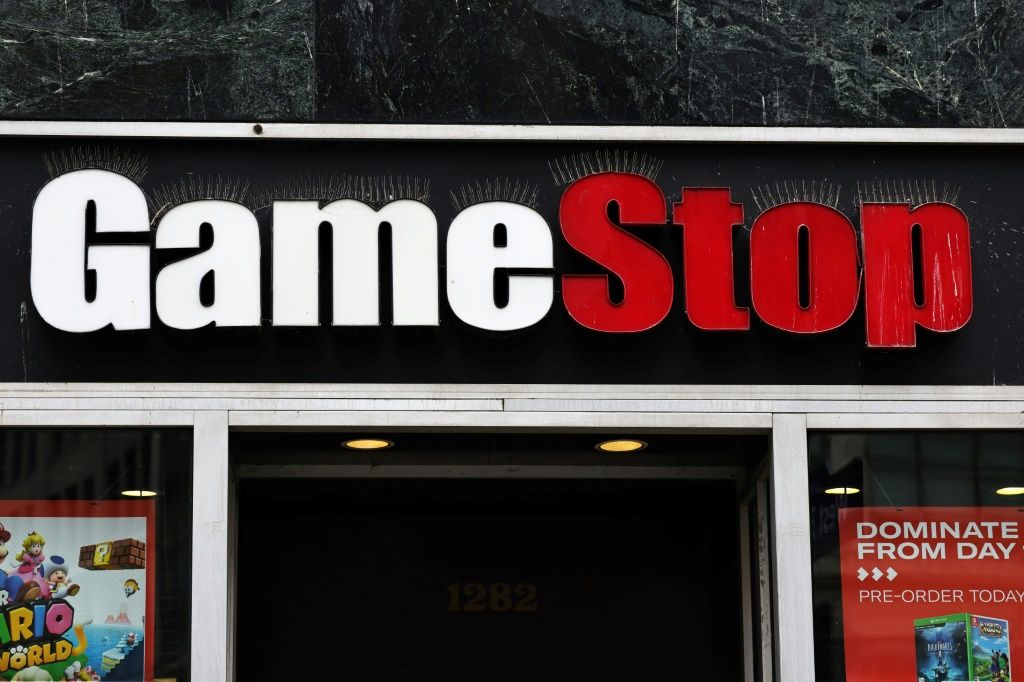
Buy or Sell GameStop Stock in 2026? Cash Hoard and Buybacks vs Persistent Revenue Decline

Published

on

Applied Optoelectronics

NEW YORK — GameStop Corp. shares have shown renewed volatility in 2026, trading around $21 as the company reported record first-quarter profits and announced a $2 billion share buyback program, yet Wall Street analysts largely maintain a cautious stance on the long-term prospects of the video game retailer.

The stock has delivered mixed performance year-to-date, with gains driven by activist investor moves, meme-stock enthusiasm and strong cash generation, but faces ongoing pressure from declining physical game sales and competition from digital platforms. As of early June 2026, GME trades near the middle of its 52-week range, reflecting uncertainty over its transformation strategy.

GameStop’s first-quarter 2026 results, released June 2, showed significant improvement. Net sales rose 14% to $835.3 million, boosted by strong collectibles demand, while the company swung to a net income of $389.6 million from $44.8 million a year earlier. The board approved a new $2 billion discretionary share repurchase program, signaling confidence in undervaluation and providing potential support for the stock price.

Cash reserves swelled to approximately $9.7 billion, giving the company substantial financial flexibility. This war chest has fueled speculation about strategic moves, including a rejected $56 billion takeover bid for eBay and increased stake-building in the online marketplace. CEO Ryan Cohen continues pushing aggressive initiatives to evolve GameStop beyond traditional brick-and-mortar retail.

Advertisement

Despite these positive developments, analysts remain predominantly bearish. Consensus ratings lean toward Sell, with an average 12-month price target around $13.50, implying potential downside from current levels. Concerns center on structural challenges in the video game industry, where digital downloads and subscription services have eroded physical sales — once GameStop’s core business.

Revenue for fiscal 2025 declined to $3.63 billion, and analysts forecast further contraction in coming years. While collectibles and technology products have provided some diversification, they have not fully offset declines in hardware and software sales. GameStop’s transition to a broader entertainment and technology retailer remains a work in progress.

The stock retains strong support from retail investors and meme-stock communities. Short interest, while lower than 2021 peaks, remains notable, creating potential for volatility on positive news. However, sustained rallies have proven difficult without fundamental improvement in the core business.

Investment cases for buying GME in 2026 typically highlight its fortress balance sheet and activist leadership. With nearly $10 billion in cash and minimal debt, the company can weather industry headwinds while pursuing acquisitions or share repurchases. The $2 billion buyback program, if executed aggressively, could retire a meaningful portion of outstanding shares and provide price support.

Advertisement

Proponents also point to potential strategic pivots. Cohen’s involvement has brought e-commerce focus and operational efficiency improvements. Speculation around technology initiatives, including possible blockchain or NFT-related efforts, continues to excite certain investors despite limited tangible progress to date.

Arguments for selling or avoiding the stock focus on valuation and industry trends. Even after recent volatility, GME trades at elevated multiples relative to traditional retailers. Declining revenue forecasts and narrow margins in a competitive sector raise questions about long-term profitability. Most Wall Street analysts see limited upside without a clear turnaround narrative.

Technical analysis shows mixed signals. The stock has trended lower over recent months but finds support near multi-year lows. Moving averages suggest bearish momentum in the short term, though oversold conditions could lead to short-term bounces on positive news.

Broader market context influences GME’s performance. As a high-beta stock, it amplifies movements in the overall market and consumer discretionary sector. Economic uncertainty, interest rate policy and consumer spending trends all play significant roles.

Advertisement

GameStop’s meme-stock history adds another layer of complexity. Surges driven by social media sentiment can occur with little fundamental basis, creating both opportunity and risk for traders. However, such rallies have often proven unsustainable without underlying business improvement.

For long-term investors, the decision hinges on belief in management’s ability to reinvent the company. Successful diversification beyond physical retail, combined with prudent capital allocation, could create value. Failure to stem revenue declines would likely pressure the stock further.

Short-term traders may find opportunities in volatility, particularly around earnings releases, activist announcements or broader market movements. Risk management remains crucial given the stock’s history of sharp swings.

Analyst forecasts for 2026 generally project continued revenue pressure, with some improvement in profitability from cost controls and buybacks. Price targets cluster in the low teens, suggesting limited enthusiasm from institutional research desks.

Advertisement

Corporate governance and capital allocation will be key watchpoints. The company’s substantial cash position raises questions about optimal deployment — whether through buybacks, acquisitions, dividends or strategic investments. Shareholder activism, led by Cohen, has pushed for bolder moves.

The video game industry continues evolving rapidly. Console cycles, digital distribution growth and emerging technologies like cloud gaming present both challenges and opportunities. GameStop’s ability to adapt will determine its relevance in coming years.

As of early June 2026, the balance of risks and rewards for GME remains highly debated. Strong cash reserves and activist involvement provide downside protection and potential catalysts, while industry headwinds and high valuations create meaningful risks.

Investors considering GME should weigh these factors against their risk tolerance and time horizon. Diversification and careful position sizing are essential given the stock’s volatility. While some see a deeply undervalued opportunity with significant upside, consensus views suggest caution and limited near-term catalysts for substantial appreciation.

Advertisement

The coming quarters will be critical as GameStop executes its buyback program and pursues strategic initiatives. Whether the company can translate its cash strength into sustainable growth will ultimately decide if 2026 becomes a turning point or another challenging year for the iconic retailer.

Continue Reading

Business

Exclusive: MoneyGram Launches Dollar-Pegged Stablecoin

Published

on

Jack Pitcher hedcut

MoneyGram, the global payments company, has launched a dollar-pegged stablecoin that will eventually be used by its 60 million customers to send and receive money.

Called MGUSD, the stablecoin will initially be used for treasury management, settlement and currency trading. It will be available in the U.S. first, with plans to roll out globally within the year.

Anthony Soohoo, chairman and chief executive of MoneyGram, said the company intends to make MGUSD the backbone for all MoneyGram transactions across its 60 million active users. For example, customers living in high-inflation countries will be able to hold their balances in MGUSD or convert them into local currencies for spending.

Continue Reading

Business

US agency considers reforming, ending $3 billion school internet subsidy program

Published

on

US agency considers reforming, ending $3 billion school internet subsidy program


US agency considers reforming, ending $3 billion school internet subsidy program

Continue Reading

Business

Propel Holdings Inc. (PRL:CA) Shareholder/Analyst Call Transcript

Published

on

OneWater Marine Inc. (ONEW) Q1 2026 Earnings Call Transcript

Propel Holdings Inc. (PRL:CA) Shareholder/Analyst Call June 3, 2026 1:00 PM EDT

Company Participants

Devon Ghelani – Vice President of Capital Markets & Investor Relations
Sheldon Saidakovsky – Co-Founder & CFO

Presentation

Advertisement

Operator

Good afternoon, everyone. Welcome to the Annual General Meeting of Propel Holdings, Inc. Please note that this meeting is being recorded. I would like to introduce Devon Ghelani, Propel’s Vice President of Capital Markets and Investor Relations and the moderator of today’s meeting. Devon, please go ahead.

Devon Ghelani
Vice President of Capital Markets & Investor Relations

Advertisement

Thank you, Michael Angelo. Good afternoon, everyone. Thank you for joining Propel’s Virtual Annual General Meeting of Shareholders. We have made the decision to hold this year’s Annual General Meeting in a virtual-only format that is being streamed via live webcast. Our agenda today includes the formal business of the meeting that will be conducted by Sheldon Saidakovsky, our Chief Financial Officer. We will conclude with a question-and-answer period open to registered shareholders and duly appointed proxy holders, at which time Sheldon will be available to respond to questions. Please note that our remarks and responses to questions today may include our expectations, future plans and intentions that may constitute forward-looking statements. We would refer you to our most recently filed management’s discussion and analysis and annual information form, which include a summary of the material assumptions as well as certain material risks and factors that could affect our future performance and our ability to deliver on these forward-looking statements. And with that, I would like to turn the meeting over to Sheldon to lead us through the formal business of the meeting.

Sheldon Saidakovsky
Co-Founder & CFO

Good afternoon. Thank you all for coming to Propel’s Virtual Annual General Meeting of Shareholders. As Clive is away on business, Mr. Stein and the executive

Advertisement
Continue Reading

Business

Berkshire Is Convinced the American Dream of Homeownership Will Stay Alive

Published

on

Berkshire Is Convinced the American Dream of Homeownership Will Stay Alive

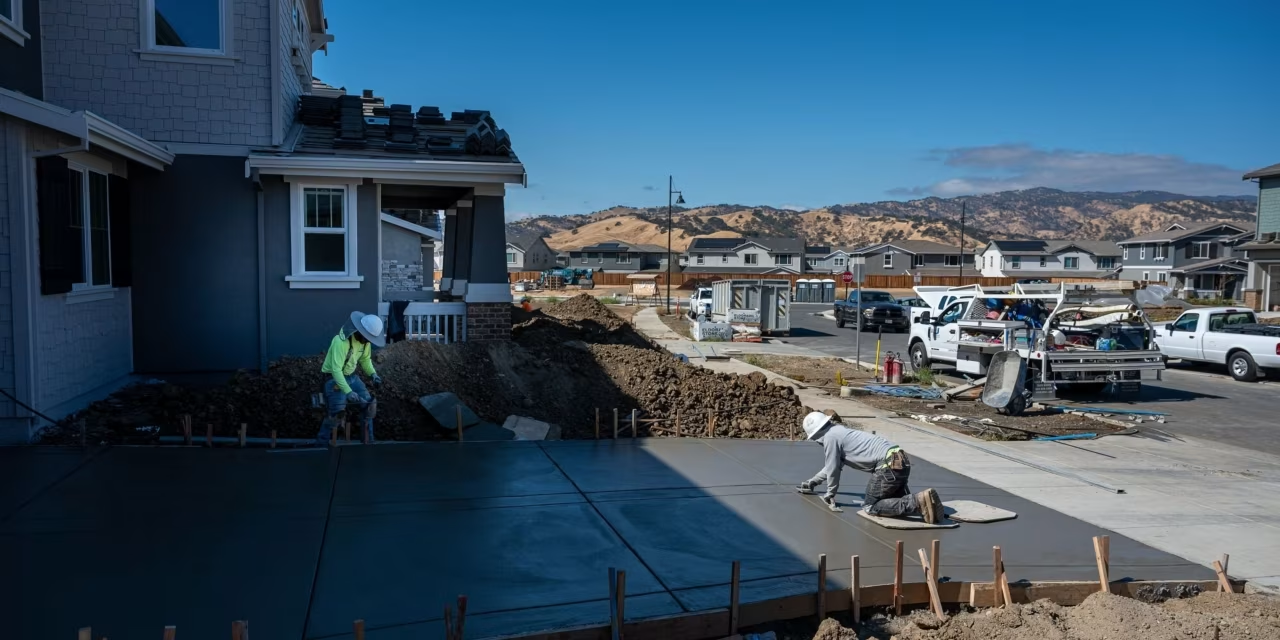
Berkshire Hathaway’s $6.8 billion deal to acquire a major home builder reflects its conviction that the housing market will shake off its yearslong slump and recover as it always has.  

With an all-cash agreement Sunday for Taylor Morrison Home Corp., the Omaha, Neb.-based conglomerate is poised to become a top-five U.S. home builder, adding to its growing portfolio of housing-related companies.

Copyright ©2026 Dow Jones & Company, Inc. All Rights Reserved. 87990cbe856818d5eddac44c7b1cdeb8

Continue Reading

Business

Rare ‘intensive’ revision in Bihar four months before polls

Published

on

Rare 'intensive' revision in Bihar four months before polls
New Delhi: The Election Commission’s ‘Special Intensive Revision’ of Bihar’s electoral rolls has sparked a major political debate. However, this is not the first time that the poll panel has ordered an ‘intensive’ revision of electoral rolls — at least nine such revisions were held from 1952 to 2004, several of which came with similar house-to-house verification and even a ‘de novo’ electoral roll in some cases. However, the EC has seldom ordered a full state intensive revision in a state 4-6 months ahead of assembly elections, as is the case with Bihar.

Factor the last such instances: In June 2004, ECI ordered ‘Intensive Revision of Electoral Rolls‘ in seven northeastern states and J&K.

Alongside, it ordered a ‘special summary revision‘ in Andhra Pradesh, Bihar, Chhattisgarh, Goa, Gujarat, Haryana, Himachal Pradesh, Jharkhand, Karnataka, Kerala, Madhya Pradesh, Maharashtra, Orissa, Punjab, Rajasthan, Sikkim, Tamil Nadu, Uttar Pradesh, Uttaranchal, West Bengal, and Union Territories of Andaman & Nicobar Islands, Chandigarh, Daman & Diu, Dadra & Nagar Haveli, NCT of Delhi, Lakshadweep and Pondicherry.Prior to that, ‘intensive revision’ of the electoral rolls was conducted in 20 other states/UTs, including Bihar, in two phases during 2002 and 2003, except the northeastern states and J&K.

BIHAR 2025- A unique case
The 2025 SIR in Bihar is different on several counts. While an ‘intensive’ revision mostly involves a ‘de novo’ exercise, drawing up a fresh electoral roll from the scratch, the Bihar SIR is using the 2002-03 electoral roll as a base to build upon. At the same time, it involves a new pre-printed enumeration form included in the usual house-to-house verification format and document submission, associated with an ‘intensive’ revision. It is, also, very different from previous intensive revision exercises in terms of timing.

EC has seldom ordered a full state and full-scale intensive revision in a state 4-6 months ahead of scheduled assembly elections, as is the case with Bihar. Bihar saw its last intensive revision in 2002, a good three years away from the assembly polls held in October 2005.
Similarly, when the EC, on June 29, 2004 announced an intensive roll revision in eight states, it chose to leave out two states which were pending a similar intensive roll revision. These were Arunachal Pradesh & Maharashtra where assembly polls were due in October 2004.
“In Arunachal Pradesh and Maharashtra, general elections to the assemblies are to be held in the latter half of 2004. Therefore, the programme in these two states will be announced after the completion of the elections,” the EC press note on 29.06.2004 read.
Instead, a ‘special summary revision of rolls’ was announced for Maharashtra ahead of the October 2024 assembly polls with house-to-house enumeration, as per the September-December 2004 EC newsletter.

The EC has, in fact, often conducted ‘intensive’ revision in certain areas of a state. In Tamil Nadu- after inquiry reports indicated ‘shortcomings in the conduct of different levels of election officers at the time of intensive revision of electoral rolls in 2002’- the poll panel on October 19, 2004 ordered a ‘special revision of intensive nature with house-to-house enumeration’ in six municipal corporation areas across 33 constituencies, spanning parts of Chennai, Salem, Coimbatore, Tiruchirappalli, Madurai, and Tirunelveli.

Advertisement

In the aftermath of Gujarat riots, the ECI on August 16,2002, announced a repeat of the 2002 ‘special revision of intensive nature’.

Types Of Electoral Roll Revisions

Intensive Revision: It’s usually a de-novo process without reference to earlier existing roll; involves at least 2 household verification visits by booth-level officer

Summary Revision
: Roll is simply updated; no house-to-house enumeration but objections are addressed before final roll publication

Special Summary Revision: EC can order so if it finds inaccuracies or poor coverage of any area. EC can adopt changes in existing procedure

Partly Intensive and Partly Summary Revision: Existing electoral rolls are published in draft and checked through household verification and put through claims/objection process

Advertisement

Roll revision chronology

1950
Originally Section 23 of Representation of the People Act, 1950 provided for annual revision with March 1 as qualifying date

1952
After first gen election in 1952, EC directed that from 1952 to 1956, annual revision of electoral rolls should cover 1/5th of entire state area so that every locality might have its electoral roll intensively revised at least once before 2nd gen polls

1956
EC directed intensive revision of rolls every year in some areas where electoral rolls were likely to become inaccurate: (i) Urban Areas (ii) Areas with floating labour population (iii) Areas where fairly large movements of population had taken place

1957
Post 1957: Lok Sabha polls: EC directed that during each of the three following years, the electoral rolls of 1/3rd of the entire state area be revised intensively, while during 1961 the revision would be intensive only in urban areas, areas with floating, migratory population and service voters

Advertisement

1960
Following amendments to RP Act, 1950, EC ordered annual revision of rolls between January 1 and Jan 31 of the year

1962
Post 1962 LS Polls: EC directed ‘summary revision’ adequate for 1963 and 1964. In 1965 intensive revision conducted again in 40% of the country; the rest 60% was done in 1966

1966
Post 1966: District Election Officer appointed in each district and summary roll revision conducted in 1969-70 and 1975

1976
Emergency: no Lok Sabha polls in 1976; EC held summary roll revision

Advertisement

1983
1983 on: Staggered intensive revision of all rural constituencies ahead of 1985 LS polls

1987-88
All constituencies revised intensively; special revision in 1989

1992
Summary revision ordered followed by intensive revision in 1993 along with introduction of EPIC card

1995
Intensive Revision comes in

Advertisement

1999-2000
Amid computerisation electoral rolls, no intensive revision in 1999, 2000

2002
Special intensive revision in 20 states; intensive revision in 7 states in 2003-04

Continue Reading

Business

Plans underway for new Killer Brownie headquarters

Published

on

Plans underway for new Killer Brownie headquarters

Footprint will expand to 140,000 square feet.

Continue Reading

Trending

Copyright © 2025