

Business
SpaceX to Raise Record $75 Billion in IPO at Fixed $135 Share Price for $1.75 Trillion Valuation

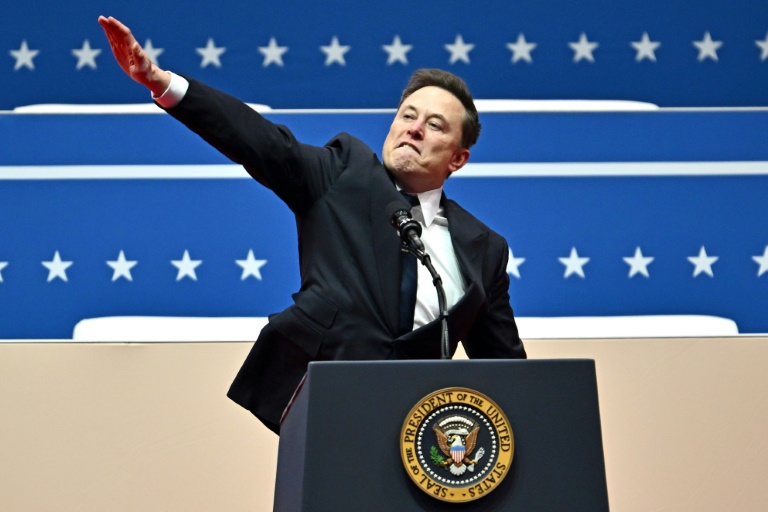
NEW YORK — SpaceX, Elon Musk’s rocket and satellite company, plans to raise a record $75 billion in its initial public offering by fixing the share price at $135, targeting a $1.75 trillion valuation in one of the largest and most unconventional listings in market history.
The company intends to sell 555.6 million shares in an all-primary offering, with proceeds directed toward expanding AI computing resources and its Starlink satellite network. The fixed-price approach breaks from traditional IPO practices, where companies typically set a price range and adjust based on investor demand during roadshows.
SpaceX’s roadshow begins Thursday after preliminary meetings with investors. The debut is expected on Nasdaq under the ticker “SPCX” on June 12, led by underwriters Goldman Sachs, Morgan Stanley, BofA Securities, Citigroup and J.P. Morgan. The plans remain subject to change based on investor feedback.
This move positions SpaceX to lead a wave of major listings, with OpenAI and Anthropic also preparing public debuts that could collectively add nearly $4 trillion in market capitalization. The listing comes after SpaceX merged with Musk’s xAI earlier this year in a deal valuing the rocket business at $1 trillion and xAI at $250 billion.
The fixed $135 price reflects Musk’s signature style of defying convention. “Musk is simply taking a ‘take-it-or-leave-it’ approach which works for his followers and is also sensible given the market conditions and the lack of comparables,” said Weiheng Chen, a senior partner at law firm Wilson Sonsini Goodrich & Rosati.
SpaceX is also planning to allocate up to 30% of the offering to retail investors, an unusually large portion designed to tap into Musk’s dedicated following. Musk himself will be required to hold his shares for 366 days post-IPO, signaling long-term commitment to new shareholders.
The company has no direct public peers, complicating valuation. Morningstar recently estimated SpaceX’s fair value at $780 billion — 48% below the targeted $1.75 trillion — with most of that value attributed to the Starlink satellite communications business. At the proposed valuation and 2025 revenue of $18.67 billion, SpaceX would trade at nearly 94 times trailing revenue.
For context, Rocket Lab trades at 118 times revenue, Palantir at 81 times, and Tesla at roughly 17 times. SpaceX reported a net loss of $4.94 billion in 2025, swinging from a $791 million profit the prior year, so it cannot be evaluated on a price-to-earnings basis.
Starlink remains the primary profit driver, generating most of the company’s revenue and growth. However, two of SpaceX’s three main businesses continue burning cash, with losses widening to $1.27 per share in the first quarter of 2026 from 18 cents a year earlier. Revenue grew to $4.69 billion in the quarter from $4.07 billion previously.
The IPO structure is all-primary, meaning all proceeds go to the company rather than allowing existing shareholders to sell shares. This approach provides SpaceX with substantial capital to fuel ambitious projects, including Starlink expansion and integration with xAI’s artificial intelligence initiatives.
Investor interest is expected to be intense, driven as much by Musk’s track record as by SpaceX’s fundamentals. His success at Tesla has shown an ability to galvanize retail traders and deliver long-term value despite short-term volatility. The upcoming roadshow will test whether institutional investors are willing to accept the fixed price and governance structure.
Corporate governance concerns could temper enthusiasm. SpaceX plans a dual-class share structure that concentrates voting power with Musk and a small group of insiders, similar to arrangements at Tesla and other Musk-led companies. This setup prioritizes founder control but has drawn criticism from some governance advocates.
The listing arrives at a time when public markets are showing renewed appetite for large growth stories after years of muted mega-cap IPO activity. Strong performance by recent technology and AI-related listings has encouraged more private companies to consider going public.
SpaceX’s business spans multiple high-growth areas. Its Falcon rockets have transformed the commercial launch industry with reusable technology that dramatically lowered costs. Starlink provides high-speed internet to remote and underserved areas worldwide, with potential for significant expansion in aviation, maritime and enterprise markets. The integration with xAI adds exposure to artificial intelligence infrastructure.
Proceeds from the IPO will support continued innovation across these segments. SpaceX aims to scale Starlink’s constellation, develop next-generation vehicles including Starship, and enhance computing capabilities for AI applications.
The unconventional IPO strategy underscores Musk’s influence on capital markets. By setting a firm price ahead of the roadshow, SpaceX aims to streamline the process and avoid the volatility often seen in traditional bookbuilding. This approach has worked for Musk in past ventures and aligns with his preference for direct engagement with investors and the public.
Wall Street reaction has been mixed but generally positive. While some bankers note the challenges of pricing without traditional demand discovery, others see the fixed price as pragmatic given SpaceX’s visibility and strong private-market interest.
As the most anticipated IPO in years, SpaceX’s debut could set the tone for the remainder of 2026’s new issue market. Success would likely encourage other high-profile private companies to follow, potentially unlocking significant capital for growth sectors including AI, space technology and sustainable infrastructure.
For investors, the offering represents a rare opportunity to gain exposure to one of the world’s most valuable private companies. However, risks remain, including execution challenges in scaling complex technologies, regulatory hurdles in multiple jurisdictions, and dependence on Musk’s leadership and vision.
SpaceX has transformed the space industry over the past two decades, achieving milestones once considered science fiction. Its IPO marks another chapter in that evolution, bringing public market scrutiny and capital to a company long defined by ambition and innovation.
The coming weeks will reveal whether investors embrace SpaceX’s terms or push back on valuation and governance. With the roadshow beginning Thursday, all eyes will be on investor meetings and any adjustments to the ambitious plans.

Business
Senior US officials frustrated by Machado bid to return to Venezuela after quakes, White House official says
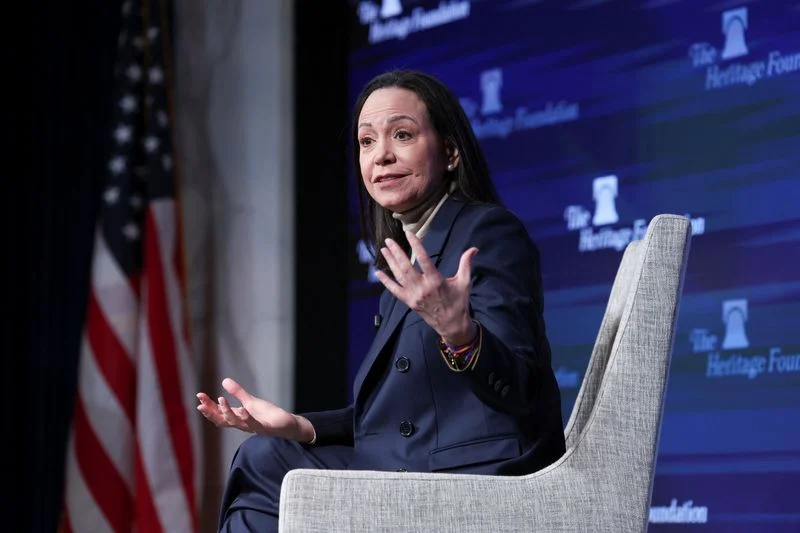

Senior US officials frustrated by Machado bid to return to Venezuela after quakes, White House official says

Beijing investigating rare light aircraft crash which killed pilot, injured 13

US close to allowing Anthropic to restore Fable 5 model, Axios reports


The Investment Doctor is a financial writer, highlighting European small-caps with a 5-7 year investment horizon. He strongly believes a portfolio should consist of a mixture of dividend and growth stocks.
He is the leader of the investment group European Small Cap Ideas which offers exclusive access to actionable research on appealing Europe-focused investment opportunities not found elsewhere. The a focus is on high-quality ideas in the small-cap space, with emphasis on capital gains and dividend income for continuous cash flow. Features include: two model portfolios – the European Small Cap Ideas portfolio and the European REIT Portfolio, weekly updates, educational content to learn more about the European investing opportunities, and an active chat room to discuss the latest developments of the portfolio holdings. Learn more.
Analyst’s Disclosure: I/we have a beneficial long position in the shares of ECC.PR.D either through stock ownership, options, or other derivatives. I wrote this article myself, and it expresses my own opinions. I am not receiving compensation for it (other than from Seeking Alpha). I have no business relationship with any company whose stock is mentioned in this article.
I currently have no position in the common stock, but will keep an eye on it.
Seeking Alpha’s Disclosure: Past performance is no guarantee of future results. No recommendation or advice is being given as to whether any investment is suitable for a particular investor. Any views or opinions expressed above may not reflect those of Seeking Alpha as a whole. Seeking Alpha is not a licensed securities dealer, broker or US investment adviser or investment bank. Our analysts are third party authors that include both professional investors and individual investors who may not be licensed or certified by any institute or regulatory body.

Goldman Sachs raises MakeMyTrip stock price target to $84 on growth outlook

Iran targets Bahrain, vessel attacked in Strait of Hormuz as tensions flare

UBS outlines portfolio playbook for uncertain markets


Hezbollah rejects US-brokered Israel-Lebanon security deal as ’surrender’

Weekly Indicators: Simply Stellar Consumer Spending
Business
SpaceX Stock Steadies Near $153 as $25 Billion Bond Sale Draws Record $89 Billion From Investors Worldwide
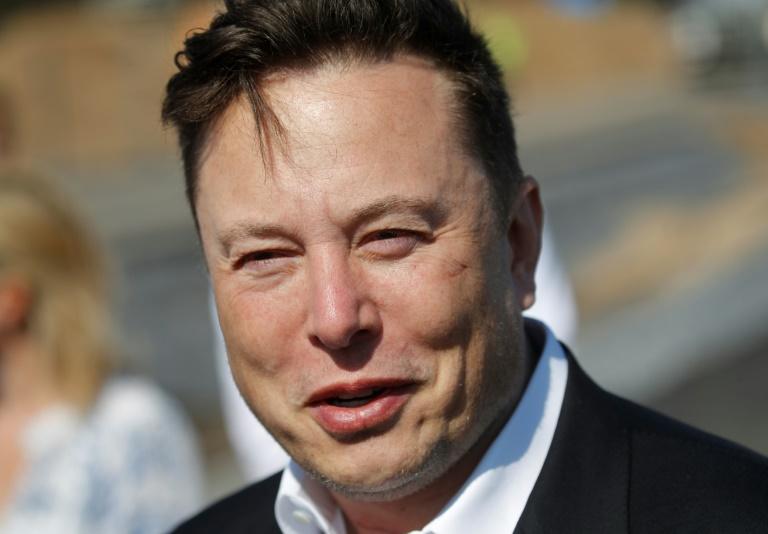
Shares of SpaceX closed essentially flat Friday at $153.23, up 0.15%, before slipping slightly to $152.77 in after-hours trading, as the newly public rocket and satellite company found a measure of stability following a punishing two-week stretch that had erased much of its post-IPO gains.
The modest move caps a volatile first month on public markets for Elon Musk’s space and artificial intelligence venture, one that has included a record-setting debut, a sharp multi-day selloff, and, this week, a massive bond offering that investors say has removed one of the central risks weighing on the stock.
A debut for the history books, followed by a steep pullback
SpaceX completed the largest initial public offering in history on June 12, pricing shares at $135 and raising roughly $75 billion at an initial valuation approaching $1.8 trillion. The stock surged 19% on its first day of trading, closing at $160.95, and continued climbing in the sessions that followed, briefly pushing the company’s market capitalization above both Amazon and Microsoft before settling back below both.
Shares reached an all-time intraday high of $225.64 on June 16, but the rally proved short-lived. SpaceX stock fell 16% the following Monday alone, extending a selloff that saw shares tumble across three full trading sessions, with the stock losing nearly 24% over that stretch before bottoming out at $147.11 on June 23 — briefly dipping below its $150 opening-day price.
What was driving the decline
Much of the pressure tracing through SpaceX’s stock in recent weeks centered on a looming debt deadline tied to the company’s financing structure. According to market analysis, the September 2027 deadline on a $20 billion bridge loan was the key hard deadline that drove most of the price decline from $225 to $147.11, as investors grew increasingly focused on how the company intended to refinance that obligation.
Beyond the bridge loan, investors have also flagged broader concerns about SpaceX’s financial profile as a newly public company. The company posted a $4.9 billion net loss in 2025, and lost an additional $4.28 billion in the first quarter of this year alone, even as its core businesses continued growing rapidly.
A bond sale that reshaped sentiment
The turning point for the stock came this week, when SpaceX moved to address the bridge loan concern directly. The company priced its first $25 billion bond offering across five separate tranches, with coupon rates ranging from 5.350% to 6.650% for maturities stretching from 2031 to 2056.
The response from institutional investors was overwhelming. The bond offering drew $89 billion in demand, representing roughly 3.5 times oversubscription and what market analysts described as one of the largest investment-grade order books in history. SpaceX confirmed it would use the proceeds of the offering, which settled June 26, to pay off the outstanding bridge loan entirely — directly eliminating the maturity risk that had been most responsible for the stock’s slide from its June 16 peak.
Market analysts framed the divergence between the bond market’s enthusiasm and the equity market’s caution as telling. One analysis described the dynamic as a divergence between bearish equity sentiment and bullish institutional credit demand, suggesting the stock’s earlier selloff was more sentiment-driven than tied to a genuine deterioration in SpaceX’s underlying creditworthiness.
A new contract win adds to the week’s headlines
SpaceX also received a boost from a previously unrelated business line this week. The company was named among the winning bidders, alongside Verizon, AT&T and T-Mobile, in a Federal Communications Commission wireless spectrum auction, adding another data point to the company’s expanding footprint across the broader telecommunications and connectivity landscape that includes its Starlink satellite broadband business.
Where analysts stand on the stock now
Wall Street’s outlook on SpaceX remains notably divided even after this week’s developments. The average 12-month price target across analysts covering the stock sits at $187.80, with estimates ranging from a low of $62 to a high of $310 — an unusually wide spread that reflects just how much uncertainty remains around how to value a company straddling rocket launches, satellite broadband and artificial intelligence under one roof.
Some firms have struck a cautious tone even as the bridge loan concern has been resolved. Susquehanna maintained a Neutral rating on the stock with a price target of $170, implying modest upside from Friday’s closing level, while Argus initiated coverage of the company with a Hold rating this week. Other risks cited by analysts following the stock include ongoing operating losses tied to SpaceX’s xAI artificial intelligence division, a cautious free-cash-flow outlook through 2029 from S&P, a stock lockup period set to expire in December 2026, and a notably bearish fair-value estimate from Morningstar pegged at $62 per share — far below where the stock currently trades.
The business fundamentals behind the stock
Beneath the volatility, SpaceX’s underlying revenue growth has remained robust. According to the company’s IPO prospectus, Starlink accounted for roughly 61% of total revenue in 2025, generating $11.4 billion, up about 50% from the prior year, with active customers surpassing 10.3 million across 160 countries and markets as of the end of the first quarter. Total company revenue grew to $18.67 billion in 2025, with adjusted EBITDA of $6.58 billion, even as the company posted a GAAP net loss of nearly $5 billion for the year tied to heavy investment in newer business lines, including Starship development and its AI operations.
SpaceX is scheduled to join the Nasdaq 100 index on July 7, a milestone expected to trigger an estimated $4.3 billion in passive index-fund inflows as funds tracking the benchmark are required to add the stock to their holdings. With the bridge loan risk now resolved and the stock trading well off both its post-IPO highs and its 52-week low, investors are likely to watch closely whether that added index demand, combined with continued growth in Starlink subscriptions, can stabilize a stock that has spent its first six weeks as a public company swinging between record-setting enthusiasm and sharp, sentiment-driven retreats.

What is RWA tokenization? real-world assets explained

Move Over ‘Obsession,’ 2026 Has Another Horror Sensation on Its Hands

Senior US officials frustrated by Machado bid to return to Venezuela after quakes, White House official says


-

 Entertainment7 days ago
Renter of Home in Anne Heche Crash Denies Settlement With Son
-
 Sports4 days ago
Two goals and an assist by sheer aura: Cristiano Ronaldo just entered the World Cup chat
-

 Tech5 days ago
Microsoft accidentally kills epic Outlook email threads
-

 Fashion23 hours ago
Weekend Open Thread: Staud – Corporette.com
-

 Business7 days ago
Soccer-U.S. defends Iran World Cup travel restrictions, says discussions ongoing
-

 Politics1 day ago
The House | Manchesterism won’t survive the painful trade-offs unless it gets citizens on board
-

 Politics2 days ago
Potential 2028er World Cup attendee leaderboard
-

 Business1 day ago
Asia stock markets slide as tech shares slump
-

 Tech2 days ago
A Look At A Gaggle Of Transputer Boards
-
Crypto World4 days ago
Bitcoin (BTC) Dips Below $62K, Ethereum (ETH) Plunges 6% Daily: Market Watch
-

 Crypto World3 days ago
Securitize Wraps Roubini's SEC-Registered ETF as Dubai VARA Digital Security
-
 Crypto World2 days ago
Dell (DELL) Shares Tumble Over 5% Following Analyst Downgrade to Hold
-
Business4 days ago
Entergy settles forward sale agreements, raises $672 million in cash proceeds
-

 Sports20 hours ago
FIH Pro League: India defeat Pakistan 7-1, register biggest win of campaign | Other Sports News
-

 Crypto World11 hours ago
Kraken's xStocks Opens Bending Spoons IPO Registration to EEA Retail
-

 Crypto World23 hours ago
RTX holders must register wallets before token distribution begins
-
 Crypto World1 day ago
Hyperliquid Named on Singapore MAS Investor Alert Register
-

 Sports2 days ago
India vs Bangladesh LIVE Score, Women’s T20 World Cup: Bangladesh Opt To Bat; India Enter ‘Do-Or-Die’ Stage As Semi-Final Race Heats Up
-
 Tech6 days ago
Signal’s Meredith Whittaker says AI chatbots ‘are not your friends’ and calls Copilot agents a backdoor
-
Crypto World1 day ago
The DATA Foundation Launches to Tackle AI’s Multi-Billion Dollar Training Data Bottleneck
You must be logged in to post a comment Login