Connect with us

Business

Cochin Shipyard shares tumble 12% over 2 sessions. Should you buy after multibagger corrects 26% in a year?

Published

on

Cochin Shipyard shares tumble 12% over 2 sessions. Should you buy after multibagger corrects 26% in a year?
Shares of Cochin Shipyard dropped another 3% on Tuesday, extending sharp losses for the second consecutive session after management commentary during a recent analyst call spooked investors.

Cochin Shipyard shares fell to Rs 1,336 apiece on Tuesday morning. The stock crashed over 9% on Friday, recording its worst single-day plunge in more than two years. Overall, the stock has fallen more than 12% in just two straight sessions.

The sharp drop in the defence major’s share price was triggered after the company’s management, during an analyst conference call on Thursday, indicated that it is aiming for an EBITDA margin of 14% over the next two financial years, Business Standard reported. This is sharply lower than the 24% EBITDA margin reported for FY26.

Also read |Dividends and stock splits: Hindustan Copper, Cochin Shipyard among 200+ stocks with record dates this week. Check full list

Advertisement

ICICI Direct highlighted that Cochin Shipyard’s management expects FY27 revenue growth to stand at around 12-15%, supported by improving execution across shipbuilding and ship repair, with the company targeting 10 vessel deliveries during the year. The current order book stands at around Rs 22,000 crore, providing strong medium-term revenue visibility, and the order pipeline remains strong across both defence and commercial shipbuilding, the brokerage said.


It noted that the management expects FY27 operating cash flow to turn positive, supported by higher vessel deliveries and milestone-based collections as execution accelerates, and remains confident of sustaining growth over the medium term, supported by a combination of strong order visibility, improving execution, new shipbuilding capacity and the scaling up of the ship-repair business.
The domestic brokerage has a ‘Hold’ call on the shares of Cochin Shipyard with a target price of Rs 1,590 apiece, implying more than 15% upside potential from the stock’s previous closing price of Rs 1,381 apiece.

Cochin Shipyard and Drydocks World form joint venture

Drydocks World, a DP World company, and Cochin Shipyard last week announced the signing of a joint venture agreement to operate and expand the International Ship Repair Facility (ISRF) Cochin. The deal builds on the Memorandum of Understanding (MoU) signed by Drydocks World (DDW) and the Indian defence major during India Maritime Week 2025, under which the two organisations agreed to explore opportunities for collaboration in ship repair and allied maritime services

Under the arrangement, the joint venture will operate, consolidate and expand the International Ship Repair Facility (ISRF) in Cochin, creating additional capacity to service a wider range of vessels and meet the growing requirements of Indian, regional and international customers.

The partnership is expected to strengthen Cochin’s position as a maritime services hub, while creating opportunities across ship repair, engineering, fabrication and associated maritime services in Kerala.

Advertisement

Also read |Cochin Shipyard Ltd and Drydocks World form joint venture to strengthen India’s ship repair industry

Cochin Shipyard share price

Cochin Shipyard shares have fallen around 12% in a week and 10% in a month, overall being down 17% in 2026 so far. The stock has overall fallen more than 25% in one year.

In the longer term, Cochin Shipyard shares have delivered multibagger returns of around 144% in three years and 628% in five years. The company has a market capitalisation of around Rs 35,453 crore.

Disclaimer: This article has been written by Debaroti Adhikary, who is not a SEBI-registered Research Analyst or an Investment Adviser. Debaroti Adhikary and his/her ‘relative(s)’ (as defined under Section 2(77) of the Companies Act, 2013) do not hold any financial interest in the companies mentioned in this article as of the date of publication. The views/recommendations mentioned in this article, wherever applicable, are those of the respective SEBI-registered Research Analyst/brokerage and have been reproduced/reported with due attribution. They should not be construed as the views or recommendations of The Economic Times Digital or the journalist. Readers are advised to consider the original research report and make their investment decisions based on their own assessment. Brokerage disclaimers here.

Advertisement
Continue Reading
Click to comment

You must be logged in to post a comment Login

Leave a Reply

Business

MediaTek Beats Qualcomm to TSMC’s 2nm Chip Race With Its New Dimensity 9600 Pro Smartphone Processor

Published

on

MediaTek Beats Qualcomm to TSMC's 2nm Chip Race With Its

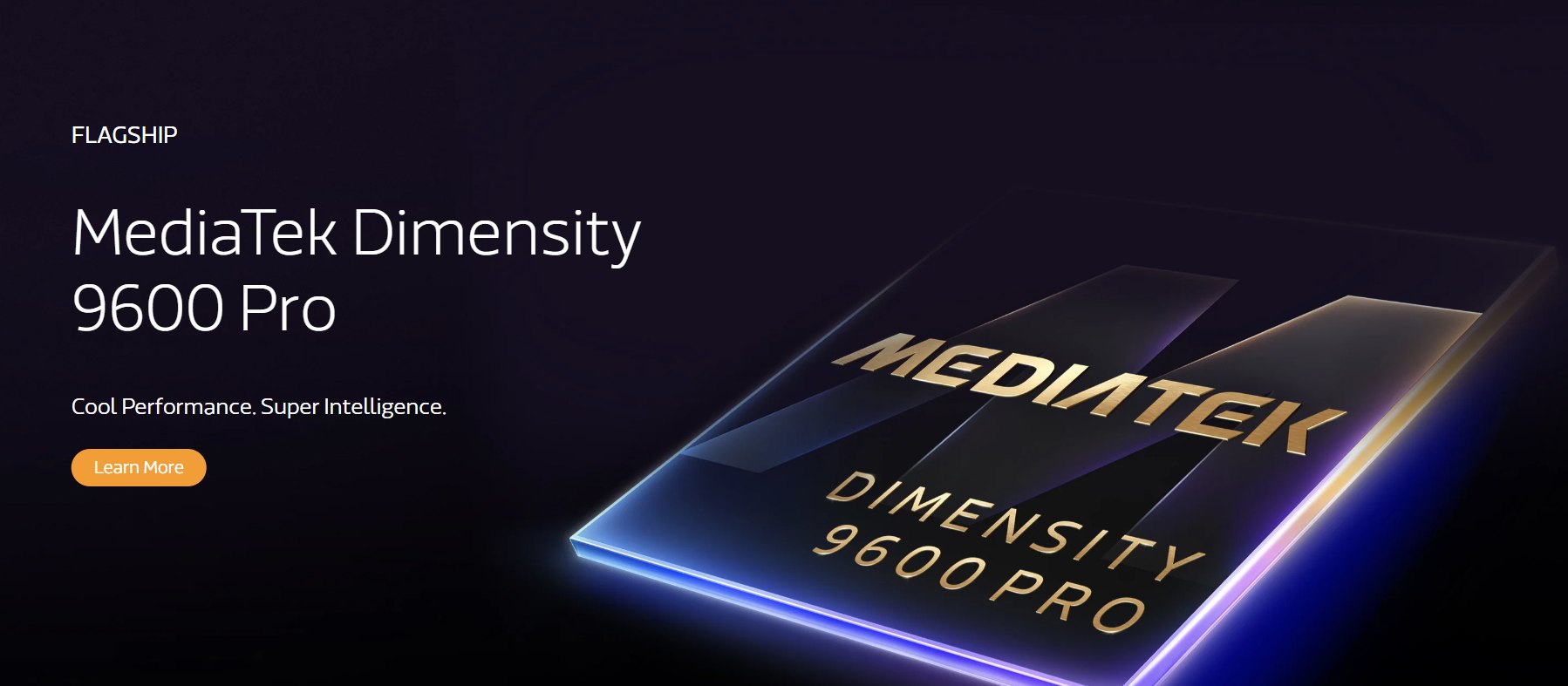
TAIPEI, Taiwan — MediaTek unveiled its new flagship smartphone processor Monday, the Dimensity 9600 Pro, becoming the first chipmaker to bring a mobile processor built on TSMC’s cutting-edge 2-nanometer manufacturing process to market, putting the Taiwanese company ahead of its main rival, Qualcomm, in the race to commercialize the next generation of chip fabrication technology.

The Dimensity 9600 Pro is built on TSMC’s N2P process, an enhanced version of the foundry’s 2-nanometer node. Qualcomm is expected to adopt the same TSMC process for the first time with its Snapdragon 8 Elite Gen 6, which is due to arrive next week, meaning MediaTek’s launch gives it a brief but notable head start in bringing 2-nanometer silicon to smartphones.

The new chip departs from conventional smartphone processor design by abandoning small, power-saving efficiency cores entirely in favor of an all-big-core layout. Its eight-core CPU is arranged in a 2+3+3 configuration: two C2-Ultra cores clocked up to 4.55 gigahertz with 2 megabytes of Level 2 cache each, three C2-Pro cores at 4.35 gigahertz with 1 megabyte of cache each, and three additional C2-Pro cores at 3.1 gigahertz with 512 kilobytes of cache each. Combined with 16 megabytes of Level 3 cache, the chip carries a total of 34.5 megabytes of cache, which MediaTek says represents a 21% increase over its previous-generation Dimensity 9500 and should help reduce memory access delays during heavy workloads. The processor packs more than 33 billion transistors in total.

MediaTek says the new design delivers a 17% improvement in single-core performance and a 15% improvement in multi-core performance compared with the Dimensity 9500, alongside a 61% reduction in multi-core power consumption. Independent benchmark testing appears to support those claims: the chip scored 4,276 points in Geekbench 6.4’s single-core test and 12,650 in the multi-core test, up from 3,666 and 11,014 for the Dimensity 9500. The Dimensity 9600 Pro is also the first mobile chip to support LPDDR6 memory, which MediaTek says delivers 33% higher performance than the previous LPDDR5X standard, along with UFS 5.0 storage, which doubles the sequential read and write speeds available through dual-channel UFS 4.0.

Advertisement

On the graphics side, the chip’s new G2-Ultra NX GPU offers 27% higher peak performance than its predecessor, along with an 18% improvement in ray-tracing performance and a 24% reduction in power consumption at peak output, according to the company. MediaTek said devices built around the chip will be able to sustain on-device gaming frame rates of up to 185 frames per second. For imaging, the chip supports 4K video capture at up to 120 frames per second, along with additional camera capabilities including high dynamic range recording and improved GPS accuracy.

Artificial intelligence capability features prominently in MediaTek’s pitch for the new chip. The Dimensity 9600 Pro combines a dedicated neural processing unit with the GPU in what the company calls a Native AI architecture, paired with a new Agentic AI Engine designed to power on-device AI assistants and automated tasks. MediaTek said the chip’s neural processing unit delivers 51% higher performance for the prefill stage of large language model processing compared with the previous generation, and that the chip can run generative AI models with as many as 30 billion parameters entirely on-device, without relying on cloud-based processing.

JC Hsu, corporate senior vice president at MediaTek and general manager of the company’s Wireless Communications Business Unit, framed the chip’s design around the growing role artificial intelligence now plays in everyday smartphone use. “The Dimensity 9600 Pro meets these demands with a Native AI architecture and dual improvement in performance and power efficiency to deliver new agentic AI experiences,” Hsu said, describing AI as central to how smartphones need to evolve to keep pace with user expectations for greater performance, efficiency and intelligence.

MediaTek’s adoption of TSMC’s 2-nanometer process follows an initial partnership announcement made in September 2025, when the company said it had completed a successful tape-out of a 2-nanometer system-on-chip and confirmed it was among the first companies working with TSMC on the enhanced N2P node, with volume production originally expected by late 2026. According to TSMC’s own figures cited at the time, the N2P process offers up to an 18% performance improvement at equivalent power levels, roughly a 36% reduction in power consumption at equivalent speeds, and a 1.2 times increase in logic density compared with the foundry’s current-generation N3E process, while also becoming the first TSMC node to adopt a nanosheet transistor structure.

Advertisement

The Dimensity 9600 Pro carries an estimated price of up to $220, positioning it below Qualcomm’s competing flagship chipsets, which typically range from $240 to $260. MediaTek, which describes itself as the world’s largest provider of mobile chipsets by volume and holds a larger market valuation than Qualcomm, said the chip will appear in devices from smartphone makers including Oppo, Xiaomi, Samsung, Motorola and Realme, among others. As of the chip’s launch, all confirmed device partners are based in China, with no Western smartphone maker having yet announced a device built around the new processor.

MediaTek’s rapid move to 2-nanometer manufacturing places it alongside other major chip designers making similar transitions. TSMC has said Intel and AMD are also adopting its most advanced process nodes, while Apple confirmed at its own recent product event that it is using TSMC’s 2-nanometer technology across its entire newly announced iPhone 18 lineup, underscoring how quickly the industry’s leading chip designers are moving to adopt the foundry’s latest manufacturing capabilities as competition over on-device AI performance intensifies across the smartphone market.

Continue Reading

Business

Anutin and Blair Talk About Thailand’s Economic Transformation

Published

on

Anutin and Blair Talk About Thailand's Economic Transformation

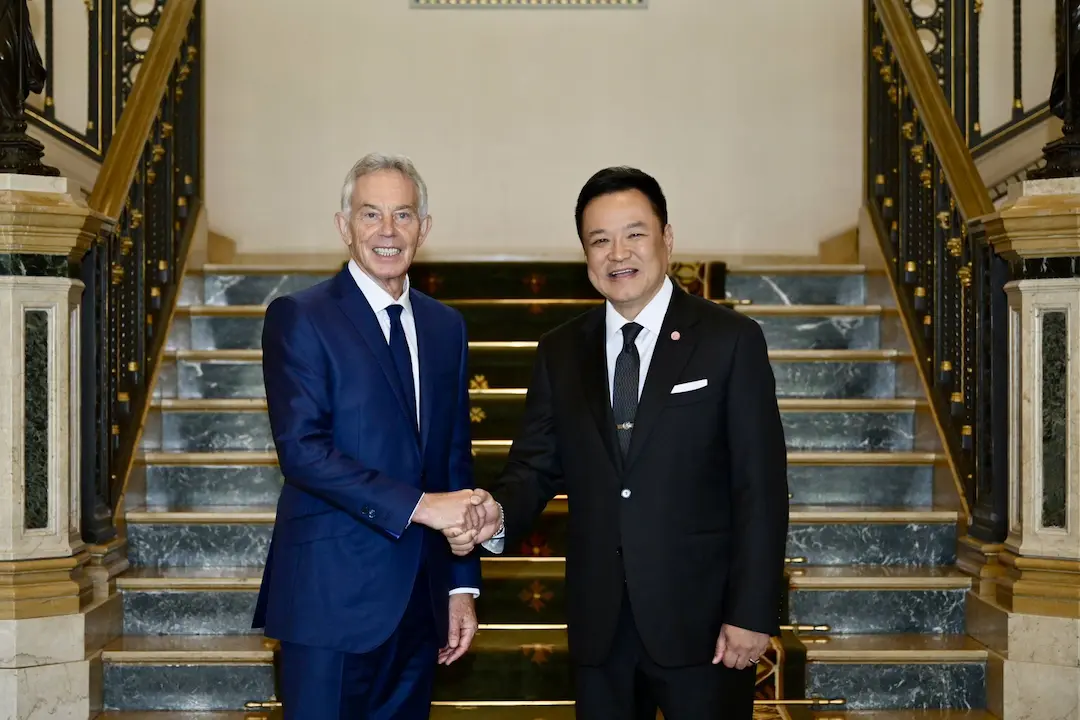
Thailand’s Prime Minister Anutin Charnvirakul met with former UK Prime Minister Tony Blair to discuss economic transformation, artificial intelligence, and clean energy. The meeting aimed to leverage Blair’s expertise to support Thailand’s accession to the OECD and boost its global competitiveness.


Key Points

  • Prime Minister Anutin Charnvirakul met with former UK Prime Minister Sir Tony Blair on September 14 to explore Thailand’s economic transformation and future industries. Discussion topics included AI, advanced industries, and clean energy, with Anutin seeking guidance from the Tony Blair Institute for Global Change (TBI).
  • Key conversation points included investments in AI and semiconductors, enhancing workforce skills through AI, and improving public administration. Thailand is also revising data center investment regulations to maximize domestic benefits while considering environmental impacts.
  • Anutin requested TBI’s support for Thailand’s OECD membership by 2028, focusing on green and digital transitions. Both parties discussed enhancing economic competitiveness, energy solutions, and potential cooperation, with Anutin suggesting working-level coordination and Blair offering to provide insights to the Thai government.

Prime Minister Anutin Charnvirakul met former UK Prime Minister Sir Tony Blair at Government House on September 14 to discuss Thailand’s economic transformation, future industries, and technology. Anutin is seeking expertise from the Tony Blair Institute for Global Change (TBI), where Blair serves as executive chairman, as Thailand develops new economic engines in AI, advanced industries, and clean energy.

Government Spokesperson Ekkapob Pianpises reported that discussions covered investment in AI, semiconductors, and advanced industries, as well as the use of AI to boost productivity, develop workforce skills, and improve public administration. Thailand is also reviewing data center investment rules to increase domestic benefits while managing environmental effects. Blair stressed the value of data ownership in supporting Thai applications and startups.

Anutin also sought TBI support as Thailand pursues full membership in the Organization for Economic Co-operation and Development by 2028, including work on the green and digital transitions. Energy discussions covered solar rooftops and other technologies that could support domestic needs, international trade, and Thailand’s role in global supply chains.

The two sides discussed further cooperation on economic competitiveness, AI and digital development, the climate and energy transition, and OECD accession. Anutin later proposed working-level coordination with TBI, while Blair expressed readiness to provide information and advice to the Thai government.

Advertisement

Source : Anutin and Blair Discuss Thailand’s Economic Transformation

Continue Reading

Business

HDFC Bank share price target: What are Jefferies, 3 other foreign brokerages saying as CEO hunt intensifies?

Published

on

HDFC Bank share price target: What are Jefferies, 3 other foreign brokerages saying as CEO hunt intensifies?
HDFC Bank, India’s largest private lender, has submitted the names of two candidates to the RBI for the CEO role, formally beginning the succession process for Sashidhar Jagdishan, who is due to retire later this year. HDFC Bank shares rose 3% to Rs 727 on Tuesday.

While the lender has not named the two candidates, people familiar with the matter told The Economic Times that the bank’s deputy managing director Kaizad Bharucha and an external candidate are on the list. ICICI Prudential Life CEO Anup Bagchi and Citi India CEO K Balasubramanian are among those being considered for the external candidate slot.

Last month, Managing Director and CEO Sashidhar Jagdishan decided not to seek another term at the helm of the country’s largest private lender. Jagdishan’s current tenure ends on October 26, 2026.

Also read: HDFC CEO race: One insider, one outsider in contention for the top job

Advertisement

The bank said in an exchange filing over the weekend that its board had tried to persuade Jagdishan to continue, but he remained firm on his decision not to seek re-appointment. The development comes amid concerns over governance that began in March this year after its former part-time Chairman Atanu Chakraborty resigned, stating that some practices within the bank did not match his personal values and ethics.

What are brokerages saying?

Jefferies has retained a Buy rating and a target price of Rs 880 (24% upside) and believes a smooth leadership transition at HDFC Bank would benefit both the lender and the broader banking sector. The brokerage said the board move came at the right time and that confirming the new appointment before Jagdishan’s term ends on October 26, 2026, could ease investor concerns and reduce uncertainty’s impact on business momentum.
HDFC Bank is currently trading at 1.5x FY27E adjusted price-to-book value, around 30% below ICICI Bank’s valuation, 15% below Kotak, at par with Axis Bank and around 15% above SBI. Jefferies noted that weakness in HDFC Bank has also weighed on the performance of other banks. It believes greater clarity on the leadership transition, along with improved business momentum, could support a broader re-rating.Jefferies said its conversations with investors indicate they are comfortable with a change in leadership but believe former leaders from PSU banks should not be considered as they could complicate the transition.

The brokerage sees Kaizad Bharucha, DMD overseeing corporate, business banking and retail assets, among other areas, as a key internal candidate. Bharucha was appointed Executive Director in June 2014 and could have a tenure of 2.8-3 years in the role. Jefferies said the bank could consider having Bharucha lead the lender while preparing for a smoother transition over the longer term.

Nomura sees strong upside in HDFC Bank shares

With a Buy rating and a target price of Rs 950 (34% upside), Nomura believes a possible internal appointment of Kaizad Bharucha could provide initial relief by ensuring continuity and limiting disruption at HDFC Bank. His familiarity with the bank and its businesses could also facilitate a smoother transition, the brokerage said. However, it noted that a credible external candidate could provide a longer runway and a cleaner slate.

Advertisement

Nomura says an external appointment could have greater significance for the stock over the medium term, as a new leader would have more scope to reassess strategy, challenge existing practices and drive a strategic reset. With HDFC Bank having materially underperformed, the brokerage said a credible external candidate with a strong operating track record could act as a catalyst for a re-rating, particularly if accompanied by a clear roadmap for growth, deposits, margins and returns.

Read more: HDFC Bank shares hit 52-week lows over consecutive sessions while analysts scream Buy

Bernstein, Macquarie sees over 60% upside in HDFC Bank stock

With a price target of Rs 1,150, Bernstein retains its Outperform rating on HDFC Bank. The brokerage noted that HDFC Bank’s board has proposed elevating Jimmy Tata to the position of whole-time director and increasing the total number of board seats to four, according to ET Now.

Bernstein added that the leadership succession timeline remains on track ahead of the current CEO’s retirement.

Advertisement

Macquarie maintained its Outperform rating on HDFC Bank with a target price of Rs 1,150 per share, implying more than 62% upside from the stock’s previous closing price. The brokerage said the appointment of an external CEO is being viewed as the key catalyst for a re-rating of HDFC Bank’s stock.

Who will become the new HDFC Bank CEO?

Jefferies said potential external candidates could include Anup Bagchi, currently CEO of ICICI Pru Life and previously an Executive Director at ICICI Bank overseeing retail banking; Paresh Sukthankar, who was earlier DMD at the bank before exiting in 2018; Vibha Padalkar, CEO of HDFC Life; Aseem Dhru, former HDFC banker and former CEO of SBFC; Rajiv Sabharwal, currently CEO of Tata Capital; and Amitabh Chaudhry, CEO of Axis Bank.

The brokerage said its conversations with investors suggest they are comfortable with a change in leadership, but believe the appointment of former leaders from PSU banks should be avoided as it could complicate the transition.

HDFC Bank share price performance

Stock market heavyweight HDFC Bank shares have been hitting fresh 52-week lows for several consecutive sessions, even as analysts continue to maintain their Buy ratings after the stock has fallen around 29% so far in 2026.

Advertisement

India’s largest private sector lender slipped to a fresh 52-week low of Rs 681.90 apiece on Friday, taking the decline to more than 33% from its record high of Rs 1,020.50 apiece touched in October last year.

HDFC Bank has been the worst-performing constituent of the Nifty Bank index this year. The weakness has not been limited to the current year, with the lender’s shares also delivering poor returns over the past three and five years, declining nearly 14% and 9%, respectively.

Disclaimer: This article has been written by Veer Sharma, who is not a SEBI-registered Research Analyst or an Investment Adviser. Veer Sharma and his/her ‘relative(s)’ (as defined under Section 2(77) of the Companies Act, 2013) do not hold any financial interest in the companies mentioned in this article as of the date of publication. The views/recommendations mentioned in this article, wherever applicable, are those of the respective SEBI-registered Research Analyst/brokerage and have been reproduced/reported with due attribution. They should not be construed as the views or recommendations of The Economic Times Digital or the journalist. Readers are advised to consider the original research report and make their investment decisions based on their own assessment. Brokerage disclaimers here.

Advertisement
Continue Reading

Business

Cops Searched Flock’s 19,000-Camera Surveillance Network for Reasons Like ‘LMAO’ and ‘IDK,’ EFF Finds

Published

on

Albany County Sheriff's Investigator Charged With Misusing Flock Cameras To

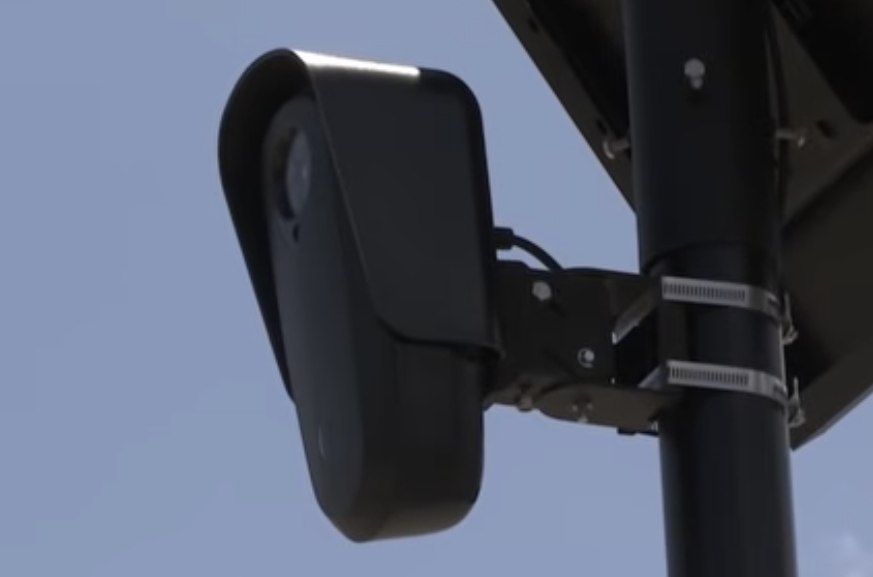
Police officers across the United States have repeatedly entered jokes, gibberish and other flippant answers into the mandatory “reason for search” field of Flock Safety’s automated license plate reader network, according to an analysis by the Electronic Frontier Foundation, raising fresh questions about oversight of one of the country’s fastest-growing surveillance systems.

Among the cases identified by the EFF, an officer with the Lake County, Indiana, Sheriff’s Department used Flock’s system in July 2025 to search for a license plate across more than 19,000 cameras covering 1,558 cities and towns nationwide. The reason entered for that search, according to Flock’s own records, was “LMAO.”

The Lake County search was far from an isolated incident. In a separate example the EFF highlighted, a Goshen Police Department officer searched 6,474 ALPR networks, representing data from 82,413 cameras, on May 7, 2025. The stated reason for that search was “idk.” The organization’s broader review of Flock’s search logs turned up a wide range of similarly dismissive entries, including “LOL,” “Hehe,” “Haha,” “blah” and “TBD,” the last of which appeared in more than 6,300 searches across more than 30 different agencies. In one case, an officer wrote: “robbery I don’t remember the case number leave me alone.” Other entries reviewed by the EFF included profanity and dismissive remarks such as “idiot,” “shithead” and “WEIRD KID,” alongside an entire category of searches where officers appeared to simply mash their keyboards, entering strings like “asdfg” and “gyghkkghghjkghjk” in place of any substantive explanation.

The searches identified in the EFF’s analysis span police departments across the country between 2023 and late 2025, when Flock changed how its reason field functions. Under the system in place during that period, officers were required to type a free-text explanation before running a search across Flock’s network, which uses automated license plate readers to collect vehicle data and allows law enforcement agencies to search information gathered by cameras across different jurisdictions.

Advertisement

Flock has since replaced that free-text field with a list of pre-populated categories tied to standardized offense types, a change the company has described as an improvement to its oversight process. The EFF pushed back sharply on that characterization in its published findings. “Flock Safety claims it has improved its system by requiring officers to select from a dropdown list of crimes before running a search, but that only makes it easier for officers to hide improper searches behind the veneer of uniformity,” the organization wrote. “The system does not require proof that the dropdown reason actually matches the true purpose of the search. With no warrant requirements, limited guardrails, and deficient audit processes, ALPR databases have fostered a culture of unrestricted access to everyone’s location information.”

The EFF said it contacted police departments whose officers appeared in its analysis. Some agencies confirmed that the officers involved had been counseled over their conduct, while others said they intended to investigate or review the flagged searches further. The findings add to a broader body of research the organization has published on Flock’s network over the past year, including earlier investigations documenting the surveillance of protesters, what the EFF described as discriminatory targeting of Romani individuals, and the tracking of women seeking reproductive health care, drawn from a dataset of more than 12 million searches logged by roughly 3,900 agencies between December 2024 and October 2025.

The scrutiny of Flock’s oversight practices has already prompted some law enforcement agencies to reconsider their use of the technology. Several police departments in Arizona have ended their contracts with Flock in recent months, citing privacy concerns and instances of misuse identified in internal audits, with some of those departments’ contracts subsequently picked up by competing surveillance vendors such as Axon. A review of Flock network audit data in Arizona found that property crime accounted for roughly a quarter of logged searches, with drug and narcotics investigations, traffic infractions and wanted-person checks making up smaller but still substantial shares of overall search activity.

The controversy comes as Flock has received high-profile political backing. President Donald Trump publicly endorsed the company during remarks to reporters on Sunday, marking what reporting citing The Washington Post described as his first public endorsement of the technology. “I sort of like them because of that, because of law enforcement, but some people don’t,” Trump said, addressing criticism of the cameras. “They think it’s an infringement,” he added. “I like them.” Flock’s camera network has grown to more than 120,000 devices nationwide, according to the same reporting.

Advertisement

Flock markets its technology to police agencies and private communities as a tool for solving serious crimes, including carjackings, kidnappings and homicides, with automated license plate readers scanning passing vehicles and comparing captured plates against lists of vehicles police are actively seeking. Advocacy groups and independent researchers have separately built tools allowing members of the public to check whether their own license plates have been captured or searched within Flock’s network, reflecting growing public interest in understanding the scope of a surveillance system that now spans thousands of communities across the country.

The flippant search reasons documented by the EFF do not, by themselves, establish that any individual search was improper or unlawful, since the reason field’s content does not necessarily reflect an officer’s actual investigative purpose. But the findings have sharpened a broader debate over how much oversight should accompany a surveillance network capable of searching vehicle location data across thousands of jurisdictions simultaneously, particularly as Flock and competing ALPR providers continue expanding their camera networks nationwide with limited judicial oversight or standardized audit requirements governing how officers document their searches.

Continue Reading

Business

Building a Career on Service and Integrity

Published

on

Building a Career on Service and Integrity

From emergency scenes to hospital hallways, classrooms, and military service, Schmidt has spent decades preparing for situations where every decision matters.

Based in Tyler, Texas, Schmidt has built a career across emergency medicine, nursing, fire service, law enforcement, and emergency management. Along the way, he has earned a long list of professional licenses and certifications. Yet he believes his greatest achievement is much simpler.

“The legacy you leave your kids and family is what matters most,” Schmidt says. “Everything else comes after that.”

Free newsletters
Advertisement

The stories that matter to UK business, straight to your inbox.

Advertisement

That mindset has guided his work from the beginning.

How Edward Schmidt Built a Career in Emergency Medicine

Schmidt’s career has never followed a straight line. Instead, each role added another layer of knowledge.

He became a licensed paramedic, later earned his Registered Nurse credentials, and expanded into EMS instruction. He also served as a Texas firefighter and Texas peace officer before continuing his work in healthcare and emergency response.

His education never stopped. Schmidt completed advanced certifications in trauma care, pediatric life support, tactical medicine, hazardous materials, critical incident stress management, emergency management, and numerous FEMA training programs. He also completed military training with the Texas State Guard, graduating with honors in multiple leadership courses.

Advertisement

For Schmidt, learning has always been part of the job.

“Keep learning new things,” he says. “If you stop learning, you stop growing.”

That attitude has helped him stay current in fields where standards, technology, and best practices constantly evolve.

Why Continuous Learning Matters in Healthcare Leadership

Healthcare and emergency response leave little room for complacency. Procedures change. Equipment improves. New challenges appear.

Advertisement

Schmidt believes professionals have a responsibility to keep improving, not only for themselves but for the people who depend on them.

His credentials reflect that commitment. He has served as an instructor for Advanced Cardiac Life Support (ACLS), Basic Life Support (BLS), Pediatric Advanced Life Support (PALS), and Trauma Nursing Core Course (TNCC). Teaching has become just as important as practicing.

“When you can teach others along the way and they succeed, that’s one of the best parts of the job,” Schmidt says.

Watching students become confident professionals gives him a different kind of satisfaction than earning another certification.

Advertisement

What Leadership Means to Edward Schmidt

Many people define leadership by titles. Schmidt defines it by consistency.

Throughout his career, he has worked in high-pressure environments where preparation, communication, and accountability directly affect outcomes.

His approach begins with integrity.

“Integrity is doing the right thing even when nobody is watching,” he says.

Advertisement

That philosophy extends beyond emergency response. Whether working with patients, training future providers, or serving alongside fellow professionals, Schmidt believes trust is earned through actions repeated over time.

He also values organization and discipline.

“Time management is one of the biggest skills anyone can develop,” he says. “If you manage your time well, you can accomplish much more than you think.”

Overcoming Challenges Through Persistence

Like many successful professionals, Schmidt’s career has included obstacles.

Advertisement

One challenge he openly discusses is dyslexia. Rather than allowing it to define him, he learned how to adapt and keep moving forward.

He also believes that failure can become one of the best teachers.

“If you fail at a task, stick with it until you accomplish it,” Schmidt says.

That perspective reflects years spent working in demanding professions where persistence often makes the difference between success and failure.

Advertisement

He credits much of his character to his grandfather, William Earl Hudson, who raised him and taught him values that continue to guide his decisions today.

Those lessons shaped his belief that character is built over time through consistent effort.

Military Service Reinforced a Lifetime of Discipline

Schmidt’s commitment to service continued through the Texas State Guard.

His military record includes honors in Basic Operation Training, Officer Candidate School, Officer Basic Course, Direct Commission Officer Course, and Military Emergency Management. He also received multiple Texas Medal of Merit awards, the Texas Meritorious Service Medal, and the Texas State Guard Service Medal.

Advertisement

Rather than viewing those recognitions as personal accomplishments, Schmidt sees them as reminders of responsibility.

Leadership, he believes, is about remaining dependable when others are counting on you.

Edward Schmidt’s Lasting Impact on Healthcare and Emergency Response

Today, Schmidt continues to represent a career built on preparation, education, and service.

His work spans emergency medicine, nursing, instruction, emergency management, and military service, giving him a broad perspective on how different parts of public safety work together.

Advertisement

Outside of work, he enjoys golfing and spending time with his children and friends. Those moments provide balance after years spent in demanding professions.

Looking back, Schmidt measures success differently than many people might expect.

Awards and certifications are meaningful, but they are not the destination.

Instead, he returns to the same principle that has guided him throughout his career.

Advertisement

“Leave a legacy your family can be proud of,” he says.

For Edward Schmidt, leadership has never been about recognition. It has been about serving others, continuing to learn, and helping the next generation succeed. Those values continue to define both his career and the example he hopes to leave behind.

Advertisement
Continue Reading

Business

Tempus AI, Inc. (TEM) Presents at Morgan Stanley 24th Annual Global Healthcare Conference Transcript

Published

on

OneWater Marine Inc. (ONEW) Q1 2026 Earnings Call Transcript