
Business
Comcast Fell Since My Buy Rating, But I Think The Sell-Off Has Gone Too Far



Check out what’s clicking on FoxBusiness.com.
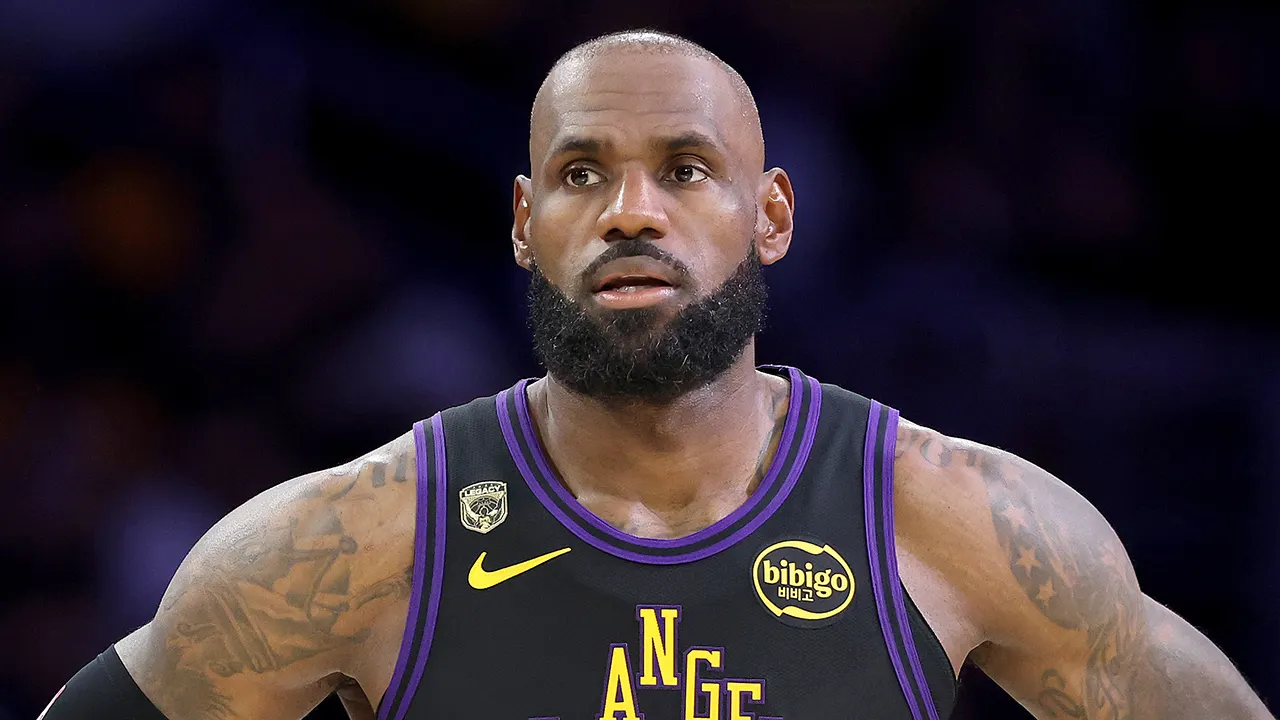
LeBron James had been in business with Mark Walter, whose business empire is under scrutiny from both federal prosecutors and the Securities and Exchange Commission in tax fraud investigations, long before he joined the Los Angeles Lakers.
Months before he signed with the Lakers in 2018, a limited liability company James controls borrowed $300 million from a pair of Midwestern life insurers advised by an arm of Guggenheim Partners, according to Bloomberg’s report. Walter was the CEO of Guggenheim at the time of the transaction.
The bonds are due in 2049 and were meant to give James an immediate influx of cash that was backed by a stream of future revenue tied to his non-NBA earnings, like sponsorship deals and his lifetime deal with Nike, according to the report. Walter began lending more as he began acquiring the Lakers.
CLICK HERE FOR MORE SPORTS COVERAGE ON FOXBUSINESS.COM
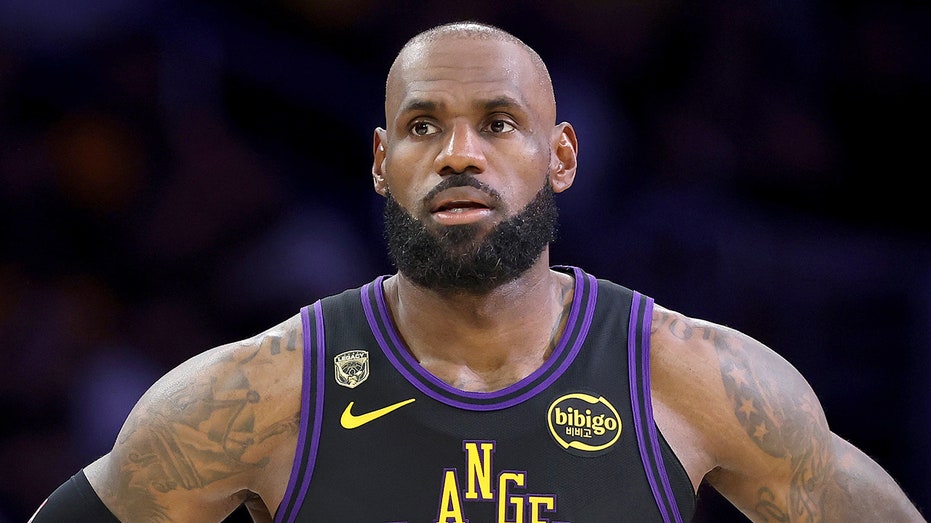
LeBron James (23) of the Los Angeles Lakers looks on against the Oklahoma City Thunder in Game 4 of the second round of the NBA Western Conference playoffs at Crypto.com Arena in Los Angeles, California, on May 11, 2026. (Luke Hales/Getty Images / Getty Images)
Walter abruptly agreed to sell his share of the Lakers for $12.5 billion to Josh Kushner and Bob Iger earlier this month. He is cooperating with the investigation into his business empire.
Walter first took a minority stake in the Lakers in 2021 before acquiring a majority controlling stake in 2025. James’ LLC and Walter’s Guggenheim made another transaction in 2022.
In August 2022, when James signed a $97 million contract extension with the Lakers, the same Midwestern insurers provided James’ LLC with more cash. They bought almost $60 million of 34-year bonds with a 5.75% interest rate, according to the report.
ZERO BS. JUST DAKICH. TAKE THE DON’T @ ME PODCAST ON THE ROAD. DOWNLOAD NOW!
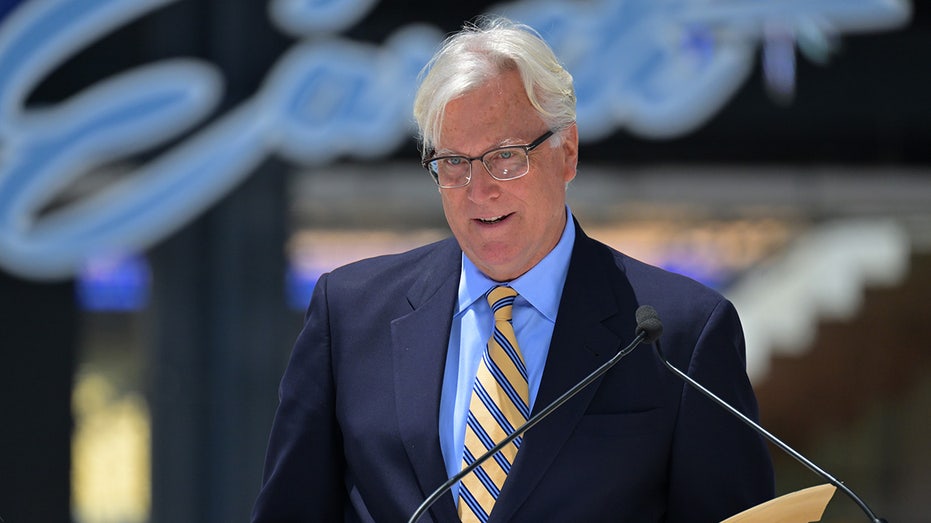
Mark Walter, Owner and Chairman, Los Angeles Dodgers speaks during the unveiling ceremony of a brand new Koufax commemorative statue at the Centerfield Plaza at Dodger Stadium. (Jayne Kamin-Oncea-USA TODAY Sports / IMAGN)
The NBA directed FOX Business’ request for comment to a representative for James who said, “The 2018 and 2022 transactions were a securitization done by Mr. James with his personal, non-NBA salary, assets and income which is a very common financial structure for an individual with this level of earnings and assets.”
“Both transactions were fully approved by NBA. Mr. James has no affiliation with Guggenheim, Sammons Financial, North American Life or Midland National beyond their participation in these transactions.”
GET FOX BUSINESS ON THE GO BY CLICKING HERE

Mark Walter, CEO of Guggenheim Partners, Ilana Kloss attend day 13 of the French Open 2022 held at Stade Roland Garros on June 3, 2022 in Paris, France. (Jean Catuffe/Getty Images / Getty Images)
FOX Business reached out to the Lakers and Guggenheim Partners for comment and did not immediately get a response.
Walter’s sale of the Lakers came as the businessman was reshaping his portfolio with the investigation ongoing.

Bridgewater Bancshares director David Juran sells $867,316 in stock

Music icon Dolly Parton has passed away at the age of 80 due to health complications in Nashville, Tennessee.
Business leaders are paying tribute to Dolly Parton, remembering the country music icon for her cultural impact and philanthropy.
Amazon founder Jeff Bezos, Apple CEO Tim Cook and Thrive Global founder Arianna Huffington took to X to honor Parton’s legacy after she died peacefully Tuesday in Nashville, Tennessee, at age 80.
HOW DOLLY PARTON BUILT A LEGACY OF GIVING BEYOND COUNTRY MUSIC
Jeff Bezos

Amazon founder Jeff Bezos said Parton “spent her whole life showing us what it means to lead with love.” (Mustafa Yalcin/Anadolu via Getty Images)
Bezos said Parton “spent her whole life showing us what it means to lead with love.”
“Lauren and I are so grateful to have known her,” Bezos wrote on X. “She lifted everyone with her music, her generosity, and her joy. Sending our sincere condolences to her family and everyone she touched.”
AMAZON PLANS MASSIVE EXPANSION OF PRIME AIR DRONE DELIVERIES
Tim Cook

Apple CEO Tim Cook also honored Parton’s legacy. (Justin Sullivan/Getty Images)
Cook also honored Parton’s legacy.
“Dolly Parton’s music helped light up the world,” Cook wrote on X. “She was a brilliant songwriter, cultural icon, and dedicated philanthropist who helped instill a love of reading and learning in millions of children around the world. May she rest in peace.”
Arianna Huffington
Thrive Global founder Arianna Huffington said Parton showed that “a life of extraordinary achievement can also be a life of extraordinary generosity.”
“Through her music, her humor and her commitment to giving children the gift of reading, she brought joy and possibility to millions. Her light will live on through the songs she gave us, and every young imagination she helped inspire,” Huffington wrote on X.
WARREN BUFFETT EXCLUDES GATES FOUNDATION FROM HIS ANNUAL DONATIONS OF BERKSHIRE STOCK
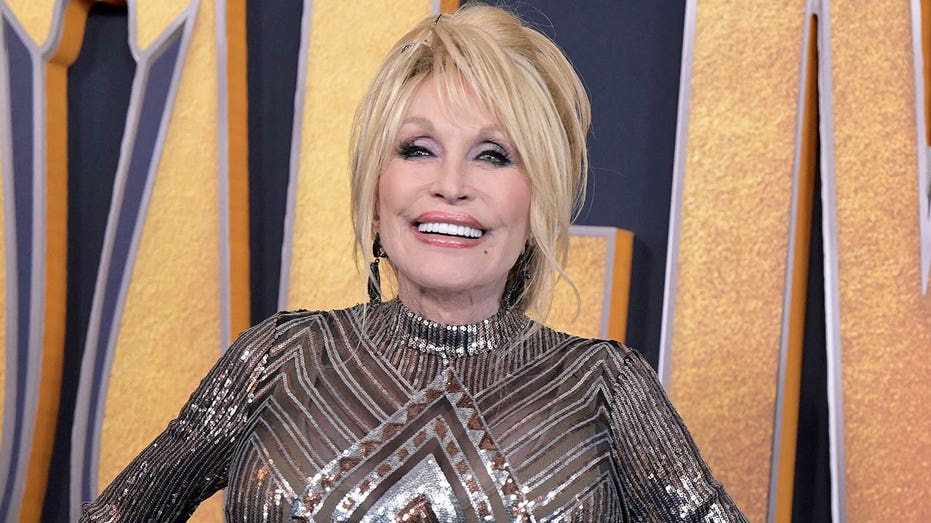
Parton’s nephew revealed the news in an Instagram video. (BRIDGET BENNETT/AFP via Getty Images)
GET FOX BUSINESS ON THE GO BY CLICKING HERE
Parton’s nephew revealed the news in a Tuesday Instagram video.
The news comes after Parton spent months battling an unknown health issue.
Fox News Digital’s Christina Dugan Ramirez contributed to this report.
Business
5 Reasons Bitcoin’s Price Suddenly Surged Past $80,000 for the First Time Since May Amid Massive Short Squeeze

Bitcoin climbed above $80,000 Tuesday for the first time since mid-May, capping what CNBC described as the cryptocurrency’s biggest three-day rally since 2023, according to Cryptonomist, as bitcoin rose as much as 2.9% to touch $81,257 before settling around $79,300, according to Bloomberg. The cryptocurrency gained roughly 22% to 38% over the preceding week, depending on the specific measurement window, marking one of its strongest short-term advances in years. Here are five key factors analysts have identified behind bitcoin’s sudden surge.
1. The U.S. Treasury’s expanded bond buyback program
The single most frequently cited catalyst behind the rally is the U.S. Treasury Department’s decision to significantly expand its buybacks of long-dated government debt. According to crypto.news, the Treasury doubled its long-end buyback limits to at least $4 billion, a move that initially sent bond yields lower and signaled easing monetary conditions to markets. The Block reported that analyst d’Anethan connected that decision directly to bitcoin’s rally, explaining the logic behind the move. “Treasury decision to artificially lower rates by buying back bonds sends a powerful and solid signal that monetary conditions and thus capital are easing up. It’s easy to see why BTC, which underperformed in the first half of 2026, would be the prime beneficiary of this,” d’Anethan said.
2. A “debasement trade” driving investors toward bitcoin and gold
Several outlets identified a broader macroeconomic dynamic, commonly referred to as the “debasement trade,” as a key driver of the rally. According to the Rio Times, easing Treasury yields and expanded bond buybacks have pushed investors into both bitcoin and gold as hedges against what they view as ongoing fiscal erosion tied to the U.S. government’s growing debt burden. That dynamic reflects a broader pattern in which investors turn toward scarce assets during periods of expansive monetary or fiscal policy, treating both bitcoin and gold as stores of value less subject to currency debasement than traditional cash holdings.
3. A massive cascade of forced short liquidations
The speed and scale of bitcoin’s advance were significantly amplified by a wave of forced liquidations among traders who had bet against the cryptocurrency. According to the Rio Times, a $1.14 billion cascade of short liquidations amplified the price move, forcing bearish traders to buy back bitcoin to close out their losing positions, which in turn accelerated the price climb further. Cryptonomist similarly described the rally as being “triggered by a Treasury-related buyback event that forced a massive short squeeze on traders positioned below $67,000,” a dynamic in which the initial catalyst set off a self-reinforcing chain reaction as traders scrambled to exit losing bets.
4. Strong institutional demand through spot bitcoin ETFs
Renewed institutional buying through exchange-traded funds provided a further pillar of support beneath the rally. According to crypto.news, U.S.-listed spot bitcoin ETFs attracted approximately $1.9 billion to $1.92 billion in net inflows during the week ending Aug. 21, marking their strongest weekly intake since October 2025. The funds attracted capital for five consecutive trading sessions, according to the same report, with BlackRock’s iShares Bitcoin Trust accounting for a significant portion of that buying activity. That sustained ETF demand offered evidence of genuine underlying spot market demand, distinguishing the current rally from moves driven purely by leveraged futures market activity.
5. Improving technical and derivatives market positioning
Bitcoin’s price action has also been reinforced by a series of favorable technical signals. According to CryptoTimes, bitcoin reclaimed and closed above its 20-day, 50-day, 100-day and 200-day exponential moving averages, forming what the outlet described as a bullish alignment of moving averages that had previously served as resistance during the extended prior downtrend. Options market positioning has similarly shifted in a bullish direction; according to a separate CryptoTimes report citing data from Glassnode, bitcoin’s options skew fell to its lowest level of the year across the pricing curve, with front-end skew turning negative, indicating traders are now paying a higher premium for calls relative to comparable puts, a sign of stronger demand for further upside exposure. Notably, data from Santiment Intelligence showed that coin-denominated open interest actually declined roughly 11% even as bitcoin’s price rose approximately 22% over the same period, suggesting the rally was not built on increasingly crowded, risky futures positioning, a factor some analysts view as making the current advance more structurally sound than a purely leverage-driven spike.
Despite the strength of the advance, bitcoin remains well below its all-time high. According to Bloomberg, the cryptocurrency remains well beneath its October peak of roughly $126,000, and Cryptonomist noted bitcoin had spent much of 2026 trading in a range roughly 40% to 50% below that record, as investor attention and capital instead flowed toward the AI-driven stock market rally that has dominated markets for much of the year.
Analysts have offered a cautious assessment of what comes next. The Block reported that the Crypto Fear & Greed Index climbed to a reading of 83, characterized as “Extreme Greed,” while analysts cautioned it remains too early to determine whether the current rally will translate into a sustained bull market, given ongoing concerns over sticky inflation and continued geopolitical uncertainty. Bitcoin Foundation’s coverage similarly noted that while ETF inflows and reduced leverage offer encouraging signs, further spot demand will likely be necessary to convert the $80,000 level from a resistance point into a durable, structural support base, rather than risking a failed retest that could weaken the broader breakout narrative.
With bitcoin’s daily relative strength index reading above 80, deep into overbought territory according to multiple technical measures, some analysts have cautioned that a near-term pullback or period of consolidation remains a genuine possibility even as the underlying catalysts, including continued Treasury buyback support, remain broadly favorable. As CryptoTimes noted, continued Treasury bond-buyback support could keep liquidity conditions favorable enough to eventually push bitcoin toward testing the $90,000 level within the coming months, though that outcome remains far from guaranteed given the combination of overbought technical conditions and the broader macroeconomic uncertainty still weighing on markets.

What’s Moving the Markets Today?

Earnings call transcript: Meridian Energy posts strong H2 2026 turnaround
Business
DICK’S Sporting Goods Stock Crashes 27% as Foot Locker Woes Force Steep Full-Year Guidance Cut
Shares of DICK’S Sporting Goods plunged as much as 27.58%, or $49.46, to $129.87 as of 11:41 a.m. EDT Tuesday, marking one of the sporting goods retailer’s worst trading sessions in years after the company missed second-quarter earnings estimates and slashed its full-year profit outlook, driven primarily by deepening weakness at its recently acquired Foot Locker business.
DICK’S reported second-quarter adjusted earnings per share of $3.53, missing the analyst consensus of $3.78 by 25 cents, according to Investing.com. Revenue for the quarter reached $5.59 billion, falling short of the $5.65 billion analysts had projected, even as sales climbed 53.2% year over year, a gain driven primarily by the inclusion of the recently acquired Foot Locker business. On a GAAP basis, actual earnings came in slightly lower still, at $3.50 per share, down 26% from the same period a year earlier, according to The Motley Fool.
The results told two starkly different stories depending on which part of the business investors examined. According to BigGo Finance, the core DICK’S banner continued performing strongly, with comparable sales growth of 4.9%, building on a 5% gain in the same quarter last year, a result management said represented roughly 200 basis points of market share gains relative to the broader industry. The newly acquired Foot Locker business, by contrast, posted a proforma comparable sales decline of 3.6%, a result that badly missed leadership’s own expectations and dragged down the company’s overall results.
In response to that Foot Locker weakness, DICK’S slashed its full-year adjusted earnings guidance to a range of $11.00 to $12.00 per share, down sharply from its previous forecast of $13.50 to $14.50, representing an 18% cut at the midpoint, according to BigGo Finance. The company also lowered its annual sales outlook to a range of $21.9 billion to $22.2 billion, down from a prior forecast of $22.1 billion to $22.4 billion, according to Reuters coverage cited by the Lufkin Daily News. Perhaps most strikingly, DICK’S now expects its Foot Locker segment to post an operating loss of $80 million to $40 million for the year, a dramatic reversal from its earlier forecast of $110 million to $150 million in profit from that same business, according to BigGo Finance.
Executive Chairman Ed Stack offered a direct explanation for what drove the sudden deterioration, pointing to an increasingly promotional environment across the athletic footwear and apparel industry. “What changed is a number of brands got very promotional on their sites, and those promotions spilled into the broader marketplace,” Stack told analysts, according to BigGo Finance. Stack was similarly candid regarding the specific performance shortfall within Foot Locker’s product launches during the quarter. “Not only were there fewer launches in the second quarter, but those launches performed below both industry and our expectations,” Stack said, according to the Lufkin Daily News, adding that the company is now taking a more cautious view of the remainder of the year.
That cautious tone marked a notable reversal from the company’s messaging just months earlier. According to the Lufkin Daily News, DICK’S had struck an upbeat tone as recently as May, when it raised its annual guidance target and pointed to encouraging early “proof points” suggesting Foot Locker’s comparable sales could return to growth. Reuters reported that consumers have grown more selective about discretionary purchases, showing greater interest in fresher launches within categories such as wellness and health compared with legacy brand names, as household budgets face pressure from elevated gas and food costs.
Telsey Advisory Group analyst Cristina Fernandez characterized the scale of the guidance cut as a genuine surprise given the broader industry backdrop. “While several athletic brands had pointed softness in the US wholesale market during 2Q26, Dick’s large cut to its 2026 guidance came as a surprise and showed the sensitivity of the Foot Locker business to trends in the footwear market,” Fernandez wrote in a note following the results, according to Investing.com. She added that while the core DICK’S business remains more resilient and diversified, it too is beginning to show signs of pressure. “While the Dick’s business is more resilient and diversified, it also appears the company is seeing some pressure and needing to drive promotions, affecting its profitability in 2H26,” Fernandez wrote.
Company executives suggested the current weakness may prove temporary rather than reflecting a deeper structural shift in consumer preferences, according to BigGo Finance, citing strong performance from newer product launches including Nike Mind, Adidas women’s lines, UGG and Birkenstock. Management specifically flagged the EMEA region as facing more significant challenges than the U.S. market, characterized by a cautious consumer base and heavy promotional activity. DICK’S maintained its core comparable sales guidance of 2.5% to 4% growth for that segment specifically, though the company no longer expects the same degree of margin expansion it had previously anticipated, with the third quarter now expected to represent the most difficult stretch of the year.
As part of its response to the challenging footwear market conditions, DICK’S disclosed plans to close as many as 110 Foot Locker stores during fiscal 2026, according to TS2.Tech. The company also confirmed it received $59 million in tariff refunds under the International Emergency Economic Powers Act, a portion of which it has used to help fund increased promotional activity, according to the Lufkin Daily News.
Tuesday’s decline compounds an already difficult year for DICK’S shares. According to Blockonomi, the stock had already fallen 9.4% year-to-date prior to Tuesday’s session, lagging the broader S&P 500’s performance in 2026. TS2.Tech noted that heading into Tuesday’s release, Wall Street sentiment toward the stock remained largely favorable, with 13 of 17 covering analysts rating the shares a buy, four rating them a hold, and none recommending a sell, though those ratings and price targets all predate the earnings release and subsequent guidance cut, meaning they are likely to be revised in the coming days as analysts digest the scale of the shortfall.
The stock’s decline also weighed on related names within the athletic retail sector Tuesday, with Nike and Academy Sports and Outdoors shares both trading lower in sympathy, according to Seeking Alpha, reflecting broader investor concern that the promotional pressures DICK’S described could be affecting the wider athletic footwear and apparel industry rather than representing an isolated, company-specific issue tied narrowly to the Foot Locker integration.
Business
AbCellera Biologics Stock Jumps 15% to New 52-Week High on Hot Flash Drug Momentum and Price Target Hike

Shares of AbCellera Biologics surged 14.85%, or $1.58, to $12.19 as of 11:48 a.m. EDT Tuesday, touching a fresh 52-week high and extending a remarkable rally that has now added roughly 233% to the stock’s value over the past six months, driven by continued investor enthusiasm surrounding the company’s experimental menopause drug and a wave of bullish analyst price target increases.
Tuesday’s gains build on a monthslong surge that began Aug. 10, when AbCellera announced positive Phase 2 clinical trial results for ABCL635, its experimental non-hormonal antibody targeting the neurokinin 3 receptor, developed as a potential treatment for moderate-to-severe hot flashes associated with menopause. According to Investing.com, the randomized, double-blind, placebo-controlled trial enrolled 92 postmenopausal women and demonstrated an 83% mean reduction in hot flash frequency at week four, with a placebo-adjusted difference of 8.8 fewer daily events compared with 3.5 events in the placebo group.
That trial data sent AbCellera shares surging as much as 41% on Aug. 10, according to Bloomberg, giving the Vancouver-based biotechnology company a market value of nearly $3 billion at the time. AbCellera Chief Executive Carl Hansen expressed extraordinary confidence in the drug’s commercial potential during a conference call with investors following the results. “We believe ABCL635 has potential to be a blockbuster product,” Hansen told investors, according to Bloomberg. He described the strength of the trial data as exceeding even his own most optimistic expectations heading into the results. “The efficacy data is beyond even the most aggressive upside scenario we had dared to consider,” Hansen said.
The rally has continued building in the weeks since that initial announcement. According to Trefis, AbCellera shares moved higher for six consecutive trading days in mid-August, delivering a cumulative gain of 85% over that stretch and adding approximately $1.5 billion to the company’s market value, which stood at roughly $3.4 billion at the time, with the stock reaching a then-new 52-week high of $10.97. Trefis noted that the stock had returned 130% over the trailing three months and 156.9% over the trailing 12 months as of that point.
Tuesday’s continued advance pushed the stock to an even higher 52-week peak. According to Investing.com, AbCellera shares hit a fresh 52-week high of $12.15, reflecting a one-year change of 172.54%, a six-month surge of 232.6%, and a year-to-date gain of 210.23%. Despite that extraordinary run, Investing.com’s analysis cautioned that its InvestingPro platform currently assesses the stock as overvalued relative to its calculated fair value, placing it among companies flagged on the platform’s most overvalued list, while separately noting that the stock’s relative strength index suggests it remains in technically overbought territory, and that analysts do not currently anticipate the company reaching profitability this year.
Wall Street analysts have continued raising their price targets on AbCellera following the strong trial results. According to StockAnalysis, JonesResearch analyst Debanjana Chatterjee raised the firm’s price target on AbCellera to $25 from $13 while maintaining a buy rating on the shares. That increase followed earlier target hikes from other firms; according to StocksToTrade, both Stifel and Cantor Fitzgerald raised their price targets on AbCellera to $9 and $12, respectively, in the immediate aftermath of the Aug. 10 trial results, while maintaining bullish ratings on the stock at that time, targets that have since been surpassed by the stock’s continued rally.
Beyond the ABCL635 trial results, AbCellera has also benefited from a series of business development deals that have provided the company with non-dilutive cash while validating its broader antibody discovery platform. According to StocksToTrade, AbCellera secured a collaboration with Vertex Pharmaceuticals to research, develop, manufacture and commercialize multispecific T-cell engagers for autoimmune diseases and other conditions, bringing AbCellera $28 million in upfront payments plus potential future milestone and royalty payments, with Vertex funding the associated research and development work through Phase 1 while retaining commercialization rights. StocksToTrade noted that combined upfront cash from that Vertex agreement and a separate T-cell engager collaboration with Jazz Pharmaceuticals exceeded $100 million, helping offset a second-quarter earnings and revenue miss the company reported around the same time.
AbCellera’s underlying financial profile shows a company still generating significant losses even as its revenue grows rapidly. According to StockAnalysis, AbCellera’s 2025 revenue reached $75.13 million, an increase of 160.56% compared with the prior year’s $28.83 million, while the company’s losses totaled $146.41 million, a modest 10.10% improvement from 2024. AbCellera published its second-quarter 2026 earnings results Aug. 5, and followed with additional business updates through Aug. 10, the date of the pivotal ABCL635 trial announcement.
To help fund its continued clinical development work, AbCellera also completed a capital raise during this period of stock market strength. According to Stocktwits, the company announced pricing of an oversubscribed $200 million public offering of common shares and pre-funded warrants, taking advantage of the elevated stock price and strong investor demand generated by the positive trial results to shore up its balance sheet.
AbCellera’s broader identity has evolved significantly in recent months from a company primarily known for antibody discovery services toward what StocksToTrade described as “an AI-enabled antibody pipeline story,” reflecting the company’s growing emphasis on advancing its own proprietary drug candidates, including ABCL635, rather than functioning solely as a discovery and development partner for other pharmaceutical companies. That shift appears to be resonating strongly with investors, given the stock’s dramatic outperformance relative to the broader biotechnology sector over the trailing 12 months.
With AbCellera shares now trading at a fresh 52-week high and Wall Street price targets having been revised sharply upward following the ABCL635 Phase 2 results, investors are likely to continue closely watching the company’s next steps toward advancing the drug through later-stage clinical trials, given the substantial commercial opportunity management has outlined for a treatment addressing the significant unmet need among postmenopausal women experiencing moderate-to-severe hot flashes, a condition affecting a large proportion of women globally with limited existing non-hormonal treatment options currently available on the market.

Ask most HR leaders what makes a job offer competitive, and salary will still top the list. Ask employees the same question, and the answer looks increasingly different. New research indicates that flexibility, autonomy and wellbeing now carry more weight than pay when people decide where to work.
Agility EOR set out to answer that question properly, surveying 78,150 remote workers across the globe for its latest Work Life Statistics Report. The results don’t leave much room for employers still betting on salary alone to win the war for talent.
What the Research Found
Three figures stand out from the research carried out by Agility EOR, each pointing in the same direction. Just over half of respondents, 53%, say flexible scheduling has improved their work-life balance. A third, 33.1%, report that working remotely has actually boosted their productivity rather than dented it. And nearly one in five, 19.6%, say flexibility is the single most valuable form of support an employer can provide, ranking it above financial extras.
The pattern isn’t unique to Agility’s dataset either. The CIPD has separately reported that more than a million UK workers have walked away from jobs in recent years over the lack of flexible working. Businesses losing staff this way aren’t facing a recruitment problem so much as a retention one, and the fix looks the same either way.
Standard Benefits Aren’t Enough Anymore
A standard employee benefits package used to mean private healthcare, a company car allowance, and annual leave set at the statutory minimum. None of that has disappeared, but it’s stopped being the thing that wins an offer. Candidates are now looking beyond it, weighing up whether a role genuinely supports caring responsibilities, protects mental health, and gives them real control over how their day is structured.
Let’s look at how traditional packages weigh up against 2026 benefits:
| Old standard | 2026 equivalent |
| Office-based, fixed hours | Remote-first working, flexible hours |
| Statutory annual leave | Leave set 25% above the statutory minimum |
| Fixed salary only | Option to trade salary for additional leave |
| Standard parental leave | Dedicated carer and eldercare leave |
| General “family friendly” wording | Expanded, specific family flexibility policies |
| Office allowance or car allowance | Work-from-anywhere allowance |
Salary Is No Longer the Final Word
One of the more unexpected findings is how many candidates are now willing to accept a lower salary if it means greater flexibility, autonomy, and control over their time. This represents a meaningful change in how people approach the classic pay-versus-conditions trade-off.
Chief HR Officer at Agility EOR, Scott Winter, explains: “Increasingly, we’re seeing candidates treat benefits as core compensation, not extras. Flexibility is now a dealbreaker. Employers relying on outdated benefit structures risk losing strong candidates, even when the salary is competitive. However, the future is more adaptable packages, not necessarily a bigger package.”
Rethinking the Employer’s Approach
For organisations still designing their benefits strategy around a fixed list of perks, this research points to a need for a rethink. It’s not about spending more, but about prioritising the kind of flexibility that actually changes how people experience their working lives.
That could mean rethinking core hours, expanding remote and hybrid options, formalising support for carers, or simply giving staff more say over how their leave is structured. The common thread is control: employees want a genuine say in how their working life fits around everything else going on, from school runs to caring for elderly relatives to simply protecting time for rest.
None of this means salary has become irrelevant. Pay still matters, and employers who fall well below market rate will always struggle to compete. But the evidence suggests that, once salary is broadly competitive, it stops being the deciding factor, and flexibility takes over as the thing that actually tips a decision one way or another.
Employers who treat this as a strategic priority, rather than a line in a job advert, are best placed to attract and keep talent in a market where flexibility, not salary, is increasingly the deciding factor. As a global Employer of Record in the UK and beyond, Agility EOR works with businesses to build exactly this kind of adaptable, benefits-led approach into their hiring from day one.

Walk into any independent convenience store in Britain this year and the shelf behind the till tells a story about where the nicotine market is heading.
The vape displays that dominated 2022 and 2023 have ceded space to small round cans, and the cans doing the briskest trade are not the mild ones. They are the extreme-strength products — led conspicuously by Pablo nicotine pouches, the red-and-white brand that has become shorthand for the top end of the strength scale.
The numbers behind that shelf reshuffle are striking. Research published in The Lancet Public Health by UCL in December 2025 found that adult nicotine pouch use in Great Britain rose from 0.1 per cent to 1 per cent between 2020 and 2025 — roughly 522,000 users — with growth concentrated overwhelmingly among men under 25, of whom one in thirteen now uses pouches. Grand View Research valued the UK pouch market at $247.6 million in 2024, forecasting 7.6 per cent compound annual growth to 2030, and the major specialist platforms reported sales volumes up around 60 per cent in 2025 alone. Within that expanding category, retailers consistently report the same pattern: the strong end grows fastest. Search behaviour bears it out — “strongest nicotine pouches” is now one of the category’s most-queried phrases in the UK, and brand searches for Pablo outstrip almost every rival.
For a product that most British adults had never heard of five years ago, that is a remarkable trajectory. It is also a commercially unusual one, because in most consumer categories the mainstream mid-market grows first and the extreme niche follows. In nicotine pouches, the arms race started early — and understanding why explains a great deal about who the customer actually is.
What “strong” actually means — and why the labels mislead
The first thing any retailer entering this category learns is that strength labelling is close to anarchic. Some brands state nicotine per pouch; others state milligrams per gram of pouch material; some print a number with no unit at all. Because a typical pouch weighs 0.5 to 0.8 grams, the difference matters enormously. A can labelled “50” that means 50mg/g contains roughly 30mg per pouch — still formidable, but 40 per cent less than the label implies at a glance.
Mapped onto a per-pouch basis, the UK market splits into three tiers:
| Tier | Typical strength per pouch | Representative brands |
| Mainstream | 3–11mg | ZYN, Nordic Spirit, VELO core range |
| Extra strong | 12–20mg | Killa (~13mg), White Fox Full Charge (~12mg), VELO Max (17mg), Pablo Gold (17mg) |
| Extreme | 25mg+ | Pablo Exclusive (~30mg), White Fox Black, Cuba Black |
For context, a cigarette delivers roughly 1–2mg of absorbed nicotine. A single extreme-tier pouch therefore carries a nicotine payload many times that of any product the mainstream tobacco industry sells over a British counter — one reason the big multinationals (Philip Morris with ZYN, BAT with VELO, JTI with Nordic Spirit) have largely stayed out of the extreme tier, leaving it to independent European manufacturers. Strength is not the whole story — pH, moisture and pouch format all affect how fast nicotine absorbs — but per-pouch milligrams remain the number the market trades on.
That corporate caution created a vacuum. One company filled it more decisively than anyone else.
The Pablo case study: owning a segment the majors wouldn’t touch
Pablo is made by NGP Empire, the Danish manufacturer behind Killa, and its rise is a textbook example of category positioning. While the multinationals fought over the 6–11mg mainstream with heavyweight marketing budgets, NGP Empire planted its flag at 30mg/g and simply stayed there. The brand’s flagship Exclusive line — around 30mg per pouch — became the default answer to the question “what’s the strongest thing you sell?”, and in retail, owning the superlative is worth more than owning a segment.
Notably, many consumers still search for the brand as “Pablo snus”, a hangover from the Scandinavian products that inspired the format. Technically the term is wrong — genuine snus contains tobacco and cannot legally be sold in the UK, whereas Pablo’s pouches are tobacco-free and legal — but the persistence of the search term shows how completely the brand has absorbed the identity of the category’s strong end.
What began as a single ultra-strong product is now a tiered portfolio of more than 25 flavours. Pablo Exclusive sits at the top at roughly 30mg per pouch; Pablo Gold occupies the 17mg “strong but survivable” bracket; Pablo Silver, at around 10mg, gives the brand an on-ramp for users who want the name without the knockout. That laddering is commercially shrewd: the extreme product generates the reputation, the mid-strength lines generate the repeat volume, and the brand captures customers at every stage of tolerance. It is the same architecture premium spirits brands use — a headline-grabbing cask-strength release above an accessible core range — applied to nicotine.
The result is a brand that, by search volume, out-pulls names with a hundred times its marketing spend. In the UK, monthly searches for Pablo’s brand terms comfortably exceed those for most established vape brands — demand that flows almost entirely through independent and online retail, since the extreme tier rarely appears in supermarket ranging reviews.
Who is buying — and the economics underneath
The demographic data points one way: the UCL study found 72 per cent of pouch users are men and nearly half are under 25. But the commercially significant cohort is switchers. ONS figures show UK adult smoking at 10.6 per cent in 2024 — the lowest since records began — while vaping overtook smoking for the first time. Both populations are migrating, and heavy smokers and high-strength vapers arrive with tolerances that a 6mg pouch simply does not register against. A 20-a-day smoker or a user of 20mg/ml disposable vapes who tries a mainstream pouch and feels nothing concludes the category doesn’t work; the extreme tier exists substantially to stop that first impression from killing the switch.
Then there is the arithmetic, which retailers underestimate at their peril. A can of 20 extreme-strength pouches typically retails between £5 and £7 and carries several hundred milligrams of nicotine; a packet of 20 cigarettes now averages around £16 and is consumed in a day by the heaviest users. On a pence-per-milligram basis, strong pouches are among the cheapest nicotine legally available in Britain — and heavy users, the segment with the least elastic demand, are precisely the ones who do that maths. For retailers, the strength segment combines high purchase frequency, strong brand loyalty (strength-seekers rarely trade back down) and healthy margins relative to cigarettes, where duty swallows most of the ticket price.
It needs saying plainly, because responsible retailers say it themselves: nicotine is addictive, these are adult products, and a 30mg pouch is genuinely unsuitable for anyone who is not already a heavy nicotine user — the “nic-sick” experience of a novice trying Pablo Exclusive is unpleasant enough to be a category-wide reputational risk.
The regulatory clock is ticking — and structured retail will benefit
Until this year, nicotine pouches occupied a genuine legal grey zone. Containing no tobacco, they fell outside tobacco and vaping law entirely and were governed by the General Product Safety Regulations 2005 — meaning, extraordinarily, no statutory minimum age of sale, a gap ASH campaigned to close. The Tobacco and Vapes Act 2026, which received Royal Assent on 29 April, ends that: from 29 October 2026 selling pouches to under-18s becomes illegal, and the Act hands ministers powers to regulate flavours, packaging, point-of-sale display and — most significantly for this segment — nicotine limits.
That last power is the one the strength segment watches. Several EU states have imposed per-pouch caps (the Netherlands and Belgium have banned pouches outright), and if the UK were to follow with a cap near the mainstream tier, the extreme segment would be legislated out of existence overnight. Nothing currently before Parliament proposes that, and the government’s stated focus is youth access and marketing rather than adult strength choice — but no one building a business on 30mg pouches should assume the ceiling is permanent.
In the meantime, the compliance burden is quietly reshaping distribution. Age verification, batch traceability and informed staff favour established nicotine pouches UK specialists over the grey-market importers and social-media sellers who currently account for a worrying share of extreme-strength volume — Trading Standards has already warned publicly about unregulated pouches reaching children. Consolidation toward compliant specialist retail, online and off, is the likeliest structural outcome of the Act, and arguably a healthy one for a category that needs legitimacy more than it needs another distribution channel.
The strength arms race, in other words, is entering its regulated phase. The demand is demonstrably real, the leading brands are entrenched, and the winners from here will be the businesses that treat an extreme product with appropriate seriousness.
FAQ
What is the strongest nicotine pouch in the UK?
Among widely distributed brands, Pablo Exclusive is the benchmark at roughly 30mg of nicotine per pouch (labelled 50mg/g). A handful of niche imports such as Cuba Black claim higher figures, but their labelling is inconsistent and availability through compliant UK retailers is patchy. In practical terms, 30mg per pouch is the ceiling of the mainstream UK market.
How strong is Pablo snus, and is it actually snus?
Pablo is not snus — it contains no tobacco, which is why it can be legally sold in the UK while genuine snus cannot. The flagship Pablo Exclusive line delivers around 30mg per pouch, Pablo Gold about 17mg, and Pablo Silver about 10mg. All are made by NGP Empire, the manufacturer also behind Killa.
Are extreme-strength nicotine pouches legal in the UK?
Yes. There is currently no UK cap on pouch nicotine content. From 29 October 2026, under the Tobacco and Vapes Act 2026, sales to under-18s become illegal, and the government holds new powers to regulate strengths, flavours and packaging — so the rules governing the strongest products are likely to tighten over time.

LASK v Celtic: Martin O’Neill takes responsibility

X sends cease-and-desist to open source project Nitter over alleged scraping

Your financial foundation matters more than you know it



![Skilla Baby - GYSM (Get You Some Money) [Official Video]](https://wordupnews.com/wp-content/uploads/2026/06/1781824474_maxresdefault-80x80.jpg)

-

 Fashion4 days ago
Weekend Open Thread: Madewell – Corporette.com
-

 Business3 days ago
Musk’s Tesla, SpaceX Confirm $16.8 Billion ‘Terafab’ Chip Plant as World’s Largest Building in Texas
-

 Crypto World4 days ago
anatomy of crypto’s biggest liquidation event since 2021
-

 Crypto World23 hours ago
A $30 Billion AI Fund Implodes, Now the SEC Is Investigating Wall Street’s Role
-

 Politics3 days ago
6 months on, Irish renters crushed by effects of government housing bill
-
 NewsBeat4 days ago
The ‘Lucky Dip Gang’ causing carnage for clicks: After five thugs were killed speeding in the wrong direction on a motorway, GUY ADAMS investigates a sick new trend… and why police aren’t even allowed to pursue them
-

 Tech7 days ago
GLM-5.3 hits the API at $1.4/$4.4 per million tokens
-

 Business3 days ago
Mystery AI Model ‘Ox Alpha’ Draws Developers With Free Access as Chinese Lab Origins Remain Debated
-

 News Videos6 days ago
Don’t Leave Your Financial Future To Chance | August 19, 2026
-

 Business6 days ago
Marvell Shares Jump 7% as Google Chip Deal Confirms Custom AI Silicon Partnership, Analysts
-

 Business5 days ago
Five Below: Kids Discount Retailer Reaps Rich Rewards
-

 Business1 day ago
Moderna CEO warns China is pouring state money into mRNA technology
-

 Business4 days ago
UK firms in critical financial distress rise 9% to 53,756
-

 Sports3 days ago
Deshaun Watson fires back at Browns fans after being booed: ‘It’s a disrespectful thing’
-

 Fashion6 days ago
Jimmy Choo Autumn 2026 collection
-
 Entertainment6 days ago
10 Most Perfect Fantasy Shows of the Last 25 Years
-

 Tech6 days ago
OpenAI confirms ChatGPT is down as logins and signups fail
-

 Business6 days ago
PayPal and Venmo now accepted for tuition at several universities
-

 Crypto World5 days ago
Optimism-funded team's deciding vote shifts $49 million in OP tokens away from users
-
 Crypto World3 days ago
Google Gemini AI Predicts Ethereum Could Become the Trade Retail Misses in 2026
You must be logged in to post a comment Login