

Business
Congress warns taxpayers of IRS impostor scams ahead of April 15 deadline

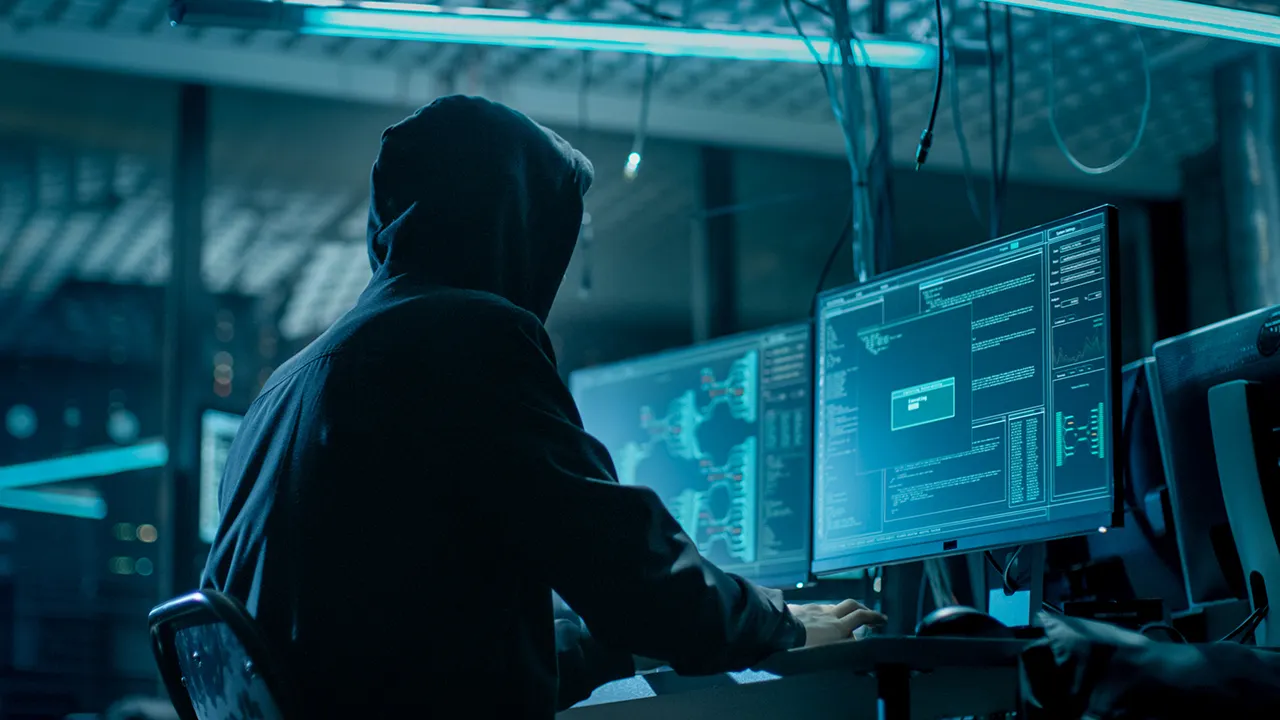
Financial influencer Taylor Price joins ‘Varney & Co.’ to break down how shifting your mindset can help Americans grow wealth and achieve the American Dream.
The bipartisan leaders of Congress’ Joint Economic Committee are sounding the alarm about tax season scams that fraudsters may look to use on unsuspecting taxpayers as filing season winds down.
Taxpayers have until Wednesday, April 15, to file their 2025 tax return or request an extension, and scammers may take advantage of the approaching deadline to take advantage of taxpayers.
Scammers have victimized roughly one in four Americans with tax season scams, which have become increasingly common, particularly amid the rise of artificial intelligence (AI) and software that enables deepfakes.
JEC’s scam alert notes several tips for taxpayers to keep in mind when confronted with a potential scam. It warns taxpayers to beware of IRS impostor scams, which can be initiated by phone calls or via emails or texts using spoofed caller ID or addresses while purporting to be the IRS.
AVERAGE TAX REFUND UP NEARLY 11% FROM A YEAR AGO, IRS DATA SHOWS

Scammers are looking to exploit taxpayers during filing season. (iStock)
Taxpayers should be aware that the IRS almost always initiates outreach by mail and will never reach out on social media, as it only texts or emails in limited circumstances and doesn’t do so to demand immediate payment.
If they receive a suspicious message, taxpayers should refrain from scanning any QR codes or clicking on links as it could contain malware or refer them to a website designed to steal their information.
Outreach claiming to be from the IRS that is urgent or threatening, requests identifying information, or demands payment through nontraditional methods should be a red flag for taxpayers.
IRS REFUND TRACKER EXPLAINED: WHAT YOU NEED TO KNOW BEFORE THIS YEAR’S TAX FILING DEADLINE

Taxpayers should verify communications purporting to be from the IRS if they have concerns about what they’re being asked to provide. (Michael Bocchieri/Getty Images)
When the IRS reaches out, it won’t threaten to call law enforcement, demand the taxpayer’s driver’s license or business license, request immediate payment through gift cards, wire transfers or crypto, or direct the taxpayer to a non-IRS website.
Taxpayers can verify communications that purport to be from the IRS by reaching out to the agency directly by calling the IRS help line at 800-829-1040 or creating an IRS account online to access up-to-date information on their tax records.
If they’re concerned about a website they’re on, they should confirm it’s actually the IRS website and not a sham website, which can be detected through suspicious signs like subtle misspellings or extra letters or words in the website’s URL.
IRS WARNS AMERICANS TO BEWARE OF DANGEROUS NEW SCAMS THIS TAX SEASON

The IRS generally initiates contact by mail, and won’t call or text demanding payment or personal information. (Jordan Vonderhaar/Bloomberg via Getty Images)
Third-party tax preparer scams are also something that taxpayers should be aware of when working with tax services or other non-IRS tax entities.
Taxpayers should be wary of tax preparers who demand high upfront fees or guarantee large refunds. They should also research unfamiliar companies through sites like the Better Business Bureau, or verify a preparer’s professionally required Preparer Tax Identification Number (PTIN) on the IRS website and avoid preparers who refuse to provide their PTIN.
Fraudsters may also seek to impersonate reputable tax preparation companies, so taxpayers should verify unexpected communications by calling the number on the company’s official website.
GET FOX BUSINESS ON THE GO BY CLICKING HERE
The scam alert was issued by the bicameral Joint Economic Committee, which includes leaders from both the House and Senate on both sides of the partisan aisle.
The panel is led by JEC Chairman Rep. David Schweikert, R-Ariz.; Ranking Member Sen. Maggie Hassan, D-N.H.,; Vice Chairman Sen. Eric Schmitt, R-Mo.; and Senior House Democrat Don Beyer of Virginia issued the warning to taxpayers on Thursday.


MELBOURNE — Australia’s men’s national soccer team, affectionately known as the Socceroos, enters the 2026 FIFA World Cup as a competitive but heavy underdog with slim prospects of lifting the trophy. Betting markets and statistical models assign the team an implied probability of winning between 0.2% and 0.5%, reflecting both the expanded 48-team format’s opportunities and the formidable challenge of overcoming traditional powerhouses.
Ranked 27th in the latest FIFA men’s world rankings as of April-May 2026, Australia has established itself as a consistent Asian Football Confederation performer. The team has qualified for every World Cup since 2006 and reached the round of 16 in 2006 and 2022. Under coach Tony Popovic, the Socceroos emphasize organization, physicality and set-piece strength, traits that have served them well against higher-ranked opponents.
Betting odds paint a clear picture of expectations. Major sportsbooks list Australia at +50000, implying roughly a 0.2% chance of ultimate victory. Some markets offer slightly more generous +25000 odds, equating to about 0.4%. These figures place the Socceroos firmly among the tournament’s long shots, far behind favorites like Spain, France and England.
The expanded tournament structure provides a more forgiving path to the knockout stages. With groups of four and the top two advancing plus additional best-third-placed teams, Australia has a realistic opportunity to progress from the group stage. Simulations and expert previews suggest a 35-45% chance of reaching the round of 32, with roughly 25-30% odds of advancing to the round of 16. Reaching the quarterfinals would represent a historic achievement, with projected probabilities below 5-8%.
Key strengths for the Socceroos include defensive resilience and experienced leadership. Captain Mat Ryan remains a reliable presence in goal, while defenders like Harry Souttar and midfielders such as Jackson Irvine provide stability. Emerging talents, including winger Nestory Irankunda, add dynamism and potential for counterattacking threats. The team’s ability to compete physically and maintain structure has frustrated stronger sides in recent qualifiers.
However, limitations remain evident. Australia lacks the depth of attacking talent and creative midfield quality found in top nations. Star power is concentrated in a few individuals, and consistent scoring against elite defenses has proven difficult. Recent friendlies and qualifiers have shown promise but also exposed vulnerabilities in possession-based play against technically superior opponents.
Group stage draw implications will significantly influence Australia’s path. Depending on their assigned opponents, progression could range from probable to challenging. An even group without a clear favorite would boost their advancement chances, while facing multiple strong European or South American sides would test their limits.
Coach Popovic has instilled belief within the squad. The team approaches major tournaments with a “no fear” mentality, focusing on collective effort rather than individual brilliance. Historical moments, such as the penalty shootout victories and gritty performances in previous World Cups, fuel optimism among supporters.
Broader context within Asian football shows improvement. Australia sits as one of the stronger sides in the confederation, but continental rivals like Japan and South Korea often carry higher expectations and deeper squads. The Socceroos’ success will hinge on tactical discipline, set-piece execution and capitalizing on transitional opportunities.
Statistical models from sources like Opta project Australia’s winning probability near 0.2%, aligning closely with betting markets. These simulations account for current form, historical performance and strength of schedule. While upsets occur in every tournament, a Socceroos title would rank among the greatest shocks in World Cup history.
Fan and media sentiment remains realistically optimistic. Supporters celebrate qualification and potential knockout appearances as successes, recognizing the gap to perennial contenders. Reaching the quarterfinals or beyond would be viewed as a landmark achievement for the program.
The 2026 tournament, co-hosted by the United States, Canada and Mexico, offers unique atmosphere and logistical challenges. Australia’s large diaspora in North America will provide vocal support, potentially creating a home-like environment in certain venues.
Preparation has focused on squad depth and tactical flexibility. Popovic’s train-on camps and friendlies aim to refine cohesion ahead of the June start. Final squad selection, due in early June, will balance experience with emerging talent.
While the mathematical chance of winning remains minuscule, the Socceroos embody the tournament’s magic — the possibility that organization, spirit and a favorable run can produce memorable results. Their journey represents Australia’s continued growth in global football, building on past milestones while chasing new heights.
As the World Cup approaches, focus remains on realistic targets: competitive group performances and a strong knockout showing. A deep run would elevate the program’s profile and inspire future generations. For now, the Socceroos prepare as proud underdogs, ready to defy expectations one match at a time in what promises to be the largest and most competitive World Cup yet.

‘The Big Money Show’ panelists discuss the U.S. and Iran reaching a deal to extend the ceasefire, the situation in the Strait of Hormuz and the impact on the markets.
ExxonMobil’s Senior Vice President Neil Chapman issued a stark warning to the public that energy prices may explode upwards in the coming weeks on the same day his company’s board approved moving the company’s corporate structure from New Jersey to Texas.
Speaking at the Bernstein Conference in New York on Thursday, Chapman warned that crude oil prices could go as high as $160 per barrel in the coming weeks as dwindling reserve inventories finally bottom out.
“We’re approaching unheard of inventory levels,” he said. “I mean really, really low levels. You can debate whether that’s going to hit those really low levels in two weeks or three weeks. Once you get to that point, then you’ll see prices shoot up.”
Prices have stayed low, Chapman posited, because of the release of strategic petroleum reserves by various nations.
MARKETS JITTERY AHEAD OF KEY INFLATION DATA AS OIL PRICES SURGE ON IRAN TENSIONS
“Commercial inventories of crude oil, of liquids, think petroleum, gasoline, diesel, jet fuel, they’ve all run down. And running down those inventories has mitigated or offset, supplemented by the release of strategic petroleum reserves, which most of the Western countries have done. All of that has mitigated the impact,” Chapman explained.
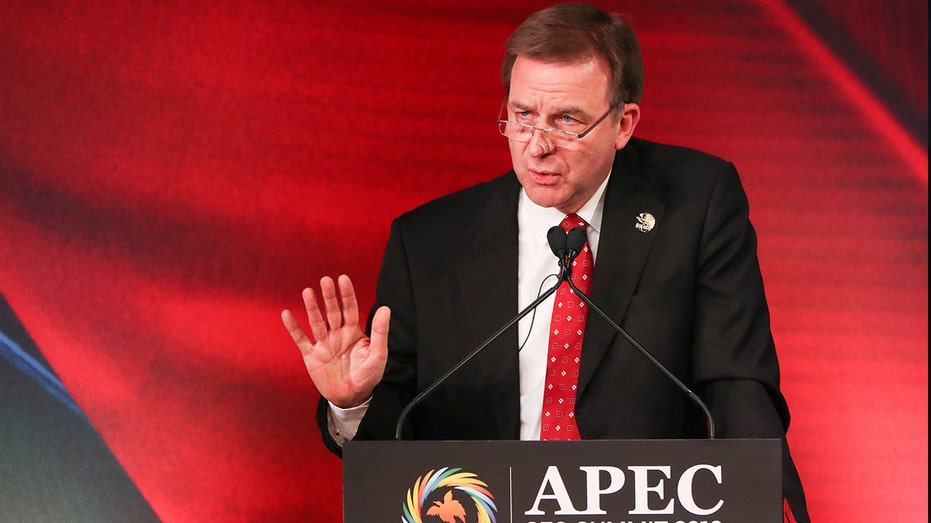
Senior Vice President of ExxonMobil Neil Chapman gestures during the APEC CEO Summit in Port Moresby on Nov. 16, 2018, a part of the Asia-Pacific Economic Cooperation (APEC) Summit. (FAZRY ISMAIL/AFP via Getty Images / Getty Images)
He then warned that dated Brent, the primary benchmark for the price of crude oil in the global market, “will shoot up… up to $150, $160.”
“And I think crude being in this sort of $90 to $110 for the last whatever it is, six weeks, has really been mitigated by running down inventories. It can’t last forever.”
BP ABRUPTLY REMOVES CHAIRMAN ALBERT MANIFOLD AS STOCK PRICE TUMBLES 10%
Dated crude dropped from a monthly average of $117 in April to near $103 for May, declining sharply in recent days on news of progress in a peace deal between the U.S. and Iran.

A view of a residential area affected during the United States-Israeli military operations in the city of Karaj in Alborz province, several kilometers west of Tehran, Iran, on April 3, 2026. The area was struck on March 9. (Morteza Nikoubazl/NurPhoto via Getty Images / Getty Images)
However, it’s still far higher than it was before the U.S. and Israel launched a bombing campaign on Iran in late February, when it was hovering near $75 a barrel, according to S&P Global.
Chapman delivered his message on the same day that Exxon shareholders approved a plan to move the company’s legal home from New Jersey to Texas.

An Exxon gas station in Albany, California, on Thursday, May 1, 2025. (David Paul Morris/Bloomberg via Getty Images / Getty Images)
Citing Texas’ strong regulatory environment, ExxonMobil CEO Darren Woods said the state was a better fit for the company in a statement.
“Aligning our legal home with our operating home, in a state that understands our business and has a stake in the company’s success, is important.”
| Ticker | Security | Last | Change | Change % |
|---|---|---|---|---|
| XOM | EXXON MOBIL CORP. | 145.26 | -1.70 | -1.16% |
ExxonMobil already moved its headquarters to Texas in 1989 and all of its corporate leadership work from the Lone Star state already. The company said 75% of it’s U.S.-based workforce already work in Texas as well.
GET FOX BUSINESS ON THE GO BY CLICKING HERE
Exxon first announced plans to make the move in March.
Business
Liverpool Announces Arne Slot’s Immediate Exit After Failing to Defend Premier League Title

LIVERPOOL — Liverpool Football Club has parted ways with head coach Arne Slot with immediate effect, ending a two-season tenure that began with Premier League glory but concluded with a disappointing fifth-place finish and growing dissatisfaction over the team’s style of play.
The club confirmed the decision on Saturday, describing it as a reluctant but necessary change to restore competitive momentum. Slot, who replaced the legendary Jurgen Klopp in the summer of 2024, guided Liverpool to the Premier League title in his debut campaign. However, the 2025-26 season saw the team struggle significantly, finishing with just 60 points — their lowest total in a decade — and recording 19 losses across all competitions.
Liverpool’s hierarchy had continued to support Slot through a difficult campaign that included a nine-game losing streak in 12 matches across competitions. Yet sources close to the club indicated that a change had become inevitable as the season progressed. The decision reflects a desire for a more attacking and aggressive style of football, which many observers felt was lacking under the Dutchman this term.
In a joint statement, Liverpool’s owners acknowledged the significance of Slot’s contributions while explaining the need for fresh direction. “That this was a difficult decision for us to make as a club goes without saying,” the statement read. “The contribution Arne has made to Liverpool FC in the time that he has been with us has been significant, meaningful and — most importantly of all to supporters and ourselves — successful.”
The statement continued: “At the same time, we have collectively come to the conclusion that change is necessary in order for the club to keep moving forward. As such, we can only wish Arne well in the next stage of his coaching career, with our expectation being that he will continue to be successful. We do so in the knowledge that his Liverpool legacy is intact and will become yet more meaningful in the years and decades to come.”
Slot arrived at Anfield in May 2024 after a successful spell with Feyenoord, where he won the Eredivisie title. His appointment was viewed as a smooth transition from Klopp’s high-intensity approach. In his first season, Slot delivered immediate success, securing the Premier League crown and earning praise for stabilizing the squad during a period of transition.
The 2025-26 campaign, however, proved far more challenging. Key injuries, including to high-profile signing Alexander Isak, and the emotional toll following the death of striker Diogo Jota in July 2025 disrupted team cohesion. Despite these setbacks, critics pointed to Slot’s increasingly conservative tactics as a primary factor in the team’s decline. Many supporters and analysts described the team’s play as “pedestrian,” lacking the dynamism that defined previous Liverpool sides.
Slot’s exit marks the end of a brief but impactful chapter at Anfield. His first-season achievement in winning the league placed him among an elite group of managers who delivered major silverware immediately upon arrival. Yet the failure to build on that success and mount a credible title defense ultimately led to his departure.
The search for a successor is already underway. Among the names linked with the vacancy is Andoni Iraola, who is set to leave AFC Bournemouth after his contract expires this summer. Iraola guided Bournemouth to a strong sixth-place finish and Champions League qualification, earning recognition for his progressive, attack-minded philosophy that aligns with the direction Liverpool’s hierarchy now seeks.
Other potential candidates are expected to emerge in the coming days as the club moves swiftly to secure new leadership ahead of the next season. The ideal profile appears to favor a manager capable of implementing high-pressing, dynamic football while developing young talent within the existing squad.
Slot’s departure comes at a pivotal moment for Liverpool. The club remains one of English football’s most storied institutions, with a passionate global fanbase and significant commercial power. However, the Premier League has grown increasingly competitive, with Manchester City, Arsenal and others maintaining strong challenges. The need to evolve tactically while preserving the club’s identity will be central to the next appointment.
Fans have reacted with a mixture of understanding and sadness. Many acknowledge the difficulties of the past season while appreciating Slot’s initial impact. Social media platforms have seen tributes to his first-season triumph alongside calls for a return to the energetic, front-foot style associated with Klopp’s era.
From a broader perspective, Slot’s time at Liverpool highlights the intense pressure on modern managers. Even delivering a league title in the first year proved insufficient when followed by regression. The rapid cycle of managerial changes at top clubs reflects the high stakes and short-term expectations in elite European football.
As Slot prepares for his next chapter, his legacy at Anfield includes not only the 2024-25 Premier League title but also contributions to player development and a respectful transition period after Klopp’s long tenure. He leaves with the respect of the organization, even as both parties recognize the need for change.
Liverpool’s owners emphasized that the decision was not a reflection of Slot’s personal qualities. “Nevertheless, the conclusion we have come to is built on a belief that the team’s trajectory is best addressed through a change of direction,” their statement noted. “That does not diminish the work Arne has done here, or the respect we have for him. Nor is it a reflection of his talents.”
The timing of the announcement, shortly after the end of the domestic season, allows the club maximum time to identify and integrate a new head coach before pre-season preparations intensify. Fans will eagerly await updates on the managerial search, hoping for a figure who can restore Liverpool to the summit of English and European football.
For now, the focus shifts from reflection on Slot’s tenure to anticipation of what comes next. The Dutchman’s brief but eventful spell will be remembered as one of high achievement followed by swift decline — a reminder of the unforgiving nature of top-level management in the Premier League.

NEW YORK — Tower Semiconductor Ltd. (NASDAQ: TSEM) has emerged as a notable performer in the semiconductor sector in 2026, driven by robust demand for its specialized analog and mixed-signal technologies, particularly in silicon photonics for artificial intelligence data centers. Trading near $275-$288 in late May, the stock carries a Moderate Buy to Buy consensus from analysts, with recent contract wins and upbeat guidance tilting sentiment toward accumulation despite an already strong run.
The Israeli foundry reported solid first-quarter 2026 results on May 13, with revenue reaching $414 million, up 15% year-over-year. Gross profit rose 52% to $111 million, while operating profit nearly doubled to $65 million. Net profit increased to $65 million, or $0.58 per basic share, beating expectations and reflecting strong execution amid growing AI infrastructure needs.
Management issued optimistic guidance for the second quarter, projecting record revenue of $455 million, plus or minus 5%. This forecast exceeds analyst estimates and signals continued sequential growth throughout 2026. The upbeat outlook was reinforced by the announcement of $1.3 billion in silicon photonics contracts for 2027 revenue, backed by $290 million in customer prepayments to secure capacity.
Analyst coverage remains largely positive. Across five to eight firms, the consensus leans Moderate Buy, with several recent price target increases. Targets range from a low of around $142 to highs of $335, with averages near $276-$314, implying modest to solid upside from current levels. Benchmark raised its target to $335 from $230, while Susquehanna lifted to $330 and Wedbush to $300, citing momentum in photonics and AI-related platforms.
For investors considering a buy position, the bull case centers on Tower’s strategic positioning in high-growth niches. Silicon photonics, which enables high-speed optical data transmission essential for AI data centers, has become a key differentiator. The company’s specialized manufacturing capabilities in analog, mixed-signal and power management technologies serve diverse end markets including automotive, medical, industrial and defense, providing some buffer against pure cyclical exposure.
Recent wins in silicon photonics underscore accelerating adoption of optical solutions to address power and bandwidth challenges in AI infrastructure. Analysts project sustained revenue and margin expansion as these contracts ramp. Tower’s fab strategy, including partnerships and capacity investments, supports long-term scalability.
Bear cases highlight risks common to the semiconductor industry. While current momentum is strong, the sector remains cyclical, and any slowdown in AI capital spending could pressure results. Valuation has expanded significantly following the stock’s sharp gains, leaving less margin of safety if growth moderates. Competition from larger foundries and potential supply chain disruptions also warrant monitoring.
Financially, Tower has demonstrated improving profitability and operational efficiency. The Q1 beat and Q2 guide reflect successful navigation of a complex environment, with management highlighting strength across multiple platforms. Positive free cash flow trends and a solid balance sheet provide flexibility for investments and potential shareholder returns.
Broader industry tailwinds favor specialized players like Tower. Explosive growth in AI data centers drives demand for advanced connectivity solutions, where silicon photonics is gaining traction. Tower’s focus on differentiated technologies rather than competing directly in leading-edge logic positions it to capture value in enabling layers of the semiconductor ecosystem.
Portfolio managers often view TSEM as a thematic AI infrastructure holding within technology allocations. Its smaller market capitalization compared to giants offers higher beta to sector trends, appealing to growth-oriented investors. Position sizing should reflect volatility typical of semiconductor names. Near-term catalysts include Q2 earnings and updates on photonics ramp.
Risks include customer concentration in key growth areas, geopolitical factors affecting operations in Israel, and execution on capacity expansions. Macroeconomic shifts impacting end-market demand could also influence performance.
In the current environment, Tower Semiconductor stands out as a beneficiary of the AI buildout with tangible contract momentum and improving fundamentals. While not without risks inherent to the cyclical chip industry, recent results and analyst enthusiasm support a constructive outlook for those with longer time horizons and conviction in optical and analog semiconductor growth.
The decision to buy or sell ultimately depends on individual risk tolerance, portfolio diversification and views on the sustainability of AI infrastructure spending. Those bullish on continued data center investment may see current levels as reasonable despite the recent rally. Others may prefer to monitor upcoming results for confirmation of margin trends before adding exposure.
As with any equity in the dynamic semiconductor sector, thorough due diligence is essential. Tower’s trajectory in 2026 will likely hinge on its ability to convert strong backlog into sustained revenue growth while navigating a competitive and capital-intensive landscape. The company’s progress in silicon photonics positions it as a name worth watching amid the ongoing transformation of AI hardware infrastructure.

NEW YORK — Social media platforms have been flooded with speculation that Beyoncé is preparing to release “Act III,” the rumored final installment of her ongoing album trilogy, sometime in 2026. While fans have pointed to patterns, visual clues and timing theories as evidence, industry sources and official channels indicate that no confirmed release date or project details have been announced by the artist or her team.
The discussion gained significant traction after Beyoncé’s appearances and stylistic choices in early 2026, particularly around the Met Gala. Online communities on TikTok, Instagram, X and Reddit have analyzed everything from her outfits to symbolic imagery, suggesting the next chapter could lean into rock influences. Some fans have connected her admiration for Tina Turner and recent Levi’s campaign visuals — featuring a white horse and motorcycle — to a potential rock-inspired era.
The two-year gap theory remains one of the most popular narratives. Beyoncé released “Renaissance” (Act I) in 2022 and “Cowboy Carter” (Act II) in 2024, both on Fridays and near the end of the month. This pattern has led many to predict a similar window in 2026, with some TikTok creators specifically pointing to May 29 as a potential date. However, these observations are based solely on past behavior rather than official statements.
Another prominent theory suggests Act III could explore rock music, possibly titled “Black Betty” after the 1970s classic. Brief online search anomalies linking the phrase to Beyoncé’s website briefly fueled speculation, though such glitches are common and not indicative of confirmed projects. Visual elements from her 2022 British Vogue shoot, including a disco ball, white horse and motorcycle, have been retroactively interpreted as deliberate hints toward disco, country and rock themes across the trilogy.
Despite the enthusiasm, publicists and representatives for Beyoncé have pushed back against specific timing claims. Reports from entertainment outlets indicate that her team has described certain circulating rumors about an imminent Act III launch as inaccurate. No verified announcement regarding new music has been made as of late May 2026.
Beyoncé first outlined the three-act concept during the “Renaissance” era. Act I celebrated dance, disco and house music, while Act II, “Cowboy Carter,” examined country music and Black contributions to the genre. The artist has not provided further public details on the structure or timeline for a potential third act since the release of the second installment.
Her catalog continues to perform strongly across platforms. “Cowboy Carter” achieved significant commercial success, and earlier works maintain steady streaming numbers. The anticipation for new material reflects Beyoncé’s history of strategic, high-impact releases that often coincide with cultural moments.
Industry observers note that the rapid spread of theories is typical in the digital age. Social media algorithms amplify engaging content, creating feedback loops where repeated speculation begins to feel like confirmation. Fan communities thrive on decoding symbols and sharing predictions, turning waiting periods into interactive experiences. However, this environment can blur the line between informed discussion and unverified claims.
Music experts emphasize the importance of distinguishing between pattern recognition and actual announcements. While Beyoncé is known for meticulous planning and surprise elements, major projects are typically confirmed through official channels such as her website, verified social accounts or major label partners. As of now, no such confirmation exists for Act III.
The rumor cycle highlights Beyoncé’s unique position in popular culture. As one of the most influential artists of her generation, with 32 Grammy Awards and a history of reshaping genres, any hint of new work generates global conversation. Her ability to maintain mystery while delivering ambitious conceptual projects has become a hallmark of her career.
For fans, the speculation serves multiple purposes. It sustains engagement during quieter periods and fosters community discussion. At the same time, repeated unfulfilled predictions can lead to frustration when timelines do not materialize as theorized. Entertainment publications have advised audiences to treat social media theories with caution and await official word.
Looking ahead, any future Act III would likely continue Beyoncé’s pattern of ambitious thematic exploration. Whether it leans into rock, another genre fusion or an entirely new direction remains unknown. What is clear is that when Beyoncé does release new music, it typically arrives as a fully realized cultural event rather than a hastily assembled project.
Until an official announcement is made, the conversation around Act III remains firmly in the realm of fan theory and anticipation. Beyoncé’s team has maintained a disciplined approach to communication, focusing on quality and intentional rollout strategies rather than addressing every online rumor.
The current wave of speculation demonstrates the artist’s enduring impact and the passionate nature of her fanbase, known as the Beyhive. As 2026 progresses, any developments regarding new music will likely be met with intense interest from both longtime supporters and newer audiences discovering her work through streaming and social platforms.
For now, fans are encouraged to enjoy the existing catalog while waiting for verified information. Beyoncé’s track record suggests that when the next chapter arrives, it will be worth the wait — delivered on her own terms and timeline.
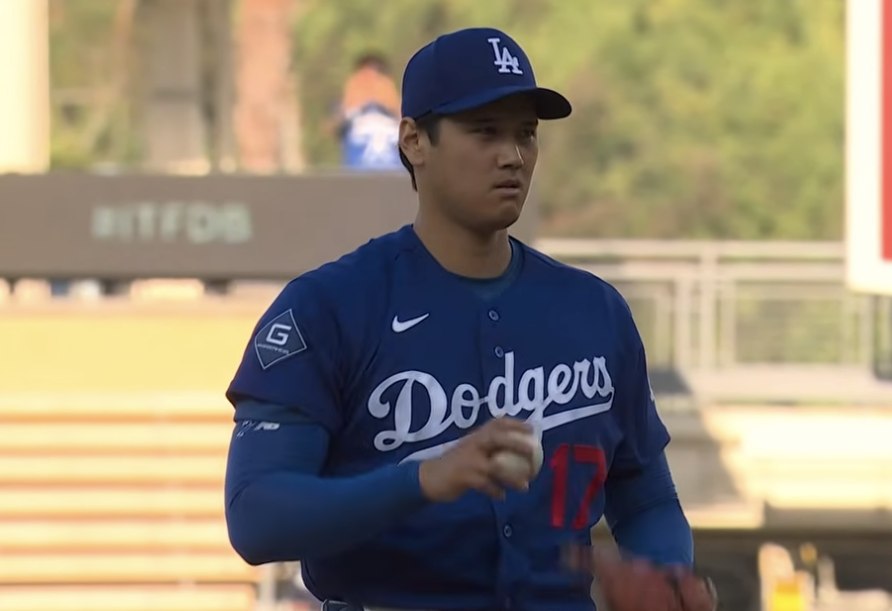
NEW YORK — Shohei Ohtani’s remarkable two-way performance with the Los Angeles Dodgers in 2026 has placed him firmly in the National League Cy Young Award conversation, though questions about workload and competition make a victory far from certain. Through late May, the Japanese superstar has posted an elite 0.82 ERA in nine starts, the lowest mark among qualified pitchers, while continuing to produce as one of baseball’s top hitters.
Ohtani’s pitching dominance has been the standout story of the young season. He holds a 5-2 record with a microscopic 0.82 ERA and 0.82 WHIP over 55 innings, striking out 61 batters. His ERA- of 24 ranks as the best in the league, and he has yet to allow a home run in several starts. These numbers represent historic early-season dominance for a player also serving as the team’s everyday designated hitter.
Despite the gaudy surface stats, Ohtani’s innings total remains a significant hurdle for Cy Young voters. With only around 55 innings pitched by late May, he trails many traditional starters who are projected to reach 160-200 innings by season’s end. Historical precedent shows voters typically favor pitchers with higher workloads, though recent awards have occasionally gone to relievers or lower-inning aces in exceptional cases.
Betting markets reflect this nuance. Ohtani’s odds to win the NL Cy Young sit around +550 to +750 as of late May, making him a top-five contender but behind several pitchers with stronger projected volume. Favorites include emerging arms like Paul Skenes, Christopher Sanchez, and Jacob Misiorowski, who have posted strong numbers with more consistent starts.
Dodgers manager Dave Roberts and teammates have openly supported Ohtani’s Cy Young ambitions. Roberts noted during spring training that Ohtani expects to contend for the award, and the organization has managed his schedule to balance hitting and pitching demands. Ohtani has shown no signs of fatigue, maintaining elite velocity and command while also hitting .269 with nine home runs and an .882 OPS.
The two-way workload creates a unique challenge. Ohtani has taken occasional days off from hitting when starting on the mound, but he continues to rank among league leaders in several offensive categories. This dual excellence makes him the clear frontrunner for a fourth straight NL MVP award, but it may cap his pitching innings and affect Cy Young viability.
Analysts remain divided on his chances. Some project him to finish in the top three if he maintains health and adds volume in the second half. Others argue the innings gap will prove too difficult to overcome in a loaded NL pitching field. Historical comparisons are difficult because no player has pursued both awards at this level simultaneously.
Ohtani’s pitching arsenal has evolved impressively. He commands a seven-pitch mix that has held opponents to a .147 batting average. His ability to miss bats while limiting hard contact stands out even among elite starters. If he can increase his starts without compromising durability, his case strengthens considerably.
The Dodgers’ strong record and playoff positioning could also help Ohtani’s candidacy. Voters often reward pitchers on contending teams, and Los Angeles remains a top NL contender. However, the team’s deep rotation may limit Ohtani’s workload to preserve him for October.
For now, Ohtani’s Cy Young odds sit in the 12-18% range across major sportsbooks, indicating a realistic but uphill battle. He has already achieved what few believed possible by excelling as both a premier hitter and starter in the same season. Winning the award would complete a historic resume and cement his status as one of the greatest players in baseball history.
As the season progresses into June and beyond, Ohtani’s performance will be watched closely. Sustained dominance on the mound combined with continued offensive production could force voters to reconsider traditional standards. Whether he ultimately wins the Cy Young or finishes as a top contender, 2026 is shaping up as another landmark year for the 31-year-old superstar.
Ohtani has repeatedly expressed his desire to win every major award. With the only major individual honor missing from his collection being the Cy Young, motivation remains high. The baseball world will continue tracking his unique journey as he chases excellence on both sides of the ball.

SEOUL — Samsung Electronics has begun shipping samples of its industry-first 12-layer HBM4E high-bandwidth memory chips to major global customers, marking a significant step forward in the race to supply advanced memory solutions for next-generation artificial intelligence systems.
The South Korean technology giant announced the development on May 29, 2026, following the earlier commercial shipment of its HBM4 memory earlier this year. The new HBM4E samples aim to address the surging demand for higher-speed, more power-efficient memory in AI data centers and hyperscale computing infrastructure.
Samsung’s 12-layer HBM4E achieves pin speeds of up to 16 gigabits per second, representing more than a 20% improvement over the previous HBM4 generation. The chips deliver bandwidth of up to 3.6 terabytes per second per stack and come in a 48-gigabyte capacity configuration, offering more than 30% higher capacity than the prior version. Samsung plans to expand the lineup to include 32GB 8-layer and 64GB 16-layer options based on customer needs.
The advancement builds directly on Samsung’s experience with HBM4 production. The company has applied its most advanced 6th-generation 10-nanometer-class DRAM process and 4nm logic base die technology from its foundry business to enhance stability and manufacturability. These improvements have resulted in 16% better energy efficiency and more than 14% improved thermal resistance compared to the previous generation.
Sang Joon Hwang, Executive Vice President and Head of Memory Development at Samsung Electronics, highlighted the significance of the milestone. “Following the successful mass production of HBM4, Samsung has once again demonstrated its distinct technological edge with HBM4E,” he said. “Through our advanced manufacturing capabilities and preemptive infrastructure investments, we will continue to drive the growth of the global AI memory market.”
The HBM4E represents the latest evolution in high-bandwidth memory technology, which has become critical for training and running large language models and other intensive AI workloads. Unlike traditional DRAM, HBM stacks multiple memory dies vertically and connects them through silicon vias, enabling dramatically higher data transfer rates while consuming less power and space.
Samsung’s move comes as global demand for AI accelerators continues to surge. Major cloud providers and AI chip designers require increasingly sophisticated memory solutions to handle the exponential growth in model sizes and computational requirements. HBM4E’s enhanced thermal performance is particularly important for data centers facing rising energy costs and sustainability pressures.
Industry analysts view Samsung’s rapid progression from HBM4 to HBM4E as a demonstration of its manufacturing strength. The company was the first to achieve mass production and commercial shipment of HBM4 earlier in 2026. Positive customer feedback on that generation, particularly regarding performance and energy efficiency, has encouraged accelerated development of the enhanced version.
The 12-layer design in the initial HBM4E samples pushes the boundaries of current stacking technology. By optimizing both memory and logic architectures, Samsung has improved overall yield and reliability while maintaining high performance. These technical refinements are expected to support longer operational periods in high-intensity computing environments with better heat dissipation.
Samsung plans to begin mass production of HBM4E according to customer schedules after completing sample validation and optimization phases. The company’s comprehensive semiconductor portfolio — spanning memory, foundry services, logic design and advanced packaging — provides a strategic advantage in securing stable supply for AI customers.
The broader memory market has seen intense competition in the HBM segment. While Samsung holds a strong position, rivals including SK Hynix and Micron Technology are also investing heavily in next-generation high-bandwidth solutions. HBM4E’s improvements in speed, capacity and efficiency could help Samsung maintain or expand its market share in this critical category.
For the AI industry, the availability of more advanced memory directly impacts the pace of innovation. Higher bandwidth and capacity allow for larger models, faster training times and more efficient inference operations. Samsung’s focus on energy efficiency also aligns with growing demands from data center operators seeking to control power consumption amid rapid AI expansion.
The announcement reflects Samsung’s broader strategy to capitalize on the AI boom. The company has invested significantly in research and development as well as production capacity to meet expected long-term demand. Its ability to deliver samples quickly after launching HBM4 demonstrates strong execution capabilities.
Market reaction to the news has been positive, with investors viewing the development as reinforcement of Samsung’s technological leadership in a high-growth segment. The memory business remains cyclical, but sustained AI investment has created a structural tailwind for specialized products like HBM.
As Samsung moves toward mass production, attention will turn to how quickly customers can integrate the new memory into their systems. Early sample shipments allow partners to begin testing and validation, potentially accelerating commercial deployment timelines.
The HBM4E introduction comes at a pivotal time for the semiconductor industry. With AI workloads becoming more demanding, memory technology must evolve rapidly to avoid bottlenecks in computing performance. Samsung’s latest achievement positions it well to support the next wave of AI advancement while addressing practical challenges around power and thermal management in real-world data centers.
Looking ahead, the company is expected to continue expanding its HBM portfolio with further innovations in stacking, speed and efficiency. These developments will play a crucial role in enabling more capable and sustainable AI infrastructure worldwide.


Rights groups sue over conditions at largest US immigration detention center
NEW YORK — Hut 8 Corp. (NASDAQ: HUT), formerly a prominent Bitcoin mining company, has transformed into a high-growth AI infrastructure player in 2026, driving its stock price to new highs near $124 in late May. With analysts issuing a consensus Moderate Buy to Strong Buy rating and multiple upward price target revisions, the company presents a compelling but volatile opportunity for investors betting on the artificial intelligence data center boom.
Hut 8 reported first-quarter 2026 revenue of $71 million, a substantial increase from the prior year, primarily driven by its expanding Compute segment. The company has aggressively shifted strategy toward developing large-scale AI data centers, securing massive long-term contracts that provide strong revenue visibility. In early May, it announced a 15-year, $9.8 billion triple-net lease for 352 MW of IT capacity at its Beacon Point campus in Texas, contributing to a total contracted lease pipeline exceeding $16.8 billion across multiple projects.
This pivot has resonated strongly with investors. Shares have risen dramatically year-to-date, reflecting enthusiasm for the company’s power-first development model and ability to monetize energy assets for hyperscale AI tenants. Recent financing moves, including a $3.25 billion investment-grade bond offering for the River Bend project, demonstrate improved access to capital on favorable terms without heavy dilution.
Wall Street sentiment is overwhelmingly positive. Across roughly 15-20 analysts, the consensus stands at Moderate Buy to Strong Buy, with the vast majority issuing Buy ratings. Average 12-month price targets range from approximately $100 to $130, with high targets reaching $156. Recent upgrades include Jefferies initiating coverage with a Buy rating and a $156 target, alongside increases from B. Riley, Rosenblatt, Needham and others citing the strength of the AI backlog and execution progress.
For bulls, the investment case rests on Hut 8’s successful transition from cryptocurrency mining to a diversified digital infrastructure company. Its 8+ gigawatt development pipeline, combined with secured leases from investment-grade tenants, offers multi-year revenue visibility and high-margin net operating income potential. Management has emphasized a repeatable “power-first” approach that minimizes risk while capitalizing on surging AI demand for power and compute capacity.
The company’s Q1 results also highlighted progress in commercializing assets. While traditional mining revenue faces Bitcoin price volatility, the AI infrastructure segment is expected to become the primary growth driver starting in 2027 as data halls come online. Strong liquidity, including significant cash and Bitcoin holdings, provides a buffer during the transition period.
Bear cases center on execution risks and the capital-intensive nature of data center development. Despite strong contracted revenue, actual cash flows from new projects will ramp gradually, and near-term results may continue showing losses amid heavy investments. Competition in the AI data center space is intensifying, and any slowdown in hyperscaler spending could impact growth. Valuation has expanded considerably following the rally, leaving less margin of safety if timelines slip.
Financially, Hut 8 maintains a solid liquidity position but reported a net loss in Q1 largely due to unrealized movements in digital assets. Adjusted metrics and backlog growth paint a more constructive picture for long-term prospects. The company’s ability to secure non-recourse financing for projects demonstrates improving credit quality and strategic maturity.
Broader industry tailwinds strongly favor Hut 8’s positioning. Explosive AI infrastructure demand has created a structural opportunity for companies with access to power and land. Hut 8’s greenfield approach and existing energy assets provide a competitive edge in a market where power availability is a key constraint.
Portfolio managers increasingly view HUT as a thematic AI infrastructure play rather than a pure crypto miner. Its high beta to sector trends appeals to growth investors, though volatility remains elevated. Near-term catalysts include further project commercializations, Q2 earnings and updates on the development pipeline.
Risks include Bitcoin price exposure in remaining mining operations, regulatory uncertainties around energy usage, and potential delays in construction or tenant onboarding. Geopolitical factors and interest rate movements could also influence financing costs and demand.
In the current environment, Hut 8 represents a high-conviction growth story for investors comfortable with execution risk and sector volatility. The company’s substantial contracted backlog and strategic pivot have earned strong analyst support, suggesting potential for continued upside if it delivers on its ambitious targets.
The decision to buy or sell depends on individual risk tolerance and time horizon. Those bullish on sustained AI infrastructure investment may view current levels as an opportunity despite the recent run-up. More cautious investors might await pullbacks or clearer evidence of cash flow inflection before establishing positions.
As with any equity in the rapidly evolving technology and energy infrastructure sectors, thorough due diligence is essential. Hut 8’s trajectory in 2026 and beyond will hinge on its ability to convert its massive pipeline into operational assets while navigating the competitive AI data center landscape. The company’s progress positions it as one of the more compelling stories in the intersection of cryptocurrency infrastructure and artificial intelligence.
Business
Claude AI Down Again? Claude AI Outage Hits Users Worldwide on May 30, 2026, Sparking Widespread Disruption

NEW YORK — Anthropic’s Claude AI experienced a significant outage on Saturday, affecting hundreds of users globally and highlighting the growing reliance on artificial intelligence services for daily workflows. The disruption, which began in the early afternoon Eastern Time, left many users unable to access the popular chatbot, prompting widespread reports across social media and community forums.
The incident was first widely noted by service monitoring accounts, including StatusIsDown on X, which reported that Claude AI was down for numerous users. The post quickly gained traction as frustrated individuals shared their experiences, using hashtags such as #ClaudeDown and #ClaudeAiDown. Many described being unable to load conversations, receive responses, or access the platform entirely through both web and mobile interfaces.
Anthropic has not yet issued an official statement regarding the cause or expected resolution time as of late Saturday. Users attempting to access Claude through the main website or API endpoints encountered error messages or indefinite loading screens. The outage appeared to impact both free and paid tiers, including Claude 3.5 Sonnet and Opus models.
This marks one of the more noticeable disruptions for Claude in recent months. The AI service, known for its strong performance in reasoning, coding and creative tasks, has seen rapid adoption among professionals, students and developers. Many rely on it for time-sensitive work, making even short outages particularly disruptive.
Community discussions on platforms like Reddit and specialized forums pointed to possible server-side issues or capacity problems amid high weekend usage. Some users reported partial access, with responses generating slowly or failing midway through conversations. Others noted that the mobile app appeared more affected than the desktop version.
The timing of the outage coincides with increasing competition in the AI chatbot space. Services such as OpenAI’s ChatGPT, Google’s Gemini and xAI’s Grok have all experienced occasional downtime in the past, reflecting the technical challenges of maintaining large-scale AI infrastructure. Anthropic’s focus on safety and reliability has generally earned praise, making this incident stand out.
Users expressed a mix of frustration and understanding. Many took to social media to share screenshots of error messages while simultaneously acknowledging the complexity of running advanced AI models at scale. Some turned to alternative tools during the outage, highlighting how multi-AI workflows have become common among heavy users.
Anthropic, valued at nearly $1 trillion following recent funding rounds, has invested heavily in expanding its computing infrastructure to meet demand. The company’s Claude models have gained particular traction in enterprise settings due to their thoughtful responses and strong safety features. However, rapid growth has occasionally strained service reliability.
This latest outage serves as a reminder of the vulnerabilities in cloud-based AI services. As more individuals and businesses integrate tools like Claude into daily operations, even brief interruptions can have meaningful productivity impacts. Companies in the sector continue to face pressure to improve redundancy and scaling capabilities.
For now, users are advised to monitor Anthropic’s official channels for updates. Historical patterns suggest most such outages are resolved within a few hours, though complex issues can sometimes extend longer. In the meantime, many have shifted to backup AI tools or postponed tasks requiring advanced reasoning.
The incident also underscores broader trends in AI adoption. What began as novel technology has quickly become essential infrastructure for millions. Service reliability is now a key competitive factor alongside model intelligence and safety features. Anthropic and its peers are expected to face continued scrutiny as user bases expand.
As Saturday evening progressed, reports of partial recovery began circulating, though full service restoration had not been confirmed. The event will likely prompt discussions about infrastructure resilience as AI usage continues its explosive growth trajectory into the second half of 2026.

Emergency crews including air ambulance rush to M11 as driver told to ‘avoid’ road

Realistic Shot or Outsider Dream for Australia?

4 Best TV Shows to Watch This Weekend (May 30-31)


-

 Business6 days ago
NYT Strands Answers May 24 2026 Revealed for Puzzle No. 812 Theme Summer Essentials
-

 NewsBeat3 days ago
Israel says it has killed new Hamas military leader in Gaza City airstrikes
-

 Politics5 days ago
Bridgerton Season 5: Cast, Release Date And Everything We Know So Far
-

 Business4 days ago
Selena Gomez Reportedly Upset Over Benny Blanco’s Comments on Her ‘Terrible’ Diet
-
 Crypto World4 days ago
Micron Crosses $1 Trillion Market Cap as AI Demand Reshapes Memory Sector
-

 Business5 days ago
BTS Sells Out Four Las Vegas Shows at Allegiant Stadium for ARIRANG World Tour
-

 Tech5 days ago
Microsoft’s quiet Claude Code retreat and the real cost of enterprise AI
-
 Tech5 days ago
China assigns ID codes to 28,000+ humanoid robots
-

 News Videos4 days ago
XRP *JUST* SUCCEEDED!!!! CLARITY ACT EXPOSED!!! (SHE EXPOSED IT)
-

 Tech2 days ago
Waymo dominates autonomous vehicle registrations as Tesla trails behind
-
Tech3 days ago
The Samsung pay deal is the moment Korean unions changed register
-

 Tech5 days ago
Westone Audio and Etymotic Acquired by Fidelity Collective in Major IEM Market Move
-
Crypto World6 days ago
Brian Armstrong Outlines Crypto Vision for the Future Financial System
-
Crypto World3 days ago
SpaceX’s $2 Trillion IPO: Why Tech Giants Nvidia (NVDA), Apple (AAPL), and Microsoft (MSFT) May Face Pressure
-
 Entertainment5 days ago
‘Breaking Bad’ Star’s Easy-to-Binge 6-Part Crime Series Spin-Off Is Finally Heading to Free Streaming
-

 Tech4 days ago
Millions of AI agents imperiled by critical vulnerability in open source package
-
 Crypto World5 days ago
Nvidia (NVDA) CEO Calls on Super Micro to Strengthen Export Controls Amid Smuggling Probe
-

 Tech4 days ago
NASA taps Blue Origin to deliver lunar rovers for Moon Base initiative
-
 NewsBeat5 days ago
Hottest May day ever as London hits 34.8C in 2C leap from previous records
-
 Crypto World1 day ago
Snowflake (SNOW) Stock Rallies on Strong Q1 Results and AI Product Growth
You must be logged in to post a comment Login