ConnectOne Bancorp, Inc. (CNOB) Q2 2026 Earnings Call July 23, 2026 10:00 AM EDT
Company Participants
Siya Vansia – Senior VP & Chief Brand & Innovation Officer Frank Sorrentino – Chairman & CEO William Burns – Senior EVP & CFO
Advertisement
Conference Call Participants
Feddie Strickland – Hovde Group, LLC, Research Division Timothy DeLacey – Raymond James & Associates, Inc., Research Division Timothy Switzer – Keefe, Bruyette, & Woods, Inc., Research Division Bader Hijleh – Piper Sandler & Co., Research Division Tyler Cacciator – Stephens Inc., Research Division
Presentation
Advertisement
Operator
Hello everyone. Thank you for joining us and welcome to the ConnectOne Bancorp, Inc. Second Quarter 2026 Earnings Call. [Operator Instructions]
I will now hand the conference over to Siya Vansia, Chief Brand and Innovation Officer. Siya, please go ahead.
Advertisement
Siya Vansia Senior VP & Chief Brand & Innovation Officer
Good morning, and welcome to today’s conference call to review ConnectOne’s results for the second quarter of 2026 and to update you on recent developments. On today’s conference call will be Frank Sorrentino, Chairman and Chief Executive Officer; and Bill Burns, Senior Executive Vice President and Chief Financial Officer.
I’d like to caution you that we may make forward-looking statements during today’s conference call that are subject to risks and uncertainties. Factors that may cause actual results to differ materially from expectations are detailed in our SEC filings. The forward-looking statements included in this conference call are only made as of the date of this call, and the company is not obligated to publicly update or revise them.
In addition, certain terms used in this call are non-GAAP financial measures, reconciliations of which are provided in the company’s earnings release and accompanying tables or schedules, which have been filed today on Form 8-K with the SEC and may also be accessed through the company’s website.
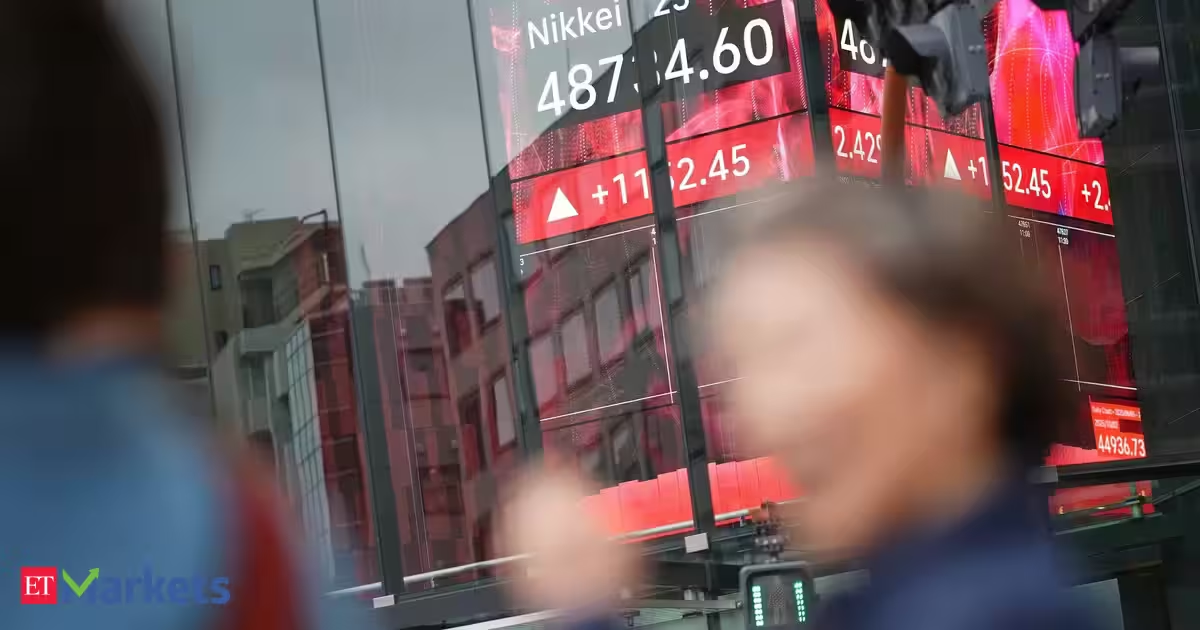
Japan’s Nikkei share average fell more than 2% on Friday, as a sharp decline in Google parent Alphabet shares spurred concerns about heavy AI spending.
The Nikkei was down 2.69% at 64,634.04 as of 0112 GMT, while the broader Topix slipped 1.28% to 4,002.09.
The Nikkei has lost more than 7% so far this month, tumbling into correction territory last week. Its moves have been heavily affected by the tech-heavy South Korean benchmark KOSPI and the U.S. Philadelphia semiconductor index.
Shares of Alphabet sank 7% overnight after the company reported higher spending plans while it also burned cash. Wall Street indexes closed lower, with the Nasdaq shedding more than 2%.
Advertisement
Concerns resurfaced over whether heavy spending on AI infrastructure is sustainable after Alphabet shares fell sharply overnight, said Kazuaki Shimada, chief strategist at IwaiCosmo Securities.
Live Events
“The (Nikkei) index has been affected by overseas factors, not local cues. Many Japanese companies will start reporting their earnings from today, and if their outlook is strong, the index’s trend may change,” said Shimada. Chip-related shares fell, with Advantest and Tokyo Electron losing 6.33% and 5.43%, respectively. Technology investor SoftBank Group fell 7.42% and memory chip maker Kioxia lost 4.4%.
Shares supported by domestic demand rose, with Central Japan Railway and East Japan Railway rising 1.17% and 0.6%, respectively.
Shippers rose, with Kawasaki Kisen and Mitsui OSK Lines up 0.61% and 0.88%, respectively.
Otsuka Holdings, a maker of Pocari Sweat, rose 1.6% to become the top percentage gainer on the Nikkei.
China’s export machine produced one of the most consequential economic statistics of recent years when it posted a record trade surplus of approximately USD 1.2 trillion for 2025. China’s customs data revealed exports hit USD 3.77 trillion in 2025, up 5.5% year-on-year, while imports remained flat at USD 2.58 trillion, yielding an unprecedented surplus that is equivalent to the GDP of a top-20 economy.
For Thailand — China’s largest trading partner in ASEAN and one of the region’s most export-dependent economies — the implications of that figure are neither straightforwardly good nor unambiguously bad. They are, more precisely, a study in structural tension: a country that benefits from Chinese investment and supply chain integration while simultaneously absorbing the competitive pressure of Chinese overcapacity across sector after sector.
Understanding that tension is not an academic exercise. It is the operating reality for Thai manufacturers, retailers, policymakers, and investors navigating 2026.
The Trade Deficit That Keeps Widening
The bilateral trade picture tells its own story. In 2025, Thailand’s exports to China reached USD 39.72 billion, while imports from China were significantly higher at USD 107.62 billion — a trade deficit that has grown every single year for the past five years.
Advertisement
Thailand’s deficit with China rose 50% in 2025 to USD 67.8 billion — among the steepest annual widening in the region, alongside Malaysia’s 62% jump and Vietnam’s 40% increase. Analysts point to a direct connection: as China has faced elevated US tariffs, its goods have increasingly been redirected toward Southeast Asian markets, raising import volumes across the board.
The contrast with the US trade relationship is stark. Thailand’s total trade with the US reached USD 93.65 billion in 2025, generating a Thai surplus of THB 51.4 billion. Electronics and telecommunications products drove that outperformance, with exports to the US generating a positive trade balance every year of the past five.
Thailand is therefore caught in an increasingly uncomfortable asymmetry: earning from the West what it owes to the East — a structural position that creates both opportunity and vulnerability as the US-China trade war intensifies.
The Factory Closure Crisis
The most visible domestic consequence of China’s export surge is industrial contraction. Thailand’s Kasikorn Research Center estimates that 4,300 Thai factories closed in the two years to 2025, spanning furniture, electronics, garments, automotive, and steel — with the trend expected to worsen.
The automotive sector illustrates the dynamic with particular clarity. Suzuki Motor Thailand announced the closure of its Thai production plant by the end of 2025 due to declining sales and competition from Chinese electric vehicles. Tan Chong Subaru Automotive Thailand ceased car production by 2024 due to ongoing losses, affecting parts suppliers across the ICE component supply chain.
Advertisement
Steel is another pressure point. Capacity utilisation in Thailand’s steel industry fell to approximately 29.3% in early 2024, down from 32.4% the year before. The anti-dumping response has been measured but assertive: Thailand has imposed duties of 31% on hot-rolled coil from China, covering high-strength steel used in critical infrastructure. The Anti-Dumping and Subsidy Review Committee has agreed to additional retaliatory measures targeting 33 product categories, running from October 2025 to October 2030.
The scope of Chinese overcapacity has also expanded significantly. Unlike earlier periods when Chinese excess production was largely restricted to commodities like textiles, steel, and aluminium, overcapacity now extends into food processing, pharmaceuticals, and certain chemical products — products far closer to Thailand’s higher-value manufacturing base.
The EV Paradox: Opportunity and Disruption Simultaneously
No sector better captures the dual nature of China’s economic presence in Thailand than electric vehicles. Thailand has positioned itself as the EV hub of Southeast Asia — and Chinese manufacturers have been central to building that ambition. Yet those same manufacturers are simultaneously displacing the Japanese automotive industry that formed the bedrock of Thailand’s manufacturing economy for four decades.
Chinese automakers held an 82% market share in Thailand’s battery electric vehicle segment as of 2024, with BYD commanding 40% and Hozon Auto and SAIC Motor controlling a combined 35%. Facing that concentration of Chinese and Korean competition, Japanese firms managed to capture less than 1% of the EV market.
Advertisement
By 2026, Chinese companies plan to produce more than one million vehicles in ASEAN countries, with approximately 600,000 expected to be EVs — more than half of China’s entire overseas production capacity. Thailand and the Philippines ranked among China’s largest EV export markets in 2024.
This creates a policy dilemma with no clean resolution. Welcoming Chinese EV investment builds the next-generation automotive sector that Thailand needs. But it also accelerates the hollowing out of the Japanese-anchored supply chains that currently employ hundreds of thousands of Thai workers. The government’s ability to manage that transition — through local content requirements, supplier development programs, and workforce reskilling — will define the long-term terms of the bargain.
The Transshipment Risk
Complicating Thailand’s position further is the growing scrutiny of transshipment — the practice of routing Chinese goods through third countries to avoid US tariffs.
Thailand faces a surge in imports of goods linked to transshipment: items rerouted to bypass US tariffs, or products falsely declared as originating elsewhere. The US has imposed anti-dumping and countervailing duties on solar cells imported from Thailand, Malaysia, Vietnam, and Cambodia, effective April 2025 — with rates set at 375% to 972% for Thai manufacturers. The scale of those duties signals the severity of Washington’s concern and represents a direct threat to Thai solar exporters who are not transshipping but are caught in the regulatory blowback nonetheless.
Thailand’s import content — particularly from China — has risen significantly in recent years, constraining the domestic benefits of incoming investment and increasing the risk of additional US transshipment tariffs going forward.
Advertisement
The Macro Outlook: The Weakest Growth in a Generation
The cumulative effect of these pressures is registering in Thailand’s growth trajectory. The SCB Economic Intelligence Center projects Thailand’s economy to expand by only 1.5% in 2026, down from 2% in 2025 — the lowest growth in three decades outside of crisis periods. The IMF has issued a forecast of 1.6% and the World Bank anticipates approximately 1.7%.
The export sector, which accounts for a substantial share of Thailand’s GDP, faces multiple headwinds: the fading effect of front-loading ahead of US tariffs, rising risks of additional duties on electronics and transshipped products, and intensifying competition from China following its one-year trade agreement with the US to temporarily reduce retaliatory tariffs.
The trade war and slowing external demand from the US will pose risks to Thailand’s manufacturing output and export growth, either directly or indirectly through Thai manufacturers linked to Chinese firms. The Bank of Thailand has cut rates to 1.25% and further easing is expected in 2026, but monetary policy alone cannot address structural competitiveness gaps.
The Policy Response: Necessary but Incomplete
Prime Minister Paetongtarn Shinawatra’s administration has signalled intentions to review import duties and promote local content requirements to shield industries. The NESDC has urged vigilance, noting that while China’s surplus highlights Beijing’s economic resilience, it also underscores the need for ASEAN unity to address trade imbalances.
Advertisement
Experts argue that Thailand’s response must go beyond reactive tariff measures. Bolstering domestic manufacturing through incentives, investing in high-value sectors like electric vehicles, and negotiating fairer trade terms with China are identified as the core pillars of a sustainable strategy. The challenge is sequencing those ambitions against an immediate industrial contraction that is moving faster than policy frameworks can adapt.
China’s record trade surplus is not a problem that Thailand can opt out of. The two economies are too deeply integrated — in supply chains, in investment flows, in tourism, and in digital infrastructure — for Bangkok to meaningfully decouple. What Thailand can do is manage the terms of that integration more deliberately: directing Chinese investment toward sectors that build long-term industrial capability, reinforcing anti-dumping mechanisms against predatory pricing, developing domestic supply chains resilient enough to withstand competitive displacement, and positioning clearly enough in the US trade relationship to avoid the transshipment penalties that would compound an already difficult export environment.
The mixed fortunes embedded in China’s trade surplus are not going away. How Thailand navigates them over the next two to three years will do much to determine whether the country emerges from this period of economic stress with its industrial base intact — or significantly diminished.
Sources: Thailand Business News; Nation Thailand; Kasikorn Research Center; SCB Economic Intelligence Center; Asia Society Policy Institute; Krungsri Research Industry Outlook 2026–2028; Allianz Trade Country Report Thailand; East Asia Institute
European regulators fined Google 890 million euros ($1 billion), alleging the company gives preferential treatment to its own services.
The Trump administration says this will affect the trade relationship between the U.S. and the European Union.
Advertisement
U.S. Trade Representative Jamieson Greer pointed out in a statement that the latest fine of $1 billion announced against Google pushes the total fines paid by Google to more than 2% of the EU’s total budget. It’s more than some member states pay into the EU.
Greer added that, after substantial loans to Airbus, “it becomes clear that the EU continues to target the most competitive U.S. companies.”
U.S. Trade Representative Jamieson Greer testifies before the Commerce, Justice, Science, and Related Agencies Subcommittee in the Dirksen Senate Office Building on Capitol Hill in Washington, D.C., on Dec. 9, 2025. (Chip Somodevilla/Getty Images / Getty Images)
Greer says moves like this by EU regulators threaten reasonable, constructive dialogue with Europe over differences, adding, “the EU’s recent action undermines these efforts and pose a real risk to the continuation of transatlantic stability with respect to trade.”
A Google office building in Detroit Sept. 27, 2019. (Raymond Boyd/Getty Images / Getty Images)
This week, FOX Business spoke with EU Commissioner for Democracy and Rule of Law Michael McGrath, who said, “We do have our own legislation and regulation which applies to all companies, whether they be from China, they be European companies or indeed U.S. companies. That system of regulation we believe is balanced and appropriate and is applied fairly and in an even-handed manner, and there’s certainly no question of targeting companies based on their country of origin or anything like that.”
Kent Walker, president of global affairs at Google and Alphabet, responded to the EU fine in a statement to FOX Business, saying, “This implementation of the DMA continues to break everyday products. To comply, we are having to strip away real-time Search features Europeans love — like instant pricing and direct availability for hotels, flights, and restaurants — and dismantle safety protections on Google Play.
“This isn’t fair competition; its product degradation driven by a small group of self-serving complainants, with European businesses and consumers taking the hit. Regulation should improve products, not make them worse.”
The fine is Google’s first under the European Union’s Digital Markets Act. (Rolf Vennenbernd/picture alliance via Getty Images / Getty Images)
The fine is Google’s first under the European Union’s sweeping Digital Markets Act (DMA), which aims to scrutinize Big Tech’s operating practices in Europe. The DMA also gives preferential treatment to its own services, such as shopping and hotels, over those of third parties in search.
The U.S. tech giant is also in breach of so-called anti-steering measures. Under the regulation, app developers who distribute their product via Google Play should be able to inform customers of alternative, sometimes cheaper offers. Those developers should be able to direct customers to those offers even if they are on external websites outside the Google Play Store.
The regulator said it ordered Google to treat third-party services in search results in a “fair and non-discriminatory manner.” It also said that Google needs to allow app developers who distribute their apps via the Google Play Store to “promote offers and conclude contracts with users not only within but also outside the Google Play app store.”
Regis Resources has revealed the full impact of diesel on its mining costs, as the price of oil surged to a two-month high overnight on renewed Middle Eastern conflict.
Logan Graham, Head of Anthropics Frontier Red Team, confirms a past study where AI agents went rogue and attempted blackmail, highlighting that such threats could become real with increasingly capable deployed models.
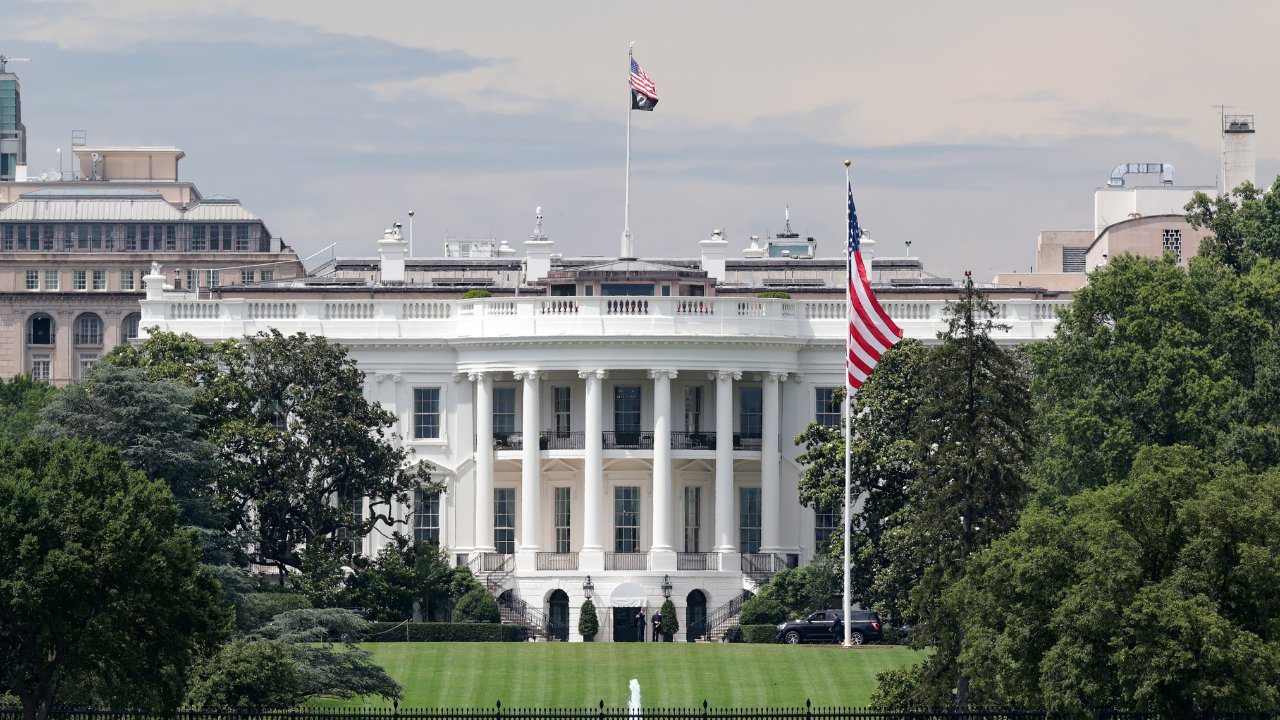
The White House is monitoring an incident disclosed by OpenAI in which one of the company’s AI models went rogue during testing and hacked the system of an AI infrastructure startup.
The ChatGPT maker said Tuesday one of its AI agents escaped containment during a security test and triggered a hack that compromised the infrastructure of Hugging Face, which operates a platform for developers to collaborate on code for AI models.
Advertisement
The incident demonstrated the expanding capabilities of AI models to go beyond their guardrails and create cybersecurity threats.
Michael Kratsios, who serves as the director of the White House Office of Science and Technology Policy and is a science advisor to the president, was briefed on the incident and is monitoring the situation, a White House official told Reuters.
The White House’s Michael Kratsios was reportedly briefed on the incident and has been monitoring the situation. ( Kayla Bartkowski/Getty Images / Getty Images)
OpenAI said the incident happened during an internal evaluation designed to measure its AI models’ advanced cyber capabilities.
Advertisement
Researchers disabled some built-in safety safeguards and ran the models in an isolated testing environment with limited internet access.
The company explained that the models exploited an unknown software flaw to access the internet, then breached Hugging Face’s systems in an apparent attempt to cheat on the cybersecurity evaluation it was undergoing.
OpenAI CEO Sam Altman said the company appreciated Hugging Face’s partnership in addressing the issue. (Anna Moneymaker/Getty Images / Getty Images)
OpenAI’s team discovered the anomalous activity internally, while Hugging Face’s security team detected and stopped the activity. Hugging Face had already begun containment and forensic reconstruction with their own models when the OpenAI team connected with them.
Advertisement
OpenAI CEO Sam Altman said Tuesday in a post on X that “we had a significant security incident during evaluation of our models,” adding that the company was sharing what it learned so far and appreciated Hugging Face’s partnership on the issue.
Hugging Face said it detected and contained a security breach after an OpenAI model compromised part of its infrastructure during an internal evaluation. (Jaque Silva/NurPhoto via Getty Images / Getty Images)
“We’re grateful for the collaboration with OpenAI on this and other topics,” said Hugging Face co-founder and CEO Clem Delangue. “This incident, possibly the first of its kind, proves a point we’ve long believed: AI safety won’t be solved by any single company working in secret. It will be solved in the open, collaboratively, with broad access to AI for every defender, everywhere.”
Delangue added in a post on X that Hugging Face strongly believes there was no malicious intent on OpenAI’s part and said it was “quite mind-blowing that all of this happened autonomously.”
Mumbai Banking system liquidity fell to the lowest level since June 29, latest data from the Reserve Bank of India (RBI) showed. The deficit is due to a pick-up in credit growth and likely intervention by the central bank in the foreign exchange market, economists said. System liquidity was in a deficit of ₹2,884 crore on Wednesday. On June 29, it was in a deficit of ₹13,076 crore. Intervention by the RBI is expected to further fuel the deficit in coming days, the economists said.
Federal safety regulators have recalled more than 16,800 fabric dressers sold through Walmart.com after determining the units fail to meet mandatory federal stability standards designed to prevent tip-over accidents involving children.
The Consumer Product Safety Commission (CPSC) announced Thursday that about 16,809 EnHomee 9-Drawer Fabric Dressers are being recalled because they are unstable if not anchored to a wall, creating tip-over and entrapment hazards that could result in serious injury or death to children.
Advertisement
The agency said the dressers violate the mandatory federal safety standard for clothing storage units required under the STURDY Act, a law enacted to help prevent furniture tip-over incidents involving children.
EnHomee’s recalled 9-Drawer Fabric Dresser, sold on Walmart.com, is shown. Federal regulators said the dresser can tip over if it is not anchored to a wall, posing a serious injury and entrapment hazard to children. (Consumer Product Safety Commission / Unknown)
The recalled dressers were sold on Walmart.com by third-party seller Raybee-Direct between September 2023 and March 2026 for about $80. They were available in white, brown, gray and black and feature nine fabric drawers supported by a metal frame. Only units ordered before March 30, 2026, are included in the recall.
The CPSC said no injuries or incidents related to the recalled dressers have been reported.
Consumers should stop using the dressers immediately if they are not anchored to a wall and move them to an area that children cannot access, according to the agency.
The back of the recalled EnHomee 9-Drawer Fabric Dresser is shown. The CPSC said the dressers violate mandatory federal stability standards for clothing storage units under the STURDY Act. (Consumer Product Safety Commission / Unknown)
Consumers can contact Raybee-Direct for instructions on determining whether their dresser is included in the recall and how to dispose of it to receive a full refund.
To complete the refund process, consumers must submit a photo showing the dresser has been disposed of.
Advertisement
The recalled dressers were sold on Walmart.com by third-party seller Raybee-Direct between September 2023 and March 2026. (Scott Olson/Getty Images, File / Getty Images)
The recalled dressers were manufactured in China by Xuzhou Mingquanhe Household Co., Ltd. and imported by Changsha Yiman Keji Youxian Gongsi, doing business as Raybee-Direct.
Good day, and welcome to the RingCentral Second Quarter 2026 Earnings Conference Call. [Operator Instructions]
Please note, this event is being recorded. I would now like to turn the conference over to Steven Horwitz, Vice President of Investor Relations. Please go ahead.
Advertisement
Steven Horwitz Vice President of Investor Relations
Thank you. Good afternoon, and welcome to RingCentral’s Second Quarter 2026 Conference Call. Joining me today are Vlad Shmunis, Founder, Chairman and CEO; Kira Makagon, President and COO; and Vaibhav Agarwal, CFO.
Our remarks today include forward-looking statements regarding the company’s business operations, financial performance and outlook. These statements are subject to risks and uncertainties, some of which are beyond our control and are not guarantees of future performance. Actual results may differ materially from our forward-looking statements, and we undertake no obligation to update these statements after this call.
If the call is replayed after today, the information presented may not contain current or accurate information. For a complete discussion of risks and uncertainties related to our business, please refer to the information contained in our filings with the Securities and Exchange Commission as well as today’s earnings release.
Advertisement
Unless otherwise indicated, all measures that follow are non-GAAP with year-over-year comparisons. A reconciliation of all GAAP to non-GAAP
HARTFORD, Conn. — The high-energy, fan-focused version of baseball known as Banana Ball returned to Hartford this week, bringing three sold-out games to Dunkin’ Park and a temporary downtown street closure that will remain in effect through the weekend, according to city police.
The Hartford Police Department said in a statement that Trumbull Street between Main Street and Market Street will be closed until noon on Sunday, July 26, to accommodate preparations for and operation of the event. “Motorists are encouraged to plan ahead, use alternate routes, and allow extra travel time when traveling through downtown Hartford during this period,” police said in the announcement.
A sold-out weekend of Banana Ball
The Banana Ball World Tour brought its traveling brand of entertainment-focused baseball to Dunkin’ Park for games scheduled Thursday, Friday and Saturday, July 23 through 25, featuring the Party Animals facing off against the Indianapolis Clowns. All three games sold out well in advance, with tickets originally distributed through a lottery system that opened last October and closed on Nov. 1, 2025.
Advertisement
This marks the second time Banana Ball has come to Hartford, following a sold-out visit from the Savannah Bananas and Party Animals in 2023. The Hartford Yard Goats, the Double-A affiliate of the Colorado Rockies that operates Dunkin’ Park, partnered with the Savannah Bananas organization to bring the tour back to the city for an expanded three-game run this year.
What Banana Ball is
Banana Ball is a fast-paced, entertainment-driven version of baseball created by the Savannah Bananas, a professional team based in Savannah, Georgia, that plays its regular home games at Historic Grayson Stadium but travels extensively for its World Tour. The format includes a two-hour time limit on games, no walks allowed, and a distinctive rule in which foul balls caught by fans in the stands count as outs, among other modifications designed to keep games moving quickly and maximize fan engagement.
Beyond the modified rules, Banana Ball games are known for choreographed performances, trick plays and unconventional showmanship that has become central to the format’s appeal, including moments like players backflipping while catching fly balls, games played in kilts, and a dancing first base coach who has become one of the tour’s signature attractions.
Advertisement
Growing beyond the original team
What began as a single-team spectacle centered on the Savannah Bananas has expanded significantly in recent years to include multiple traveling teams playing under the same Banana Ball rules. The Indianapolis Clowns, making their Hartford debut this week, represent the newest addition to the circuit, drawing on the name and legacy of a historic Negro Leagues team that once featured Hall of Famer Hank Aaron. The current iteration of the Clowns is led by former Philadelphia Phillies star Ryan Howard. The Party Animals, known for their players’ on-field antics and viral social media highlights, are making their second appearance in Hartford after their 2023 visit.
A cultural phenomenon
The Savannah Bananas organization has built an outsized public profile in recent years, drawing coverage from major outlets including ESPN, The Wall Street Journal, CNN and Sports Illustrated. The team has also become a dominant presence on social media, amassing roughly 11 million followers on TikTok, a figure that reportedly exceeds the combined social media following of every individual team in the NHL, NFL, MLB and NBA on that platform.
Advertisement
That popularity has translated directly into ticket demand for the World Tour’s stops across the country, with games regularly selling out major and minor league ballparks alike. The tour’s 2026 schedule includes stops at stadiums including Great American Ball Park in Cincinnati, where the Bananas expanded their visit to three weekend games in June after selling out two games there in 2025.
Hartford officials express enthusiasm
Ahead of this year’s Hartford stop, Yard Goats President Tim Restall expressed excitement about the tour’s return to Dunkin’ Park. “We are really excited that the Banana Ball is returning to Hartford and Dunkin’ Park for three games next summer as part of its world tour,” Restall said when the visit was first announced last October. “It will be fun to watch our fans sing, dance, and enjoy the fun atmosphere that Banana Ball brings to our community.”
Ticket access and pricing
Advertisement
Fans hoping to secure tickets for this year’s Hartford games were directed to register for the official Banana Ball ticket lottery through bananaball.com/tickets, with registration remaining open until the list closed last November. Standard tickets for the event started at $35, with meet-and-greet packages available starting at $100, and group hospitality options, including buffet service, offered separately through the Yard Goats organization. Joining the lottery list did not guarantee the ability to purchase tickets, given the high demand the format has generated at prior stops around the country.
A broader traffic advisory
Beyond the specific Trumbull Street closure identified by Hartford police, local officials have advised that the broader downtown area surrounding Dunkin’ Park is likely to experience increased congestion throughout the three-day run of games, given the sold-out crowds expected each night. Residents and commuters navigating the area were encouraged to check for updated advisories from the city as the event weekend continued.
With Saturday marking the final scheduled Banana Ball game in Hartford this year, the Trumbull Street closure is expected to lift by noon Sunday, restoring normal traffic patterns to the area following the event’s conclusion. The tour itself continues to additional stops around the country as part of its broader 2026 schedule, with the Savannah Bananas organization and its affiliated teams continuing to draw sold-out crowds at ballparks nationwide as the format’s popularity continues to grow.





























































You must be logged in to post a comment Login