
Business
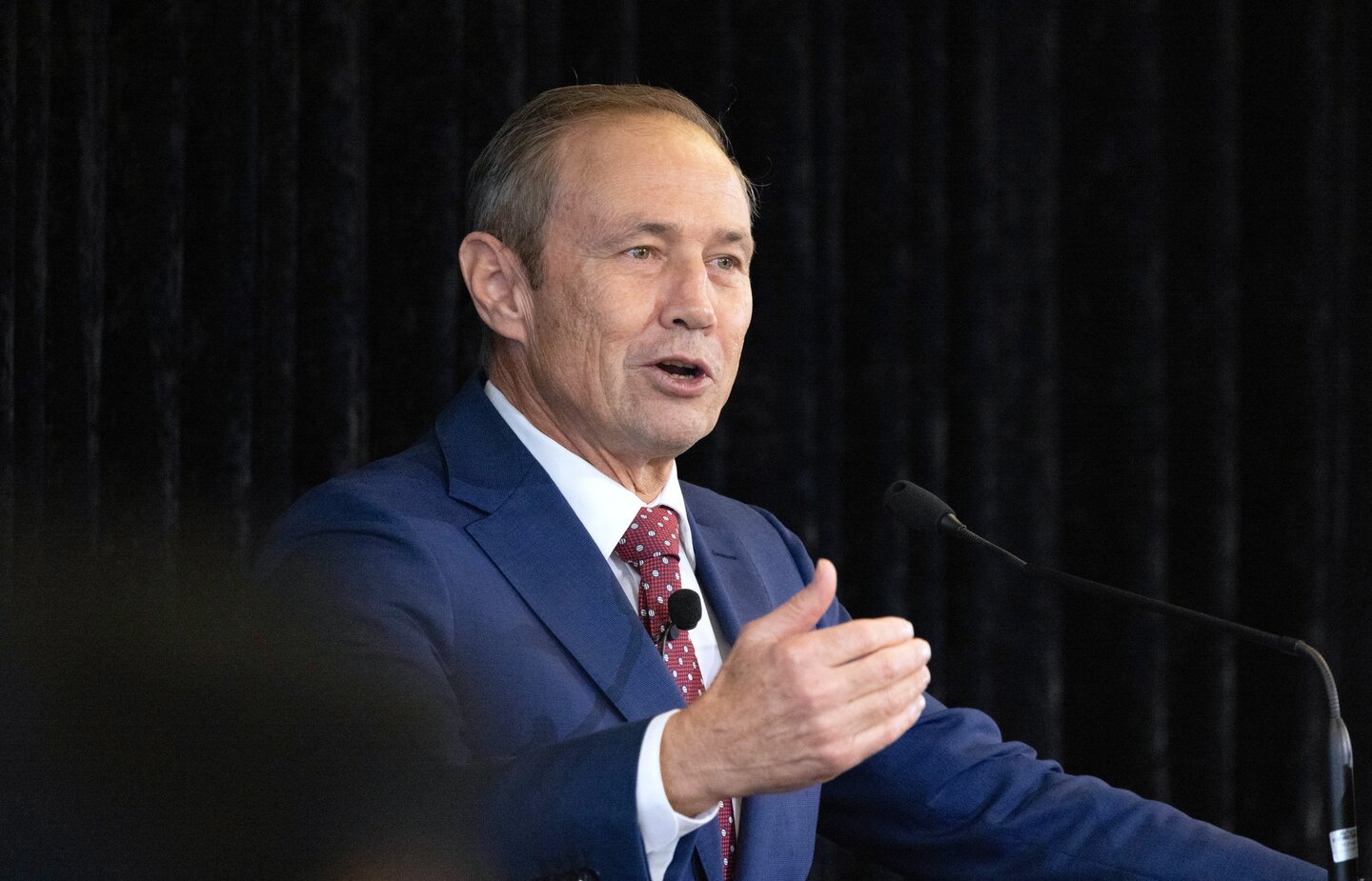
Cook confident WA will be exempt from national gas policy

Yes. Corporate subscriptions are available for teams and organisations, with discounted rates as user numbers increase. Pricing starts from $1,625 + GST per user.
Get in touch
to discuss the right option for your organisation.
Business News subscriptions are used by executives, investors, consultants and professionals who need to stay informed and make better decisions about the WA market. When you subscribe you’ll get
- Unlimited access to WA’s most trusted business journalism
- Data & Insights — detailed profiles of WA companies, people, projects and deals
- MyBN — a personalised feed based on the companies, people and sectors you follow
- Special publications and industry reports
- Daily and weekly email newsletters
Data & Insights is a research tool built specifically for the WA market. It draws on more than 30 years of Business News reporting, updated regularly to reflect what’s happening now. Use it to:
- Look up detailed profiles of WA companies, including financials, directors and ownership
- Find decision-makers and track their career movements
- Research live and completed projects across WA industries
- Monitor deals, appointments and market activity
- Access industry rankings and league tables
Data & Insights is updated daily by our dedicated research team, which uses the latest announcements, ASX filings and editorial coverage to keep our person, company, list and project records up to date.
Business News welcome all opportunities to make our dataset accurate, complete and current, so if you have an update request, please email the team at
general@businessnews.com.au, and we’d be happy to assist.
MyBN
is part of every subscription. It’s your personalised view of Business News. You can follow the companies, people, sectors and projects that matter to you, and get a news feed and alerts tailored to your interests. You can save articles to read later and retain only what you need.
Only subscribers have full access to all content on the Business News website.
If staying informed about the WA economy is part of your job, and/or you’re looking for networking opportunities in WA, Business News is built for you.
Business News subscribers are:
- Executives and directors tracking competitors, clients and market movements
- Investors and advisers researching companies, deals and industry trends
- Consultants and professionals staying across sectors relevant to their clients
- Business owners looking for leads, context and market intelligence
Most Business News publications cover national or global markets. Business News is focused entirely on Western Australia, which means the journalism, the data and the intelligence are all built around WA companies, people and projects — not adapted from a national feed. Data & Insights, included with every subscription, combines more than 30 years of WA-specific editorial research with live business data. There’s no comparable product for the WA market.
The Morning Digest Email provides a comprehensive wrap of the major headlines, relevant to WA business, and includes with a snapshot of the overnight news covering oil, gold and ASX-listed companies.
The Afternoon Wrap Email focuses on the news covered by our team of journalists during the course of the working day, including exclusive stories and analysis, all of which relates to WA business and the local economy.
The BN Weekender Email contains a wrap of the Business News from the week that was, highlighting the top stories in each area of WA business.
Sign up for free.
We’re happy to help.
Get in touch
and our team will come back to you.

Business
Scientists Say Collapsed Himalayan Glacier, Not an Earthquake, Triggered Deadly Nepal-Tibet Flash Floods

KATHMANDU, Nepal — Scientists say a collapsed glacier near the Himalayan peak of Langtang Lirung, not an earthquake, was the likely trigger behind the devastating flash flood that struck the Nepal-Tibet border this week, killing at least 177 people and highlighting the dangers of rapidly melting ice across the world’s highest mountain range.
Preliminary reports in the immediate aftermath of Wednesday’s disaster suggested a tremor may have caused a landslide that in turn triggered the flooding. But the U.S. Geological Survey has since clarified that the event was instead caused by a “glacial collapse,” a process in which a glacier or a portion of one disintegrates suddenly. The impact of the falling ice hitting the valley floor below was powerful enough to register as a magnitude 5.2 seismic event, according to USGS data and outside scientists who have since analyzed the disaster.
Pinpointing the source
Dr. Simon Cook, a glacier expert at the University of Dundee, told the BBC that his team had identified the lower portion of a glacier near the Langtang Lirung peak — located roughly 15 kilometers, or about 9 miles, west of the flood site — as the likely source of the collapse. Cook said his analysis indicates the glacier broke away and moved initially in a northwesterly direction before traveling westward downstream toward the communities and infrastructure that were ultimately destroyed.
A separate analysis by the International Centre for Integrated Mountain Development, an intergovernmental scientific institution known as ICIMOD, concluded that the disaster likely began with an ice-rock avalanche originating from a high-altitude area. That avalanche sent a large volume of ice and rock debris into the Lende Khola, a tributary of the Bhote Koshi river, generating a sudden surge of water, sediment and large boulders that swept downstream with tremendous force.
According to ICIMOD’s findings, water levels in rivers downstream rose between seven and nine meters within just 30 minutes of the collapse, a surge so powerful that it washed away or damaged several river monitoring stations positioned to track exactly this kind of hazard. The steep, narrow topography of the valley funneled the resulting torrent of water and debris at high speed through populated areas along the riverbanks.
A pattern scientists have long warned about
While it remains unclear precisely what caused the glacier to collapse on Wednesday, researchers have spent years warning that rising temperatures and broader climate change are accelerating the melting of ice and permafrost throughout the Himalayas, raising the risk of exactly this type of catastrophic event.
An ICIMOD analysis released earlier this year found that glaciers across the Hindu Kush Himalaya region are now losing ice at double the rate recorded since 2000, a trend that directly increases the danger of flooding and related hazards across the region.
This week’s disaster is not an isolated case. Cook pointed to similar incidents involving floods and landslides triggered by glacier collapses in recent years in India, Switzerland and Italy. In 2021, a large section of a Himalayan glacier collapsed in the Chamoli valley in northern India, unleashing a cascade of debris and water downstream that killed 200 people; scientists later estimated the force of that collapse was roughly equivalent to 15 atomic bombs. Even within Nepal, the same general region experienced flooding last year after a glacial lake in Tibet burst its banks.
“The pace of change is so rapid”
Mohd Farooq Azam, a cryosphere specialist with ICIMOD, said the growing frequency of hazards tied to the world’s frozen regions has become impossible to ignore. “The pace of change is so rapid that current efforts are struggling to keep up,” Azam said.
Cook was careful to note the scientific difficulty of attributing any single disaster directly to climate change, but said the broader pattern points clearly in that direction. “When you look at the pattern of these events, you do think climate change could have an impact,” he said.
He explained the underlying mechanism driving the trend: as the planet warms, glaciers shrink and generate more meltwater, while permafrost — the centuries-old frozen soil that helps hold many mountainsides together — is thawing and degrading. “So you are going to get more landslides, debris flows, glacial meltwater, lake outbursts, glacier collapses, because climate warming ultimately destabilizes these high mountain environments,” Cook said.
Visible evidence from above
Satellite imagery comparing the Trishuli river before and after the disaster illustrates the scale of the transformation. Images taken Aug. 23, just three days before the flood, show a comparatively clear river channel. By Aug. 26, the same stretch of river appears choked with brown sediment spilling out well beyond its normal banks, visual confirmation of the massive volume of debris and water that surged through the valley.
A disaster still unfolding
The human toll from the flood continues to climb as search operations proceed. More than 800 people remain missing across Nepal, according to authorities, with rescue teams working under difficult conditions in the steep, debris-choked terrain to reach survivors and recover victims. Video and helicopter footage from the disaster zone show the scale of destruction wrought by the flash flood as it tore through the Rasuwa district.
A warning for the future
For scientists tracking the health of the Himalayan cryosphere, this week’s disaster serves as the latest and most severe example of a danger they have been documenting for years. With glacier loss accelerating and permafrost destabilizing across the range, researchers say events like the one that struck the Nepal-Tibet border this week are likely to become more frequent rather than less, adding urgency to calls for better monitoring systems, early warning infrastructure and international cooperation to protect vulnerable communities living downstream from the world’s highest and most rapidly changing mountains.

According to an ET Now report citing a Citi note, the downgrade reflects the brokerage’s concerns over Lupin’s US business, which has been a key driver of the company’s growth and profitability.
Citi expects Lupin’s US base business to lose momentum, with sales projected to decline to around $975 million by FY29. The brokerage also sees pressure on profitability, estimating that margins could fall to around 20% from the current level of nearly 30%. This would weigh on the company’s earnings growth if new high-margin products do not sufficiently offset the decline in existing products.
Citi expects Apixaban to provide some support to Lupin’s earnings in FY28, as the product could contribute meaningfully to the US business. However, the brokerage believes this benefit may be short-lived, limiting its ability to drive sustained earnings growth over the longer term.
Reflecting its more cautious outlook, Citi has also cut its FY27 earnings-per-share (EPS) estimate by 14%. Overall, the brokerage believes weakening momentum in the US base business, potential margin compression and limited sustainability of upcoming product benefits could pose challenges for Lupin’s earnings outlook.

Lupin Share Price and Technical Indicators
Lupin shares have come under pressure recently, with the stock declining around 10% over the past one month. The company currently has a market capitalisation of approximately Rs 98,497 crore, while its 52-week high stands at Rs 2,529.50.
On the technical front, Lupin’s 14-day Relative Strength Index (RSI) is at 29.3. An RSI reading below 30 generally indicates an oversold zone, suggesting the stock has witnessed significant selling pressure and could potentially see a short-term rebound if buying interest returns. However, an oversold reading by itself does not guarantee a reversal.At the same time, the technical trend remains bearish, as Lupin is currently trading below all 8 key Simple Moving Averages (SMAs) being tracked. This indicates that the stock is facing broad-based downward momentum, and investors may look for signs of sustained buying before considering a meaningful trend reversal.
(Disclaimer: Recommendations, suggestions, views and opinions given by the experts are their own. These do not represent the views of The Economic Times)

For decades, ADHD carried an image problem: it was seen as something that happened to fidgety eight-year-olds who couldn’t sit still in class, not to accountants, nurses, or software engineers juggling a mortgage and a career. That picture is rapidly falling apart. A growing number of adults are being diagnosed for the first time well into their thirties, forties, and even fifties, often after years of quietly assuming their struggles with focus, follow-through, and emotional regulation were simply personality flaws.
The delay isn’t a minor inconvenience. It shapes careers, relationships, and self-image in ways that are difficult to undo, even after a diagnosis finally arrives.
Growing Up Undiagnosed
Many adults who are diagnosed later in life were, by all appearances, doing fine as children. They earned decent grades, stayed out of trouble, and didn’t display the hyperactivity that teachers and parents were trained to spot. What they were doing, often invisibly, was compensating. Bright, verbal children can mask inattentiveness for years by relying on memory, structure imposed by others, or sheer effort. The cracks tend to show up later, when school structure disappears and adult life demands independent planning, sustained attention across long projects, and the ability to manage competing priorities without anyone checking in.
By the time these patterns become undeniable, many adults have already internalized years of self-blame. They don’t think “I might have an underlying, treatable condition.” They think “I’m lazy,” “I’m disorganized,” or “I just don’t try hard enough.”
When Focus Struggles Mask Something Deeper
That self-blame often has consequences beyond productivity. Chronic, unaddressed ADHD symptoms wear on a person’s mental health over time, and clinicians increasingly see the two conditions overlapping rather than existing side by side. Some clinical writing on neurodivergence has pointed out that people with ADHD and autism are three to four times more likely to experience clinical depression than the general population, a gap that reflects the ongoing exhaustion of navigating an environment that wasn’t built for how their brain works. A closer look at whether depression is neurodivergent explores this overlap in more depth, examining how depression that resists standard treatment may sometimes be better understood through a neurodevelopmental lens rather than a purely chemical one. For adults with late-diagnosed ADHD, that framing can be validating: the low mood, the fatigue, and the sense of being perpetually behind may not be a separate problem stacked on top of ADHD, but a downstream effect of living with it unrecognized for years.
This is part of why clinicians now recommend that anyone being evaluated for depression, especially depression that hasn’t responded well to typical treatment, also be screened for underlying attention and executive-function differences. Treating the mood symptoms alone, without addressing the root pattern driving them, tends to produce partial and short-lived improvement.
What the National Data Shows
The scale of this issue is larger than most people assume. According to a 2024 CDC analysis published in the Morbidity and Mortality Weekly Report, roughly 6.0 percent of U.S. adults, an estimated 15.5 million people, had a current ADHD diagnosis as of late 2023. Just as notably, more than half of adults living with ADHD were not diagnosed until adulthood, with the gap between childhood and adult diagnosis particularly pronounced among women. That single data point helps explain a pattern many therapists and primary care providers now see routinely: a patient in their thirties or forties, often a woman, arriving for an evaluation of anxiety or depression, and leaving with an ADHD diagnosis that reframes everything else.
Recognizing the Signs in Adulthood
Adult ADHD rarely looks like the hyperactive stereotype. It tends to show up as chronic lateness despite genuine effort to be on time, a graveyard of unfinished projects and open browser tabs, difficulty starting tasks that aren’t urgent or interesting, and a pattern of intense focus on some activities alongside near-total inability to engage with others. Emotionally, it can look like heightened sensitivity to criticism, a short fuse that feels disproportionate to the trigger, and a persistent undercurrent of guilt about not living up to one’s own standards.
None of these traits, taken alone, points clearly to ADHD. Together, and especially when they’ve been present since childhood even if unnamed, they form a pattern worth discussing with a clinician.
Getting an Accurate Diagnosis
A proper evaluation typically involves a detailed developmental history, standardized rating scales, and a conversation about how symptoms show up across different areas of life, not just at work. Because ADHD so often travels alongside anxiety, depression, or both, a thorough clinician will also screen for those conditions rather than treating the most visible symptom in isolation.
For adults who receive a diagnosis later in life, the response is often a strange mix of relief and grief: relief at finally having language for a lifelong experience, and grief over the years spent believing the problem was a personal failing rather than a treatable, well-understood condition. Neither reaction is wrong. Both tend to fade as treatment, whether medication, therapy, coaching, or some combination, starts to close the gap between how hard someone has always worked and how much they’ve had to show for it.
Business
Hitachi Energy India, GE Vernova, other power capex stocks rise up to 5%. Two reasons behind the surge

In today’s session, TD Power shares jumped 5% to Rs 765 per share, while GE Vernova TD India gained over 4% to Rs 4,535. CG Power shares rose over 2% to Rs 899 per share, while Siemens also rose over 2% to Rs 4,137 per share. Hitachi India shares rose over 3% to Rs 34,248 per share.
1.) What did Nvidia say about data centres?
Nvidia announced strategic partnerships with Apollo, BlackRock, Blackstone, Brookfield, Goldman Sachs and KKR to establish independent compute-financing platforms. The platforms are expected to mobilise more than $500 billion of third-party capital over time for the buildout of AI infrastructure, subject to definitive agreements.
The company also expanded Korea’s AI factory ecosystem through strategic partnerships with SK Telecom, NAVER and Brookfield. The partnerships will support the development of sovereign AI infrastructure at gigawatt scale on the NVIDIA DSX platform, as part of a broader Nvidia-powered national AI push across Korea’s industries and research institutions.
AI data centres need enormous amounts of electricity and the equipment required to transmit, convert and manage that power. So, when Nvidia signals that hyperscalers, AI labs and other customers are continuing to spend heavily on AI infrastructure, investors extrapolate that demand into the power-equipment supply chain.
2.) US bans Chinese power equipment manufacturers
US President Donald Trump on Wednesday signed an executive order declaring a national emergency over foreign-made equipment used in the U.S. electricity grid and banning the use of certain such equipment, the White House said.
The order points to what the White House called an “unusual and extraordinary foreign threat” from foreign-made bulk-power systems that could create national security vulnerabilities.The move is the latest step by Washington to address technology threats it associates with China. It follows a decision by the European Commission earlier this year to prohibit Chinese-made inverters from publicly funded energy projects.
Under Trump’s order, certain foreign-produced bulk-power system equipment will be prohibited from being purchased or installed in the United States. The ban also covers associated critical software and digital capabilities that could create cybersecurity or operational risks, according to the White House.
The order further directs the U.S. Energy Secretary to set conditions for the continued use and operation of such equipment in order to address concerns identified by the Trump administration, the White House said.
Nvidia Q2 results
Nvidia shares jumped 5% in extended trading on Wednesday after the world’s most valuable company reported second-quarter fiscal 2027 results that came in ahead of analyst expectations. The stock got another boost after management indicated that growth could double in the next fiscal year.
Nvidia’s revenue more than doubled from a year earlier to $96.22 billion, beating the $92.17 billion estimate. Earnings per share came in at $2.22, compared with analyst expectations of $2.10.
Nvidia is betting that the artificial intelligence boom is far from over. The chipmaker on Wednesday forecast a 70% jump in revenue next fiscal year, pointing to continued demand for AI computing even as shortages of memory components threaten to constrain how quickly it can expand.
(Disclaimer: Recommendations, suggestions, views and opinions given by the experts are their own. These do not represent the views of The Economic Times)

Australia’s share market has posted its worst day since early June after three of the big four banks warned interest rate hikes could come sooner than expected.

The state’s Department of Health and some of its largest aged care providers have weighed in on the Senate inquiry into the federal government’s controversial Support At Home program.

London shares pull back as easing Middle east oil panic trims energy majors
Business
(VIDEO) Beauty in Black Season 3 Release Date, Cast and Everything to Know Before the Bellarie Family Returns

LOS ANGELES — Tyler Perry’s hit Netflix drama “Beauty in Black” returns for its third season Thursday, dropping all eight episodes at once as the Bellarie family saga takes an even more explosive turn.
The series, which follows a former sex worker’s rise inside a wealthy and dangerous family-run hair-care empire, has become one of Perry’s most closely watched projects for the streamer since it premiered in October 2024. Season 3 arrives just five months after Season 2, Part 2 landed on Netflix, marking one of the fastest turnarounds the streamer has produced for a scripted drama.
When and how to watch
Season 3 of “Beauty in Black” premieres Thursday, Aug. 27, on Netflix, with all episodes available to stream at once, according to the streamer. Netflix confirmed the release date on July 28, alongside a batch of first-look photos from the new season.
Where the story picks up
Season 3 opens with Kimmie, played by Taylor Polidore Williams, finally holding a seat at the table of the powerful Bellarie family after a hard-fought rise from surviving in a Chicago strip club to becoming chief operating officer of the family’s hair-care empire.
That position of power, however, is far from secure. According to the official logline released by Netflix, “Kimmie finally has a seat at the Bellarie table, but when a deadly family feud erupts, she’s forced into an uneasy alliance with Mallory.” The two women, once bitter rivals, must now navigate “a ruthless world of blackmail, revenge, and buried secrets as the family wages war against one of its own, threatening to bring the entire empire crashing down.”
The new season builds directly off Season 2’s finale, in which Kimmie called a board meeting to order with her former adversary Mallory, played by Crystle Stewart, standing beside her, and her husband Horace joining them at the table — a stunning alliance that reshaped the power structure of the entire family business.
Speaking about that shift ahead of the new season, Williams described the turning point in her character’s arc to Netflix’s Tudum. “Part 2 is really the moment Kimmie stops surviving and starts playing the game,” she said.
The cast returning for Season 3
The core cast returning for the new season includes Taylor Polidore Williams as Kimmie and Crystle Stewart as Mallory, the two women whose uneasy new partnership sits at the center of the season’s central conflict.
They are joined by Ricco Ross as Horace, Amber Reign Smith as Rain, Xavier Smalls as Angel, Julian Horton as Roy, Steven G. Norfleet as Charles, Richard Lawson, Terrell Carter, Bryan Tanaka, Charles Malik Whitfield as Jules and Debbi Morgan.
The season’s expanded ensemble also includes Bailey Tippen, Rodrigo Aburto, Randall J. Bacon, George Middlebrook, Greg Clarkson, Jasmine Burke, Aria Celeste Castillo, Gianmarco Duin, Philemon Chambers, Philip Boyd, Ty Anthony, Deeric Williams, Herb Magwood, Tre McBride, Kevin Savage, Jazmine Robinson, Kaja Brielle, Shay Mack, Steven Rho, Aaron Serotsky, Mikeal L Dwayne Griggs, Sara Spadacene, D’kia Anderson, Antoine Williams, Ty Courtad, Raven Chambers, Michael Butler, Jillmarie Lawrence and Jim Braswell, according to cast information released by Netflix.
Who’s behind the camera
Perry created “Beauty in Black” and continues to serve as the show’s writer, director and executive producer, a role he has held since the series debuted as his first project for Netflix. Producers Angi Bones and Tony Strickland round out the executive producing team for Tyler Perry Studios, with music from Wow Jones and Jimijame$.
How many episodes
Season 3 consists of eight episodes, all released simultaneously on premiere day, continuing the binge-friendly release model Netflix has used for the show’s previous seasons.
A future beyond Season 3
Perhaps the biggest surprise surrounding the new season is that it will not be the end of the Bellarie family’s story, despite earlier reports suggesting Season 3 would serve as the show’s finale. Netflix confirmed on July 23 — just days before announcing the Season 3 premiere date — that “Beauty in Black” has been renewed for a fourth season.
Perry addressed the reversal in comments shared alongside the renewal announcement, saying there was more of the Bellarie family’s story he wanted to tell and thanking viewers around the world for their support of the series. The quick turnaround between the Season 3 announcement and the Season 4 renewal underscores how much momentum the show has built for Netflix since its debut.
Catching up before the premiere
For viewers who haven’t kept up with the series or want a refresher before diving into the new season, both Season 1 and Season 2 of “Beauty in Black” remain available to stream on Netflix. The first season introduced Kimmie’s desperate circumstances after being kicked out by her mother, contrasting her struggle with Mallory’s position running a seemingly successful business — two women whose lives become increasingly entangled as the series unfolds.
Season 2 escalated that entanglement considerably, tracking the ruthless, backstabbing dynamics within the Bellarie family as Kimmie worked her way from outsider to a formidable presence inside their world, culminating in the power-shifting boardroom alliance that sets up Season 3’s central conflict.
With a deadly family feud, a fragile new alliance between former enemies, and a hair-care empire on the verge of collapse, “Beauty in Black” Season 3 sets up high stakes for the Bellarie family as it streams in full starting Thursday on Netflix — and with Season 4 already confirmed, Perry’s soapy drama shows no signs of slowing down.
Business
Motilal Oswal initiates coverage on Adani Enterprises with Buy, sees 25% upside. Here’s why

Following the coverage initiation, Adani Enterprises shares traded over 1% higher. The stock rose Rs 33, or 1.06%, to Rs 3,145 on the NSE at 11:09 am, compared with the previous close of Rs 3,112. It opened at Rs 3,125 and touched an intraday high of Rs 3,159.
“The Adani Group’s flagship company is uniquely positioned to benefit from India’s next capital-expenditure cycle through its exposure to airports, roads, data centres, new energy, mining, copper and strategic manufacturing,” the brokerage firm said.
Motilal Oswal described AEL as a differentiated infrastructure incubator that combines established, cash-generating operations with newer businesses capable of driving its next phase of growth. The company’s model involves identifying emerging opportunities, building businesses to scale and subsequently monetising or demerging mature platforms.
The brokerage said that the company’s market leadership, scale, diversified portfolio and track record of incubating businesses could help it emerge as a major integrated infrastructure platform.
Three growth drivers behind the Buy rating:
1. EBITDA to double by FY29
Motilal Oswal expects AEL’s EBITDA to increase from around Rs 140 billion in FY26 to approximately Rs 299 billion by FY29, representing a compound annual growth rate of 29%.
The brokerage expects the earnings mix to shift towards higher-margin, infrastructure-led businesses. Airports, new energy and roads are projected to become the principal EBITDA growth drivers.The commissioning of Navi Mumbai Airport, expansion of Adani New Industries Limited’s manufacturing capacity, commencement of toll collection at key road projects and higher utilisation at the copper business are expected to support this growth.
Consolidated EBITDA margins are projected to improve from 13.9% in FY26 to 15% in FY27, 15.7% in FY28 and 16.4% in FY29.
2. Earnings growth to gather pace
The brokerage firm forecasts AEL’s consolidated revenue to grow at a CAGR of around 22% between FY26 and FY29. Revenue is projected to rise from Rs 1,005 billion in FY26 to Rs 1,428 billion in FY27, Rs 1,623 billion in FY28 and Rs 1,825 billion in FY29.
Adjusted profit after tax is expected to register an 82% CAGR over FY26-29, aided by the low FY26 base, margin expansion and the increasing contribution of higher-margin businesses. Adjusted PAT is projected at Rs 66 billion in FY27, Rs 83 billion in FY28 and Rs 106 billion in FY29.
The brokerage expects airports to benefit from passenger growth, tariff revisions and higher non-aeronautical revenue. The new-energy business is expected to gain from expanding solar-module and wind-turbine capacity, while data centres and copper could become increasingly important contributors.
3. Leverage to ease as cash flow improves
AEL’s net debt-to-EBITDA ratio stood at 5.4 times in FY26 and is expected to moderate to around 4.5 times by FY29, despite continued capital expenditure.
Motilal Oswal expects AEL to generate operating cash flow of around Rs 569 billion through FY29, helping fund a portion of its expansion through internal accruals. The brokerage has assumed annual capital expenditure of approximately Rs 400 billion during the forecast period.
AEL has guided for capex of around Rs 400 billion in FY27, including approximately Rs 170 billion for airports. Motilal Oswal expects stronger operating performance and cash generation to lift return on equity to 8.5% by FY29.
Meanwhile, the stock has gained 42.65% over the past 12 months and 39.23% so far in 2026, while the benchmark has declined 2.12% and 7.49%, respectively. Adani Enterprises touched a 52-week high of Rs 3,245 on July 6, 2026, and a 52-week low of Rs 1,753 on March 30, 2026
(Disclaimer: Recommendations, suggestions, views and opinions given by the experts are their own. These do not represent the views of The Economic Times.)

OPINION: The hardest part of business is seeing if anyone actually wants what you are making.

Expiry Hero Zero Trade Nifty SENSEX | Live Trading | Banknifty Analysis | 27-August | #livetrading

People missing in Nepal-China flooding are from over 30 countries

Scientists Say Collapsed Himalayan Glacier, Not an Earthquake, Triggered Deadly Nepal-Tibet Flash Floods

Weekend Open Thread – Corporette.com

Weekend Open Thread: Brooks Brothers

London Mayor Sadiq Khan handed a peerage by Keir Starmer alongside 15 other Labour figures… just days before the PM leaves No10
Expiry Hero Zero Trade Nifty SENSEX | Live Trading | Banknifty Analysis | 27-August | #livetrading

The Entire Map of Financial Freedom – From 0$

Powerful Prayer to Restore the Wasted Years of Financial Struggle | God Will Restore Everything
-

 Fashion6 days ago
Weekend Open Thread: Madewell – Corporette.com
-

 Crypto World1 day ago
SpaceX stock could rise 75% to $240, JPMorgan says
-

 Business5 days ago
Musk’s Tesla, SpaceX Confirm $16.8 Billion ‘Terafab’ Chip Plant as World’s Largest Building in Texas
-

 Crypto World5 days ago
anatomy of crypto’s biggest liquidation event since 2021
-

 Crypto World2 days ago
A $30 Billion AI Fund Implodes, Now the SEC Is Investigating Wall Street’s Role
-

 Politics5 days ago
6 months on, Irish renters crushed by effects of government housing bill
-

 Crypto World1 day ago
Did Trump Just Move SpaceX Stock With One Truth Social Post?
-
 NewsBeat5 days ago
The ‘Lucky Dip Gang’ causing carnage for clicks: After five thugs were killed speeding in the wrong direction on a motorway, GUY ADAMS investigates a sick new trend… and why police aren’t even allowed to pursue them
-

 Business4 days ago
Mystery AI Model ‘Ox Alpha’ Draws Developers With Free Access as Chinese Lab Origins Remain Debated
-

 Business3 days ago
Moderna CEO warns China is pouring state money into mRNA technology
-

 Business7 days ago
Five Below: Kids Discount Retailer Reaps Rich Rewards
-

 Business2 days ago
NVIDIA Stock Drops Nearly 2 Percent to $210 on Seventh Losing Day Ahead of Critical AI Earnings
-
 Crypto World5 days ago
Nvidia Stock Suffers Longest Losing Streak Since 2022: Will Q2 Earnings End It?
-

 Sports4 days ago
Deshaun Watson fires back at Browns fans after being booed: ‘It’s a disrespectful thing’
-

 Business6 days ago
UK firms in critical financial distress rise 9% to 53,756
-
 Crypto World4 days ago
Google Gemini AI Predicts Ethereum Could Become the Trade Retail Misses in 2026
-

 Tech5 days ago
Unitree’s New Superman Robot Claims to Outjump and Outrun Every Human, Usain Bolt Included
-

 Crypto World7 days ago
Optimism-funded team's deciding vote shifts $49 million in OP tokens away from users
-

 Tech6 days ago
Faster chip in a familiar form factor
-
 Crypto World7 days ago
Japan 225 Analysis: Index Declines Amid Rising BoJ Rate Expectations
You must be logged in to post a comment Login