
Business
Copper prices scale fresh record high as focus turns to tight supplies outside US


Traders said volumes were likely to remain muted due to a U.S. holiday, with attention focused on copper and zinc.
Benchmark copper on the London Metal Exchange touched a record high of $14,533 a metric ton, surpassing its previous all-time peak of $14,527.50 reached in January. It later pared gains slightly to $14,518 by 1515 GMT, up 0.7%.
Also read: Brent crude oil price nears $100 as attacks on tankers threaten to worsen supply shock
Traders and producers have been shipping large volumes of copper to the U.S. since President Donald Trump first mooted import tariffs in February last year. Comex copper stocks currently stand at a record 766,795 short tons, or 695,624 metric tons.

“It’s hard to know what will happen on tariffs, but the longer there is uncertainty, the longer prices will remain elevated as material flows to the U.S.,” Albert Mackenzie, an analyst at Benchmark Mineral Intelligence, told Reuters.
Elevated premiums, or backwardations, for nearby contracts over longer-dated forwards have encouraged some copper to flow back to the LME.However, cancelled warrants, which represent metal earmarked for delivery, stood at 51%, indicating that more than 121,000 tons of copper is likely to leave the LME system over the next few weeks.
The premium for cash copper over the three-month forward contract climbed above $430 a ton in the middle of August, its highest level since 2021. It closed at around $74 on Friday.
Another indication of tightening supplies outside the U.S. is the level of stocks in warehouses monitored by the Shanghai Futures Exchange. Inventories stood at 63,000 tons, down 85% since the middle of March and at their lowest level since January 2024.
Copper prices on the SHFE are also in backwardation, suggesting that the industry in top consumer China is increasingly concerned about supplies.
Elsewhere, zinc gained 1.1% to $3,988 a ton, supported by tight supplies, after touching its highest level since May 2022 at $3,998.
A weaker U.S. currency, which makes dollar-priced metals cheaper for holders of other currencies, provided broader support to base metals.
Aluminium rose 0.7% to $3,315 a ton and tin added 0.4% to $55,100, while nickel slipped 0.7% to $16,725 and lead declined 0.3% to $1,903.
(Disclaimer: This article is based on inputs from agencies. These do not represent the views of The Economic Times)


ClearBridge Dividend Strategy Fund Q2 2026 Commentary
Fiera Capital offers thoughtful investment solutions for high net worth individuals and institutions across a spectrum of traditional, non-traditional, and bespoke investment strategies. Our mission is to provide our clients with the highest quality of customized service and performance through a culture of integrity, teamwork, excellence, and innovation. We believe our structure promotes excellence within our specialized investment teams by combining the flexible and efficient environment of a multi-style investment manager with the scale of resources offered by a leading investment firm. Investment teams operate independently while benefiting from advantages in risk management, research, and shared expertise.

Diamond Hill Capital Management, Inc. is a wholly owned subsidiary of Diamond Hill Investment Group, Inc. Diamond Hill Investment Group is a publicly traded company, and its shares trade on the NASDAQ (Ticker: DHIL). Note: This account is not managed or monitored by Diamond Hill Capital Management, and any messages sent via Seeking Alpha will not receive a response. For inquiries or communication, please use Diamond Hill Capital Management’s official channels.
The move follows the Reserve Bank of India’s decision in June to withdraw concentration limits for FPIs investing in government securities through the General Route.
Sebi, in a circular issued on Monday, said the requirement to identify the investor group of an FPI investing only in government securities was no longer relevant following the RBI’s decision.
“FPIs investing only in Government Securities shall not be required to furnish investor group details,” SEBI said, modifying the relevant provision of its master circular governing FPIs, designated depository participants and eligible foreign investors.
Sebi had earlier, through a September 10, 2025 circular, provided a similar exemption to FPIs investing exclusively in government securities under the Fully Accessible Route. The latest amendment extends the relief to FPIs investing only in government securities more broadly.
The regulator said the move was aimed at providing greater ease of investment to FPIs.
Depositories, custodians and designated depository participants have been advised to make the necessary changes to their systems to implement the revised requirement.The changes will take effect immediately, Sebi said.
(Disclaimer: Recommendations, suggestions, views and opinions given by the experts are their own. These do not represent the views of The Economic Times)

Pavel Kot/iStock via Getty Images
Portfolio Review
U.S. stocks advanced sharply. U.S. equities posted double-digit quarterly gains despite volatility stemming from the Iran conflict. Robust earnings, resilient economic data and continued momentum in artificial intelligence (AI)-related stocks supported gains. However, stocks pulled back slightly in
Business
Tesla Starts Paid Cybercab Rides in Austin as Regulators Probe Its Wheel-and-Pedal-Free Design

AUSTIN, Texas — Tesla has begun charging passengers for rides in the Cybercab, the two-seat electric car it built without a steering wheel, pedals or side mirrors, even as U.S. safety regulators opened a review of how the company certified that design as legal.
Paid trips started in Austin on Sept. 4, the day after an invitation-only launch at ACL Live. Riders hail the car through Tesla’s existing Robotaxi app, in the same geofenced area already served by driverless Model Y vehicles since June 2025. Users told reporters the Cybercab fare on identical routes was lower than the Model Y option. Tesla executives at the event described dynamic pricing and promised “a first-class experience at coach price.”
Elon Musk did not attend. In a promotional video released the same day, he called the Cybercab “the first car that is specifically built for unsupervised full self-driving.” In the days before the event he pinned a post that read, “A storm of Cybercabs.” Texas motor-vehicle records showed about 45 Cybercabs registered to Tesla’s robotaxi fleet as of late August. The company’s broader Texas robotaxi registration list stood near 420 vehicles, most of them Model Ys — fewer than half the nearly 1,000 vehicles Alphabet’s Waymo has registered in the state.
That gap between slogan and fleet size is the first fact that matters. The Cybercab is no longer a prototype on a studio lot. It is also not a mass service. Tesla held the launch without a public livestream. Presenters included lead engineer Eric Earley, vehicle-software head Silvio Brugada, designer Ian Kettle and autonomy chief Ashok Elluswamy. The talks lasted about 15 minutes. Tesla did not announce a consumer sticker price, a delivery calendar or the next Cybercab city.
The hardware is the second fact. The production car is a two-door liftback with scissor, or butterfly, doors, a large cabin screen and a passenger stop button. Press the button and the vehicle is designed to pull over when it is safe and connect the rider to Robotaxi Support. There is no rear window in the conventional sense and no human controls. Some test units still carried a safety monitor in the front passenger seat. The commercial pitch is that those monitors eventually disappear.
EPA certification filings published in June filled in the third set of numbers. The Cybercab uses a single front-mounted permanent-magnet motor rated at 163 kilowatts, or 219 horsepower, and a lithium-ion pack of about 48 kilowatt-hours. Curb weight is 3,113 pounds (1,412 kilograms), light for an electric car sold in the United States. Unadjusted laboratory combined range was 418.2 miles; applying the standard adjustment yields about 293 miles, in line with Tesla’s earlier “close to 300 miles” language. Energy use in the filing works out to roughly 165 watt-hours per mile. Payload is listed at 617 pounds.
Those specs explain why Tesla wants this body instead of a Model Y with the seats ripped out. A smaller pack, two seats and no driving hardware cut weight and cost if the software can actually drive. They also explain the regulatory fight. On Sept. 4 the National Highway Traffic Safety Administration opened an audit of the process and technical data Tesla used when it self-certified the wheel-free, pedal-free vehicle as meeting federal safety standards. The probe does not by itself pull cars off Austin streets. It does put a federal file on the feature that makes the Cybercab different from every other Tesla in the ride-hail mix.
Production is the fifth fact, and it is real but narrow. Tesla said the first production unit left Gigafactory Texas in February 2026. Formal production followed in April. Musk had said on X, “Cybercab, which has no pedals or steering wheel, starts production in April.” In January he warned that the start would not look like a Model Y ramp: “For Cybercab and Optimus, almost everything is new, so the early production rate will be agonizingly slow, but eventually end up being insanely fast.” Tesla’s second-quarter update in July dropped the Cybercab from the sentence that had promised volume production in 2026 for Cybercab, the Semi and Megapack 3. The factory line in Texas is described as having capacity above 125,000 vehicles a year. Capacity is not the same as cars in paid service.
Manufacturing method is the sixth. Tesla is using an “unboxed” process that builds large modules in parallel and joins them at the end, aiming to shrink paint-shop work and line length. Earley told the Austin audience, “We’ve unlocked a 50% reduction in line size while increasing the output of the line.” Company materials have cited a smaller factory footprint and lower labor cost versus a conventional line. The long-term cycle-time boast — a finished Cybercab every 10 seconds — remains a target, not a published factory rate.
Price is the seventh. Musk said in 2024 the vehicle would cost under $30,000 and has since answered that consumers should be able to buy one. The September launch did not confirm an MSRP. Tesla began circulating a robotaxi interest form aimed at fleet buyers and infrastructure partners. An interest form is not an order bank. Musk has still said Tesla intends to sell Cybercabs to customers, not only run them in its own fleet. That sale would require the same autonomy software — and the same regulators — that now govern the Austin rides.
Software is the eighth, and it is the constraint Musk himself has named. “This is a very important step, to put the Cybercab in production, but ultimately, it only matters if the software can allow a car to navigate safely,” he has said of the program. He has also told investors, “Really, we should be thought of as an AI robotics company,” and, “If somebody doesn’t believe Tesla is going to solve autonomy, I think they should not be an investor in the company.” Launch Cybercabs use Tesla’s camera-based system and AI4-class hardware. A later AI5 computer has been discussed for mid-2027. Competitors such as Waymo still use lidar and radar and operate in more U.S. metros.
Geography is the ninth. Austin is the Cybercab city. Tesla’s Model Y robotaxi service has also appeared in Dallas, Houston and Florida markets including Miami, Orlando and Tampa, with permits discussed for Arizona and Nevada. The company said Cybercabs would go on public display in Beijing, Shanghai and other Chinese cities from mid-September as design exhibits, not as a sales or robotaxi launch in China. Elluswamy posted, “The streets won’t be the same anymore.” Asked whether Cybercabs would “flood Austin,” Musk replied, “Yes.” Forty-five registered cars is not a flood.
The tenth fact is what the launch did not settle. Tesla did not say when unsupervised Cybercab rides will run without a monitor in every market, when volume production returns to the official forecast, or how NHTSA’s file will end. Morgan Stanley’s Andrew Percoco wrote before the event that a mere unveiling with few cars on the road could pressure the stock, while a rollout that materially enlarged the fleet could support it. Shares jumped ahead of Thursday’s show, then fell after the quiet debut and the regulator’s notice.
What exists today is simpler than the decade of robotaxi promises that preceded it. A purpose-built two-seater is in limited paid service in one Texas city. It has no wheel. It has a stop button. It is cheaper on some routes than Tesla’s own Model Y robotaxi. It is outnumbered by Waymo in Texas and by Tesla’s own Model Ys in the same app. The factory can make more. The software, the certifications and the next city list will decide whether “a storm of Cybercabs” is a product plan or a pinned post.

Tech companies look to Argentina’s windswept Patagonia to build massive data centers

Trump says Canada’s Bombardier cannot sell in US unless it builds there

Airbus aircraft deliveries to end-August rose 9%
The market regulator said the extension was decided based on representations from the Alternative Investment Fund (AIF) industry seeking additional time for existing angel funds to meet the mandate.
Under the revised timeline, angel funds registered with SEBI on or before September 10, 2025, will have to implement the accredited investor mandate by March 31, 2027. During the extended transition period, these funds cannot offer investment opportunities to more than 200 non-accredited investors, SEBI said.
Such angel funds will also not be allowed to accept contributions from non-accredited investors for investment in an investee company after March 31, 2027, according to the circular.
Existing investors in these angel funds will continue to hold their investments already made in the funds in accordance with the terms of the private placement memorandum (PPM) and/or other fund documents, SEBI said.
ALSO READ: Rs 10,000 SIP can create Rs 87.3 lakh in 20 years. Why this projection may not match your actual outcome
The revised deadline replaces the earlier timeline of September 8, 2026. Under the previous provisions, angel funds registered with SEBI on or before September 10, 2025, were required to implement the accredited investor mandate by September 8, 2026 and could not offer investment opportunities to more than 200 non-accredited investors during the transition period.SEBI had amended the AIF Regulations on September 9, 2025, to prescribe a revised regulatory framework for angel funds. It subsequently issued a circular on September 10, 2025, specifying the conditions and modalities for the revised framework. These provisions were later subsumed into Chapter 8 of SEBI’s AIF Master Circular dated June 3, 2026.
For angel funds granted registration after September 10, 2025, the existing requirement remains unchanged. Such funds are required to onboard and offer investment opportunities only to Accredited Investors, SEBI said. All other provisions under Chapter 8 of the AIF Master Circular remain unchanged. The latest circular comes into force with immediate effect.
(Disclaimer: Recommendations, suggestions, views and opinions given by the experts are their own. These do not represent the views of Economic Times)

Tech industry’s robotics talent crunch has UW’s new grad program nearly full before day one

Transfer news LIVE: Arsenal FC triple agreement; Man Utd announce done deal; Chelsea, Liverpool latest

ClearBridge Dividend Strategy Fund Q2 2026 Commentary





-
 Fashion3 days ago
Weekend Open Thread: Beyond Yoga
-
 Crypto World3 days ago
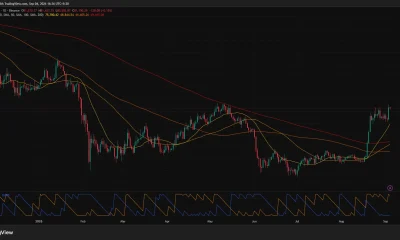
Bitcoin price stalls near $82K as key resistance holds
-

 Politics3 days ago
Best Gaming Laptops, CPUs, TVs, And Keyboards To Upgrade Your Set Up For GTA VI
-

 Tech3 days ago
The Birds Outside, Drawn For You Automatically
-

 Crypto World3 days ago
IMF Says El Salvador’s Post-Review Bitcoin Purchases Used No Public Funds
-
 Crypto World3 days ago
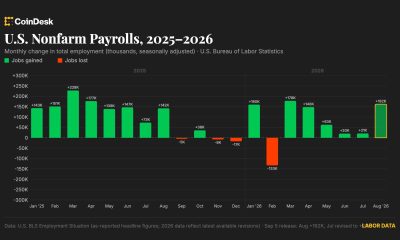
U.S. added stronger than expected 162,000 jobs in August as labor market bounced back
-

 Sports3 days ago
Alexandre Pato consortium’s Northampton Town investment approved
-

 Sports3 days ago
Commanders’ Chig Okonkwo is a top breakout fantasy football candidate
-

 Sports3 days ago
Golden Eaglets Drawn in Group B for 2026 WAFU B U17 Championship
-
 Crypto World3 days ago
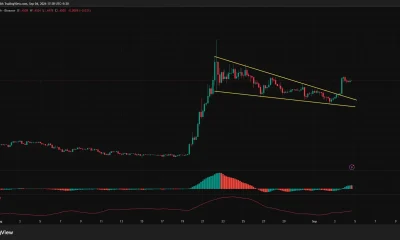
XRP price breaks falling channel as bulls target $1.53
-
 Politics4 days ago
A new European chapter for Gibraltar
-

 Politics3 days ago
How To Avoid Winter Colds: 4 Everyday Habits That Spread Germs, Says Pharmacist
-

 Politics3 days ago
The House | Bin the lectures, bring gossip and be ready to banter: how the new PM should prepare for his Trump encounter
-

 Crypto World3 days ago
From warning to listing: UK’s largest retail investment platform opens access to crypto ETNs
-

 Crypto World3 days ago
FinCEN flags $12.7B tied to Southeast Asia crypto investment scams
-

 Tech3 days ago
A Worthy Android Ereader, With Some Tradeoffs
-
 Tech3 days ago
How To Edit Claude’s Memory
-
 Crypto World3 days ago
Trezor Data Breach Impacts 67,000 More US Customers
-

 Politics3 days ago
33 Cosy Autumn Home Decor Ideas: Blankets, Pumpkin Decorations, And Candles
-
 Tech3 days ago
beyerdynamic AVENTHO Y Debuts at IFA 2026 and Makes Wireless Headphones Less Disposable
You must be logged in to post a comment Login